


The unique Bumblebee PLUS project - rescue team
What you will learn here
- About the Quick Bumblebee Company
- How does it all work?
- How to become a member of rescue party
- How do bumblebees get evacuated
Last updated: 29 May 2022
Contents
.
What is the Bumblebee Rapid Response Unit
We came up with the idea for the Bumblebee Squad with some friends after we ourselves evacuated a few unfortunately situated or threatened nests.
The "Čmeláci PLUS" is already known, and therefore finders are turning to us for help. Our community includes a number of beekeepers who have failed to purchase a nest, establish a queen, or have lost their nest during the season.
Proto We are pairing records of endangered bumblebee nests with rescuers, and thus helping everyone..
Since then, we’ve been saving lots of nests every year. It saves many people the worry of wondering „what to do with them“, and lots of others are delighted to have bumblebees in their hive.
All rescue missions only proceed if the nest is in danger.
Any other relocation of the nest would constitute a breach of nature protection laws in the Czech Republic and of bumblebees, as a specially protected creature by law.
Specifically, this concerns Section 56 of Act No. 114/1992 Coll., on the Protection of Nature, regarding prohibitions relating to specially protected animals
as listed in § 50 of Act No. 114/1992 Coll., on Nature Conservation, specifically import, possession,
transport, movement, offering for sale of individuals and various developmental stages of bumblebee species

How the Bumblebee Rapid Response Team works
The Bumblebee Rapid Response Team is a safety net comprising three parts.
1. Finder Bumblebee nests under threat
- anyone who finds a bumblebee nest in danger and needs help
2. Čmeláci PLUS Group
- matches information on at-risk nests with rescuers
- provides methodological support and ensures evacuation
3. Rescuers nest
- These are our Facebook and website readers www.cmelaciplus.cz
- with our support, they are relocating bumblebee nests to their hives, where they will care for them until the end of their life cycle
Qualification requirements for the Nest Saver candidate
The rescuer, and thus a member of the Bumblebee Rapid Response Unit, any one of you can become, who is Flexible, determined, ready and who is in the right place at the right time.
They must know that evacuating the nest is how it begins, and must Be ready look after the nest.
It is not a condition that the rescuer be an experienced breeder., Even a determined and well-prepared beginner can manage it.
As we are a non-profit group and we support bumblebee rescue altruistically, we have one a key condition – everything must be done free of charge and without any claim to financial remuneration.
A nest saved is reward enough bumblebees intended to live with the Rescuer.
But so that it doesn't come without a reward, The rescuer will become a member of the Bumblebee RQuick rotations. His name will be displayed on our pages and he will receive In memory of a patch with the logo of the Bumblebee Rapid Response Unit.
Specific conditions for the Bumblebee Nest Rescuer
We don't want to limit the circle of people interested in saving bumblebees. However, we feel a responsibility and therefore want the rescue and lifespan to proceed correctly.
It would not make sense to save bumblebees and move them to a place where they would not live well and safely..
Conditions for rescue
- To have correctly ready to jump Wasp nest
- Jackfruit Selected location Where is the fright located?
For information on preparing the ulcer and its placement, see HERE - To have the opportunity place the alert at least 3 km from the original finding (so that the bumblebees do not return to their original location) This is an advantage, not a prerequisite.
- To be equipped with aids Pro working with bumblebeesy :
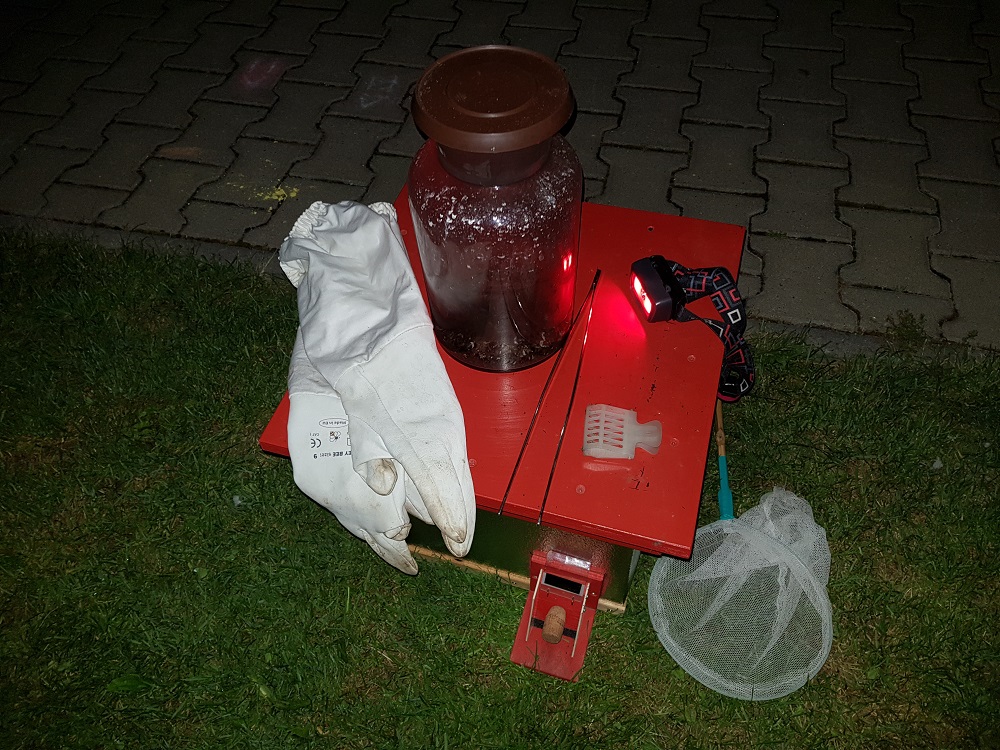
– Red light (preferably a headlamp or a rear bicycle light, a mobile app) necessary
– large glass (3-5 litre jar, glass jug, etc) with a funnel made from a PET bottle – necessary
– beekeeping tip – We highly recommend
– beekeeping gloves – We highly recommend (thin garden hose might not be enough) because it fundamentally simplifies the work
– Net and loader – We highly recommend
– long tweezers – We highly recommend
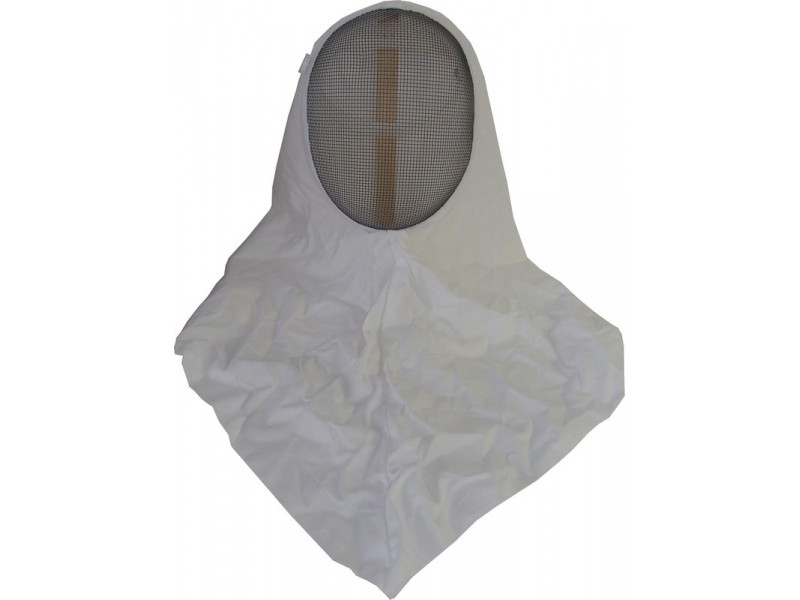
– beekeeper's hood – is not always necessary, but it is appropriate First and foremost, peace to you.details see HERE
- Suitable clothing – long, thicker, sturdy trousers and a thicker (flannel) shirt
- Besides breeding aids, you need to have at least Trowel for digging a nest (preferably garden) and other tools (as needed)
- To have the option to return to the original nest site early the next morning and have 1-2 hours to catch the remaining workers – This is an advantage, not a prerequisite.
As we wrote above, it is always better for the evacuation to be carried out by the person who has the bumblebees. experience, but practice has shown us that when it comes to time, and if you find Determined beginner, they can manage it with our help too – DO NOT BE AFRAID!

Bumblebees PLUS – Bee Breeder's Protective Hood
Internet Photo
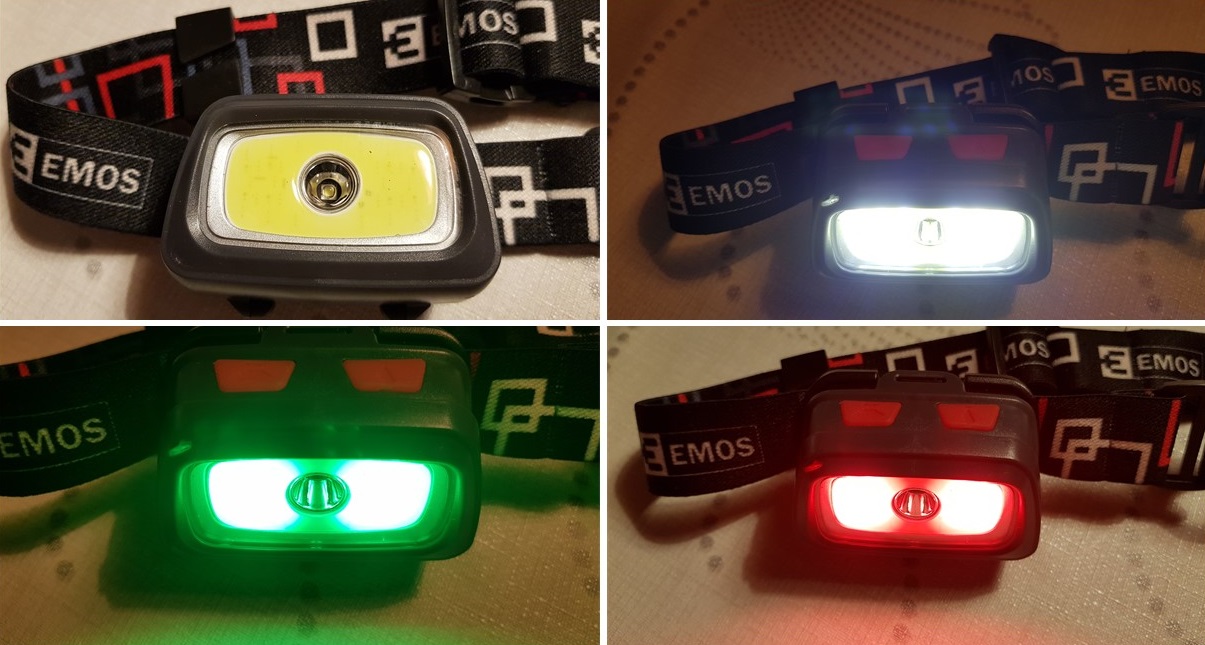
Bumblebees PLUS – Red Light – Headlamp
Photo O. Hercog
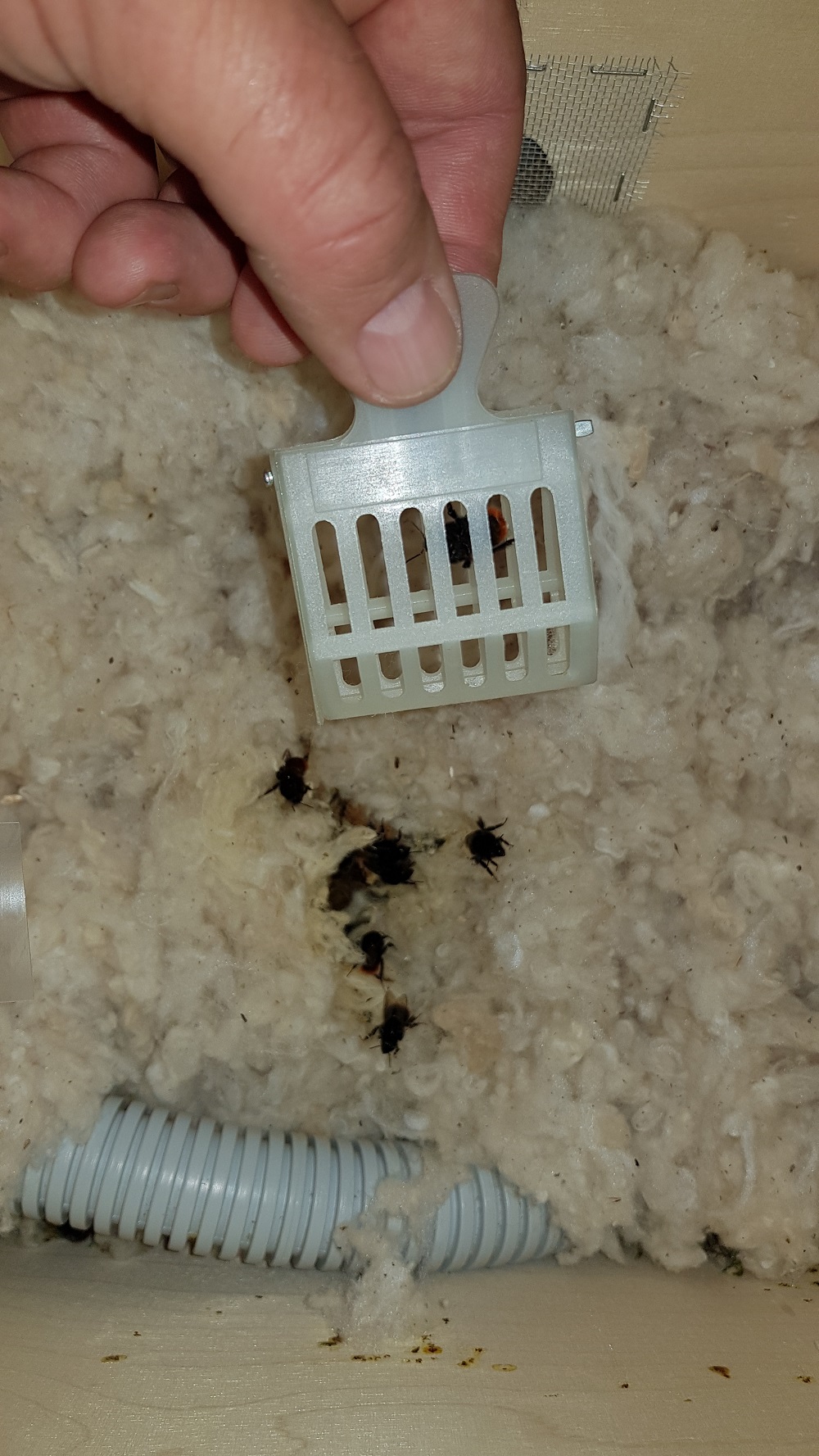
Beekeeping catchphrase
Photo O. Hercog
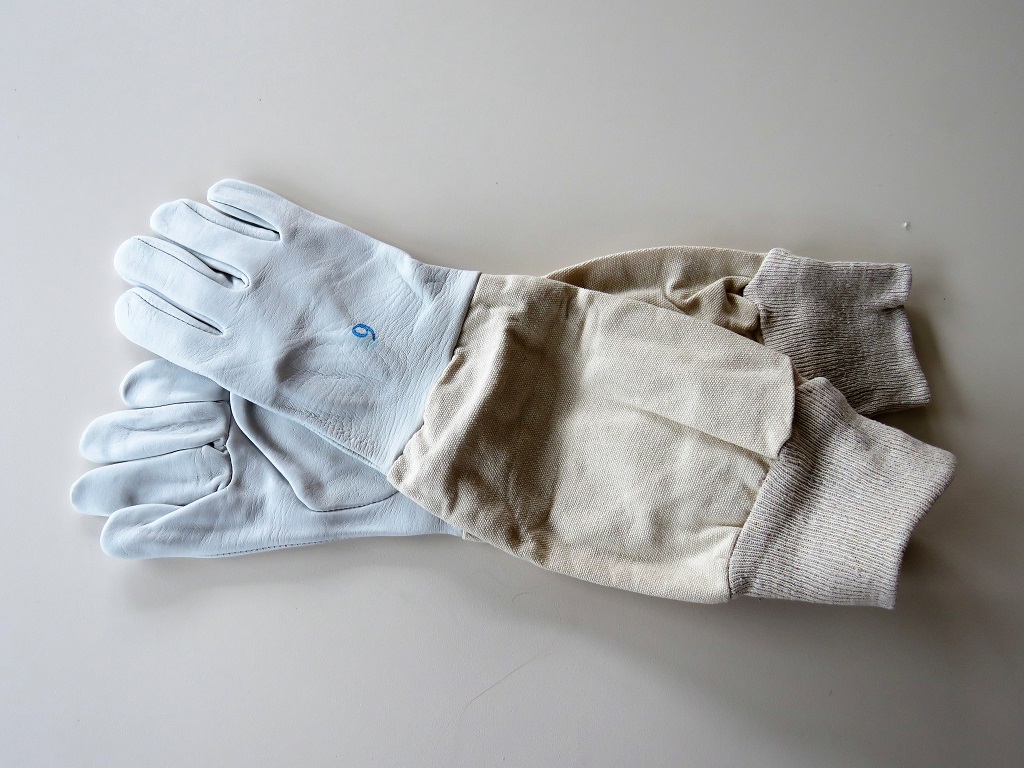
Bumblebee keeper's protective gloves
Internet Photo
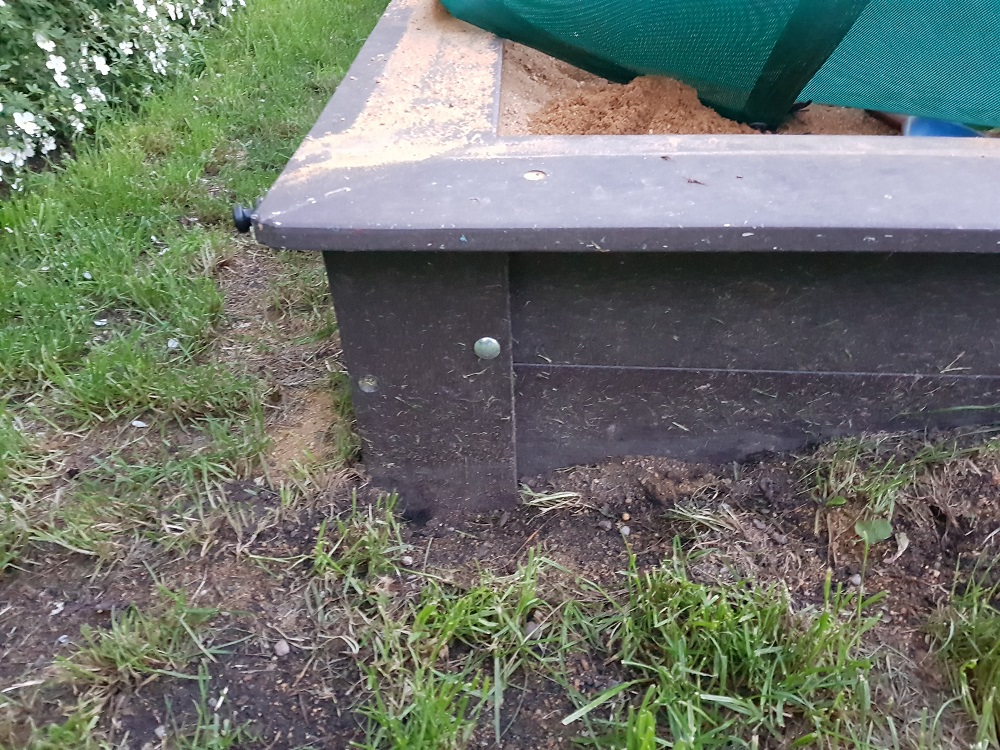
Bumblebee Rapid Response in action
For simplicity, we will refer to the Bombus Rapid Squad hereinafter as ČRR
Basic description:
- Finder nests contacts ČRR, contacts see HERE
- Finder Briefly describe: what nest was found, where it was found, address, contact details and, if possible, a photograph from the location where it was found.
- ČRR contacts the finder, assesses the situation with them – the nest is/is not suitable for evacuation
- ČRR always tries to persuade the Finder to leave the nest to live out its days on site, as evacuation is a major intervention for the nest
- If the nest needs to be evacuated, it will publish ČRR on FB and websites a call for Rescuers
- The notice contains an approximate address of the find location and a brief description of the situation with a photograph.
- As soon as it is found Rescuer, the ČRR will verify your readiness and provide you with the necessary information and connect you with the Finder
- Rescuer evacuate the bumblebee nest
- During and after the evacuation, it provides ČRR phone support
We do not make queues, priority is given to rapid nest rescue = the first one ready goes into action.
About nest evacuation
Here is a basic description of the evacuation process. Of course, it is different every time and depends on where and in what condition the nest was found.
Sometimes it is necessary to dig the nest out of the ground, sometimes to remove it from roof insulation, and sometimes to collect a disturbed nest. The evacuation procedure needs to be adapted accordingly. .
The best course of action is to carry out nest evacuation at night, when most of the bumblebee colony is home and when the bumblebees are not flying.
The Czech Telecommunication Office will provide specific advice according to the situation.
Bumblebee nest evacuation process
A) Nest evacuation
The nest evacuates at night, when most bumblebees are in the nest. Work is ongoing at a red light, during which most species don't see and don't fly
- Close the shock stopper (inlet opening) and ventilation closes,
- From the corner You will remove half the lining. and make one in it Nest hollow,
- Reveal the inlet pipe opening,
- The lure removes all bumblebees., who move around
– grip them with the grabbing tool and drop them into the glasses with the funnel
– they can be left on the stick – but this can take a long time - Try to find the mother
– if it is sitting on the nest, leave it there with the other workers clinging to the nest
– if the nest is large, the mother may no longer be there - Reveal the waxy part of the nest (work)
– prevent soil from entering it to the greatest possible extent - Transfer the work to the attic.
– it is important Transfer the nest construction to the hive with minimal damage – kokony a část původního obloženíy
– wax figure it is inserted into the ulcerin a position as similar as possible to the one in which it was erected
– a nest belongs to material found in the nest – it contains Pach, to which bumblebees are attached, it's enough add a little - To the nest with the work insert mother (if it remained on the cocoons) and likewise female workers who sit in the workshop
– if Mother caught in a jar, leave her there - Ulcer remnant top up with the prepared clean lining, cover the wax work carefully, simultaneously but leave open entrance hall
- Place lit headlamp/torchWhite lightto the place of discovery
– this will attract the remaining bumblebees
– grab them with the catch - A fright and workers in a glass transfer home
- Home can you Separate bumblebees from impurities in a jar, with whom you brought them.
– in the dark by the red light them rice stick, after which they will climb out
one by one tip into a clean glass with a funnel - At a red light, open the safety valve and adjust the lining. so that it's up to the vent and so that it's Reveal entrance to hallway
- To the alcove for the lining Introduce a portion of complementary foodsugar syrup in a feeder / sugar dough HERE
- For the nest lining Tip out the captured workers (including the queen) from the jar
– it is recommended to gently stir the dumplings, as with water on the bottom, and then tip them out
immediately Close the trapdoor with the roof - Relocate the enclosed loft (with the loft access sealed by a cork, ventilation, and roof) to a new location and leave closed in the dark until morning

Nest evacuation – nest discovery
Photo O. Hercog (6/2019 Kněževes)
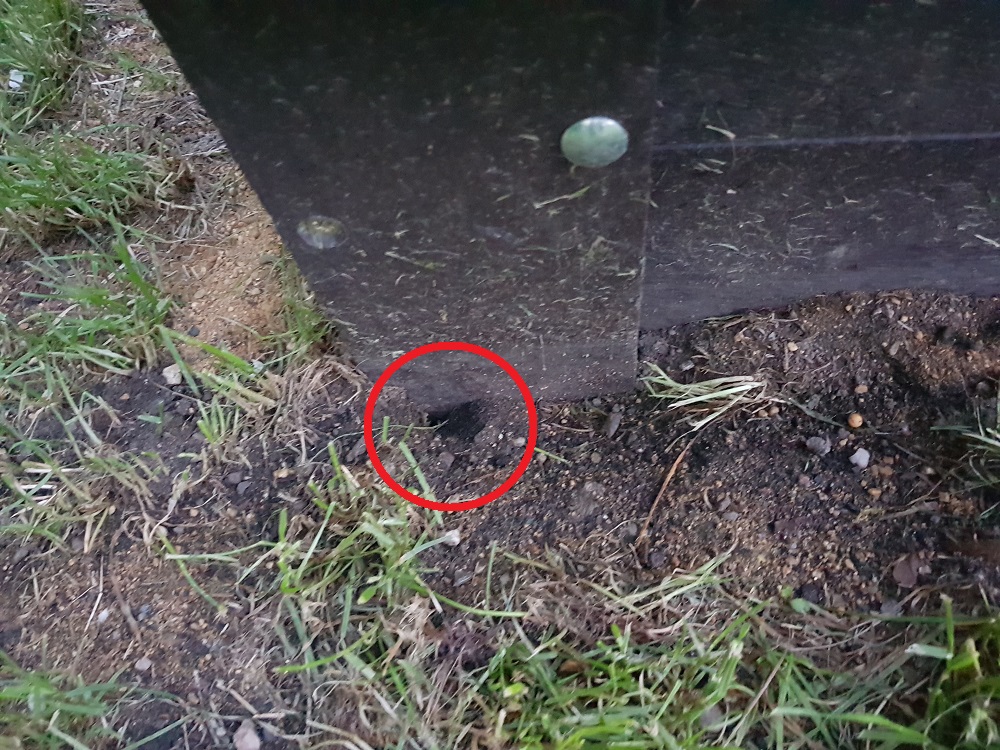
Nest evacuation - nest entry
Photo O. Hercog (6/2019 Kněževes)
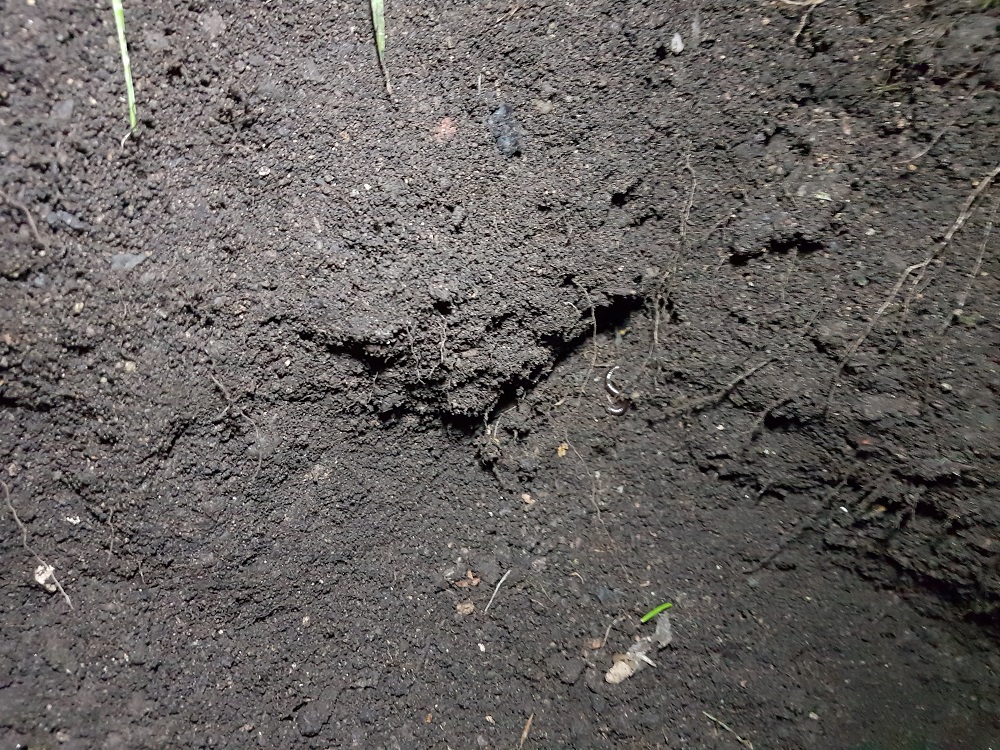
Nest evacuation – nest discovery – passage to nest
Photo O. Hercog (6/2019 Kněževes)
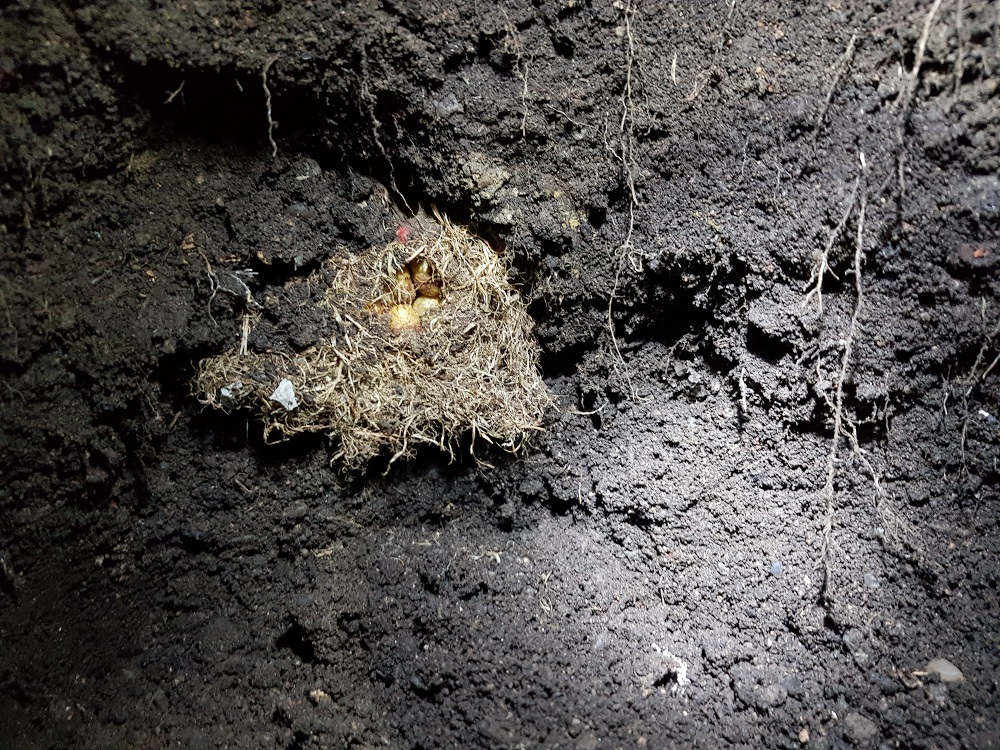
Nest evacuation – finding of a nest in a rodent burrow
Photo O. Hercog (6/2019 Kněževes)
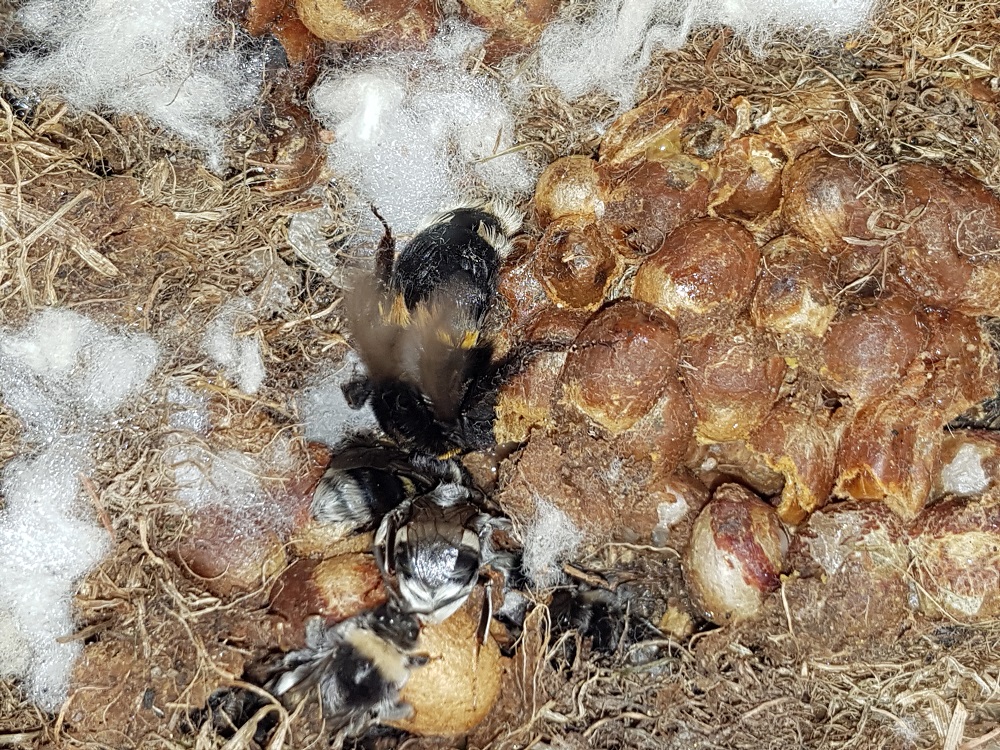
Nest evacuation – buff-tailed bumblebee queen and a pair of workers on cocoons
Photo O. Hercog (6/2019 Kněževes)
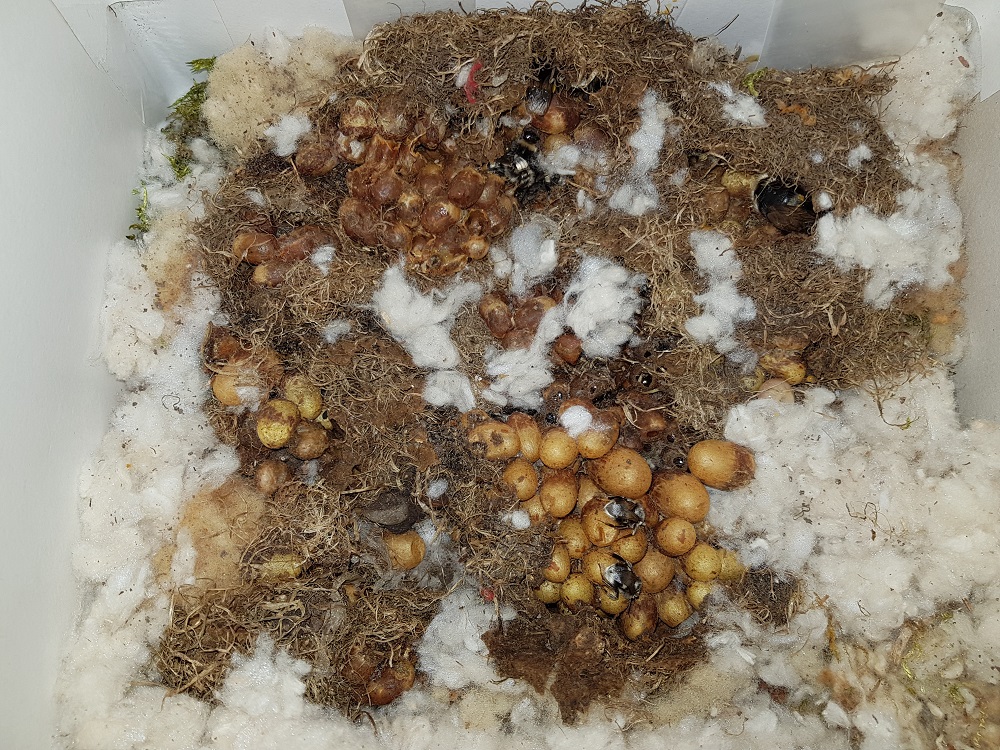
Nest evacuation – buff-tailed bumblebee mother on cocoons placed in a skep
Photo O. Hercog (6/2019 Kněževes)
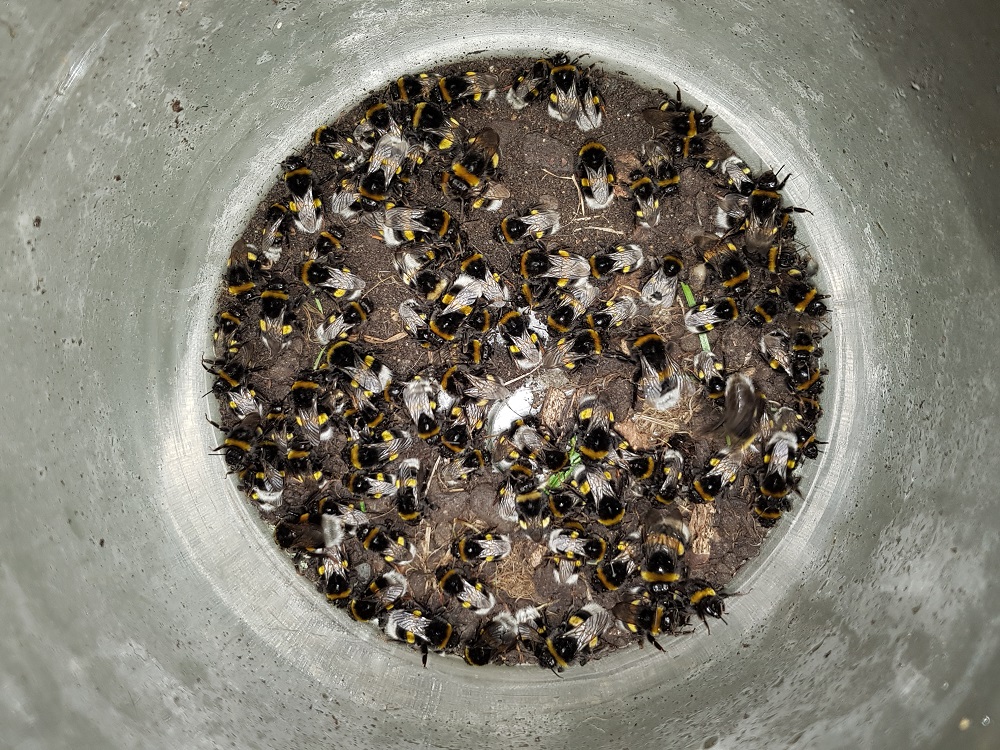
Nest evacuation – a worker bumblebee collected in a jar
Photo O. Hercog (6/2019 Kněževes)
Nest evacuation – first part of evacuation complete = mother worker placed in hive
Photo O. Hercog (6/2019 Kněževes)
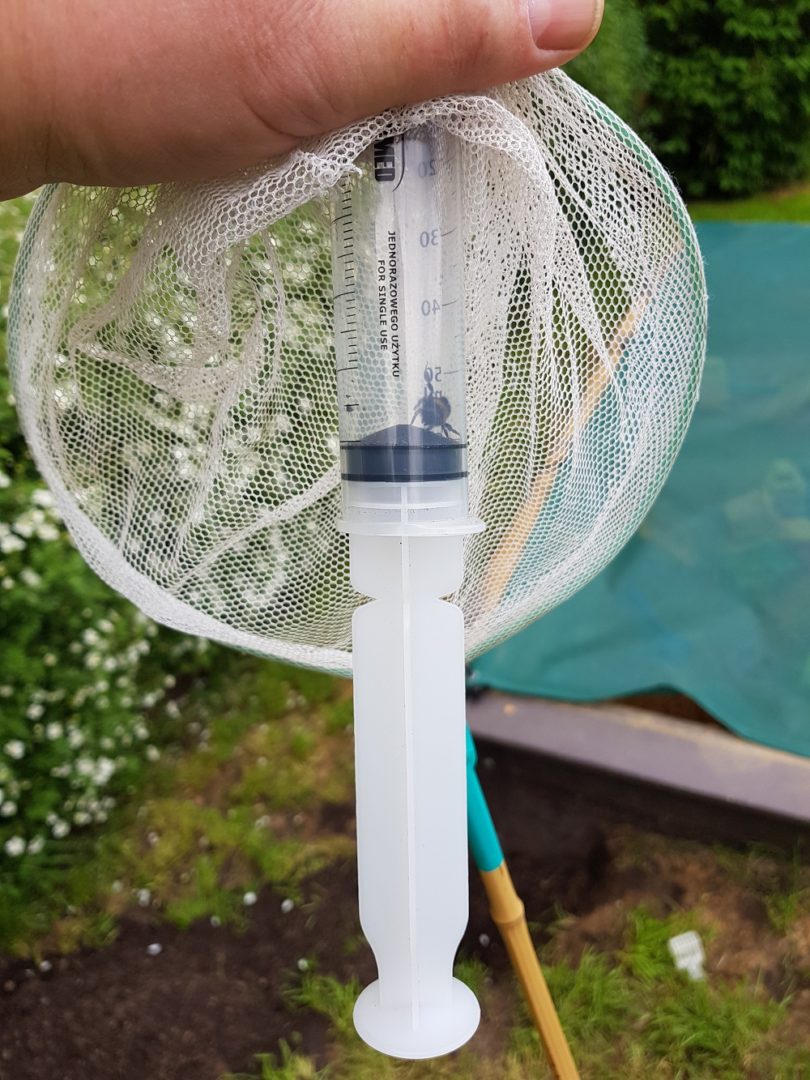
B) Collection of remaining workers
During an evacuation, there will always be in the place of a worker bee that failed to be caught at night, or possibly a mother.
They will also be there workers who spent the night outside the hivesand after dawn, they returned to the nest (there can be 10, 20, or even more, depending on the development and size of the nest)
The rescuer would He was supposed to return the next day early in the morning and collect the remaining workers – important for small nests and when it couldn't find its mother. Collection may take 1 to 2 hours, during which worker ants will return and search for the nest.
- Bumblebees on site Catch in the net.
- Wait until they sit on the ground in the place where the nest was – they are searching for a scent
- If you transport them further, Throw them into the jar with a funnel – We recommend
- If the scare with an evacuated nest is nearby and already open, you can introduce individual bumblebees into the housing with the inlet opening and loader

Nest evacuation – second day of worker catching
Photo O. Hercog (6/2019 Kněževes)
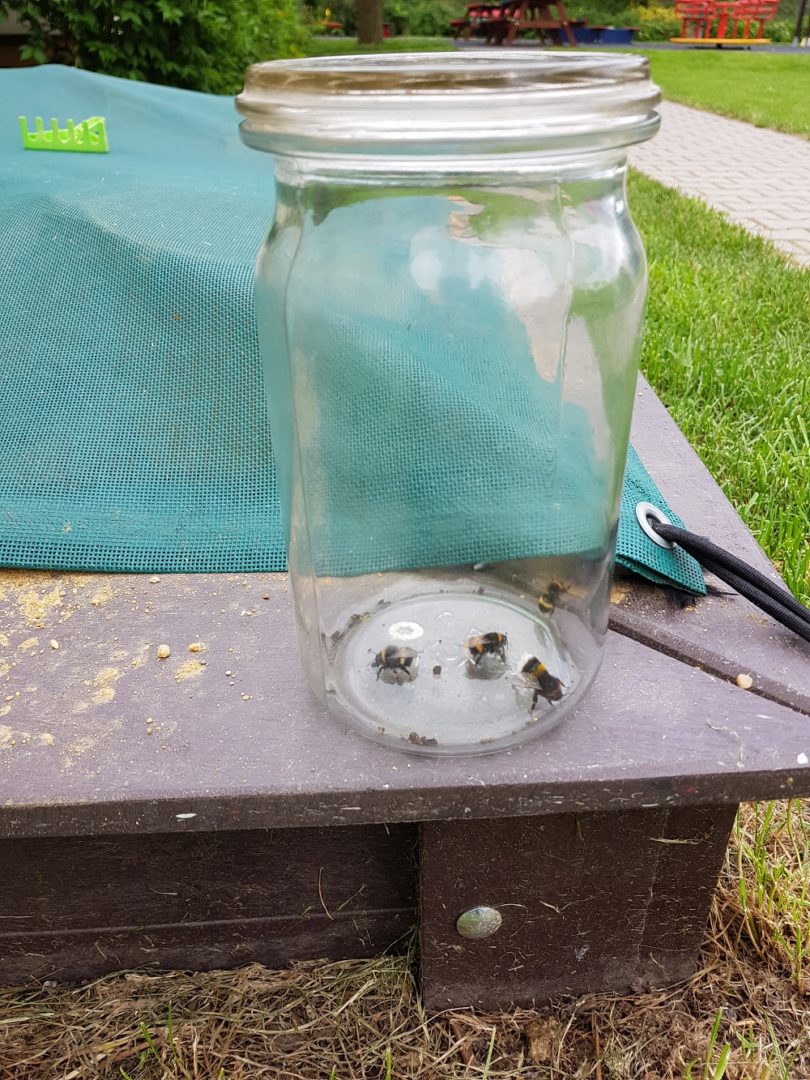
Nest evacuation – second day catching workers and placing them in a jar
Photo O. Hercog (6/2019 Kněževes)
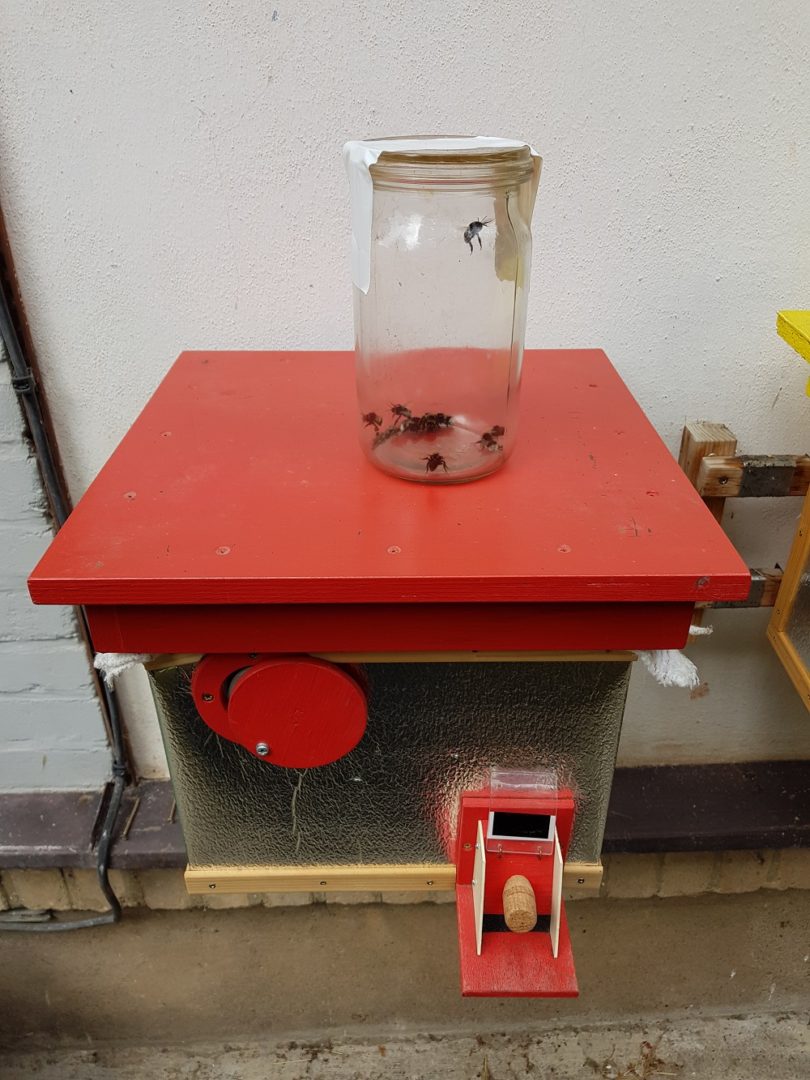
C) Opening the ulcer in a new location
The chickpea should be left to rest for a few hours (preferably overnight after evacuation).
- After dawn (any time up to midday) Open the flap and secure it in the open position.,
- Check that it is Closed vent,
- Open the hatch and step away from the device.,
- Bumblebees after some time nThey will fly east, they will do a reconnaissance flight and find a new home
D) Adding the remaining screws
Bumblebees collected at the location of discovery can add to nest:
a) before opening the hive (at a red light), but it's good leave the shock for a while
b) after opening the hive and once the bumblebees find their way out from the hive and will fly, during the day

Nest evacuation – day two – secured queen waiting for remaining caught workers
Photo O. Hercog (6/2019 Kněževes)
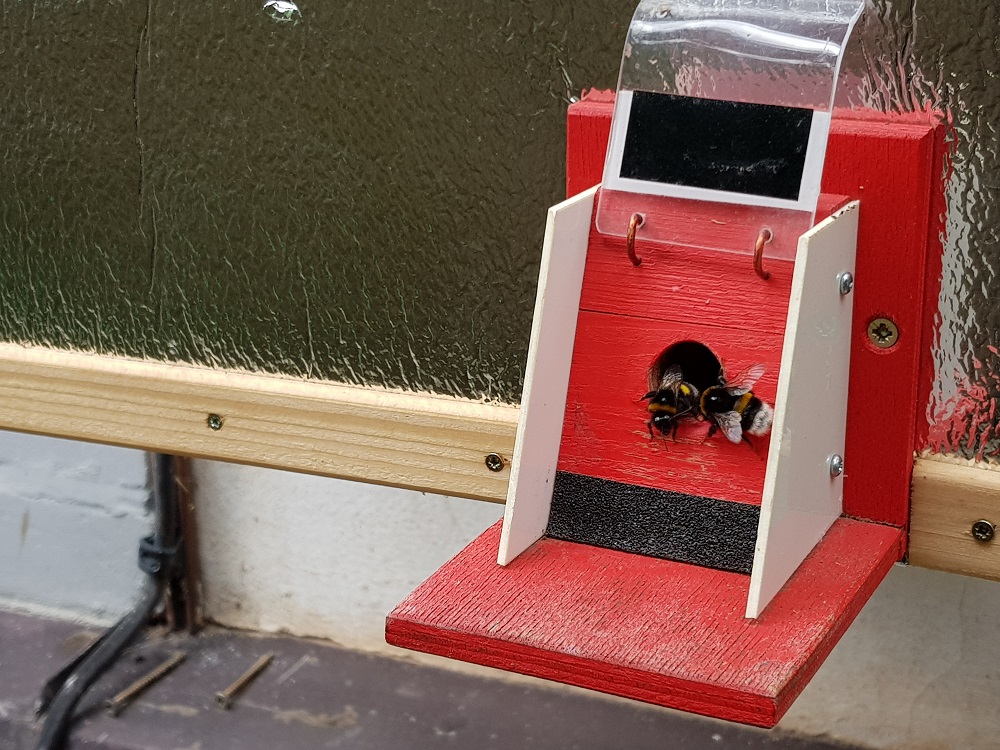
Nest evacuation - day two - first workers appear
Photo O. Hercog (6/2019 Kněževes)
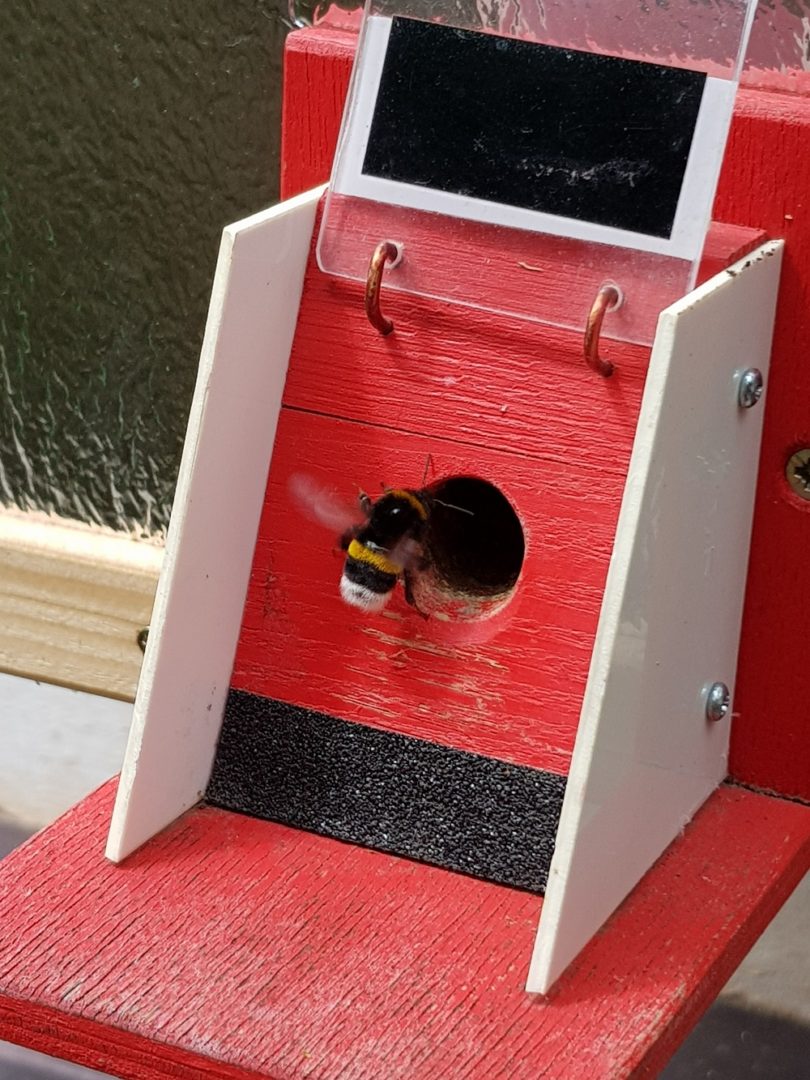
Nest evacuation – day two – first workers appear and do orientation flights
Photo O. Hercog (6/2019 Kněževes)
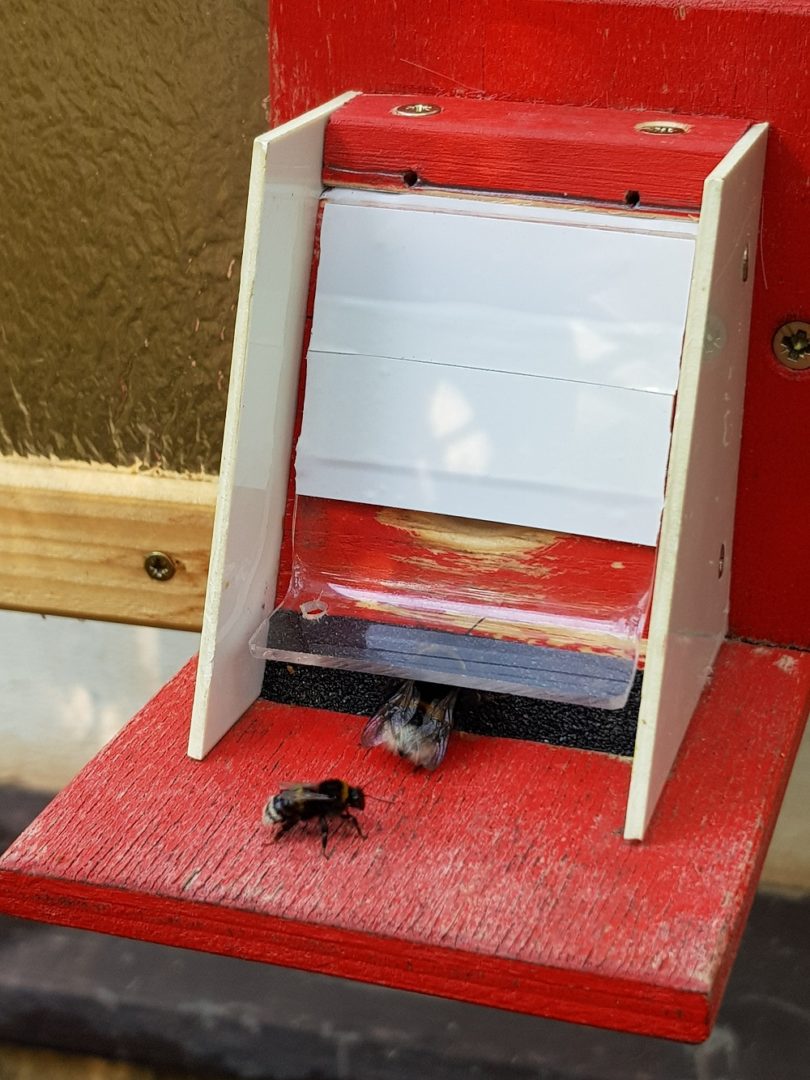
Nest evacuation – day two – first workers learn to navigate the protective flap
Photo O. Hercog (6/2019 Kněževes)