
Hymenoptera monitoring for the City of Prague 2024 - 2025
We are constantly updating the page - follow us
What you will learn here
- About the project
- How the project went
- How did it turn out?
- What are we planning next?
Last updated: 5/2/2026
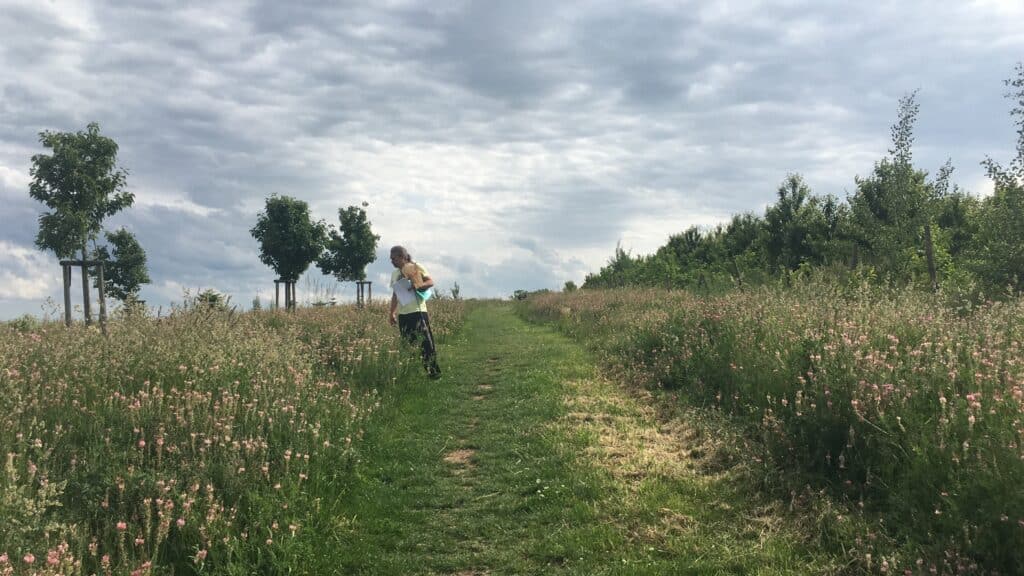
Bumblebee monitoring – Prague Girls' Castles
Photo: O. Kahoun, 2025
Thanks
This project was created with the financial support of the Prague City Hall as part of the environmental grant program.

We would also like to thank many other people who supported us during the preparation of the project and who provided us with many valuable recommendations and suggestions.
For Čmeláci PLUS zs.
O. Herzog
About the project – Introduction
We thought about this project for a long time. Finally, we gathered the courage and went ahead.
Prague is very interesting and, unlike the surrounding agricultural landscape, there is less chemistry and more opportunities.
In many places, our members and friends have found many interesting species of bumblebees. They have mostly disappeared, but the desire to find them is great. Moreover, no systematic data collection on hymenoptera is carried out in Prague.
That's why we met with a specialist in the care of protected areas from the CITY OF PRAGUE and, after consulting with them and the Czech University of Life Sciences, prepared this project.
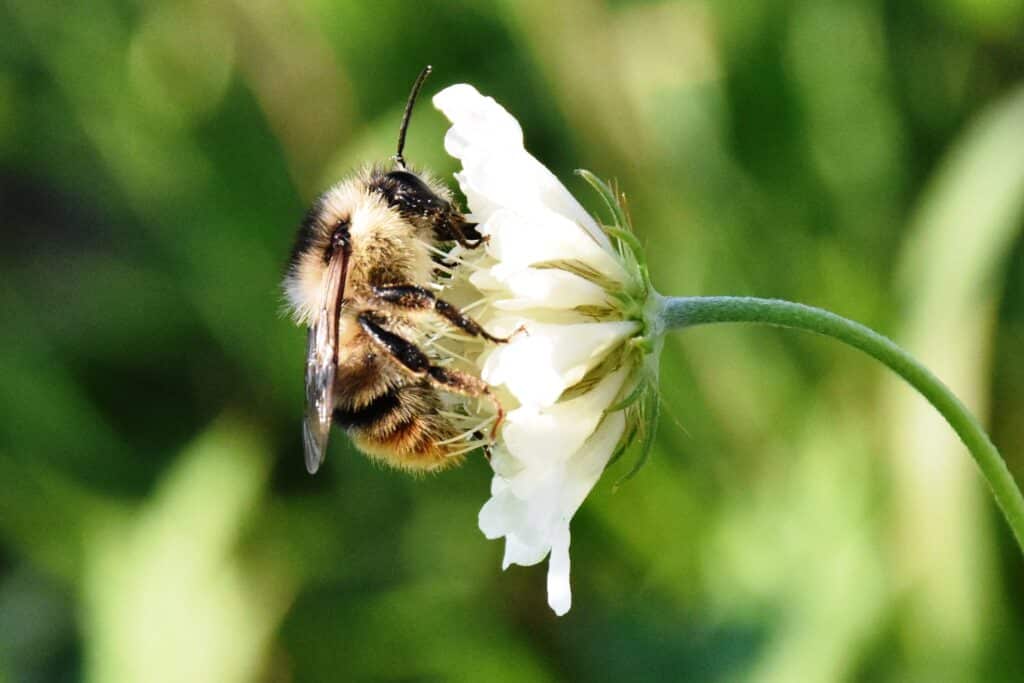
Wood bumblebee (Bombus sylvarum)
Photo Ondřej Kahoun, 2025
Default state
A number of professional studies point to a global negative trend – a significant decline in insects. This concerns both the number of insects and the number of species. The decline in species diversity is described in the order of tens of percent. Some peer-reviewed studies point to a loss of even 70-80% of individuals.
Insects are one of the key groups for the functioning of all ecosystems. Rapid declines, especially their continuing trends, are alarming. That is why this problem has recently received a lot of attention from both the professional and lay public. This topic is covered in the media - often, attention is inappropriately focused only on the honey bee (Apis mellifera) and its importance is overestimated, to the detriment of other pollinators from the insect kingdom.
The species diversity and abundance of insects are negatively affected by a number of factors. They do not act in isolation, but are interconnected, which is why there is no simple solution to such a situation. The main causes of insect decline include the loss of suitable habitats, the intensification of agriculture and forestry, the ever-increasing chemicalization of the environment, etc. In cities, there is continuing urbanization and a number of other civilization pressures, including human movement in nature, often regardless of the level of protection of the given place. Many insect species are endangered in some way, and an analysis of the species richness of insects in the Czech Republic has shown that the unfavorable situation also affects us.
The capital city of Prague is an exception. Sometimes Prague is referred to as a European phenomenon, due to the diversity of some insect species. However, since biodiversity is often concentrated in small, unconnected areas, this situation can change quickly. It is not only about the isolation of such areas, but also about the negative effects of intensive farming in the common agricultural landscape that borders such places. Species-diverse insect habitats are further attacked by housing construction and also by expanding infrastructure. This leads to further fragmentation of such places, up to their practical disappearance. Civilization pressure is also intensified by inappropriate grass management of public areas. Places that could be used by insects are maintained only with regard to human needs, resulting in lifeless green areas.
Many suitable habitats on the outskirts of cities are disappearing, along with many natural pollinators. What is very dangerous is that everything is happening mostly secretly.
Society is acutely aware of the decline of insects. In addition to the honey bee, the general public also positively perceives representatives of the Hymenoptera (Hymenoptera), especially from the Apidae family – specifically bumblebees (Bombini). They are perceived as friendly, social insects. At the same time, they also serve as an important bioindicator of the state of nature. However, they are also affected by all the negative factors mentioned above, and their populations are shrinking and species are disappearing.
An example of the disappearance of a once relatively abundant bumblebee species is the striped bumblebee (Bombus subetraneus). It used to occur in several places in Prague, but has not been detected there for several years. Another species that is declining is the inconspicuous eel bumblebee (Bombus ruderarius). The decline of these specific species is known only to the professional community.
Systematic monitoring of hymenoptera insects is not carried out, data for monitoring trends is lacking, and rare species are declining secretly and without public attention.
Similarly, monitoring of hornets (Vespiade) is not carried out. Some of their species are endangered, and are also unjustifiably classified as “insects dangerous to humans”. In the case of hornets, the media has also raised concerns about invasive “Asian” species. This may, for example, lead to the elimination of populations of the common hornet (Vespa crabro).
The importance of hornets (Vespiade) has long been underestimated. As predators, they primarily hunt the most available insects at a given moment. They are thus able to suppress and regulate even overgrown pests from the flying insect family, as well as insectivorous birds and bats.
Inappropriate care of public grass areas often leads to degradation of such places. Public green space managers are often unaware that by systematically mowing the lands entrusted to them, they indirectly contribute to the decline of pollinators.
If data are lacking to document insect declines in specific locations, habitats suitable for natural pollinators cannot be sufficiently protected and specific remedial solutions cannot be systematically developed. However, targeted measures could be developed to protect specific insect species and suitable habitats.
Project team
The project was created with the financial support of the Prague City Hall as part of the environmental grant program.
Implementation team:
Čmeláci PLUS zs – Ondřej Hercog, Jaromír Čížek, Luděk Šulda, Jakub Černý, Ondřej Hercog
External cooperation: Mgr. Jakub Straka, Ph.D.
Project objectives and their fulfillment
The aim of the project was to map the species diversity of selected groups of Hymenoptera insects, primarily bumblebees, and to identify locations that would deserve special protection.
C1 – Create a list of habitats where rarer species of bumblebees (Bombini) occur
C2 – Ensure the collection of basic data on the diversity and abundance of bumblebees (Bombini) and hornets (Vespiade) in the territory of Prague
C3 – Provide data usable for modifying measures and data for the care of open countryside in Prague in general
C4 – Provide monitoring data for further processing and follow-up projects
C5 – Media coverage of the project and its results
All set goals were met
Project preparation
The project was launched in May, before the grant was approved. Bumblebee phenology is time-limited, so we started the preparatory work in time.
First, the project team selected 27 locations in Prague. These were proposed locations where members of the ČM+ Association had previously detected interesting bumblebee species
The proposal was subsequently consulted with the specialties of the City of Prague, the Department of Environmental Protection and the Department of Greenery Care. The following City of Prague documents were also used in the selection:

Source: Prague Nature


Most of the transects are located at a distance of 3km – this is the theoretical flight distance of bumblebees. The transects are therefore interconnected.

Fieldwork (2024-2025)
The actual monitoring took place at selected locations, transects T1 -T27.
Data collection was started ahead of schedule on 31/5/2024. Based on the experience gained, we corrected the procedures and forms. We used these in further data collection.
Each transect was walked slowly by a surveyor during the visit. Individuals were monitored primarily on nectar-producing plants that provide sustenance for the monitored insects. Data collection also took place in the immediate vicinity of the transect.
During the mission, the mapper carefully captured, identified, and recorded all individuals of selected groups of Hymenoptera that he would observe. The captured insects were released back into the wild immediately after identification on site.
In the case of unclear determination, individual individuals were documented for later determination by an external specialist.
The mappers worked carefully to avoid harming any of the observed individuals or the insect population. This accuracy of determination was sufficient for our purposes.
In several cases, we used the presence of bumblebees to infer the presence of certain bumblebee species. Bumblebees of a given species primarily host certain specific bumblebee species.
Example: The hairy bumblebee ( Bombus barbutellus) hosts uu Bombus. hortorum, B. ruderatus, and B. argillaceus. Source: https://en.wikipedia.org/wiki/Bombus_barbutellus
Monitoring was carried out under the above-mentioned standardized conditions. We recorded the start and end times of data collection, basic weather data.
Nectar-producing plants in flower on the transect and in its immediate vicinity were recorded. When recording plant species, we focused on nectar-producing plants where we observed bumblebees or which are popular with them.
Data processing
The basic data processing took place in October–November 2024. The main part of the data collection took place in 2025. The data was further analyzed in 2025 and the result is part of this report. However, we must admit that we underestimated the time requirement estimate because we did not want to just provide bare data, but to share our experiences and, where possible, provide specific suggestions for specific locations.
Evaluation of the fulfillment of individual goals
C1 – Create a list of habitats where rarer species of bumblebees (Bombini) occur – COMPLETED
C2 – Ensure the collection of basic data on the diversity and abundance of bumblebees (Bombini) and hornets (Vespiade) in the territory of Prague – COMPLETED
C3 – Provide data usable for modifying measures and data for the care of open countryside in Prague in general – COMPLETED
C4 – Provide monitoring data for further processing and follow-up projects – COMPLETED
C5 – Media coverage of the project and its results – COMPLETED
Conclusion
The implemented project fulfilled all the set objectives and confirmed that systematic monitoring of selected groups of hymenoptera insects in the territory of Prague is important for their protection and for planning landscape care. It was possible to create an overview of biotopes with the occurrence of rarer bumblebee species, collect basic data on the diversity and abundance of bumblebees and hornets, and at the same time prepare materials usable for the management of greenery and open landscapes.
The project also included a simple analysis and interpretation of the obtained data. Although the scope of the monitoring does not allow for statistical conclusions, we managed to identify key localities, draw attention to the occurrence of less abundant or endangered species and point out differences between individual transects. The results are fully usable for further processing - whether in the form of follow-up projects, extended monitoring, or deeper ecological analysis.
The expected benefits of the project have been achieved. We have a comprehensive set of data, practical recommendations for landscape care and specific suggestions for adjusting management in selected locations. The project also contributed to media coverage of the issue of insect decline and the importance of pollinators in the urban environment. This communication will continue – in the form of lectures, professional meetings and direct cooperation with the Prague City Hall and individual city districts.
The knowledge gained represents the basis for further steps in protecting biodiversity in Prague.
The project showed that even relatively simple monitoring can provide valuable information and become an impetus for longer-term and more systematic care for natural pollinators and their habitats.