A garden close to people and nature

You can have a meticulously maintained lawn or instead have a small meadow mowed twice a year.

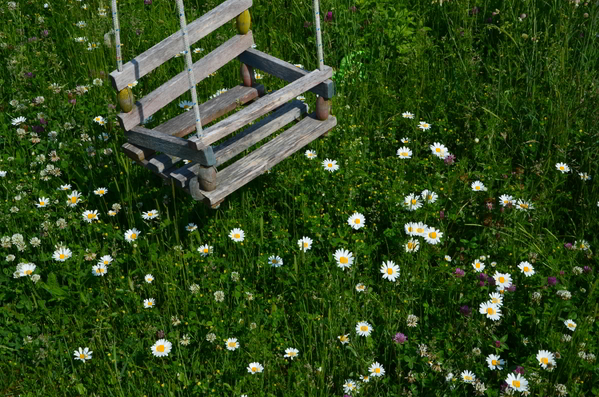
Children will appreciate the flowers for their games and insects will find the missing food.
Creating or modifying a garden to be a haven for bumblebees is not difficult. And it doesn't matter at all whether you have a garden as big as a football field or a small garden as small as the palm of your hand.
What bumblebees need from your garden are flowers. Nectar-bearing and pylo-bearing flowers, whether from trees, shrubs or herbs. That is why it is very important that something is always blooming in the garden, from spring to autumn.
On the other hand, this does not mean that you have to give up all the lawn at the expense of bumblebees. Just make sure that the children have somewhere to play, that you have somewhere to dry the laundry...
And it is not about transforming your beautiful and neat oasis of peace into some kind of weedy jungle.
Sometimes, just small changes in garden care are enough. For example, you do not have to mow the lawn every week or two. All you need to do is mow a less frequented part of the garden for three weeks, let daisies, clover, black-headed cowslip and scorpionweed bloom in the lawn and suddenly you see how the sterile green area without life turns into a small colorful insect paradise.
It is a good idea to think about whether you really need to buy juniper and thuja for your garden or whether boxwood and cherry could be better.
The right composition of plants is the first prerequisite for creating a true bumblebee pasture and although it may seem complicated to some at first, in the end a garden planted in this way will be a pleasure not only for bumblebees, but also for us thanks to its year-round variety.
What do bumblebees and not only them need, and what should a garden that is friendly to nature and its owner have?
- Plenty of flowers from spring to autumn
- Water area with chemically untreated water and shallow shores
- A corner or part of the garden that is not intensively maintained
Flowers – a food source for insects
Not everything that blooms can be used by insects. Therefore, the garden owner should think about planting species and cultivars whose flowers provide enough pollen and nectar. It does not have to be just ornamental plants, but also flowers of trees, shrubs or small fruits and vegetables. It is very important that something is always blooming in the garden, from spring to autumn. The more diverse the species offer, the better. Flowers differ in composition and in the storage of pollen and nectar, and so a diverse garden becomes a valuable food source, which is decreasing in landscapes with a predominance of monocultures or gardens following fashion trends.
Want something special? Plant a native species, you'll be surprised how few there are in gardens, how hard it is to find such a purely native species, and how much it will be appreciated not only by insects but also by birds.
Does it make sense to be proud of and pamper a "rare" and often much more demanding cultivar, a catalog "new" available in every garden center? To buy insect hotels for the garden and feed birds artificially while having almost nothing that is their natural shelter and food source, which we have deprived them of by reshaping gardens? Isn't it a bit "over the top"?
On the other hand, this doesn't mean you have to give up all your lawn, at the expense of bumblebees. Just make sure your children have somewhere to play, and somewhere to dry your laundry.
And it's not even about having to transform your beautiful and sleek oasis of peace into some kind of weedy jungle.
Sometimes, just small changes in garden care are enough. For example, you don't have to mow the lawn every week or two. All you need to do is mow it in a less frequented part of the garden every three weeks, let daisies, clover, blackhead and scorpionweed bloom in the lawn, and suddenly you see how the sterile green area without life turns into a small colorful insect paradise.
It's a good idea to think about whether you really need to buy juniper and thuja for your garden because everyone has them and they are advertised on every corner, or whether it could be a deciduous shrub that will reward you with diversity throughout the year and offer insects and birds a disappearing source of food.
Did you know?
Popular thujas or, for example, goldenrods have no use for birds or insects (goldrod flowers are sterile). On the other hand, such an "ordinary" black elderberry, not only does it require almost no maintenance, but it provides food for up to 62 species of birds, its inflorescences can be used in the kitchen, children enthusiastically prepare elderberry lemonades. It tolerates pruning. We don't need stories from old Indians, our ancestors already had a saying: "Shrug before chamomile, kneel before elderberry."
The insect hit parade is won by the willow tree, to which up to 213 insect species are associated.
The correct composition of plants is the first prerequisite for creating the right bumblebee pasture, and although it may seem complicated to some at first, in the end, a properly planted garden will be a pleasure not only for bumblebees, but also for us, thanks to its year-round variety.
We will gradually try to offer you a selection of options for adjusting the representation of flowers in the garden. We do not aspire to be a gardening website, but we are happy to list our favorites, including insect and bumblebee favorites.

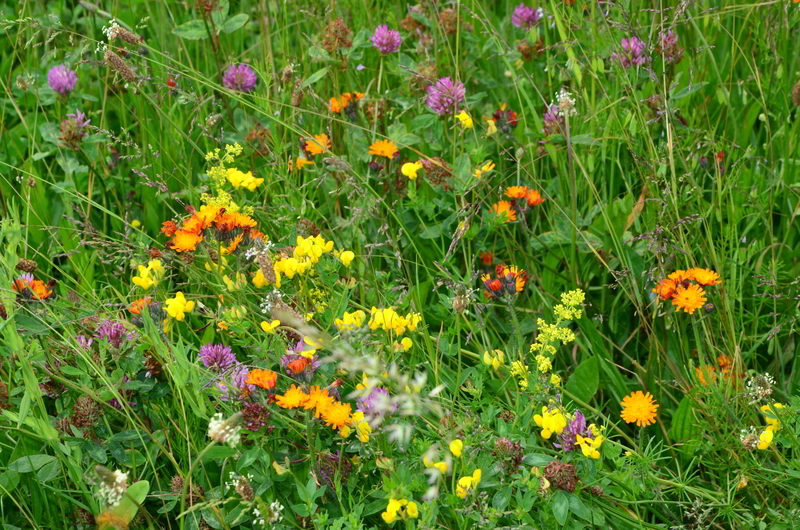
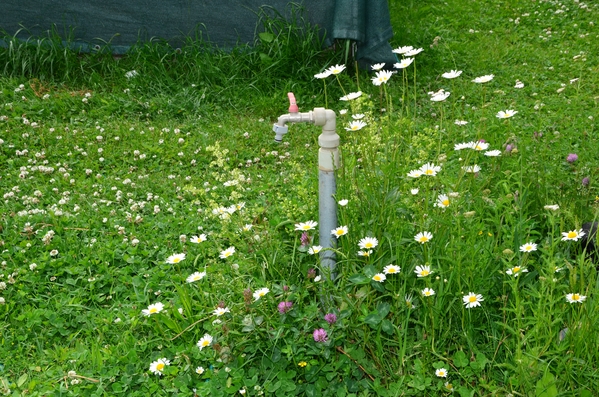
In the background, an area mowed for intensive use, with a designated meadow area around the water inlet.

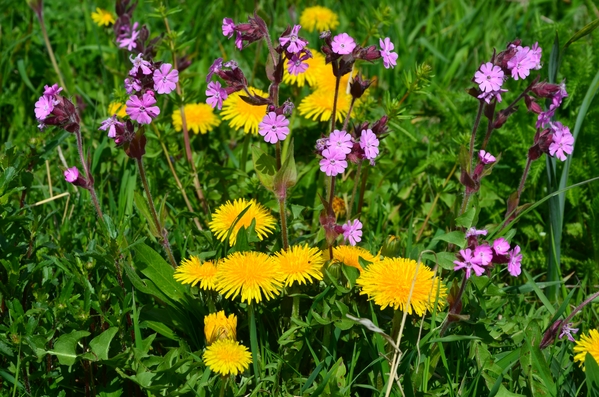
A weed for some, a paradise for insects, and for us a different point of view.

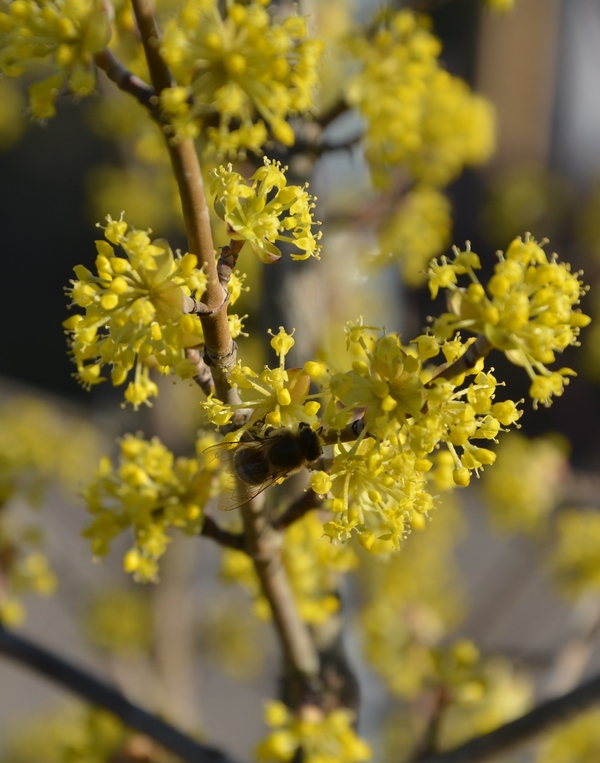
Instead of goldenrod, you can plant dogwoods. They bloom even earlier, although not as densely, but they are the first insect food and in the fall they will reward you with edible fruits with an original taste.
Water in the garden
Drowning is the second most common cause of death among children in industrialized countries, including the Czech Republic.
A crutch and partial help, unfortunately, for birds and insects is placing various floats in pools or containers with perpendicular and smooth walls.
But surface water is essential for insects, birds and other animals. Natural sources are dwindling, so the garden owner can help a lot here too. You don't necessarily have to have a natural swimming pond in your garden. A miniature water feature or wetland with a shallow bank of sand or pebbles will also help, as long as you really don't need much - ensuring that the water doesn't dry out completely during the year. Creating such a source of life is much easier than you think and much more fundamental than you suspected. You'll be surprised at what you can find near such a natural body of water.

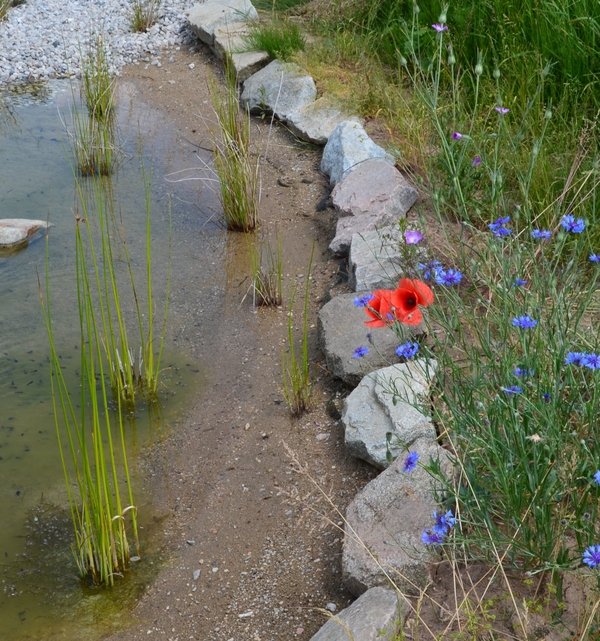
Shallow shores of a pond, from which animals can safely drink. Size does not matter. As you can see, the pond came in handy for the toads too.

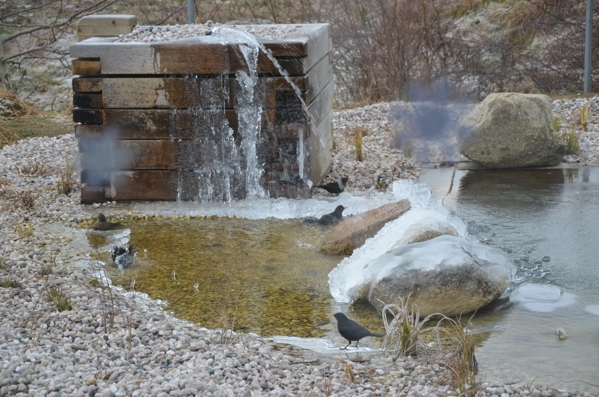
A natural shallow body of water is important even in winter. You are not only helping the insects but also the birds and your soul…
(view from the window)
To have, to have your own corner somewhere..
It was a favorite song by Jitka Zelenková of our youth. But how much the animals of our gardens miss it. They find shelter, rest, and many species find a home in it. It's not just bumblebees.
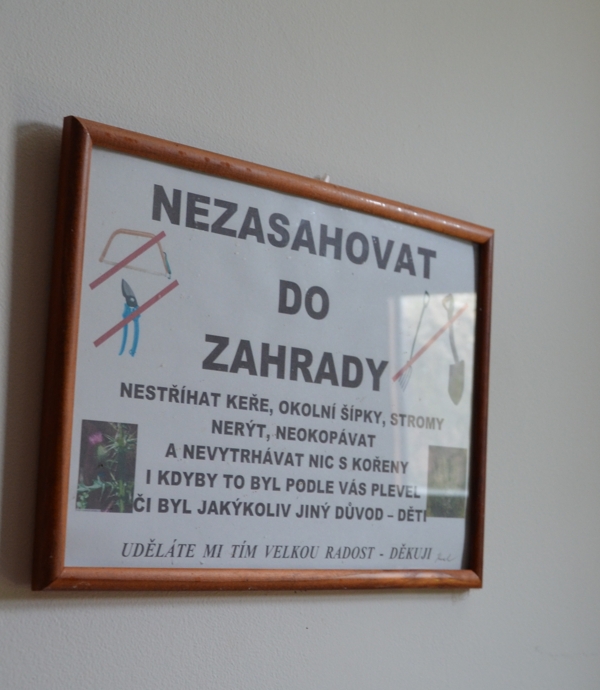
You can create such a place very easily, it can be a part of a hedge where you choose domestic shrubs that you will not treat with cutting and spraying. A part of compost that you will save from having to toss. A place with old dead wood. An unfertilized flower bed planted with field "weeds" or meadow mixture mowed twice a year... A domestic pioneer shrub whose immediate surroundings you will let grow instead of weeding.
These places don't have to be large and can be placed in different places in the garden. They can also be used to create various optical walls and corners that will become the destination of children's expeditions, because nowhere else will it be so lively.

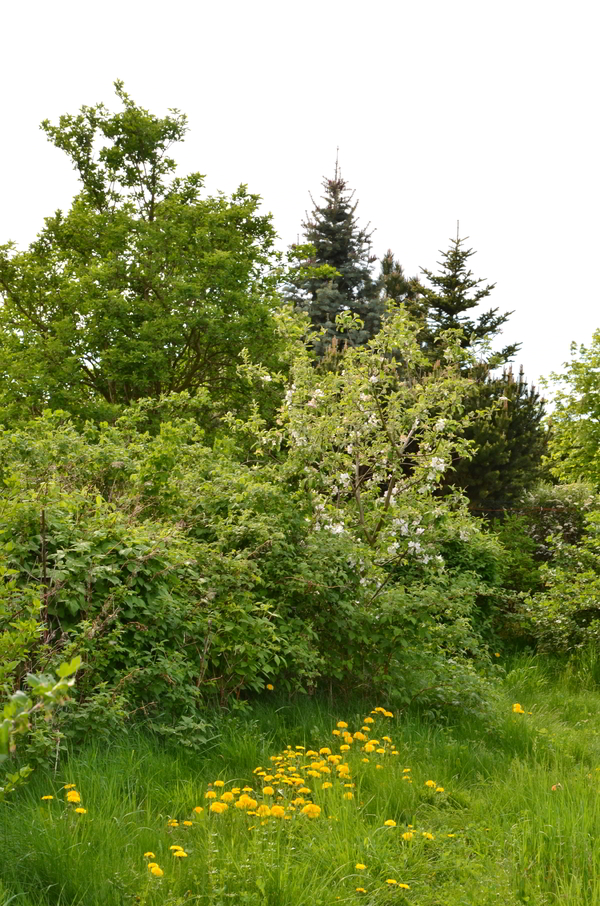
A glimpse of a bit of wilderness – an uncut hedge of raspberries, apple trees and elderberries in the distance.

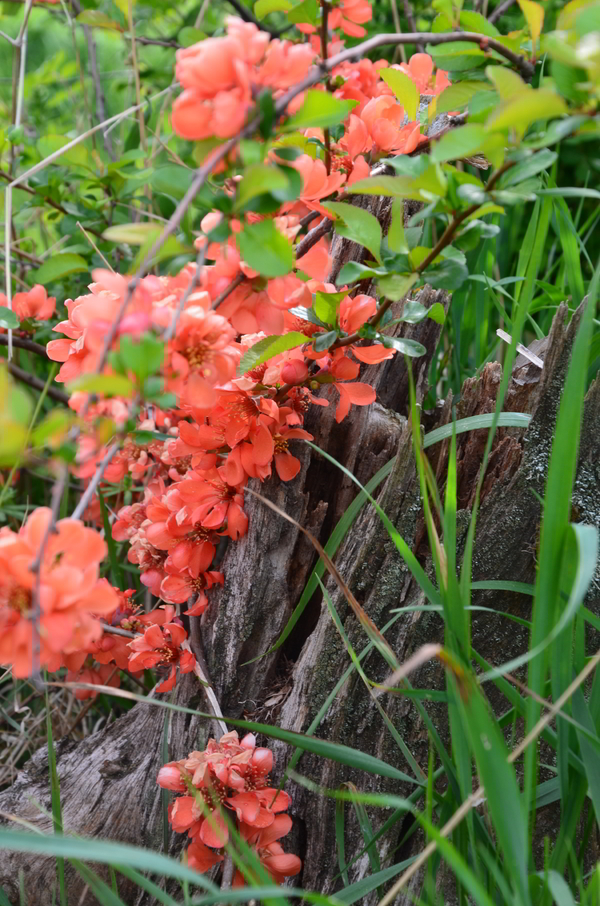
Old wood doesn't have to be ugly at all – a quince planted near a stump.
In conclusion
We are aware that bumblebee breeding is a wonderful hobby, but it is the icing on the cake. Without landscaping, changing people's thinking about the use of gardens, our breeding cannot save them, even if it were the best.
And that is why this chapter has a prominent place on our website.
We hope you will be inspired. Even if you decide to make a small change, it will still be a change 🙂 and without it, nothing will change…

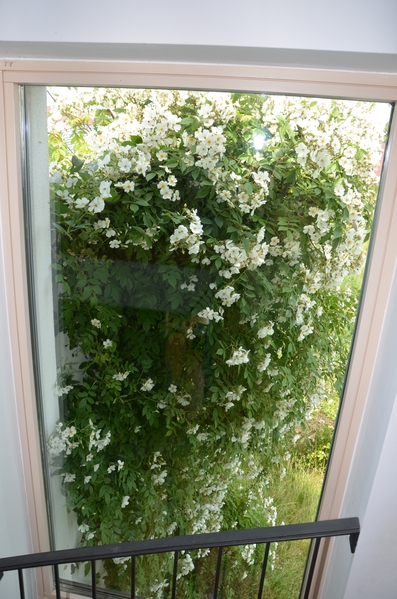
Bobbie James roses can be used to beautify old trees or, for example, on a north wall. You will provide birds with a place to nest, insects with food, and you will have a breathtaking view.

Changing an established idea is sometimes not easy. 🙂
photo Karel Kučera