

So that the municipal is not only for the citizens

Improvements and maintenance of public green spaces for citizens and nature

What you will learn here

  • How to care for municipal areas so that they don't become a green desert, but a home for bumblebees, pollinators, insects, and other wildlife.
  • We will guide you to a suitable methodology for lawn care and flowering meadows.
  • We will show interesting examples as proof that it is not that difficult.
  • We will show how each region/district/city is doing.
  • We offer you the opportunity to get involved in the beautification of your cities and towns. 

Last updated: 11/3/2021

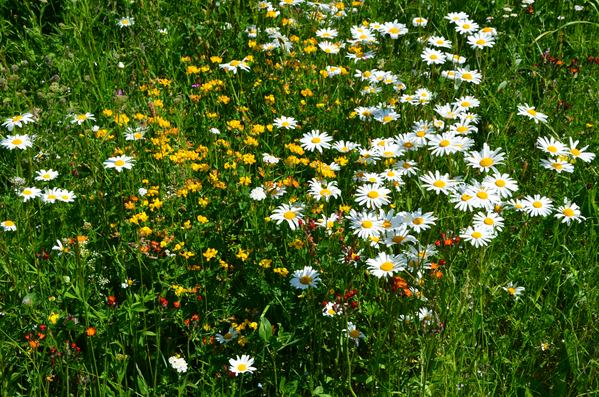
Meadow in early June

A flower-rich meadow in your own garden can be a good example for the local community that it's possible and not that difficult.
Photo K. Kučera
Introduction

Most of you know how important it is for pollinators (i.e. bumblebees, bees, but also other insects) food supply and nesting opportunities.

There are many in the municipalities public spaces that are maintained to be „nice“. In practice, this means a green area without flowers, which is represented by a „well-maintained“ lawn. To avoid it just being green, The municipality will provide flower/shrub beds
Everyone is taken care of by people who forces nature to conform to the human ideal of beauty. In the villages they do it Technical Services, or company name which are mostly motivated by doing the work. They often work according to a fixed schedule, budget  and regardless of the weather. Such services/companies logically they don't respect what nature needs/can tolerate at a given moment.
And so they sow, plant, water, mulch, fertilise, irrigate with chemicals, and all this again and again, repeatedly throughout the season. The results are often dismal.

Current „The “care" for green spaces has a number of flaws.The whole „fun“ costs a considerable amount of money, which the municipality is spending on it. Most importantly, however, it's Sisyphean labour, because as is well known, grass grows, and so it's constantly being mown to keep it „short“. This is often done in places where people don't enter the grass and tall growth wouldn't bother anyone. 
Once the grass has been cut short, it must be watered. Moisture will not be retained in it, and the sun and wind will dry it out.
Then dandelions, daisies and other „weeds“ again start to appear in the grass, so it's time for chemicals. The areas treated with chemicals need to be re-sown, watered, and mowed again, and the cycle starts all over again.

This job never ends and the money's draining away. Summer will decimate the lawn with its closely cropped hair, and the councillors will have to throw more money into the budget for the technical services so that it „looks like something“.

What is wrong

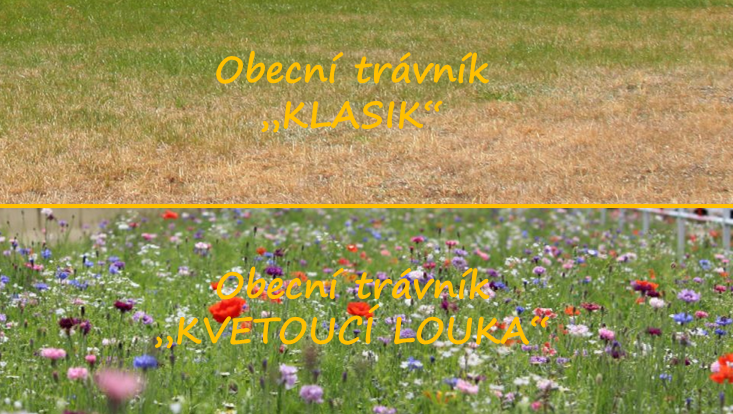
  • That in shortly cut lawn We won't encounter bumblebees, bees, butterflies, and other creatures..
  • That a short-cut lawn dries easily and if it isn't watered, it dries up and is subject to erosion– water and wind.
  • So we're off again, „ordering the wind and the rain“, and making public spaces a green desert without life.
  • That we only think about having everything „our way“ and we are ousting nature from places where it can bring us joy and delight our eyes and souls.
  • Such care for the lawn costs Unnecessary money and it doesn't help nature. 

Is this what we want in our villages and what we want to look at? Is what we have in our own gardens really enough, and are we no longer interested in what is beyond our fences?

How can we ensure that a municipality is not just for its citizens, but is also a piece of living nature?

Yes, it is possible and good examples are multiplying. 


Bumblebees PLUS - Municipal Lawn Models

Examples of municipal grasslands

Times are changing 

Times are changing, and some cities and municipalities have realised that there's another way of doing things.

  • The communes changed Access to grassland maintenance in public places.
  • They're letting the grass grow., They are chopping it up into pieces, will allow the wildflowers to return. The grassland is becoming flower meadow.
  • Respect Plant life cycles and let them breed naturally.
  • I respect too cleaner, who feed and breed on flowering public spaces.
  • Green spaces full of meadow flowers are created to form floral bands. Them Insects migrate and native plants spread in them for the given location.
  • Explain to citizens in what ways and how the maintenance of grass areas has changed, what are the benefits for the municipality, citizens, and nature.

The change in approach to lawn care is also associated with risks

  • The change, surprisingly, doesn't require significant costs. You can have a flowering meadow from sown annuals in the town square within a year, pleasing to the eye. Preparing a permanent flowering meadow, without the need for constant reseeding and renewal, requires Time and patience. Often, it is enough Change of mowing (we should rather be talking about Lawn managementand the present herbs will bloom as soon as they get the opportunity. 
  • Successful Conversion of grassland in the municipality to a flowering meadow will bring new life to the given place. However, the change should have been permanent/long-term. If access is soon perhaps You'll reconsider, You will endanger those animals and plants, who had already settled there. 
  • If you use „exotic“ blends meadow flowers, it might not succeed and moreover there is a risk of introducing a non-native or even an invasive plant species. Choose verified regional seed mixes, or create your own from plants commonly found in your area.
  • If you buy lseed mixtures for a „guaranteed genuine flowering meadow“ in a hypermarket, and you'll be throwing your money away. A flowering meadow needs proven quality seed mixes. Stick to the motto „I'm not rich enough to buy cheap things“ and you'll save money and disappointment.
  • Blends prepared for a different landscape and soil, it may not be as successful as you wish. Choose according to the location and soil type where you want to use it.
  • If you don't know how to choose, Don't try. Plan and consult with expert naturalists or with producers who prepare their own mixtures. You can get an idea of how thoroughly they address the issue from their websites. Ask to see a reference beforehand, or inquire where they have already succeeded.
  • Risks include unclear ideas and expectations. If you actively tend to a meadow annually and renovate it, it can be very rich (annuals). If you simply help nature and allow local wildflowers to bloom, the flowering meadow may initially be less rich in flowers, and some field flowers like cornflowers, poppies, and ox-eye daisies will likely be missing. However, your meadow will eventually require less care and will be truly natural. Seed producers also consider this, which is why their mixtures often contain seeds of both annuals and perennials. The meadow will transform before your eyes year by year, returning to its natural form.
  • A flowering meadow you won't get by buying a packet of seeds and you just tip it onto the grass. Preparation and maintenance always involve some work, depending on the type of meadow you have chosen.
  • We need to address the concerns of those, Who is afraid of ticks and plant seed raids. These individuals need to be made aware that public green space isn't primarily set up for them to lay their sun loungers on. The lawn area needs to be managed according to its intended purpose. Consider whether your meadow will serve pollinators, citizens for relaxation and sunbathing, or be used for sports. A compromise can be found by combining different types of grass. You can also create areas with taller growth or, conversely, mow strips around benches.
  • Next Concerns are arising among allergy sufferers.. The wind carries pollen over long distances. Mowing the grass in the square will not actually help allergy sufferers. In windy conditions, they will be exposed to pollen from kilometres around, just as they are today.
    Note: The author of the text is himself allergic to grasses and pollens
  • If You will not change in grassland and grassland management to communicate well, You will encounter misunderstanding. Certainly, explain to those who are afraid of change that in Your municipality is a space for everyone.

Note: Changes to grassland management in Protected landscape area result in conflict with regulations and laws. At such locations, your plans need to be discussed with the relevant nature conservation bodies.
This topic is not discussed on our pages; we only highlight this issue. 


All in all, change is possible, it's not complicated., Thanks to it, the municipality saves money and brings joy to everyone.


You have read an interesting article by workers from the Institute of Botany, the Czech Academy of Sciences. (Kateřina Štajerová, Zdeněk Kaplan and František Krahulec). The article „Sowing flowery meadows and the McDonaldisation of the Czech landscape“was published on Ekoslist.cz 12/3/2021

The article discusses about the risks of „exotic“ mixtures, which may contain seeds of non-native plants in order to increase the effect of flowering meadows. These plants can in alien environments to be invasive and harm the landscape.

Therefore, it is necessary to pay attention to the selection of blends and to choose actual regional blends by content and not by name.


Change of approach and finance

A number of studies could certainly be found that express change in monetary terms. But can we convert living nature, joy, and health into money?

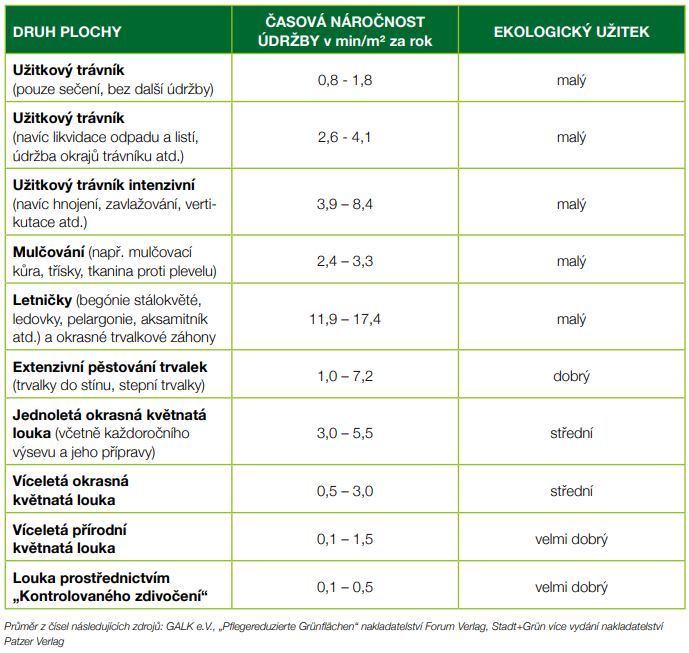
Let's at least have a look grass maintenance costs You just have to calculate it. 

We used Wildflower meadow material od Prirodnizahrada.eu as an example of how frequent mowing of grass is costly.

The material suggests that If we let nature do the work for us, we will achieve a greater effect and save costs..
Bumblebees PLUS - Natural Gardens - Flower Meadows

Wildflower meadows
Source Natural Garden
It's time for a change, or how to make magic

Let's perform a little magic together so that the municipality is not just for citizens but also for nature, as it is truly a great benefit for everyone.

In a number of towns and municipalities, they have already changed access to public areas and lawns a They turned them into flowering meadows.They understood that the change brings a lot of positive effects and also Financial savings.

Try it too, it's not difficult:

  • Address and you your District councillors and ask them for a change = write to them or visit them in person.
  • Make them available general methodology Ministry of the Environment as well as the methodology, which you will find in the following text.
  • Give them examples from the vicinity a proposal for a specific place in the village where a wildflower meadow can be created. Jfirst that can be a place, which the municipality has no interest in, here you can Begin.
  • Don't wait for anything and Show the villagers that it is possible – Lead by example, be friendly with your neighbours in a small area between houses.
  • Take your time to prepare, Errors and inconsistencies do not pay.
  • Don't be afraid Communicate with experts and grass seed producers And take advice from those who have demonstrable experience and verifiable references in this field. 
  • Be patient and give nature time to return to the places that belonged to her.
  • If you dare to go further, Ask the municipality for a larger area and you'll take her into your care for a few years.
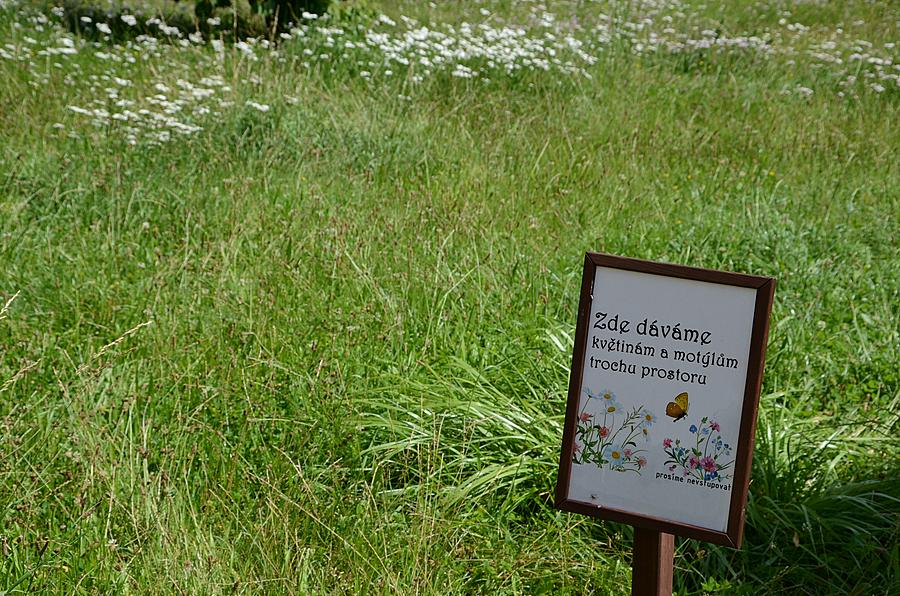
  • Don't forget to explain to fellow citizens, why lawn care is changing and what benefits it will bring. A simple information sign would be very suitable. 
  • Support your local councillors And advise them.
  • Speak to the community about change, promote it in the municipal press, on the website, etc.
  • Brag with our own small example, for instance on our website www.cmelaciplus.cz
Bumblebees PLUS - Flowering Meadow Information Sign - Český Krumlov - Martin Střelec

Flowering Meadow Information Sign - Český Krumlov
Photo: Martin Střelec
Example communication – draft letter to the municipal council

Note: Insert specific information here

office 

Good day,

I am writing to you regarding grass cutting. .

Recently, a number of municipalities and cities have abandoned the traditional way of maintaining public green spaces. Although it has long been discussed that it is not good to mow grass to a low height across the board, this is still happening here. 

The result of such care is a lawn where insects find no flowers for sustenance and cannot reproduce. Dew does not condense on the grass blades in the morning to moisten the soil, and the sun soon burns the grass down to the earth. This then merely dries out and cracks. When it finally rains, the water flows away uselessly down the dry slope, taking with it some of the soil that the grass would otherwise have retained.

Instead of living turf and a flowering meadow in our village, we have a sterile, at best merely green, lifeless area.

By way of example, I can mention:

I am writing to you with a request:

  • Please change the way public areas are maintained.
  • transform the sterile green lawns on our public spaces into flowering meadows and wildflower strips
  • Work towards a change that will help the environment and simultaneously save funds in the municipal treasury 
  • Keep up with the times

The methodology is available on the website of the Ministry of the Environment, titled „How to care for lawns on municipal land with regard to dry periods and biodiversity!“ (https://www.mzp.cz/cz/pece_travniky_obecni_pozemek), including 
basic standard of nature and landscape care „Landscape meadows“ (https://standardy.nature.cz/res/archive/414/068350.pdf?seek=1552472958)

It really is possible. It's already happening in a number of cities and, thanks to this, they are coming back to life. Natural vegetation and growth are returning to grassland areas, which is resilient and doesn't require constant maintenance, retaining natural moisture from rainfall and atmospheric humidity.
This surface requires care, but the maintenance costs are lower and the positive effect is significant. 

Examples of major cities that have changed their approach to grass cutting have been reported in the press in recent years. Examples from our immediate vicinity can be found here, for instance.. 

Let's try it here too – it will help us all!.

Thank you for your feedback on my request and for advocating for such an important change.

<JMÉNO>

  and 

Information for Fellow Citizens

It's not possible without involving and communicating with fellow citizens.

If you explain to them why the land is now being maintained differently than before, you'll win them over. 

If you don't explain to them why a previously mown lawn is considered „overgrown“, they will turn against you. For them, nature might be a green lawn and thuja hedges along the fence. They will be afraid of ticks, pollen, and seeds blowing into their sterile gardens.
Persuading them might be more difficult than establishing a thriving meadow. 

So communicate the whole thing well and Lead by example in a small area. 

Information in the local press / on the notice board / portal

If you want to inform the citizens, Publish a report on the change / on the project where they won't overlook it.

Utilise the options and tools available to you. Your local press will certainly be pleased with a contribution on the web or in print as proof that the municipality supports nature and ecology.

Example of project communication in the local newspaper

SOKOLNÍK – Quarterly of the Municipality of Sokoleč – No. 50, October 2020 – „Flowery Meadows“ – Jana Ečerová

The municipality of Sokoleč has decided to establish flower meadows as part of improving the environment and increasing the diversity of grassy areas.

Meadows offer many advantages. Besides being beautiful for humans, they are also a very significant support for pollinators. I recently learned for myself why they need help. I was growing beans on my balcony, their flowers heralding a rich harvest. But there wasn't one. In the surrounding environment, which was poor in flowers, there were no pollinators, so nobody came to pollinate the flowers. What if this were the case all around us? How would we achieve rich harvests? Pollinators, bumblebees, bees, and butterflies need flowers rich in pollen and nectar from spring to autumn.

That's why the municipality decided to try meadow strips and will continue with it next year. I say: bravo! With a small but enormously significant change, a change in our approach to the space around us, we will help bees, bumblebees, butterflies, and especially ourselves.
The areas within the municipality can be easily divided and their maintenance adjusted according to their use. There are places that are heavily used, with frequent movement of us citizens, places where children play, and football is played, and these we need to have mowed. Then there are places that we enter minimally throughout the year, and these are potential meadows. The municipality has decided to find these places and try to look after them next year as well, so that something is always blooming here.

It is the space near the gamekeeper's lodge, on Severní Street, where trees were planted, and other places in the village that are or will be marked with a plaque.


Information leaflet

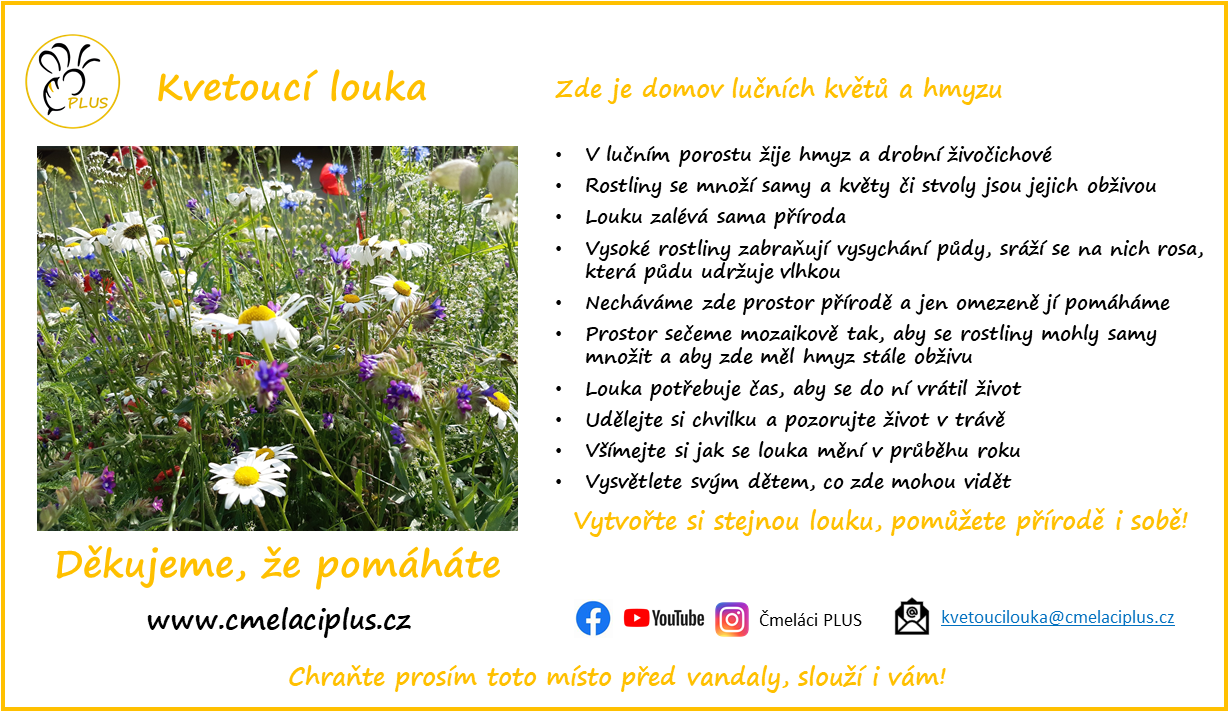
A simple information sign/leaflet at the edge of a flowering meadow in the village has proven very effective. 
You can right there on the spot inexplain why the change occurred, what is her motivation and What will the change bring.

As inspiration, we offer a simple flyer prepared by the Čmeláci PLUS group, which is available for download HERE
Use this leaflet, or prepare your own according to your taste and needs.

Note: Don't be misled, you can download the leaflet slowly and without registration – just click on „File details“.“

Bumblebees PLUS - Flowering Meadow - Information Leaflet

Flowering Meadow – Information Leaflet
Bumblebees PLUS

Photography: Jana Ečerová

  • Methodology without which the change will not succeed

There's no point reinventing the wheel; it's better to follow best practicesy. This means vYou must be disappointed And also, in terms of proven methodology, it will help in pushing through change.

Tutorial We will still be adding to the chapter., as the methodology can be adjusted over time. However, its foundations are laid to the methodological guidance of the Ministry of the Environment. Local officials therefore have no reason to resist the change and toReject her.

 For easier navigation, we have highlighted recommended basic methodology.

We will avoid the methodology here, agricultural methodology of flowering strips. It is intended for areas outside municipalities and has its own issues.

Ministry of the Environment


Basic Standard and Methodology

These documents are the foundation, which would be good know before you decide on buying any widely available commercial blend.


Czech Union for Nature Conservation

  • The Czech Union for Nature Conservation (ČSOP) is a registered association whose members are united by an active interest in the conservation of nature and the landscape. Its mission is the protection and restoration of natural heritage, environmental education, and the promotion of sustainable living. You'll find professional experts, experienced volunteers, and those who simply „just“ love nature among them. The ČSOP was founded in the autumn of 1979.
  • Basic issues  The living garden
Calla – Association for Environmental Rescue, z.s.

  • Calla is a South Bohemian association primarily concerned with nature conservation and energy. Among other things, it has long been dedicated to nature conservation in cities and nature-friendly care of urban greenery. It advocates for and popularises, for example, extensive mowing of urban lawns, the creation of flower strips and water features in cities, butterfly gardening, and thoughtful care of old trees. It publishes the newsletter Ďáblík for its members, friends, and the public.
  • Although the methodology is written with butterflies in mind, its principles also work for other pollinators.
  • We have established a partnership with Callou in the area of flowering meadows.

Basic methodology:

Is it possible to protect a scarecrow in other ways?

On the internet, you can find a number of „guaranteed methods“ for masking fright and its to mask the smell with aromatic plants or repellents. The fact is, we No such method has proven effective, or the results are not conclusive.

We have therefore designed a solution, which we describe and develop further – see the following text


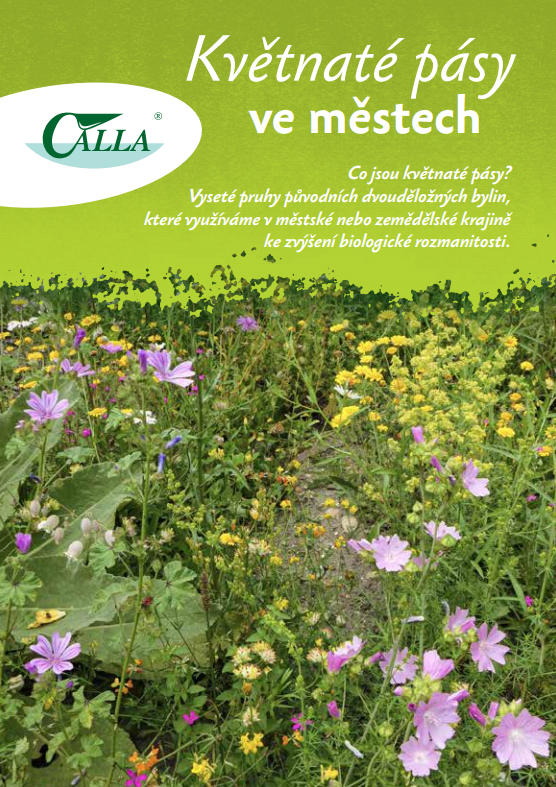
Flowery belts in cities - CALLA

Flowery belts in cities
Source: Calla.cz
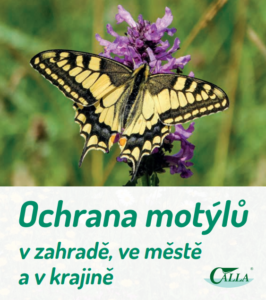
Bumblebees PLUS - Butterfly Protection in the City Garden and Landscape - CALLA

Butterfly protection in a city garden within the landscape
CALLA Source

Natural garden

  • The association supports individuals and groups in establishing and maintaining nature-friendly gardens. It fulfils this mission through public awareness and education for the public, institutions and authorities. It collaborates in the planning of public greenery in villages and towns. It creates a network of natural gardens and promotes garden tourism.
  • Web www.organicgarden.eu a Facebook Natural Garden
  • Basic methodology Wildflower meadows

ZO ČSOP Jaro Jaroměř

 

  • The action conservation group JARO (original historical name JAroměřští ROpáci - Jaroměř's Frogs), which today consists of several basic organisations of the Czech Union for Nature Conservation, engages in nature conservation through a wide range of activities. They began with the care of nature-scientifically valuable areas, and have been continuously looking after some of these locations for over 30 years. They gradually expanded their operational radius from the Jaroměř and Náchod regions to the entire territory of the Czech Republic, parts of western Slovakia, southern Poland, and northern Austria. Most of the sites under their care fall under the Velkojaroměřský Pozemkový Spolek (Great Jaroměř Land Association), which is the largest land association in the Czech Republic.
    In close cooperation with the owners of nature conservation areas, they currently manage over 200 sites, which together cover an area of more than 1100 hectares. 
  • Web https://www.jarojaromer.cz/ a Facebook JARO - conservation group
  • Basic methodology Meadow care

Prague is blooming
 

  • The Prague is Blooming project, which aims to help Prague's pollinators. They have established flowering meadows in twenty locations across Prague, which attract pollinators and provide them with the nectar they need to survive. They plan to continue establishing new flowering areas.
  • Pages www.prahakvete.com a Facebook Prague blossoms
  • We are happy to support the project of small community meadows in the Prague Blooms project and will share their experiences here.
You, your municipality, your town, your district, your region

As we wrote and as you will no doubt observe, in many places Changes are already underway. A number of municipalities have already realised, thanks to active citizens, that they can Do something for its people and for nature.

But at the start of each shift there must be a claimant, ..., with a proposal or are just interested and asking why. That's why we've provided you with guides, examples, and hopefully, motivation. 

If you have already succeeded in your municipality and can boast a blooming meadow, or a floral strip, Boast. Your municipality or your common areas may also be listed on the Bee Honour Board, along with other examples of positive change for the care of communal grassy areas.

If you help to push through a change, or if this has already happened, Can we add the name of your village/town to the Wall of Honour?. Look, then, to see if your municipality happens to be missing. Page Bee Honour Board I HERE 

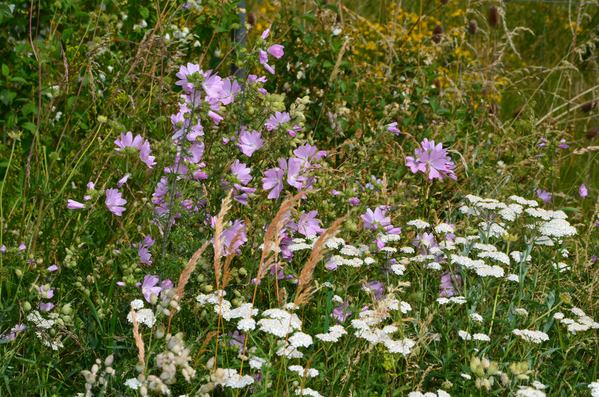
Wildflower meadow mallow and yarrow

The mallow and yarrow flowers will dress the meadow in pastel colours.
Photo K Kučera