

Honeysuckle bee balm

Deadnettles - bumblebee-friendly herbs

Dead-nettles in the garden: why YES?

  • They provide insects, and especially bumblebee queens, with plenty of pollen and nectar with a high sugar content.
  • They are undemanding, easily propagated by dividing rhizomes, and can be used in a variety of places in the garden.
  • A range of varieties is available, including garden cultivars, for truly every gardener.
  • Dead-nettles belong to the same family of Lamiaceae plants as other bumblebee favourites – mints, lavenders, sages, or hyssops.

The most common taxa available for a nature-friendly garden:

An attempt to order by importance for bumblebees and other pollinators (roughly, not without exception)

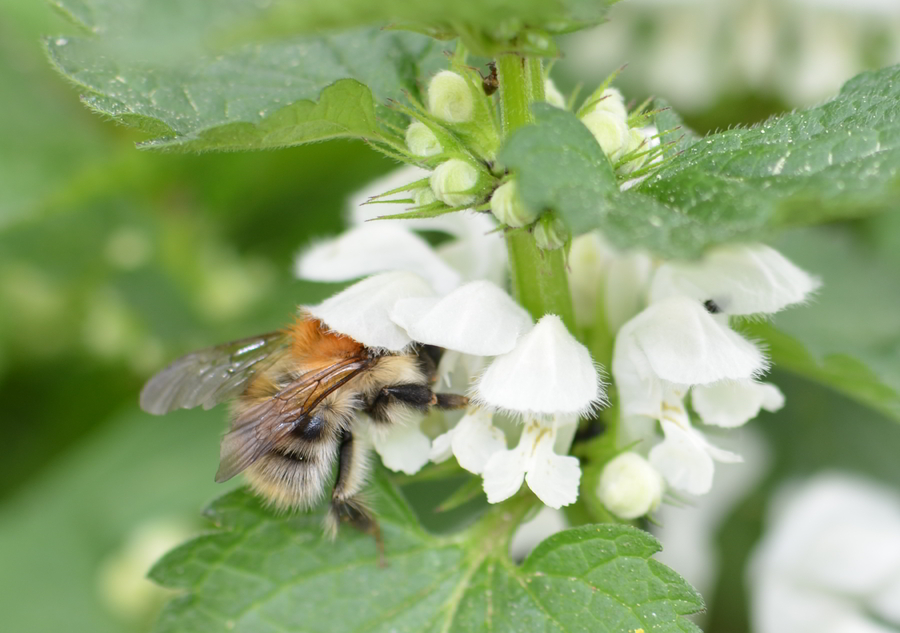
Field bumblebee on white dead-nettle

If you love them, there's nothing to discuss.
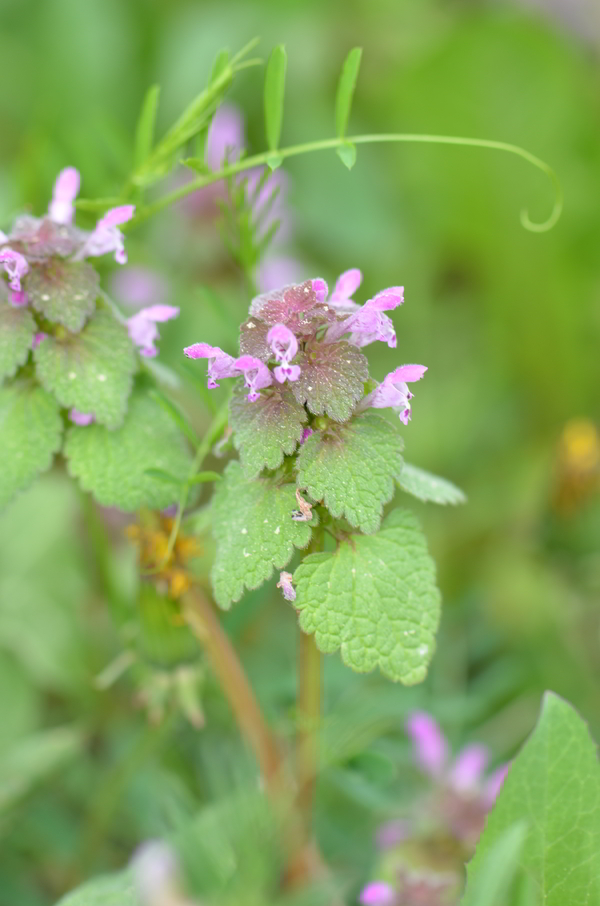
Red-dead-nettleLamium purpureum)

  • An annual or biennial herb widespread throughout Europe. An indigenous species in the Czech Republic.
  • Completely undemanding, often one of the first (pioneer) plants on bare ground (after construction, fields, greenhouses, rubble).
  • It grows sparsely and the stems have a lower growth of 10 to 30cm. Unlike the similar dead-nettle, the leaves are spotted and clustered only at the top of the stem.
Meaning:
  • Blooms from March to November, in the case of mild winters, it capable of flowering all year round.
  • In early spring and late spring extraordinarily important Willow is a nectar-producing plant for insects, loved by all species of bumblebees.
  • The nectar contains sucrose. The sugar content of the nectar is up to 45%.
  • Queen bumblebees are provided with essential energy in the spring before they begin searching for nesting sites.
  • For bumblebees very significant, even in autumn as it replenishes young mothers with the energy needed for hibernation.
Growing advice:
  • As it is a plant that grows well on its own, primarily tolerance. Let it grow, its spread doesn't harm other cultivated plants or the lawn.
  • Although it is classified as a weed, it is in fact a typical pioneer plant. It is the first to occupy bare soil, but then it also recedes to make way for other, perennial or more vigorous plants. It does not suppress them, nor does it harm them.
  • The gardener will help most if they simply let the purple dead-nettle grow. The insects will be grateful for it. It will liven up the lawn and areas where few other plants grow.
  • It can be used as underplanting, for example, for raspberry bushes, fences, or low walls.
  • Targeted propagation is possible by dividing rhizomes or sowing seeds. Seeds can be collected on paper wrapped around flowering stalks. Shorten the stalk, and after planting, occasional watering suffices. However, be aware that most are only annual.
  • The expanses of purple dead-nettle are impressive, as they are absolutely teeming with insects. Rare species of bumblebees, which you wouldn't otherwise see, can also be spotted there, and so these areas deserve protection for that one year. (Postpone the planned planting...)
  • It is damaged by mowing, the stem is brittle to treading and raking. As stated above, it recedes over time to other plants. However, it is easily transplanted to new locations.
Interesting facts:
  • The sweet, fragrant flowers can be used to a lesser extent as edible flowers on cakes.
  • It is among medicinal plants.
  • It's not just bumblebees that will be delighted by purple dead-nettle – solitary bees love it too Dead-nettle fungiHoney-bee). This is a typical mason bee, which is sometimes mistaken for smaller types of bumblebees due to its dense fuzz.
  • The pollen baskets on the insects' legs are a rich dark orange colour.
Purple dead-nettle stem

Purple dead-nettle

.

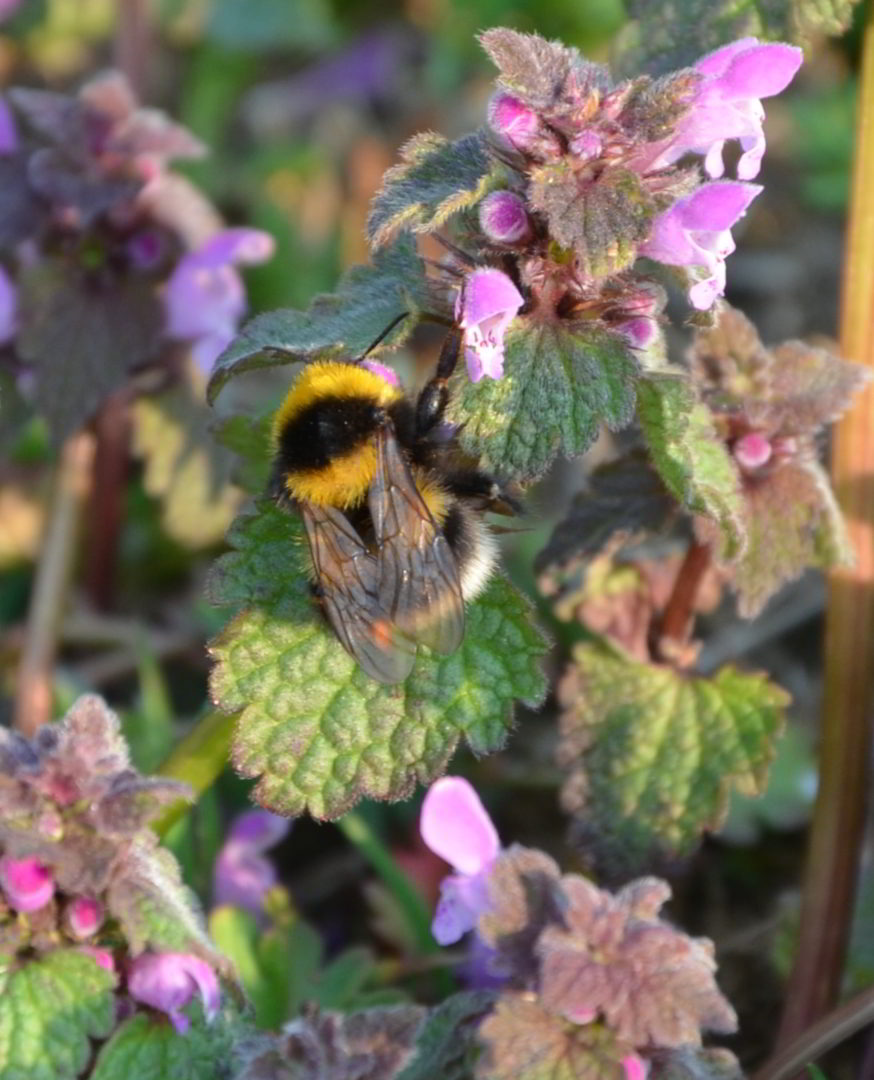
Garden bumblebee on purple dead-nettle

Queen of the garden bumblebee on a purple dead-nettle. A keen observer will spot the typical pollen basket (under the wing) on the hind left leg.
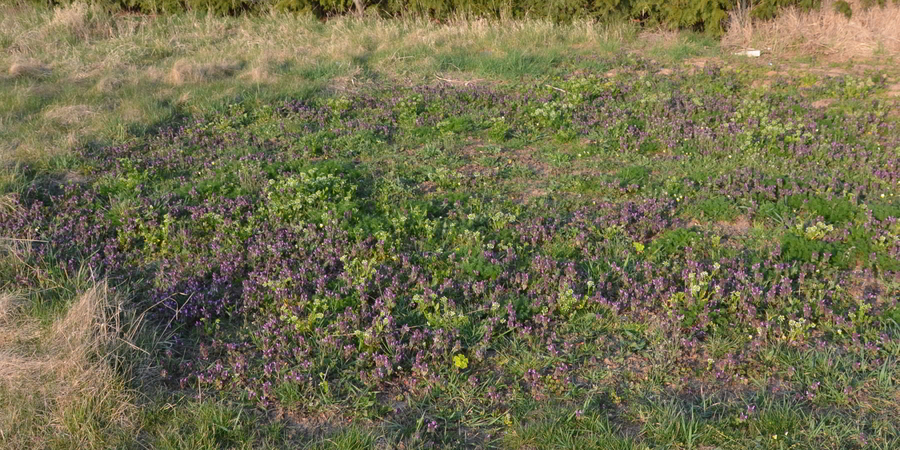
Dead-nettle dough

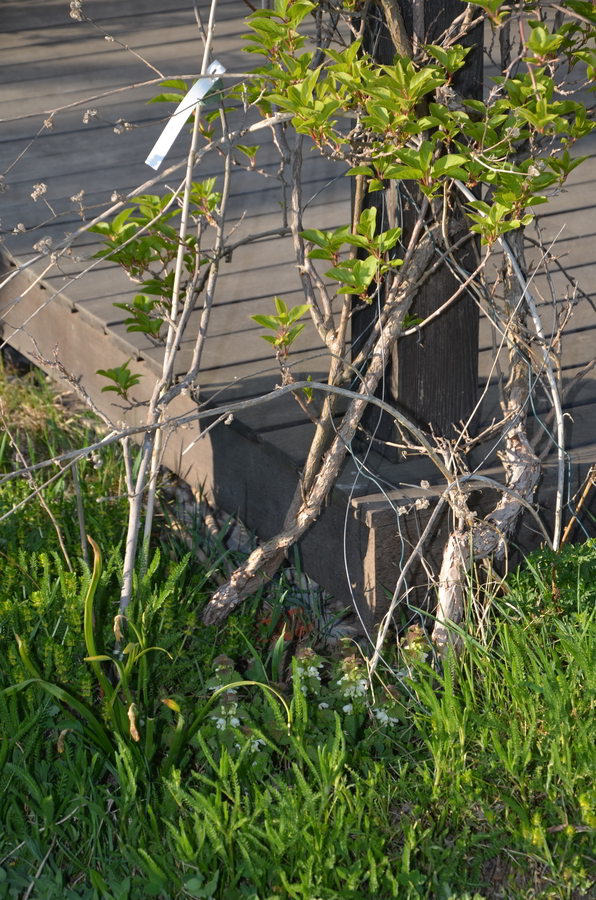
Last year there was a haystack here, this year in spring a pasture for insects from the purple archangel.
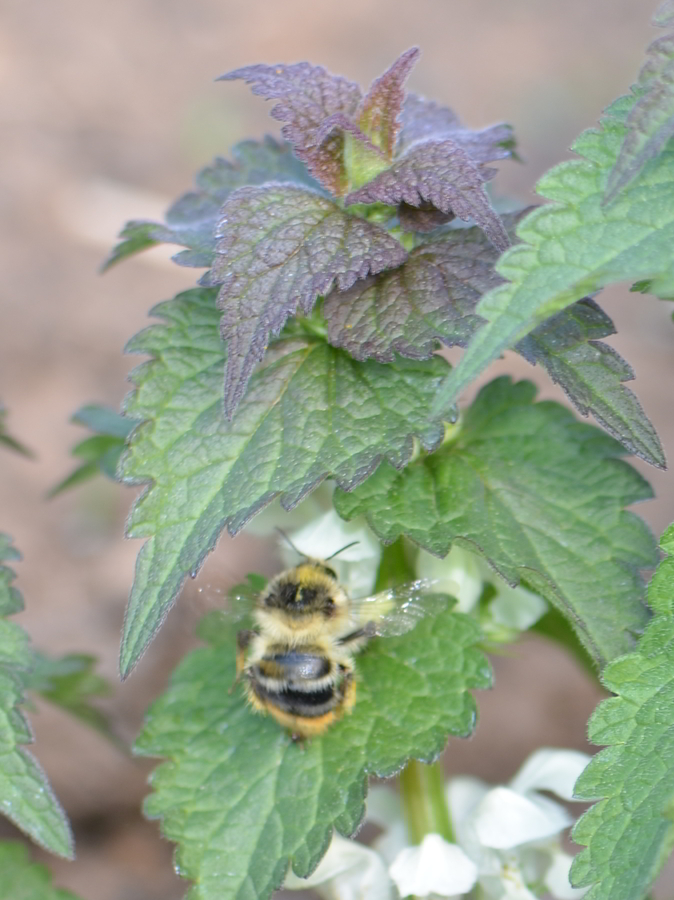
White dead-nettle White dead-nettle

  • Perennial, growing in tufts, 20-50cm tall herb.
  • Undemanding, reproduces well from cuttings and by dividing rhizomes.
Meaning
  • It blooms from April, and repeatedly blooms until late autumn. This provides ample food for bumblebees, and not just them, throughout the year.
  • The nectar has a sugar content of up to 531 TP 3 T, with a high sucrose content. The pollen of deadnettle is an essential source of protein and other nutrients for insects and bumblebees.
  • Large areas – white deadnettle beds, can cover most of the bumblebees' needs and are thus an ideal plant for those struggling with chemical gardeners in their neighbourhood. Bumblebees, including rare species like the buff-tailed bumblebee, will find a food source in a garden with a deadnettle bed that they prefer. It will be your garden and your deadnettle bed that will be a veritable sanctuary for them... 
  • For the buff-tailed bumblebee, the field bee is one of its main food sources, available throughout the entire lifespan of their colony.
  • It used to be an abundant and weed-like plant, thanks to droughts and the chemicalisation of agriculture, but it is retreating from its original habitats. Yet, it is a key plant for a number of bumblebee species.
  • A bumblebee keeper should first of all ensure food for the bumblebees and only then a home. White dead-nettle is the right choice for easily and quickly helping bumblebees.
Growing advice:
  • It is not too demanding in terms of soil, but it prefers soils with a higher nitrogen content.
  • It prefers slightly shaded and moister locations. It can therefore be used as underplanting for shrubs and trees.
  • Propagation is easy by dividing the rhizomes. Collection is possible in the wild by taking cuttings so as not to damage the original habitat. It is better to trim the stems after planting.
  • Occasional watering during drought.
  • Constantly trodden-on places do not suit it.
Interesting facts:
  • The stamens in the flowers are strikingly black, but the pollen and pollen baskets are bright yellow.
  • It is most sought after among bumblebees with long proboscises (field, forest, garden).
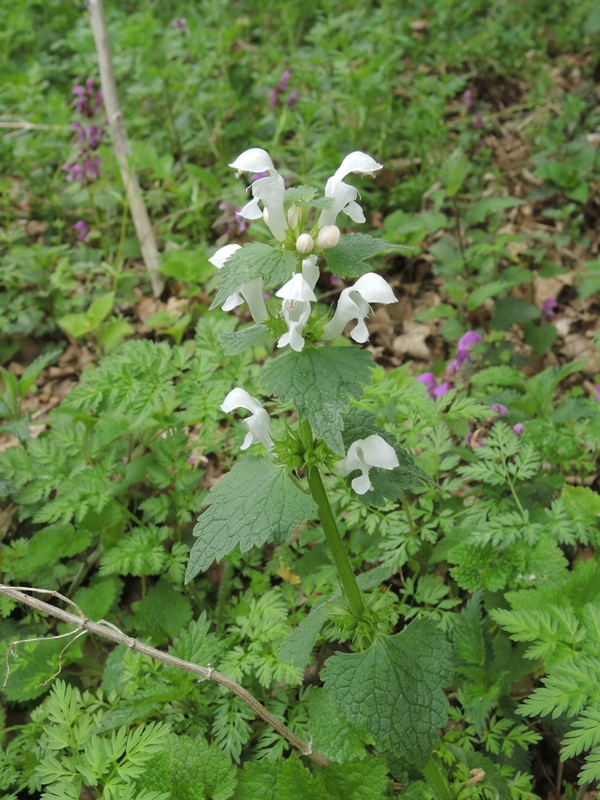
Wood garlic and White dead-nettle

Anyone who is serious about bumblebees primarily goes down the route of planting. Here is the rare long-horned bee.

White deadnettle in the garden

Example use of white dead-nettle in the garden as ground cover for mini kiwi
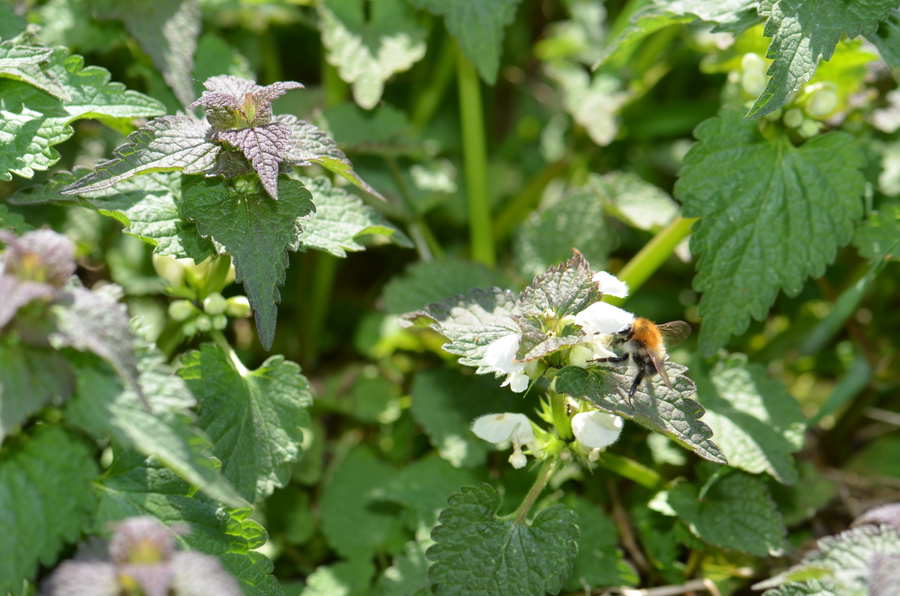
White dead-nettle and field bumblebee

White dead-nettle is loved by all bumblebees.
With a long proboscis – like the field bumblebee here – primarily.

Spotted dead-nettle Spotted dead-nettle

  • A perennial plant that can be mistaken for the annual red deadnettle. Unlike it, it has a taller stem (up to 50cm), larger flowers, and a more regular distribution of leaves along the entire length of the stem.
  • Unlike purple dead-nettle, it can be grown in clumps, and a number of its cultivars are also available in horticulture.
  • Original species of the edges of deciduous forests.
Meaning
  • An important source of nectar and pollen for pollinators, similar to purple dead-nettle. Very popular with bumblebees, especially species like the garden bumblebee.
  • It flowers from May to September, but in the case of mild winters, it is capable of flowering all year round.
  • Ideal for gardeners concerned about invasive species. Breeding has resulted in a number of beautiful cultivars, for example: ‚Aureum‘ – with golden-yellow foliage, ‚Beacon Silver‘ – a particularly attractive variety with evenly silver markings and a dark green leaf margin, ‚Elizabeth de Haas‘ – with yellow-white variegated leaves, or ‚White Nancy‘ – with a large spot and white flowers.
Growing advice:
  • She likes shady and moister places with nutritious and lighter soil.
  • Ideal as a replacement for lawns in shady spots (under trees, bushes).
  • It can be propagated by root cuttings of creeping rhizomes or by dividing clumps.
  • It can also be grown as a potted / container plant, requiring watering and shade.
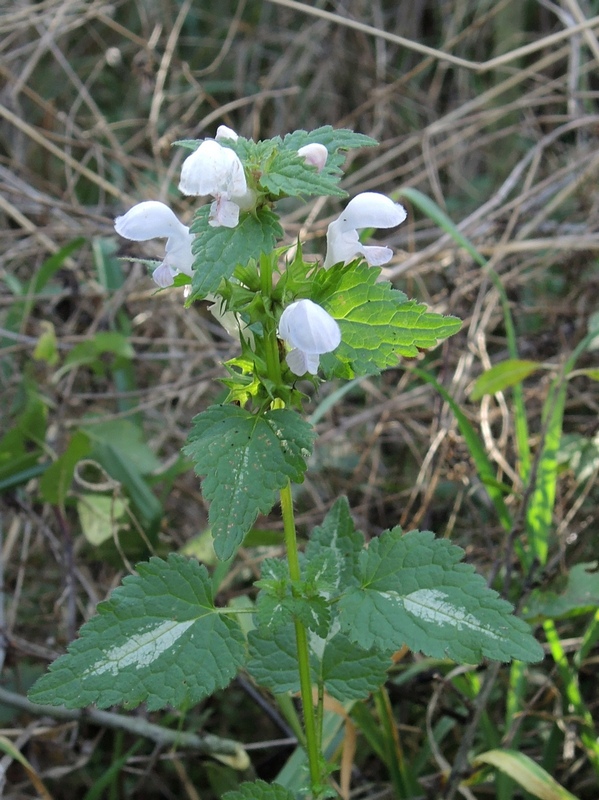
Lamium maculatum f. albiflorum F. Gérard, author Michael Kesl, CR Choteč, CC BY-NC

Lamium maculatum f. albiflorum - F. Gérard
Author: Michael Kesl, Location: Czech Republic, Choteč
CC-BY-NC licence from biolib.cz
Lamium maculatum f. albiflorum F. Gérard, author Michael Kesl, Czech Republic, Divoká Šárka, CC BY-NC, bioLib.cz

White-flowered Spotted Dead-nettle f. albiflorum - F. Gérard
author Michael Kesl
Prague, Divoká Šárka
CC-BY-NC licence, source biolib.cz
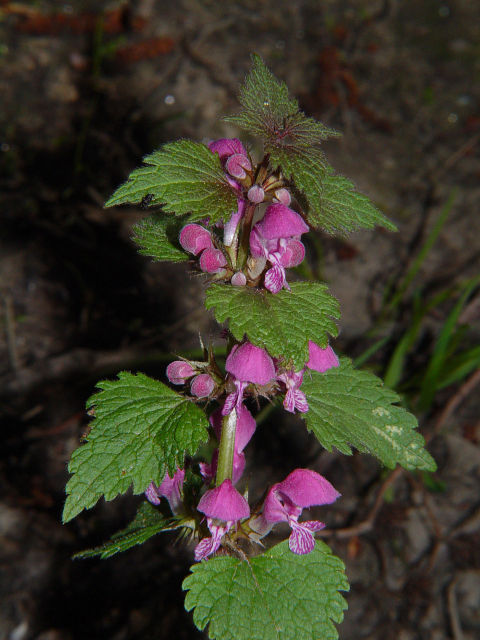
Lamium maculatum - Czech Republic - Žehuby u Žlebů - CC BY-NC-SA - Petr Vobořil

Spotted dead-nettle
Photo credit: Petr Vobořil http://www.pinuli.net
Place of acquisition: Czech Republic, Zehuby u Žlebů
Copyright: CC-BY-NC-SA
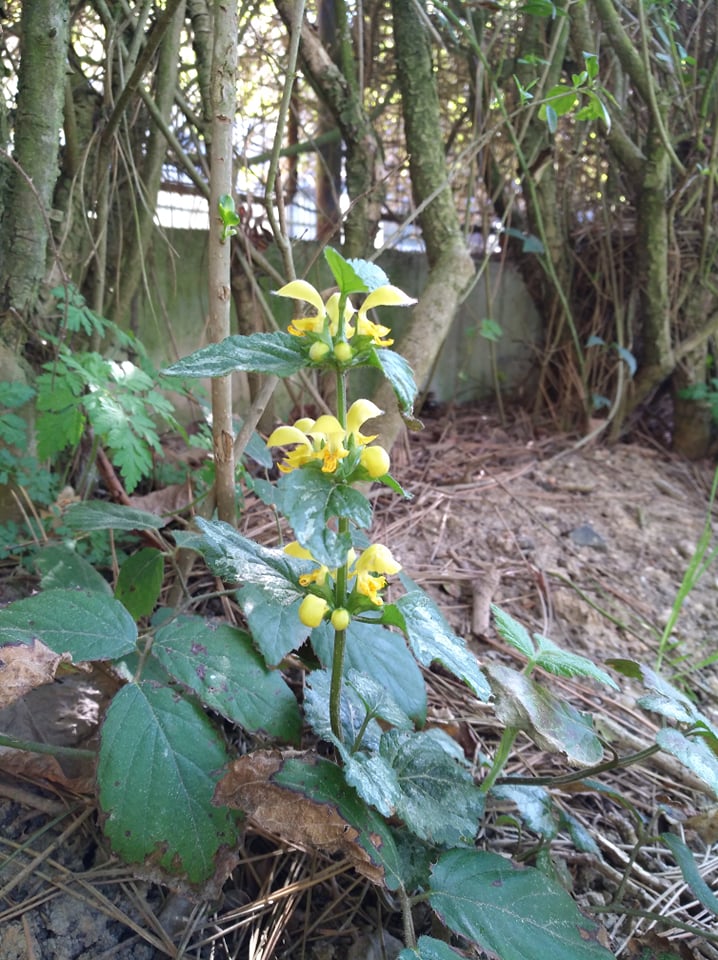
Yellow Betony also sometimes called Yellow Dead-nettleYellow Archangel)

  • Perennial, beautiful as ground cover for shady spots with a stem height of 15-30cm, where it forms impressive carpets.
  • A garden variety with silvery decorative leaves is its relative *Calceolaria integrifolia* (often sold under the same name).
  • Undemanding, domestic species. Does not mind drier areas.
Meaning
  • Flowers from April to July.
  • Ideal for bumblebees with long proboscises; those with short ones (like bees) won't reach the nectar, but they can manage too (they'll bore a hole in the side and steal the sweet nectar). Particularly popular with the garden bumblebee or the carder bee.
Growing tips:
  • Suitable for shade and partial shade as an underplanting for shrubs and trees, a ground-covering carpeting growth.
  • It is not demanding on the soil, He prefers drier soil..
  • Propagation is easy from cuttings from the parent plant or by dividing the root ball.
Interesting facts:
  • It was long classified among the dead-nettles, but due to its differing flower, it belongs to its own genus of *Lamiastrum*, which also includes the very similar *Lamiastrum album* (which, unlike *Lamiastrum galeobdolon*, prefers cooler and damper regions).
  • Silver-leaved Cinquefoil is a popular garden perennial that often becomes naturalised.
  • Ants spread the seeds of **Arum maculatum** and, in return, the plant offers them fleshy fruits, which the ants adore.
Silver-leafed pit viper

Silver-leafed Ajuga as a ground cover plant beneath shrubs. photo: Jakub Černý
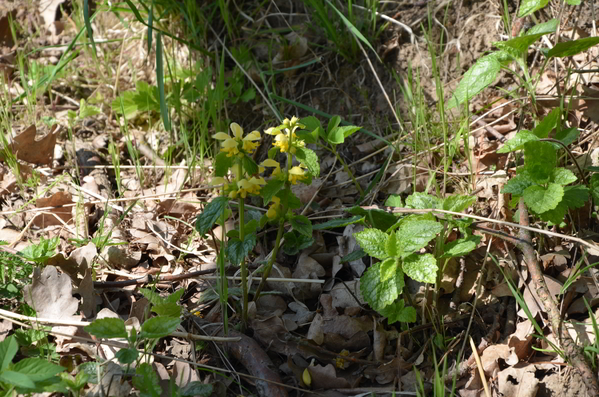
Yellow dead-nettle, also sometimes called yellow archangel

A silver-leafed St. John's wort under an oak.
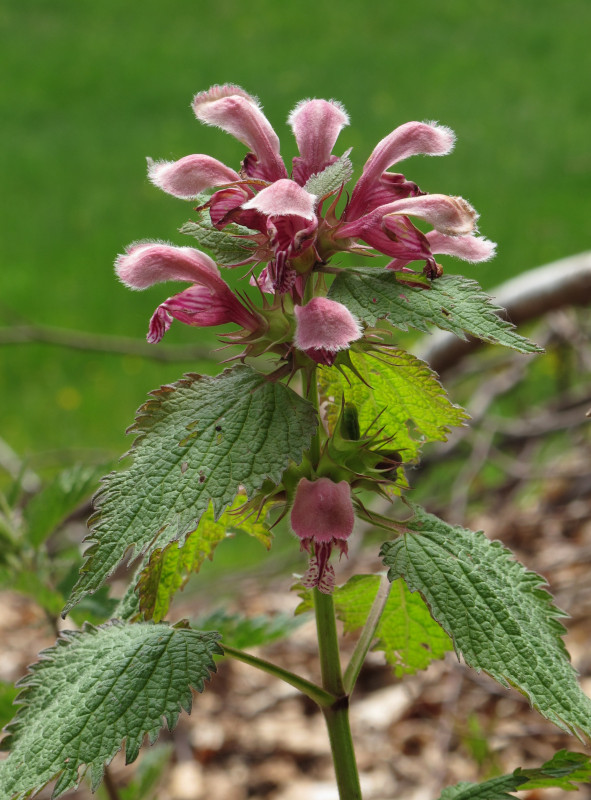
Dead-nettle, sage-leavedLamium orvala)

  • An alien species, it exceptionally runs wild here.
  • Perennial for shade to partial shade available for its attractive and quite large flower in some garden centres.
  • It flowers from April to June.
Growing advice:
  • Frost resistant to -23°C, suitable for planting under bushes and trees.
  • Prefers moist, well-drained soil.
  • It forms clumps, stems are upright up to 80cm long.
  • Propagation by rhizome division.
Interesting facts:
  • Quite rare in gardens, so anyone who wants a bit of a horticultural rarity :).
  • Can be seen in arboretums and botanical gardens, for example in Prague-Troja or Průhonice Park.
Lamium orvala

White Dead-nettle
author: Robert Flogaus Faust
Place of purchase: Italy

.
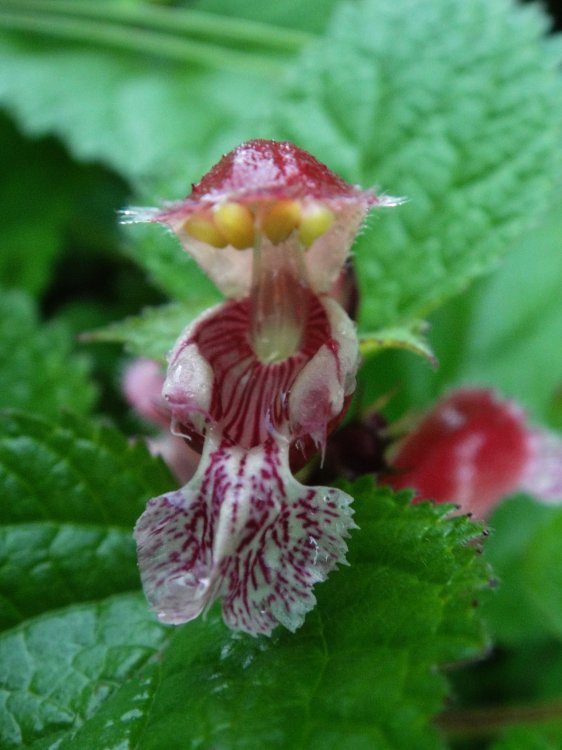
Lamium orvala flower detail

White horehound, sage-leaved, flower detail
author: Robert Flogaus Faust
Place of purchase: Italy
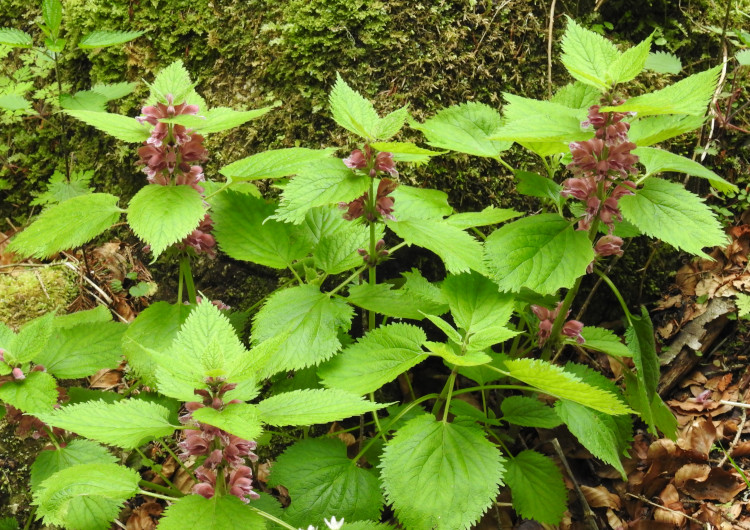
Lamium orvala

White Dead-nettle
author: Robert Flogaus Faust
Place of purchase: Italy
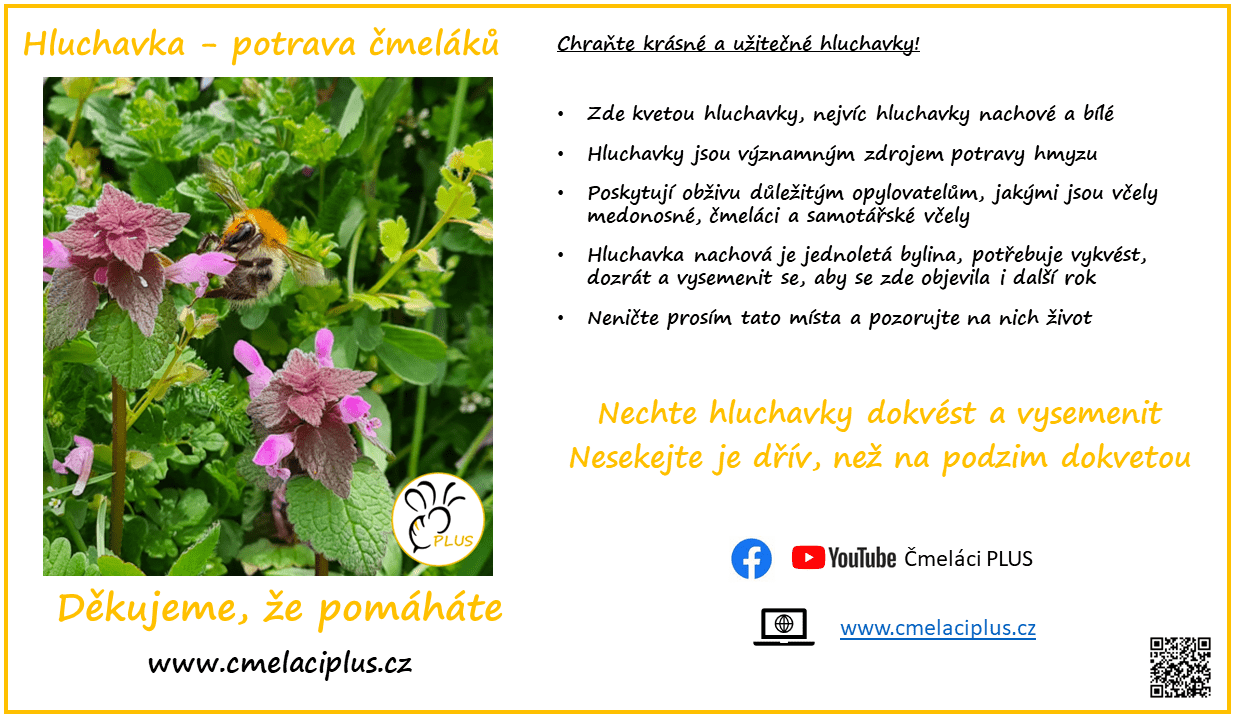
Bumblebees PLUS Bumblebees Flowering meadow Red dead-nettle leaflet