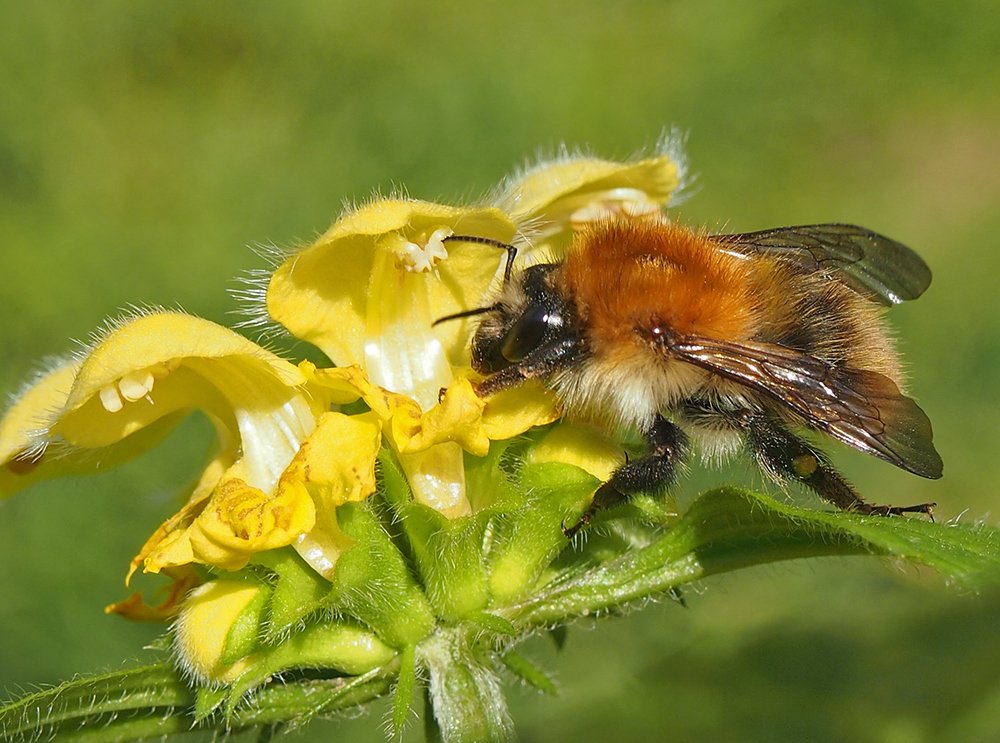
How dangerous is a nest near human activity?
What you will learn here
- When might bumblebees bother you?
- How to handle such a situation
- How to get along with bumblebee neighbors
- Problematic neighbors – a misfit bunch of a certain kind
Bumblebees that "bother and threaten"
We have yet to meet a person who doesn't mind bumblebees. Likewise, bumblebees pose no threat to anyone.
Bumblebees are peaceful bears – you have to directly threaten them or their nest to make them start defending themselves .
Sometimes, however, bumblebees really bother us because, from our perspective, they become unhappily established and people feel that bumblebees are endangered.
This happens, for example, when bumblebees settle in a place where people are worried about their offspring . Sometimes allergy sufferers feel threatened because a sting could have consequences for them.
The vast majority of bumblebee species in the Czech Republic are friendly and there is no need to worry about them. The exception that proves the rule may be the hypnotic bumblebee (Bombus hypnorum) . It is a beautiful bumblebee, it looks like a punk and sometimes behaves a bit like one...
How to handle the situation
Try living with bumblebees – adapt to them for a while and let them live where they are.
It is always best for bumblebees to leave them where they are and give them a chance to live out their life cycle = put up with them, share your living space with them and be a little frugal.
Most bumblebees have an active nest for a maximum of 3 months and then die .
The exception is the inconspicuous and very gentle and friendly field bumblebees (Bombus pascuorum), which can sometimes survive until autumn frosts. However, they are so gentle that you will be more likely to seek them out yourself than to fear them.
How to prepare for living with bumblebee neighbors
If you are not in the immediate vicinity of a bumblebee nest, everything is fine for you and the bumblebees. The bumblebees will not feel threatened and will not defend their nest. They will work peacefully and will not have time to worry about you.
Try to respect their living space :
- Move your garden table or bench to another location, a few meters away from the bumblebee nest.
- Take a different path for a while and go look at the bumblebees.
- a temporary screen between your seating or movement area to separate your space from the bumblebee nest area.
- where the bumblebees have access to the nest with a visible marker.
- If you are worried about your children, build a 2x2m fence/pen around the bumblebee nest and explain to the children that bumblebees live there, that they should not go there now, and observe them together.
- If bumblebees settle in a blanket, old fur, or shoes, let them live where they are , or evacuate using the procedure described HERE.
- your neighbors to watch the bumblebees
The reward for a little work will be the joy of living together and experiences with bumblebees .
An example from our bumblebee practice (idea for you):
- A mother called, saying she was worried about her little child.
- After talking for a while, she realized that she didn't have to worry, and if she made a fence out of tape around the bumblebee nest, she would have interesting entertainment and an educational experience for her child.
- All they had to do was explain to their mother how bumblebees live, that they were not a threat to them in any way, and that in case of problems, the Bumblebee Quick Rot a would help them.
What to do when the bumblebee neighbors' nest comes alive
When the nest is finished, their nesting site will be empty (see description of the bumblebee life cycle) .
You can then remove the empty nest and/or prevent the bumblebees from re-establishing it in the spring. Simply plug or net the hole through which they entered the building, repair the wall where they lived, etc.
New queen bumblebee mothers often return to the place where they were born, so it is a good idea to keep them there for another year if you don't like them. If you enjoyed living with the bumblebees, look forward to their return and prepare for it if necessary .
Learn more about maternal returns HERE
Coexistence with bumblebees and possible pitfalls – a sometimes problematic group of grunters
Most species of bumblebees are friendly and there is no need to worry about them.
- Only if the bumblebees feel that you want to harm their nest will individual workers
- If you break into the nest, everyone
- If you avoid the nest, they won't notice you
- bumblebee will harm while flying for food or carrying a load of pollen/nectar.
- Only if you try to touch a bumblebee or squeeze it will it threaten you and then it may sting
The exception is the territorial hypnotic bumblebee (Bombus hypnorum). They are highly territorial and will defend their nest within a radius of several meters .
This is mainly due to the fact that it has to defend its nest against birds , whose nests it often occupies, and even the queen mother herself can drive out the bird.
Bumblebees are territorial primarily when their nest is developed and new queens are being born in it, but also when the nest is without a queen and the competitive phase is underway.
The common bumblebee most often nests in tree cavities , in birdhouses , or in cavities under the roof in thermal insulation. Its nests are large and strong . You will find it on the ground less often.
This bumblebee is beautiful and, like other bumblebee species, useful. If you respect its living space, coexistence with this species is possible .
The rule about tame bumblebees is confirmed by the field bumblebee (Bombus pascuorum). This species of bumblebee is seemingly similar to the common bumblebee. It often builds its nests in a mound of dry grass/moss. Its nests are small and inconspicuous, like itself. Coexistence with this species of bumblebee is pleasant – neighborly.
You can read more about bumblebee species HERE .
To reliably distinguish the common bumblebee, we offer a comparison with the common bumblebee .
A relatively large species of bumblebee:
* Mother 17-22 mm
* Worker 8-18 mm
* Male 14-16 mm
Coloration:
* chest distinctly brownish-ochre to black
* rump black
* end of rump brownish-white
Territorial species – defends its nest
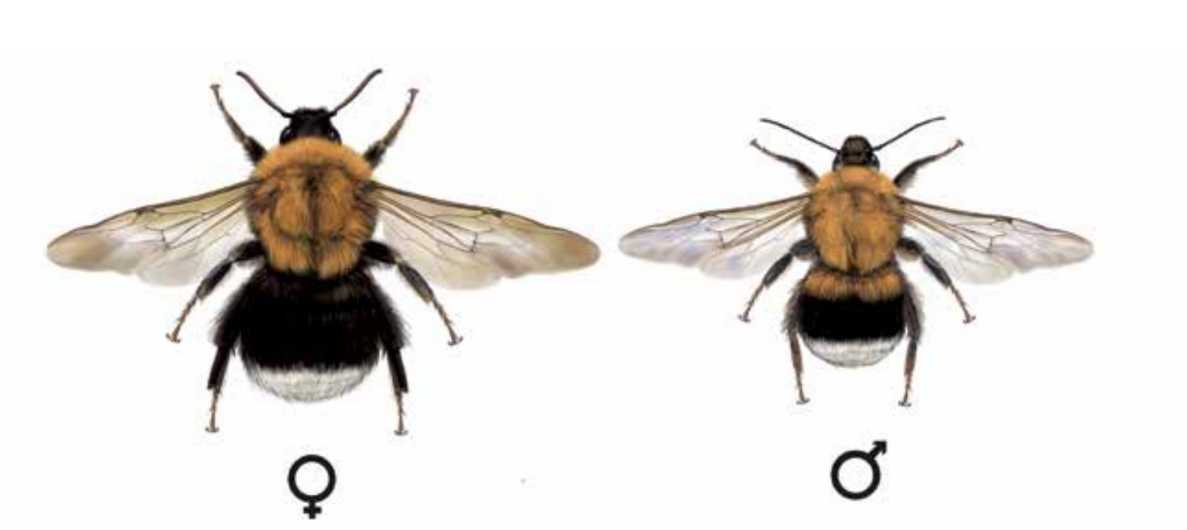
Bumble bee
(Bombus hypnorum)
Source "Pszczoły w mięstrie Trzmiele Wrocławia"
Small species of bumblebee:
* Mother 15 – 18 mm
* Worker 9-15 mm
* Male 12 – 17 mm
Coloration:
* chest hairs vary from reddish brown to gray-black
* beginning of rump gray-black
* end of rump yellowish to reddish brown
A very gentle, inconspicuous and hardy species
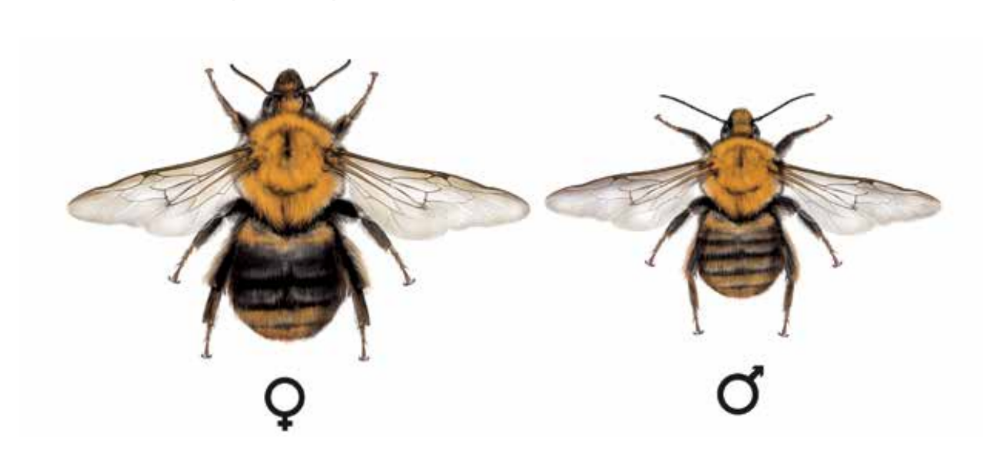
Field bumblebee (Bombus pascuorum)
Source "Pszczoły w mieście Trzmiele Wrocławia"
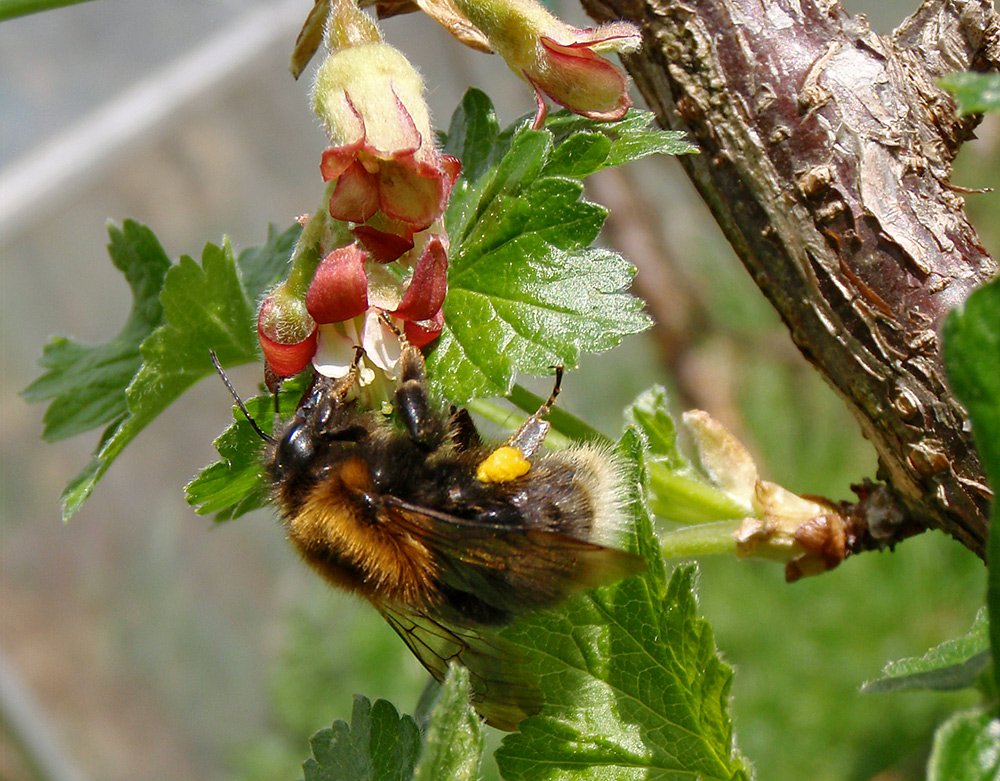
Bumblebee - sedge(Bombus hypnorum)

Field bumblebee (Bombus pascuorum) – worker
Photo H. Kříženecká
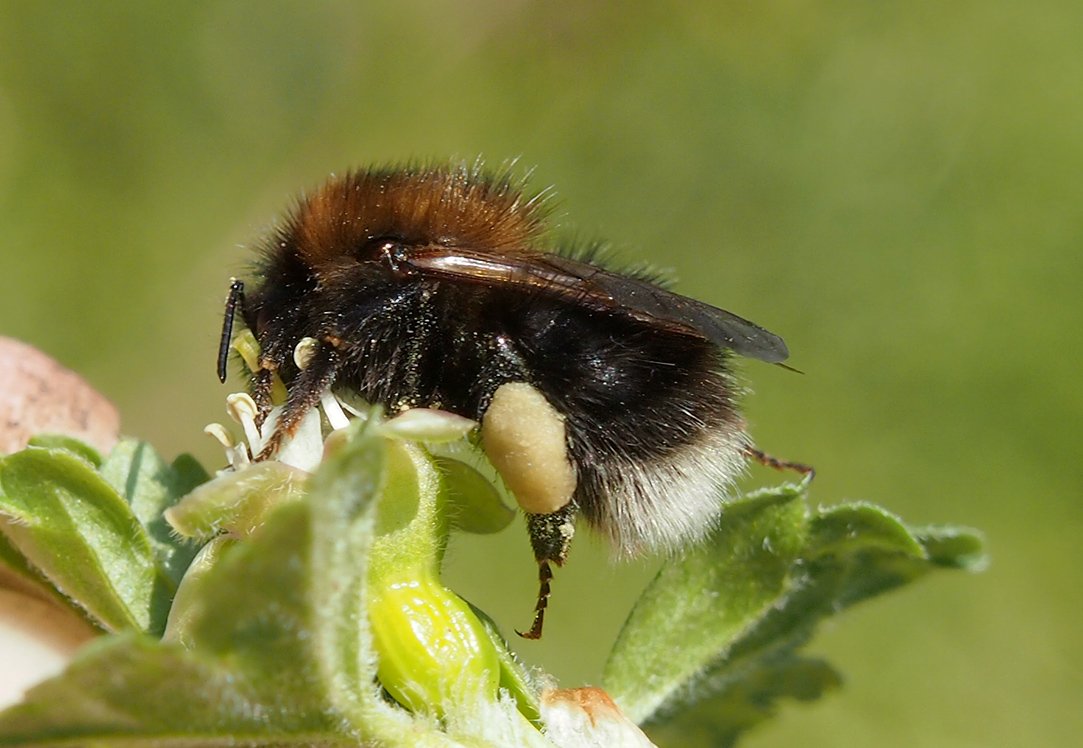
Hypnotic bumblebee (Bombus hypnorum)
Photo H. Kříženecká
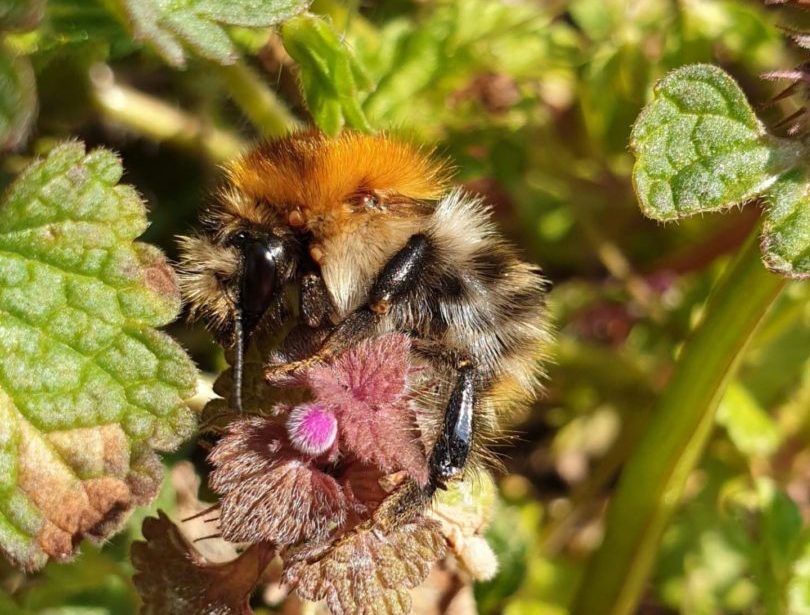
Field bumblebee
(Bombus pascuorum)
Photo A. Ungerová
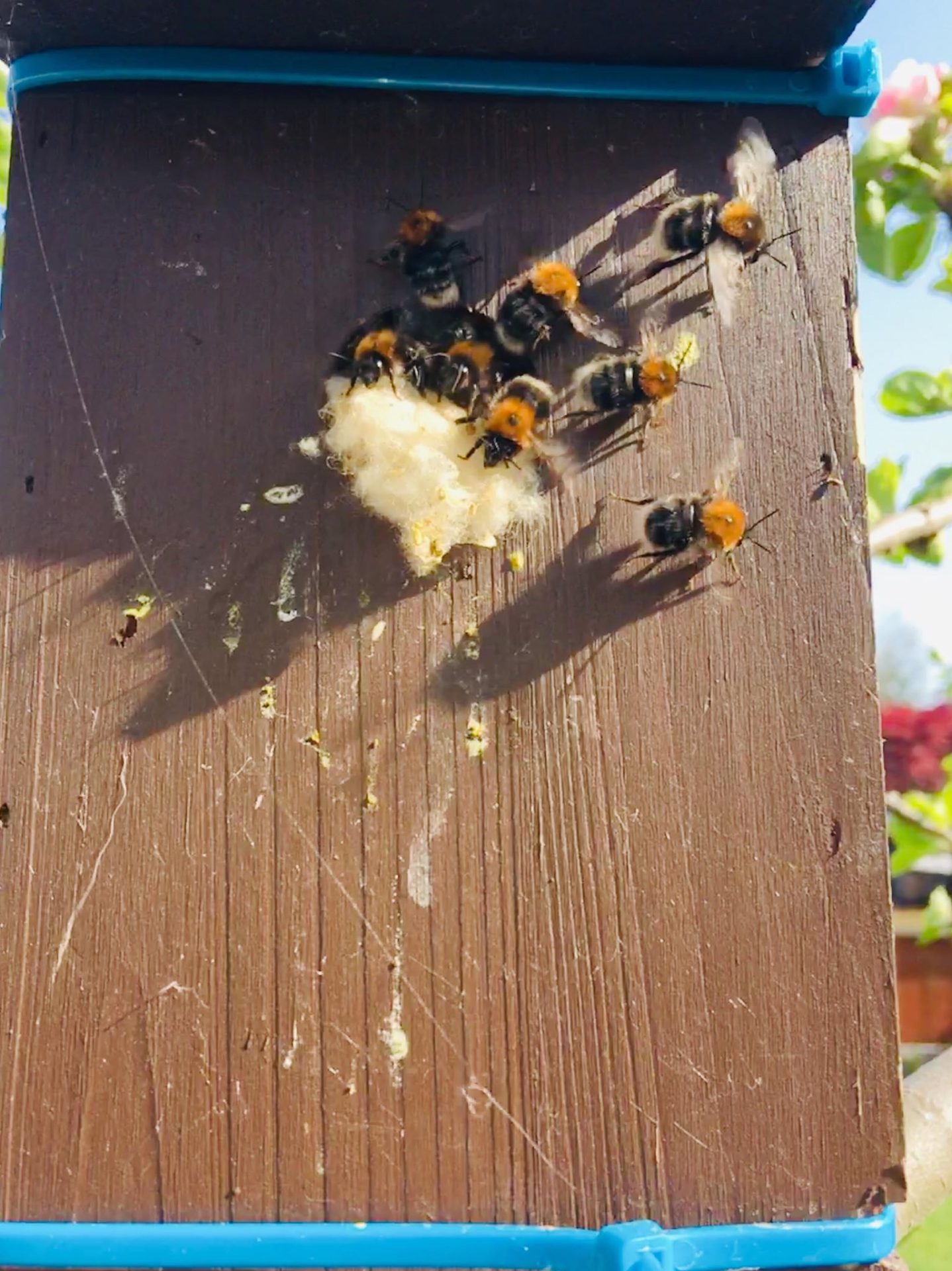
A nest of a hypnotic bumblebee (Bombus hypnorum) in a birdhouse
Photo Dave Jones
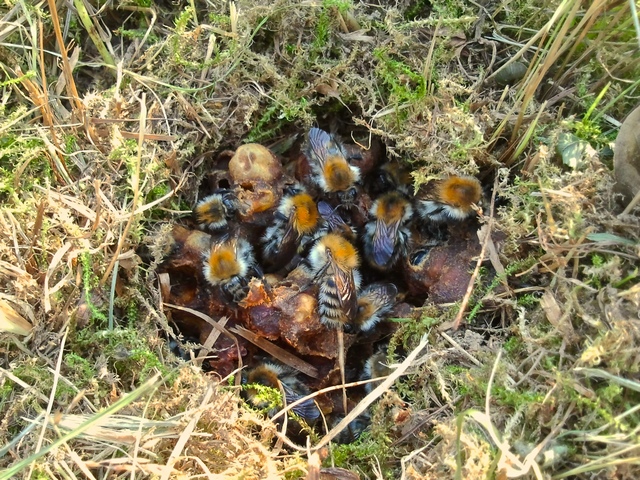
Nest of field bumblebees (Bombus pascuorum) in a pile of grass
Photo Internet