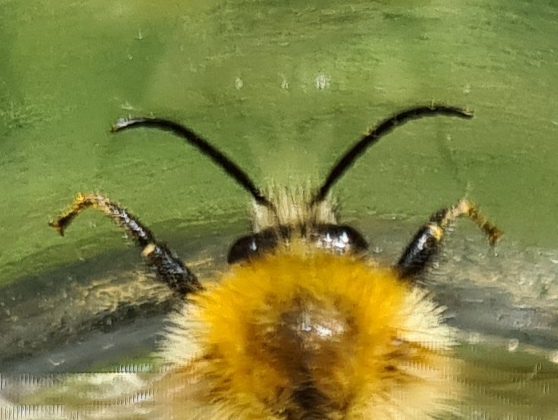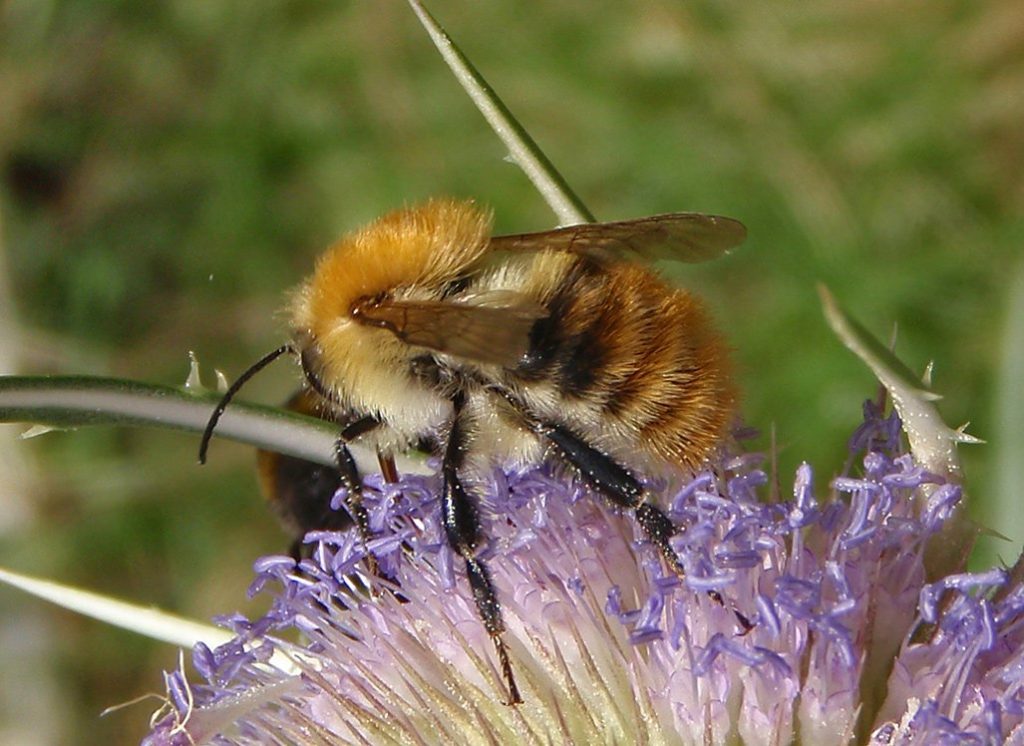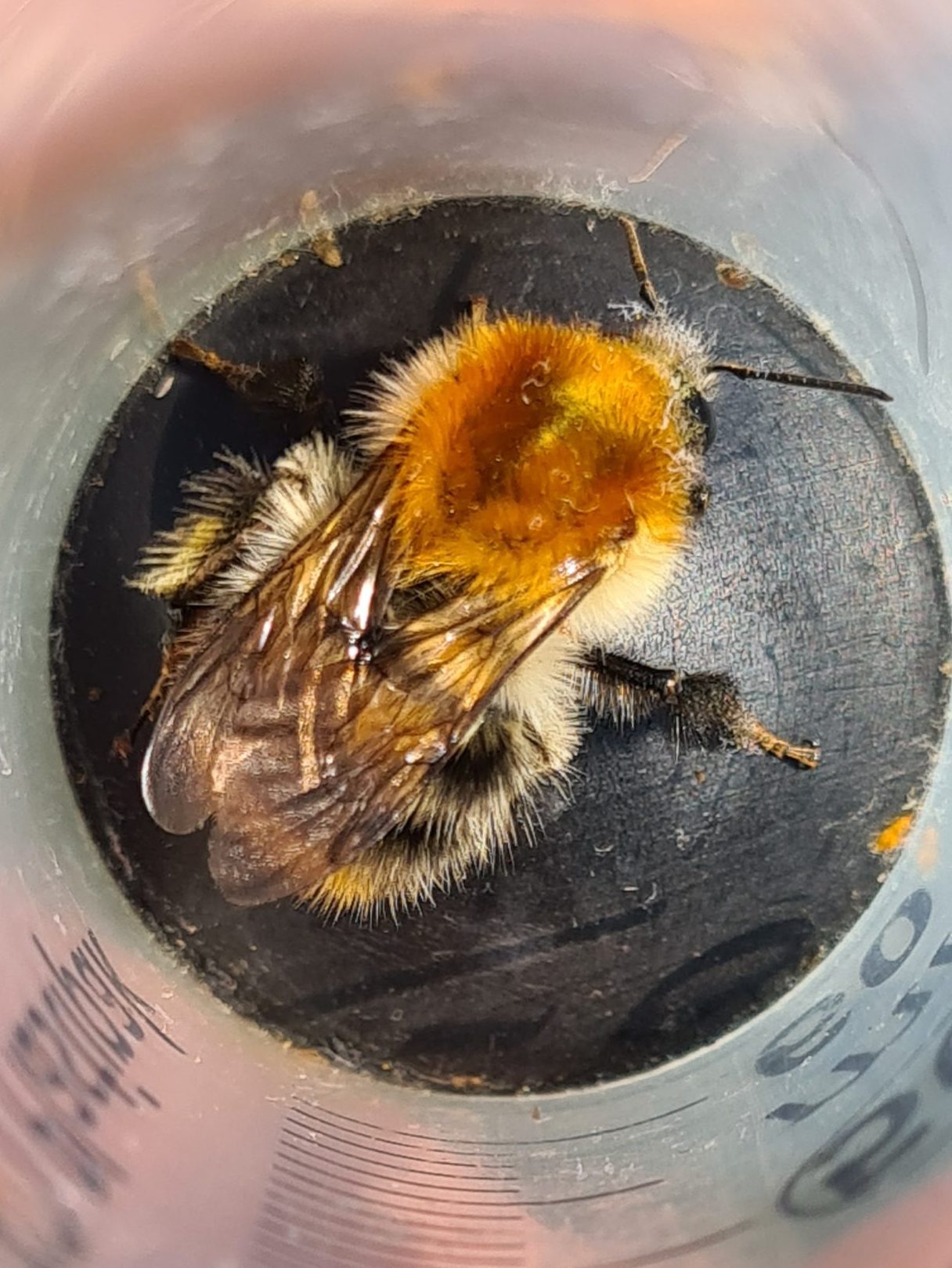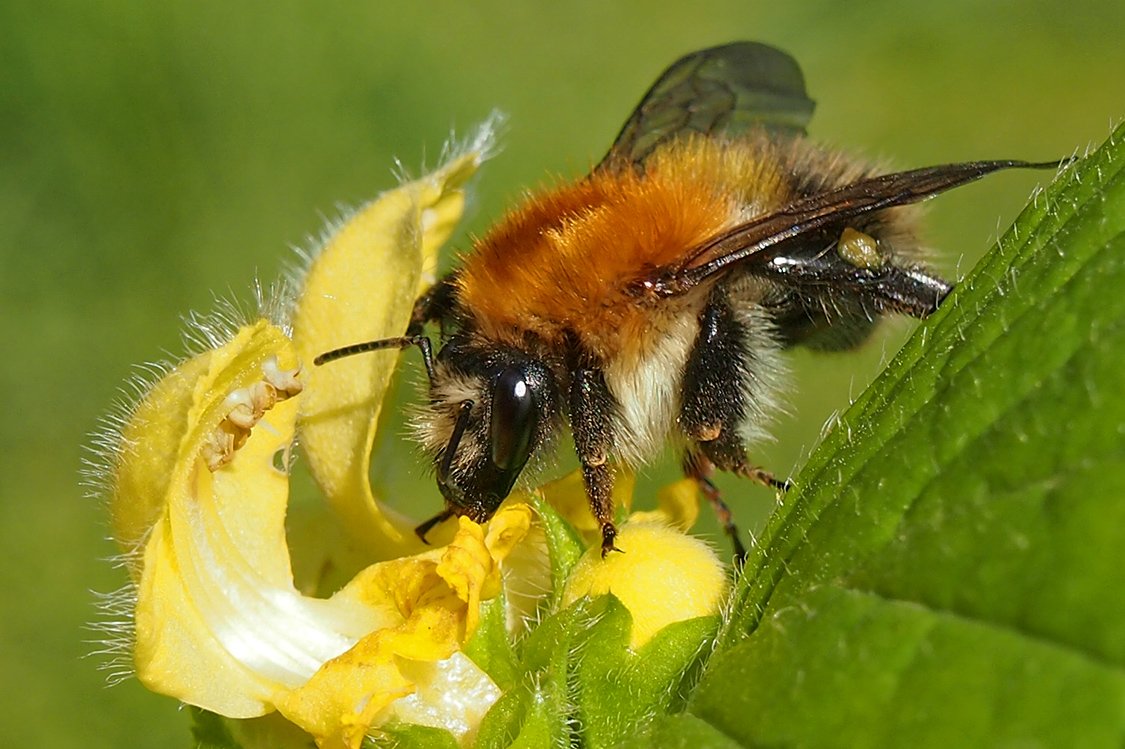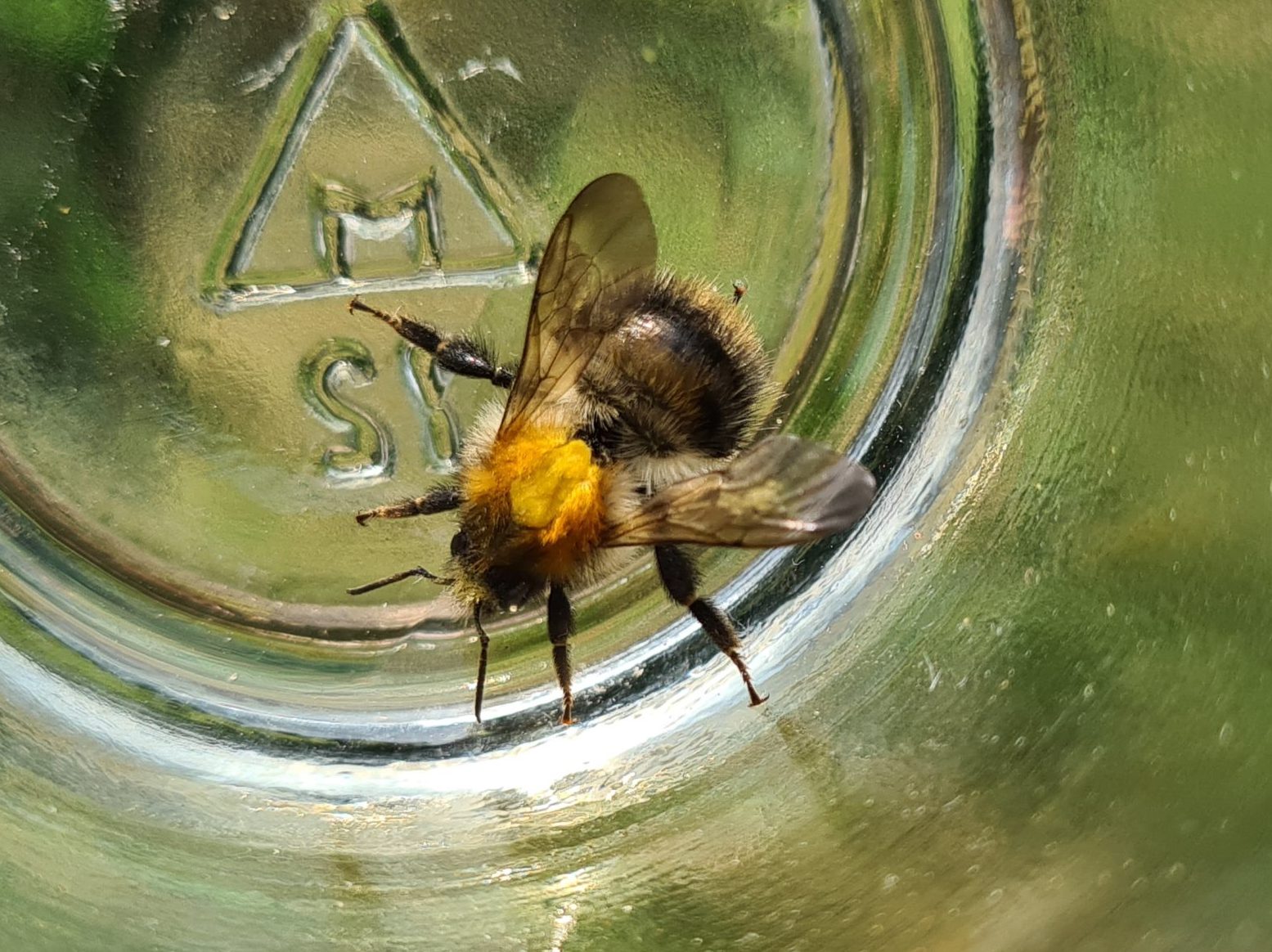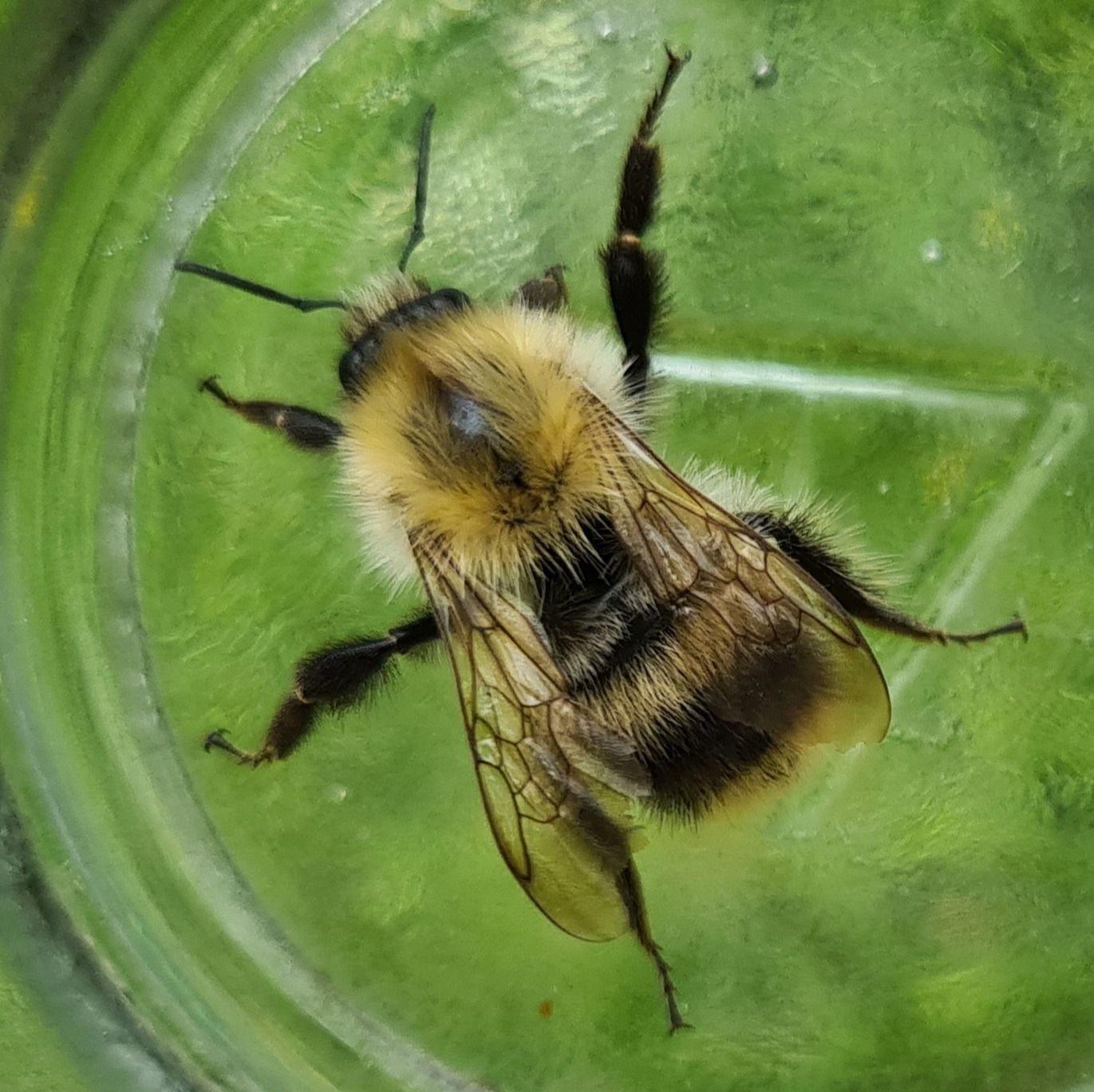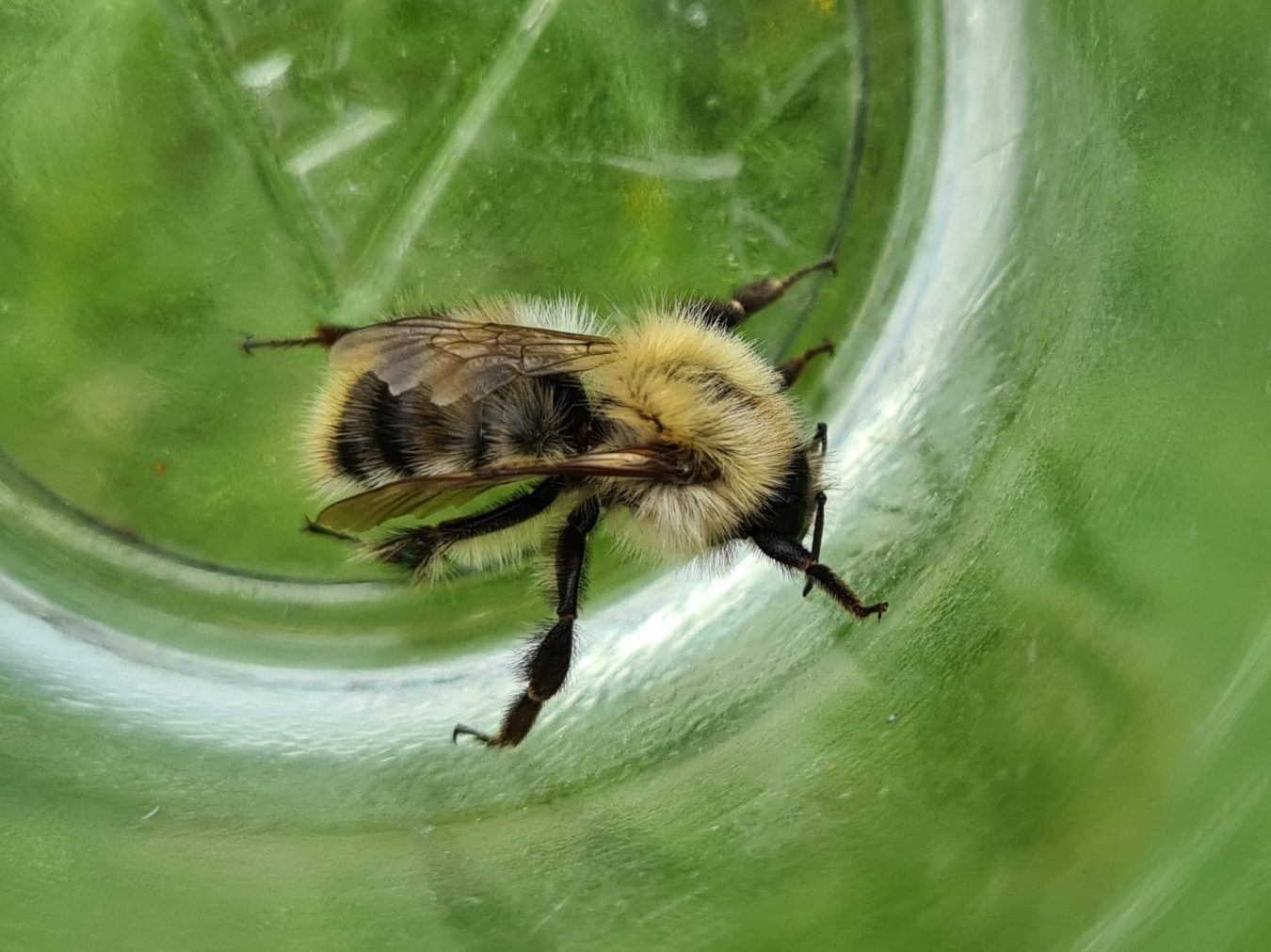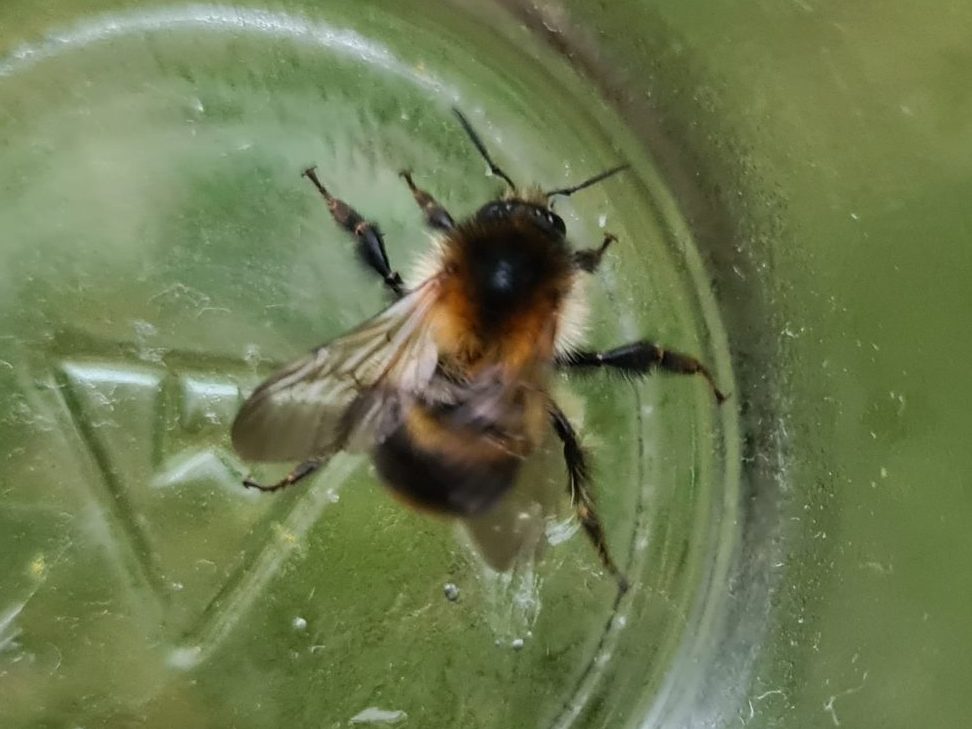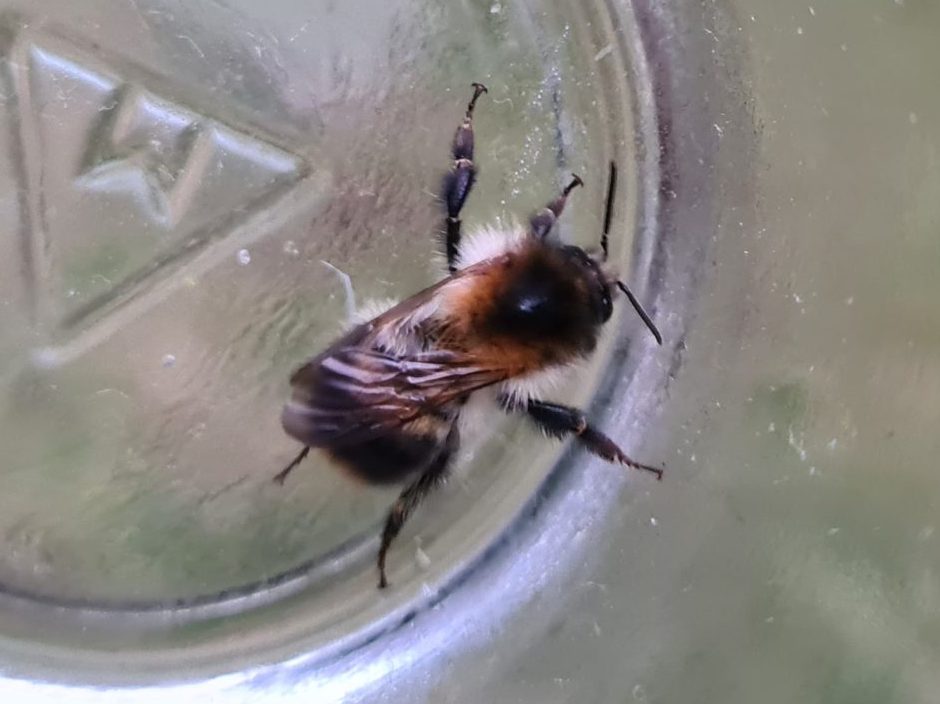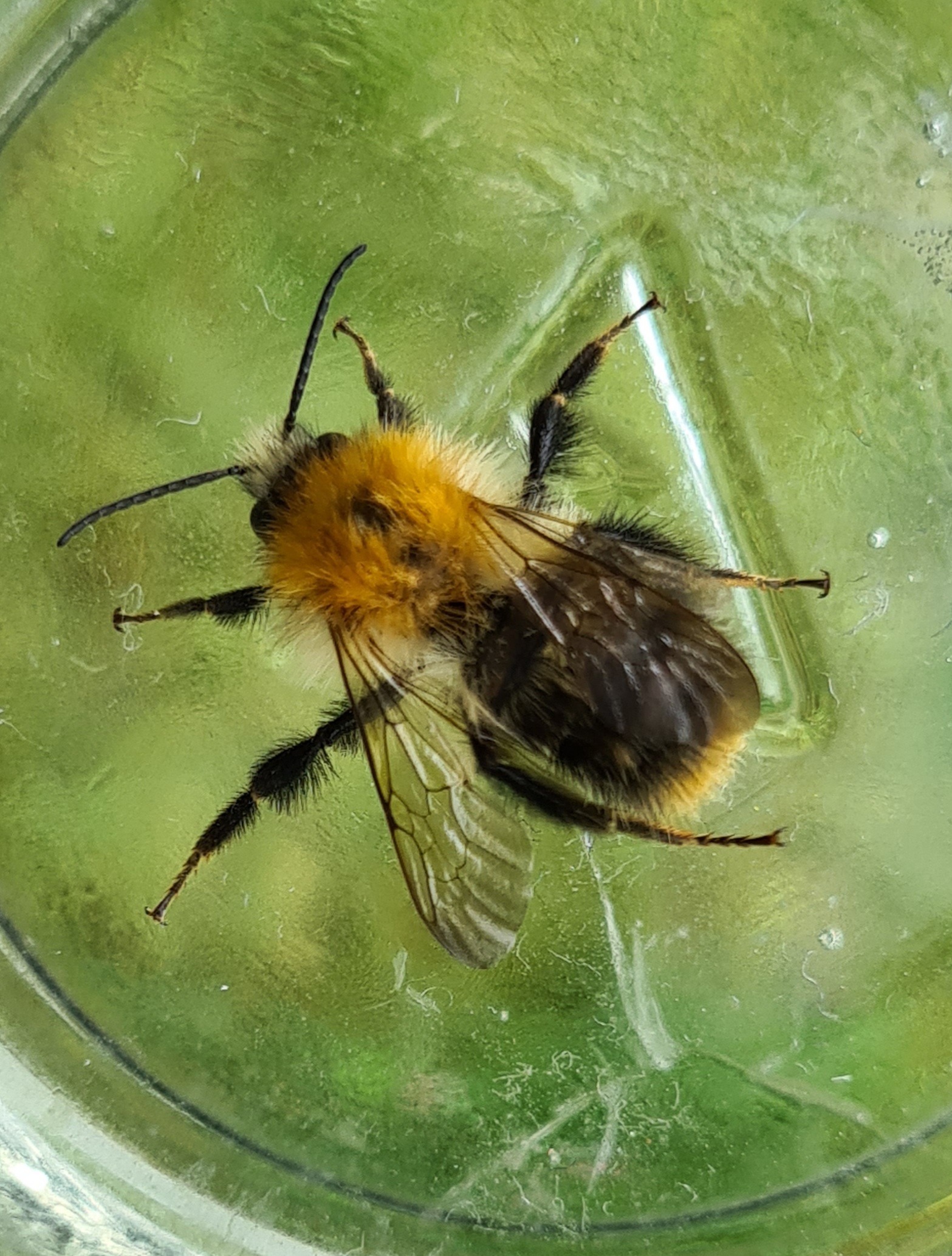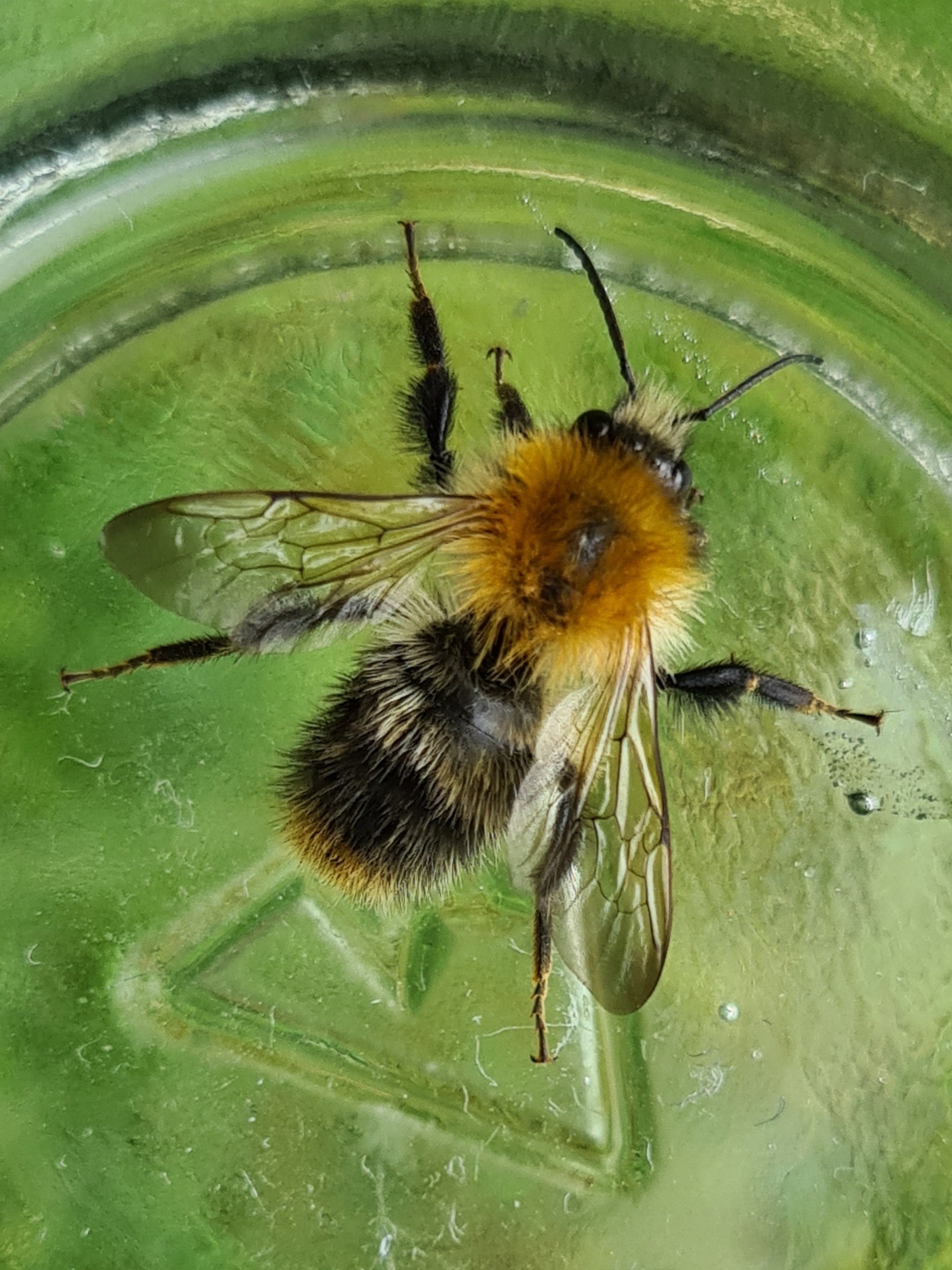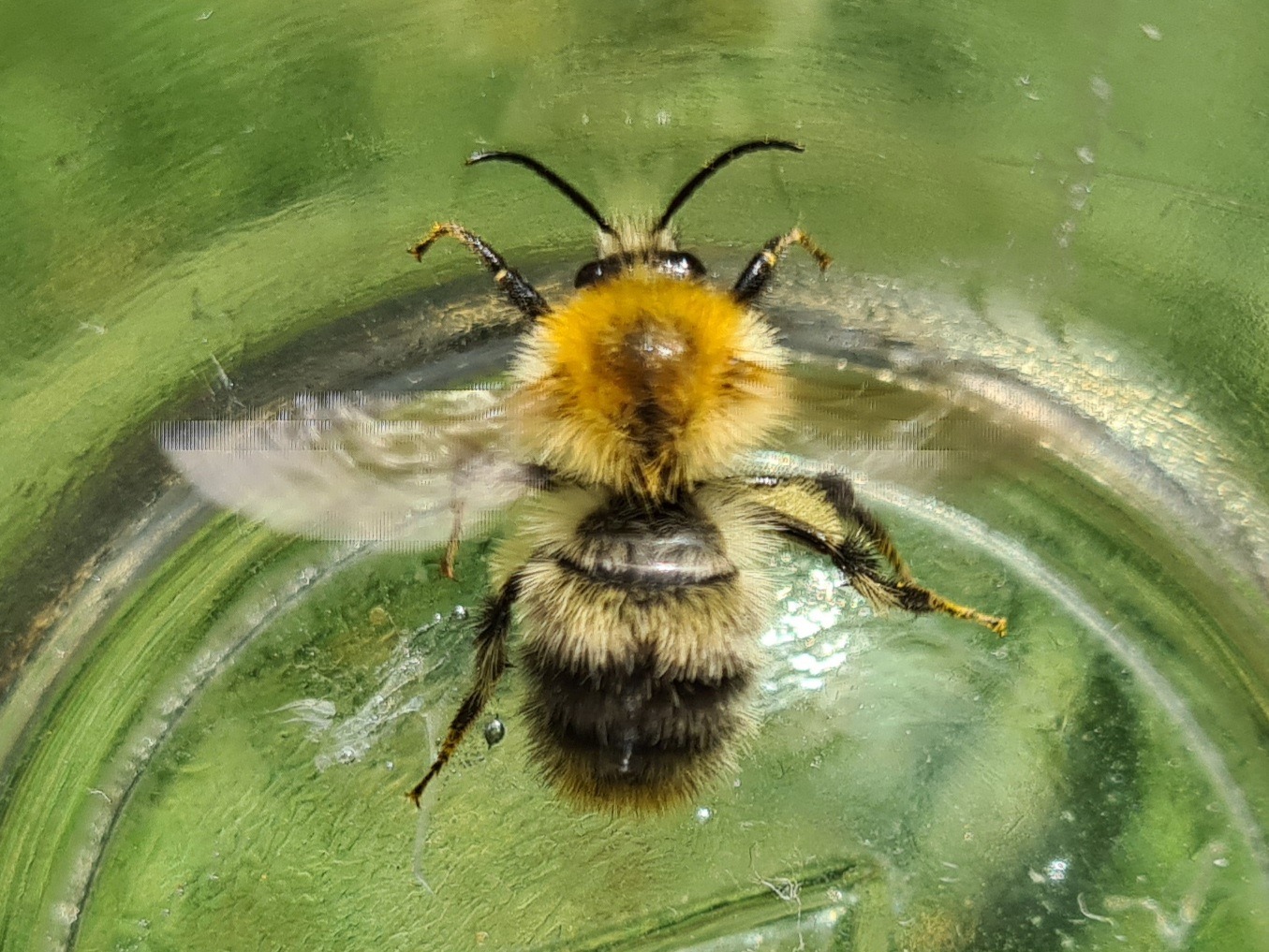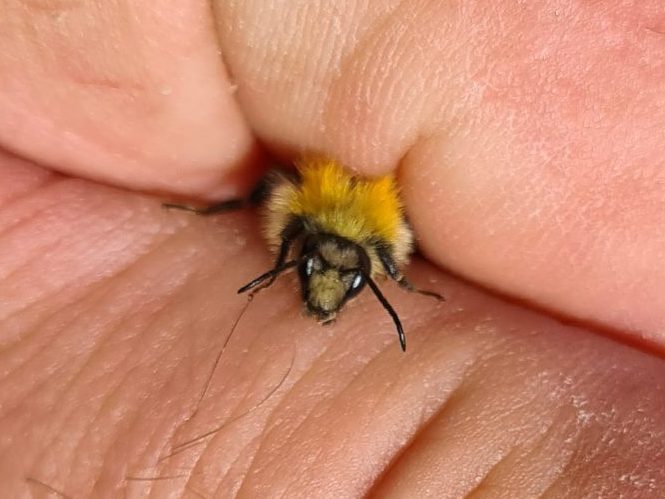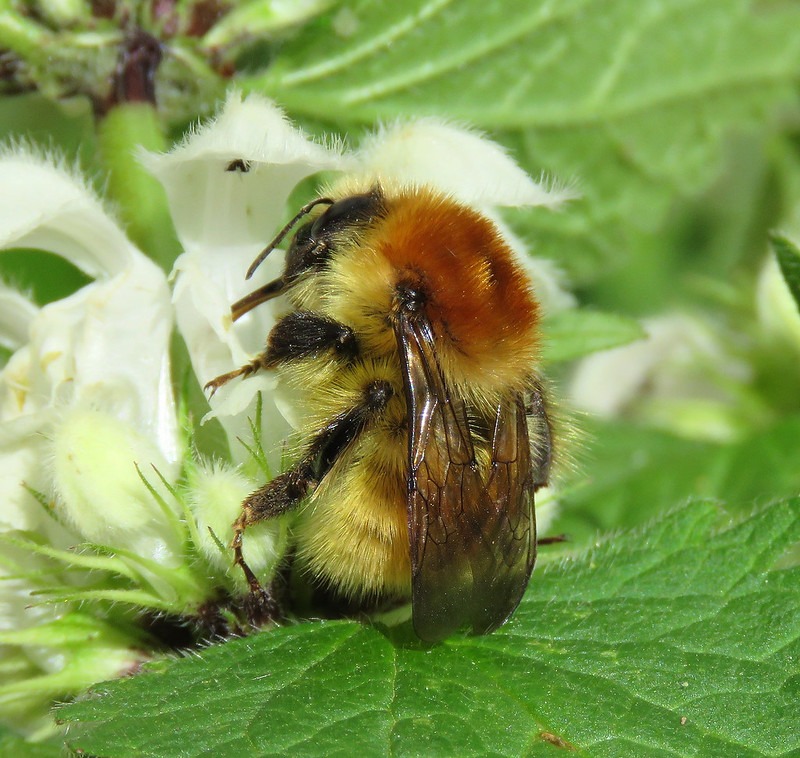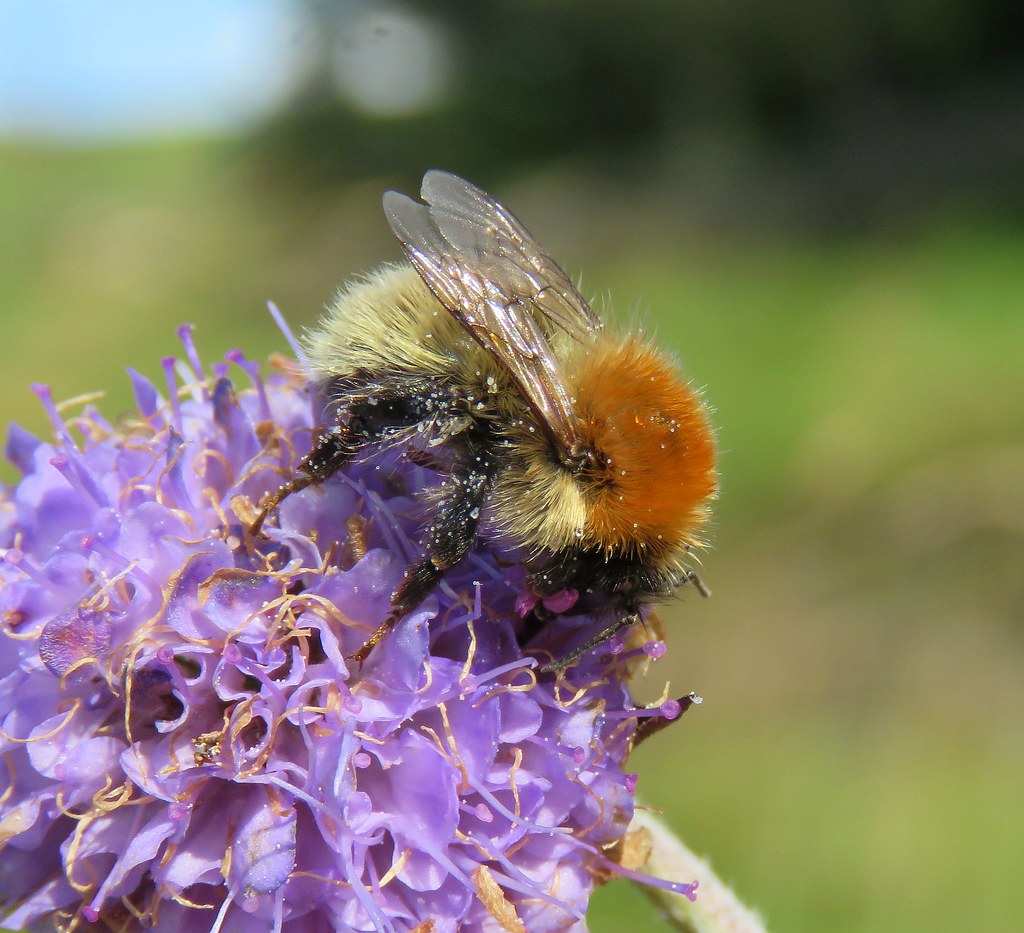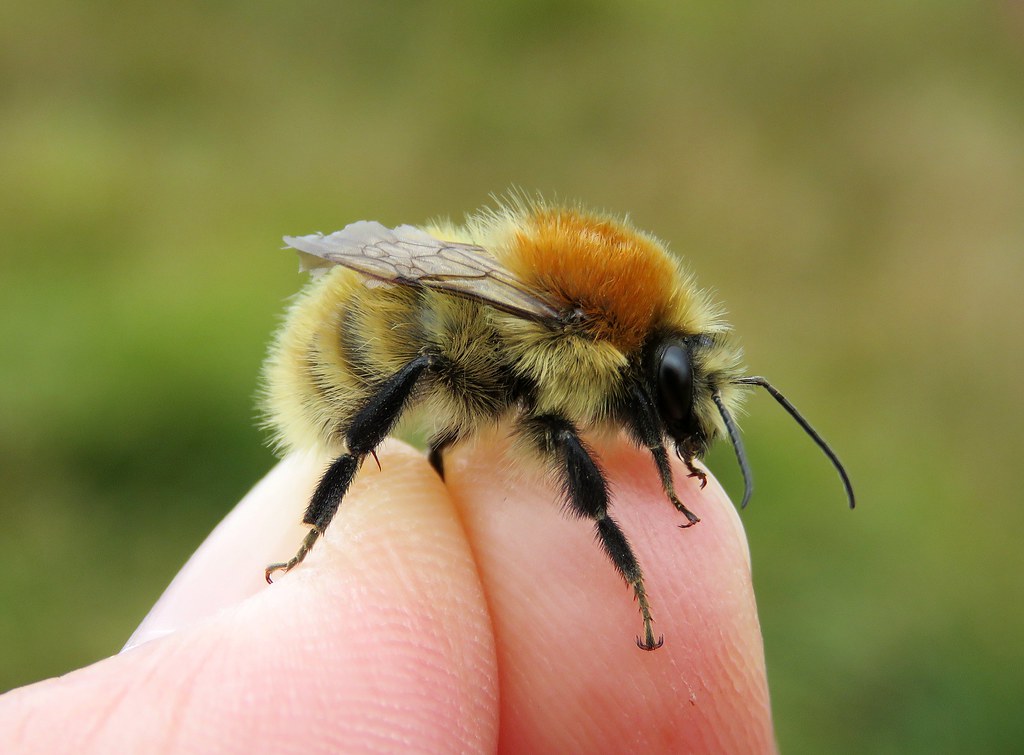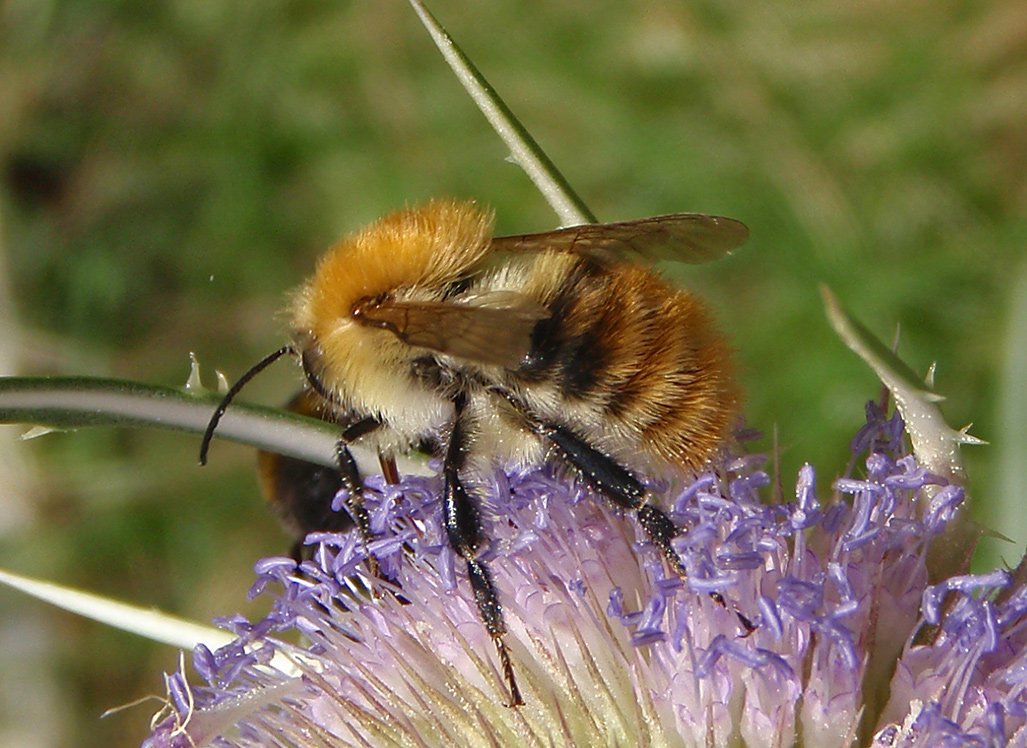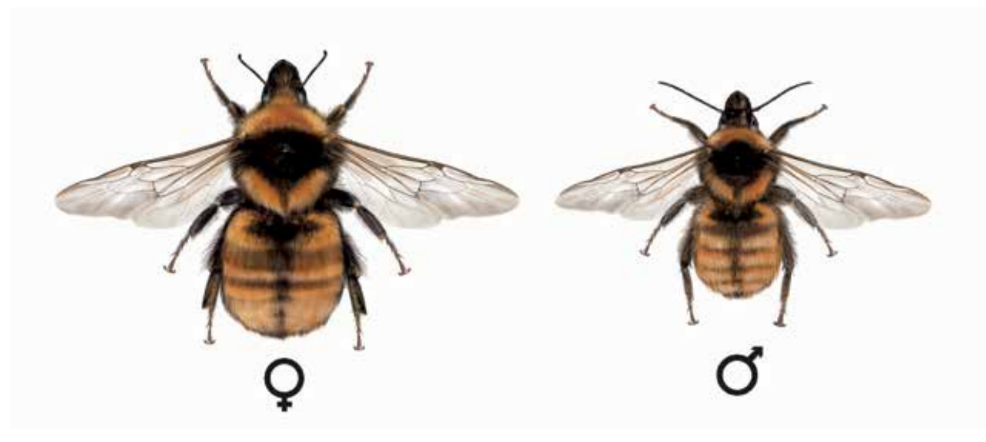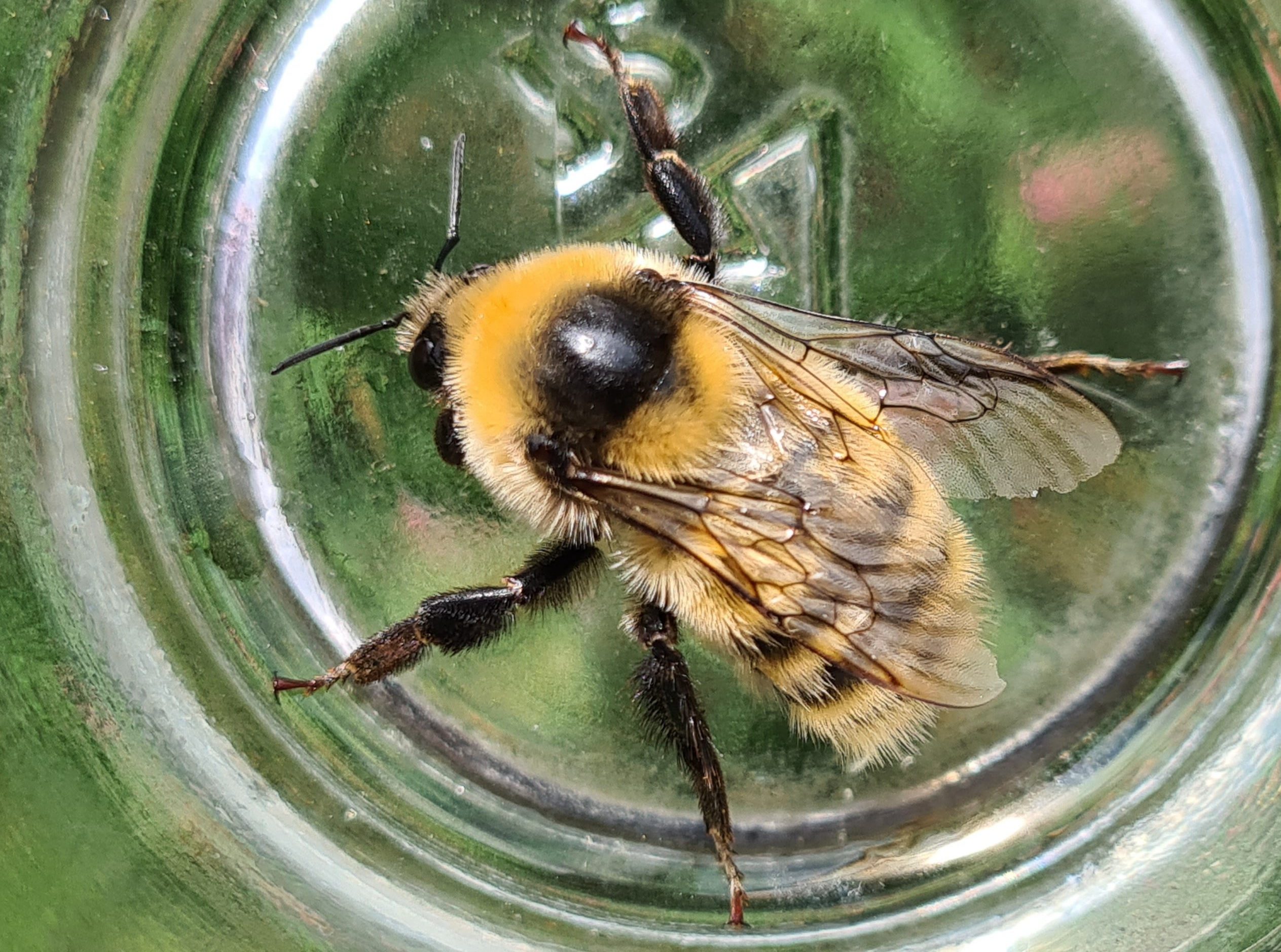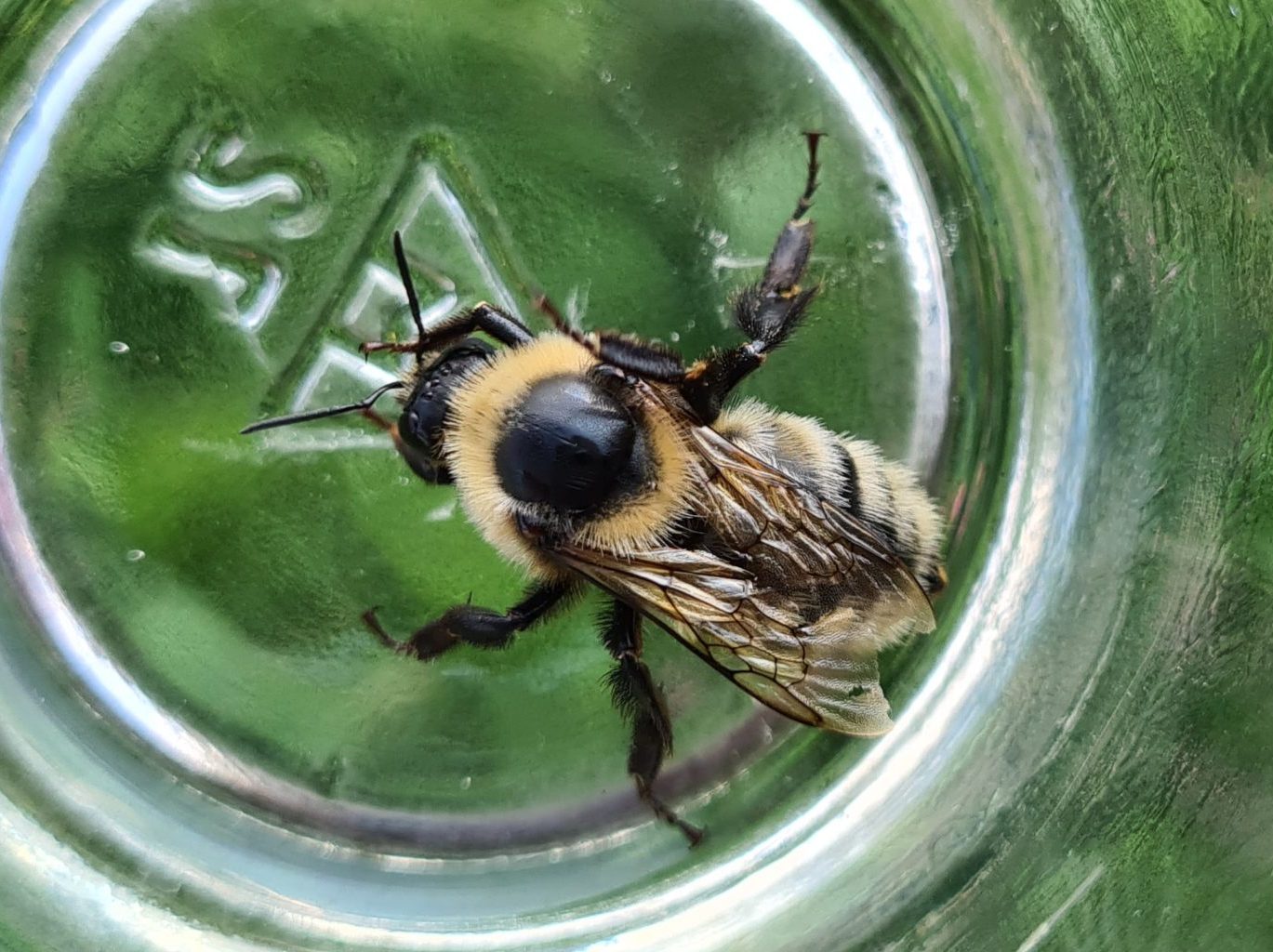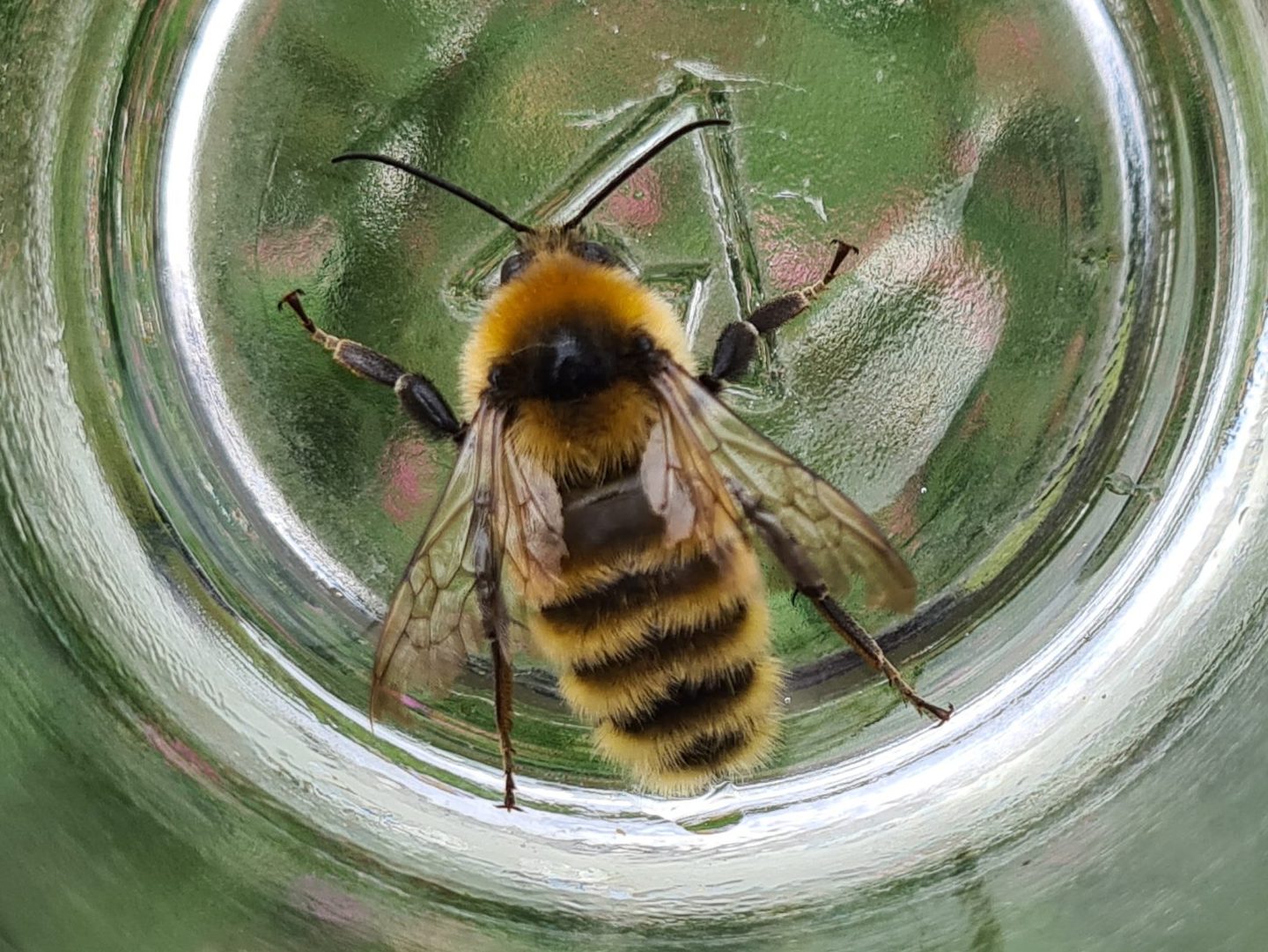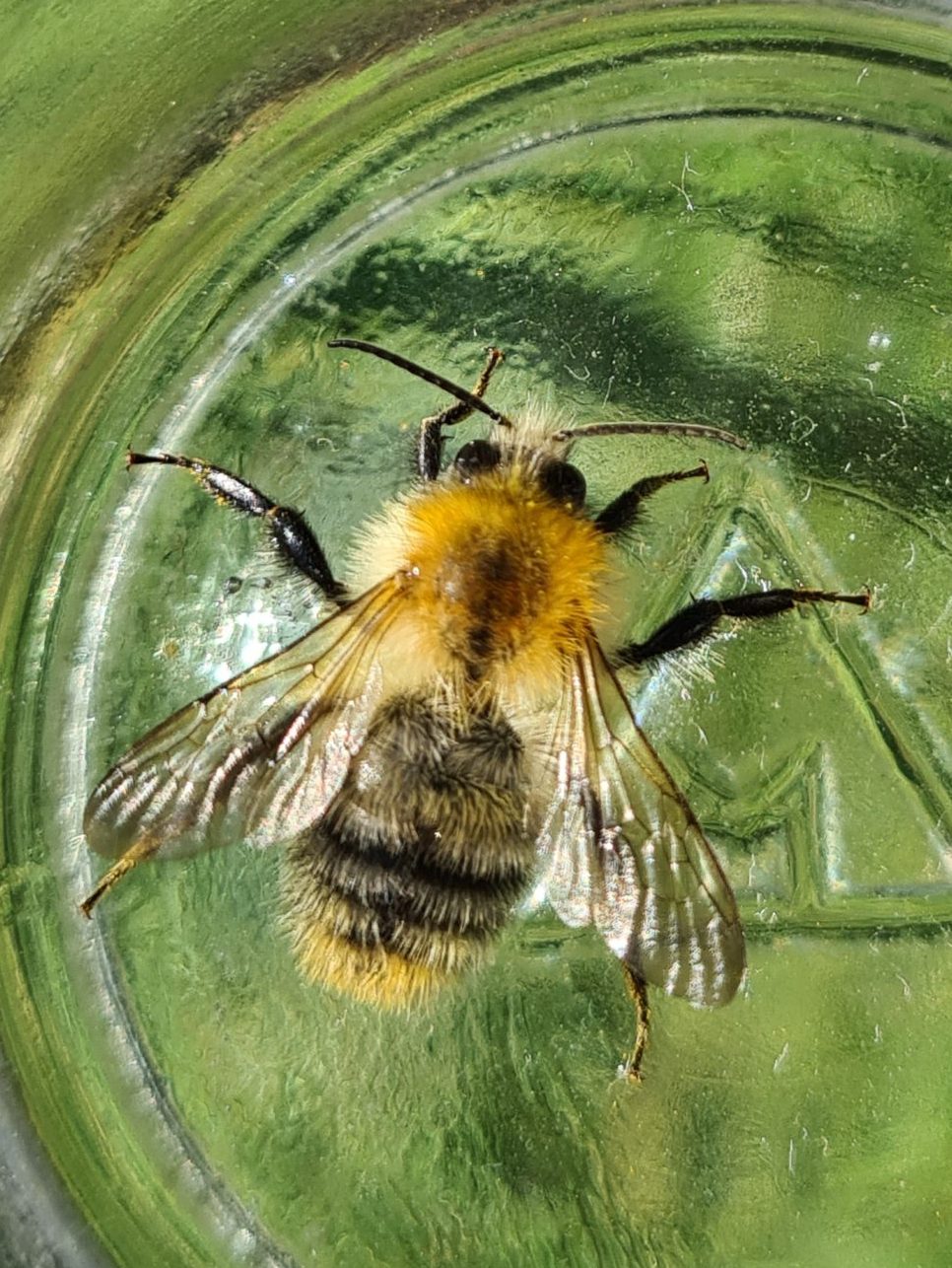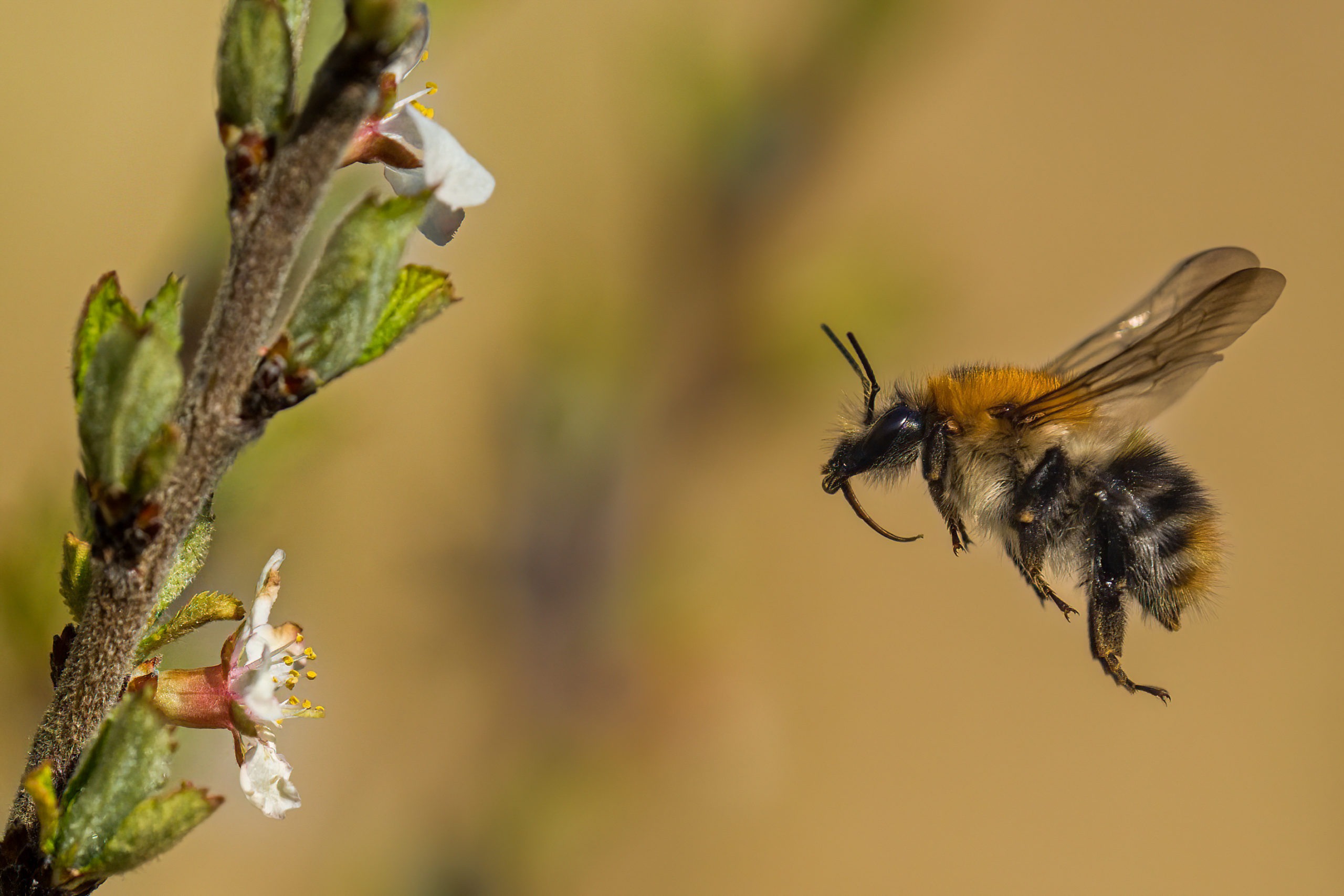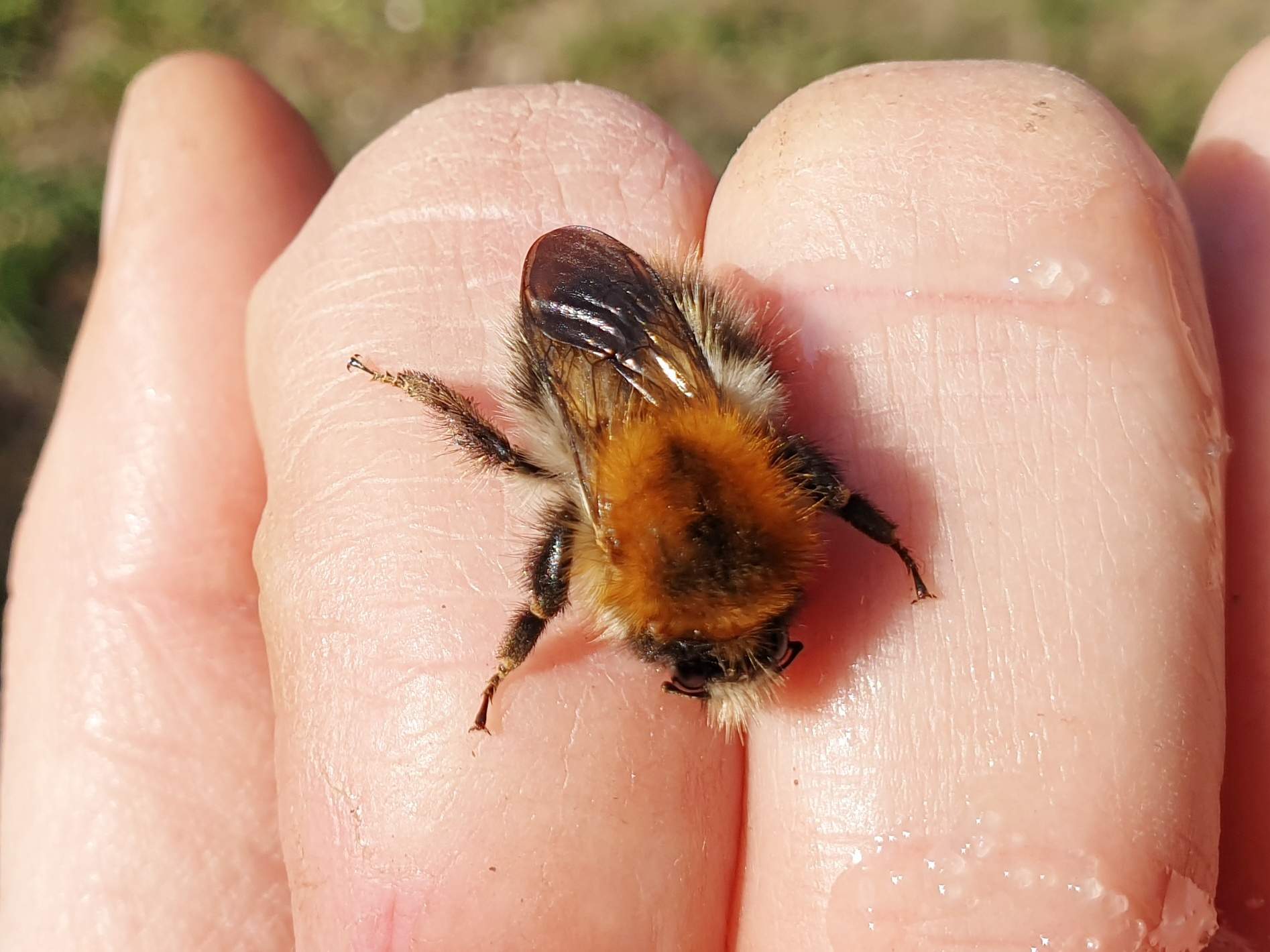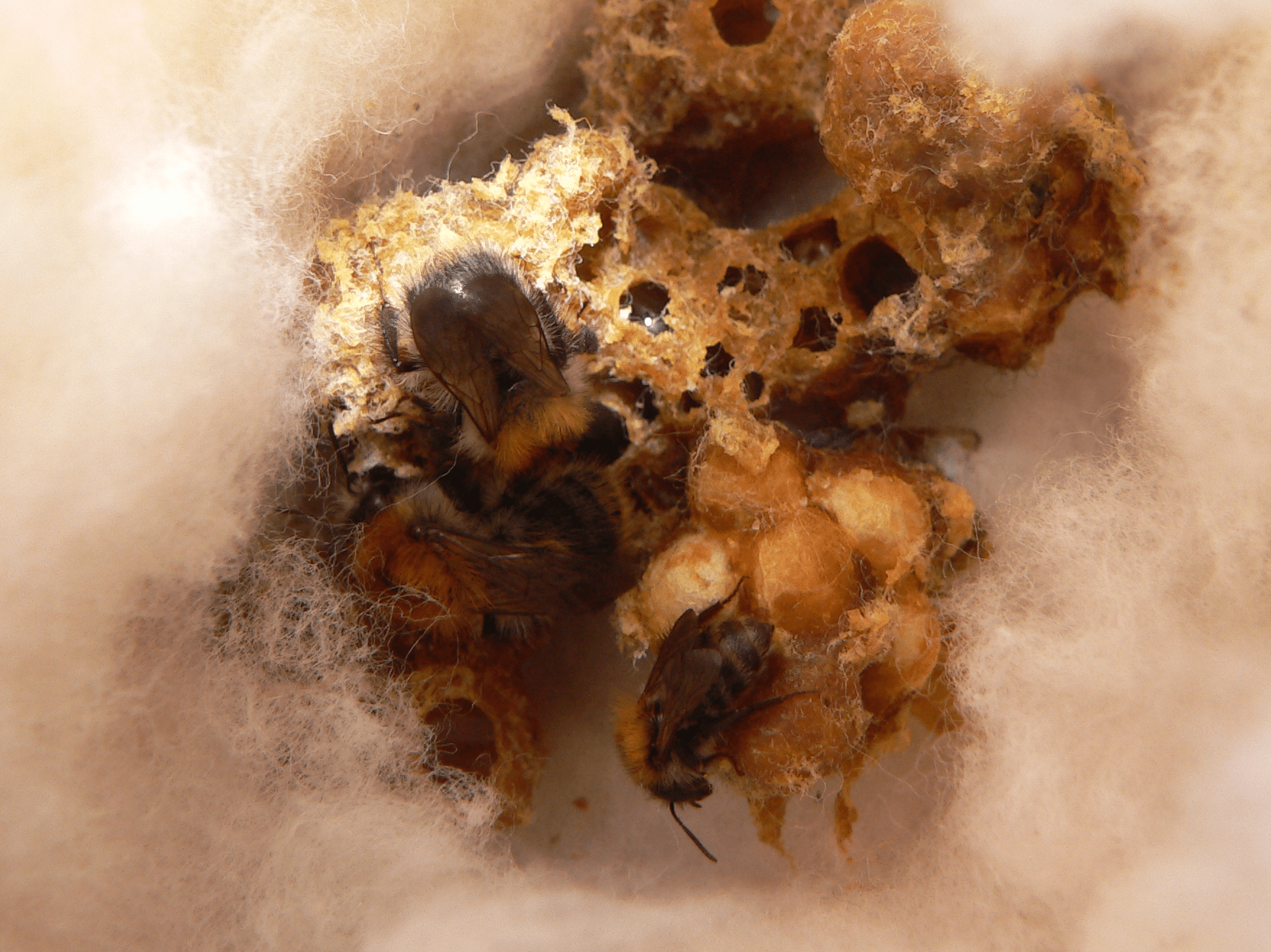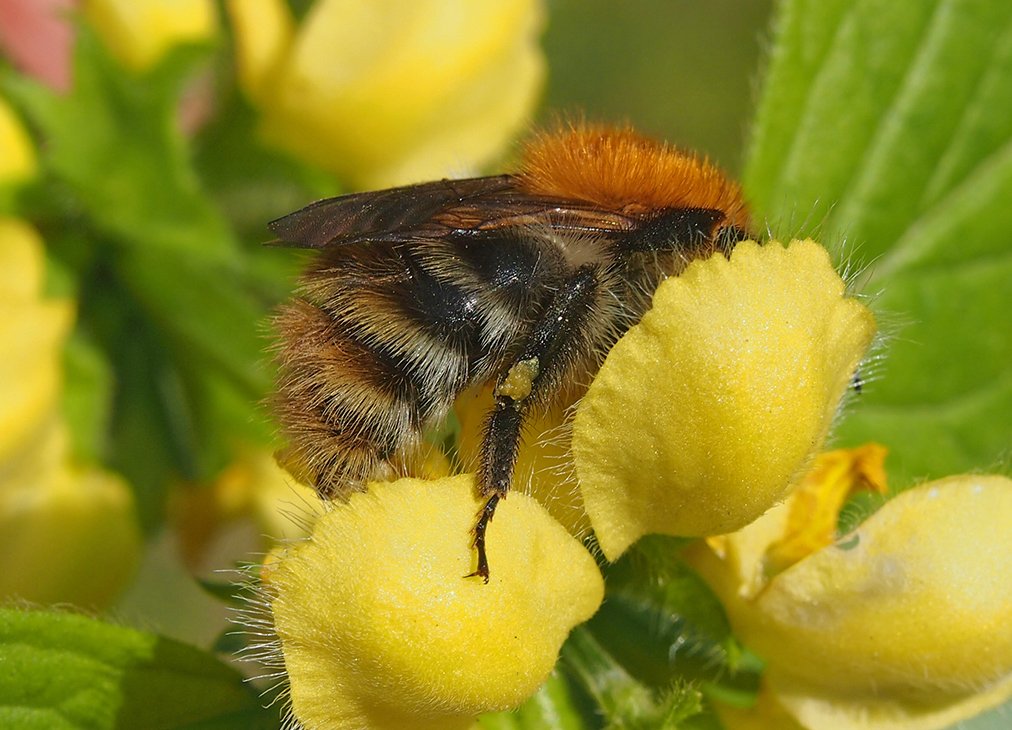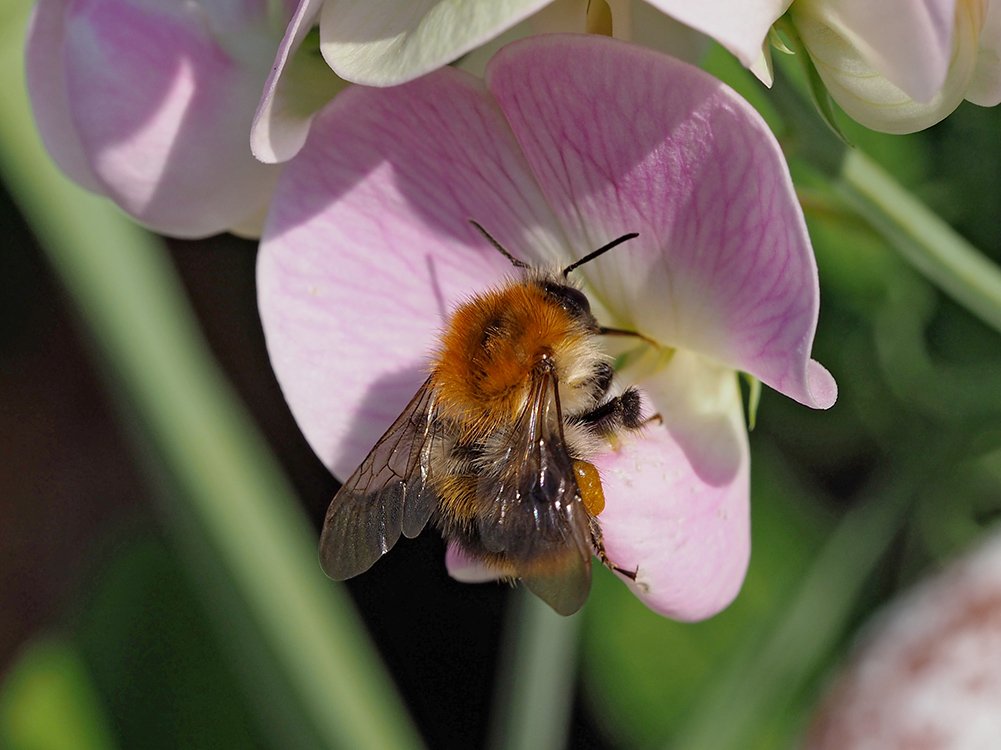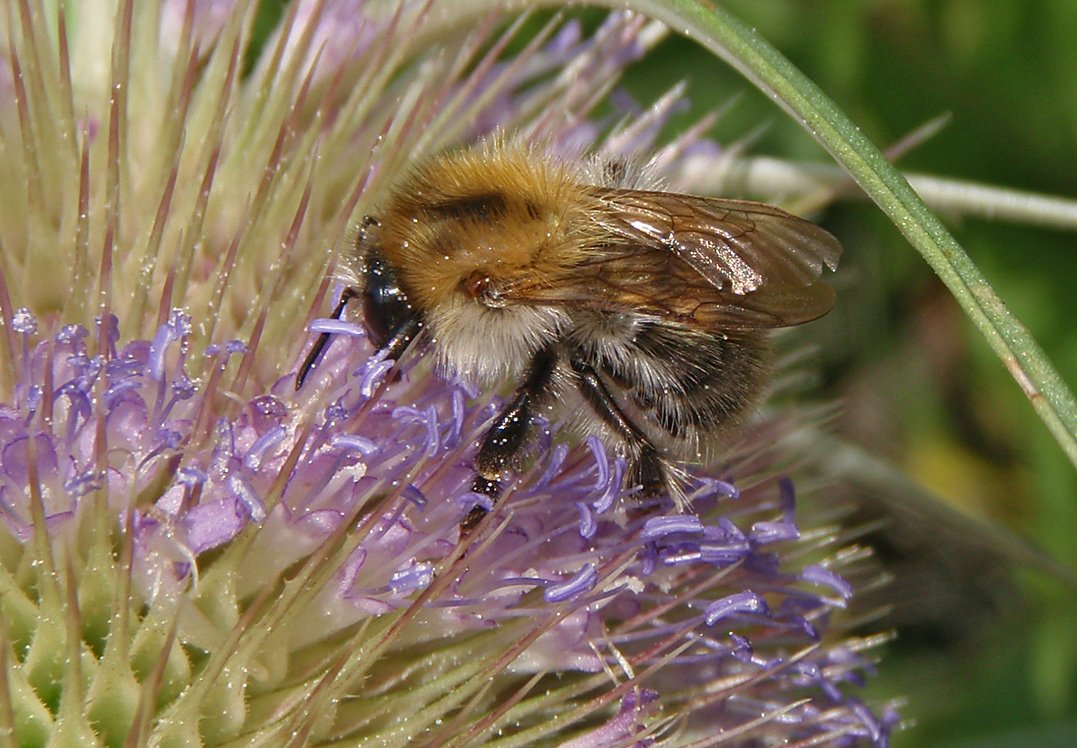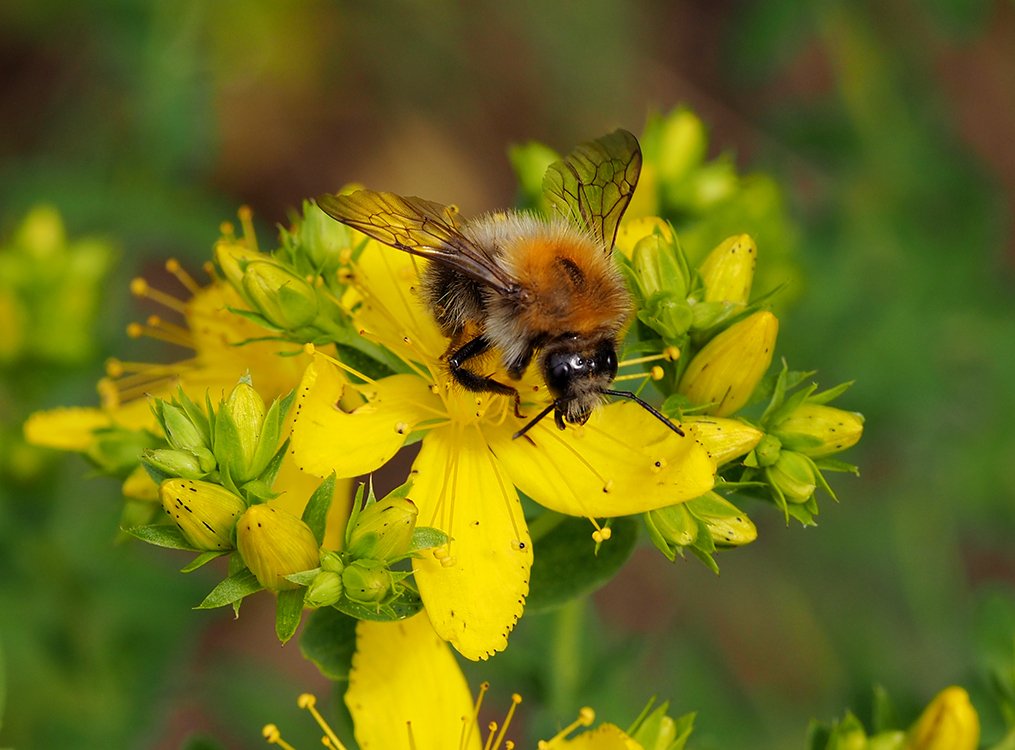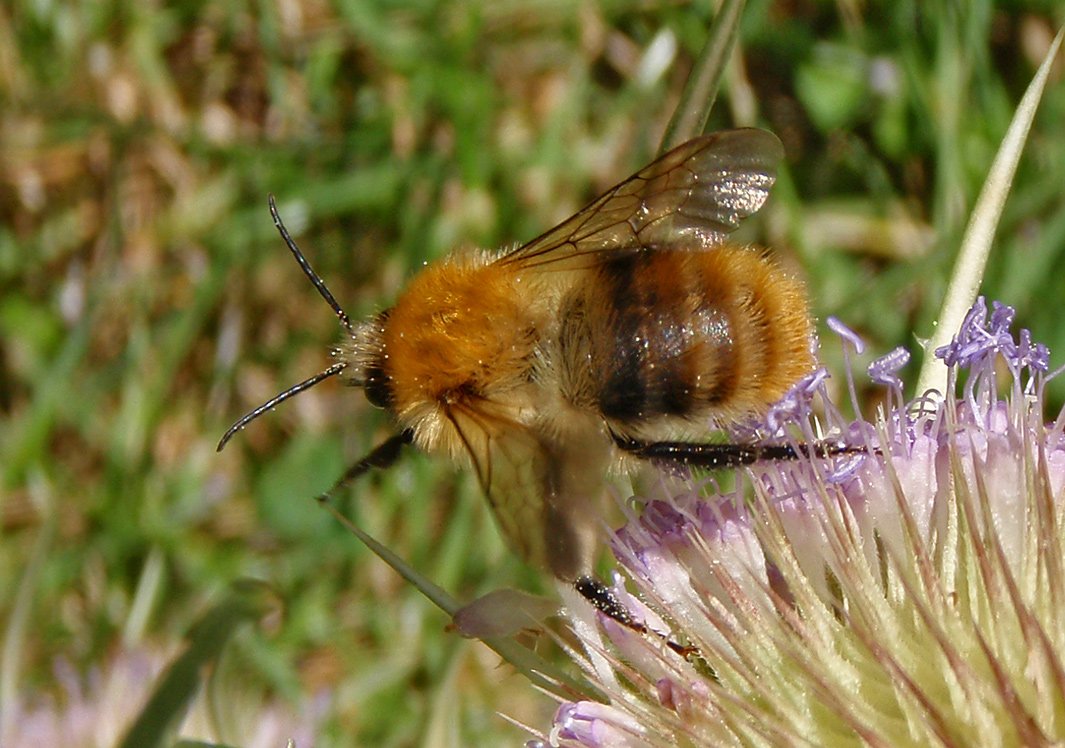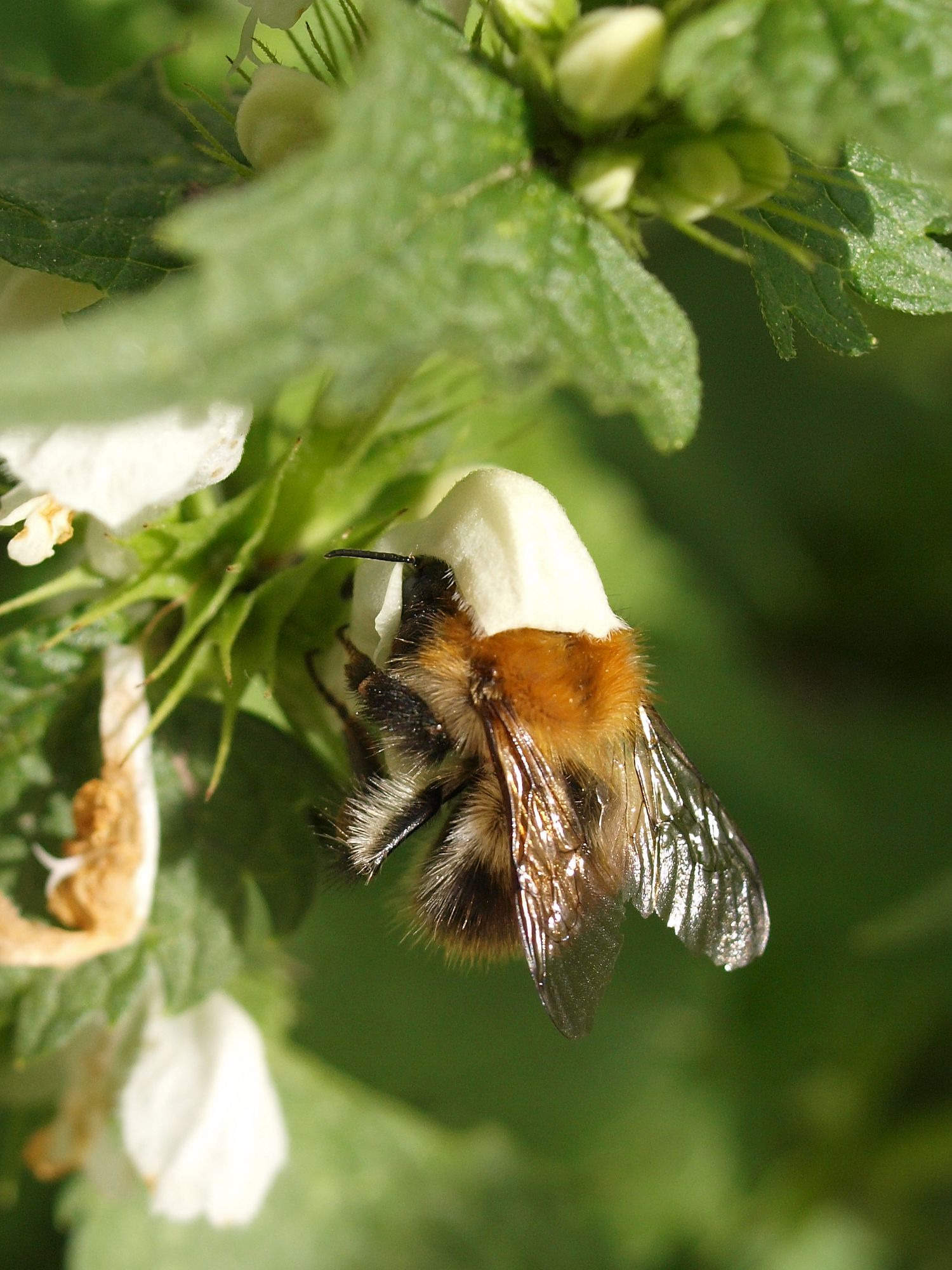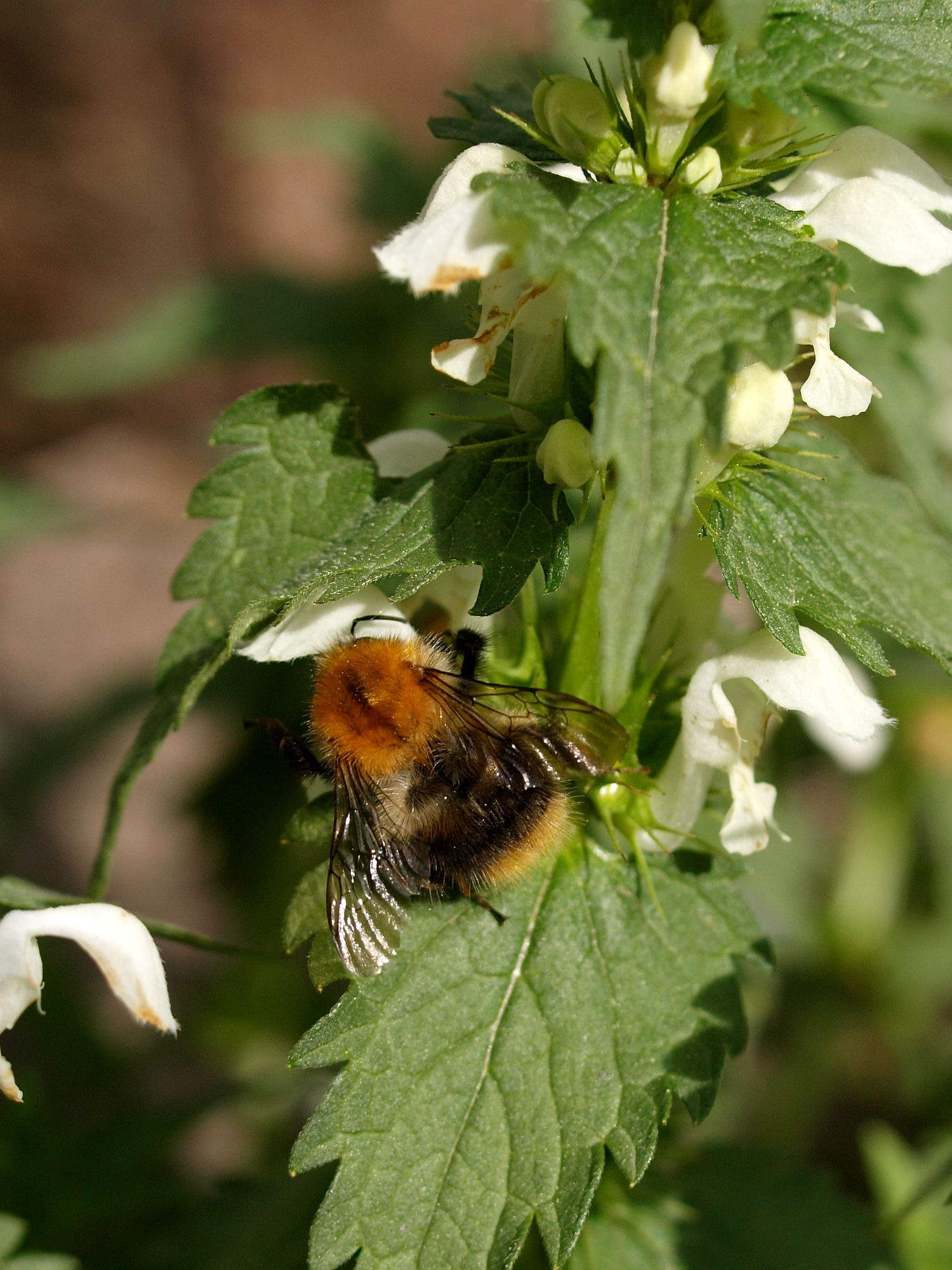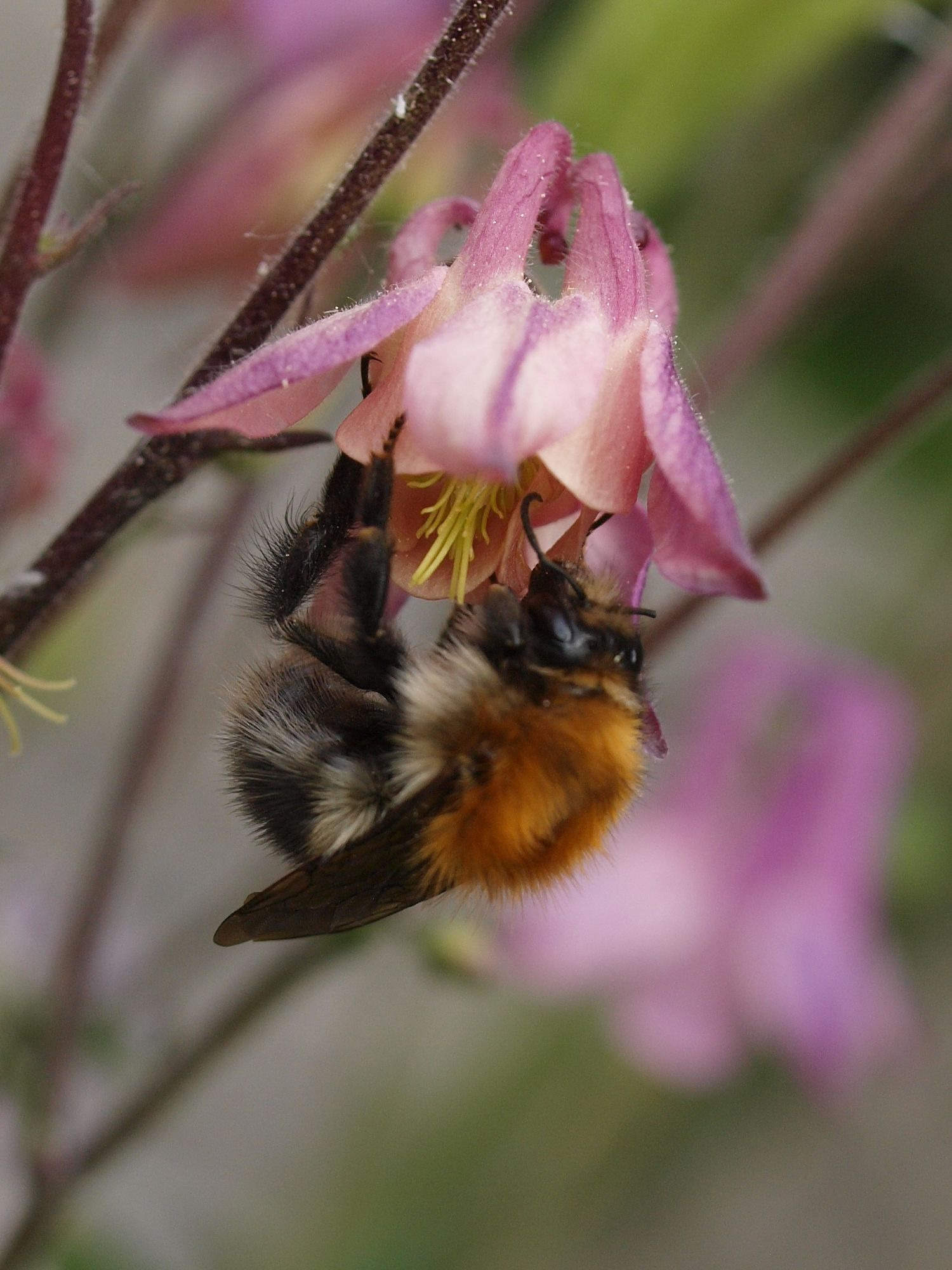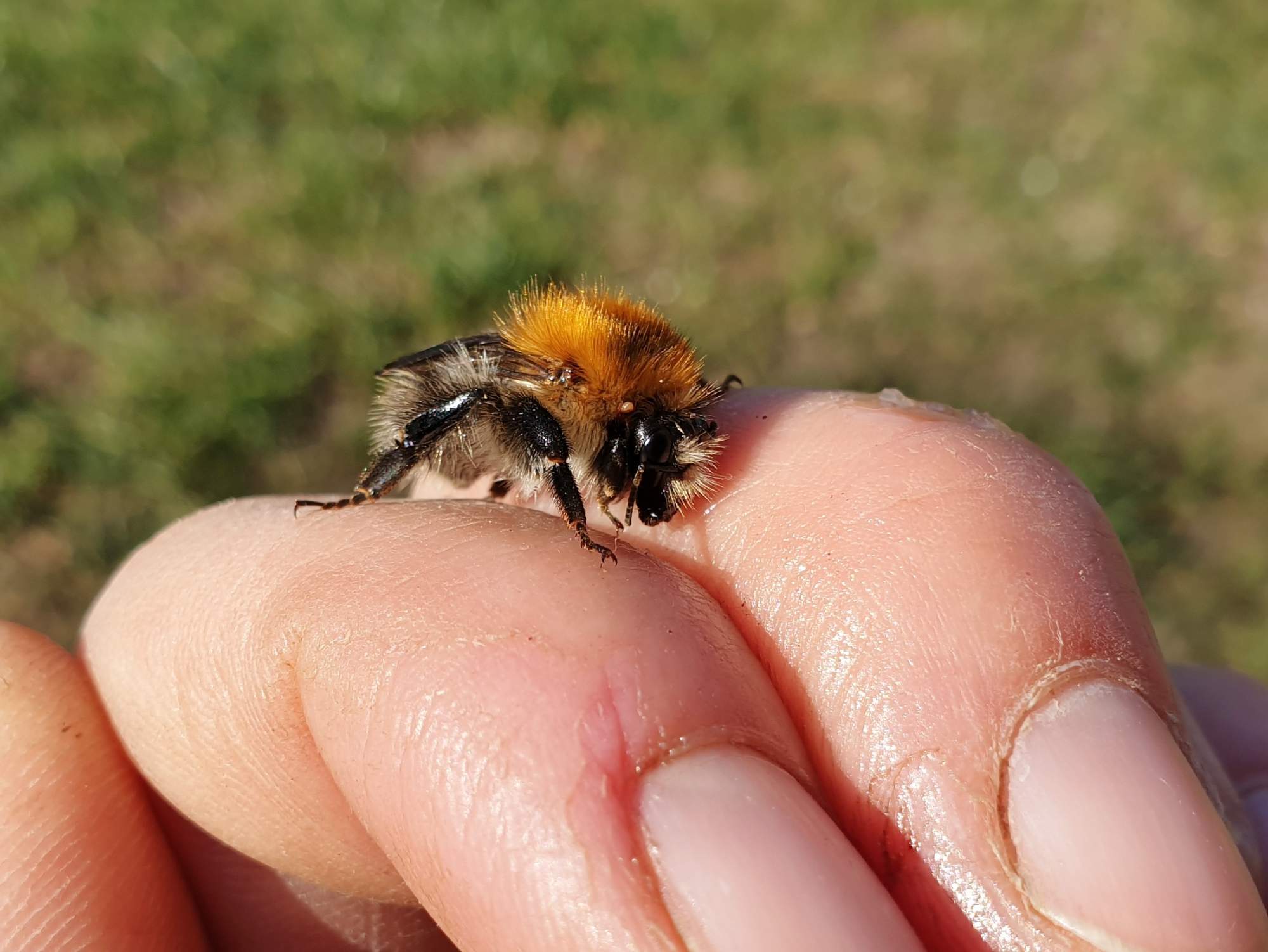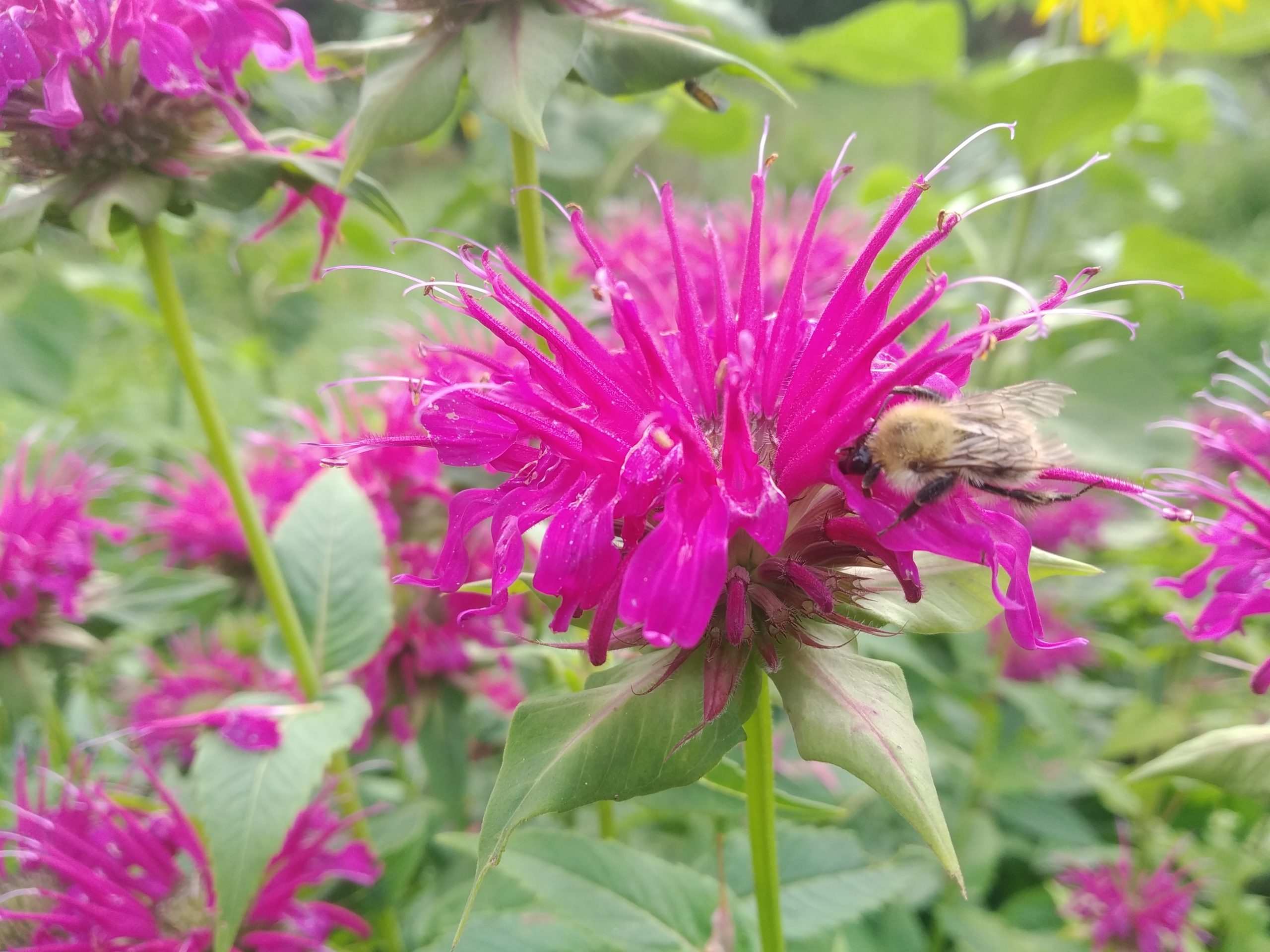


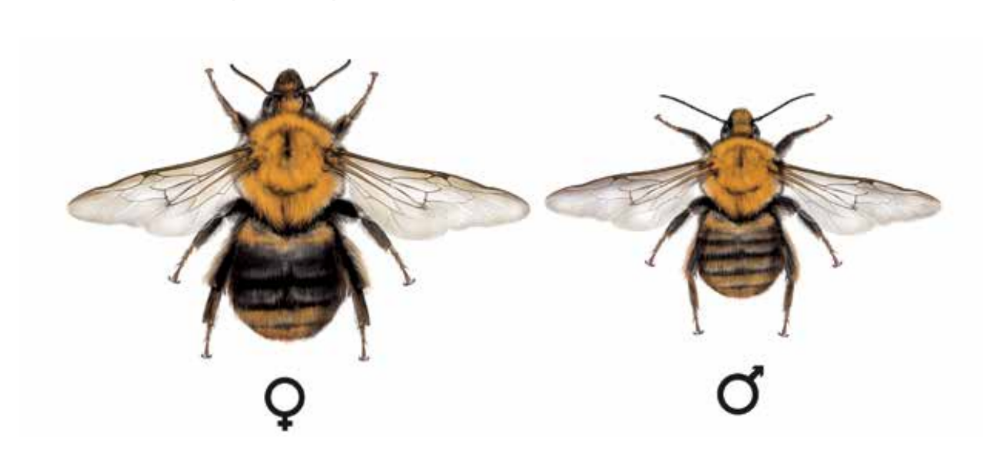
Common carder bee (Bombus pascuorum)
What you will learn here
- Information on individual types of bumblebees
- You will receive a summary of information for the general public, schools, and breeders.
Last Updated: 25/04/2022
Contents
Colour scheme
Size
Head
Tentacles
Language
Body
Wings
Legs
Specific distinguishing features
Photography
Mother
Female worker
Male
Video catalogue
Mother
Female worker
Male
Similar species
How to distinguish it from similar species
Life cycle
Larval feeding
Nesting site
Nest size
Visiting bumblebees
How to tell the difference between a bumblebee and a 'pačmelák' (which is often used colloquially to refer to any larger bee, including bumblebees, or sometimes more specifically to certain types of larger, fuzzy bees).
Information on breeding
Interesting facts
Photos and videos
Interesting links
Description
Czech Field bumblebee
Flights: Common carder bee
English Common carder bee
German: Field bumblebee
Polish Red-tailed bumblebee
Depiction

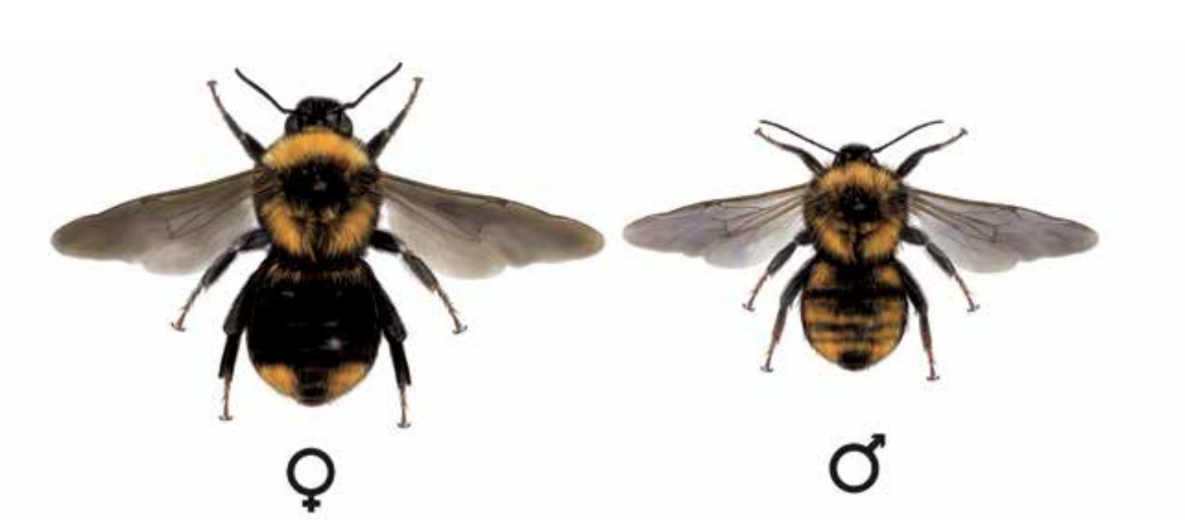
Common carder bee
Source Bee in the City of Wild Bees Wrocław
Colour scheme
Basic scheme (mother-queen and worker)
- Base colour
– from reddish-brown
– up to grey-black (less common dark forms) - Head
Black
– light fringe on the face - Chest
– long chest
– variable colouring from reddish-brown to grey-black (less common dark forms)
– on the dorsal side a longitudinal / triangular patch of interspersed black hairs
– distinct areas of light brown-yellow hairs on the sides of the chest - Bottom
– 1st to 4th tergites grey-black
– 5th to 6th tergites (end of abdomen) yellowish to reddish-brown stripes
– distinct rows of inserted yellow hairs present
– end of the bottom, pale yellow hairs
It is quite difficult to reliably distinguish between a worker and a queen bee based on their colouring. However, it often holds true that worker bees have less distinct colours, which can also be related to their age.
Basic diagram (male)
- Base colour
– from reddish-brown to greyish-black (less common dark forms)
– In males, brighter colours - Head
Black
– light fringe on the face
– distinct patches of pale brown-yellow hairs on the sides of the chest
Males have light bristles on the sides of their mandibles for spreading scent marks. - Chest
thicker body hair
– variable colouration
– from reddish-brown to greyish-black
– distinct areas of light brown-yellow hairs on the sides of the chest - Bottom
– 1st to 4th tergites grey-black
– 5th to 6th tergites (end of abdomen) yellowish to reddish-brown stripes
– in males, these colours are often present on other tergites closer to the thorax as well
– distinct rows of inserted yellow hairs present
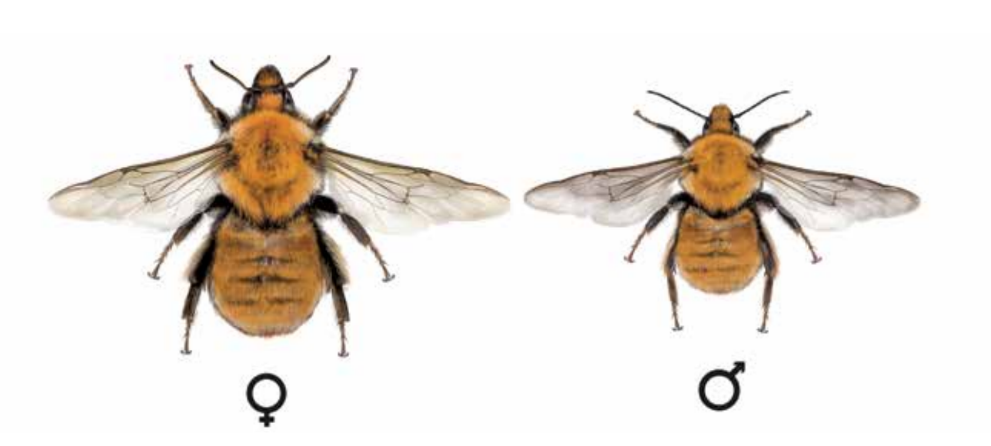
Males can be distinguished by more pronounced colours, richer chest hair and a different antenna shape.
Size
- Type:
– small species - Size
mother 15 – 18 mm
Female worker 9 – 15 mm
samec 12 – 17 mm
Source Hymenoptera of the Czech Republic I., Academia 2017
The sizes are very variable, and the queen does not always have to be larger than the workers in the nest. The size of the first-generation workers will really surprise you.
Head
Size Medium-length
Shape wedge shape when viewed from the front
Tentacles
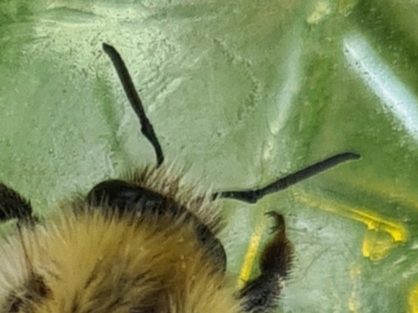
As with other species of bumblebee, the male has long, curved antennae.

Field bumblebee (Bombus pascuorum) – worker – antennae
Photo: O. Hercog 2021 08 08

Tree bumblebee (Bombus pascuorum) – male – antennae
Photo: O. Hercog 2021 08 07
Language
- long
Body
Ovoid
Wings
Bright
Legs
- black hairs in the inner row of the rear shank cup longer than half the length of the light hairs
- with dark forms, also predominantly black hairs
- The males' legs are strikingly long, optically longer than the legs of females and workers.
Specific distinguishing features
<bude doplněno>
Photography
Mother

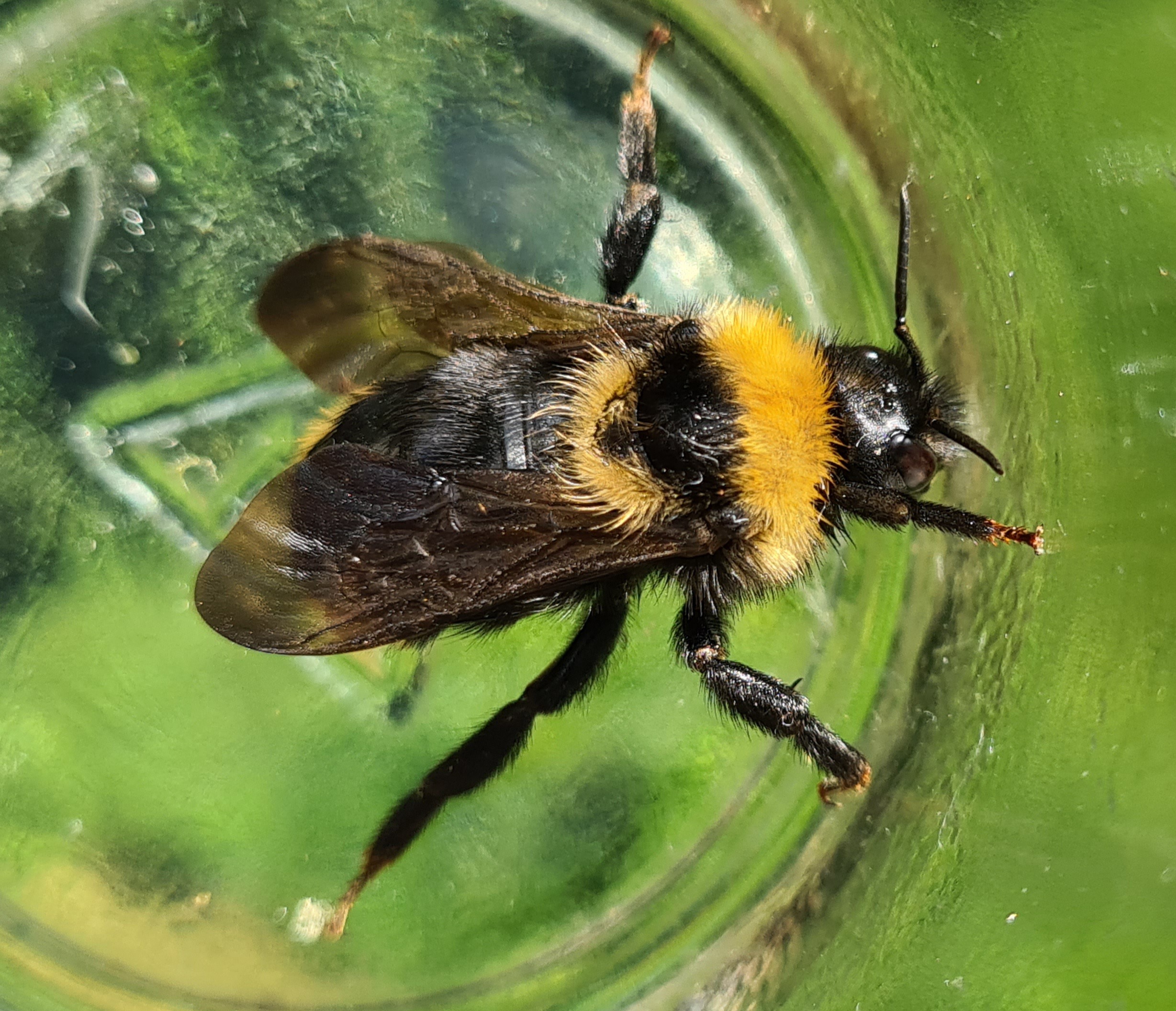
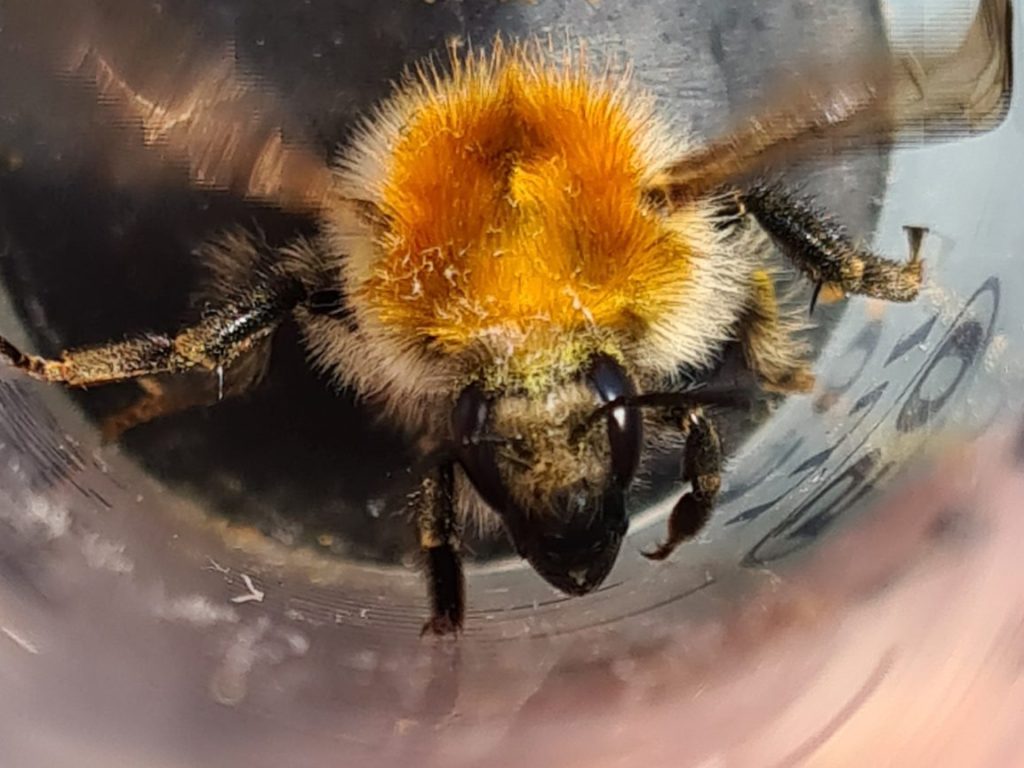
Common carder bee (Bombus pascuorum) – queen
Photo: O. Hercog 17/5/2021

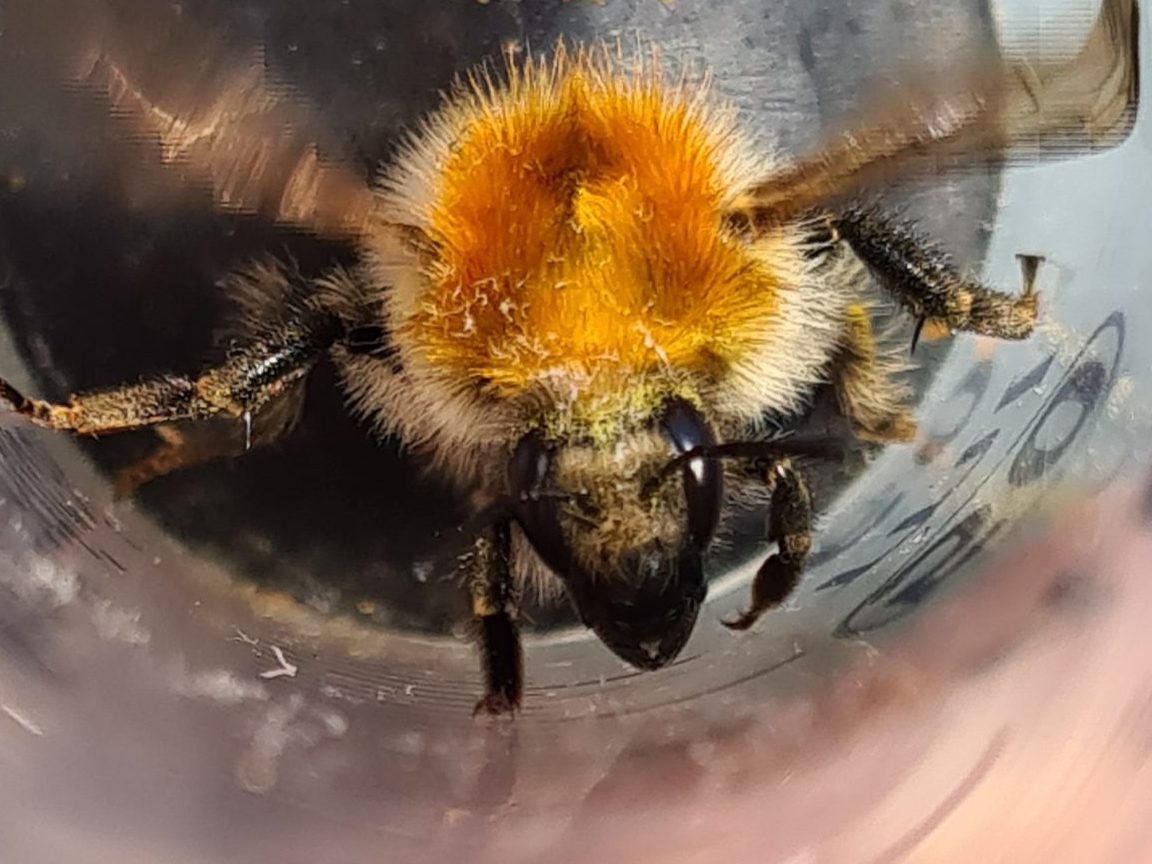
Field bumblebee (Bombus pascuorum) – queen – head
Photo: O. Hercog 15/7/2021

Field cuckoo-bee (Bombus pascuorum) – queen
Photo: H. Kříženecká
The dark forms of the buff-tailed bumblebee are beautiful
Female worker
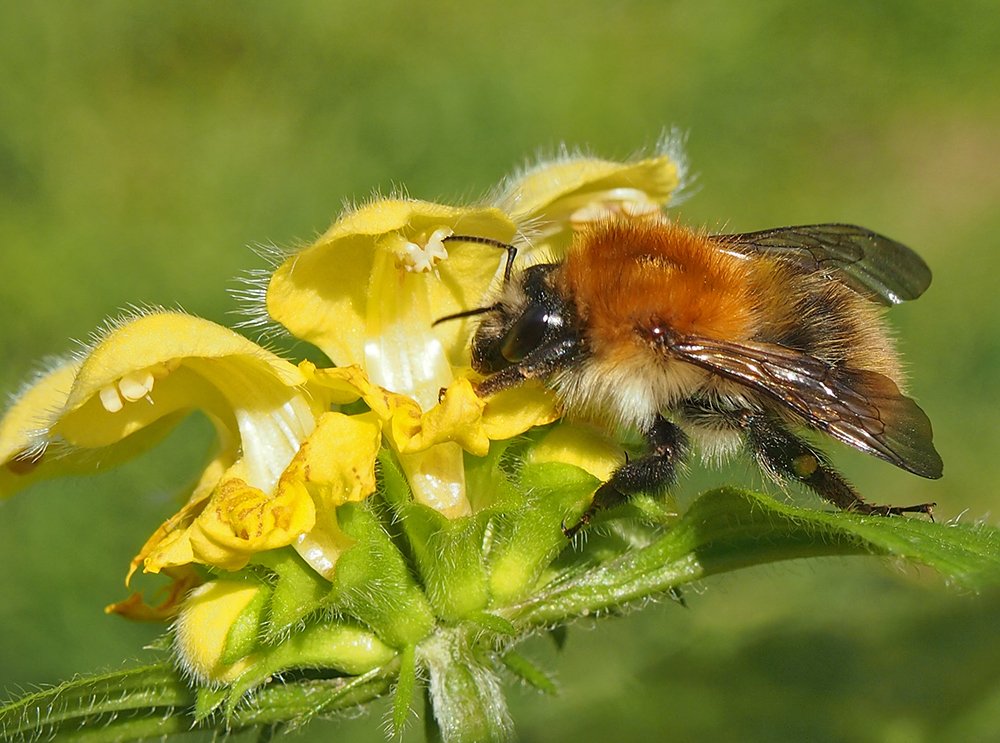
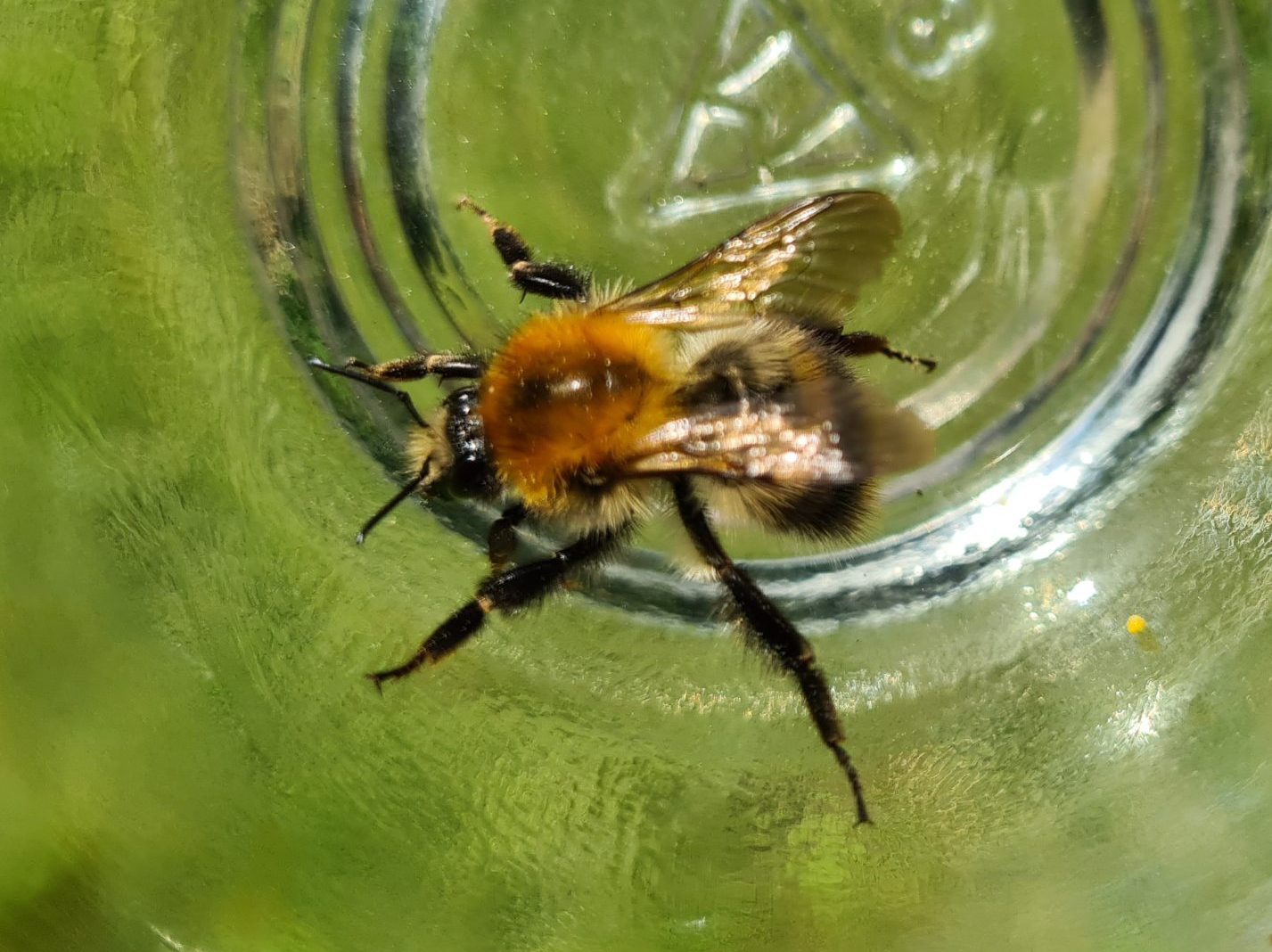
You will also find more colourful forms among the workers, here are the workers in classic colours.
The female worker in the photograph on the right has pollen on her chest.

Field bumblebee (Bombus pascuorm) – worker
Photo O. Hercog 06 06 2021

Field bumblebee (Bombus pascuorm) – worker with a mallow tag
Photo: O. Hercog 21 08 2021
This worker bee no longer has such bright colours. It could be due to a different variety, but it is often a consequence of age – colours fade. Therefore, it is good to also keep an eye on the calendar. This worker bee was photographed in August. The influence of age is therefore likely.

Field bumblebee (Bombus pascuorum) worker
Photo: O. Hercog 8/8/2021

Field bumblebee (Bombus pascuorum) – worker
Photo: O. Hercog 8/8/2021
A less common dark form of the bumblebee Bombus pascuorum. It still retains light hairs on the sides of its thorax.

Field bumblebee (Bombus pascuorum) – worker
dark form
Photo: O. Hercog 22/6/2021

Field bumblebee (Bombus pascuorum) – worker
dark form
Photo: O. Hercog 22/6/2021
Male
Males are similarly coloured to the mothers and workers.
But they have significantly longer and „spikier“ cilia. Their colours tend to be more vibrant at first.
Their antennae and long legs will give them away.

Common Carder Bee (Bombus pascuorum) - male
Photo: O. Hercog 7/8/2021

Common Carder Bee (Bombus pascuorum) - male
Photo: O. Hercog 7/8/2021
This male was also photographed in August. However, it is significantly lighter than the previous individual. It also has a more prominent single row of hairs on its rump.

Common Carder Bee (Bombus pascuorum) - male
Photo: O. Hercog 2021 08 07

Common Carder Bee (Bombus pascuorum) - male
Photo: O. Hercog 2021 08 07
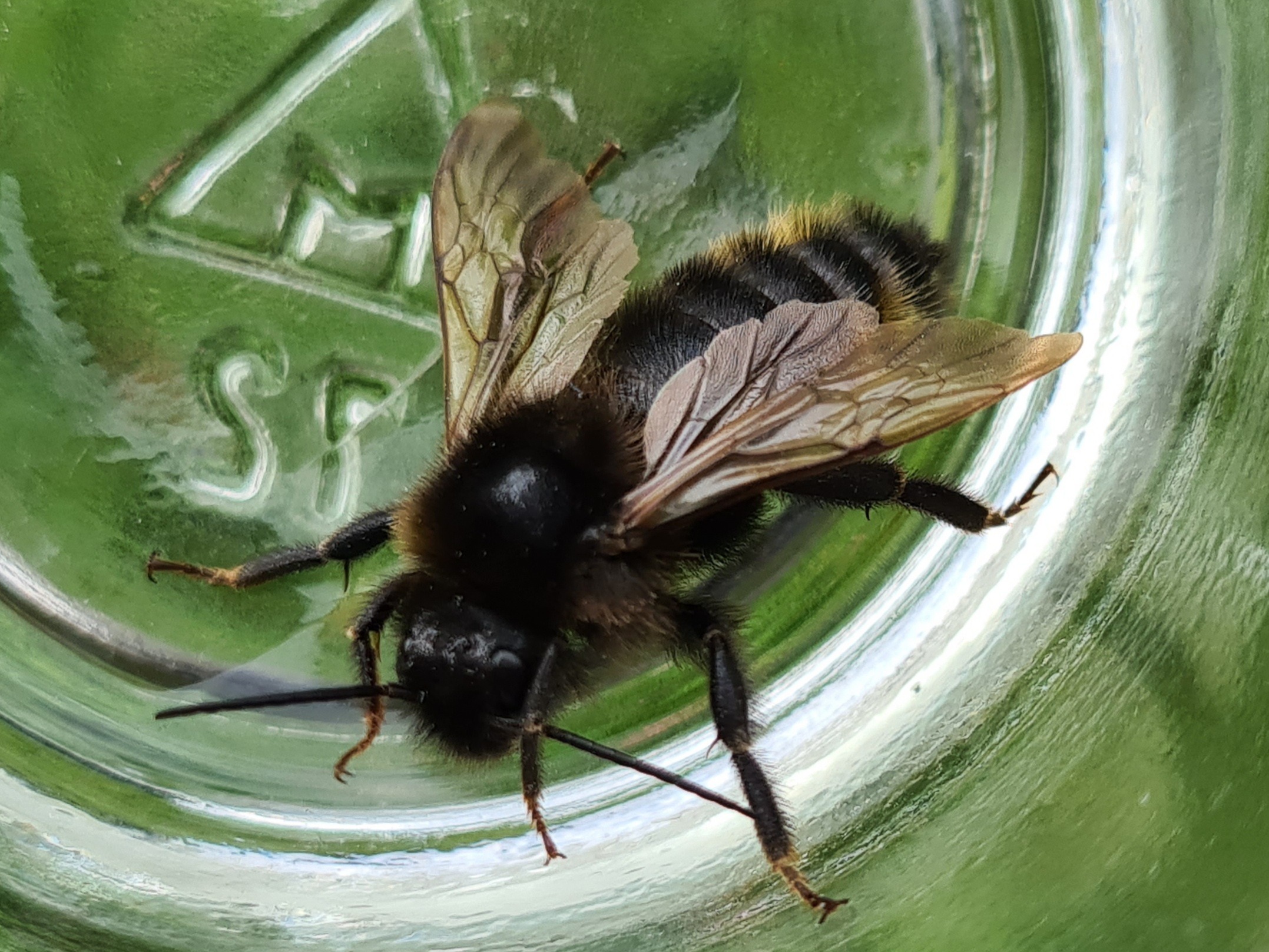
Dark forms of the bumblebee *Bombus pascuorum* are not very common. Note that even here, the pale hairs on the sides of the thorax remain, as well as rows of pale hairs on the abdomen, even though the latter is mostly dark.

Common Carder Bee (Bombus pascuorum) - male
Photo: S. Falk
.
The facial part of the head of a male bumblebee (Bombus pascuorum) is prominently light-coloured and covered with yellow hairs.

Common carder bee (Bombus pascuorum) – male
Photo: O. Hercog 2021 08 07
Video catalogue
Mother
Bumblebee mother
Female worker
Classic worker form
Male
Typically coloured male
Similar species
- Moss carder bee
- Great yellow bumblebee
How to distinguish it from similar species
Moss carder bee
- Species
– bigger than a bumblebee drips - Size
mother 17 – 23 mm
Female worker 10 – 16 mm
samec 12 – 16 mm
- Base colour
– black - Head
– Medium-length - Chest
– thick and even chest hair
– dorsal side orange-yellow
– no mixed black hairs
– hairs on the underside grey-yellow
– rear of the chest covered with short, „cropped“ hairs - Bottom
– yellow-ciliate abdomen
- black hairs only on the 6th tergite
– bright and contrasting colours
Basic diagram (male)
- Base colour
Black - Head
– medium-length black - Chest
– thick and even chest hair
– very short
– dorsal side orange-yellow
– no mixed black hairs
– rear of the chest covered with short, „cropped“ hairs - Bottom
– a yellow bottom
- black hairs only on the 6th tergite
– bright and contrasting colours
- Unlike the field bumblebee
– larger size
– dense and uniform chest hair without mixed black hairs and stripes
– yellow-haired abdomen without black hairs
– males with black hairs at the end of their abdomen

Moss carder bee
Source: Sikora A., Michołap P., Kadej M., Sikora M. Tarnawski D. 2018 „Bees in the city: Bumblebees of Wrocław“, Publ. Association Nature and Man.

Common carder bee
Source Bee in the City of Wild Bees Wrocław
Note particularly the yellow abdomen with no visible black stripes. If the abdomen is stretched, stripes may become apparent.

Moss carder bee (Bombus muscorum) queen
Photo: Flickr

Common carder bee (Bombus pascuorum) – queen
Photo: O. Hercog 17/5/2021
Moss Carder Bee (Bombus muscorum) worker
Photo: Flickr

Field bumblebee (Bombus pascuorum) – worker
Photo: O. Hercog 6/6/2021

Moss carder bee (Bombus muscorum) male
Photo: Flickr

Field bumblebee (Bombus pascurom) – male
Photo H. Kříženecká
Great yellow bumblebee
- Species
– bigger than a buff-tailed bumblebee - Size
mother 18 – 22 mm
Female worker 12 – 17 mm
samec 16 – 19 mm
Basic scheme (mother-queen and worker)
- Base colour
Black - Head
Black - Chest
– short coat
– ochre yellow bright colour
– prominent black target / black band on the chest
– light hairs on the sides of the chest
– underside of the body lightly haired - Bottom
– ochre-yellow hairy
– distinct dark brown/black bands
– on the sides and bottom without black hairs - Legs
– basket-shaped hairs black, sometimes with lighter tips - Wings
– light, only slightly browned
Basic diagram (male)
- Base colour
Black - Head
Black - Chest
– short coat
– ochre yellow bright colour
– pronounced black target / black band on the sternum
– black area on the mid-thorax, usually dusted with scattered yellow hairs
– light hairs on the sides of the chest
– underside of the body lightly haired - Bottom
– ochre-yellow hairy
– distinct dark brown/black bands
– on the sides and bottom without black hairs
– black hairs only on the last tergite - Wings
– light, only slightly browned
- Unlike the field bumblebee
– larger size
– a prominent target on the chest
– yellow-ciliate abdomen with clear rows of dark stripes
– rump evenly coloured, not a difference between the rump and its end
– unlikely to encounter it

Mealy bumblebee – Bombus distinguendus
Source Bee in the City of Wild Bees Wrocław

Common carder bee
Source Bee in the City of Wild Bees Wrocław

Buff-tailed bumblebee (Bombus terrestris) queen
Photo: O. Hercog 29/8/2021

Common carder bee (Bombus pascuorum) – queen
Photo: O. Hercog 15/7/2021

Great banded bumblebee (Bombus distinguendus) worker
Photo: O. Hercog 28/8/2021

Field bumblebee (Bombus pascuorum) – worker
Photo by O. Hercog, 6 June 2021

Red-tailed bumblebee (Bombus distinguendus) male
Photo: O. Hercog 29/8/2021

Field bumblebee (Bombus pascurom) – male
Photo H. Kříženecká
Occurrence
- ubiquitous euryoecious species (tolerates a wide range of environmental conditions; also tolerates fluctuations in them)
- Although it is not one of the most conspicuous bumblebees in the wild, it is widespread in both lowlands and mountains, where it is found at altitudes of up to 1,700 metres.
- occurs across Europe
Biotop
- mesophilic meadows (neither too wet nor too dry) to peat bogs, spruce mountain forests
- is common in anthropocenoses (in human-made environments)
Life cycle
- Later species
- Number of generations per season: once a season; the mothers hibernate from August
- Queen bees looking for nesting sites: since the end of March
- Nesting of queens: March – April
- New queen mothers are emerging: from July
- The males appear: from the end of July to August
- The nest ends: under favourable conditions and depending on the weather, as late as November (generally speaking, before frost and snow)
Young bumblebee mothers find a suitable place for overwintering – hibernation – soon after mating. They very often choose a spot on the edge of a forest. There, they have a chance to hibernate in dry conditions. Here, they excavate a shallow chamber for overwintering (hibernaculum) in the forest floor litter.
Please do not disturb the mother sleeping here – thank you.
Larval feeding
- Pocket builders (pocket maker) workers scrape pollen from pollen baskets into pockets formed on the underside of the wax casing. Here they mix it with nectar, and the larvae consume the mixture directly.
- Polyarticular (It doesn't just favour one plant, but a wide spectrum of different flowering plants); it frequently flies to legumes (vetch, lupin, red clover) and other small flowers
Nesting site
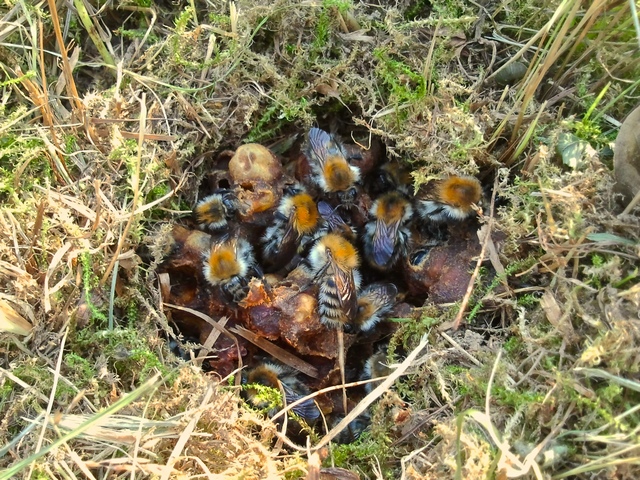
- It often nests in a mossy mound, a dry pile of grass (detritus) on the surface, or in tufts of vegetation
- It also nests in the ground in abandoned rodent burrows, or in the attics of buildings.

A bumblebee nest (Bombus pascuorum) in a grass pile
Internet Photo
Nest size
- Mostly small nests
- 50 – 100 individuals (in the wild)

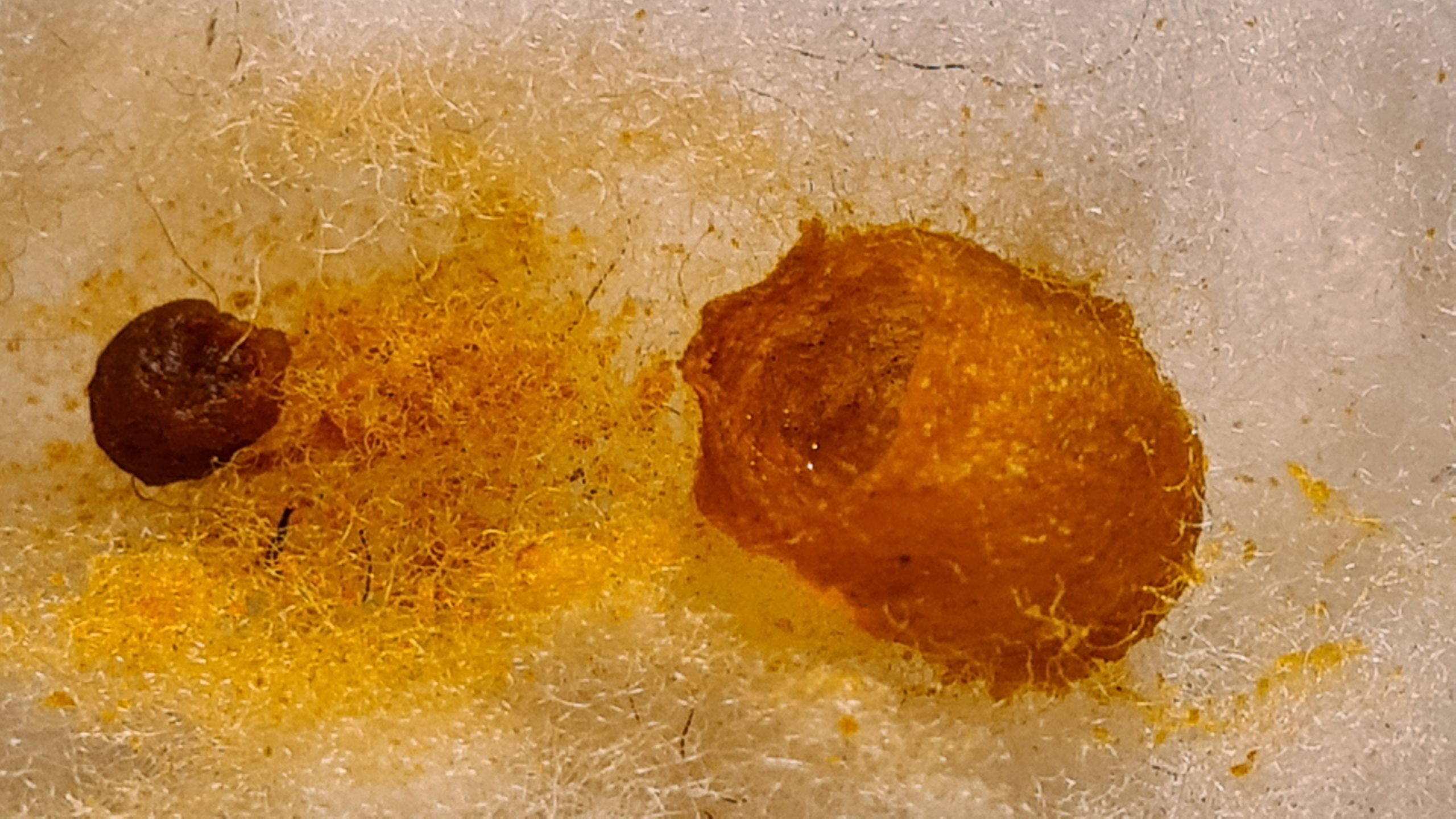
The base of a field bumblebee nest (Bombus pascuorum)
– wax nectar pot and first laying on a pollen ball
Photo: O. Hercog 2021 05 19
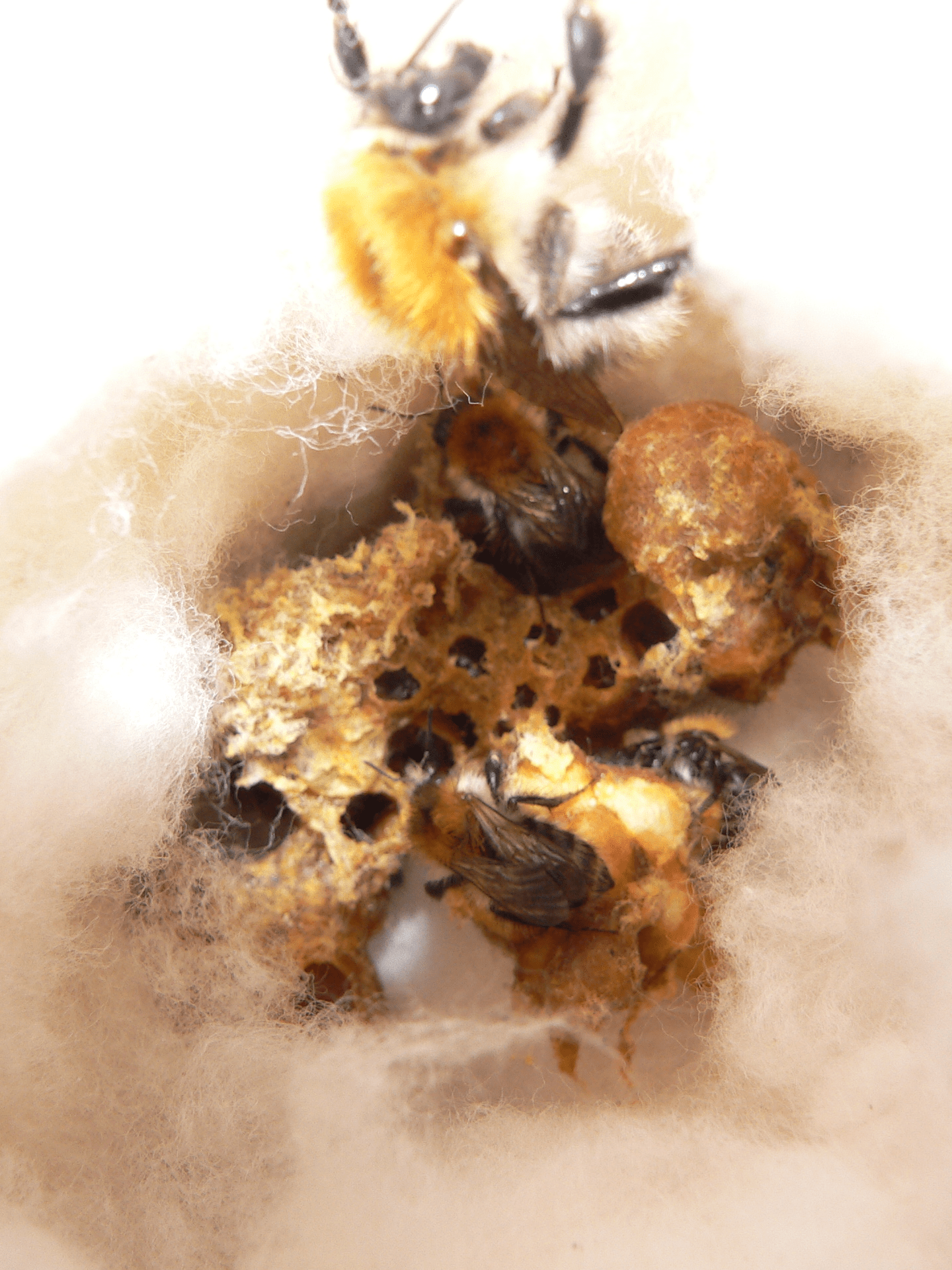
A glimpse inside a small nest of field bumblebees. Note the beautiful yellow cocoons containing pupated larvae, as well as the dark wax cases with pockets for feeding the larvae.
Visiting bumblebees
- Field Bee (Bombus campestris)
Bumblebee attack strategy:
- The queen bumblebee seeks a developed host nest; she needs lots of workers.
- It will kill the original mother, spray the pheromones on the strong workers, and they will fight each other.
- If any survive by chance, the remaining workers will enslave them.
- However, cases of coexistence between a bumblebee queen and a bumblebee are known.
How to tell the difference between a bumblebee and a 'pačmelák' (which is often used colloquially to refer to any larger bee, including bumblebees, or sometimes more specifically to certain types of larger, fuzzy bees).
Field cuckoo bumblebee (Bombus/Psithyrus campestris)
- Species
– large - Size
mother 15 – 20 mm
samec 15 – 18 mm
Basic Schema (Mother)
- Base colour
Black - Head
Black
– short with wide temples
– head significantly larger and differently shaped - Chest
– pronoumm a distinct strong yellow band of long hairs
– at the end of the chest, a second, less distinct yellow band curved into an arc
– black armour shows through - Bottom
– 1st to 3rd tergites black
- yellow to yellowish-orange stripes on the sides of tergite 4-5
– žThe yellow band on the bottom is visibly interrupted (rather, it's better to speak of bands on the side of the bottom).
– fore tergites shiny, smooth and almost hairless
– often produces dark forms - Wings
– dark smoke
Basic diagram (male)
- Base colour
Black - Head
Black
– short with wide temples
– head significantly larger and differently shaped - Chest
long hairs
– yellow band of long hairs on the forebreast
– at the end of the chest, a second, less distinct yellow band curved into an arc
– black armour shows through
– yellow is often very bright - Bottom
– The 1st to 3rd tergites are usually black
– yellow bands of hairs on the 4th – 6th tergites,
– sometimes, however, yellow hairs practically all over the bottom
– yellow is often a very bright colour, sometimes more of a light brown
– in dark forms, light hairs are suppressed - Wings
– dark smoke
- Unlike the field bumblebee
– he is not similar to him in any detail
– often produces dark forms
– prominent head
– bright coloration of males
– translucent armour
when flying it makes a loud rattling noise
- This bumblebee also parasitises at:
Brown-banded carder bee (Bombus humilis)
red bumblebee
Bumblebee of the meadow (Bombus pratorum)
Brown-banded carder bee

Field cuckoo-bee
Sikora A., Michołap P., Kadej M., Sikora M. Tarnawski D. 2018 „Bees in the City: Bumblebees of Wrocław“, published by the Association Nature and Man.

Common carder bee
Sikora A., Michołap P., Kadej M., Sikora M. Tarnawski D. 2018 „Bees in the City: Bumblebees of Wrocław“, published by the Association Nature and Man.
Note the differences in colouration and the typical bumblebee head.

Buff-tailed bumblebee (Bombus terrestris) – queen
Photo: O. Hercog 06 Aug 2021

Field cuckoo-bee (Bombus pascuorum) – queen
Photo: H. Kříženecká
Buff-tailed bumblebee (Bombus terrestris) – queen
Photo: O. Hercog 06 Aug 2021

Field cuckoo-bee (Bombus pascuorum) – queen
Photo: H. Kříženecká
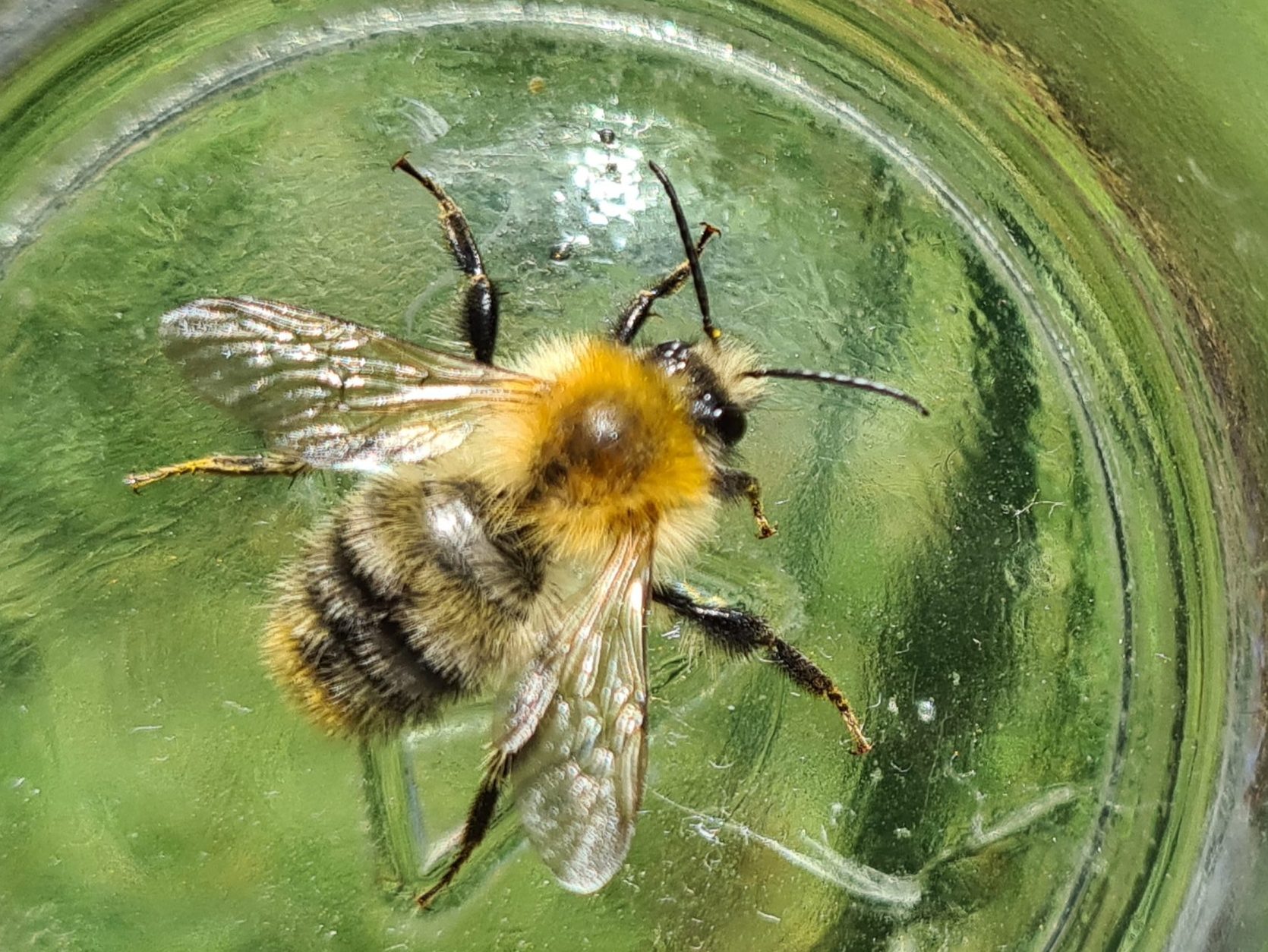
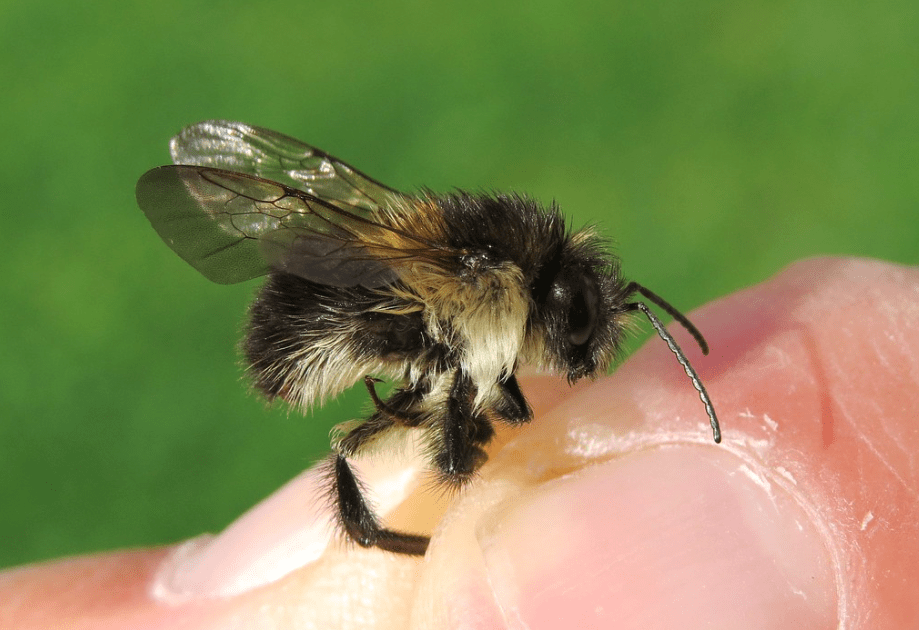
In male populations of the buff-tailed bumblebee, both light, beautifully coloured forms and dark varieties can be observed.
You can again orient yourself by the robust head of the bumblebee and the male antennae.
Just like with the females, the male bumblebee produces a different tone when flying. If you take the time to sit in a meadow with bumblebees and buff-tailed bumblebees, you'll easily be able to tell them apart after a few minutes.

Field cuckoo-bee
light form
Photo: O. Hercog 29 August 2021

Common Carder Bee (Bombus pascuorum) - male
Photo: O. Hercog 2021 08 07
Field cuckoo-bee
dark form
Photo: O. Hercog 29 August 2021

Common Carder Bee (Bombus pascuorum) - male
Photo: O. Hercog 2021 08 07
Information on breeding
Fright A small startle is sufficient, but it also readily accepts large startles.
Hallwayhallway none, short (or longer), not fundamentally decisive;
were successfully kept in a long-corridored hive (hive in a garage, flap outside on the wall)
Seating after settling, the mother often returns and immediately starts working
Mothers' returns in spring after hibernation: common
Self-assembly in the hive A fairly common occurrence is that mothers often settle in nest boxes already occupied by other mothers and coexist with them for some time until contact is made between the mothers, or between workers as the nest develops. The presence of another mother appears to be an attractant.
Interesting facts
- Nests of this species survive for a long time, under favourable conditions sometimes until the first half of December.
- In very unfavourable weather, the entire colony falls into a kind of hibernation, thus surviving the worst period.
- They are among the species that do not mind the proximity of humans
- They are very undemanding to keep with free-range access
- They are difficult to keep in the laboratory (pocket makers) = they are unable to take pollen prepared by the breeder and pass it on to larvae in wax cells
Photos and videos
The field bumblebee is unfairly overlooked as a „common bumblebee‘. Its English name is even „common garden bee“, so it's more considered a bee by name... Yet it is so beautiful and deserves our attention and admiration. Especially admirable is its unpretentiousness and proverbial perseverance. It can live in conditions where other bumblebee „princesses“ give up.
It was our friend Ála Ungerová who chose him as our mascot when Čmeláci PLUS was founded, and she did a very good job.

Red-tailed bumblebee - Bombus pascuorum - queen
Photo: J. Jančík 2022 04 14

Common carder bee
Photo: Á. Ungerová 2020
Beautiful shots of a bumblebee nest taken by our colleague Jaromír Čížek

A nest of the early bumblebee (Bombus pascuorum)
Photo: J. Čížek

A nest of the early bumblebee (Bombus pascuorum)
Photo: J. Čížek
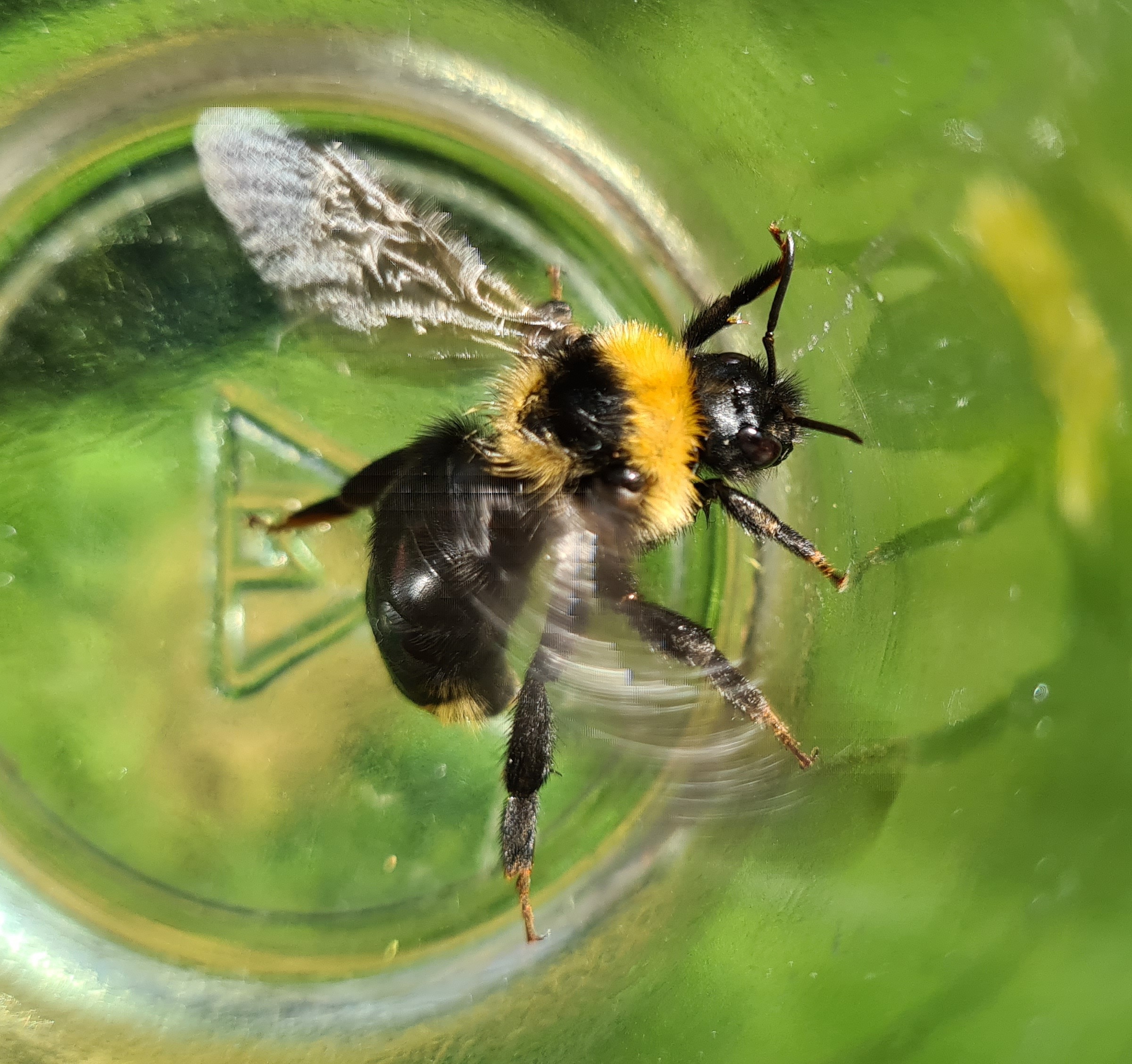
The bumblebee queen is beautifully coloured in rich hues in spring. These gradually fade as she ages and her fur rubs against the material in the nest.

Field cuckoo-bee (Bombus pascuorum) – queen
Photo: H. Kříženecká
Field cuckoo-bee (Bombus pascuorum) – queen
Photo: H. Kříženecká
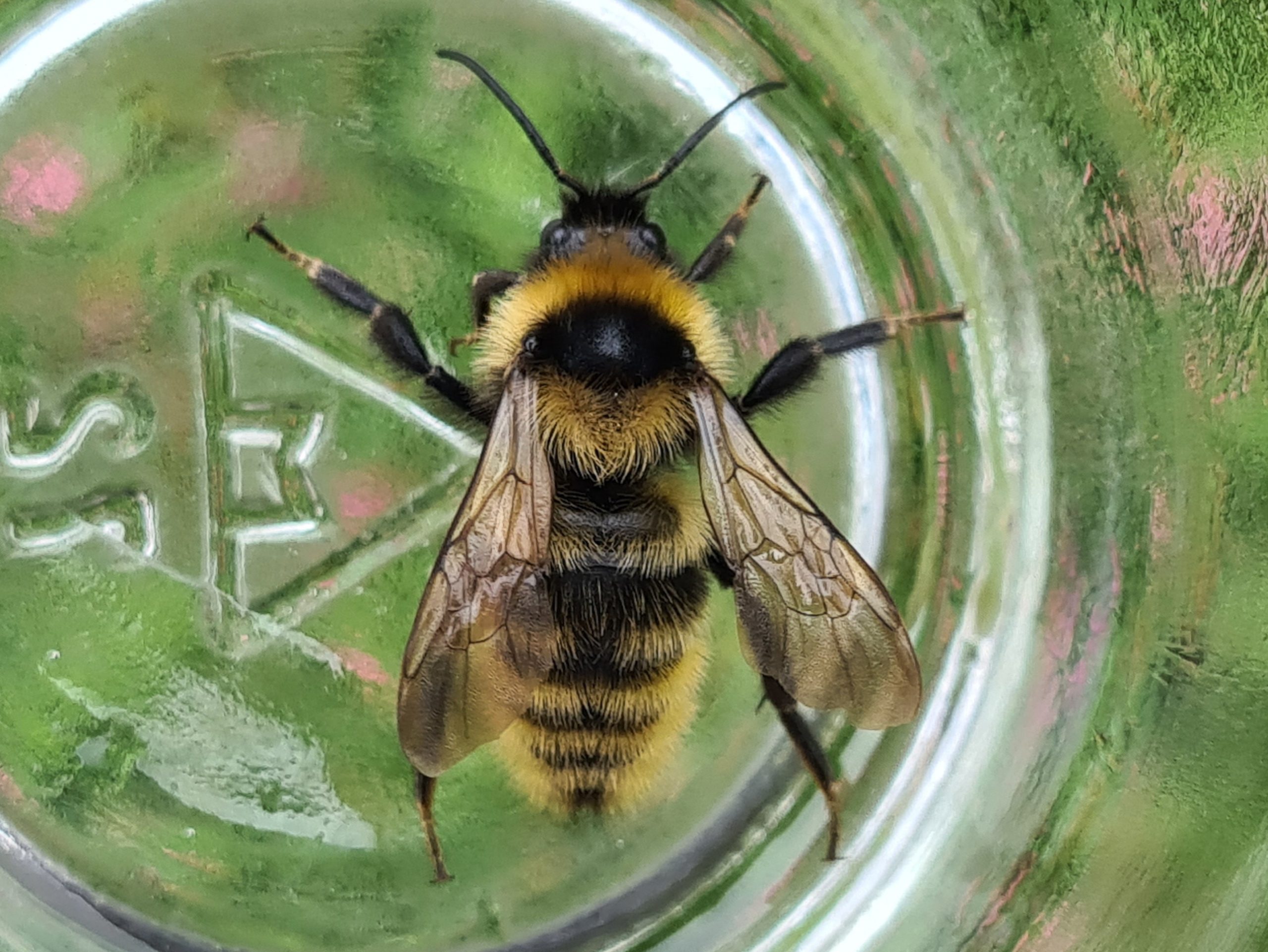
Field bumblebee (Bombus pascurom) – worker
Photo: H. Kříženecká

Field bumblebee (Bombus pascurom) – worker
Photo: H. Kříženecká
As always (with bumblebees), the males are „dapper“ and more brightly coloured for their short lifespan.
In this species, it's good to also watch the antennae, as they reliably reveal the male.

Field bumblebee (Bombus pascurom) – male
Photo: H. Kříženecká

Field bumblebee (Bombus pascurom) – male
Photo: H. Kříženecká

Common carder bee
Photo: Á. Ungerová 2020

Common carder bee
Photo: Á. Ungerová 2020
.

Common carder bee
Photo: Á. Ungerová 2020

Common carder bee
Photo: Á. Ungerová 2020

Field bumblebee (Bombus pascuorum) – worker
Photo: V. Cach 2020
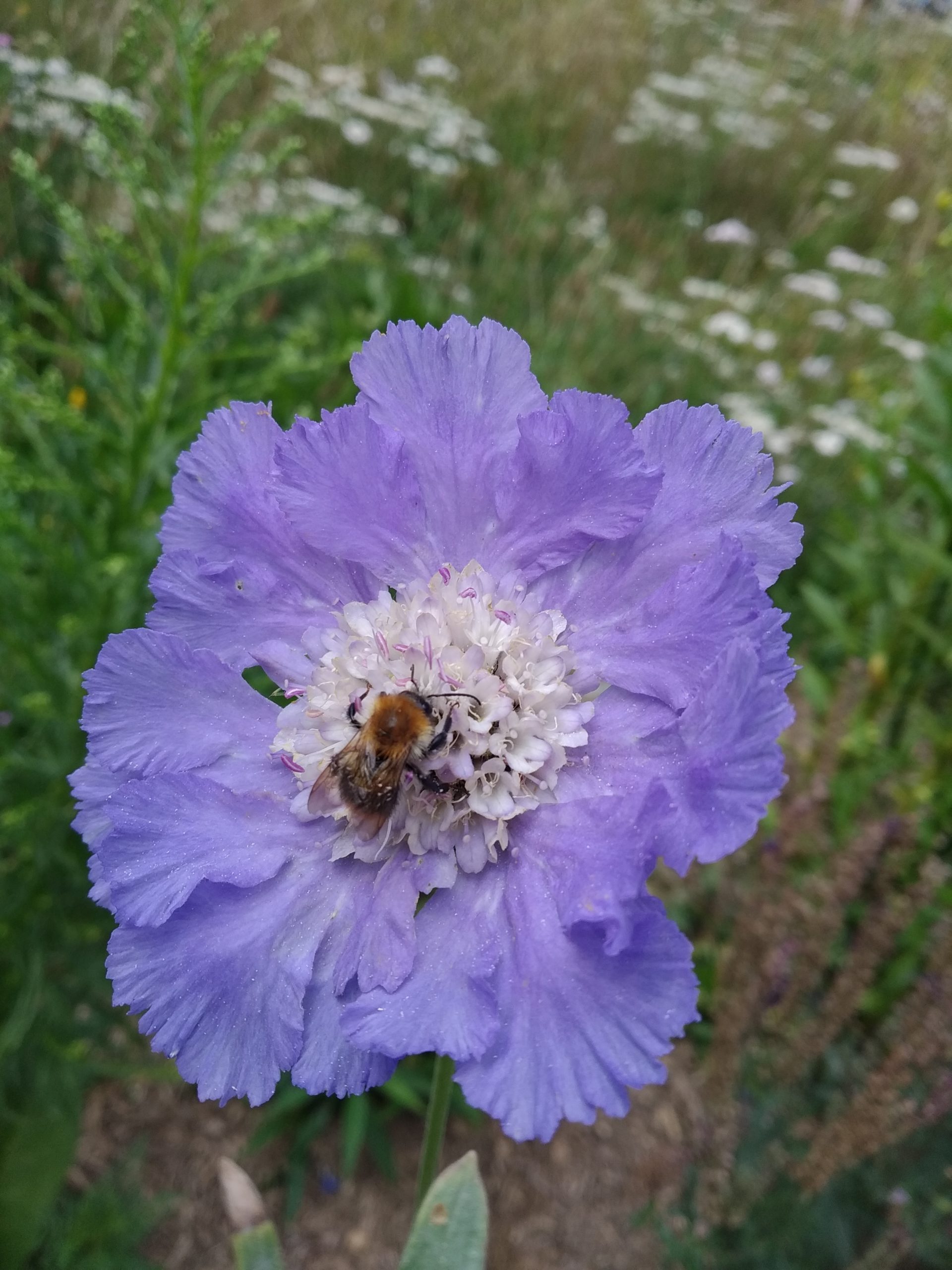
Common bumblebee (Bombus pascuorum) – male
Photo: V. Cach 2019
See the videos at YouTube Bees PLUS and their accompanying text. Selected videos featuring the buff-tailed bumblebee are presented here: