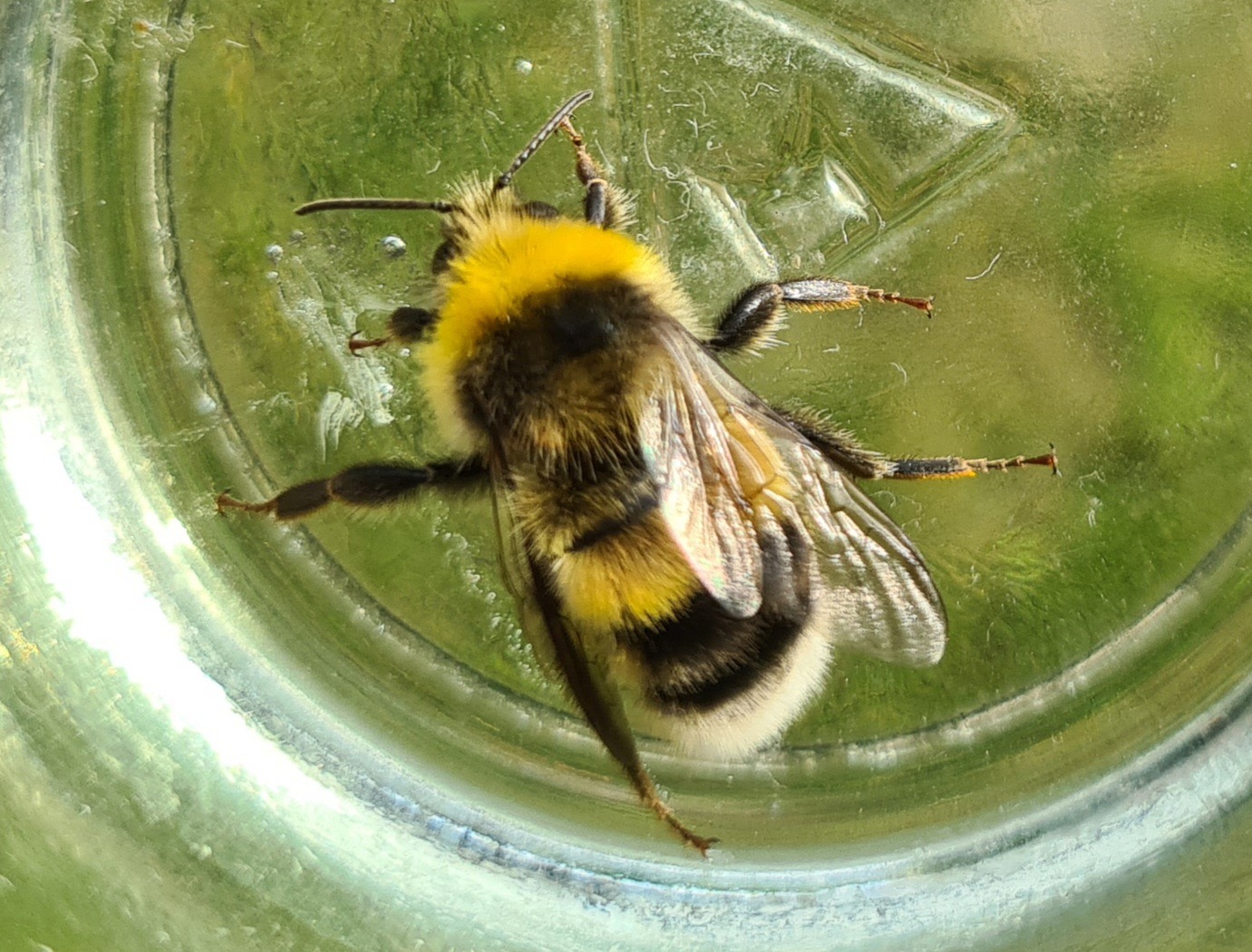


Buff-tailed bumblebee (Bombus terrestris)
What you will learn here
- Information on individual types of bumblebees
- You will receive a summary of information for the general public, schools, and breeders.
Last updated date: 01/01/2022
Contents
Colour scheme
Size
Head
Tentacles
Language
Body
Wings
Legs
Specific distinguishing features
Photography
Mother
Female worker
Male
Video catalogue
Mother
Female worker
Male
Similar species
How to distinguish it from similar species
Life cycle
Larval feeding
Nesting site
Nest size
Visiting bumblebees
How to tell the difference between a bumblebee and a 'pačmelák' (which is often used colloquially to refer to any larger bee, including bumblebees, or sometimes more specifically to certain types of larger, fuzzy bees).
Information on breeding
Interesting facts
Photos and videos
Interesting links
Description
Czech Buff-tailed bumblebee
Latin European Earth bumblebee
English Buff-tailed bumblebee or Large earth bumblebee
German: Buff-tailed bumblebee
Polish Buff-tailed bumblebee
Depiction

Buff-tailed bumblebee
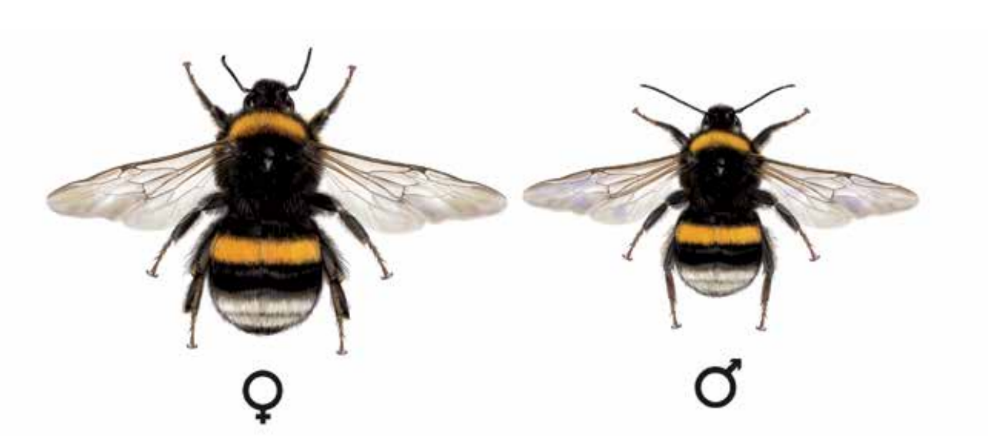
Sikora A., Michołap P., Kadej M., Sikora M. Tarnawski D. 2018 „Bees in the City: Bumblebees of Wrocław“, published by the Association Nature and Man.
Colour scheme
Basic diagram (mother-queen and workers):
- Base colour
Black - Head
Black
– mainly covered in black hairs - Chest
– on the fore-breast a dark yellow (ochre) band of varying width
The tape is brownish-yellow, not lemon yellow or golden yellow.
– the strap goes all the way to the sides of the chest
– sometimes it can be only faintly indicated, even imperceptible, the chest appears black - Bottom
– 1. black hindquarters
– on 2. tergite yellow band, lighter than on the pronotum – wider than on the pronotum
– hind margin of the 3rd tergite usually yellowish
– 4. – 6. White / greyish-white (rarely brownish) tergites
– rest of the rump black
– very short
Reliably distinguishing between a worker and a queen by their colouration is quite difficult.
Yellow streaks can sometimes be lighter.
The size and, possibly, behaviour in the nest (if the mother is present) are decisive.
Basic diagram (male):
– colour scheme similar to mother and worker
- Head
– head noticeably shorter and stockier
– mainly covered in black hairs
– more pronounced hair
– on the sides of the mandibles, brushes for spreading marks – colour usually dark brown - Chest
– the yellow band on the forebreast is stronger and more colourful than on the mother
Bottom
– similarly coloured as the mother and worker
– 1. black hindquarters
– the band on the 2nd tergite is thicker and more distinct in colour (lighter) than on the mother
The difference in shades between the chest and abdomen bands is not immediately noticeable
– 4. – 6. white/grey-white tergites
– rest of the rump black
Note.
- The description matches Bombus terrestris terrestris
- Bombus terrestris dalmatinus has specific colours – it will be described later.
Size
- Species
Large - Size
mother 20 – 26 mm
Female worker 11 – 17 mm
samec 14 – 16 mm
Source: Hymenoptera of the Czech Republic I, Academia 2017
Head
Size
short
Shape
– face shorter than wide
– mother and worker – a distinctive wedge shape when viewed from the front
– Male – round facial part, brushes on the side of the mandibles accentuate the lower part of the facial part
– simple eyelets lie on a line (supraorbital), the distance between the eyelets is half the diameter of the eyes in the middle – see image
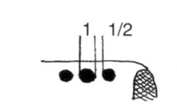
Diagram of the arrangement of simple eyes on the head of the buff-tailed bumblebee (Bombus terrestris)
Source: Fauna Helvetica Apidae 1
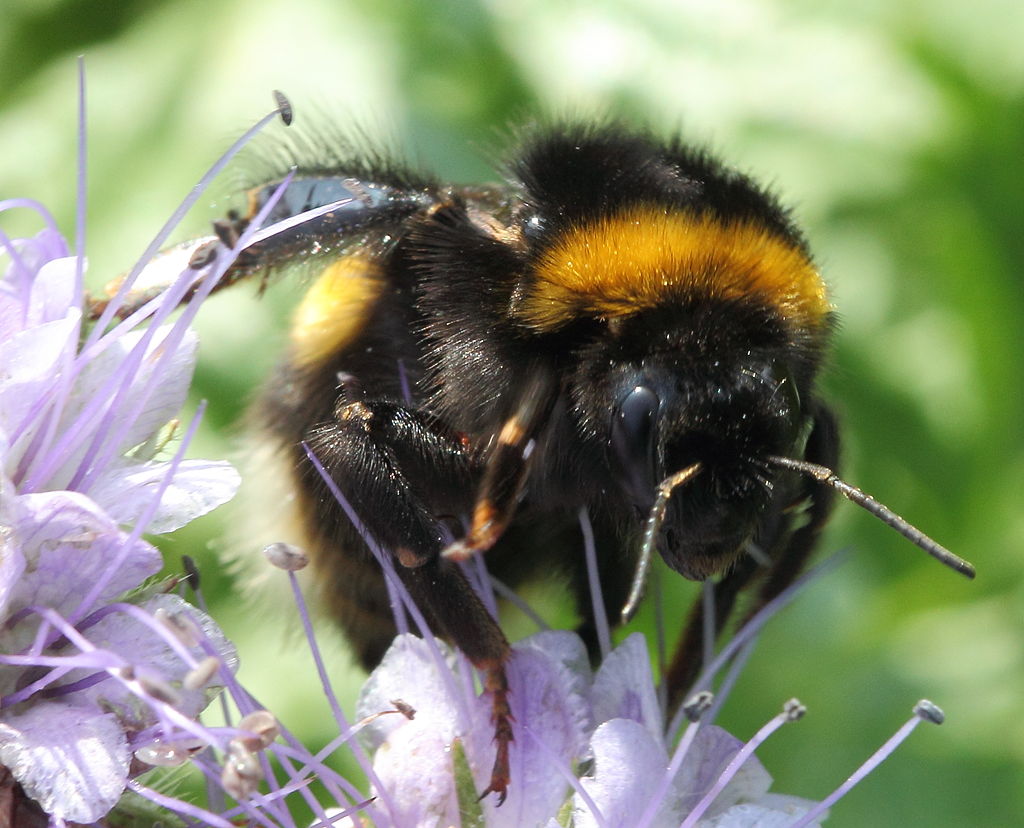
Buff-tailed bumblebee (Bombus terrestris) – queen
Photo: H. Casselmann
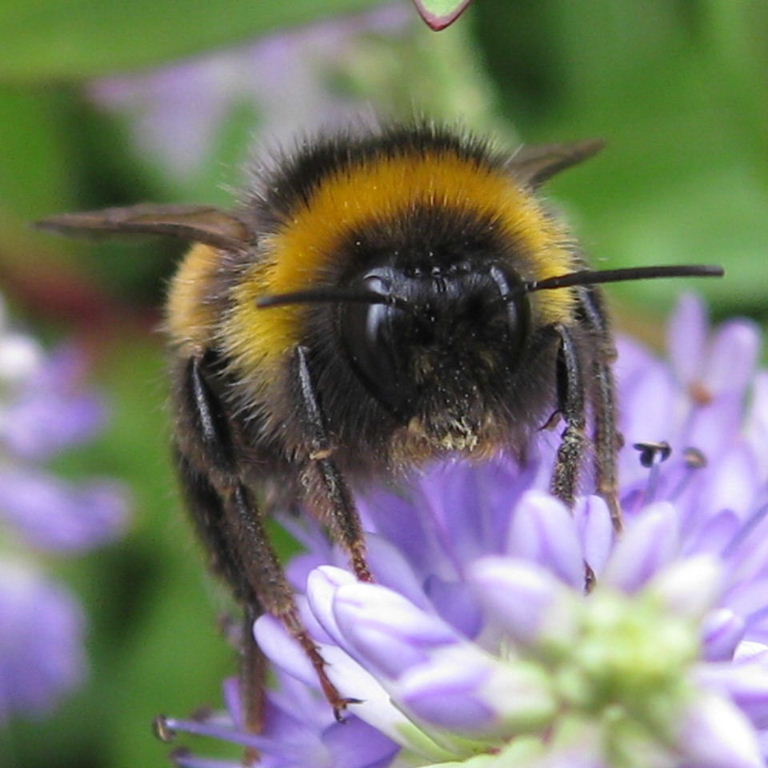
Buff-tailed bumblebee (Bombus terrestris) – males
Photo: Animal photos
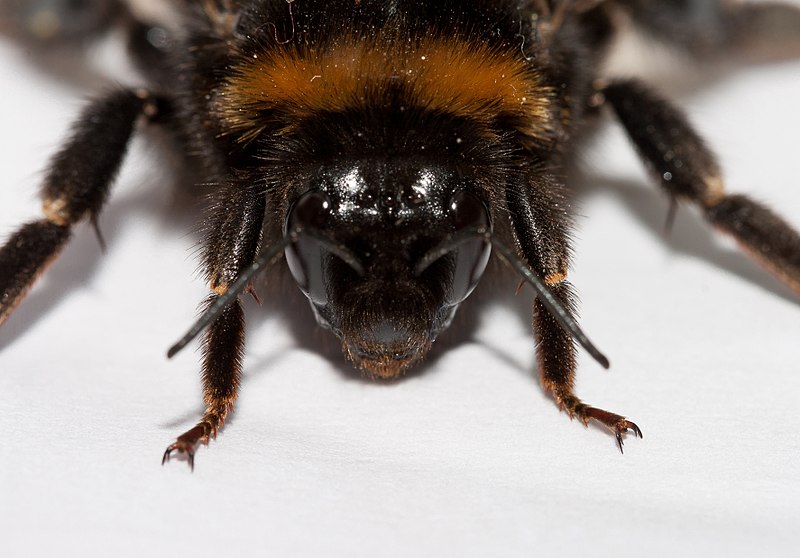
Buff-tailed bumblebee Bombus terrestris – detail of the queen's head with simple eyes (ocelli)
Photo: Wiki
Tentacles
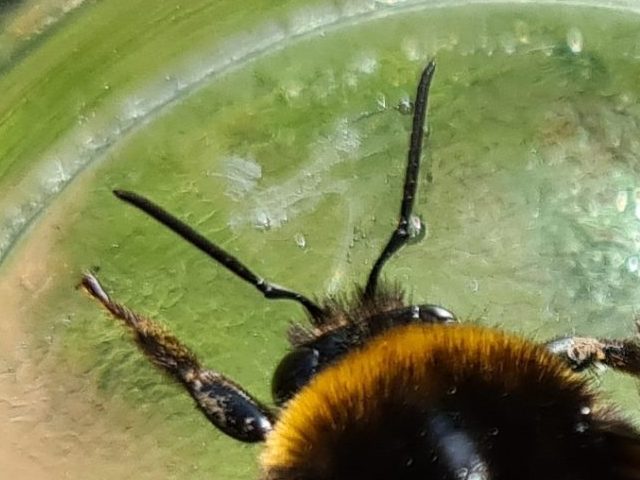
- Like other bumblebee species, the male has long, curved antennae
- The antenna segments are parallel
- The third article of the antenna is only slightly longer than the fifth.
- The antennae of males are optically shorter and less pronounced than in some other species – see, for example, the field bumblebee (Bombus pascuorum)

Buff-tailed bumblebee (Bombus terrestris) queen – detail of antennae
Photo: O. Hercog 27/6/2021
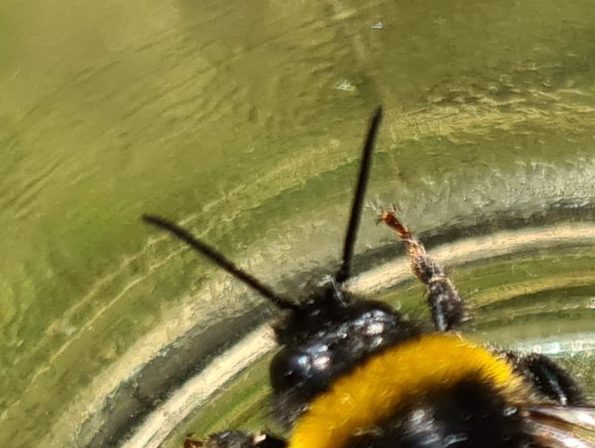
Buff-tailed bumblebee (Bombus terrestris) – male – antennae detail
Photo: O. Hercog 24/7/2021
Language
- Short
- Mother tongue length 9–10mm
The following image shows a visual comparison of tongue length in some bumblebee species
- Buff-tailed bumblebee
- Garden bumblebee
- Buff-tailed bumblebee
Note: This is a schematic drawing because the length of a garden bumblebee's tongue can be as long as its body.

Tongue length comparison
Source: Otagomuseum nz
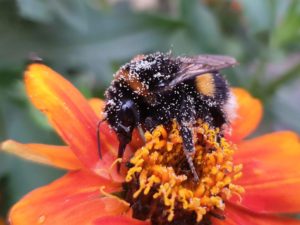
Buff-tailed bumblebee (Bombus terrestris) – worker
Photo: Á. Ungerová 15/10/2019
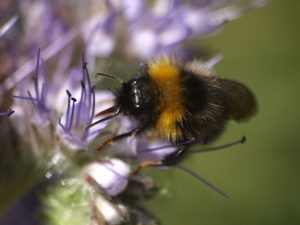
Buff-tailed bumblebee (Bombus terrestris) – male
Photo: Á. Ungerová 2020
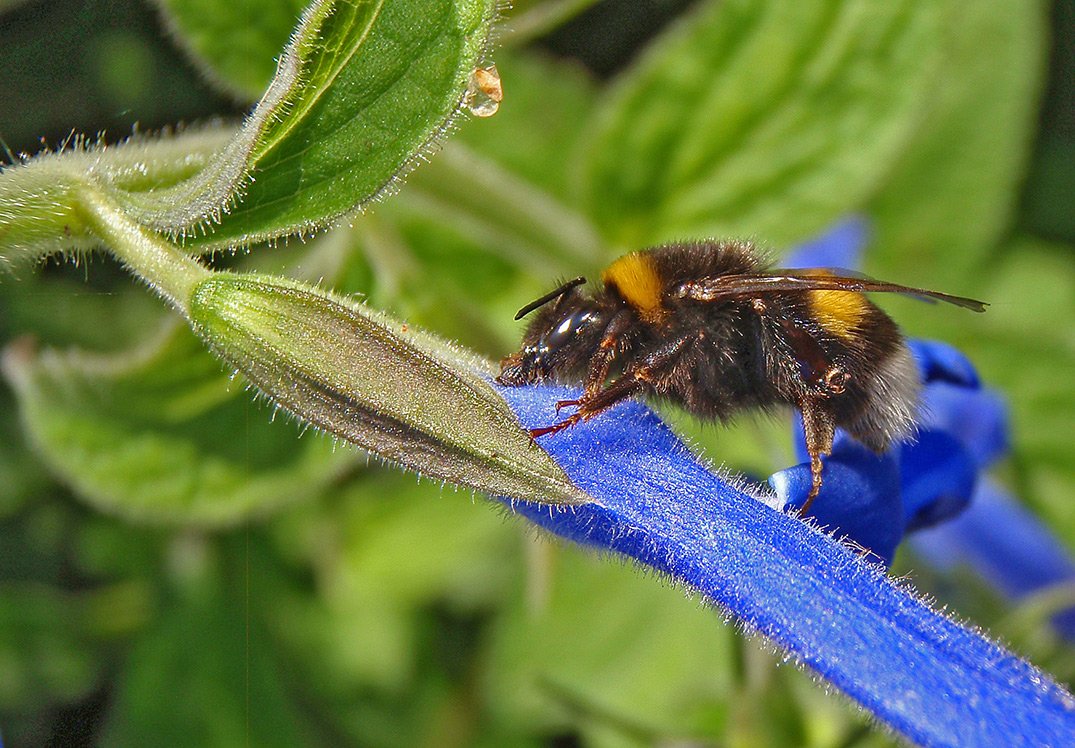
However, bumblebees have learned to overcome the handicap of their short tongues by biting through the calyx of the flower so that they can access it with their short tongues.

Buff-tailed bumblebee (Bombus terrestris) – worker
I'll draw a flower chalice
Photo: H. Kříženecká
Body
- Mother
– more elongated body
– does not have such a pronounced pointed end to its abdomen (like the garden bumblebee, for example) - Male
– body sturdier than mother
Ovoid
– the end of your bottom is more round, or chopped off
Wings
Bright
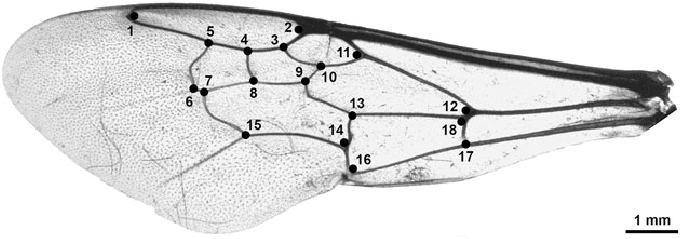
The wings of individual bumblebee species sometimes show specific markings that can be used to identify the species. However, this is beyond the scope of our website.

Buff-tailed bumblebee – (Bombus terrestris) – left wing
Source: Antiquity of cleptoparasitism among bees revealed by morphometric and phylogenetic analysis of a Paleocene fossil nomadine (Hymenoptera: Apidae)
Legs
- Rear pair of legs
– honey bees with pollen baskets
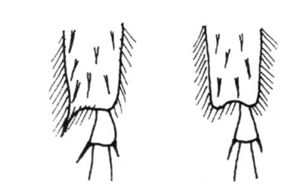
– hairs on the hind edge of the hind tarsi predominantly shorter than half the greatest width of the tarsus
– middle tarsus of hind legs without spine (rounded)
– in males, hind tibiae deeply concave and bare on the outer surface

Mid-tarsal bone of the hind legs – with spine and without spine
Source: Fauna Helvetica Apidae 1
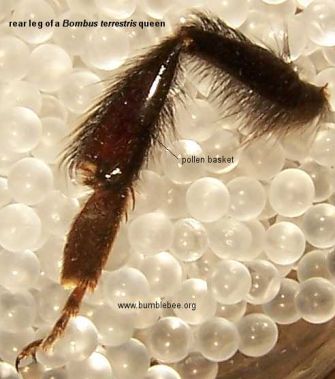
In the following photograph, you can see the pollen basket on the hind leg of a buff-tailed bumblebee.
Thornless nose.

Buff-tailed bumblebee (Bombus terrestris) – leg detail – queen
Source: Bumblebee.org
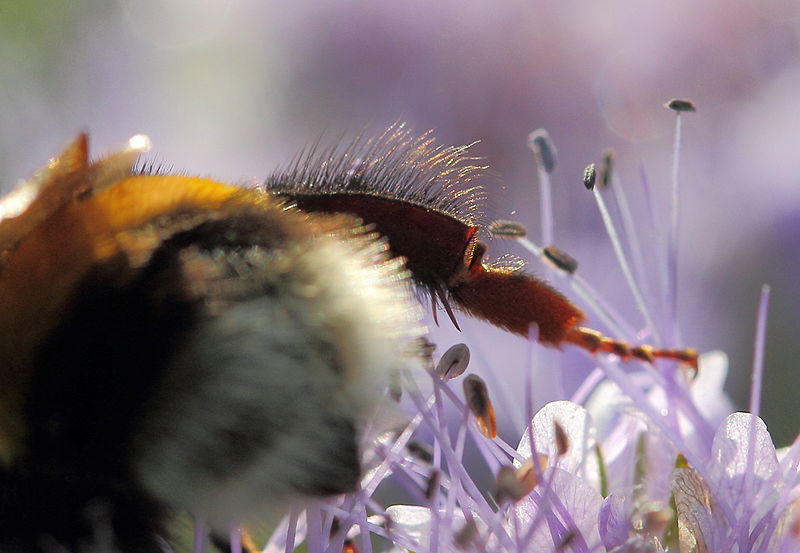
Buff-tailed bumblebee (Bombus terrestris) – leg detail – queen
Source: Wiki
Specific distinguishing features
<bude doplněno>
Photography
Mother
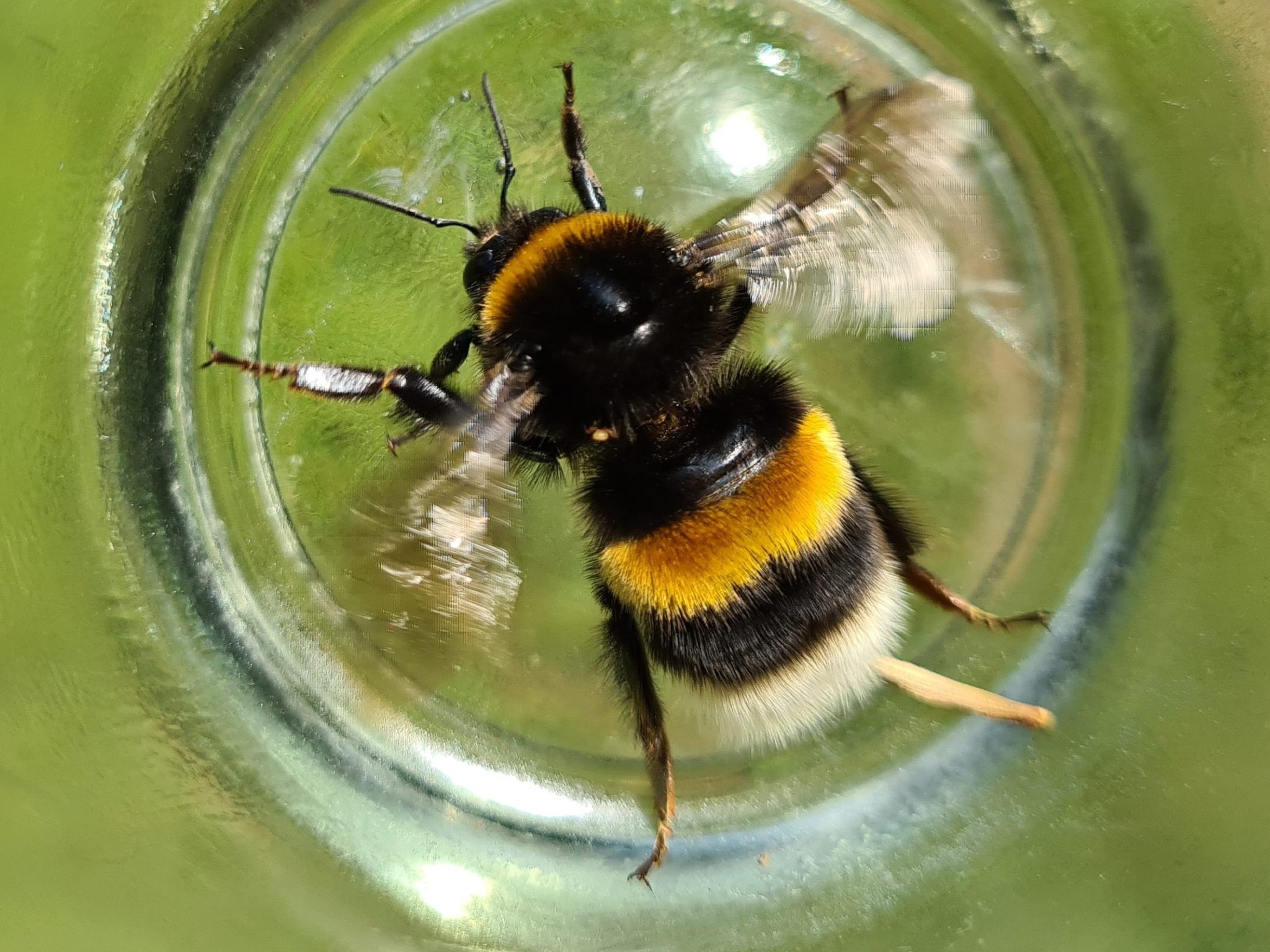
Classically coloured females. You'll notice the difference in the shades of yellow stripes on the head and abdomen.
This sign is a good guide.

Buff-tailed bumblebee (Bombus terrestris) – queen
Photo: O. Hercog 27/6/2021
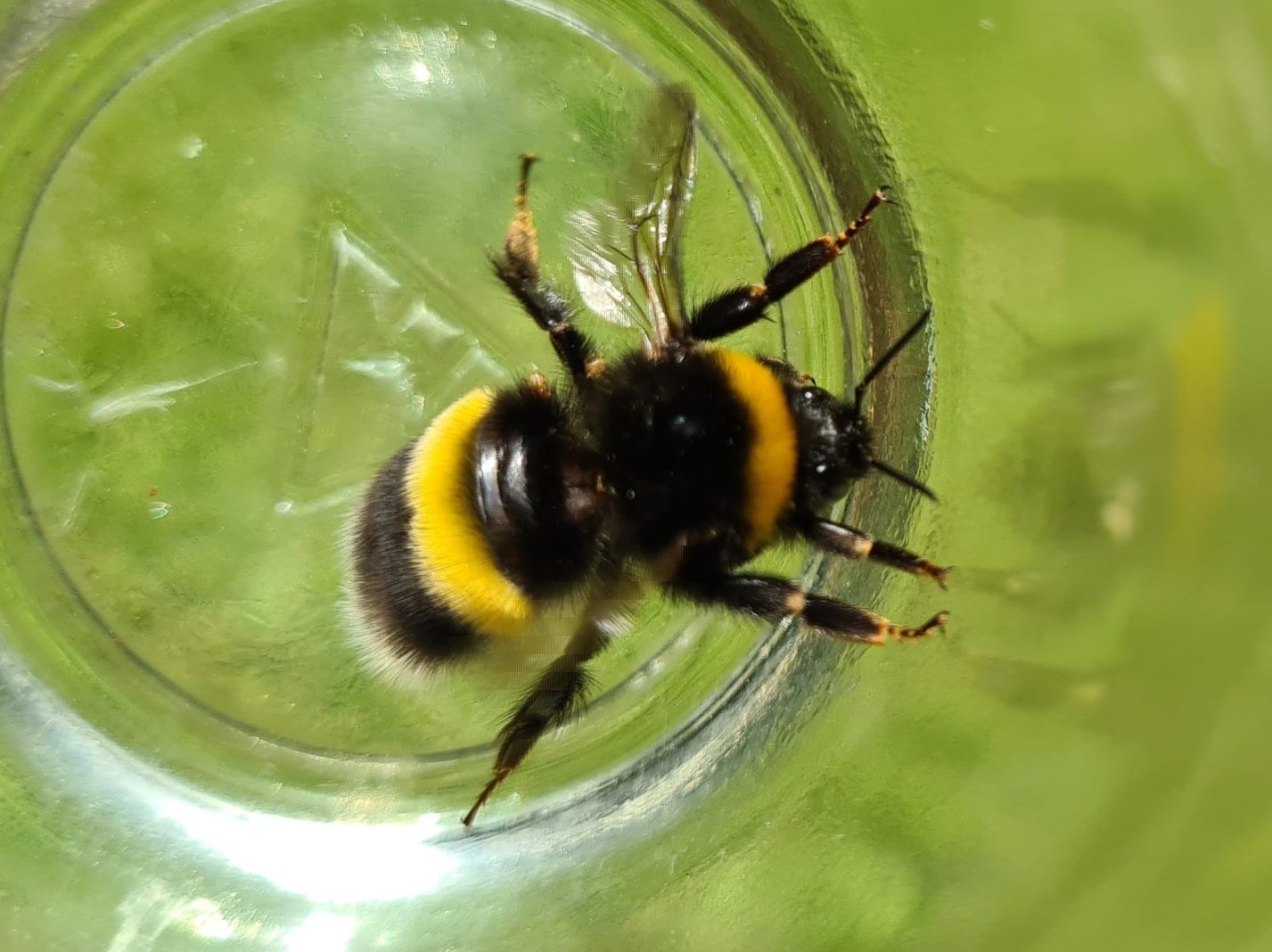
Buff-tailed bumblebee (Bombus terrestris) – queen
Photo: O. Hercog 18/7/2021
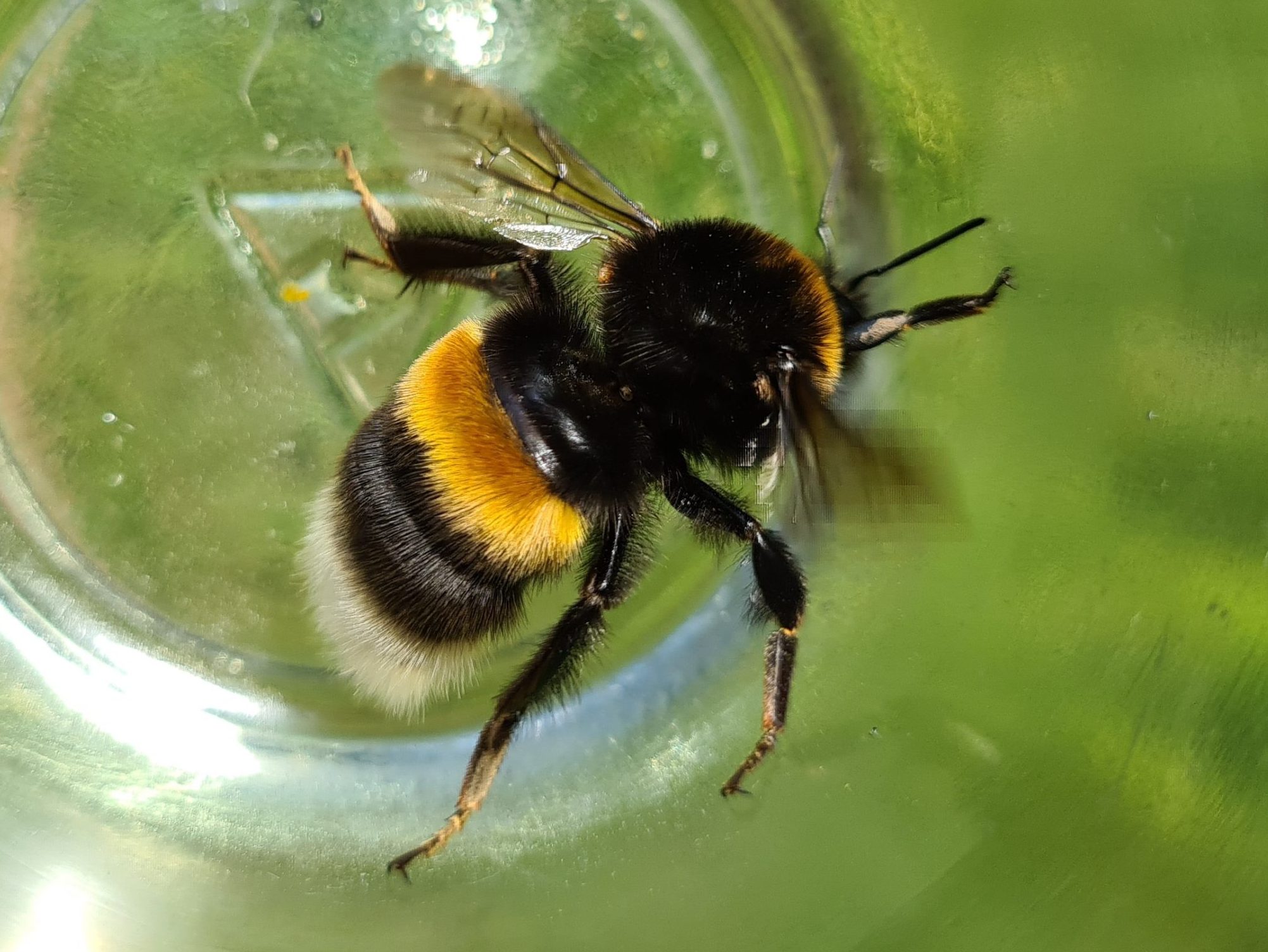
The photographs show stripes of varying thickness on the pronotum behind the head.
Some colour varieties are „dark“. In these, the stripe behind the head is merely indicated, practically invisible. You will only see it up very close as a thin row of lighter hairs, sometimes not even that. The stripe on the second tergite is always present, as earth bumblebees do not create dark forms in our region.
One of the mothers has dirty chest hair.

Buff-tailed bumblebee (Bombus terrestris) – queen
Photo: O. Hercog 27/6/2021
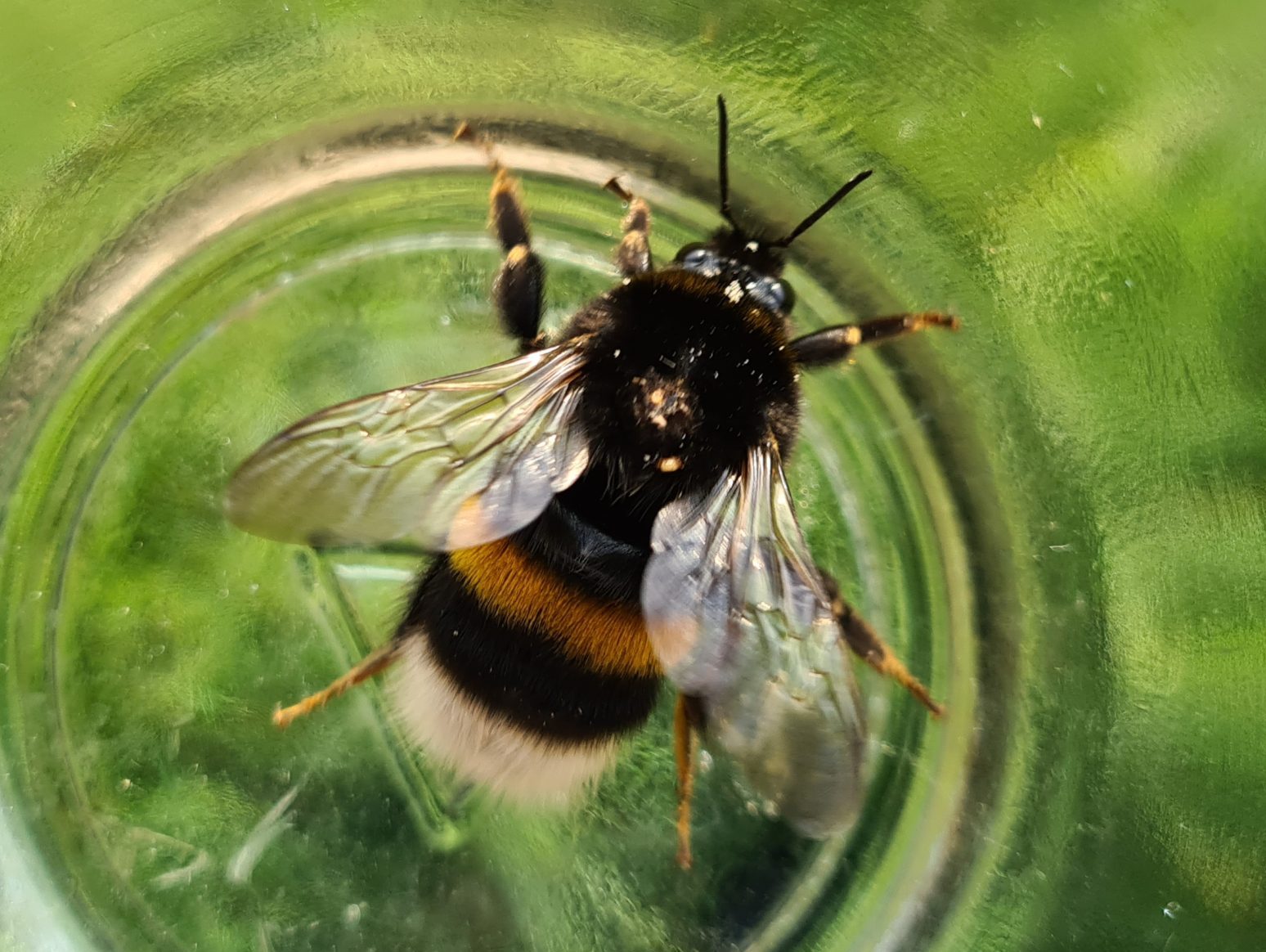
Buff-tailed bumblebee (Bombus terrestris) – dark form queen
Photo: O. Hercog 9/8/2021
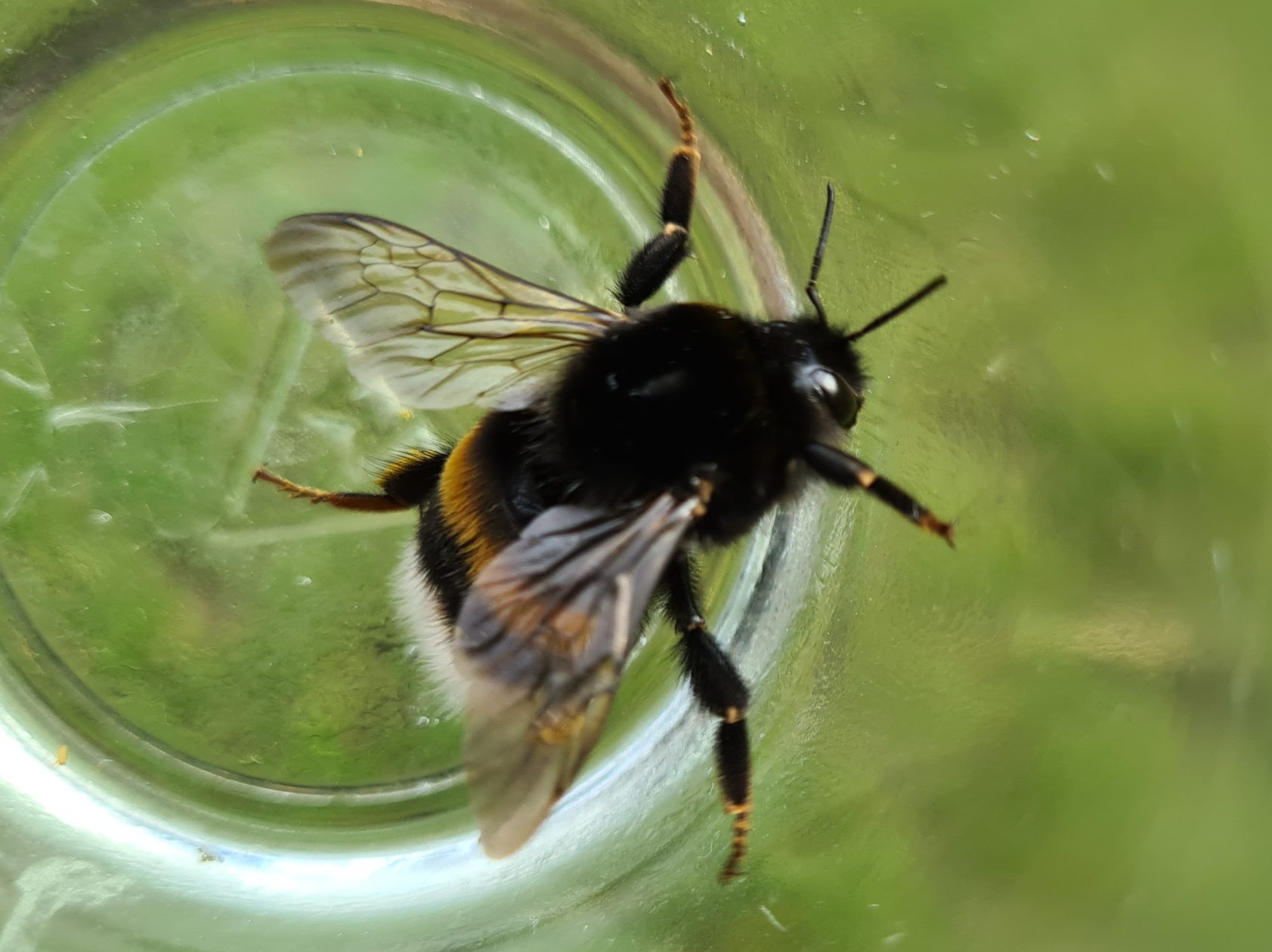
Here is an example of a mother without a stripe on the forewing. However, the yellow stripe on the hindwing is still present.
It's nice to see a short head here too, this is typical for this species.

Buff-tailed bumblebee (Bombus terrestris) - queen
dark form
Photo: O Hercog 7/7/2021
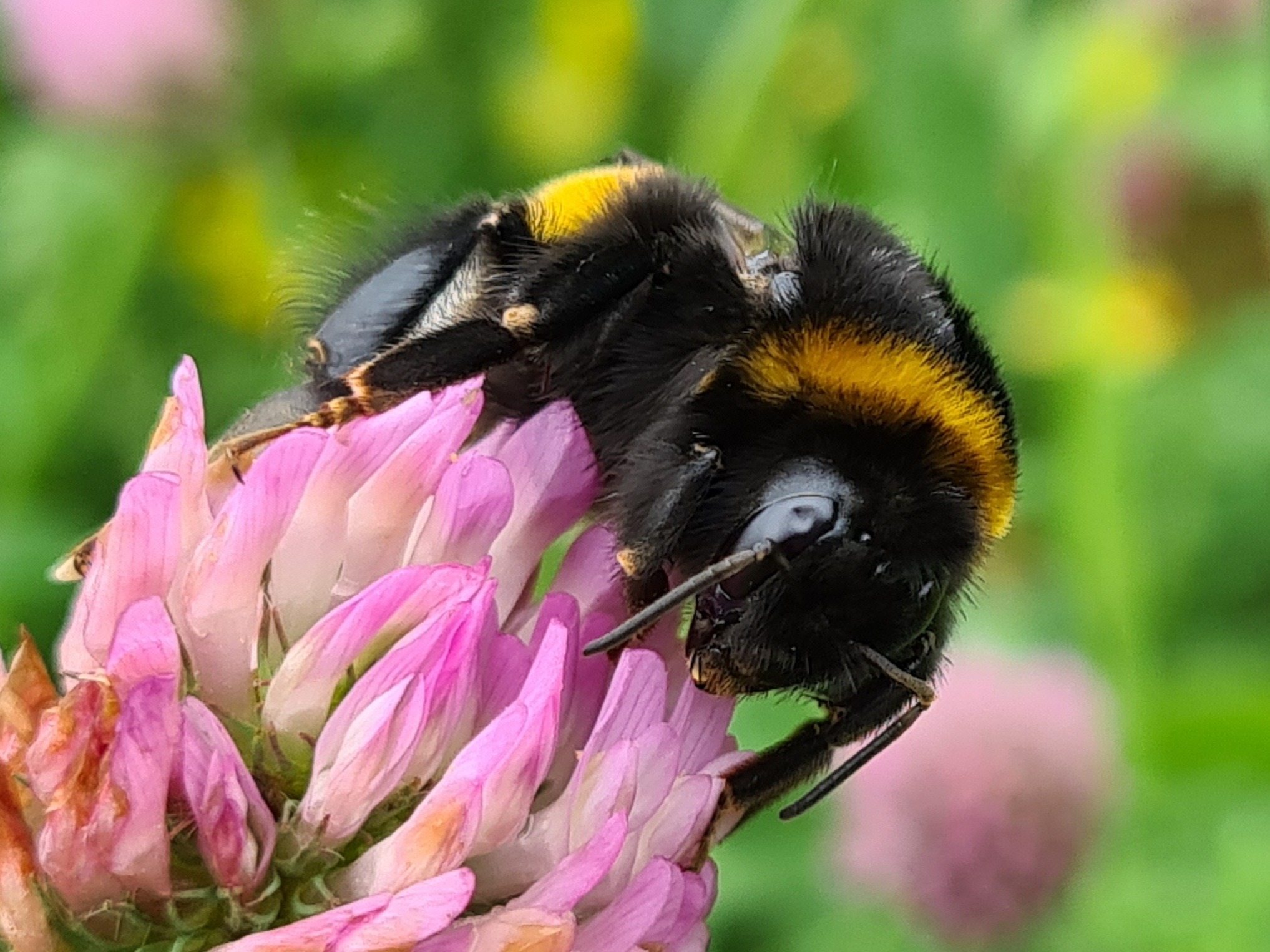
Here you see a shot of the mother – the queen.
There are two shades of yellow stripes clearly visible.
The wedge-shaped head is also visible. When viewed from above, it is short – this is also due to its attachment to the chest.
Large compound eyes (damaged) are visible on the head, as well as three small simple eyes (ocelli) between the antennae.

Buff-tailed bumblebee (Bombus terrestris) – queen
Photo: Ondřej Hercog 1/8/2021
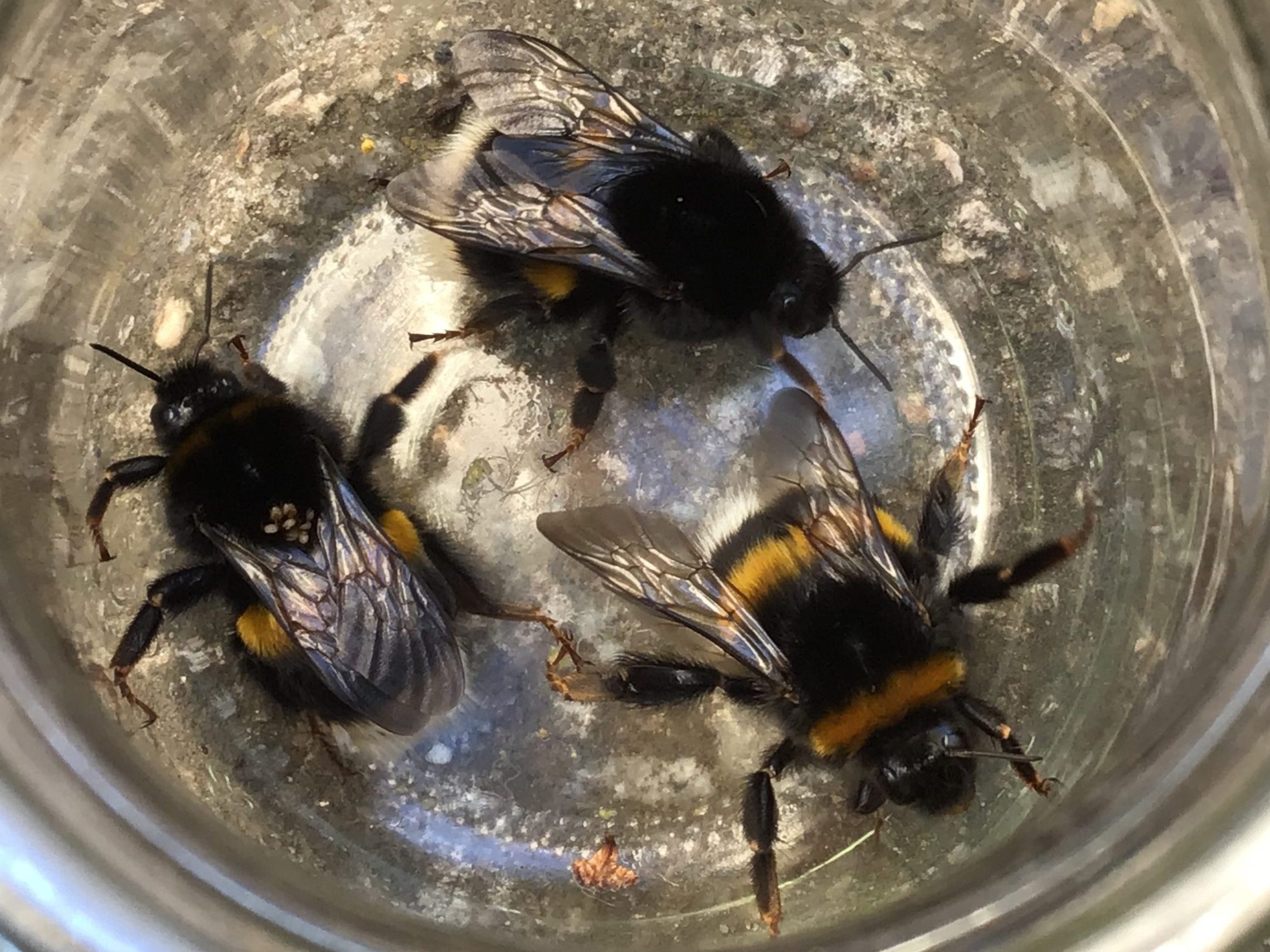
A beautiful comparison of bumblebee mother colour schemes can be found in the photograph by our colleague Jan Frantl.
It exhibits typical varieties, confirming that this species in the Czech Republic sometimes lacks a yellow stripe on the pronotum behind the head, but always has a yellow stripe on the 2nd tergite. This does not always hold true for subspecies common outside the Czech Republic.
On one mother, nymphal stages of the beetle mite *Parasitus fucorum* are attached.

Buff-tailed bumblebee (Bombus terrestris) – queens
Photo: Jan Frantl 30/6/2019
Female worker
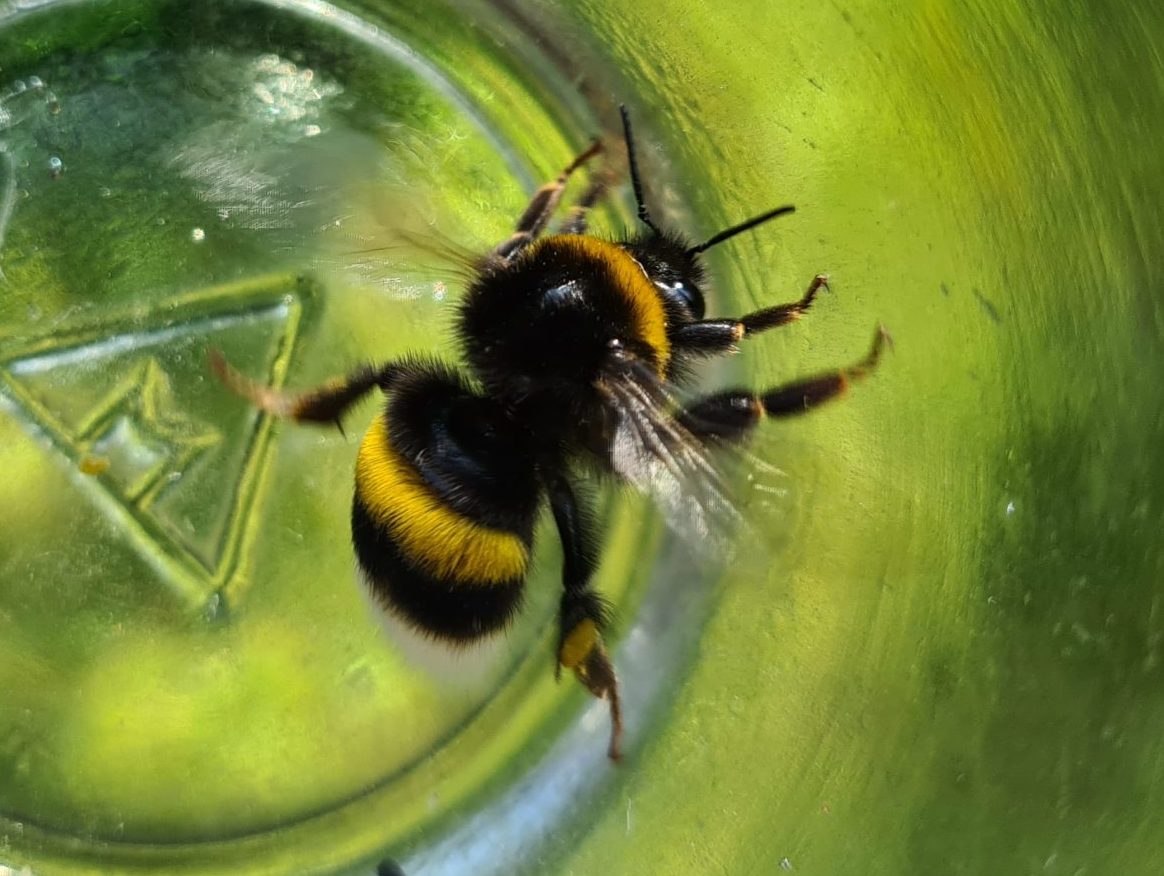
The difference between the size of the worker and the queen is distinct, the body shape and colours are the same. On both, you will not find a distinct pointed ending to the abdomen.
The front yellow stripe of workers is often lighter than that of queens. Their front stripe is usually a distinct ochre, as seen in the previous photographs.
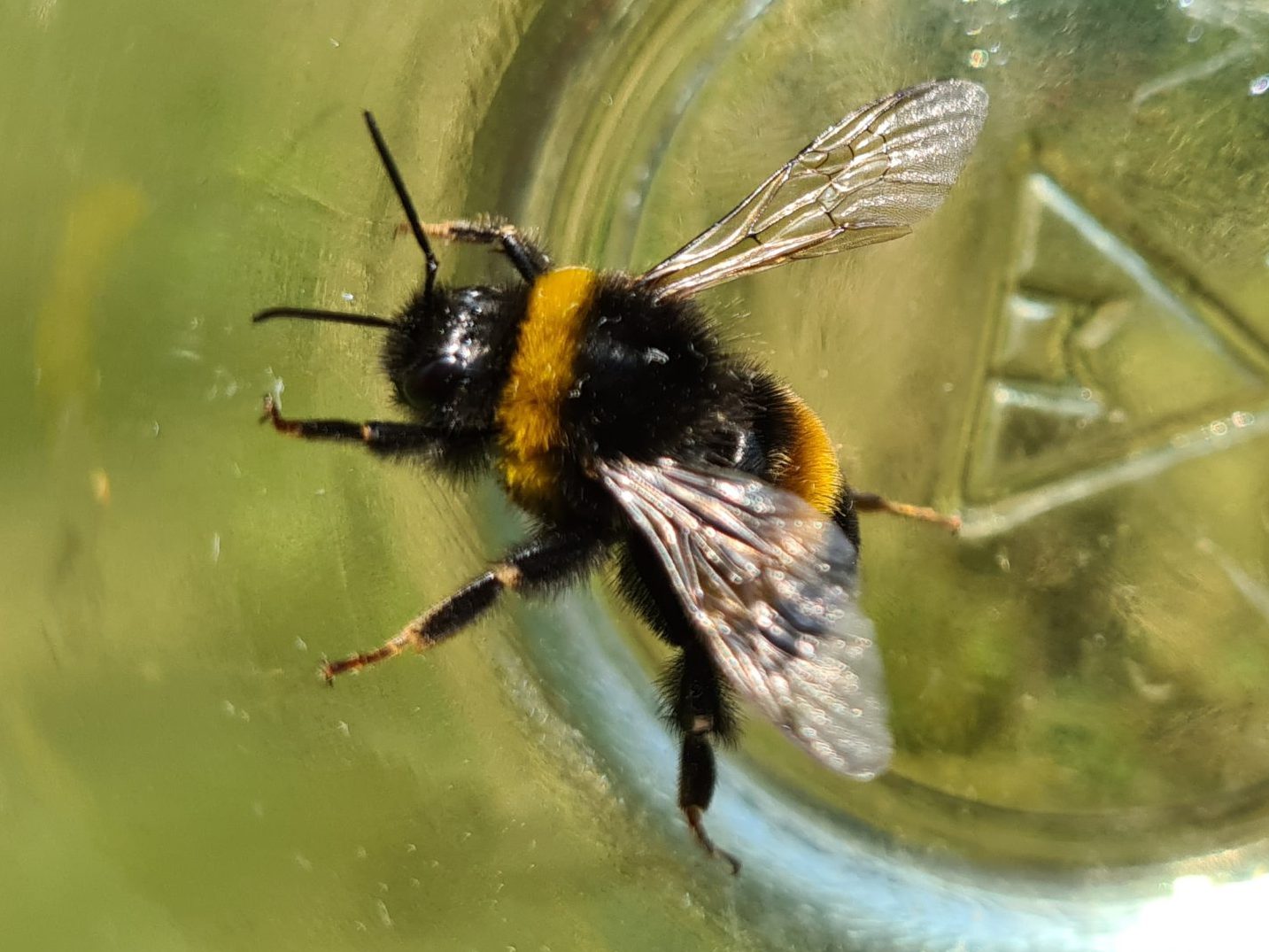
If you're unsure whether it's a worker or a male, a look at the pollen baskets can help – if you see pollen loads, it's clear. Males don't bother with collecting pollen.

Buff-tailed bumblebee (Bombus terrestris) – worker
Photo: O. Hercog 3/7/2021
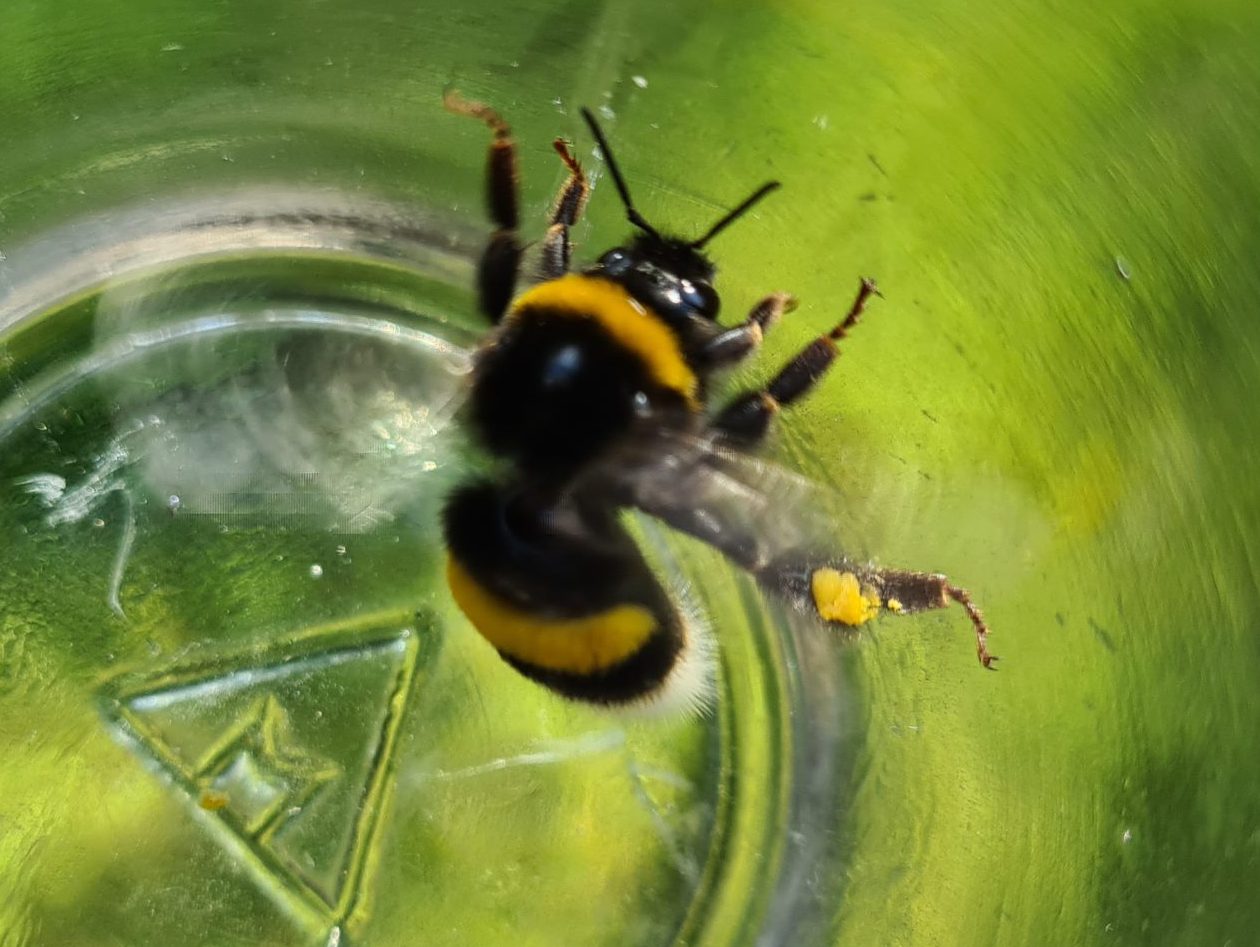
Buff-tailed bumblebee (Bombus terrestris) – worker
Photo: O. Hercog 3/7/2021
Male
Males are similarly coloured to mothers and workers. They have slightly longer and „hirsute“ fur. Their colours tend to be more striking.
However, their antennae and the rounded facial region of the head, including the brushes on the side of the mandibles, will give them away.
Their head is shorter and more rounded. The bristles on their palps are brownish in hue and visually broaden the head at the bottom.

Buff-tailed bumblebee (Bombus terrestris) – male
Photo: O. Hercog 24/7/2021
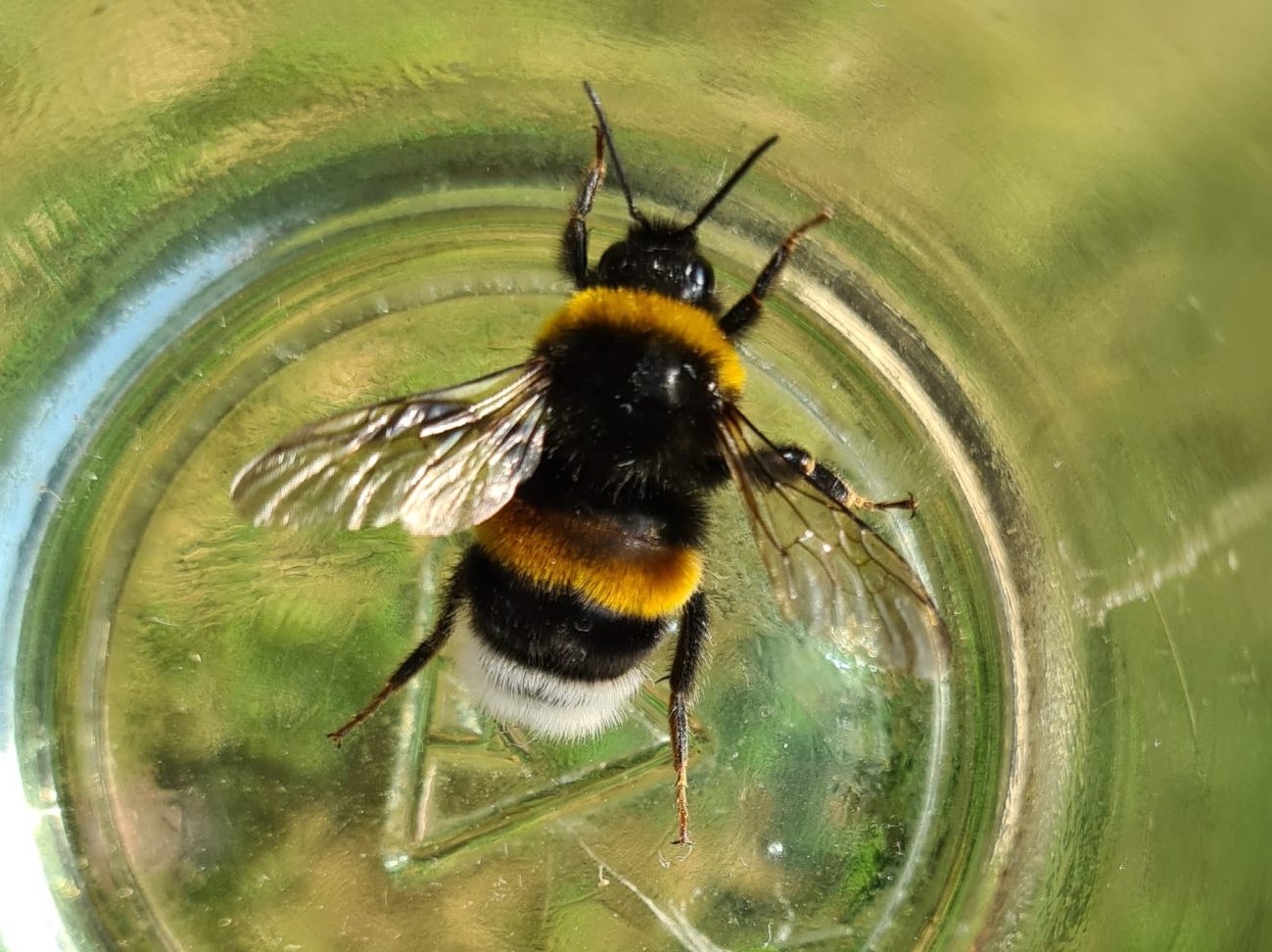
Buff-tailed bumblebee (Bombus terrestris) – male
Photo: O. Hercog 24/7/2021
Detail of the facial part of the head of a male buff-tailed bumblebee (Bombus terrestris). Lighter coloured brushes are visible on the side of the mandibles. The males use these to spread scent marks.
Note the simple eyes (ocelli) arranged in a row.

Buff-tailed bumblebee (Bombus terrestris) – males
Photo: Animal photos
Video catalogue
Mother
The bumblebee mother – this refers to a young mother already infested with mite nymphs. This is a fairly reliable sign that the mother has mated and will hibernate.
However, in 2021, we detected cases where mites settled on both workers and males. Therefore, this previously reliable „pregnancy test“ can no longer be considered accurate. Well, bumblebees, you always surprise us with something...
The mother in the video has a barely recognisable stripe on her forechest behind her head.
Female worker
Female workers from a later generation – they will be betrayed by their larger size, because during their development they had enough food.
It is a classic colour form in good condition, it is full of strength.
Male
Typical male colouration. Its stripes are brighter and wider – behind the head on the pronotum and on the 2nd tergite.
You can also see its antennae clearly – longer and positioned differently. Its head is also visible when it moves – rounder and shorter.
Similar species
These species are very similar to the bumblebee earth. However, some are difficult to encounter, and even that will help you distinguish them.
- Buff-tailed bumblebee hatchling dalmatinus (Bombus terrestris dalmatinus) – gradually appearing in the Czech Republic
- White-tailed bumblebee (Bombus lucorum) – common
- The Bog Bee (Bombus cryptarum) – rare
- Great bee (Bombus magnus) – Critically endangeredý
These species are distantly related, as their light forms have two yellow stripes on their thorax. However, because beginners often confuse them with the buff-tailed bumblebee, we include them here as well (basic information).
- Garden bumblebee (Bombus hortorum) – common
- Great yellow bumblebee (Bombus ruderatus) – critically endangered
How to distinguish it from similar species
Although the buff-tailed bumblebee is very common in the Czech Republic, it is often mistaken for other species.
We will try to show you visible signs that can be a guide for its determination. However, reliable differentiation of these species is only possible under a microscope according to features that are not visible to the eye. For completely reliable differentiation, however, it is often necessary to kill and dissect the individual. For example, the species determination of males is only possible according to the details of their sexual organs. However, this does not align with our interests in bumblebee conservation. Therefore, in our catalogue, we will make do with features that you can see with the eye and with limited accuracy.
Buff-tailed bumblebee hatchling dalmatinus (Bombus terrestris dalmatinus)
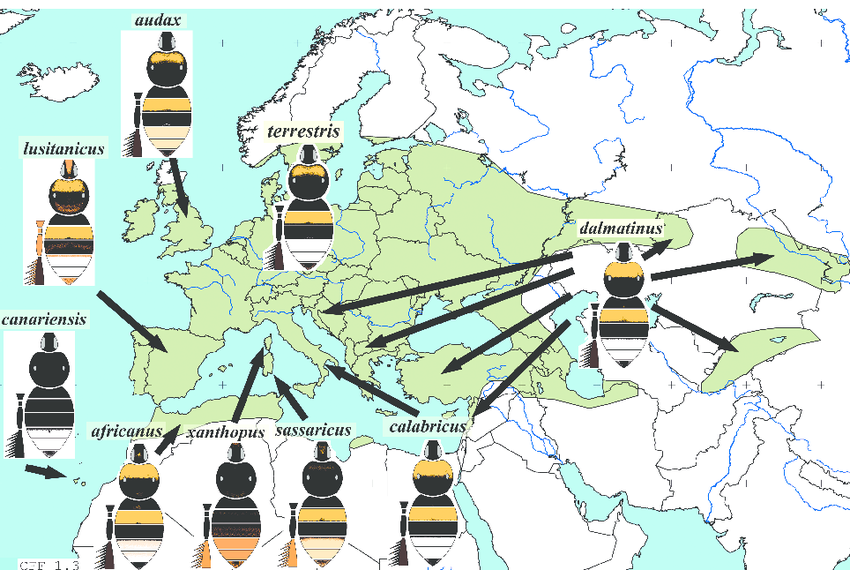
Bees often occur in several subspecies. One of the subspecies of the buff-tailed bumblebee is Bombus terrestris dalmatinus.
This subspecies migrates to us from warmer regions. Thanks to the gradual increase in average winter temperatures, it can hibernate successfully here, which is why you are increasingly likely to encounter it in our conditions.
The occurrence of subspecies and the migration pattern of the buff-tailed bumblebee are indicated here:

Range expansion of the buff-tailed bumblebee (Bombus terrestris) in Europe (Source: Rasmont et al. 2008)
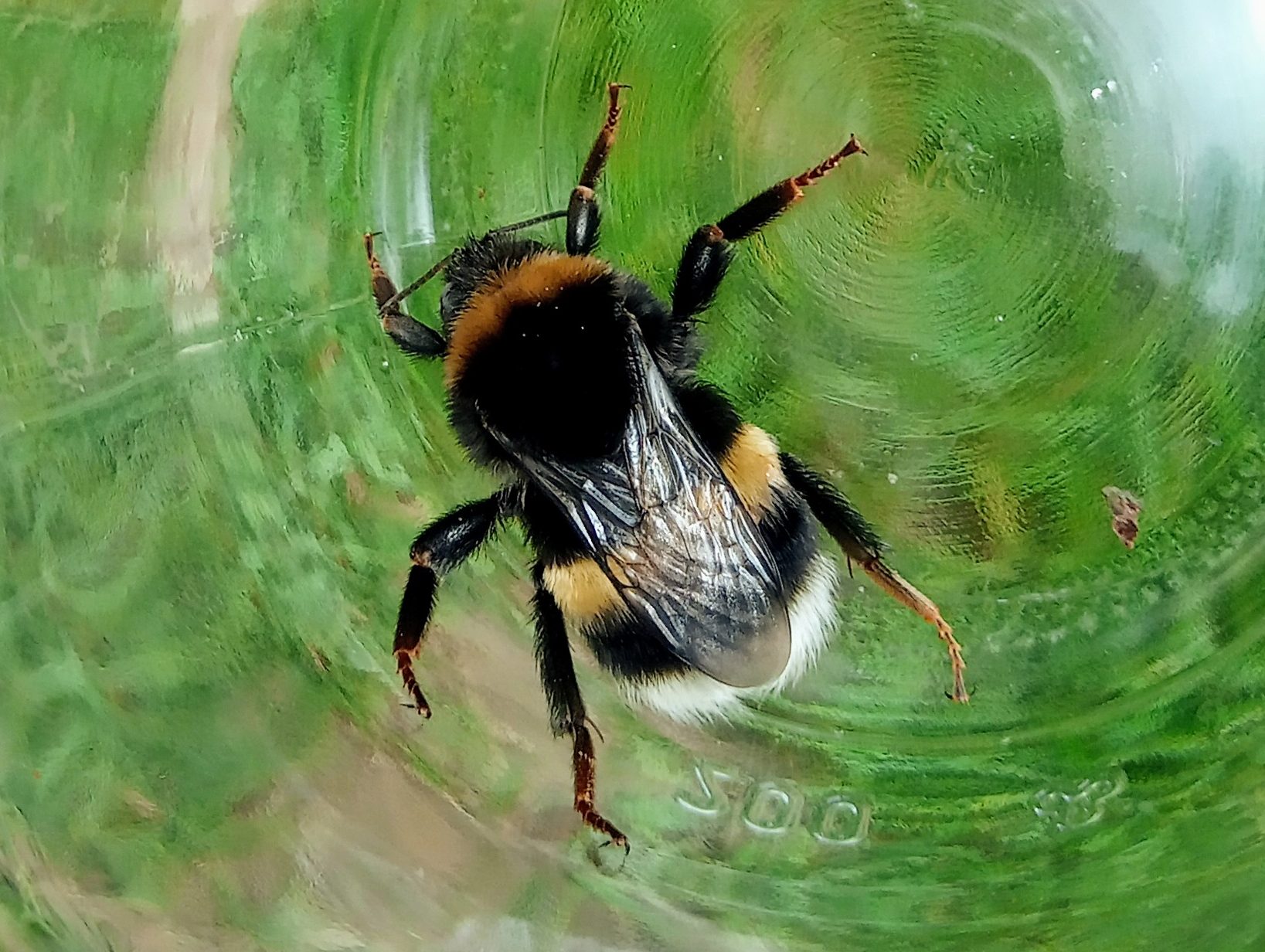
As proof that Bombus terrestris dalmatinus is thriving here, we can also use photos by Jan Frantl. He repeatedly keeps this subspecies in his apiaries near Prague.
Recognising this subspecies from Bombus terrestris terrestris is quite difficult and therefore it can remain hidden from our eyes.
However, upon closer inspection, you will notice a significantly wider and brighter band on the pronotum behind the head, as well as a band on the 2nd tergite. The subspecies dalmatinus is entirely radiant. This is a fairly reliable guide for distinguishing the subspecies.
Males resemble larger workers and, similar to Bombus terrestris terrestris, are more hairy, with broader yellow stripes and brighter colours than workers/queens.
If someone sells you a buff-tailed bumblebee from nature and it has these features, you can be highly confident that it is a commercially reared bumblebee. This is because Bombus terrestris is very often present as part of a mix of Bombus terrestris subspecies used.
However, the following photographs show bumblebees settled from nature and kept in a hive.

Buff-tailed bumblebee (Bombus terrestris dalmatinus) – queen
Photo: J. Frantl 16/8/2021

Buff-tailed bumblebee (Bombus terrestris) – queen
Photo: O. Hercog 27/6/2021
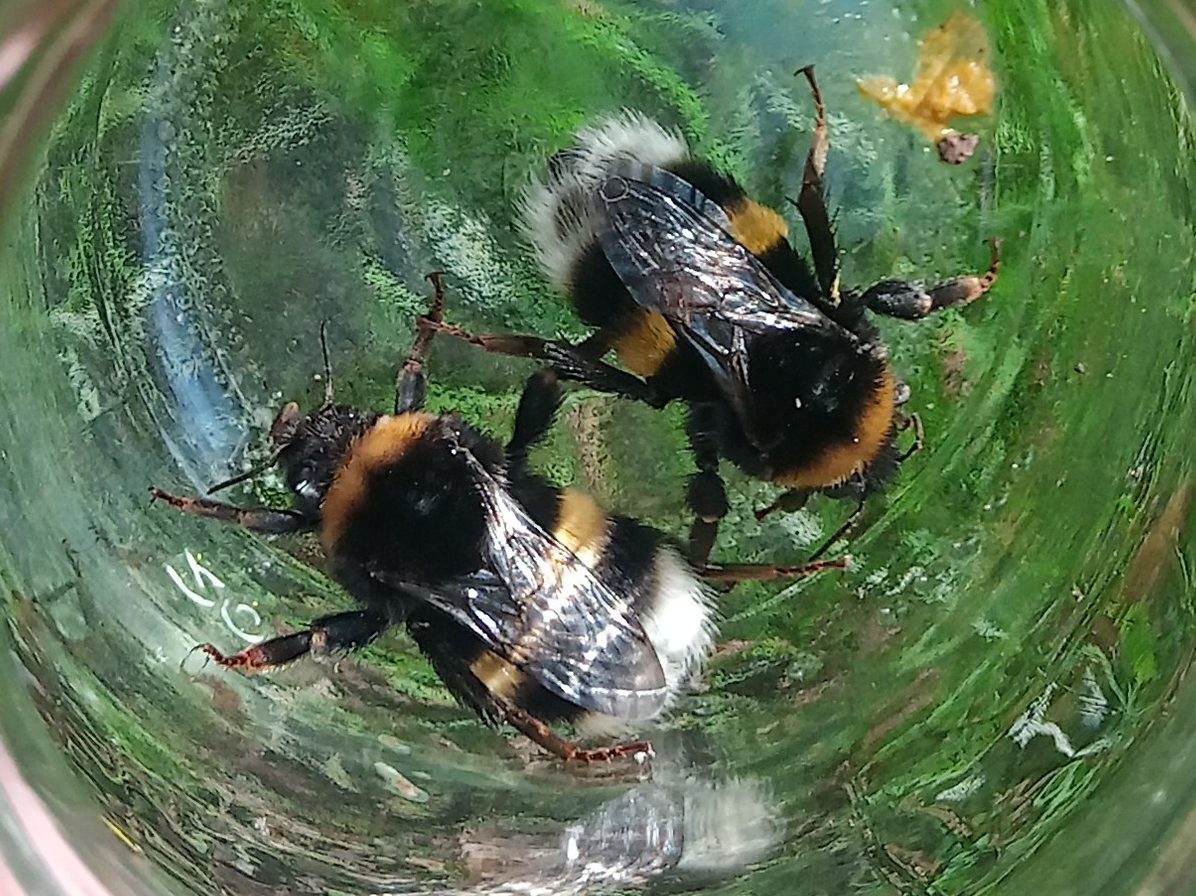
Buff-tailed bumblebee (Bombus terrestris dalmatinus) – queen
Photo: J. Frantl 16/8/2021
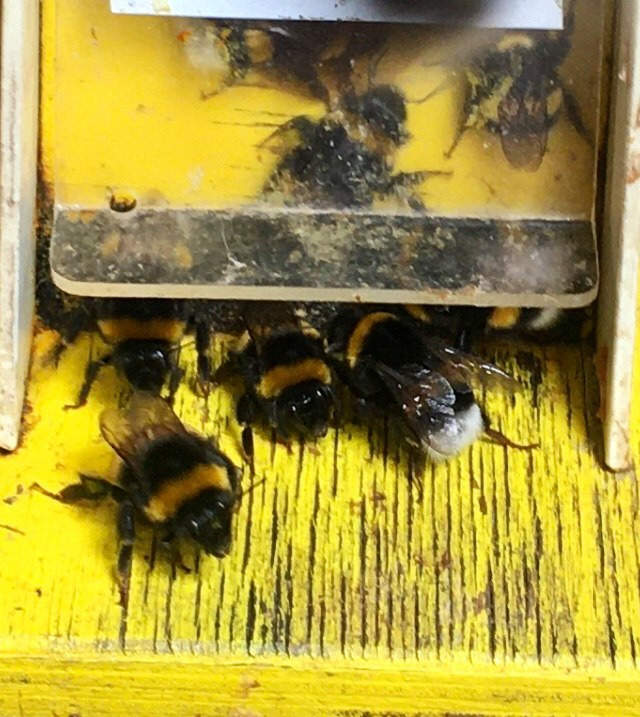
Buff-tailed bumblebee (Bombus terrestris dalmatinus) – worker
Photo: J. Frantl 23/7/2021

Buff-tailed bumblebee (Bombus terrestris) – worker
Photo: O. Hercog 03/07/2021
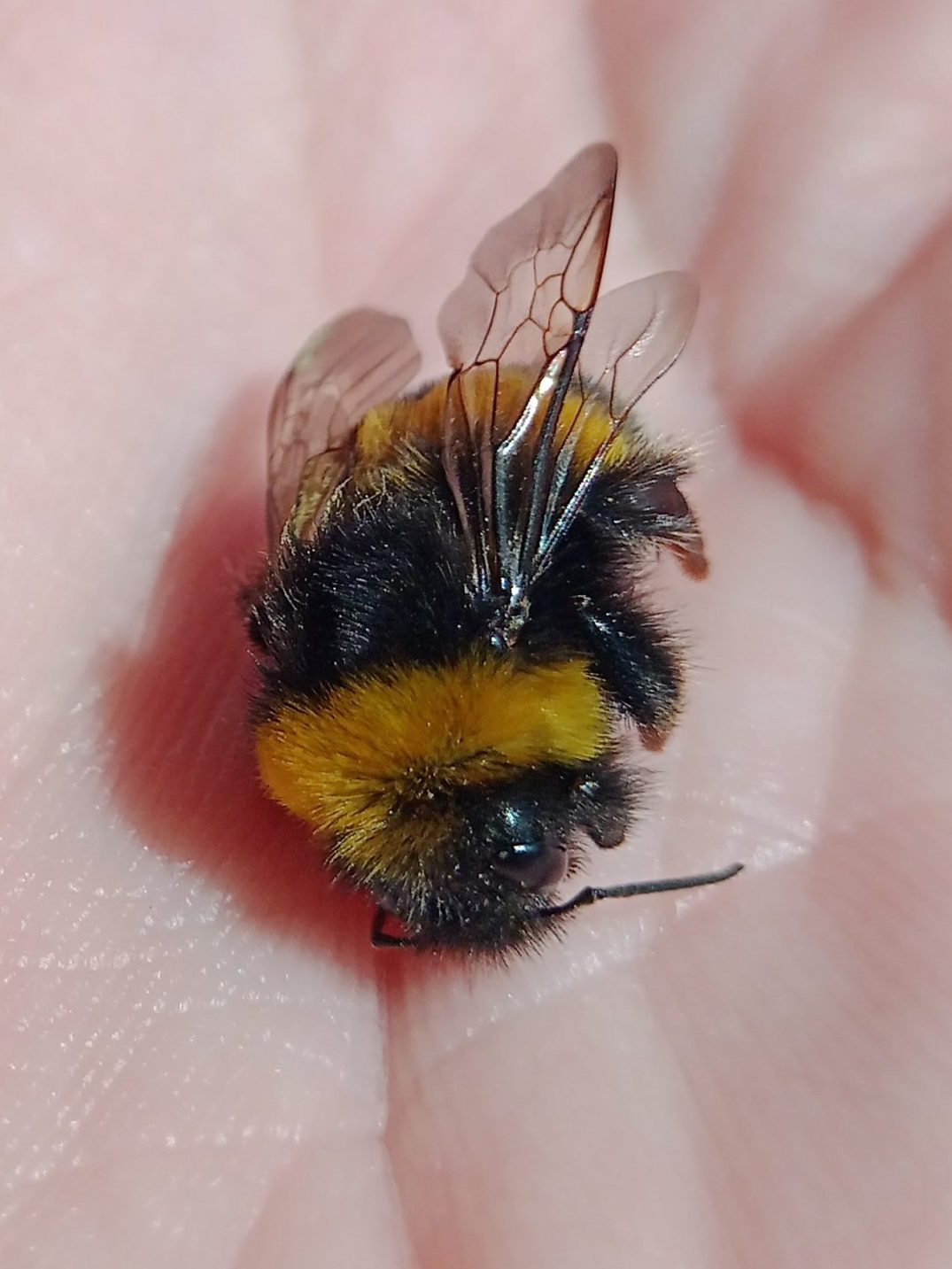
Bumblebees PLUS – Buff-tailed Bumblebee (Bombus terrestris dalmatinus) – male
Photo: J. Frantl 21/8/2021
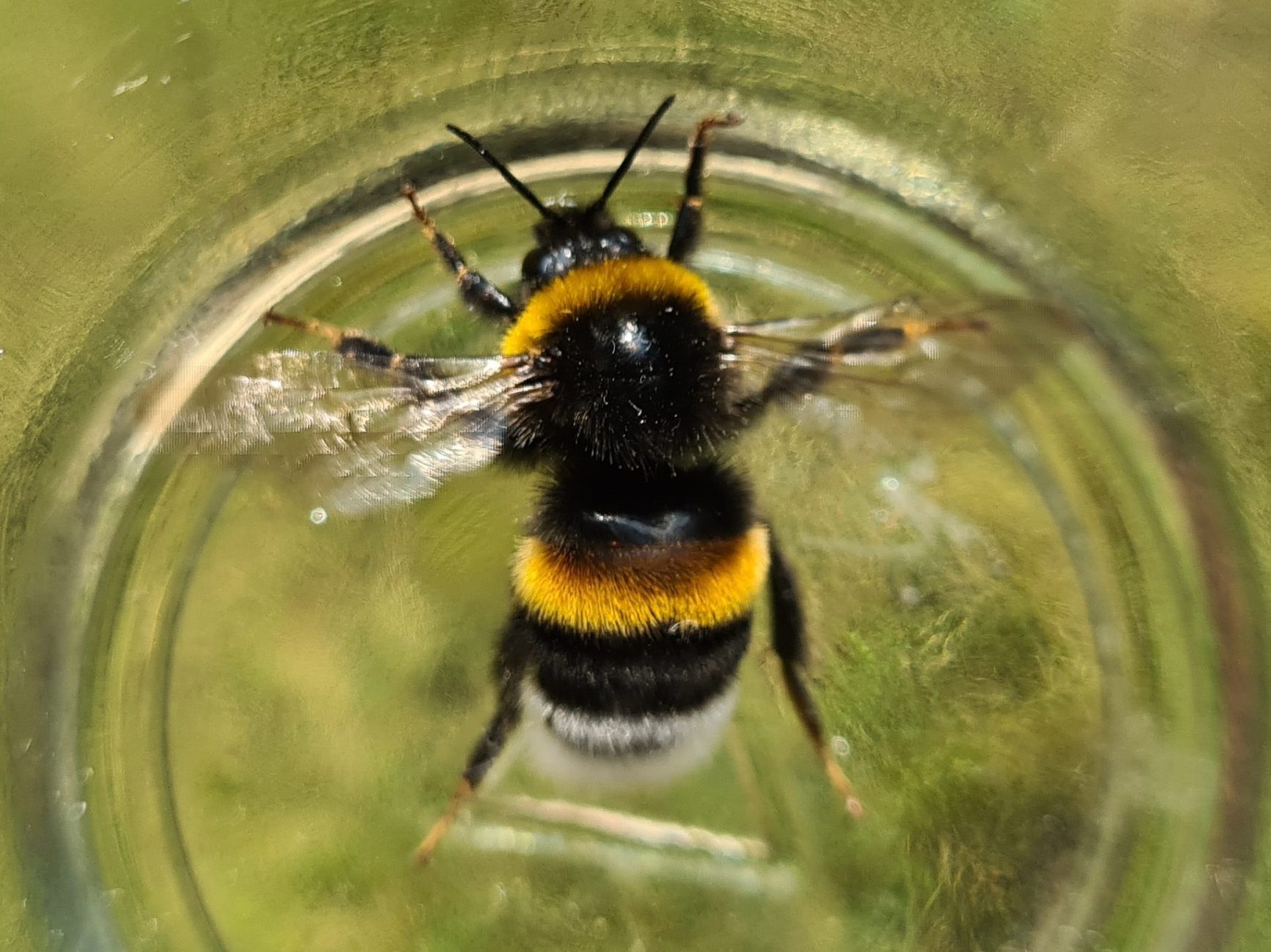
Buff-tailed bumblebee (Bombus terrestris) – male
Photo: O. Hercog 24/7/2021
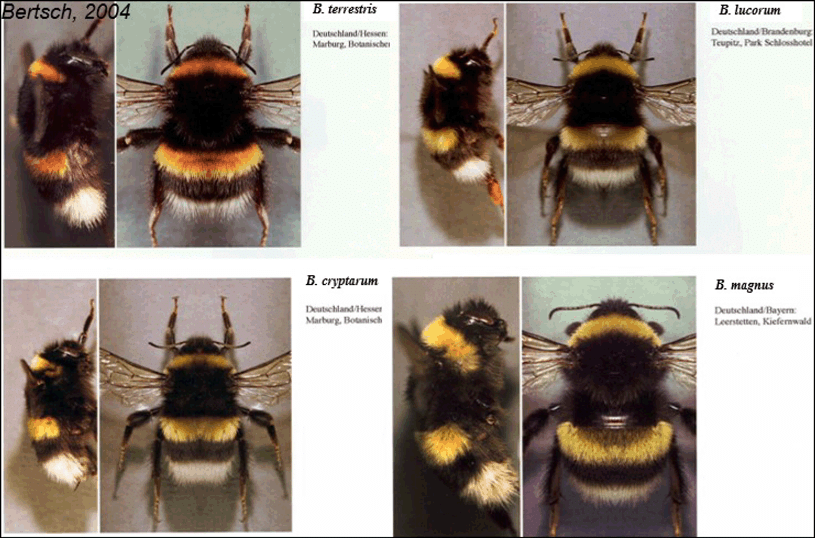
The following photographs compare species that can be easily mistaken for one another. Although these are photographs of mothers taken in Ireland (the species here have slight colour differences from the same species in the Czech Republic), they are useful for comparing typical characteristics.
You can see for yourselves that resolution isn't always easy.
In the following text, we will describe the characters and provide you with guidance on how to distinguish them.

Mothers of similar species – B.
terrestris-B. lucorum – B. magnus -B. cryptarum
Photo: Bertsch 2004
White-tailed bumblebee
- You can read more about the forest bumblebee (B. lucorum) HERE
The following text contains only comparative information.
- Unlike the buff-tailed bumblebee:
– it's smaller
– The heath bumblebee also has a shorter, rounder head in females/workers (it is the shortest of all species in the Czech Republic)
– both strips are the same shade and thicker
The stripes are lemon-hued to bright yellow and predominate over the black.
– in the mother and worker bees the shade of the yellow stripes gradually fades with age, then the colour fades significantly with age to practically dirty white – such an effect is not observed in the buff-tailed bumblebee (B. terrestris)
– striking yellow facial mask in males
the males are beautifully yellow and fluffy
– with age, the yellow colour of the males gradually fades, the males turn grey – but we know that, don't we, men do too?

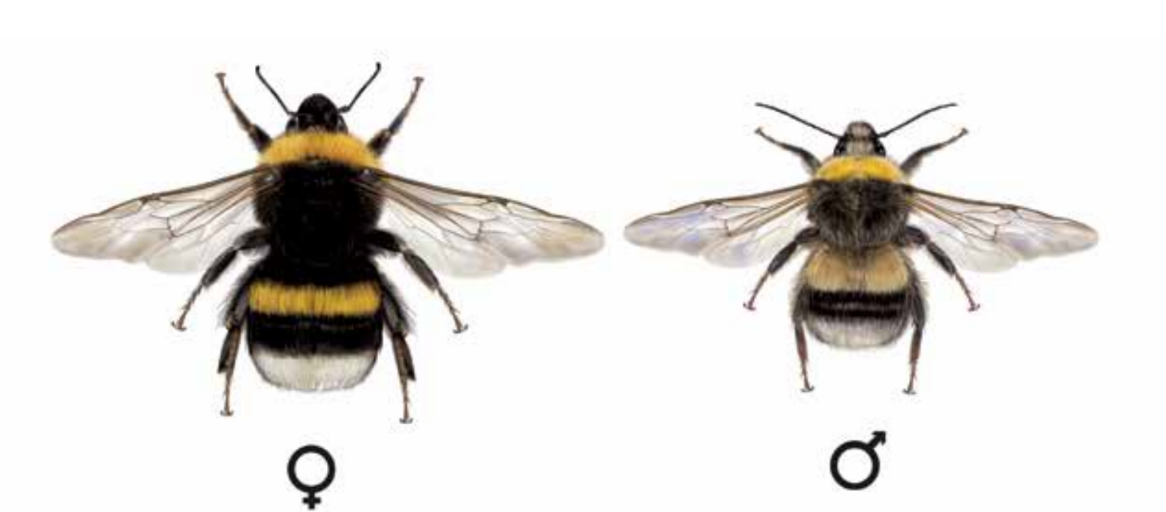
White-tailed bumblebee – Bombus lucorum
Source: Sikora A., Michołap P., Kadej M., Sikora M. Tarnawski D. 2018 „Bees in the city: Bumblebees of Wrocław“, Publ. Association Nature and Man.
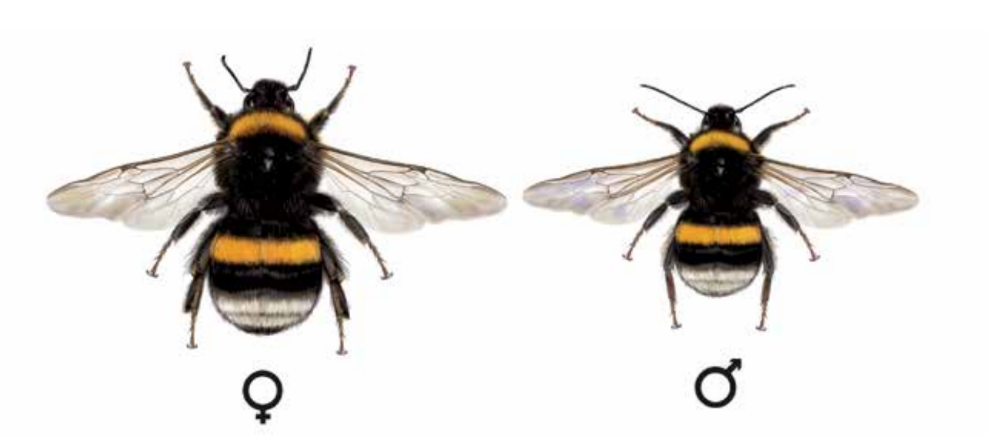
Buff-tailed bumblebee
Source: Sikora A., Michołap P., Kadej M., Sikora M. Tarnawski D. 2018 „Bees in the city: Bumblebees of Wrocław“, Publ. Association Nature and Man.
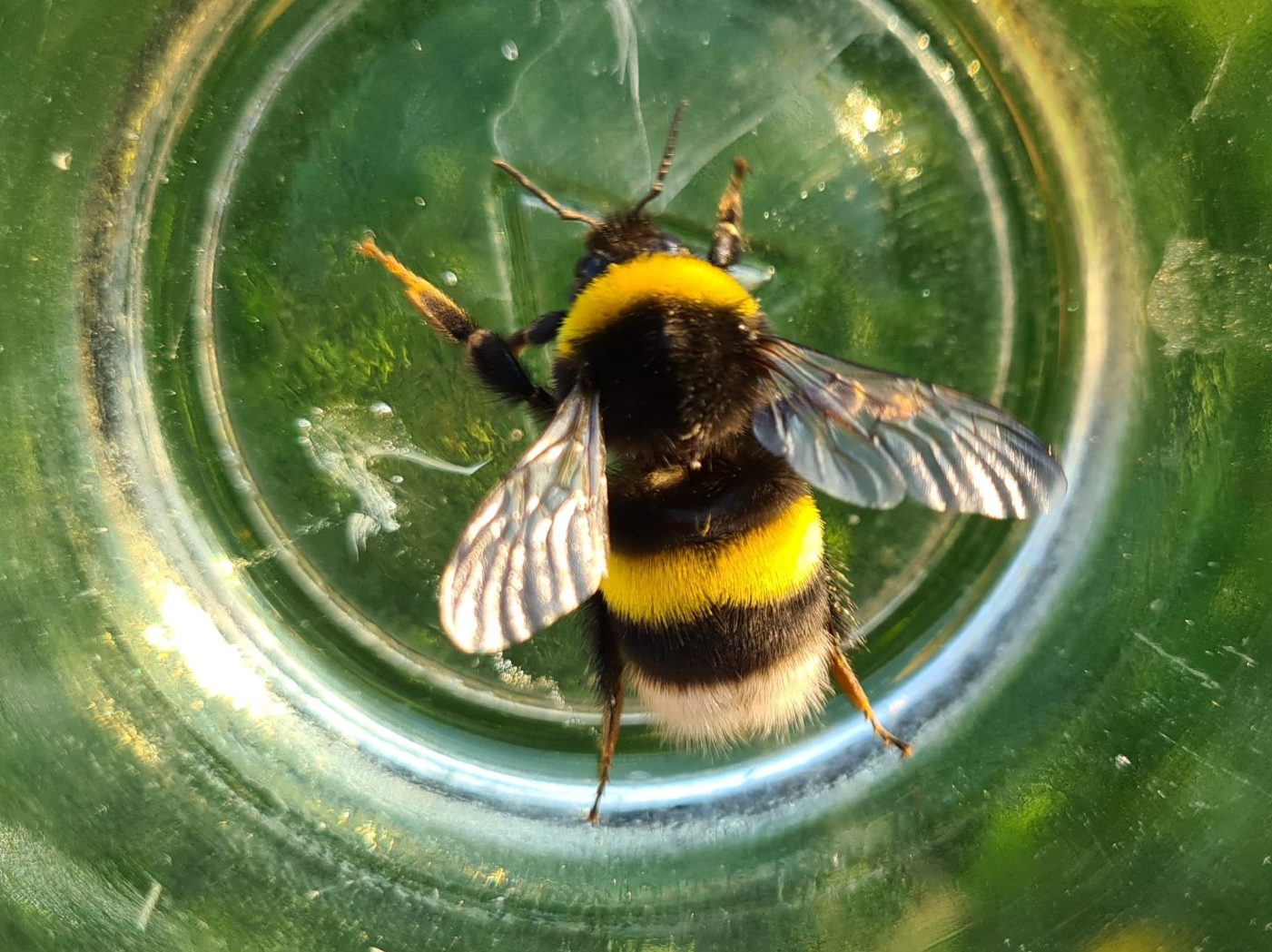
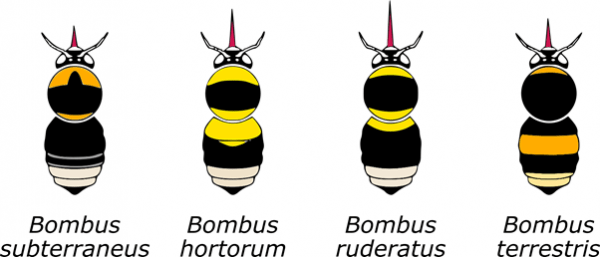
With the mother and worker bees, the shade of the yellow stripes is a good guide. In the wood bee, the first and second stripes will match. In the bumblebee, the stripe on the prothorax behind the head is darker than the stripe on the second tergite.
It's clearly visible in these photographs.

Buff-tailed bumblebee (Bombus lucorum) - queen
Photo: O. Hercog 16/6/2021

Buff-tailed bumblebee (Bombus terrestris) – queen
Photo: O. Hercog 27/6/2021
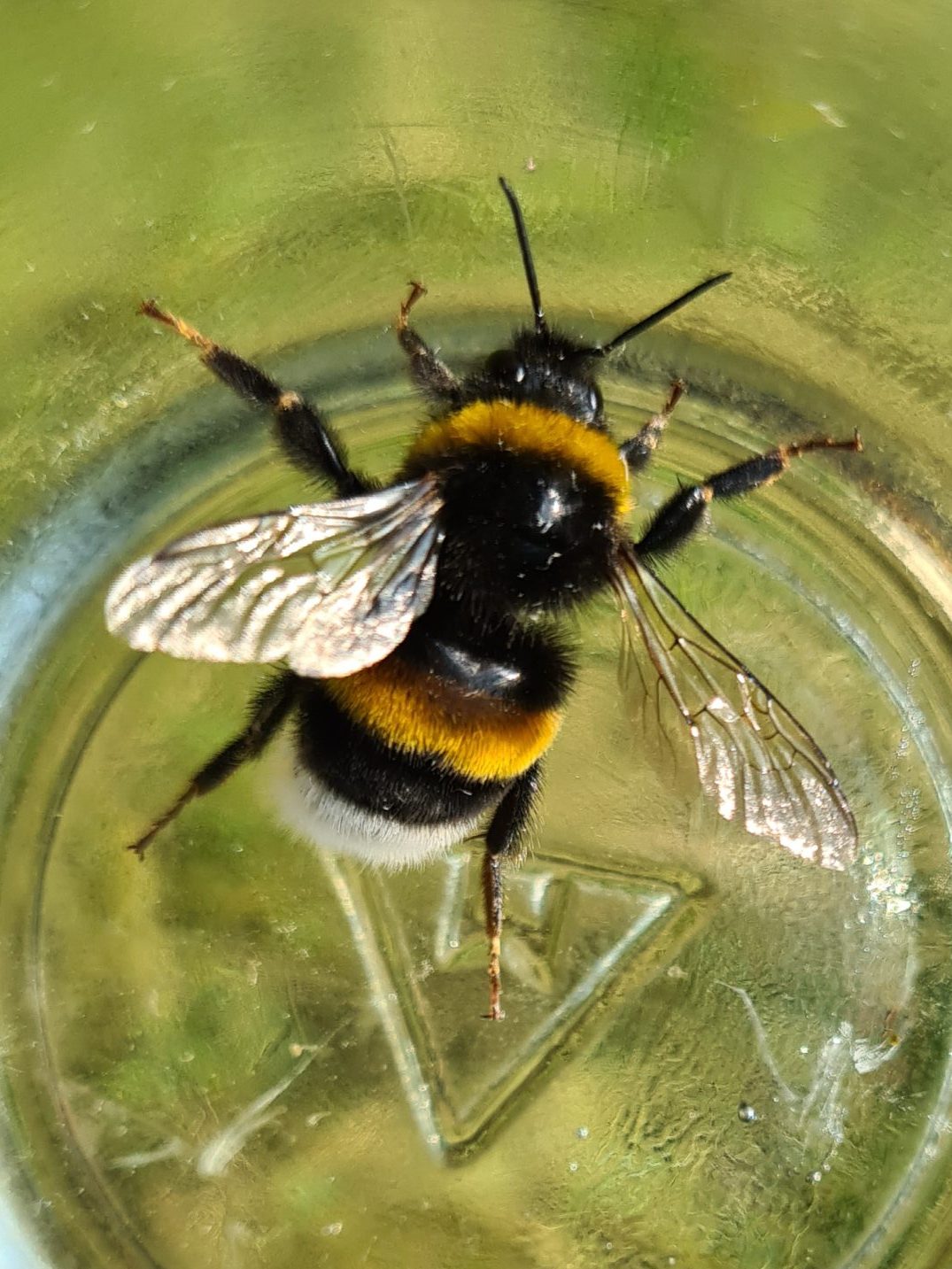
White-tailed bumblebee (Bombus lucorum) – worker
Photo: O. Hercog 24/7/2021

Buff-tailed bumblebee (Bombus terrestris) – worker
Photo: O. Hercog 3/7/2021
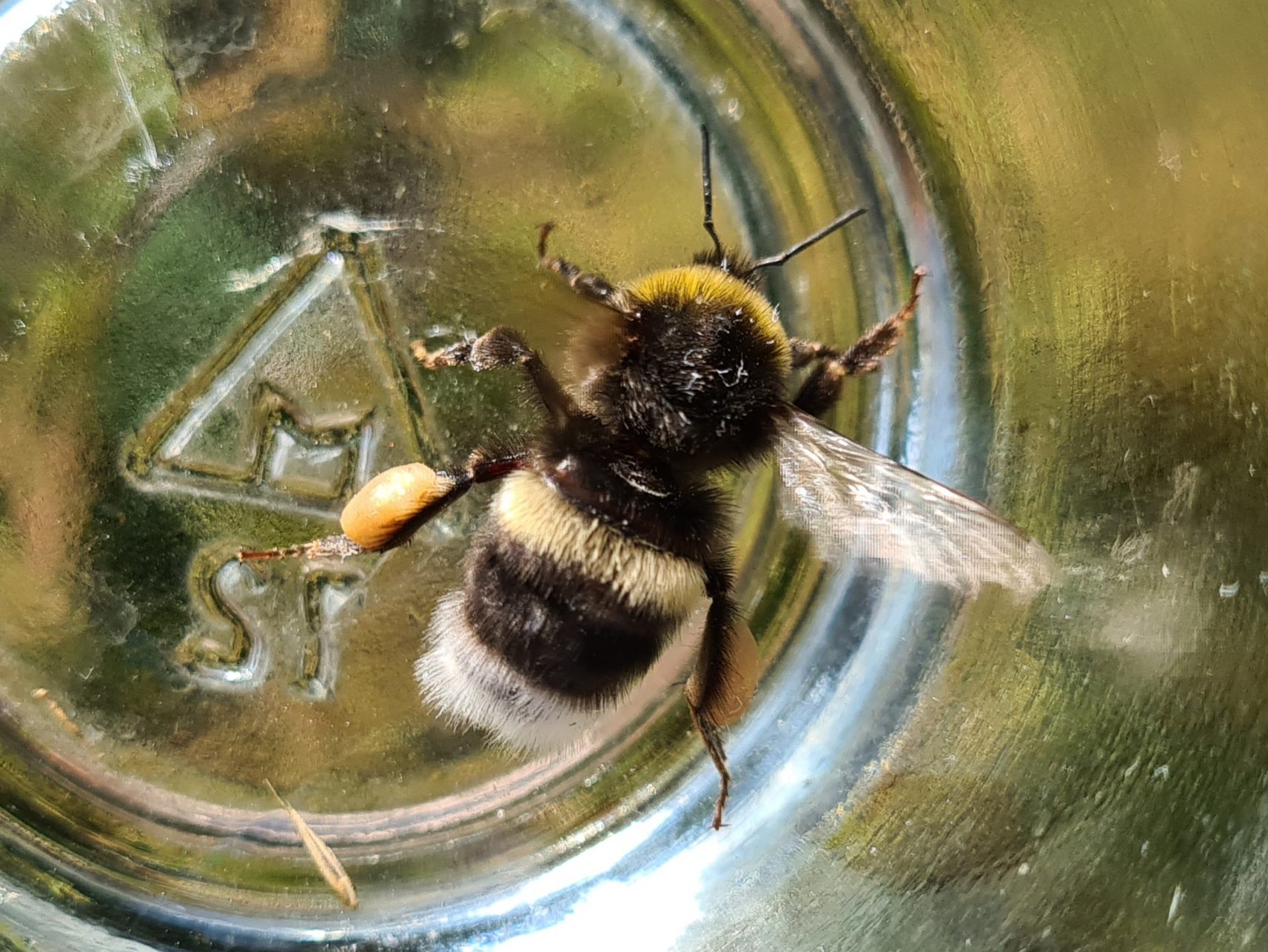
Unlike the buff-tailed bumblebee, pale yellow stripes that fade to a dirty white can be observed in the garden bumblebee. This effect is quite common in garden bumblebees and can make species identification complicated.gloating.
You can find more examples on a page of this kind

Tree bumblebee (Bombus lucorum) – worker
Photo: O. Hercog 5/9/2021
Male\_of\_the\_forest\_bumblebee\_are\_easily\_recognised. They are very typical – the male is a beautiful yellow and you won't mistake him for the male garden bumblebee.
The male bumblebee resembles a large worker, only its yellow stripes are wider and brighter. Even here, however, a difference in shades can be seen, although it is not as marked as between the queen and the worker. A look at its hind legs, which lack pollen baskets, and its antennae will help.
The difference between the species is significant in males – the male of the buff-tailed bumblebee (B. terrestris) lacks yellow markings on its head and face.

White-tailed bumblebee (Bombus lucorum) – male
Photo: O. Hercog 15/7/2021

Buff-tailed bumblebee (Bombus terrestris) – male
Photo: O. Hercog 24/7/2021
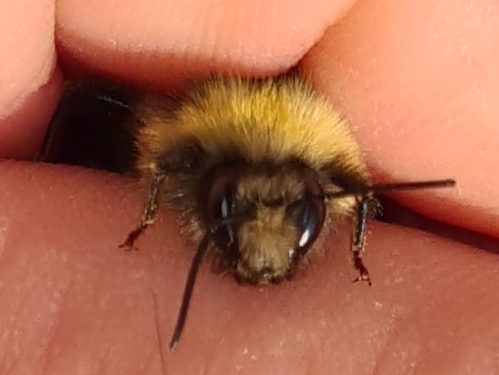
Forest cuckoo (Bombus lucorum) – male head
Photo: O. Hercog 23/7/2021

Buff-tailed bumblebee (Bombus terrestris) – males
Photo: Animal photos
Bimaculated bumblebee in English cryptic bumblebee
- You can read more about the double-banded bumblebee (Bombus cryptarum) HERE
The following text contains only comparative information.
- Notes for determination
– The double bumblebee is a rare species and the chance of you encountering it is minimal, information about its occurrence is scarce – you have a small chance of meeting it
– can be caught at higher altitudes
– it didn't have a Czech common name for a long time. Doc Ptáček in the source article of the journal Včelařství uses the Czech designation „čmelák norový“
- Unlike the buff-tailed bumblebee:
– it's smaller
– different spacing of simple ocelli on the head (steel) than Bombus terrestris
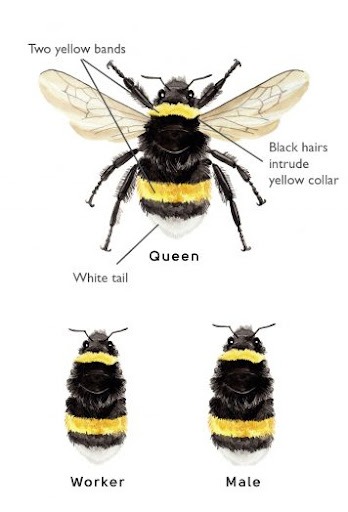
– its yellow hues are lighter
– narrower band on the forebreast, individual black hairs may be present within it and interrupted on the sides of the chest by them
– breast band ends level with the wings (side view)
– it emits a high tone for flight
Males cannot be reliably distinguished from similar species by colour.
Note: The discussion as to whether this is a distinct species or merely a form of B. lucorum has not yet been concluded.

Bimaculated bumblebee
Source: Blooms for Bees

Buff-tailed bumblebee
Source: Sikora A., Michołap P., Kadej M., Sikora M. Tarnawski D. 2018 „Bees in the city: Bumblebees of Wrocław“, Publ. Association Nature and Man.
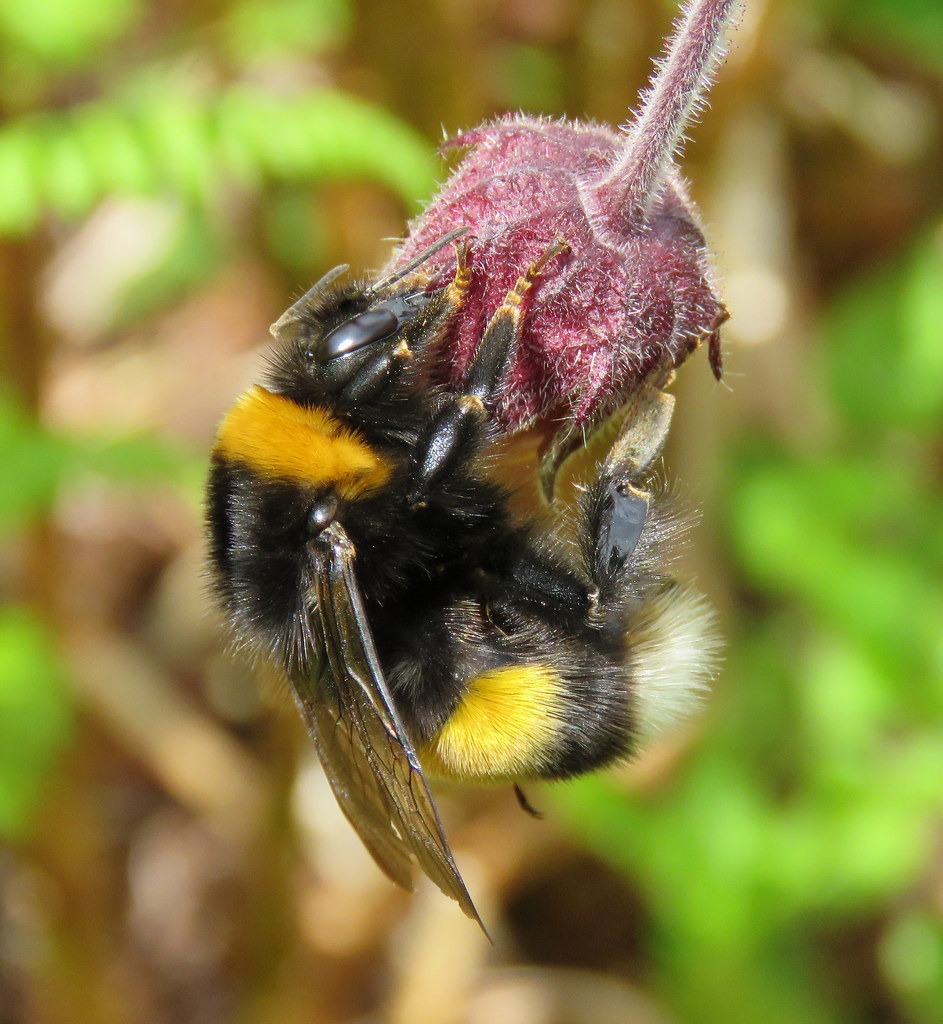
The cryptarum bumblebee (Bombus cryptarum) - queen
Photo: M. Tarm
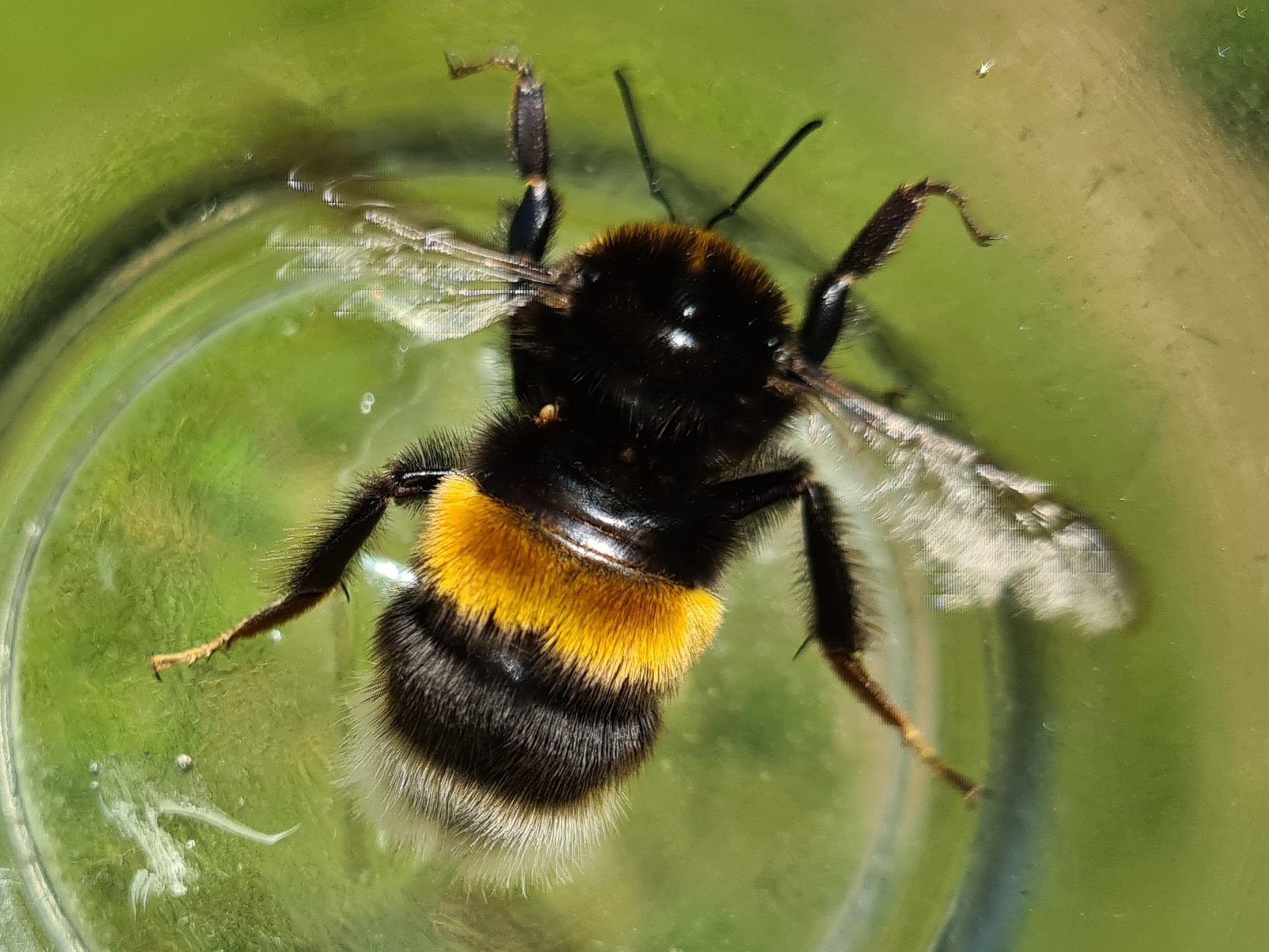
Buff-tailed bumblebee (Bombus terrestris) – queen
Photo: O. Hercog 27/6/2021
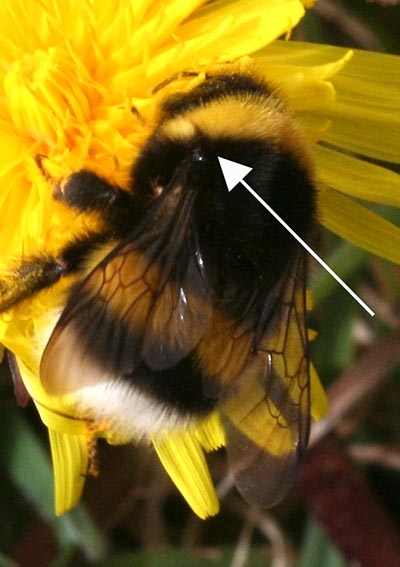
An interesting detail on the band on the mother of the double-tailed bee's chest. The interruption of the band is a typical characteristic of this species.
At the same time, it is clearly visible that the strap does not extend under the wings.

Buff-tailed bumblebee – Bombus cryptarum-matka (queen)
interruption of the yellow stripe on the fore-breast
Photo: Donegal Wildlife
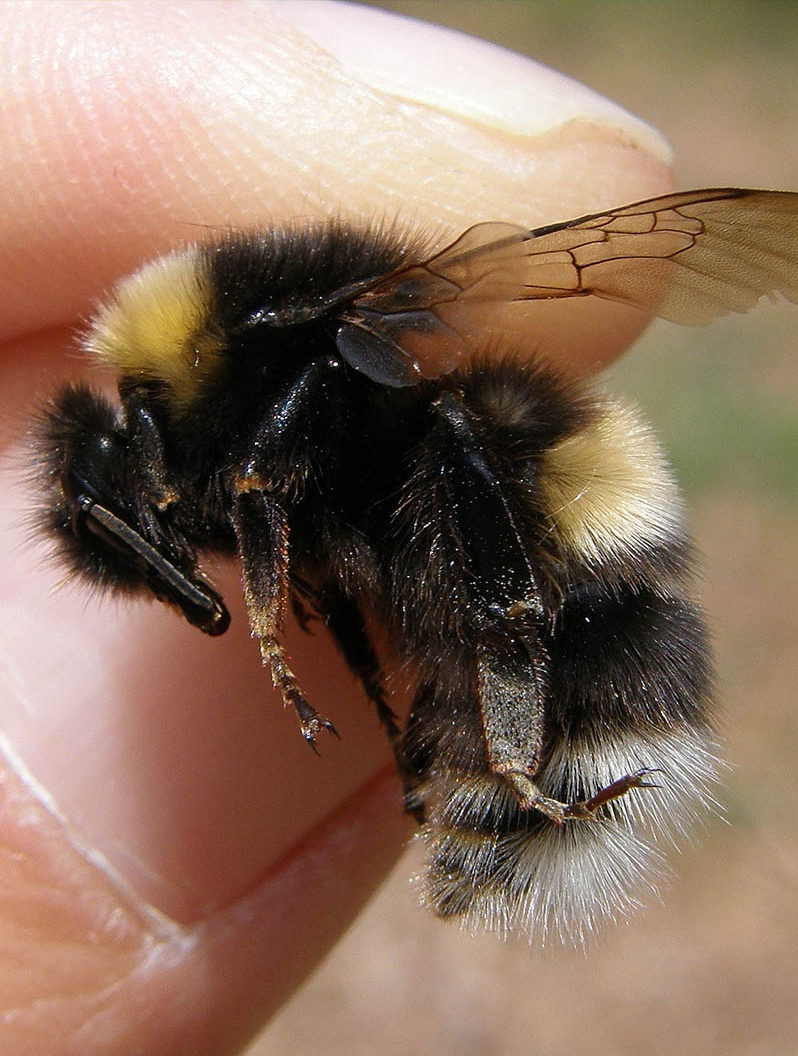
Bilberry bumblebee (Bombus soroeensis) – queen
Photo: bloomsforbees.co.uk
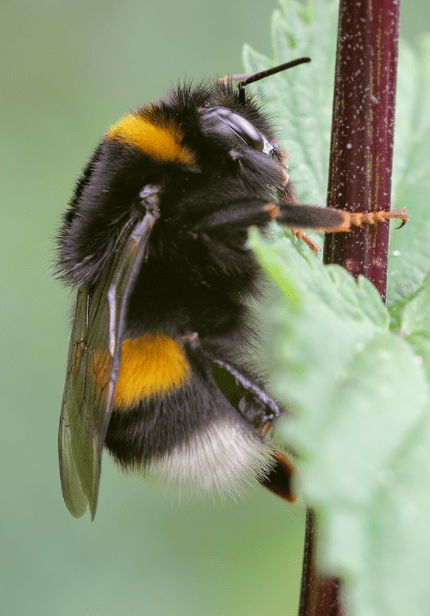
Buff-tailed bumblebee (Bombus terrestris) – queen
Photo: B. Ivčič
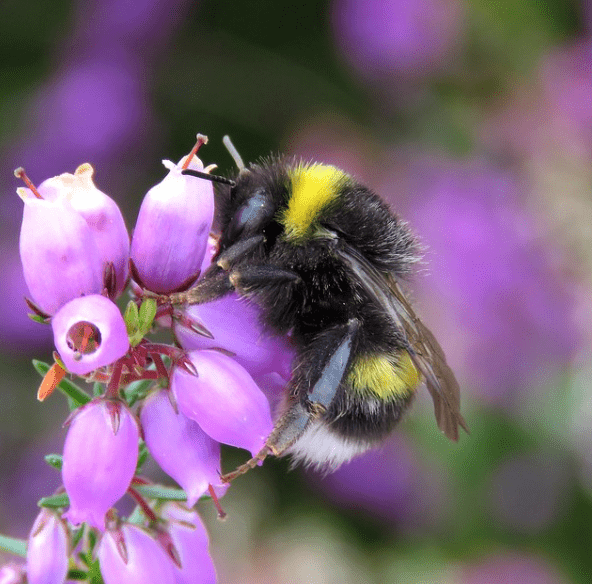
Double-sleeved bumblebee (Bombus cryptarum) – worker
Photo: S. Falk 2019

Buff-tailed bumblebee (Bombus terrestris) – worker
Photo: O. Hercog 3/7/2021
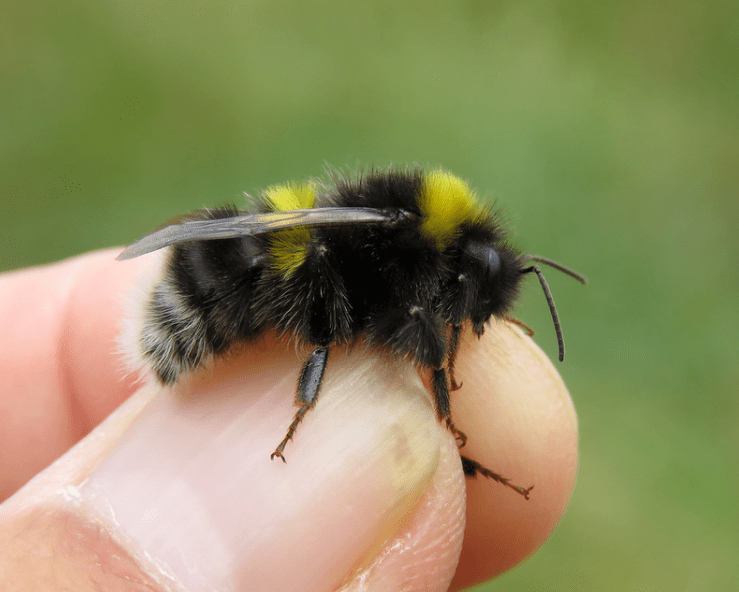
Buff-tailed bumblebee (Bombus cryptarum) – male
Photo: S. Falk 2019

Buff-tailed bumblebee (Bombus terrestris) – male
Photo: O. Hercog 24/7/2021
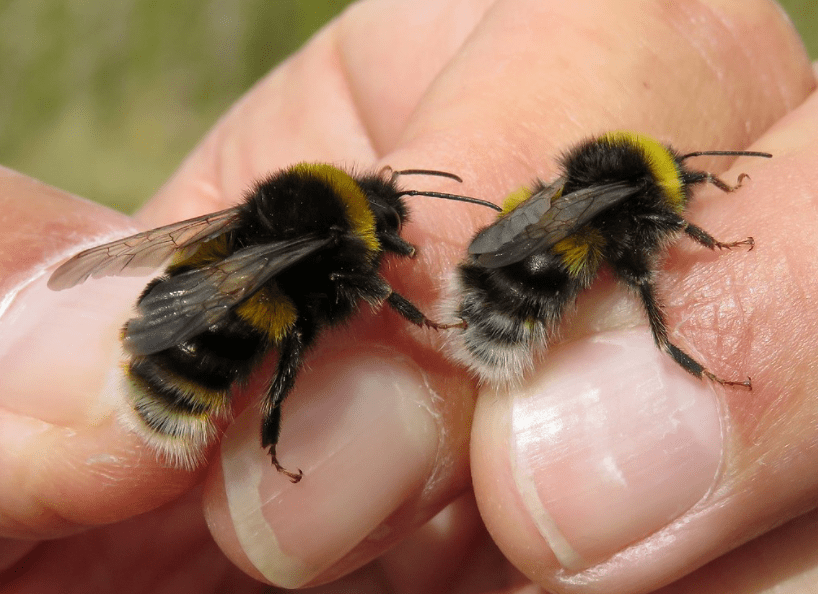
Buff-tailed bumblebee and large earth bumblebee (Bombus terrestris and cryptarum) – male
Photo: S. Falk 2019
When looking briefly, it is difficult to use but nevertheless a possible clue to distinguish between the buff-tailed bumblebee (B. terrestris) and the large garden bumblebee (B. cryptarum) is the distance between the simple eyes (ocelli) on the crown of the head.

Diagram of the arrangement of simple eyes on the head of the buff-tailed bumblebee (Bombus terrestris)
Source: Fauna Helvetica Apidae 1
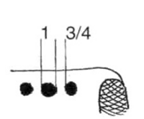
Layout diagram of the simple ocelli on the head of the buff-tailed bumblebee (Bombus cryptarum)
Source: Fauna Helvetica Apidae 1
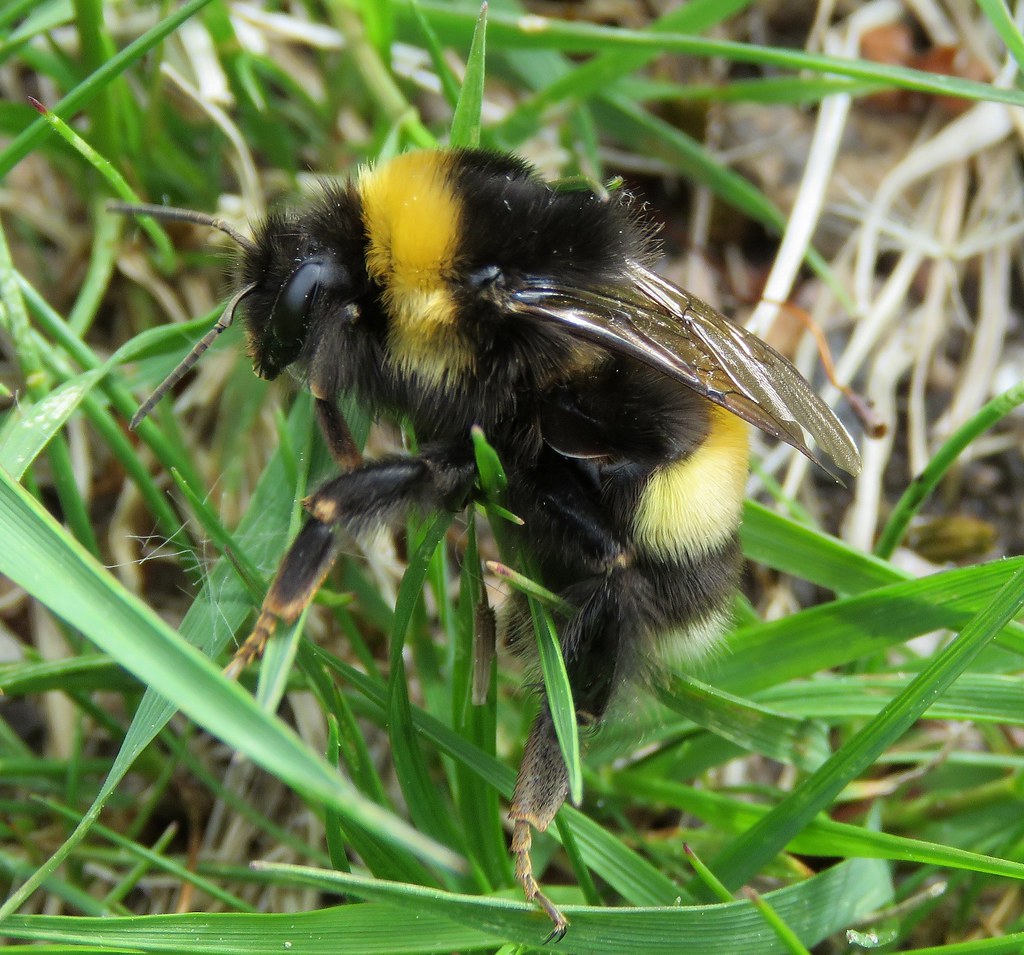
Great bee (Bombus magnus)
- You can read more about the greater bumblebee (Bombus magnus) HERE
The following text contains only comparative information.
- Unlike the buff-tailed bumblebee:
– you have a small chance of meeting him
– it's a bit smaller (mothers up to 22 mm)
– its yellow colours are lighter, similar to that of the buff-tailed bumblebee (B. lucorum) or the large earth-buff bumblebee (B. cryptarum)
– the chest strap behind the head is stronger
– The breastband extends below the wings (side view)
– males have colouring, including yellow hairs on the facial part of the head, very similar to males of the buff-tailed bumblebee (B. lucorum)

Great bumblebee (Bombus magnus) – queen
Photo: Flickr

Buff-tailed bumblebee (Bombus terrestris) – queen
Photo: O. Hercog 27/6/2021
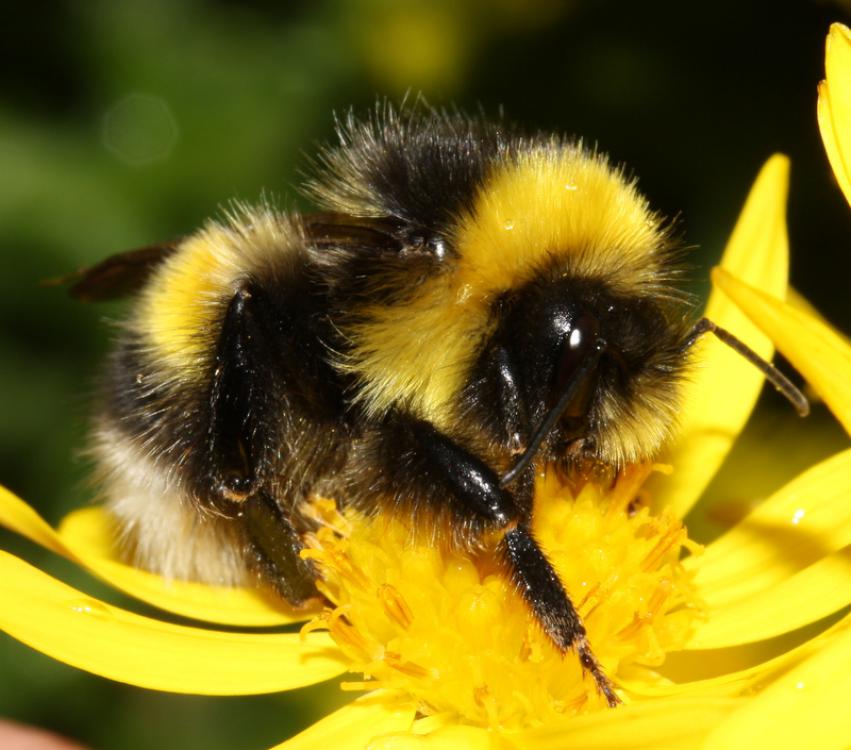
Great cuckoo bumblebee (Bombus magnus) - male
Photo: BWars
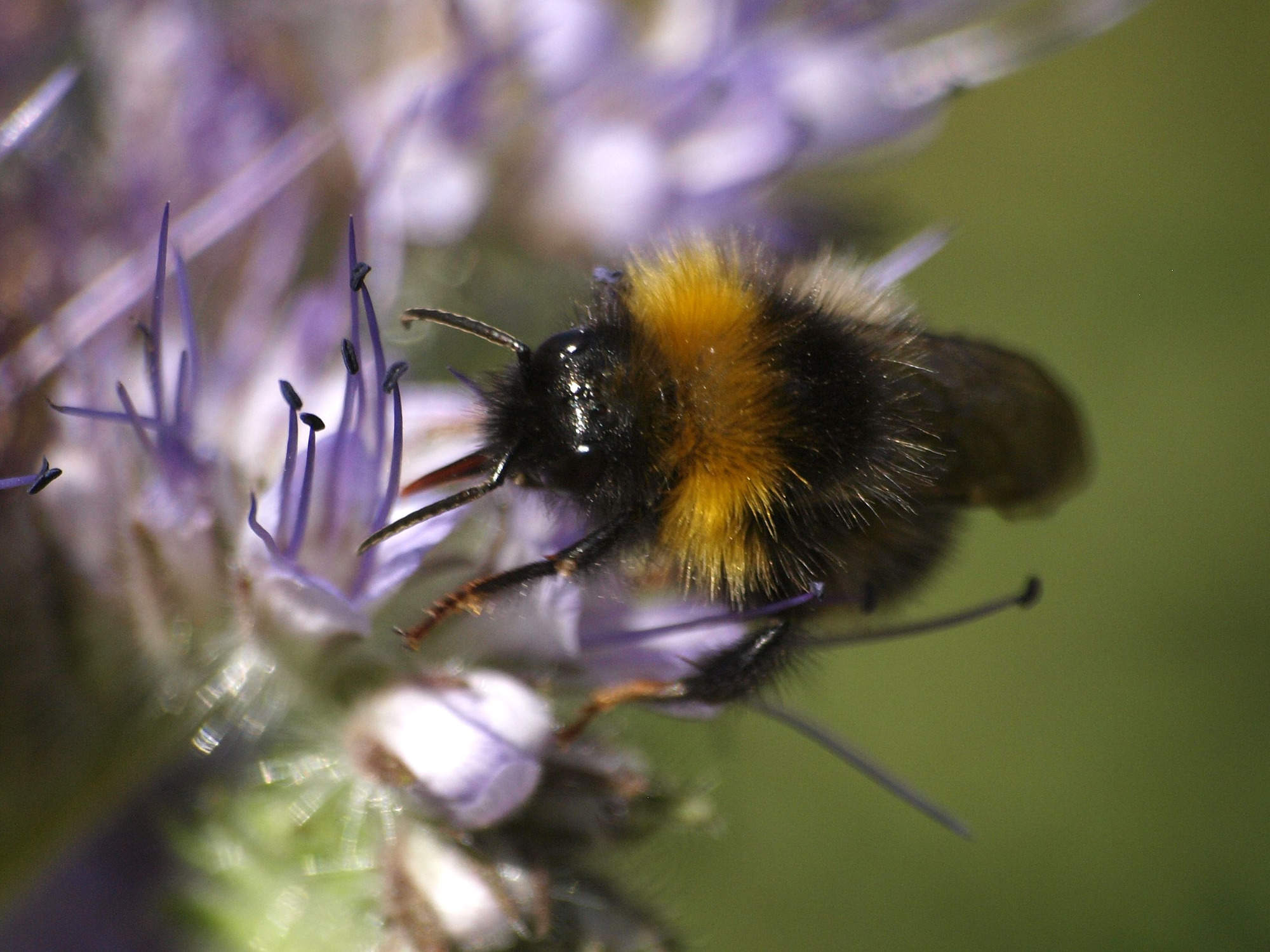
Buff-tailed bumblebee (Bombus terrestris) – male
Photo: Á. Ungerová 2020
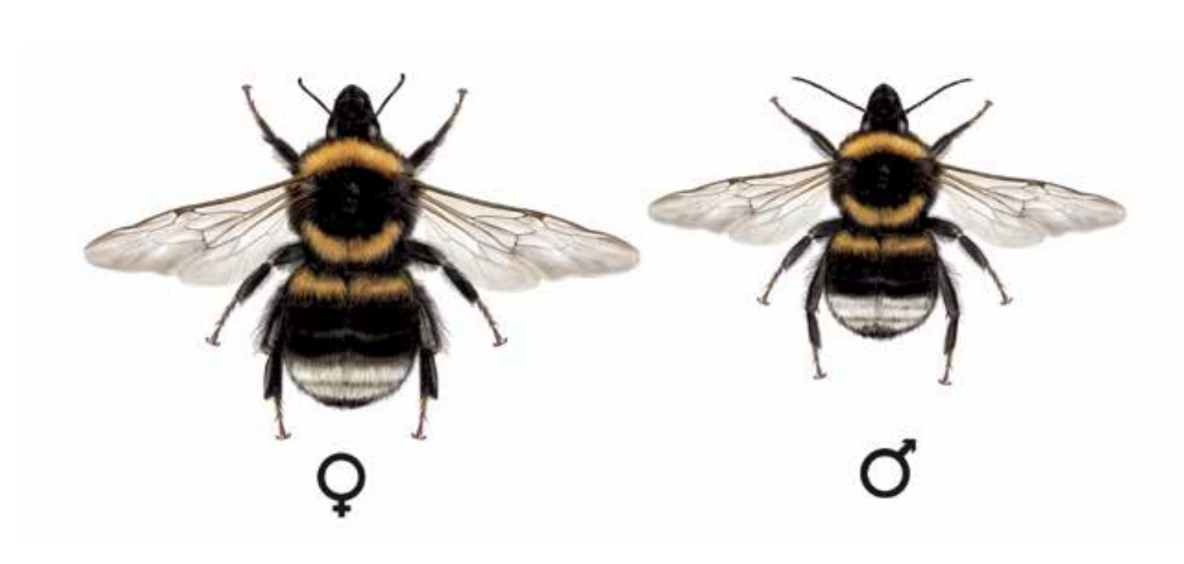
Garden bumblebee
Buff-tailed bumblebee
- You can read more about the garden bumblebee (Bombus hortorum) HERE
- You can read more about the garden bumblebee (Bombus ruderatus) HERE
Both species are very similar, and reliably distinguishing them by colour is not reliable, which is why we do not discuss their species differences in this section and we will limit ourselves to comparison with the buff-tailed bumblebee (Bombus terrestris).
The following text contains only comparative information.
- Unlike the buff-tailed bumblebee:
– head noticeably long and arched, resembling a horse's head in shape
– bristly and longer hairs
- two stripes on the chest
– first yellow stripe on the 1st tergite of the abdomen
– all strips of the same light yellow colour and shade
– some varieties are practically black, with yellow elements only faintly indicated, or practically unrecognisable
– very similar to the large earth-bumblebee (Bombus ruderatus) even in the presence of dark varieties
pointy bum
– the male's colour variation differs from the mother/workers
– feeding of larvae by means of pocket makers
– often establish a second generation

Garden bumblebee
Source: Sikora A., Michołap P., Kadej M., Sikora M. Tarnawski D. 2018 „Bees in the city: Bumblebees of Wrocław“, Publ. Association Nature and Man.
Buff-tailed bumblebee
Source: Sikora A., Michołap P., Kadej M., Sikora M. Tarnawski D. 2018 „Bees in the city: Bumblebees of Wrocław“, Publ. Association Nature and Man.
.

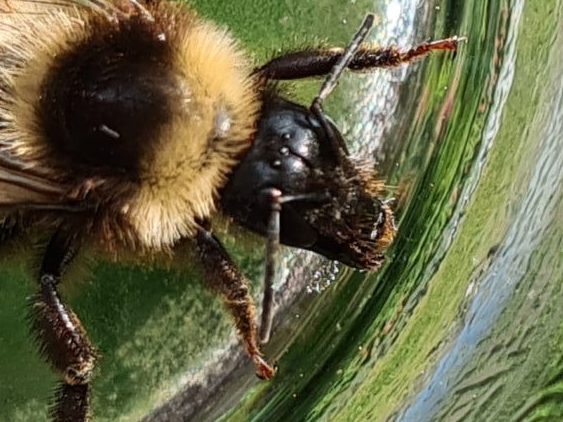
Garden bumblebee (Bombus hortorum) – worker head
Photo: O. Hercog 29/8/2021
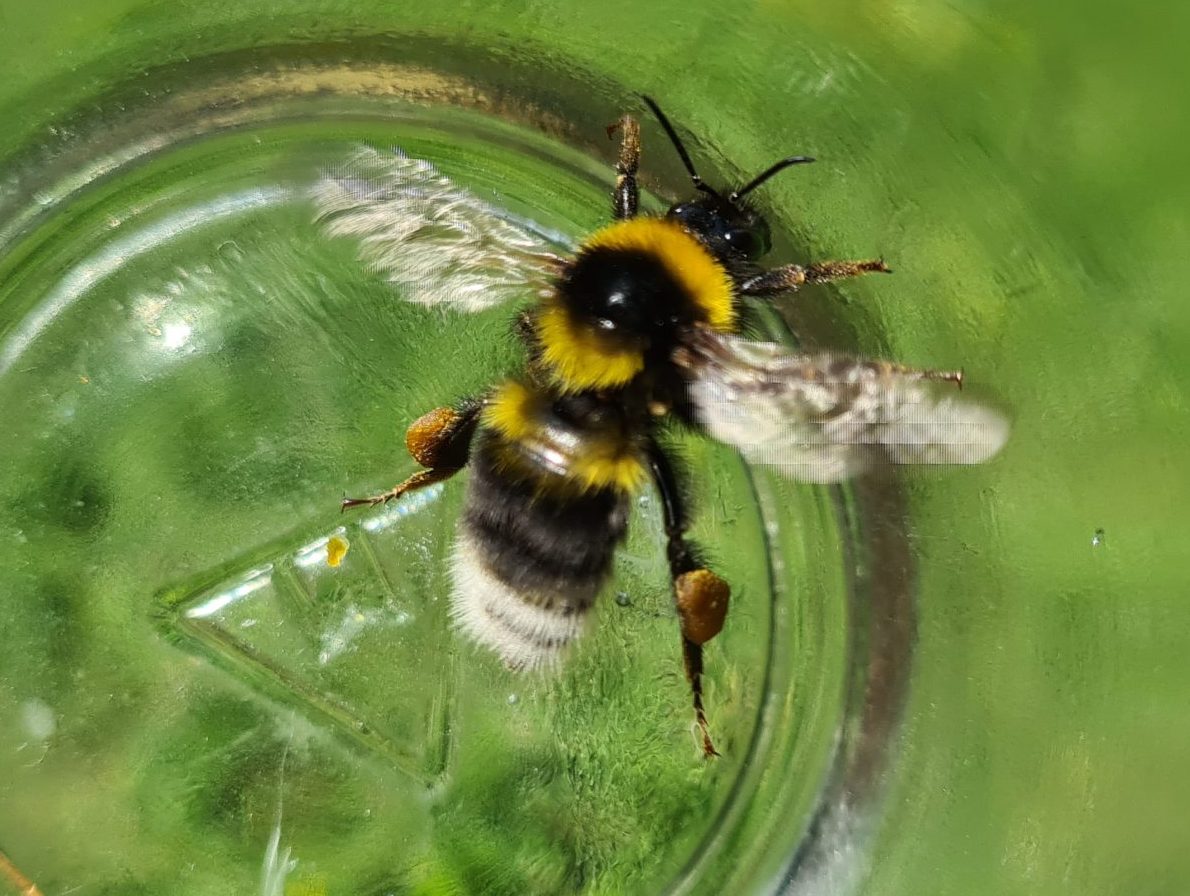
Garden bumblebee (Bombus hortorum) – queen
Photo: O. Hercog 27/6/2021

Buff-tailed bumblebee (Bombus terrestris) – queen
Photo: O. Hercog 27/6/2021
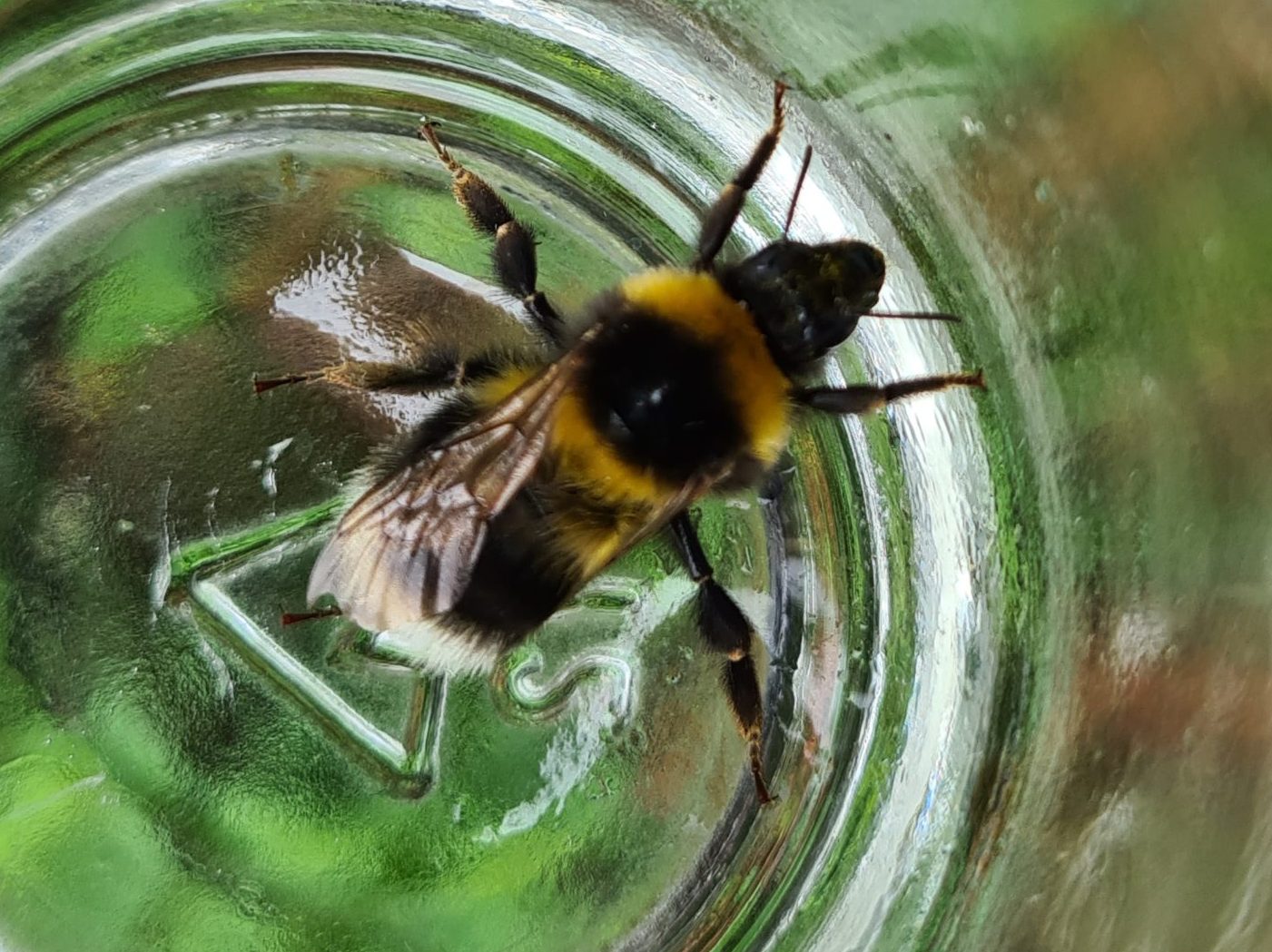
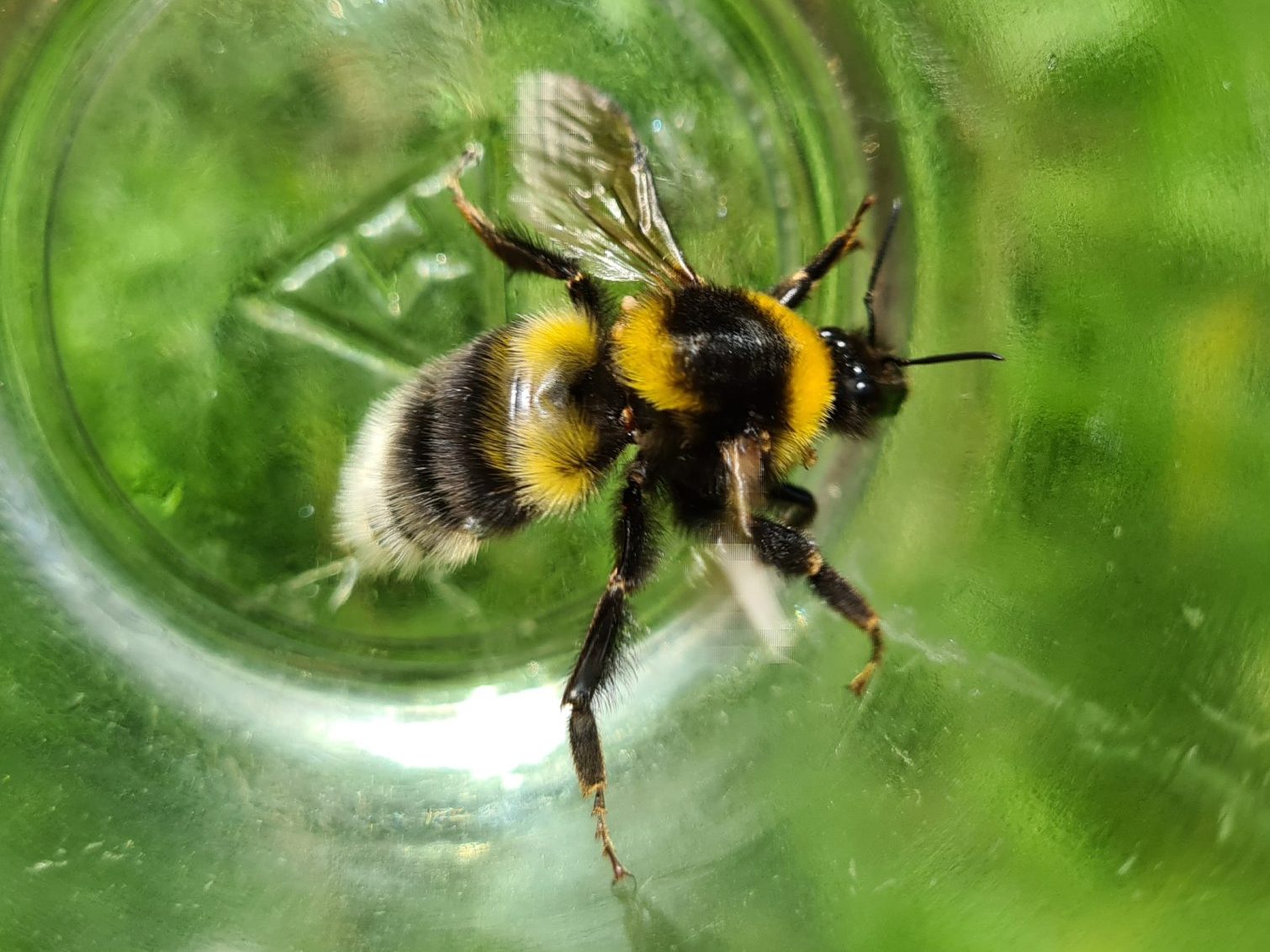
Garden bumblebee (Bombus hortorum) – worker
Photo: O. Hercog 29/8/2021

Buff-tailed bumblebee (Bombus terrestris) – worker
Photo: O. Hercog 3/7/2021
Garden bumblebee – (Bombus hortorum – male)
Photo: O. Hercog 18/07/2021

Buff-tailed bumblebee (Bombus terrestris) – male
Photo: O. Hercog 24/7/2021
Occurrence
- Palaearctic species (Europe, North Africa to Central Asia)
- In the Czech Republic, it is ubiquitous even in mountainous areas, and is one of the most common bumblebee species here.
- Inhabits open habitats in lowland and mid-altitude cultural landscapes (gardens, meadows, orchards), forest edges
- It occurs throughout Europe
Biotop
- mesophilic meadows (neither too wet nor too dry) to peat bogs, spruce mountain forests
- is common in anthropocenoses (in human-made environments)
Life cycle
- Type:
morning - Number of generations per season:
– one or two per season
– new mothers hibernate from August, but some, instead of hibernating, are building their own nests - Queen bees looking for nesting sites:
– from the beginning of March (according to temperatures) - Nesting of queens:
– March to April - New queen mothers are emerging:
– from mid-July depending on the weather and food sources - The males appear:
– from mid-July
– males appear after the mothers, and then no further mothers are born (the original mother is no longer in the nest or no longer lays fertilised eggs from which workers and mothers hatch.
– some males later originate from unfertilised eggs laid by workers - The nest ends:
– in favourable conditions (depending on the weather and food sources) until September (first generation)
– the nest often ends early if the workers cannot replenish the supplies consumed by the new queens quickly enough
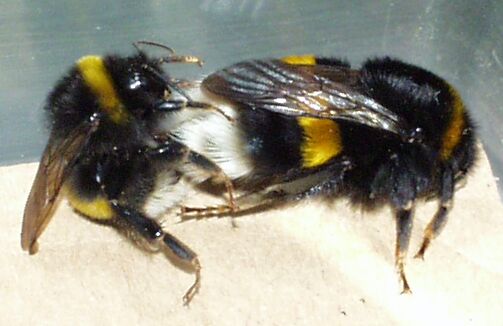
This is a good view of how bumblebees mate. The male will not connect with the queen until she opens her sting chamber and extends her curved stinger. The stinger is curved upwards, so the male has no chance in any other position.
If the male sits on the female's back, it's not mating, at most it's the male attempting to... in vain.„-)

Field bumblebee – (Bombus terrestris) – mating
Photo: V. Ptáček
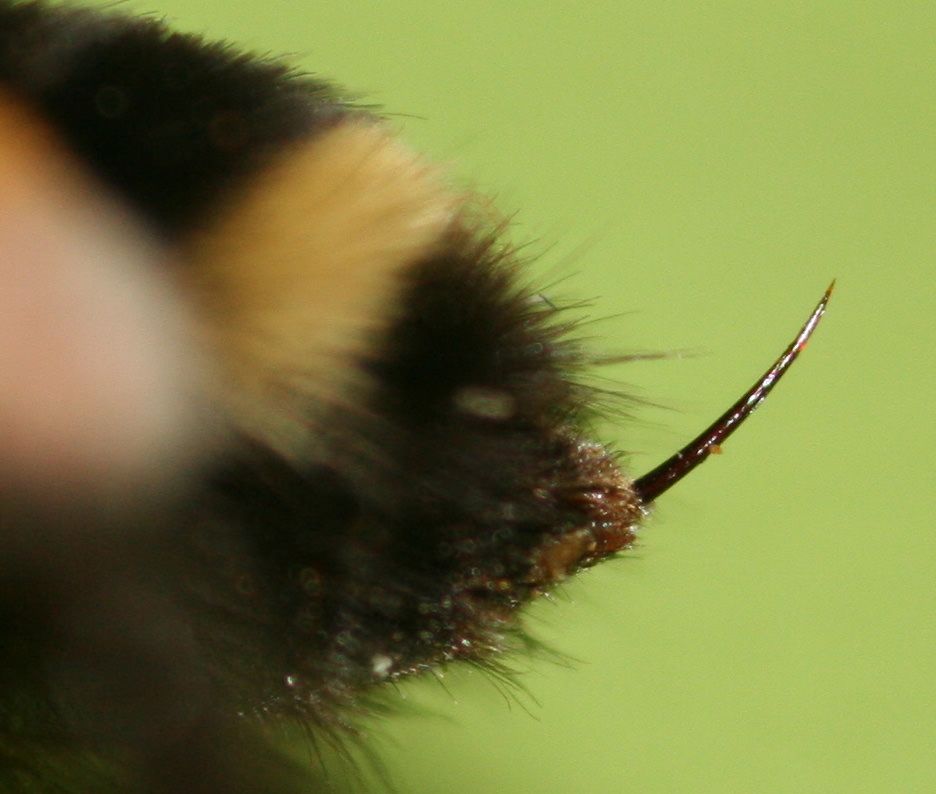
Bumblebee stinger
Photo: D. Greenwood
In ground-nesting bumblebees, returning to the birthplace of the mothers is common. Likewise, it is common for a mother to encounter a mother of another species that is also interested in an attractive nesting site, or has already settled there.
In such a fight, the stronger one usually wins, and very often such fights end in death – for one or both opponents.
Jaromír Čížek describes instances where he found a large number of dead queens at an interesting nesting site.
You can read about mothers returning to their home towns HERE
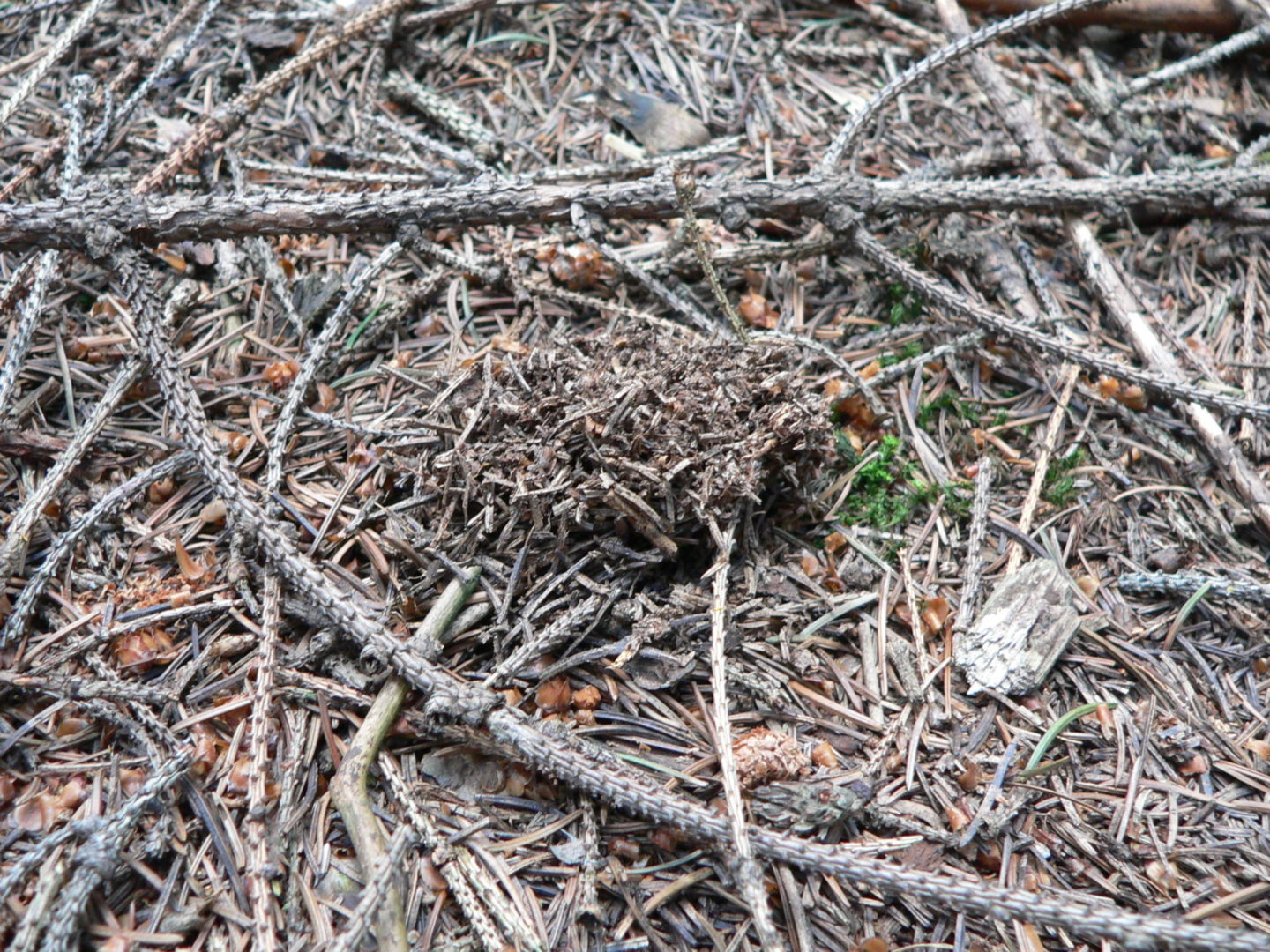
Young bumblebee mothers find a suitable place for overwintering – hibernation – soon after mating. They very often choose a spot on the edge of a forest. There, they have a chance to hibernate in dry conditions. Here, they excavate a shallow chamber for overwintering (hibernaculum) in the forest floor litter.

Typical example of a bumblebee nest (hibernaculum) of the buff-tailed bumblebee (Bombus terrestris)
Photo: J. Čížek
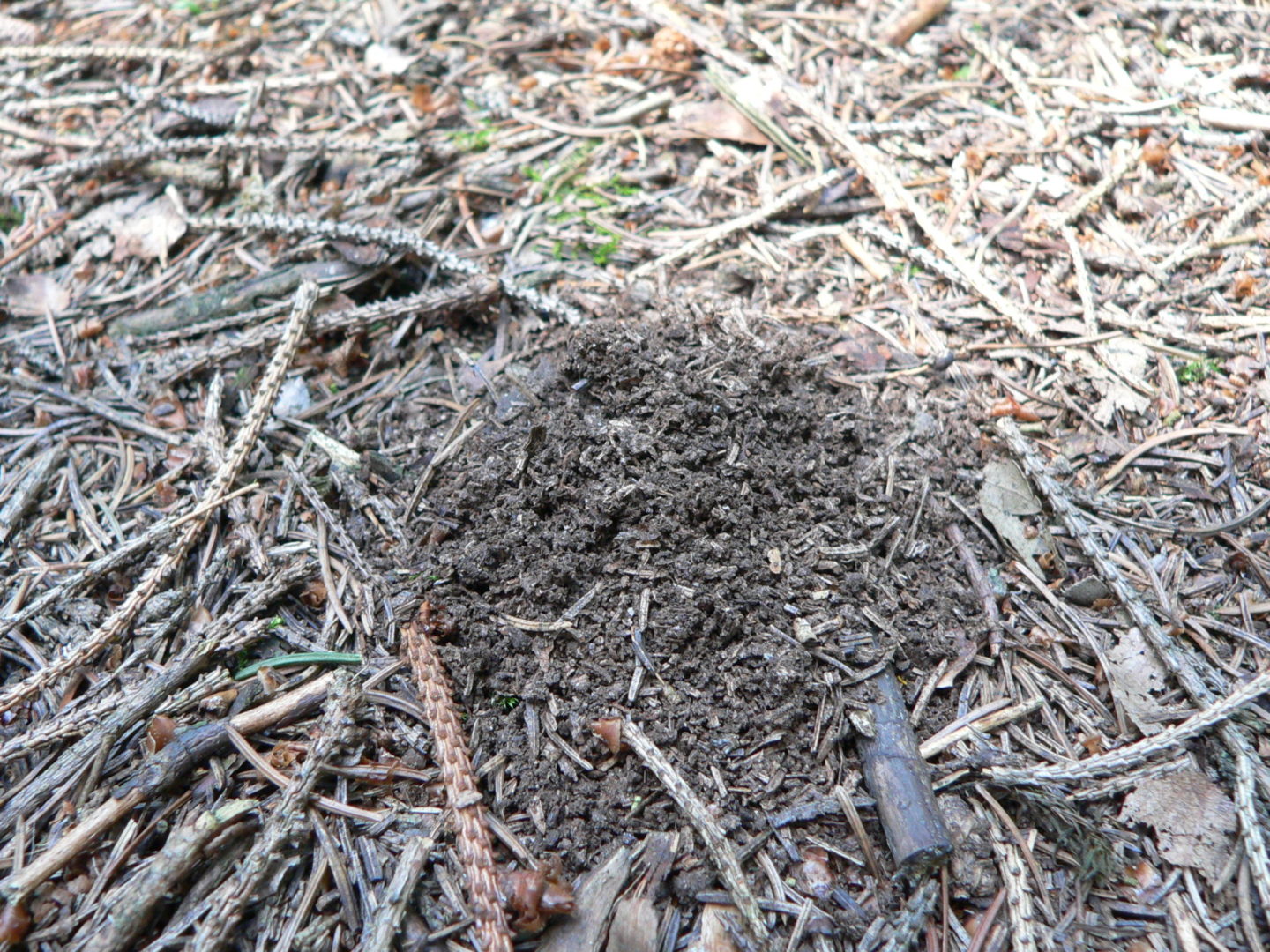
The hibernaculum of the buff-tailed bumblebee (B. terrestris)
Photo: J. Čížek
Larval feeding
- Dust collectors (pollen stores) The queen and workers scrape pollen from the pollen baskets into storage chambers formed from empty cocoons or as wax structures in the centre of the nest. It appears that bumblebees use various methods to create these stores. What is important, however, is that they store the pollen and distribute it from these chambers.
In the storage cells, the pollen is trodden and shaped with their mandibles to reduce the surface area in contact with the air. Worker bees do not seal the storage cells.
This protects against oxidation and degradation. For feeding the larvae, it is taken from here and mixed with nectar; the mixture is fed to the larvae through feeding orifices.Ground bumblebees are a polylektic species – They don't just prefer one plant, but a wide spectrum of different flowering plants; Consequently, various colours and shades of pollen appear in the pollen stores, brought back by the workers. This is because bumblebees do not cooperate like bees, and each worker collects pollen independently, without sharing information about its source with her sisters.
Ground bumblebees are an early-season species; they are commonly seen flying around early-flowering trees and a variety of honey plants.
In the following video, you can see what such pollen reserves might look like.
Nesting site
- Nests
– in the ground in abandoned nests of small mammals (rodents, moles),
– in various burrows up to 1.5 metres below the surface, though sometimes closer to the surface (20–30 cm), depending on how the previous occupant had prepared the burrow
Nest size
- Mostly strong nests
- Number of individuals: 100–600 (in the wild), 1,000+ in the laboratory
Visiting bumblebees
Large earth bumblebee (Bombus terrestris)
Bohemian cuckoo-bee
You will read more in the virgin pačmelák HERE
Bumblebee attack strategy:
- The queen of the cuckoo bumblebee (*B. vestalis*) seeks a developed host nest, requiring many workers.
- It will kill the original mother, spray the pheromones on the strong workers, and they will fight each other.
- If any survive by chance, the remaining workers will enslave them.
- However, cases of coexistence between a bumblebee queen and a bumblebee are known.
- you will read more about the strategy of that rascal HERE
How to tell the difference between a bumblebee and a 'pačmelák' (which is often used colloquially to refer to any larger bee, including bumblebees, or sometimes more specifically to certain types of larger, fuzzy bees).
The Vestal bumblebee (Bombus vestalis), sometimes alsoSummer bee-fly
- You can read more about the virgin pačmelák HERE
- Unlike the Buff-tailed bumblebee (B. terrestris):
– no workers' dormitories
a distinctive large round head
– absence of yellow band on the 2nd tergite
– neither females nor males have pollen baskets on the last pair of legs
dark wings
The male differs from the female
when flying it makes a loud rattling noise

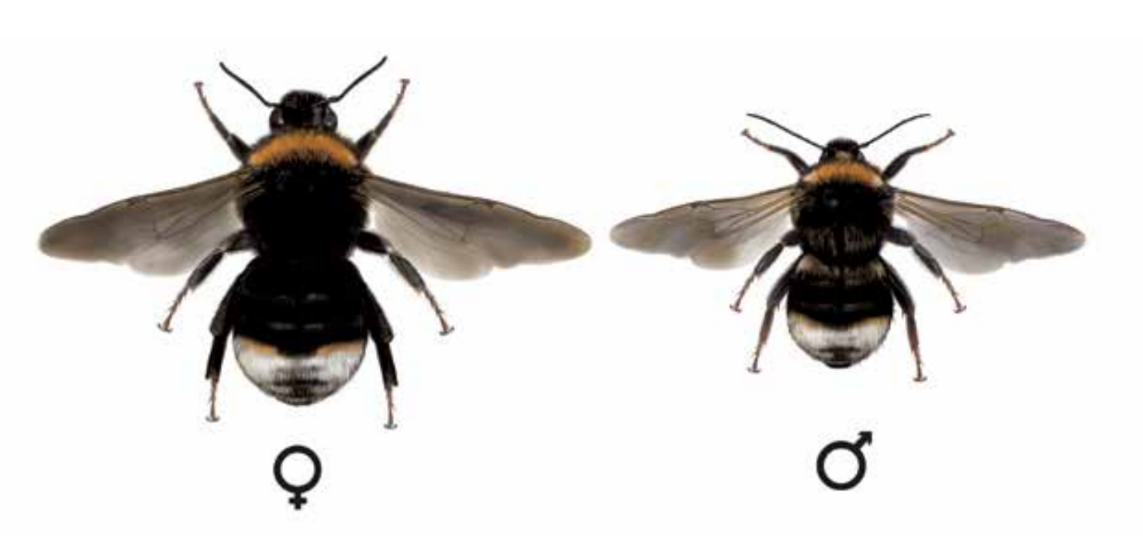
Large earth bumblebee (Bombus terrestris)
Source: Sikora A., Michołap P., Kadej M., Sikora M. Tarnawski D. 2018 „Bees in the city: Bumblebees of Wrocław“, Publ. Association Nature and Man.
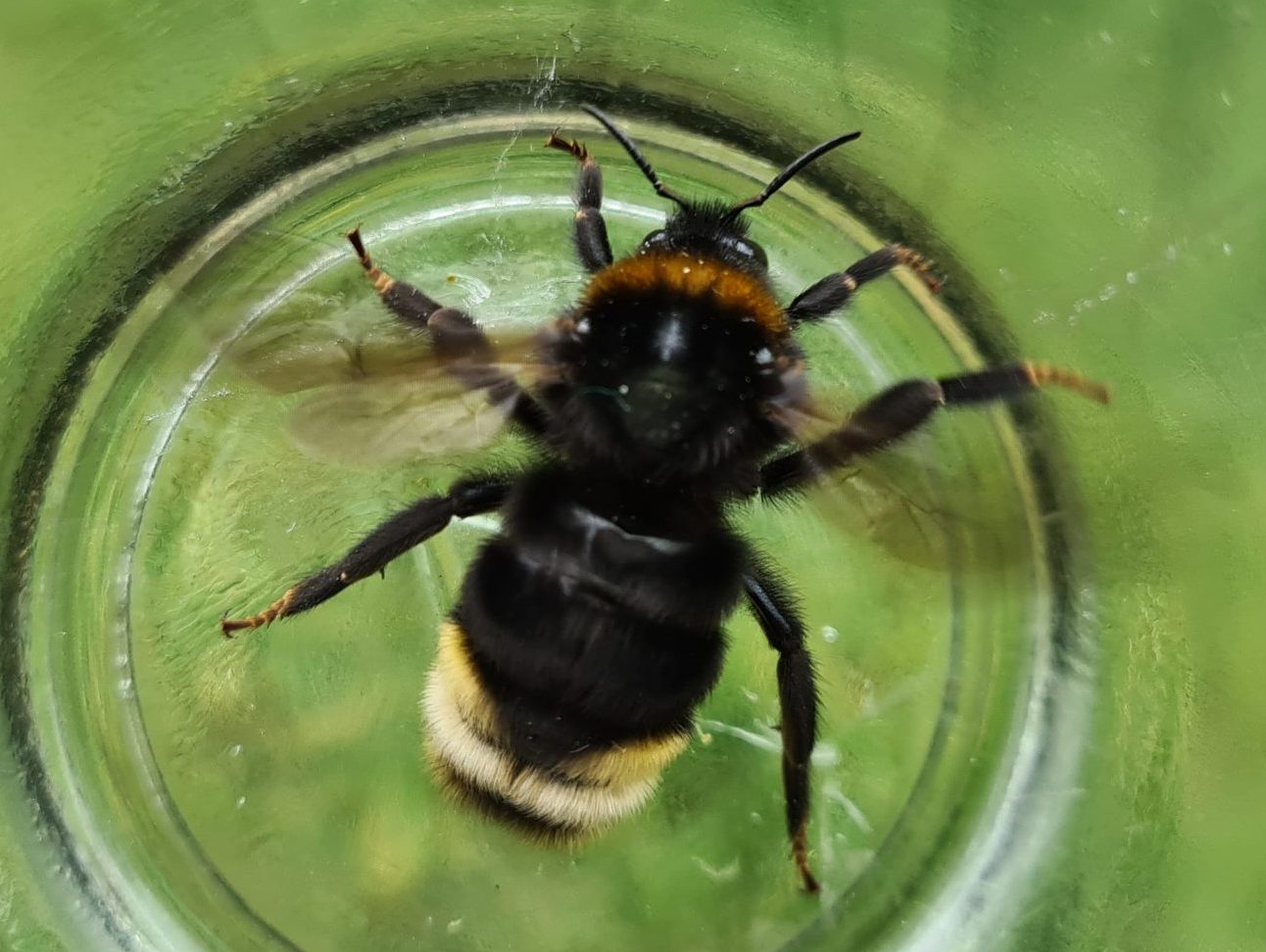
Buff-tailed bumblebee
Source: Sikora A., Michołap P., Kadej M., Sikora M. Tarnawski D. 2018 „Bees in the city: Bumblebees of Wrocław“, Publ. Association Nature and Man.
Note the differences in colouration and the typical bumblebee head.

Vestal Cuckoo Bee (Bombus vestalis) – female
Photo: O. Hercog 01/08/2021

Buff-tailed bumblebee (Bombus terrestris) – queen
Photo: O. Hercog 27/6/2021
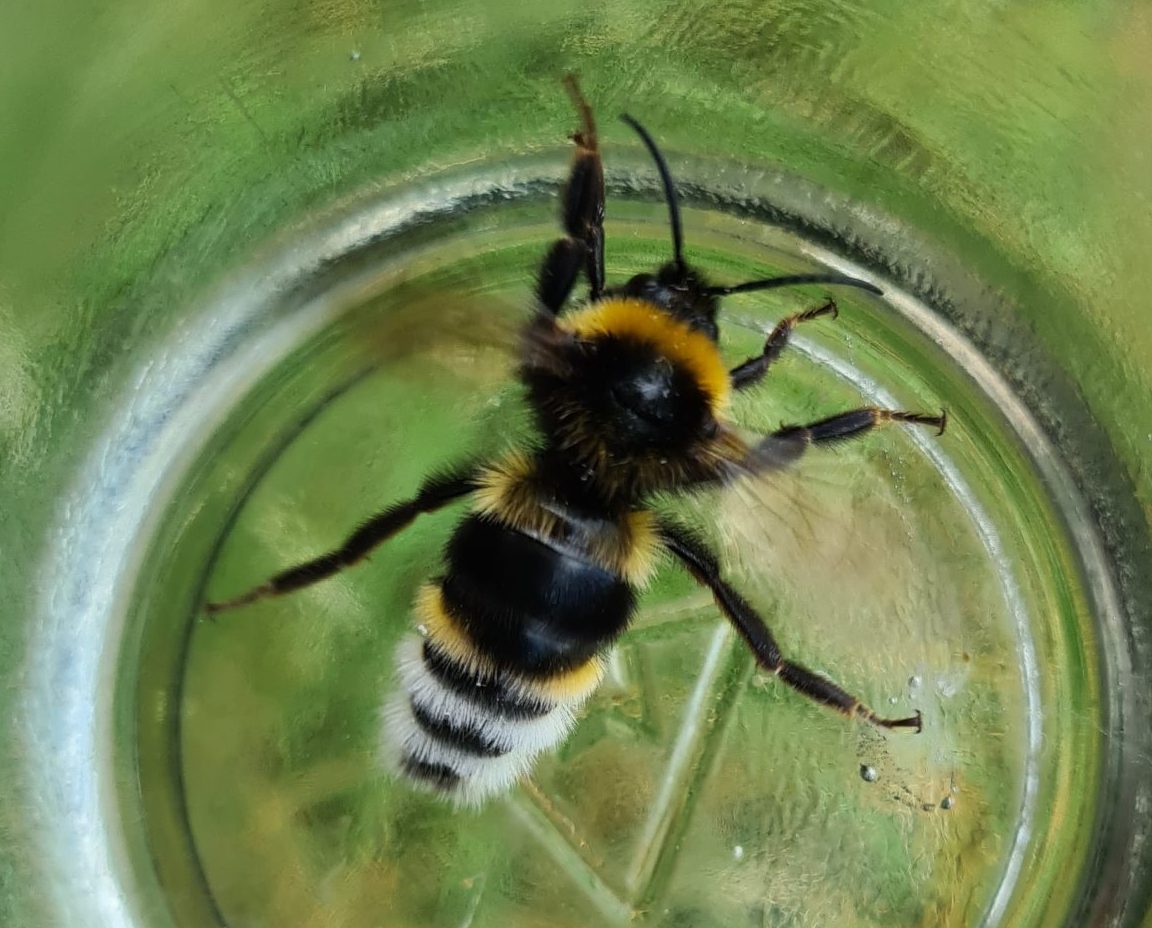
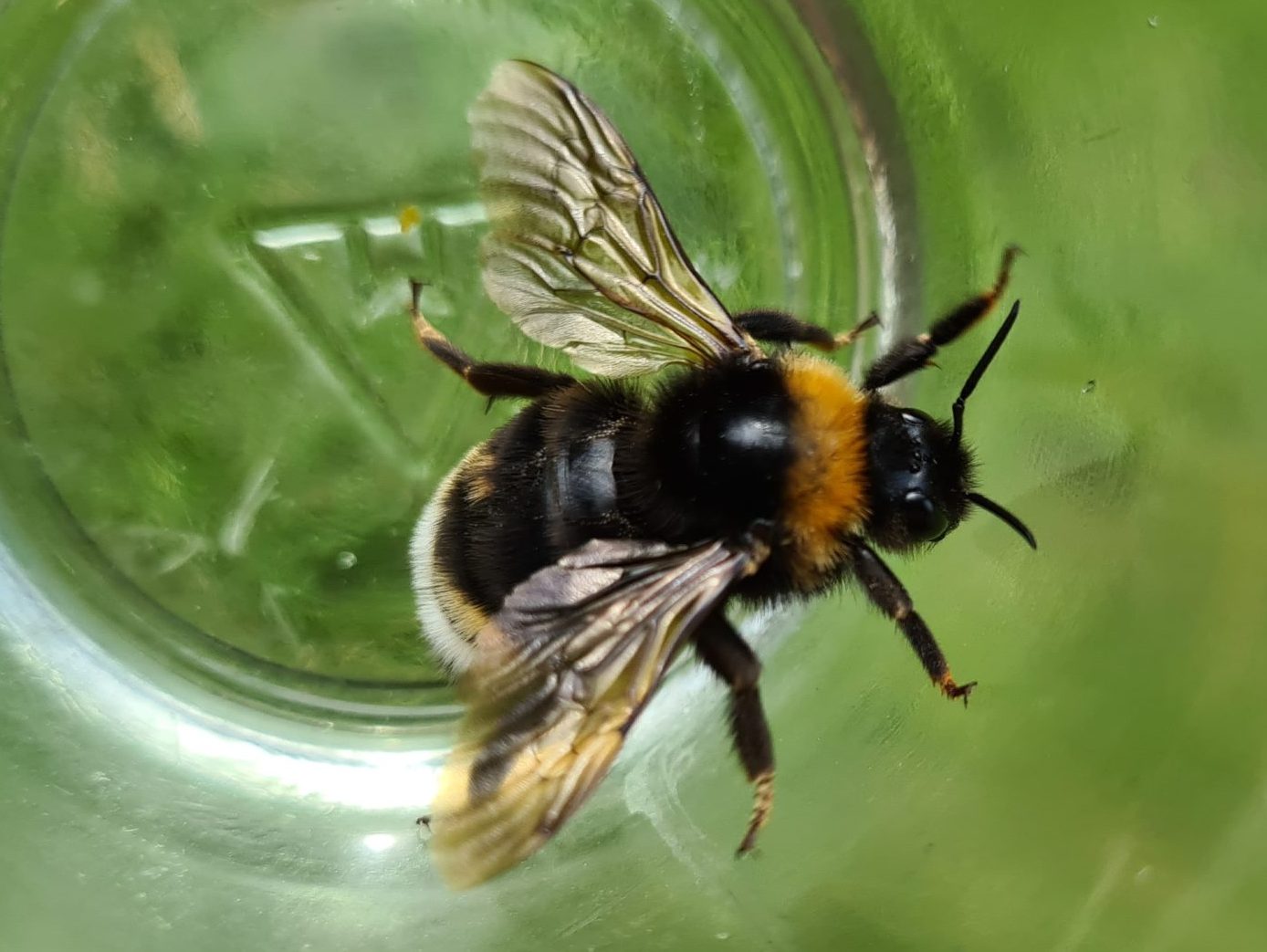
Brood cuckoo bumblebee (Bombus vestalis) – male
Photo: O. Hercog 24/7/2021

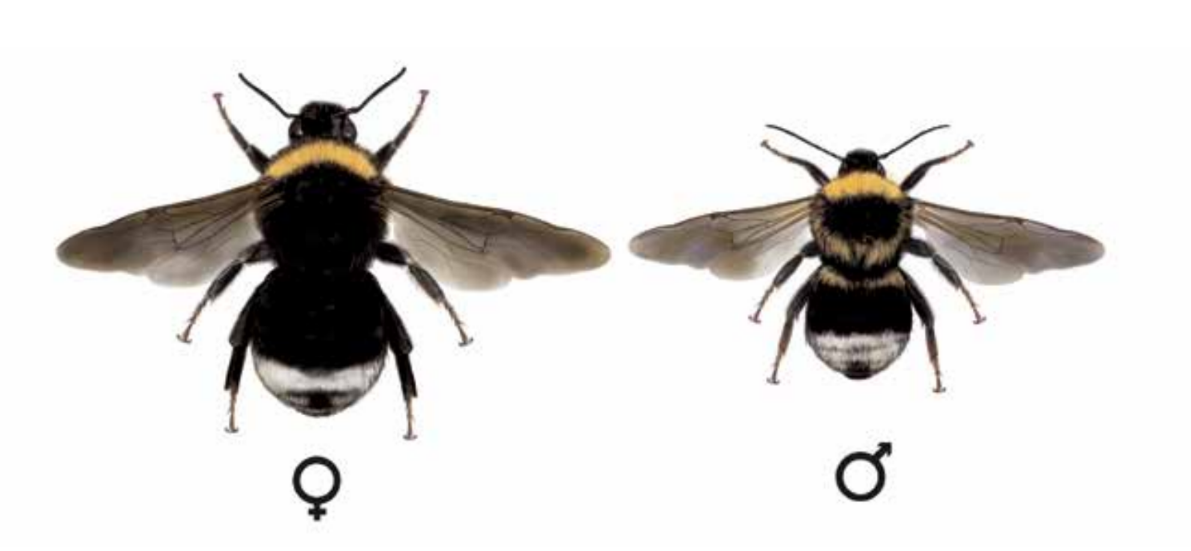
Buff-tailed bumblebee (Bombus terrestris) – male
Photo: O. Hercog 24/7/2021
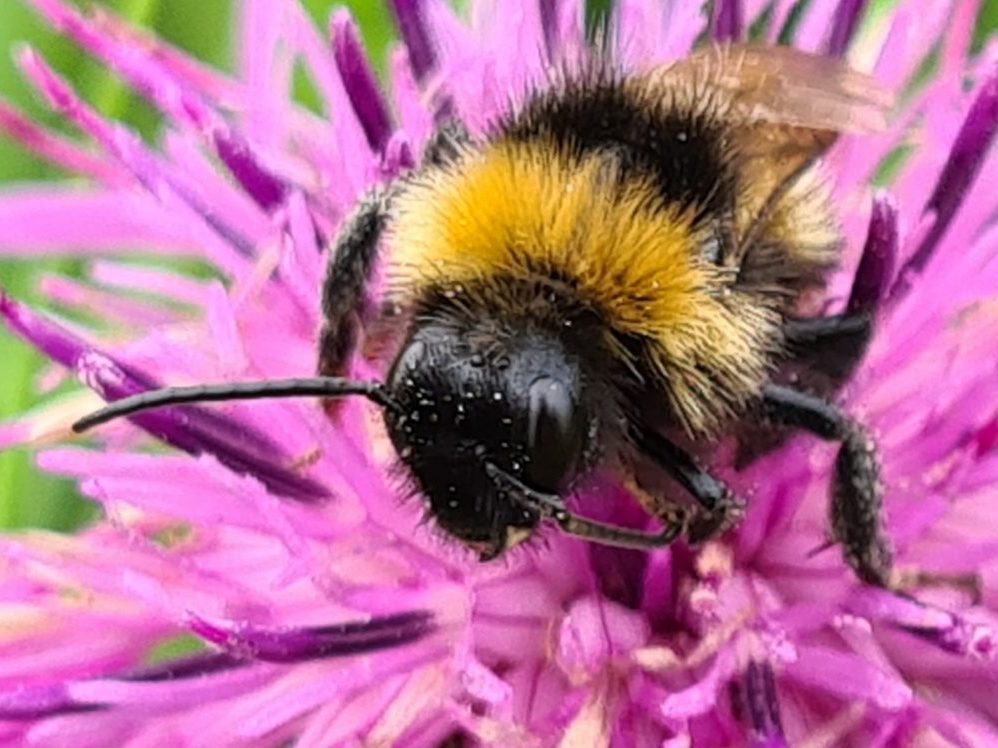
The head is in most cases a reliable characteristic for distinguishing between the bumblebee and the cuckoo bumblebee. You can see for yourselves that cuckoo bumblebees have a large and robust head. Very often it is precisely their head that will help you with their detection.
Here is a comparison of the head of the Cuckoo bumblebee (B. vestalis) and the Buff-tailed bumblebee (B. terrestris)

Buff-tailed bumblebee (Bombus vestalis) – male – head
Photo: O. Hercog 04/08/2021

Buff-tailed bumblebee (Bombus terrestris) – male
Photo: Animal photos
And on the example of the buff-tailed bumblebee (B. vestalis), you can see the large, typical head of a bumblebee.

Vestal Cuckoo Bee (Bombus vestalis) – female
Photo: Ondřej Hercog 27/6/2021
Czech bumblebee (Bombus/Psithyrus bohemicus)
- You can read more about the Czech bumblebee (B. bohemicus) HERE <COMING SOON:
The following text contains information for comparison purposes only.
- Unlike the Buff-tailed bumblebee (B. terrestris):
– no workers' dormitories
– has a pronouncedly large round head
– missing yellow tape on the 2nd tergite
– neither females nor males have pollen baskets on the last pair of legs
– dark wings cast
The male differs from the female
when flying it makes a loud rattling noise

Bohemian cuckoo-bee
Source: Sikora A., Michołap P., Kadej M., Sikora M. Tarnawski D. 2018 „Bees in the city: Bumblebees of Wrocław“, Publ. Association Nature and Man.
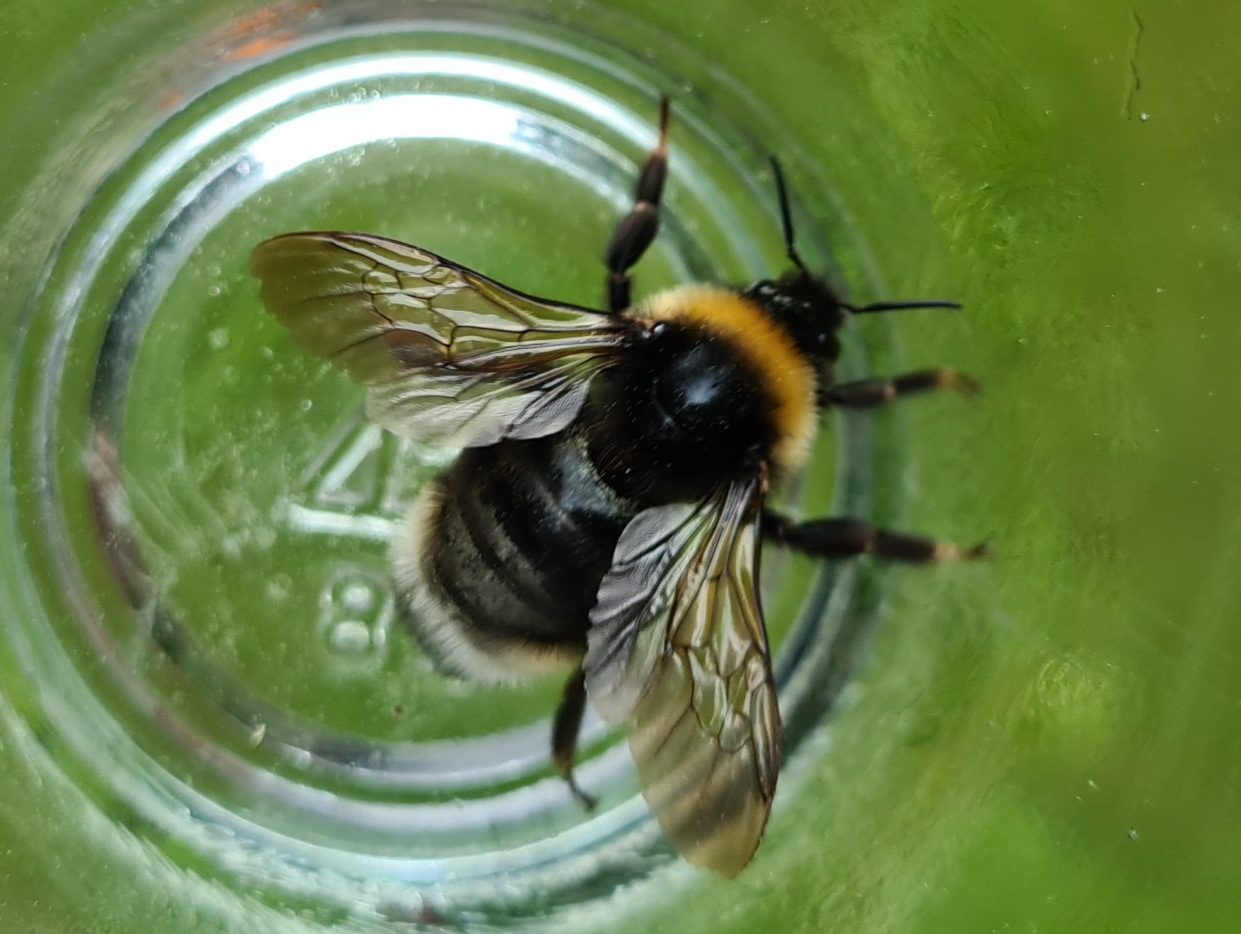
Buff-tailed bumblebee
Source: Sikora A., Michołap P., Kadej M., Sikora M. Tarnawski D. 2018 „Bees in the city: Bumblebees of Wrocław“, Publ. Association Nature and Man.

Czech cuckoo bumblebee (Bombus bohemicus) – female
Photo: O. Hercog 05/06/2021

Buff-tailed bumblebee (Bombus terrestris) – queen
Photo: O. Hercog 27/6/2021
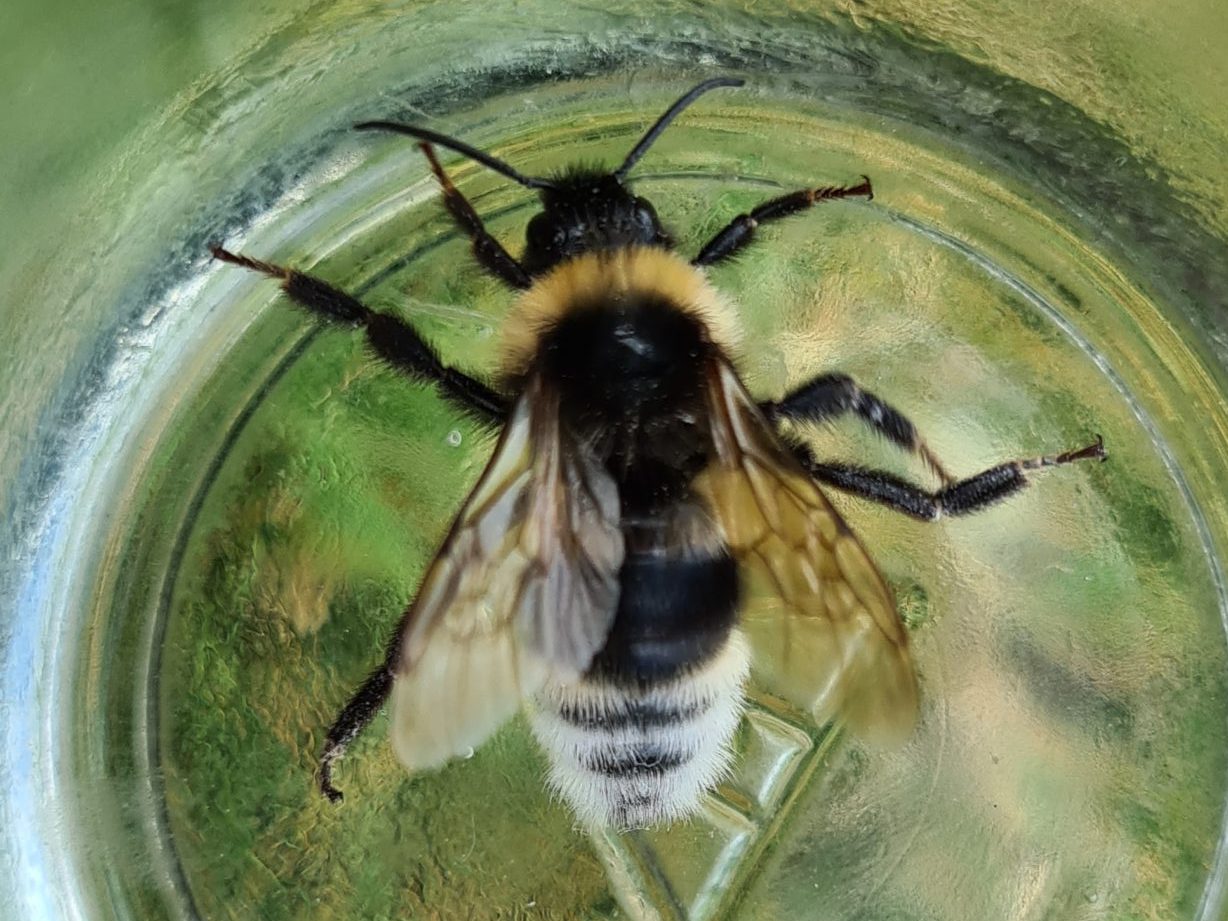
Czech bumblebee (Bombus bohemicus) – male (head)
Photo: O. Hercog – 25/7/2021

Buff-tailed bumblebee (Bombus terrestris) – male
Photo: O. Hercog 24/7/2021
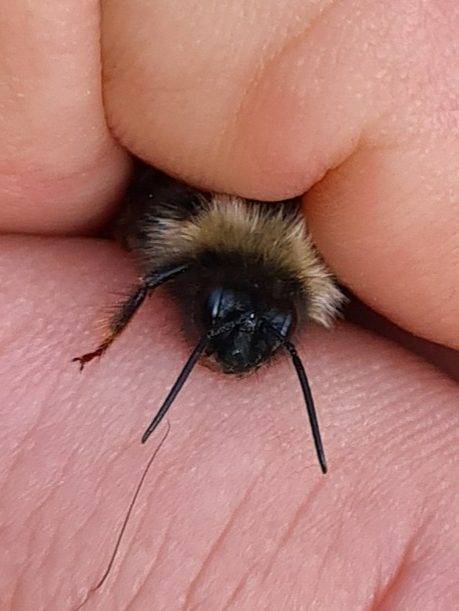
Here too, note the difference in the shape of the bumblebee and the cuckoo bumblebee's head.

Czech Cuckoo Bee (Bombus bohemicus) – male – head
Photo: O. Hercog – 23/7/2021

Buff-tailed bumblebee (Bombus terrestris) – male
Photo: Animal photos
Information on breeding
- Fright
– a larger nest is recommended, corresponding to a large nest (ideally internal volume 12-15l) - Hallway
– moderately long corridor, but it can also be longer (not fundamentally decisive)
– were successfully kept in a long-entrance hive (hive in a garage, flap on the outside wall) - Seating
– doesn't readily accept settling nestlings, the keeper often has to try several times - Mothers' return in spring after hibernation
common - Self-assembly in the hive
– quite common, mothers often inhabit nooks already occupied by other mothers
– it is common for an established mother to be attacked and for them to fight each other - Dietary requirements
– they are not demanding regarding the quality of the pollen source, they can also consume frozen pollen
– it is recommended to feed when new queens hatch and fly to mate, such queens can deplete their nest stores and hasten its demise
- Points of interest for breeding:
– it's quite common for breeders to only get a nest of males
– Tree bumblebees are often kept by hobby breeders. If they can be settled, or settle themselves, they are a rewarding subject for beginners to breed.
– it is also possible to acquire them from the market in the Czech Republic and make the start of breeding easier, but we deliver bumblebees from nature
You can read how to get bumblebees HERE . On the other hand, we recommend settling bumblebees from nature in your vicinity on the relevant page. They will be with you longer and will most likely be common buff-tailed bumblebees.
The nice thing about bumblebees of the Bombus terrestris type is that they gradually provide beekeepers with experience and encourage them to start breeding rarer species of bumblebees.
Interesting facts
- The buff-tailed bumblebee (Bombus terrestris) has 9 subspecies, with only the subspecies Bombus terrestris terrestris and the newly arrived terrestris dalmatinus naturally occurring on our territory.
- It sometimes happens that mothers in nature establish another nest without hibernation. The chances of breeding, mating, and hibernating mothers from a second cycle in the season are not great.
- In laboratory breeding, mothers of this species sometimes build nests even without hibernation.
- In laboratory conditions, sometimes more than 1000+ individuals (used for pollination services)
- Thanks to its unique ability to thrive on preserved food, this species is easily bred in the laboratory and is used for pollinating agricultural crops.
- Bumblebees from large-scale commercial farms, which are bred for pollination services, are unsuitable for free flight in gardens and orchards – they represent a potential threat to our wild bumblebees.
Not only as strong food competitors, but especially when occupying natural nesting sites, where they often kill the mother who discovered the nesting site earlier. You can read more about this topic HERE - You can also read about the risks of bumblebees from industrial farming ZD
Photos and videos
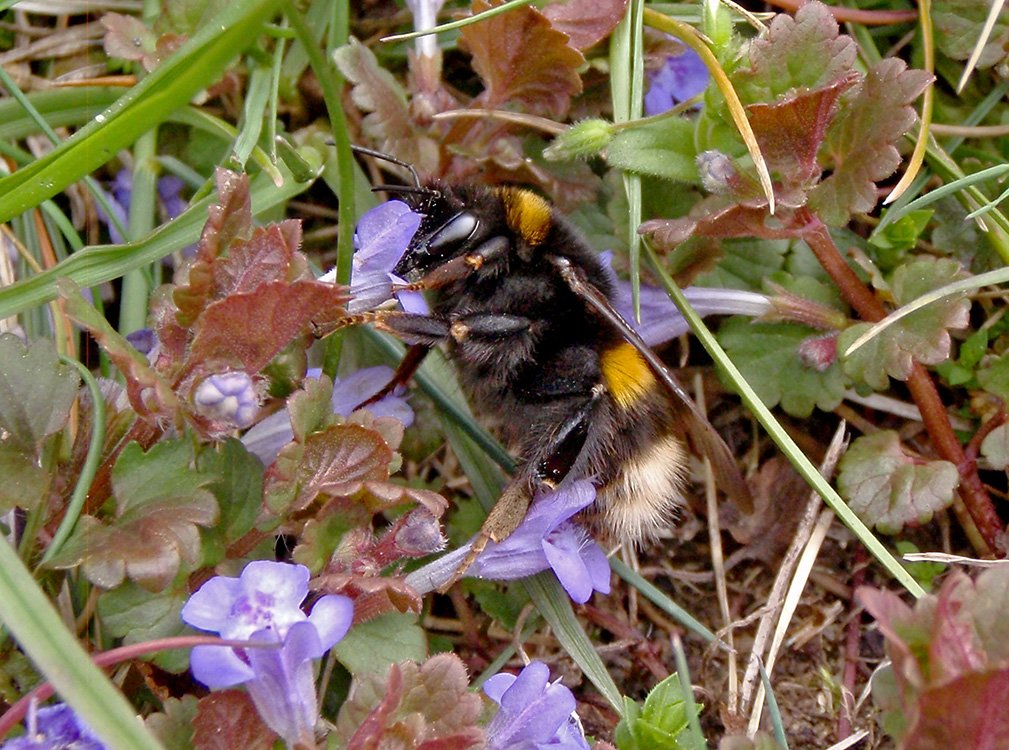
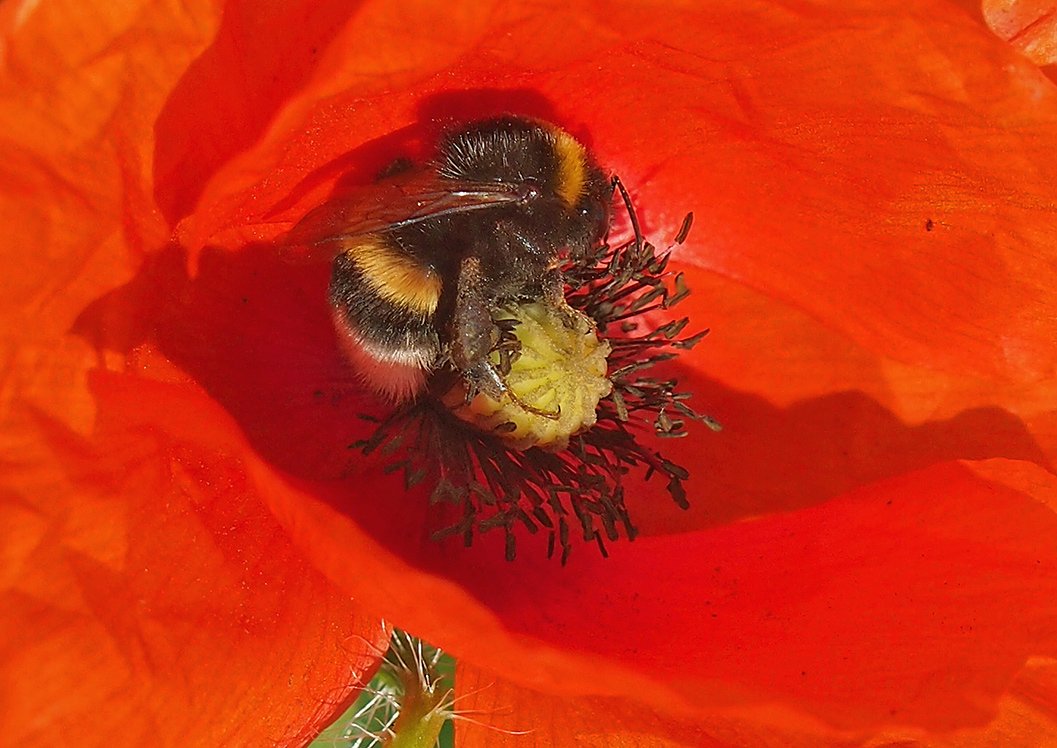
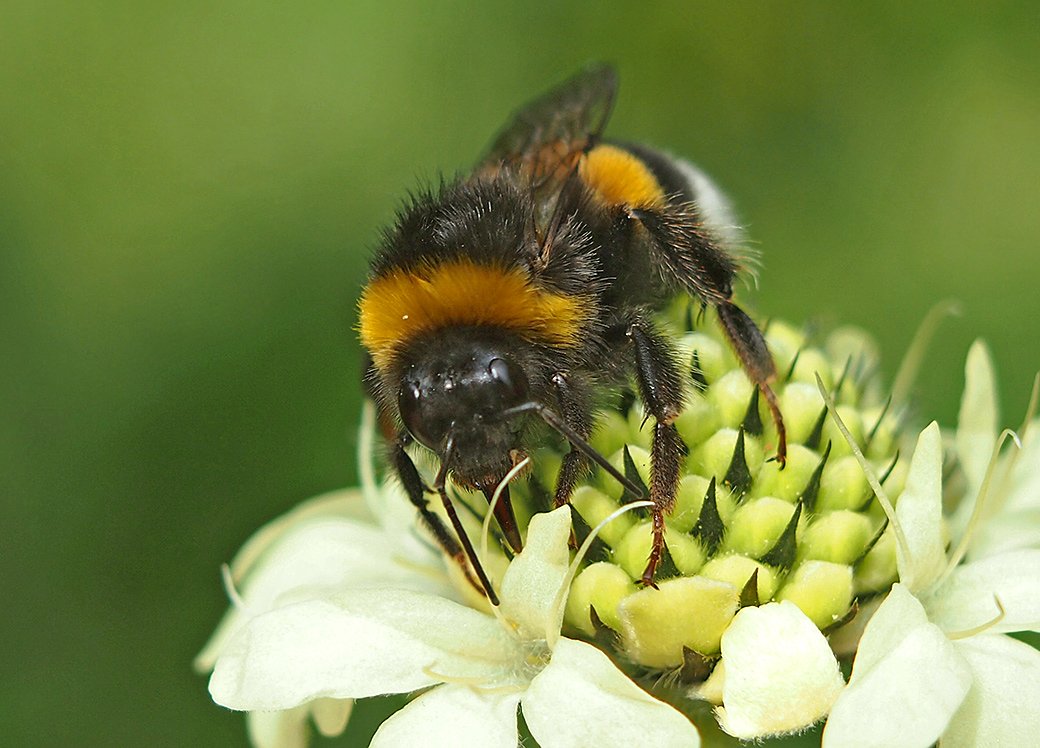
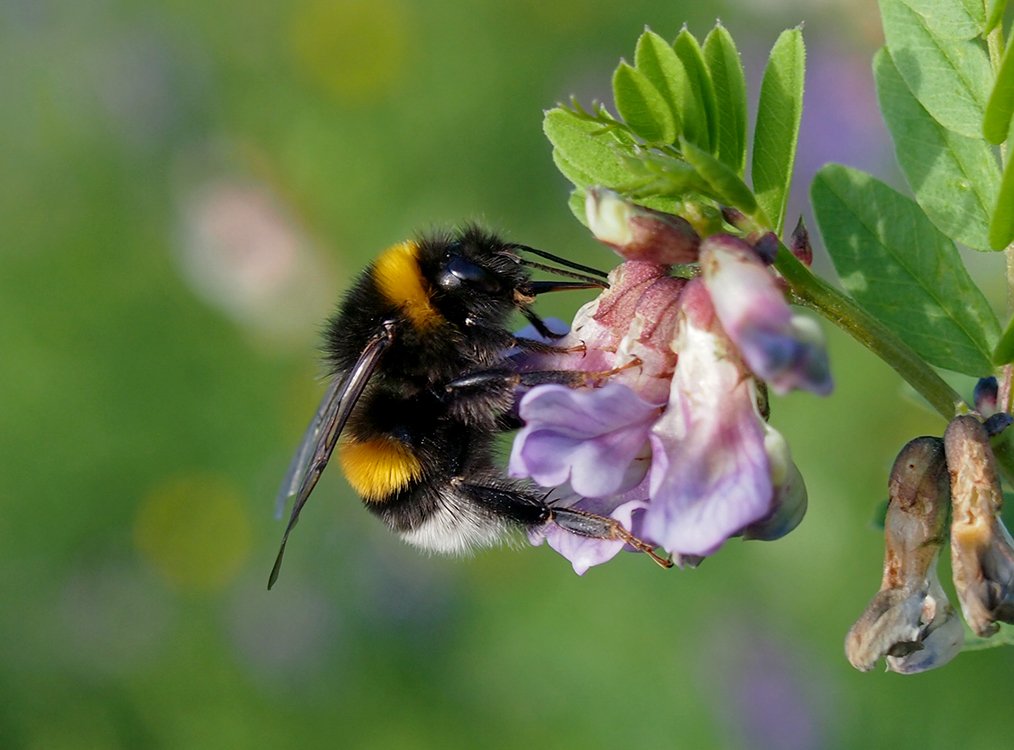
Hana Kříženecká's beautiful photographs give us a glimpse into the world of bumblebee queens, as well as workers and males.

Buff-tailed bumblebee (Bombus terrestris) – queen
Photo: H. Kříženecká
Buff-tailed bumblebee (Bombus terrestris) – queen
Photo: H. Kříženecká
Buff-tailed bumblebee (Bombus terrestris) – worker
Photo: H. Kříženecká
Buff-tailed bumblebee (Bombus terrestris) – worker
Photo: H. Kříženecká
We mustn't forget the males either. His short head is clearly visible in these shots.

Buff-tailed bumblebee (Bombus terrestris) – male
Photo: H. Kříženecká
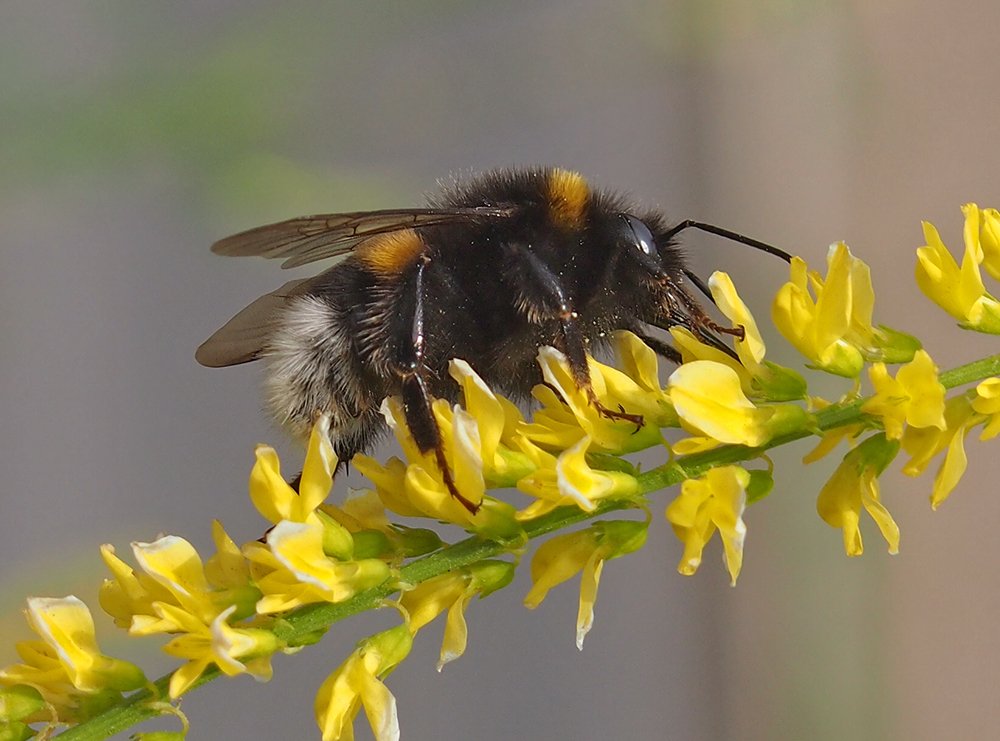
Buff-tailed bumblebee (Bombus terrestris) – male
Photo: H. Kříženecká
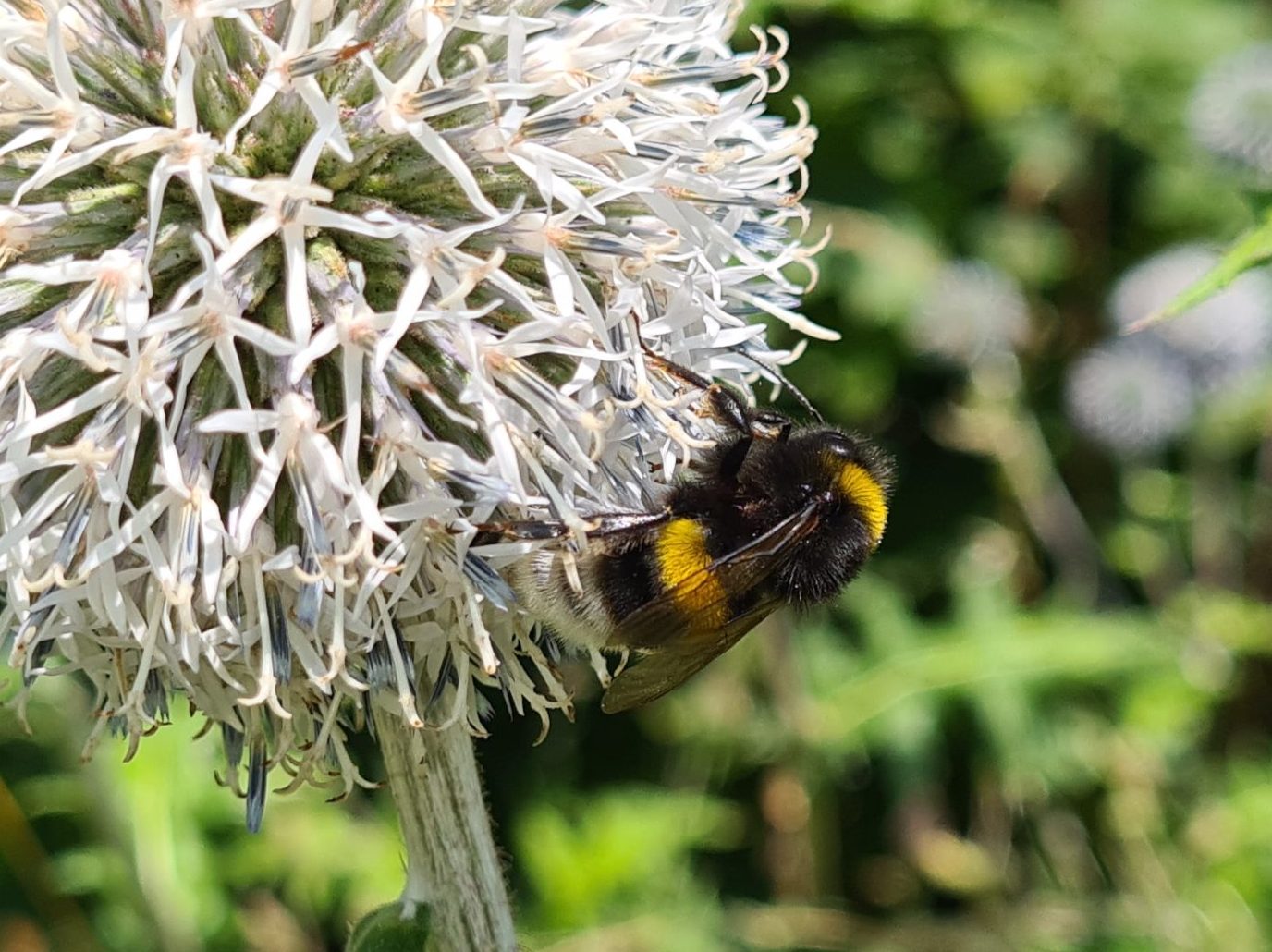
Buff-tailed bumblebee (Bombus terrestris) – male
Photo: O. Hercog 25/7/2021
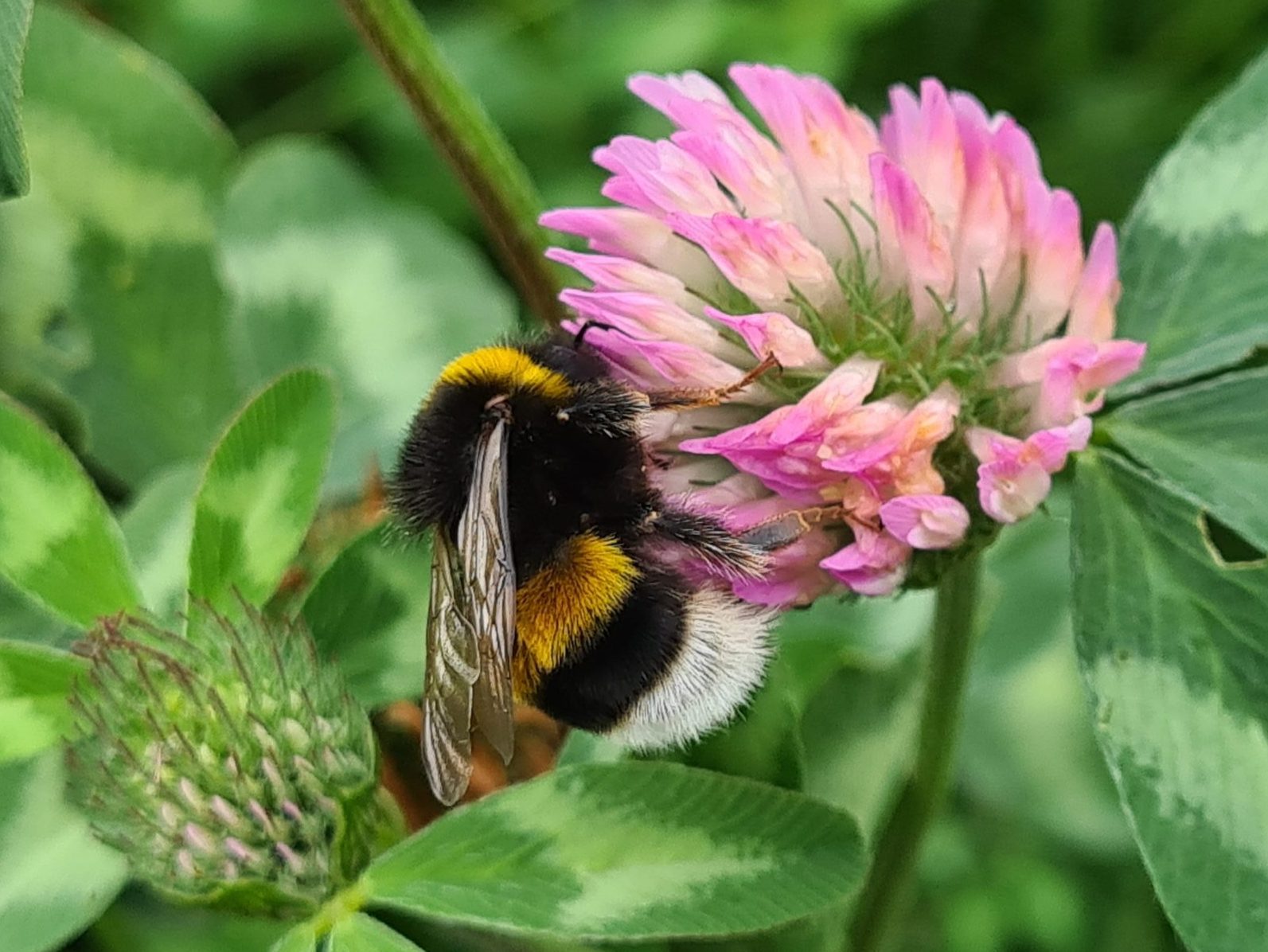
Buff-tailed bumblebee (Bombus terrestris) – male
Photo: O. Hercog 1/8/2021
In the next section, you will find video examples documenting the life stages of bumblebees.
See the videos at YouTube Bees PLUS and their accompanying text.
A young mother is returning to the hive with a load of pollen. The mother has had a so-called "swerve" and is behaving like a worker. She didn't manage to mate and so she will become an aunt.
Illustration of earth bumblebees mating.
See the videos at YouTube Bees PLUS and their accompanying text.