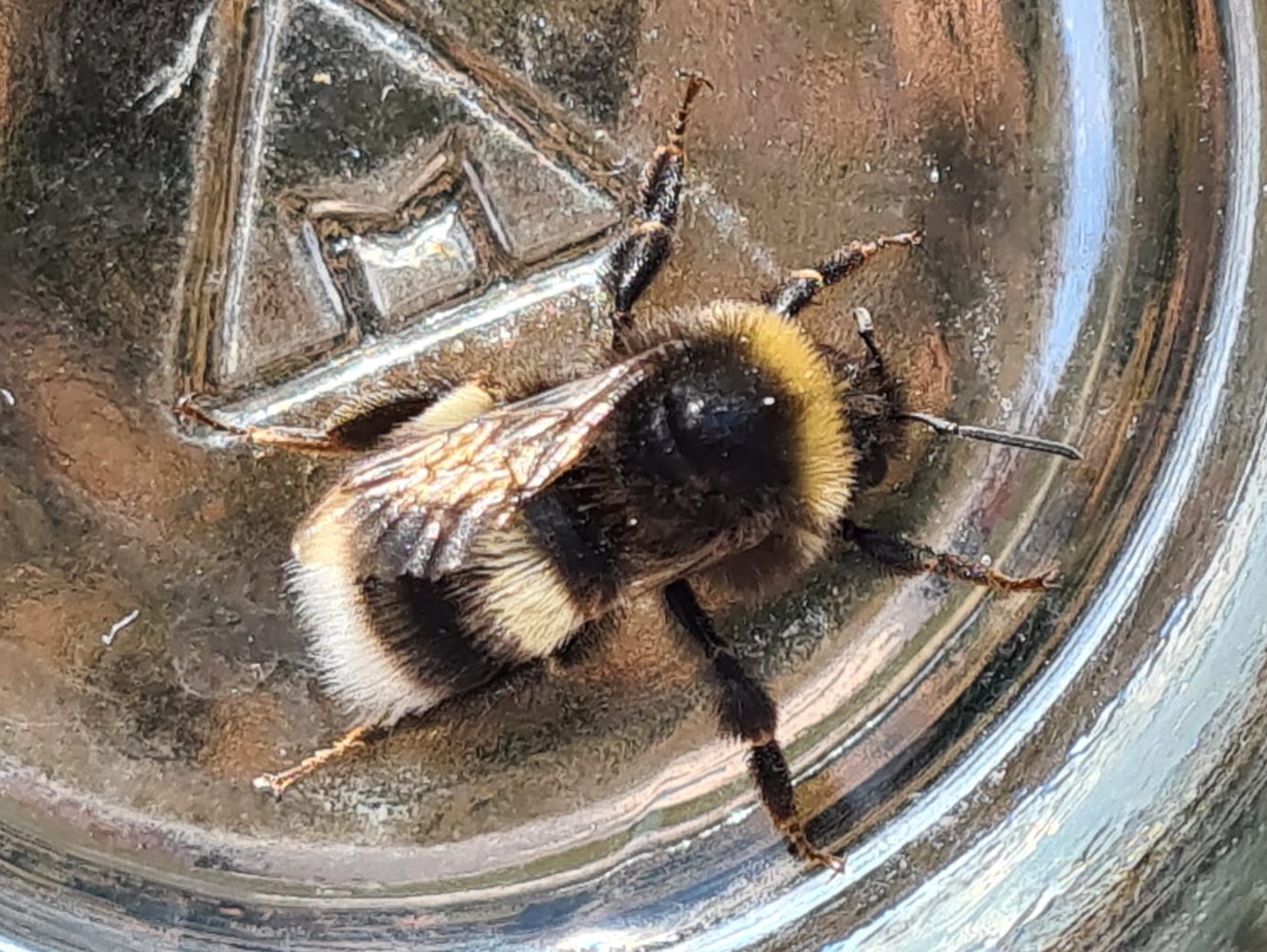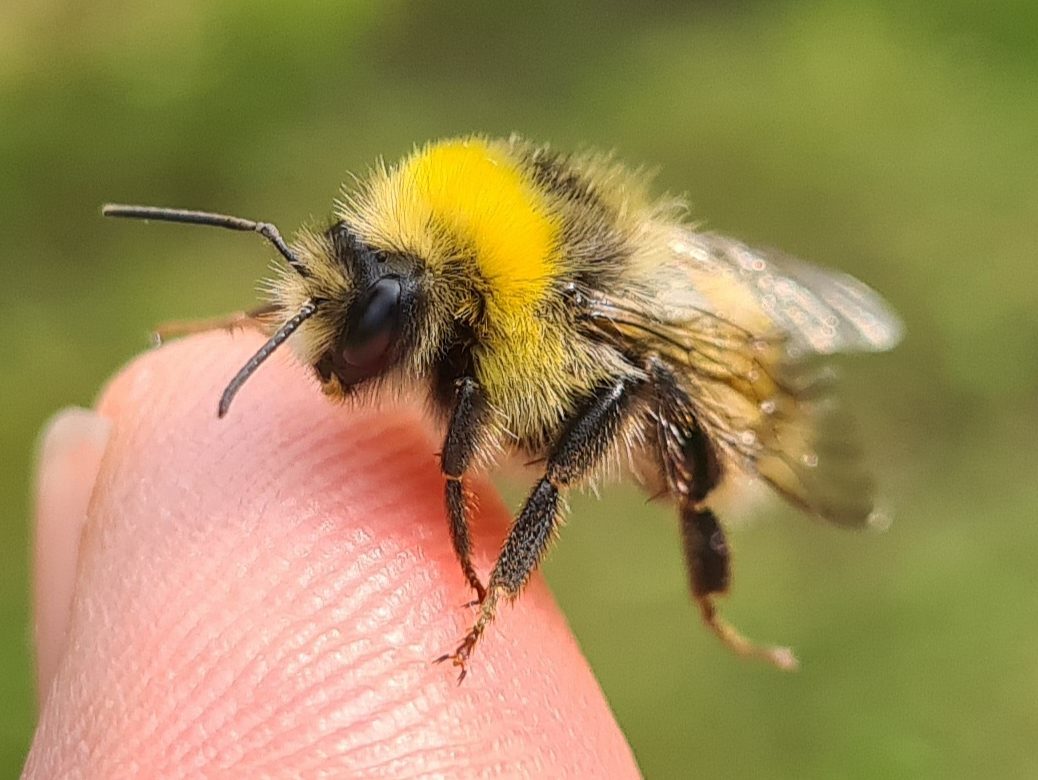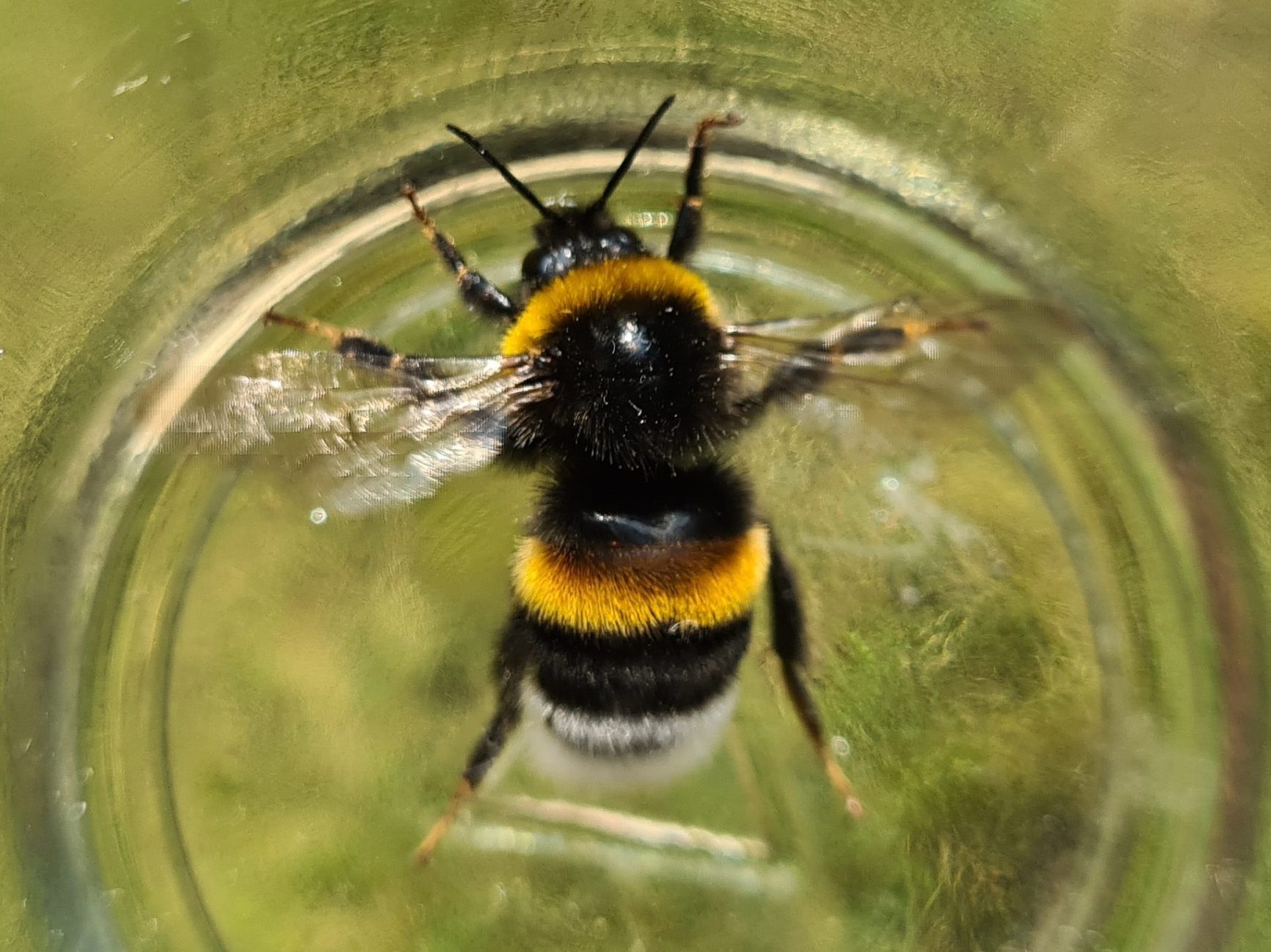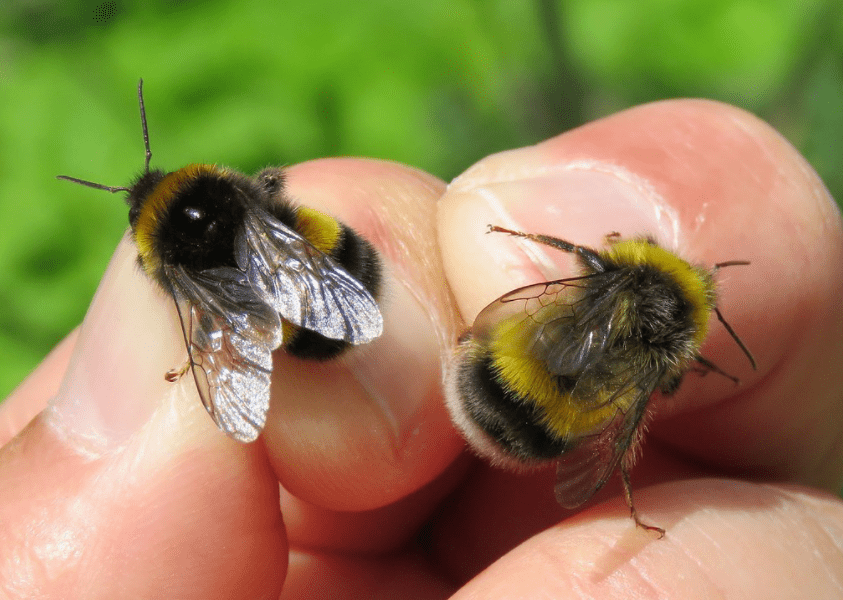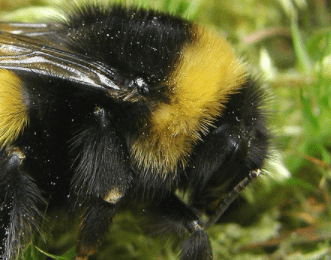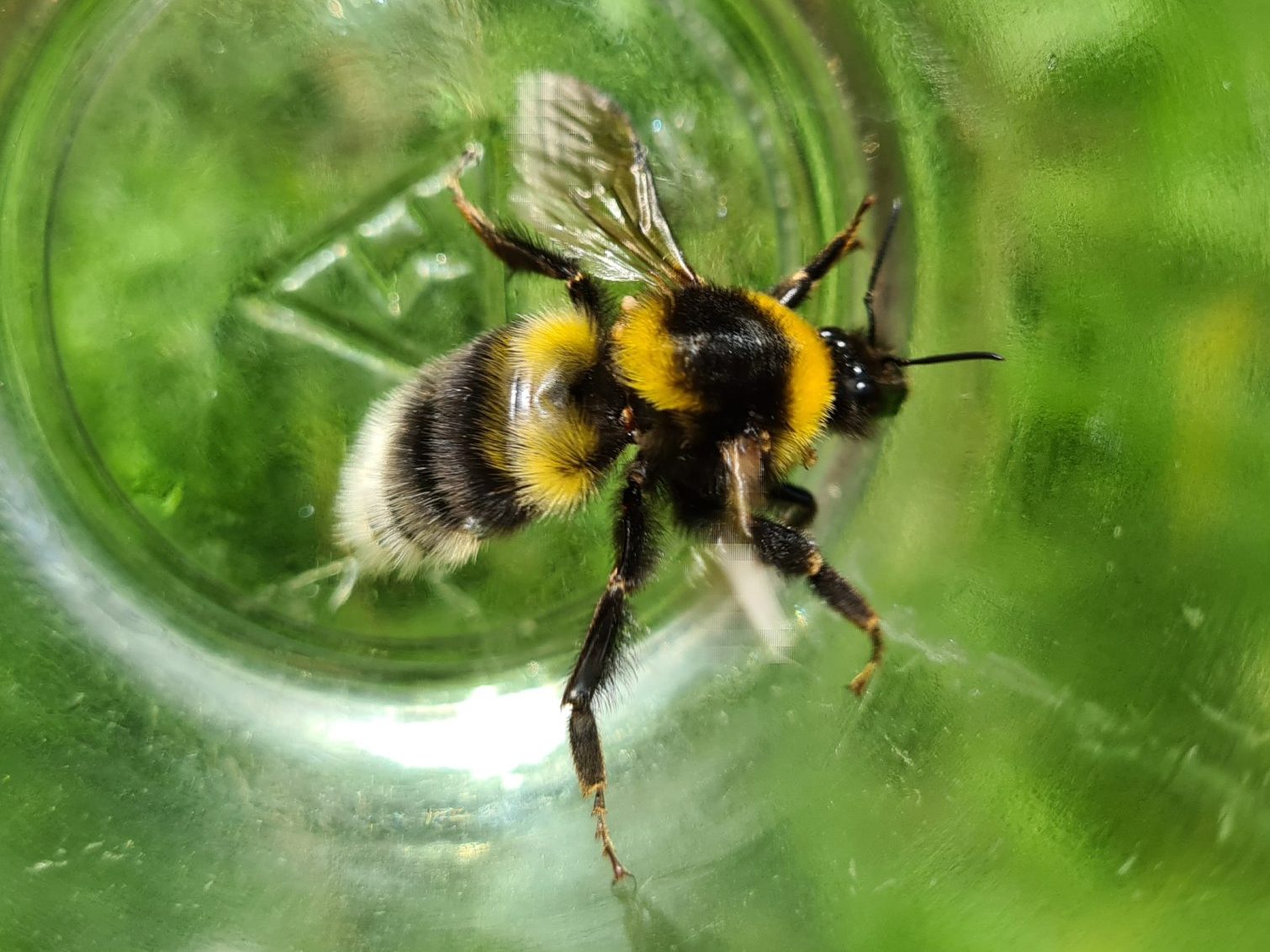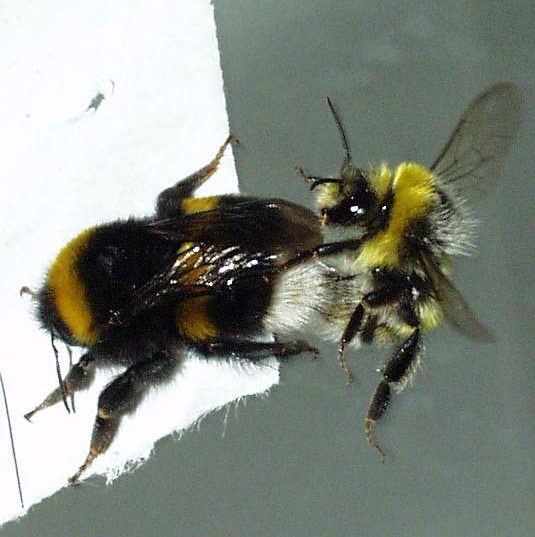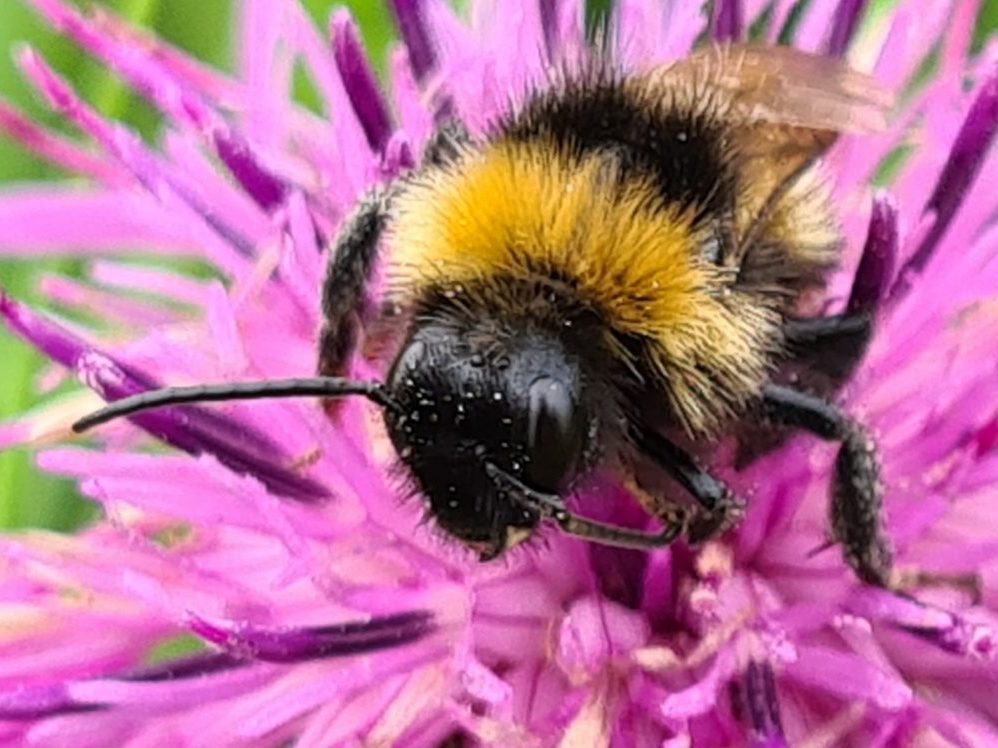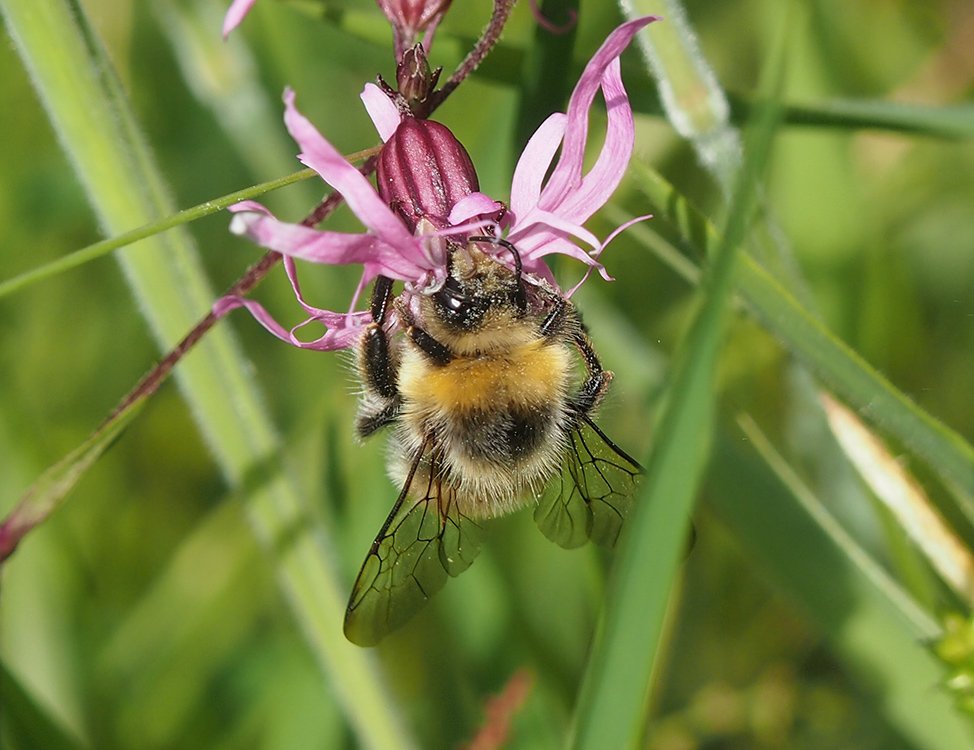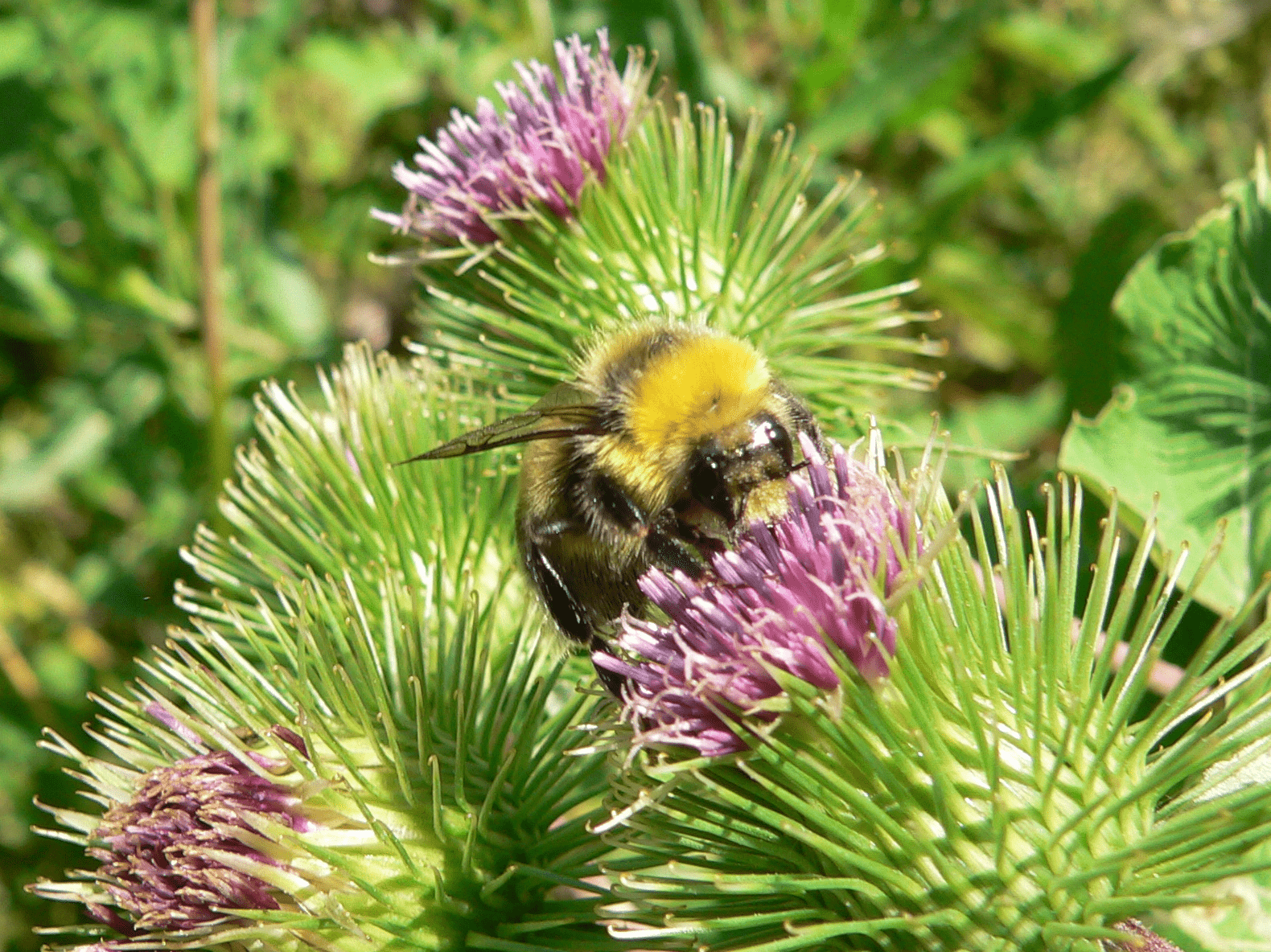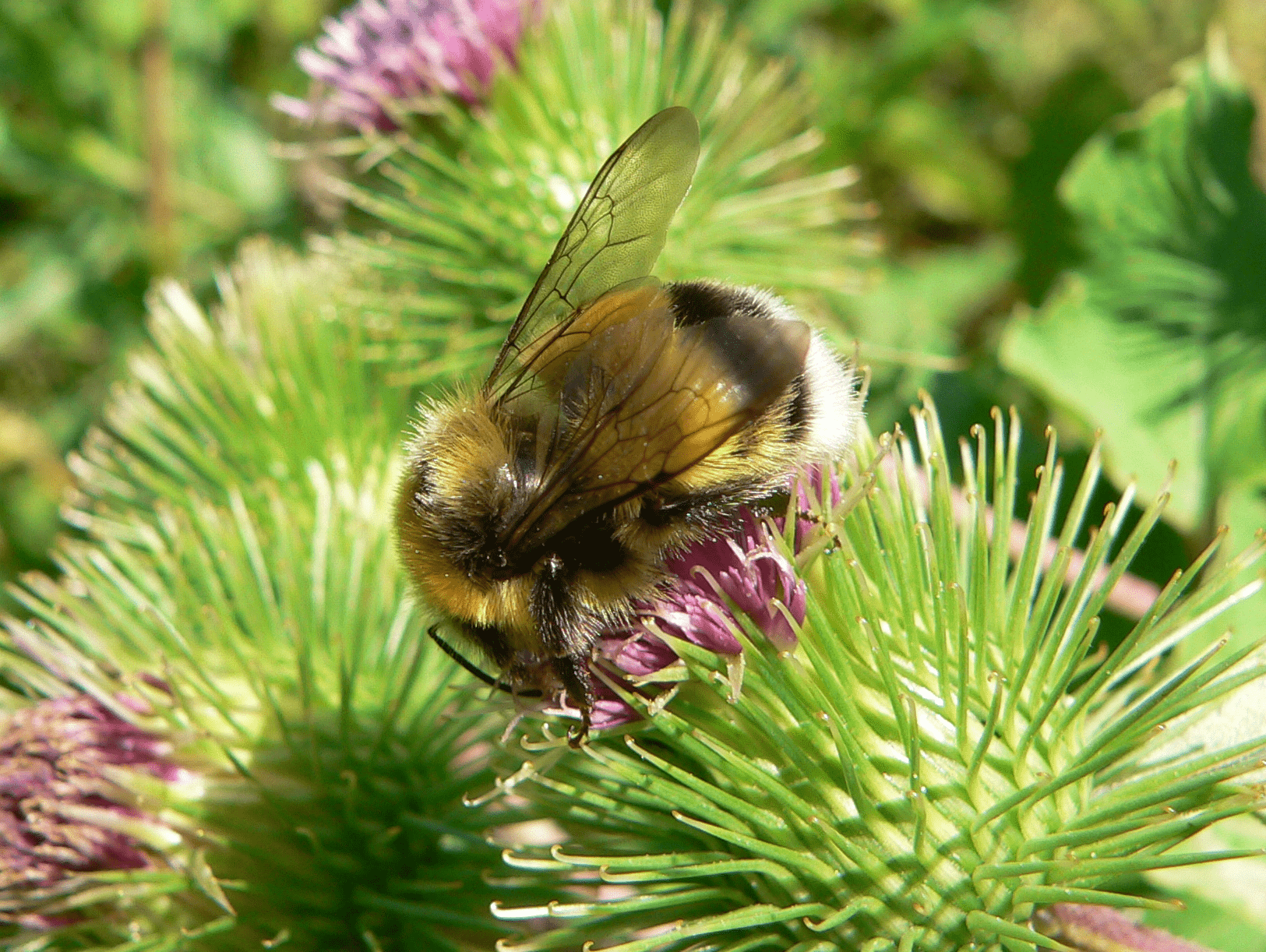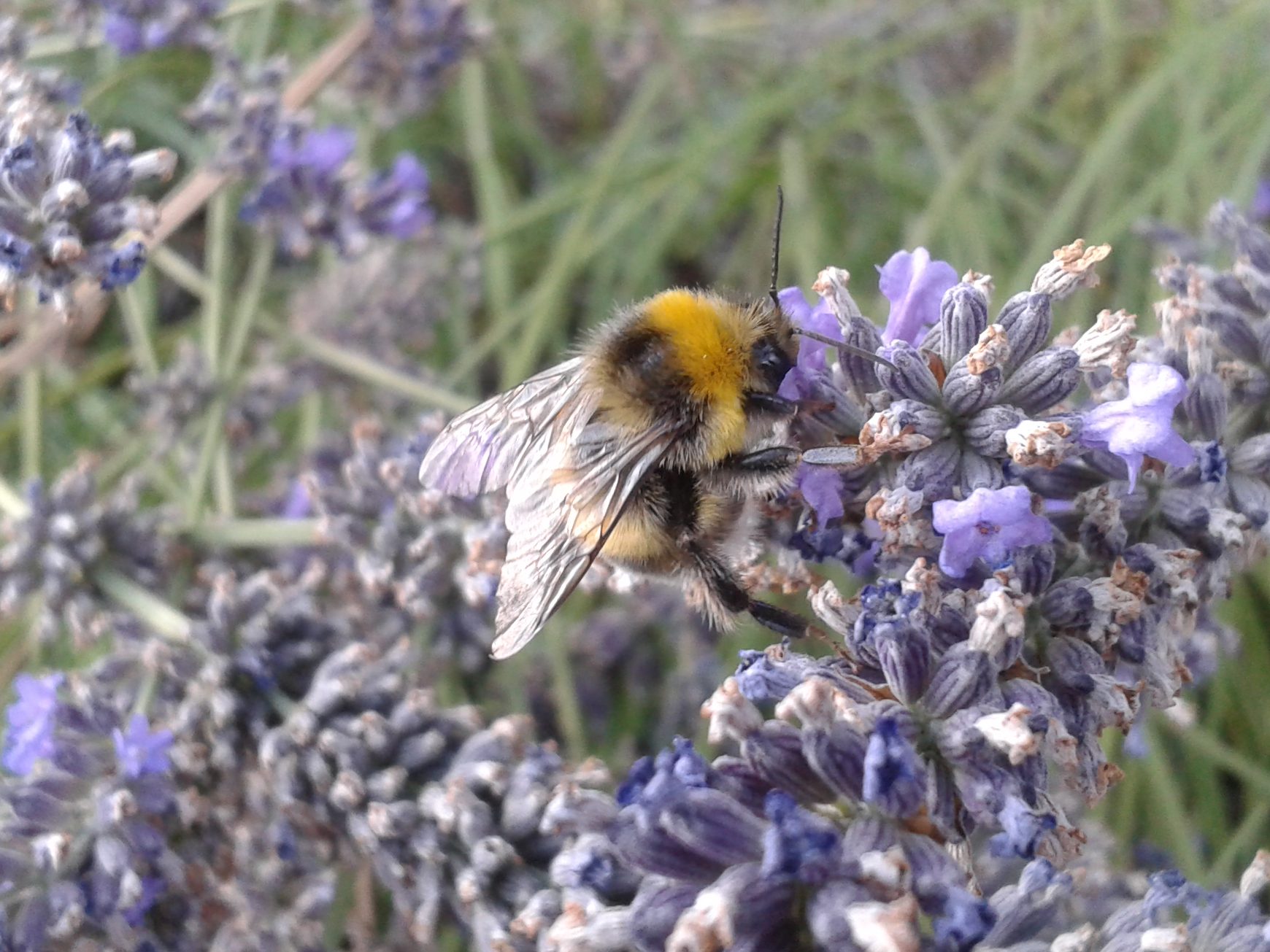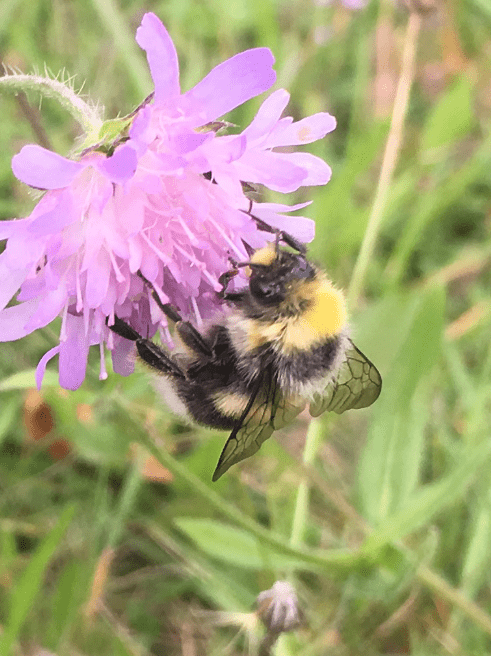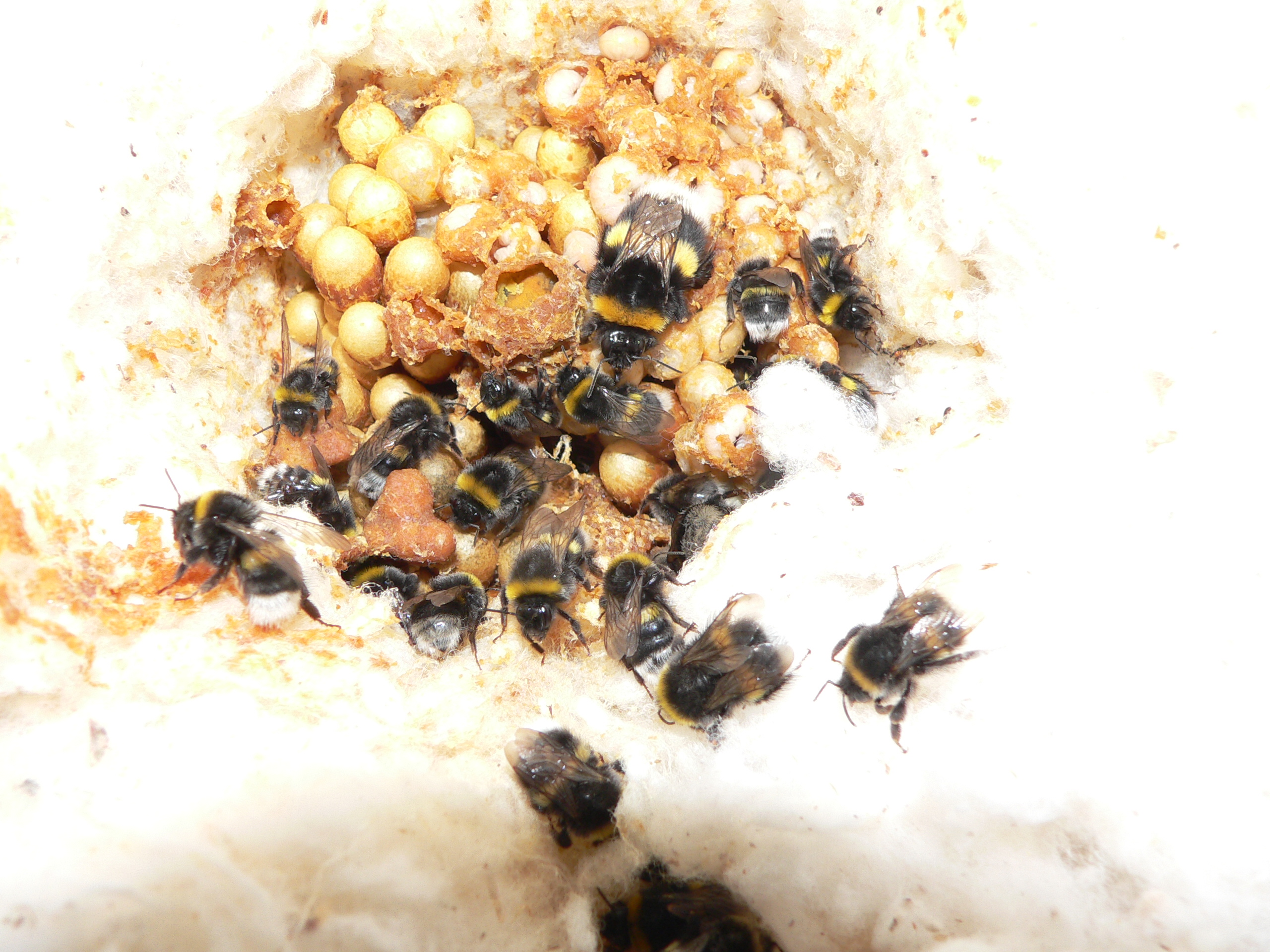


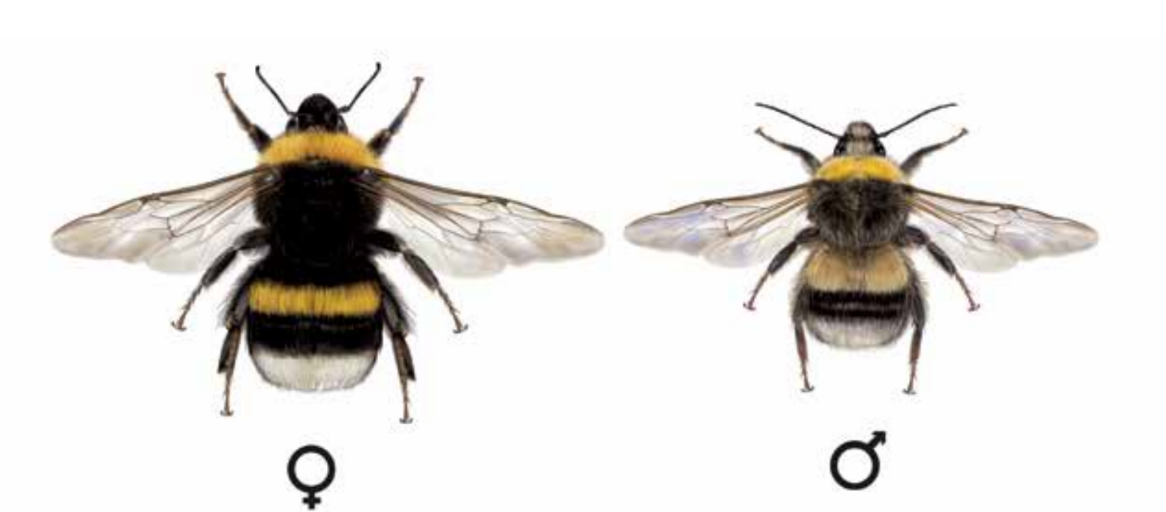
White-tailed bumblebee (Bombus lucorum)
What you will learn here
- Information on individual types of bumblebees
- You will receive a summary of information for the general public, schools, and breeders.
Last updated date: 03/01/2022
Contents
Colour scheme
Size
Head
Tentacles
Language
Body
Wings
Legs
Specific distinguishing features
Photography
Mother
Female worker
Male
Video catalogue
Mother
Female worker
Male
Similar species
How to distinguish it from similar species
Life cycle
Larval feeding
Nesting site
Nest size
Visiting bumblebees
How to tell the difference between a bumblebee and a 'pačmelák' (which is often used colloquially to refer to any larger bee, including bumblebees, or sometimes more specifically to certain types of larger, fuzzy bees).
Information on breeding
Interesting facts
Photos and videos
Interesting links
Description
Czech Buff-tailed bumblebee
Latin Buff-tailed bumblebee
English White-tailed bumblebee
German: Buff-tailed bumblebee
Polish Hairy-footed flower bee
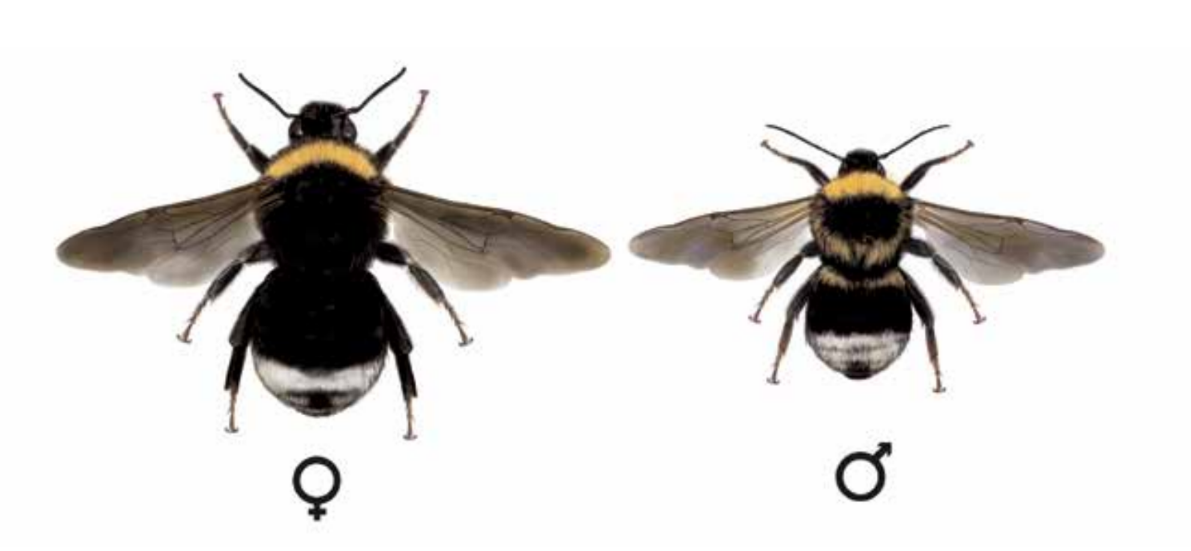
Depiction

White-tailed bumblebee – Bombus lucorum
Source: Sikora A., Michołap P., Kadej M., Sikora M. Tarnawski D. 2018 „Bees in the city: Bumblebees of Wrocław“, Publ. Association Nature and Man.
Sikora A., Michołap P., Kadej M., Sikora M. Tarnawski D. 2018 „Bees in the City: Bumblebees of Wrocław“, published by the Association Nature and Man.
Colour scheme
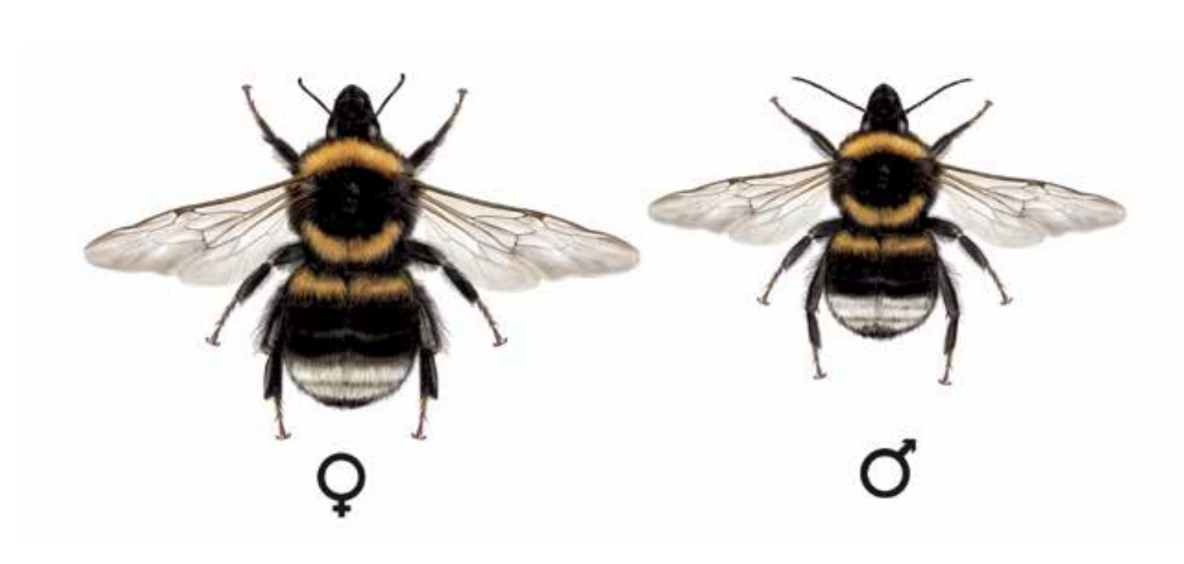
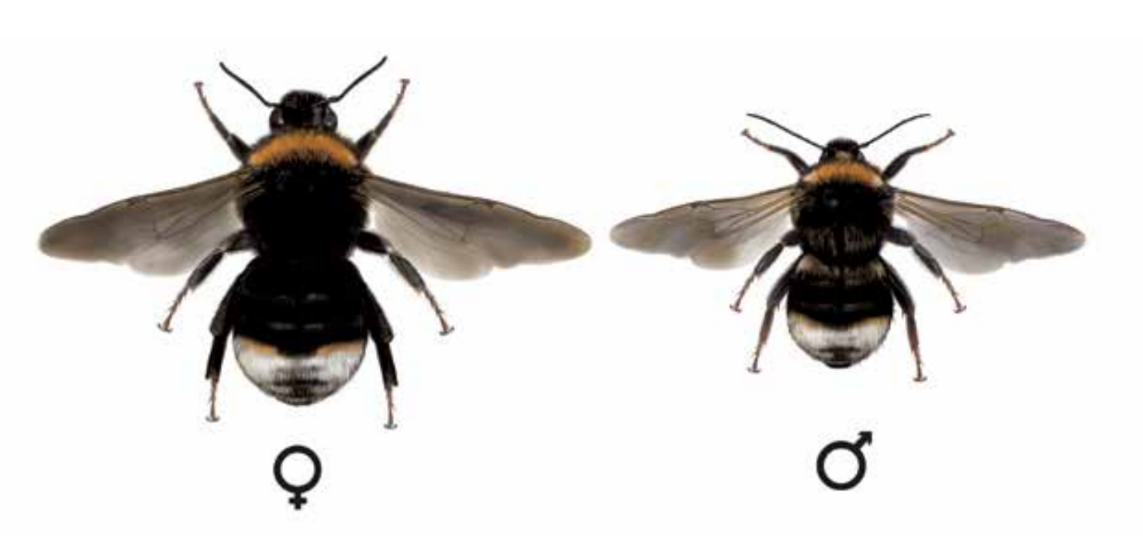
Basic diagram (mother-queen and workers):
- Base colour
Black - Head
Black
Chest - – on the breastplate one wider band
– colour light yellow to lemon, never Yellow-brown/ochre
– the strap extends to the sides of the chest, but not under and behind the wings
– the band is always present (the species has no dark varieties)
– short, but not cropped - Bottom
– 1. black hindquarters
– on the 2. tergite a yellow band, mostly of the same shade as the pronotum – lemon yellow
(colour changes with time, see below)
– the tape is similarly thick to the one on the forechest
– hind margin of the 3rd tergite usually yellowish
– 4. – 6. white/grey-white tergites
– rest of the rump black
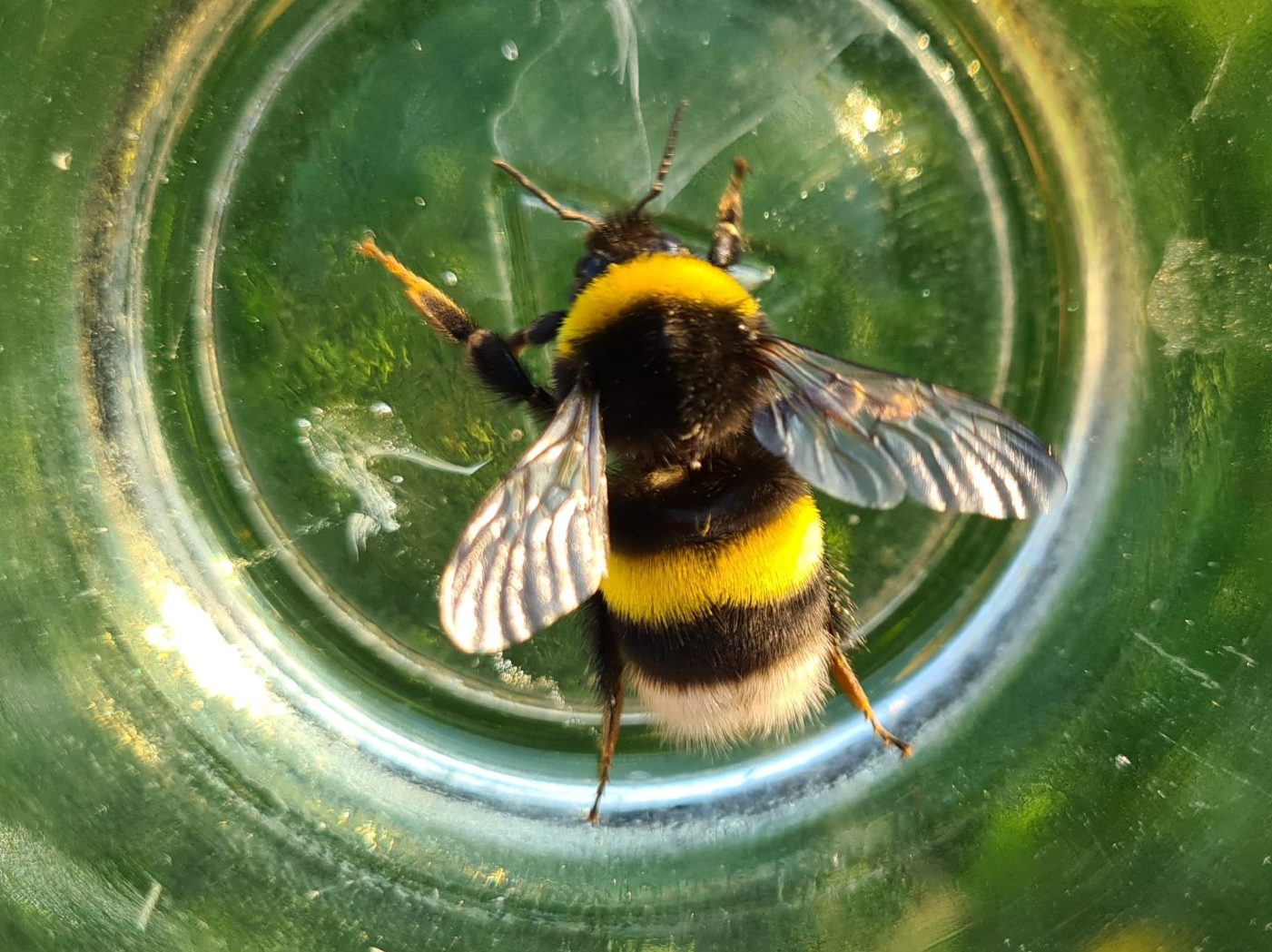
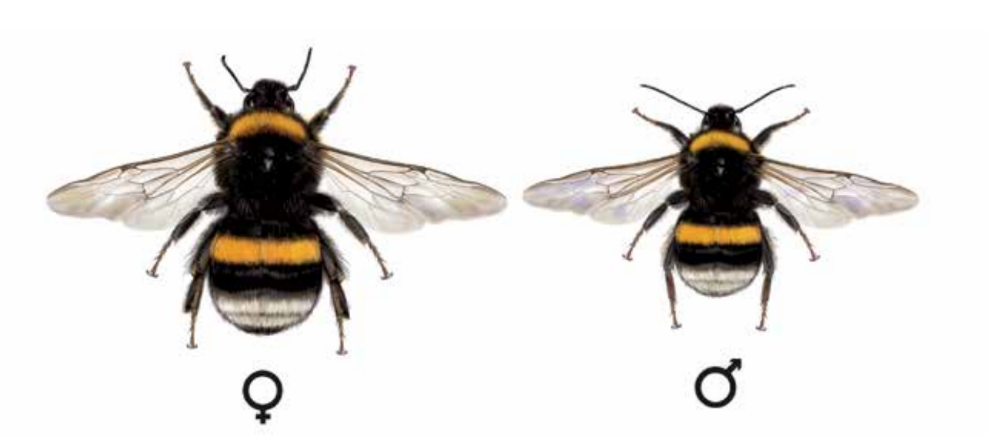
Reliably distinguishing between a worker and a queen by their colouration is quite difficult.
Yellow streaks can sometimes be lighter and more pronounced.
The size and, possibly, behaviour in the nest (if the mother is present) are decisive.
The difference in shade of the yellow stripes disappears over time, but in the queen and workers, a gradual loss of colour in the stripes on the abdomen can be observed, down to a greyish yellow/grey.
The strip behind the head loses less colour, retaining its yellow hue.
Colour loss is related to age
Basic diagram (male):
– colour scheme similar to mother and worker
– the yellow and white hairs of males often cover the black body parts, males in good condition appear practically yellow and golden in the light
- Head
– the mask (facial part) and the top of the head are densely covered with light yellow hairs
– more pronounced hair
– brushes on the sides of the mandibles for spreading marks – colour generally red/reddish-brown - Chest
– lighter yellow stripe on the forechest (stronger than in the mother and worker)
– a black band clouded with scattered whitish-yellow hairs
– the rear of the chest may be yellow
– colour light yellow to lemon, with time turns grey
Bottom
– 1. black tergites (not always visible)
– lighter yellow stripe on the 2nd and 3rd tergites (appears stronger than in the queen and worker)
– 4. – 6. white/grey-white tergites
– black hairs can have white/grey tips
– stripes are made of dense hairs
– a hedgehog is more prickly than a mother and a worker
In males, a gradual loss of colour to a grey-yellow/grey can be observed.
The difference in colour loss between the stripes is not as noticeable as with the worker mothers.
Colour loss is related to age.
In the case of occurrence in the North of Europe, darker forms of males have been described
Males are a good indicator of the presence of this species if you are unable to reliably detect this species by mothers and workers.
Size
- Species
– large - Size
mother 18 – 21 mm
Female worker 9 – 11 mm
samec 14 – 16 mm
Source: Hymenoptera of the Czech Republic I, Academia 2017
Head
Size
– short (the shortest of all bumblebee species in the Czech Republic)
Shape
– face shorter than wide
– mother and worker – a distinctive wedge shape when viewed from the front
– Male – round facial part, brushes on the side of the mandibles accentuate the lower part of the facial part
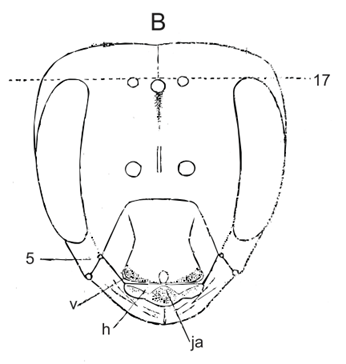
– Simple eyes are located on a (supraorbital) line, the distance between the eyes is half the diameter of the eyes in the centre – see image (matches that of the buff-tailed bumblebee)

Forest cuckoo bumblebee (Bombus lucorum) – queen – head
Source: J. May Bumblebees in the CSR
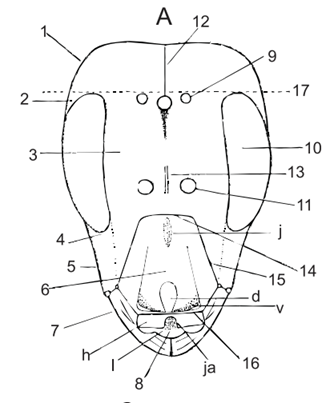
Garden bumblebee (Bombus hortorum) – queen – head
Source: J. May Bumblebees in the CSR
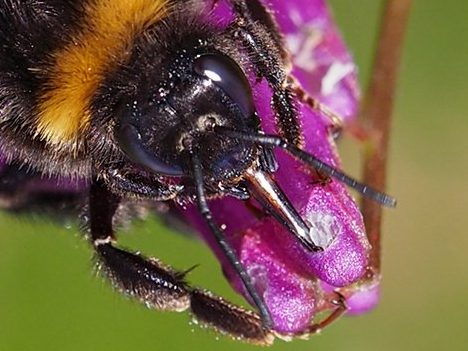
Here you can clearly see the shape of the head – short, stout. On the crown, three simple ocelli, placing of the antennae, and the tongue extended between the mandibles.

Buff-tailed bumblebee (Bombus lucorum) - queen
Photo: H. Kříženecká
Tentacles
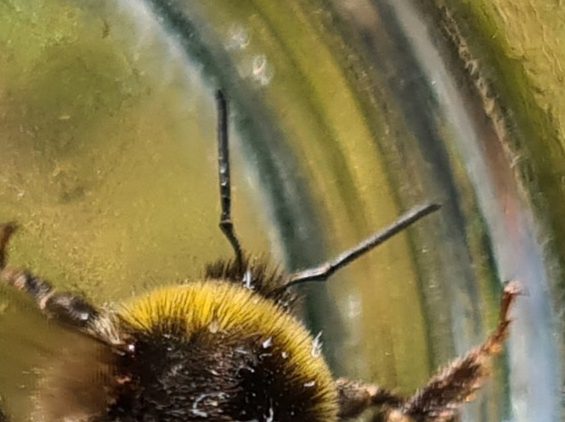
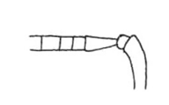
- The antenna segments are parallel
- The third article of the antenna is only slightly longer than the fifth.
- Like other bumblebee species, the male has long, curved antennae

Forest bumblebee (Bombus lucorum) – worker – antennae
Photo: O. Hercog 5/9/2021
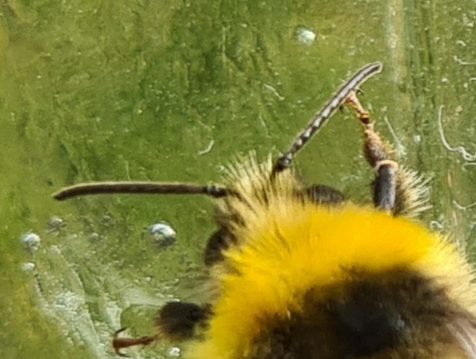
Forest cuckoo bumblebee (Bombus lucorum) – male – antennae
Photo: O. Hercog 15/7/2021
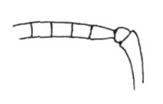
For those interested in the details, we are adding.
The antennae of the buff-tailed bumblebee (B. lucorum) are longer, for example, compared to the antennae of the Early bumblebee (B. confusus).
These species are not to be confused, but the comparison of the antennae is interesting. It's a detail you might not notice on a live individual, but quite possibly on a good, enlarged photograph.

White-tailed bumblebee (Bombus lucorum) – antenna
Source: Fauna Helvetica Apidae 1
Buff-tailed bumblebee (Bombus lucorum) – antenna
Source: Fauna Helvetica Apidae 1
Language
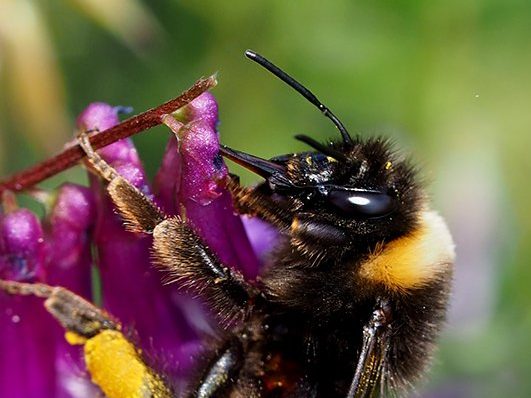
- short
- Mother's tongue length: 9-10 mm
- worker bee tongue length: 8 – 9 mm
- Male tongue length: 7 – 8 mm
- This species, thanks to its short tongue, often nibbles the calyxes of plants, which it cannot reach with its tongue

White-tailed bumblebee (Bombus lucorum) – worker – tongue
Photo: H. Kříženecká
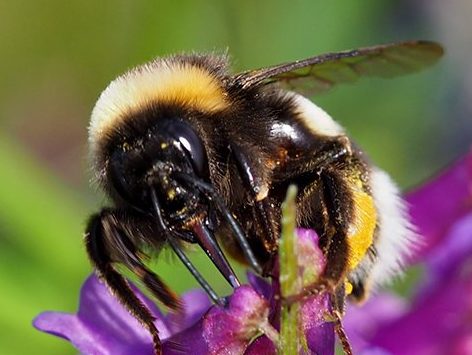
White-tailed bumblebee (Bombus lucorum) – worker – tongue
Photo: H. Kříženecká
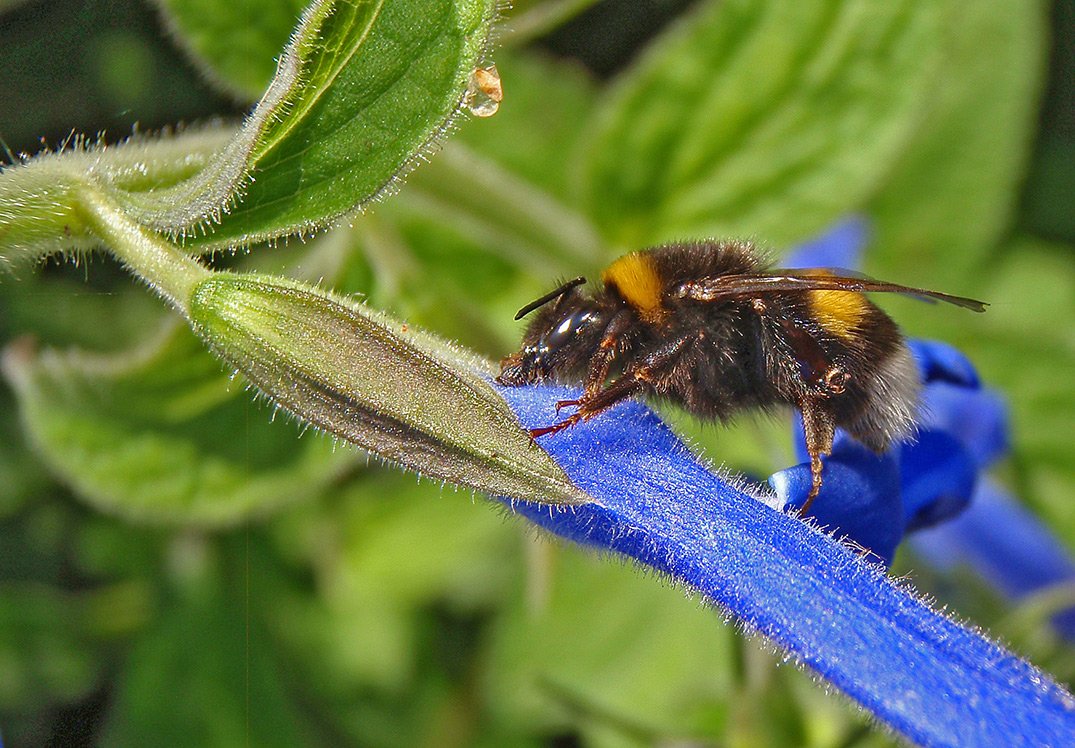
Bumblebees have learned to overcome the handicap of a short tongue by chewing through the flower calyx so that they can access it with their own, short tongue.
Both buff-tailed bumblebees (B. terrestris) and white-tailed bumblebees (B. lucorum) use this technique, as both species have very short tongues.
The plant will provide them with nectar, but it won't be pollinated – there will be no contact between the bumblebee's body and the pistils. Note that especially in plants with flowers that have deep calyxes, the pistils are in a more secluded spot. Foxglove (Digitalis) is an example of this. The bumblebee will burrow into it and immediately get pollen on its back. However, bumblebees are clearly more sophisticated than the plants.

Buff-tailed bumblebee (Bombus terrestris) – worker
I'll draw a flower chalice
Photo: H. Kříženecká
Body
- Mother
– stockier body
– it does not have a clearly pointed end to its abdomen, like the garden bumblebee (B. hortorum) or the tree bumblebee (B. hypnorum) - Male
– body sturdier than mother
Ovoid
– the end of your bottom is more round, or chopped off
Wings
Bright
Wingspan up to 37 mm
Legs
- Rear pair of legs
– honey bees with pollen baskets
– hairs on the hind edge of the hind tarsi predominantly shorter than half the greatest width of the tarsus
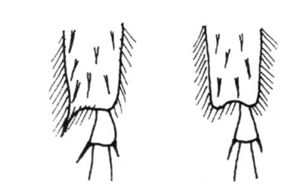
– metatarsus of the hind pair of legs without a spine (rounded)
in males the posterior part of the tibia is indented and bare on the outer surface

Mid-tarsal bone of the hind legs – with spine and without spine
Source: Fauna Helvetica Apidae 1
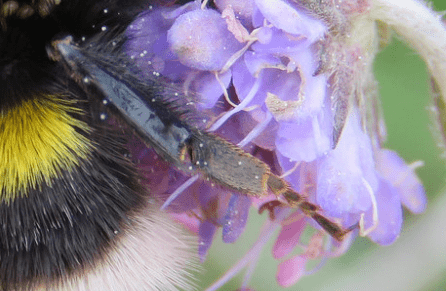
In the following photograph, you can see the pollen basket on the hind leg of a buff-tailed bumblebee.
Thornless nose.
The next photograph shows pollen baskets filled with pollen.

Tree bumblebee (Bombus lucorum) – queen – leg
Photo: S. Falk
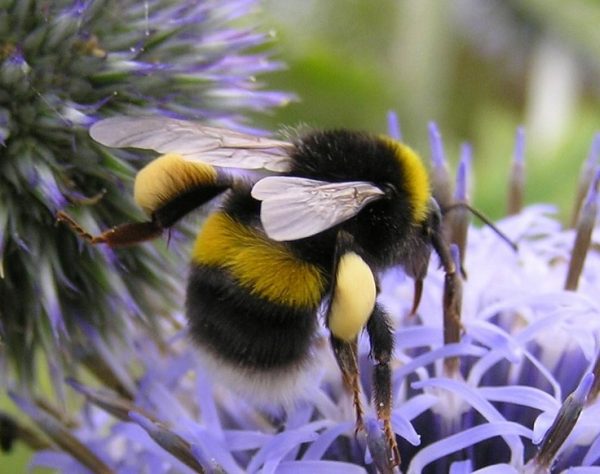
Buff-tailed bumblebee (Bombus lucorum) - queen
Photo: Bumblebee Conservation Trust
Specific distinguishing features
<bude doplněno>
Photography
Mother
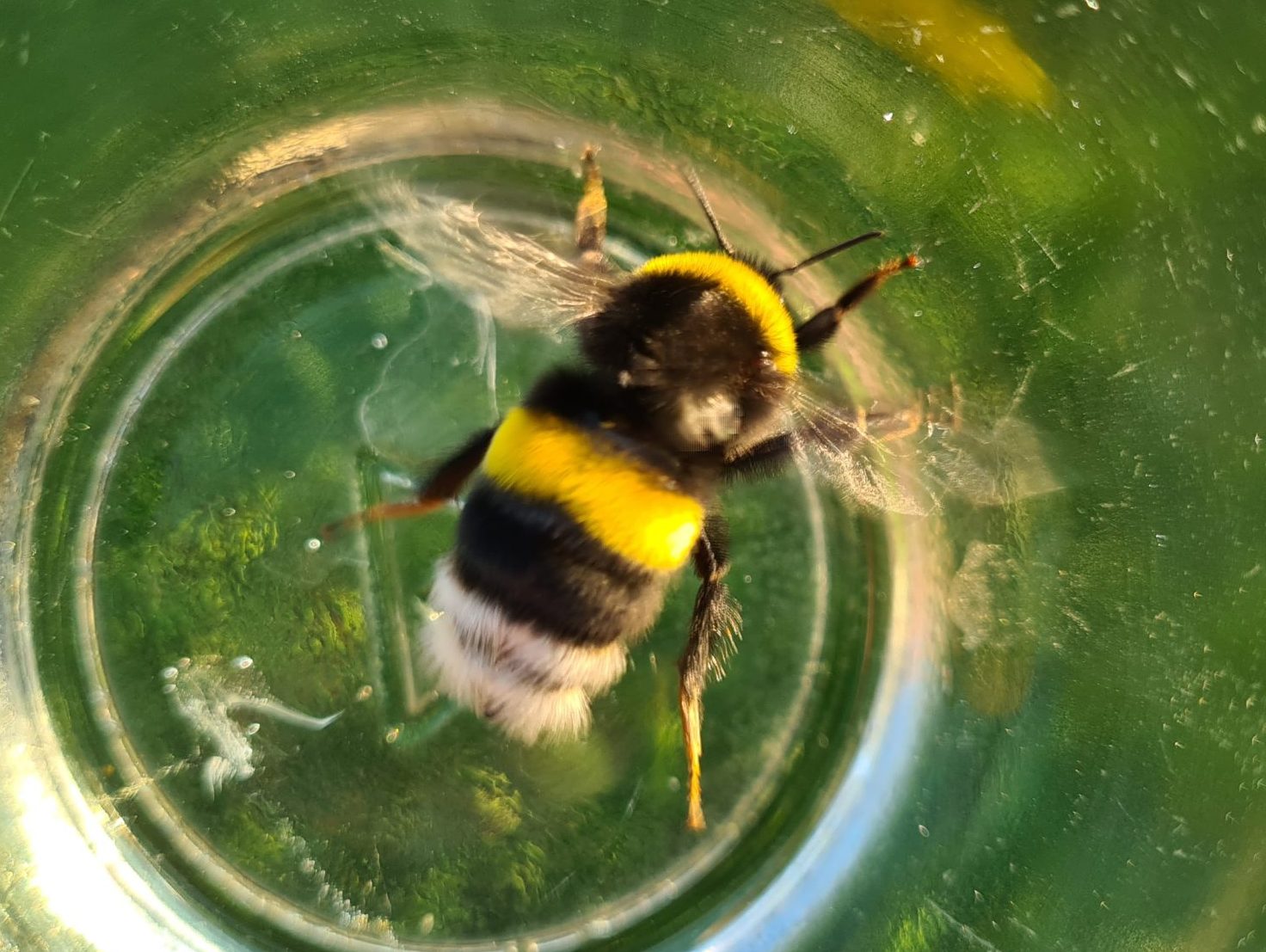
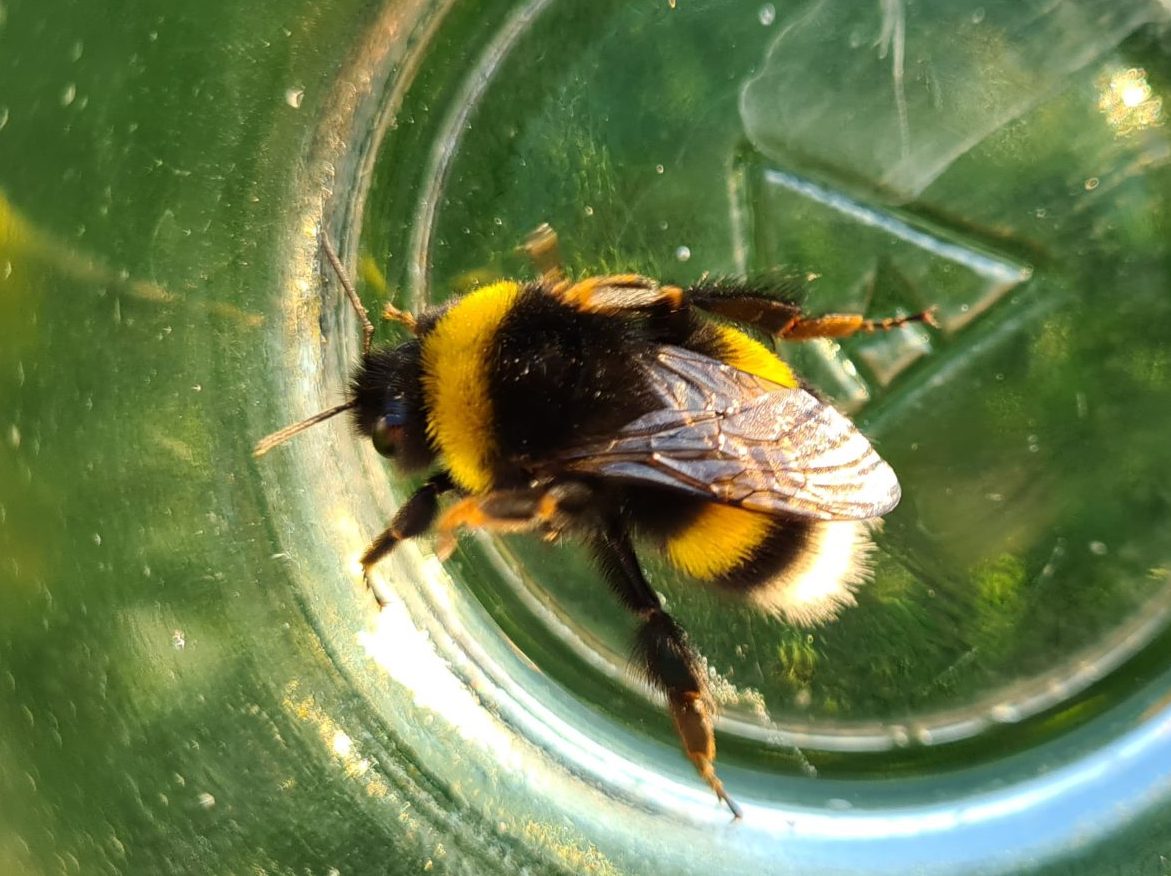
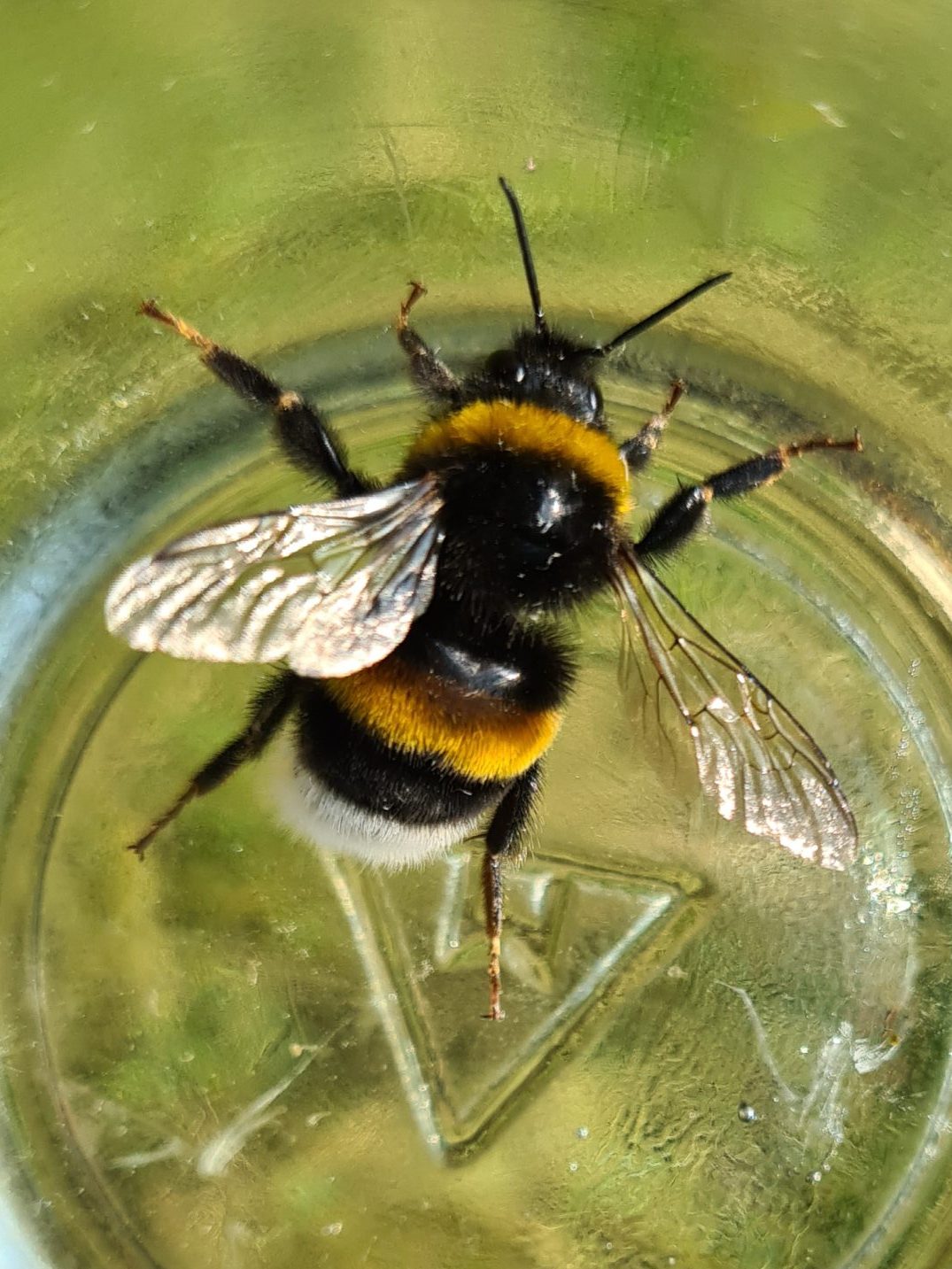
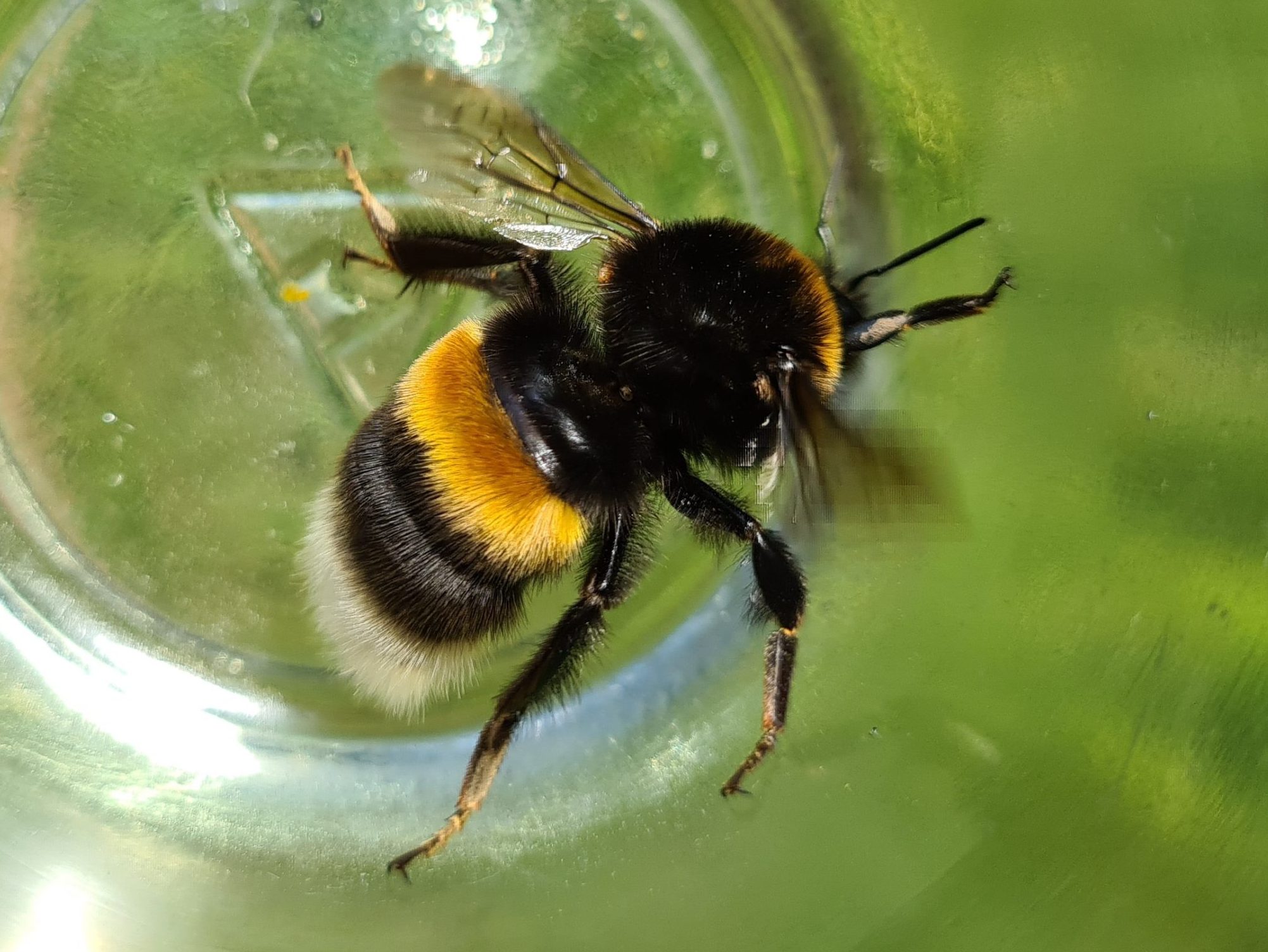
You notice a strong yellow band behind the head and a yellow hue. You won't see such a yellow on the common carder bee (B. terrestris) on its chest – its band is darker, more like a tan shade, or barely noticeable.
Also, note the practically imperceptible difference in shade between the two straps.
You won't find dark forms of this species in the Czech Republic.
These markings are a good basic guide for determining the White-tailed Bumblebee (B. lucorum).

Buff-tailed bumblebee (Bombus lucorum) - queen
Photo: O. Hercog 16/6/2021
Buff-tailed bumblebee (Bombus lucorum) - queen
Photo: O. Hercog 16/6/2021
Buff-tailed bumblebee (Bombus lucorum) - queen
Photo: O. Hercog 16/6/2021
Female worker
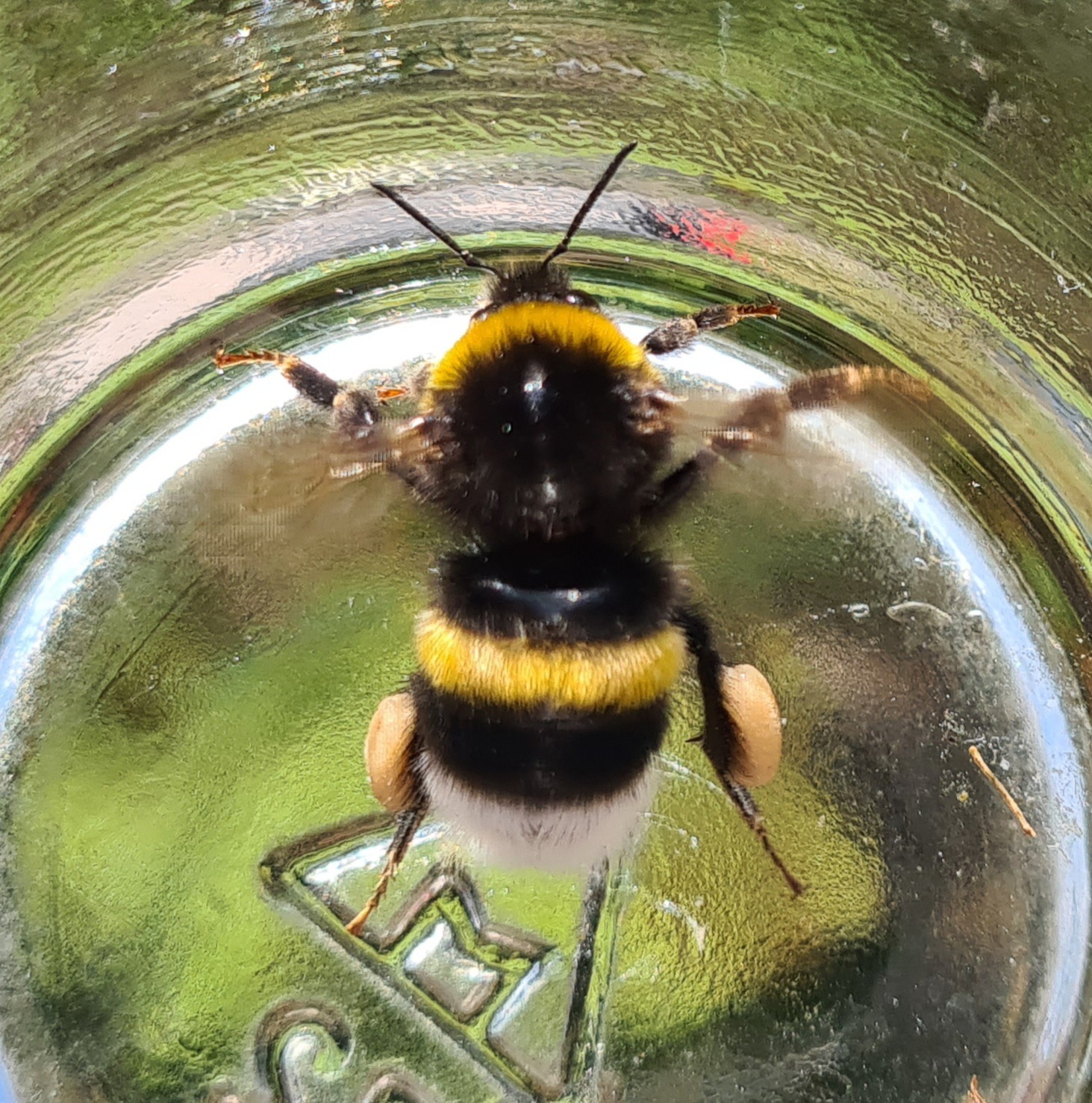
Differentiating the queen and workers of this species is a puzzle. The difference in size between the worker and the queen is distinct; their body shape and colours are the same.
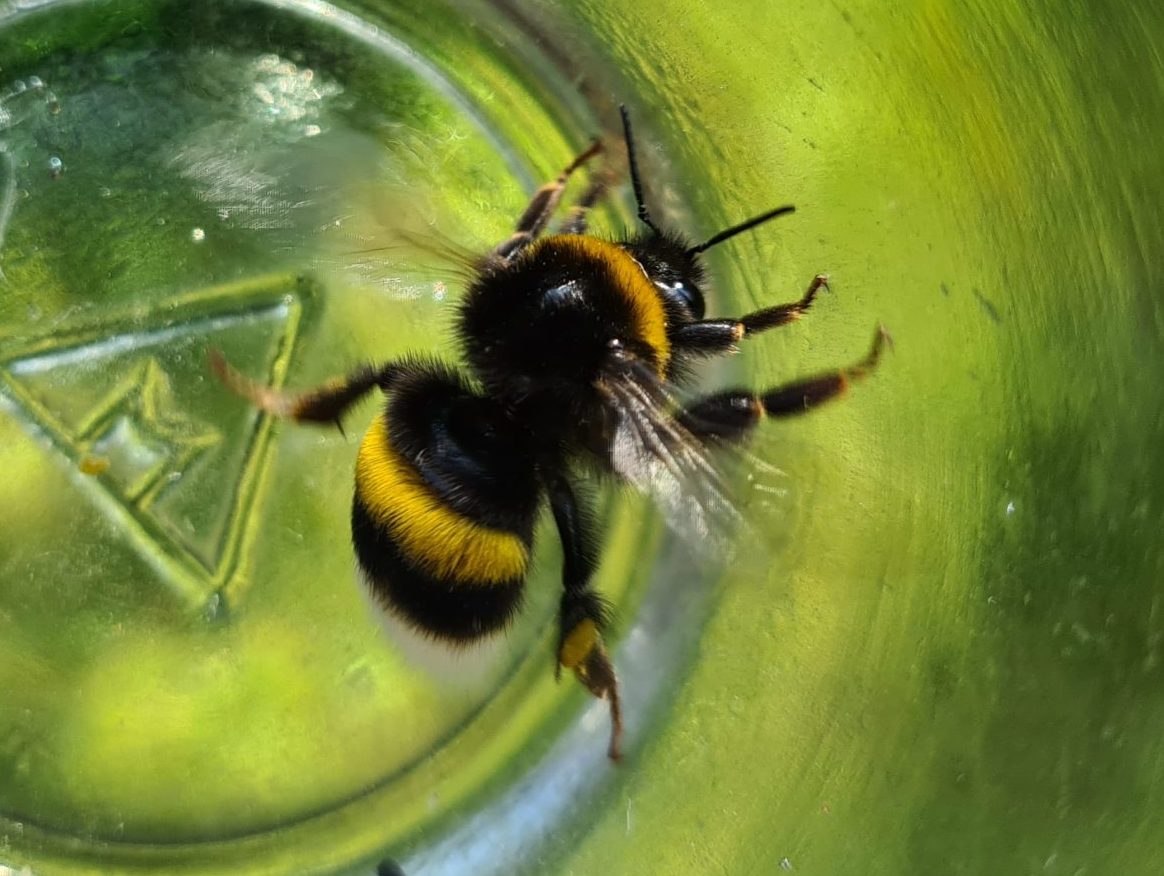
The yellow stripes of a worker bee might also confuse you by their gradually disappearing colour difference and the gradual fading of the stripe on its abdomen – to a light yellow to dingy yellow.
Just like the mother, the worker also has no yellow elements on its head.

White-tailed bumblebee (Bombus lucorum) – worker
Photo: O. Hercog 24/7/2021
White-tailed bumblebee (Bombus lucorum) – worker
Photo: O. Hercog 5/9/2021
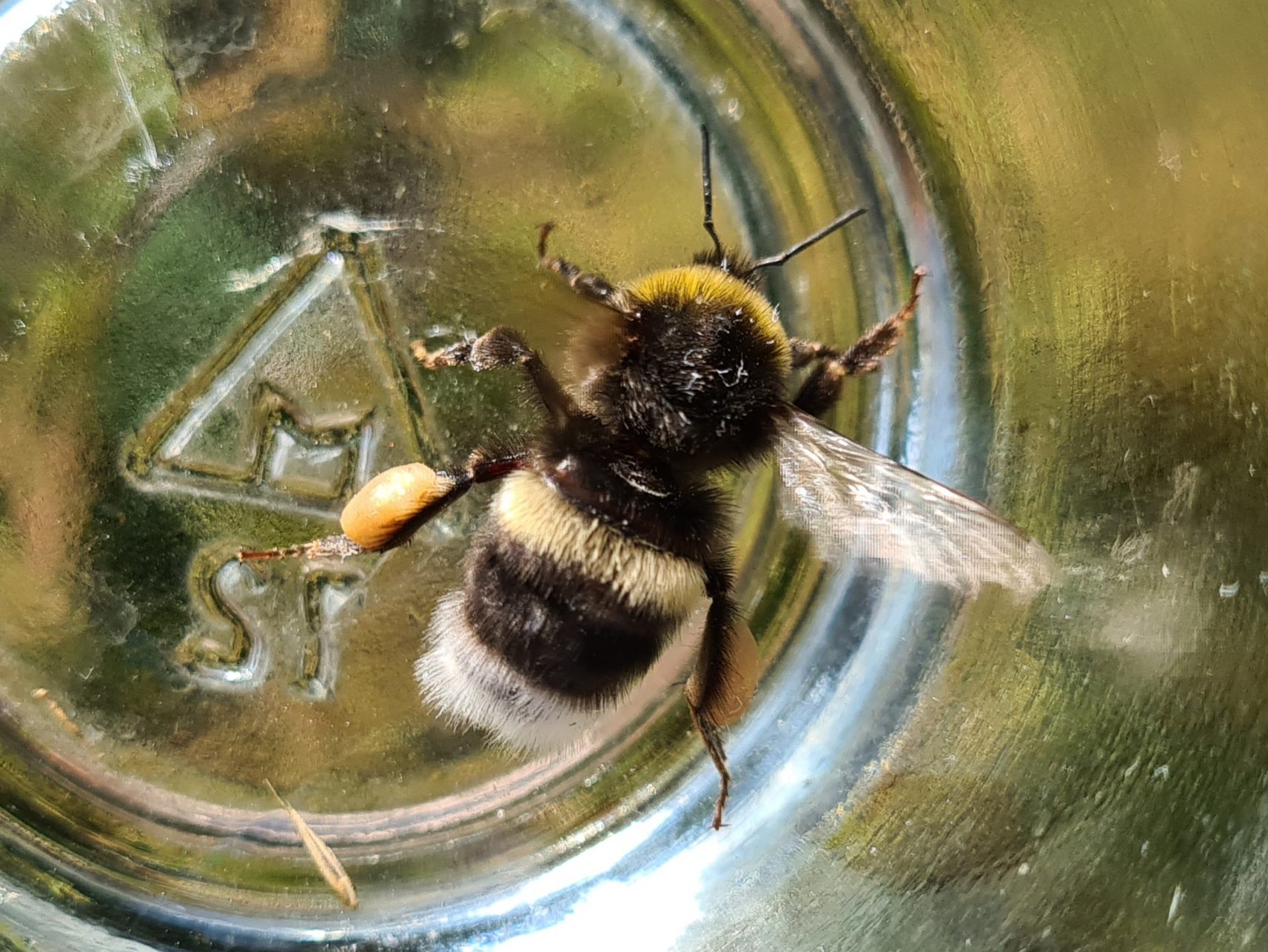
In the next photograph, you can see the colour change of a worker bee. The stripe on its rear has practically lost its yellow colour.

Tree bumblebee (Bombus lucorum) – worker
Photo: O. Hercog 5/9/2021
Sometimes, even significant „wear and tear“ on individuals, especially mothers and workers, can confuse you. Sometimes the worker has a second band that is practically white and its rear, including the band on it, is bare. This is due to its age and movement within the nest, where it rubs off its hairs.
The next photograph shows such a worker

White-tailed bumblebee (Bombus lucorum) – worker
Photo: O. Hercog 5/9/2021
.
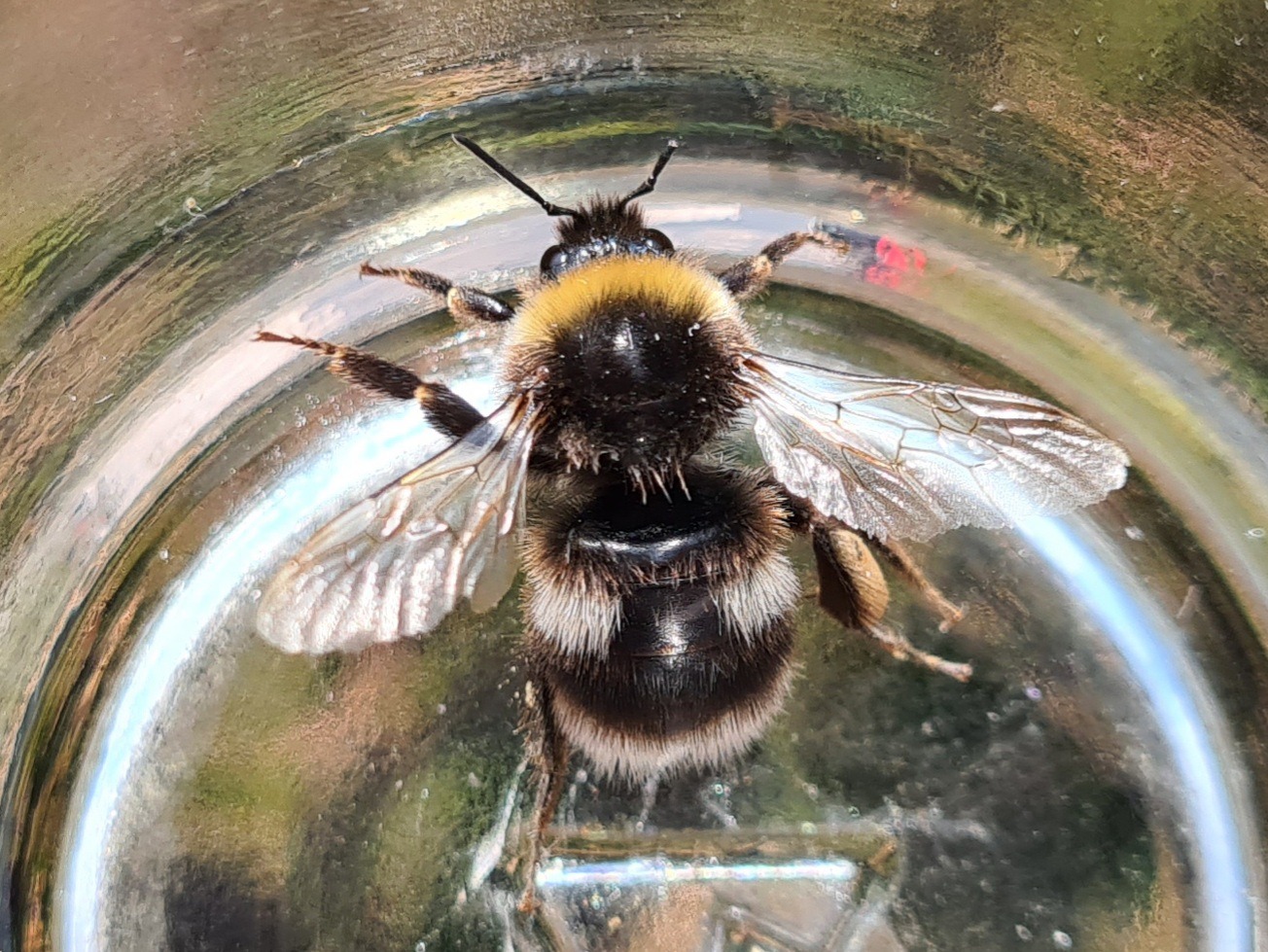
White-tailed bumblebee (Bombus lucorum) – worker
Photo: O. Hercog 5/9/2021
Male
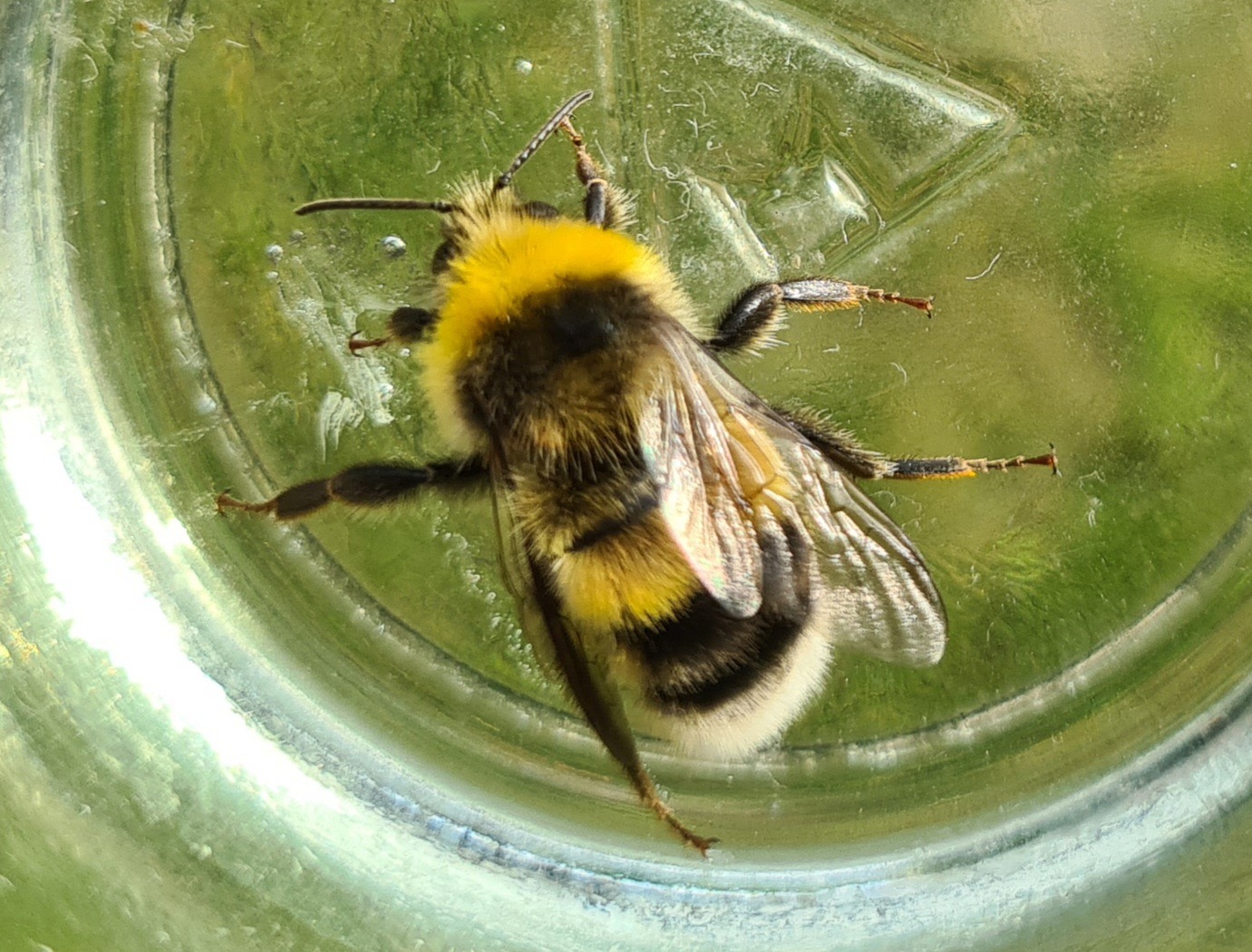
Males can be considered „a different species.“ If they are in good condition, they are like shining golden spheres.
Their head is full of yellow fur. The fur on their chest and rear sometimes almost covers the black colour of their body.
They will also be revealed by their antennae, which, as with most species, are longer and, in normal circumstances, form an arc (without bending).
The brushes on the jaws aren't very visible unless you're looking them in the face. However, they have a red/brownish hue, and once you know about them, you'll notice them.

White-tailed bumblebee (Bombus lucorum) – male
Photo: O. Hercog 15/7/2021

White-tailed bumblebee (Bombus lucorum) – male
Photo: O. Hercog 15/7/2021
Details of the facial part of the head of a male tree bumblebee (B. lucorum). The brushes on the mandibles are a different colour and the head widens at the bottom.

Forest bumblebee (Bombus lucorum) – male, head
Photo: O. Hercog 23 07 2021
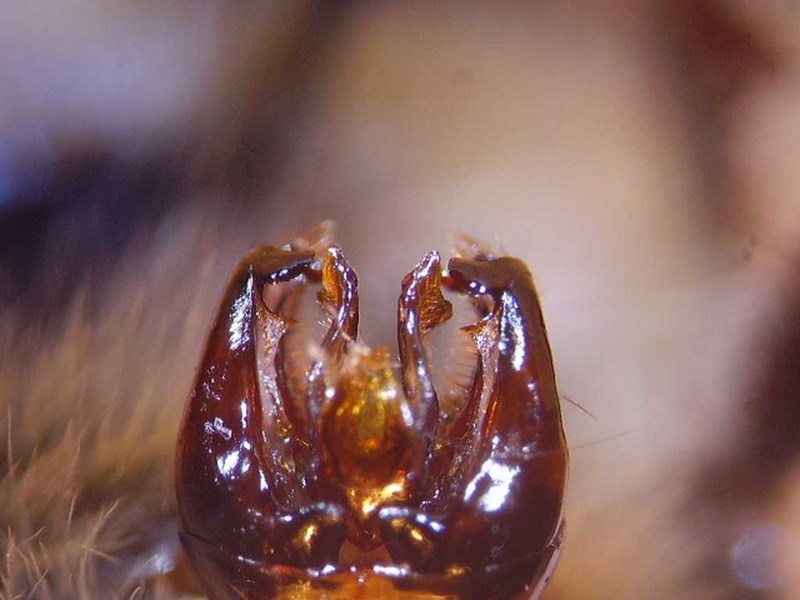
A detail you won't see in nature – the reproductive organs of a male Buff-tailed Bumblebee (B. lucorum).
The reproductive organs of bumblebees are very specific but generally typical for individual species. In males, alongside DNA analysis, they are a key guide for species determination.

Forest bumblebee (Bombus lucorum) – male – genital organs
Photo: Amiens Fauna and flora
Video catalogue
Mother
Bramble-tailed cuckoo bee (B. lucorum) queen. This queen was leaving the nest and helping with food collection even when workers were present in the nest.
Besides size, it is sometimes difficult to tell the difference between a queen and a worker.
Female worker
Female workers from a later generation – they will be betrayed by their larger size, because during their development they had enough food.
With this worker ant, practically the same shade of yellow is visible on the chest stripe extending to the abdomen. The chest stripe is wide.
With this worker bee, a distinctly different shade of yellow on the chest stripe on her abdomen is already visible – this is a sign that she is aging. You wouldn't notice a difference with a young worker bee.
With this worker bee, a gradual loss of colour on the stripe on its bottom is visible.
On this worksite, the loss of colour on the stripe on the backside is noticeable.
The video was filmed at a higher altitude, therefore the time difference was noticeable in the lowlands, and in September there was still considerable activity from the workers.
Male
Here is a male garden bumblebee in full strength and armour - magnificent yellow colours. His bright yellow crest on his head and face is also beautifully visible.
Typically coloured male. His stripes are already less distinct as he gets older (video was filmed in August)
You can also see its antennae clearly – longer and positioned differently. Its head is also visible when it moves – rounder and shorter.
Similar species
- Buff-tailed bumblebee (B. terrestris)
- White-tailed bumblebee
- Bimaculated bumblebee
- Great bee (Bombus magnus) <DOPLŇUJEME>
These species are distantly related, as their pale forms have two yellow stripes on the chest. However, because beginners confuse them, we are listing them here as well.
- Garden bumblebee
- Buff-tailed bumblebee
How to distinguish it from similar species
Although the early bumblebee is common in the Czech Republic, it is often mistaken for other species.
We will try to show you visible signs that can be a guide for its identification. Reliable differentiation of these species, however, is only possible under a microscope based on features not visible to the eye. For completely reliable differentiation, however, it is necessary to kill and dissect the individual. For example, the species identification of males is only possible by examining the details of their sexual organs. However, this does not align with our interests in bumblebee conservation. Therefore, in our catalogue, we will suffice with features visible to the eye and with limited accuracy.
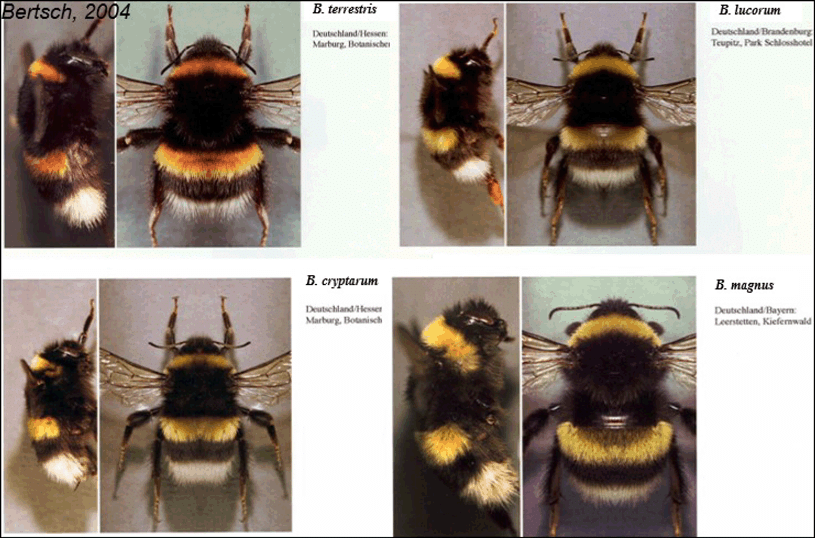
The following photographs compare species that can be easily confused. Although these are photographs of mothers taken in Ireland (the species here have minor colour differences from the same species in the Czech Republic), they are useful for comparing typical characteristics.
You can see for yourselves that resolution isn't always easy.
The problem of identifying similar species has been named „Complex lucorum“ after this type of bumblebee.“
In the following text, we will describe the characters and provide you with a guide to distinguish them, without attempting to overcome this complex – as it is not possible.

Mothers of similar species – B.
terrestris-B. lucorum – B. magnus -B. cryptarum
Photo: Bertsch 2004
Buff-tailed bumblebee
- Unlike the forest bumblebee:
– larger size
- a slightly longer head
– mother and worker have their heads in a noticeably sharper wedge
– the head is always black, including in males
– the stripes are in different shades (workers and mothers)
the stripe at the back of the head is weaker and a darker shade of yellow (ochre)
– the stripe behind the head can be only faintly indicated, or practically invisible (dark form)
Note: The dark form of the Early Bumblebee (B. lucorum) does not exist.
Mother and worker do not lose their colours with time
- Males have very similar colouring to the mother and workers, although with brighter and stronger yellow stripes – both of practically the same shade

Buff-tailed bumblebee
Source: Sikora A., Michołap P., Kadej M., Sikora M. Tarnawski D. 2018 „Bees in the city: Bumblebees of Wrocław“, Publ. Association Nature and Man.
White-tailed bumblebee – Bombus lucorum
Source: Sikora A., Michołap P., Kadej M., Sikora M. Tarnawski D. 2018 „Bees in the city: Bumblebees of Wrocław“, Publ. Association Nature and Man.
For bumblebees and worker bees, the shade of the yellow stripes is a good indicator. For the European wool carder bee, the first and second stripes will usually match.
In the buff-tailed bumblebee, the band on the thorax behind the head is darker than the band on the second abdominal segment.
It's clearly visible in these photographs.

Buff-tailed bumblebee (Bombus terrestris) – queen
Photo: O. Hercog 27/6/2021

Buff-tailed bumblebee (Bombus lucorum) - queen
Photo: O. Hercog 16/6/2021
Unlike the buff-tailed bumblebee, the early bumblebee's yellow stripes can be seen to fade to a dirty white.
This effect is quite common in forest bumblebees and can aid species identification, or complicate it – if you are unaware of it.

Buff-tailed bumblebee (Bombus terrestris) – worker – Photo: O. Hercog 03 07 2021

Tree bumblebee (Bombus lucorum) – worker
Photo: O. Hercog 05 09 2021
.
Male\_of\_the\_forest\_bumblebee\_are\_easily\_recognised. They are very typical – the male is a beautiful yellow and you won't mistake him for the male garden bumblebee.
The male bumblebee resembles a large worker, only its yellow stripes are wider and brighter. Even here, however, a difference in shades can be seen, although it is not as marked as between the queen and the worker. A look at its hind legs, which lack pollen baskets, and its antennae will help.
The difference between the species is significant in males – the male of the buff-tailed bumblebee (B. terrestris) lacks yellow markings on its head and face.

Buff-tailed bumblebee (Bombus terrestris) – male
Photo: O. Hercog 24/7/2021

White-tailed bumblebee (Bombus lucorum) – male
Photo: O. Hercog 15/7/2021

Buff-tailed bumblebee and garden bumblebee
B. terrestris left
male badger
Photo: S. Falk
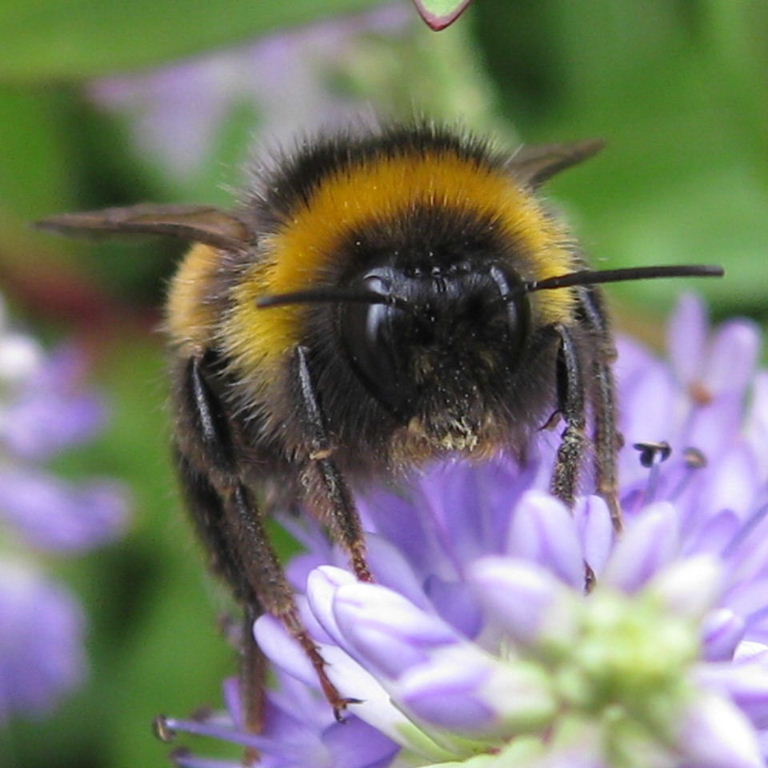
Buff-tailed bumblebee (Bombus terrestris) – male
Photo: Animal photos

Forest bumblebee (Bombus lucorum) – male, head
Photo: O. Hercog 23 07 2021
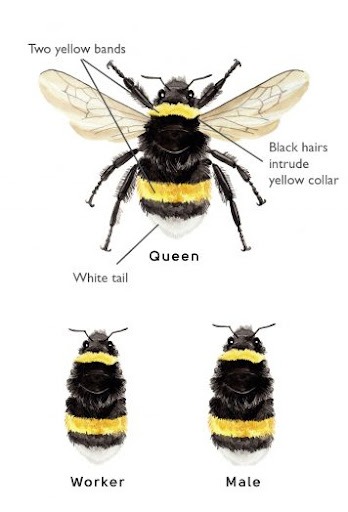
Bimaculated bumblebee in English cryptic bumblebee
- You can read more about the double-banded bumblebee (Bombus cryptarum) HERE
The following text contains only comparative information.
- Notes for determination
– The double bumblebee is a rare species and the chance of you encountering it is minimal, information about its occurrence is scarce – you have a small chance of meeting it
– can be caught at higher altitudes
– it didn't have a Czech common name for a long time. Doc Ptáček in the source article of the journal Včelařství uses the Czech designation „čmelák norový“
- Unlike the forest bumblebee:
– there’s a small chance you’ll bump into him
– they are difficult to distinguish from the bumblebee and without DNA analysis, this cannot be reliably done
– if noticeable, then it has an S-shaped break on the first stripe
– males are very similar, without dissection and examination e.g. of the sexual organs under a microscope, they are difficult to distinguish from other similar species
– the size is smaller
Note: The discussion on whether this is a distinct species or merely a form of B. lucorum remains unresolved – see Complex lucorum

Bimaculated bumblebee
Source: Blooms for Bees

White-tailed bumblebee – Bombus lucorum
Source: Sikora A., Michołap P., Kadej M., Sikora M. Tarnawski D. 2018 „Bees in the city: Bumblebees of Wrocław“, Publ. Association Nature and Man.
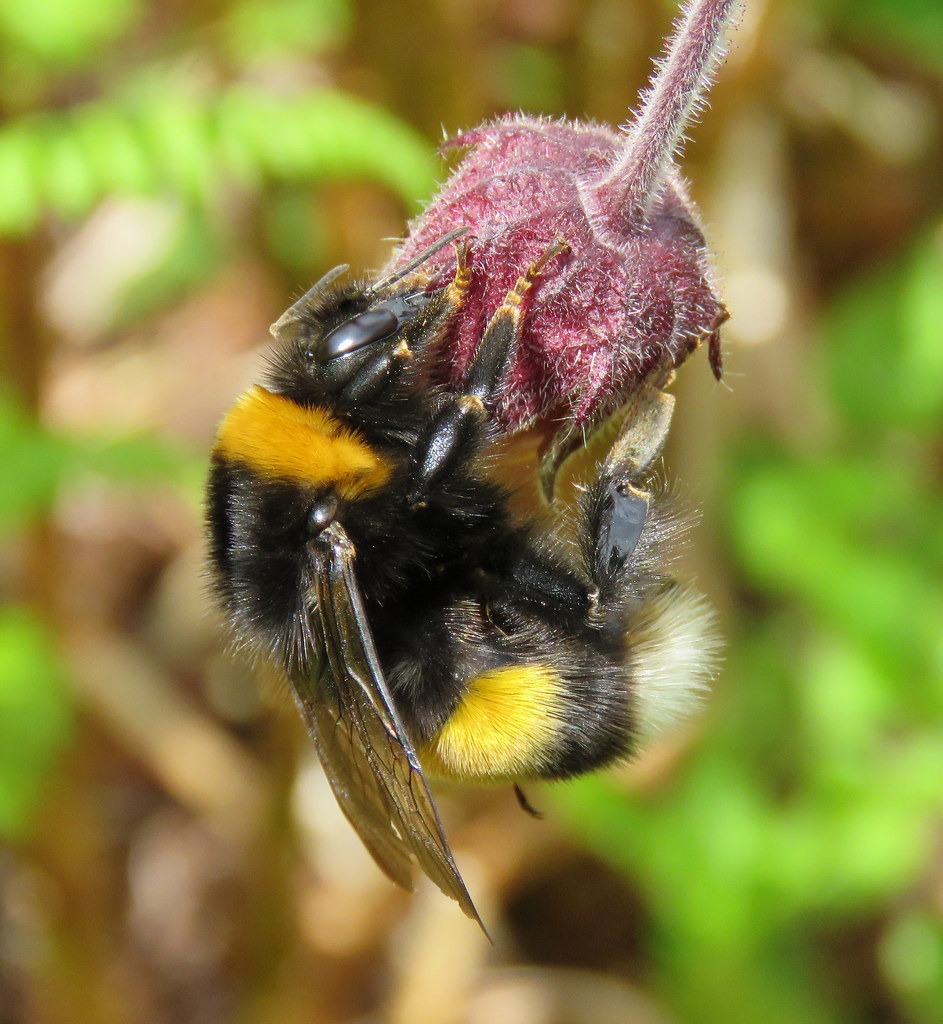
The cryptarum bumblebee (Bombus cryptarum) - queen
Photo: M. Tarm

Buff-tailed bumblebee (Bombus lucorum) - queen
Photo: O. Hercog 16/6/2021
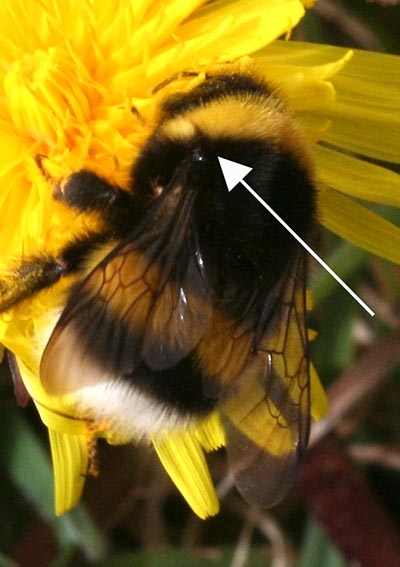
An interesting detail about the underside of the bumblebee mother's chest

The cryptarum bumblebee (Bombus cryptarum) - queen
interruption of the yellow stripe on the fore-breast
Photo: Donegal Wildlife
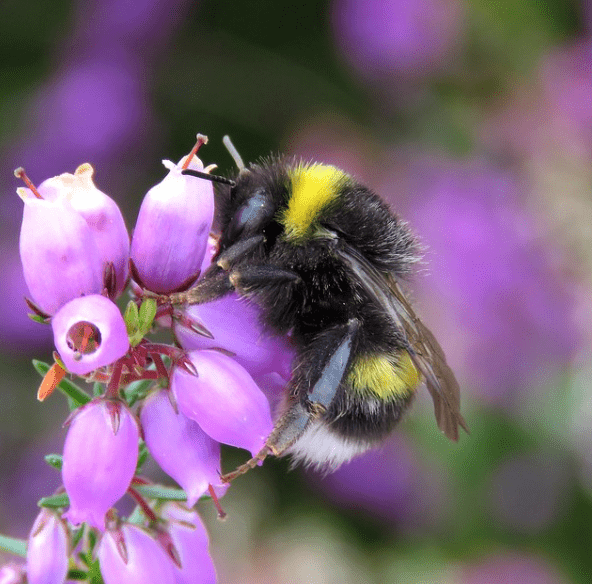
In our catalogue, we will help ourselves with the breeches of the forest buff-tailed bumblebee, which gradually fade and lose their shade/yellow colour.

Double-sleeved bumblebee (Bombus cryptarum) – worker
Photo: S. Falk 2019
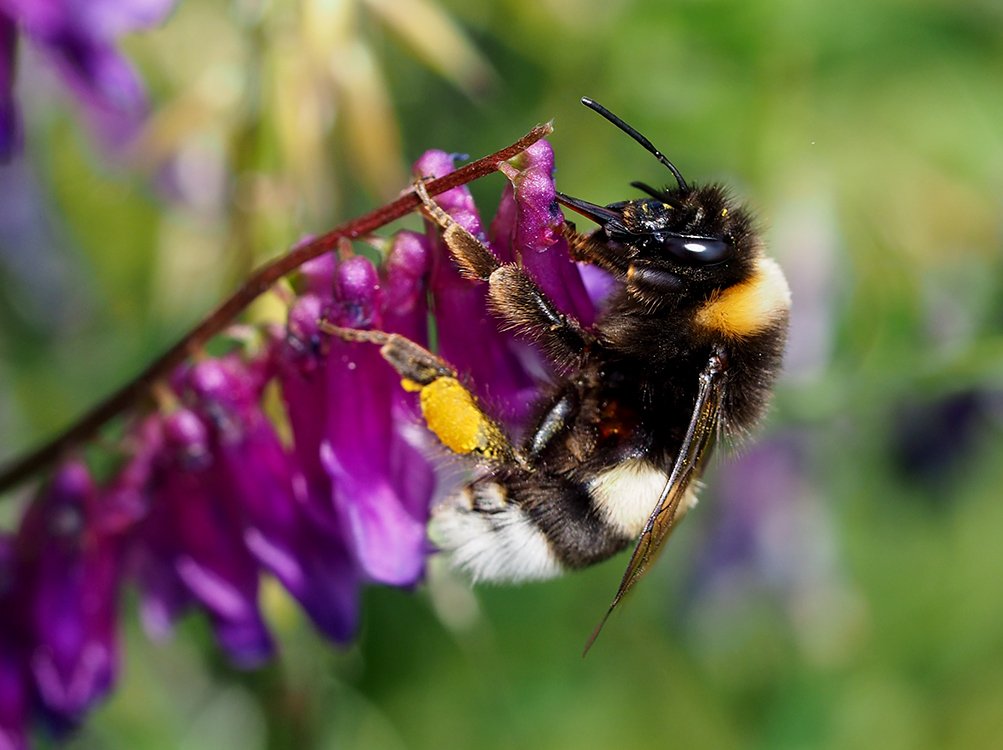
White-tailed bumblebee – Bombus lucorum – worker
Photo: H. Kříženecká
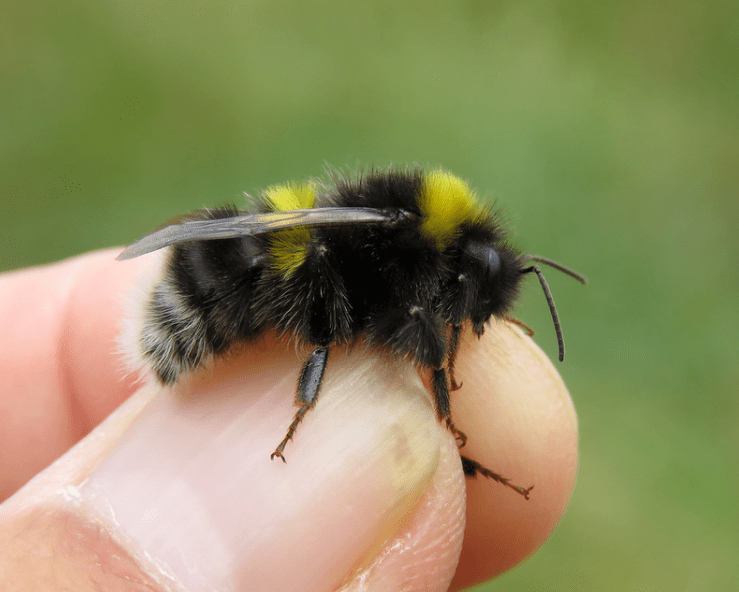
Buff-tailed bumblebee (Bombus cryptarum) – male
Photo: S. Falk 2019

White-tailed bumblebee (Bombus lucorum) – male
Photo: O. Hercog 15/7/2021
Great bee (Bombus magnus)
- You can read more about the greater bumblebee (Bombus cryptarum) HERE
The following text contains only comparative information.
Unlike the forest bumblebee:
– you have very little chance of meeting him
– difficult to distinguish from the buff-tailed bumblebee, and it is not possible to do so reliably without DNA analysis
- The yellow band of B. magnus extends below the wings, which is usually a quite typical and well-observable feature
– males are very similar, without dissection and examination e.g. of the sexual organs under a microscope, they are difficult to distinguish from other similar species
Note: The discussion on whether this is a distinct species or merely a form of B. lucorum remains unresolved – see Complex lucorum

Greater White-tailed Bumblebee (Bombus magnus) – queen – detail of the thoracic band
collar
Photo: S. Falk
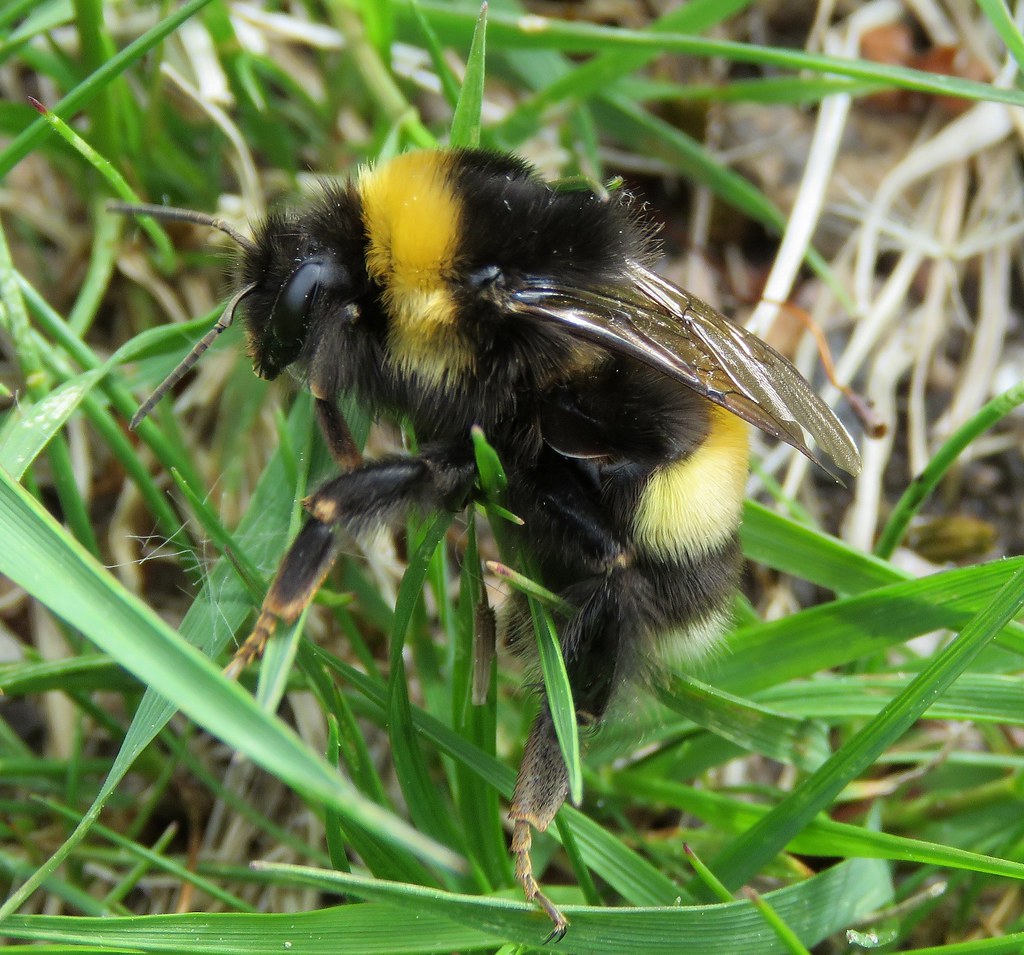
Great bumblebee (Bombus magnus) – queen
Photo: S. Falk
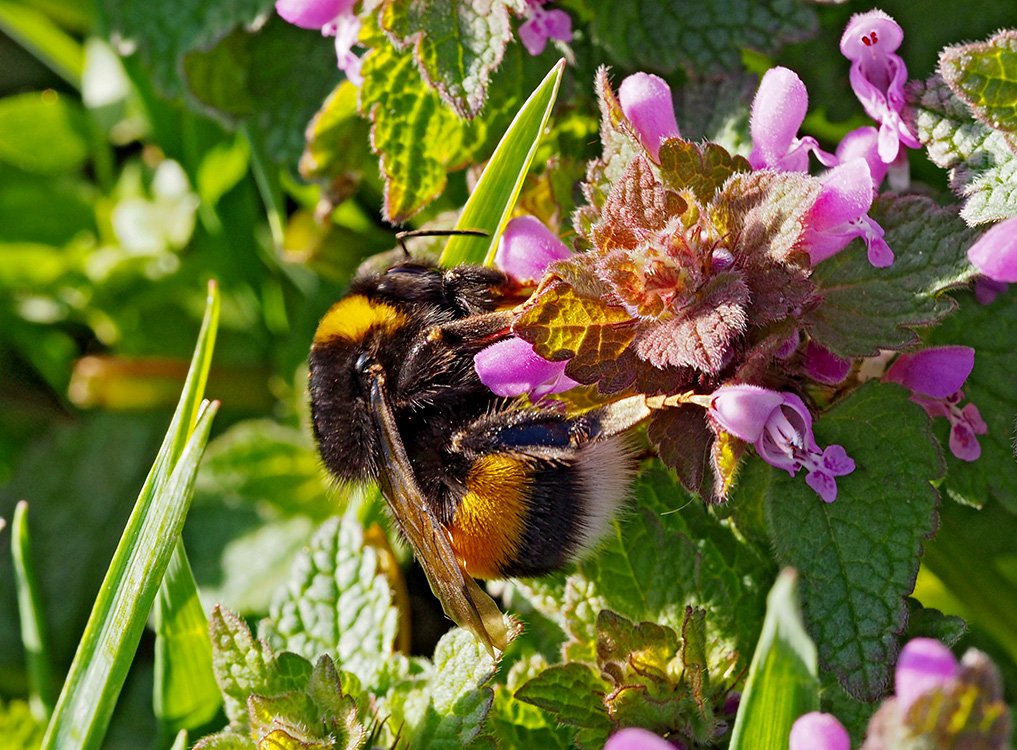
Forest Cuckoo Bee (Bombus lucorum) queen – queen – Photo Hana Kříženecká (2)
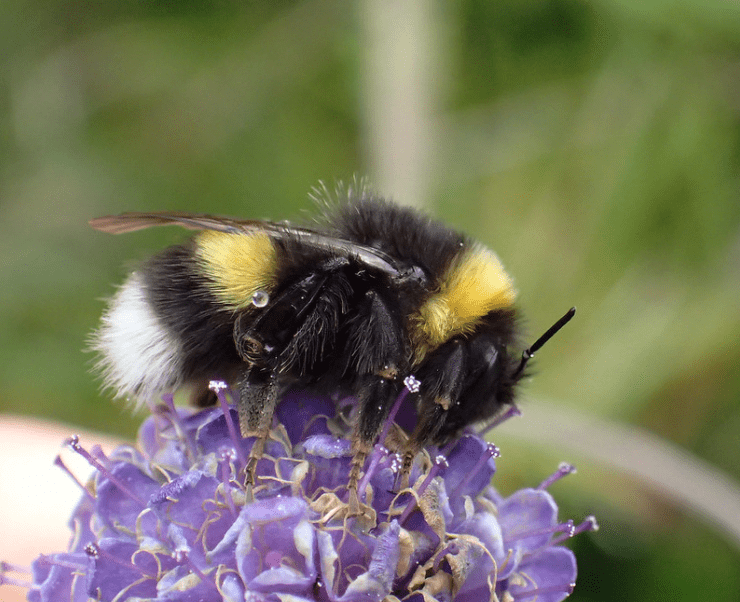
Great yellow bumblebee (Bombus magnus) – worker
Photo: S. Falk

Buff-tailed bumblebee (Bombus lucorum) – worker
Photo: H. Kříženecká
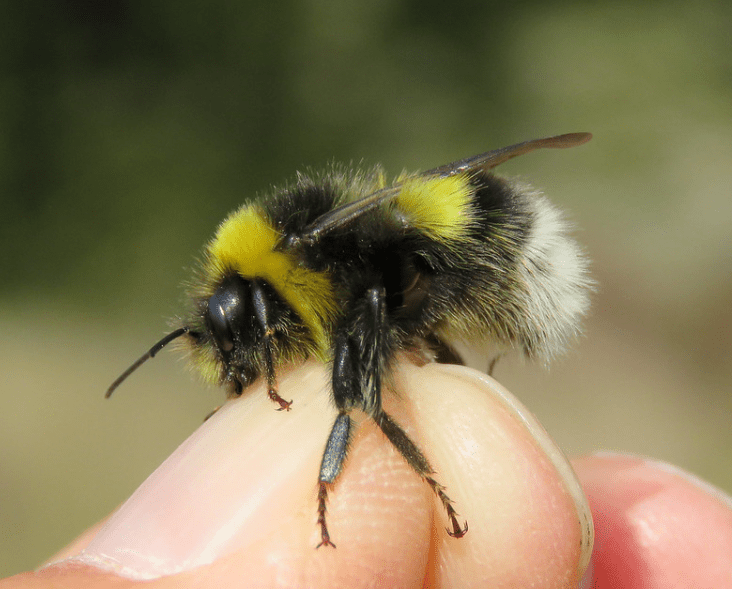
Great cuckoo bumblebee (Bombus magnus) - male
Photo: S. Falk

White-tailed bumblebee (Bombus lucorum) – male
Photo: O. Hercog 15/7/2021
Garden bumblebee
Buff-tailed bumblebee
- You can read about the garden bumblebee (B. hortorum) HERE
- You can read about the field bumblebee (B. ruderatus) HERE
Both species are very similar, and distinguishing them reliably by colour is not dependable, therefore we do not analyse their species differences in this part and content ourselves only with a comparison to the buff-tailed bumblebee (B. lucorum).
- Unlike the forest bumblebee:
– head noticeably long and arched, resembling a horse's head in shape
– bristly and longer hairs
- two stripes on the chest
– first yellow stripe on the 1st tergite of the abdomen
– all strips of the same light yellow colour and shade
– some varieties are practically black, with yellow elements only faintly indicated, or practically unrecognisable
pointy bum
– feeding of larvae by means of pocket makers
– often establish a second generation

Garden bumblebee
Source: Sikora A., Michołap P., Kadej M., Sikora M. Tarnawski D. 2018 „Bees in the city: Bumblebees of Wrocław“, Publ. Association Nature and Man.
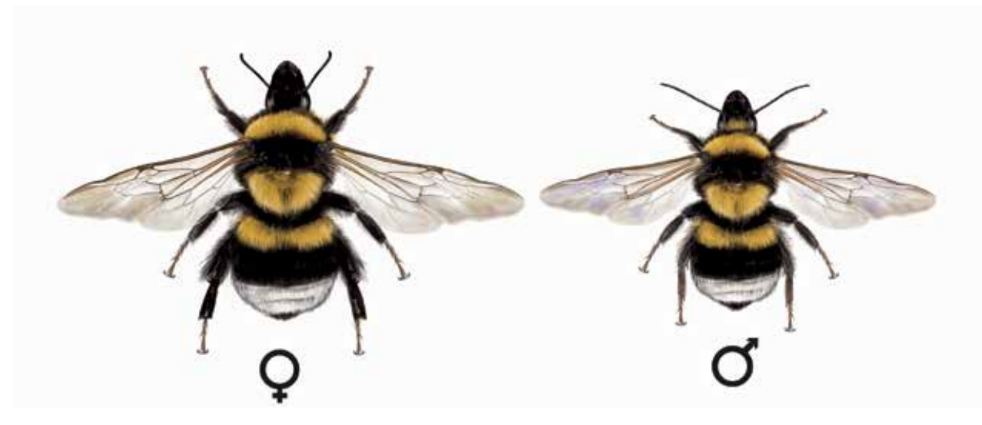
White-tailed bumblebee – Bombus lucorum
Source: Sikora A., Michołap P., Kadej M., Sikora M. Tarnawski D. 2018 „Bees in the city: Bumblebees of Wrocław“, Publ. Association Nature and Man.
Field bumblebee
Source: Sikora A., Michołap P., Kadej M., Sikora M. Tarnawski D. 2018 „Bees in the city: Bumblebees of Wrocław“, Publ. Association Nature and Man.

White-tailed bumblebee – Bombus lucorum
Source: Sikora A., Michołap P., Kadej M., Sikora M. Tarnawski D. 2018 „Bees in the city: Bumblebees of Wrocław“, Publ. Association Nature and Man.

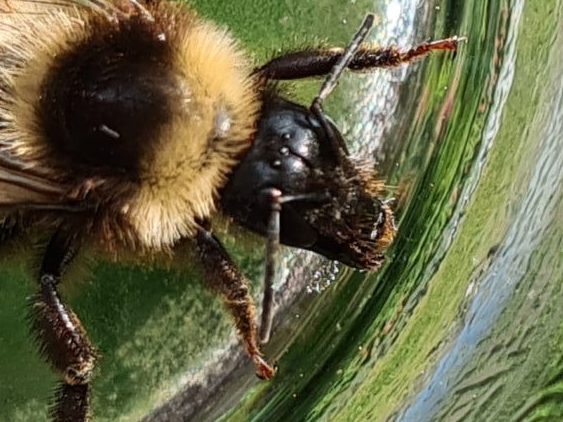
Garden bumblebee (Bombus hortorum) – worker head
Photo: O. Hercog 29/8/2021
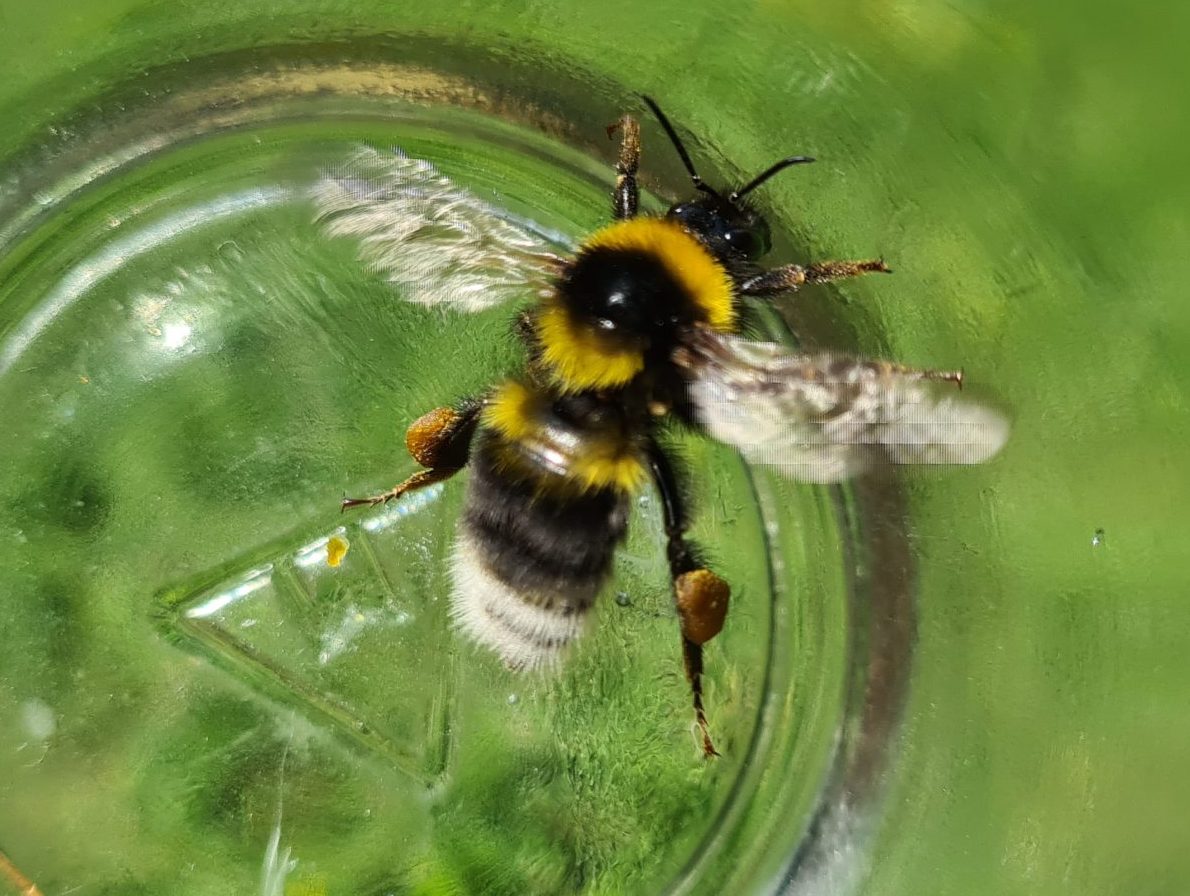
The two species can be quite clearly distinguished in the photographs.
Note the shape and position of the head – the garden bumblebee (B. hortorum) has a distinctly long head, often „poked forwards“.
The Forest Cuckoo Bee (B. lucorum), as the cuckoo bee species with the shortest head in the Czech Republic, usually „hides“ its head.
Also, note that the garden bumblebee (B. hortorum) has two distinct stripes on its thorax, and its male does not have such pronounced yellow colouring as the male buff-tailed bumblebee (B. lucorum).
You really won't confuse these two species. It's similar with the large earth-bumblebee (B. ruderatus), which is very similar to the garden bumblebee.

Garden bumblebee (Bombus hortorum) – queen
Photo: O. Hercog 27/6/2021

Buff-tailed bumblebee (Bombus lucorum) - queen
Photo: O. Hercog 16/6/2021
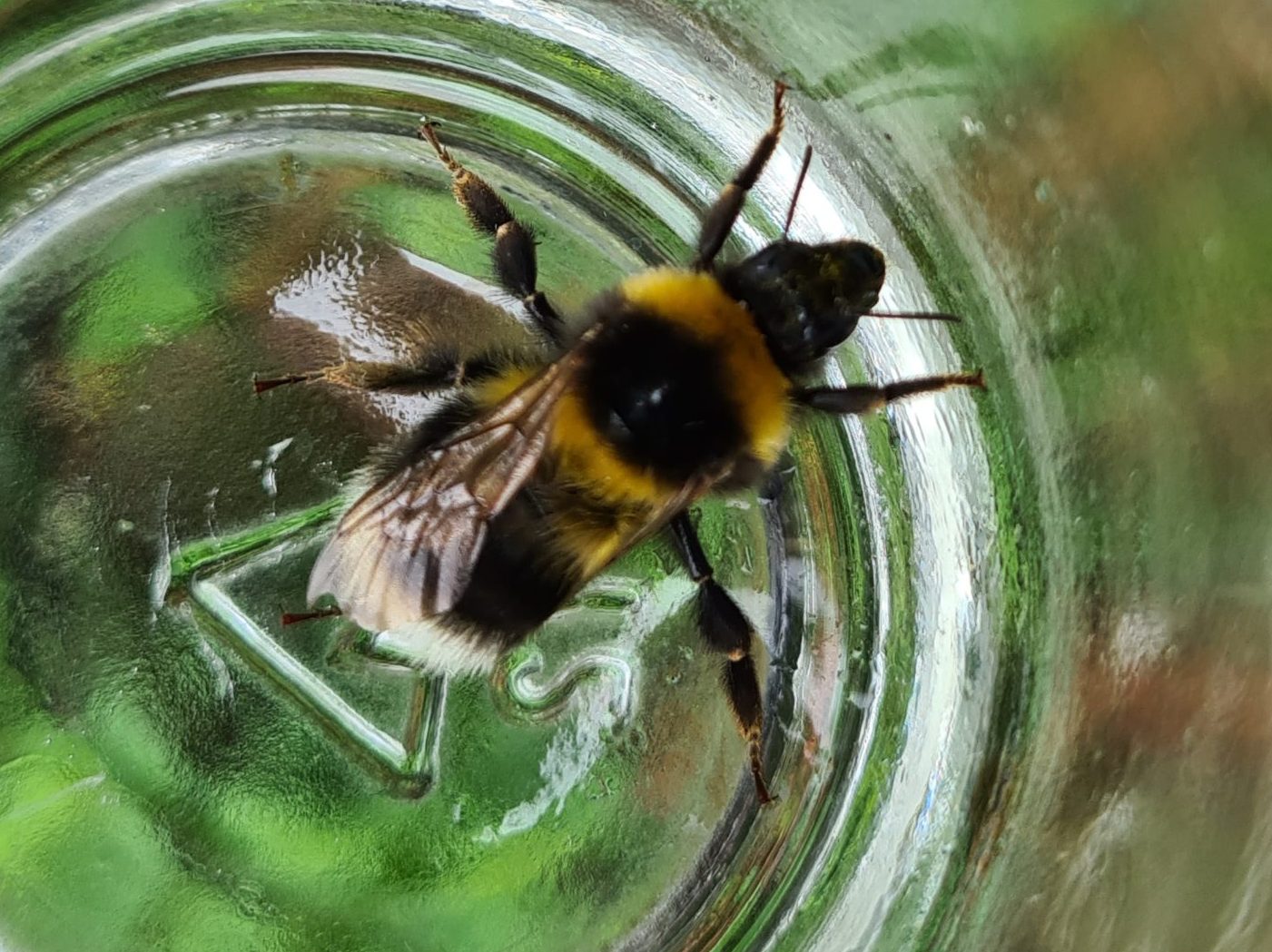
Garden bumblebee (Bombus hortorum) – worker
Photo: O. Hercog 29/8/2021

Tree bumblebee (Bombus lucorum) – worker
Photo: O. Hercog 5/9/2021

Garden bumblebee – (Bombus hortorum – male)
Photo: O. Hercog 18/7/2021
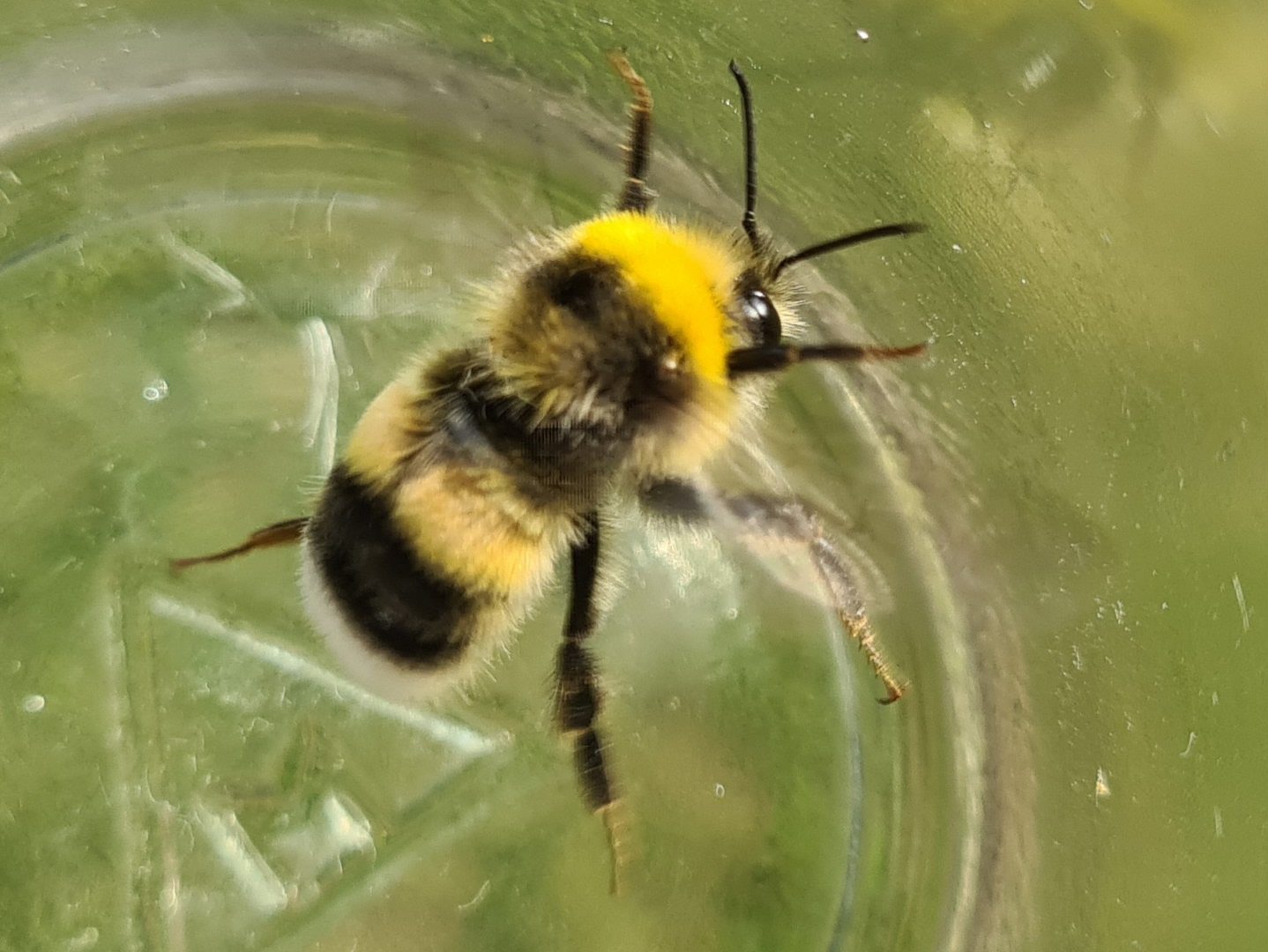
Tree bumblebee – (Bombus lucorum)- male
Photo: O. Hercog 15/7/2021
Occurrence
- It is a common inhabitant of mountainous regions, where it can be seen at altitudes of up to 2000 m.
- However, it has also spread into the lowlands, where it prefers wooded areas to open landscapes.
- Moisture-loving and very abundant in wooded landscapes
- You can find it practically all over Europe, Asia Minor, and as far as the Pacific.
- In the north of Europe, occurrences are described as far as the Barents Sea, and in the south, in Greece (though not in the Mediterranean Sea).
Biotop
- inhabits various environments
- prefers shady habitats but also heathlands
- It often occurs in forests, including mountainous ones – from there it penetrates into forested mosaic landscapes.
Life cycle
- Type:
morning - Number of generations per season:
– one generation per season (in laboratory breeding, it can also nest without hibernation) - Queen bees looking for nesting sites:
– from mid-March (depending on the temperatures) - Nesting of queens:
March to mid-May - New queen mothers are emerging:
– from mid-June, in higher altitudes in July - The males appear:
– from mid-June
– males are born in the nest only after the young females, then the nest produces males until its demise, as with the species terrestris.
Note: unlike the buff-tailed bumblebee (B. terrestris), in this species, cocoons of young queens may sometimes appear even during the male production period. Males, as in other bumblebees, can originate from the laying of both queens and workers. - The nest ends:
– nests end depending on food sources in lowlands as early as the beginning of July, in higher altitudes up to September. Its demise is usually rapid.
You often see photos/videos that the author claims are of mating.
However, the male can only mate when the female extends her sting and opens the sting chamber. The mother's sting is curved, and when extended, its tip points upwards. Therefore, the male must be behind her – simply sitting on the female is not enough.
This photograph of Dr. Ptáček shows it very clearly.

Forest Cuckoo Bee - (Bombus lucorum) - mating
Photo: V. Ptáček
In honey bees (B. lucorum), returning to their birthplace is not common, at least some breeders confirm this.
However, it is common for one mother to clash with another mother of a different species who is interested in her nesting site. In such a fight, the stronger individual usually wins. Very often, though, such fights end in death – of one or both rivals.
It is often the buff-tailed bumblebee (B. terrestris) and the red-tailed bumblebee (B. lapidarius) that take over an already established nest, killing the original occupant or, in the best-case scenario, driving her away.
Jaromír Čížek describes instances where he found a large number of dead queens at an interesting nesting site, specifically at the nest of a stone bumblebee (B. lapidarius).
You can read about mothers returning to their home towns HERE
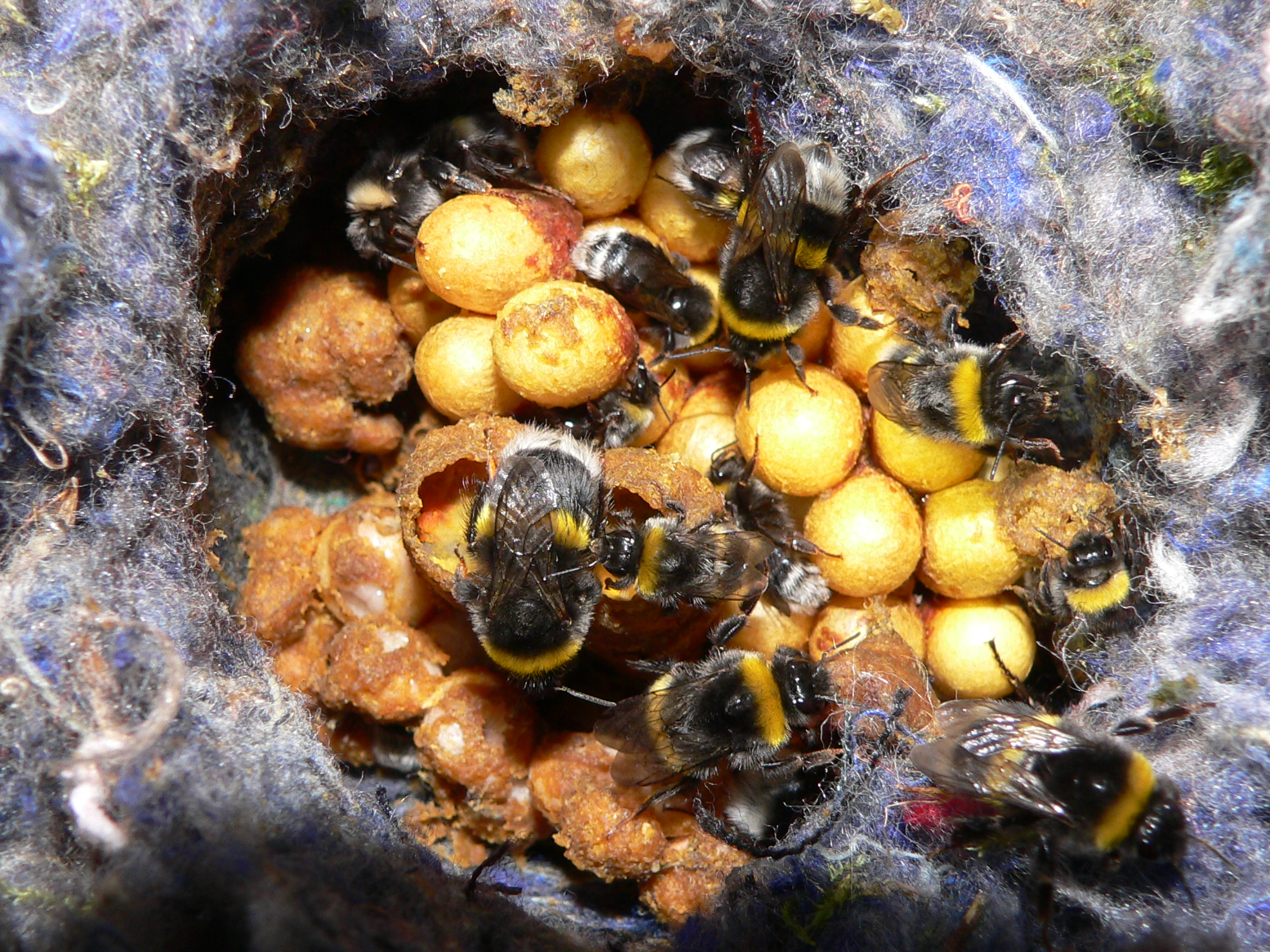
The following photograph shows a view into a tree bumblebee (B. lucorum) nest.
In the nest you can see light yellow cocoons, from which more individuals will soon be born. Also in the centre of the photograph you can see pollen stores from various plants (a mix of colours). In the bottom left of the picture you can see wax casings with larvae. The casings are mostly open, and the workers feed the larvae through these openings.
In the left part, a brown formation. These are gradually emerging larval casings, which are growing and already becoming independent.

Buff-tailed bumblebee (Bombus lucorum) – nest
Photo: J. Čížek
Larval feeding
- Dust collectors (pollen stores) The queen and workers scrape pollen from the pollen baskets into storage chambers formed from empty cocoons or as wax structures in the centre of the nest. It appears that bumblebees use various methods to create these stores. What is important, however, is that they store the pollen and distribute it from these chambers.
The workers tamp the pollen in the cells and adjust it with their mandibles to reduce the surface area in contact with the air. The worker bees do not seal the cells.
This protects it from oxidation and degradation. They take it from here to feed the larvae and mix it with nectar, feeding the larvae with the mixture through feeding holes.
Woodland bumblebees are a polylegetic species – They don't prefer just one plant, but a wide spectrum of different flowering plants. This is why different colours and shades of pollen can be found in the pollen stores, brought back by the worker bees. This is due to the fact that bumblebees do not cooperate like honeybees, and each worker collects pollen independently, without sharing information about its source with her sisters.
Woodland bumblebees favour the flowers of currants, raspberries, as well as lupins, dead-nettles, fruit trees and willow catkins.
Nesting site
- Nests
– most commonly subterranean nesting sites in abandoned nests of small mammals rodents (voles)
– various cavities, sometimes and very deep underground
– but it also nests in wall cavities where it finds a nest left by small rodents
Nest size
- Mostly medium nests
- Number of individuals 100 – 600
Visiting bumblebees
Large earth bumblebee (Bombus terrestris)
Bohemian cuckoo-bee
You will learn about bumblebees HERE
How to tell the difference between a bumblebee and a 'pačmelák' (which is often used colloquially to refer to any larger bee, including bumblebees, or sometimes more specifically to certain types of larger, fuzzy bees).
The Vestal bumblebee (Bombus vestalis), sometimes also Summer bumblebee
- You will find out more about the bee wolf (B. vestalis) HERE
- Unlike the white-tailed bumblebee (B. lucorum):
– no workers' dormitories
a distinctive large round head
– absence of yellow band on the 2nd tergite
– neither females nor males have pollen baskets on the last pair of legs
dark wings
when flying it makes a loud rattling noise

Large earth bumblebee (Bombus terrestris)
Source: Sikora A., Michołap P., Kadej M., Sikora M. Tarnawski D. 2018 „Bees in the city: Bumblebees of Wrocław“, Publ. Association Nature and Man.
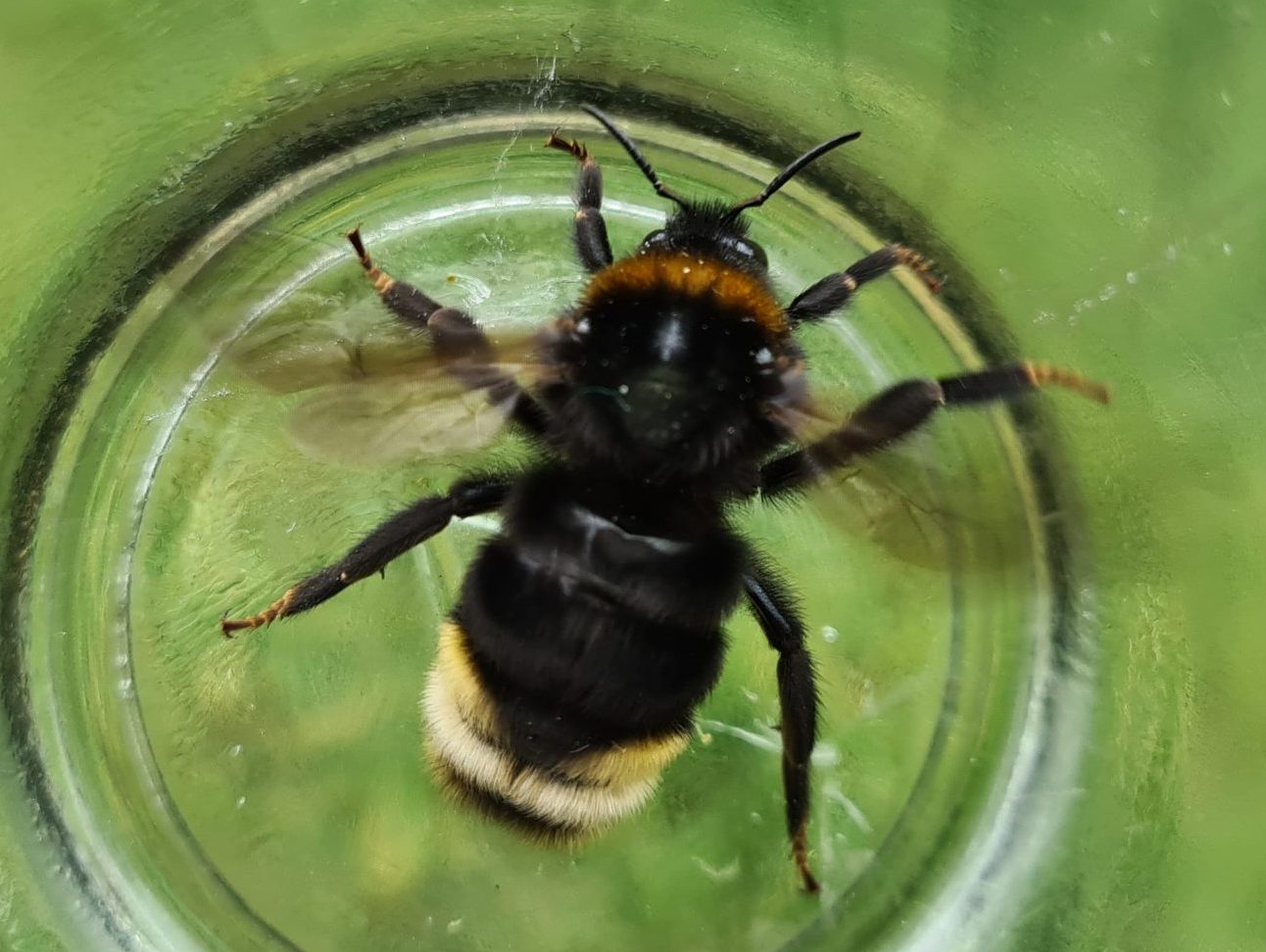
White-tailed bumblebee – Bombus lucorum
Source: Sikora A., Michołap P., Kadej M., Sikora M. Tarnawski D. 2018 „Bees in the city: Bumblebees of Wrocław“, Publ. Association Nature and Man.
Note the differences in colouration and the typical bumblebee head.

Vestal Cuckoo Bee (Bombus vestalis) – female
Photo: O. Hercog 01/08/2021

Buff-tailed bumblebee (Bombus lucorum) - queen
Photo: O. Hercog 16/6/2021
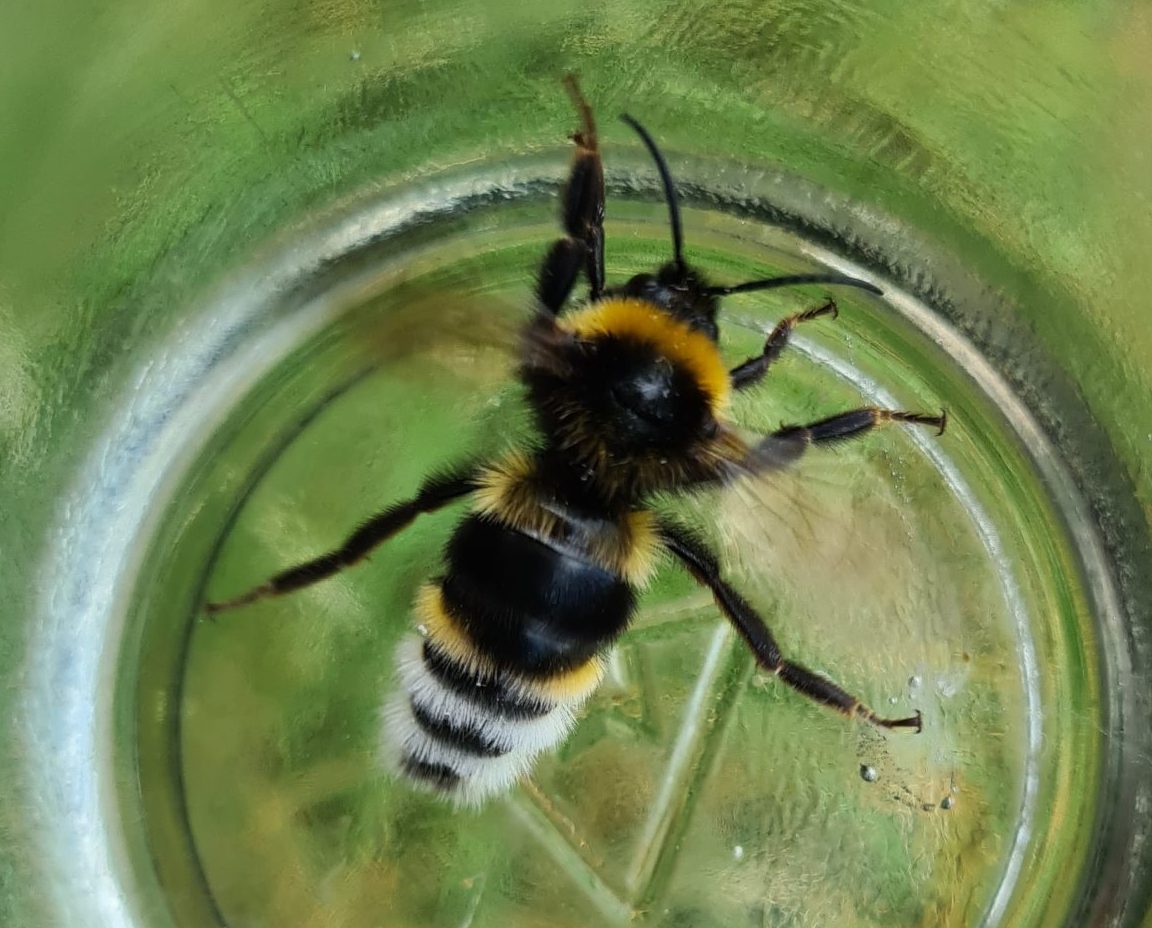
Brood cuckoo bumblebee (Bombus vestalis) – male
Photo: O. Hercog 24/7/2021

White-tailed bumblebee (Bombus lucorum) – male
Photo: O. Hercog 15/7/2021
The head is usually a reliable feature for distinguishing bumblebees from carpenter bees. You can see for yourselves that carpenter bees have large, robust heads.

Buff-tailed bumblebee (Bombus vestalis) – male – head
Photo: O. Hercog 04/08/2021

Forest cuckoo (Bombus lucorum) – male head
Photo: O. Hercog 23 07 2021
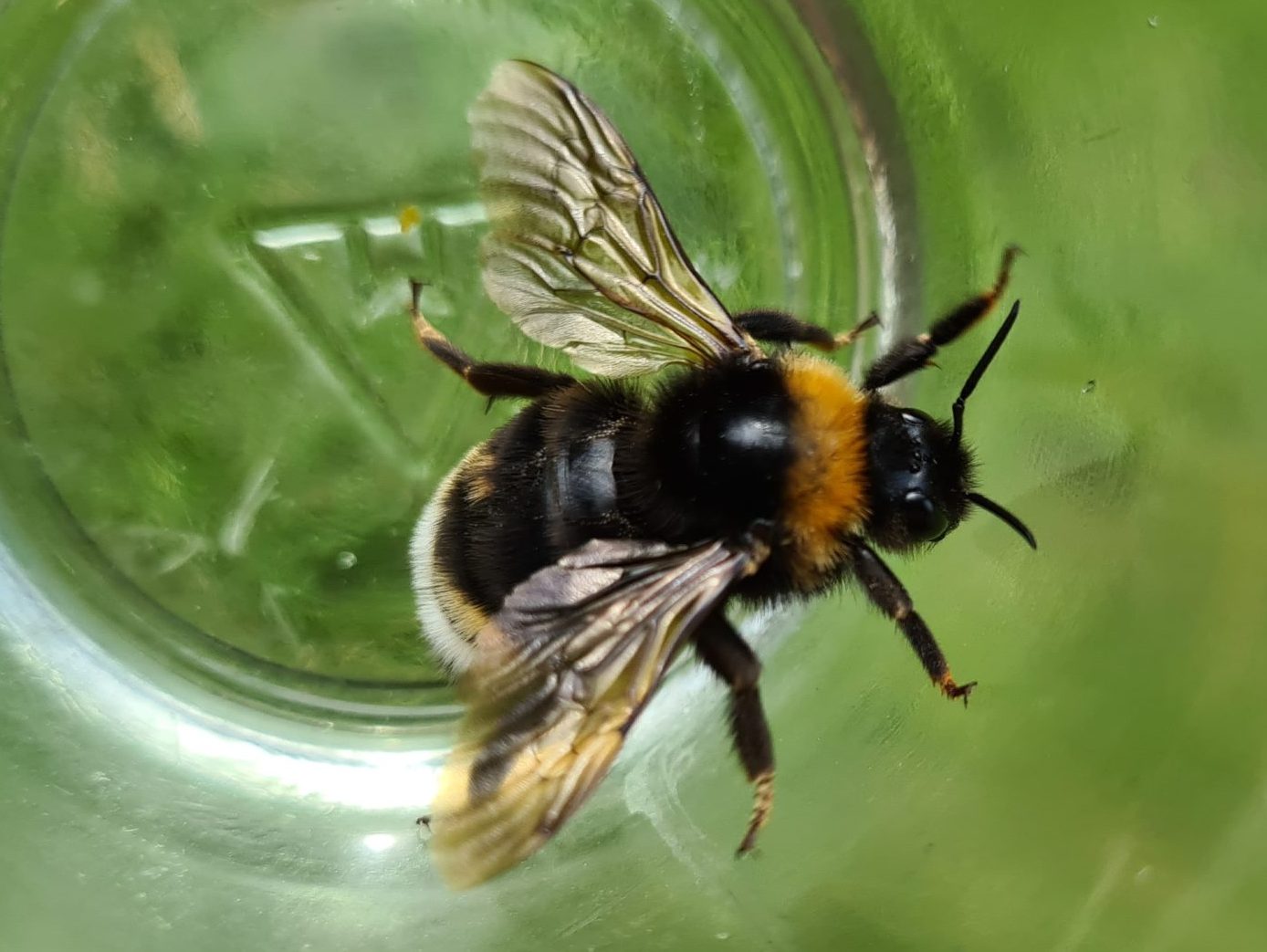
Vestal Cuckoo Bee (Bombus vestalis) – female
Photo: Ondřej Hercog 27/6/2021
Czech bumblebee (Bombus/Psithyrus bohemicus)
- You can read more about the Czech bumblebee (B. bohemicus) HERE <COMING SOON:
- Unlike the white-tailed bumblebee (B. lucorum):
– no workers' dormitories
– has a pronouncedly large round head
– absence of yellow band on the 2nd tergite
– neither females nor males have pollen baskets on the last pair of legs
dark wings
when flying it makes a loud rattling noise

Bohemian cuckoo-bee
Source: Sikora A., Michołap P., Kadej M., Sikora M. Tarnawski D. 2018 „Bees in the city: Bumblebees of Wrocław“, Publ. Association Nature and Man.
White-tailed bumblebee – Bombus lucorum
Source: Sikora A., Michołap P., Kadej M., Sikora M. Tarnawski D. 2018 „Bees in the city: Bumblebees of Wrocław“, Publ. Association Nature and Man.
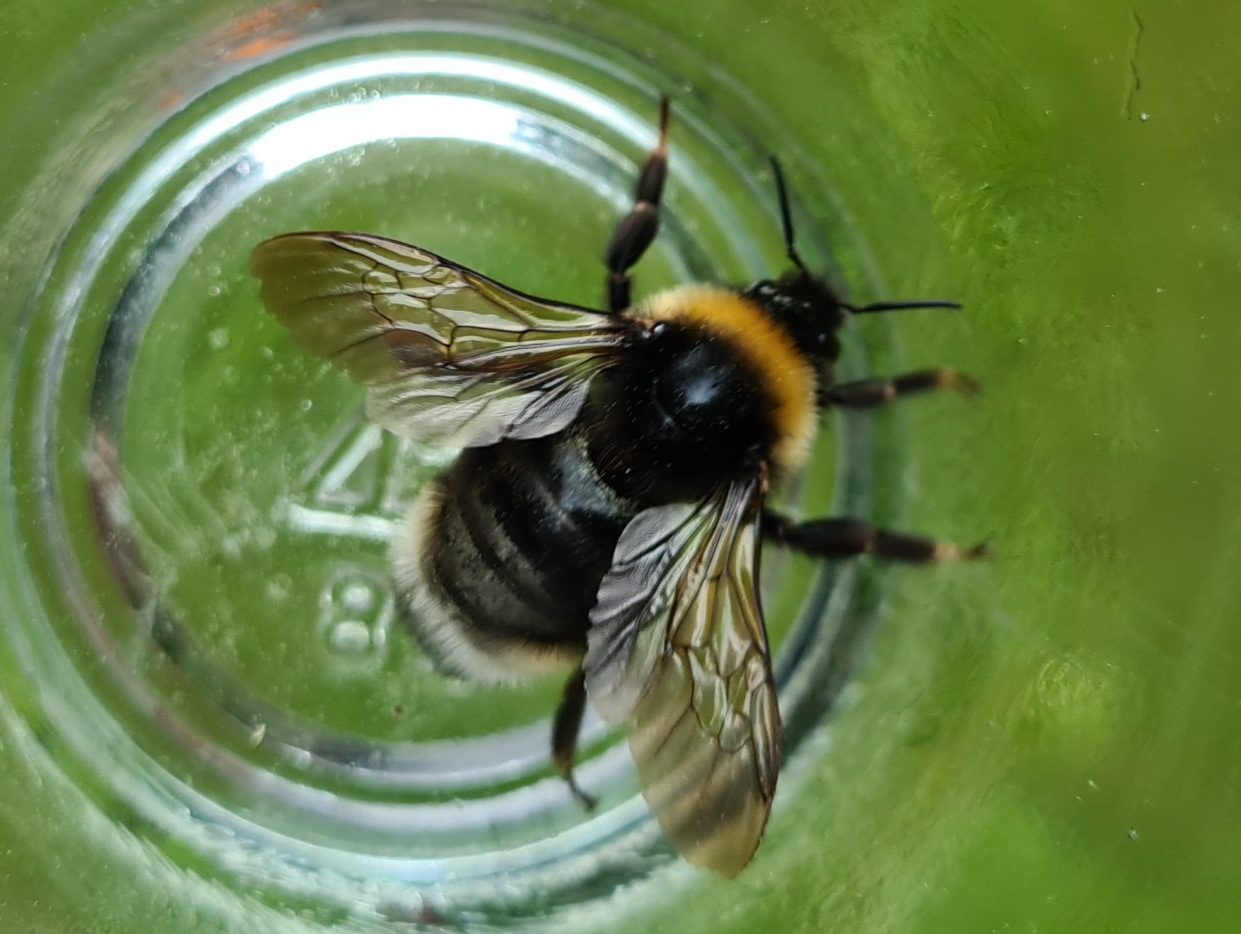
It's easy to tell a bumblebee from a cuckoo bee. However, determining the species of cuckoo bee is harder...
However, in the photographs, you can see that, for example, a bumblebee queen and a mother bumblebee are truly indistinguishable.

Czech cuckoo bumblebee (Bombus bohemicus) – female
Photo: O. Hercog 05/06/2021

Buff-tailed bumblebee (Bombus lucorum) - queen
Photo: O. Hercog 16/6/2021
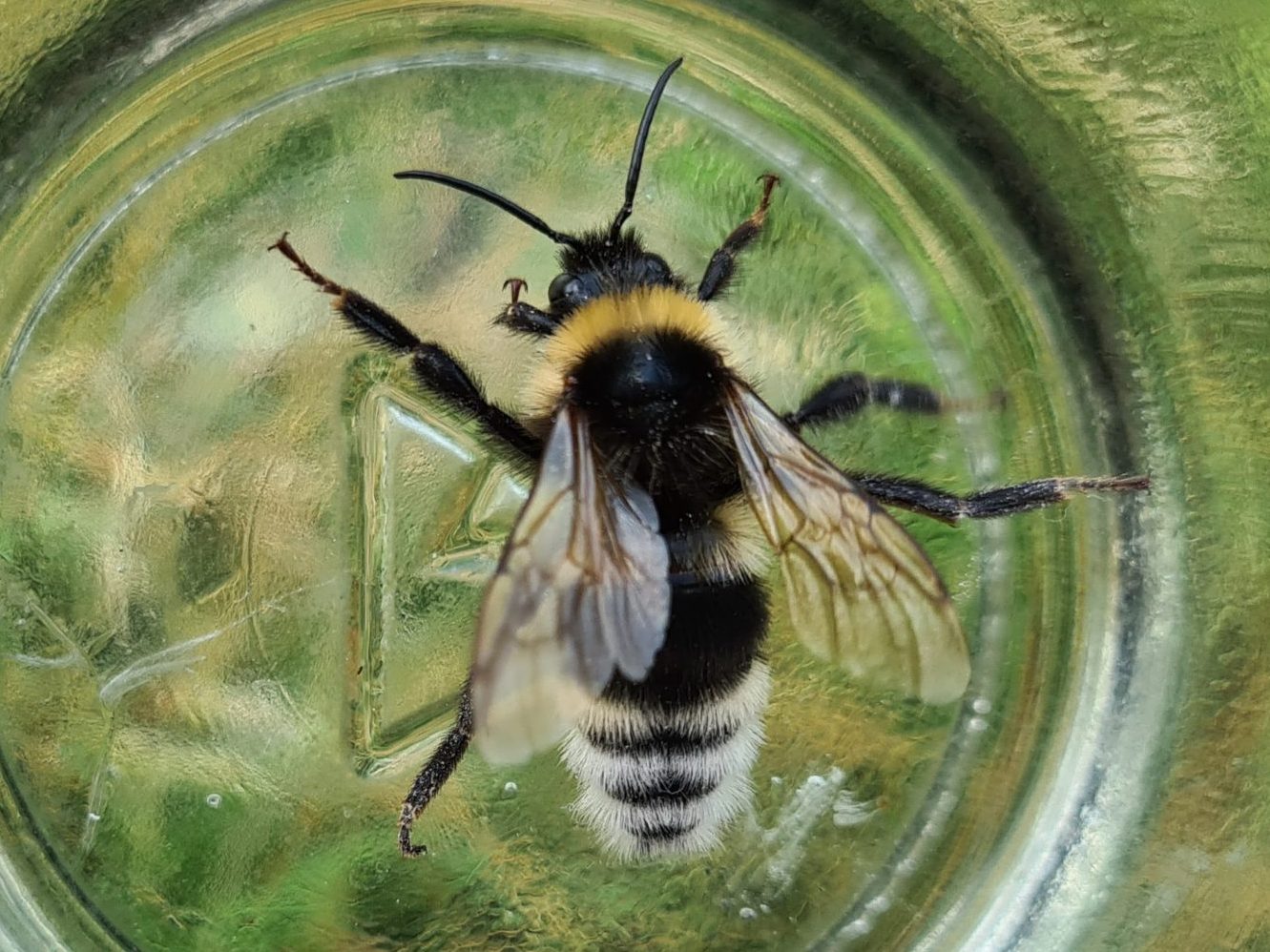
For males, it's a bit more complicated. The male bumblebee resembles some species of bumblebees. However, no male bumblebee in the Czech Republic resembles the male of the buff-tailed bumblebee (B. lucorum).
For bumblebees, it is always good to look at the head – its shape and size are typical.

Czech bumblebee (Bombus bohemicus) – male (head)
Photo: O. Hercog – 25/7/2021

Tree bumblebee – (Bombus lucorum)- male
Photo: O. Hercog 15/7/2021
Here the stocky head of the Bohemian bumblebee (B. bohemicus) is clearly visible, as is the fact that it is entirely black.

Czech Cuckoo Bee (Bombus bohemicus) – male – head
Photo: O. Hercog – 23/7/2021

Forest bumblebee (Bombus lucorum) – male, head
Photo: O. Hercog 23 07 2021
Information on breeding
- Fright
– a larger nest is recommended, corresponding to a large nest (ideally internal volume 12-15l) - Hallway
– hallway, primarily long, but can also be medium-length (not fundamentally decisive)
– were successfully kept in a long-entrance hive (hive in a garage, flap on the outside wall) - Seating
– doesn't readily accept settling nestlings, the keeper often has to try several times - Mothers' return in spring after hibernation
– are not common (observations vary) - Self-assembly in the hive
– quite common
– it is common for larger species' queens to be attacked, for established queens to be attacked, and for fights to occur between them - Dietary requirements
– demanding of a quality pollen source
– it is recommended to feed when new queens hatch and fly to mate, such queens can deplete their nest stores and hasten its demise
- Points of interest for breeding:
– breeding this species is not easy – it’s not always successful
Interesting facts
- The shortest head of all our species (the longest being the Garden Bumblebee B. hortorum and the Early Bumblebee B. ruderatus)
- Flies emit a higher pitch than bumblebees.
- A relatively strong link to vole nests
- Males are a good indicator of the presence of this species if you are unable to reliably detect this species by mothers and workers.
- It can be relatively difficult to distinguish from the cryptic bumblebee (B. cryptarum) – some studies hesitate over whether it's a different or the same species
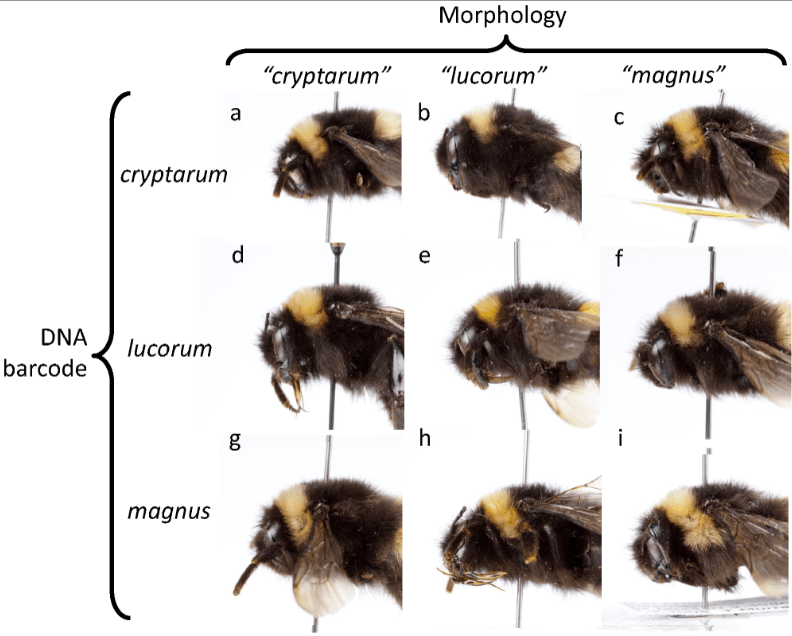
- Even distinguishing between different species isn't always straightforward or reliable without DNA analysis – see the illustrative figure. It shows the overlap in colour markings and DNA analysis of similar species.
- The term „Bombus lucorum complex“ also arose for this fact – defined by Scholl and Obrecht in 1983 as an explanation of a complex of three taxa (B. lucorum, Bombus magnus, and Bombus cryptarum), which cannot be easily distinguished from each other even by their morphological characteristics.
- B. lucorum in China is not the same species as B. lucorum in Europe. Differences were found by analysing the mandibular glands. These can be used for differentiation, so it cannot be done without chemical analysis.
- An interesting detail regarding the sting is described by J. May: „In the females of bumblebees Ps. rupestris and Ps. barbutellus, I found five barbs on each stylet, and three on the sting groove just behind the tip. The barbs are more developed than in the females of B. lucorum, but are also only visible under a microscope. Without a doubt, all species of bumblebees and cuckoo bumblebees have barbs on the groove and stylets. I found no barbs on the groove of honeybee workers. The reason why bumblebees can use their stingers several times without them breaking off is not"
So, is it that the sting doesn't have barbs, but rather the barbs are short and blunt?“ Will he test that too? 😀
Does determining the type of bumblebee seem complicated to you?
Don’t despair – you can’t tell just by looking, and as you can see from the diagram below, even a DNA analysis might not provide a definitive answer in this case.
In this instance, however, it will help you that you are more likely to encounter the Buff-tailed Bumblebee (B. lucorum) than the Cryptic Bumblebee (B. cryptarum) and very unlikely the Giant Bumblebee (B. magnus). The Buff-tailed Bumblebee (/B. terrestris) also belongs to the „Complex lucorum“ group, but in our conditions, you can distinguish it relatively easily. Although… 😀

„Complex of Forests“ – Source Colour Patterns Do Not Diagnose Species: Quantitative Evaluation of a DNA Barcoded Cryptic Bumblebee Complex
Photos and videos
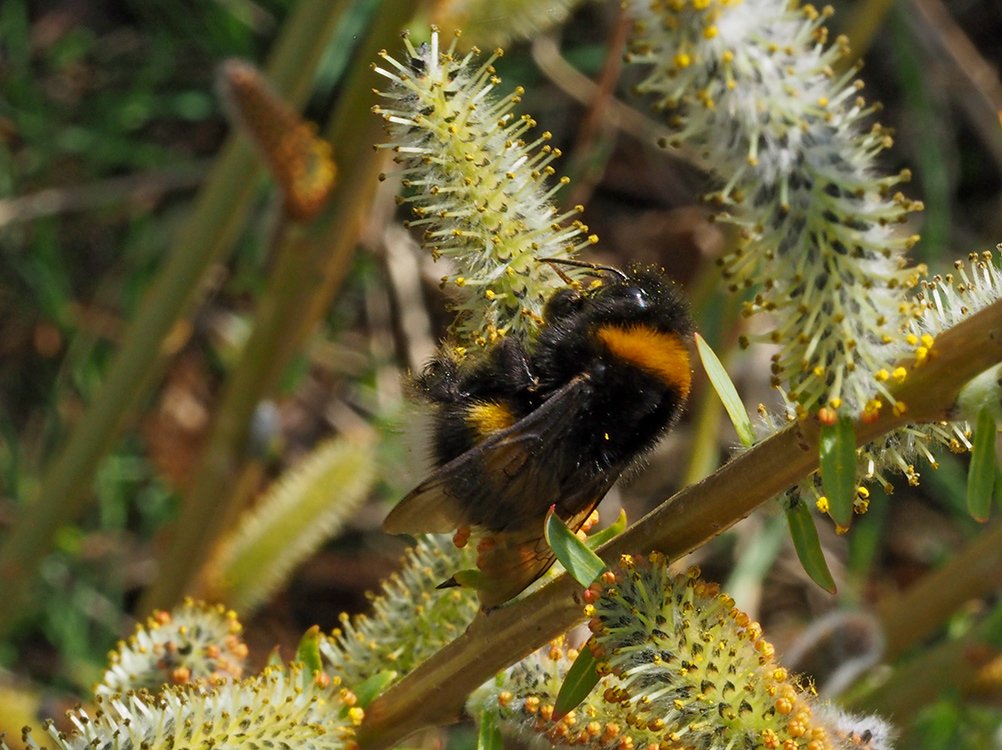
Hana Kříženecká's beautiful photographs offer us a glimpse into the world of the buff-tailed bumblebee's (B. lucorum) queens, workers, and males.
With this young mother, you can still see the difference in shades of coloured stripes. However, their yellow is brighter than that of the buff-tailed bumblebee (B. terrestris), and the stripes are also thicker.
Some photographs can be misleading; it greatly depends on the light and colour rendering. However, the stronger stripe behind the head suggests it should be a Garden Bumblebee.

Buff-tailed bumblebee (Bombus lucorum) - queen
Photo: H. Kříženecká
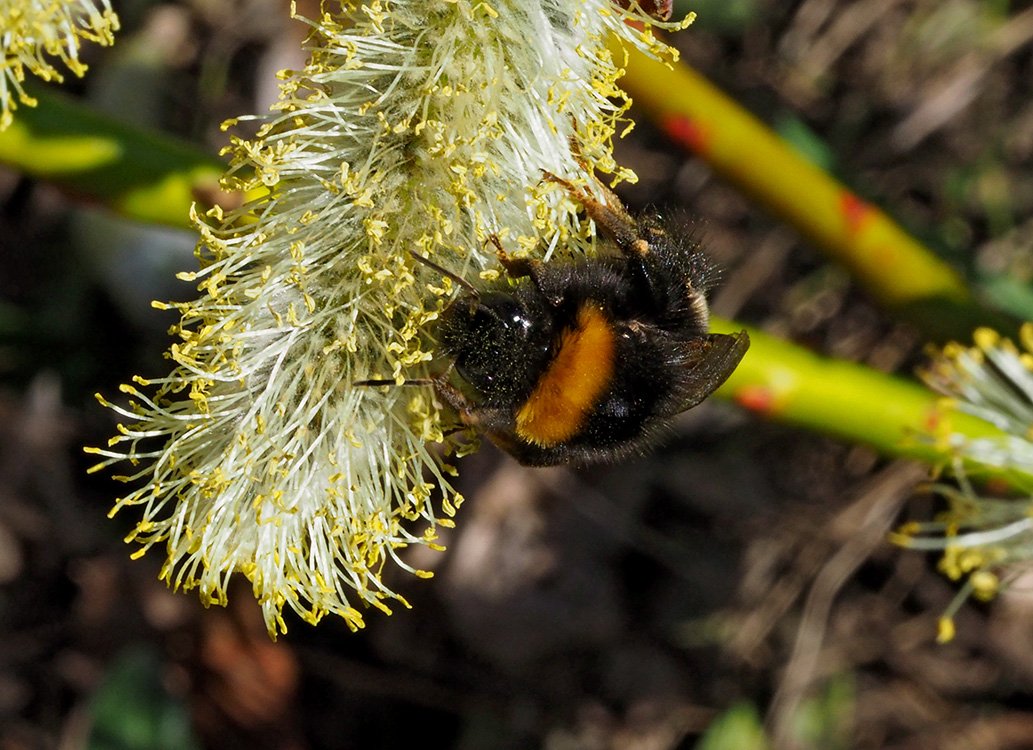
Buff-tailed bumblebee (Bombus lucorum) - queen
Photo: H. Kříženecká
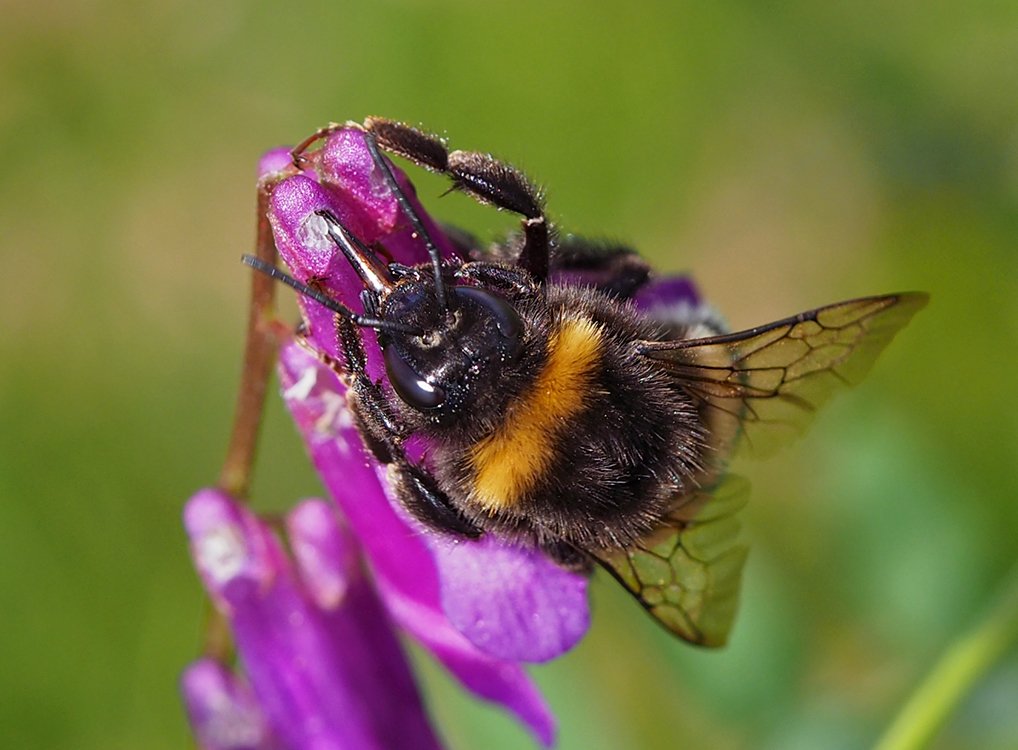
The stripe behind the head is nicely visible – it's thicker and brighter.

Buff-tailed bumblebee (Bombus lucorum) - queen
Photo: H. Kříženecká
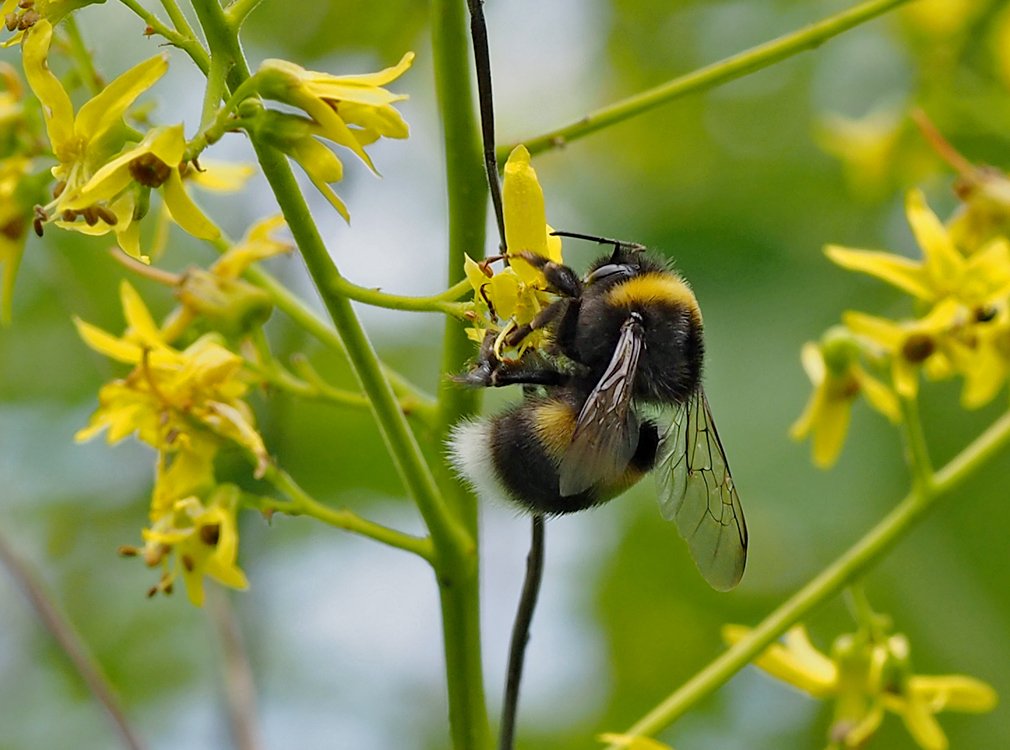
Buff-tailed bumblebee (Bombus lucorum) - queen
Photo: H. Kříženecká
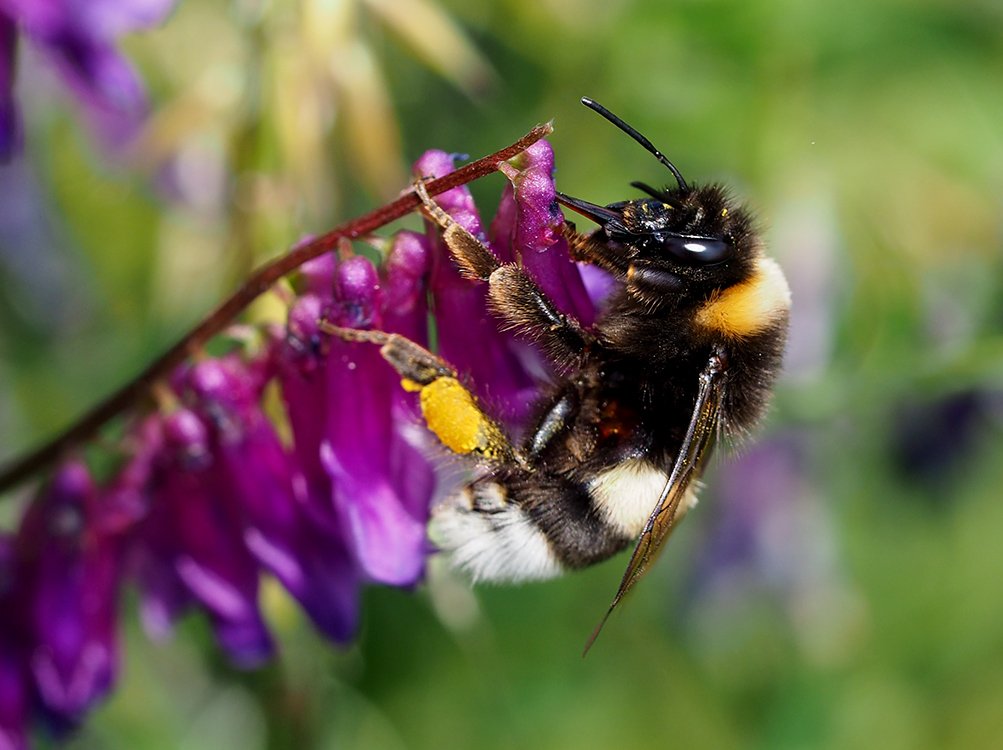
Distinguishing workers and mothers in the buff-tailed bumblebee (B. lucorum) is not easy. Size can be a guide, but so can the times when you observe individuals.
Changing the colour of the yellow stripes will also help. Young mothers have bright stripes and you're unlikely to encounter an older mother with faded stripes outside – so it's most likely a worker.
This piece is probably older, its yellow tag on the rear is faded.

Forest cuckoo bee (Bombus lucorum) - worker - Photo: H. Kříženecká
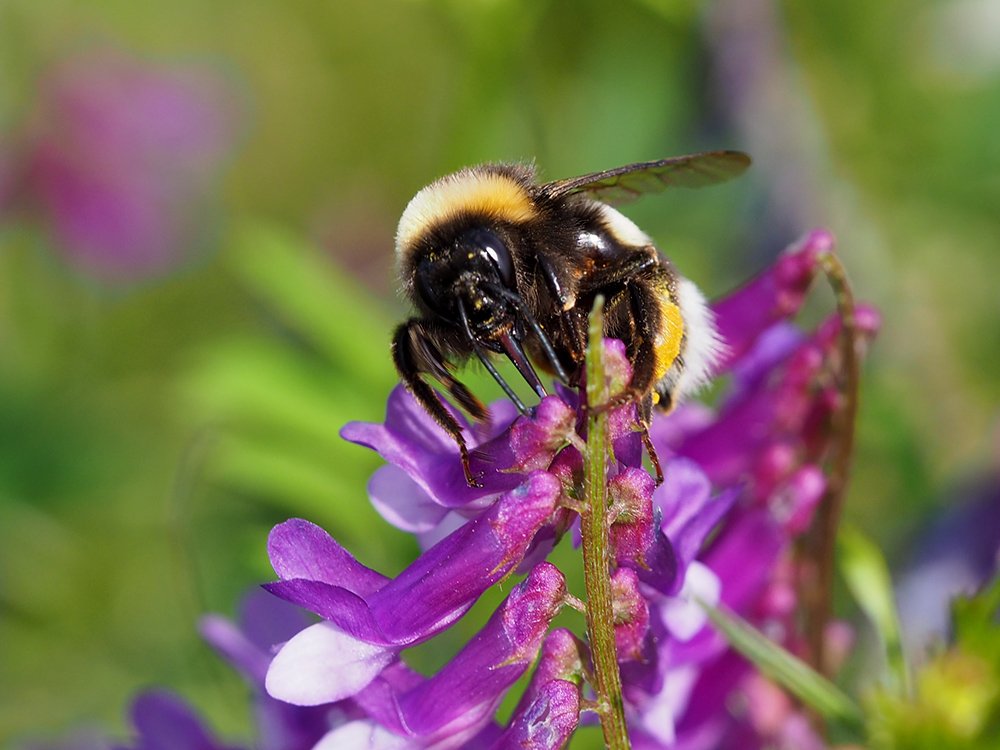
Forest cuckoo bee (Bombus lucorum) - worker - Photo: H. Kříženecká
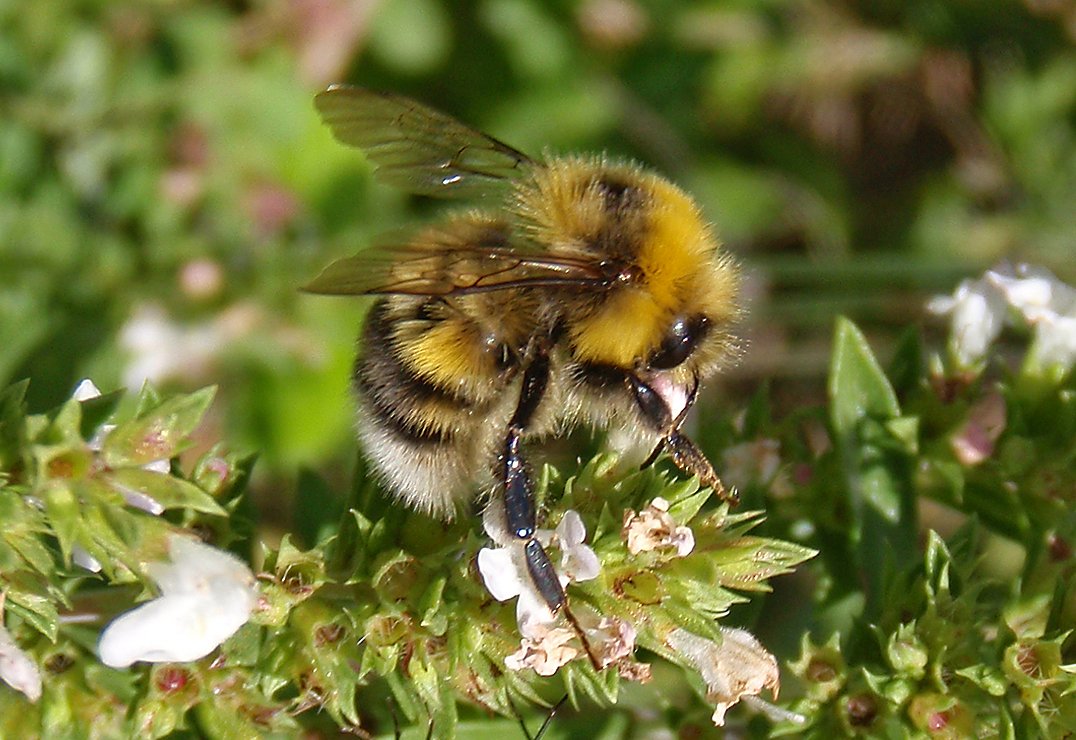
The males are true heartthrobs and elegant gentlemen. Their bright colours are clear evidence that it is a nest of B. lucorum bumblebees and not B. terrestris bumblebees. The males of these species are indeed unmistakable.

White-tailed bumblebee (Bombus lucorum) – male
Photo: H. Kříženecká
On these photographs, it is possible to observe the typical yellow markings of the Buff-tailed bumblebee (B. lucorum).
Note the facial part as well as the dense bristling of the chest and the stripe on the tergites of the abdomen.

White-tailed bumblebee (Bombus lucorum) – male
Photo: J. Čížek

White-tailed bumblebee (Bombus lucorum) – male
Photo: J. Čížek
Here it is possible to observe how even the fur of males gradually loses its golden colour and gains more grey.

White-tailed bumblebee (Bombus lucorum) – male
Photo: J. Frantl 8/1/2018

White-tailed bumblebee (Bombus lucorum) – male
Photo: J. Frantl 24/08/2019
Here are some interesting shots of a tree bumblebee (B. lucorum) nest.
The mother is recognisable at first glance by her size. Even her yellow stripe on her bottom is losing its colour… You can compare her with her daughters.
The mounds of eggs in the waxy case (darker shade of brown), open cases with larvae, and yellow closed cocoons are clearly visible here. The workers removed the wax from them and recycled it to build more cases.

Buff-tailed bumblebee (Bombus lucorum) – nest
Photo: J. Čížek
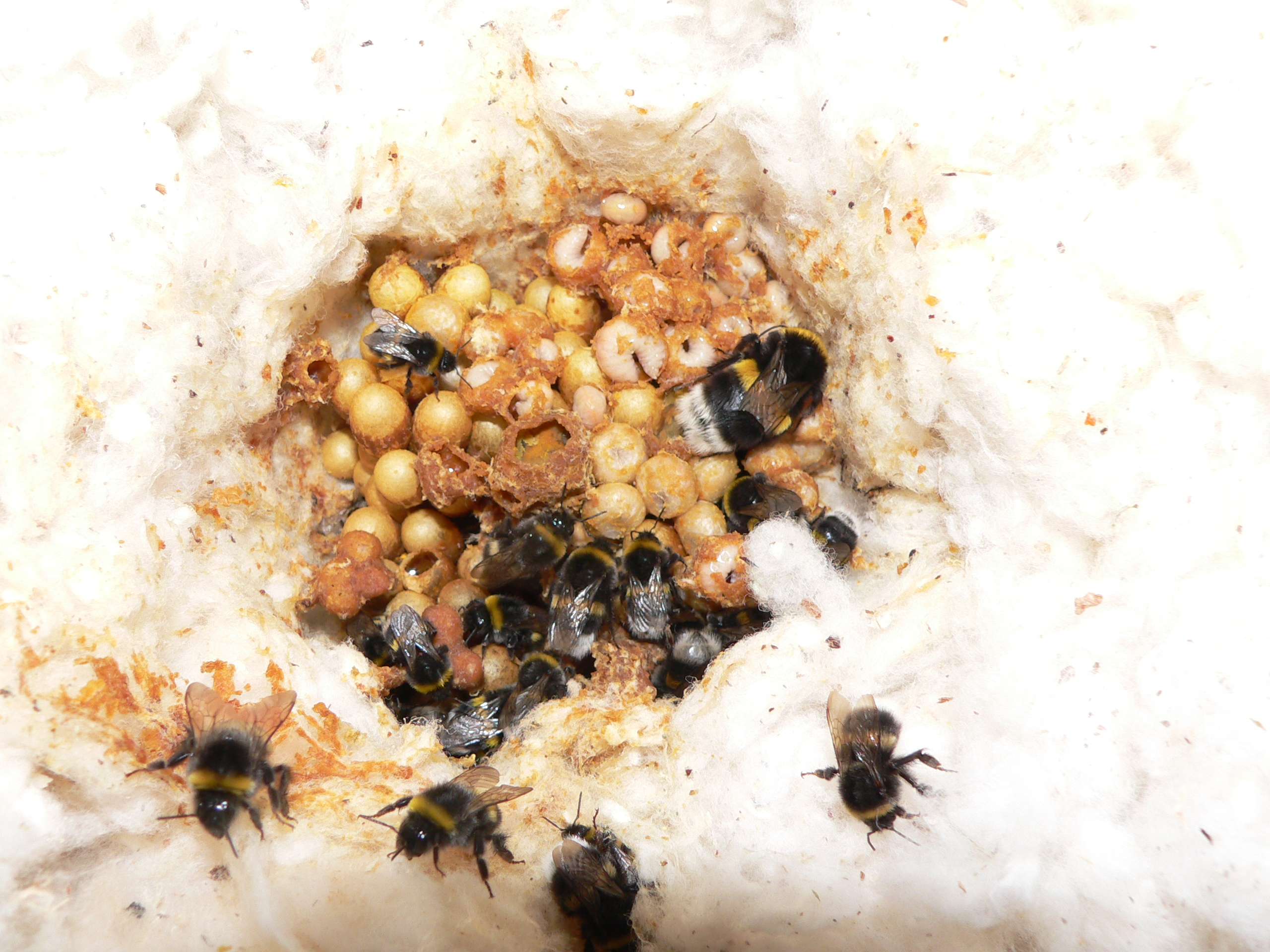
Buff-tailed bumblebee (Bombus lucorum) – nest
Photo: J. Čížek
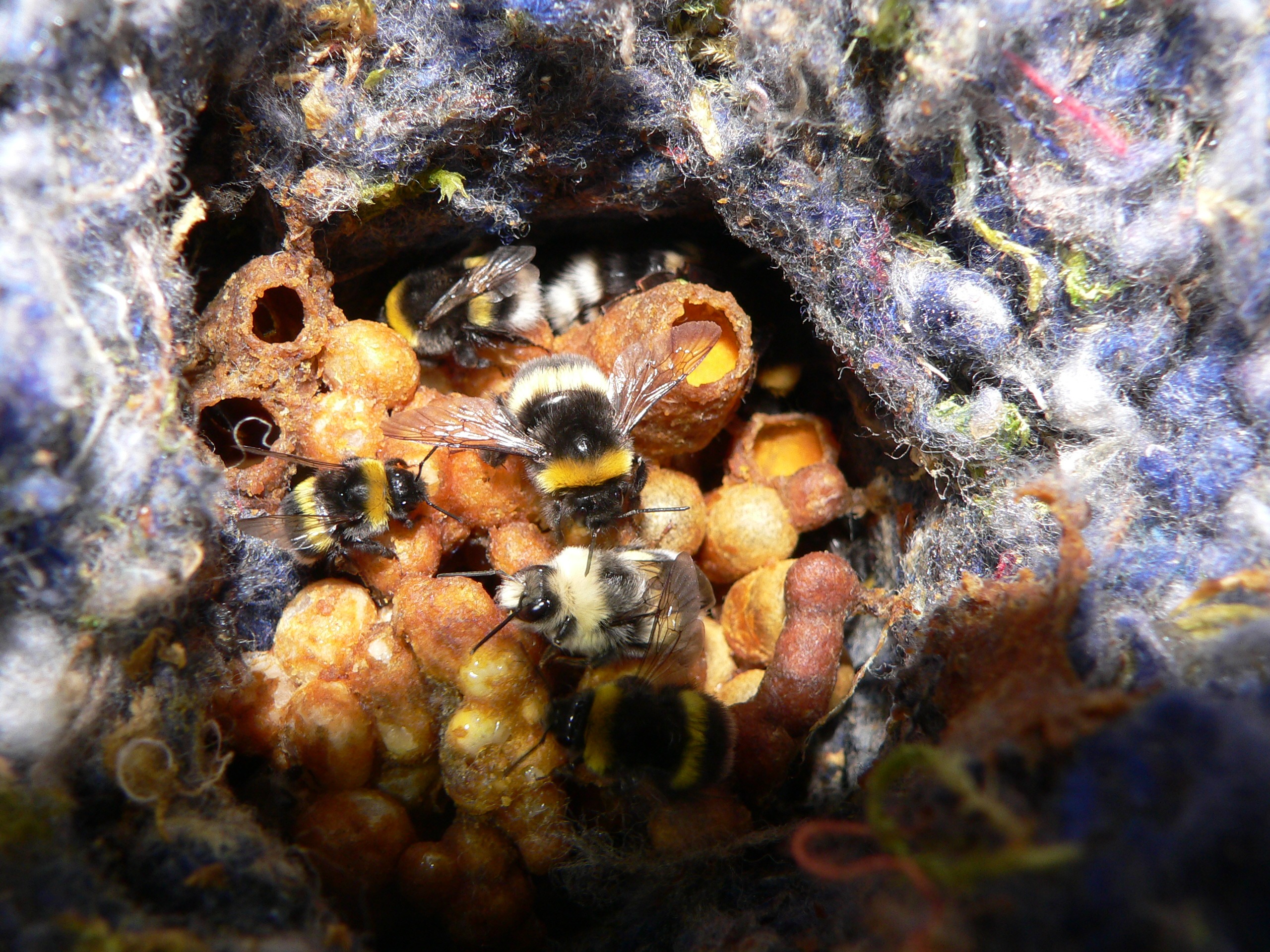
Here is a shot of a male on the nest. The male will soon leave it and will not return, so he will not do a reconnaissance flight – he will simply fly away. Nature thus reduces the chance of related individuals mating.
This male is not even a day old. Its colours are still developing. Bumblebees are born as grey individuals, and their colours appear within 24 hours – due to exposure to oxygen.
And in this nest, you can see stores full of yellow pollen (top of the photograph).
In the bottom right corner, a dark formation is visible. This is a cluster of eggs hidden in a waxy casing. As the larvae grow, they will separate into individual casings and complete their development within them.

Forest cuckoo bee (Bombus lucorum) – male in the nest
Photo: J. Čížek
In the next section, you will find video examples documenting the life stages of buff-tailed bumblebees (B. lucorum).
See the videos at YouTube Bees PLUS and their accompanying text.
Bumblebees (B. lucorum) established this nest in a wall. The previous year, mice had lived there and prepared a good foundation for their nest. Perhaps, thanks to this, small rodents will make it onto the 'good list' in gardens, what do you say?
This place was best for the garden bumblebees in 2019. It provided coolness and shade even when the air temperatures exceeded 35°C.
The same nest. The shot shows worker bees leaving the nest for the first time and making orientation flights.
It was necessary to wait a long time for these shots; the bumblebees were very shy, and the presence of a curious human bothered them immensely. The girls were simply acting like Zagorkas…
A male bumblebee worker (B. lucorum) returns to the nest with a load of pollen. The nest is situated in a garage where the temperature is stable. The long corridor is suitable for bumblebees of this species.
You can read about the placement of bumblebee nests HERE.
The flap is fitted with transparent side panels to allow the passage of bumblebees through the flap to be filmed.
In this video, the workers are still learning to pass through the flap. The cake on the side defines the position of the baffle so that the bumblebees slowly get used to the passage under the moving part, i.e. the flap.
You will read about how to teach bumblebees for this situation HERE.
A beautiful male is enjoying the beginning of summer. He was born in Prague, where the temperature is always a few degrees higher than the surroundings. Therefore, the bumblebee season starts early here, but its end also comes early.
Oregano is very popular with bumblebees. Bumblebees are right at home with their short tongues here. Males in particular consider oregano to be their absolute favourite.
Thistles also have shallow flowers, which is why they are frequently visited by male bumblebees and bumblebee-like bees of all species. Therefore, if globe thistles and similar „weeds“ grow in your area, give them space and once they bloom, use them as a bumblebee amphitheatre.
Don't forget that thistle seeds are a food source for various songbirds. Suddenly, your view of thistles will change.
Here, the male of the buff-tailed bumblebee (B. lucorum) presents himself as the „bombus star.“
In the lower altitudes, the season was slowly coming to an end, but in the Brdy mountains, life was still buzzing. This worker buff-tailed bumblebee (B. lucorum) had her wings full of work, searching the heathland for any remaining heather blossoms.
The footage clearly shows her pale stripe on her hindquarters – how, as she ages, she loses her colour and at the end is practically white/grey-white.