



The art of the flap: how to teach bumblebees to go through a flap
What will you learn here?
- We will explain how to train a queen bee to go through a protective flap.
- This explains how worker bees manage the flap and whether they need to learn about the flap.
- We'll try to convince you that bumblebees can manage the flap and that it's not that difficult
Last updated: 12/05/2026
Contents
What is a protective flap for and how does it work
When to start using and how long to use a protective flap
How to teach a queen bumblebee to use a protective flap
Worker bees born in the hive can manage the flap (a flight manoeuvre) without training
Protective flap and nest from Troubsko (Czech bumblebee)
Protective flap and male bumblebees (drones)
Protective flap and bumblebees
What to do when bumblebees can't manage the flap
Protective flap maintenance
Final recommendations
What is a protective flap for and how does it work
the protective flap and its construction we described HERE
Let's just reiterate, however, that the protective flap is actually a light trapdoor, which cover the entrance to the nest (the flight hole). The flap prevents bumblebee parasites from entering the nest and harming the bumblebees.
Klapka (Triggered lockdownIn the same way, it prevents a mother who happens to find it from entering the nest.
This happens primarily where the trap is placed on the ground. There, another mother can easily discover it when searching, as the dark area of the entrance hole catches her eye – she mistakes it for the entrance to a small rodent's nest.
Proto We recommend placing the wells above ground, at a height of at least 30cm.. This reduces the risk of accidental discovery. If you prefer Self-catering, it is good after the hive has settled this raise to such a height.
We describe the location of the ulcer HERE.
Bumblebees quickly get used to having to lift the flap and slip underneath. Furthermore, they need to get into their home or out for food. After a while, they safely navigate the pheromone-scented path to and from the hive.
The parasite doesn't have the strength to lift the flap correctly. (e.g., the dreaded bee moth or parasitic flies). Or, they might have the strength for it (bumblebees, hornets), but then lack the „nerve“ to learn and wait. They simply didn't anticipate such an obstacle. The same applies to a queen bumblebee that happens to stumble upon a startled bee with its trapdoor opened. It doesn't work with the flap., so „it won't work“ and fly off empty-handed to look elsewhere.
You'll be surprised, but in times of food scarcity, workers of some bumblebee species will even go on a raid of a neighbouring natural nest. The protective flap can then stop even them.
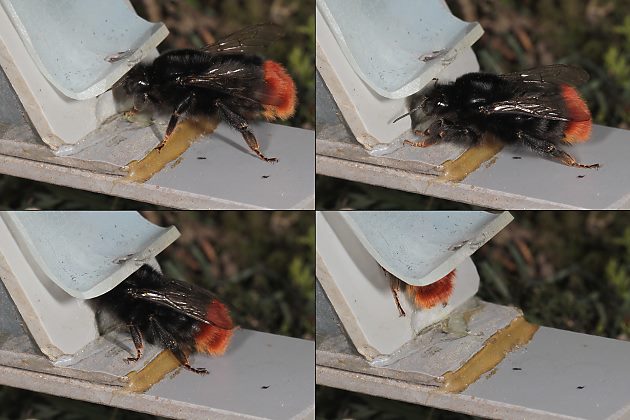
Guard flap – entering red-tailed bumblebee (Bombus lapidarius)
Photo http://www.wildbienen.de
In the next video, you can see the real speed at which bumblebees pass through the protective flap – after they learn to do so
Let's then describe how it all actually It works.
In this video, you can see a classic bumblebee procession through a protective flap, heading into the hive.
The bumblebee pokes its head under the plastic flap, lifts it with its head and back, and slips underneath.
A bumblebee is accustomed to touch; if it wasn't, it would give up after a few attempts.
The speed is reduced so that essential details can be observed. The flap is equipped with polycarbonate arms for filming. One arm has been removed. The aim is to get a detailed view and understand how these bumblebees actually do it.
Here a large worker of the bumbling bee species Bombus hypnorum is lifting the flap.
In the video, you can see a classic bumblebee swarm through a protective flap – heading out of the hive.
The bumblebee is pushing its head against the valve where it sees light filtering through.
If they push hard enough, the flap will lift, revealing a light and a gap through which the bumblebee will wriggle.
The bumblebee is used to the feel of the trigger; if it weren't, it would give up after a few attempts.
Here a large worker of the bumbling bee species Bombus hypnorum is lifting the flap.
Sometimes bumblebees learn to go under the flap backwards.
By all accounts, they do it constantly.
It is relatively common when leaving the ulcer, but sometimes they also do it when entering the ulcer = climbing on the flap, with their backs against the solid part of the flap
Here a large worker of the bumbling bee species Bombus hypnorum is lifting the flap.
S When it comes to worker bumblebees, there's no issue., as we will describe further.
It is important to teach the queen mother how to work with the protective flap.. To get used to it, you need to gradually open the protective flap's latch.
This can be used for some of the possiblethe solution we described HERE
Each of these solutions has its advantages.
If you get a protective flap with Construction screw, adjust it so that the screw isn't in the way of the bumblebees passing under the flap. Much better is use two screws – on the sides discharge opening.
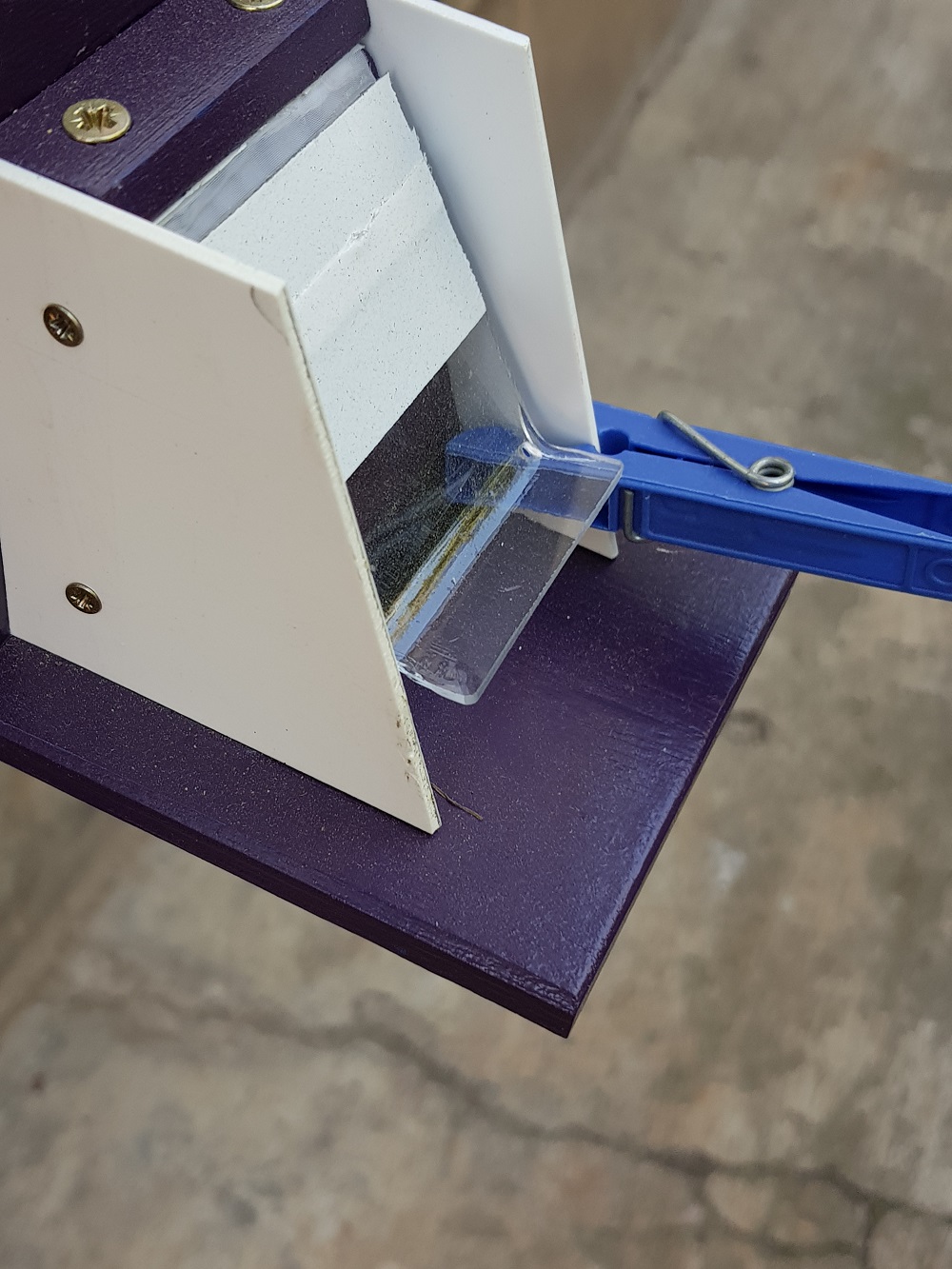
Lid for flap closure
Photo O. Hercog
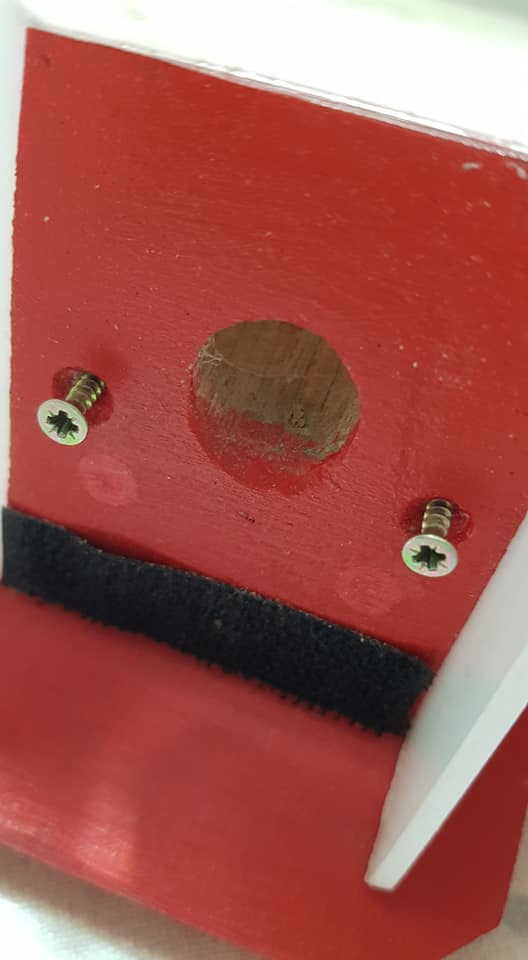
Screw solutions for closing a flap
retaining screws in the butterfly valve body
Photo O. Hercog (2019)
When to start using and how long to use a protective flap
Most Beginners princip klapky chápe, ale they are afraid to use it. But it is it is necessary to start on time and persevere A view of a bumblebee trying to lift a latch and failing.
But the latch is needed to be used soon after the queen bee is introduced or immediately after you have placed the established nest in the hive (bumblebee nest). If, after they have settled, the worsened climatic conditions (frost, snow, prolonged precipitation), „mother training“ can be postponed.
Once you start using the flap, you must continue to use it for the rest of the nest's life.
Please be aware that protective flap protects:
- Nest, when the queen mother settles in or you occupy it yourself – this will deter other mothers who might be interested in the nest, from attacking, injuring, or even killing the mother occupying it in combat
- Nest, when the first generation of workers appears in the nest – bumblebee queens will be interested in the nest, which seek nests with the first or second generation of workers, i.e. nests that they can easily overcome, kill the queen, and enslave the workers
- Developed nests – parasites are interested in it, but also other intruders that are interested in its inhabitants (ropy midge, parasitic flies, parasitic wasps Melittiobia acasta, …) but also in the honey stores (other bumblebees, wasps, bees…)
The basic rule is: a protective flap only protects if the latch is engaged. So, start using the flap as soon as possible and then for the rest of the nest's life..
How to teach a queen bumblebee to use a protective flap
The doors need to be closed. Close sequentially so that it Mother is used to it. It can take 2-7 days for the damper (moving part) to fully close. Latches).
It depends on various conditions, mainly on the mother's activity and size. Larger bumblebee species manage it faster, for example, the buff-tailed bumblebee (Bombus terrestris) and the red-tailed bumblebee (Bombus lapidarius) – the trap is less of a burden for them. Smaller ones sometimes take longer, for example, the Common carder bee (Bombus pascuorum) or the early bumblebee (Bombus pratorum).
With training/tuition Start immediately after The queen reliably returns to the hive and spends the night in it. She is already building her nest, laying her first eggs in it, and her urge to return home is strong.
In practice, it pays to start about 3-5 days after settling in. However, it shouldn't be longer than 5-7 days after settling in.
Follow the mother's movements/returns by observation, or even better by means of brands, seen HERE
Don't forget to adjust the flap before fitting the nut. It's about anti-slip tape on the flap body, Black tape from the inside, White tape from the outside of the flap. It is also advisable to lightly roughen the rising part of the flap with fine scratches.
About damper adjustments if you read HERE
Procedure
- Starting in position Open The cleat is up, the queen has settled in your hive.
- Lower the flap to the horizontal position.
Then leave her for about 1 day. The mother will get used to landing on the entrance board and not on the flight opening, as she perhaps did until now. - Open the flap to a height of 10-15 mm (space between the flap and the inlet opening).
Adjust the size by estimating it based on the queen bee's size – in this position, the latch must allow the queen to pass comfortably underneath without her back or wings touching it.
Leave the alighting board like this for about 1 day. The queen will get used to having to go under the alighting board (no contact yet). - Lower the flap to a height of approximately 5-10 mm.
Adjust the size by estimate according to the size of the queen bee – in this position, the queen already touches the latches with her back and wings as she passes underneath
This phase should last approximately 1-2 days. During this time, the mother must get used to her back rubbing against the flap, but she does not have to overcome significant resistance. - As soon as you A mother gets used to contact with the catch., the back will teach it to lift the flap and slip under it into the entry hole., release in stages Lower the flap to a height of approx. 1 – 2 mm.
This phase again lasts approximately 1-2 days. The mother gets used to having to lift the flap, and she gets better with each attempt. - The most challenging thing for a mother is to be completely the final phase, when there are only 1-2 mm left until completely closed and fully closing the valve.
The mother must get used to sticking her head under the flap, lifting the cover, and slipping underneath.
Warning:
This step should be taken by the breeder to do then, when he has time to watch, how the mother handles this phase
* We highly recommend this phase of controland possibly adjust the flap height as needed so that the mother can manage the passage
Expect it to take your mother a little while – Bear with it and observe her - Leave Deploy the flap and watch how the mother manages the passages.
Is it suitable close the flap down completely for the first time When the mother-queen is in the hive, so it doesn't raise its closed lid for the first time when leaving the hive, but rather when returning.
It is enough to observe a few passes of the flap as proof that everything is in order. The mother is strong and then she will manage it smoothly.
Yes, it is difficult to determine how quickly to open the flap and by how much. It depends on the mother, and the conditions but also on the time you dedicate to it. Especially in the final phase, your presence and ability to intervene are necessary.
The best is when you can your „own“ mother observe and according to that Adjust flap start-up speed. If you find that the mother flap repeatedly does not pass, Go back a step and try again.
Each pass of the flap (shutter) The mother is getting used to it and managing it better.. As time goes on, her desire to go through the flap increases, as she is driven by her nesting instinct and concern for her offspring.
Launch phase are indicated in the following images:
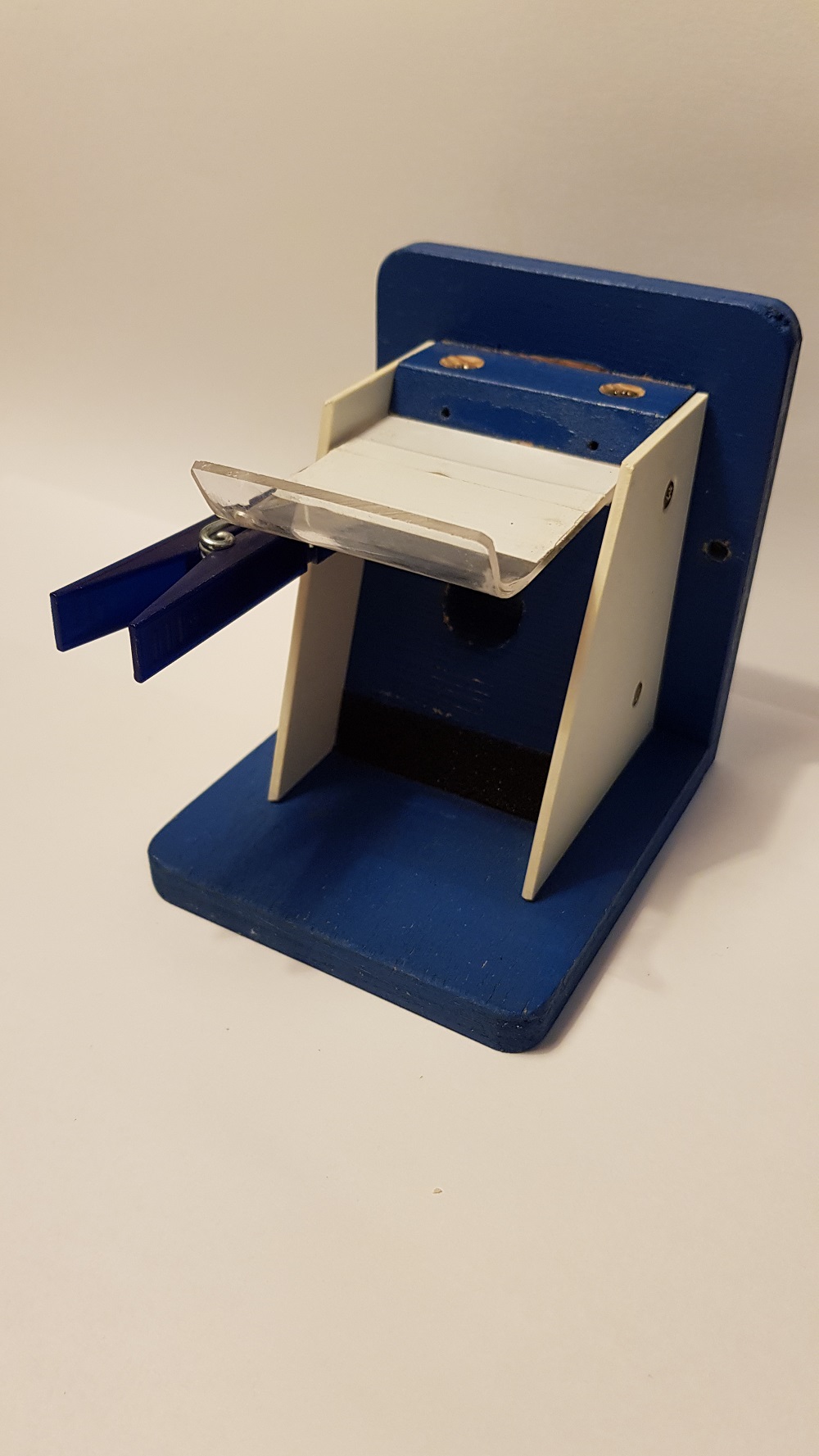
Protective flap for actuating the flap with a clothes peg
Status: Open
Photo O. Hercog (2019)
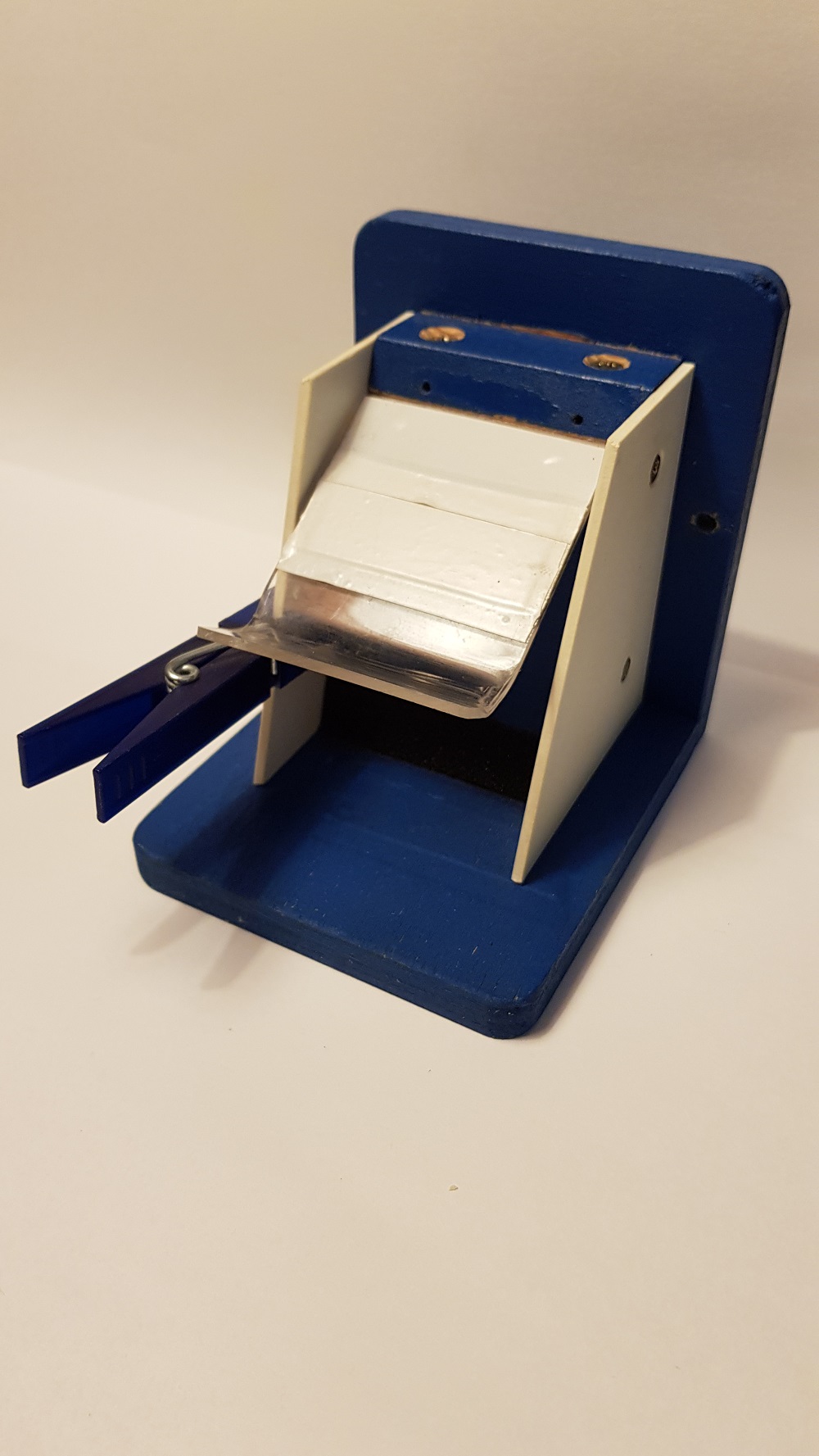
Protective flap for actuating the flap with a clothes peg
Closing the latch
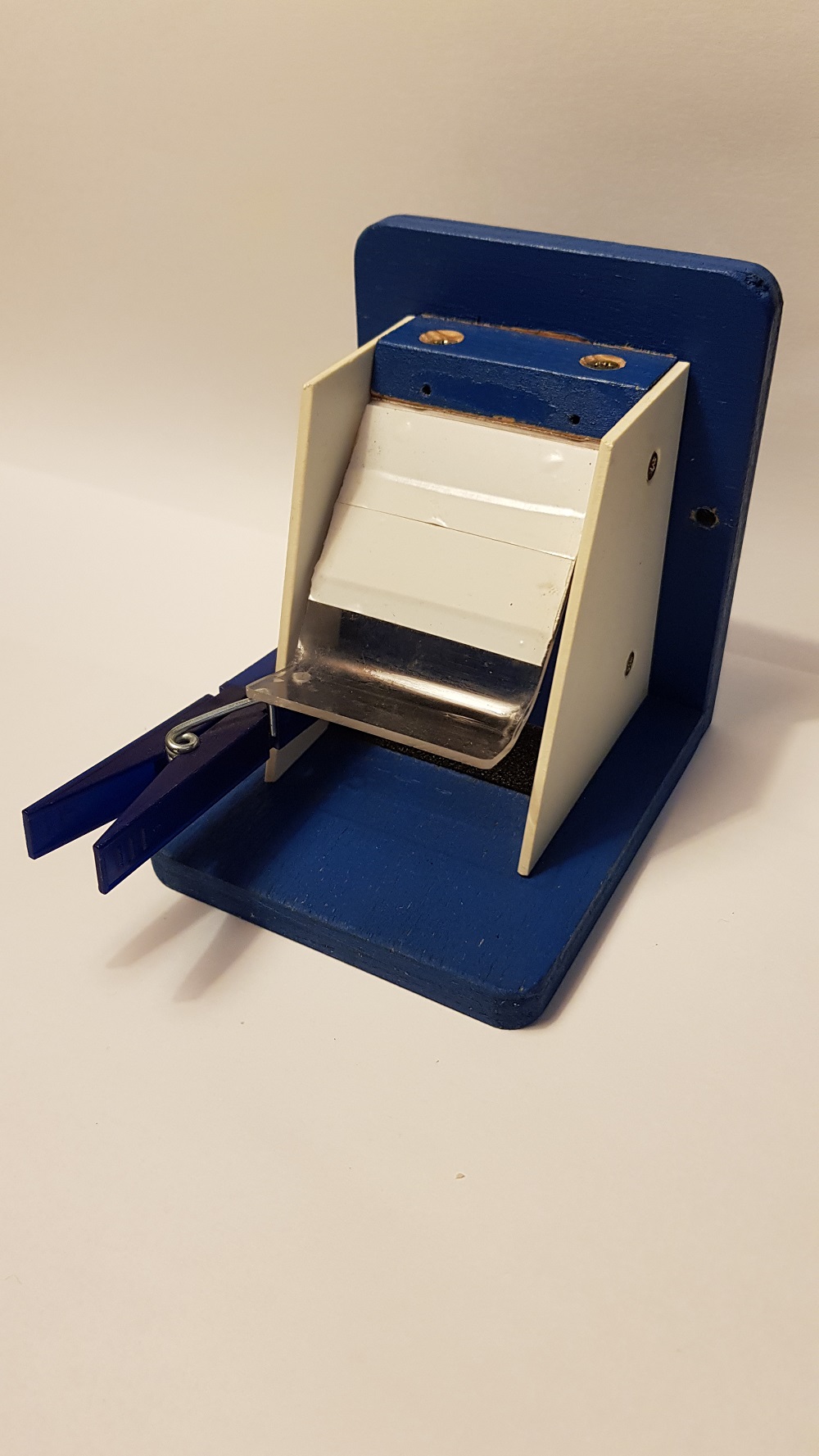
Protective flap for actuating the flap with a clothes peg
Closing the latch
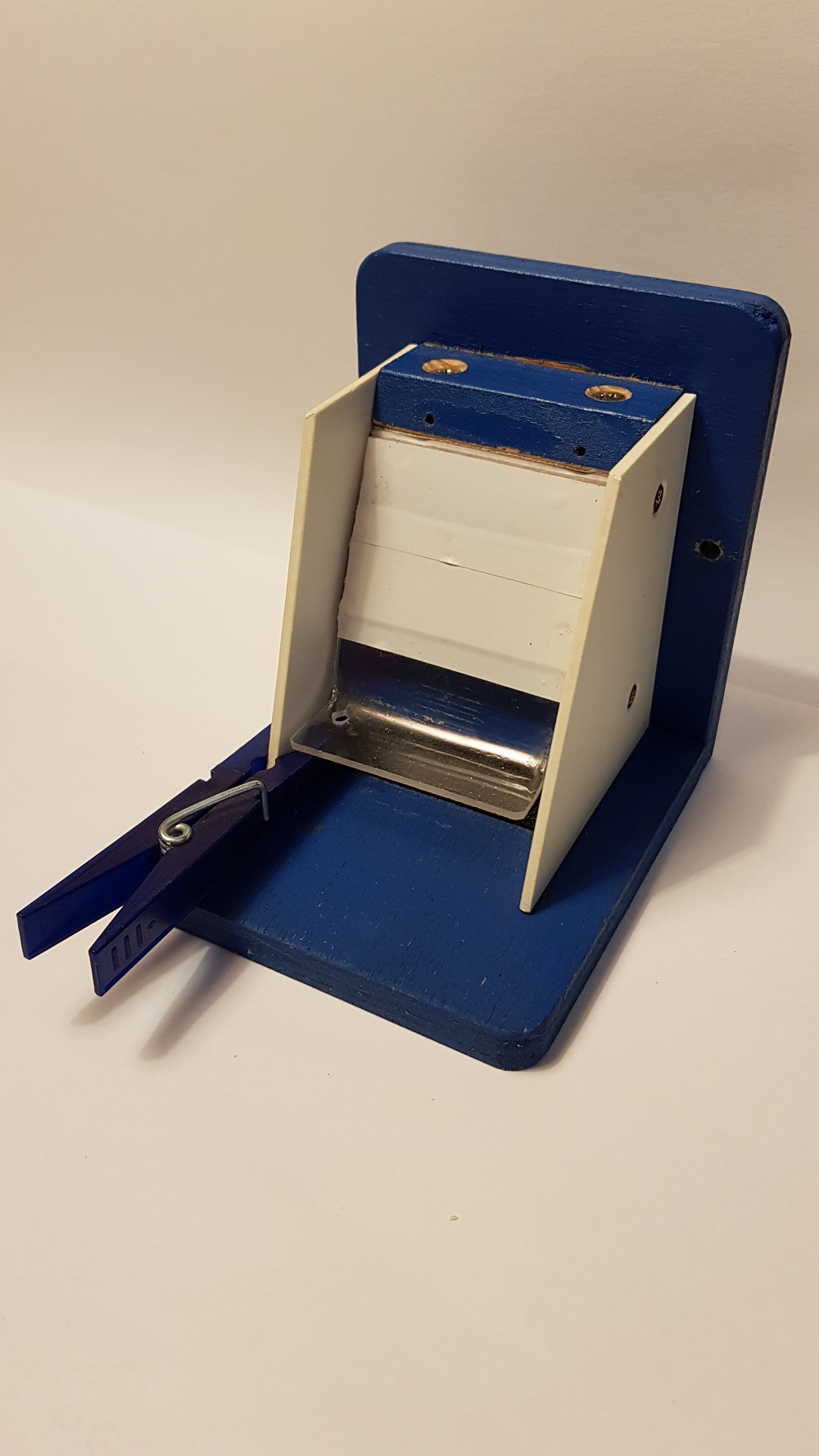
Protective flap for actuating the flap with a clothes peg
Closing the latch
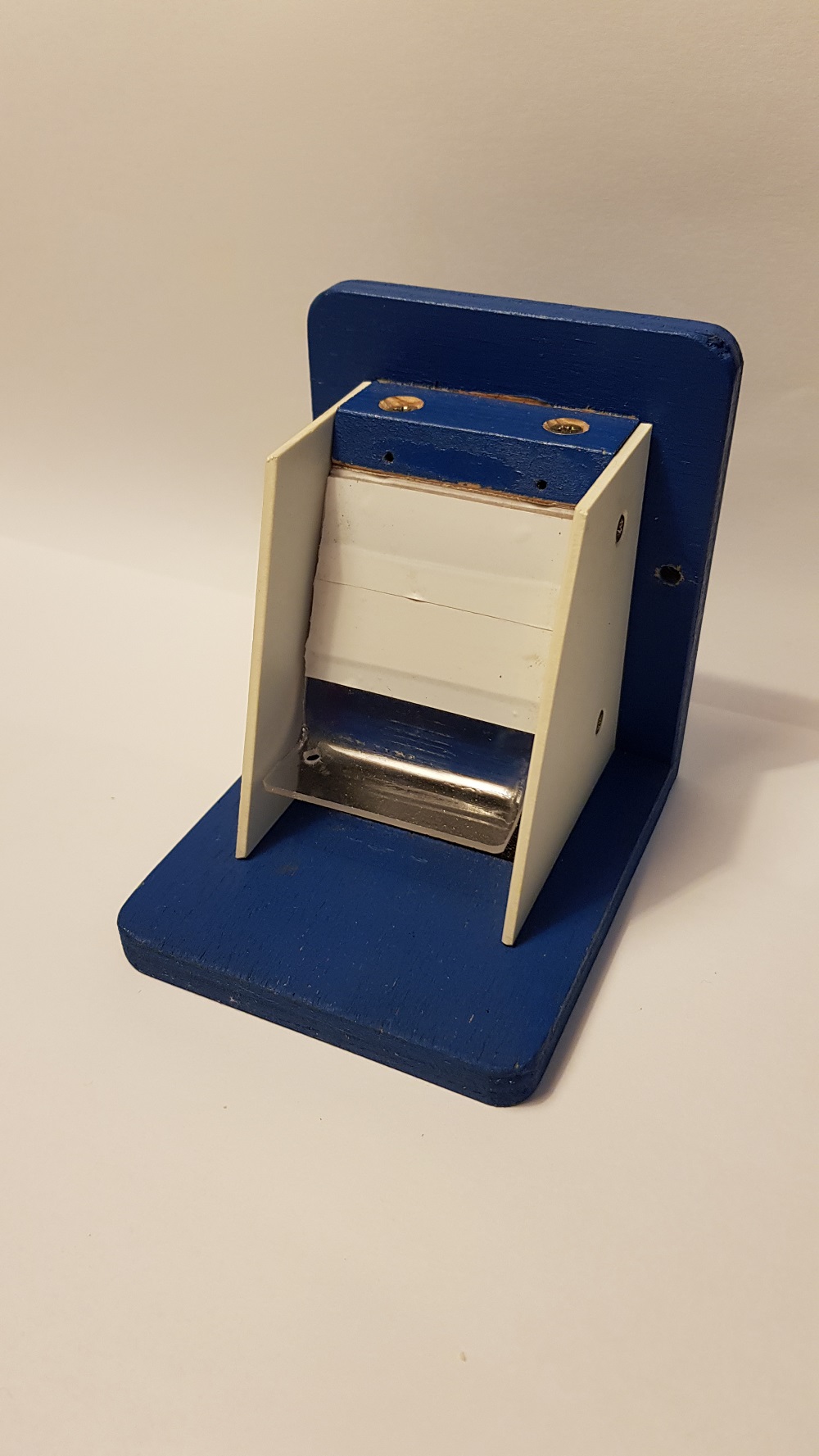
Protective flap for actuating the flap with a clothes peg
Ventil with a Teflon seal
Lock closed
Photo O. Hercog (2019)
Recommendation
- The lift of the latch is difficult for beginners to gauge. We therefore recommend that you Make marks/lines on the sidewall, which will show them the position the latch is set to (see image)
- Don't start training until the mother is settledThe law and not sleeping in the den can scare it.
- If the ruling adverse weather conditions, with training Don't rush
- Don't start training late, the protective flap also protects the queen from any rivals who might wish to settle in her hive
- Take time to observe toho, jak se matka učí a podle toho, jak jí to jde, rychlost výcviku upravte
- When observing, sit next to the hive so that your position does not prevent the queen from returning. Once she lands on the landing board, you can move closer and observe her efforts.
- Wear some drab colours for observation, sit down, and don't disturb her with unnecessary sudden movements.
- If you see the mother struggling with attempts, don't help her. Wait for her next behaviour. If it repeatedly flies away (when it hasn't opened the hatch to return from its flight) or repeatedly retreats back into the hive (when it has unsuccessfully attempted to open the hatch while trying to exit for flight), go back one step in the learning process. It will try again in a moment, this time in a situation it has learned. Leave it like this for a while, and then proceed more slowly with further learning.
- Don't worry, mum will manage, and you with her – enjoy these unforgettable moments
- leave with the mother throughout the training enclosed ventilation structure
- Leave the ventilation opening closed at all times and only open it after the first workers appear in the nest; they will start to pass through the flap and the outside temperature rises above 20°C.
When the flap You're releasing the flap too quickly (as in this video), it can confuse the mother and she will start looking for another way into the hive.
The flap just needs a little raise with the adjusting mechanism (peg/screw/etc.) and a nut will go through the hole. Once this is achieved, continue with the gradual lowering until it is fully closed.
If you need to, Make a scale on the side flap. This gives you an overview of how the butterfly valve flap is lifted.
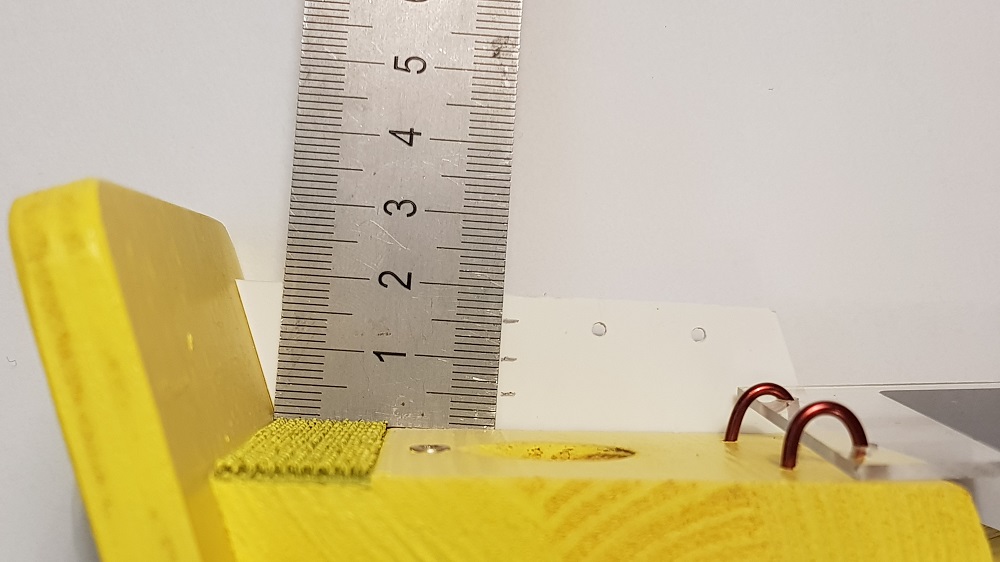
Markings on the flap's sidewall
Preparation – measuring the distance of the flap from the damper body
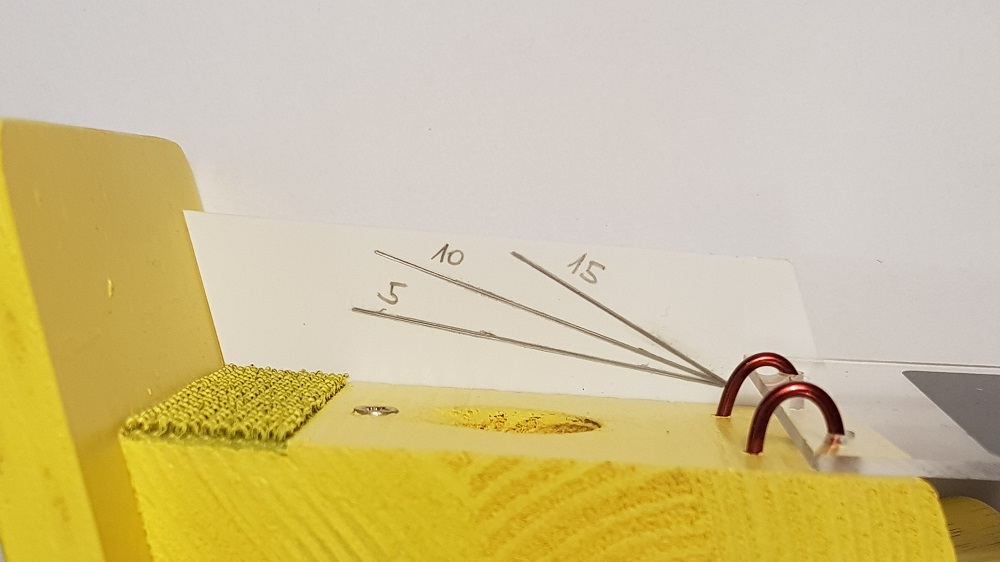
Markings on the flap's sidewall
Latch position indicators
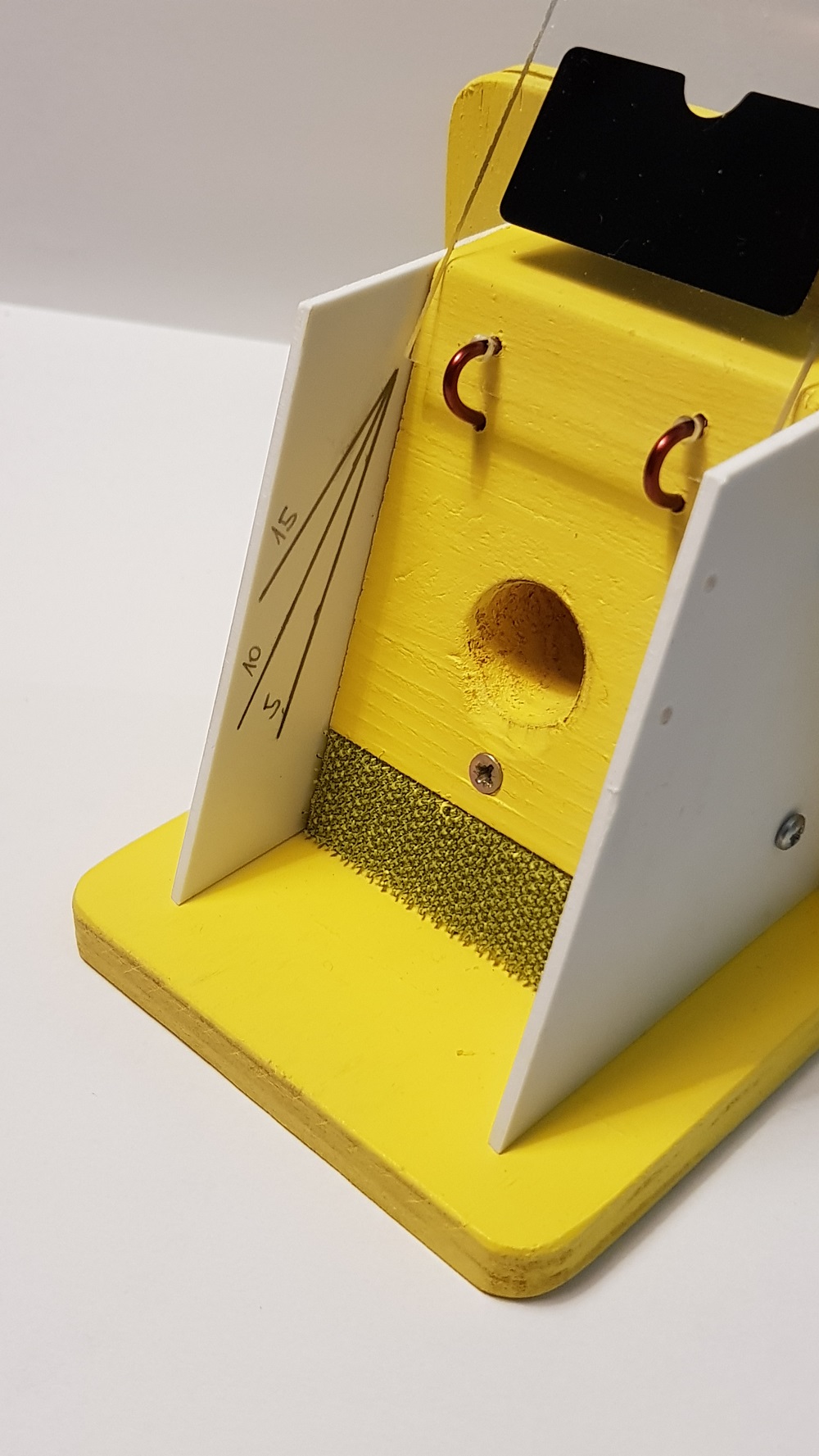
Markings on the flap's sidewall
Got it after completion
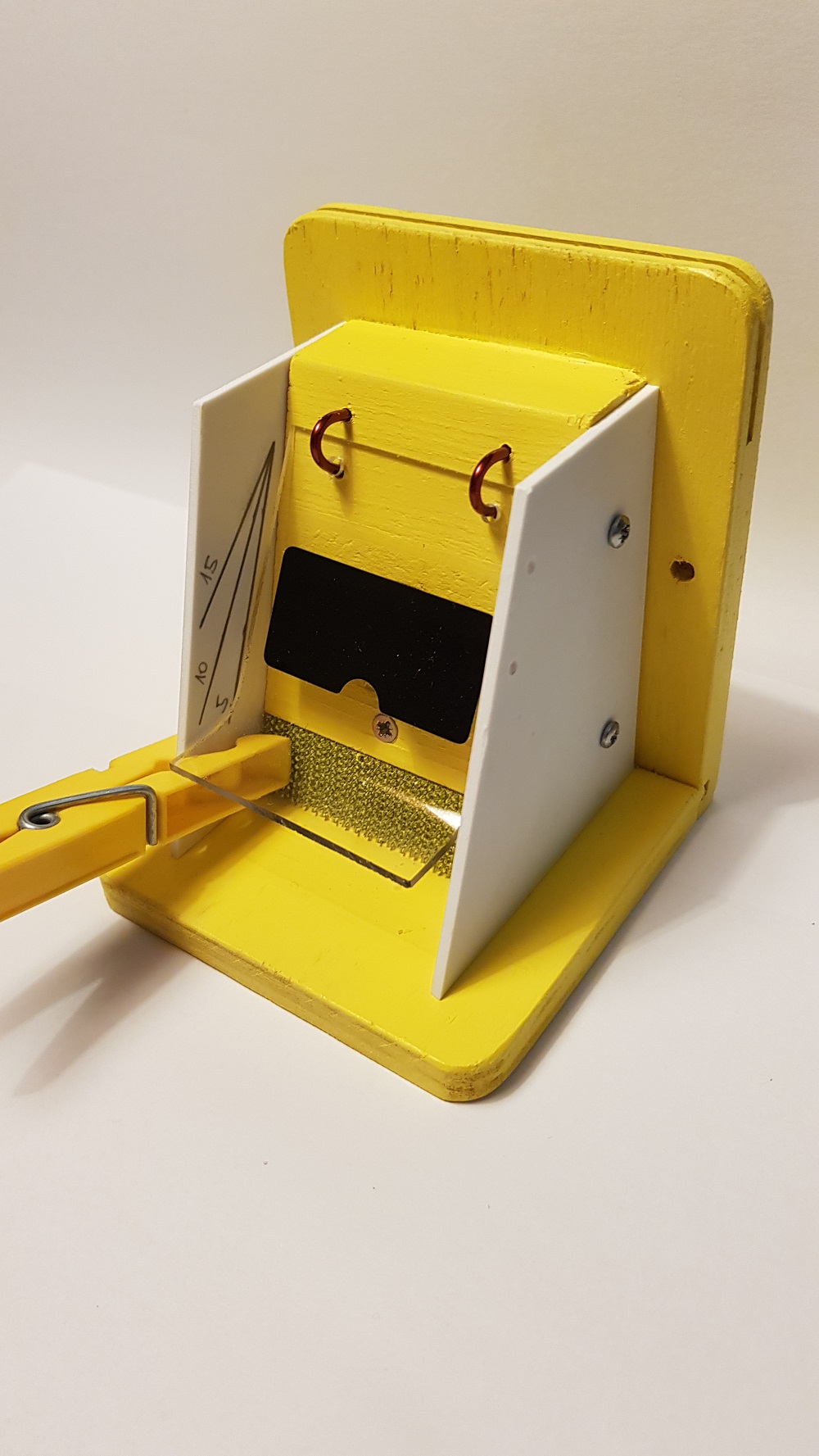
Markings on the flap's sidewall
commercially produced flap from a Czech manufacturer, which is not fitted with the recommended white tape on the outside
Photo O. Hercog (2020)
Interesting fact:
- If a mother, who was born here last year, returns to the hive, she can remember the protective flap and lift it. This allows you to significantly shorten the training of such a „returning“ mother; it's basically just a refresher from last year 😊
- It often happens that after changing the damper setting, the queen bee will make a short orientation flight. This occurs after she has emerged from the hive or if she didn't lift the damper on the first attempt. It triggers her „change = searching flight“ reflex. Don't be surprised by this; it's a fairly common occurrence.
You can observe the same phenomenon if you leave the flap closed and open it after a while – but don't try this during the mother's training.
In the following video, you can see how the mother is gradually learning to go through the protective flap. Here she has already mastered contact of her back with the moving part of the flap.
The mother has completed the training and is successfully passing the flap.
Factory workers and mothers born in the nest manage the flap without training
First-generation workers are often small and will struggle a bit with the latch. But there are several of them in the nest, so they will help each other – they will wait for one another.
If worker bees start to pile up at the entrance when returning to the hive, you can gently lift the entrance reducer. The worker bees will gradually get used to the flap, and their instinct will guide them into or out of the hive.
If you have time for training, Lift their flap, let them pass through your presence with the flap for a while. But then lower the flap.
Workers from future generations will no longer have to worry about it, as they will learn to lift the flap from their older sisters.
Mothers born in a kennel do not need to be taught to go through the flap. – they try it themselves, or they wait until the workers open the flap for them. After a few passes, they lift the flap themselves.
Warning
- The moment the first workers start to fly from the nest, many beginner keepers tend to open the flap again so they don't „suffer“.
That's a fundamental error. Keep the flap closed! - The sooner you leave it to the workers, the sooner they will get used to the flap and the better the flap will protect them.
- An open hatch due to workers is a risk, that a successfully established nest will perish.
Every year, we encounter such cases in our advisory service, and it's only when faced with a destroyed nest that the keeper realises what their leniency has caused.
Are the dividers failing to pass through the flap? What to do about it?
- Above all, be patient and give the workers time. Even the small ones will manage – don't give up, watch them and intervene if necessary (see below)
- The small worker ants struggle a bit with the flap, but they manage it even without „training“ – instinct and scent trails help them find their way to and from the nest.
- If they are really struggling with the flap and cannot open it by themselves or together after several minutes, then the breeder needs to intervene – check that the chick is standing horizontally.
- If the workers are still struggling to get through, prop up the back legs of the hive – it will make the entrance flap easier to open.
- Workers have hatched in the nest, but they are not flying out. Check that the ventilation is not open – the light may be confusing them.
- Verify that adhesive tape is attached to the outside of the movable part of the flap – this is to shield the inlet opening so that light only shines through the hive at the bottom. The worker bees will push with their heads there and open the flap more easily.
- Some flaps are unsuitable – they don't have the correct geometry or have a heavy latch. Consider replacing them.
- If you don’t use the flap, you are endangering the bumblebee nest – remember how much effort it took to establish it, and persevere
Protective flap and nest from Trubsko (Bohemian bumblebee)
For nests purchased from www.ceskycmelak.cz, it is necessary Worker bee to queen: learn similarly by gradually tilting the flap. However, the entire learning process can be significantly Shorten to 2-3 days., because there are more workers and they can sort it out.
The essential thing, however, is that the female workers first discover the way out of the hive. (you transport them enclosed), only then can training begin.
Proceed
- Starting in the Open position = the latch is up
- The worker bee doesn't want to find a way out of the hive and go on a scouting flight.
This can take up to 24 hours because the worker bees have food reserves in the hive and don't need to rush out. - Continue by following the procedure as with the mother's training
However, overall, the training should not take longer than 3-5 days (depending on the conditions and the size of the workers). - If the workers don't manage to get through the flap or lift it immediately, don't despair and give them time.
- Adjust the process speed according to the observation results
- Leave the ventilation opening closed. Only open it after the first worker ants appear in the nest. They will start to pass through the flap and the outside temperature rises above 20°C.
Protective flap and drones
Males do not need to learn to work with the damper. As soon as they leave the nest, they fly off into the wild, do not perform a reconnaissance flight, and never return to the hive again.
Should they happen to find him (males born here or other males), they will only search around the hive and wait for the mothers to leave – they won't try the flap.
Protective flap and bumblebees
The protective flap is an effective solution to prevent ingress into the ulcer can deter pests, including bumblebee queens. However, if the bumblebee is not deterred and waits at the entrance, with a bit of bad luck, it might wait until a worker bee opens it. The bumblebee then has a chance to enter the hive, squeezing under the slightly opened flap.
Here's a certain The advantage of a heavier damper, which reduces the chance of intrusion. As always, however, greater security is a nuisance. It's the same as when 3 locks on a door offer better protection, but they inconvenience you when you have to open them.
Although you may read that lighter latches are sufficient and that heavier ones will lift the brood anyway, we are of the opinion that they belong to the hive Heavier rather than lighter flap – the risk of parasite penetration into it is smallerThere is no other effective protection against bumblebees, or we do not recommend it for beginners.
The photograph by J. Frantl documents unsuccessful attempts by a bumblebee to enter the nest. The trap worked well here.
The photograph shows L. Vettermanová with a cuckoo bee. Unfortunately, it managed to infiltrate the nest, kill the bumblebee queen, and enslave the remaining workers. The queen settled at the beginning of April 2019, but the nest was attacked by the cuckoo bee at the beginning of June.
Slipper reduces bumblebee attacks, but they sometimes get into the hive. However, that's no reason to get rid of bumblebees., and Lenka didn't either – thanks, Lenka!
Even bumblebees have their role in nature, let's respect them please. They are much more endangered than we realise.
You will learn more about bumblebees HERE
There you will read that bumblebees are interested in bumblebee nests in the initial stage, but sometimes in developed nests full of workers. Each species of bumblebee has a different strategy.
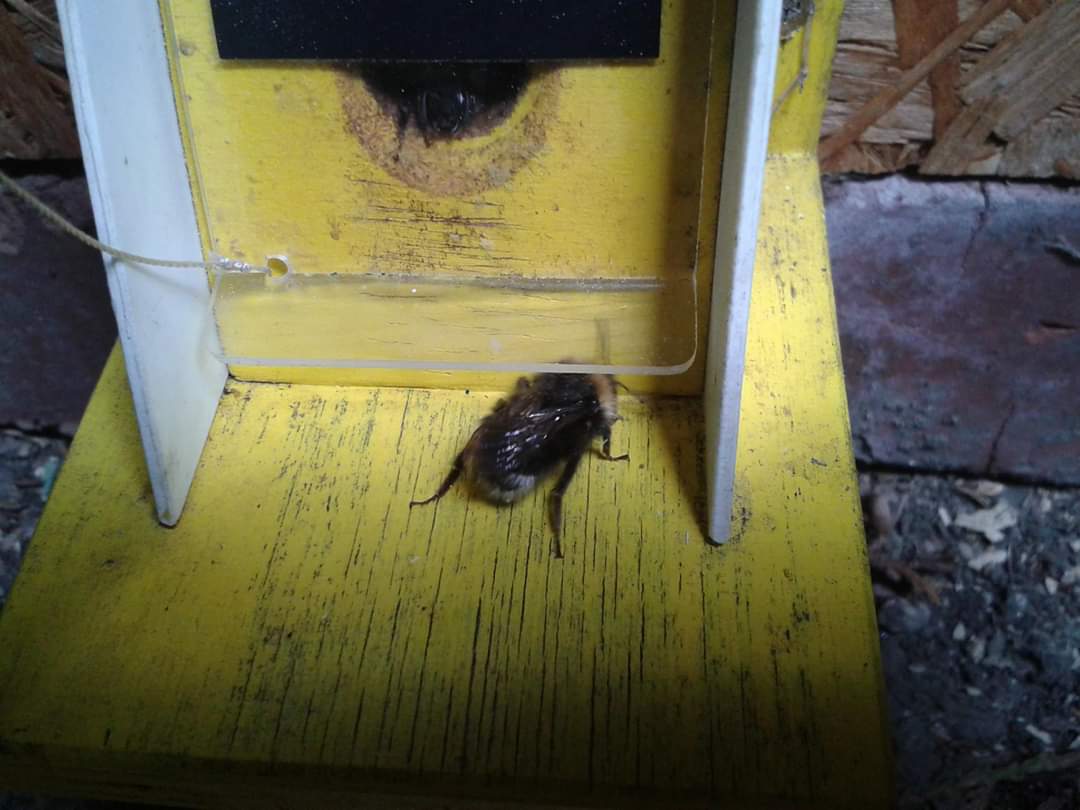
Bumblebees PLUS – Vestal cuckoo bumblebee (Bombus vestalis)
Photo J. Frantl (2019)
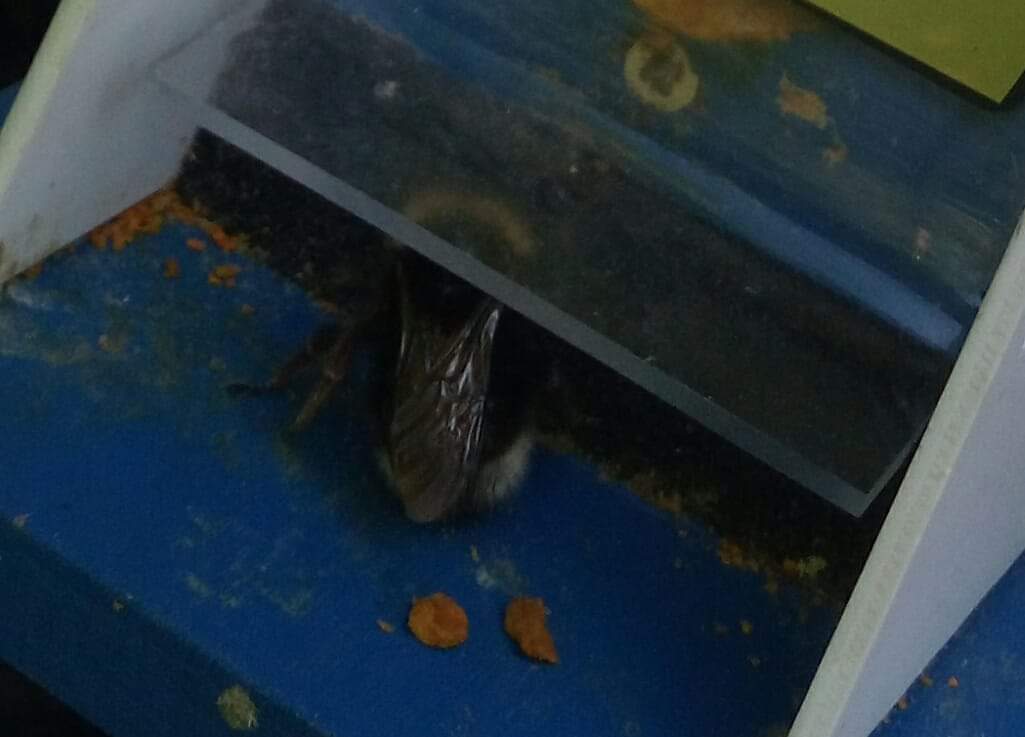
Bumblebees PLUS – Bohemian Cuckoo Bumblebee (Psithyrus bohemicus)
Photo L. Vettermanová (2019)
L
What to do when bumblebees can't manage the flap
We have experience (including our own) that it is The problem is mostly in the head of a novice breeder. Has no experiencet, nervous and time for the bumblebees to learn the flap. Often they can't wait until the bumblebee has gone through the flap and want to deal with it immediately.
Be therefore patient, Follow the described steps. Every bumblebee queen will eventually learn to work with the flap, it's just a matter of time and the breeder's patience.
Further problems and their solutions
- The latch does not move smoothly – the strike is not aligned horizontally (on both axes) = use a spirit level to align it
- The flap does not move smoothly – the flap is poorly manufactured, is crooked, or is mounted asymmetrically –> adjust the flap
- The flap doesn't move smoothly – the hinge is worn –> repair the flap
- Everything before is ok, but mother cannot open the flap -> slightly open the flap and repeat the last training steps
- Everything previous is okay, but the worker cannot open the flap –> wait for another worker, they will help each other, or the smaller one will wait until the larger one opens the flap
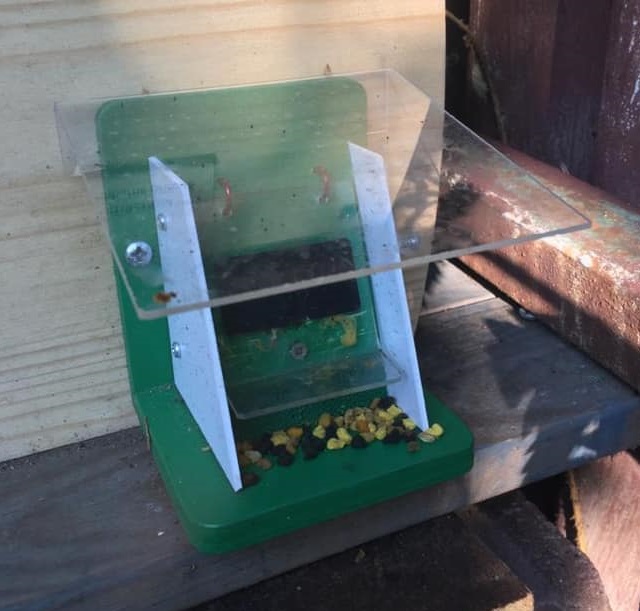
Protective flap full of pollen granules
Photo by J. Černý (2019)
Final recommendations
- Teach your bumblebees to use the entrance reducer – protects them in the nest
- Be strict with yourself and manage your unnecessary worries about flapjacks being a bother – it’s like with little children, they also have to learn to walk by themselves – with your help, but by themselves
- Do not add to the numbers of those who do not use the flap in an attempt not to disturb the bumblebees, thereby causing the almost certain demise of the nest in an otherwise good hive.
- Take time for regular checks and to the maintenance of the flap. Even a good flap can jam or not close properly, leaving a path open for parasites and enemies of bumblebees.
- Enjoy the moments and observations, when teaching bumblebees to navigate a protective flap.