

How to introduce a queen bee into a hive

Methods for safely housing a bumblebee colony in a hive

What you will learn here

  • How to introduce a bumblebee queen to a hive
  • What are your options
  • What techniques to use
  • What to watch out for
  • What absolutely not to do

Datum poslední aktualizace: 74/3/2026

page abstract

  • Respect nature. When occupying a ulcer, show utmost consideration and respect for nature.
  • Unscheduled seating If a bumblebee queen finds a hive on her own, it is a natural process and a considerate one
  • An offering of a fright can be made to the Queen Mother: It requires maximum consideration – force, pressure, and imprisonment are unfair and also do not lead to the objective.
  • Persistence is harmful: Don't try to settle a mother at all costs, and certainly don't settle mothers who are not actively looking for a nesting site – you won't succeed.
  • He who is prepared is not surprised Practise all the steps and repeat them a few times „dry run“.“
  • Last year's daughters return: The lake can also be occupied by last year's daughters returning to it, should they have successfully survived hibernation
  • The Bumblebee Rapid Response Team is helpingThere's no need to be persistent and try to occupy the owl's burrow at all costs. You too can become rescuers of a nest in distress and occupy your own burrow during the year together with us.
Introduction

We write about the possibilities of acquiring bumblebees on the page  How to get bumblebees. We are writing there that We recommend settling bumblebees (from a bumblebee nest) from nature.It's a way you can help nature and, if all goes well, you'll be reproducing bumblebees that live in your area.

We will describe the procedure for placing a developed ulcer with a purchased nest in a separate chapter HERE (in preparation).

Basic condition for successful installation of a queen bee into a hive that you have it ready and placed on Final location. Once the bumblebees have settled, we no longer recommend handling the hive..
Especially Ulcer management at the time when the mother in solitary phase (until the birth of the first workers), successful bumblebee breeding threatens.

There are exceptions, which we will describe separately, and which we recommend only for experienced breeders.

Before we begin, we'll try to explain to you too, Why might our guides sometimes seem long and detailed…. 

We are aware that the instructions will seem detailed. The process of settling in the mother can actually be managed in a few minutes.
For a beginner, however, this can sometimes be a problem – they lack experience and are nervous. But with our step-by-step guide, nothing will take them by surprise, and both they and, above all, the bumblebee’s mother will get through it unscathed.
That's why we've also included in this guide Common beginner mistakeswhich should help you resolve any potential issues. So, that's about it 🙂

How to offer a mother bumblebee (bumblebee nest) for nesting – breeder’s options

Once the queen bumblebees have gained strength and deem it the right time to nest, they begin to look for nesting sites, that is, a place where they will establish their nest. You can tell that the queens are looking for nesting sites by search flight

Jsou tyto Basic options for settling a nest box (bumblebee nest) from nature:
A) Attract a queen bumblebee to the hive (bumblebee box) to leave it to her and chance
B) Actively offer the mother relief introduce her to the beehive and let her decide for herself
C) The queen, who was born in the hive last season, will return to it herself.

In all these cases, the offers can be prepared nesting site more attractive  the queen by using the entrance tunnel from last year’s colony. You can also use the clean part of last year’s heat-retaining lining where the bumblebees’ nest was.

But don't forget that The used corridor must be thoroughly cleaned sight Hallway in the corner a Used liner sanitised sight Lining in the hive 

Please remember the returnees from last year's breeding season. It is very important. 

A) How to attract a bumblebee queen to a hive (bumblebee box)

This solution for occupying the scarecrow is most natural and closest to nature. It doesn't always lead to the goal, but with a bit of luck, it works out and our Instructions will help you with this.

How to let a mother bird nest

The prerequisite for success is that you place the decoy on a suitable place so that the mother can find it herself, when it is searching for a suitable nesting site.

We wrote about the ulcer's placement Ulcer location in the garden

For the mother alone startle found, it should be located where the mother is looking (can be determined by observing frequent search flight paths). Most often it is near the ground – see our videos. 
Species that are looking for duty in trees Looking for at heights, sometimes even under the roof, is the tree bumblebee (Bombus hypnorum).

From the perspective of later successful breeding, we would rather recommend Placement on a raised platform , or low stand . So it is good to make a compromise, so that the entrance hole is at a height of 20-30 cm above the ground.

On a high stand, most species won't nest by themselves, as it won't be a natural location for them.

An exception, for example, could be the tree bumblebee (Bombus hypnorum), which often occupies higher nesting sites, such as bird boxes.

Recommendation

  • If you prefer the queen bee to self-settle, then we recommend until it settles, leave the quail directly on the ground.
  • Once the queen mother has occupied him, within a day or two he'll be startled. to close at night plugged opening, Lift carefully in the same place in height (stand/mat)
  • After calming the mother, open the nozzle. 
  • The mother will most likely make a short orientation flight in the morning and accept the change of location.
  • If the mother does not accept the change and continues to look for him at ground level, then it is necessary to catch the mother and introduce her into the hive with an introducer (see procedure in the following text). 

If you leave the shock on the groundIt's possible he'll discover it another searching mother will try to occupy with fright. Then came the fight, often with fatal consequences for both mothers.

As we wrote earlier, the echo should be completely ready and you Don't go near the cub unnecessarily, so as not to disturb the searching mothers..

What must you not forget

You mustn't forget that The hive ventilation must be closed and the flap opened.

Likewise, bear in mind that you must not disturb the mother – observe her from a distance (several metres), keep still and do not interfere with the process.

How do I know if a hen is broody?

If you don't have time to observe whether the queen bee is interested in the bait, it is advisable to place brand.
If the sign is thrown, surprise someone visited. If the sign regularly thrown out, then most likely Does anyone regularly return to the burrow, as he likes it.

However, do not expect to meet regularly with a new mother, see the text below.

You can find out how to insert a mark into the hive entrance on the page Do I or do I not have this settled

What are the chances of success

Even if you do your best, The probability of a queen mother discovering the nest herself is not high. From a natural perspective, it is nthe most natural and gentle way to occupy an ulcer and we recommend trying it.
We have proven that it can be done.

However, don't forget that if there is a fright on the ground, another mother might become interested in it. The mothers will then compete for the nesting site, which ends with the death of one or both mothers. That is why it is necessary to move the shock upwards in time..

B) How to actively offer a queen bee (bumblebee hive) to a mother queen

If the mother cannot find the lure you have prepared, it is possible to gently catch her with a net and offer it into the hive = introduce her to the hive, to see it.

 
This way you can offer it a nesting box, which is placed even where the mother isn't looking. These can be nesting boxes on high stands, on the wall, on a balcony, etc.

It should be remembered here that The bumblebee is protected by law.  You must avoid endangering the queen mother in any way, trying to force her to settle, or even harming her..

The procedure described below is not complicated. If you rehearse it beforehand, you'll eventually find it easy and You'll manage it in a minute.

From experience and years of supporting beginners, we know that Introducing a mother bee to a hive often fails for those who don't prepare well., and above all, to those, Who is persistent and tries to succeed at all costs. Practice, calm, and patience are the cornerstones of success.

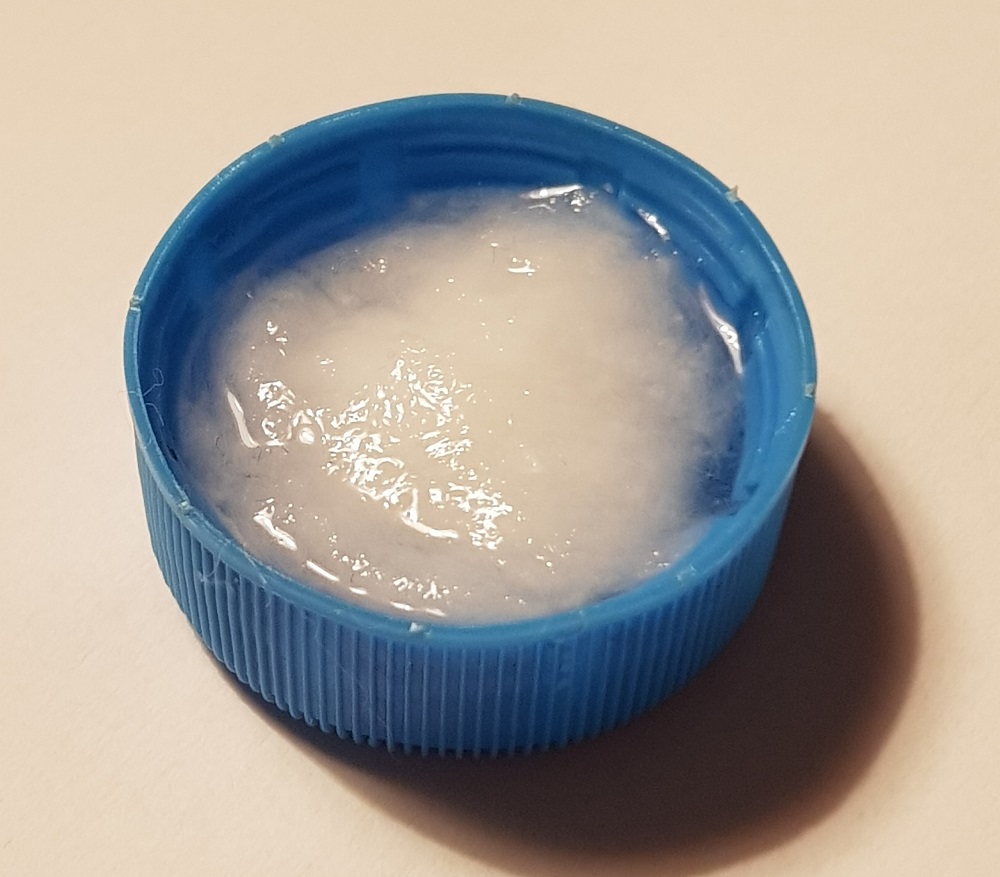
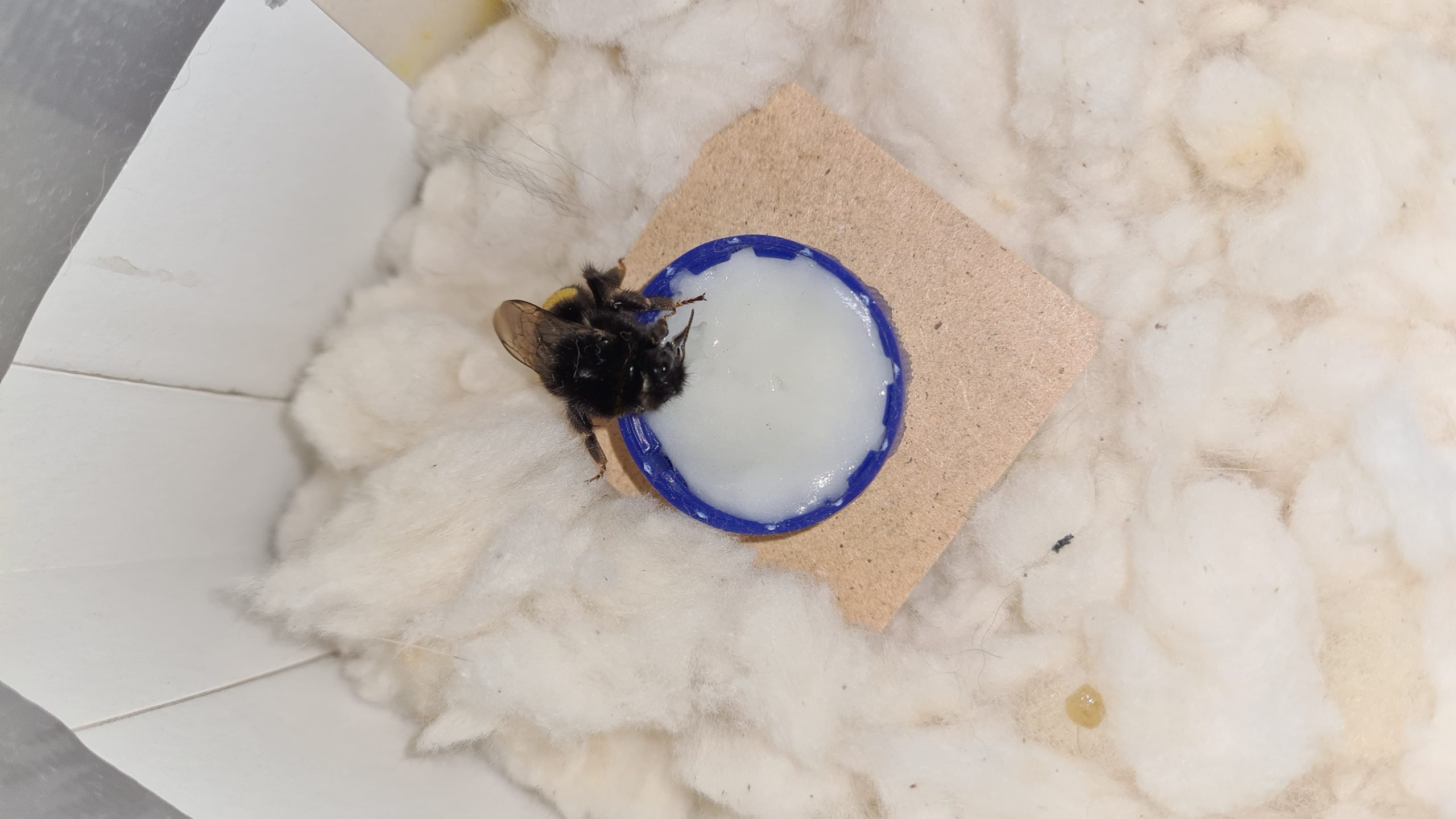
Before you start, we recommend putting a lining in the hive emergency dose of sweetener in the feeder from PET bottle caps. Press cotton wool into the lid and drip onto it Aqueous solution of sucrose (white sugar).
This isn’t a bribe, but an emergency energy boost in case the mother becomes exhausted and spends a long time trying to find her way out of the hive – see below.

When to actively offer a mother a cuddle

Perhaps we should recap from the previous chapter how and when mothers look for nesting sites. This will be useful for the right tactics, or for the time allocated to observing bumblebee mothers.

Only the queen is suitable for introduction into the hive, as she she is looking for a nesting site herself .

If the queen isn't looking for a nest site, there's no point in introducing her to the hive – She won’t take to being startled, and you’ll only put her at unnecessary risk. It’s HER decision, and she must decide for herself whether to settle in. Please respect that.

Do not disturb the bumblebee queen during, when the weather forecast promises Daytime chill at 0°C, frosts sky long-term rain / snow precipitation. 

A mother can cope with morning frosts in the spring months. However, this requires a good shelter that is well insulated and lined with sufficient high-quality bedding. She also needs access to plenty of food in the wild during the day (she can fly even in low temperatures if she has to).
But her mother without a supply of food, she will be unable to keep the foetus alive for more than a few days. So if it lays in warm weather, it will not have sufficient reserves of pollen and nectar, and also if it doesn't have the opportunity to forage outside the hive. 
If it doesn't manage, may leave the nest, or by herself when warming the nest to die of exhaustion.  

Bear in mind that, under normal circumstances, the mother will lay her eggs 3–5 days after settling in, and will then remain in the nest. So keep an eye on the medium-range weather forecast.

Mothers actively search for nesting sites throughout the day in several waves – in the morning, and then again later in the afternoon. They find the early evening particularly appealing when the wind calms down and they don't need as much energy for flight.
If it's cold or windy, they aren't as active in their search. Likewise, they aren't very active when they sense a change in the weather and when conditions (temperature and food availability) won't be suitable for nesting.

A warning in case you try to settle a mother in the evening – you need to take into account that the queen will only emerge from the hive after dusk, so he’ll stay there overnight as well.
It is therefore necessary to lay the lining on the surface a portion of sugar syrup or honey-sugar paste. Suitable materials and feeders can be found HERE

Warning

  • If you want to be successful, try to catch the queen and place her in the hive as calmly as possible, without causing her any stress, and as quickly as possible.
  • If you stress the mother by handling and moving her roughly and for too long, her cThe urge to settle down will soon fade away
  • Transport the mother for a maximum of 10-15 minutes, you're stressing her out and it's unnecessary
  • Do not transport the mother from a distance.why 
    a) you might accidentally catch a nesting mother
     – her The nest will disappear and she becomes a wandering queen (doesn't start a new nest)
    b) Can you thin out the population at the capture site - its offspring may not find suitable [conditions] in the place where you nest it Mating partners  = for it to lose its meaning without the next generation.
  • For the reasons stated above Do not transport captured mothers by car  
  • It's best to catch the queen near the hive, or at a distance from which you can reach it within 10-15 minutes.. This reduces the time during which the mother is stressed and from Such distances are how far a mother can travel to return to where you intercepted her. (it won't find its nesting site even if it travels more than 3km).
Bumblebees PLUS - PET bottle cap feeder - honey-sugar dough - queen being fed - Photo Ondřej Hercog 2022

PET bottle cap feeder – honey-sugar dough – mother is fed
Photo: O. Hercog 2022
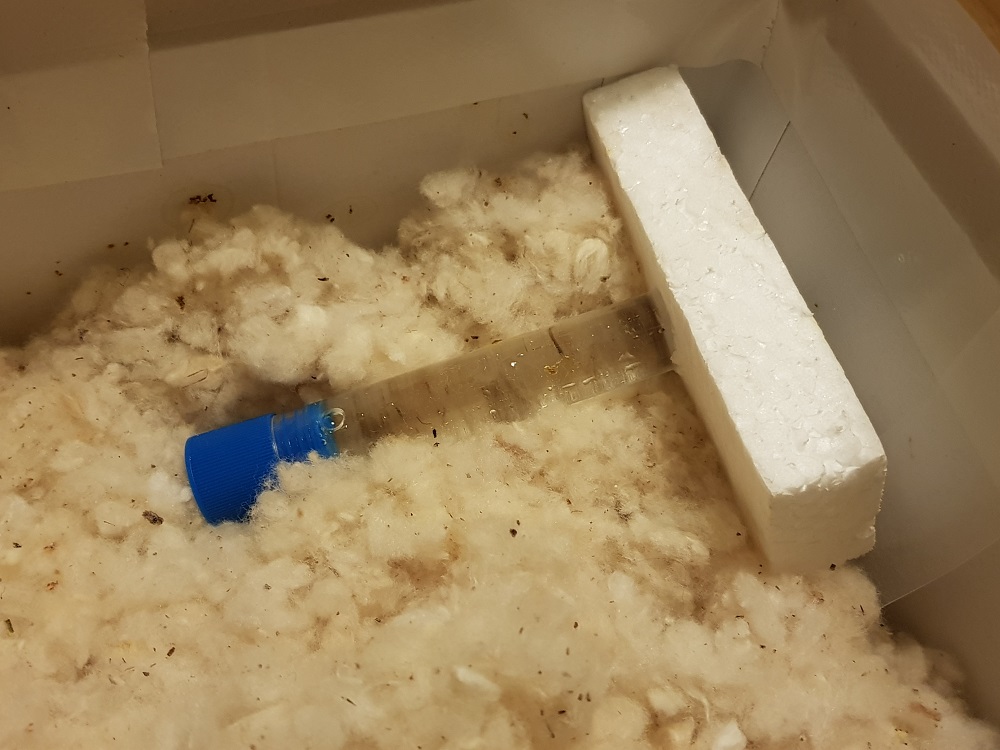
Bumblebees PLUS - Test tube feeder - inclined position

Test tube feeder – tilted position
Photo: O. Hercog


What will you need
  • Net/nets to be caught 
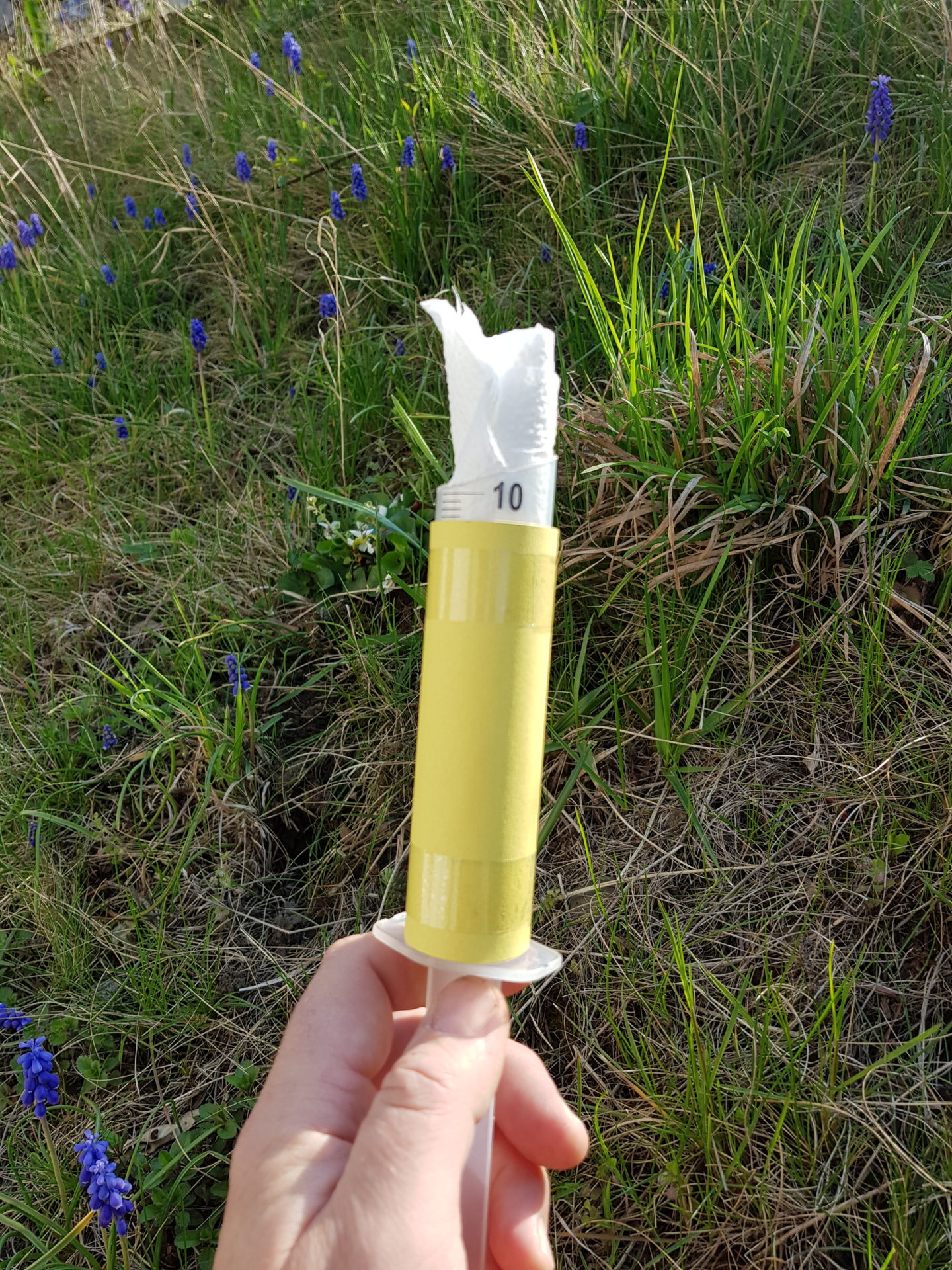
  • Bootloader  – we recommend a diagonally cut loader; prepare the loader = pull the plunger out to the maximum
  • Entrance/flight hole blockage to the den 
  • Loader sealing plug with the abducted mother
  • Bootloader case an envelope with which you will cover the introducer and thus keep the captured queen calm
  • Time, patience, calm nerves and optimism
  • As a safeguard, motivací, před zavedením matky do úlu se doporučuje place on the surface of the lining the cap of a PET bottleand with dissolved sugar as an emergency feeder see HERE
    Can sugar dough sold in beekeeping supply shops (e.g. Apivital, Apifonda, etc.) also be used? 
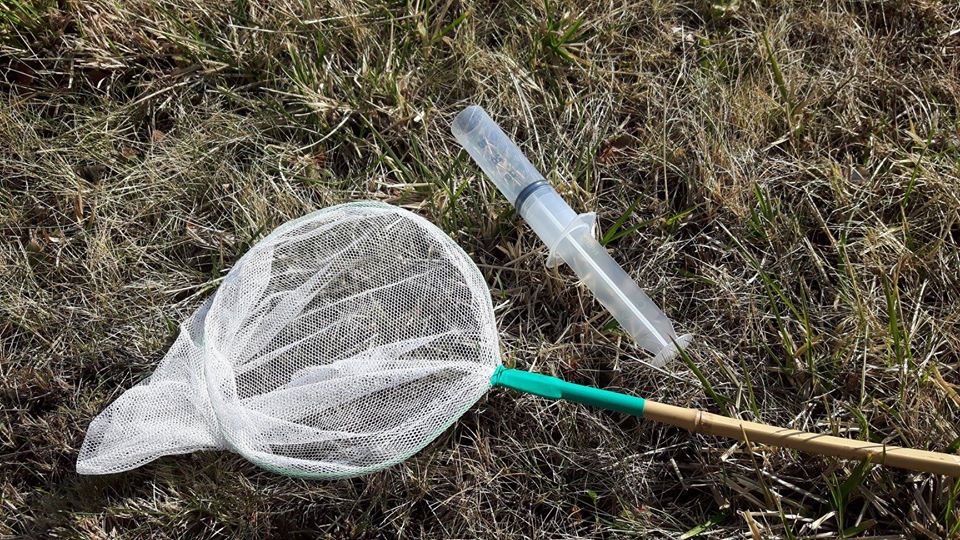
Bumblebees PLUS - Catch kit net and hanger

Catchment kit net and launcher


Bumblebees PLUS - Loader with powder and paper plug

Powder loader with a paper stopper
Photo O. Hercog


Note

  • The sugar daddy isn't looking in the nest, nor is he will not accept as a bribe – the mother is looking for a place to live, not a buffet.
    There are known cases where a mother only went into the hive to feed, but She didn't want to live there.
  • It's just a fuse in case it didn't find its way out of the alley in time – it could die of hunger there
    An emergency feed is particularly suitable when you are introducing a queen. In the evening and in a corner, darkness can overtake her
    .
Bumblebees PLUS - PET bottle cap feeder - SUITABLE

Bird feeder made from a PET bottle cap with a cotton pad insert

Common beginner mistakes:

  • Unpreparedness
  • Lack of practice
  • The effort to succeed on the first try and persistence
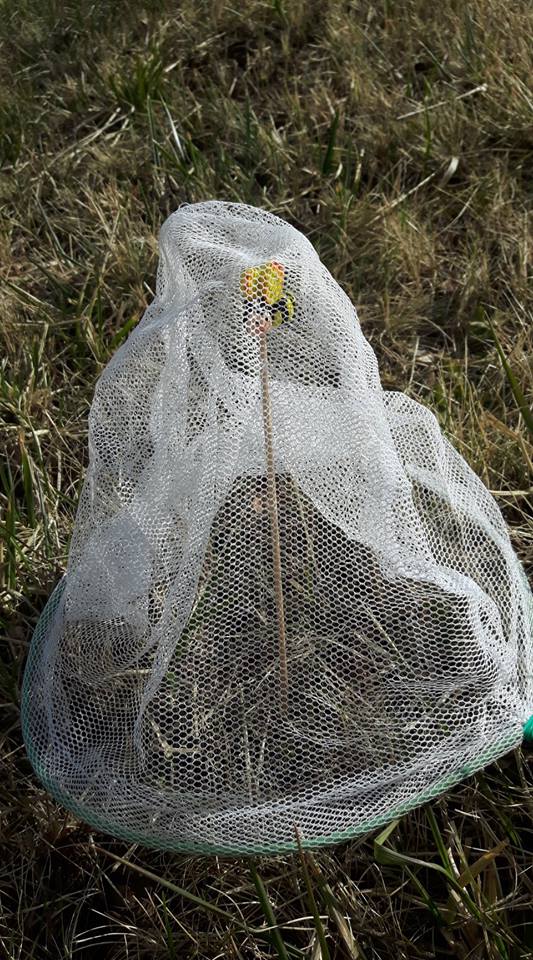
 
Catching a queen ant with a net

First, you need to find and carefully catch the bumblebee queen with a net.

Proceed

  • In a calm manner watch mother bumblebees and their scouting flights. If you find a place where they are searching, it is best to stand there, wait and observe calmly.
  • As soon as the searching mother approaches, Cover it with a landing net to the ground – carefully, so as not to hurt her
  • There's no point in chasing a mother, as you'll only frighten her, stress her out, and she'll fly away. Likewise, trying to catch her in flight or when she's grazing is pointless.
  • You can, depending on the situation, select a net with a smaller/larger diameter (approx. 20 cm / 40 cm). A smaller mesh diameter is useful in tall grass and for short distances.
  • As soon as Mother caught in a net, it will instinctively try escape by flying upwards
  • With one hand Hold the net down, so that the mother doesn't give in. With the other hand (fingers) Lift the bottom of the net The mother will try to escape upwards
  • Wait until The mother will ascend second-hand fasten the netting under the mother (Grasp with fingers and palm)
  • Phew – Mum’s got the net! 🙂

Highly recommended:

  • Don't breathe on your mother – it stresses her out
  • Don't unnecessarily shake the bootloader – it stresses it out.
 

Common beginner mistakes

  • Catching the queen, who is not performing a search flight, on flowers or in flight
  • Unnecessary fear of a bee sting, or of a bumblebee's stingers
  • Catch the bumblebee, instead of waiting.
  • Unnecessary stress for a beginner and also for a bumblebee mother
  • Clumsy movements
  • Poorly pressed netting to the ground
 
Bumblebees PLUS - Queen caught in netting

She-cat caught in the net
Cover it with a capture net to the ground
Photo O. Hercog
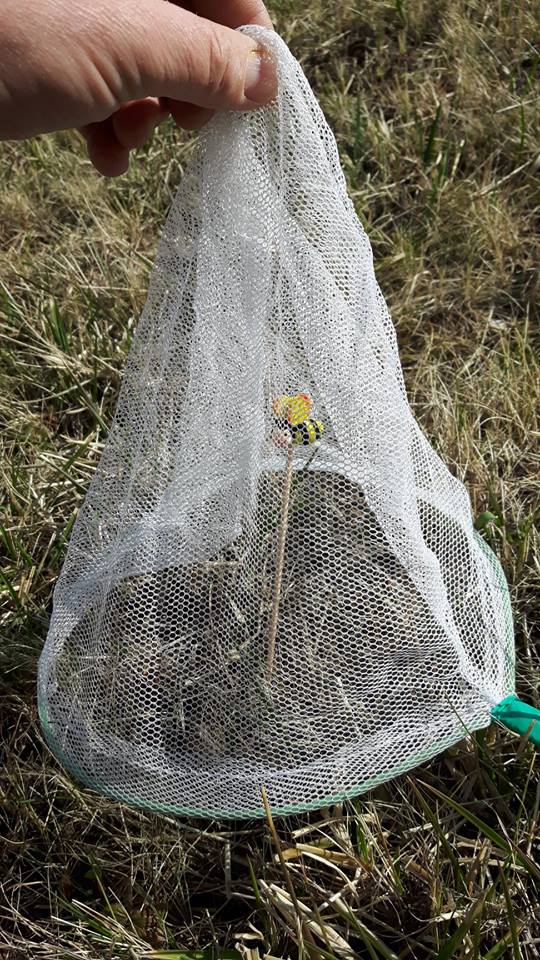
Bumblebees PLUS - Queen caught in netting

She-cat caught in the net
lift the bottom of the net – the mother will try to escape upwards
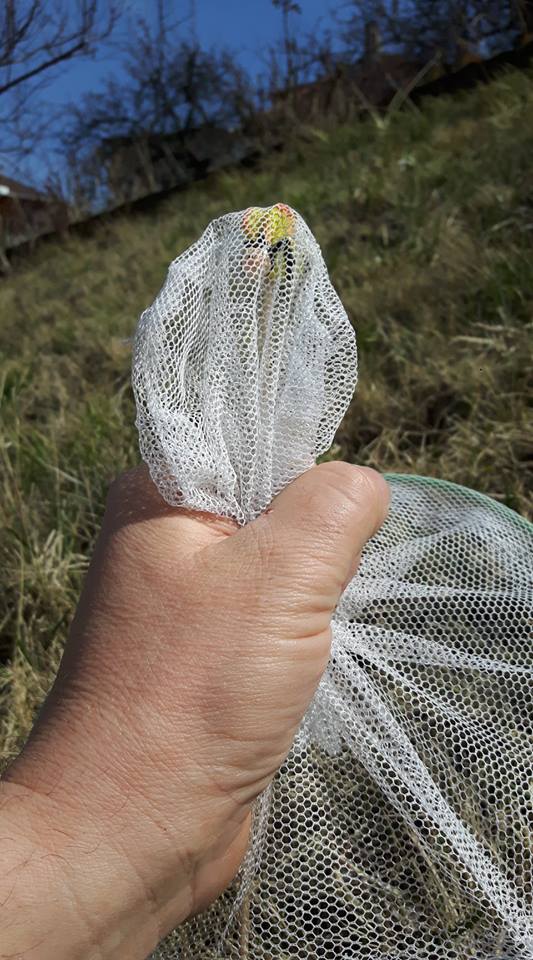
Bumblebees PLUS - Queen caught in netting

She-cat caught in the net
Wait until the mother has ascended and use your other hand to close the netting below the mother.
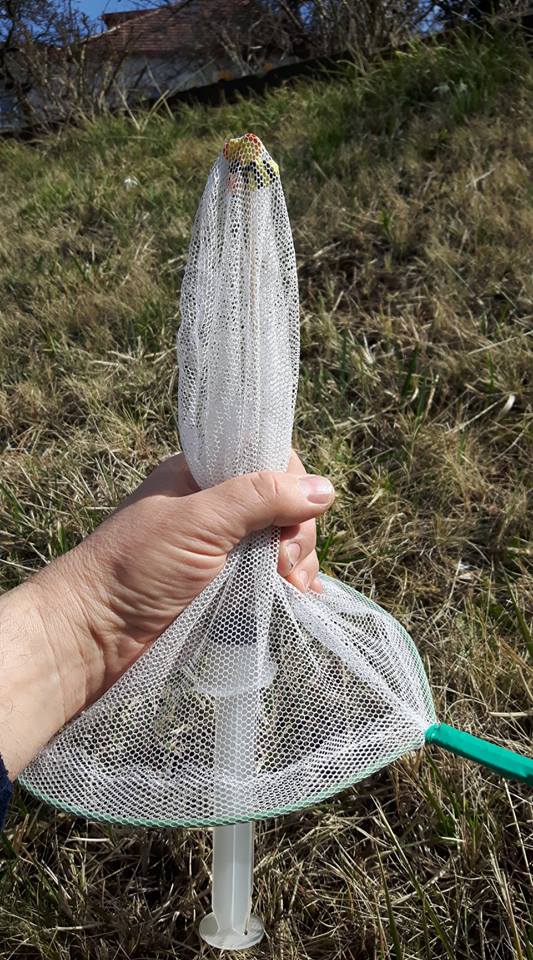
 

Experienced breeders use several methods for catching queens, which we will describe later. Here we will describe one of them, the so-called. pinhole method.

For your mother, you'll prepare a hole in the ground and wait for her there – with a coffee in your hand and while sitting.

In the section for experienced breeders, Doctor Kučera will describe gentle capture using „bliknisáčků“ (preparing)

Proceed

  • Where the searching bumblebee mother moves, hole in the ground
  • The opening should have approximately 20–30 mm diameter
  • Should be oriented sloping to the ground approximately 15-20 cm deep and simulate an entry into a rodent's burrow
  • It should be placed there., Where are the search mothers moving where can you comfortably reach with a catching net
  • You can use to create stronger peg, a handle from garden tools, or a gardening dibber
  • Should be visible and It shouldn't be covered by grass
  • A searching mother will be interested by such an opening in the ground and you can catch her more easily – will wait until the hole in the ground has been entered and you her You close the landing net., which returns from the opening
  • This method will give you one big certainty – you'll have in the net a queen weasel, demonstrably looking for a nesting site!


Notice and apology for still repeating this

  • If the mother is carrying out scouting flight = searching for nesting sites. Is it worth catching her and offering her a fright?
  • If the queen mother feeding on flowers, sky leth doesn't look for nesting sites at height, or it cannot be determined. Certainly her there's no point in offering him fright – he wouldn't accept it
  • If the mother has on her hind legs Pollen baskets already have their own nest, so you must not disturb them.. Overtaken the nest would not be accepted under any circumstances and if an accident occurred during capture, its abandoned offspring would perish.
Moving the mother to the bootloader

Once the mother bee is caught, she needs to be gently placed into a introducer, by means of which you safely introduce her into the hive.

Proceed

  • The mother is caught in the net and closed by hand
  • Take the loader with your other hand (The piston should be pulled out to the maximum)
  • Insert bottom starter to the net – you loosen the palm and fingers a bit so the mother doesn't fly away, but so the loader can be inserted
  • Carefully bring the feeder closer to the mother and reduce the space in the net until The motherboard falls into the bootloader. and it falls to its bottom
  • Hold vertical loader. The mother cannot climb out or fly out of the feeder due to the smooth walls.
  • If you are near a hive, keep the feeder covered with netting. Otherwise, leave it close with the prepared stopper, or a napkin roll
  • If you have boot case, with its help, mother in the bootloader shade, you will reduce its stress
  • Move to the hive

Common beginner mistakes

  • A prolonged transfer of the mother from the net to the bootloader.
  • If the procedure is incorrect, the bumblebee will fly away from the netting/catcher.
  • Long and rough transport in the charger – stress for the mother
  • Unnecessarily long viewing of the mother in the loader – mother's stress
  • There is no bumblebee in the loader, but a dung beetle.
 
Bumblebees PLUS - Queen caught in netting

She-cat caught in the net
Wait until the mother has ascended and use your other hand to close the netting below the mother.

Bumblebees PLUS - Queen caught in netting

She-cat caught in the net
Insert the loader from the bottom into the netting
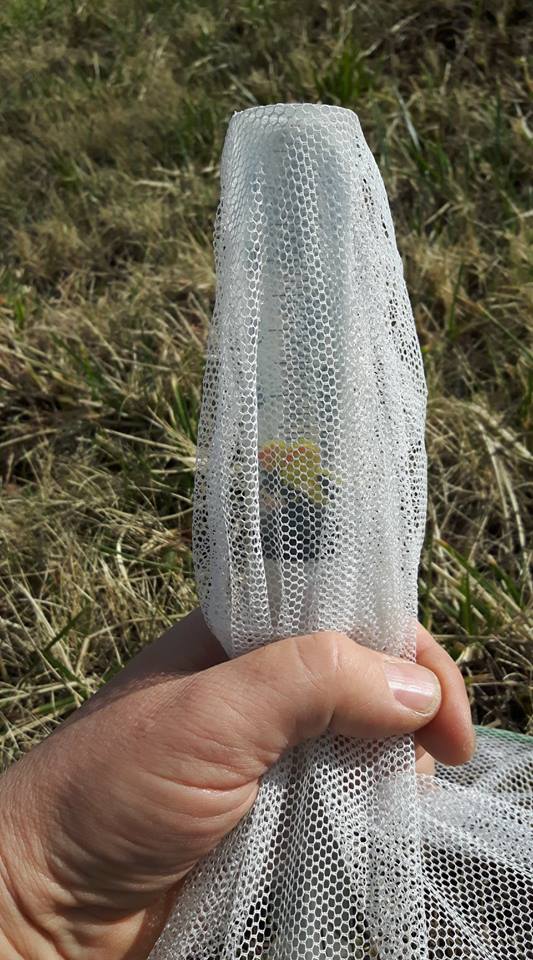
Bumblebees PLUS - Queen caught in a feeder

Mother caught in a loader
Put the carrier under the mother until she collapses and sinks to the bottom.  
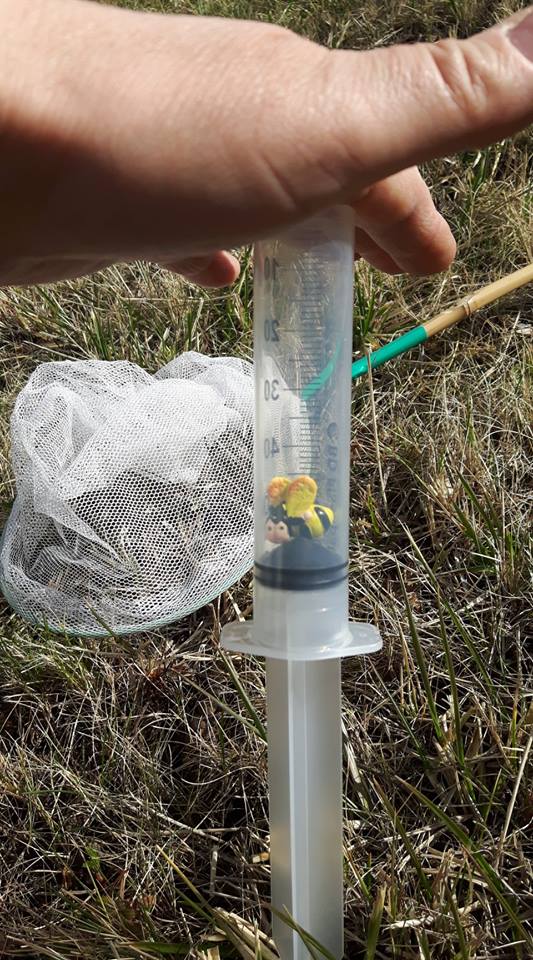
Bumblebees PLUS - Queen caught in a feeder

Mother caught in a loader
Seal the loader with a plug or a rolled paper tissue.
If you are close to the nest, just cover the feeder with your hand, or a net.
 

Sometimes the netting can get caught in the starter and won't come loose. There are several methods for resolving this situation, such as the one shown in this video.

But you can simply Stay still, don't breathe on your mother (human breathing stresses her), do not shake the starter and wait for it to release. Sometimes it's enough rotate the loader to a horizontal position, or the plunger slightly upwards.
The mother tries to escape upwards, so she lets go. Can you solve it toowith a careful tug of the net.


Transfer mother from bootloader to kernel

Boot loader mother through the flight opening, you let into the hive. If all goes well and The mother will enter the hive., it will pass through the corridor to the inner space of the hive. He's marking the path pheromones and makes buzzing sounds. In the cave, there will be examine the internal space and lining

It is essential that it is in darkness and undisturbed. It will make a path, which it will then exit the hive by, and if the hive is accepted, it is marked by its smell.

Warning

  • If the mother doesn't want to enter the flight hole and it's taking a long time, it's better to release her.
    She is either stressed, or she is not looking for nesting sites and will not accept a startling – you must not force her into the nesting site, and there is no point in doing so.

Proceed

  • Check that it is Closed roof a Closed ventilation cover
  • Get ready Unscrew air vent
  • If you have used boot shading, remove it
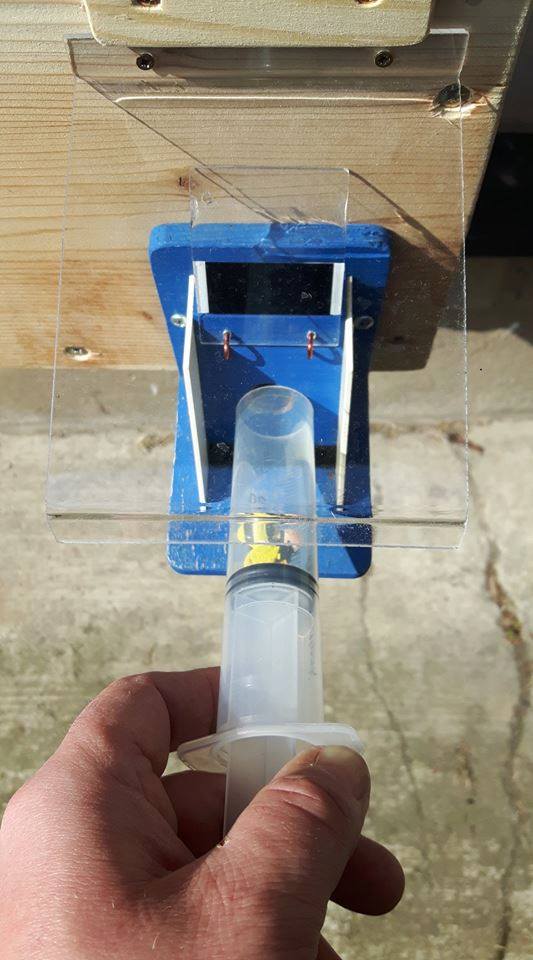
  • In a vertical position Bring the loader to the intake port and remove its cap
  • Lay it horizontally and press against the inlet opening
  • Attention, Don't press your mother while doing so. If it were to threaten, it's better to let it fly.
  • The mother is buzzing loudly and is annoyed, try tonot to prolong the struggle unnecessarily
  • The mother will seek an escape from the bootloader and enters the air intake
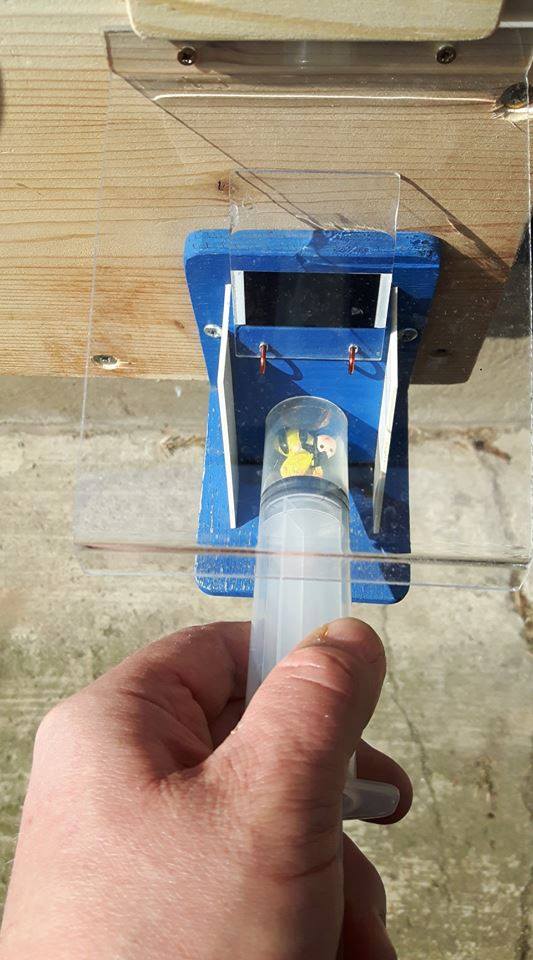
  • If she doesn't want to, try aboutlikely insert piston and bring it closer to the inlet but you mustn't press it – The piston doesn't push it into the inlet port, it just reduces the space it moves in until it enters the inlet port itself. – it's the only place he can escape
  • As soon as the mother enters the flight hole and does not immediately return to the driver, carefully close the inlet opening blank
  • Sometimes the mother will immediately turn and try to escape. In such a case Wait until they enter the hallway, Close the valve opening afterwards
  • Check, that the entrance reducer is holding well, that no light is visible around it into the hive, and that the ventilation is closed

Note

  • Mom is Need to introduce into the hive via the flight entrance. This allows him to find his way back when he wants to leave the shock, and possibly return to it and move in there again.
  • It is also possible to introduce the queen to the hive through the roof. However, this carries the risk that the queen may not find her way out of the hive. We do not recommend this option for beginners, or we describe it as a specific method for establishing a hive with a long entrance passage HERE (in preparation).
  • You can also look at Interesting video, but we do not recommend the procedure for beginners 

Common beginner mistakes

  • Long-term transfer of the mother from the installer to the hive
  • Using an inappropriate small-diameter loader see HERE
  • If the procedure is flawed, the bumblebee will fly away from the loader.
  • Poorly fitted loader to the flap, risk of pinching the mother's leg (antenna).
  • Angled ramp, down which the mother slides
 
 
Bumblebees PLUS - Introducing the Queen to the Hive

Introducing the mother into the hive
Tilt it to a horizontal position and press it to the inlet opening
 

Bumblebees PLUS - Introducing the Queen to the Hive

Introducing the mother into the hive
If she doesn't want to, carefully try to insert the piston and bring her closer to the opening – but don't squeeze her.
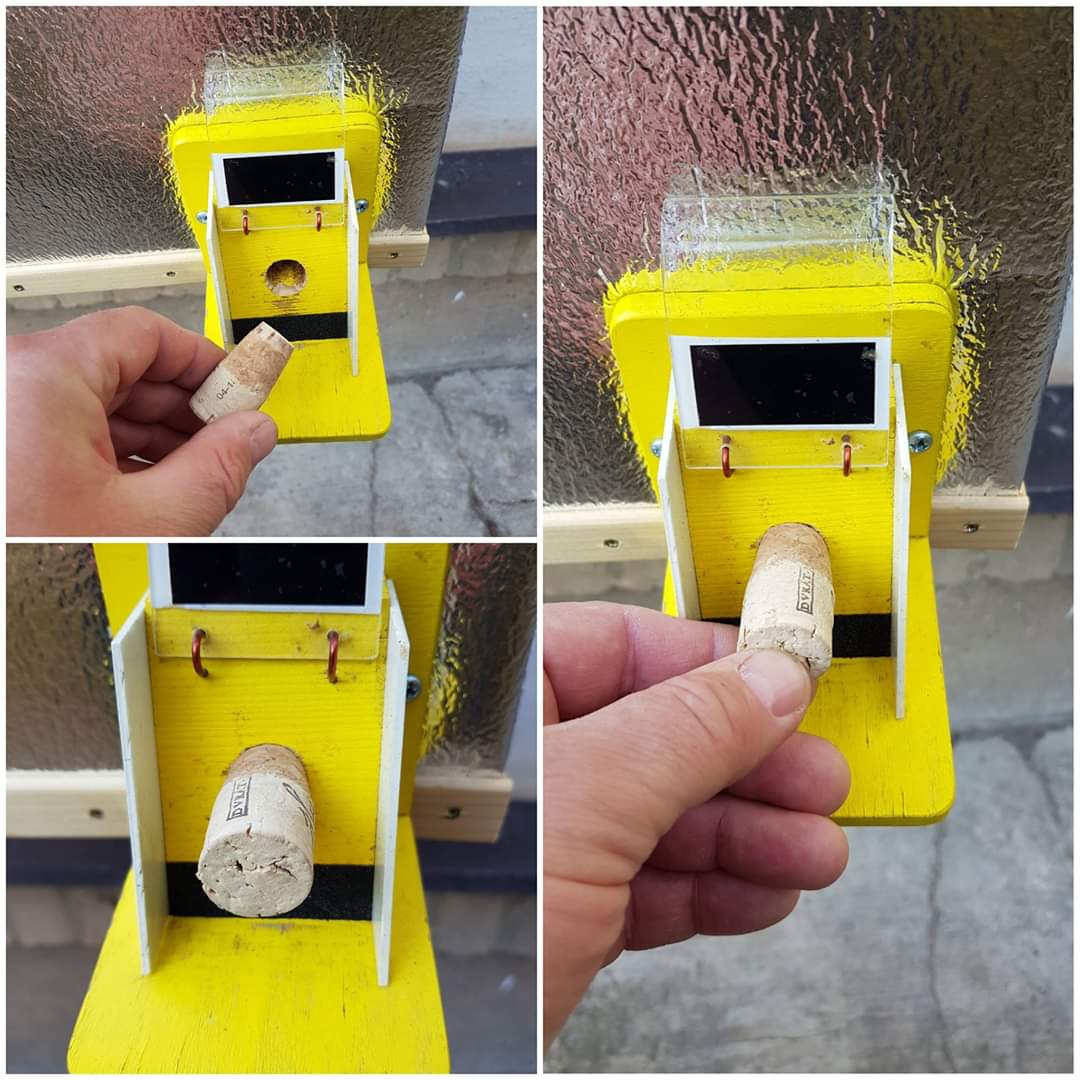
 

Bumblebees PLUS - Sealing the hive with a sanded cork stopper

As soon as the mother enters the entrance hole and does not immediately return to the breeder, carefully close the entrance hole with a stopper.
Sealing the ulcer with a ground cork stopper
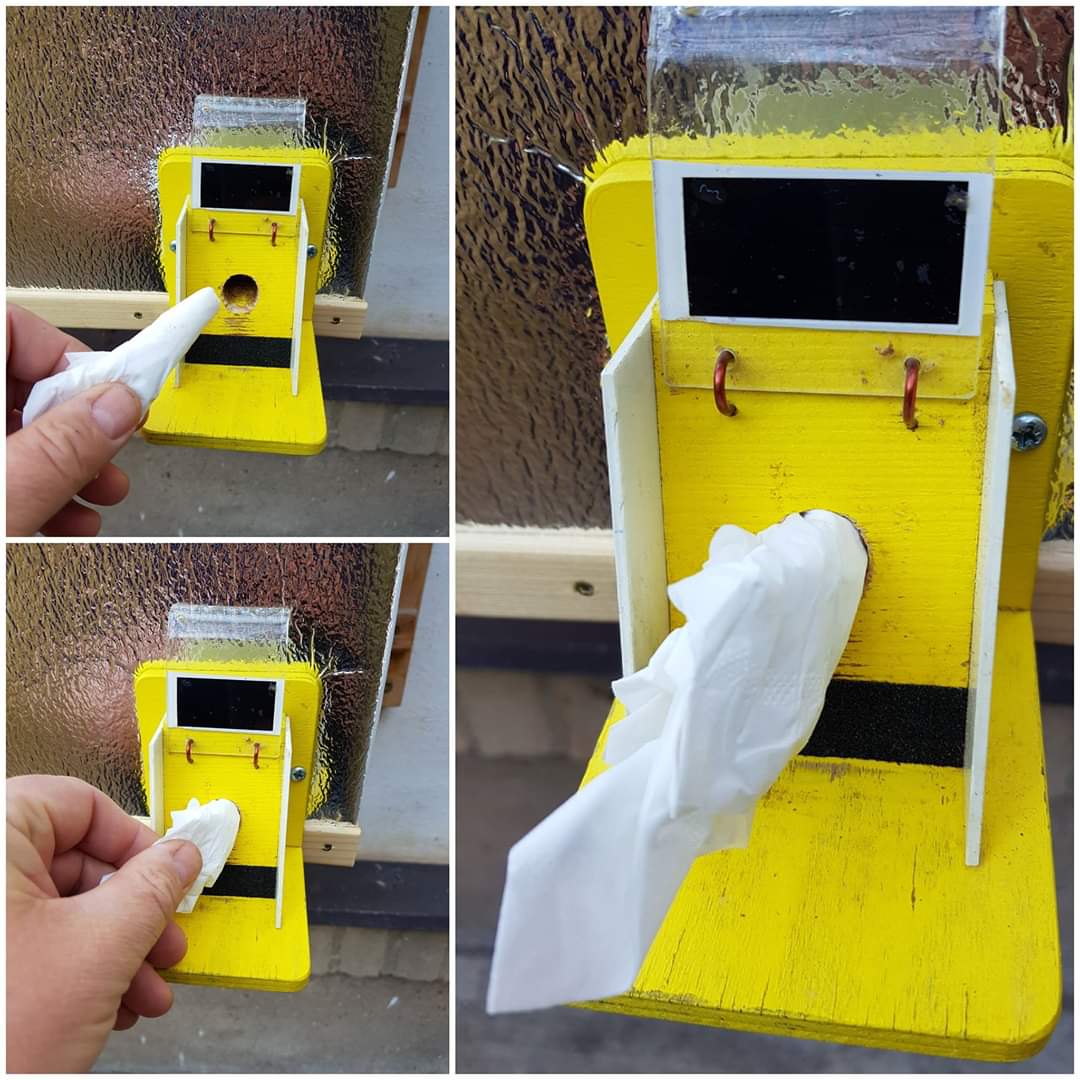
 

Bumblebees PLUS - Sealing the hive with a rolled-up tissue

As soon as the mother enters the entrance hole and does not immediately return to the breeder, carefully close the entrance hole with a stopper.
Closure of the ulcer with a rolled-up napkin
Video tutorial on introducing a queen bee into a hive. As you can see for yourselves, the introduction went textbook-style – quickly, smoothly and, most importantly, without stressing the mother..

This was a meadow bumblebee mother (Bombus pratorum)


This mother has a sore it didn't work, so the attempt to introduce was abandoned and the mother was released 

The mother is closed in the hive, examining its interior and making a decision.

This phase is crucial and is entirely in the mother's hands (wings).
If you have followed all our recommendations and the mother is genuinely looking for a nesting site, you have a high chance of her settling in. There's nothing more you can do now – all you can do is wait..

Proceed

  • Leave the mother locked up in the corner
  • Don't touch Úlk at all, Do not disturb her and step back from the corner
  • The purpose of caging a mother is so that walked through the entrance hall and began to examine the startle.
  • The important thing is that when going into the hive, the mother She didn't see the light in the entrance opening or in the hive..
  • You can, for example, listen and convince yourself that the mother is in the hive – as soon as walks down the corridor, it makes „buzzing sounds“ sometimes it is clearly audible“
  • Leave the vent opening closed only for the absolutely necessary time.
  • If the mother immediately continues down the corridor to the den, a lock of even 1 minute would be sufficient  
  • The ventilation opening should be closed for a maximum of 5 minutes. There's no point in prolonging the time, it won't help with acclimatisation.
  • Sometimes it happened that after a longer period of being closed The queen „froze“ in the hive or in the corridor – when she didn't want to nest and the breeder still tried to offer her a scare
  • Sometimes the mother wanted to nest, she quickly examined a startle, but she couldn't leave it to examine it and make a reconnaissance flight – The longer closure unnecessarily stressed her and she did not take the fright well.
  • Keep on closed vent and open damper (with the flap fully raised)
  • Right away Move to a safe distance of approx. 5 m and more, to a place from which you can be startled observe
  • The result of the observation is extremely important. – will tell you whether the mother wants to accept the nest or not
  • In the event that the mother it will emerge from the nest opening and fly away immediately – it will certainly not return
  • So too did the mother Probably not, if it just circles briefly over the ulcer. (2-3 rings) then it disappears = search for another mother with a search flight
  • Should the mother get out and dance the so-called. a fly-by, a scare caught her attention and you have a good chance she'll settle in

Recommendation

  • We highly recommend after introducing the queen to the hive Wait for the result and its decision = departure / orientation flight
  • It's good to wait for this moment. It's worth it for the experience, and above all for the result.
  • If for some reason you really cannot wait for the result, use the tag in the flight opening HERE 

Common beginner mistakes

  • Poorly closed ventilation opening – the mother sees light shining through and wants to leave this way.
  • Poorly sealed inlet opening – ditto
  • Opening the hive early/late
  • Queen cell disturbance after introduction
  • Observing a reconnaissance flight at close range – disturbance of the mother when leaving the nest
  • The breeder will not wait for the result and will not convince themselves that the mother has truly abandoned the fear = they risk it dying there
  
Bumblebees PLUS - Mark in the entrance to the hive (bumblebee house)

Markings at the entrance to the beehive
Photo O. Hercog


.

If you are placing a bumblebee queen into a hive (bumblebee house) in the evening, she might be caught by darkness and not leave the hive in time. Therefore, it is good to put on the surface of the bedding PET bottle cap with sugar solution.
To prevent the mother from getting wet in such a feeder, it is good to press a piece of cotton wool into the lid and drip the solution there. It's not a bribe, but an emergency ration.
If the mother does not want to, she will not remain in the hive even if she has a sugar solution there. It will only help her get through the time safely until the morning, when she leaves the hive herself, or when you release her from the roof.

.

Pilot maternal flight

A mother's orientation flight is a special flight when The mother will remember the appearance of the ulcer and its location. It also orientates itself in the surroundings to find its way back.

Interesting fact

  • A guiding flight can be observed when the queen has taken an interest in a nesting site, when new workers or new queens first leave the nest – they too must memorise the nest so they can find it.
  • Orientation flights are carried out by both queens and workers after the flight entrance has been closed for a long period and they have been unable to leave the hive.
  • Scout flights are also made by queens and workers, even when, during an outing, they discover that the surroundings of the hive have changed, or that they have moved with the hive.
  • Males do not return to the hive, therefore they do not perform orientation flights.

We can describe the orientation flight as follows

  • The bumblebee will emerge from the entrance hole
  • Sometimes it moves after it and the garlic, looking at it
  • After a moment, it takes off, turning towards the opening.
  • It stands in the air and inspects the entry hole
  • It hovers in the air in front of the hive, circles the hive, gradually rises
  • It makes wider circles, flies higher, and keeps surveying the scarecrow and its surroundings.
  • Circling higher and higher and then flying away...
  • Cardiac patients, please watch your blood pressure 🙂
The mother made a general flight and what next?

If the mother performed a homing flight, you have a chance she will return. Now you must wait to see how it turns out – nothing more can be done.

Sometimes it happens that the fright so captivates the mother that she inreturns in an hour and settles in immediately.

Sometimes, however, the mother doesn't want to nest yet and into the hive Will return later, perhaps in 1-3 days.

If it does not return by this time, there's no point waiting – find another mother on a reconnaissance flight.


Proceed

  • When your mother flies away and you can no longer wait, Insert the marker into the filling hole, – by which you know it has returned (a correctly placed tag will be ejected when the mother passes through the flight hole
  • But do it quickly and from get away from there immediately – if his mother returned, she'd be startled and most likely wouldn't come back again
  • If you can, Wait at a safe distance of at least 10 m and more from the fright and watch the fright
  • If you see the mother returning, don't disturb her – Leave the latch raised in the hive and the ventilation opening closed.
  • The mother bee approaches the hive carefully, lands on the entrance and after a moment enters the hive
  • Her next You can monitor the movement with your eyes. you won't last long, or even better using a tag in the flight opening
  • Here, it's mostly heart patients who call for an ambulance...

Warning

  • Mum's outings from the hive will be very irregular. – don't be surprised. The mother will gradually work on the nesting chamber, bring supplies, build a wax cell, and lay eggs etc. see HERE (in preparation)
  • Don't disturb her and give her time – any disturbance and opening of the hive at this stage can mean that the swarm will leave and not return
  • Once the mother settles in, she will Time to teach her to go through the flap – we'll explain later
  • If the mother after a reconnaissance flight, it won't return immediately, so wait about 3 days., before you bring another mother into the ward
  • Should you attempt to place another queen in the nest immediately and the previous one returns in the meantime, Can mothers in a nest meet and kill each other fighting over the nest

Common beginner mistakes

  • The breeder will not wait for the mother's return for at least 3 days
  • The beekeeper doesn't understand that the queen won't fly out regularly and wants to introduce a new queen into the hive, or they will open the hive and disturb the queen.
  • A beginner doesn't place the marker correctly in the entrance hole, and the queen goes around it / the wind knocks it down.
What if the mother didn't leave the fright?

Sometimes it can happen that You won't see the mother leave the hive, ...even if you're waiting for it. Alternatively, the flag in the inlet is not thrown (caution – the mother sometimes bypasses this).

Mother sometimes from the hive can't find the way and remains trapped inside. 

Sometimes the queen bee in the hive, so-called. choked – will remain stiff and motionless on the lining. There could be multiple reasons, and they aren't directly related to temperature.

More often than not, it's the queen mother who recently woken from hibernation and is only just looking for a nesting site. After being introduced into the hive, it returns as if into a state of hibernation. Her hormonal processes are not yet fully activated, and she reacts in this way to darkness and sometimes cold. A mature queen is active in a cold hive.

This effect sometimes supports a large difference in temperature between the outdoor environment and the chilled hive – it is warm outside and the hive is significantly chilled after the night. However, if the hive is not completely frozen, its temperature does not have a significant impact on the queen's setting. Beekeepers therefore sometimes open unoccupied hives on a warm day and let them warm up a bit in the warm air.

Stale mother sits on the lining, or is hidden in the lining, but appears to be Dizzy stale.

A very common reason is light shining into the hive through a ventilation opening. His mother is sitting with him and not looking for a way out down the corridor.

If you leave the queen bee confined in the hive for an extended period and she does not leave it of her own accord, He could die there

Therefore, we recommend placing it on the lining surface a bit of sugar solution/batter – it's a safeguard for this eventuality a food until you free it from the hive (see above)

Warning: Do not introduce another queen into the hive (bee box) until you are sure that a previous queen is not present in the hive, for example, stuck on/in the lining. This could lead to an unnecessary fight.

Proceed

  • Watch the shockObservation/MarkThe mother should leave it herself within one hour at the most.
  • If the mother does not recover from the fright, we recommend Open the roof. If the mother is sitting on the lining, leave the roof open and she will fly away herself. There's no point in keeping her. - it is not nested in the gorge
    If the mother stuck in the lining, no other mothers can be introduced into the ulcer. So, inspect the lining to see if it's hiding in there – if it's stiff, you'll hear a faint hum
  • The mother can sometimes hide even in the entrance hall – so blow into it from the inlet opening – if it's stuck there, you'll most likely hear
  • If the queen bee is sluggish and doesn't fly, we recommend giving her a bit of sugar syrup and release it back into the wild
  • If you don't see the mother, leave A moment's shock, open – the mother will sort it out herself. The fright will at least be tempered to the ambient temperature

Common beginner mistakes

  • The beekeeper does not open the hive even though they did not see the mother fly away and risks the mother being trapped in the hive.
  • The beekeeper prematurely introduces another queen to the hive

Interesting fact:

Some beekeepers do not cover the entrance tube opening in the hive. According to them, this reduces the risk of the queen becoming „stuck" in the hive after introduction. I have tried this, but in our opinion, it had no significant effect.
But this method is also possible. This means that after the mother's settlement and the birth of the first generation of workers, fear Open this you will cover the area with lining. Do it, but make sure there's a cavity remaining. Otherwise, the bumblebees would defecate there and spread dirt around the nest. 

In the following video, you will see how the mother gradually wakes up from being frozen. It took her about 10 minutes before she flew away as if nothing had happened.

If the mother in the hive becomes immobile„, it will sit on the lining, but can also be hidden within it. If it remains there, it can die. It can also die the moment the beekeeper introduces another queen to the hive and the queens fight over the hive.

Therefore, it is necessary to prevent the shock which the mother has demonstrably not left, open and free the mother – from the surface of the lining, from the lining or from the inlet tube. Don't forget to adjust the lining again then. 

The mother will call you when searching the lining, but you can see for yourself you have enough to worry about, and she won't attack you.

Warning:  Don't interfere with the nest of a mother who is already settled like this., you will destroy the base of the nest, and the queen will most likely fly away. We only recommend this procedure for rescuing queens that have become stuck in the hive during installation.

What is the next step?

If you have succeeded and the mother settled in, Enjoy the success. Certainly, do not interfere with the ulcer., and watch from a distance and at most monitor mother's movement using a tag.Instructions can be found on the page  Do I or do I not have this settled
The mother is sensitive to disturbance at this stage and a gasp could leave. Be patient, your time to safely observe bumblebees is approaching. 😊

Once you are sure that it regularly returns for a period 7-10 days, start clicker training. You can find the procedure on the page The art of the clap

If Mum isn't coming back, it is necessary Repeat the entire seating procedure. Be patient, sometimes settling in works on the first attempt, sometimes it takes up to 50 tries. With each attempt, you gain the necessary practice and confidence. Everything will go better and faster for you = reducing the mother's stress and increasing the chances of success.

If you haveIf you are still having trouble finding accommodation, please check the entire process. Preparations of the hive, conditions for catching the queen and her introduction from the start. In most similar cases we have dealt with beginners, a seemingly minor but ultimately crucial error has occurred.

You need to accept the fact that you will not succeed with the mother's settlement.. Is there still a chance that the Bumblebee Rapid Response Team can help you settle in? See page  Bumblebee Rapid Response Unit .

C) The queen, who was born in the hive last season, will return to it herself.

This part is extremely important for breeders who have been successful in the previous season and have newly-born queens in their hives.
If young queens successfully overwinter, they will look for their natal site and attempt to settle there. If the beekeeper places a bait hive in the same location and the queens return, They fight over the inheritance, and at best, the strongest one will be left.
The breeder should prepare for such a situation and, if possible, avoid unnecessary losses of bumblebee queens.

A description of the solution can be found in a separate chapter. Mothers' returns to the hive