



- Ants signify dangerSome species of ants can destroy nests – pollen, nectar and larvae. Some species do not harm the nest
- Just a moment If ants decide to raid a nest, it only takes them a moment.
- The fawn must be protected: To prevent ants from getting into the bumblebee nest (bumblebee box), it is necessary to create barriers for them.
- It's easy: creating obstacles is easy, but it requires care
- Without regular checks, measures may not be effective: Ensure that the barriers created are effective – a single blade of grass or a twig is enough for ants to find their way into the hive
Introduction
Some species of ants jsou účinným Liquidators bumblebees. If a path to the nest is found, they take it to the bumblebees. honey reserves and also their larvae.
Often they are so difficult in the nest that bumblebees are startled (beehouse) will leave (initial nest phase), or the nest is weakened and the bumblebees abandon it, or they die in it without offspring.
Ants are sometimes only interested in garlic shoots and by necessity do not have to penetrate the nest. There are even recorded cases where ants lived in the bumblebee nest as tenants.
Known cases of ant attacks on bumblebee nests clearly indicate – protect the hives from ant intrusion.
Challenge
If your nest has been invaded by ants and you have photographs of the invasion, please send them to us for use on this website. Our address is info@cmelaciplus.cz
You can learn more about ants as parasites of bumblebees in the chapter on bumblebee parasites and enemies (in preparation).
It is therefore necessary to prevent ants from accessing the nest by creating ant protection.
This can only be achieved by creating between the hive and its surroundings for the ants impenetrable zones at all ptransition bridges.Transfer bridges are understood as places such as the legs of the hive, the stand, hinges and other parts of the hive's construction, for example, even an absorbent rag that accidentally touches the wall, or branches and grass stalks that touch the hive.
The protection must always meet these requirements:
- Security for bumblebees and other wild insects – bumblebees, but also other hymenopterous insects, must not be caught and die in the trap.
- Durability,So, in order for the protection to work as independently as possible from us, the breeders – it is necessary to take into account the risks associated with drying out or, conversely, a decrease in effectiveness in heat or rain.
These measures reliably protect bumblebees from all crawling insects such as ants, and therefore also from velvet ants (Mutillidae) and earwigs (Dermaptera).
Warning:
- Even though you create good protection against ants, you haven't won – it's often forgotten that branches and blades of grass touching the hive, they can create a makeshift bridge that ants can use to enter the hive.
- Every protection against ants and crawling insects must be regularly check and renew if necessary.
- If you use liquid protection (water/oil) Choose a solution that prevents the liquid from drying out and climbed for the construction of a kiosk – see subsequent text
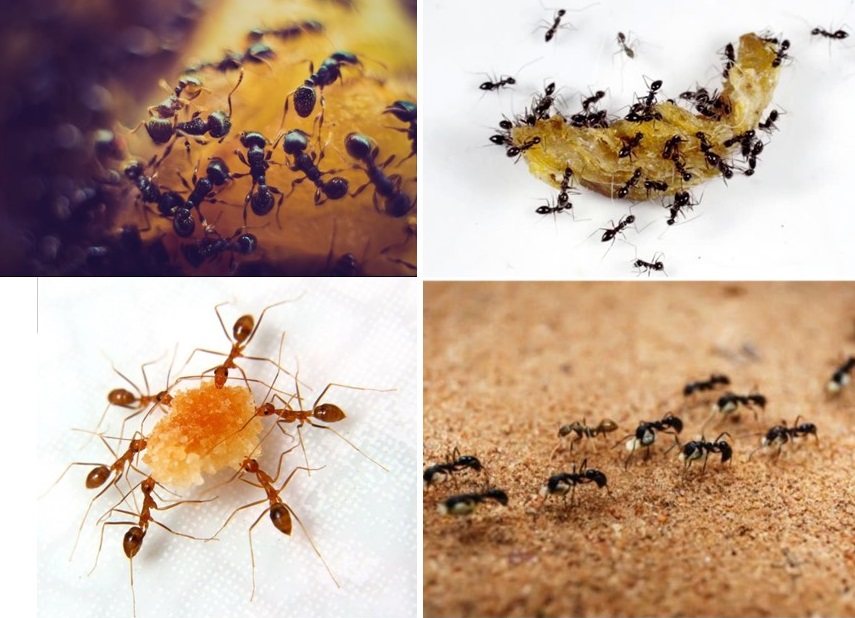
Ant attack prevention – ants
Internet Photo
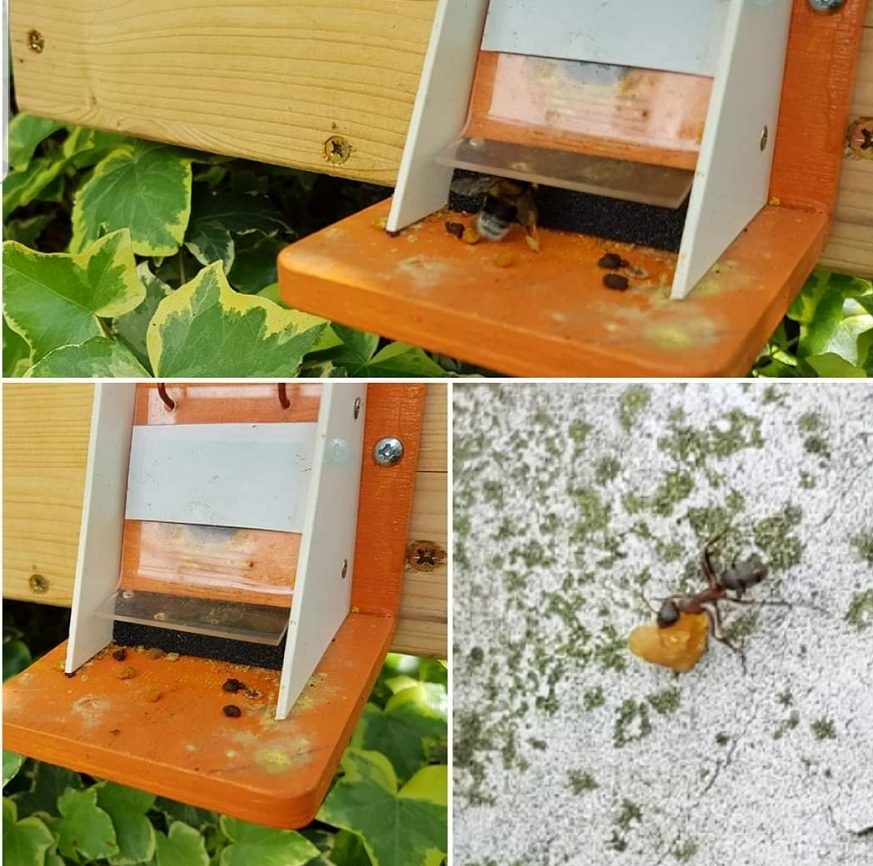
Protecting your garlic from ants – ants on garlic
Photo O.Hercog
In the following text, we provide possible solutions these requirements according to the location of the ulcer.
We would be happy if you would write to us about your solutions, we would gladly supplement our recommendations with your proven ones.
Perhaps to start with, take a look at what happens when ants venture into a bumblebee nest. Some species of ants do not harm bumblebee nests, while others will destroy them. It is difficult to estimate what kind of ants are living around your hive, and therefore we recommend applying the recommended measures as a preventative.
The video was provided by Petra Hersemeier and filmed in April 2020 in Düsseldorf. This case involved an ant attack from the Lasius genus.
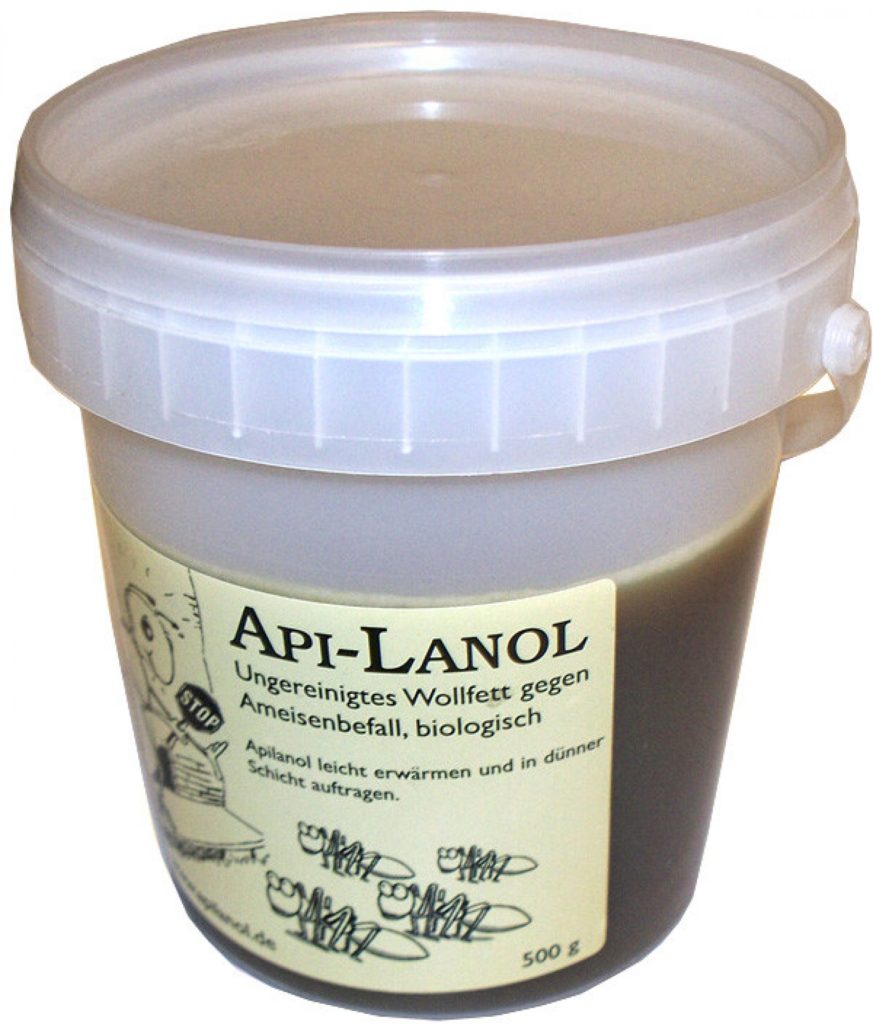
Apilanol
Photo: Internet photo
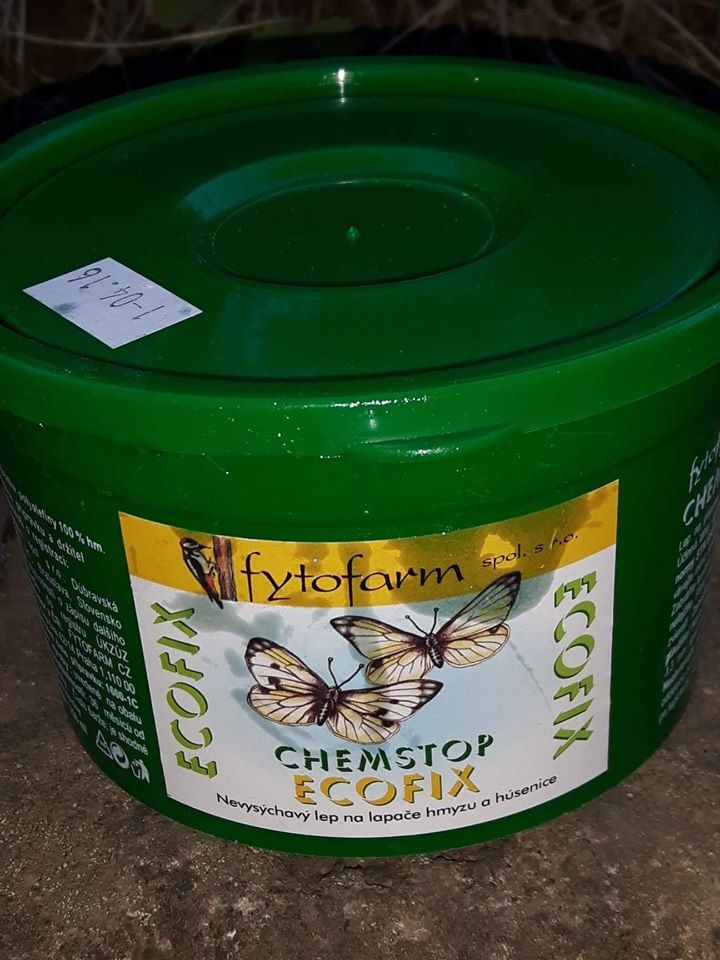
Material for creating a coating layer by application – Chemstop
If you place the hive legs further under the base and use Chemstop/Apilanol as the filling, you will create a functional and safe solution. One filling will last more than one season, and the risk of bumblebees adhering there is minimal.
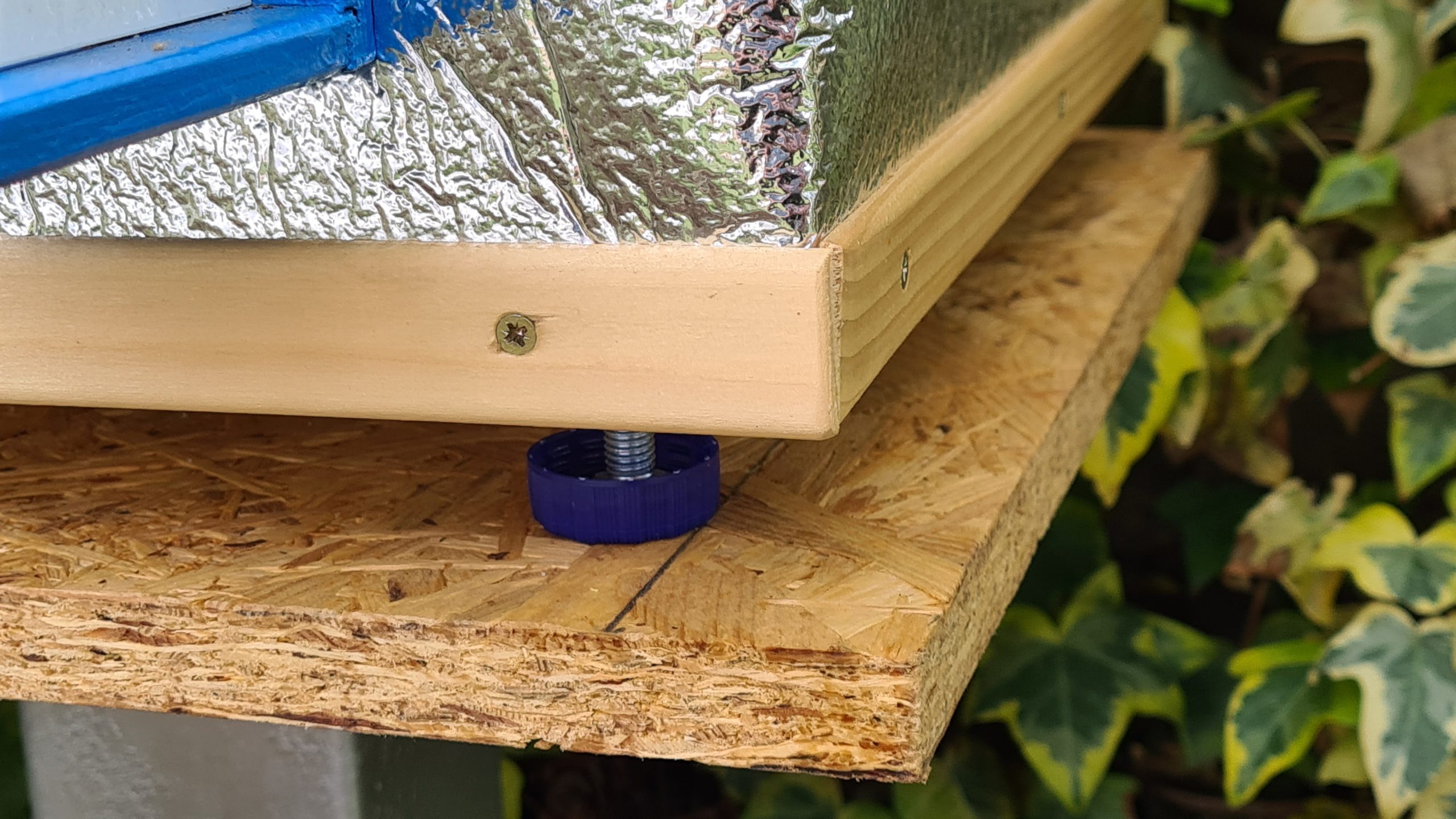
Ant repellent from a PET bottle cap – Chemstop filler
Photo O. Hercog 4/2021
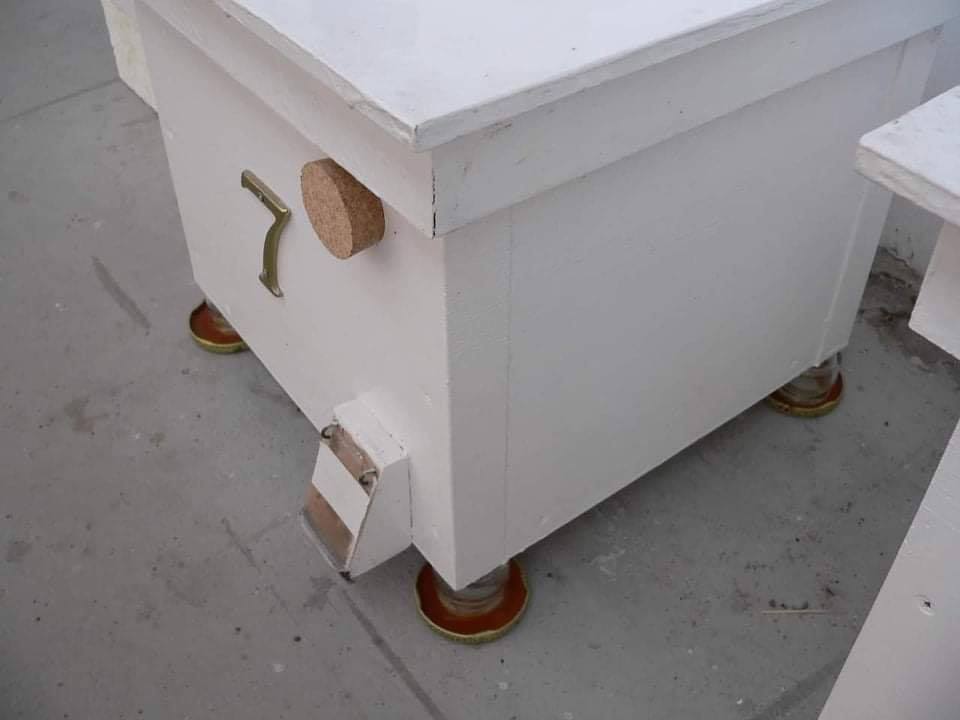
Ant protection shock on the ground
Photo J. Čížek
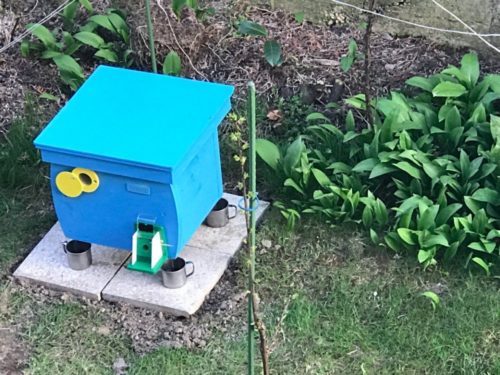
Ant protection for the hive – ground hive.
However, the containers are quite large, smaller ones are better
Photo D. Mesko
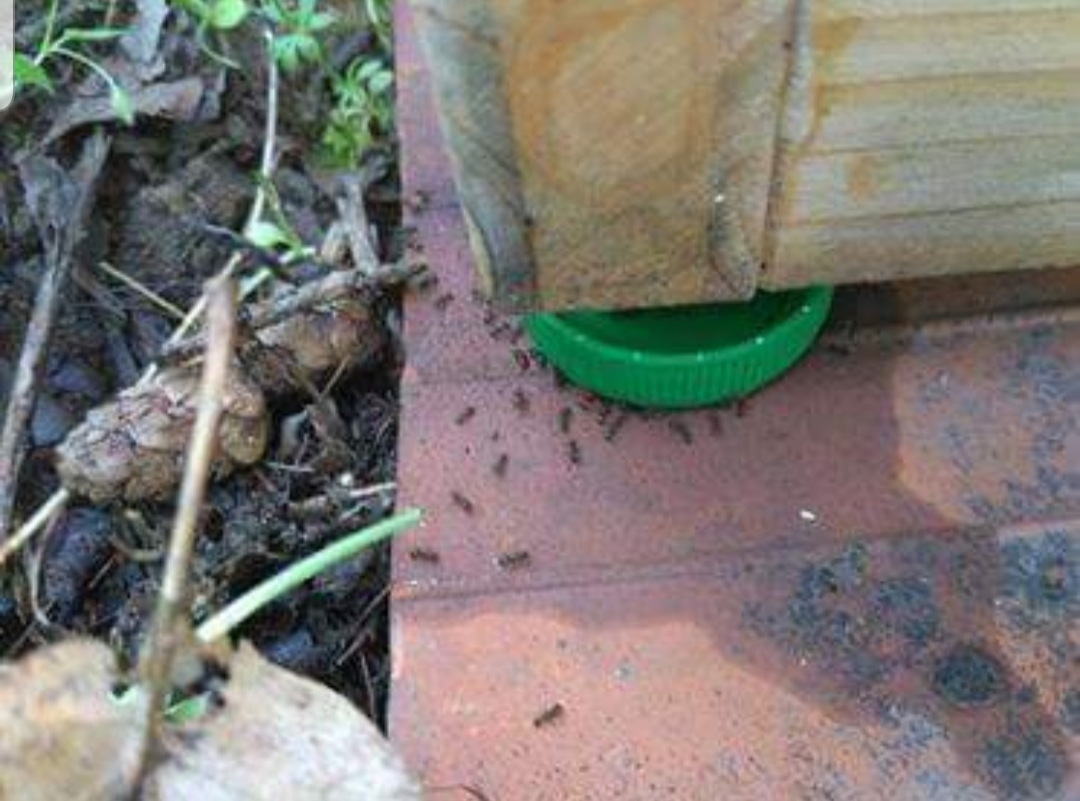
Ulcer protection against ants – ground ulcer – edible oil as an ant feeder
For lids, we recommend a more durable material like Chemstop, as ants don't like it :-) Photo Š.Vácha
Startlement on the wall
Ants can also appear on the wall at a height of 100 cm and above, and can make a feeding station for themselves from their nest. Therefore, ant protection must also be addressed here.
Don't forget that ants often move along the wall of a house, garage or shed, you place your lure. One lone scout can call scavengers to the lure.
Solution
- On the crossbeams a barrier against ants must be created (where the bird feeder is hung or attached).
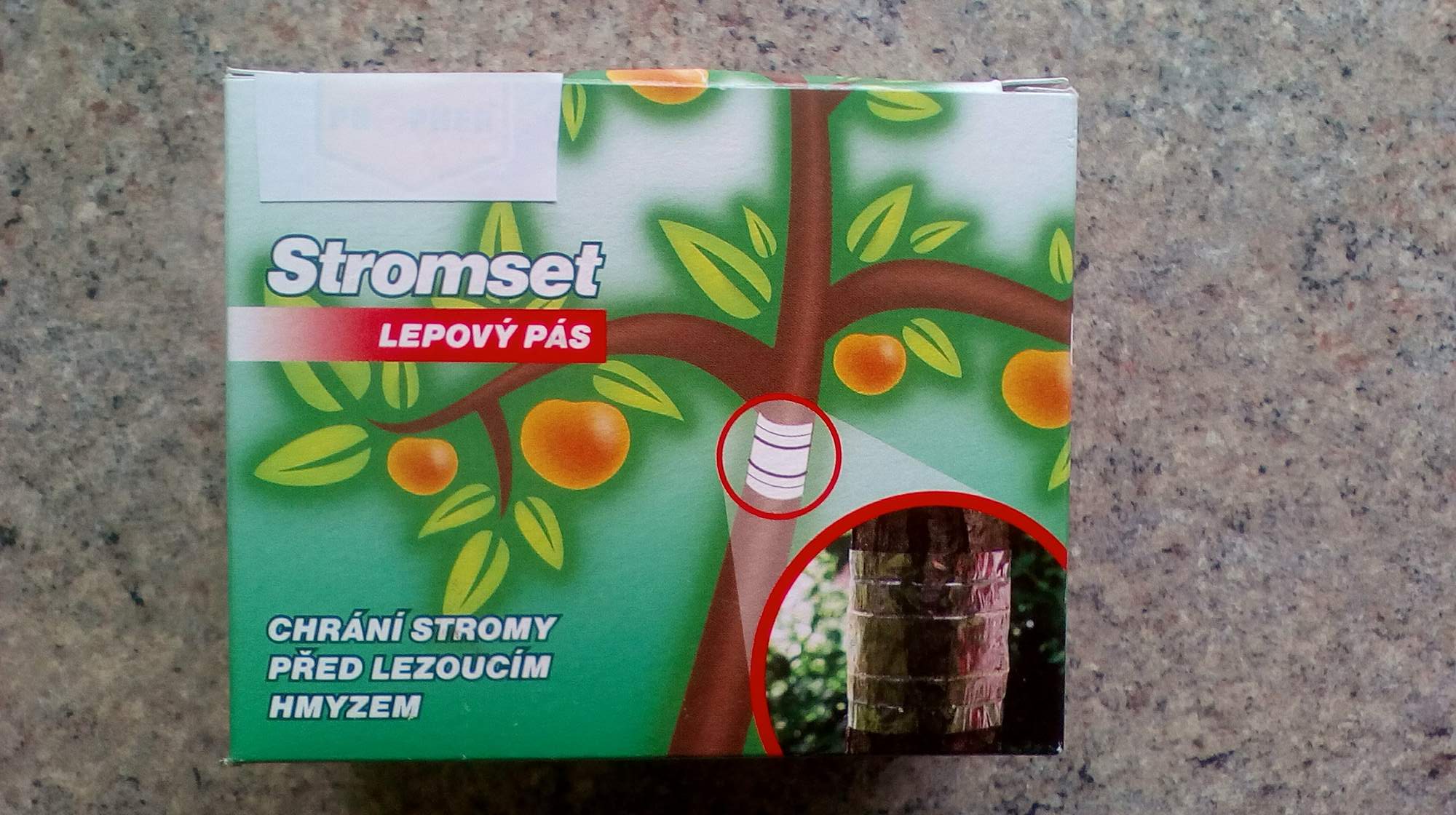
- It is best to wrap the circumference of the crossbar with adhesive tape and then apply a sticky layer of Chemstop/Apilanol all around it.
- There are also repellent products offered, for example, for beekeepers, but we have not verified their effectiveness in practice.
- Always ensure that ants / birds do not stick to the ant protection.
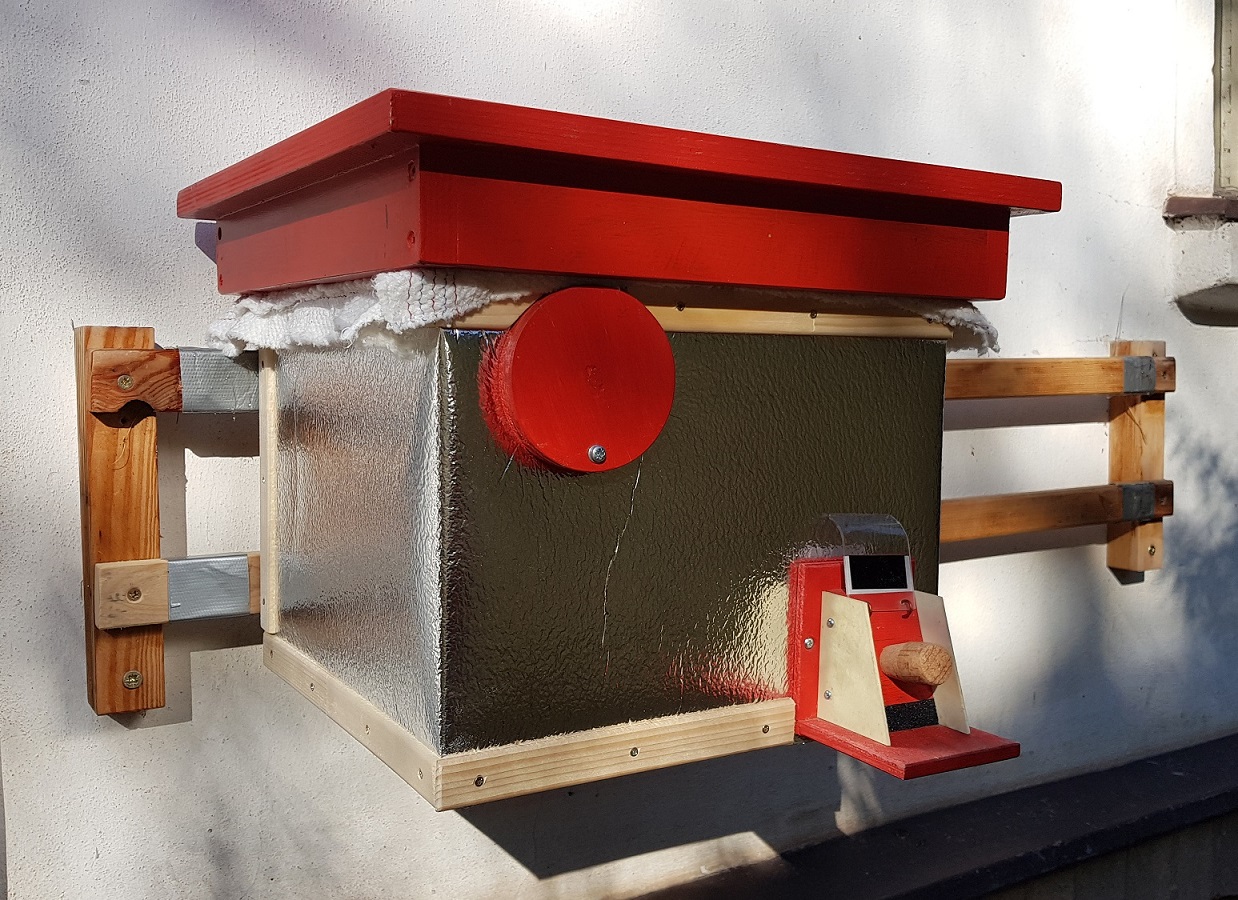
Ant protection – shock on wall curtains
Photo O.Hercog
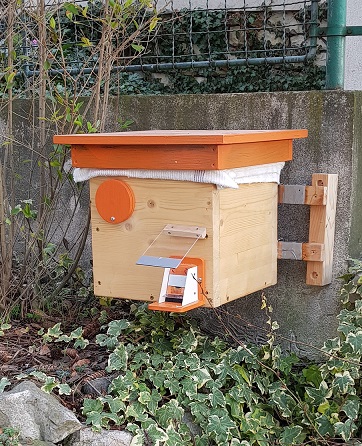
Ant repeller for the apiary – apiary on a fence wall.
Photo O.Hercog
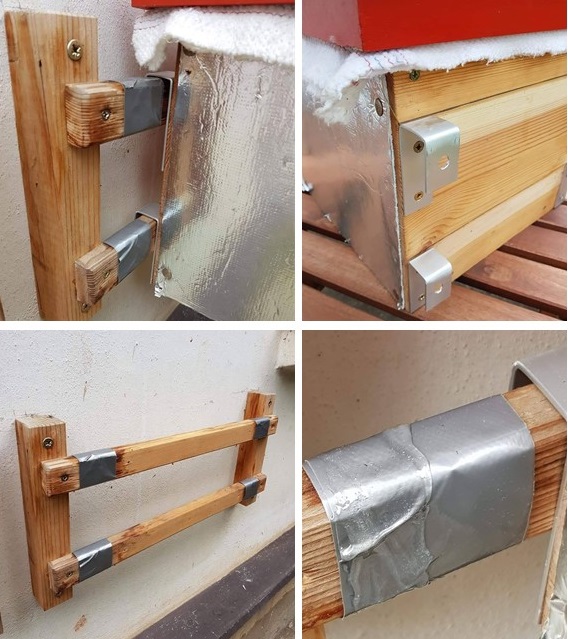
Ant protection – shock on wall curtains
Photo O.Hercog
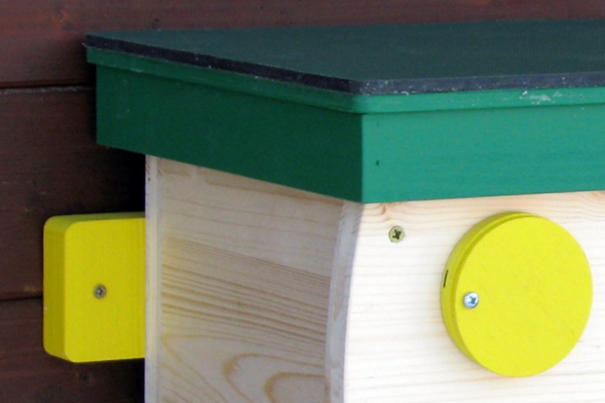
Sticky ulcer protection strips
Some manufacturers have already begun to supply solutions for hanging ulcers on the wall. The solution in the photograph is very aesthetically pleasing, looks robust, and will undoubtedly serve its purpose, but…
A startle won't knock it off the wall, to check the nest and potentially intervene inside, which can be a bit of an issue during the season.
The manufacturer has not yet provided information on their website regarding ant protection, we assume they will add it later.
However, you can create protection similarly – by coating the circumference of the holder with Chemstop/Apilanol, or by applying an adhesive strip.
Since the bracket is firmly attached, it will be a bit more complicated. However, it will help to shim the bracket (for example, with a larger nut between the wall and the bracket) and this way you can protect its entire perimeter.
Practical women like Alenka Votavová recommend an even simpler solution:
Cut a piece of sticky tape so that it is larger than the bracket. Stick the tape under the bracket onto the wall, and then screw the bracket in. If you want to get your hands dirty 🙂 and protect the wall, place the tape between the dowel and the bracket.
If the sticky tape extends beyond the hinge, this should also prevent ants from entering the nest.
We haven't tried it yet, but in principle it should work.
If it proves successful, please send us a photograph to complete the instructions.
If you're worried about the house facade getting dirty, deal with it in another way.
Install a commercially produced beehive
Manufacturer's web photo
Shock absorber on a stand
If you have chosen to place the hive on a stand, ant protection is easier.
Solution
- It seems appropriate to use Chemstop, which you paint the places where ants could get into the hive (transition bridges).
- Similarly, it can be used Flypaper, or insect repellent.
- It is advisable to create a bowl on the stand, around the entire circumference of the stand (pipe).
- On a stand made of tubing create tin or plastic mugs And fill it with a liquid that ants cannot pass through. You can use inedible oil, sticky soap, Chemstop etc.
- Sites with a sticky layer or a bowl with liquid are required To cover so that they It is not drizzling and so that on them The bumblebees didn't stick.
By placing the receptacle beneath the gutter, it is not rained upon, nor is it exposed to sunlight, so the liquid/contents will last longer inside it. - Better create a deeper bowl with a small surface area – the ant won't get over it, but at the same time, bumblebees or other random insects won't get stuck in it. (see photograph)
Rosťa is a meticulous chap, which is why he prepared a literal obstacle course (multi-level protection) for the ants.
Ant+ – If I were an ant, seeing this insurmountable defence of the anthill, I would commit suicide by jumping off a daisy… :-)
This bumblebee house stands on a classic fence post. The bumblebee house is attached to the post by a base. The first obstacle for ants must overcome is a bait in the form of sticky tape for tree protection. Double-sided tape is most suitable.
Another trap awaits them in the form of an oil pit – I used a taller round vitamin box, from which I removed the lid, trimmed the sloping top edge, and drilled the bottom with a hole saw of the same diameter as the post.
I slid the finished semi-finished product upwards from under the post.
Any leaks at the points where the column meets the box must be sealed. Waterproof sealants or assembly adhesives can be used. And then there's nothing left to do but fill the cup with a suitable liquid. I used old lawnmower oil; the other animals find it smelly.
From my own experience, I can confirm that ants have never overcome these baits, nor have they tried very hard to. Furthermore, this is a year-round, maintenance-free solution.
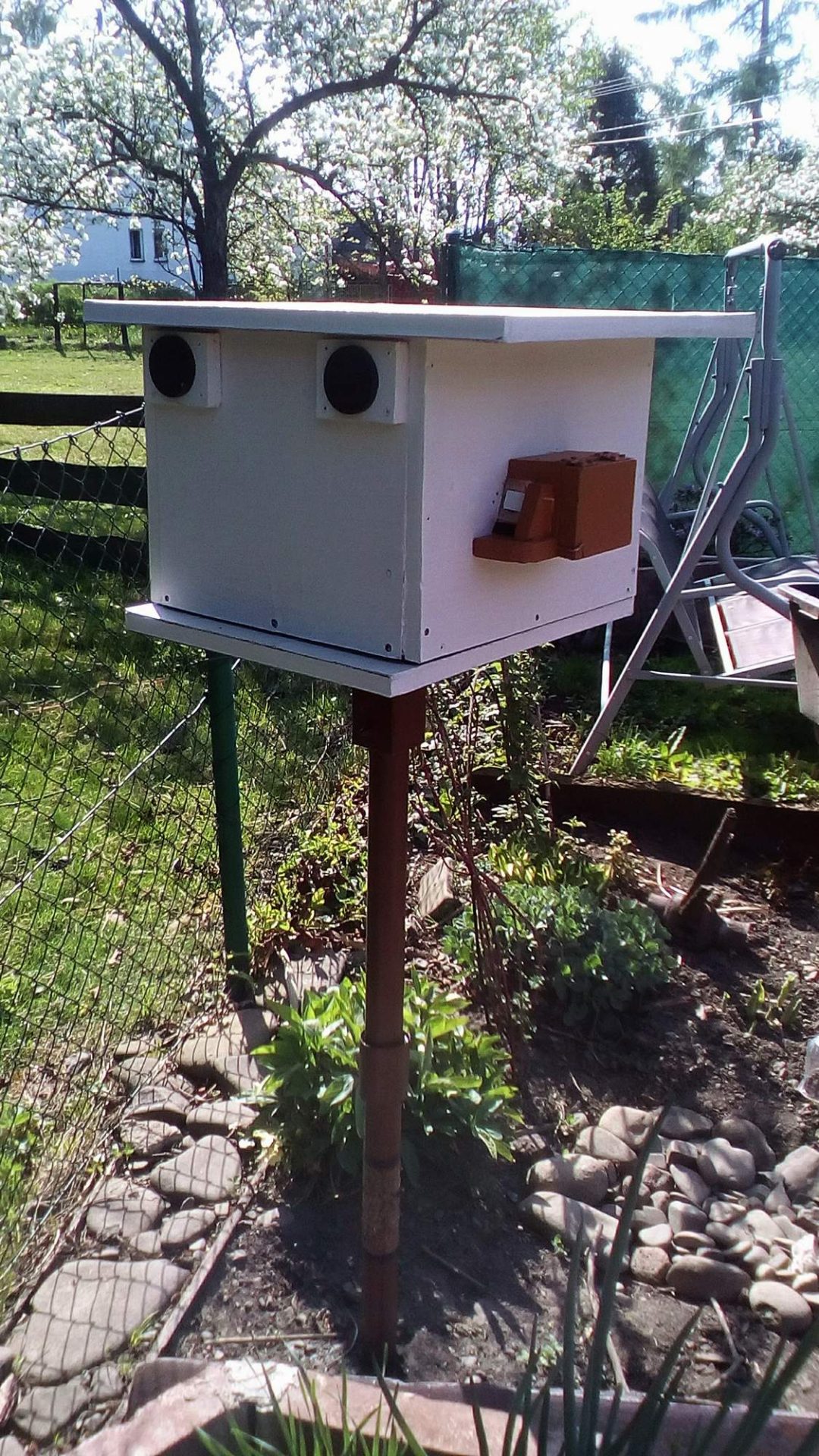
Ant repellent spray on the stand
Photo Rosťa Kýros
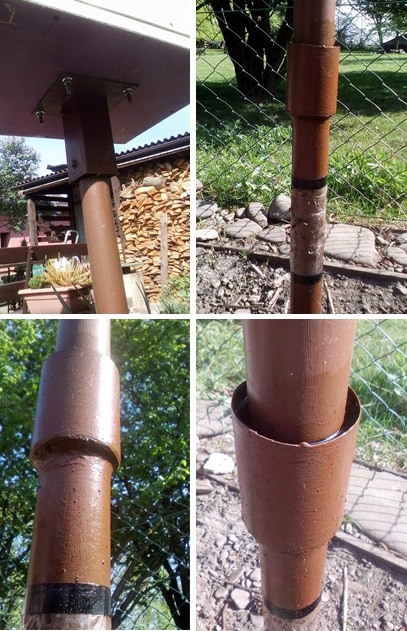
Ant protection for a stand - details
Photo Rosťa Kýros