


Latch lifting solution

Lift-off solution for flap valve disc

What you will learn here

  • Why does the protective flap have a solution for latching the flap (plastic part of the flap)?
  • Why is this important?
  • What are the possible solutions?
  • Who are the peg men and who are the skewer men

Why does a guard flap have a latch

The protective flap is based on a principle designed by A. Krenz, improved by M. Stuchl. 

Bumblebees PLUS have been focusing on protective flaps, as an important element of hive protection, for a longer time and are continuously testing further improvements. We are pleased that manufacturers are gradually adopting them into production and making them available to you. 

You can read about the flap, its improvements and further modifications HERE (preparing)

The basic part of the damper is Latch. Yes closes the inlet opening.

If the inhabitants of the hive They get used to the latch, they lift it They slip under it. The trapdoor then closes behind them.

If they want to get into the hive Casual visitors, they lack experience, and the catch will put most of them off – He can't lift it.

The flap usually deters queen bees that are looking for a nesting site and stumble upon it by chance. It also mostly deters bumblebees, though we have recorded cases where a bumblebee passed through the flap together with workers. The flap effectively deters the greater wax moth (Aphomia sociella), parasitic flies (e.g. Brachycoma devia), etc.

For the flap to provide protection, it must be early after the nest cell is inhabited by the queen bee, the cover is lowered.

When the mother – the queen – is in the solitary phase (before the birth of the first generation of workers), she is quite sensitive to disturbance. Therefore The flap cannot be started at once, but it has to fold down to shut gradually. Thanks to this, the bumblebee will get used to the flap within 2-3 days and pass through it smoothly.


Remember that if you want the hive to be protected from bumblebee parasites, or at a time when queens of later species are looking for nesting sites, the flap must be lowered.

Here you can see how a bumblebee lifts the flap – it inserts its head underneath it, then its body, lifts the flap, and slips underneath it,

But they have to get used to it. You have to close the flap to slowly close/start, in it gets used to the touch of the latch and learns to go through it.
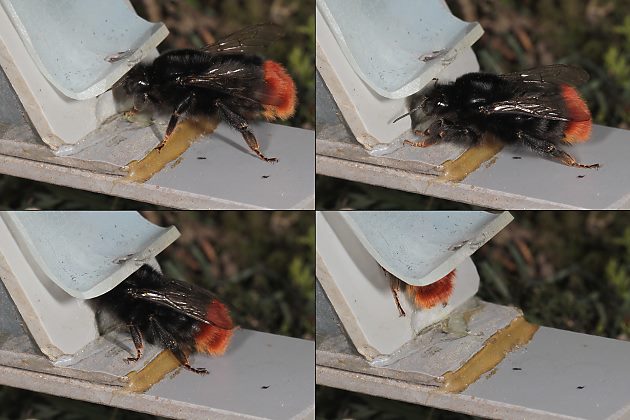
Bumblebee PLUS - Protective Flap - entering Stone Bumblebee (Bombus lapidarius)

Guard flap – entering red-tailed bumblebee (Bombus lapidarius) Photo http://www.wildbienen.de
How to start the damper – solution

The procedure for starting the flap can be found HEREpreparing).

The trigger for the flap is so fundamental for bumblebee breeders (bumblebee keepers) that it divides them into 4 basic and irreconcilable camps, depending on the solution they use. 😊


 For the demonstration of the solution, a prototype of the flap modification designed by O. Hercog in 2018 (hinge made of UHMW-PE) was used. The flap has undergone testing and is now being manufactured by one of the producers of bumblebee boxes and bumblebee supplies.
You can read about adjusting the older damper HERE (preparing). 
 
Peggers

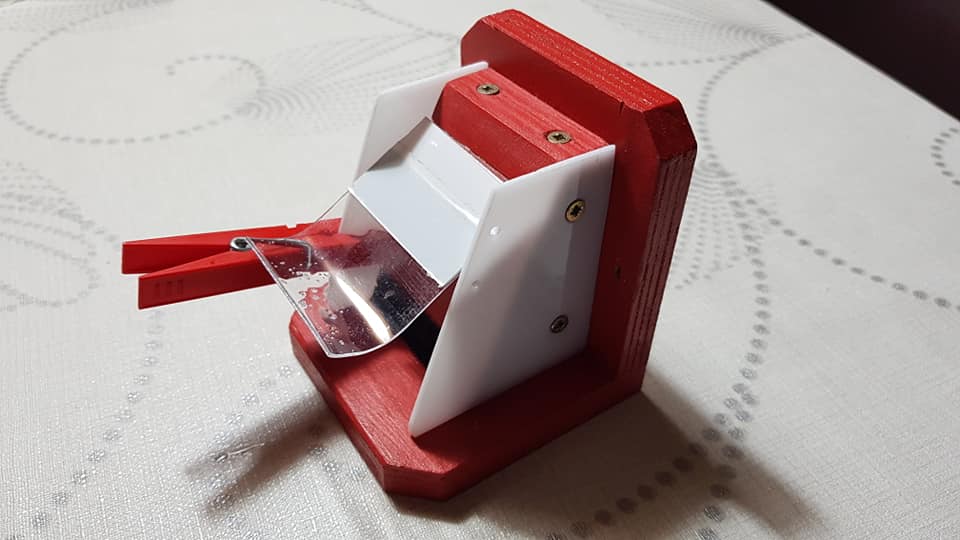
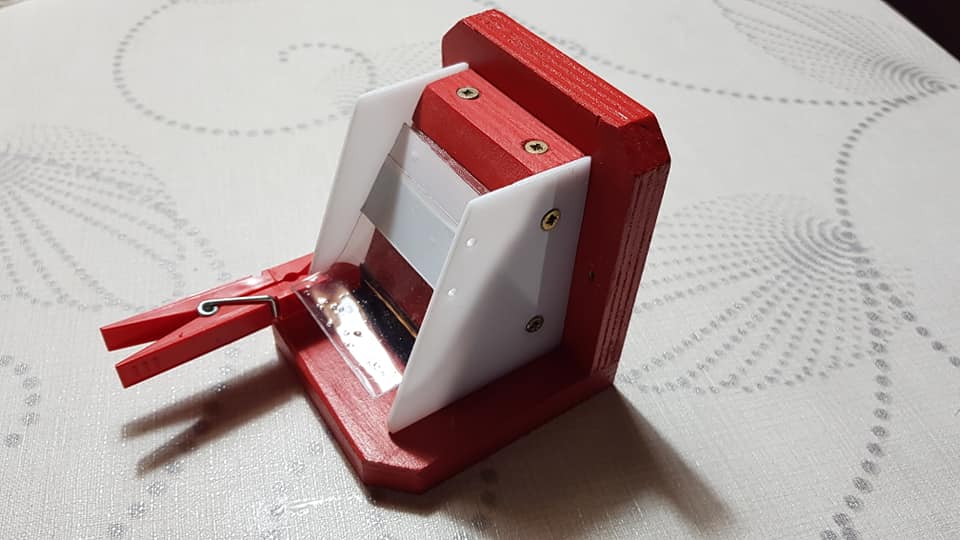
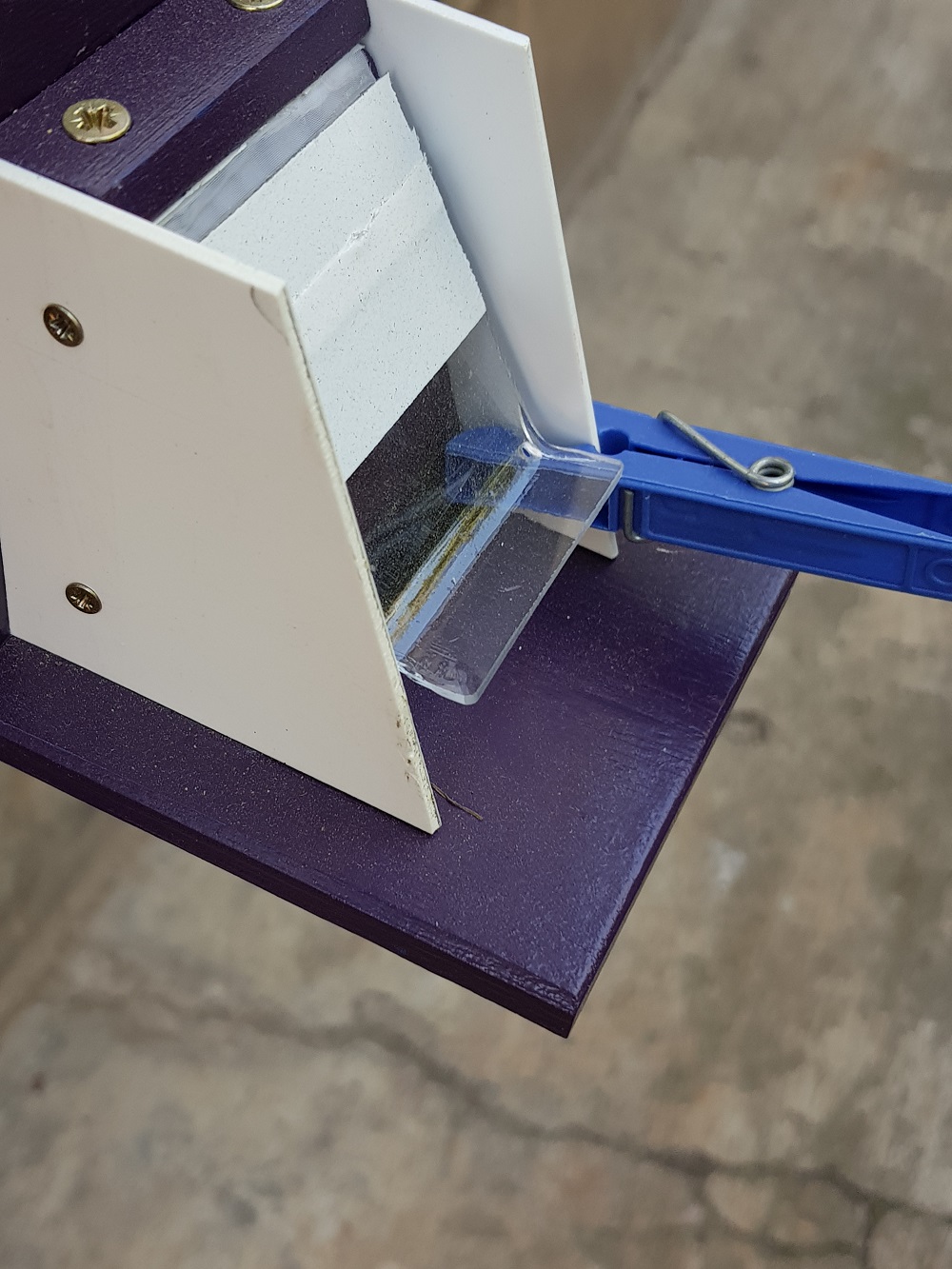
They adjust the flap with a laundry peg. 
It's not that accurate, but on the other hand, it's very fast and very operative.
For example, the flap can be quickly closed with a peg when you want to temporarily confine a bee inside the hive and clean the entrance.

Description:

  • The peg of a suitable size is attached to the side panel (the side plastic part of the flap), where it is always ready.
  • If the flap is raised (the inlet port is open), the pin secures it in the upper position.
  • If you lower the flap gradually, you can hook the peg onto the side pieces and thus lift the flap as needed.
  • If you want to close the flap, you lower the flap and snap the pin onto the side piece, so that the flap is pressed onto the body of the flap by the pin and the bumblebees cannot lift it.


Advantages:

  • You don't have to make anything, just choose a peg of the right size
  • You will not come into contact with bumblebees when adjusting the height of the flap.
  • Very prompt solution for closing/opening the valve

Disadvantages:

  • You want a bit of practice before you learn to set the valve to the desired position


Bumblebees PLUS - Solutions for flap closure peg

Latch closure solution - peg
Flap raised
Photo O. Hercog (2019)
Bumblebees PLUS - Solutions for flap closure peg

Latch closure solution - peg
Lid lifted
Photo O. Hercog (2019)
Bumblebees PLUS - Solutions for flap closure peg

Lid for flap closure
Photo O. Hercog (2019)
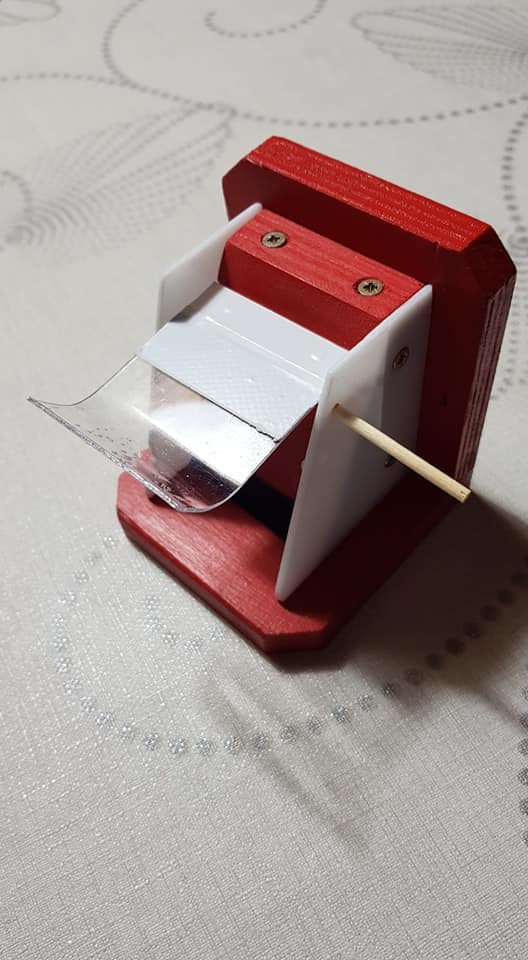
Skewers

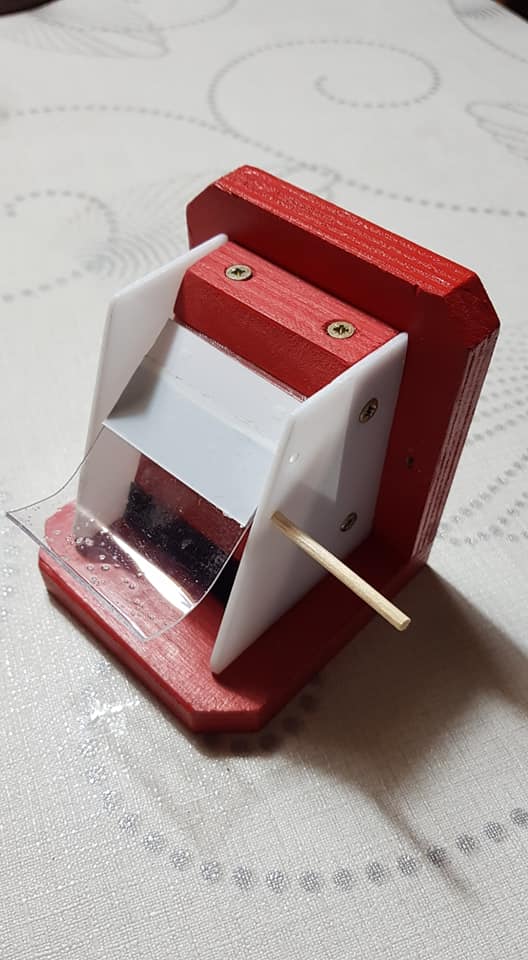
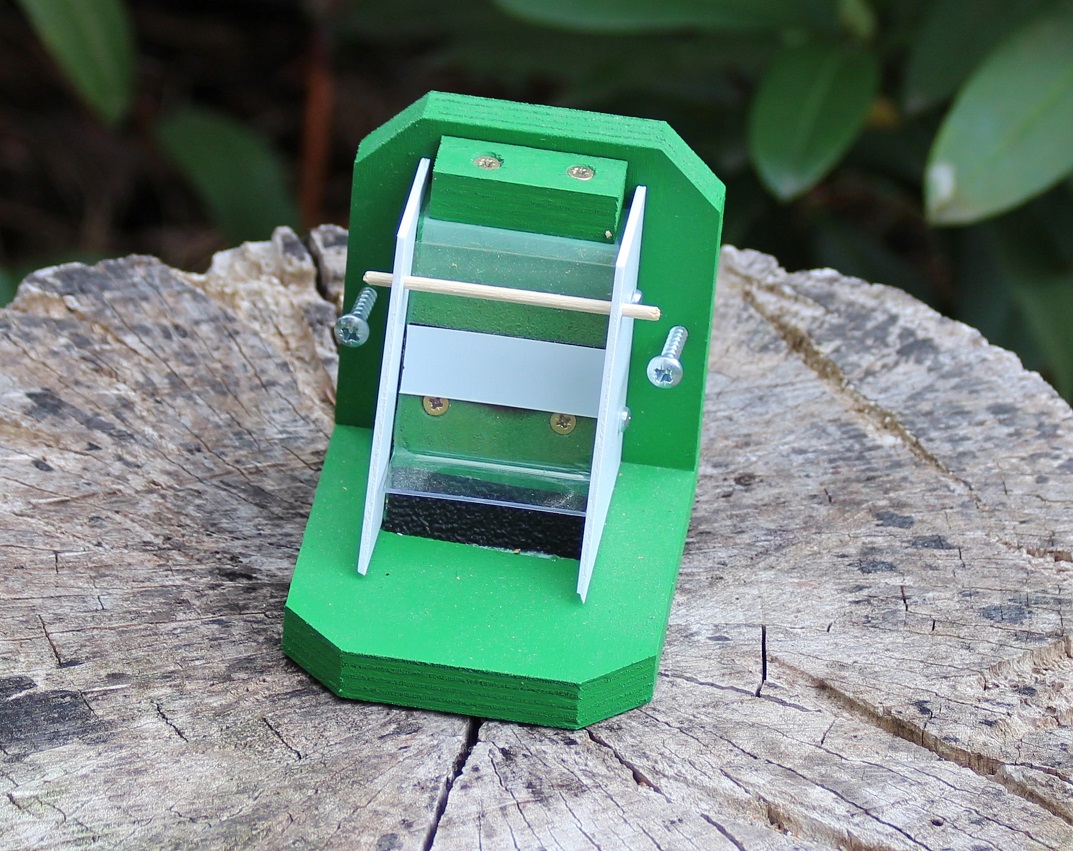
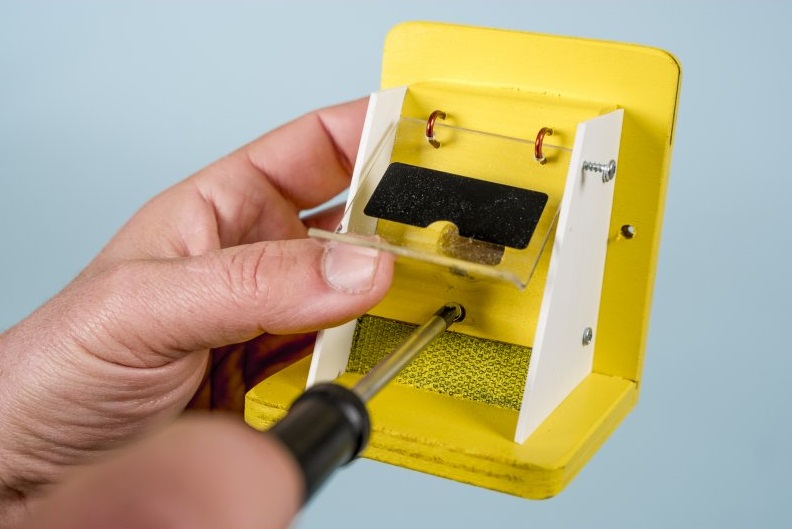
You make holes on the flap on the side, where you insert a skewer/stick/screw.

It's simple, operational, not very precise, but effective

Description:

  • If your flap isn't ready for this solution from the manufacturer, drill holes in the side panel so that you can insert wooden skewers, screw in a small screw
  • Make the openings so that the flap can be gradually lowered. It is important to have the openings spaced out so that the flap can be lowered in small increments from a height of 10mm (the gap between the latch and the flap body) to a complete closure.

Advantages:

  • Easy adjustment of the damper
  • Symmetrical flap adjustment

Disadvantages:

  • More holes need to be drilled in the sidewall to allow reasonable adjustment of the catch, especially in the final and most sensitive phase.
Bumblebees PLUS - Flap closing solution - skewer

Solution for closing the flap – skewer
Clapboard raised
Photo O. Hercog (2019)
Bumblebees PLUS - Flap closing solution - skewer

Solution for closing the flap – skewer
Latch ajar
Photo O. Hercog (2019)
Bumblebees PLUS - Flap closing solution - skewer

Solution for closing the flap – skewer
Photo by J. Černý (2019)
Screw-ups

These are typical technicians. They've kitted out their flap with screws and are adjusting to tenths of a millimetre.


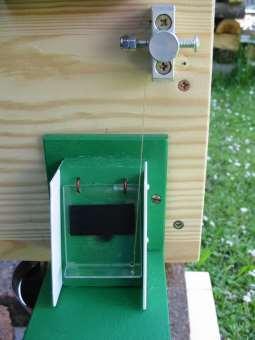
This interesting solution was devised by a UK beehive manufacturer. They placed a single screw screw under the entrance hole, which allows the flap to be adjusted very precisely. (see photo).

We've been trying to convince him since 2018 that this screw impedes bumblebees at the entrance and You need to use two screws, placed as high as possible., ideally at the level of the entrance hole's axis, where the bumblebees don't mind.
Hopefully, it will accept this change and adjust its otherwise quite good flaps to serve better (as of 2/2020).

Another significant manufacturer of protective flaps adopted this solution and has been selling it since 2019.


However, you can easily do the repair of older flaps yourself. – see our guide

Bumblebees PLUS - Solutions for closing the flap with screws

Solution for closing the flap with a screw under the inlet opening
We recommend replacing with two screws at the level of the inlet opening/its axis
Manufacturer's web photo
 

Modification of a commercially available flap – recommended

  • Remove the side panel from the flap.
  • Lift the flap
  • On the bottom edge of the inlet opening / in the axis of the inlet opening, mark a horizontal line with a pencil.
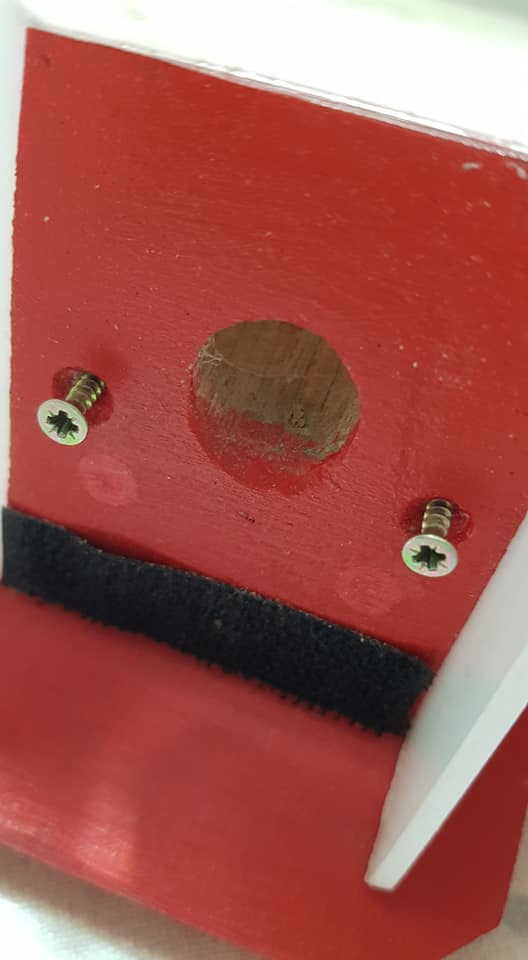
  • On the sides of the inlet opening, drill holes for a small screw – drill perpendicular to the plane of the flap body
  • Use a wood screw with a diameter of approximately 2.5 – 3 mm and a length of approximately 15 mm with a countersunk head.
  • Using a larger drill bit, create a recess for the screw head so that the screw head is flush with the flap body after it has been screwed in.
  • Unscrew and screw in the screws a few times to ensure smooth operation
  • Reassemble the side panels
  • Test the flap functionality

Description:

  • To secure the flap in the open position, use a peg, screw/skewer in the side panel.
  • For gentle lowering (closing), first unscrew the screws to a height of approx. 10 mm – symmetrically, meaning equally on both sides
  • Engage the flap, it will seat on the screw heads
  • The screws are then gradually screwed into the valve body step by step, reducing the flap's lift.

Warning

  • We recommend screwing the screws in at the same height each time, so that the flap does not get stuck and the bumblebee reliably lifts it and it then closes by itself.

Advantages:

  • Very fine adjustment of the latch

Disadvantages:

  • A new beekeeper might initially be apprehensive about contact with bumblebees.
  • If you use a flap with a single screw under the entrance hole, the screw will obstruct the movement of bumblebees and they could injure themselves on the sharp screw head – you should modify such a solution.
Bumblebees PLUS - Screw solution for closing the flap

Screw solutions for closing a flap
retaining screws in the butterfly valve body
Photo O. Hercog (2019)
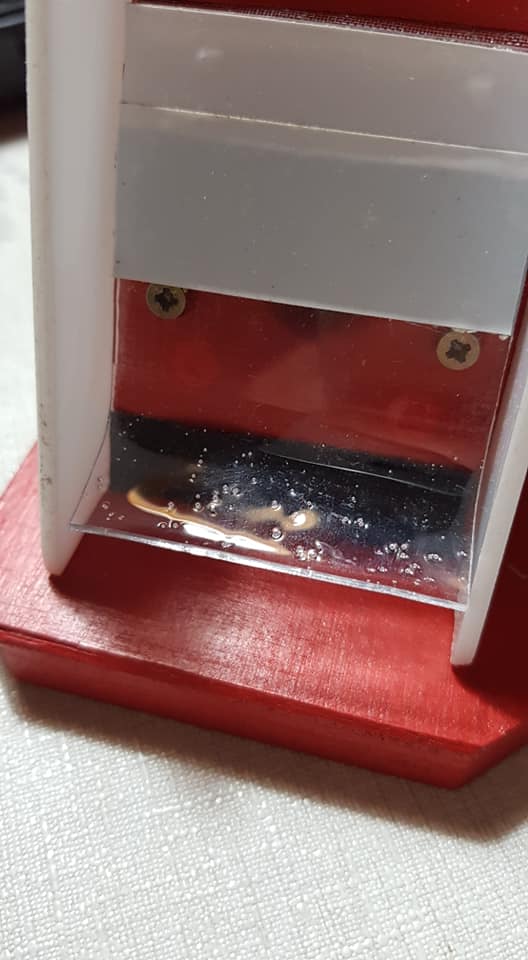
Bumblebees PLUS - Solutions for closing the flap with screws

Screw solutions for closing a flap
Latch ajar
Photo O. Hercog (2019)

Lorem ipsum dolor sit amet, consectetur adipiscing elit. Ut elit tellus, luctus nec ullamcorper mattis, pulvinar dapibus leo.
 Niggards

These are the conservatives. They have a thread on the flap and they're gradually lowering the flap down and down, a bit like the Titanic 🙂

An amazing person, Mr. Stuchl, came up with it. Although this model is a bit retro, it is functional.


Description

  • In the flap (plastic part of the flap), there is a small hole
  • Tie a thin string/thread to the hole 
  • Lead the other end of the thread over the flap, for example, onto the roof of the hive


Advantages:

  • Easy solution
  • A beginner beekeeper needn't fear contact with bumblebees.

Disadvantages:

  • If the wind blows, the string will lift the flap
  • The solution is a bit impractical, for example, if you want to remove the roof of the hive, the flap setting will be undone
Bumblebees PLUS - Flap closure solution - thread

Flap closing solution – thread
Photo P Fereš
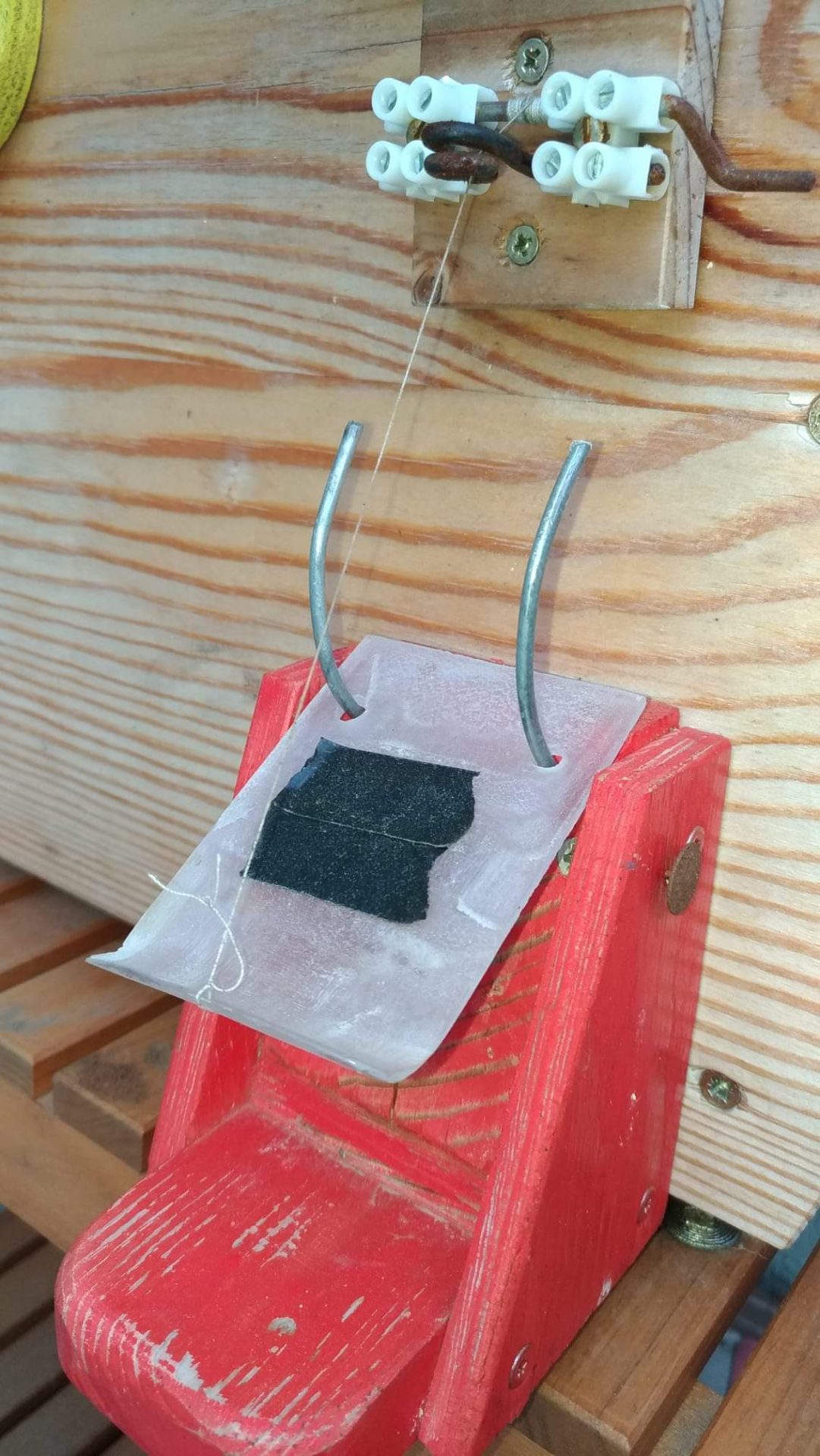
 

Bumblebees PLUS - Flap closure solution - thread

Bumblebees PLUS – Flap closure solution – Thread
Photograph by M. Andrlík


Further solutions


Roman Ševčík proposed an interesting solution. He used two strong magnets on the flap's base.
Is it good to use magnets Strong (to prevent the flap from closing by itself) and at the same time small (so that it doesn't obstruct traffic on the garlic and the flap can be gradually lowered).
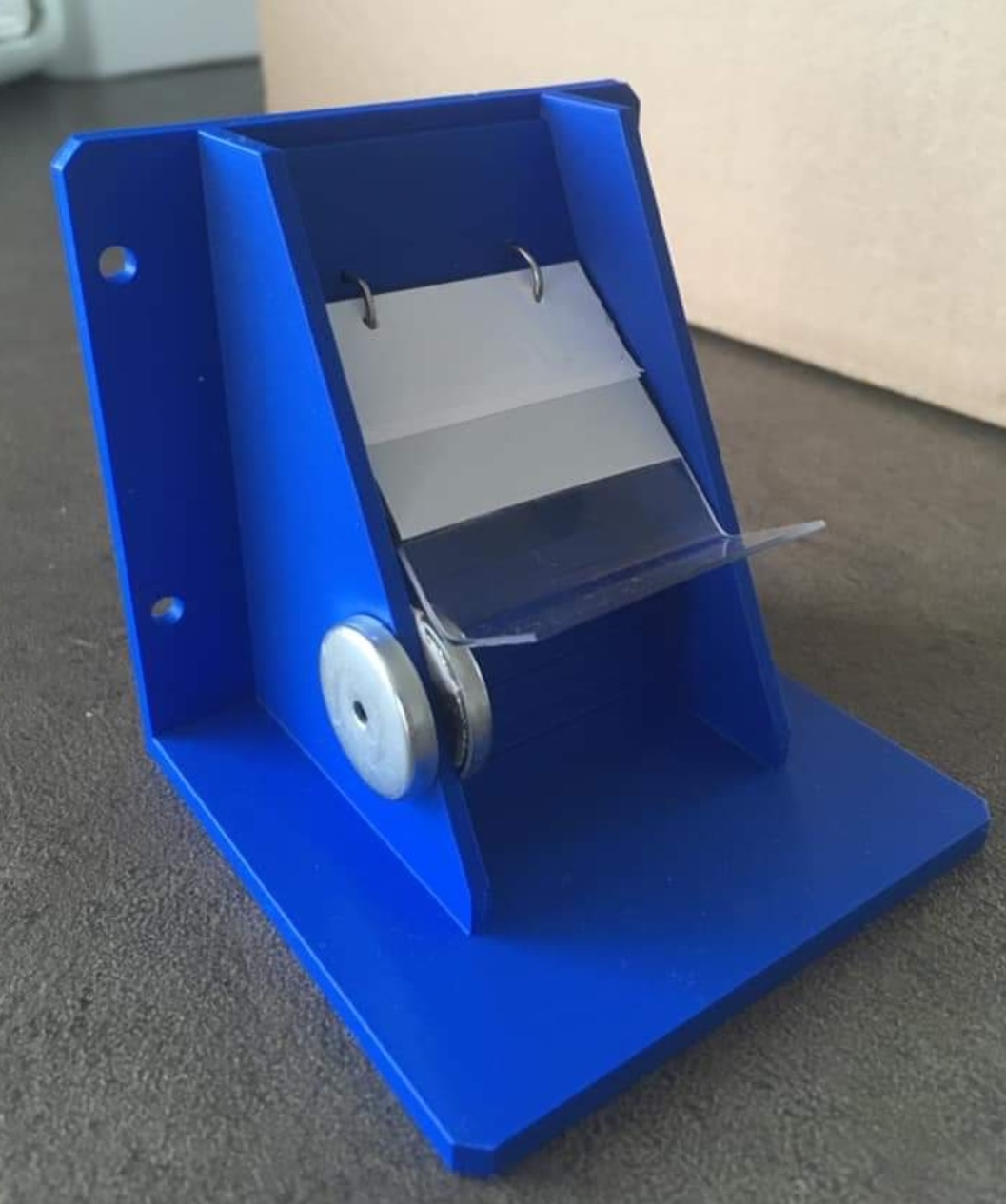
Bumblebees PLUS - Solution for damper closure using magnets

Solution for closing a flap using magnets
Photo R. Ševčík (2020)


There are many other solutions, including connecting electronics to sense the flap's position, electronic control (we don't know how the electronics distinguish a bumblebee from a buff-tailed bumblebee), etc.

If you have a solution that has worked for you, we'd be happy to add it here.

PHOTO

Please remember to adjust the louvres with tape as per J. Čížek's recommendation, see HERE
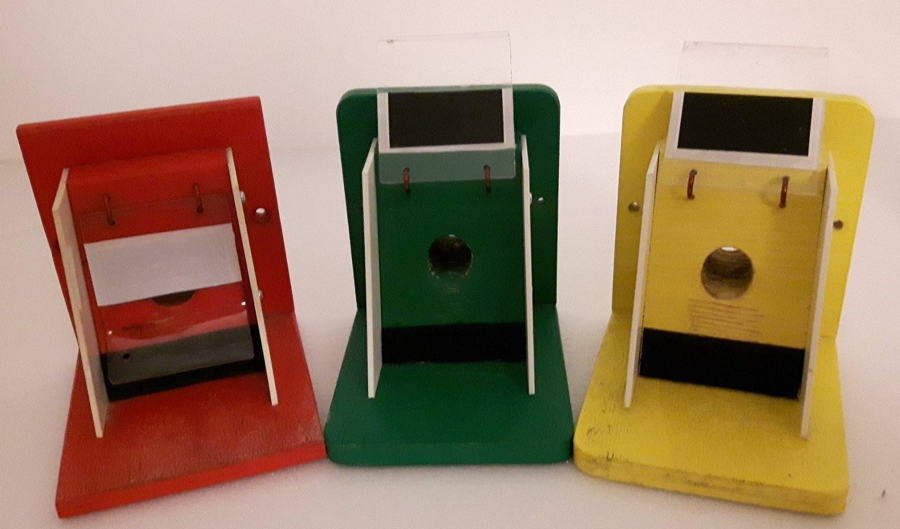
Easier replacement of the bee flap cover stickers

Adjustment of the flap. Covering the black strip with white tape. Only the lower viewport to be left.
Photo O. Hercog (2018)

Summary

  • Gradual closure of the flap, so opening the flap it is important And is it necessary to prepare for it
  • A bumblebee gets used to a flap opening fairly quickly
  • You only need to teach the queen bee to work with the flap, see the procedure HERE (preparing)
  • Please choose A solution for operating the flap that suits you, and use that.
  • Learn in advance how you will use your chosen solution beforehand