



Aphomia sociella, a dreaded nest destroyer in beehives
What you will learn here
- Co je to zavíječ cizopasný
- How to recognise him
- What is its life cycle
- How bumblebee nests are harmed
- How do you defend against it
Datum poslední aktualizace: 1/7/2026
Contents
Hummingbird moth (Aphomia sociella) – a nocturnal harbinger of doom and destruction
What does a tortrix moth look like
What is the life cycle of a wax moth and how does it affect a bumblebee nest?
How to detect a moth infestation in a nest
Weevil or moth?
How to preventatively defend yourself
Checks and how to intervene at the moment of nest attack
External inspection of the flap
Basic lining check
In-depth ulcer check
Finding the site of the grub's entry into the ulcer
Alternative ulcer protection methods
What happens if you don't intervene
Conclusion
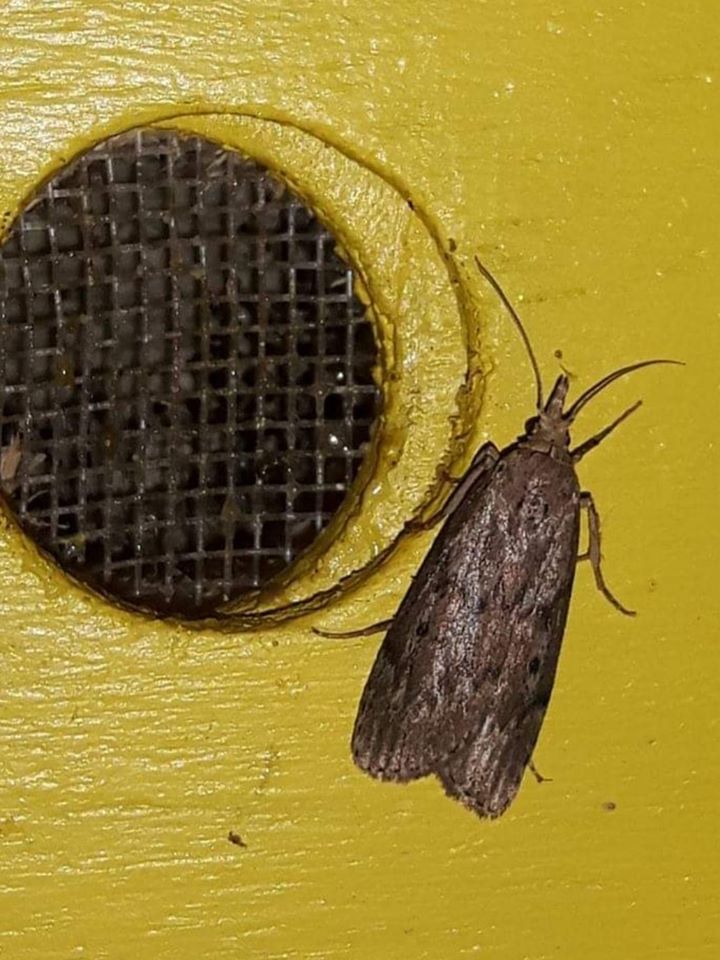
Female caterpillars of the bumblebee moth (Aphomia sociella) on a ventilation opening of a beehive.
Photo O. Hercog (2017)
Pest-tailed moth/Bumblebee moth (Aphomia sociella) – a nocturnal messenger of bumblebeeselixir of death and destruction
The weevil is one of the main enemies and destroyers of bumblebee nests.
Most breeders will encounter it sooner or later in bumblebee breeding. If the breeder doesn't intervene in time, such an encounter often ends fatally for the nest.. If this happens, the breeder often gives up on their breeding efforts and abandons bumblebee breeding.
Depending on when the bee-wolf invades the bumblebee nest, nest weakened, or cease to exist prematurely (No sexually mature individuals are born from it).
Very often moth can eliminate even a strong bumblebee nest . This happens primarily at the moment repeated attack in a man, where The cause of the ingress has not been removed. sleeves for the hive and where the beekeeper does not carry out hive inspections leaves its inhabitants to their fate.
Therefore, we will address this bumblebee parasite in detail to provide you with all the information you need in the fight against the wax moth.
General information about the tortrix you will find HERE. These details will We recommend reading. You will understand the lifestyle of the weevil and this will enable you to understand how to defend against it.
In the next part, we will only describe Areas relating to bumblebee husbandry, attacks and moths Defence against him.
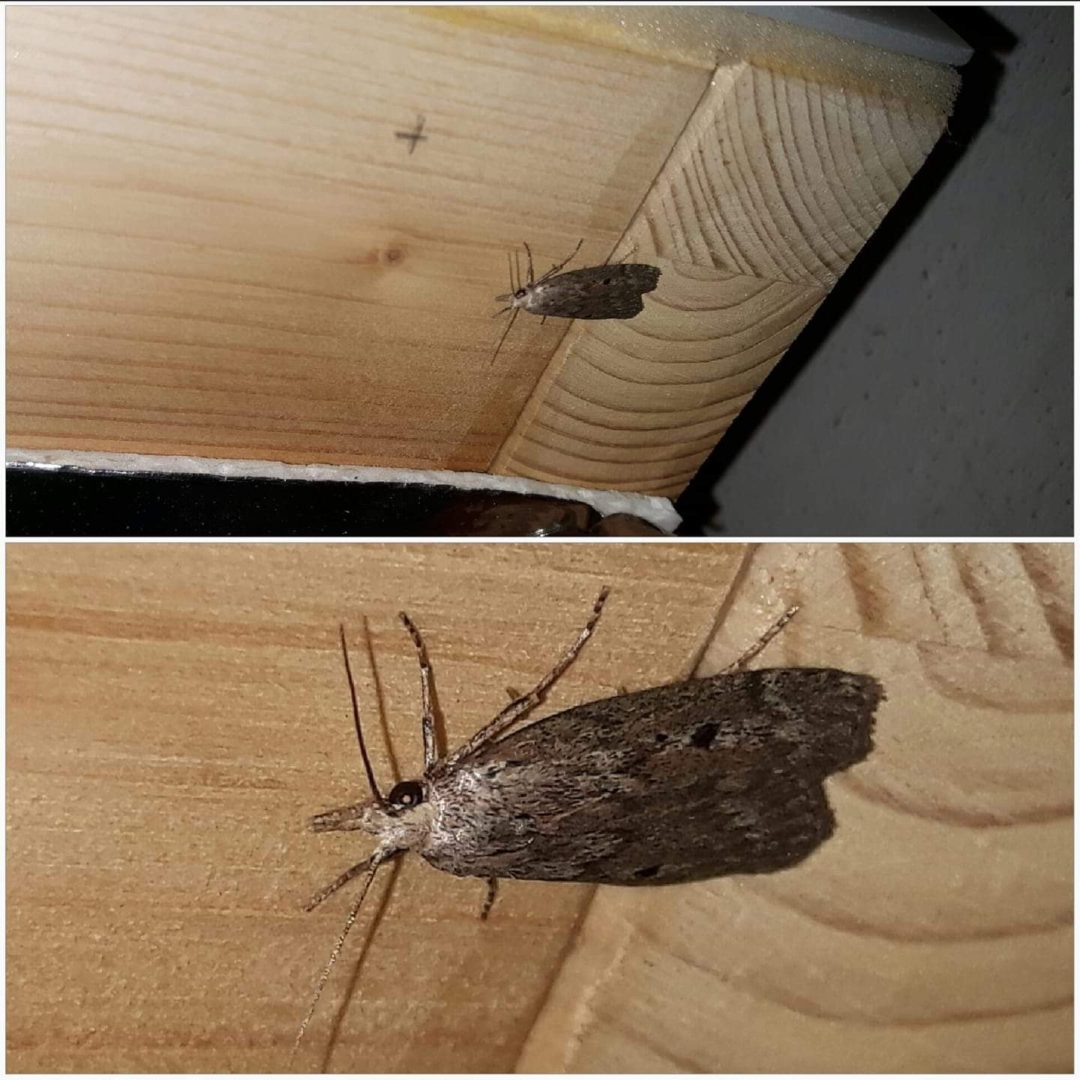 Bumblebees PLUS – Greater wax moth (Aphomia sociella) – female sitting on a skep
Photo O. Hercog (2019)[/caption]
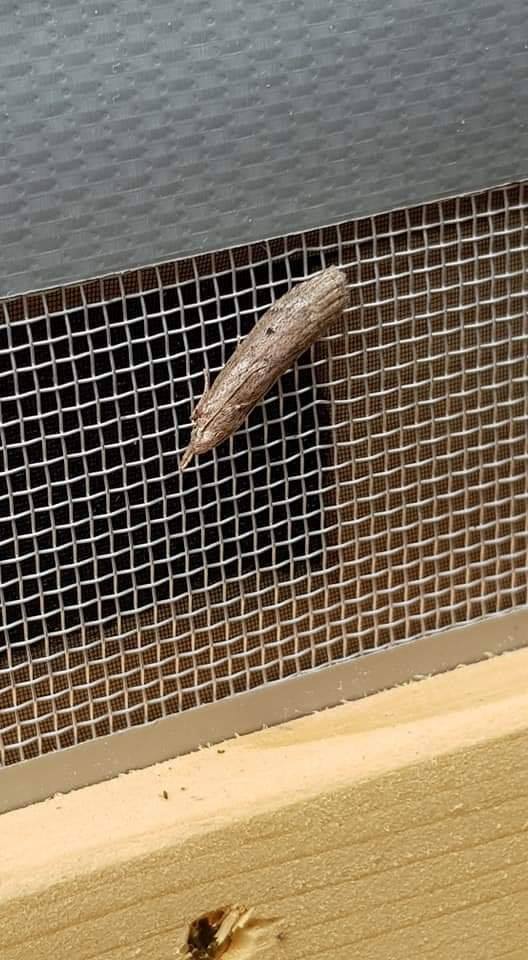
Bumblebees PLUS – Greater wax moth (Aphomia sociella) – female sitting on a skep
Photo O. Hercog (2019)
What does a tortrix moth look like
From Biolib its classification is as follows:
Kingdom Animalia Animals >> Kingdom Arthropoda – Arthropods »Class Insecta – Insects »Order Lepidoptera – butterflies » family Pyralidae – Tortricidae » rod Aphomia – moth » subfamily Aphomia
For us, it will probably be more practical description :
- It's a moth 20 – 30 mm long with a wingspan of 18 – 44 mm.
- His Wings are Reddish-brown, Grey-black sky Dark green s dark brown pattern.
- Males differ from females are more vividly coloured than the females (sexually dimorphic).
- Males They are characterised by a light ashen colour on the upper side of the forewings (first pair) and long antennae.
- Females they have a dark spot on the forewings and a typical head. The size of the female is sometimes such that she can squeeze through a very small gap.
- Caterpillars the larvae of tortrix moths are in their final stage 20 to 30 mm long, strong, yellowish to greenish, with prominent dark head a with strong jaws.
Perhaps we should clarify here, Difference between a larva and a caterpillar. – a larva is the immature stage of an animal. Caterpillar This represents the larval stage of butterflies.
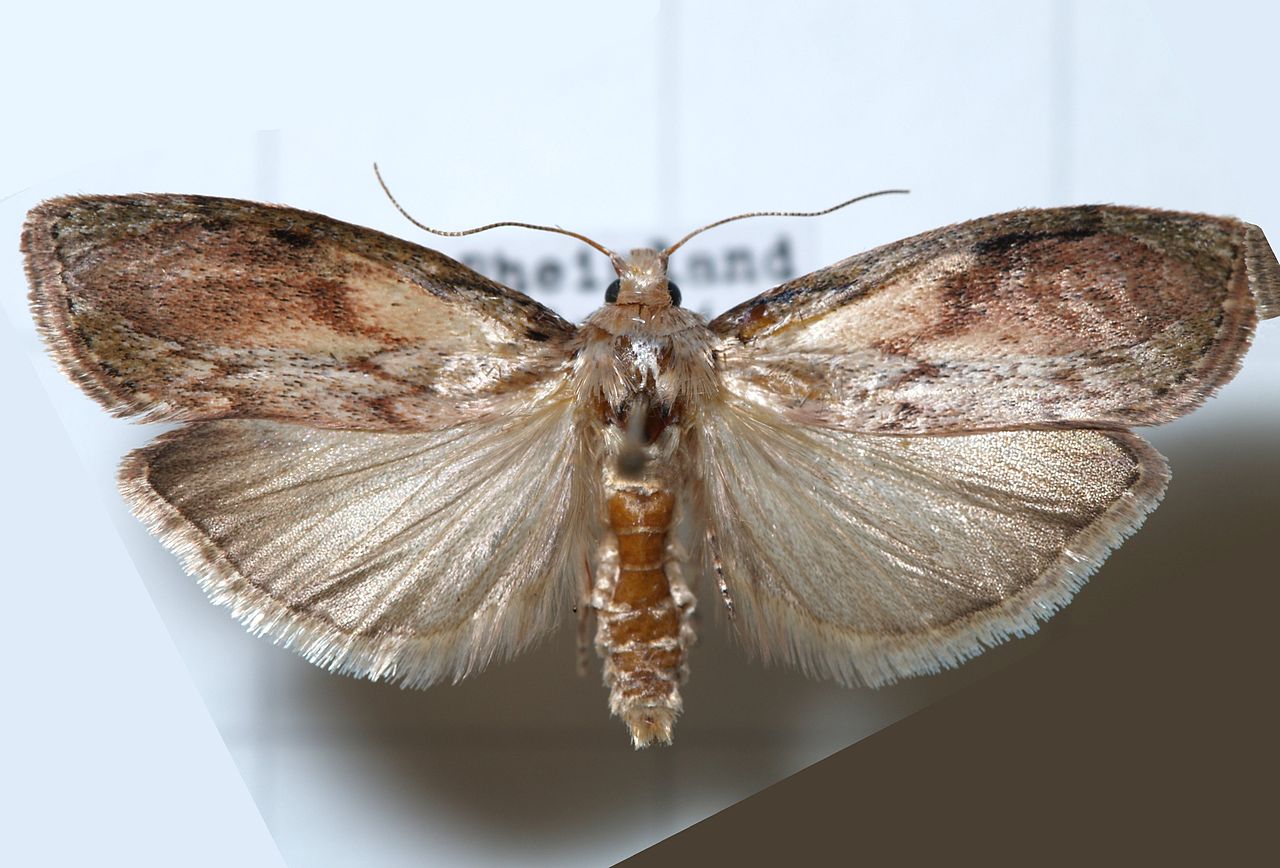
Moth (Aphomia sociella) – male
Photos from lepidoptera.butterflyhouse.com
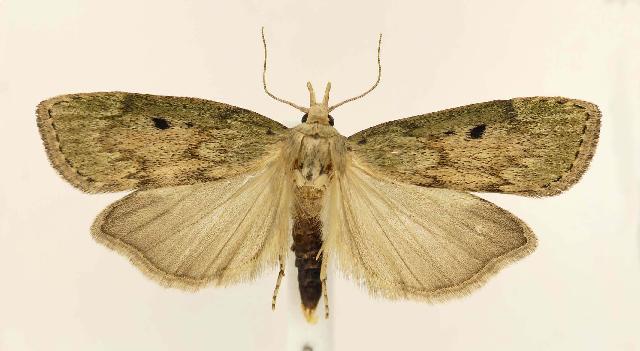
Moth (Aphomia sociella) – male
Photos from lepidoptera.butterflyhouse.com
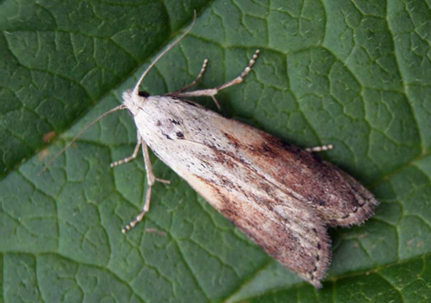
Moth (Aphomia sociella) – male
UK Moth Photos
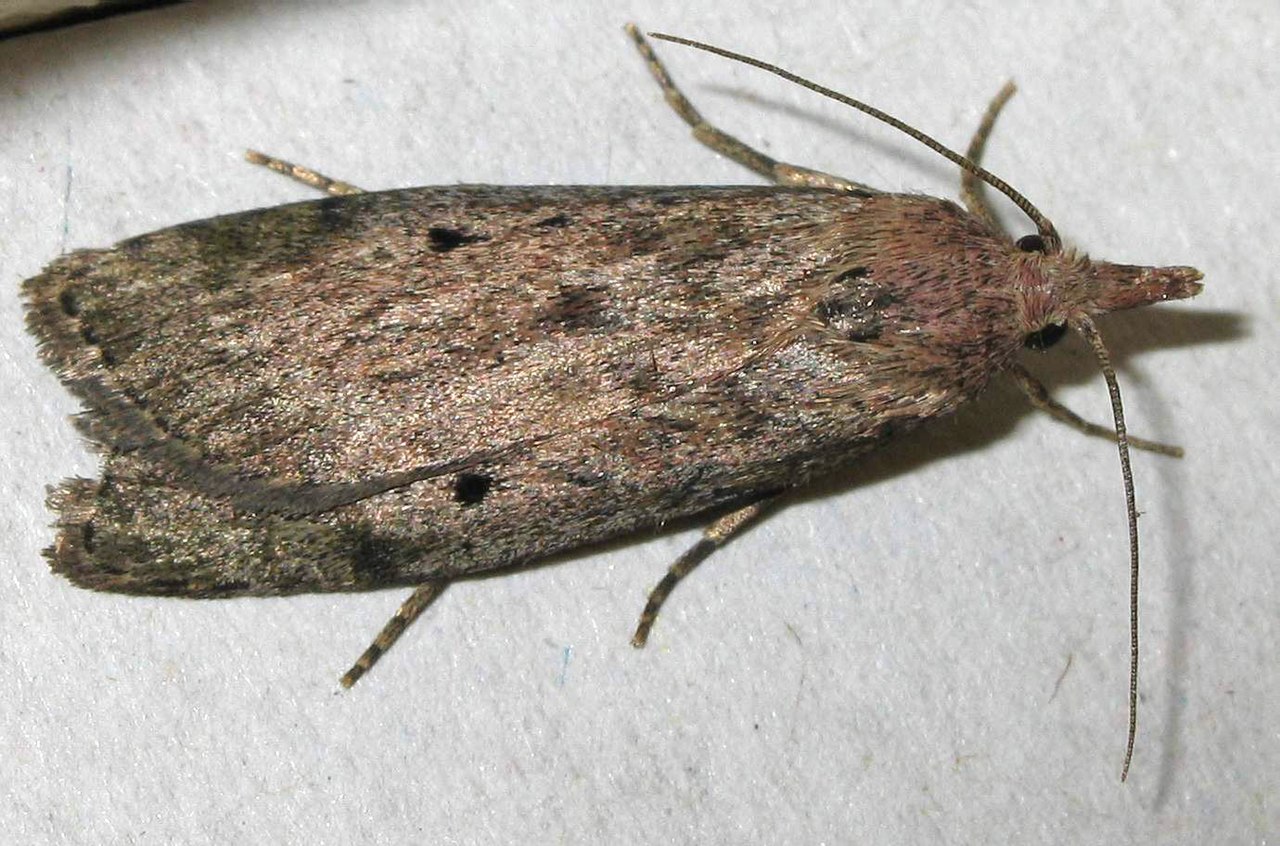
Wax moth (Aphomia sociella) – female
UK Moth Photos
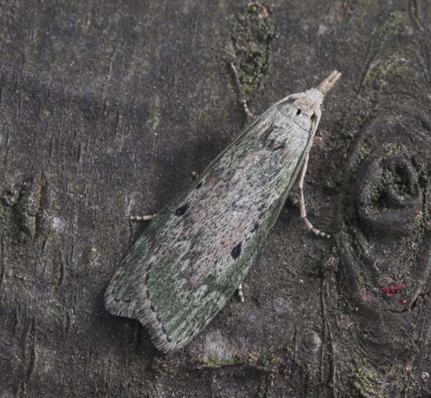
Wax moth (Aphomia sociella) – female
UK Moth Photos
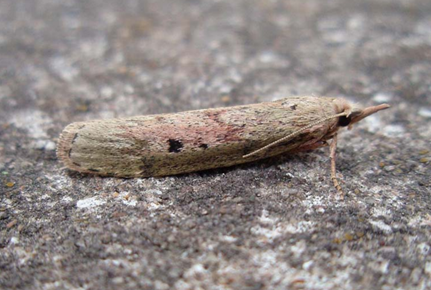
Wax moth (Aphomia sociella) – female
UK Moth Photos
The life cycle of the cuckoo bumblebee and how it affects a bumblebee nest
Female European corn borer in April to August (but mainly May to July) at dusk and on warm nights searching for bumblebee nests.
Nests found according to the scent trailThis mainly affects bumblebee nests located on the surface, but can also penetrate bumblebee nests hidden in the ground.
If the mother encounters a fright (a bee nest), looking for a way in. When searching, they are guided primarily on the trail of a skunk, that's why she's primarily interested ventilation hole and hive entrance.
The differences in the size of hawk moth mothers are large and so they have various strategy, how to get to the hive.
The little mother stretches. and small, through a hole/gap in the hive's construction. The big mother needs a bigger hole and so often sits by the hive, waiting for a suitable opportunity – the smell of the nest strongly attracts her. Very often the moth of the moth penetrates the hive poorly closed ventilation flap, For example, if a pollen grain is stuck to it.
Once the cuckoo bee's mother infiltrates the bumblebee's nest, loads of clusters 60–230 miniature eggs – directly onto the wax construction, in its vicinity, or into the lining. Sometimes the queen may lay eggs near a crevice she cannot herself penetrate, or on a ventilation grille. Caterpillars, which then hatch from the eggs, subsequently penetrate through a miniature slit to nests.
Adult Indian mealmoths, you see, do not feed and often live for only a week. By then, they must mate, find a host's nest, penetrate it, and lay their eggs there. The mother cuckoo therefore does her utmost to penetrate the bumblebee nest. – after laying eggs, its short life ends. You will often find it thanks to that dead or alive on the surface of the lining in the burrow/nest. It no longer tries to escape.
From the laid eggs in about 10 days hatch small, pale and very mobile Houseflies light colours. They remain in groups. Small caterpillars initially stay hidden under the nest and live off waste. The caterpillars feed, grow, and apparently can even absorb the scent of the bumblebee nest. This allows them to camouflage themselves and in Their nests are invisible to bumblebees. If the breeder uses to unload the hive honeycomb cardboard, they are often hidden right there.
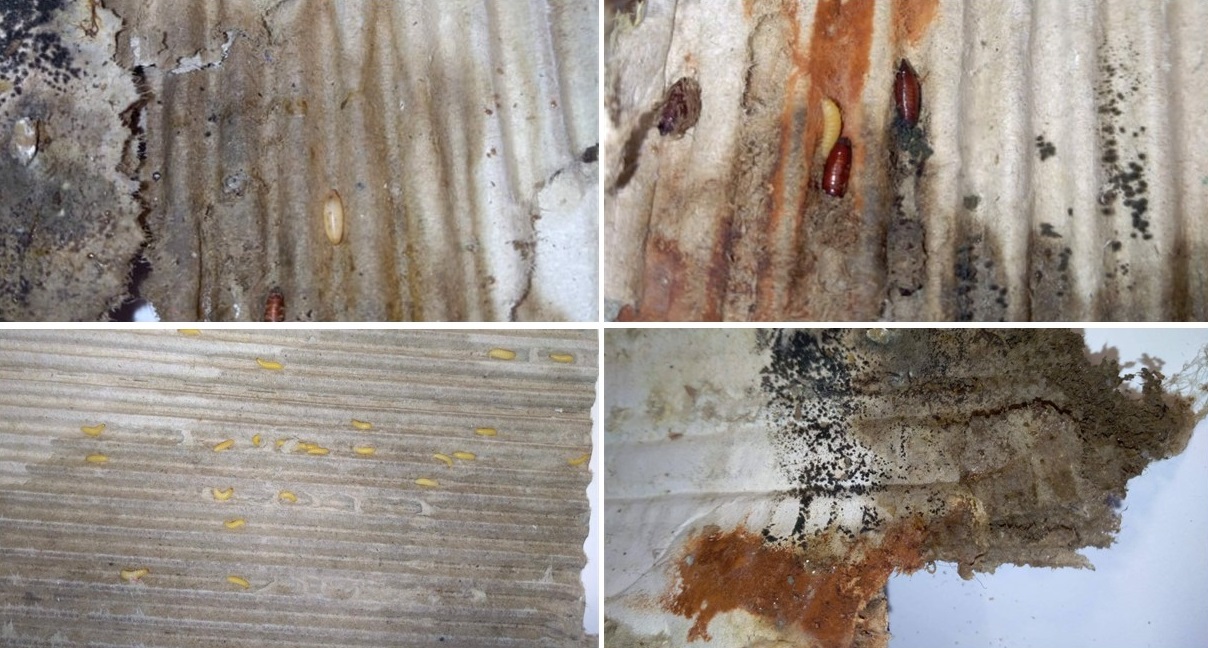
Hive lining with honeycomb cardboard, in which parasites hide – here the larvae of the beetle Antherophagus nigricornis and flies
Photo M. Bradová
How moth caterpillars growing, they are venturing out to the upper floors and to the nest. My chodby often They spin a silk thread, which protects them against the bites of hosts such as bumblebees and bees.
Bumblebees are practically defenceless against them. The moth caterpillars Gradually release wax buildings nests (works), stock pylu, they'll bite through the wax coverings from the side and insidethe larvae and eggs of bumblebees are being eaten. They consume everything in a bumblebee nest except heat-retaining material. They do not disdain dead bumblebees.
The attack of the moth's larvae is imperceptible at first. – occurs under the lining in the nest and wax comb of bumblebees. Small caterpillars are also very fast a are difficult to detect. In the case of severe infestation, even the larvae of the moth It spins a nest with silk fibre so that it prevents adult bumblebees from moving. This is the final stage, during which it is possible to observe silk threads and the movement of the moth caterpillar on the lining surface.
In the final stage Do mealworms reach sexual maturity5/8 inch – 1 1/8 inch, are, Fat, Light, sometimes Greenish with a distinct dark headed and strong jaws. Fattened caterpillars movable out of the bumblebee nest.Here, closelynoble silkworms spin themselves into long white cocoons, firmly attached to the wall and in a larval state hibernate.
Caterpillars most often pupate under the roof of the hive. They often get to a hidden place – into the crack sky Rohu ulcer, or, as the case may be, into Ventilation duct. They often chew through the lining of the hive, they canand even polystyrene insulation, behind which they will hide and spin. If caterpillars find their way out of the hive, They can spin their cocoons outside the hive in a cool place. This causes them to pupate and hatch later in the spring than caterpillars that spin their cocoons within the hive.
Only in spring the caterpillars pupate and the adults emerge and you immediately at the mating site. They often mate with relatives or individuals from different mothers (upon repeated ulceration). Fertilised The females then go to find host nests for their offspring, they only have a few days for that....
Interesting fact:
- The time span of moth occurrence is determined by the gradual hatching of adults from last year's caterpillars. These overwintered in various locations, and as a result, in spring the caterpillars pupate and adults hatch gradually – adults from one generation of last year's moth
- The nests of early bumblebee species or those of rapidly developing bumblebees are often only weakened by the moth. This usually happens when the moth's female lays her eggs late, before the end of the bumblebee's life cycle, especially in bumblebee species with a large number of individuals (e.g. buff-tailed bumblebee, Tree bumblebee , Red-tailed bumblebee). However, the nest will always be weakened.
- Sometimes, wax moth caterpillars can also have enough waxy material available (in nests which have plenty of food, particularly pollen, and are therefore large with high wax production), and the bumblebee nest will only be weakened by the moth.
- According to May, bumblebees are capable of attacking the wax moth in its nest. However, the moth can hide and then, after absorbing the nest's scent, lay its eggs. Despite bumblebees being able to easily kill even large wax moth caterpillars with their mandibles, for some reason they do not. The reason for this could be the absorption of the nest's scent, which then provides perfect camouflage for the wax moth caterpillars.
See interesting footage from the life and work of the bee moth.
We used a video by George Pilkington from YouTube.
How to detect a moth infestation in a nest
As we described earlier, nest attack is proceeding in several degrees.
At first, it can be the presence of the bee's mother in the hive on the lining. It has already penetrated the nest, laying eggs on the lining, or on the comb, or near the comb. The female moth no longer tries to leave the nest and dies in it. is therefore a good indicator of an infestation.
On the surface of the lining, we find nothing more. The caterpillars will hatch in about 10 days, Miniature eggs cannot be seen with the naked eye and they are hidden under the nest.
Caterpillars we will see when they start moving in the waxwork, will grab your attention, their very fast movement.
Another sign of attack is openings in the sides of wax cells, but you will only see it upon closer inspection. At that moment, the caterpillars had already started on the contents of the waxy capsules with larvae and eggs.
A reliable indicator of the next stage of infestation is that the activity of bumblebees will begin to permanently weaken, the nest is apathetic It's as if they're stressed. They don't react to a startle tap like they used to, It's buzzing weaker and weaker, even though it has the same number of individuals. The movement of bumblebees and their Proletariats have a decreasing frequency, because instead of larger new workers being born, only smaller workers appear. As the attack continues, the number of individuals decreases – larger workers leave the nest and no more workers are born.
One of the other signs of the presence of a wax moth in the nest (hive) is Clustering of bumblebees outside the hive. Bumblebees perched around the entrance hole, they accumulate here and do not return to the hive. This can be explained by a possible with the entrance aperture wound house of the hawk-moth. It can also be chemical signals discharged by caterpillars/bumblebees.
Note
- However, a buildup of bumblebees in front of the entrance hole can also be a sign of a blocked entrance hole/tube.
- Female workers in such cases often build comb from wax, where they store pollen and nectar – they have nowhere else to put it.
In the final state if On the surface of the lining, a silken thread will appear and afterwards Houseflies winders. At that moment, it's the end and The nest is sealed.
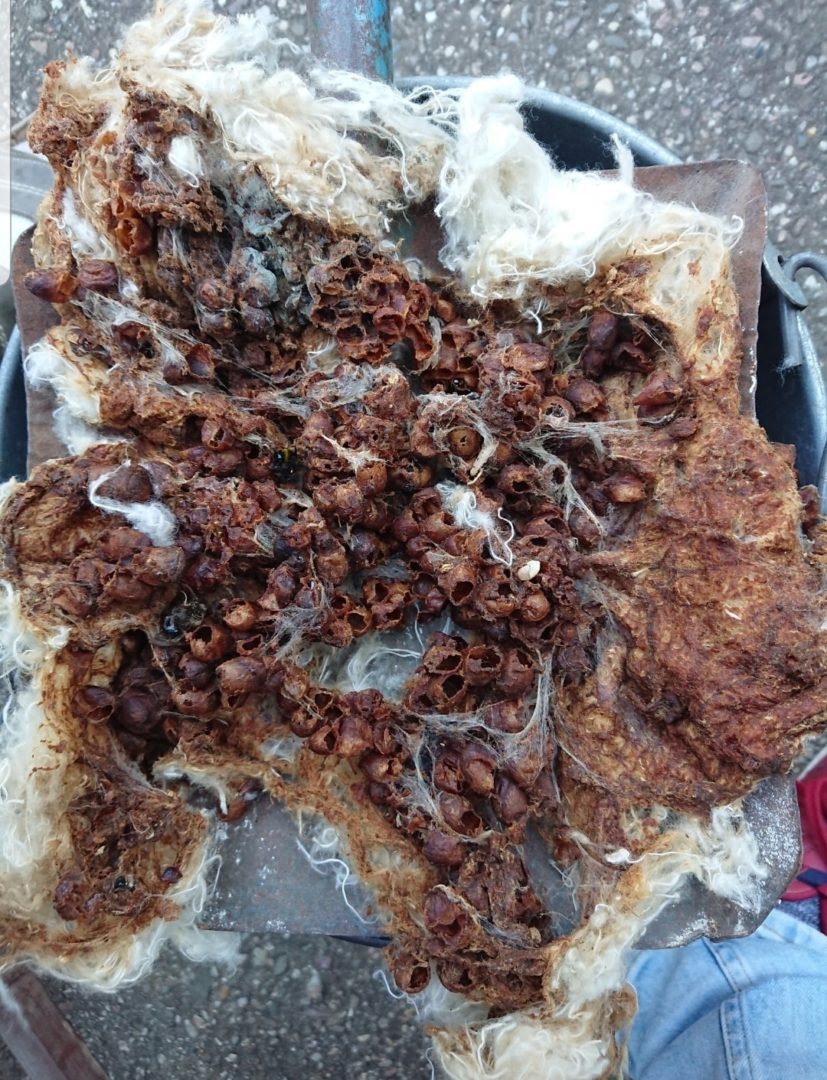
Lesser wax moth (Aphomia sociella) – nest infested by moth
Photo P. Menšík (2019)
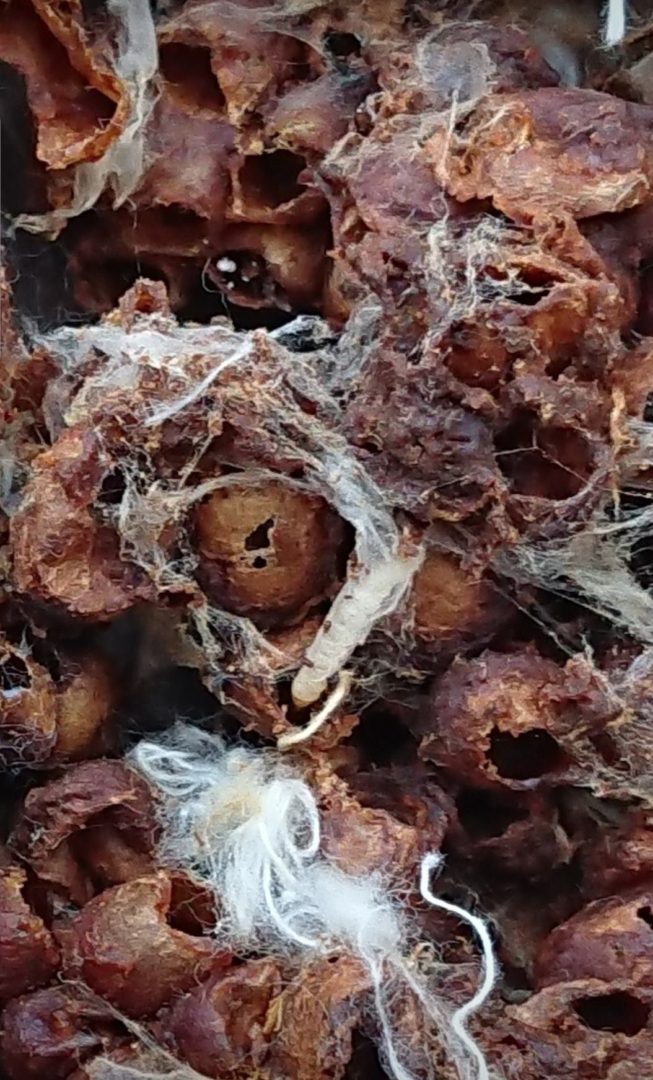
Lesser wax moth (Aphomia sociella) – nest infested by moth
Photo P. Menšík (2019)
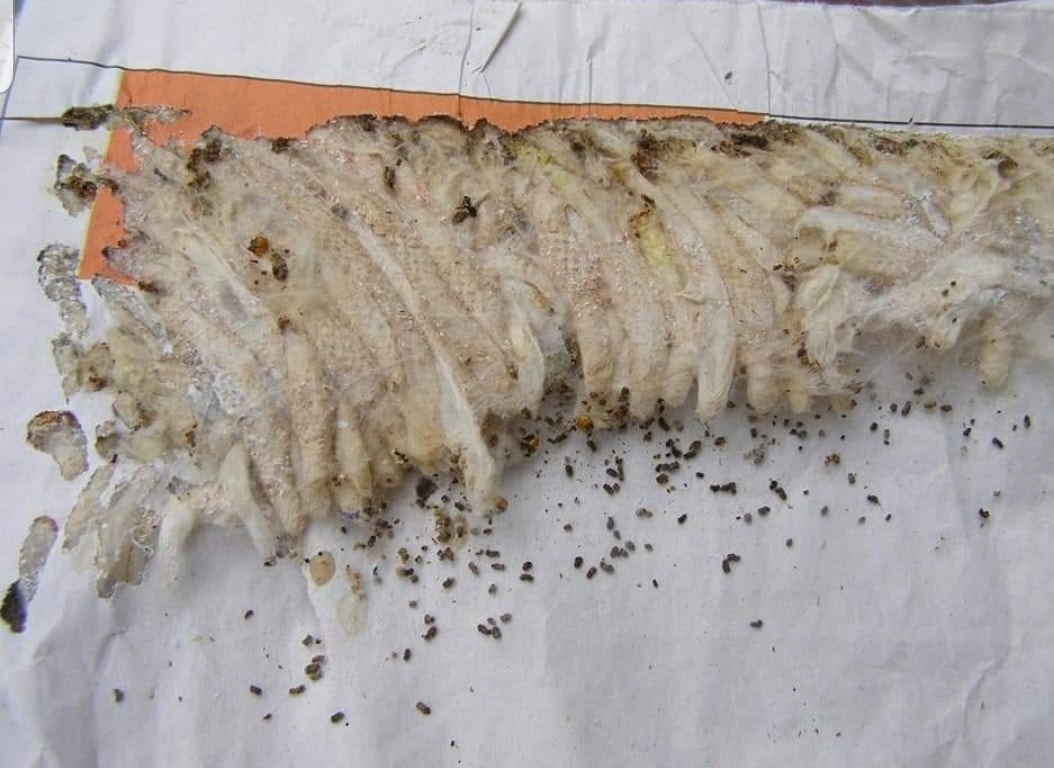
Wax moth (Aphomia sociella) – caterpillars in cocoons
Internet Photo
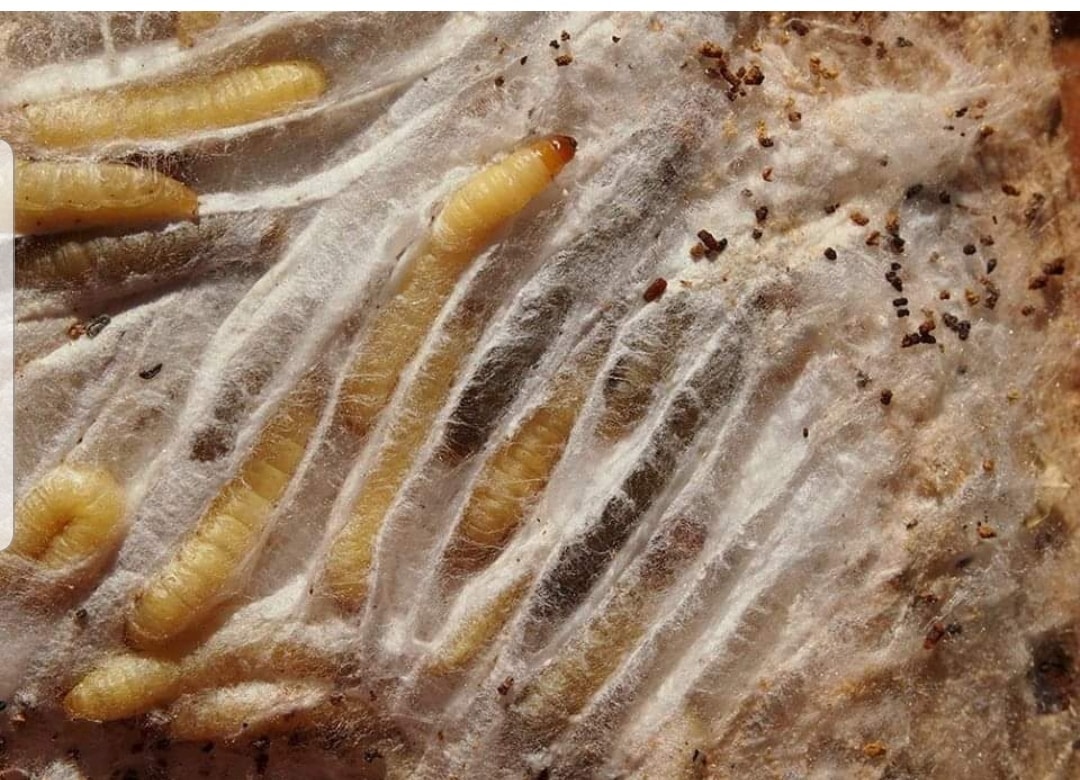
Wax moth (Aphomia sociella) – caterpillars in cocoons
Internet Photo
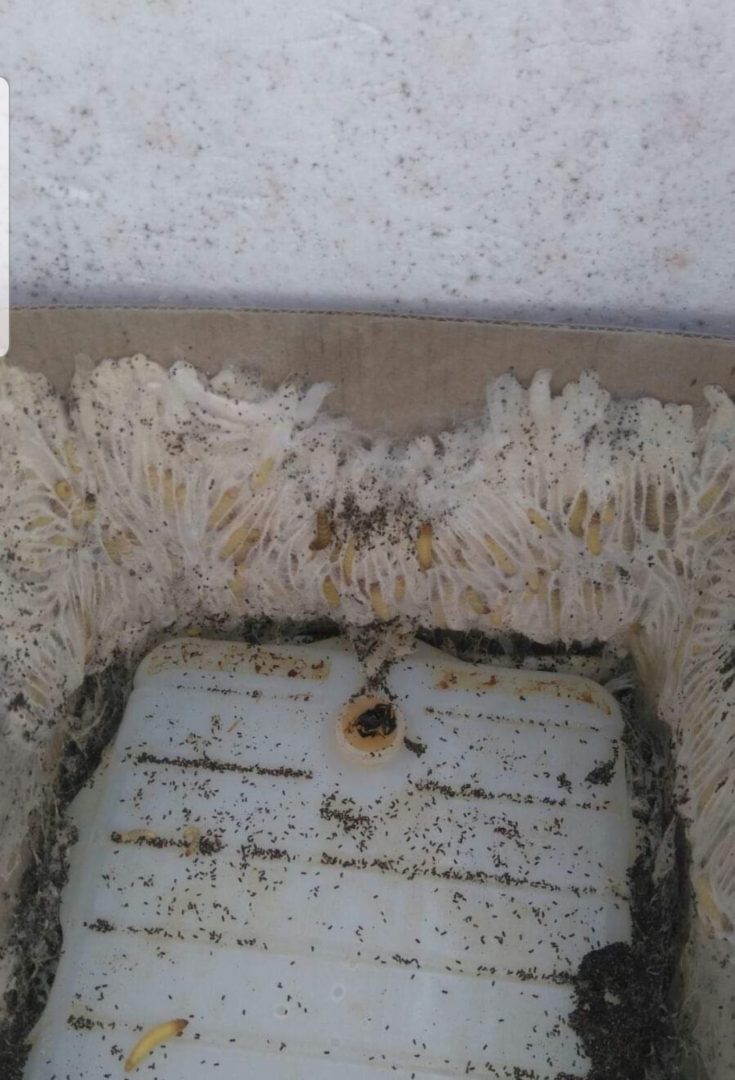
Wax moth (Aphomia sociella) – caterpillars in cocoons
Photo J. Knotek (2018)
Weevil or moth?
Sometimes individuals and caterpillars appear in the nest chili pepper paste. This moth is practically harmless to the bumblebee nest – it only consumes pollen stores and lost pollen pellets. You can easily acquire the moth from bumblebee breeding facilities, for example, in Troubsko.
Upon finding a moth or weevil, first Attempt to correctly identify the individual in time, so as not to embark on a rescue operation when it is not necessary – the paprika moth does not harm bumblebees.
What does the Indian meal moth (Plodia interpunctella) look like
The Indian meal moth reaches in quiescent lengths up to 20 mm The outer two-thirds of the leading edges are Reddish-brown, bronze or copper coloured, The base of the wings near the body is light grey, sometimes yellowish. Both parts of the wing are separated by a dark strip. The wingspan is 16–20 mm. The second pair of wings is light-coloured. The wings are ciliated.
The eggs are up to 0.5 mm in size, but usually smaller. The larvae are grubby white to pale yellow, with a brown head. The adult larva can be up to 12 mm long.
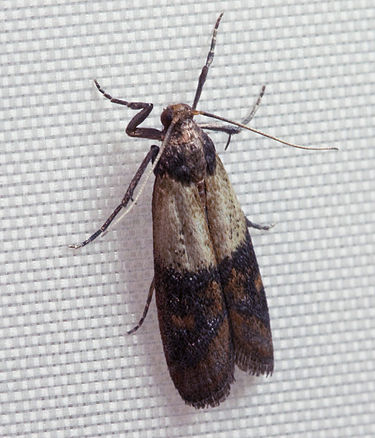
Bell pepper – adult
Photo Wiki
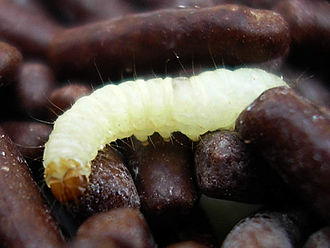
Pepper moth – caterpillar
Photo Wiki
How to preventatively defend yourself
As a preventive measure, the following appear to be used ulcer protective dressings sight HERE.
Specifically, it concerns these methods of protection:
- Sealed surprise without cracks
- Seal between the roof and the hull of the yurt
- Ventilation protection against pest ingress
- Sticky trap in ventilation
- A functional and well-fitting protective flap
In addition to the above, a radical method can be used = night fright to close (inlet) with a cap, or even better a ground cork stopper. Provided all other protective measures are in place, this is virtually a foolproof defence against the wax moth.
Interesting fact:
- Opening the entrance to a bumblebee nest for them in the morning means getting up early. However, thanks to this, you can enjoy a good bumblebee morning, watching the workers leave the nest en masse and perform their orientation flights.
- Later on, you might notice how many worker bees are waiting at the hive with loads of pollen. These workers spent the night outside and, in the morning, return with full pollen baskets and nectar sacs to wake up. These workers often carry pollen and nectar from afar if there isn't enough food around the hive, or if they simply didn't manage yesterday and got delayed somewhere sipping nectar out and about…
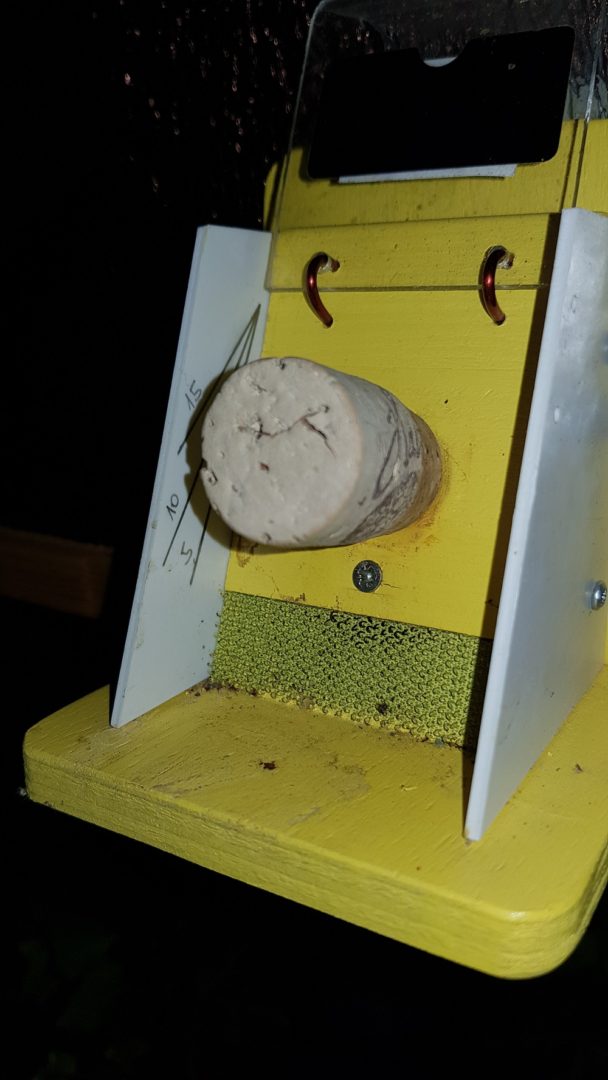
Sealing the owl's flight hole with a ground cork stopper
Checks and balancesif attacked at the nest
Even if you equip your kite with all the protective features, For successful breeding, regular checks are essential, which Can you detect and intervene in a wax moth nest infestation in time?.
Eggs laid outside the hive
Clutch of eggs laid outside the nest you can Optical inspection, for example on the vent grille, on the surface of the hive, near ventilation, near the roof, dehumidifier and remove them.
If the vent is fitted a thin layer, small caterpillars get stuck here see HERE
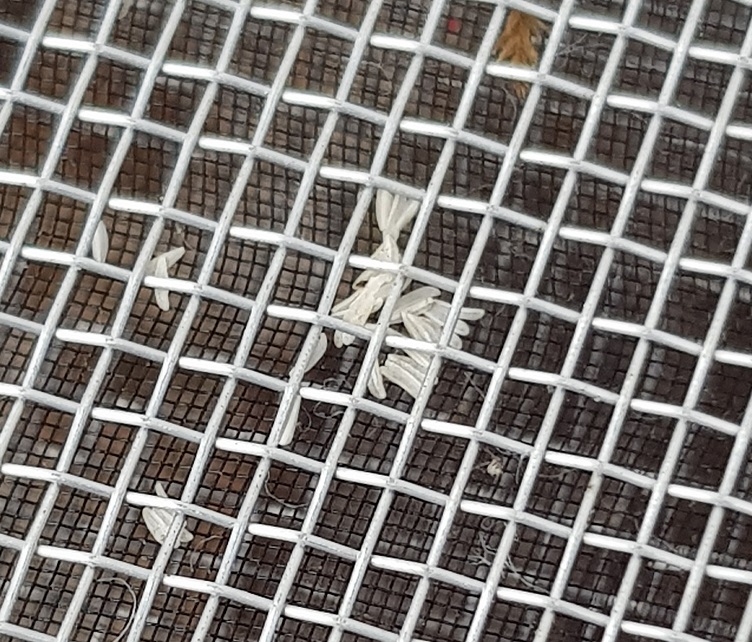
Ventilation burrow – parasite eggs (here from flies) laid on the ventilation opening mesh
Photo O. Hercog (2018)
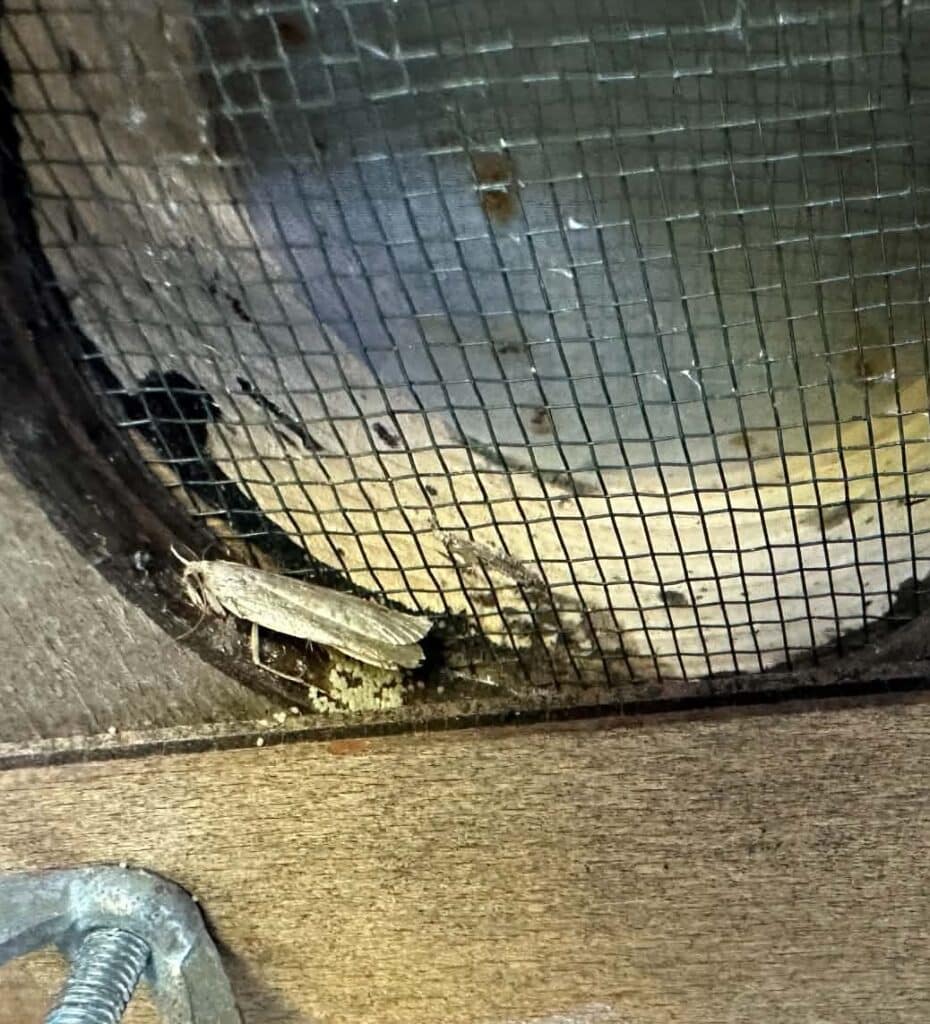
Samička zavíječe klade vajíčka na síťku větracího otvoru
Foto: K. Motyčková (05/2026)
Basic lining check
At night, in the light of a red lantern, carefully (without unnecessary jolts) You open the lid of the hive and inspect the surface of the lining..
If here The mother of the hawk moth was found, the nest had been attacked.
In that case The entire lining needs to be replaced. If the queen has not reached the wax foundation and laid eggs in the beebread, then she is By replacing the lining, you can remove and prevent/limit an infestation of the nest..
It means Remove the bumblebees from the nest, carefully remove the lining, and take out the nest. Subsequently, the entire hive, entrance tunnel, flap, and ventilation opening need to be cleaned. Then, place clean lining back into the hive and return the nest to it.
You can find the procedure HERE ((preparing)
In-depth ulcer check
The check involves careful oremoval/disruption of the upper lining, opening of the nest's wax ceiling a nesting tour.
The procedure is described HERE
If you find infestation rates – Houseflies Screw, round openings in wax work, threads, encased moth caterpillars, it is necessary clean the nest and at least reduce the extent of the infestation.
It means carefully remove the lining from the nest, take out the nest and clean it with tweezers of caterpillars. Subsequently, the entire hive, the entrance tunnel, the flap and the ventilation opening need to be cleaned. Then, insert clean lining into the hive and return the nest to it.
The procedure is described HERE
Finding the site of the grub's entry into the ulcer
When detected infestation of the ulcer by a moth, it is necessary to find the place through which the moth made its way. It can be any attic, faulty seal, damage to the vent grille.
If you can't find the place, The attack may be repeated and your attempt to save yourself will be in vain.
Alternative ulcer protection methods
Bacillus thuringiensis and its applications
This topic is described on a separate page. Unfortunately, it turns out that It is not a method of prevention, but rather assistance with a bumblebee nest invasion. And so the steps must beproceed with caution and consideration for nature. The page can be found HERE.
Masking the scent trail of an ulcer
In literature and on the web, one occasionally reads about methods for masking the scent of bumblebee nests with various substances, such as aromatic herbs (mint, lavender, cloves, meadow clary, sweet woodruff, etc.) or drastic agents (toothpaste, paraffin, etc.). Despite these methods often being written about,We did not find acceptable evidence of the effectiveness of such methods..
Leading the scent trail away from the hive
If you use Ventilation opening extension, you will distract the moth away from the hive. If there is a prepared spot for the moth queen sticky trap, you have a chance to increase the protection of the ulcer.
The solution we described as Additional ventilation modification for commercially available hives.
What happens if you don't intervene
If you don't register the attack on the nest and If you don't intervene in time, the caterpillars will feed on its contents and then it gets encased. The nest will be significantly reduced/eliminated.
The nest will mostly be consumed and the bumblebee colony definitively destroyed, although the queen mother and some workers will remain in the hive for a time and even fly out for food.
Without checking the inside of the nest (at least the basics) You don't have to recognise it until the last moment before the attack.
In such a case, the nest is lost and cannot be saved. You can only leave it to its fate. Once the bumblebees have left the nest or died in it, destroy the nest (preferably by burning or pouring boiling water over it).
However, we recommend not waiting for such a situation and strongly recommend terminating a heavily infested nest by pouring boiling water or strong alcohol over it. Otherwise, the remaining bumblebees can become food for the greedy moth caterpillars and succumb to their mandibles.
But remember that you can prevent wax moth infestation through proper hive preparation, preventive controls and early intervention. Even though intervention may result in minor losses of larvae (mostly male), these losses will always be smaller than if the nest is left to its fate. Thanks to you, the nest can fulfil its purpose and raise another generation of bumblebees.
You can find out more about the deep dive process HERE (in preparation).
Note
- Many novice breeders are afraid of it, but It's not that difficult.
- Even more experienced breeders are sometimes worried about controls and They argue about the potential losses of bumblebee larvae. For them, we have good news.
- The larvae of workers and queens have firm waxy casings in clusters and are not so easily damaged. During inspections, the waxy covers of male larvae are more frequently damaged. Their casings are arranged in so-called columns, often connected to the waxy ceiling of the nest. After opening, their casings can be damaged and the larvae can fall out. However, the nest produces a surplus of males and their numbers are often reduced by the workers themselves. Loss of male larvae (gentlemen forgive us) it is acceptable and easily replaceable for the nest and is therefore not a relevant argument against the moth's control and intervention.
Bumblebee nests must be thoroughly cleaned at the latest by the end of winter., and thus destroy any hidden bee moth caterpillars. Be thorough when cleaning. Caterpillars can hide in places where you can't see them well. It has proven very effective sanitise all nooks and crannies of the hive with a hot air gun (heat wood above 60°C, but don't burn it).
PYou cannot remove the moth larvae's cocoons. even out of season, attack in the spring the same fright, or it will fly out and attack another nest = the hive will become Breeder of parasites.
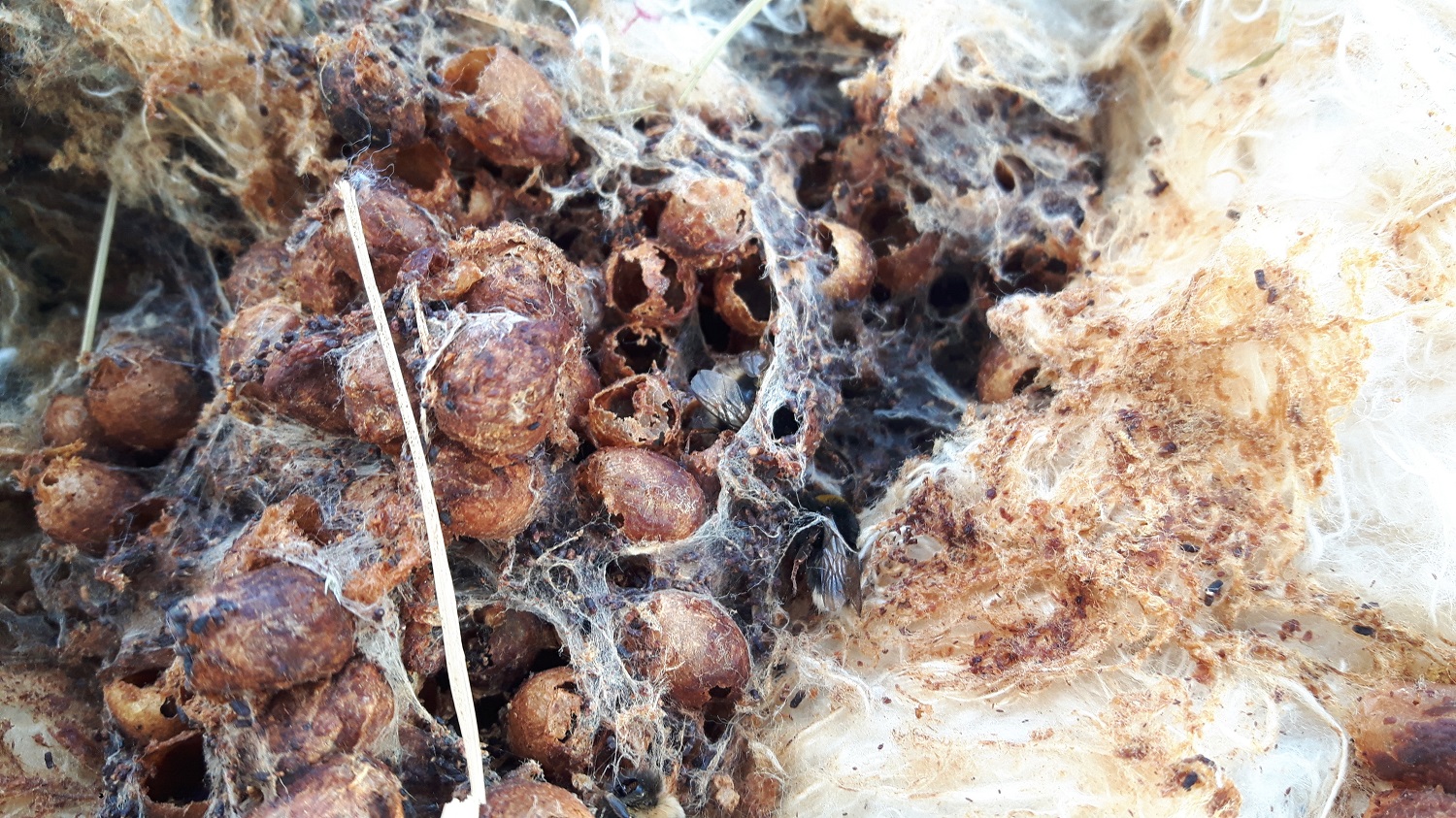
Lesser wax moth (Aphomia sociella) – nest infested by moth
Photo O. Hercog (2016)
The photograph shows holes gnawed in the wax casings and cocoons. There are also caterpillar fibres from the wax moth on the cocoons.
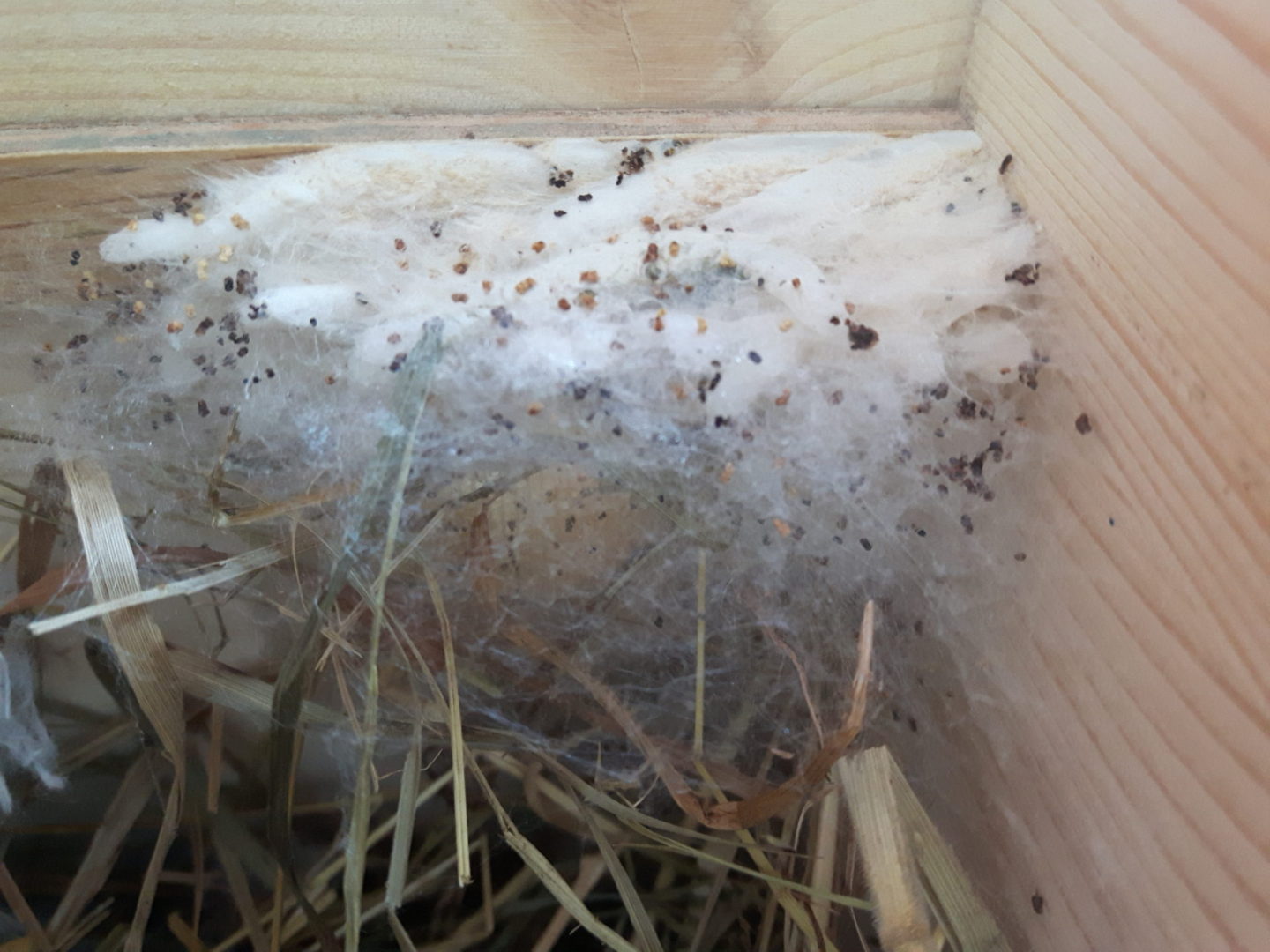
Bumblebees PLUS – Greater Wax Moth (Aphomia sociella) – nest infested by wax moth
Caterpillars in cocoons in a hive under the roof
Photo O. Hercog (2016)
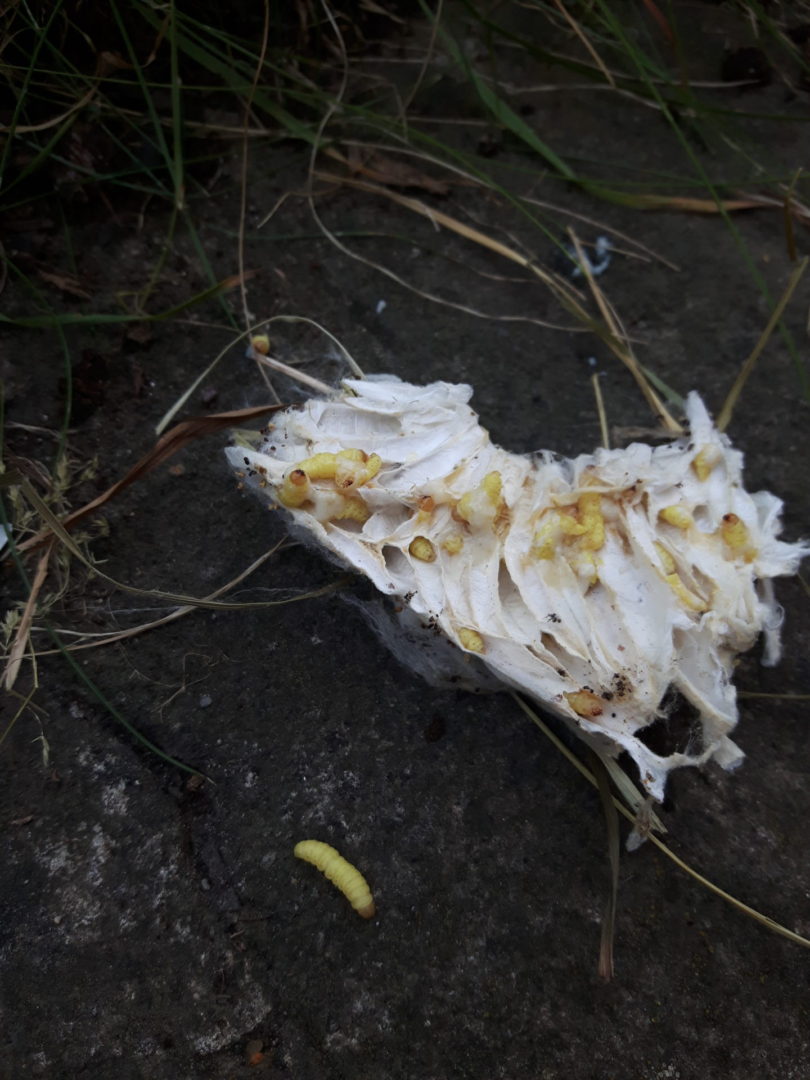
Lesser wax moth (Aphomia sociella) – nest infested by moth
Caterpillars removed from cocoons taken from the hive
Photo O. Hercog (2016)
Conclusion
There are multiple approaches to protecting hives against the wax moth, as well as the approach of letting things take their course. Most beekeepers are only driven to actively defend their hives when they see a destroyed bumblebee nest. We'll leave the decision to you.
Our recommendations
- Be meticulous in preparing the hive for the season
- Prevent so that in the construction of the ulcer leaks and cracks
- Check at least once a week a scare by opening the roof and looking at the lining
- Check at least 1-2 times a month, disturbing by opening the nest looking at the nest
- Do not fear inspections and interventions at the nest – these are preventative measures by which you can help bumblebees successfully raise a new generation of sexual individuals in their nests
- Prevent your hives from becoming wax moth breeding grounds
- Don't forget Empty the hives after the season and thus prevent the European corn borer caterpillars from overwintering in them
Lorem ipsum dolor sit amet, consectetur adipiscing elit. Ut elit tellus, luctus nec ullamcorper mattis, pulvinar dapibus leo.