



Extreme weather changes in spring and possible solutions
What you will learn here
- What about beehives (bee houses) during spring weather changes
- Let's revise how thermal insulation works
- How to decide – leave the hives outside or bring them indoors to warmth?
- What about the bee box then and when to return them?
- Should you feed hives where the queen has settled – feed or not, and how?
- When to feed and how
- What to do if you cannot move a carp into shelter in the cold
Contents
Introduction
What about the thermal insulation of the hive
How long does it take for a fright to subside
But surely queen bumblebees can warm their brood
How can a breeder prepare for such a situation, and how should they react?
When to start introducing queen bees to hives
What if you've already started setting up motherboards
1. If you have provenly empty hives, or you haven't even tried to rehome them
2. If the mother has settled in the hive and is building a nest
3. If you were trying to introduce the mother into the hive
When to return the bumblebee swarm outside
What and how to feed bumblebees in an emergency
When to give the queen mother supplementary food
How to supplement bumblebees' food
How to get bumblebees back outside
Do not disturb unnecessarily
The mother left the nest and did not return to it
Conclusion
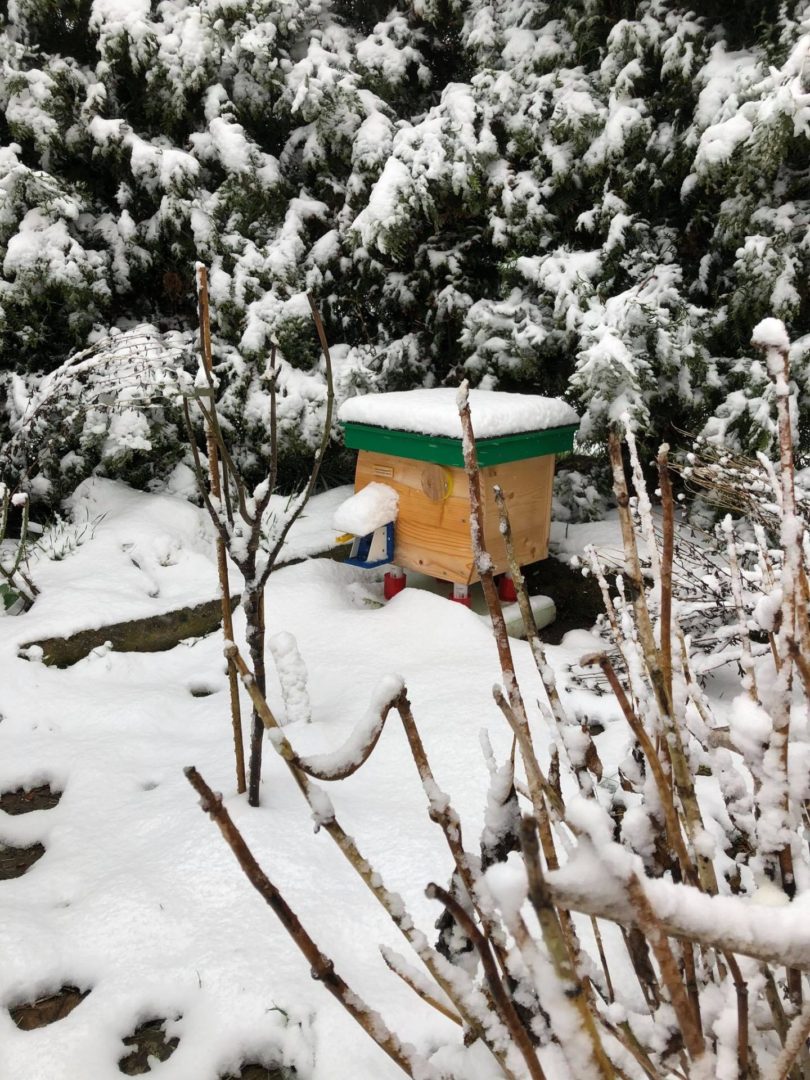
A scare in the snowy garden
Photo P. G. Gröbl (21/03/2020)
Introduction
In the spring often The weather is changing And sometimes these changes are truly extreme. Very often, it gets cold, and sometimes it even snows and freezes.
The situation is gradually worsening and the weather is changing drastically due to climate change, with extreme weather events becoming worse year after year.
Early bumblebee species at risk from falling temperatures and countingand at the same time with the fact that it can threaten their nests, founded early in the spring. But it gives them a certain competitive advantage; if this risk pays off for them, they will be at the food supply in time and won't have as much competition. It's simply their strategy.
Bumblebees that nest in the ground (for example, the buff-tailed bumblebee – Bombus terrestris) take advantage of the fact that The soil has good accumulation properties. It heats up slowly, but also cools down slowly. Therefore, temperature fluctuations do not pose such a threat to the nest, and the temperature in the ground will not drop in spring. The decomposition of plant material also has a certain influence on the temperature in the underground cavity, adding a degree of warmth.
PWhen bumblebees settle in a hive (bumblebee box), the situation is different. The straw will certainly provide a more pleasant nesting environment for them than the cold earth in spring. However, if spring frosts strike, the straw will freeze, and the nest within it will be at risk.
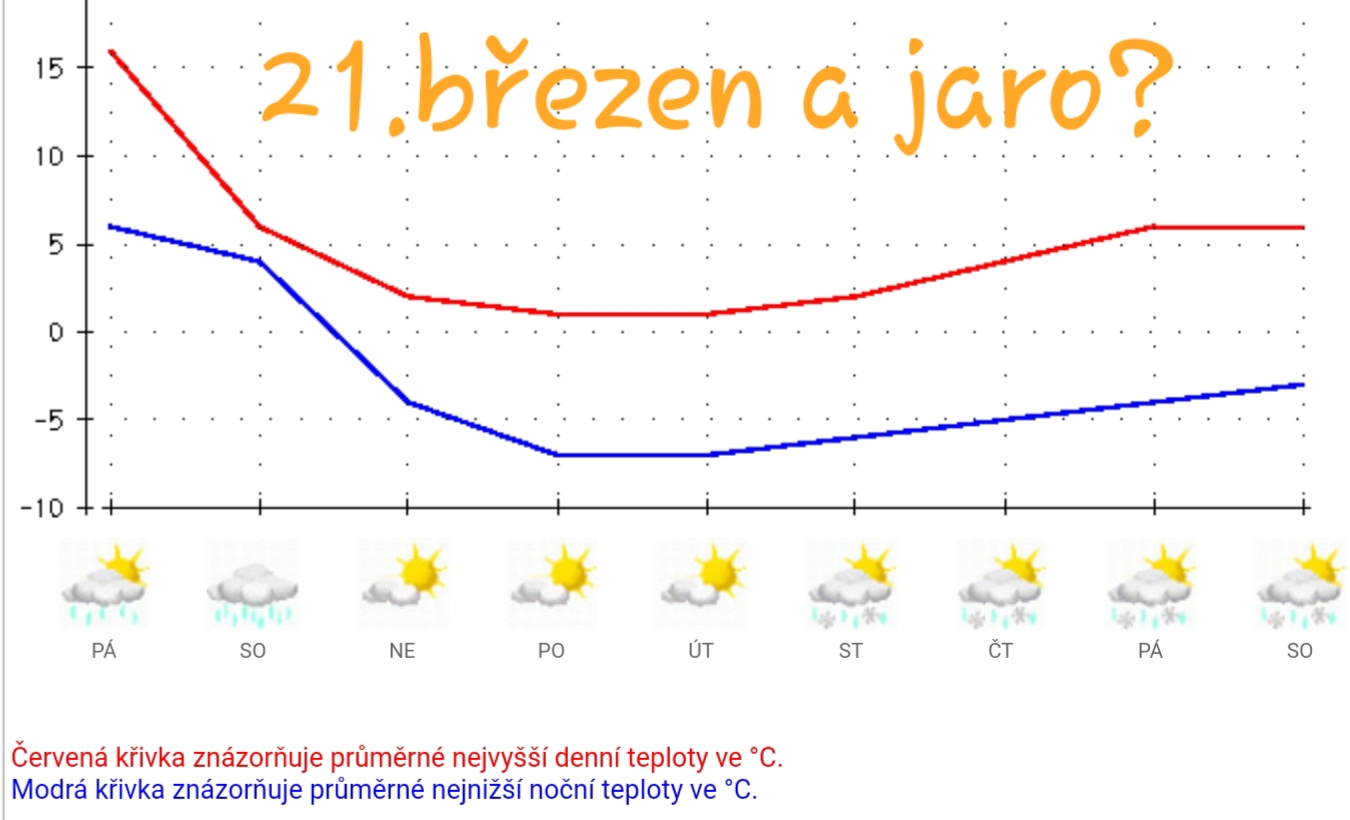
Extreme temperature drops in spring
What about the thermal insulation of the hive
We always recommend that A scarecrow made of quality material, for example, from laminated wood with a wall thickness of at least 20 mm and more. Itself wooden construction but it's not enough, so we recommend it to fit additional thermal insulation. This can be created by lining the inside/outside of the hive polystyrene boards or to solve the insulation as external, for example with double walls. Air insulation seems to be the best solution.
External insulation is more effective, but it's not very practical or durable.
However, it's important to realise that Thermal insulation alone will not heat a cold room., as well as your home. Thermal insulation it's just slowing down the temperature change. Therefore, if the shock absorber is not equipped with active temperature control, after a while its internal temperature will equal the ambient temperature.
Fright With good thermal insulation, it cools down/heats up more slowly.A hive without thermal insulation cools down faster. The mass of the hive (structure and internal volume) also influences the temperature change. Even if you put 10 cm of polystyrene around the hive or wrap it in straw, the temperatures will equalise after a time.
The smallest hives are in the worst state then.. They cool down/warm up the quickest – they have a small mass, a small internal volume, and little lining. Apart from the fact that they don't fit the nests of most common bumblebee species, they are jare unsuitable due to their thermal properties.
Therefore, we do not recommend using small bins and fortunately they don't sell much anymore.
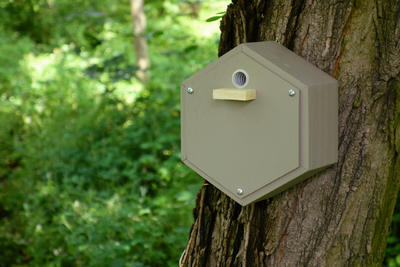
Small shield bug (bee beetle) – unsuitable type
Manufacturer's web photo
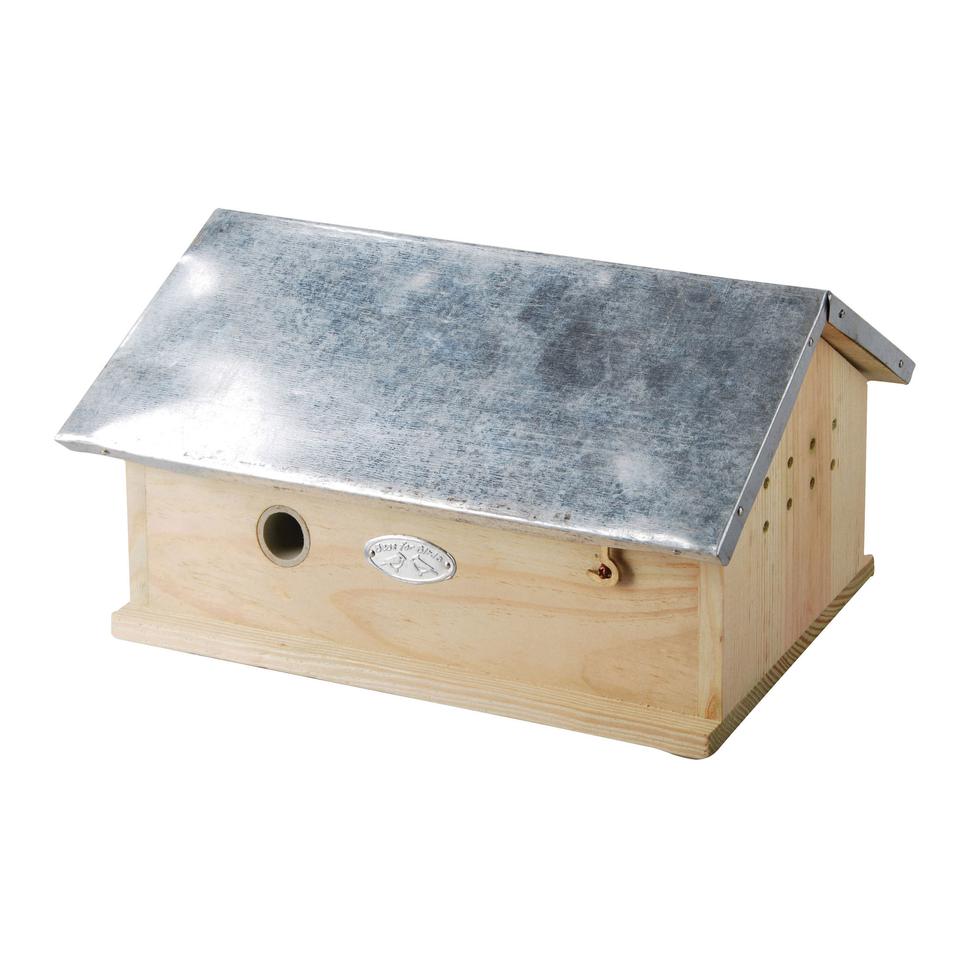
Small shield bug (bee beetle) – unsuitable type
Manufacturer's web photo
How long does it take for a fright to subside
This question cannot be answered simply, as it depends on many parameters, mainly on the properties of the ulcer, particularly its mass and thermal insulation.
Very simply put, solved that way even well-insulated hives will equalise their internal temperature with the surroundings, let's say, in 6-8 hours, as simple measurements show. So if you take them out of a temperature of 20C, by this time they will have the exterior temperature inside.
So, if you place a windbreak outside, it will last for some time protecting the nest placed within it, thanks to the accumulation of heat in its mass and thermal insulation. Therefore, if you don't want the nest to freeze, you can do this. rules to keep as certain leads.
But surely queen bumblebees can warm their brood
Queen bumblebees can warm their broodand with its bare belly, see HERE. But it has its limits.
Mother founds first generation of offspring in a small nesting chamber. Only she and the case with the first eggs and then the embryo will fit in there. Here it can create a temperature of 30°C. Although the shock absorber is equipped with good padding, It cannot heat the room long-term and under all circumstances. If the temperature in the hive repeatedly drops below freezing, the mother will usually endure it, but the brood will get cold. If the embryo gets too cold, its development will stop and it will die. A mother cannot always lay more eggs, and often abandons such a nest, not creating another – she then becomes a so-called „will-o“-the-wisp".
Their limitation is also the lack of food, which can occur during prolonged chilling. Although the mother creates a wax cup for nectar in the nesting chamber (see photograph), it is not bottomless. If there is a lack of food in the surrounding area, she will not have access Nectar, which needs as energy source for warming the fetus and as its food. It can manage without pollen for some time, but not without nectar. This is one of the reasons why the queen does not have pollen stores at the beginning of the nest's existence, but nectar instead.
Therefore, if the mother is alone (solitary phase), she cannot keep the nest warm for an extended period. Consequently, a long-term drop in temperature poses a serious threat to the offspring. Once there are workers in the nest, the food supply is more consistent, and the nest also creates larger stores of nectar/honey to overcome shortages. Some species store pollen in empty cocoons (pollen-storers). A typical example is precisely the early species of bumblebee, the buff-tailed bumblebee (Bombus terrestris).
Fortunately, however, early species Soon in spring, it's just looking for a nesting site and in most cases, the mothers have not yet started building their nests.
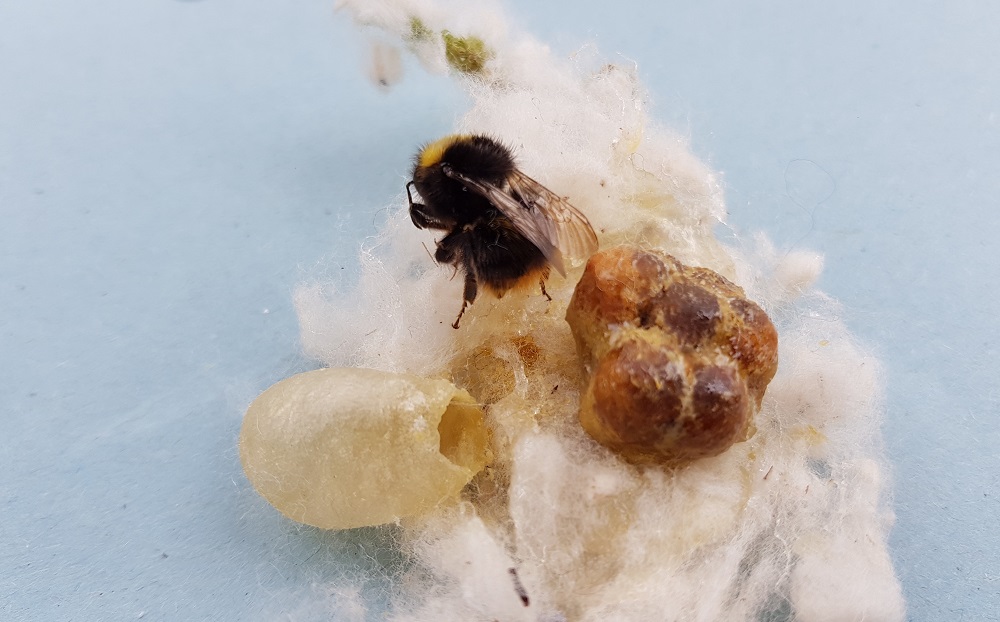
Meadow bumblebee (Bombus pratorum) mother with a large waxy nectar cup (light structure on the left) and first cocoons (on the right)
The mother died from poisoning, or from an attack by another bumblebee.
Photo O. Hercog (12/2/2019)
How How can a breeder prepare for such a situation and how should they react?
The basis of success lies in preparing the hive before the season.. If you have a quality attic with good thermal insulation, short-term temperature changes will be withstood for some time.
But if If the temperature drops, even thermal insulation won't protect from the frost. The breeder has to deal with it.
If the startle is placed and designed for easy portability, it can be moved indoors.
We are not forcing you to do it., The hatch can be covered and insulated from the outside, but these solutions don't work very well.
We definitely recommend to provide complementary food for a mother in a hive in the form of a sugar solution (syrup).
As always, nothing is black and white here either. If Mother strong, healthy and very active (biologically), it can also handle larger temperature drops than we state here.
If the mother is caught by the cold immediately after moving into the hive and has not yet laid her brood, she will simply nesting interrupted. Úlek feigns leaving and spends the night in nature. Úlek visits only occasionally and if they come back, it will only be after the thaw.
So here too, the behavioural patterns of living creatures are much more complex and we, as breeders, can do little more than wait and provide them with conditions that they will use when they wish.
In the following text, we will describe strategy, which can be used.
When to start introducing queen cells into hives
Queen bumblebees usually sense when something isn't to their liking, and so they don't want to settle. This could be why your early spring settlements might not be successful, or why queens might not immediately return to the hive after a sample orientation flight.
If the mothers have only just woken from hibernation and haven't really started searching yet, they are more likely just looking around. Moreover, they themselves probably feel that their time will come soon and they will return to an interesting place later.
Recommendation
- Don't force mothers into hives (or cocoons) right at the start of spring, and be patient instead. upon really long-term warming
- Thanks to the cooling, the mother will not start building a nest anyway, if they settled and started laying eggs (sometimes as early as 3 days after permanent settlement), it could be a problem and would need to be addressed.
- We understand it's difficult to bear. When you watch the weather forecast, you can tailor your settlement strategy
- If The weather forecast says that you have night frosts ahead. and you don't have the option to clean at home at night, mothers would rather Do not settle.
If you have already started settling queens
If you've managed to settle the queen bee and she's made herself at home, congratulations!
But if it cools down and the night temperatures drop, this is I have a problem and I need your help.
When temperatures fall below 5°C and there is continuous snow cover in nature, intervention is needed.
1. If you have provenly empty hives, or you haven't even tried to rehome them
Procedure
- Tidy up shock home to safety (hallway/veranda, etc.), so it doesn't get unnecessarily damp
- The fright doesn't have to be at room temperature, but it also doesn't need to freeze unnecessarily.
- Give me a fright only when it warms up and bumblebee mothers again will begin searching for nesting sites
- Don't forget that if you want to the ulcer The mother to be should not be cold and damp. Its temperature should ideally be the same as ambient temperature
Recommendation
- We highly recommend opening the surprise and carefully to see if it is truly empty, sometimes the queen may choose to settle in the hive herself
Risk
- If the mother were indeed hidden in the hive, she would emerge from it, you would then find her indoors and release her outside to freedom.
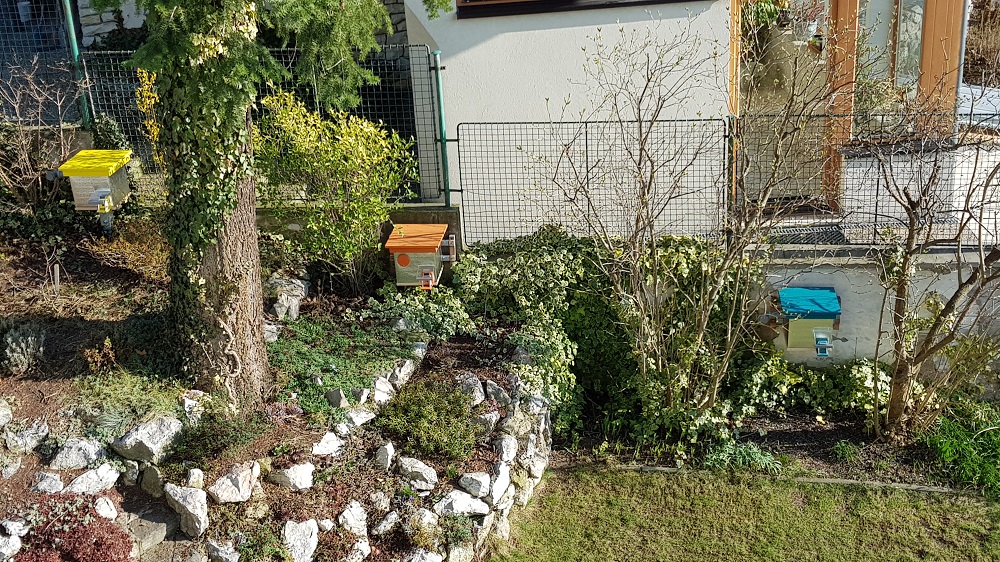
Hives (bee hotels) ready for occupation
Photo O. Hercog (18/3/2020)
2. If the mother has settled in the hive and is building a nest
If Mother was settling in, So it flies to the hive and sometimes with pollen baskets on its hind legs.
You can detect movement by observation or using brands sight HERE
Procedure
- After dark close the entry port ulcer, preferably with a ground cork stopper, the fan is well secured in the opening (folding down the flap isn't enough, light shines through and the mother would also open it)
- Carefully transfer the frighte for interiors
- Store the leek in the hallway/conservatory where it won't freeze and leave the leek closed up (the roof) there.
Leave startle Closed (ventilation opening and roof) - If it's a fright in the dark, Can the vent be opened
- If you made protective netting and do you have it installed as recommended, you can remove the roof from the hive in the dark, cover the net with a cloth and let it dry
- If in the light, it is necessary to leave Ventilation opening closed. In the light, the mother would try to leave the hive through the open vent, exhausting herself with futile escape attempts.
- Leave the fright at home only for as long as absolutely necessary feed the mother – see further text.
Warning
- If you clear the fright before dark, Mum might be out and about
- Do not store the shock with the mother at room temperature, it could happen heat shock mothers – if so, only gradually increase the temperature
- If you place a cold shock in a warm room, moisture would condense on its walls
- The same applies to bringing the hive back outside.
Risk
- If the mother had built the nest and you froze outside, the nest would be lost
- The transmission of an occupied hive is also a risk, but if you are careful about jolts and don't tip the hive, it can be managed.
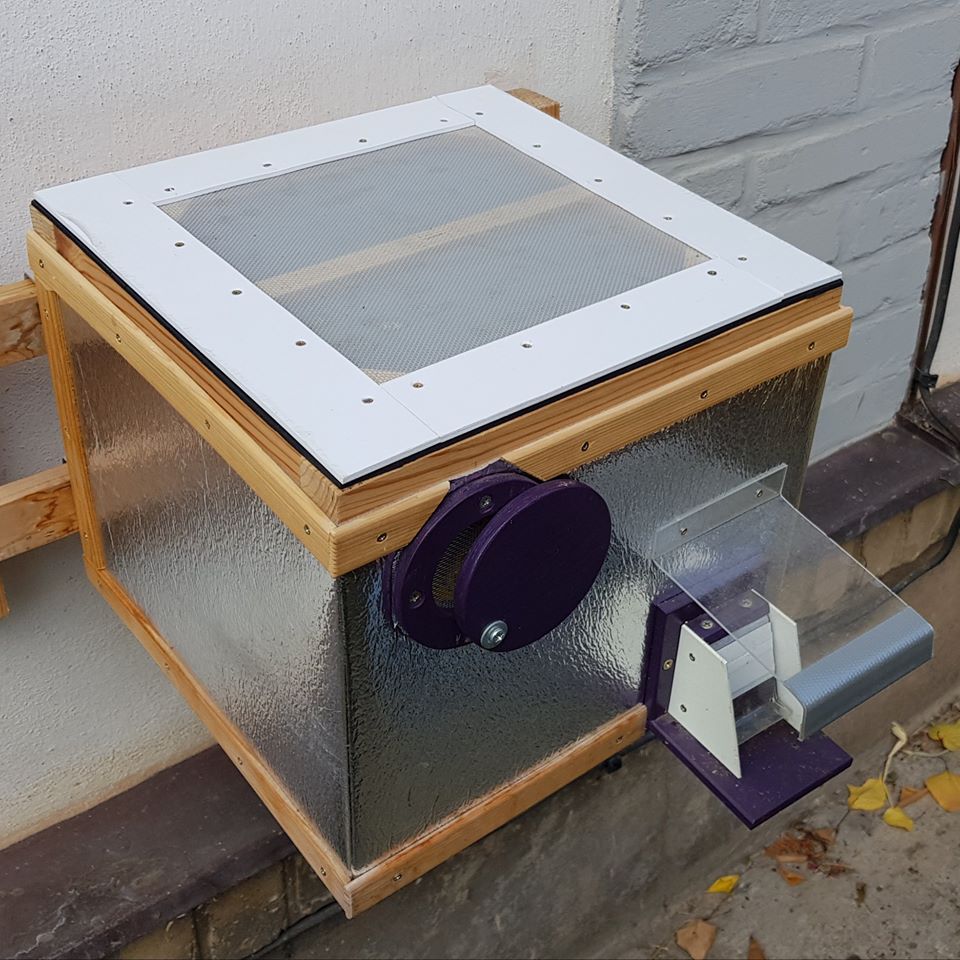
Protective net placed on the beehive.
Photo O. Hercog (2019)
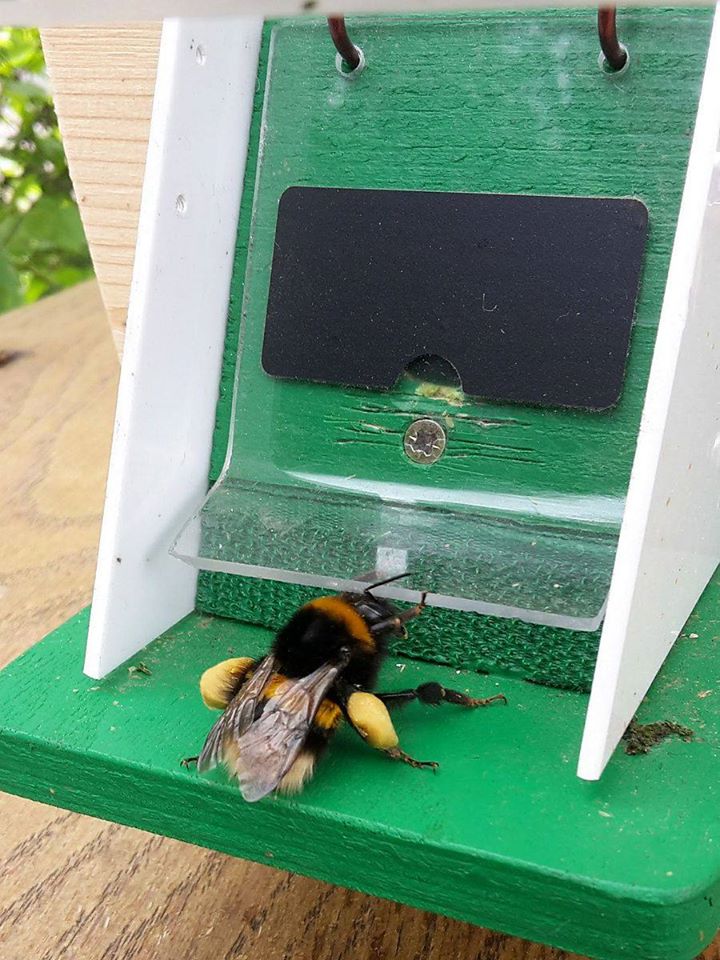
Bumblebee queen (Bombus terrestris) on a protective flap
Bobin's mother's name
Photo B. Klimešová (2019)
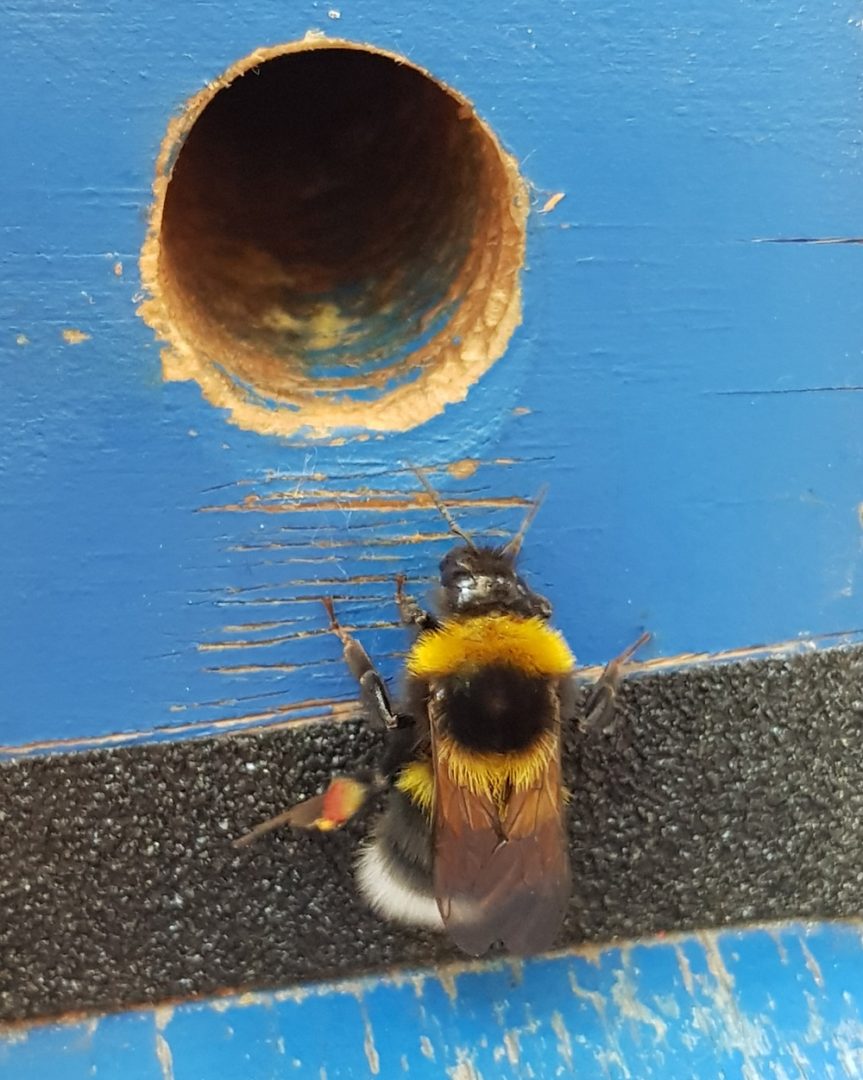
A worker bumblebee (Bombus hortorum) at the entrance hole of a skep
Photo O. Hercog
(2/6/2019)
3. If you were trying to introduce the mother into the hive
If you are already in the hive They tried to introduce the mother, but you are not sure whether the mother returns to the hive (see tag usage), Follow point 2 as if it were a frightened occupier. = frighten indoors closed.
If there is no continuous snow cover outside and the maximum daytime temperatures rise to 2-5 °C, let the chick out during the day. It is quite possible that If the mother liked the fright, she can return to it. and verify that this place will be available for habitation after warming up.
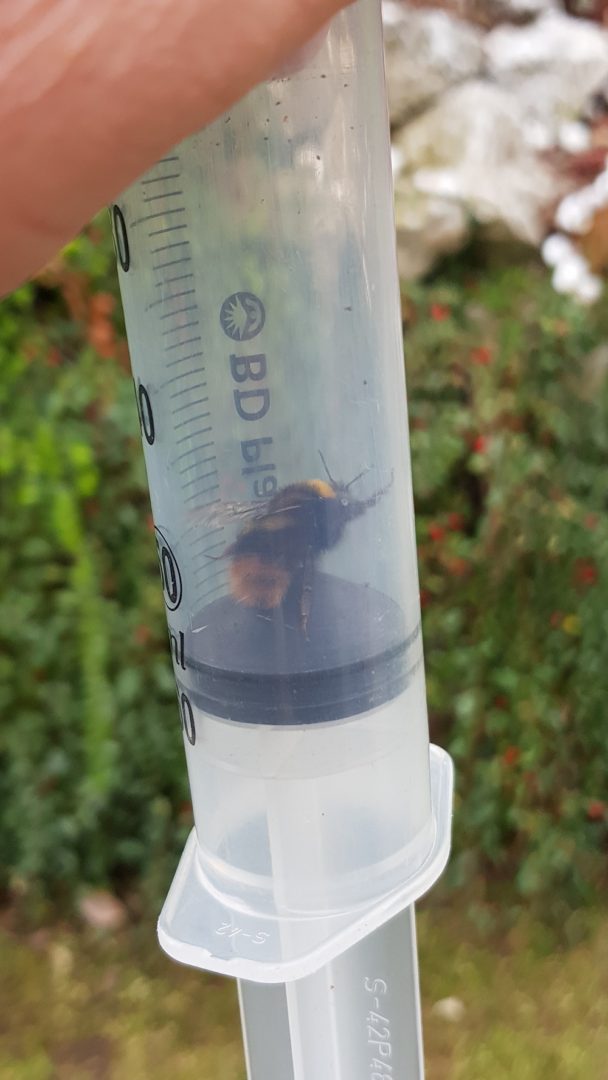
Meadow bumblebee mother in a loader
Photo O. Hercog (20/3/2020)
When to return the bumblebee swarm outside
That it's a fright indoors, is not optimal for bumblebeesYes, it is clear. But it's an attempt to keep them alive during an extreme decline. If you leave them out in the frost, it will end badly.
Always In times of cooling temperatures or when tidying up old nests indoors, we recommend bumblebees in the kennel to feed.
As it depends on many conditions, it is not possible to precisely determine when bumblebees can be returned outside and when not.
Please keep the following guidelines in mind and adapt your strategy to your capabilities.
- Leave the bumblebees at home only for the strictly necessary time.
- There is no point returning bumblebees outside when it's freezing and there's snow on the ground.
- As soon as it warms up in the morning/late morning and the predicted maximum temperature will approach at least 2-5 °C, return them
- If it is clear outside and the sun is shining, bumblebees warm themselves in it, which makes them more active and able to tolerate lower temperatures.
- The temperatures are more of an indication. It depends a lot on the condition of the mother:
a) If it has a built nest, it can be active at 2°C, especially if the queen has brood and needs to forage for pollen.
b) If the mother has not yet built a nest, she will either wait in the hive and feed on sugar syrup. More likely, however, she will fly out and sometimes not return to the hive. Nature does not force her to care for the offspring, so she will prefer to move outdoors. - However, keep in mind that A sudden return to ambient temperature within approximately 6 hours, it is not good to let the nest cool down below 5°C
Therefore, we recommend Don't let him out first thing in the morning, wait until the temperature has risen a bit so he doesn't get completely chilled.. - If the mother returns to the hiveand will stay overnight in it, Will be home by nightfall. If the temperature drops below 5 °C again at night, it's a good idea to cover them. close after dark for the night., place in the interior and repeat the procedure.
- We recommend serving to the mother Weaning – it can itself decide whether it will fly or not.
- Such a situation in spring only lasts a few days = hang in there
- If you put mum down before the cold days, the fright will probably leave. – There's no reason for him to stay without children. But can it return to it after it warms up
It is up to each breeder to decide and what strategy they choose, as there are multiple approaches and no single model or algorithm to describe it.
By what and how to feed bumblebees in an emergency
If it is cold and there is a shortage of food in nature, it is advisable to feed the queen in the hive Feed with sugar solution.
Bumblebees can last a few days on sugar solution instead of nectar, which need as fuel. Pollen is also needed, but if you don't have fresh pollen available from a beekeeper, there's nothing that can be done.
If you don't have at home fructose (Fruktopur), use sucrose (white beet sugar).
Stir the sugar into the warm water in a ratio of 1:1 into solution (syrup).
Warning:
- Do not use brown (cane) sugar, This can cause digestive problems for bumblebees.
- Likewise we do not recommend feeding diluted honey, it may contain the germs of bee diseases (beekeepers do not feed bees with their honey either).
- The procedure for feeding and preparing sugar syrup has been described HERE
For feeding, a small feeder can be used and placed on top of the bedding, where the queen will find it herself.
In the cold, food does not spoil, so it is possible to give a slightly larger portion, optimally tube feeders.
Feeders we described HERE
If you have Own frozen raspberry pollen collected from the garlic hive, it can be placed on the lid of a PET bottle on top of the lining. We would recommend waiting with that though, it's not as necessary.
You can get pollen pellets from beekeepers, but those will only be from last year.
There is a possibility of transferring bee diseases to bumblebees, therefore We do not recommend honey for weaning. to use.

Bee feeding – Fruktopur
Internet Photo
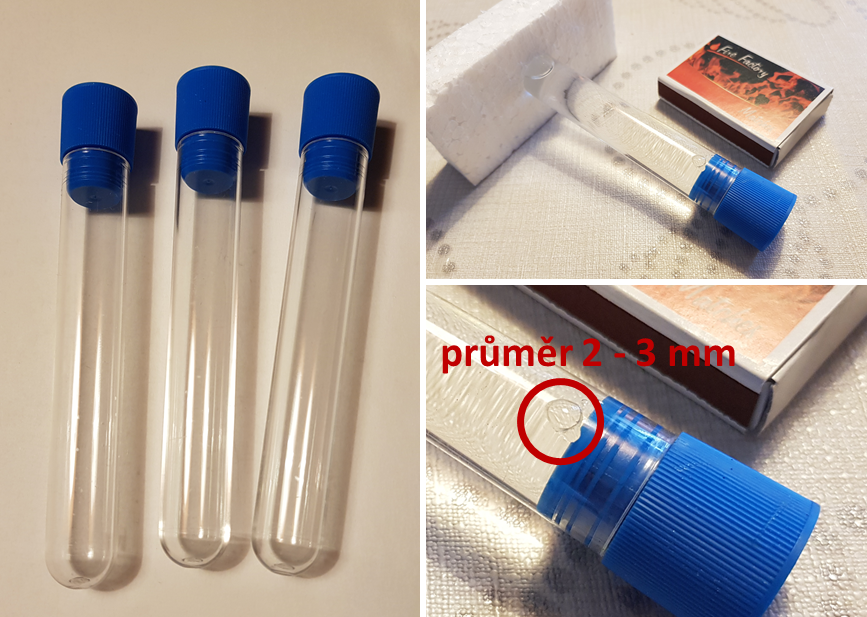
Bumblebees PLUS – Test Tube Feeder – Slanted Position
Photo O. Hercog
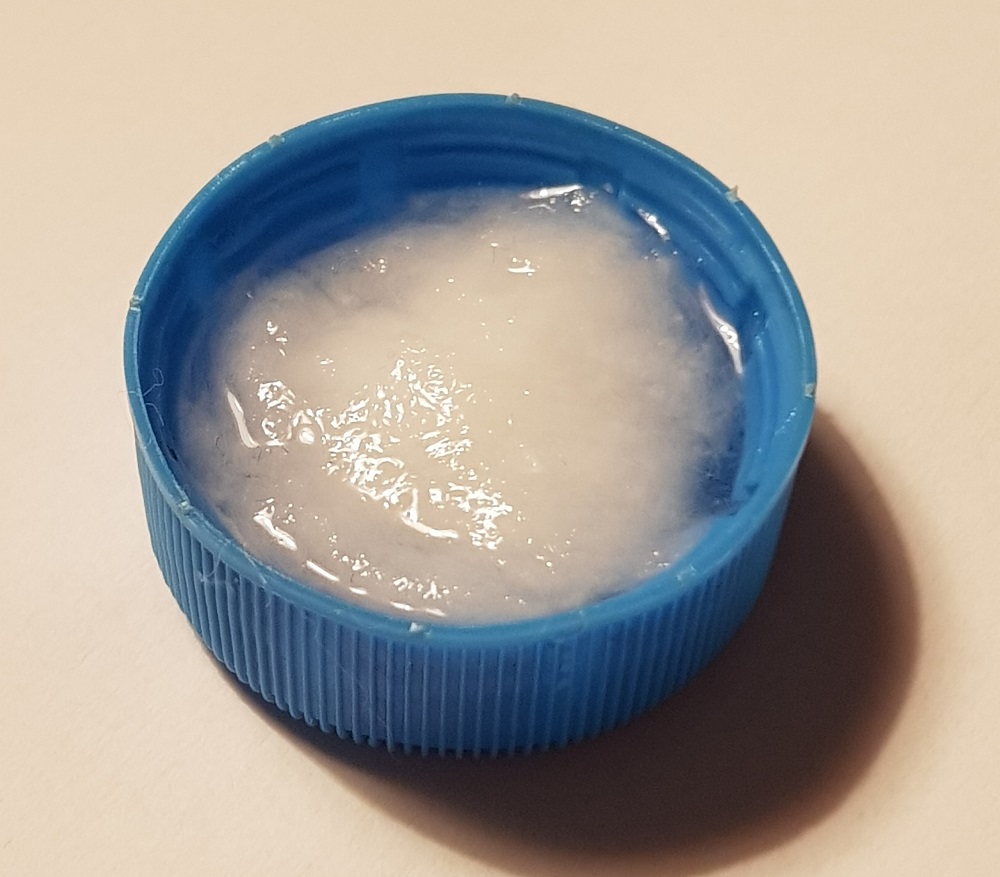
Bird feeder made from a PET bottle cap with a cotton pad insert
L
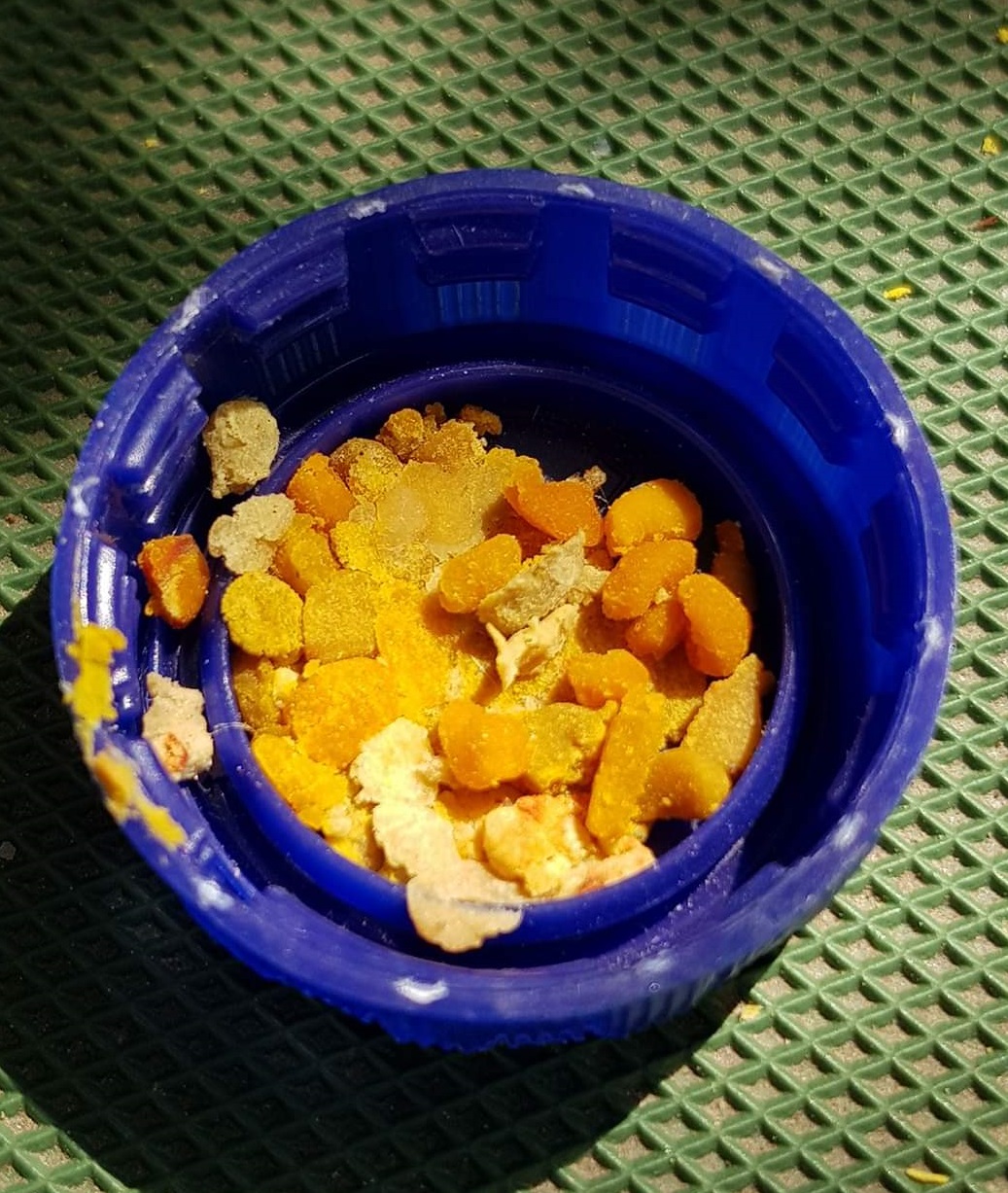
Pollen grains in the cap of a PET bottle
When to give solids to a mother
In general, we do not recommend feeding bumblebees. Exceptions are made for sudden drops in temperature and lack of food. In such cases, it is advisable to provide the queen with supplementary feeding. The queen will decide for herself whether to use it or fly out for fresh food. Practice shows that queens prefer to fly out if the temperature is not below freezing. Hardy alpine bumblebee species even fly in temperatures well below freezing; they are prepared for such conditions and will find a food source in their local environment.
In our area, we recommend supplementary feeding in the cold.
If you have a scare outside, It's not good to open it outside, so it doesn't cool down any more. So it's better to close it and move it into the interior and leave it alone. Then you can give the mother feed, perhaps for the night.
However, if long-term shock outside, it's basically the same, the temperatures will be practically identical. It depends on your judgment and the situation.
If the startle was/is outdoors, the mother will likely become rigid and not fly away. Place the feeder on the lining a the pond is covered with a roof. The mother gradually it will warm up and find food.
Warning:
- Don't disturb the mother unnecessarily
- Don't look into her hive at any other time than when you are feeding her.
- Do not try to search for its nesting chamber – it is fragile and easily damaged irreparably
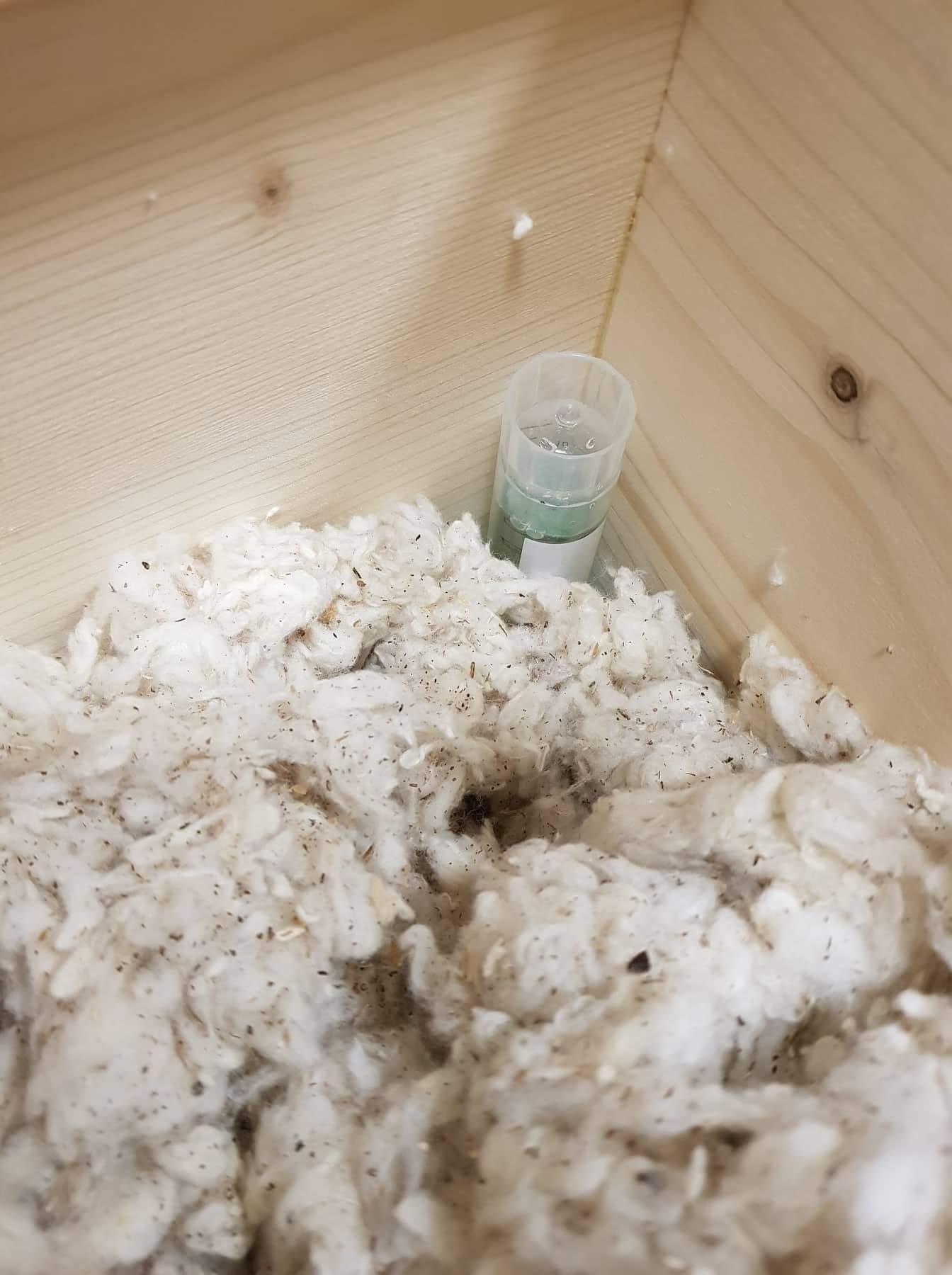
Test tube feeder – vertical position
The mother will find the feeder more easily, but then it is better to remove the feeder and cover the bottom with bedding so that the bumblebees do not defecate there ( / illustration photo)
Photo A. Votavová
How to supplement bumblebees' food
If you are to supplement feeding And the queen will be active in the warmth, she may have a tendency to fly out of the hive.
Procedure
- We recommend supplementing feeding in the dark (perhaps in a closed bathroom) and using red light (headlamp, bicycle light, film on a torch), as the mother will not fly out in red light.
- Turn off and on the red light.
- Carefully remove the hive roof.
- If the mother bee leaves the hive, carefully catch her and return her to the hive - preferably using a bee catcher.
- Place the feeder on the lining and close the roof.
- If you're worried the mother will leave her young, do it in the bath.
Note:
- Sometimes it is recommended to place feed at the entrance to the feeding tube in the hive. This makes sense; the queen will find it more easily. However, this means that there is no lining at the entrance of the tube.
- We consider it a better solution is to have the whole casing filled with lining so that the bumblebees don't defecate on the bottom and spread it around the nest
- We also consider it a better solution when there is a compact mass of lining in the hive which thus forms better thermal insulation of the nesting cavity created within it.
How to get bumblebees back outside
As we wrote, moving the ulcer indoors is an extreme emergency solution. Therefore, we recommend returning it as soon as it is possible.
We have described the guides on when to return the surprise element. HERE.
Procedure
- Insert a dose of sugar solution into the tray (see procedure above)
- Carefully transfer the shock absorber to its original position and remove the inlet port cap.
- The mother bird will fly out after a while, will likely do a small orientation flight (surprised that she didn't get out as she wanted), she should then normally continue nesting and flying according to the outside temperature.
- If you put a sugar solution into the hive in a feeder, she will decide for herself whether to fly out or not.
- But keep an eye on the temperature and Don't let the fright cool down for nothing. under 5°C
- Keep it in mind The ulcer temperature will equalise with the surroundings within 6-8 hours. and according to that, plan the return of the wolf
Additional external insulation for the hive
You can try to insulate the occupied shock with additional external insulation.
As we wrote, it is not a full solution and a replacement for heating. This gives the victim a better chance and slows down hypothermia.
Procedure
- Cover fright from the outside with boards, further insulation with polystyrene, or another insulating material such as hay, straw, blankets, etc.
- This insulation Cover with waterproof sheeting (plastic tablecloth etc.) and secure it with stones to prevent it from blowing away.
- Handle the insulation, butthe view of the flap's startle wouldn't change. Unfortunately, the front wall will not be isolated. If you change the view of the burrow entrance, the bumblebee queen may no longer be able to find it.
- If you decide to take the risk and insulate the front, then do it at night like that, so that the mother, after leaving the hive, makes an orientation flight and remembers the new appearance.
- You can help with this and force an orientation flight on the queen – just leave the entrance closed even after daybreak. Once the queen flies out, she should react to the closure and undertake a new short orientation flight to ascertain what has happened. This should help her remember the new situation.
Please consider this an extreme option for when you have no other solution.
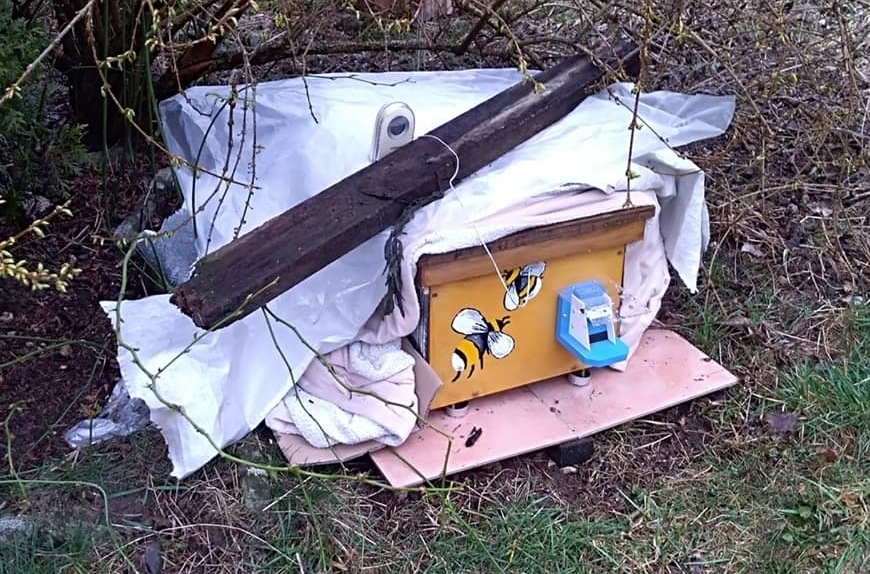
Emergency covering of a beehive ulcer with additional thermal insulation
Forum M. Bradová (21/3/2020)
Do not disturb unnecessarily
We kindly ask all curious breeders, Apart from situations of transfer and feeding, do not disturb the mother in the hive.
All the actions described above push her to the very limit of her tolerance. Any further Checks and unnecessary peeking into the hive are unnecessary. and could be the last straw that makes the mother fly away.
We know of cases where this unnecessary snooping has led to exactly that happening…
The mother left the nest and did not return to it
The chances of a mother overcoming such a crisis depend on many factors. Sometimes a fright leaves and doesn't return..
In such a case, we recommend leave the shock with the flap open and outside No Close up and clean the interior., as if darkness were its mother.
Once it warms up and the temperature drops cease, leave the geranium outdoors and Insert the tag into the inlet opening.
Wait at least 3 days, before you try to take over the new mother. The chance that „your“ mother will return is there and hope dies last, or at least for those 3 days.
Conclusion
- We understand that Moving the ulcer indoors is not an optimal option and carries risks..
- If you don't want to, resolve it with at least additional thermal insulation of the hive.
- If it however You will not deal with it in any way, the fate of the nest is sealed.
- Whole The solitary phase of the mother is very critical, and the mother can easily abandon the nest.. So, if you do the above work, try to be maximally careful, and apart from transferring the ulcer and feeding, do not disturb the mother further, for example by additional observation.
- That'll have to do,Do not enter the den. If you disturb your mother unnecessarily, it could be the last straw in her patience. So don't disturb the mother and don't try to find her nesting chamber at all.
- After warming up, wait and Give the mother a chance to return. And even if fright leaves, it can return. Give it 2-3 days after it warms up..
- If you should actually lose your mother and don't have your own home insulated (inner space and roof), finish insulating and only then continue with the installation. Cold weather can also arrive in May!
It's up to each breeder to decide how they'll approach it and what strategy they'll choose, as there are multiple approaches and no single model or algorithm to describe it.
We're keeping our fingers crossed that your mothers in the uterine lining will experience warmer weather, their families will grow successfully, and their daughters will live to see better times.
So you see that keeping bumblebees is a joy, but at times also an adrenaline rush and nerve-wracking. However, if you've decided to keep them, you've also accepted a certain responsibility and it's only right to take care of them. After all, it's the same as with other pets, which you do too, and gladly. Fortunately, we don't have to vaccinate bumblebees or take them to the vet for check-ups.