



Preparations that do more harm than good
What will you learn here?
There are preparations on the market that some keepers may recommend in good faith as protection for bumblebee nests, but which can also harm bumblebees and other insects outside the target group.
We present them here in the hope of a common goal, which is to help and not to fulfil our own breeding ambitions.
Current list, details below or by clicking the link:
EKOPOL, APIDEZ TO THE BEACH Apicultural preparations against varroatosis
Why are they dangerous in bumblebee farming?
All the listed preparations are declared as pure biological preparations with an active ingredient of essential oils, which are intended to be effective in the prevention of varroasis in bees and at the same time have beneficial effects on reducing the occurrence of parasitic mites in bumblebees.
However, by collecting and testing the stated preparations, the Institute for State Control of Veterinary Biological Products and Medicines found that The aforementioned essential oils are merely a smokescreen, and the actual active ingredient in all these preparations is FLUMETHRIN, not in trace amounts, but in therapeutic concentrations.
FLUMETHRIN is ectoparasiticide ze groups syntheticc pyrethroid. Flumethrin I part of properly registered veterinary medicinal preparations intended k Damping Varroasis. Registered Preparations s obhsen this lduckling are However Pod strict checked, a to s regarding No their quality, security a effectiveness, are bound No Medical The regulation and its use must be in accordance with the valid methodology (we refer to beekeeping).
- The undue use of products containing flumethrin (in addition, completely concealed by the manufacturer and therefore outside any control) increases the risk of creating further resistance of mites to flumethrin.
- The effect on the bumblebee population has not been sufficiently tested, but it has been proven in bees that flumethrin contaminates bee honey.
- The company deceives consumers and supplies a dangerous product to the market.
Do not use EKOPOL, APIDEZ, and BISANAR preparations in bumblebee and other insect husbandry.
Link to the ÚSKVBL report here
Recommendation
To protect bumblebee nests from parasites, only essential oils can be used, not synthetic parasiticides. Therefore, we recommend that beekeepers who wish to use this additional protection should impregnate the veneer with essential oils, either of their own production or those sold for aromatherapy purposes. However, the oil component must not come into contact with the bumblebees, as there is a risk of suffocation (clogging of trachea). The most effective prevention, however, is thorough cleaning of the hive before the season, including the internal components, high-quality, uncontaminated bedding, and during the colony development phase (not the solitary phase), regular thorough checks with possible replacement of the bedding in case of problems with nest development. If the solitary phase is unsuccessful and the beekeeper re-populates the hive, they should clean the hive beforehand, just as they would after the season, including sanitising the bedding.
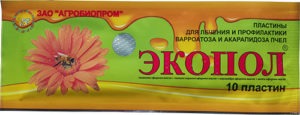
Forbidden product with flumethrin
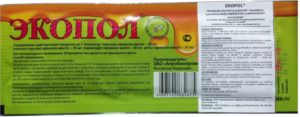
Rub packaging

Forbidden product with flumethrin
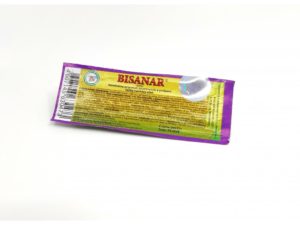
Forbidden product with flumethrin
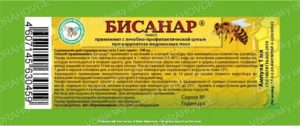
Another form of packaging
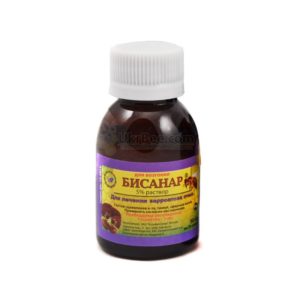
Another form of packaging