


The roof of a bumblebee nest

The roof of the ulcer

What you will learn here

  • Why is there a roof on a bee house (bumblebee nest)?
  • What is it for
  • A good roof should meet the following characteristics: * **Durability and Longevity:** It should be made of materials that can withstand various weather conditions (sun, rain, snow, wind, hail) and last for a long time with minimal maintenance. * **Waterproofing:** Its primary function is to prevent water from entering the building. This means it must be completely watertight and have effective drainage systems. * **Weather Resistance:** It must be able to withstand extreme temperatures, UV radiation, and strong winds without degrading or suffering damage. * **Thermal Insulation:** A well-insulated roof helps regulate the internal temperature of the building, keeping it cooler in summer and warmer in winter, thus reducing energy costs. * **Structural Integrity:** The roof structure must be strong enough to support its own weight, snow load, wind pressure, and any additional weight (like solar panels or rooftop gardens). * **Fire Resistance:** The roofing materials should have a good fire rating to slow down or prevent the spread of fire. * **Sound Insulation:** A good roof can also provide a degree of sound insulation, reducing noise from rain, hail, or external traffic. * **Aesthetics:** The roof should complement the architectural style of the building and its surroundings. * **Ventilation:** Proper ventilation is crucial to prevent moisture buildup within the roof space, which can lead to rot, mould, and structural damage. * **Maintenance:** While a good roof requires little maintenance, it should be designed in a way that allows for easy inspection and repair when necessary. * **Environmental Friendliness:** Increasingly, materials are chosen for their sustainability, recyclability, and low environmental impact.
  • Examples of some problems around hive roofs


Last updated date: 26/02/2024

page abstract

  • The roof is fundamental to life: Without a quality roof to protect your home, you can't do without it – neither you nor the bumblebees. 
  • Resilience The roof is subjected to weather conditions that it must withstand for several seasons.
  • Thermal insulation The advantage is a roof with a removable insert. Such a roof provides thermal insulation, but this solution also allows ventilation on hot days to cool the interior.
  • The roof must be watertight: If the roof warps and leaks, parasites can easily enter the hive.
  • Seal A good roof seals properly if you use sealant, it should be on the double (in two zones), and the sealant must not be accessible to bumblebees – they can easily chew through it.
  • Check the roofno solution protects against fright

Introduction

The roof is an important part of the task. It protects it from the weather and seals the main body of the hive from above. This creates a cavity in which bumblebees build their wax structure – a comb – within the heat-retaining lining.

The roof of the hive must to withstand the elements, must not twist, must well Seal, must startle thermally insulate and must be sufficient heavy, so that it wind didn't take it.

Manufacturers of beehives tackle these requirements with varying success. Therefore, if you are buying a commercially manufactured beehive, pay attention to the design of the beehive roof. It will pay off for you, see How to choose the right beehive.

If you're making or modifying a scarecrow, take a look at the clever ideas. You'll find inspiration there and maybe you'll make one.  roof with removable insulation insert  according to our instructions. 

Can you also make  protective netting according to the instructions from our workshop, which increases the safety of the nest in the hive. You can easily make the netting yourself, it's not that complicated.

A similar roof to the one we'll describe here is currently manufactured by only one producer in the Czech Republic. The roof is designed so that the thermal insulation board can be removed, which we consider a good solution. Perhaps other manufacturers will follow suit over time…

Remember that even a good hive roof needs to be controlIf it is not laid correctly, does not seal well, or if water leaks into it, your tenants will soon have a problem in their little nest, and so will you ;-)
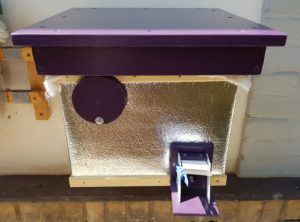
Bumblebees PLUS - The hive roof is on and underneath it there's an absorbent cloth for moisture wicking.

The roof of the apiary is on, with an absorbent cloth underneath for moisture wicking - Photo O.Hercog
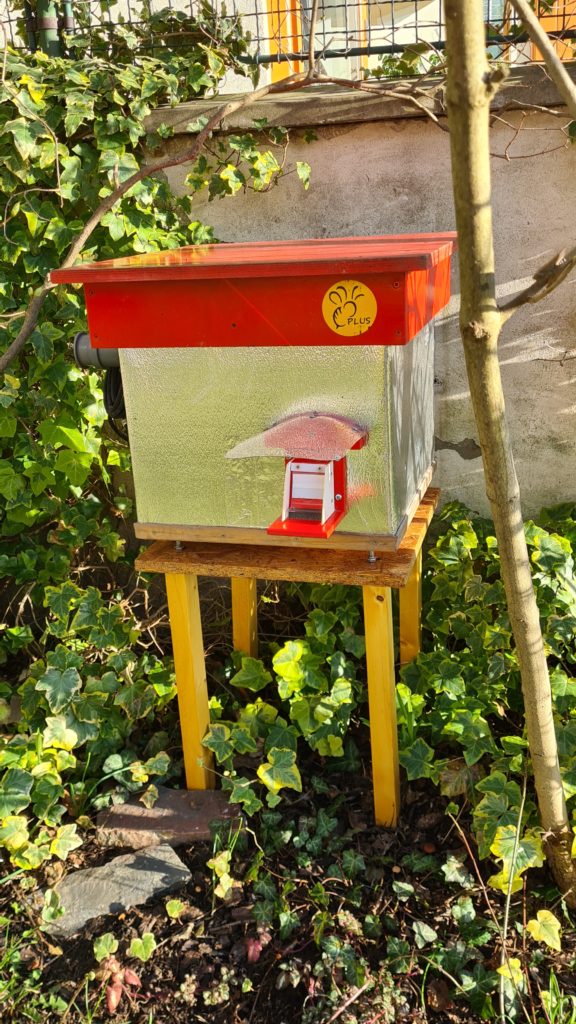
Bumblebees PLUS - Swarm hive table - Photo Ondřej Hercog 2023 03 17 (1)

Beehive stand
Photo: O. Hercog (17/03/2023)
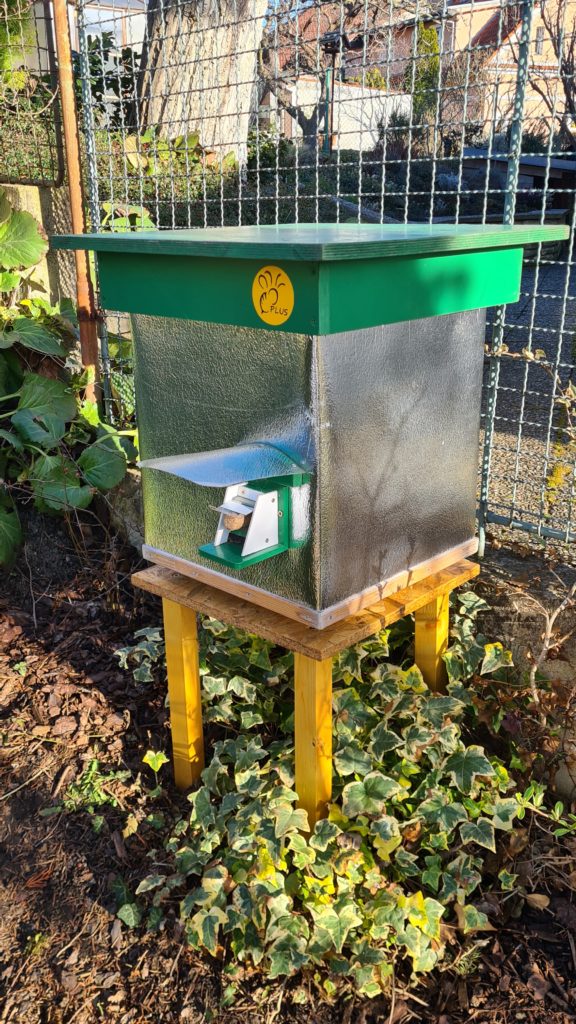
Bumblebees PLUS - Beehive roof with removable insulation liner and double seal - Photo Ondřej Hercog 2022 07 28 (7)

Beehive roof with removable insulating insert and double seal
Photo: Ondřej Hercog (28/7/28)

L
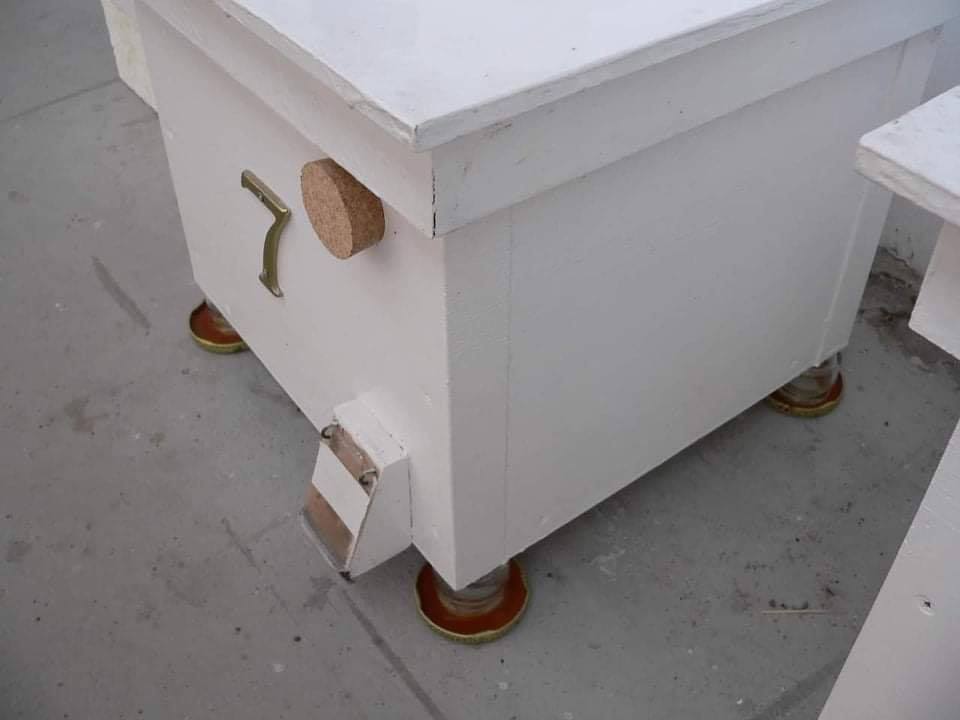
Roofing material

For the production of the roof, very well proven Water-resistant plywood. Shuttering plywood is very good; it's homogenous and has a surface finish that makes it practically indestructible. This material can be bought in DIY stores.

On the contrary doesn't fit Chipboard and OSB boards, these change shape and properties in damp conditions. 


Roof shape

Roof covers the whole scare. He must have sufficient overlap, So that water doesn't splash onto the scarecrow.

Some manufacturers fit hives with saddle roof, it might be aesthetic, but it's more likely to be detrimental. It doesn't have No practical benefit, rather it just does it  complications.

Frame, which the roof is seated on the hive body, has Overhang, so the roof doesn't fall and also around the perimeter, to go under it Put in a absorbent cloth for moisture drainage. This removes some moisture from the hive.

If the roof sits precisely on the hive body, a cloth cannot be placed underneath. Furthermore, once the roof gets damp due to moisture, it will change size and won't be easy to put on or take off.

Solution

  • Roof overhang should be at least 5 – 10 cm against the ulcer's footprint, so that rainwater runs off outside the frame and does not penetrate its structure or the structure of its roof.
  • The frame on which the roof sits on the hive body should have for the side  at least 5–10mm. This is sufficient for inserting an absorbent cloth.
  • The frame on which the roof is placed on the hive body should to exceed in height at least 10 – 20 mm so that the roof does not shift and fall

Roof construction

Use the best flat roof

The roof must 

  • to be Robust
  • to be solid
  • Alright Seal
  • heavy, so that she wind I will not take it.
  • Alright heat insulate
  • to have the opportunity Remove thermal insulation, to cool the roof on hot days and thus the nest settled within it
Bumblebees PLUS - Ant repellent for soil

Beehive roof construction
Photo J. Čížek 2020
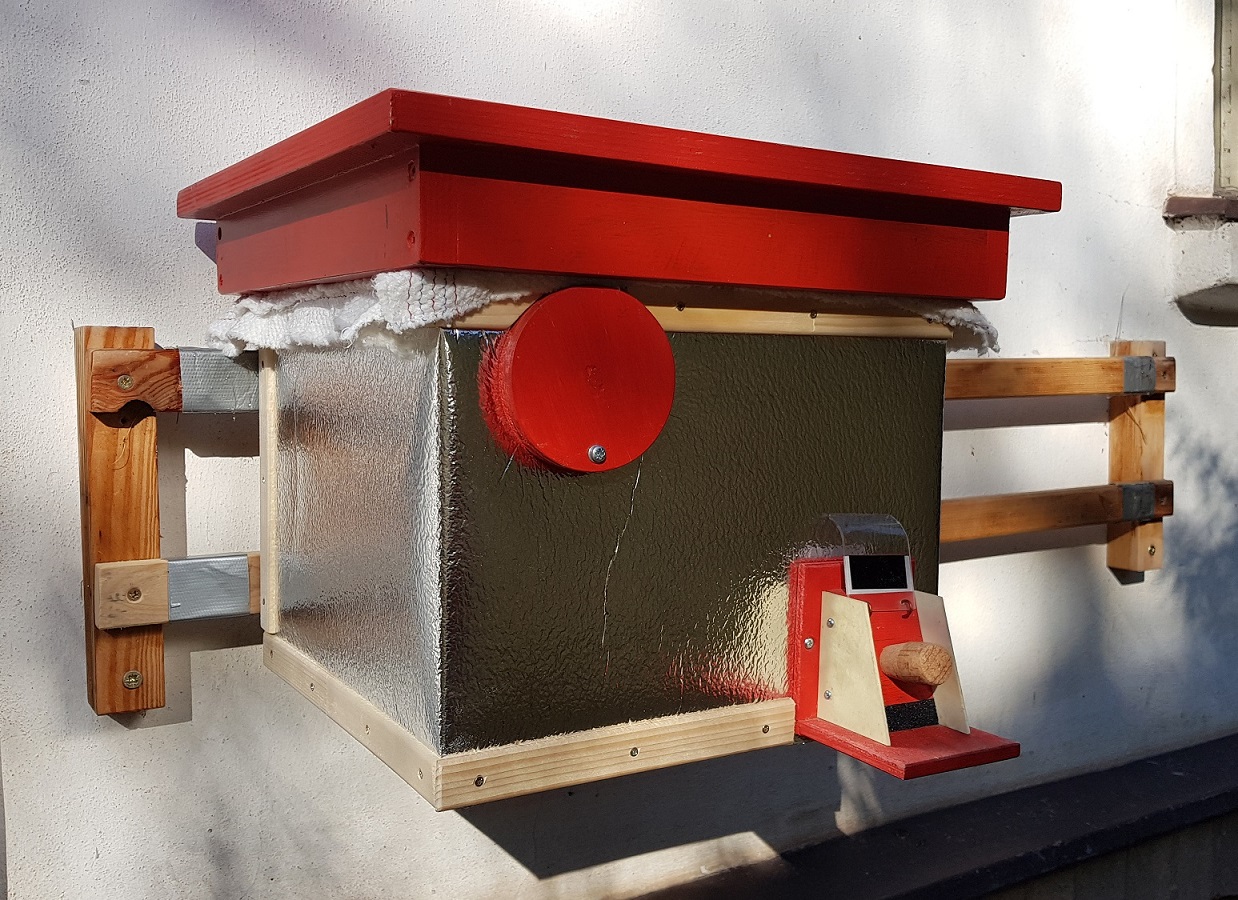
Bumblebees PLUS - Startle with o

Beehive roof construction
Photo O. Hercog 2019


Roof insulation

The roof must, like the body of the hive, generate heat ulcer isolation.

Therefore, we recommend attaching to the inside of the roof polystyrene insulation board, as thermal insulation. This is especially important on spring and autumn days when it is cold. A board at least 20-30mm thick is sufficient; more is naturally better.

But be careful of Sealing. Polystyrene board on its own does not create a good roof seal; it is quite porous or rough. Facade coloured polystyrene is well-suited, or possibly classic white, but you can easily damage the latter during handling.

Furthermore –  If the roof is only sealed with polystyrene, parasites can easily chew their way to the nest through it..

At the same time, however, it is worth having the option to remove the thermal insulation from the roofThis will be useful on hot summer days when, after removing the insulation, cooling blocks/wet cloths are placed on the roof. In this way, it is possible to Turn down the heat by several (often critically important) degrees. You can find an example of cooling on the page cooling frame on the roof of the hive.

However, sometimes it's annoying that after removing the roof insulation, the roof will sit lower and thus prevents, for example, the opening of the ventilation window.

This can all be solved, as mentioned above roof with removable insulation liner according to a design from the Čmeláci PLUS workshop.

Warning:

  • If a polystyrene board is not protected against bumblebees, it is better to discard it after the season and replace it with a new, clean one.
  • In the 2020 season, we recorded a number of cases where the larvae of the parasitic beetle Antherophagus nigricornis were hidden directly in the board. 
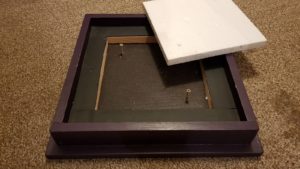
 
Bumblebees PLUS - Hive roof with thermal insulation removed

Roof of the apiary with thermal insulation removed – Photo O. Hercog (6/2019)
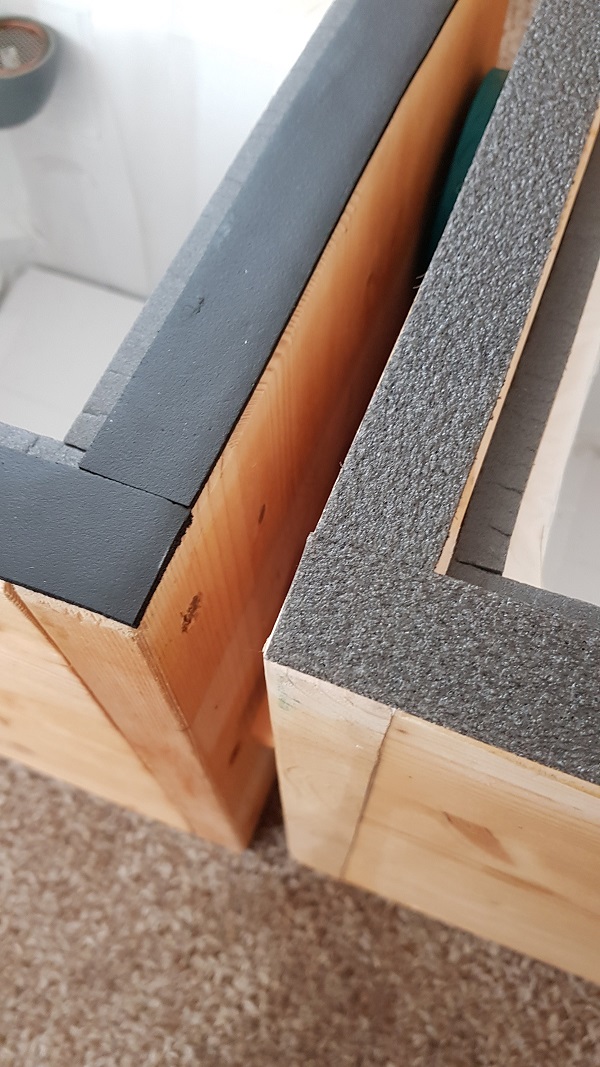
Roof sealant

The roof must fit and seal well to prevent parasites and enemies of bumblebees from entering the hive.
Because the gable is exposed to the weather and increased humidity, its structure, including the roof, will always suffer some deformation over time. Sealing, especially under the roof, is intended to solve this problem.

Solution
  • The seal should be part of the roof construction, where it is quite well protected. You can, however to be on the corps ulcer.
  • If you use protective netting, it is good to seal it well with a gasket on the body and under the hive roof.
  • The seal is good to use to a maximum height of 5 mm.
  • The seal should be addressed as a double = as Two separate barriers one after the other. This will prevent the ingress of odours that attract parasitic bumblebees.
  • Should seal the entire sealing surface – a 5 mm wide seal on its own may not be sufficient  
  • The seal must be so wide to seal the roof in every position (see page clearance). 
  • But the seal should not have been available to bumblebees, who tend to bite through it sometimes
  • Look at the page that describes the possible solution Hive roof construction with double seal and inner lid 
  • Suitable seals For home-made hive modifications, you can find information on our website at the page  seals – recommended materials

Warning:

  • Use sealant under the roof / on the body of the hive is Absolutely essential.
    Note: Some manufacturers do not address things like double-walled culms and other types of protection differently.
  • Seal is not to address the structural defects of the building, but only deformations caused by the extensibility of the material.
  • If you apply sealant, it must parts fit perfectly.
  • Watch out for some seals, they have a tendency to shrink and you must take that into account from the moment you apply it.
  • Don't rely on the advice to „seal it with a absorbent cloth“.“, as you can read on some websites.
  • If you have the opportunity, add to your amazement with a protective net.

Checks

  • Even though the fear is provided with a seal, it is necessary Check seating and also correct Laying Roofs
  • It often happens that a breeder places under the roof unsuitable sealing cloth, or he puts it so that The roof has leaks and doesn't seal. 
Also look at further improvements to hive sealing, which will easily increase safety, but also the thermal insulation properties of the hive in the spring. 
 
Bumblebees PLUS - sealing on the hive body

Seal on the hive body
Photo O. Hercog (4/2019)
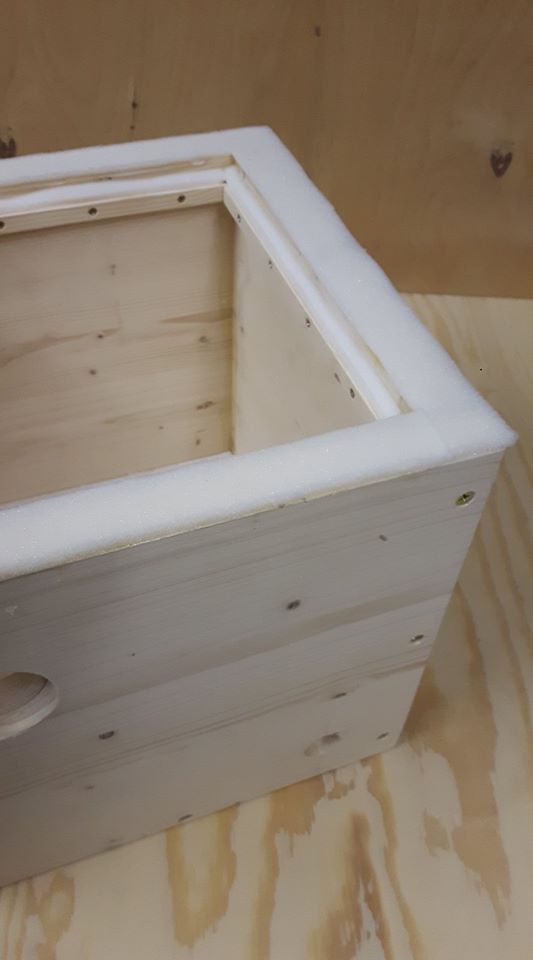
Bumblebees PLUS - Hive Seal - Polyurethane foam

Foam beehive seal
The seal is prone to damage and will only last one year.
Photo O. Hercog (1/2018)
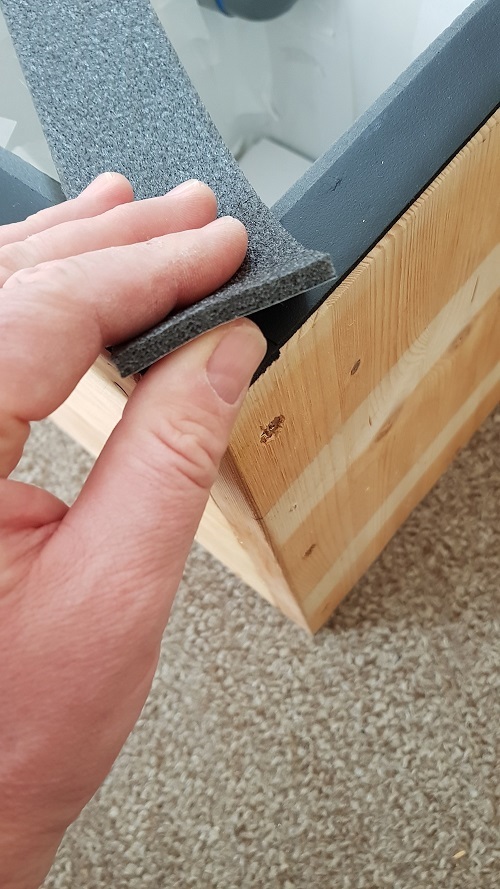
Bumblebees PLUS - foam seal - ŘEMPO shop

Foam seal – ŘEMPO shop
Photo O. Hercog (4/2020)
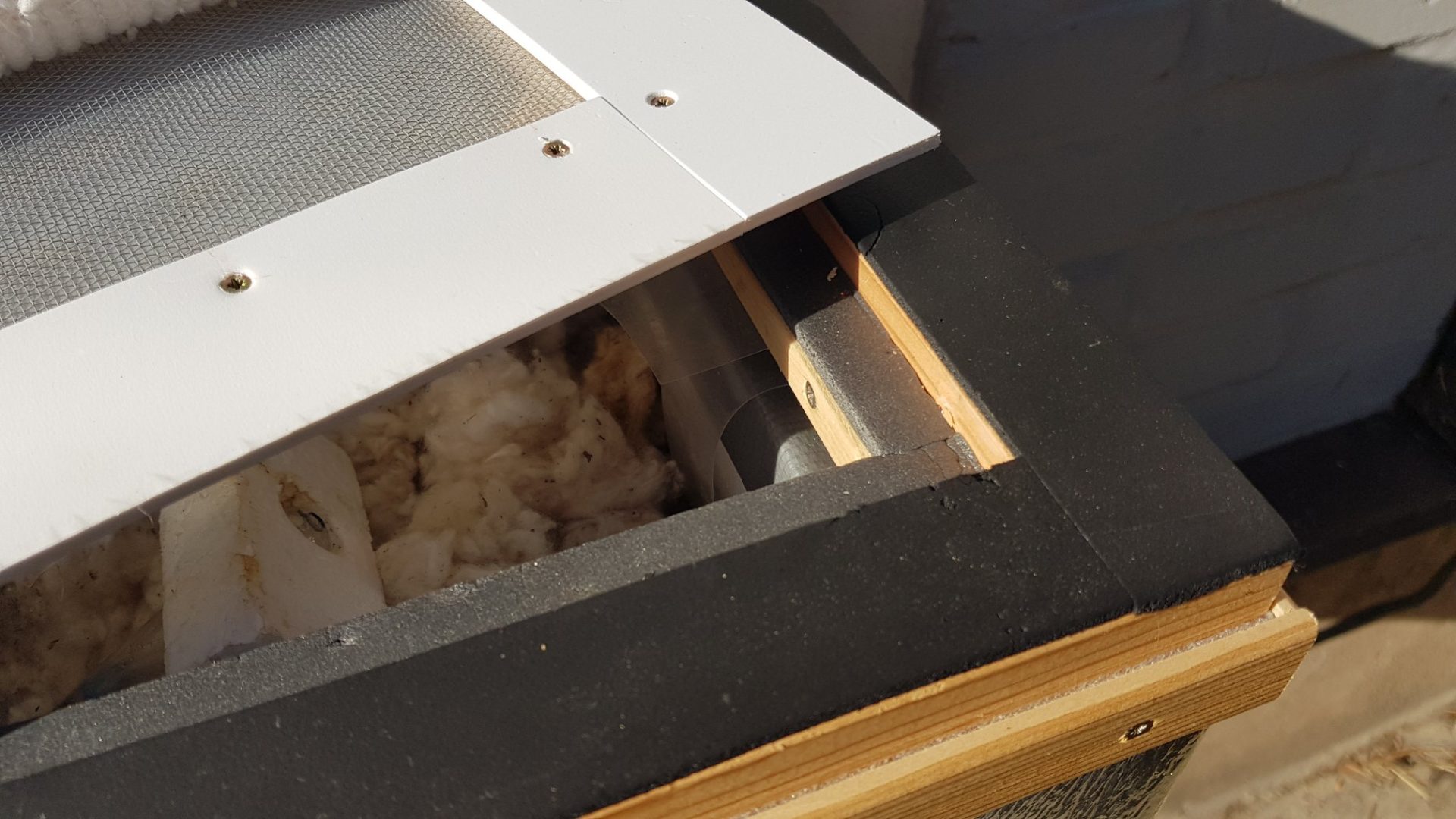
Bumblebees plus a gadget for bumblebee breeders for a bumblebee hive, bumblebee box, protective grille, construction

Protective mesh seal
1. landing area on the hive body and 2. on the rebates in the hive
Photo O. Hercog 4/2019
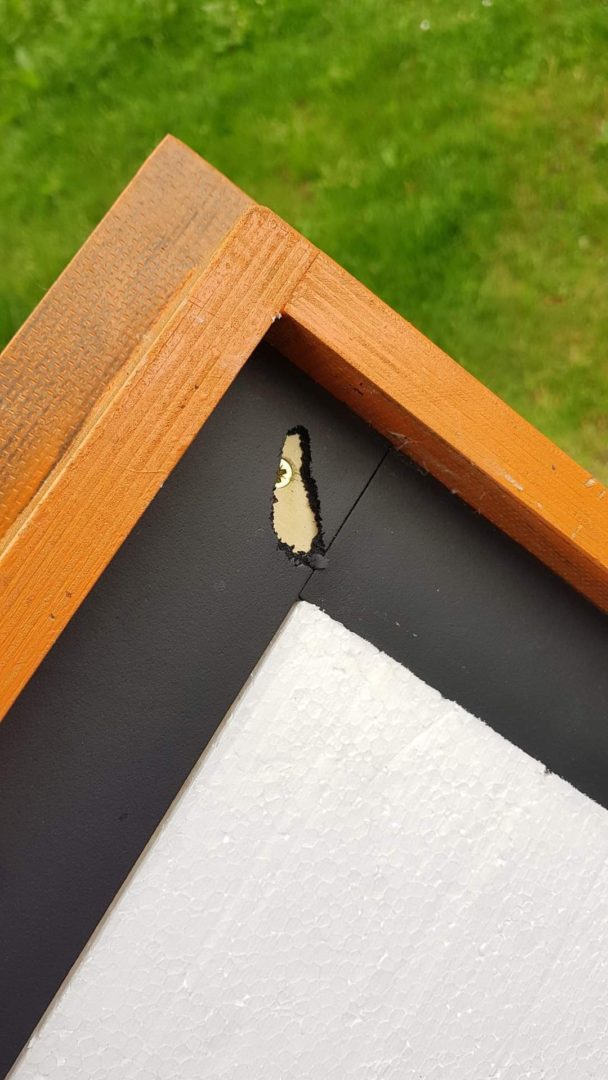
 

Bumblebees PLUS - Chewed seal under the roof

Gnawed seal under a badly laid roof
Photo O. Hercog (8/2020)
The solution to this problem is easy and you'll find it HERE 

Additional roof insulation against precipitation

The roof should always be made of high-quality and weather-resistant material. The lifespan of a roof can be extended by attaching to its upper side another waterproof layer  and the whole is equipped quality coating.

Solution
  • As an additional layer on a roof, it is sometimes used plastic board, to use even the old linoleum.
  • Essential adequate overlap such,  so that water does not unnecessarily run onto the hive's construction (could become damp and deform) – the overhang should be at least 20 mm on each side
  • Don't use tarmac strips – they'd stink.
  • It is not recommended to use sheet metal, as it heats up in the heat and the hive would overheat. Furthermore, the drops of falling rain on the sheet metal cover would disturb the inhabitants of the hive.,
  • If you are adding extra insulation to the roof, ensure it has an overhang of approximately 10 mm on each side – this will help water to drip off more effectively and prevent it from leaking into the roof structure.  
  • We do not recommend using tin, if it gets too hot, the hive would overheat. Additionally, raindrops falling on the metal plate would disturb residents of the hive. It is often here a small overhang of such a roof.
    Note: some manufacturers use, we will wait for the experience of a larger number of breeders

Roof coating

The coating should have been applied with waterproof paints. Colour differentiation of hives is recommended, but bumblebees orient themselves more by the position of the hive.

Solution
  • Suitable for painting are Acrylic paints. Acrylic paints are good quality today, they last and cover well.
  • Others are good too Colours used by beekeepers.
  • Some manufacturers use high-quality Teak oil.

Warning:

  • Even the best paint needs time. after a while restore.
  • Coating roof (but also ulcers) should be provided in advance, so that the shock isn't felt at the start of the season, this could deter bumblebees 

Roof load

If the roof is not hard enough a má Fixing solutions, we recommend the roof to burden, for example brick or stone. Most beekeepers use a similar solution on their hives. 

In addition, roof it will seat better and the seal will be well compressed. The hive's roof will not fall even in windy weather.

Roof inspections

Each time you visit the hive, make sure that:

  • The roof is correctly deployed.
  • Seal Settled and there are no gaps in it.
  • Seal It is not damaged.
  • Into the nook It's not leaking Water.
  • It's not forming under the roof Mould.  

Practical examples

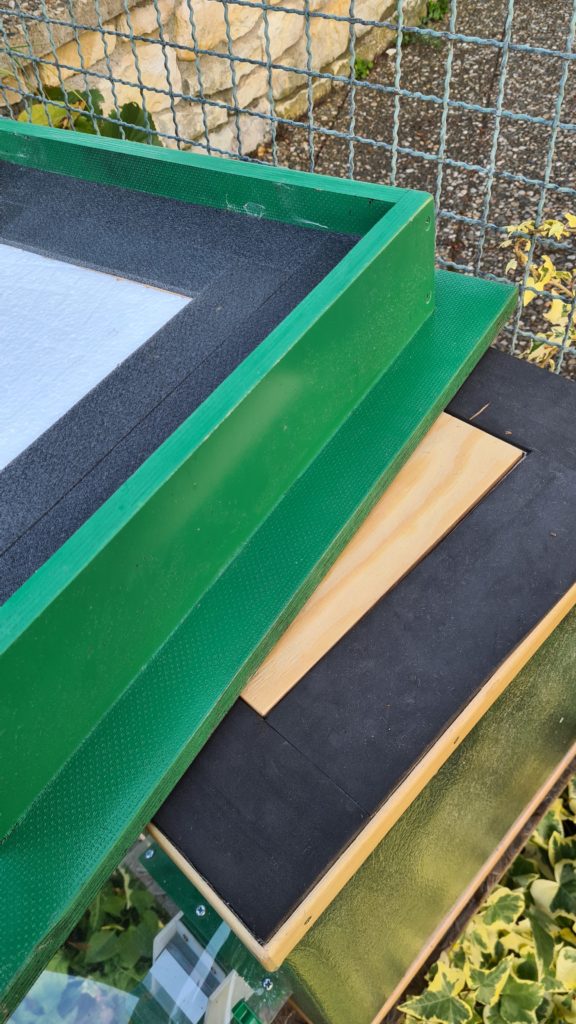
In the following section, we will show you a possible design for a roof from Čmeláci PLUS, which meets the required properties. The photo documentation also includes details of the double seal and the inner lid of the hive, thanks to which the hive seals very well and prevents the penetration of parasites.

Materials used:

  • 18 mm formwork plywood
  • Polystyrene board 50 mm
  • Seals for fans and Tesa Bee nest seal
  • Vruty, acrylic spray paint
Bumblebee PLUS - Beehive roof with removable insulation insert and double seal - Photo Ondřej Hercog 2022 07 28 (2)

Beehive roof with removable insulating insert and double seal
Photo: O. Hercog (28/7/2022)
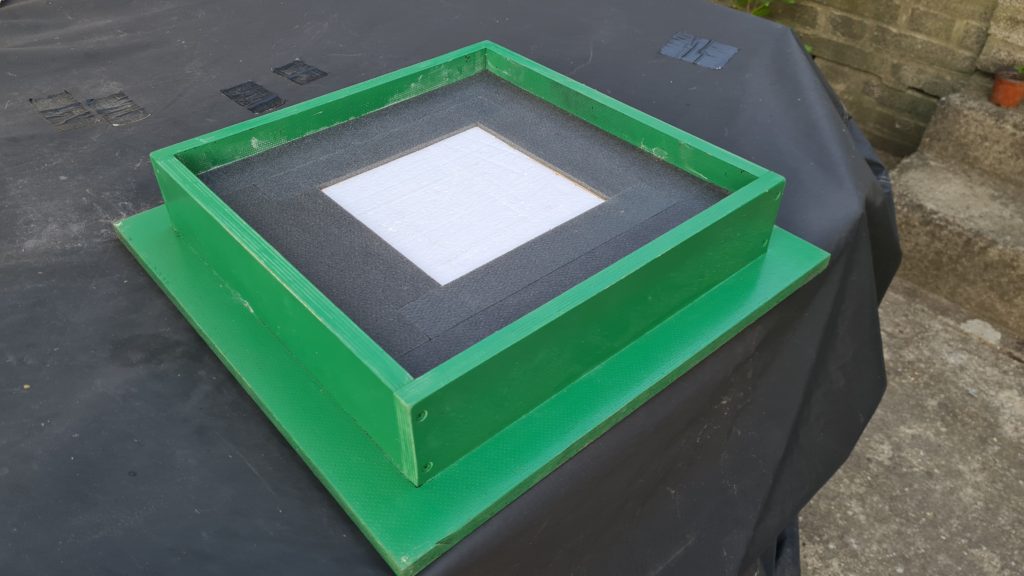
Bumblebee PLUS - Hive roof with removable insulation insert and double seal - Photo Ondřej Hercog 2022 07 28 (5)

Beehive roof with removable insulating insert and double seal
Photo: O. Hercog (28/7/2022)
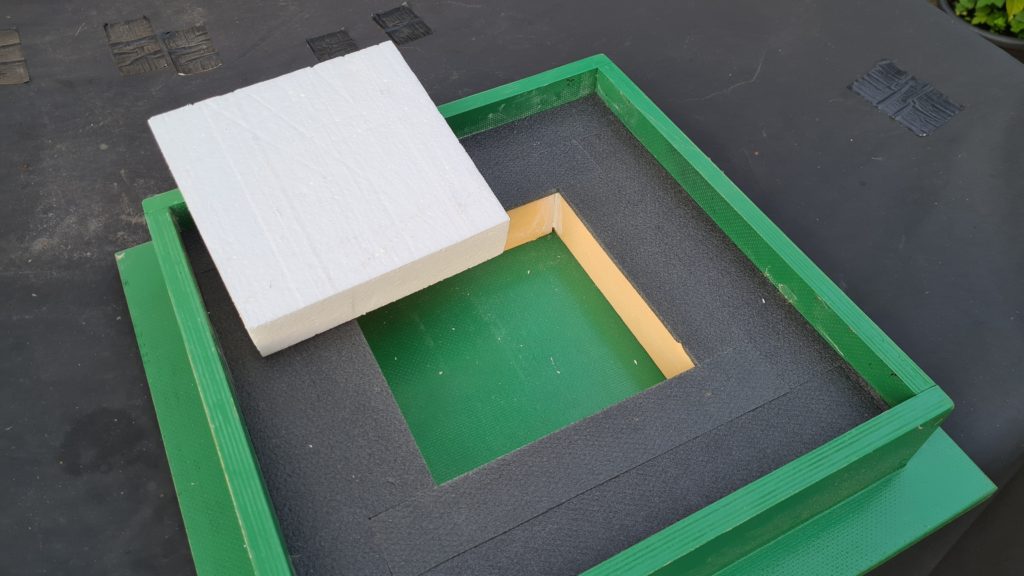
Bumblebees PLUS - Nest roof with removable insulation insert and double seal - Photo Ondřej Hercog 2022 07 28 (6)

Beehive roof with removable insulating insert and double seal
Photo: O. Hercog (28/7/2022)
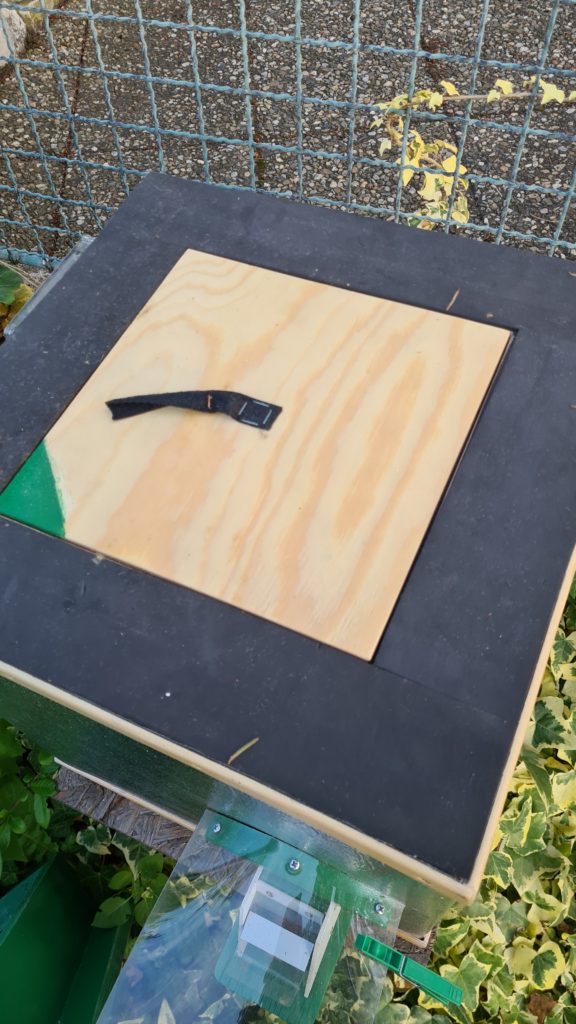
Bumblebees PLUS - Hive roof with a removable insulating insert and double seal - Photo Ondřej Hercog 2022 07 28 (3)

Beehive roof with removable insulation insert and double seal – inner hive lid
Photo: O. Hercog (28/7/2022)

L
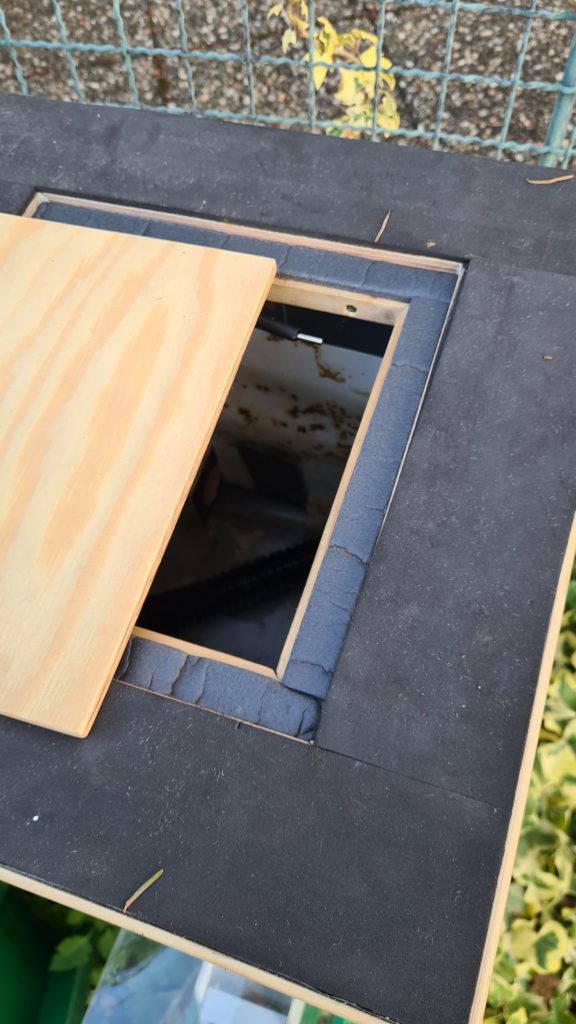
Bumblebees PLUS - Hive roof with removable insulating insert and double seal - Photo Ondřej Hercog 2022 07 28 (4)

Beehive roof with removable insulating insert and double seal
Photo: O. Hercog (28/7/2022)
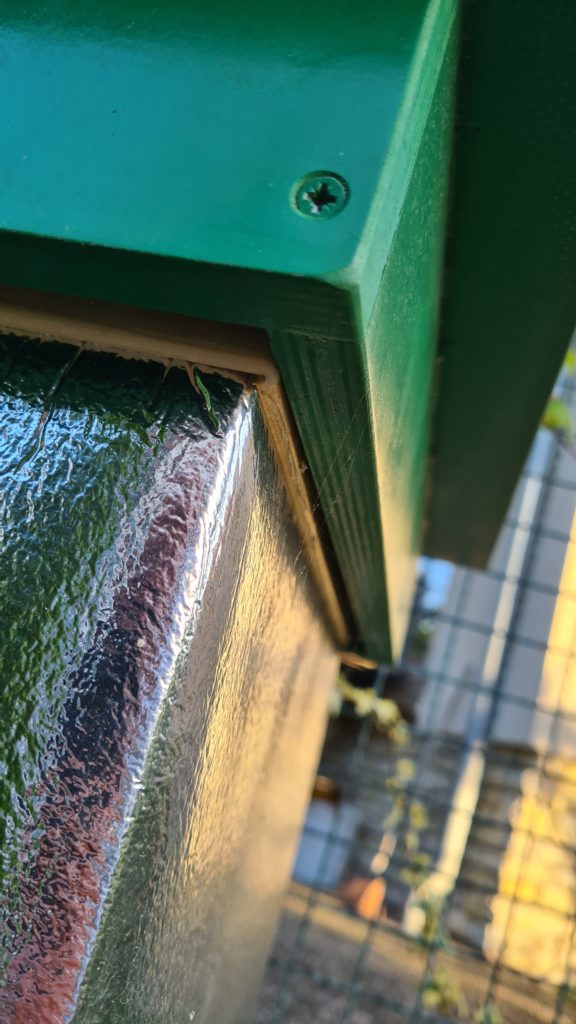
Bumblebees PLUS - Beehive roof with removable insulation insert and double seal - Photo Ondřej Hercog 2022 07 28 (1)

Beehive roof with removable insulating insert and double seal
Photo: O. Hercog (28/7/2022)
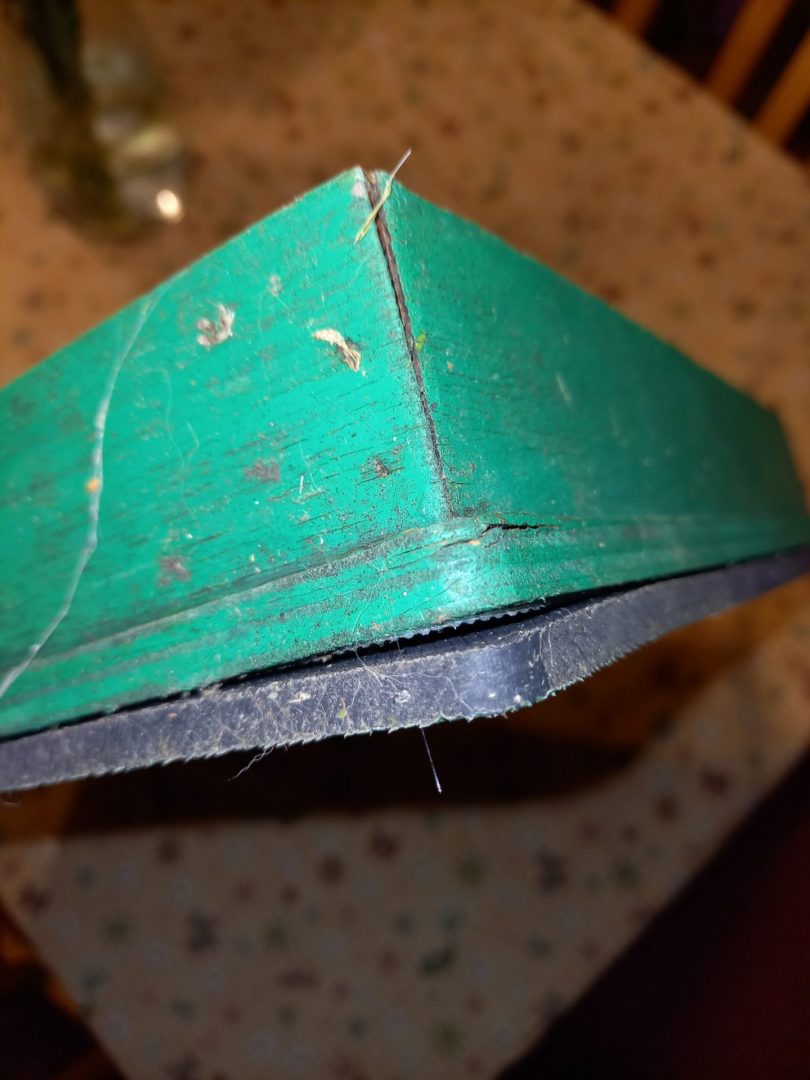
Poor quality roof construction

With some commercially available beehives, we have observed a situation where water was leaking into the hive, resulting in Roof structure dismantling.
Such a situation is dangerous because so A pathway for parasites will be created. Thanks to the checks, such a situation can be identified and the fault rectified.

If you use additional waterproofing membrane with a lap, and if the roof construction is of high quality (bonded and screwed), such a situation should not arise.

Don't be afraid to complain about substandard commercial products.
 
The manufacturer has been made aware of this situation and has promised to rectify it..
 
Bumblebees PLUS - Poor quality roof of a commercially available hive after one season

Poor quality roof on a commercially available beehive after one season
Internet source
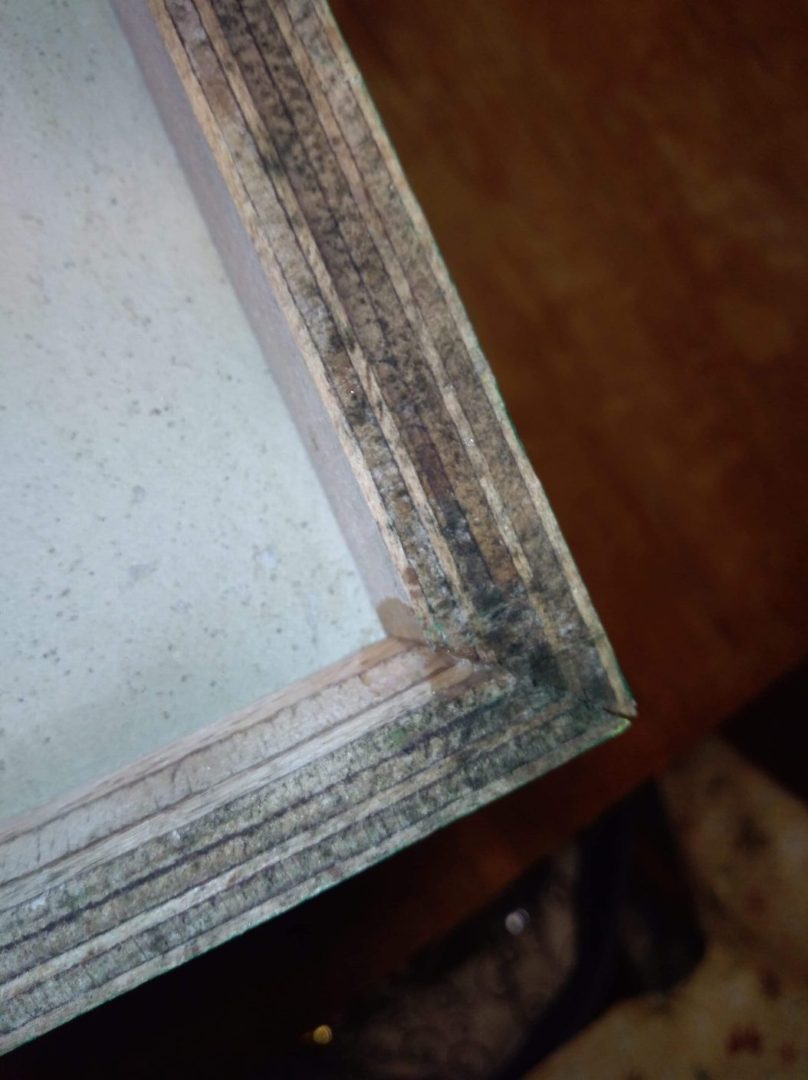
 

Bumblebees PLUS - Poor quality roof on a commercially available hive

Poor quality roof of a commercially available beehive
The roof was used for less than one season.
Internet source


Conclusion

Summary:

  • The roof of the bumblebee nest is extremely important, just like the roof of a house for people.
  • Search Sheds with a quality roof, it serves as a guide for you on how to find a good manufacturer.
  • In quality hives, good are needed  regular inspection and maintenance
  • Even the best roof, which you place/seat it incorrectly, It won't work. As it should.