

Improving ulcer healing
The idea was provided by: Mrs. Practice
Produced and described by: O. Hercog
Tested in practice: For years
Test results: verified, safe when following manufacturing recommendations and usage methodology
The group of breeders for whom the tool is suitable: unrestricted
Justification Production is easy if you follow the procedure.
Published: 2/2022
Introduction
Critical, but at the same time, a frequently underestimated place for a bumblebee nest (bumblebee house), is the contact surface between the hive body and the roof.
The location is really critical because if there's a leak here, Parasites very often penetrate the ulcers here. It attracts them nest hole and it works as a lighthouse.
A typical parasite that often enters this way is Honey moth or parasitic wasp Melittobia acasta. For the moth, a few millimetres is enough, and for Melittobia, even a gap of less than a millimetre. The wasp Melittobia can even gnaw through the seal if it's not properly secured and it can smell the nest. It can even gnaw through a clay cap to the larva of a solitary bee.
We wrote about the roof solution HERE
If you are making your own popcorn at home, often, a seal between the mating surfaces of the casing is indispensable. Some manufacturers of pills (bumblebee nests) have no solutions. If the roof deforms, there is immediately a problem.
Only one commercial manufacturer has a solution without a traditional seal. However, there is a seal there and it is formed by with a smooth seating surface and a polyacrylate plate. Furthermore, its enclosure has a double wall, which significantly reduces the risk of parasite penetration.
In this section we willdedicate to sealing in greater detail. We will describe to you how to easy to make solution, which seal under the roof significantly improve.
Seals and bumblebees
Bumblebees, if they are closed in the corner (no, bad weather, or you close them), tend seek and create another way out of the hive. They're just not educated enough and have no idea that parasites are waiting for them...
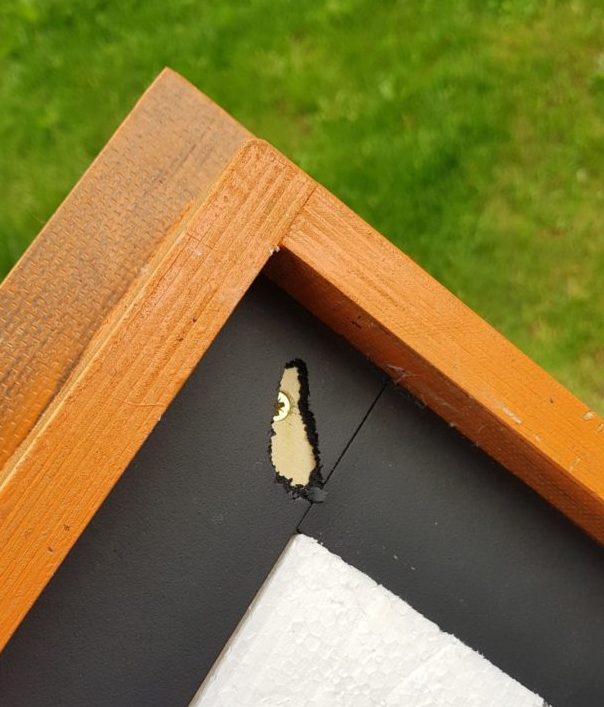
Simply put - if they find a soft spot, is trying to bear, to get through, to bite through Sun. Mostly with such unprotected Polystyrene sheets, or to unprotected seal.
Several types can be bought on the market. commercially produced hives, which have polystyrene roof And this is precisely how bumblebees get out and parasites get in. I advised the manufacturer that this solution wasn't suitable, but they wouldn't listen 🙁
Perhaps you'll find it useful a simple solution, which we will describe further.

Sealing under the roof chewed through by bumblebees
Photo: O. Hercog 2020
.
How to make a seal?
If you have had a good scare and are convinced that everything is fine, you don't need to do anything. It's also about Guarantee, if fright was purchased.
If you **get startled** you produce, or did you have a problem, We recommend taking time for sealing.
Main principles
- If the seal To seal well, The smell of the nest won't escape this way and parasites won't be interested in this spot (unless it's contaminated by contact with the nest/bumblebees) – it will attract them more Ventilation
- Suitable soft seal, which is pressed and to which the bumblebees cannot get
- The seal should also not be high. Good The height is up to 5 mm., which, however squeeze
- If it’s a gasket, then rather wider, so that reduced the risk of biting through the wasp Melittobia acasta, but also bumblebees
- Better to do double seal , than simple sealing
- the seal must check, so that functional year-round
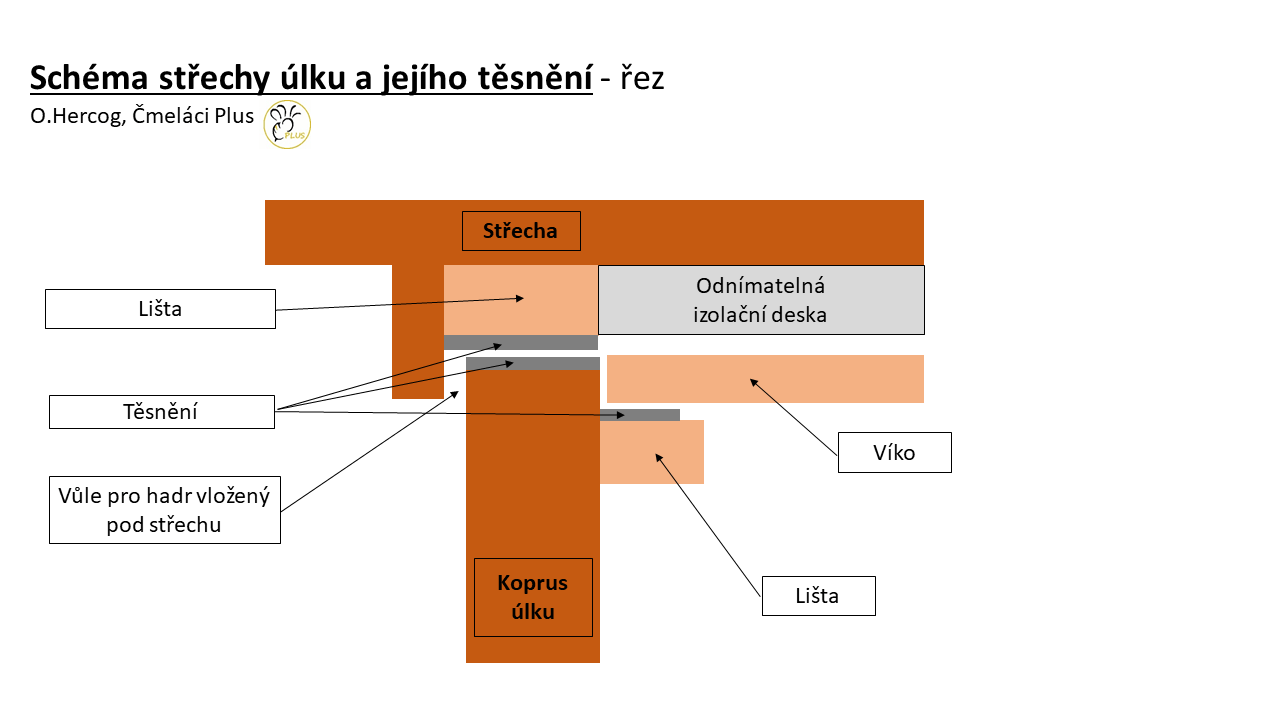
Solution diagram

Hive roof seal and cover
Fig. O. Hercog 23/2/2022
Proceed
The following instructions are general, without dimensions – you should adjust according to the material you will use
We are attaching illustrative photographs
We recommend combining the solution with protective netting = cover lid for fitting (spring) and protective netting for the rest of the season
Manufacturing and assembly
- Put it in the corner Inner frame made of wooden slats
– in our case, we used spruce laths of 25 x 18 mm - make your own hive lid
– utilise high-quality plywood, which is resistant to moisture, or paint the plywood with a non-toxic, clear varnish intended for outdoor use - lid handle
You could use fabric tape, for example. - place the slats so that it is possible to stick the seal and then place the lidso that The roof will sit well.
– adjust the dimensions according to the materials you have available - fasten the slats with screws to the walls of the hive so they hold firmly
- leaks Seal, preferably building with silicone sealant
- slats surface Compare with sandpaper, likewise edges, which lead to the ulcer
This will be appreciated during hive maintenance. - top edge of the corpus Compare the ulcers Smirk canvas and here Seal possible silicone cracks
- Let the silicone to dry up from instructions
- The surfaces to which you will apply the seal Clean off silicone residue with sandpaper.
- apply the gasket to the trim insert – beware, Don't seal the edge where the bumblebees will be!
- Stick the seal to the top of the housing.
- Ensure that there are no gaps in the seal joints – the best way to achieve this is to make the seal a few millimetres longer than the length into which you are gluing it – test
- place the cover lid
Test the solution and resolve shortcomings
- This tests how well the cover plate seals. If it doesn't seal, or obstructs the roof seating, repair is needed.
- testing pitched roofs
- AND IT IS DONE!
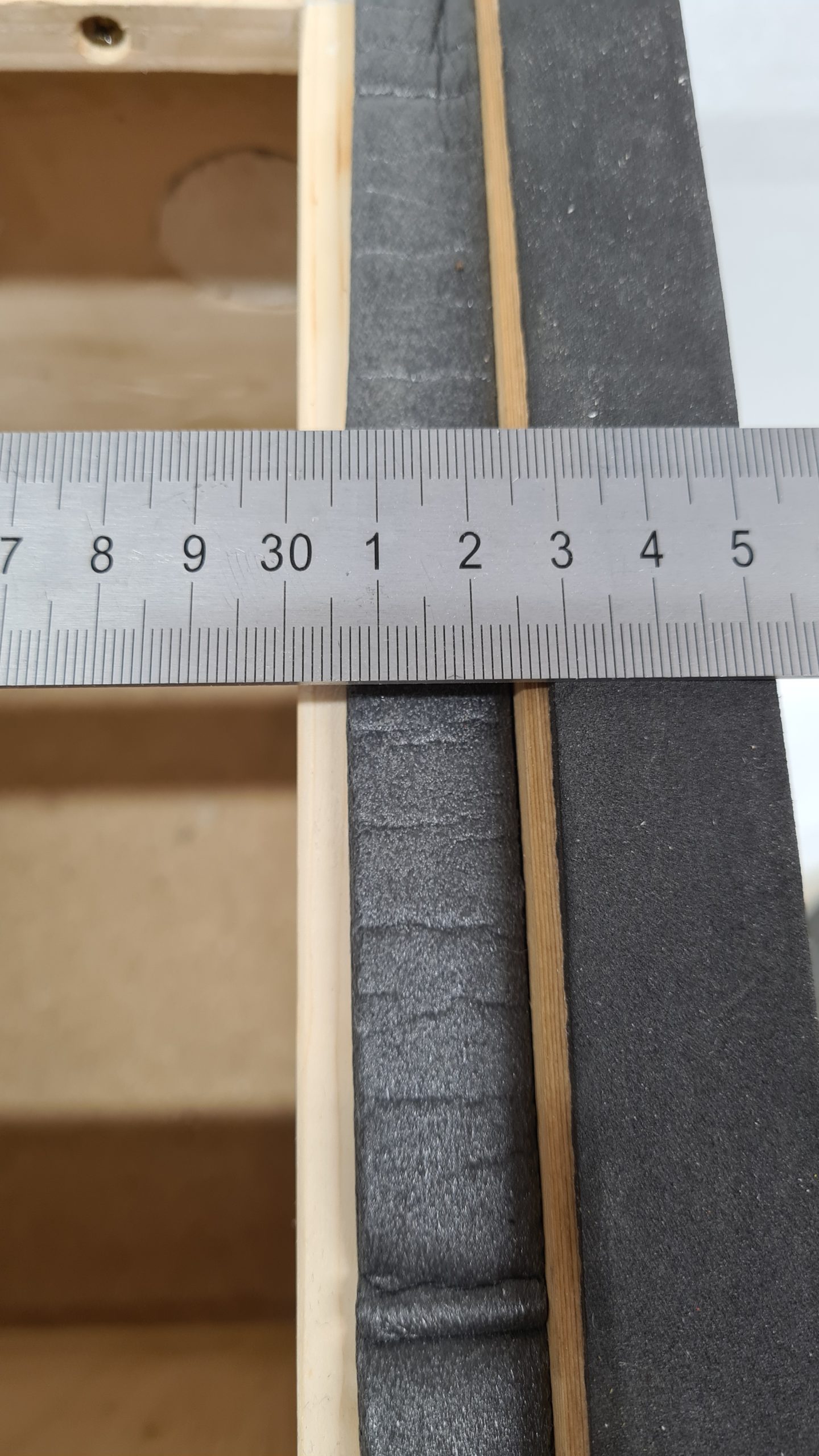
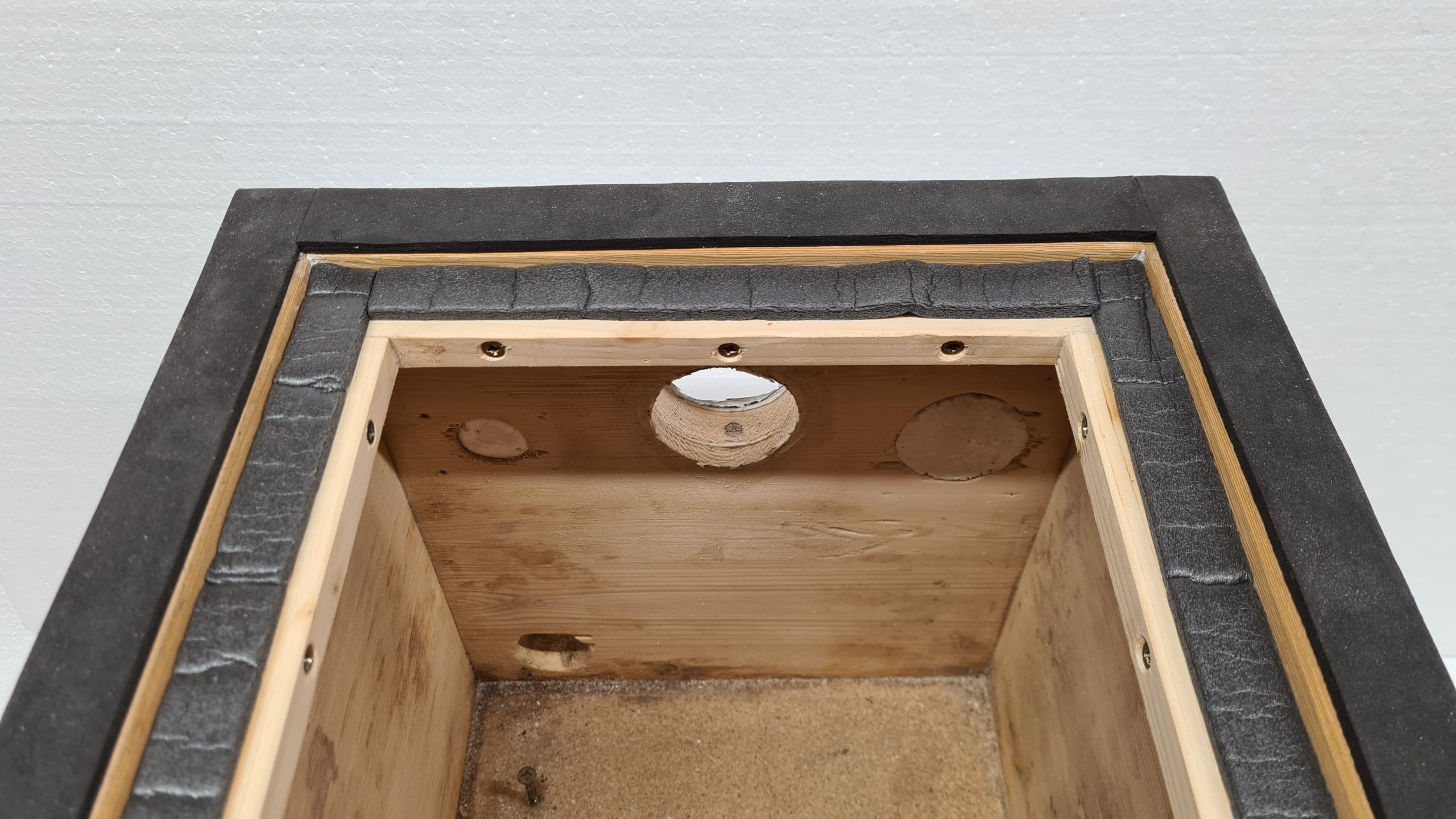
The photographs show the Tessa seal. It looks creased, but works great once it bears weight.
The photographs show inset strips and adhered seals.
Where there is a risk of bumblebees getting to the seal, , We recommend not sticking the seal all the way to the edge.E!

Seal
Photo: O. Hercog 23/2/2022

Seal – detail
Photo: O. Hercog 23/2/2022
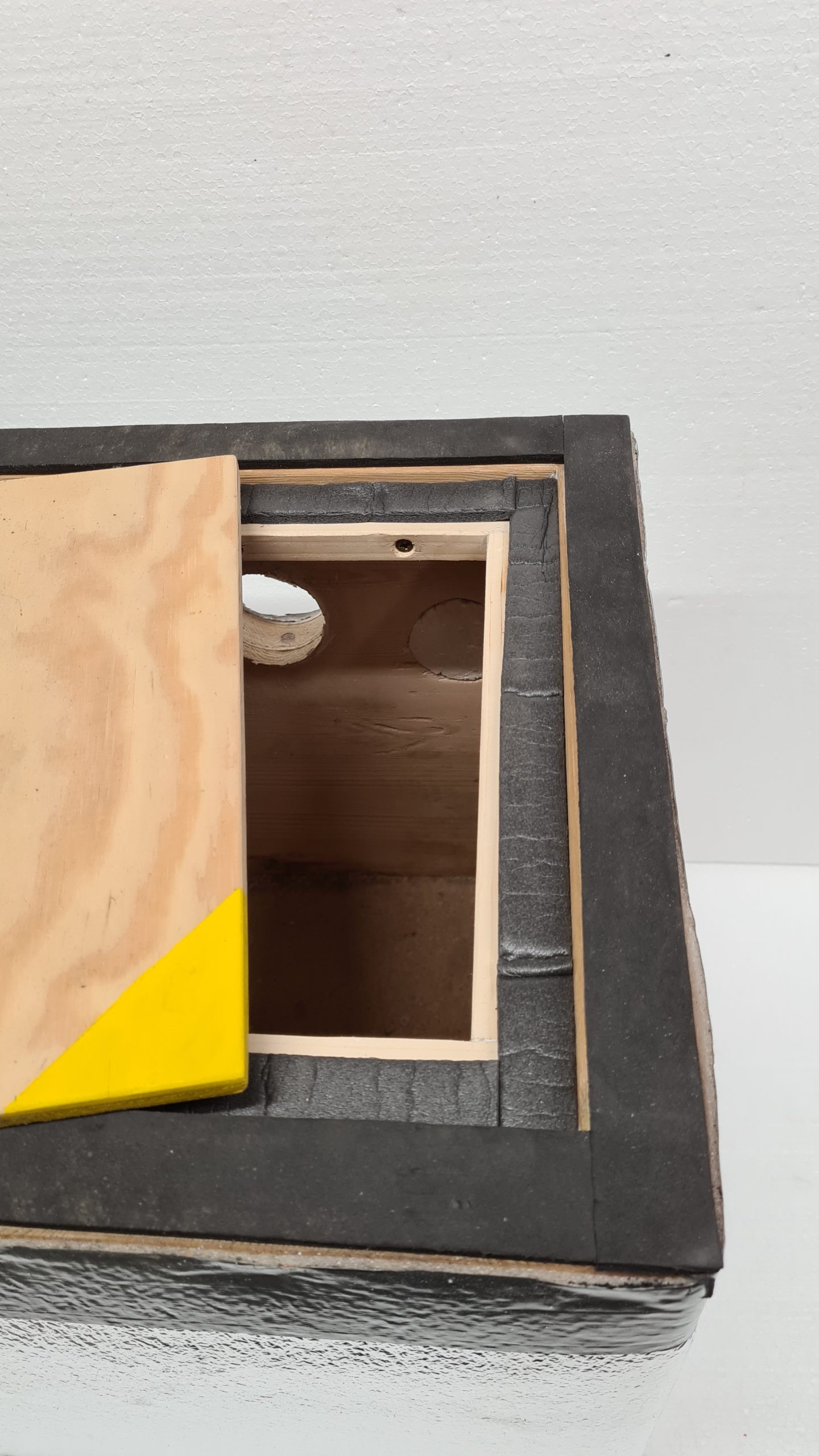
Seal and cover
Photo: Photo: O. Hercog 23/2/2022
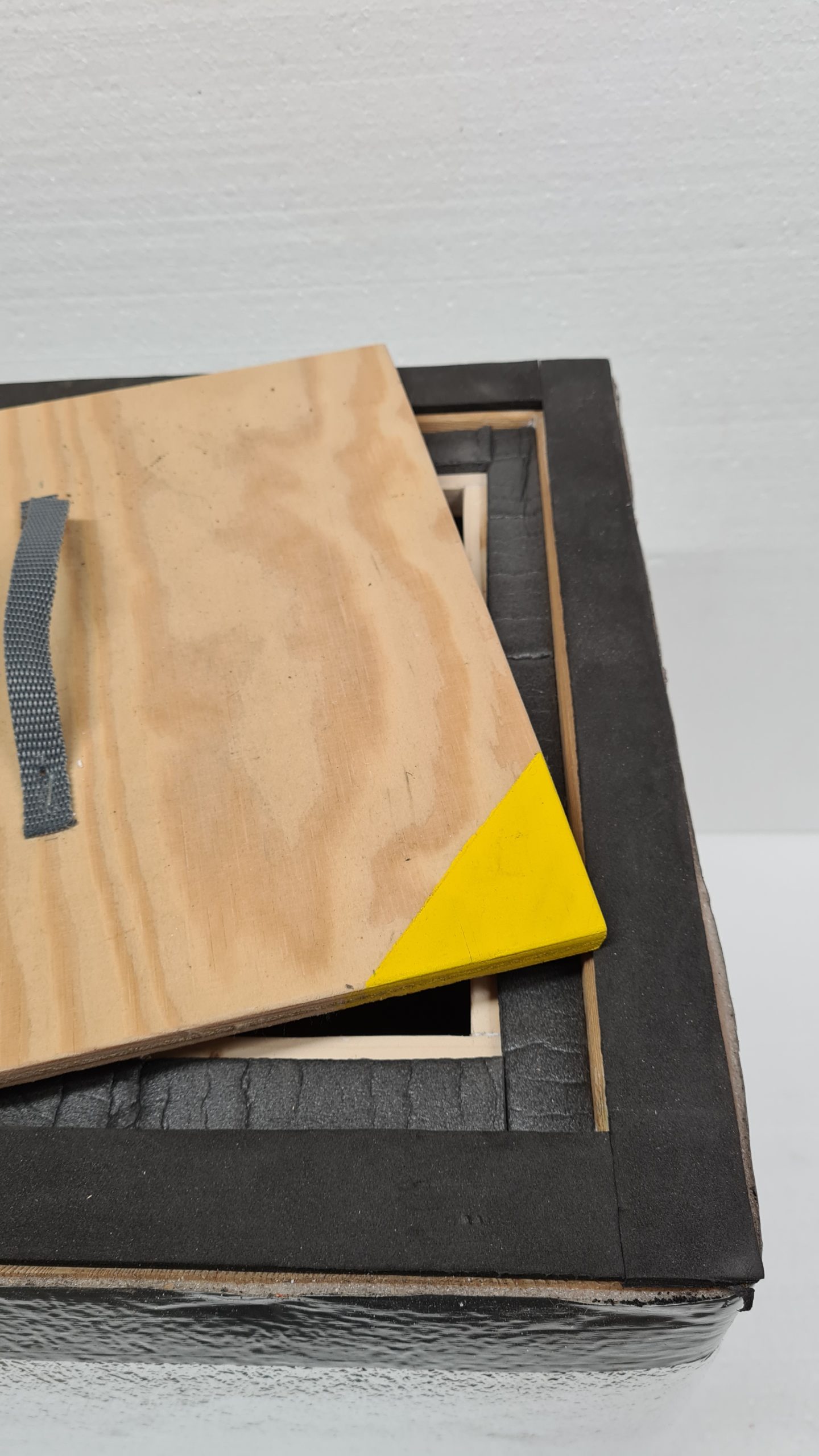
Seal and cover
Photo: O. Hercog 23/2/2022
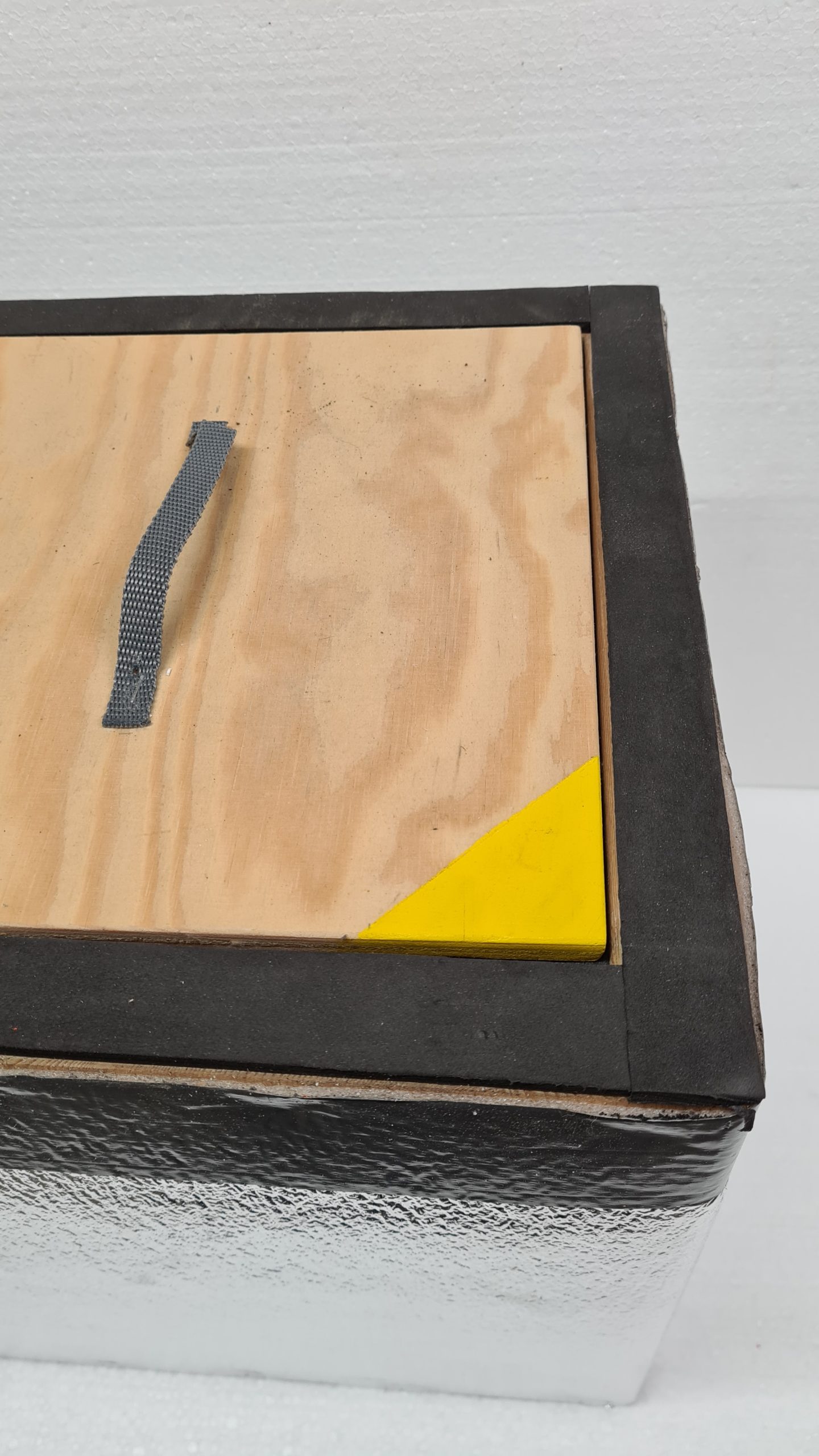
Gasket and cover
Photo: O. Hercog 23/2/2022
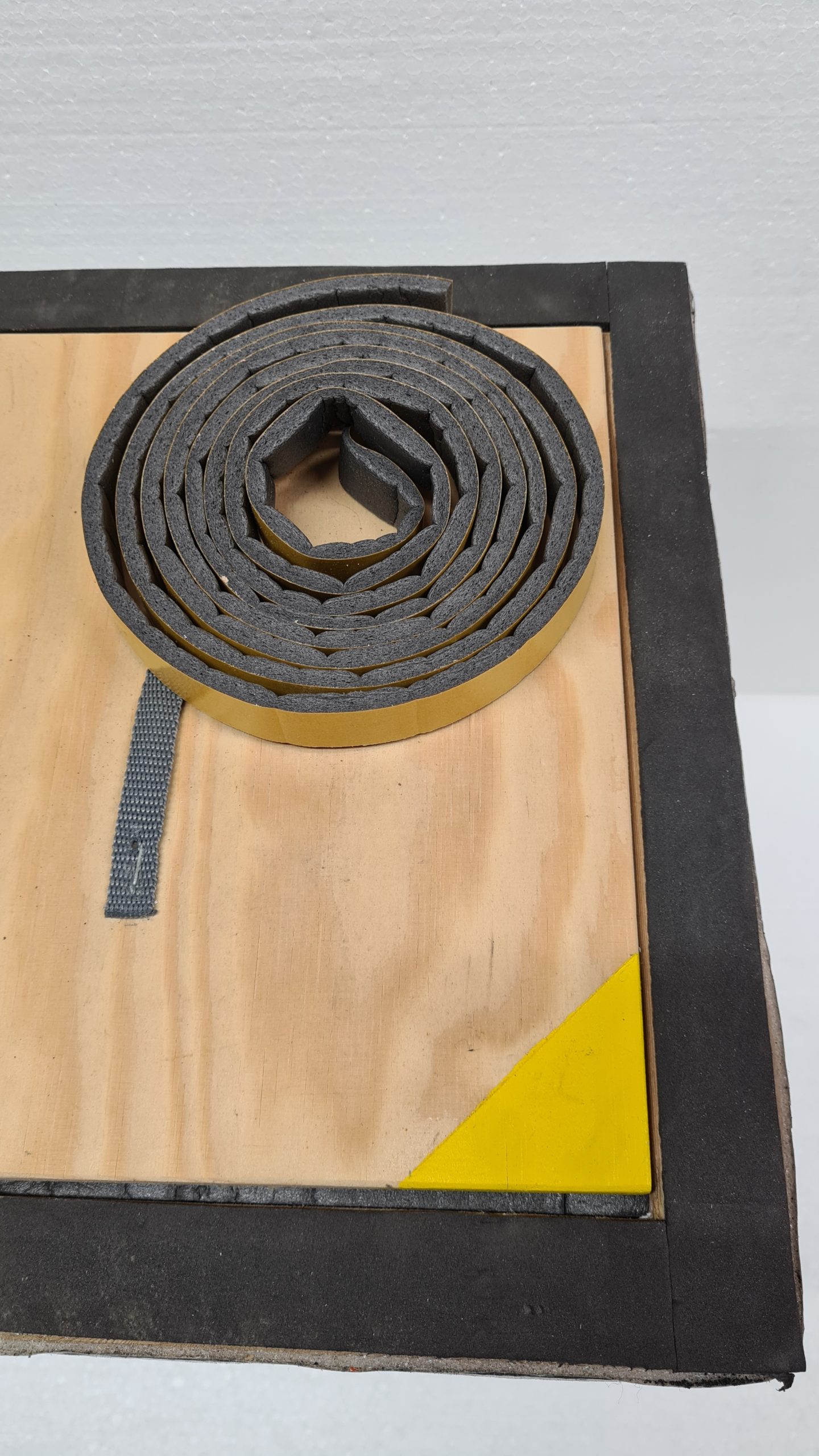
Seal
Photo: Photo: O. Hercog 23/2/2022
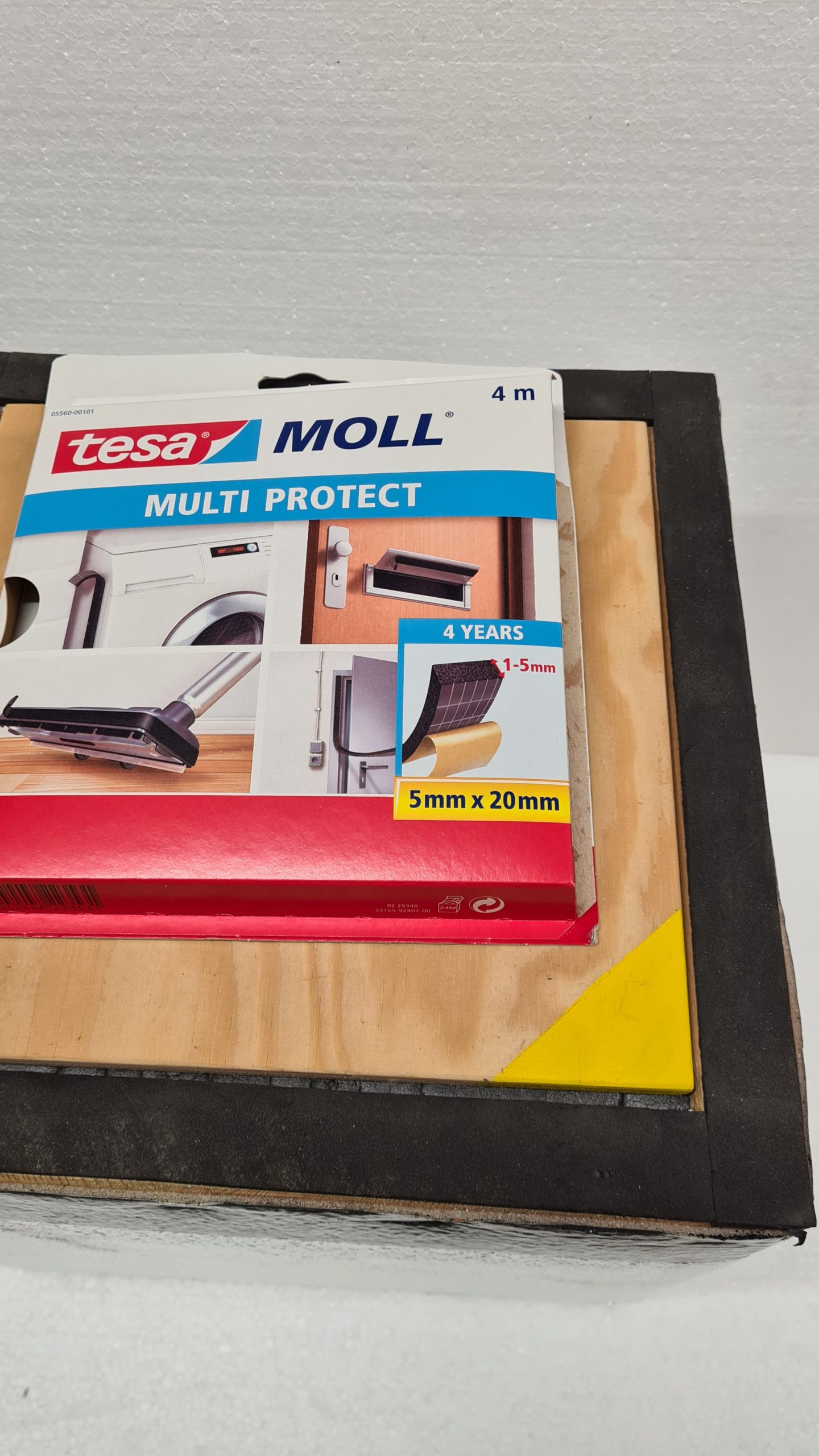
Seal
Photo: Photo: O. Hercog 23/2/2022
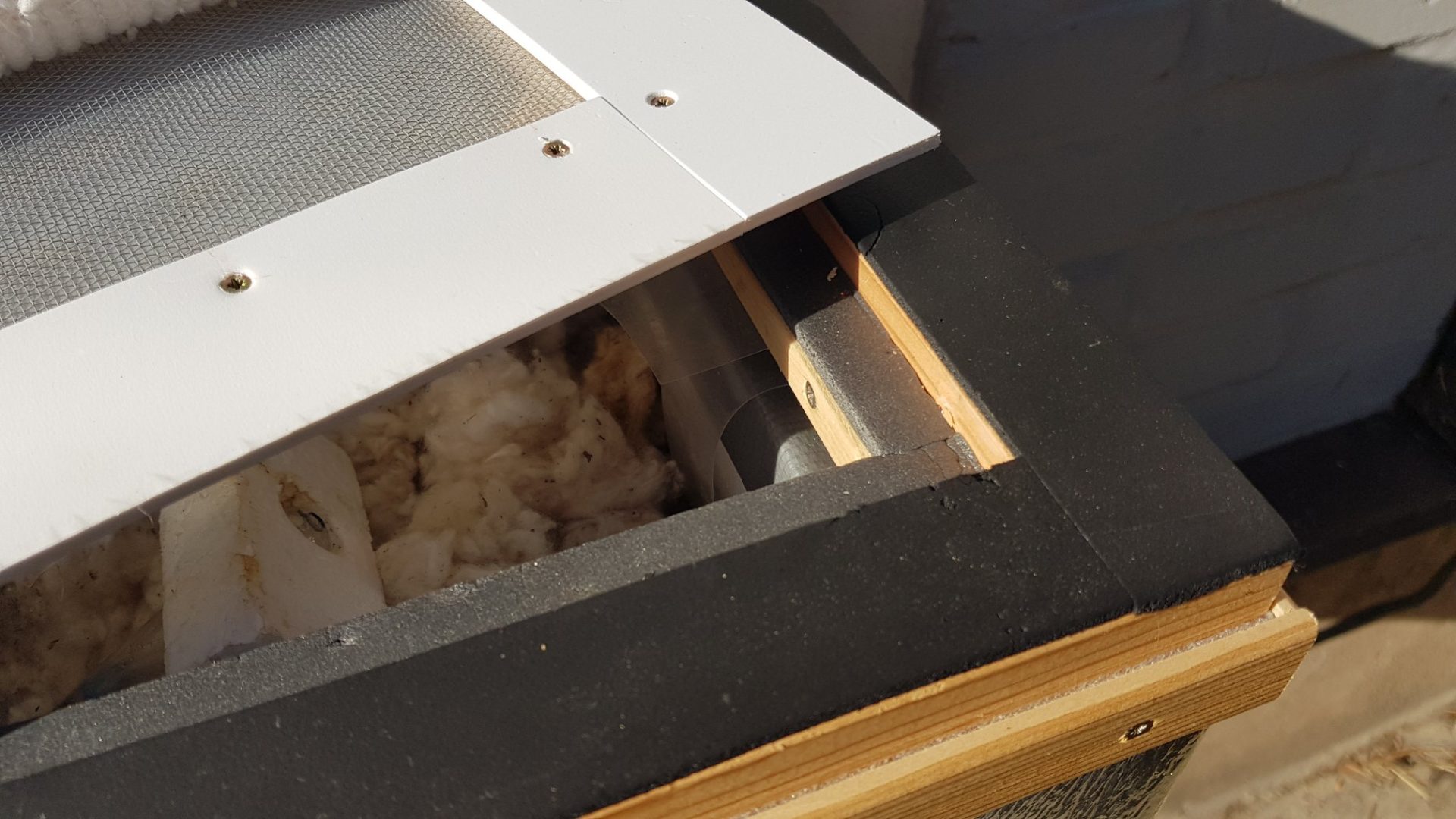
You can find more photos of this solution in the description Roof of the hive

Protective mesh seal
1. landing area on the hive body and 2. on the rebates in the hive
Photo O. Hercog 4/2019
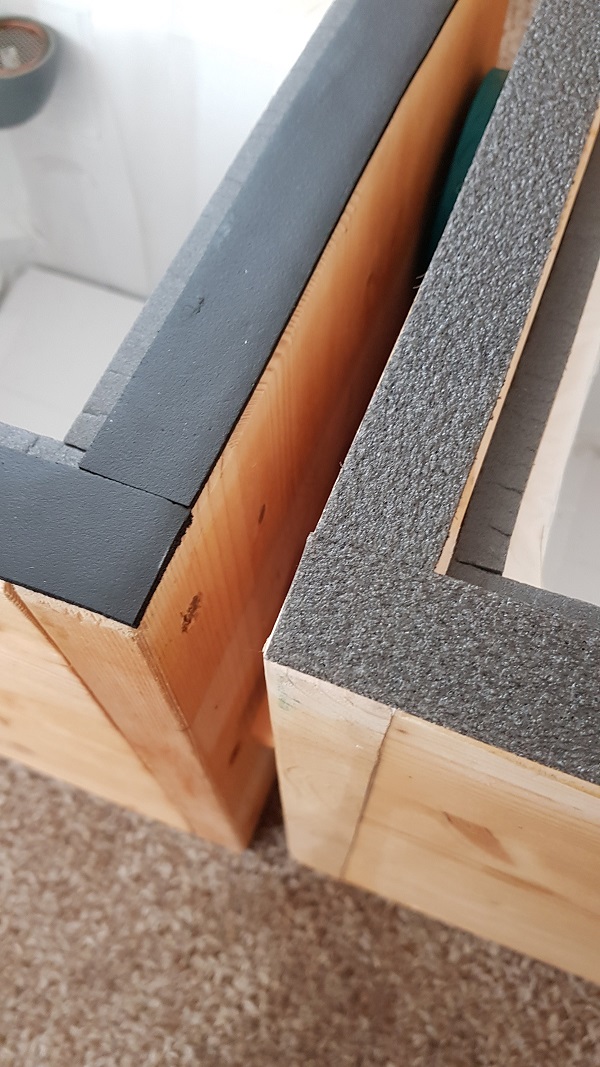
Seal on the hive body
Photo O. Hercog 4/2019