


Moisture protection – nest netting

Bumblebee husbandry on a grate - netting to manage moisture

Solution (idea) authorvarious solutions, adjustment of Bumblebees PLUS                      
Tested in practice:  Yes
Test results:  We are waiting for the results
The group of breeders for whom the tool is suitable:  unrestricted
Justification High humidity in the nest sometimes causes water to accumulate at the bottom of the hive – along the walls; Karel and other breeders use a grate at the bottom of the hive to separate the moisture and prevent it from bothering the hive's inhabitants. This solution is one of the options for making such a mesh easily.

Last updated: 09/03/2022

Moisture in an ulcer – is it a problem or not?
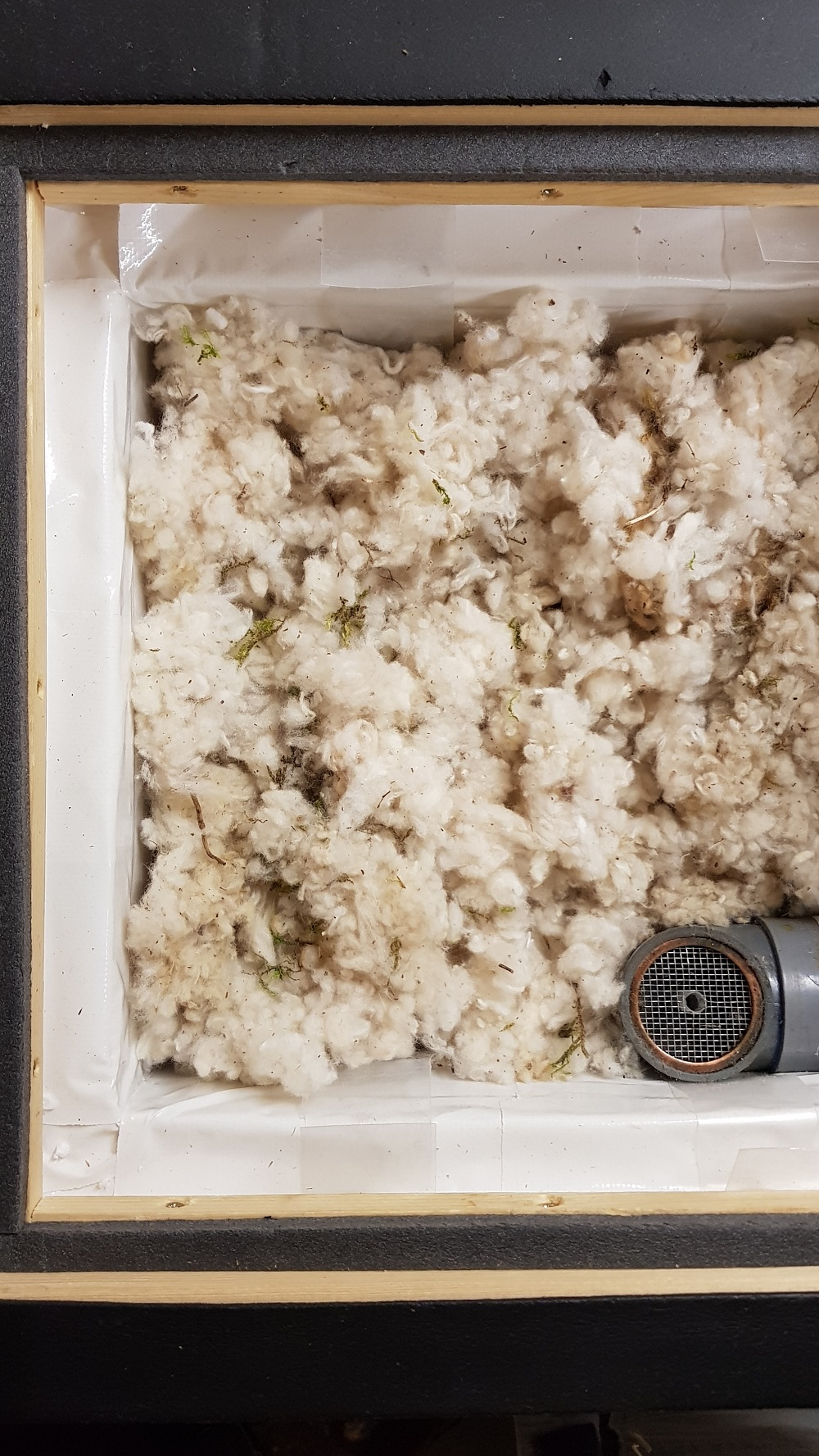
Moisture is a natural part of a bumblebee nest. Imagine a nest in the ground, where it is constantly damp. The nest is designed for this; in fact, a humidity level of around 80% suits it perfectly. In dry conditions, the larvae’s development would come to a halt. 
However, some species happily nest under roofs or in tree hollows. There isn't as much moisture there, but bumblebees can cope with that. It's not known exactly how, but it seems that a stable microclimate is important to them, and for that provides sufficient padding. It is not known that bumblebees can carry water back to the hive as bees do. However, it cannot be ruled out. Sometimes there is so much water in the hive that they can probably manage.
 
We have been measuring humidity in the beehive long-term. We measured a humidity level of 90–100% on the surface of the lining.Even though the nest was damp on the surface, inside the lining was mostly „dry“, so without visible signs of excessive moisture.
      
If in the nest sufficient padding, The worker bees will keep the wax nest in good condition. If there are enough worker bees in the nest, they will clean the wax structure of mould and everything will be as it should be. Mould, dirt and sometimes fungi will find on the surface of the lining. Nevertheless, the nest inside is clean and healthy. On the contrary – if there isn't much bedding in the nest, The mould will soon penetrate to the nest.. Especially „Black mould“The package has a negative impact on the development of the nest.
 
The lining in sufficient quantities acts as thermal insulation and protects the nest from temperature changes. It can also maintain microclimate and maintain good conditions, also regarding humidity. The evaporation of moisture on warm days will lower the temperature by a few degrees. Likewise, the worker bees create corridors in the comb and, by all accounts, manage to regulate the temperature to some extent. They react to higher temperatures by fanning their wings.
 
So don't skimp on the lining. If you fill the nesting box up to the ventilation hole, it will help the bumblebees. The bumblebees will remove any excess bedding themselves, or the beekeeper will help them.
 
About the lining You will read in the newsletter HERE  a on the preparation of a ulcer if you read HERE
 
Bumblebees PLUS - Hive bedding

We recommend filling the reservoir at least 3/4 full, but in such a way that the ventilation opening is not covered.

What about excess moisture at the bottom 

Humidity in the hive is found mainly on the walls – here the airborne humidity from the warm nest condenses on the cold walls, especially if the insulation doesn't have good thermal insulation. This can be helped if inline the shed with polystyrene sheets, or you construct the shudder so that it has good thermal properties. One such solution is HERE sky HERE.  
 
The use of Mirelon insulating foil has proven very effective. It acts not only as supplementary insulation but also as an effective surface finish. You can read about this solution HERE.
 
Dále bude vlhkost držet  i na lining surface. This often concerns Condensate from the ceiling. And here there are solutions, for example HERE. Good Roof insulation  reduces water condensation and its drip into the nest.
 
Even after the modifications, condensation will still form in the shed., but he will less.
 
Part of the moisture is removed by good hive ventilation. However, draughts cannot be allowed, they bother the bumblebees. You will read about ventilation HERE. Good excess moisture drainage is helped by ventilation attachment. He really has a number of restrictions. You will read about the adapter HERE
 
Moisture in the hive is therefore natural and is not detrimental to a certain extent. Condensate It's running down the walls. and here holds in the lining first and foremost on the sides and on the bottom.At the bottom, it often ends up in the hallway, or at its opening. Dirt from the nest collects here and bumblebee droppings.Bee dung is primarily left there, where the bottom is not covered by a lining.The old man often passes through the hallway, a rather unsightly and smelly mass.
 
Let's give them a bit of help then.

Net on moisture separation

Beekeepers sometimes put moss at the bottom of the hive. If there is little humidity, or if you change the moss, some humidity is removed by this. with more moisture ale The car is dirty and smells.
 
Some breeders, for example Karel Kučera, use instead of placing the lining directly on the bottom, its placement on a grate. It is a wooden frame on which beekeeping mesh is stretched. The grate is located at the bottom of the ulcer and creates a void under the underlayer of lining. If there is a lot of moisture, The water flows under this grate and the lining is not so exposed to moisture. A part of bumblebee parasites also falls through the grate, where they will remain, therefore Karel Kučera Disadvised use under the floorboards Lepinox or other tapes, as there is also a risk to bumblebees. Only mites and larvae of Antherophagus pallens fall through; if we place a piece of polystyrene here as bait, Antherophagus larvae remain here. Karel has a verified and tested net filling made of beekeeping mesh. It's made of zinc or galvanised (sufficient) wire, woven into a mesh. Key parameters are the wire thickness of 0.8mm, ensuring the strength of the mesh and easy post-season maintenance and durability, and a mesh size of 3.15 x 3.15mm. This is a size through which enough parasites will fall, while not causing difficulties for bumblebees moving on the floorboards. The mesh size also ensures adequate breathability. The mesh described is available in shops selling beekeeping supplies. On such a floorboard, we always lay a compacted layer of moss, not directly bedding, which, for example, the bumblebee *Bombus terrestris* rearranges, and small workers could fall through while doing this. (This does not happen with moss). More about the grill construction here.
 
 Not everyone will embark on a complex undertaking. So we thought we'd make a simple mesh for moisture separation  and for the classic dice we will test this solution.

We will inform you of the test results.

Instructions to make

Production is easy and doesn't need instructions, just a few notes and photographs.
 
Material
  • wooden battens
  • dřevěné vruty a lepidlo
  • stainless steel mesh – beekeeping mesh 3.15/0.8 – stainless steel
    – the mesh is commonly available in beekeeping shops
    alternative aluminium mesh (insect screen) – approximately 1 mm mesh size
    – the mesh is available as an insect screen in DIY stores
  • Staple gun / heavy-duty stapler
Proceed
  • You just need to make a frame from battens. It's worth gluing the joints and fixing them with screws.
  • The dimensions of the frame should be such that there are gaps of approximately 5mm all around (the nucleus lined with cardboard).
    This is enough for comfortable insertion and removal of the frame, even if it swells due to moisture.
    Is it necessary to test and report the dimensions according to your mandate?
  • The mesh should not interfere with the positioning of the duct (pipe). If necessary, move the opening in the wall above the mesh.
  • Attach the wire mesh to the frame.
    The stapling gun is best for attaching 
  • Is it advisable to secure the edges of the sieve, for example with adhesive tape?
    Sharp edges of the netting can injure keepers and bumblebees alike 
  • Attach the hinges to the frame in a similar way; the frame can be removed by these.
    This can be done well using clamps, as well as netting.
  • It will test if the frame can be freely removed.

Notes on nets used

  • If you use stronger beekeeping mesh, parasites will fall through the net more reliably.
  • This netting is a bit trickier to work with, but it's indestructible
  • If you use a fine mesh, the passage of parasites will be less, but it will be sufficient for moisture removal
Assembly
  • Place the shock absorber on a cardboard, the procedure is HERE
    You don't have to put the new shock absorber in with cardboard, let it absorb the bumblebees.
  • Insert separation mesh
  • A bit of Lignocel in a fabric bag can be placed under the net; it absorbs water
    Be aware, Lignocel can significantly increase in volume when absorbing water; use only enough so that it does not lift the netting.
  • Attach the entrance tunnel to the hive wall
    Use screws or make a wooden part, as shown in the photograph
  • Adjust the bumblebee lift so that it doesn't cover the entire mesh, allowing water to get under the mesh around it. 
  • Next, prepare the starter culture using the standard procedure.
 
You can read about the bumblebee lift HERE

A simple frame made of wooden strips. If treated with a waterproof varnish, they will last longer. The netting is attached with clamps.
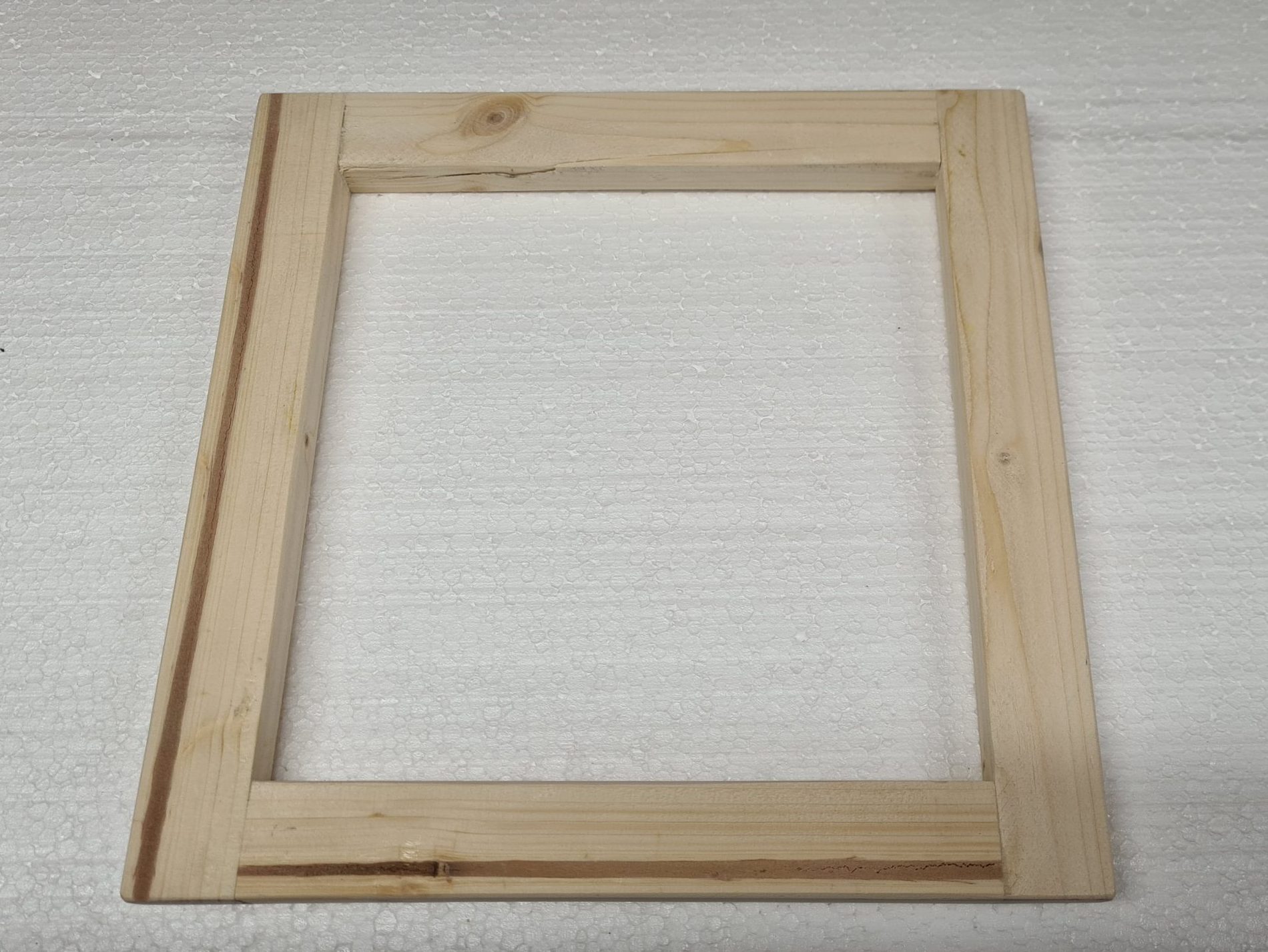
Bumblebees PLUS - Net under the nest - frame - Photo Ondřej Hercog 2022

Nest base mesh – frame
Photo: O. Hercog 3/2022
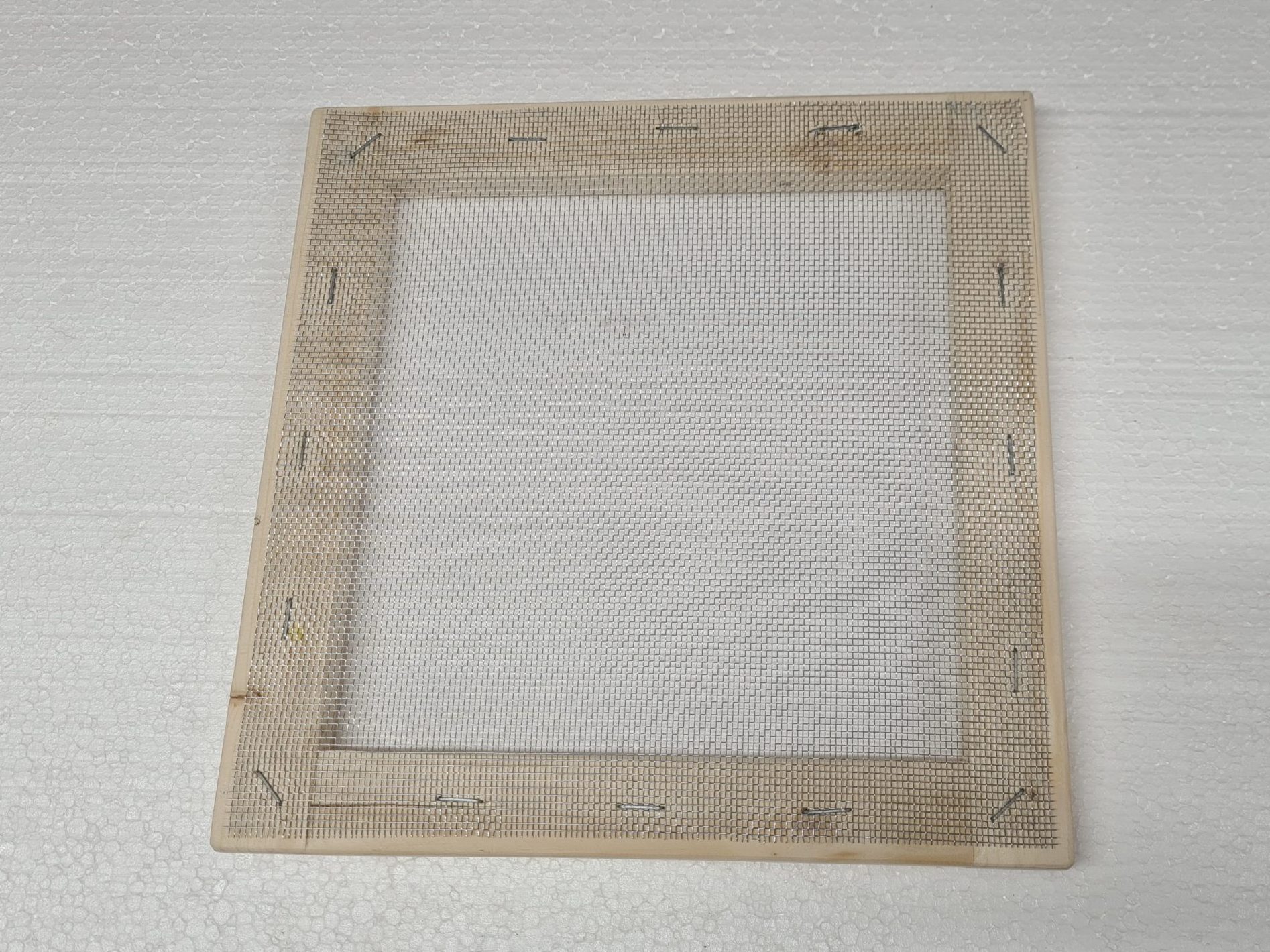
Bumblebees PLUS - Net under nest - frame with shield 1 - Photo Ondřej Hercog 2022

Nest base mesh – frame
Photo: O. Hercog 3/2022

The edges of the frame are taped up with „everything silver tape“. You won't get hurt during handling – neither you nor the bumblebees.
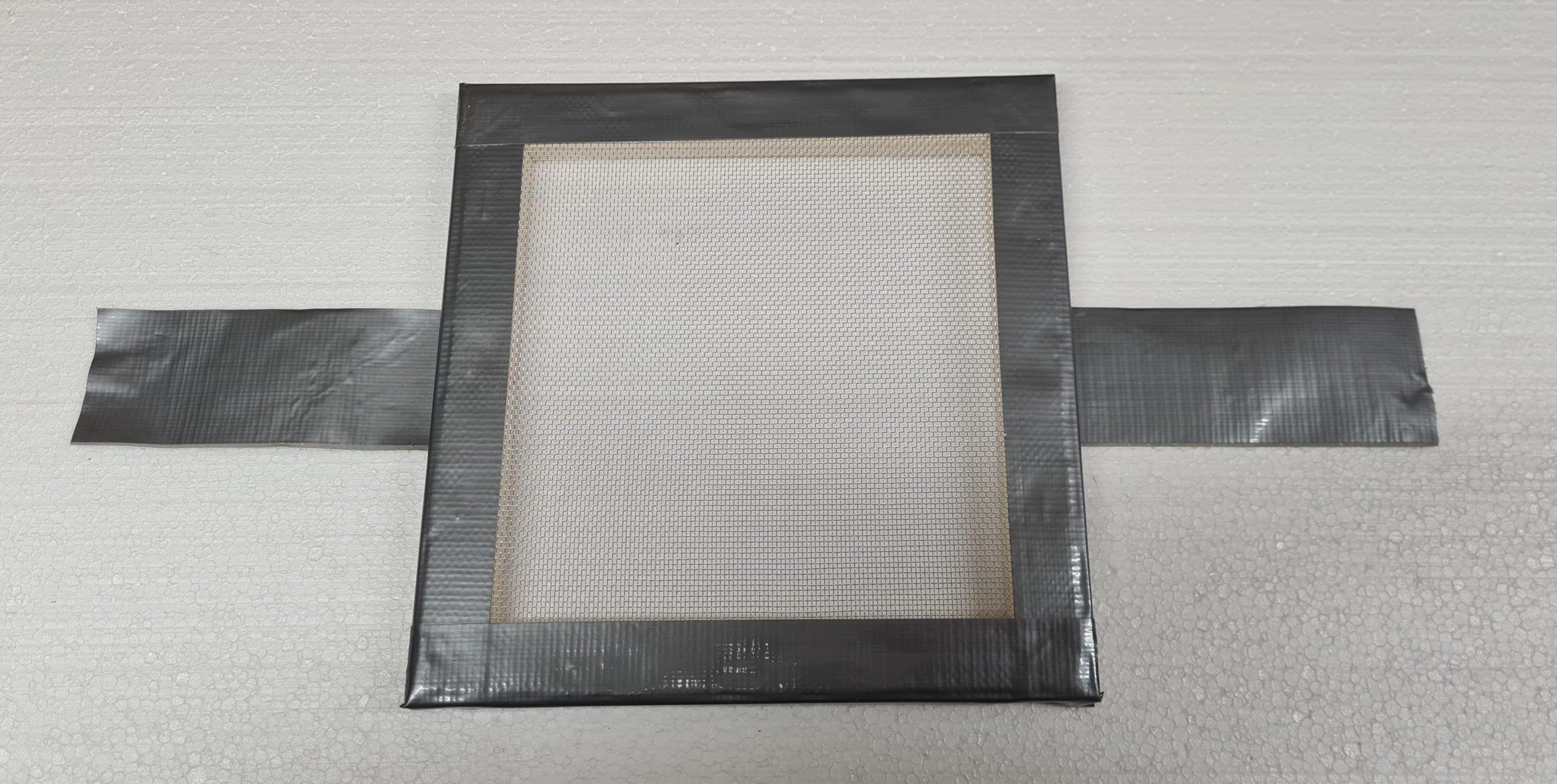
Bumblebees PLUS - Netting under the nest - frame with netting - top side - Photo Ondřej Hercog 2022

Nest base netting – frame with netting – top side
Photo: O. Hercog 3/2022
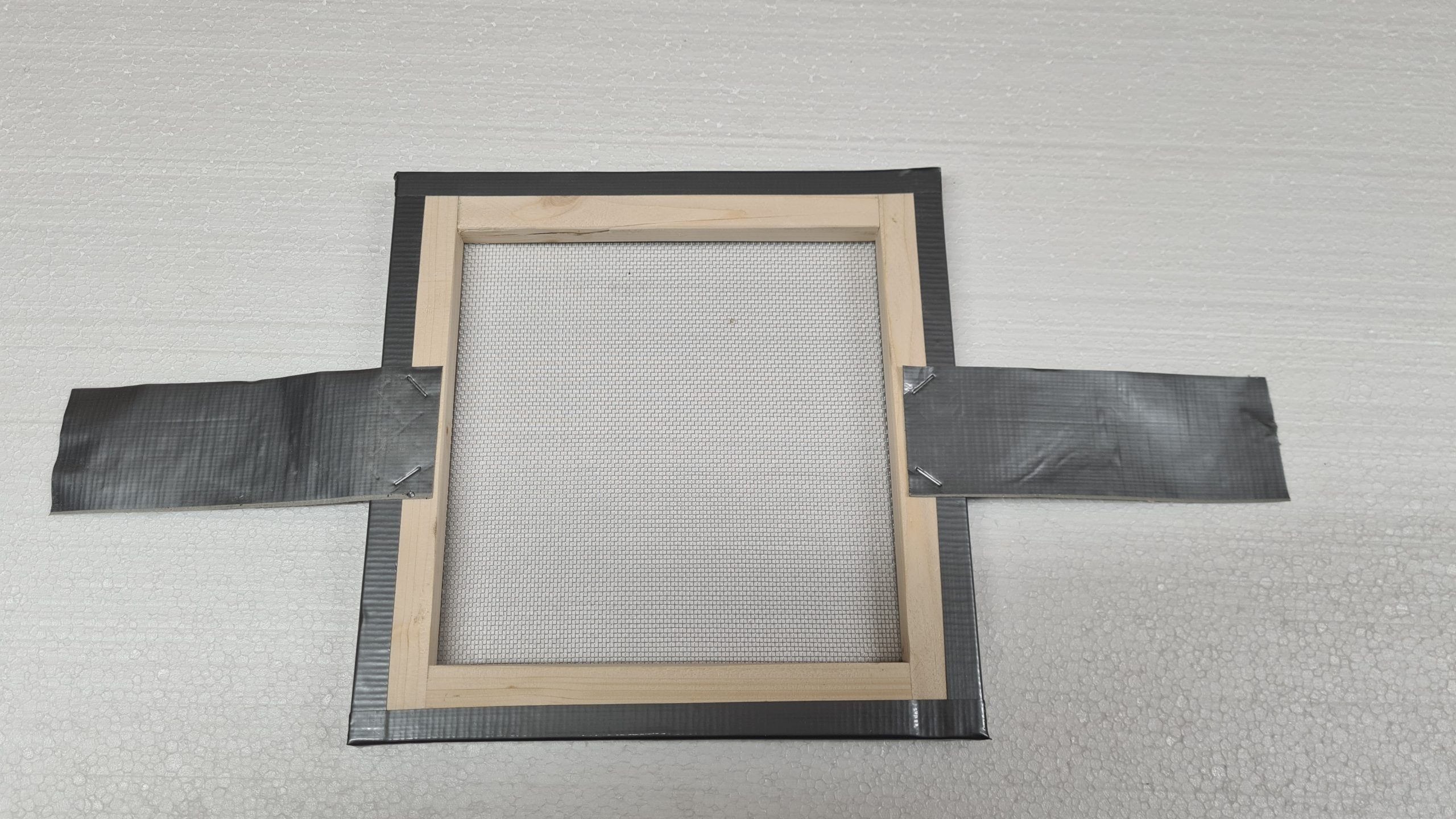
Bumblebees PLUS - Nest mesh - mesh frame - bottom side - Photo Ondřej Hercog 2022

Litter tray with mesh – frame with mesh – bottom
Photo: O. Hercog 3/2022

The separation mesh is in place. The clearance that allows the mesh to be inserted and removed is important. A clearance of 5 mm is sufficient.

The second slide shows the deployment of a corridor (here a black pipe). The bumblebee lift is reduced so that water can pass around it under the mesh.
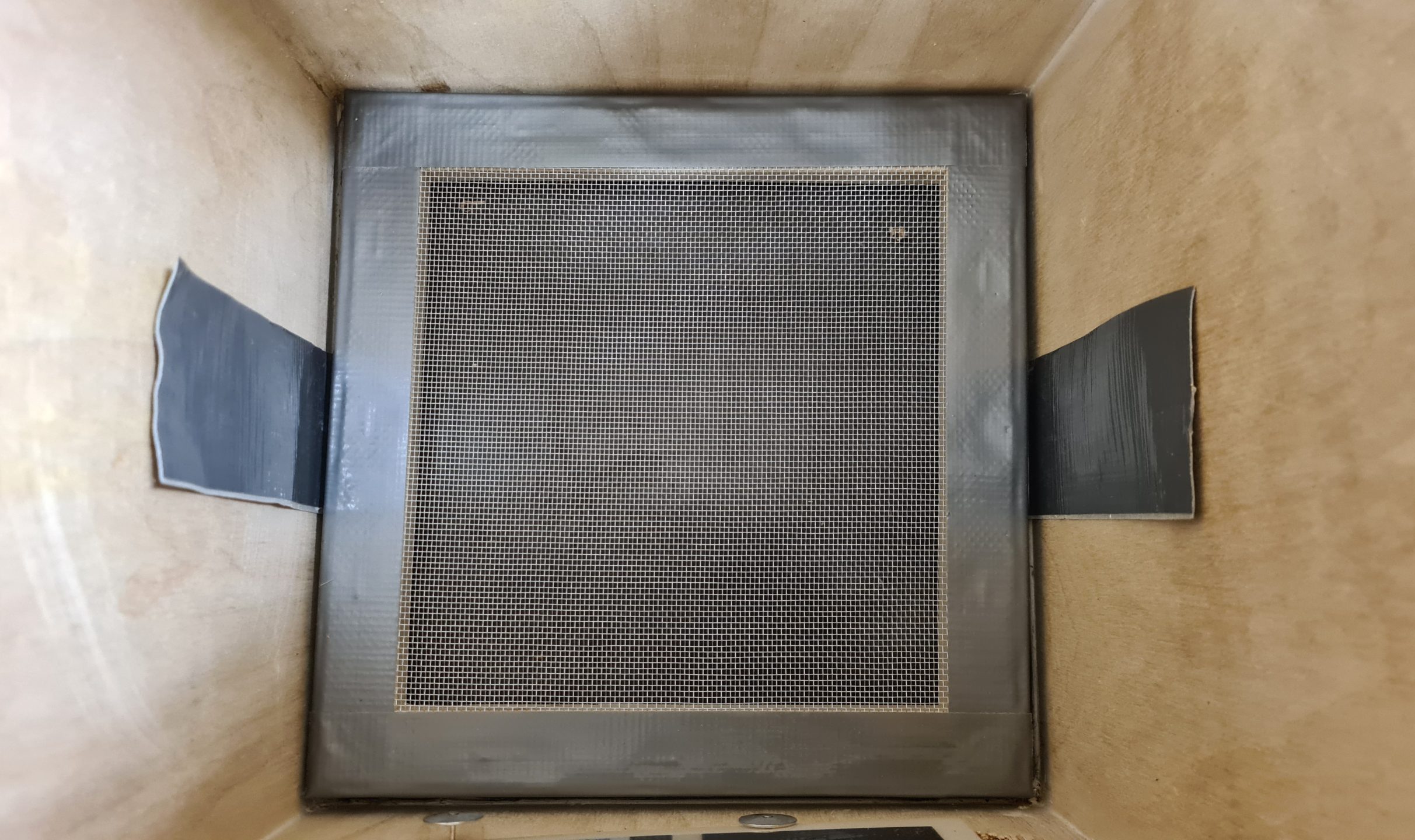
Bumblebees PLUS - Mesh under the nest - frame with mesh - placement in the hive - Photo Ondřej Hercog 2022

melaci PLUS – Under-brood frame with mesh – placement in the hive – Photo: O. Hercog 3/2022
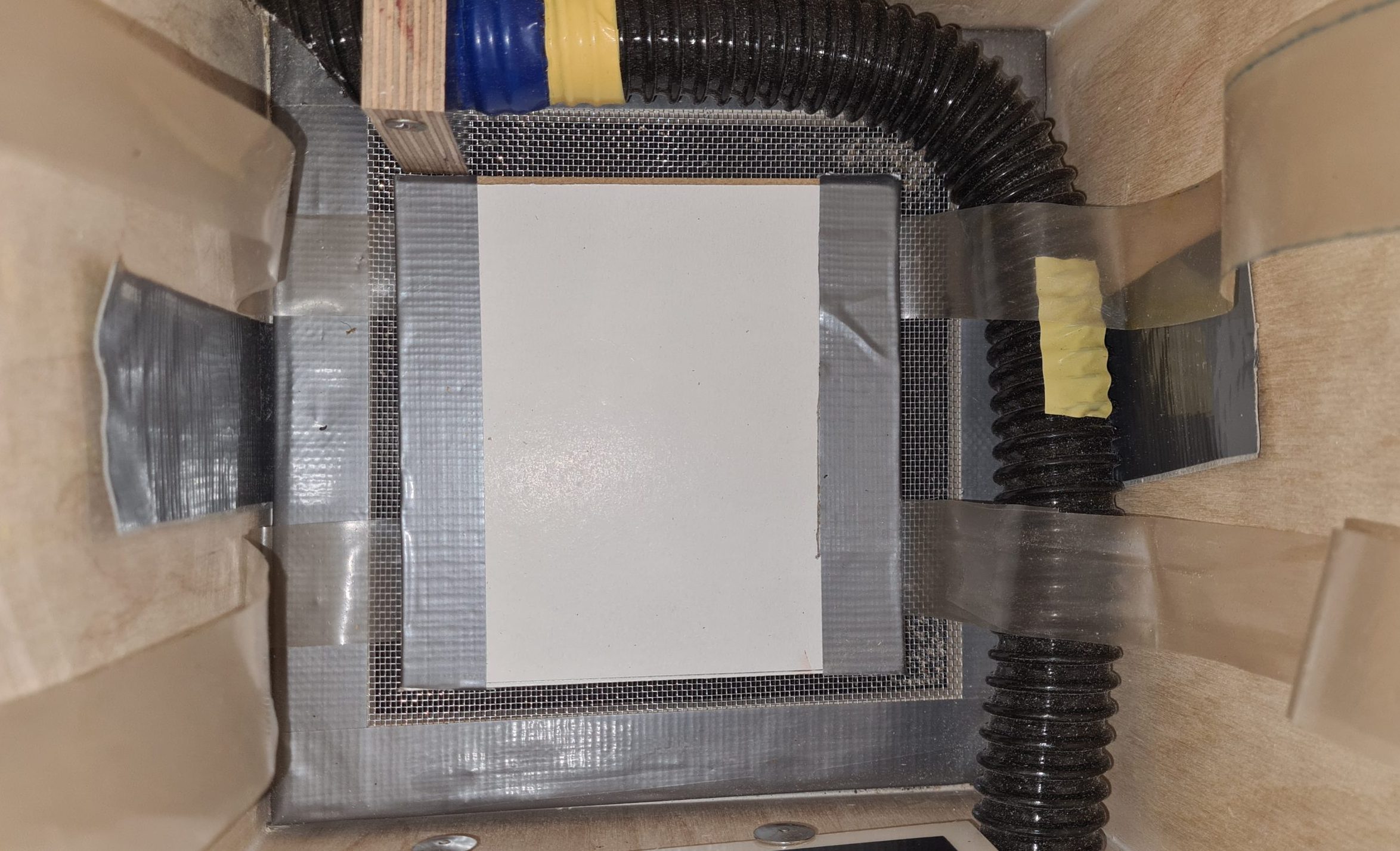
Bumblebees PLUS - Net under the nest - frame with net and bumblebee elevator - Photo Ondřej Hercog 2022

Nest netting – frame with netting and bumblebee lift Photo: O. Hercog 3/2022

Conclusion

If you have your tried-and-tested solutions, please write to us. We will be happy to share functional solutions so that other breeders can also use them.