

Pest control for the air vent
Introduction
Mr Miroslav Stuchl, a well-known bumblebee guru (sadly now in bee heaven), designed and described ventilation with a parasite trap.
This solution has evolved into several variants which we describe. As the Bumblebee PLUS group, we are paying attention to this important part of the hive (bumblebee house) because a good solution will significantly reduce the threat of parasites entering the hive.
We are also pleased that some manufacturers have heard us, have adjusted the ventilation openings according to our recommendations (UHELON53S and aluminium mesh) and that these adjustments serve you well.
Although we are not listed as the largest manufacturer of bumblebee boxes in the Czech Republic, they use these solutions, and that is what matters. Other manufacturers use them too, so bumblebee boxes are gradually improving.
Our improvements are not protected by copyright and we make them available for free. We consider crediting the authors to be a courtesy and are pleased that at least some manufacturers consider this to be normal.
Ventilation principle with parasite protection
The principle proposed by Mr. Miroslav Stuchl is that the best way to ventilate a hive is to create a tube that connects the inner space of the hive with the surrounding environment.
Seal the tubes at the ends with a mesh/net so fine that even small worker bumblebees cannot pass through it.
You will fit the netting on the outside (outside the hive) with an opening and insert a tube (straw) into it. It should be large enough for the parasites seeking a way into the hive to pass through. The internal netting will stop the parasites that enter the hive. Thanks to the tube in the external netting, they will not find a way out.
Mr. Stuchl also described the possibility of using bumblebee honey as an attractant and at the same time as a glue for small larvae inside the trap.
The original design was described in the book „Keeping and Supporting Bumblebees in Gardens and Towns“ (by a collective of authors), and we present it here with the author's permission.
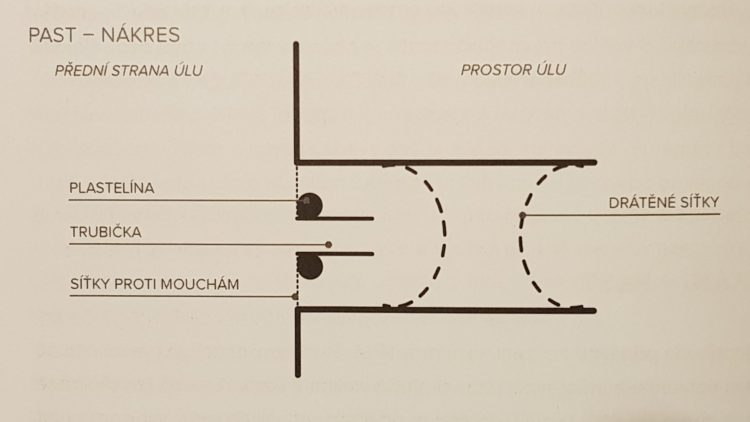
Ventilation protection according to M. Stuchl
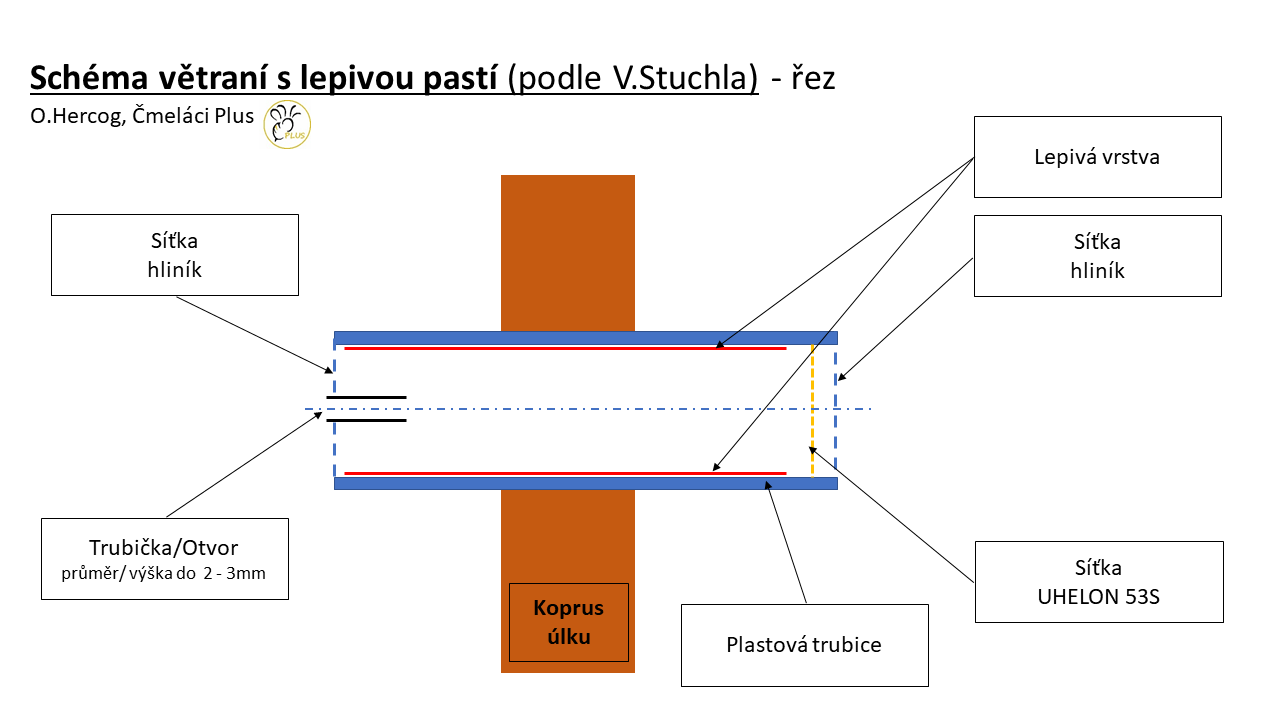
Modifications proposed by the Čmeláci PLUS group
We used this solution and adapted it by lining the inside of the tube a thin layer. Jaromír Ćížek came up with this solution.
This causes the parasite, which enters the ventilation, to get caught on the sticky layer. Likewise, small parasite larvae, which hatched from eggs laid on the ventilation mesh, will also get caught here.
Pavel Fereš reached the same solution, Jaromír Čížek uses a similar one.
Thanks for finding technical mesh with the correct mesh count (UHELON53Sthe ventilation safety was further increased. Should a parasite somehow fly through the tube, it will be caught at the end by a fine mesh – UHELON.
You can find information about the UHELON and the technical report of its measurements in Karel Kučera's post HERE (we are preparing to publish).
We also found that bumblebees can gnaw through plastic netting, so we replaced it. fine aluminium mesh (available at hobby markets) – see photograph HERE.

Ventilation with sticky traps
If a parasite decides to penetrate the ulcer and multiply there, nothing will deter it from its decision. It will search for a way into the ulcer until it succeeds. It will try through cracks, imperfect sealing under the roof, ventilation, or a protective flap that may not be properly closed. The parasite will do anything to achieve its goal. Therefore, it is advisable to let it enter the trap when it is looking and catch it there.
Examples of parasites that ventilation with a sticky trap will catch:
- Bumblebee Moth – *Aphomia sociella*
- parasitic fly – Brachycoma devia
- Hoverfly – Volucella bombylans
- parasitic wasp - Melittobia acasta
Reflection – if your pets were attacked by their natural enemy, would you just stand by and let things take their course? Does it seem inhumane to you to stop an attacking parasite?
We do not call for the extermination of parasites on any given day, as they too are part of nature and have an irreplaceable role. However, if they attack a hive with clear intent, it is well to protect its inhabitants.
You can find out more about bumblebee parasites and enemies HERE (preparing).

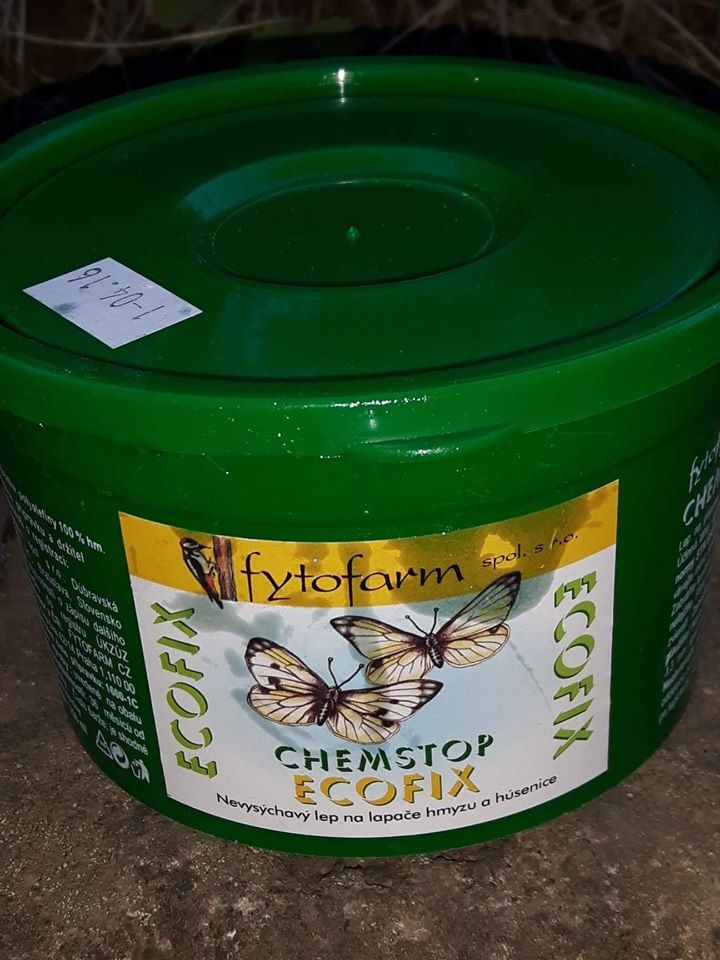
Material for creating an adhesive layer – Chemstop
Ventilation protection for a wasp nest (bumblebee nest)
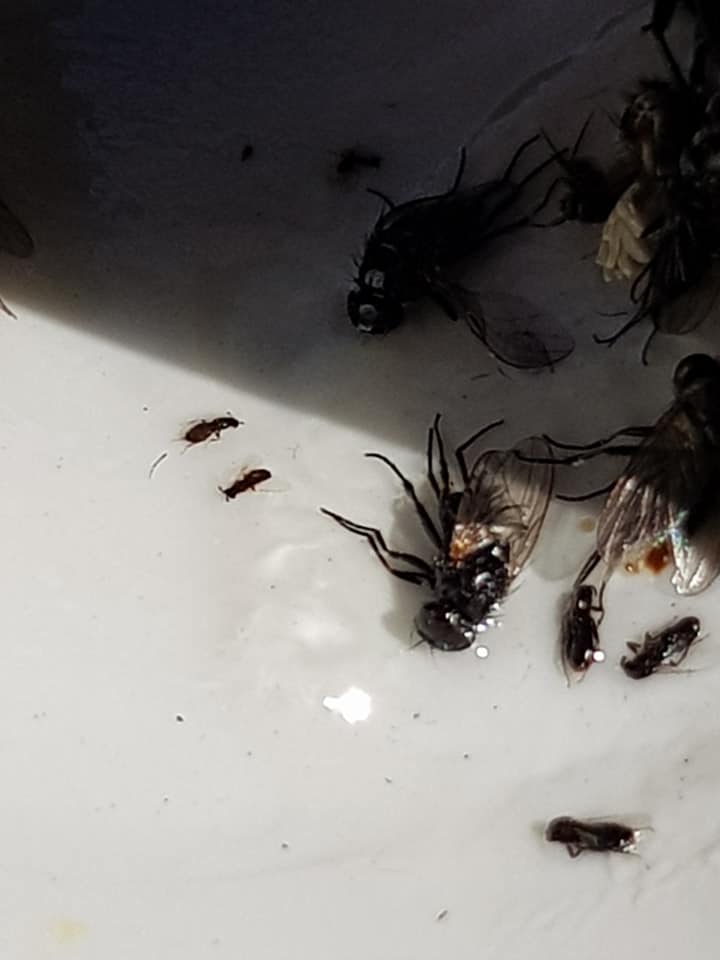
Parasitic captures – flies and Melittobia acasta
Specific ventilation solution with a trap
A) Basic Ventilation Adjustments for Beginners
B) Jaromír Čížek's Simple Solution
- Solution description
- What material should be used
- How do you make such a solution
- How is ventilation used
- Control and maintenance
- Restrictions
A) Basic edits for beginners
The changes have been described HERE
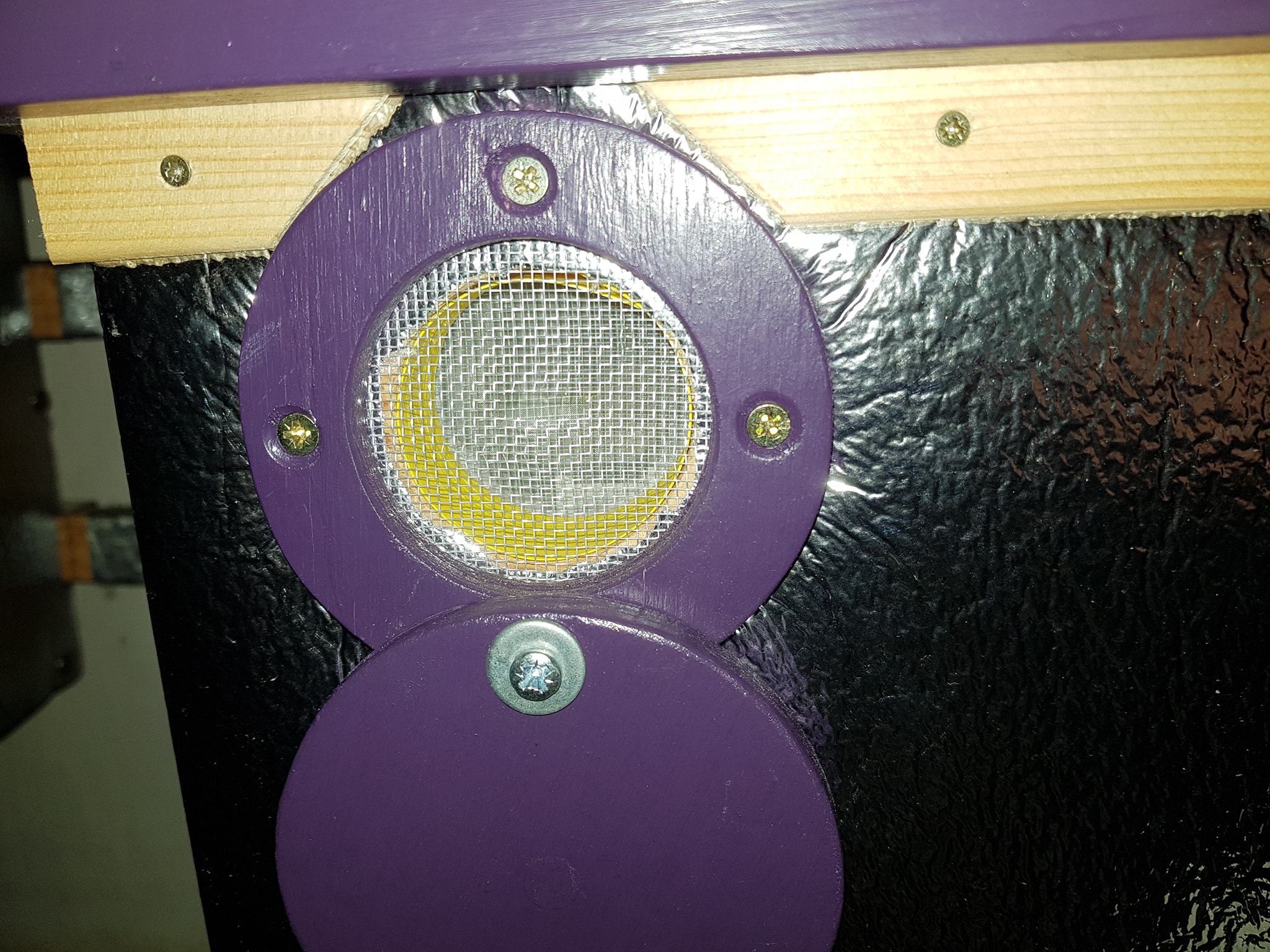
Hive ventilation – external mesh with an opening for parasite trapping and ventilation closure
There is a cut-out in the outer mesh and a sticky layer inside the ventilation.
Photo O. Hercog
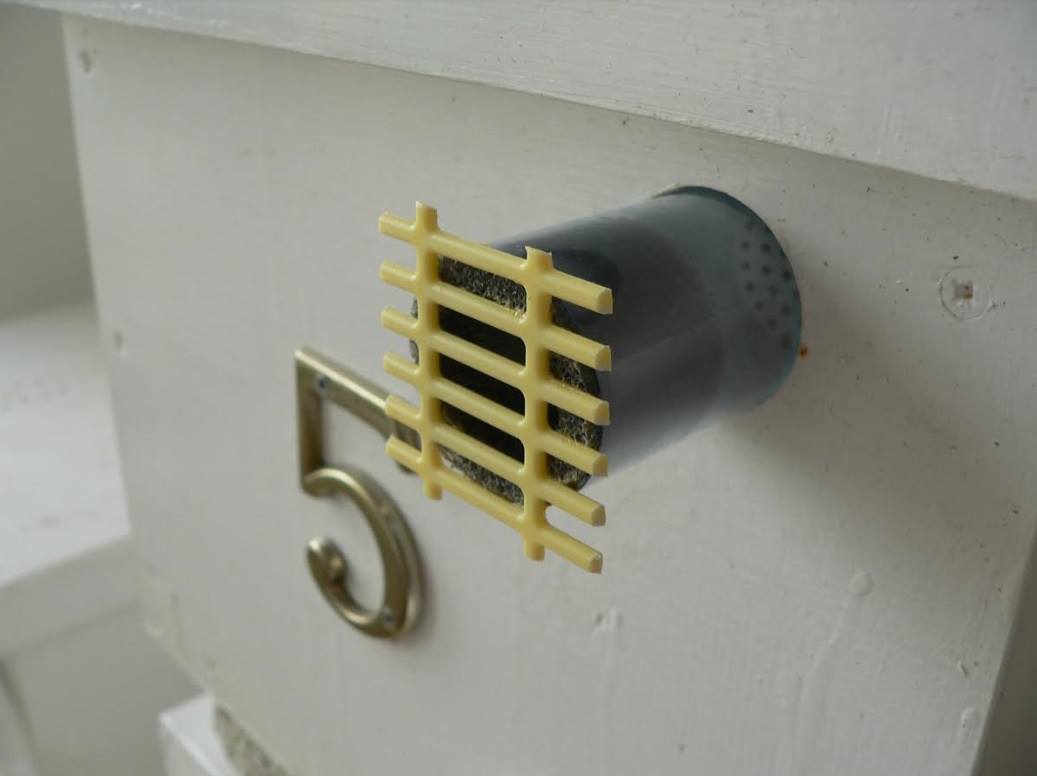
B) Jaromír Čížek's Simple Solution
Solution description
Mr Čížek proceeds from the premise of letting the parasites enter the trap. The outer mesh is so large that even the large Greater Wax Moth (Aphomia sociella) can enter the trap; this moth enters the bumblebee nest to lay its eggs (opening 3-4x15mm).
The large female is the greatest danger, as she is capable of laying a lot of eggs. If she did not penetrate the nest through ventilation, she would attack the entrance to the hive.
So it's better to let it go into the trap, where it will then get stuck on the sticky layer and won't be able to get any further. Likewise, the larvae won't get through the sticky layer either, in case it lays its eggs in the trap.
Other parasites also get stuck here.
However, worker bumblebees will not get into the trap—the grille at the ventilation entrance will not allow them to.
This solution is suitable for use during the night when it is warm and you leave the ventilation opening open.
It’s not suitable for spring when you open and close ventilation.
What material should be used
- Transparent plastic film. DUROFOL film is well suited, but you can also use, for example, cut-out, straight parts of a PET bottle.
- A piece of foam insulation for pipe (from a DIY store) – diameter e.g. 32 mm
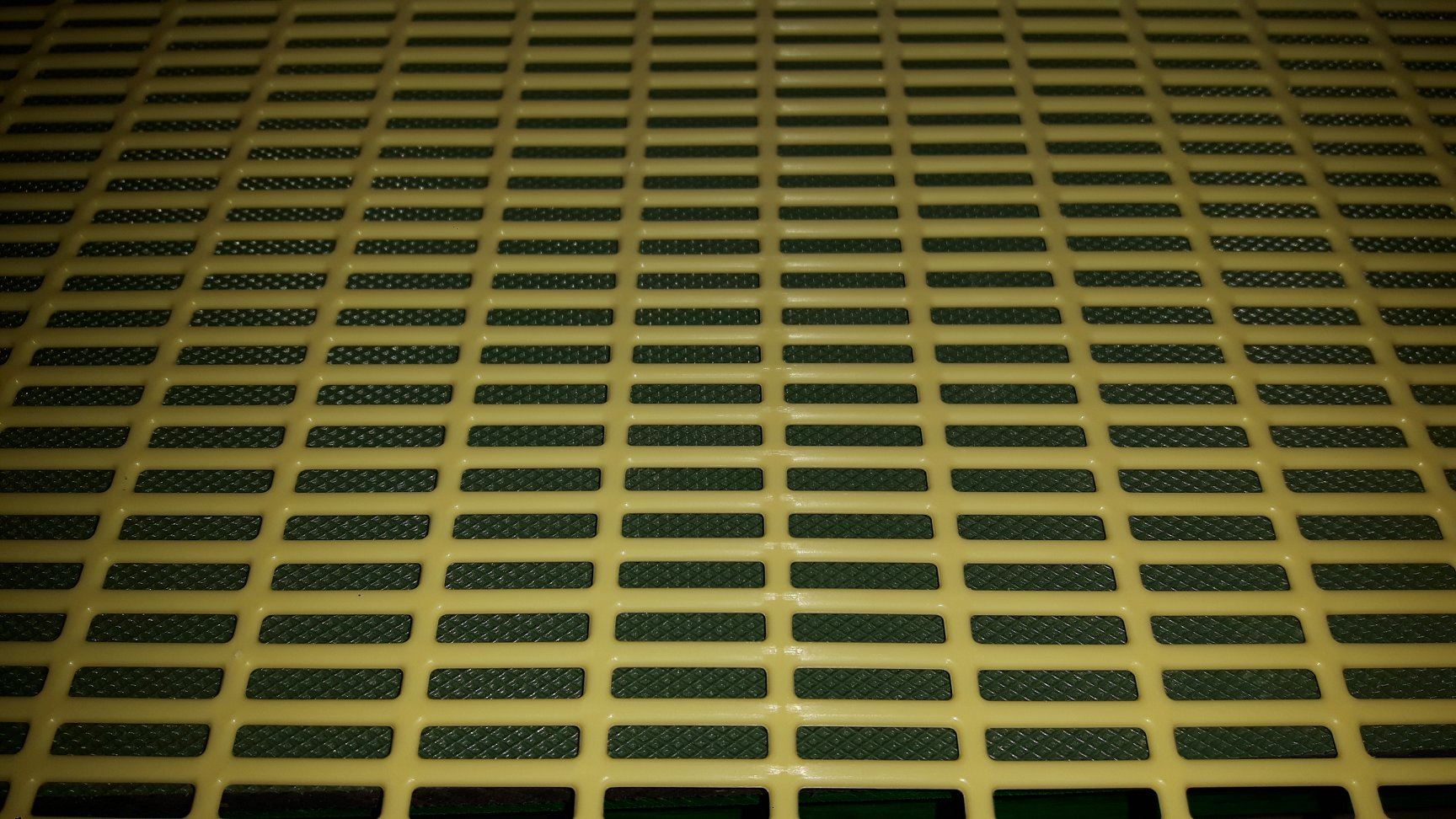
- A piece of plastic mesh with openings measuring 5 x 15-20 mm (for example, a beekeeping excluder)
- Superglue for plastic
- Stapler
- Clear sticky tape
- Piece of CHARCOALu53S
How do you make such a solution
- You fit the surprise with a ventilation opening; choose the diameter according to the diameter of your foam insulation pipe – for example, a diameter of 32mm works well.
- Test that the insulation pipe slides easily into the ventilation opening and fits and seals well there.
- From the inside of the hive, cover the ventilation opening with a dense mesh (UHELON53S) and then cover that with a fine aluminium mesh.
- The netting should be well attached from the inside to the body of the hive – for example, with a frame, or stapled directly into the wood and covered with tape, so that neither bumblebees nor parasites can get through, see HERE
- Cut a strip of foil of such dimensions that a tube can be comfortably rolled from it, which will protrude about 5 cm after being inserted into the hive.
so for a bush with a wall thickness of 3 cm and a hole diameter of 32 mm, it will be approx. 8 x 15-20 cm - Cut a 2-3 cm long piece of foam insulation tubing.
- Wrap a plastic sheet around this piece of pipe like a tube and insert it into the ventilation opening; secure its shape by wrapping it with transparent adhesive tape or sewing it with a small stapler.
- Cut a rectangular piece from the plastic mesh so that it covers the end of the insulating tube and so that the mesh doesn't fall apart (it will simply be larger, but that doesn't matter)
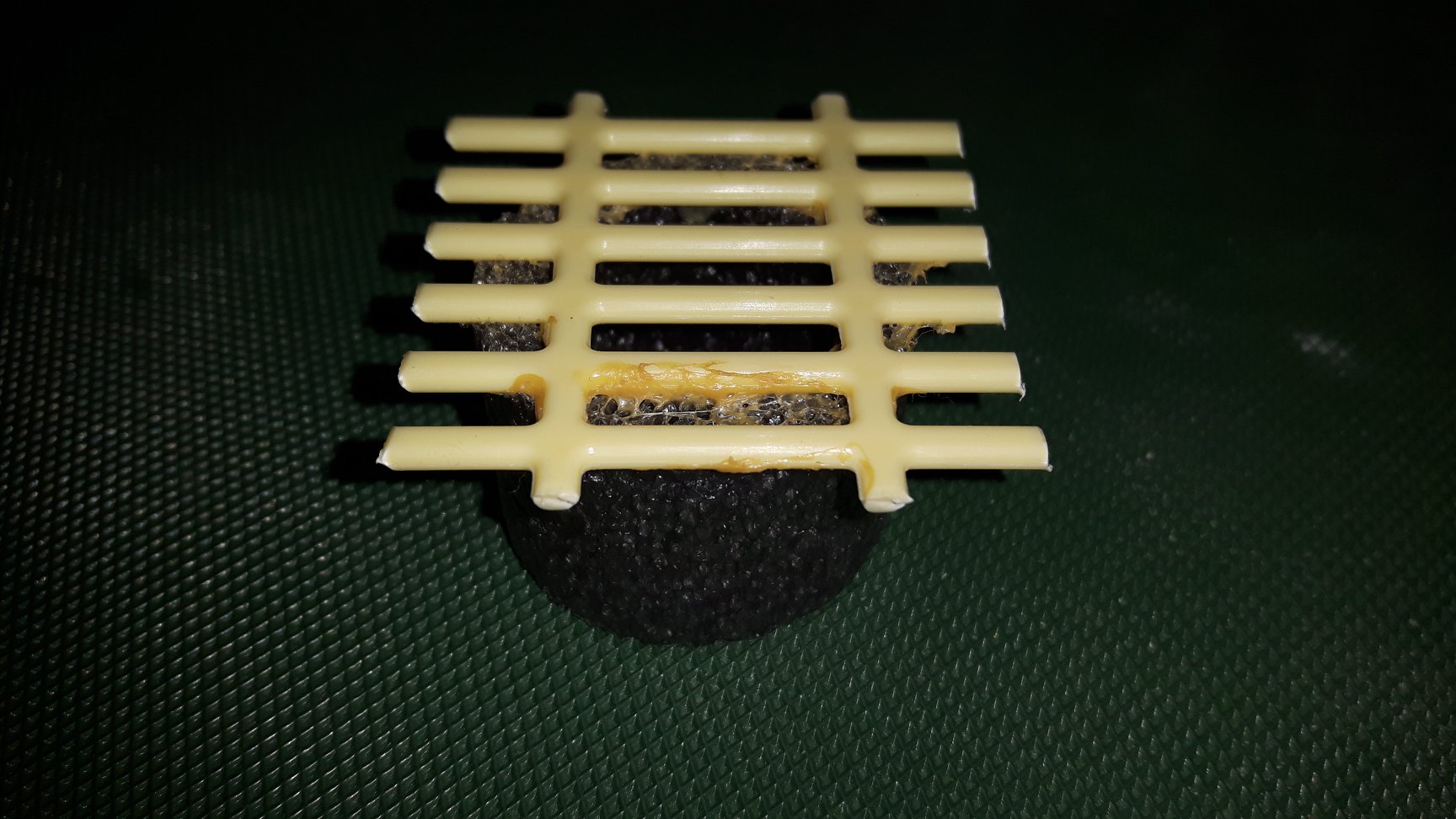
- Glue the grid to the insulating pipe with superglue
- Clean the inside of the roll with Chemstop – thoroughly and all around
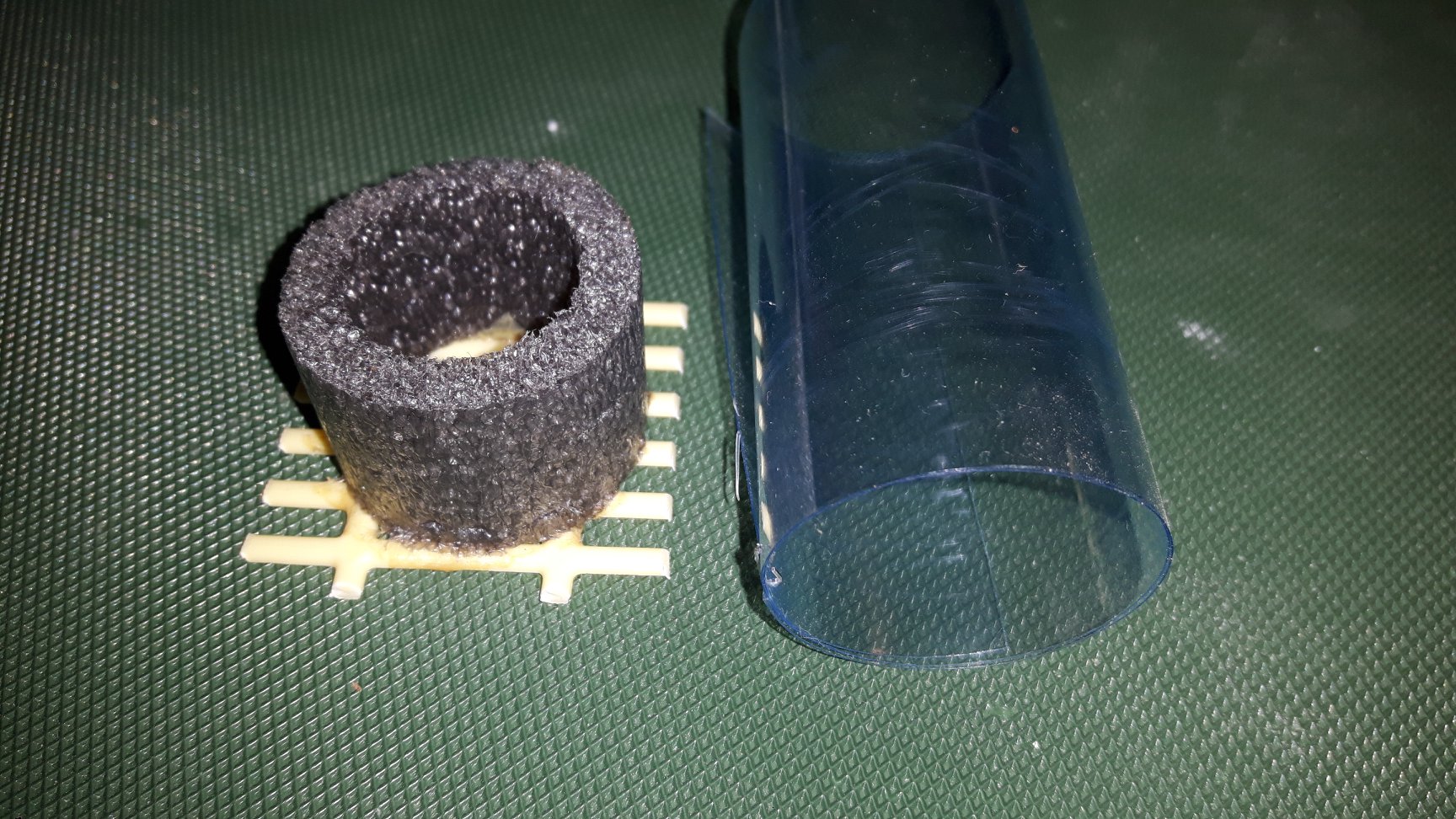
- Insert the insulating tube with the mesh into the plastic film roll.
- Then insert the stake into the hive's ventilation opening.
Careful – the past must sit well in the vent and must not fall out!!!

Ventilation protection of a hive (bumblebee hive) according to Jaromír Čížek
J. Čížek Forum
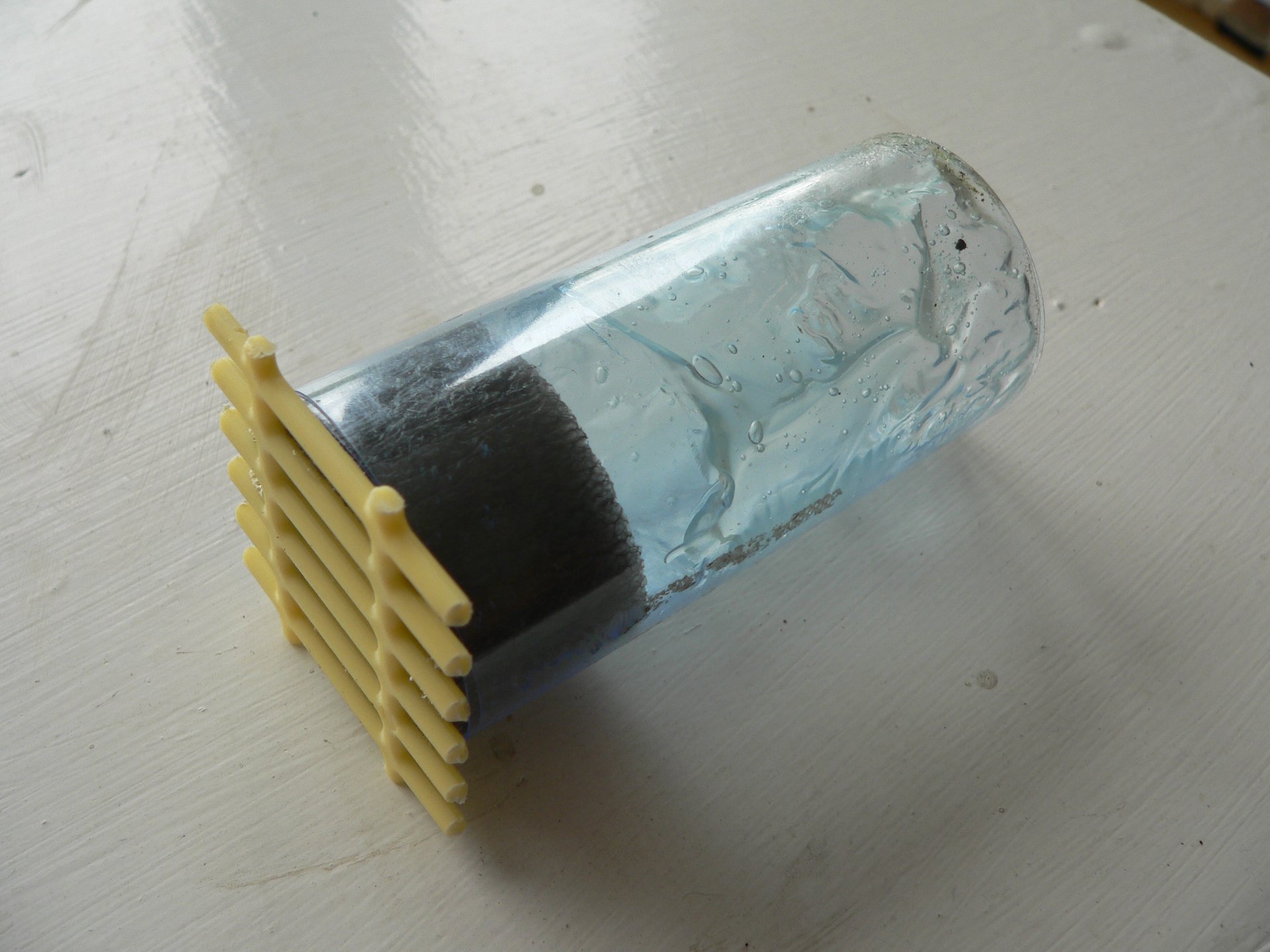
Ulcer ventilation protection
Mesh stuck to a foam insulation tube insert
Roll of plastic film wiped with Chemstop
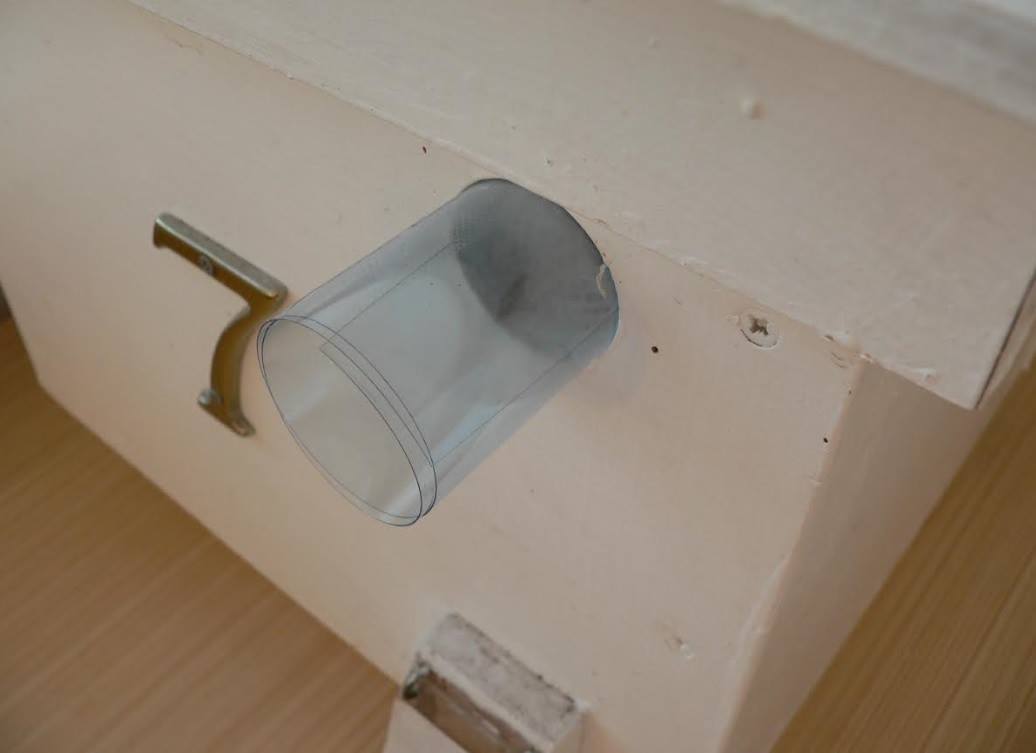
Ulcer ventilation protection
Cut a strip of foil of such dimensions that a tube can be comfortably rolled from it, which will protrude about 5 cm after being inserted into the hive.
Ulcer ventilation protection
Bee queen excluder – do not use larger mesh sizes, worker bees could get into the ventilation
Ulcer ventilation protection
Glue the mesh to the foam insulation tube
Ulcer ventilation protection
Grille on the insulation tube and a roll of plastic film
It is very important that the foil insert fits snugly into the ventilation opening.
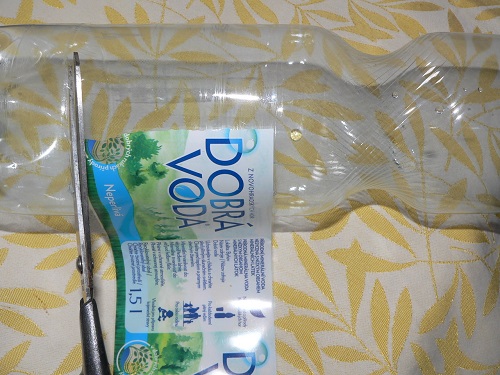
Jaromír therefore uses a PET bottle from which he rolls a „tube“ from several threads of foil. After inserting it into the ventilation opening, he sews it with a small stapler (on the part that is not inserted). Thanks to the expansion of the free part, the tube holds well in the vent.
Bumblebees PLUS – Protecting the hive (bumblebee nest) ventilation according to Jaromír Čížek
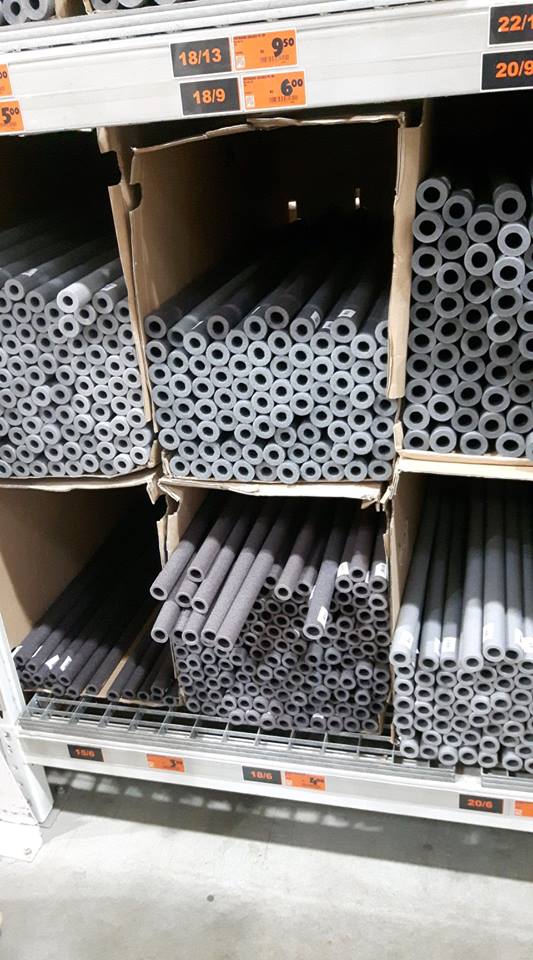
Ulcer ventilation protection
Foam insulation pipes (hobby market) - choose according to the diameter of the hive's ventilation opening
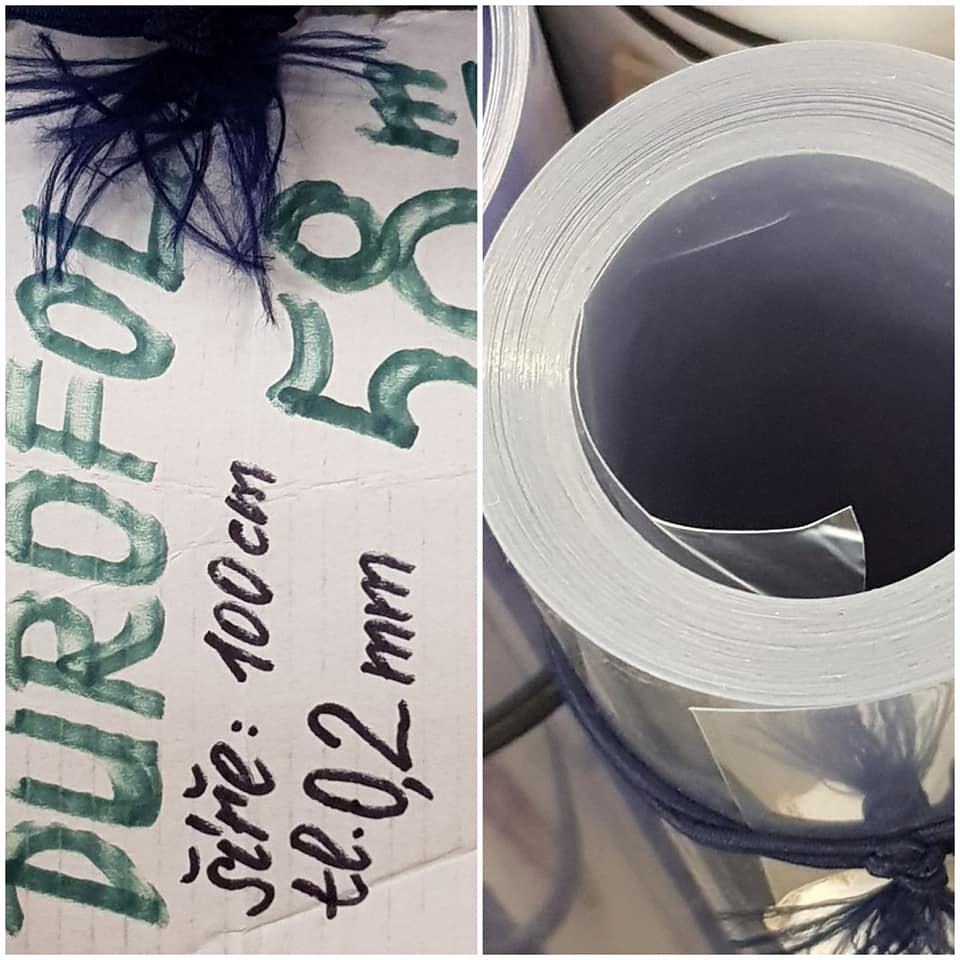
Ulcer ventilation protection
Durofol Film (ŘEMPO)
However, straight parts of PET bottles can also be used
How is ventilation used
As you begin to open up the hive's ventilation, start using a trap as well.
You put it into the air vent, from which you remove the outer mesh We recommend trying before settling the hive.
Parasites that wanted to enter the nest through there will gradually be caught in the trap.
Once you see that a large number of parasites have been caught in the trap, you simply throw the trap away and put a new one in its place. There's no point cleaning the trap; it would be a lot of work.
Maintenance and inspection
Check if the trap is secured in the ventilation opening and if it is not full.
If necessary, discard the plastic roller and use a new one
Restrictions
It is necessary to ensure, so that the paste doesn't fall out – a scare would be unprotected. If you have no other solution, stick the plastic film tube with sticky tape.
It shouldn't rain on the past, its effectiveness could be reduced, and it could leak into the ulcer.
C) Ventilation from PP pipe construction kit
Description
This is a solution made from a set of pipes and elbows, intended for wastewater. You can get all the parts at a DIY store or a plumbing supply shop. You can also get caps here. You can complete the construction with a net made of UHELON53S and coat the inside with an adhesive layer.
The advantage of this solution is that you can vent the ventilation further away from the hive. This also diverts at least some of the parasites away from the hive – the scent of the nest will emanate at a certain distance from the hive.
You can use a solution with or without a knee. The knee can be inside or outside the ulcer.
A knee joint angled upwards on the hive reduces the possibility of the ventilation opening being clogged by bees with bedding. On the other hand, this orientation makes the hive ventilate poorly. Therefore, we recommend using the knee joint outside the hive.
What material should be used
Karel Kučera features on our list solutions for long corridors and ventilation as well
Karel writes there: „We recommend the HT sewage waste system (HTEM PP pipe). This is a waste pipe system used, for example, for draining wastewater from household sanitary equipment (sinks, etc.). The pipes have a male-female connection, secured with a rubber ring. HT fittings are available – elbows at angles of 15°, 30°, 45°, 67° and 87°, as well as couplings and caps. The above system allows for easy cleaning of both the passage, the hive and the flap. Storage of components after the season is also easy..“
Karel has been using this system for several years and it has proven to be very effective for him.
I had a similar solution for the entire 2019 season on a test hive and was satisfied.
I used a straight piece of PP pipe. The opening in the elbow was finished with a combination of UHELON53S and aluminium mesh. The outer part of the pipe was sealed with a 3D printed cap. The inside of the pipe was lined with an insect sticky trap.
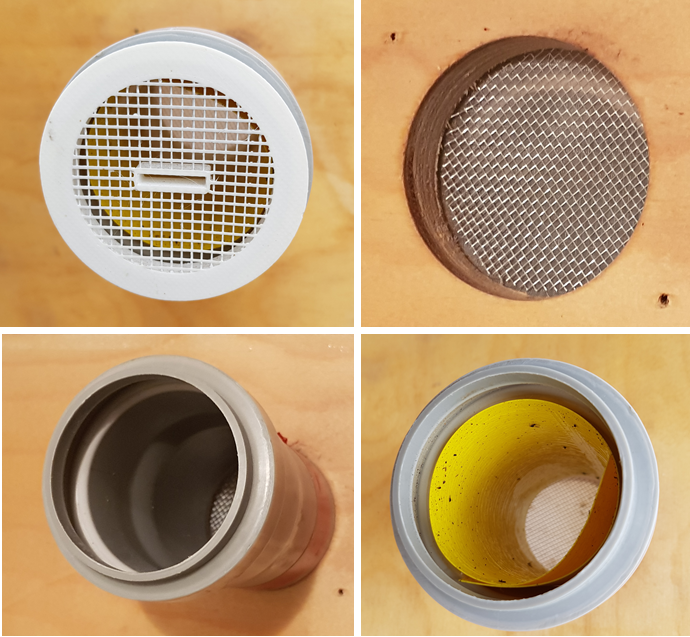
Bumblebees PLUS – Ventilation from PP pipes – simple
Photo O. Hercog
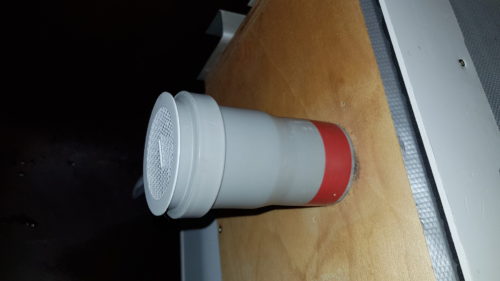
Ventilation from PP pipes – simple
Photo O. Hercog
L
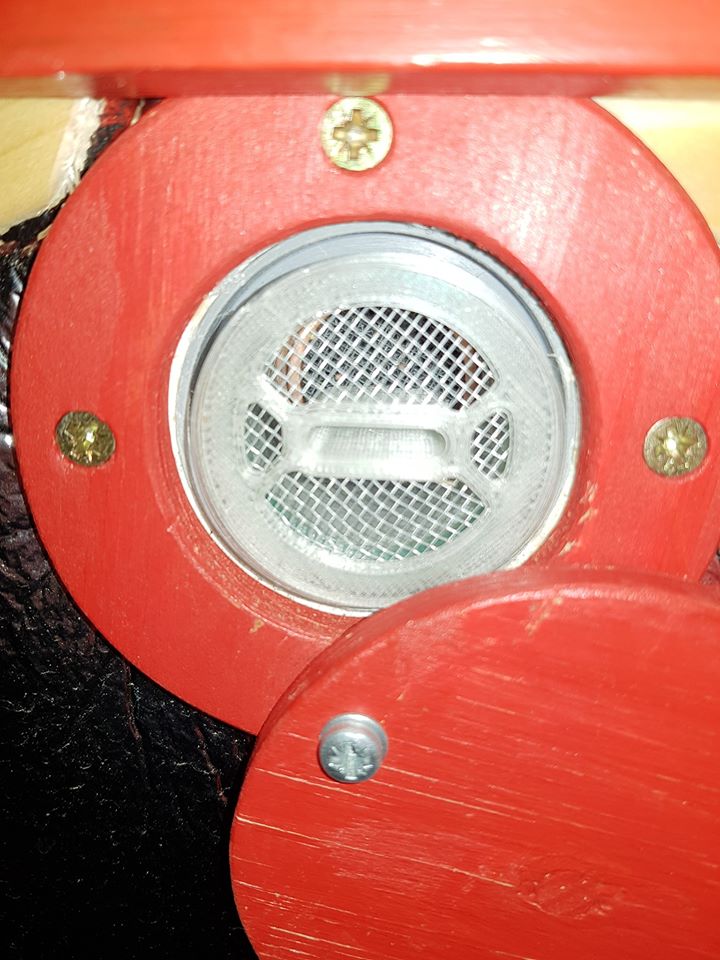
Ventilation of the hive – external protection with an entry trap 3D printed cover
Photo O Hercog
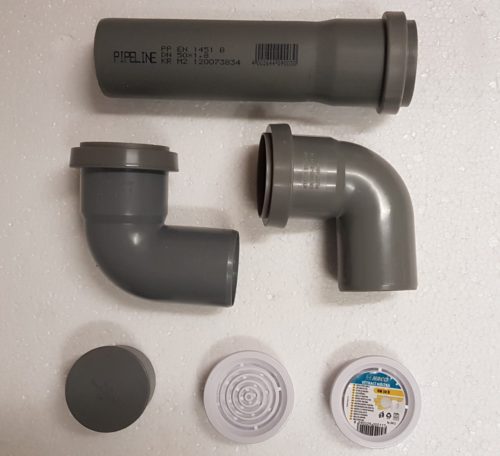
Karel and I have managed to assemble a simple ventilation solution for you from the same parts. The magic lies in the variability and the fact that elegant caps exist for the set, so you don't have to source 3D caps. However, you can use those if you have your own printer.
Thanks to the 3D-printed cap, you get a rectangular opening of 3-4 x 15 mm. This is convenient for the passage of a large queen bumblebee. The height of the opening in the cap should not exceed 4 mm so that small worker bumblebees do not pass through it.
How make such a solution
It's really very easy!
We recommend choosing a combination of a straight piece and a bend. This will achieve a good effect – light will not seep into the hive. As a result, worker bees/drones will not find a way out of the hive through this opening, and the hive's operation will be smooth. 😊
You can buy parts at a DIY store or a plumbing supply shop. In our case, an elbow and a 90° straight piece 20–30 m long, and a ventilation grille.
In our case, we used piping HTEM PP pipe DN 50 (outer diameter 50 mm) – elbow and straight piece.
In addition to that Blanking plug from the same system and the cap VM50B. This cap is a good and inexpensive replacement for a 3D printer cap.
Buy at the same time Electrical plastic insulating tape for sealing (see our brochure)
Note:
- You can use other diameters too, but DN50 seems optimal for ventilation.
- Try and see how the parts fit together
- The cap will fit well in the straight section of the pipe, and on the other side, we will make a reducer for it (see instructions).
Proceed
- Choose from ulcer top place where the ventilation will be located = above the lining. The ventilation should not interfere with the roof, the hive suspension system, or the surroundings. The ideal is on your side.
Likewise, bear in mind that if you line the inside of the hive with a thermal insulation board made of polystyrene, e.g. 20 mm, that Ventilation should not encroach on this board
Note: If you are customising the shudder, we recommend remove the original ventilation and seal and make good the opening glue wood, insert polystyrene and cover with a wooden patch of good quality plywood - Create a hole in the wall, into which the straight piece (tube) should be inserted. If you to work precisely, will hold well and seal in the tube opening
Note: If you have thin hive walls (e.g., double walls), consider reinforcing at least one of them. A square plate with a hole, screwed to the hive wall, is sufficient. - Cut from the straight section of pipe two rings 20-30 mm high. Clean the cuts from burrs and bevel the sharp edges
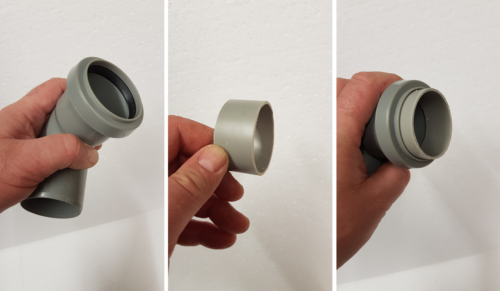
- Slip one ring into the knee as reduction – it should fit well and snugly thanks to the seal
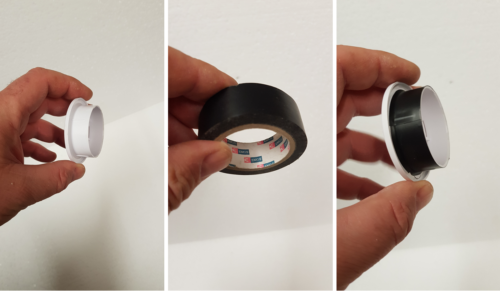
- Do reducer insert cap. If it does not hold securely in the reduction, remove it and Seal Wrap 2-3 turns of insulating tape
In the same way, adjust the other cap straight away and see how it fits in the straight section of the pipe. - Fit the straight piece of pipe a thin layer before assembly in the hive:
a) delete it Chemstopem (quick to prepare but harder to maintain and clean)
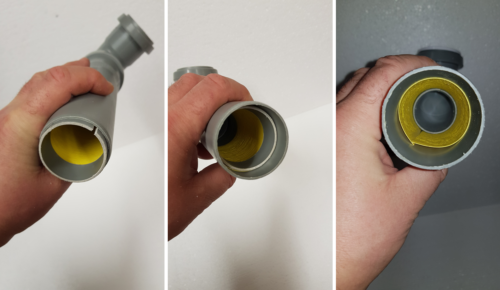
b) use Sticky insect trap (more demanding preparation but easy maintenance and cleaning) - If you use b), then you first cut along the axis second ring and with the second cut, cut off another piece from it, so that it can be inserted as insert into pipes (try it yourself)
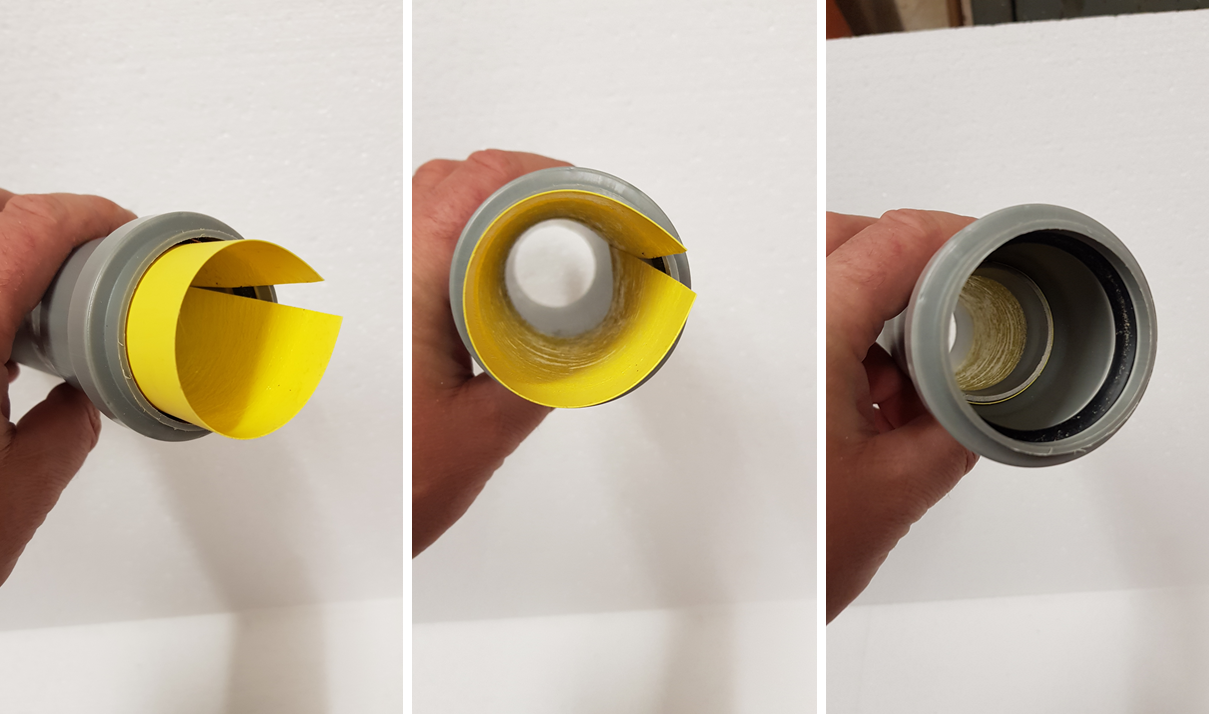
- Insert into the tube a cut sticky tape rolled into a tube – insert it from the side from the knee. Once you have the sticky tape in place, secure it with the second ring (insert).
The insert will ensure that the adhesive film remains pressed against the inner wall of the pipe.
A fly trap can also be used with success to wind out the inside of the pipe. A fly trap holds its shape better. - We recommend making a sticky layer long, the protection will be more effective. The layer must cover the entire circumference of the pipe to create a impenetrable barrier for crawling parasites.
- You insert the straight piece of tubing into the opening in the hive body and the wall well-sealed. You can use electrical tape (wrap the part and insert it into the hole) or seal the tube with a high-quality flexible sealant (silicone).
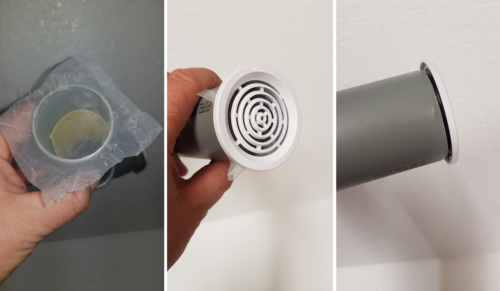
- After fixing the ventilation into the hive wall, cover the inner opening of the tube with a piece UHELON53S into the tube Insert the lid as a ventilation grille, Trim the rest of the netting.
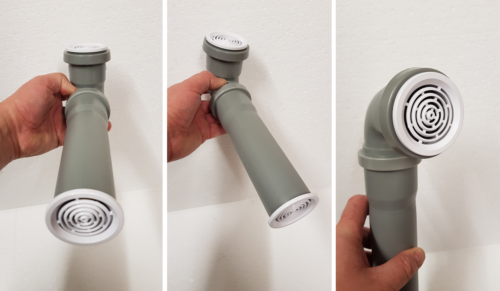
- Fit a knee with the second cap onto the straight piece
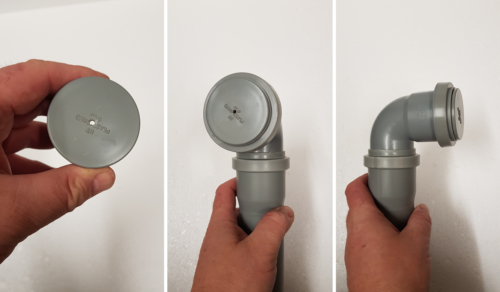
- Drill a hole in the blank. 2–3 mm. The blanking plate is used to close off ventilation from the outside (instead of the ventilation grille), for example in cold weather and especially when introducing the nut.
Please go through the photo tutorial, which will explain everything.

Ventilation of beehives made from PP pipes
Parts required (one elbow needed)
Photo: Hercog
Ventilation of beehives made from PP pipes
Slide one ring into the knee as a reducer – it should fit well and tightly thanks to the seal
Ventilation of beehives made from PP pipes
Insert the cap into the reducer. If it does not hold securely in the reducer, remove it and seal with tape.
Ventilation of beehives made from PP pipes
Once you have secured the adhesive tape in place, secure it with the second ring (insert).
Procedure for inserting tape and liner – for a better understanding of the principle
Ventilation of beehives made from PP pipes
Insert the adhesive strip from the side of the knee into place and secure it with the adjusted second ring (insert).
Ventilation of beehives made from PP pipes
After securing the ventilation to the hive wall, cover the inner opening of the tube with a piece of UHELON53S and insert the ventilation grille into the tube.
Ventilation of beehives made from PP pipes
Fit a knee with the second cap onto the straight piece
Ventilation of beehives made from PP pipes
Drill a 2-3 mm hole in the plug. You will use the plug to close ventilation from the outside (instead of a ventilation grille), for example, in the cold.
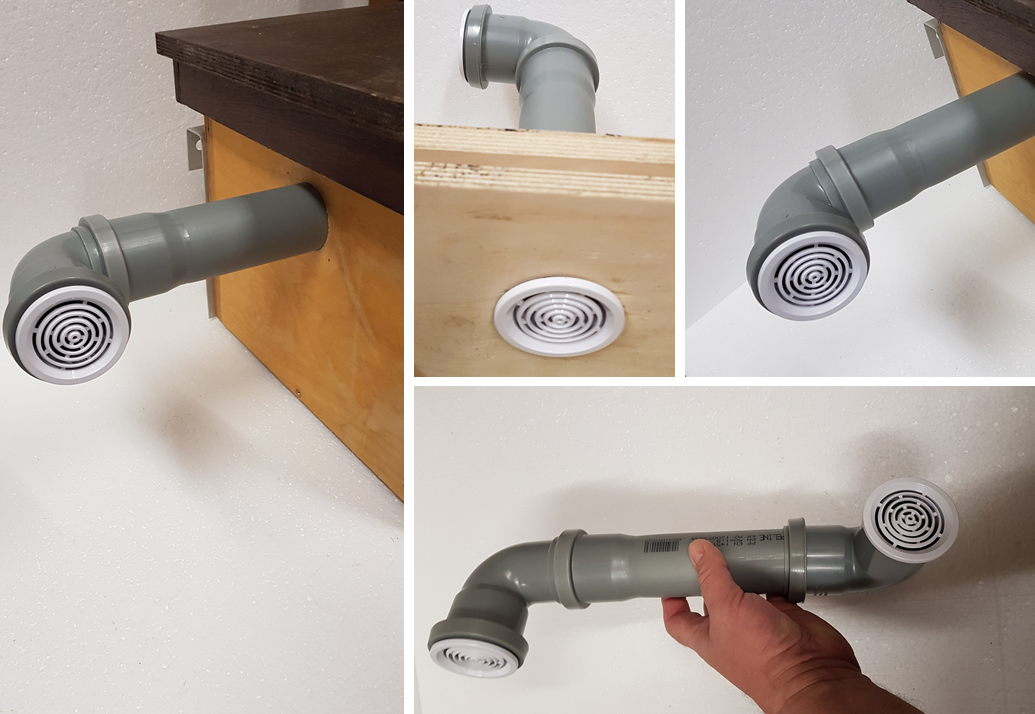
Ventilated PP pipe socket
Examples of ventilation fitting into a beehive
If you need a more complex shape – that's up to you (see example)
How is ventilation used
- Ventilation will allow air circulation in the hive.
- The ventilation grille does not allow even small workers to enter the ventilation. At the same time, however, it allows parasites to get through, and they get caught on the sticky layer in the ventilation.
Maintenance and inspection
- Occasionally check that the ventilation is sealing well and is held in the hive body.
- Occasionally remove the vent grille/elbow and check if the sticky layer needs renewal.
- It's best to carry out checks / maintenance at dusk/night to prevent bumblebees from flying into the ventilation.
Restrictions
Longer pipes mean pressure loss. So don't make ventilation ducting any longer than you really need to.
D) Pavel Fereš's Ventilation
Pavel is a well-known bumblebee breeder in the Chrudim region. Pavel is also the author of electric bumblebee houses, which we describe HERE (in preparation).
Pavel has his own sophisticated solution for protecting the ventilation of ulcers.
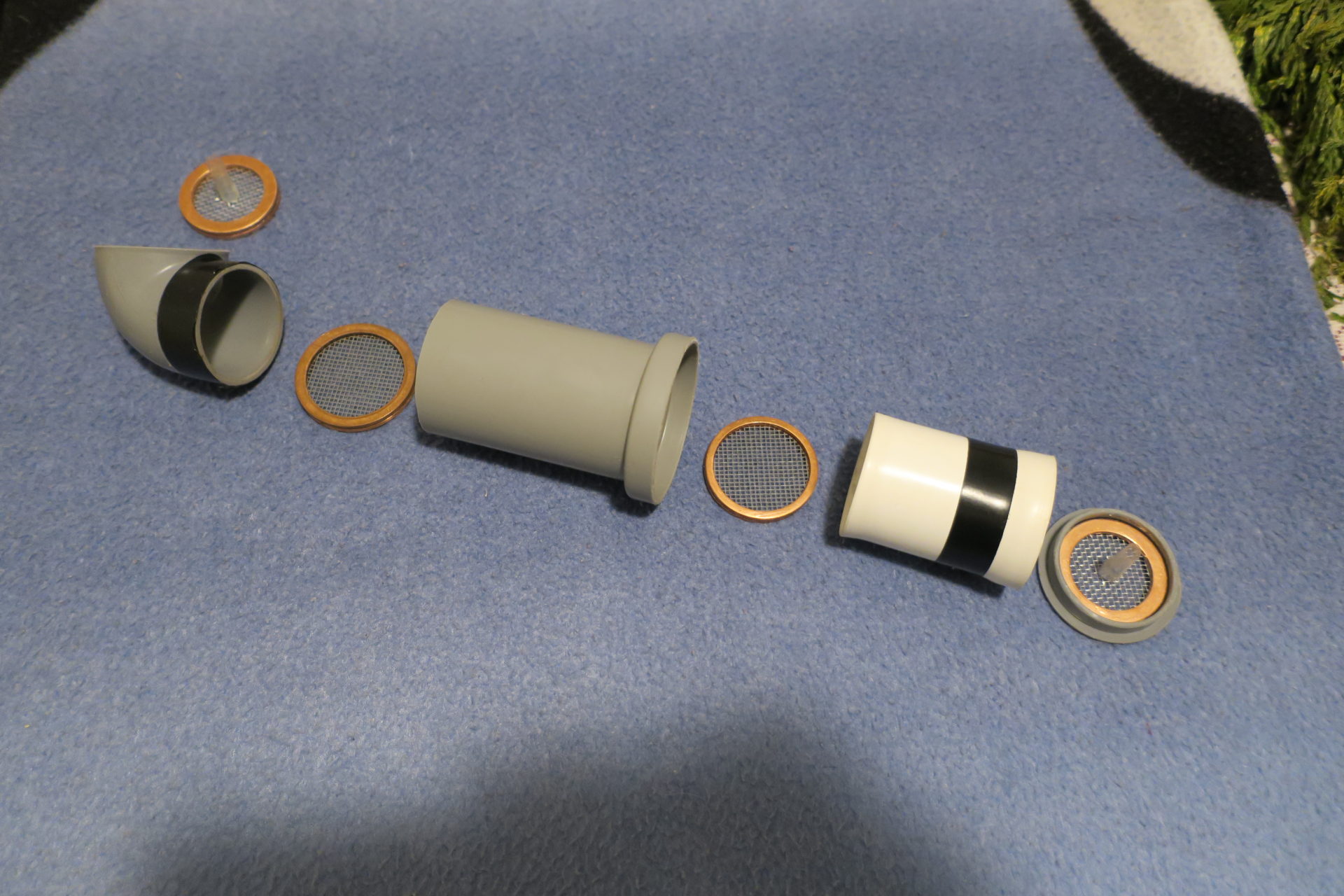
It's essentially a double-sided trap, meaning there's an entry point for parasites from both sides. The trap is made up of several interlocking parts. Several mesh screens are inserted into the ventilation, and some parts can be removed and cleaned while the hive is in operation. Inside the trap are sticky layers made of Chemstop.
The manufacture of this solution is demanding; everything has to fit together precisely. Therefore, we only recommend the production of this ventilation system for keen DIY enthusiasts.
The ventilation is made of PP pipes, aluminium mesh and other parts.
Inside, there's a sticky layer of Chemstop.
The entrance to the trap is double-sided from a plastic tube.
UHELON is not used.
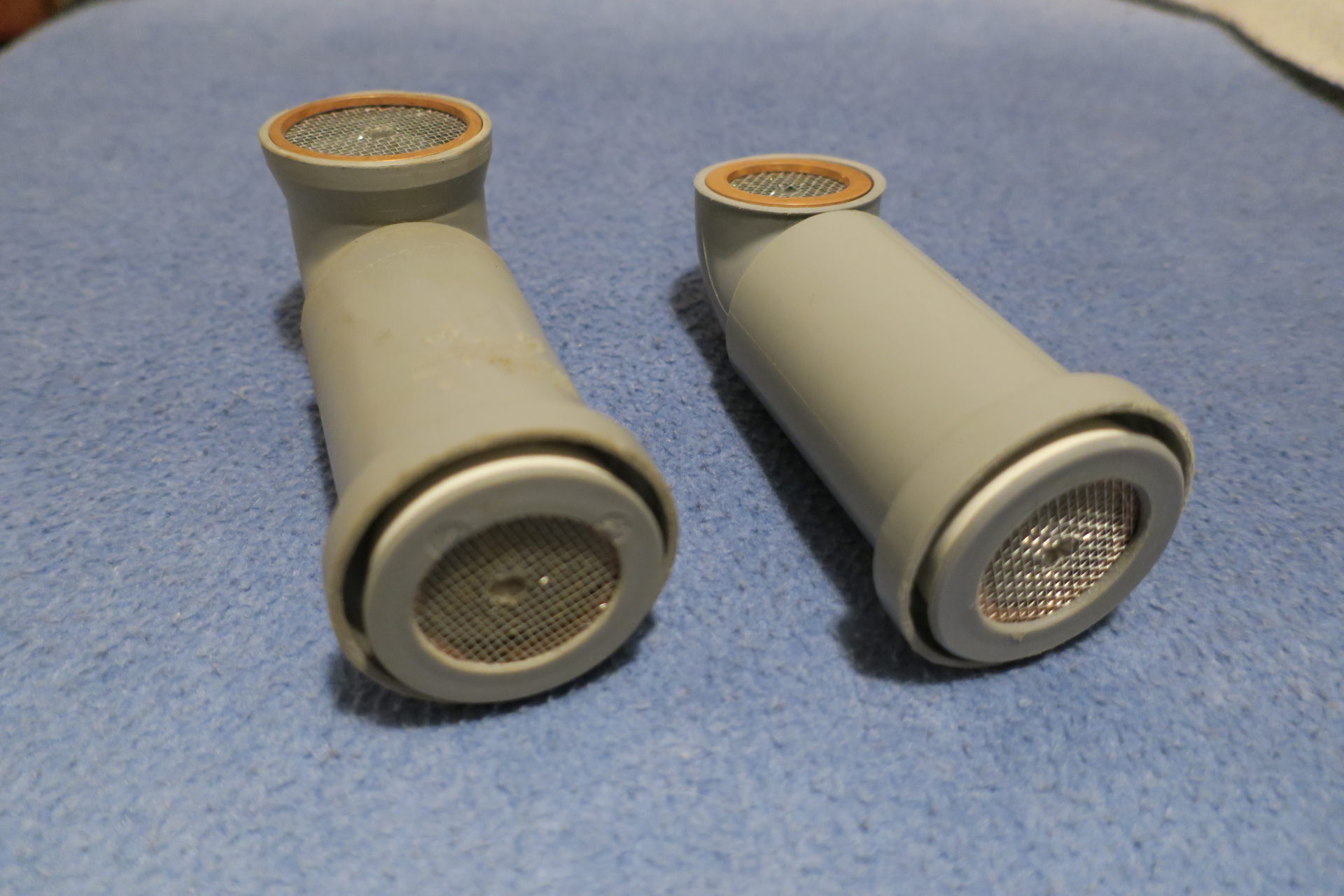
Ventilation of the courtyard according to Pavel Fereš
P. Fereš Photo
The white part contains a sticky trap from Chemstop.
The second sticky trap is in the knee.
The two parts are separated by a mesh, which allows the white part to be removed, yet prevents parasitic bumblebees from entering the hive.
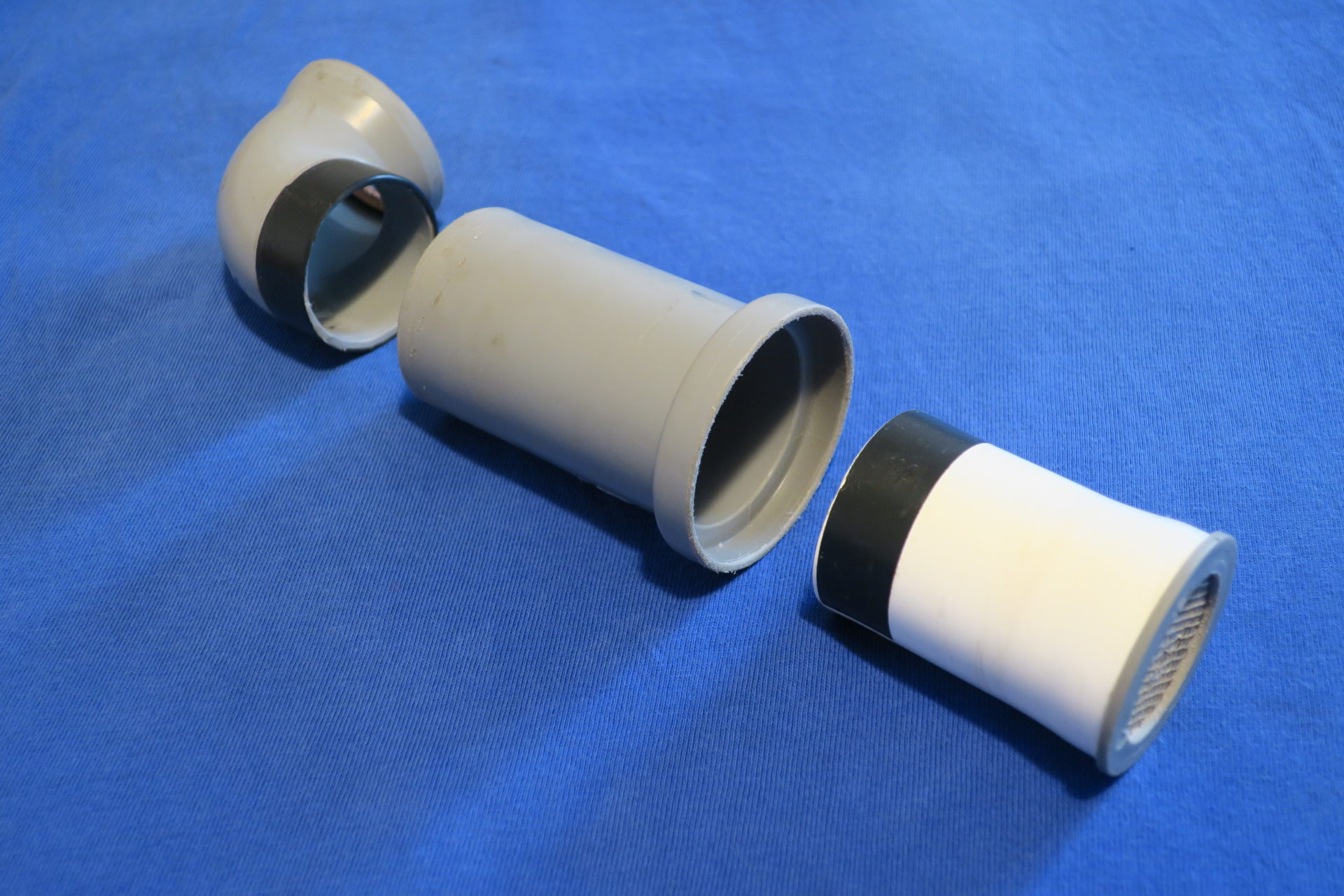
Ventilation of the courtyard according to Pavel Fereš
P. Fereš Photo
Ventilation of the courtyard according to Pavel Fereš
P. Fereš Photo