

Protective nets and fabrics for parasitic protection and hive ventilation systems.
What you will learn here:
- to stop pests getting in
- Why are they so important
- Why is it necessary to pay attention to the selection of suitable material
Last updated: 07/01/2021
The importance of networks for a bumblebee nest
- Every hive, besides the necessary entrance flap for bumblebee access, must also have a ventilation opening. Hives without a ventilation opening do not allow for air exchange; the accumulation of carbon dioxide in them then shortens the colony's lifespan, just as the increasing humidity in the hive, which has no way to escape, can lead to water condensation. This also occurs when the beekeeper opens the hive, as there is a sudden change in temperature and a shift in the dew point. The condensate can then soak the lining or, in the form of puddles, cling to the bottom. Additionally, an unventilated hive is more susceptible to mould, the walls degrade faster, and the hive loses its properties more quickly. However, any additional opening in the hive presents an easy entry for parasites, including the most dangerous ones such as *Melittobia acasta* and *Aphomia sociella*.
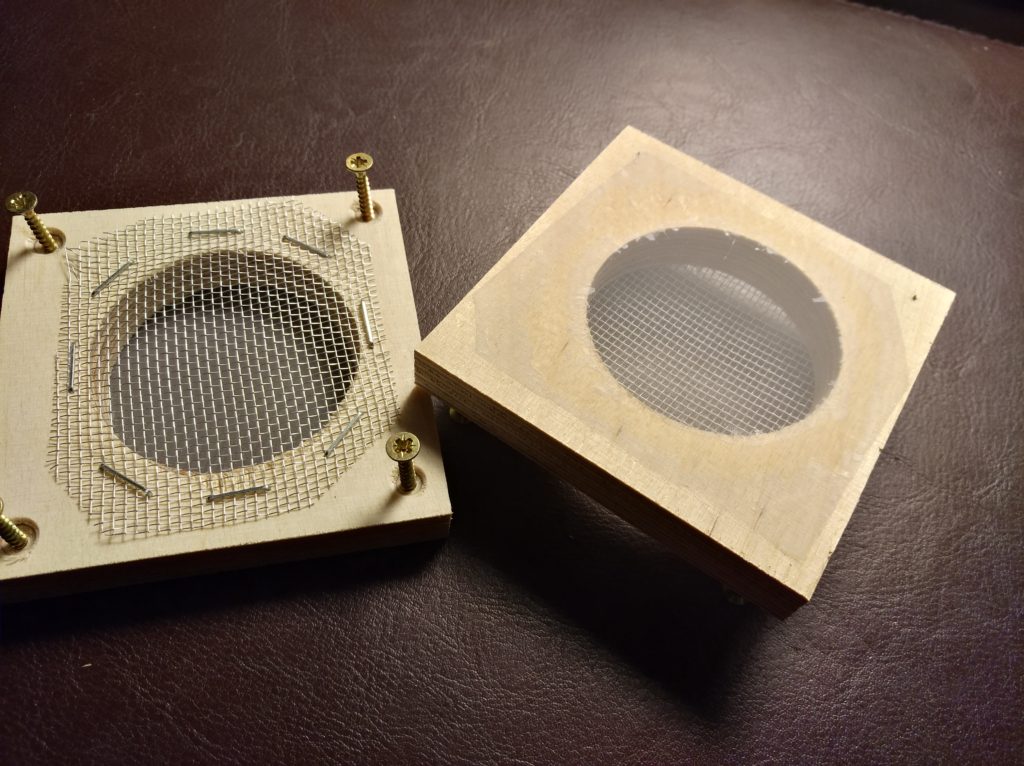
- A number of commercial and privately produced hives alike solve these openings by covering them with netting. This should generally consist of at least two (optimally three layers). The outer and inner mesh are intended to withstand damage from bumblebees and larger parasites or predators. Aluminium netting is most commonly used, as a number of plastic nets have been shown to be able to be gnawed through by bumblebees. The most important is the middle mesh, which should form a barrier against the penetration of larval stages of parasites. Many of these, if stopped by the outer netting, are capable of laying eggs there, and the larvae can then overcome the barrier. The purpose of the protective outer netting is therefore only to protect the crucial middle mesh from damage. To prevent this, the outer netting must not touch the middle mesh.

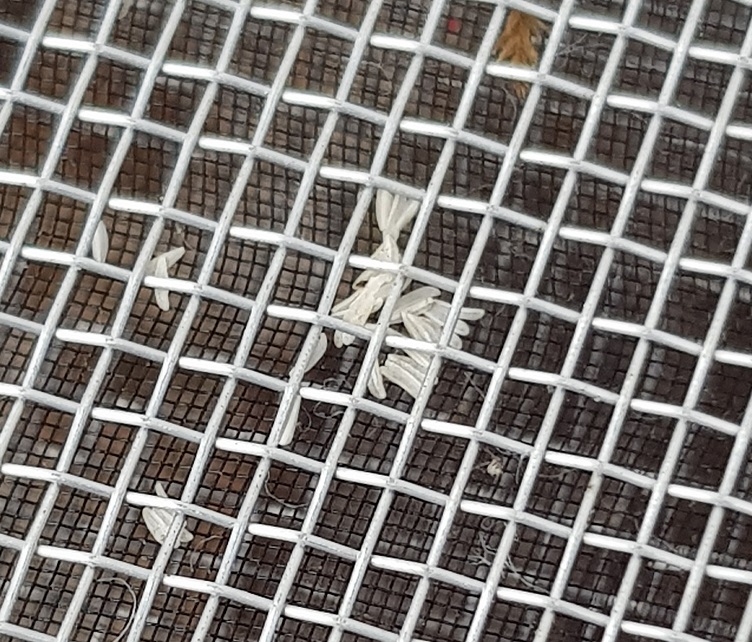
Ulcer ventilation – parasite eggs (here from a fly) laid on the mesh of the ventilation opening
Photo O.Hercog 2018
Mesh material selection
for the network to make sense, it must fulfil three fundamental tasks:
- To be so Thick, to stop even the most dangerous parasite, such as Melittobia acasta. Unfortunately, the incidence of this wasp is increasing in breeding facilities.
- Despite its density continuing to ensure adequate ventilation eagle.
- Resilience and durability material in the conditions of a ventilation opening. The material's resistance to the movement of larvae or adult parasites that penetrate it, even through external protective mesh.
Meeting these three points is not easy at all, and many commercial products don't even come close to the required parameters. The ventilation opening thus remains a gateway for parasites or ceases to fulfil its function. The breeder, especially a beginner, relies on the manufacturer and is then disappointed by the failure of the breeding. Many attempts to solve the netting issue using various household materials also end up the same way – for example, organza is a frequently used material for this purpose.
The task and work for our group was therefore to find, if possible, material that would best fulfil the required points.
Method of testing and selection of materials
The Czech retail market offers the domestic brands Uhelon and Ulester, which are characterised by high-quality workmanship and precision in the manufacture of their screens. These screens therefore meet point 3 – the requirement for durability and stability. They are made from 100% polyamide (Uhelon) and 100% polyester (Ulester) fibres. There is a vast number of types of these fibres, which differ from one another in terms of mesh size and fibre strength. We therefore selected the commonly used material organza as our reference sample, due to its well-known and practically proven breathability. As the parasitic wasp can pass through organza, we ruled out in advance all nets with a mesh size larger than that of organza.
In addition to the requirement for hole size and their tensile stability, emphasis is also placed on maintaining the breathability of the material so as not to compromise the basic function of the openings – namely, ventilation and the dissipation of heat and moisture.
Potentially suitable materials were therefore tested for their permeability in a certified laboratory at the Faculty of Textile Engineering, Technical University of Liberec. The following equipment was used for the testing: FX3300 Textext Standard: ČSN EN ISO 9237 Pressure gradient: 100 Pa Tested area: 20 cm2. The breathability of Organza was given as a reference value.
The pore size of the Organza was measured using image analysis on three images within the same area.

Microscopic observation
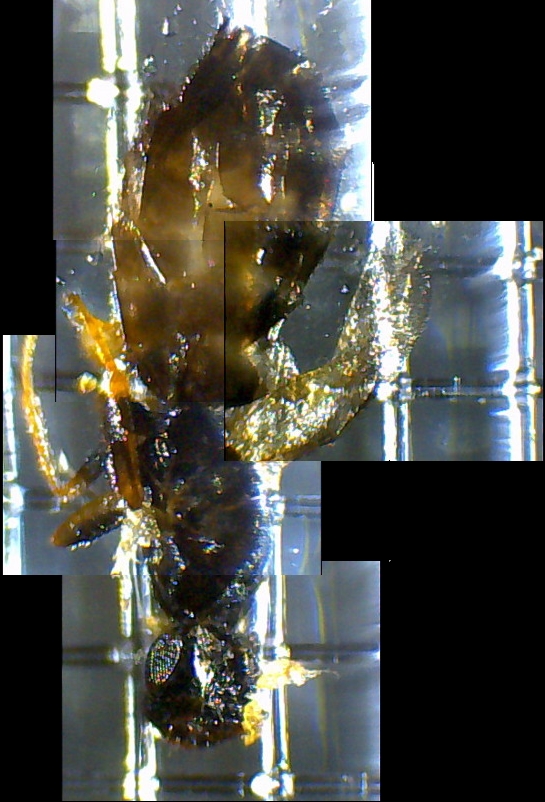
parasitic wasp Melittobia acasta on a textile fibre of organza
Photography Kučera Karel
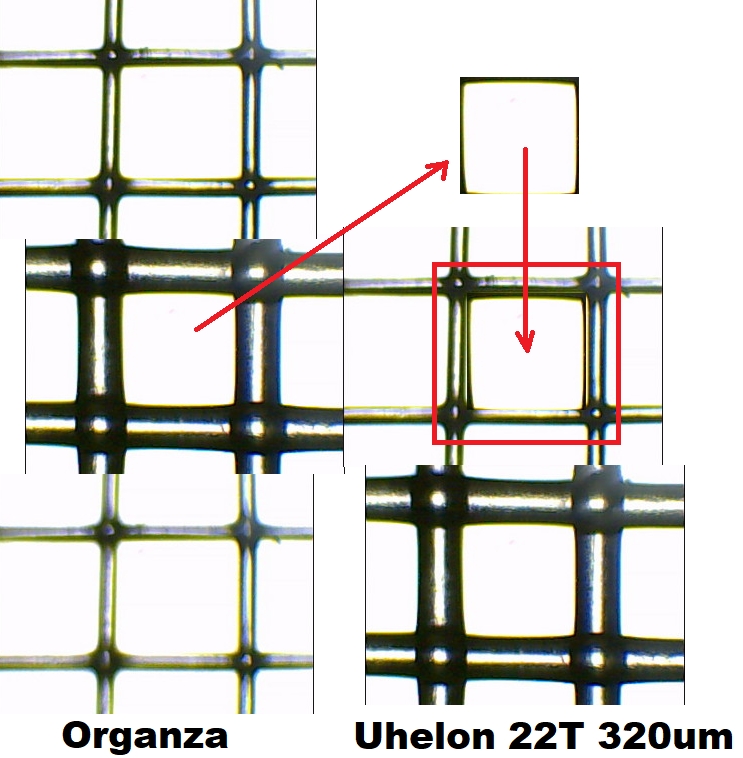
Microscopic comparisons of individual networks
Photography Kučera Karel
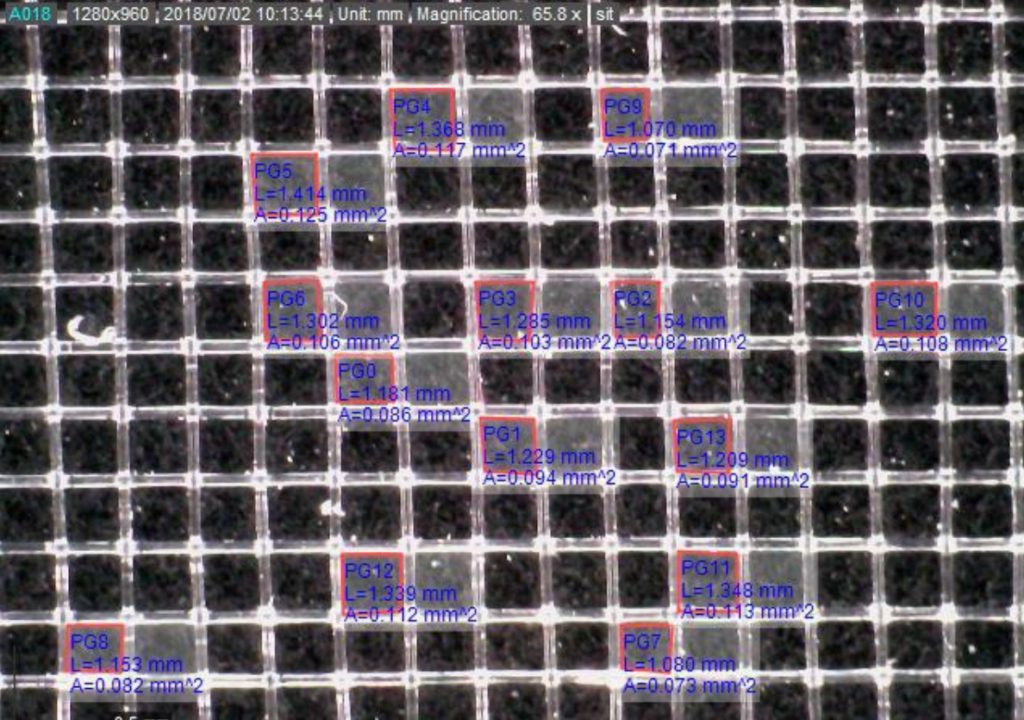
Sample of measuring areas on organza
Faculty of Textile Engineering, Technical University of Liberec
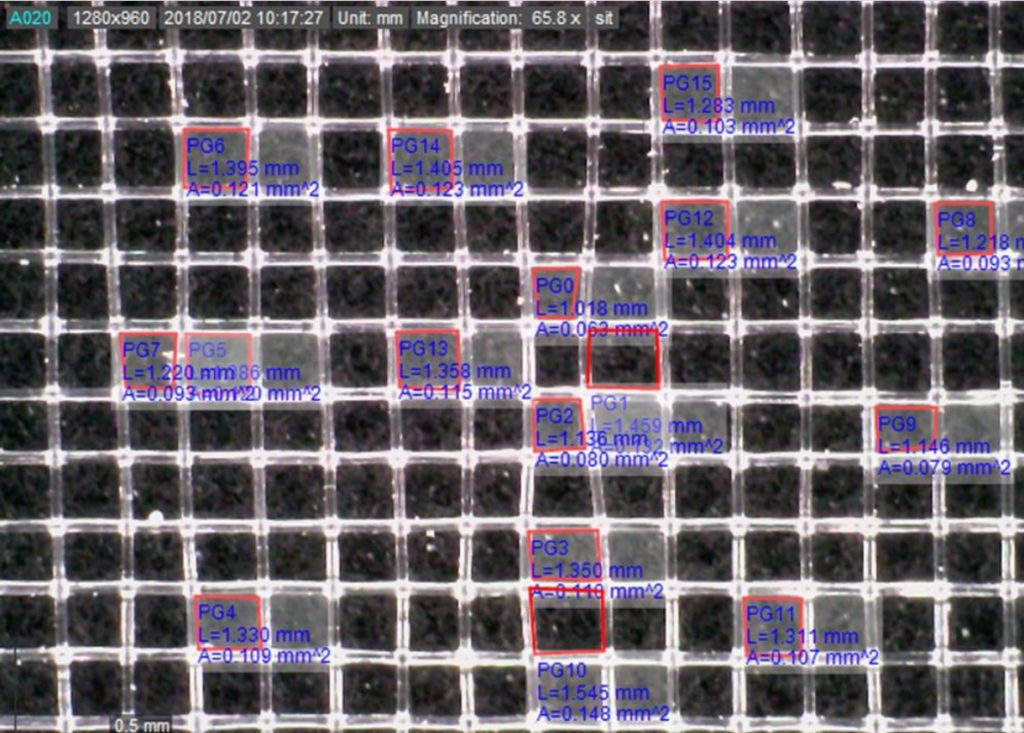
Sample of measuring areas on organza
Faculty of Textile Engineering, Technical University of Liberec
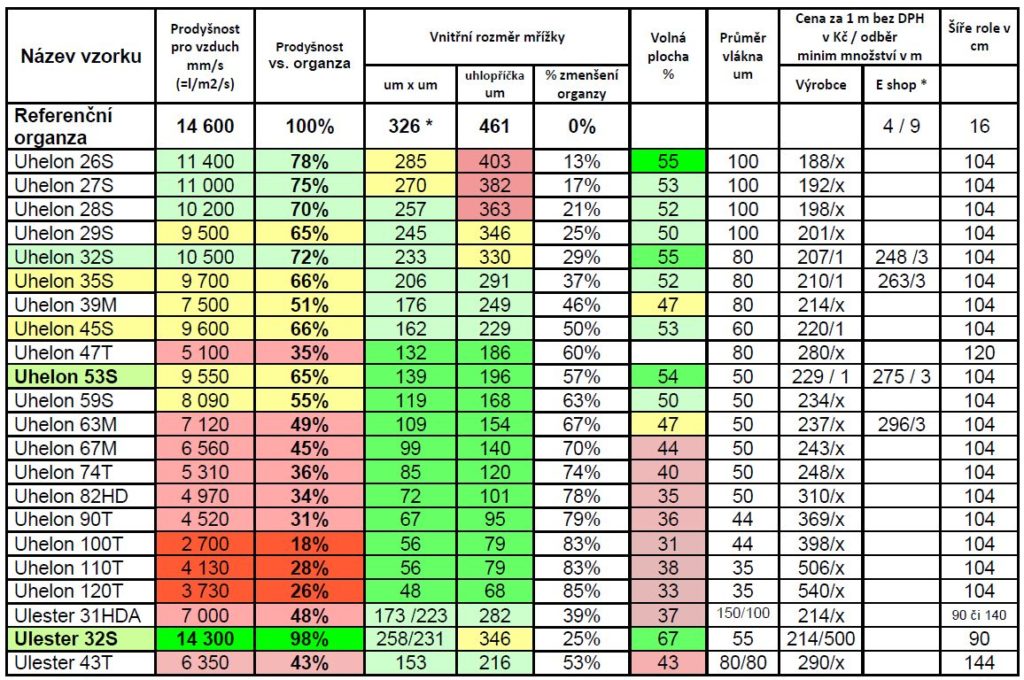
Test results:
A test of sample size measurement showed stability in strength for uhelons and ulesters. Under normal stress, such as that experienced by nets within the ulk's structural solutions, there is no need to fear a change in the declared mesh size.
2.) * For ordinary textile organza, there was a large scatter in the measured samples, ranging from 309µm to 326µm. This is due to the thin fibre structure and its use as a textile rather than a technical sieve. Therefore, dimensions larger than those found cannot be excluded, e.g., if the organza is stretched more to one side.
The size of the female Melittobia acasta, as reported in the literature and confirmed by my own microscopic observations, is approximately 368–340 µm for the head, 300–316 µm for the body, and 380–447 µm for the abdomen. There is some variation due to the size of the individual specimens and their age. Given the diagonal length of the organza (461 µm) and its not entirely constant width, the possibility of penetration cannot be ruled out when using 100% organza. An online source also mentions the possibility of egg-laying and the larval stage occurring outside the nest itself in the case of Aphomia sociella, which has a larval body width of 300 µm.
In the presented table, the values are plotted on a colour scale from bright green (most meets the required parameter) Over yellow (parameter thresholds) do dark red values (unsuitable for breeding purposes in the given parameter). Organza was taken as the reference value, and material samples with eyelets of the same size or larger were excluded from testing. With the exception of Ulester 32S and Ulester 31HDA, which have a rectangular profile, all other fibres are square. Material prices are given as of 10.7.2018 and their amounts may vary depending on the supplier. Prices were only determined for some types of materials. In the case of organza, it is an current online offer; where there is a /x next to the price, it is necessary to verify the minimum order quantity if interested. In the case of orders over 25m, the manufacturer offers a quantity discount.
Conclusion and recommendations for material selection:
- For trap construction, where the primary goal is not to vent the ulcer (flap, trapdoor trap) I recommend using material UHELON 53S. The Uhelon 53S still offers good breathability (65%) compared to Organza, yet its mesh size is approximately 57% smaller. A mesh size with a diagonal measurement of less than 200 µm should provide a reliable barrier even against the larval stages.
- For the construction of ventilation openings I recommend using the material Ulester 32S, the material stands out from the rest thanks to its excellent breathability (98%); the mesh size is already within the safe range, whilst the diagonal size is at the upper limit, yet it still provides a barrier. Given its excellent breathability, it can be used in ventilation systems with two screens, provided that these are not placed directly against one another.
Unfortunately, according to the manufacturer's statement, the Ulester 32S is not in regular production, only available to order, with a minimum order quantity of 500m at a price of 214 CZK per metre (excluding VAT), which is beyond the usual farming capabilities. A suitable replacement could be the material Uhelon 32S whether Uhelon 35S sky Uhelon 45S a Uhelon 53S. However, the choice must be adapted to the specific construction of the hive, given the quality and method of ventilation. I would recommend in these cases already use only one of these technical nets in the ventilation system, which should be located where it can be cleaned of dust or water condensate, e.g. by gentle suction or airflow. - The gauze must always be protected from mechanical damage by another net., which does not limit breathability but acts purely as mechanical protection
- The sieve must lie flat against the edges structural solution of the opening.
- Structural openings must be designed so that, to enable status check network integrity.
Manufacturer's technical data: SILK & PROGRESS, Ltd. Task solver for Čmeláky Plus, Karel Kučera
Examples of net applications on bumblebee hives:

Commercial product
ventilation attachment with internal mesh screen and barrier screen made of Uhelon53S
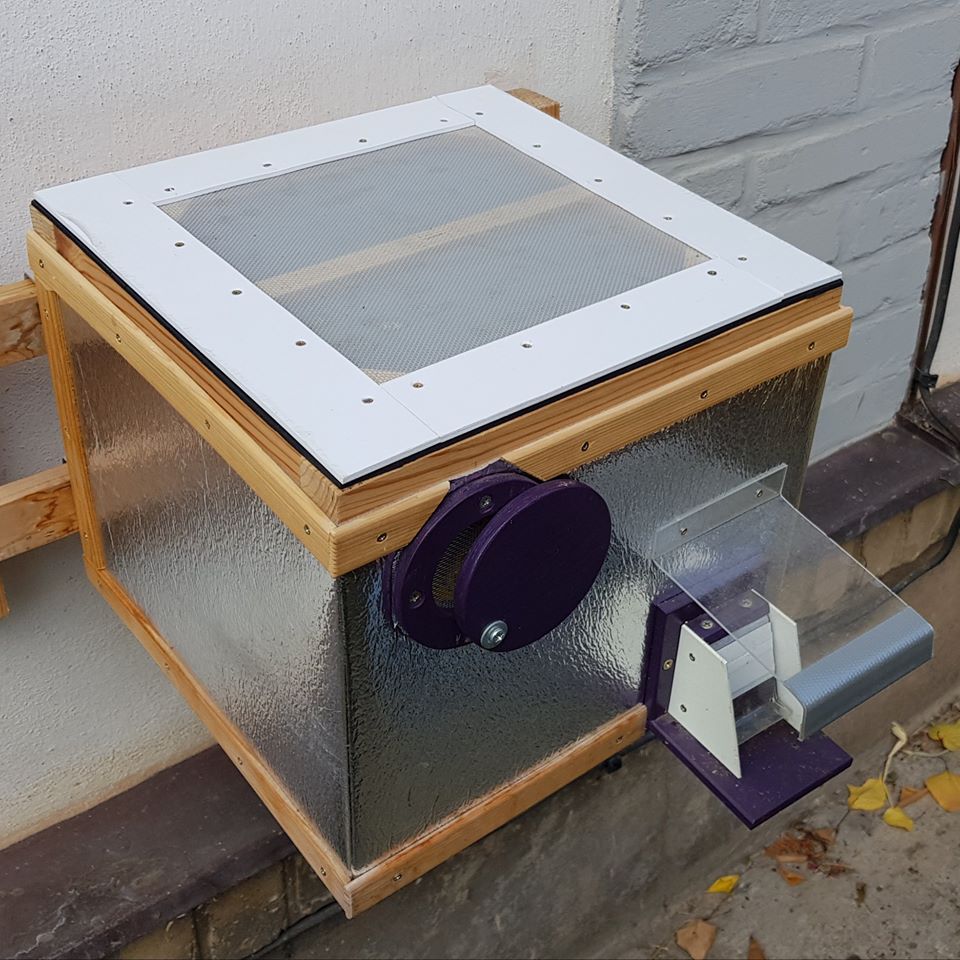
Protective netting under the hive roof.
Photo O. Hercog (2019)
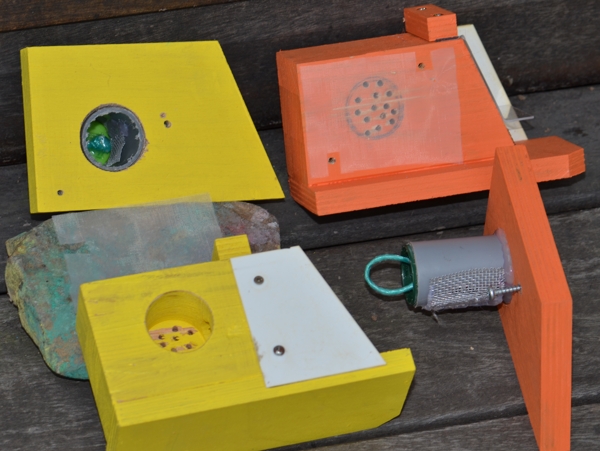
Usage of Uhelon 53S for covering the side odour trap on the flap
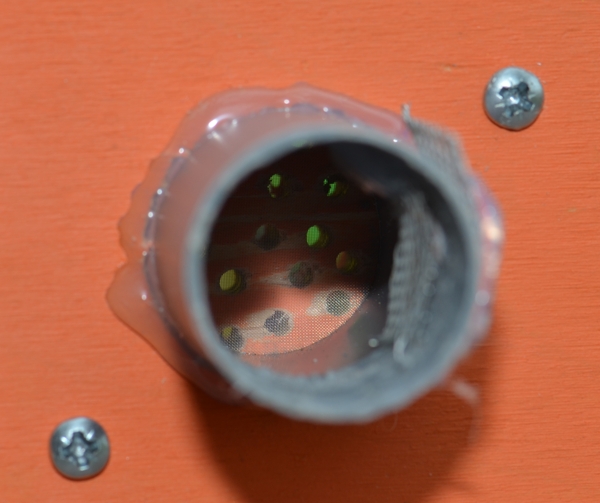
A detailed look inside the trap
Photography Kučera Karel
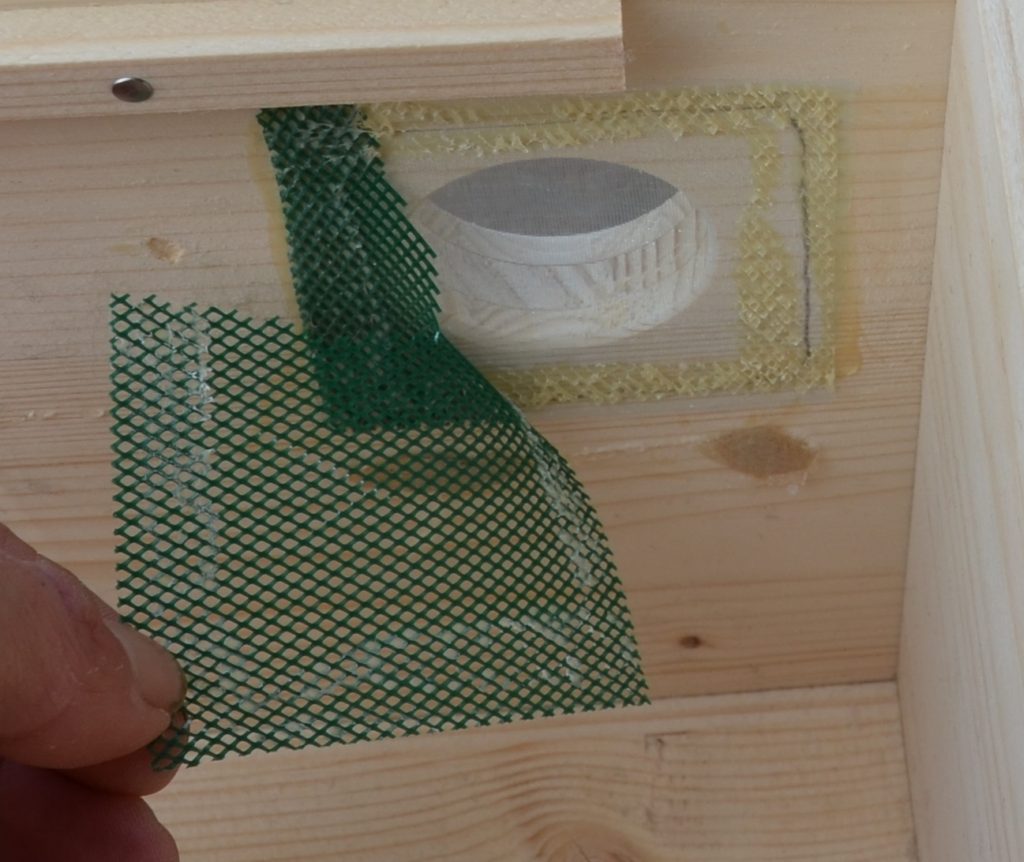
Example of faulty execution of meshes.
The plastic protective inner mesh, which bumblebees can chew through, is in close contact with the inner barrier net.
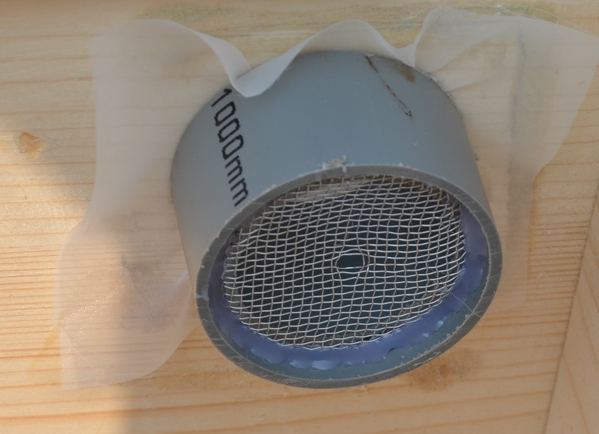
follow-up sample
Loose-fitting (easily replaceable) mesh made of Uhelon 53S and a sealing attachment together with a protective aluminium mesh. The small opening serves as an entrance and an inner trap for parasites (flies).
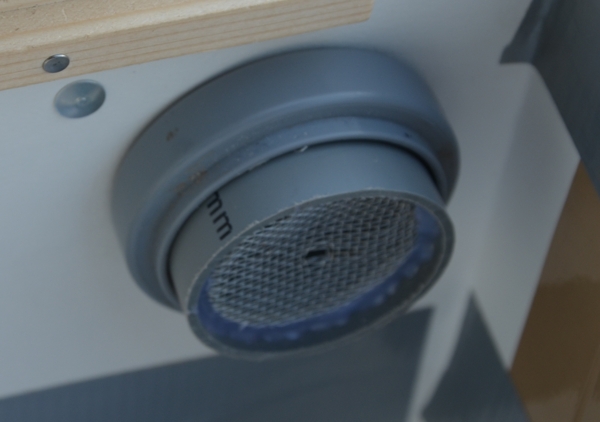
Final internal finish in the bay. Free edges of the insulation beyond the paper lining, edge covered with a protective sleeve.
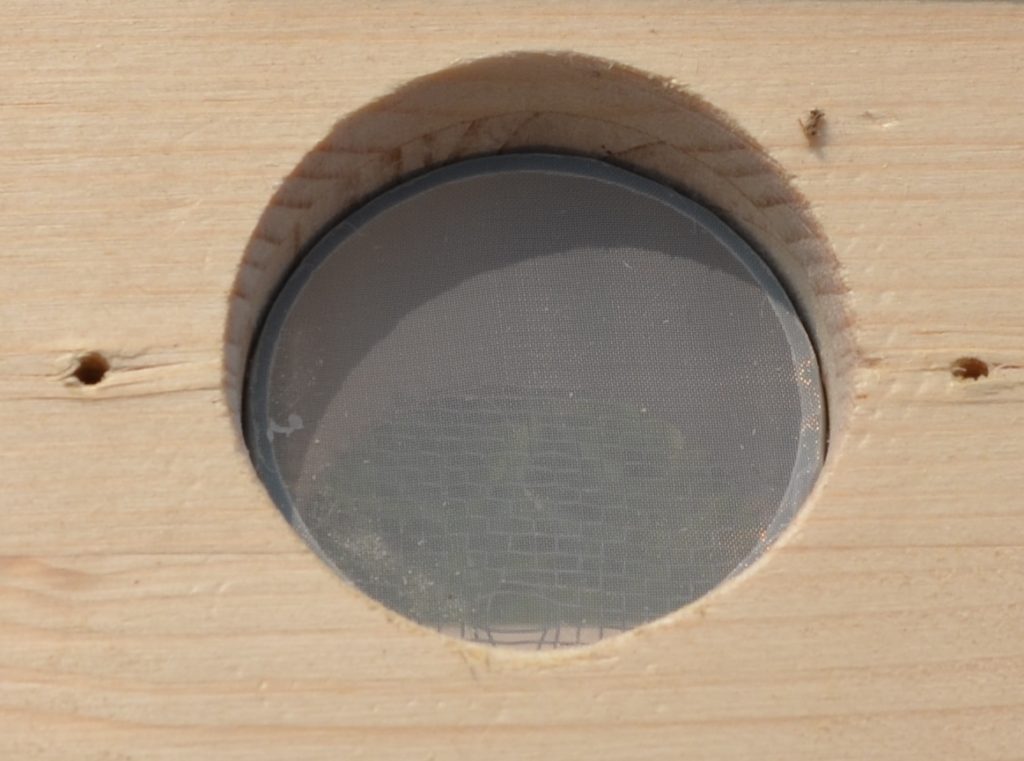
Exterior view of a perfectly sealing mesh made of Uhelon53S in the ventilation opening.
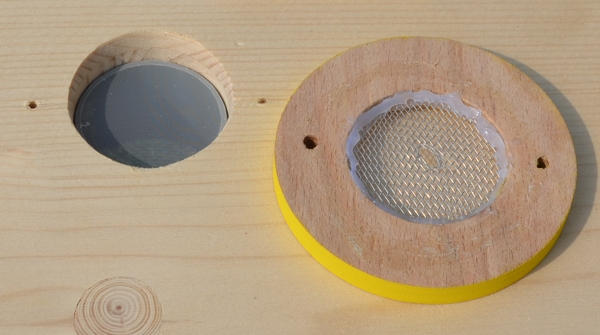
Outer cap with a hole like a trap for parasites.
A parasite that seeks to enter a hive will pass through an opening and remain in the interspace. This way, it does not need to seek another entrance such as the hive's flight opening.
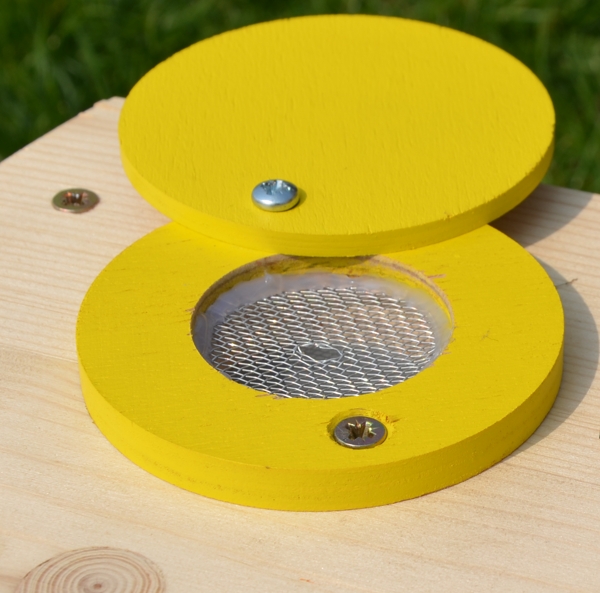
External final solution for originally unsuitable ventilation.
Karel Kučera Photography