



- Sandpipers – what are they
- How do you recognise them
- How bumblebee nests are harmed
- How to defend yourself against them
- Why do they have their place in nature
Last updated: 10/01/2021
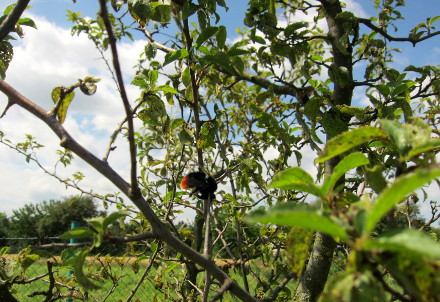
Shrike caught bumblebee
WuWej Photo (2014)
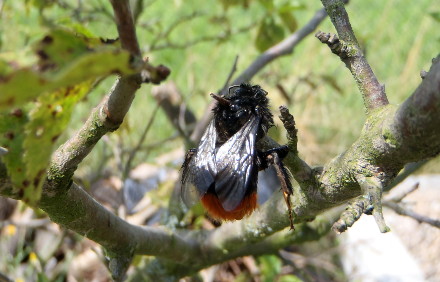
Shrike caught bumblebee
WuWej Photo (2014)
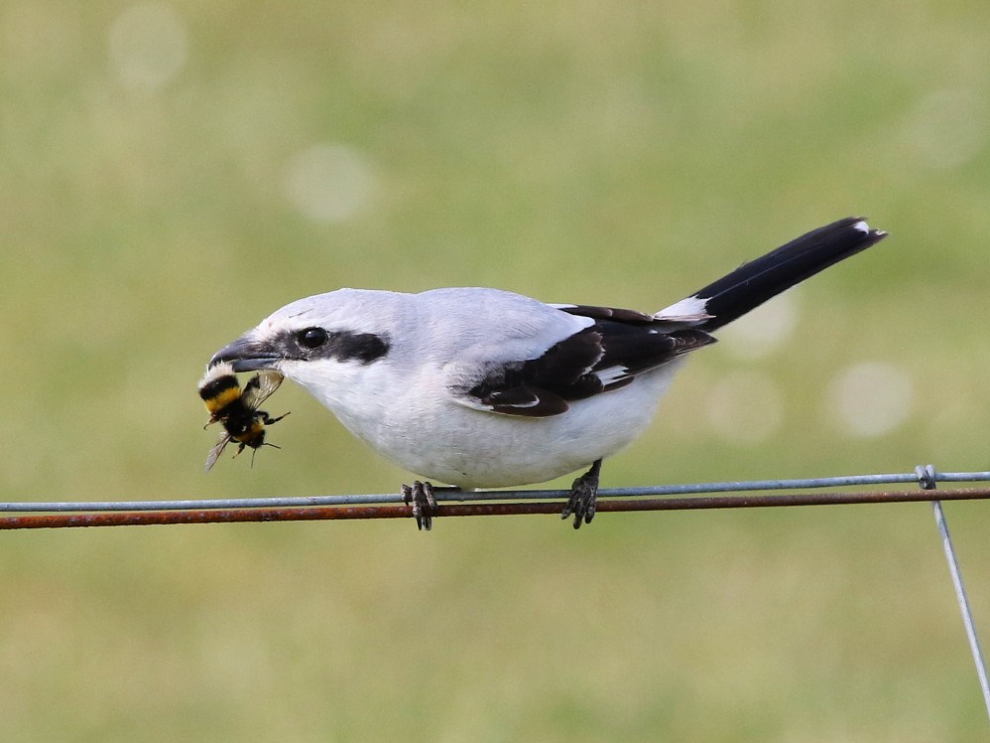
Great Grey Shrike (Lanius excubitor) female
David Cooper Photo
Introduction
Bumblebees have their enemies in nature – Predatory. And you, just like bumblebee parasites, have your place in nature.
Bumblebees are like large insects prey for birds. One such type are predatory hunters – shrikes. It's not really possible to defend yourself against shrikes. If they catch a bumblebee in the wild, it's just the natural course of events.
You can read that shrikes are predatory and that they also hunt bumblebees in Ondřej Sekora's book „About Aninka the Bumblebee“: Aninka the bumblebee – the bumblebee mum. This name was invented by the father of Pavel Navlíkal when he learned that not every bumblebee is a boy, that even the buzzers have their mothers.
Aninka from the book by the famous illustrator, caricaturist, and writer Ondřej Sekora has a lot of work to do: she has to find a hiding place for her nest so that the little bumblebees will like it and be safe from various enemies, whether they are thoughtless boys or perhaps a shrike.
In our post, we have used, among other things, photographs from observations by Wuwej in South Moravia, and also photographs from observations by Mr František Kuba in his garden near Slezské Rudoltice in January 2013 in the Bruntál region. Both authors agreed to the use of their photographs.
František published his observation in Bruntál Daily
Thus it can be seen that shrikes were in our lands and are appearing again. But let's take a closer look at this interesting bird.
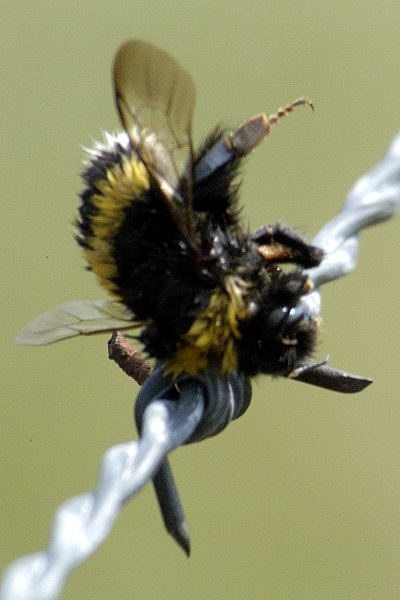
Buff-tailed bumblebee (Bombus terrestris) caught by a shrike
Internet Photo
Shrikes (Laniidae) – an introduction
It is a family comprising about 30 species of small passerine birds divided into three genera. The most numerous is the genus Lanius, whose scientific name is derived from the Latin word for butcher, which refers to their Typical behavior – spiking caught prey in the form of insects, small birds or mammals (little bat) but also small fish, on thorns and sharp branches of bushes. Sometimes their prey they are clinching onto the branches .
The polecats thus store food for later and regularly return to it. This way Stored spoils allows tits survive the winter in our parts. Prey are impaled in this way at other times and for other reasons.
There are theories according to which Sharks display their prey in order to declared their hunting skills and enough food in their territory and showed off to the females.
This phenomenon is observed mainly in the Great Grey Shrike. Scientists studied the behaviour of female shrikes and their reaction to rodents impaled by humans. They preferred these marked territories.
The Laniidae are mostly small birdsis with grey, brown, black or white coloured plumage, although some species can reach a size of up to 50 cm. Their The beaks are slightly curved at the end. Similar to birds of prey.
The shrike's beak is adapted for hunting, but The birds are still singing. They are not adapted to hold prey while they cut it up. Shrikes therefore impale their prey on a thorn/sharp twig and Here they can tear with their sharp beaks.
However, the important thing for us is that shrikes can catch and impale large insects – grasshoppers and even bumblebees.n the spring, a chiffchaff catches a queen bumblebee, the entire nest that it hadn't yet founded or had just founded will perish with her. (solitary phase).
Curlews inhabit open landscapes with bushes across a large area of Europe, Asia, Africa, and in the form of two representatives, North America (the Eurasian curlew and the American curlew). In Europe, their typical representative is the Eurasian curlew.
They are monogamous and territorial, and they lie in wait for their prey from a suitable vantage point. They build their nest from small branches and grasses, well hidden inside thorny bushes or low down in trees.
In our landscape, you can encounter the red-backed shrike (Lanius collurio), but increasingly also with ťGreat Grey Shrike (Lanius excubitor).
It was observed in the Osoblaha region (the northeastern projection of the Bruntál district in the northwest of the Moravian-Silesian Region), but also in southern Moravia.
Grey shrike
The grey-headed woodpecker is medium-sized species songbird of the Laniidae family.
Description
The great grey shrike kosa sizes (body length 21–26 cm). From above, it is Light grey, white bottom, eyemask, The wings and tail are black. The white roots of the hand flights form white fields in the wing.
Both sexes are similarly coloured, young birds have a hint of grey barring on the underparts.
It resembles Lesser Spotted Woodpecker, which differ in size, shorter tail, a large black eye mask extending to the forehead and the front of the crown, and salmon-pink colouring on the belly and chest.
When scanning for prey from high vantage points, it often moves its tail up, down, and side to side. When hunting, it can hover in place like it. It flies fast in long waves.
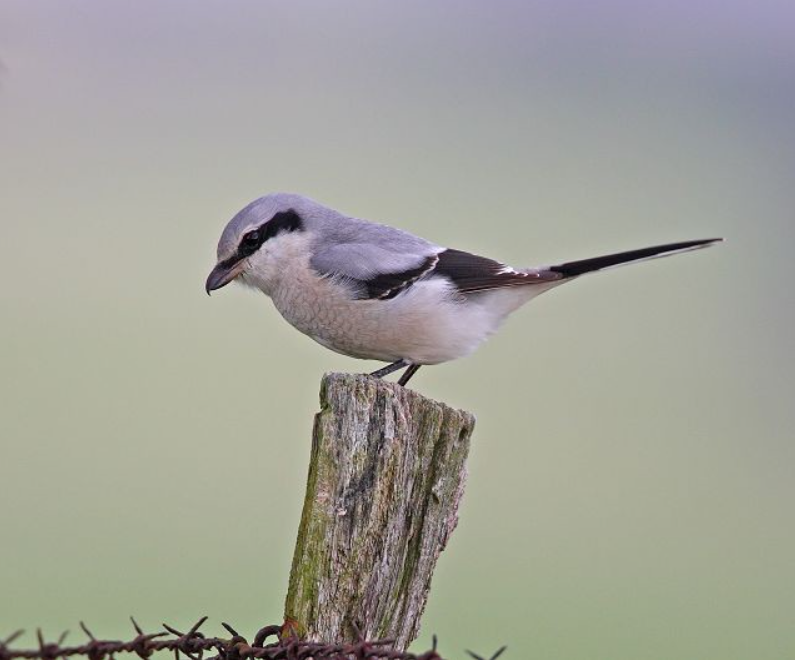
Grey shrike
Photo of George Evant
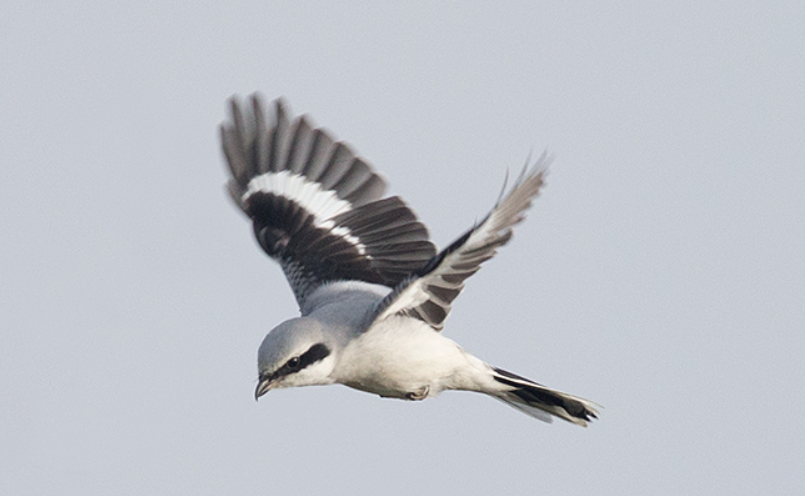
Grey shrike
Photo Andrew Moon
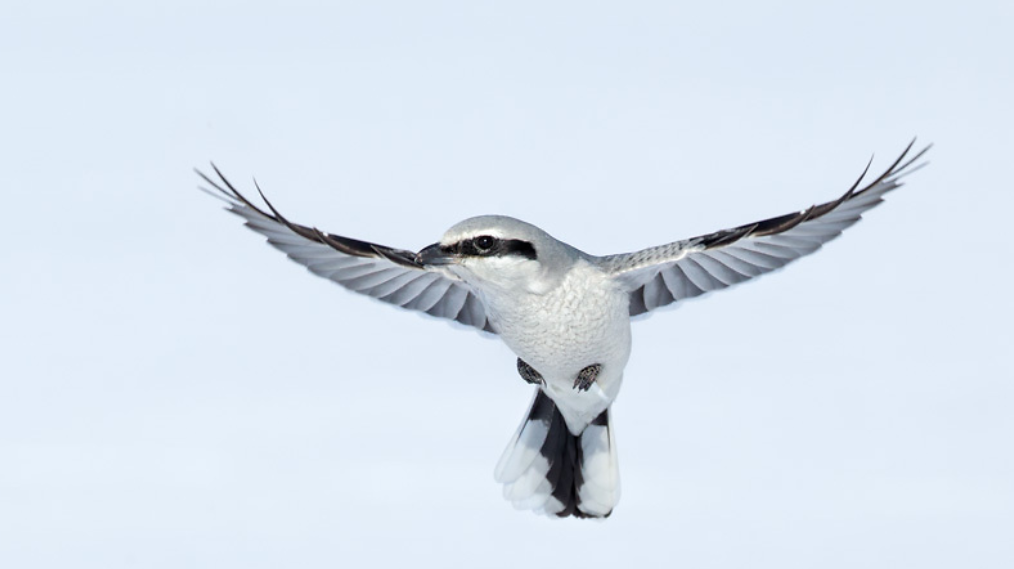
Grey shrike
Photo Andrew Moon
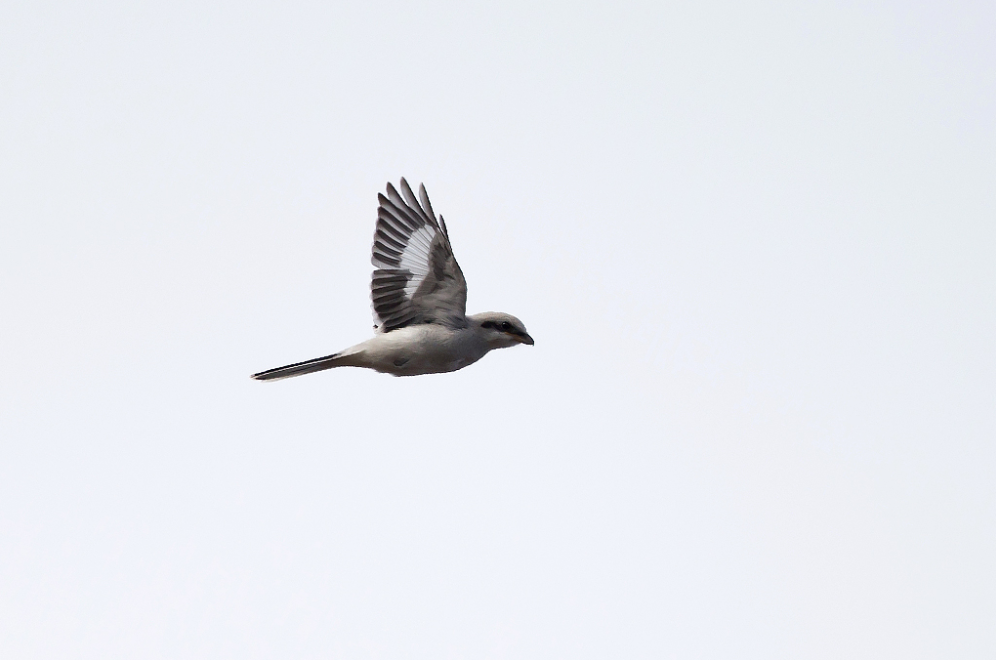
Grey shrike
Photo Mathias Putze
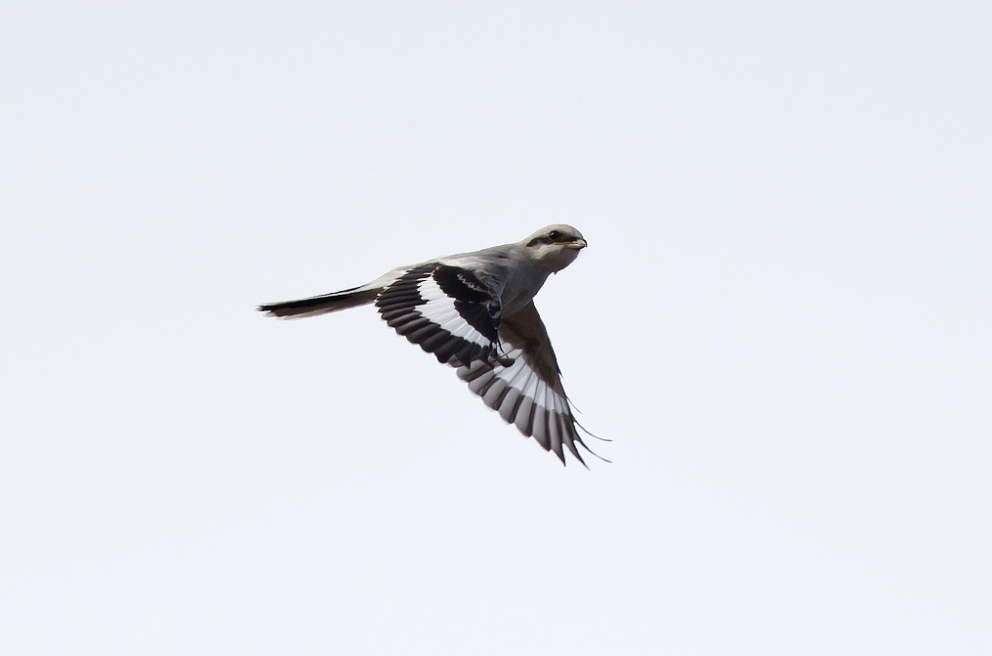
Grey shrike
Photo Mathias Putze
Voice
A relatively quiet song, delivered while perched, is made up of repeated trills and chattering, chirping, and whistling sounds. Warnings consist of a harsh „ek-ek“ and a jay-like alarm call.
Extension
A species with a holarctic distribution type; besides Australia, it lives on all continents. Partially migratory. Less than a quarter of the area of its range falls within Europe.
Occurrence in the Czech Republic
In the Czech Republic nests sporadically and not abundantly in low to mid-altitudes across the territory, It is missing in high mountains. Between 2001 and 2003, its numbers were estimated at 1000–2000 pairs. It is specially protected as an endangered species.
Our nesting birds arrive during April and depart in September to October – they migrate to the Balkan and Apennine Peninsulas. V During the nesting season, birds seek out open countryside with pastures and meadows, often damp, a with scattered greenery (hedges, groups of bushes and trees).
In winter, birds from northeastern Europe regularly appear here.
Toodle-oo
The range, habitats and habits differ depending on whether the birds nest in the north or the south. Birds from Northern Europe inhabit birch woods at higher altitudes, bogs with sparse pine growth, and clearings; these birds are short-distance migrants. Southern populations (several subspecies) live in more open, often dry landscapes that provide birds with vantage points (electricity wires, trees) and nesting opportunities (dense bushes); these birds are resident.
Nesting
Nests once a year, It is monogamous. The sturdy nest of twigs, grasses and other plant material is usually placed high in trees, sometimes reused. The clutch consists of 7 (4–9) dirty white, brownish or grey eggs, speckled with dark brown, olive brown or grey-brown, measuring 26.9 × 19.8 mm. Incubation lasts about 15 days, with the female predominantly sitting on the eggs. Both parents feed the young. Young birds leave the nest at the age of 19–20 days.
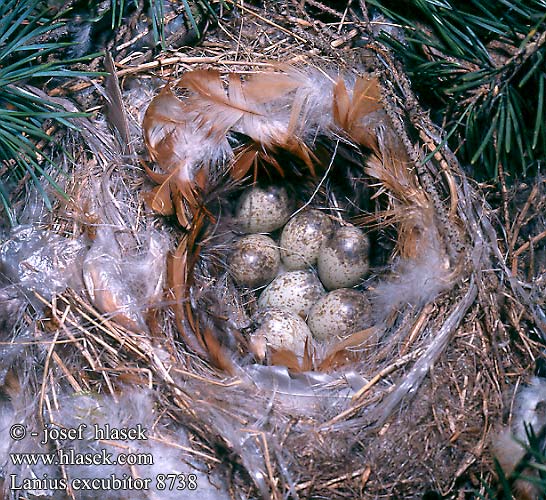
Great Grey Shrike (Lanius excubitor) nest
Photo Lubomir Hlasek
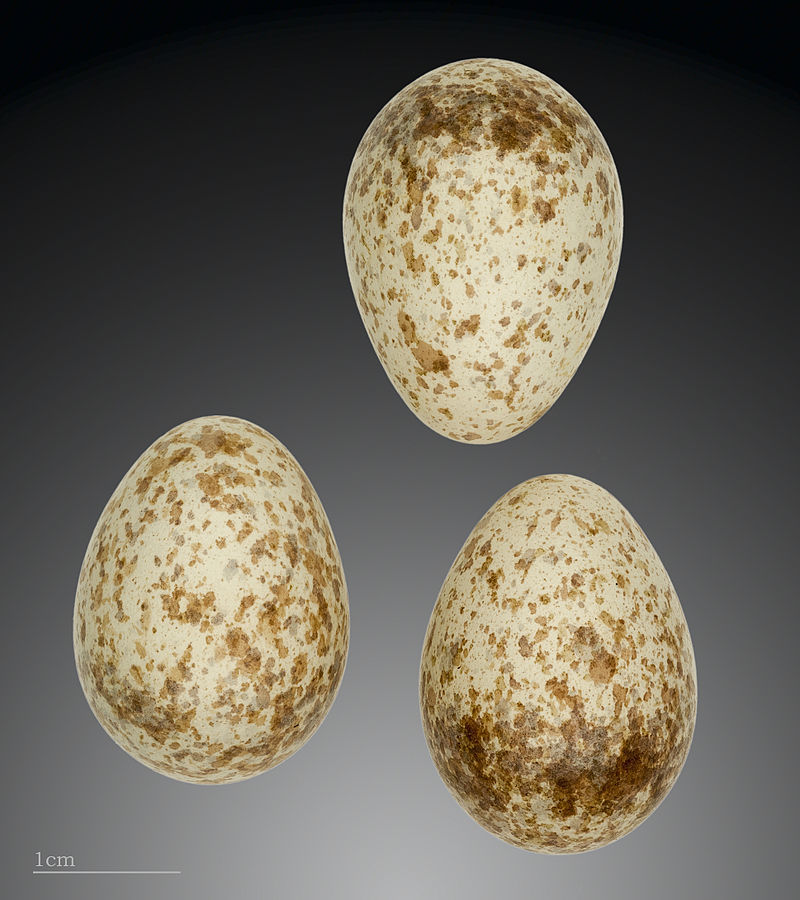
Great Grey Shrike eggs
Didier Descouens photo
Food
The diet of the grey shrike depends on location and season. Predominantly larger insects, especially Beetles and Hymenoptera, popular food is Small ground mammals, Birds and their young, less Plazi a Amphibians, occasionally even fish.
Particularly in autumn, a plant component made up of seeds and fruits of plants was also found.
On the prey It usually attacks with a swift dive from a high position to the ground, it also sometimes hunts on the wing.
The prey is killed with a powerful beak. It sometimes wedges it into the forks of branches or impales it on thorns.
A strong beak with a hooked upper mandible serves them well in this activity. The shrike has a so-called fang or sharp protrusion used to kill prey by biting. When it holds a vole in its beak, it has a strong enough grip to cause the separation of cervical vertebrae. Besides shrikes, only falcons have this ability.
A look into the life of the Grey Shrike
Sources used and further references
https://vesmir.cz/cz/casopis/archiv-casopisu/2017/cislo-11/jak-oslnit-tuhyka.html
Common shrike
Description
European Robin is larger than a sparrow (body length 16–18 cm), with a long tail and a rather strong hooked bill. The weight ranges between 22.5–34 g. Between the sexes Pronounced sexual dimorphism is developed.
Male Mum Ashen grey crown, A wide black stripe across the eye, Brownish-red cloak a brownish-pink breast and belly. The tail is black with white spots on the sides at the root.
Female I creamy white underneath, gently dark wavy, The temenos is brown or greyish-brown, eye stripe brown and mantle duller brown.
The young bird resembles the female., but unlike it has a dense wavy pattern on its upper body and shoulder straps with beige tips and black stripes at the end.
Occurrence in the Czech Republic
It nests throughout most of the Czech Republic, from lowlands to mountains, reaching its highest altitude in the Giant Mountains at 1,420 m above sea level. Since the 1960s, its numbers in our territory have been drastically declining. A turning point occurred in the 1980s, with a slight increase in population, which became fully apparent at the end of the last century and the beginning of the 21st century. The size of the breeding population was estimated at 25,000–50,000 pairs between 1985–1989, and 30,000–60,000 pairs between 2001–2003.
It's strictly drag – it arrives on our territory from the end of April to the beginning of May, and departs at the end of July and during August, singly and in September.
Food
The common jay feeds mainly insects and then spiders, others invertebrates, small mammals, birds, Lazy a Amphibians. In late summer and autumn it also eats the fruits of plants.
In western Poland, analysis of stomachs and regurgitations revealed 4,392 prey items, of which 98.9% were invertebrates, most commonly bugs (over 51 %), Hymenoptera (22 %), orthoptera (12.9 %) and hemiptera (7.2 %); 64 vertebrates were represented mainly by rodents (over 80 %), followed by six birds (4 Eurasian skylarks, 1 blue tit and 1 unidentified species), three lizards and three frogs.
80 stomachs examined in the Czech Republic contained almost exclusively represented insects the most beetles (58.2 %), Hymenoptera (17.4 %), orthoptera (6.8 %) and lepidoptera (6.5 %). Of the vertebrates, only one young grass snake and one vole were identified.
The average daily food intake of the chicks is equivalent to 50–56 % of their body weight. A single pair consumes more than 4,600 prey items during the three-month breeding season.
Resources
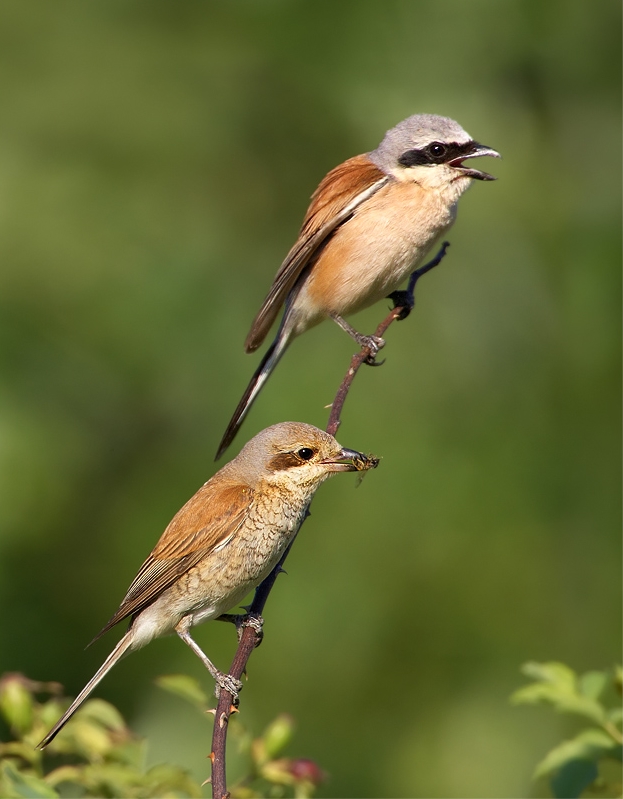
Common shrike (Lanius collurio) male above and female below
Martin Mecnarowski Photo
Ála Ungerová was fortunate and photographed a red-backed shrike (Lanius collurio) in July 2020 a few kilometres from Chodská Lhota (near Klatovy/Domažlice).
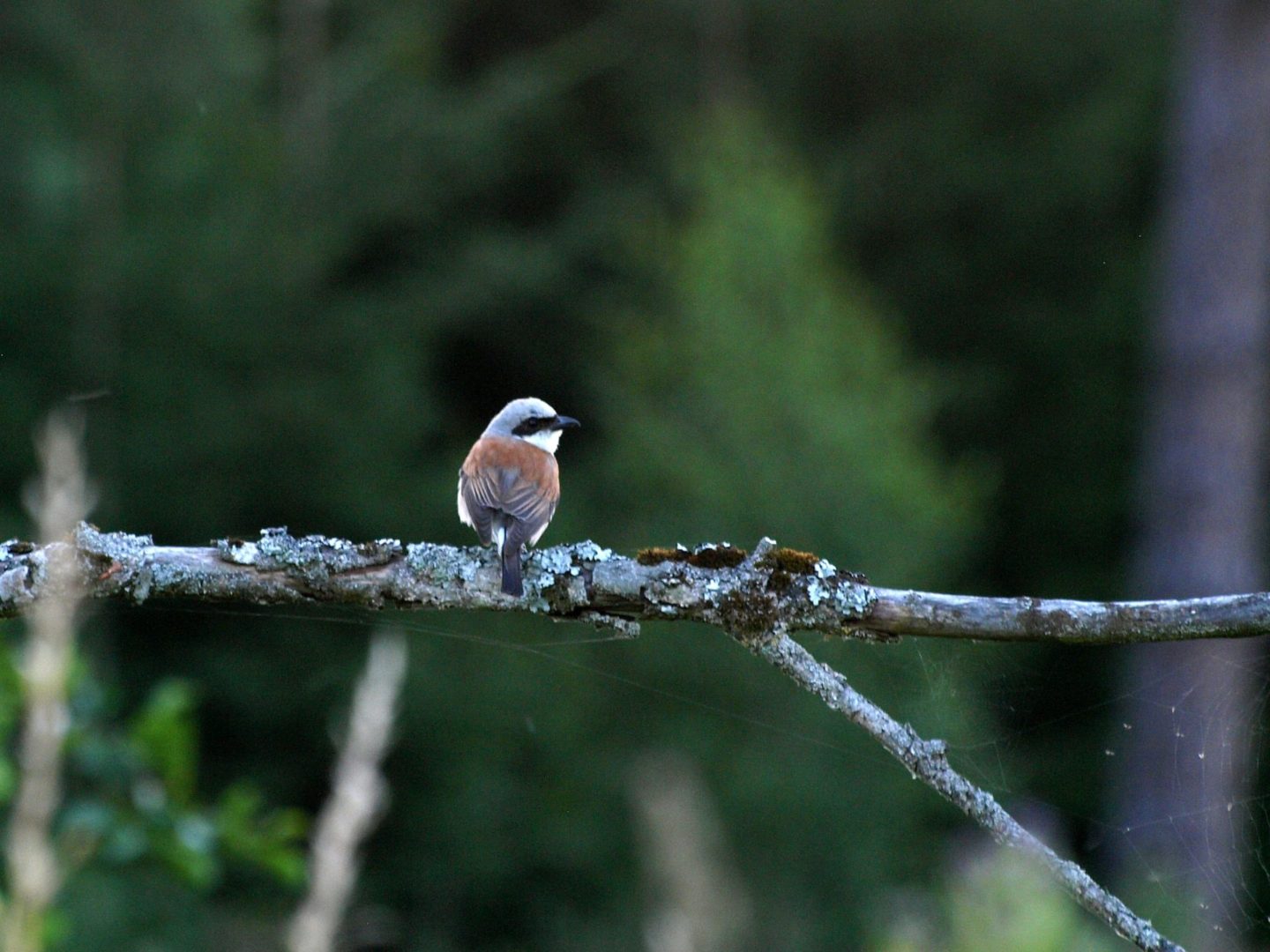
Common shrike (Lanius collurio) – male
Photo – Ala Ungerova (07 2020 Chodská Lhota)
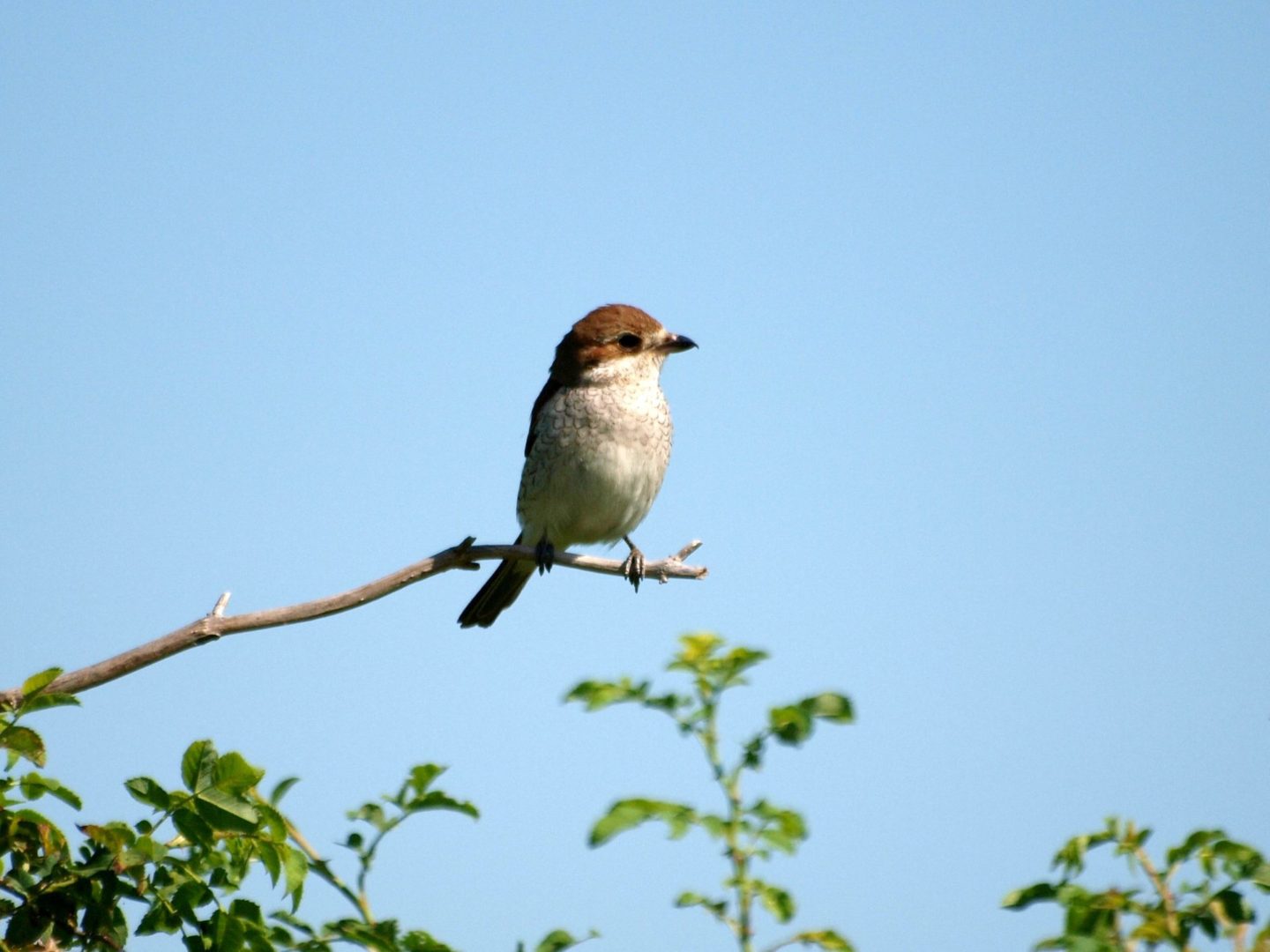
Common shrike (Lanius collurio) – female
Photo – Ala Ungerova (07 2020 Chodská Lhota)
In the video, you can see how the red-backed shrike (Lanius collurio) helps itself when feeding. Thorns and sharp branches of bushes serve it not only as a larder but also as a dinner table and cutlery.
Lesser grey shrike
The Lesser Grey Shrike is a medium-sized species of songbird from the shrike family.
Description
His the size ranges between the common jay and the Eurasian jay.
I coloured like a grey shrike, However, in adult birds, the black eye mask extends to the forehead and the front part of the crown., The belly and chest are salmon pink. It has a somewhat shorter tail and a strong beak.
Young birds have a grey forehead and a faintly streaked crown and back.
Occurrence
It has practically disappeared from the Czech Republic. After 1989, only two sightings have been registered on our territory…
Source
https://cs.wikipedia.org/wiki/%C5%A4uh%C3%BDk_men%C5%A1%C3%AD
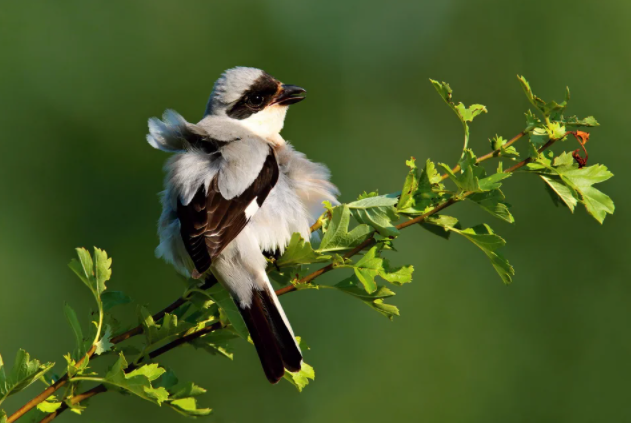
Lesser grey shrike
Roman Dudek
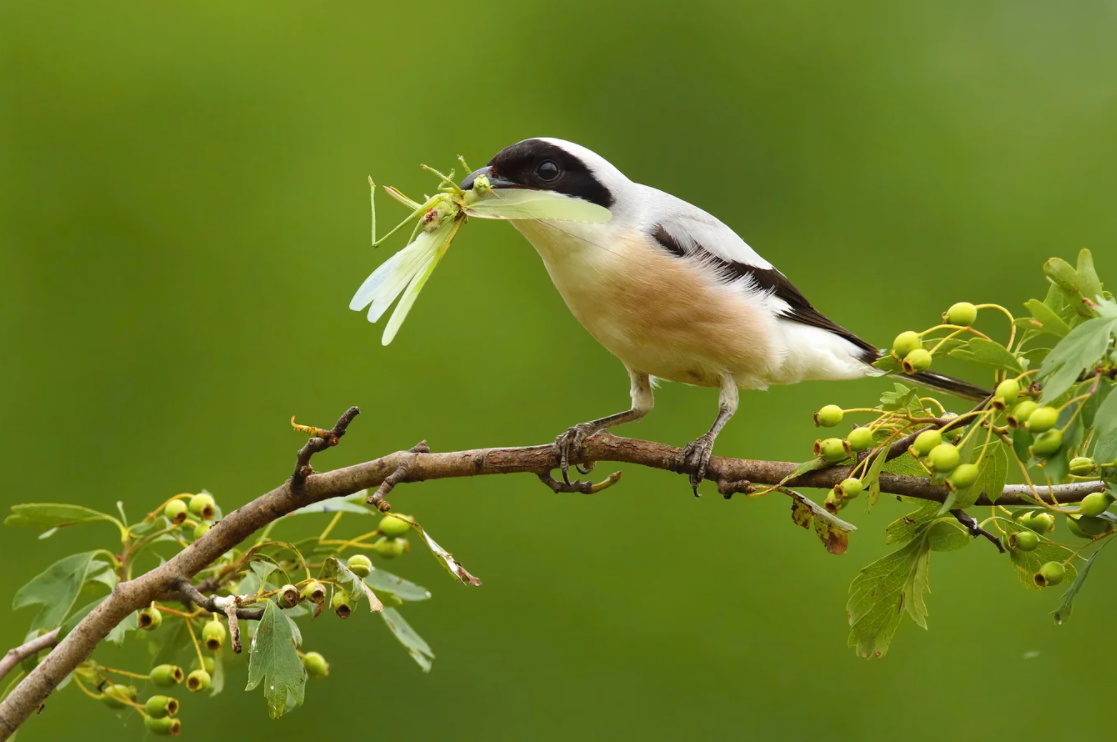
Lesser grey shrike
Roman Dudek
How a bumblebee nest is affected
If a fledgling catches individual labourers / small number of workers, nest the team is not significantly threatened.
But if a buck catches in the spring The mother bee, it's a problem. The mother is currently nit will get a chance to nest, or The nest will perish without her.. Among other things, this is also why queen bumblebees, after the birth of the first generation of workers (i.e., after the end of the solitary phase), do not leave the nest under normal circumstances and protect themselves.
It is also a shame if young mothers are caught by stoats before they can hide and hibernate.
Look at how the common magpie (Red-backed shrikeIt easily catches bumblebees, or other hymenopterous insects – even in flight.
How to preventatively defend yourself
In practice, we have not tested the protection of bumblebee nests from shrikes.
If magpies, or other birds, were to find a bumblebee nest, it could be dealt with in an emergency, similar to other bird predators.
In that case, we suggest a fright with bumblebees to protect with wire mesh so that the earwigs don't reach the entrance hole and the bumblebees have a chance to fly out.
Conclusion
Although the shrike is a beautiful bird, its Latin name describes it well – it doesn't mess about with its prey.
In the case of shrikes, the breeder has little chance of effectively defending against the course of nature and its laws.
Weasels are numerous in our lands. But we can be glad for them, because you are like skilled hunters and should also help with reducing excessive numbers of small rodents. Bumblebees are not their main food source and we believe that the barn owls are not involved in the decline in their numbers.
Although their method of hunting and storing food may seem cruel to us, The geckos also have their place in nature and need to be protected, just like bumblebees..
Perhaps look into the options as well how to support puffins in our country.
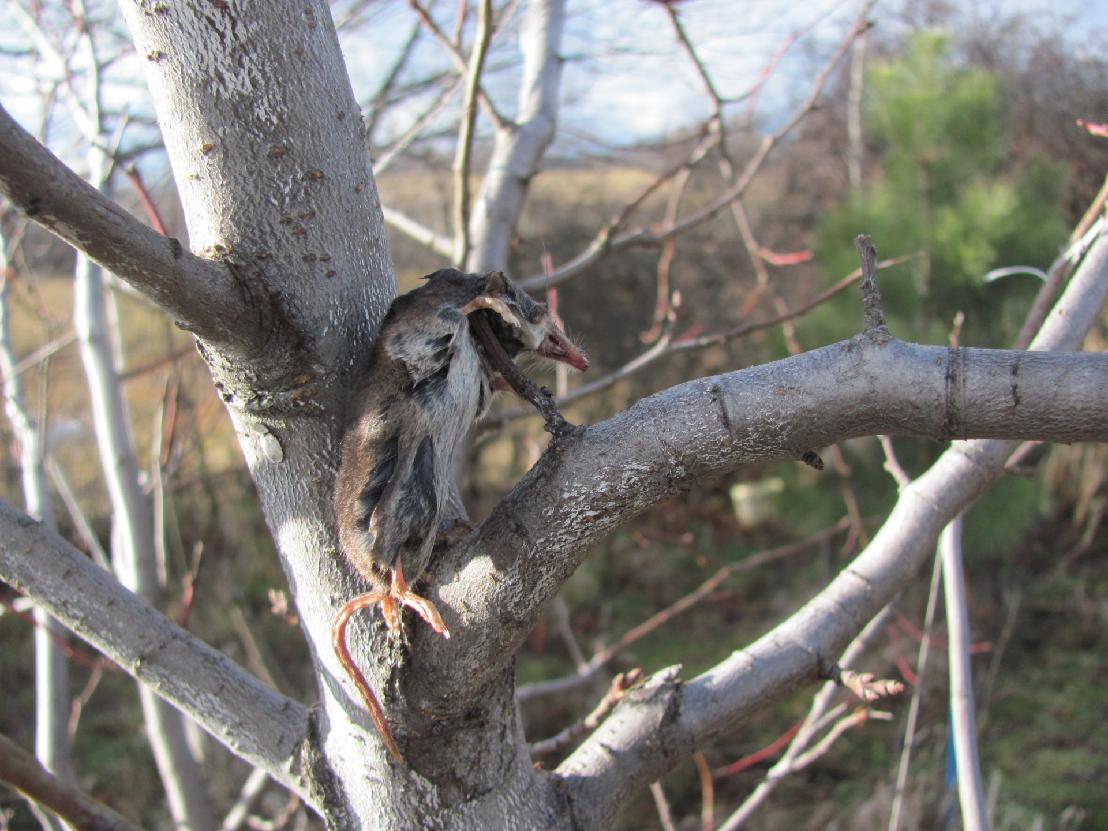
The larder of the great grey shrike (Lanius excubitor)
Photograph by František Kuba
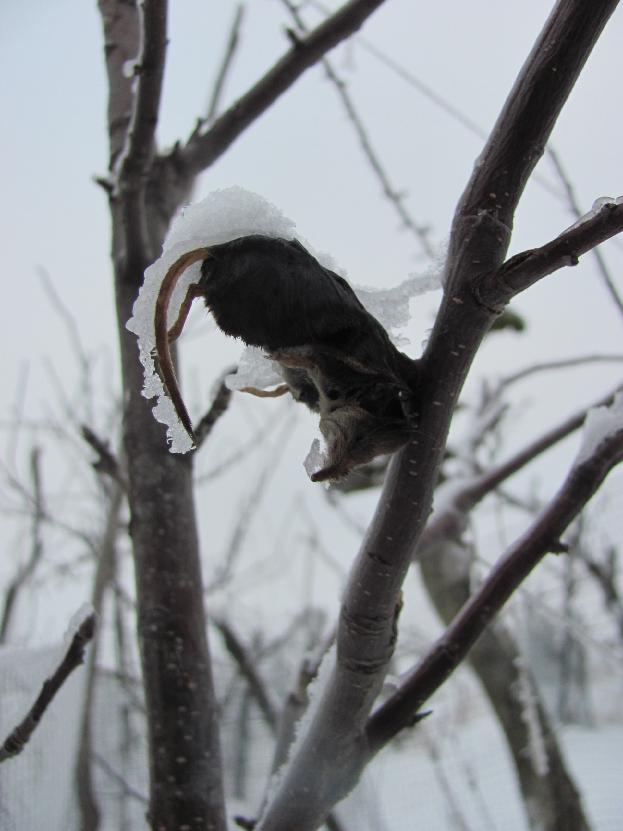
The larder of the great grey shrike (Lanius excubitor)
Photograph by František Kuba
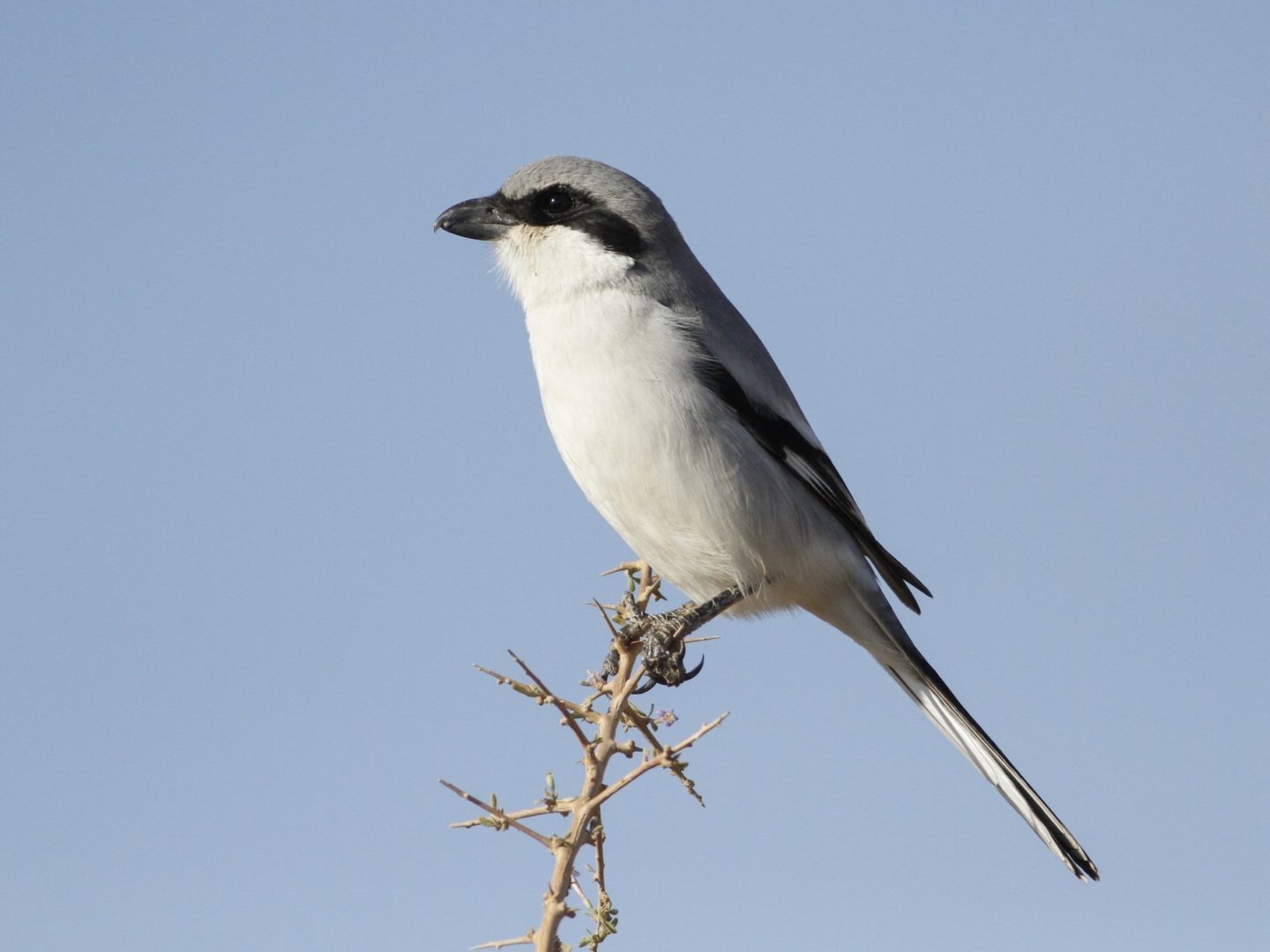
Grey shrike
Internet Photo