

The greater wax moth (Aphomia sociella) and bumblebees in nature
What you will learn here
- Co je to zavíječ cizopasný
- How to recognise him
- What is its life cycle
- How bumblebee nests are harmed
- Is the bee-eater really just a killer of bumblebees?
Last updated: 18/05/2022

Aphomia sociella
Wikipedia photo
Introduction
The weevil is one of the main enemies and destroyers of bumblebee nests in nature, but also in bumblebee farming.
Vine weevil it parasitises the nests of bumblebees, wasps and hornets and it essentially acts the same way here – its larvae feed on waste and build nests until they get stronger and then consume the host's larvae. Its nest will weaken, but they often get wiped out, including the adults.
The tortrix moth is a parasite, but its action also has a positive meaning from nature's perspective, which will gradually become apparent here. you will find out.
In this chapter, we will describe the leaf roller moth itself. In Parts for breeders We will describe in detail the techniques and options for protecting a hive against the wax moth and how to intervene when the hive is attacked.

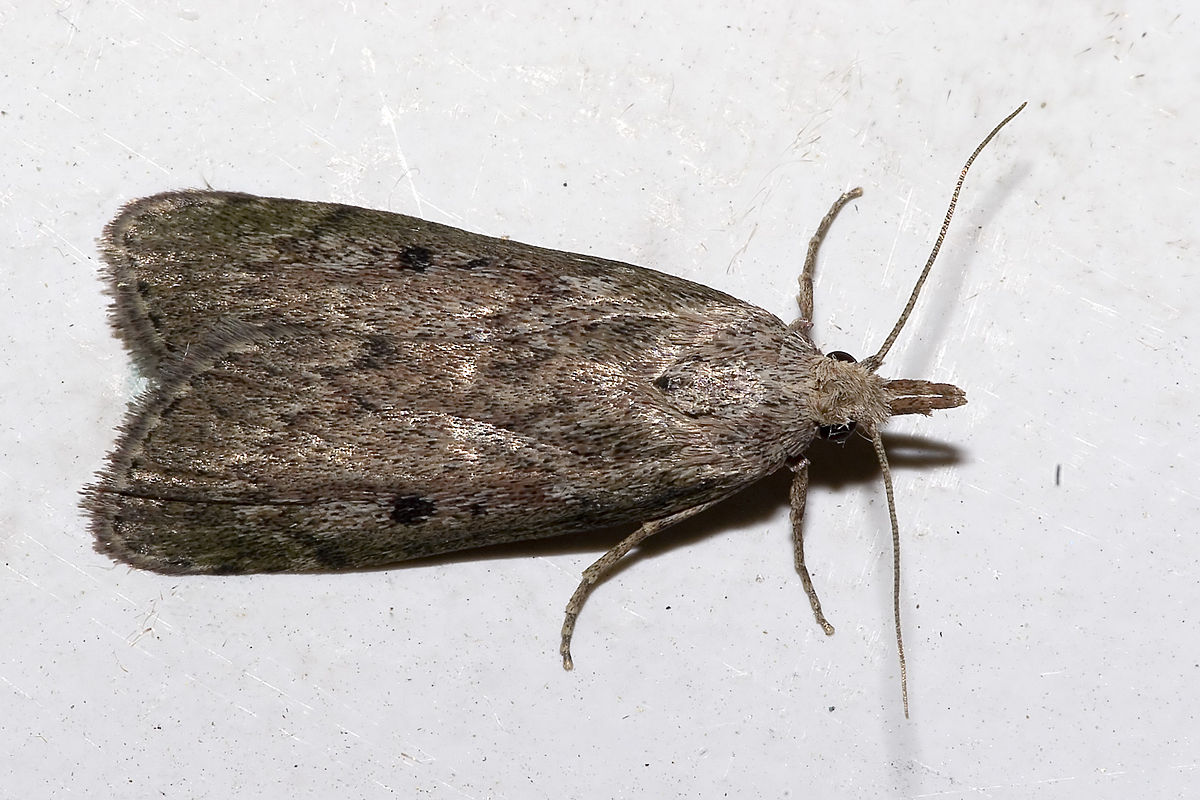
Wax moth (Aphomia sociella) – female
UK Moth Photos
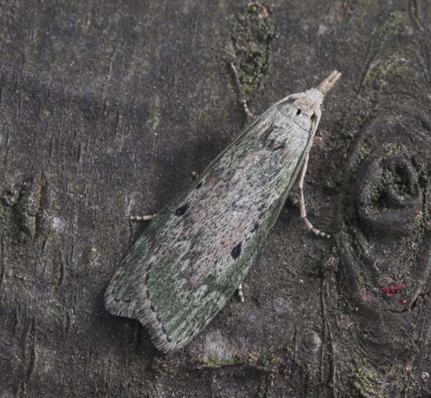
Wax moth (Aphomia sociella) – female
UK Moth Photos
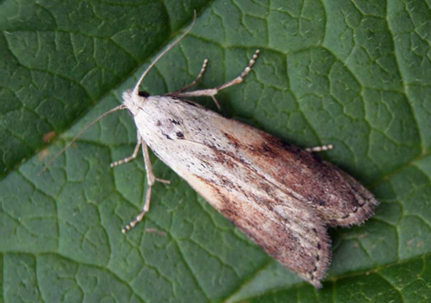
What the parasitic tortrix moth looks like
From Biolib its classification is as follows:
Kingdom Animalia Animals >> Kingdom Arthropoda – Arthropods »Class Insecta – Insects »Order Lepidoptera – butterflies » family Pyralidae – Tortricidae » rod Aphomia – moth » subfamily Aphomia
For us, it will probably be more practical description :
- It's a moth 20 – 30 mm long with a wingspan of 18 – 44 mm.
- His Wings are Reddish-brown, Grey-black sky Dark green s dark brown pattern.
- Males differ from females are more vividly coloured than the females (sexually dimorphic).
- Males They are characterised by a light ashen colour on the upper side of the forewings (first pair) and long antennae.
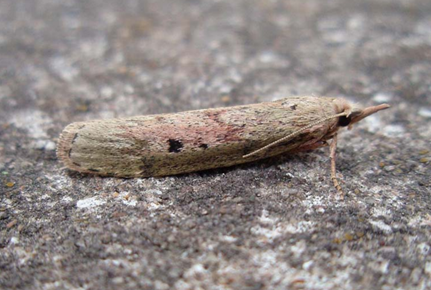
- Females they have a dark spot on the forewings and a typical head. The size of the female is sometimes such that she can squeeze through a very small gap.
- Caterpillars the larvae of tortrix moths are in their final stage 20 to 30 mm long, strong, yellowish to greenish, with prominent dark head and with strong jaws.
Perhaps we should clarify here. Difference between a larva and a caterpillar. – a larva is the immature stage of an animal. Caterpillar This represents the larval stage of butterflies.

Moth (Aphomia sociella) – male
UK Moth Photos
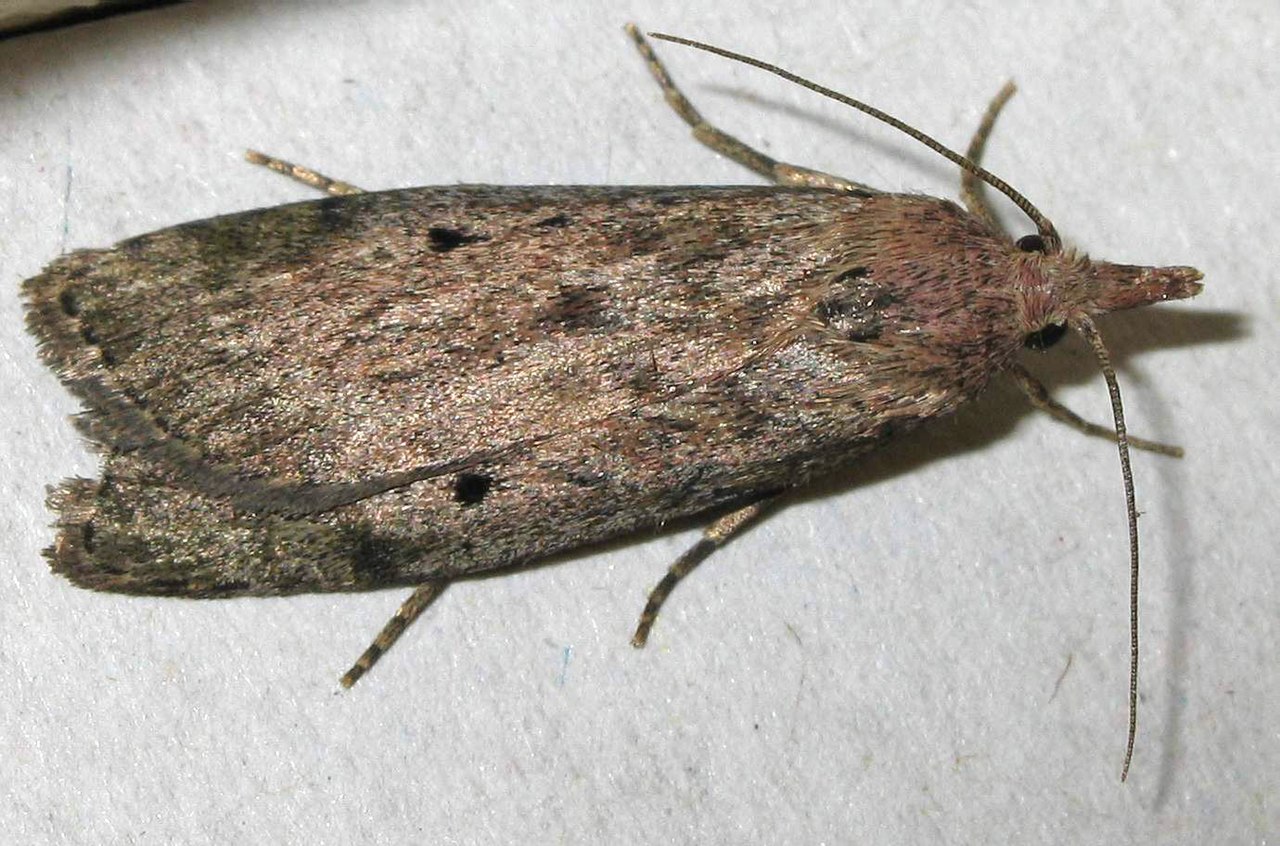
Wax moth (Aphomia sociella) – female
UK Moth Photos
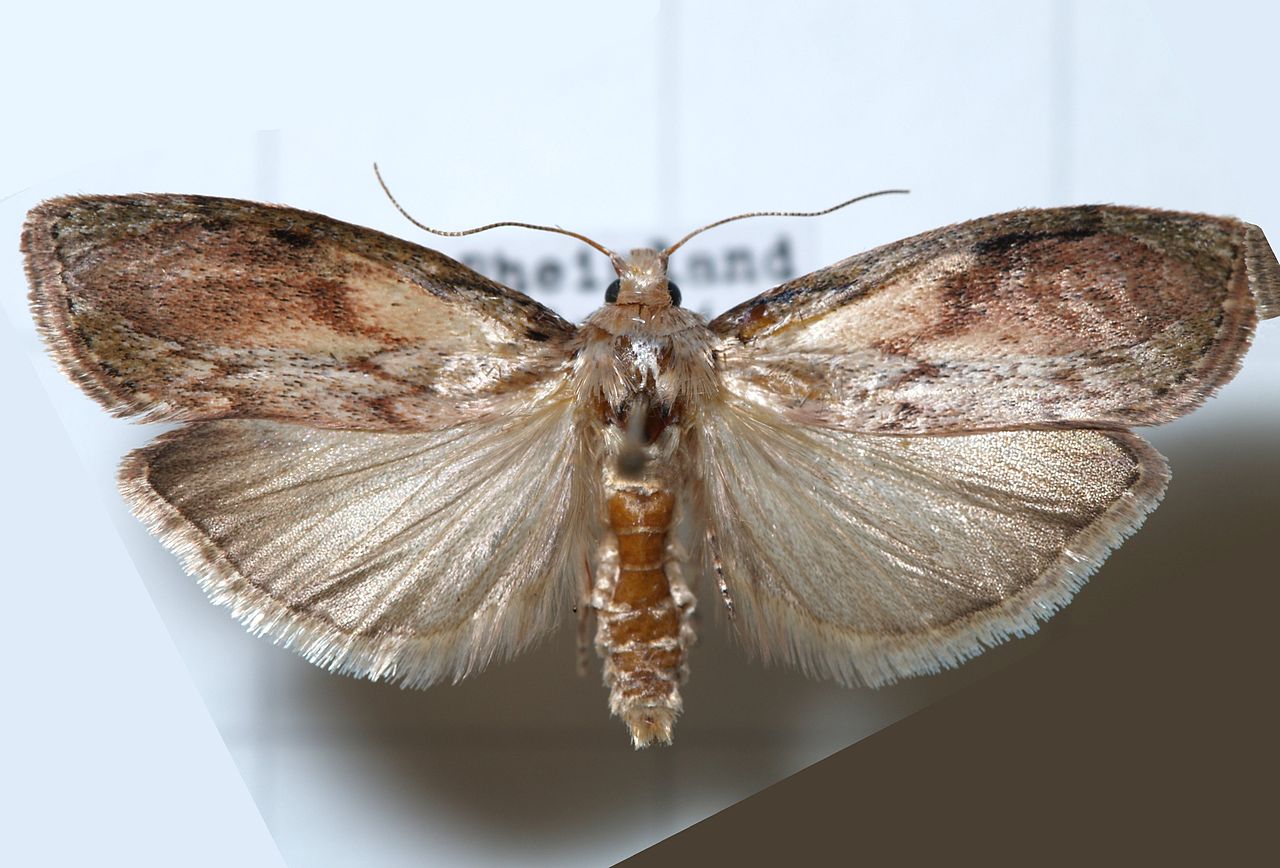
Moth (Aphomia sociella) – male
Photos from lepidoptera.butterflyhouse.com
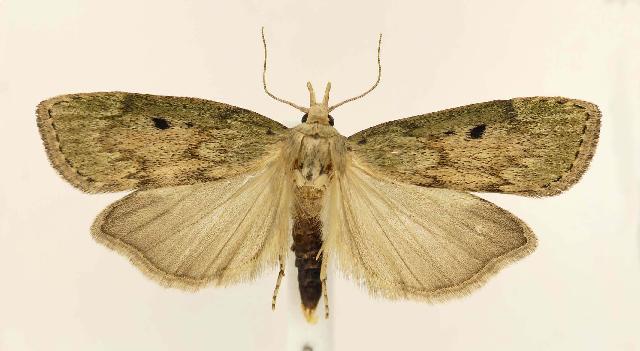
The parasitic leaf roller (Aphomia sociella) – female
Photos from lepidoptera.butterflyhouse.com
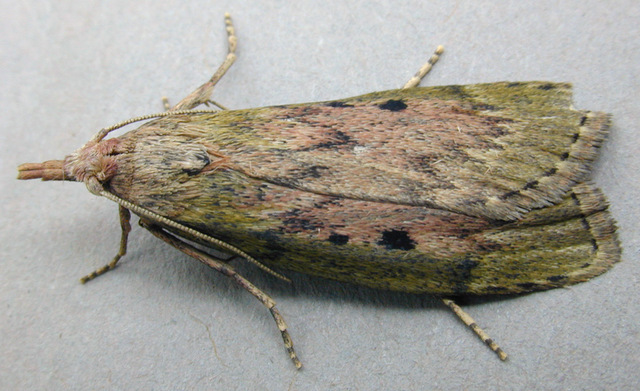
Greater wax moth (Aphomia sociella) female
Malcolm Storey Photo
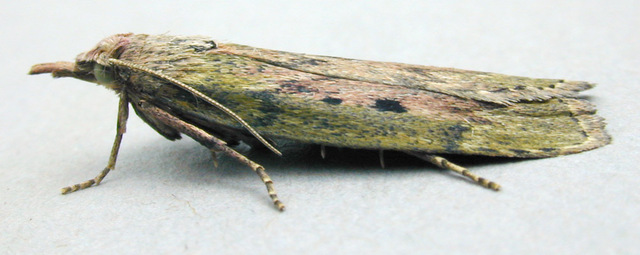
Greater wax moth (Aphomia sociella) female
Malcolm Storey Photo
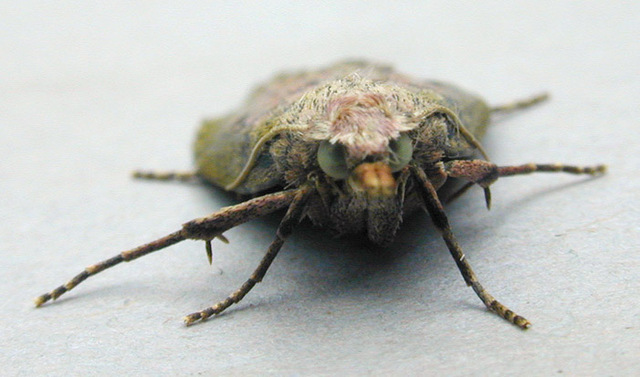
Greater wax moth (Aphomia sociella) female
Malcolm Storey Photo
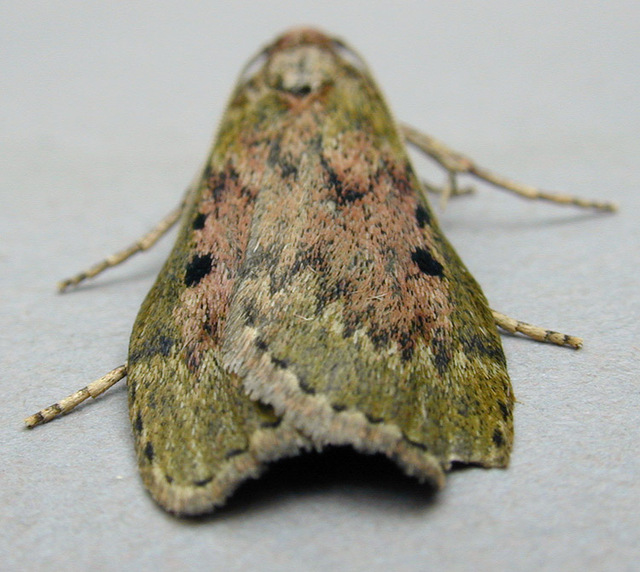
Greater wax moth (Aphomia sociella) female
Malcolm Storey Photo
The life cycle of a moth
Vine weevil it parasitises in the nests of bumblebees, wasps and hornets Here it works essentially the same way – its larvae (caterpillars) feed on waste and nest building until they grow strong and then consume the host's larvae. Its nest will weaken, but they often get wiped out, including the adults.
Female moth in April to August (but mainly in May to July) at dusk and on warm nights searches for host nests.
Nests found according to the scent trailThis mainly affects bumblebee nests located on the surface, but can also penetrate bumblebee nests hidden in the ground.
If a mother comes across a bumblebee nest, looking for a way in. When searching, they are guided primarily on the trail of a skunk, that is why she is primarily interested in the entrance corridor to the nest.
Once the cuckoo bee's mother infiltrates the bumblebee's nest, loads of clusters 60–230 miniature eggs – directly onto the wax construction, in its vicinity or into the lining.
The laid eggs will hatch in about 10 days Small, pale, and very mobile, light-coloured caterpillars. They remain in groups. The small caterpillars initially stay hidden beneath the nest, feeding on the debris there.
Caterpillars feeding, growing and it seems they can also absorb the smell of a bumblebee nest. This allows them to camouflage themselves and nest in the dark. are invisible to bumblebees. Bumblebees do not react to the moth larvae in the nest, and they feed there undisturbed on the wax comb, but mainly on the bumblebee brood – their larvae.
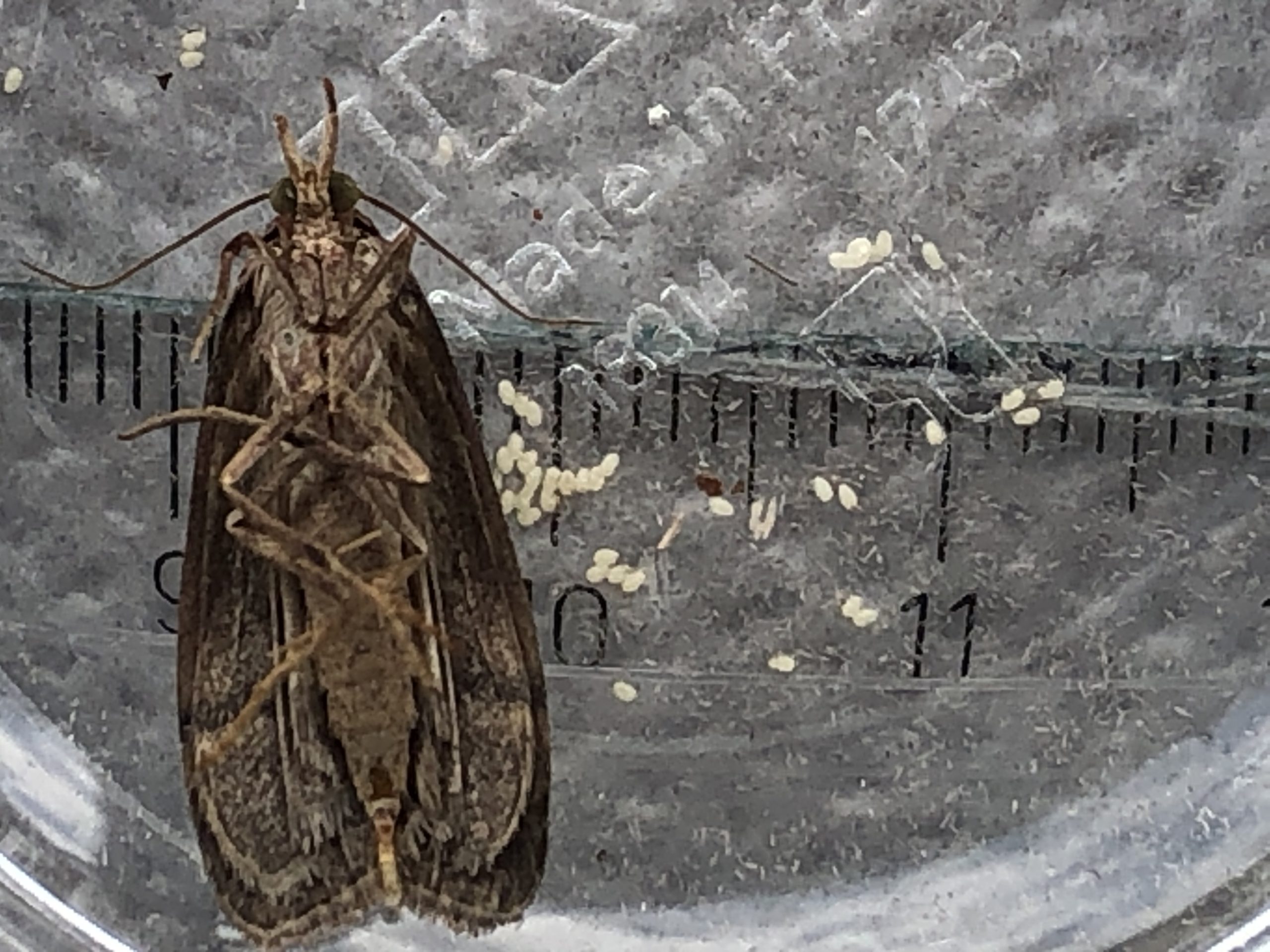
The following video and photographs were taken by Pavlína Krčová

The bee moth – *Aphomia sociella* and its eggs
Photo Pavlína Krčová 2021
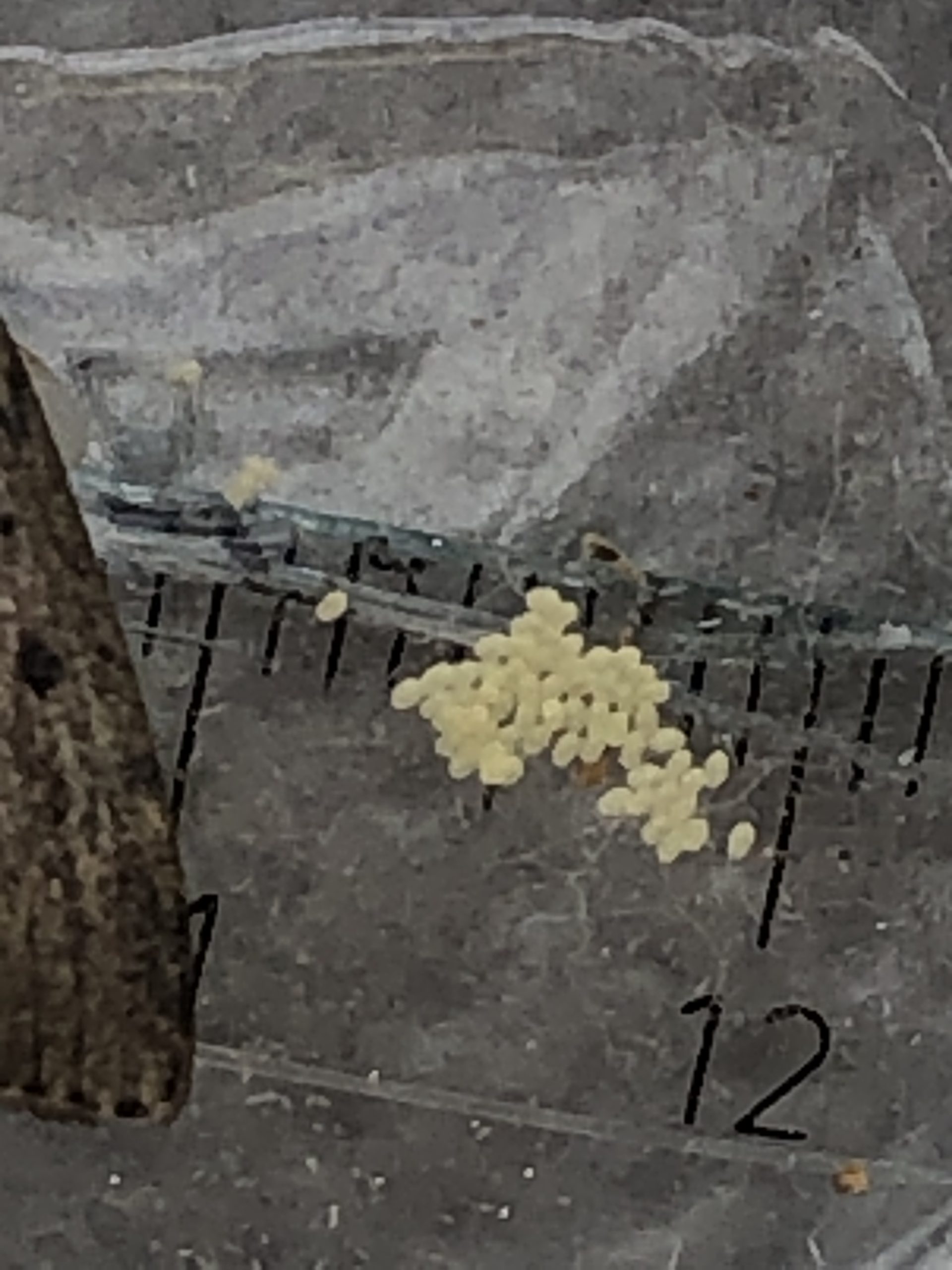
The bee moth – *Aphomia sociella* and its eggs
Photo Pavlína Krčová 2021
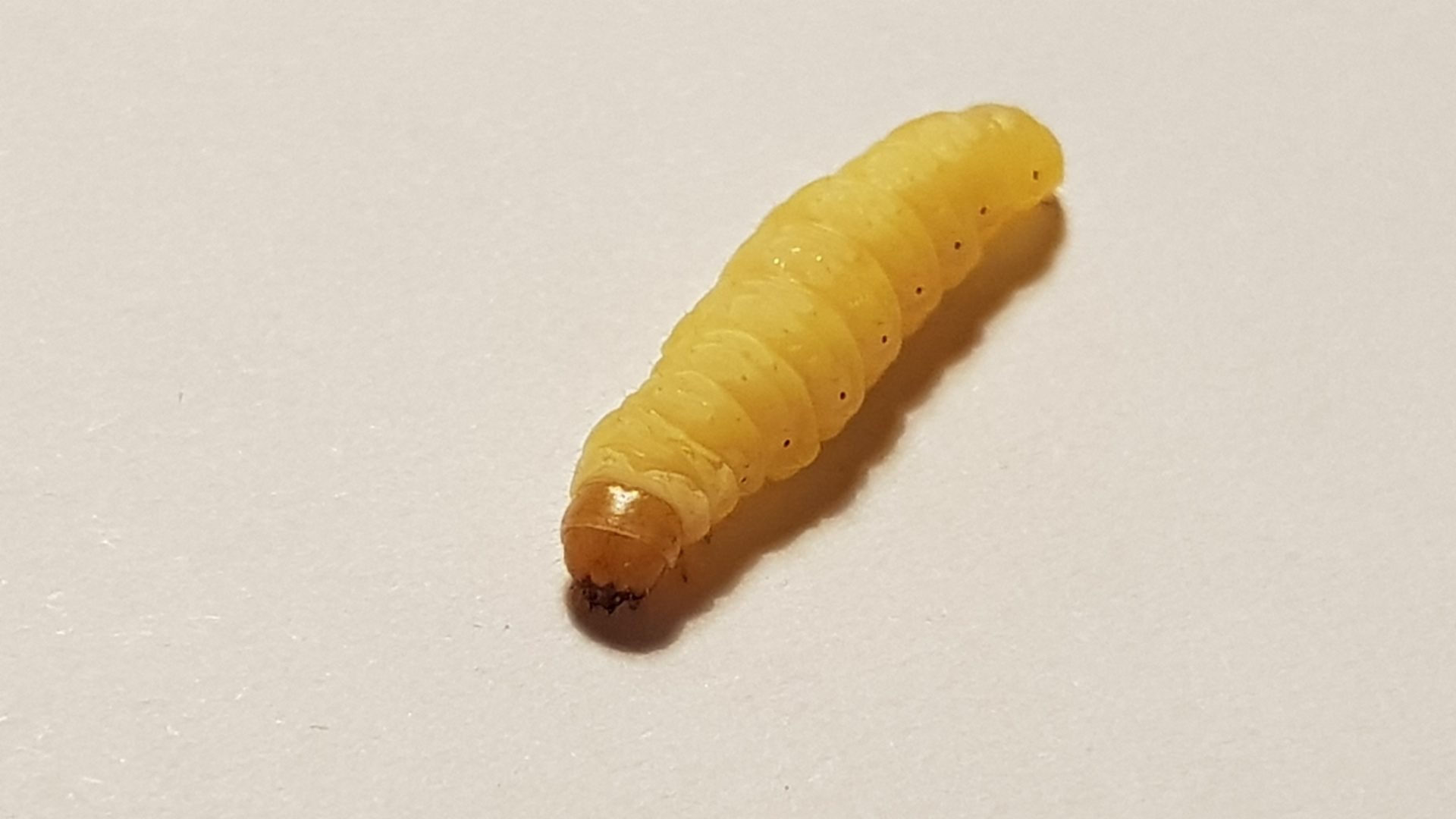
The following photographs show the larvae (caterpillars) when they are already fully grown

Meal Moth (Aphomia sociella) caterpillar
Photo O. Hercog (09/2020)
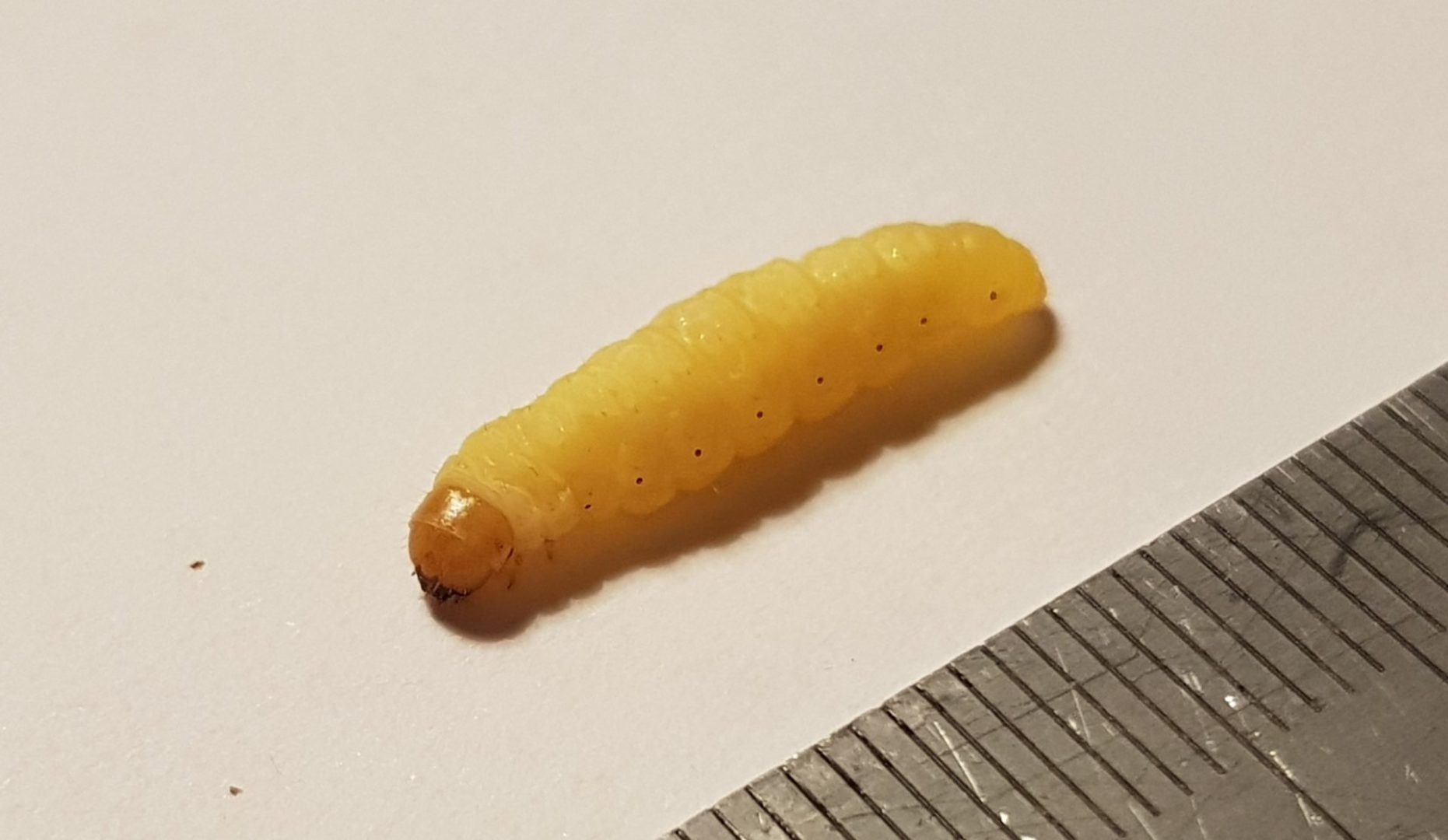
Meal Moth (Aphomia sociella) caterpillar
Photo O. Hercog (09/2020)
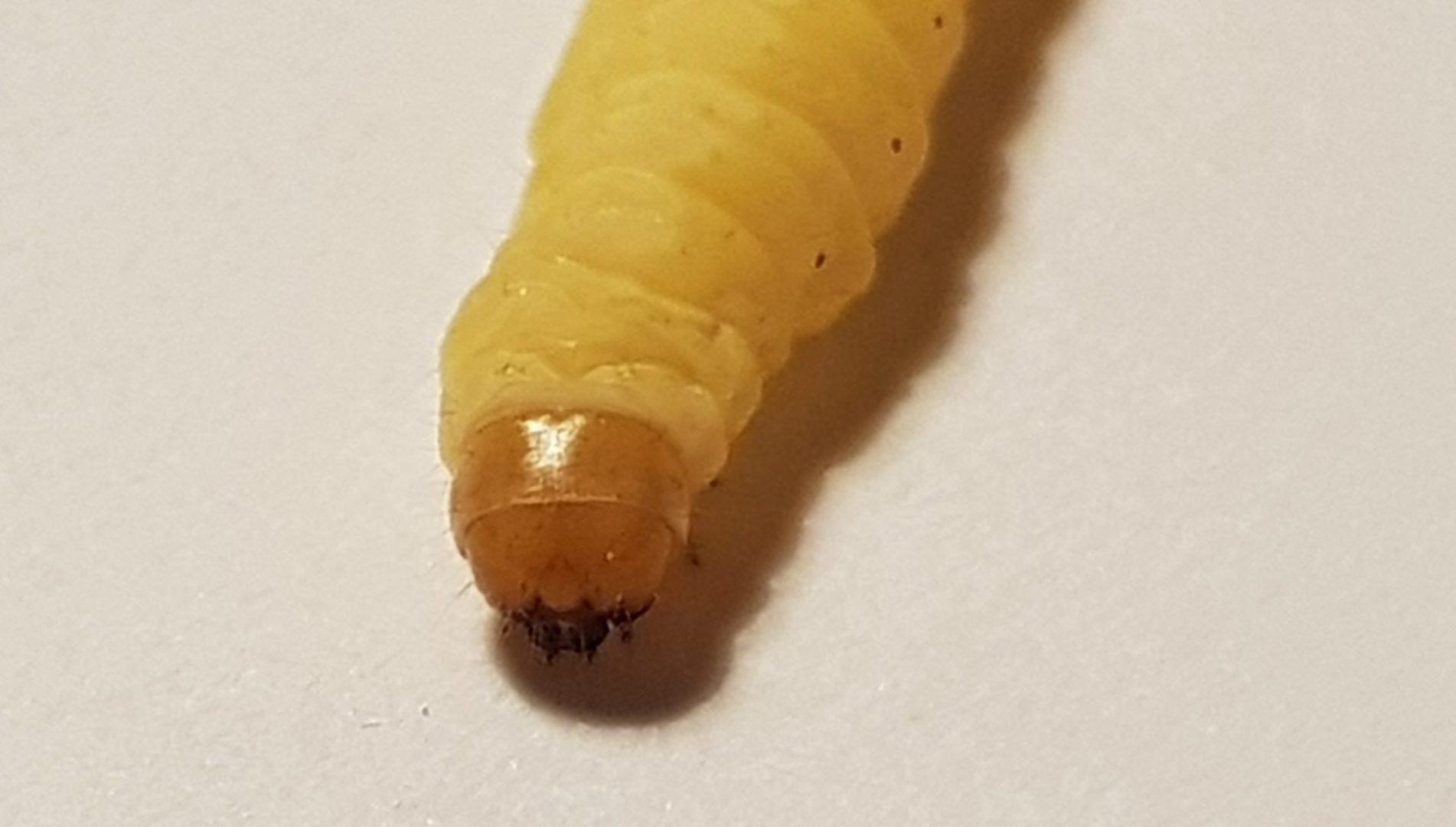
Meal Moth (Aphomia sociella) caterpillar
Photo O. Hercog (09/2020)
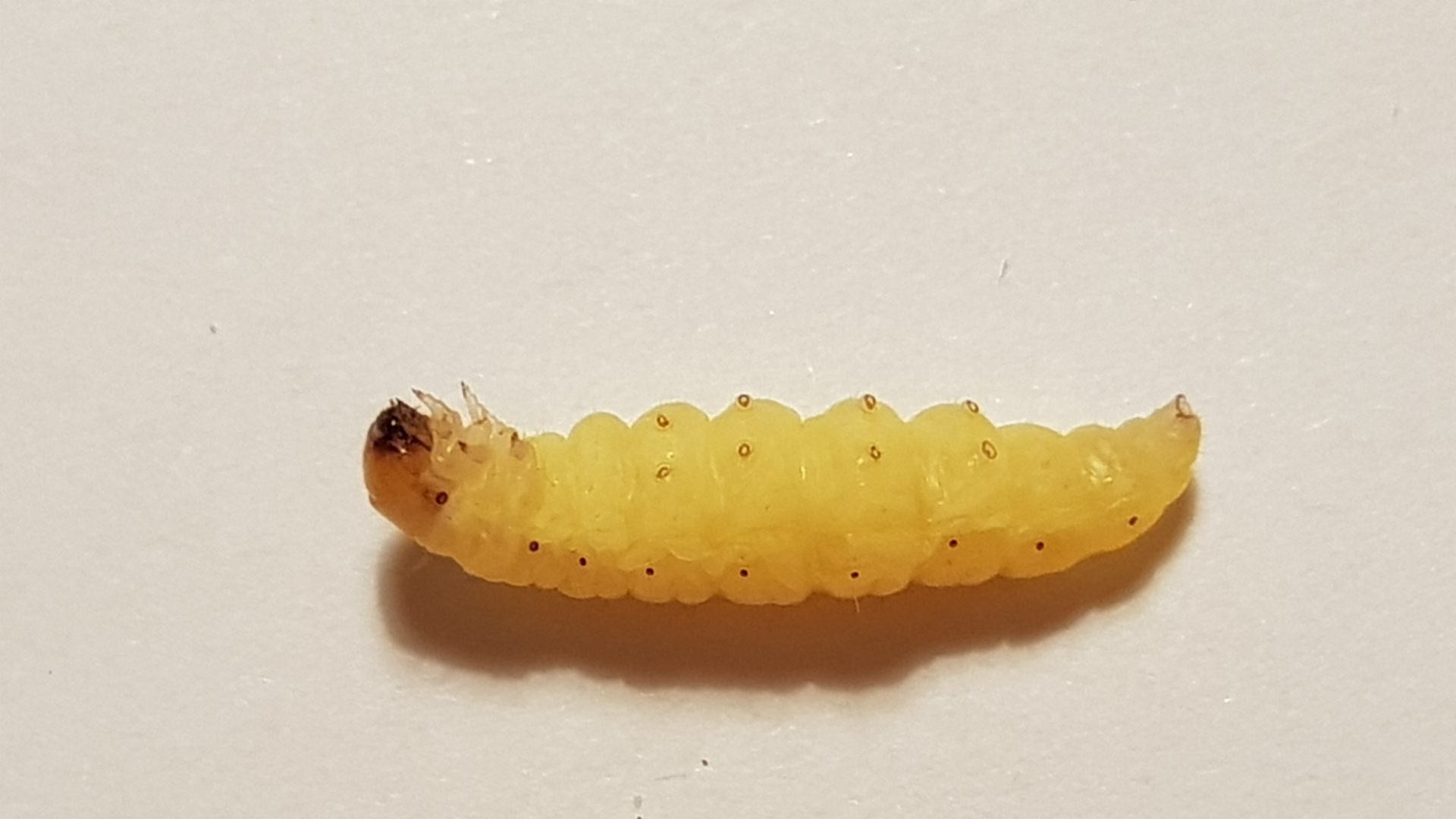
Meal Moth (Aphomia sociella) caterpillar
Photo O. Hercog (09/2020)
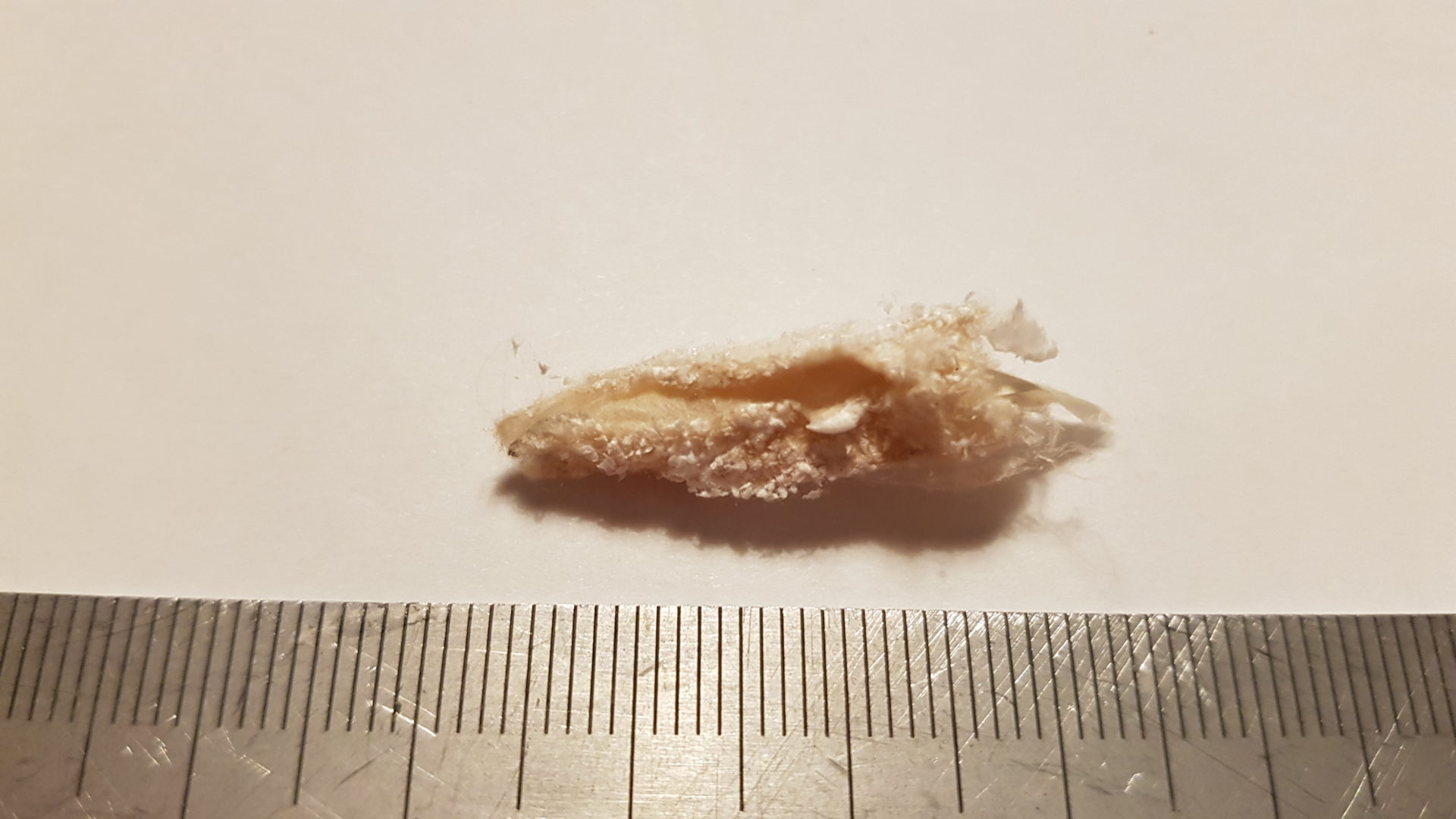
Caterpillar of a moth removed from its fibrous casing, where it was preparing to overwinter. The caterpillars were found in the polystyrene insulation of a beehive.

Waxy meal moth (Aphomia sociella) caterpillar in a cocoon
Photo O. Hercog (09/2020)

Waxy meal moth (Aphomia sociella) caterpillar in a cocoon
Photo O. Hercog (09/2020)
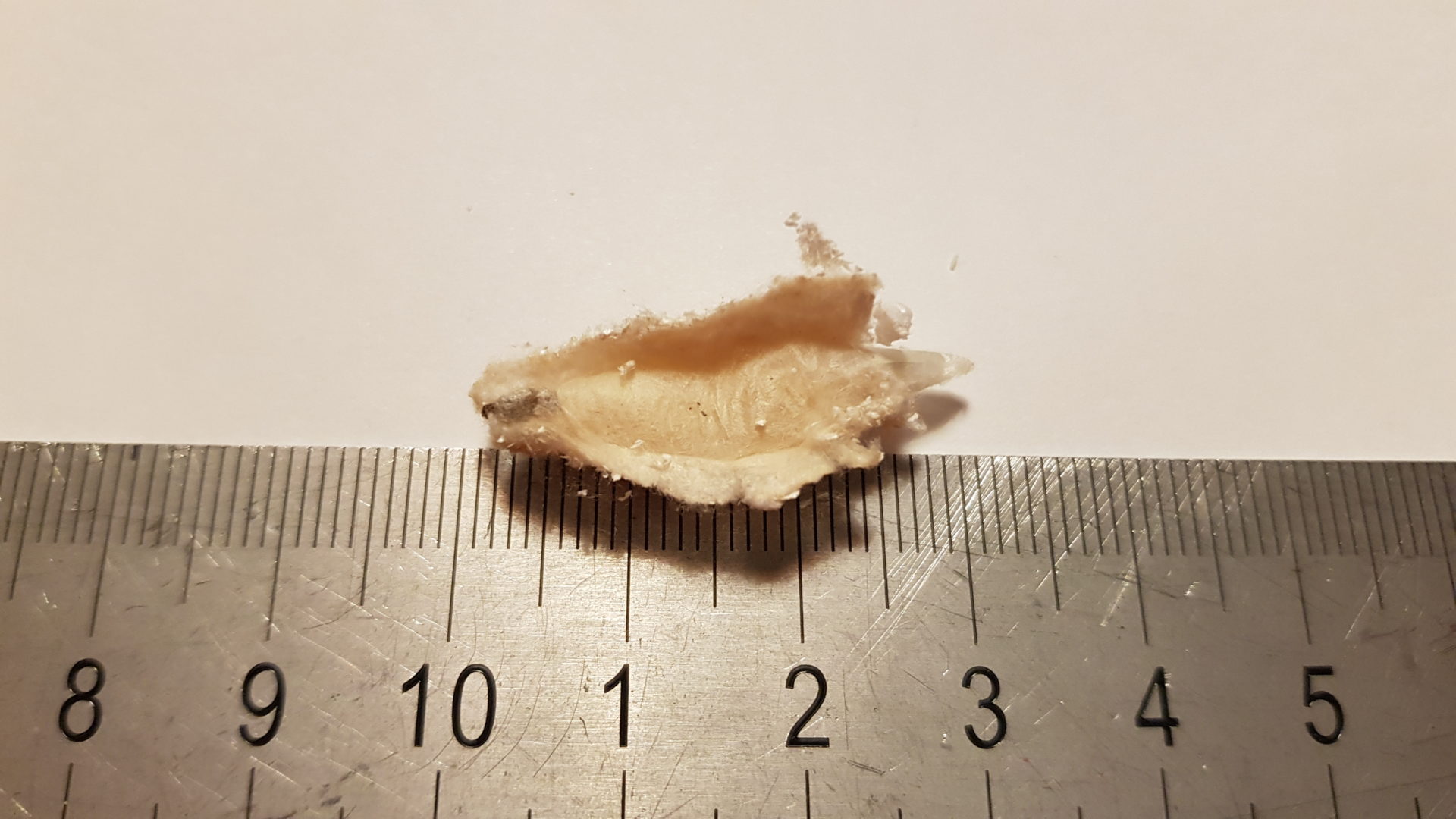
Waxy meal moth (Aphomia sociella) caterpillar in a cocoon
Photo O. Hercog (09/2020)
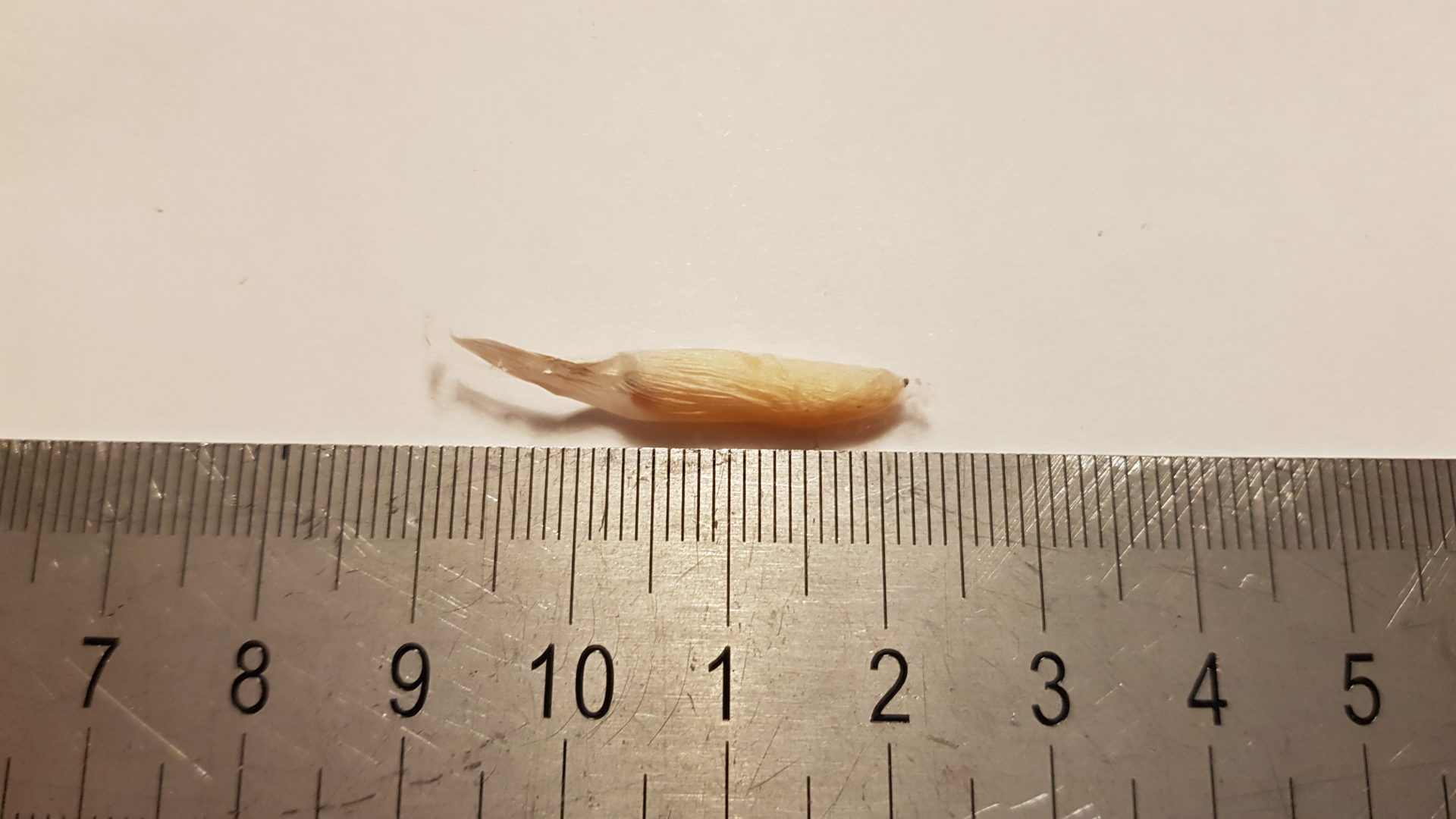
Waxy meal moth (Aphomia sociella) caterpillar in a cocoon
Photo O. Hercog (09/2020)
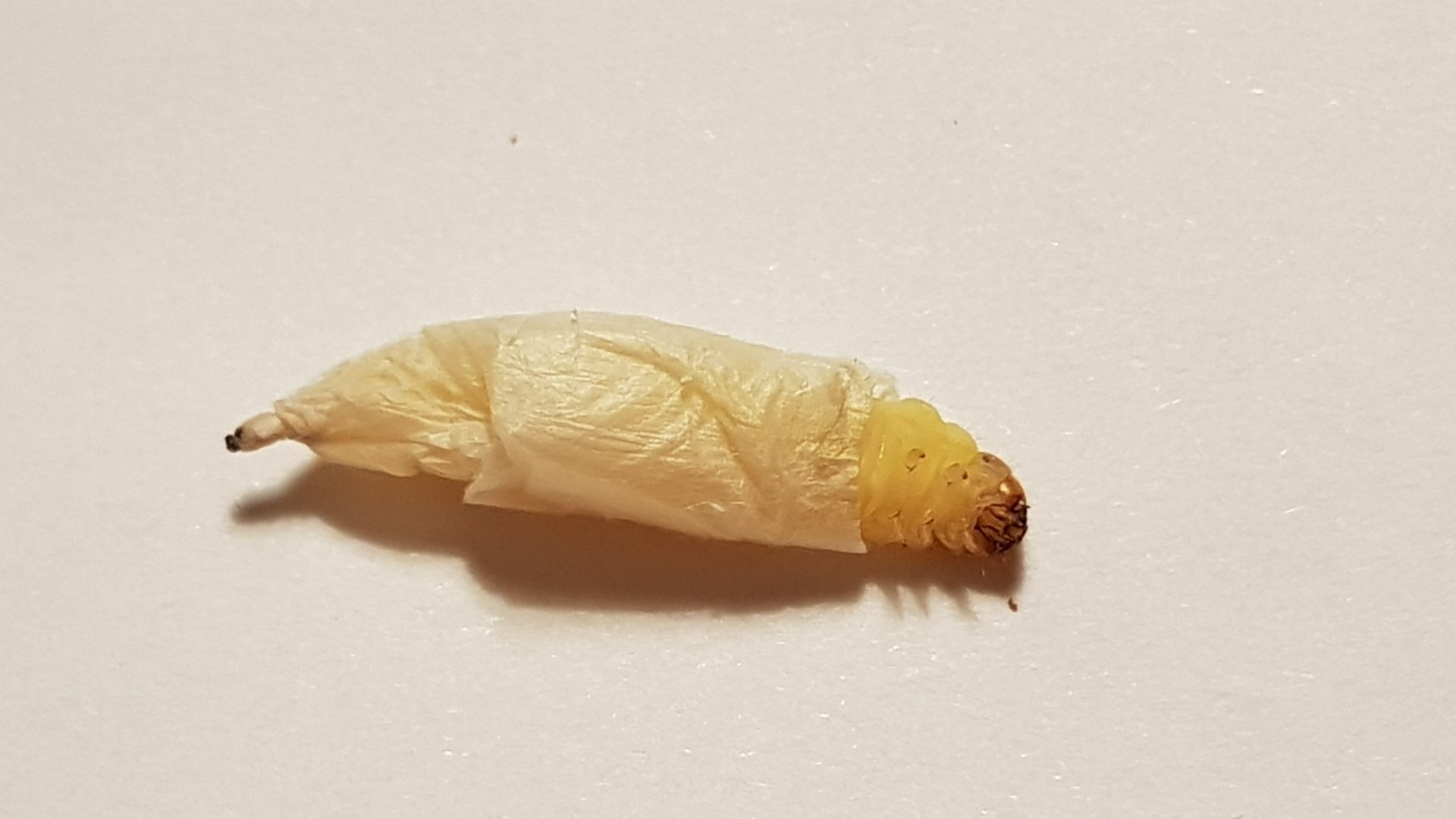
Caterpillar after removal from packaging.
How to prevent wax moths growing, they are venturing out to the upper floors and to the nest. They are using tactics here Tunnelling – they eat through the wax comb of the nest from underneath and reach the larvae. They can also move horizontally between individual wax cells. Their corridors often spun with silk thread, which protects them against the bites of hosts such as bumblebees, bees, or wasps.
Bumblebees are practically defenceless against them. The moth caterpillars Gradually release wax buildings nests (works), stock pylu, they'll gnaw through the wax casings from the side and inside pthe larvae and eggs of bumblebees are being eaten. They consume everything in a bumblebee nest except heat-retaining material. They do not disdain dead bumblebees.
The attack of the moth's larvae is imperceptible at first. – occurs under the lining in the nest and wax comb of bumblebees. Small caterpillars are also very fast a barely perceptible.
By attacking the host's larvae from below / from the sides, it means, they can easily escape the observer's notice.
In the event of a severe attack by the codling moth caterpillar It can even spin a nest with silk thread so that it prevents adult bumblebees from moving. This is the final stage, during which it is possible to observe silk threads and the movement of the moth caterpillar on the lining surface.
In the final stage Do mealworms reach sexual maturity5/8 inch – 1 1/8 inch, are, Fat, Light, sometimes Greenish with a distinct dark headed and with strong jaws.

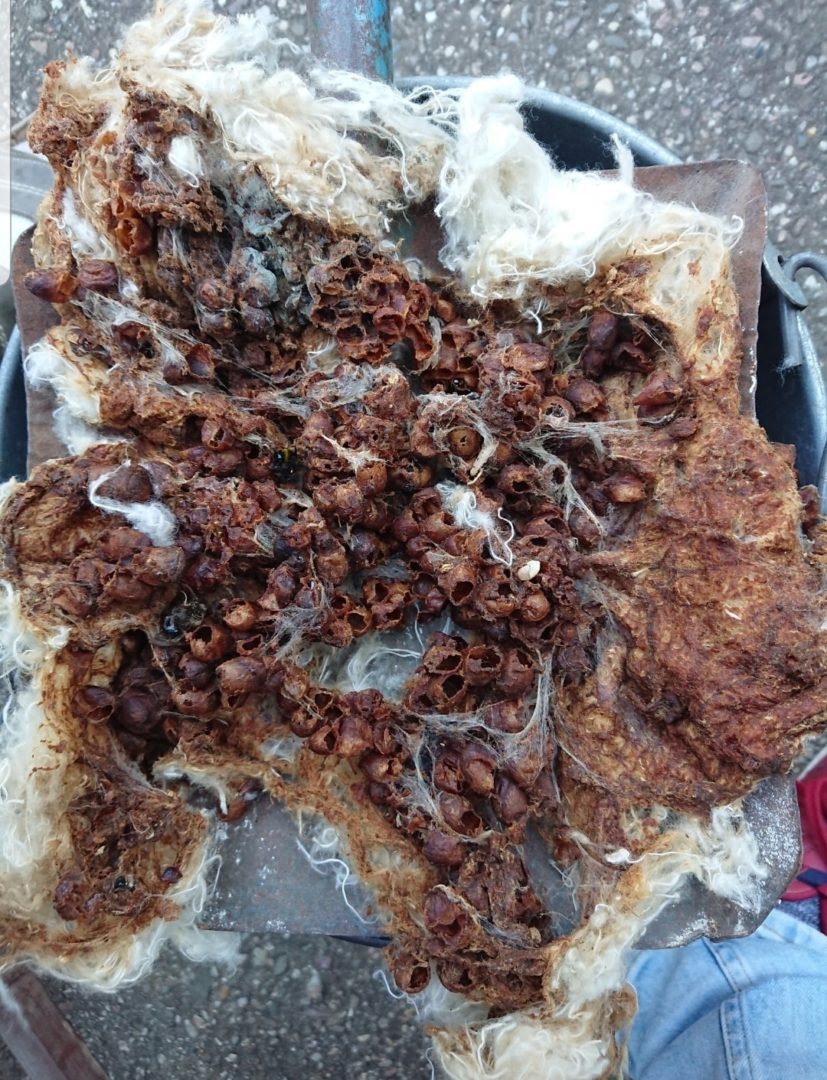
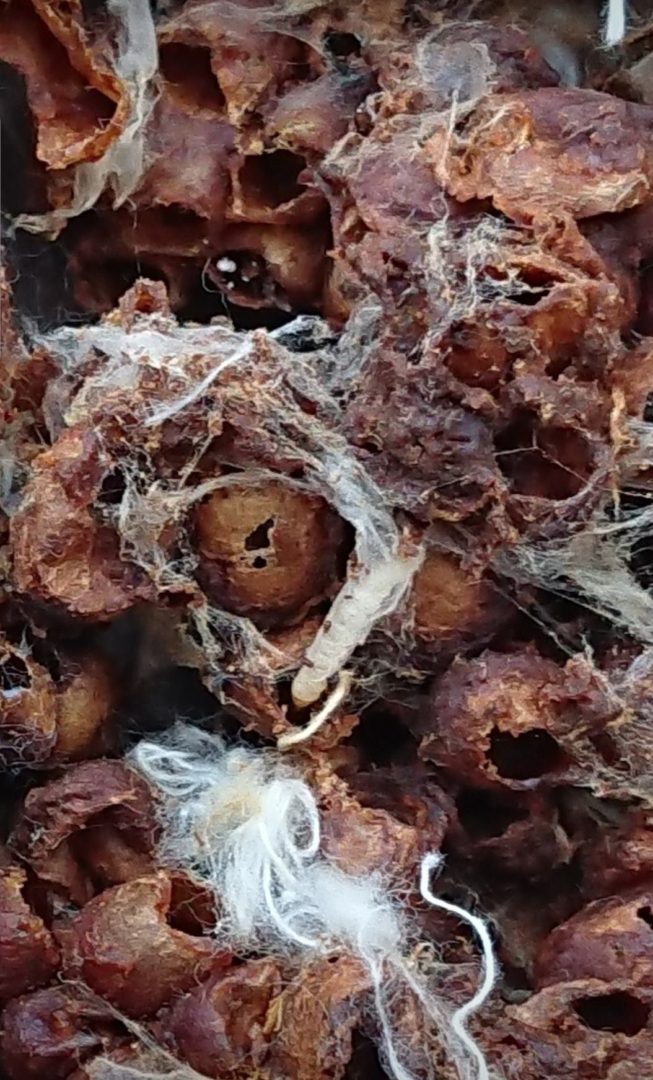
Lesser wax moth (Aphomia sociella) – nest infested by moth
Photo P. Menšík (2019)
Lesser wax moth (Aphomia sociella) – nest infested by moth
Photo P. Menšík (2019)
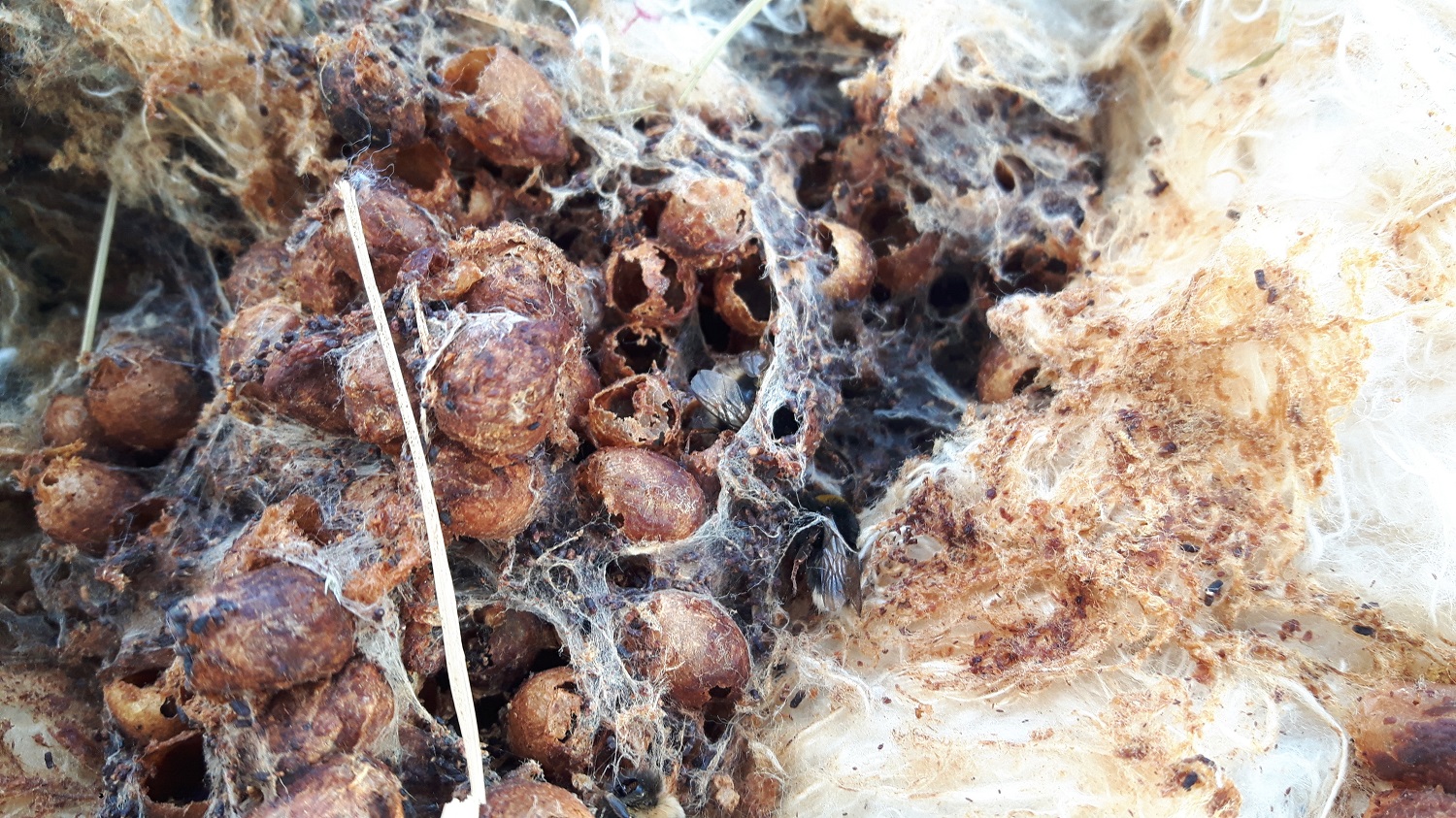
The photograph shows holes gnawed in the wax casings and cocoons. There are also caterpillar fibres from the wax moth on the cocoons.
Lesser wax moth (Aphomia sociella) – nest infested by moth
Photo O. Hercog (2016)
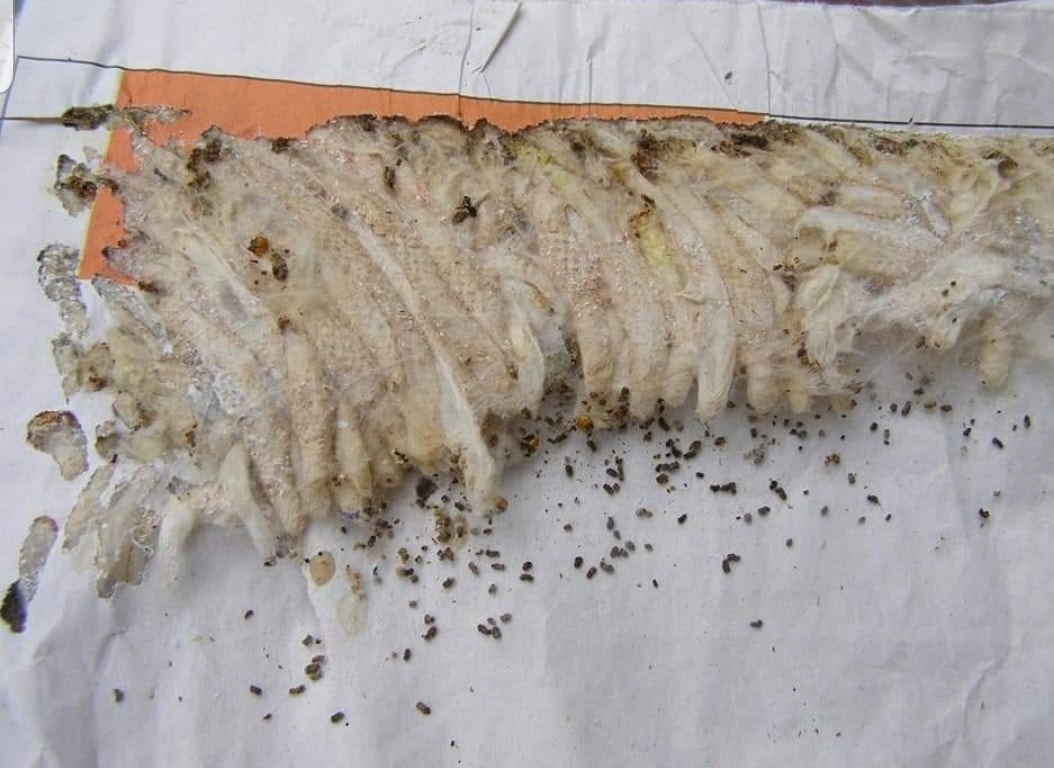
Well-fed caterpillars movable out of the bumblebee nest. Here it is closely next to they spin themselves into long white cocoons, firmly attached to the wall and in a larval state hibernate.
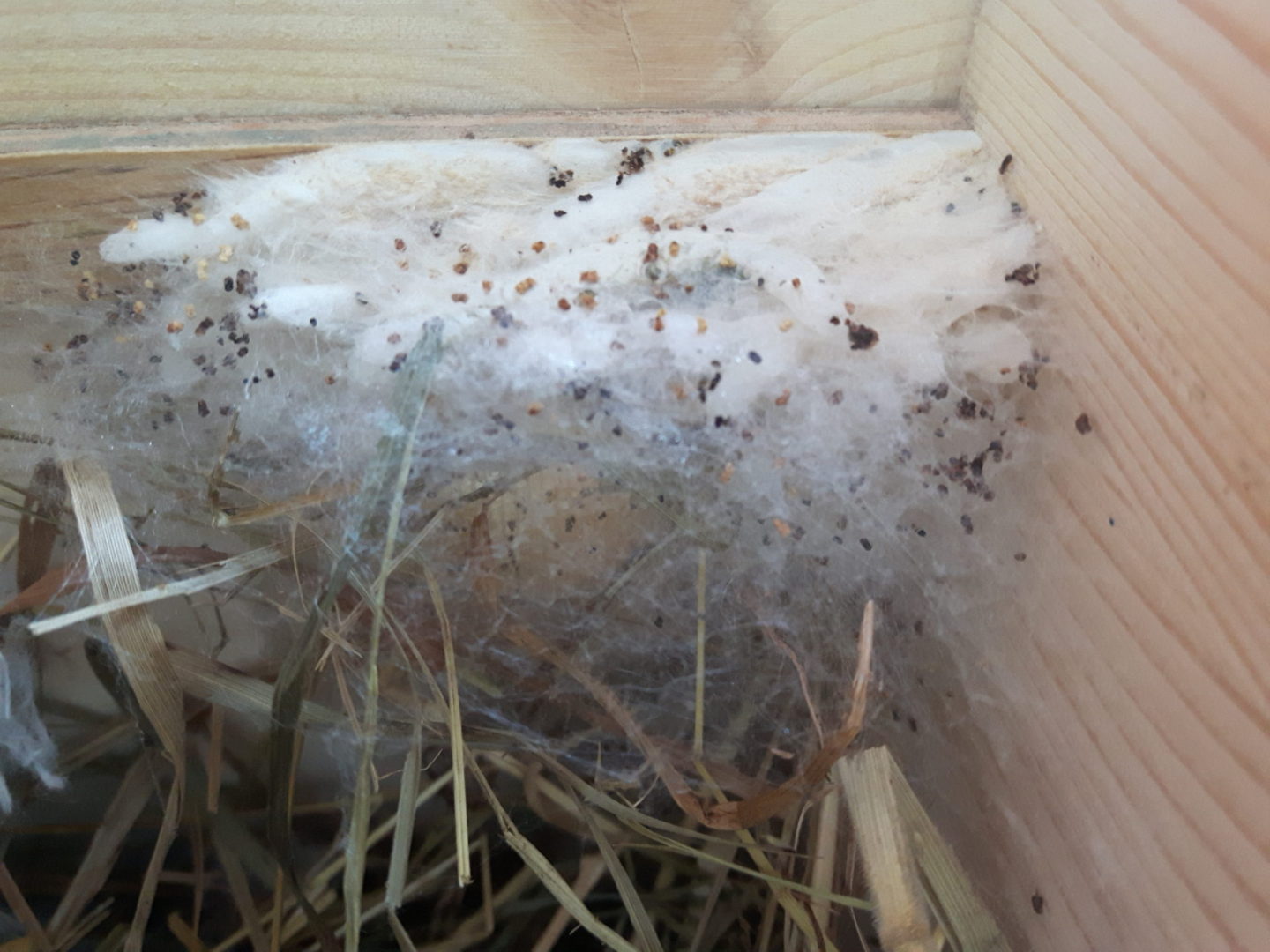
Caterpillars most often pupate near the nest. If they attack a bumblebee with a shock, you will find them under the roof of the hive. They often get to a hidden place – into the crevice in the nesting cavity, or into the entrance hall. Here they will hide and spin into firm cocoons, often side by side. If the caterpillars find their way out of the nest, can spin cocoons outside it in a cool place under the nest. The caterpillars so that they don't wake up straight away in spring – would not find enough food options for the new generation that they would spawn.
They never spin too far from the nest. Caterpillars presumably instinctively expect, thatbees will build a nest in the same place in the next season. Furthermore, their sexed individuals, which do not accept food, also have a limited radius of action.
Tangles houses are made of solid mesh. They are surprisingly strong and layered, which you'll find when you try to open the cocoon.
Only In spring, caterpillars pupate in cocoons and emerge as adults. and you immediately at the mating site.

Wax moth (Aphomia sociella) – caterpillars in cocoons
Internet Photo
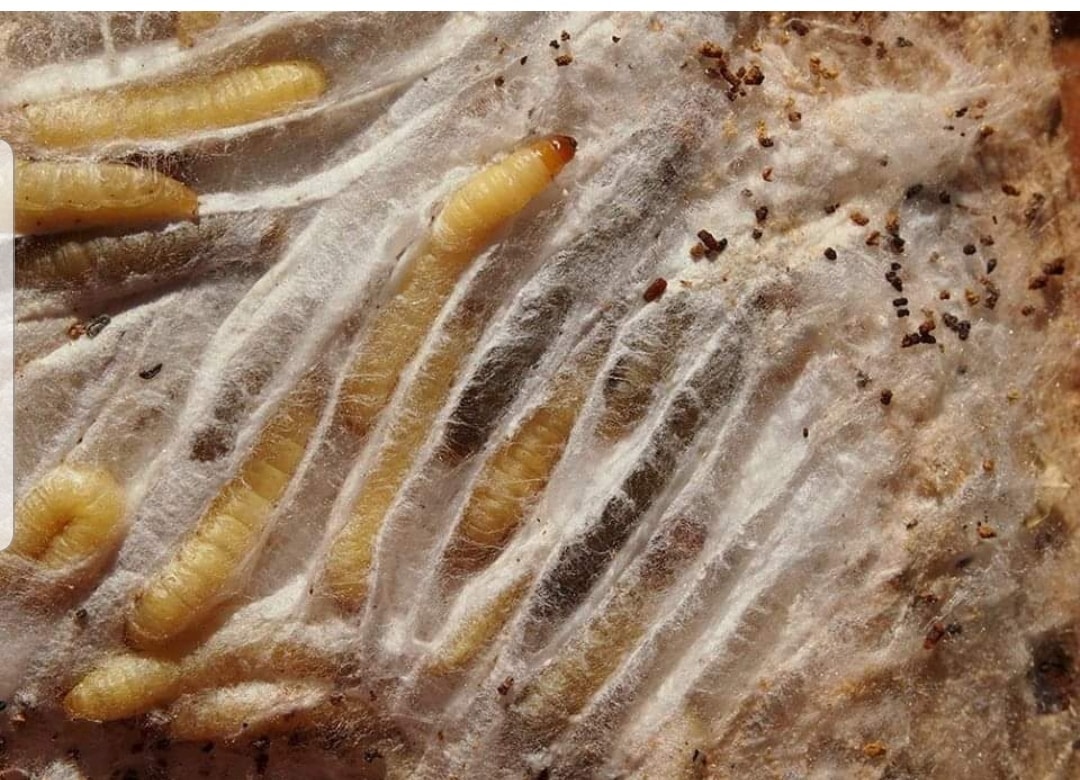
Wax moth (Aphomia sociella) – caterpillars in cocoons
Internet Photo
Adults Caterpillars They are not accepting food a live briefly – often only one week. By then, they must mate, find a host's nest, penetrate it, and lay their eggs there.
Moths often inbreed or with individuals originating from different mothers (in the case of repeated ulceration).
Their mating begins luring males, who produce Sex pheromone in its wing glands. The male disperses pheromone by intensely flapping its wings and can thus attract a female even from a great distance.
As soon as the female approaches the male, he initiates „to sing using ultrasound.This results in whirring of wings also in the female, which thereby scatters its sex pheromone and signals its willingness to mate. If the female is not ready, the male repeats the „persuasion“ process until he succeeds.
ultrasonic signals are emitted by males using a special organ „tymbal„which females lack. The song consists of short pulses (chirps) about 1 second in length. The range of the song is estimated at 45 cm, which is why males only sing when they sense female pheromones nearby.
It is established that Males fight over females – they attack males who are already mating or who are in their vicinity and „singing“.
Fertilised The females then go to find host nests for their offspring, they only have a few days for that....
The mother cuckoo therefore does her utmost to penetrate the bumblebee nest. – after laying eggs, its short life ends. You will often find it thanks to that dead or alive on the surface of the lining In the nest, or its surroundings. It no longer tries to escape.
Matky after laying the eggs dyingI. Only the laid eggs survive, which form the basis for the next generation of the moth, i.e. the caterpillars that will hatch from them in a few days. New generation The leaf miners will appear next year.
Second generation and in the same year, the codling moth does not establish, even if you read it somewhere. It might seem so due to the large time spread of the moth's occurrence. However, this is given by how adults are gradually hatching from last year's caterpillars. These overwintered in various locations (temperatures) and because of this, the caterpillars pupate in the spring and the adults hatch gradually – the adults from one previous generation of the moth.
Thanks to this as well The moth will cover more host species and doesn't focus on just some of them. This also applies to different types of bumblebees – early and late varieties.

Bumblebees PLUS – Greater Wax Moth (Aphomia sociella) – nest infested by wax moth
Caterpillars in cocoons in a hive under the roof
Photo O. Hercog (2016)
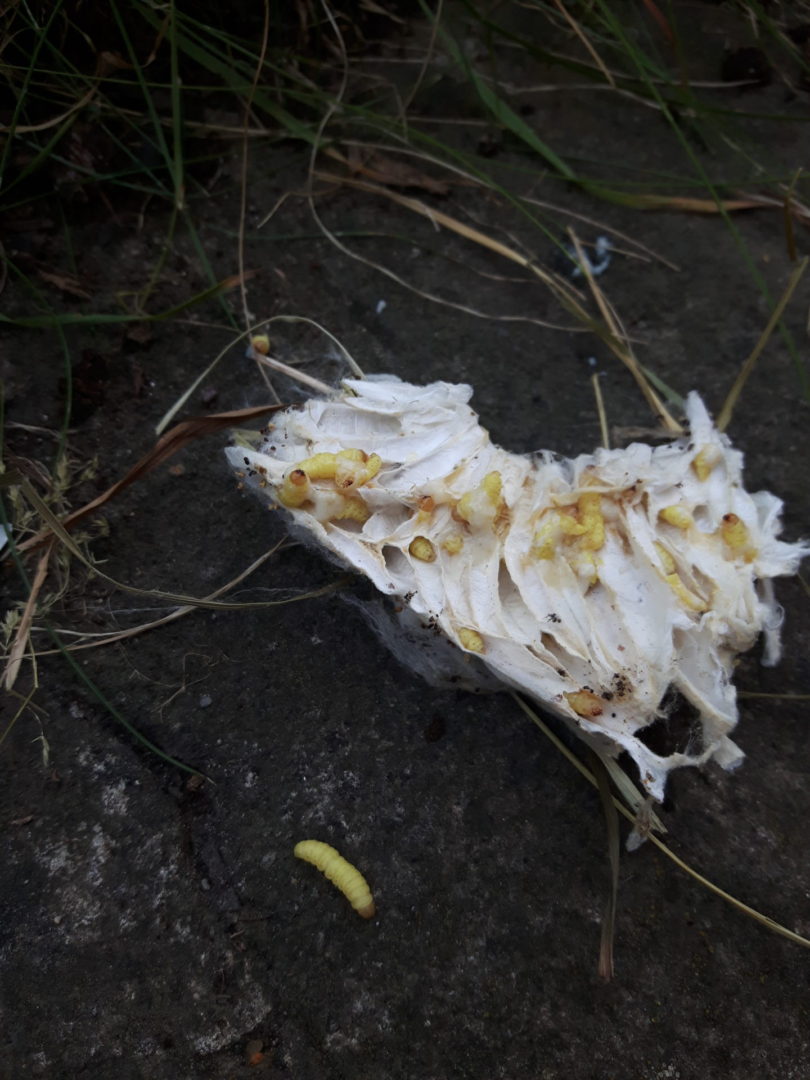
Lesser wax moth (Aphomia sociella) – nest infested by moth
Caterpillars removed from cocoons taken from the hive
Photo O. Hercog (2016)
How does a tortrix moth affect a bumblebee nest?
V time dependencies, in which the cuckoo bee invades a bumblebee nest, is nest weakened, or cease to exist prematurely (no sexually mature individuals are born in it). Very It also depends on the size of the moth. and also on quantity of eggs, which it is capable of laying. Similarly, the fate of the nest depends on whether it is a individual attack, or attack of more weevils. Very often in nature, an attack on a nest ends fatally.
Better chance of survival have Nests of early bumblebee species, for example, the early bumblebee (Bombus pratorum), or alternatively the garden bumblebee (Bombus hortorum). The moth is active from May to August.
At this time, the nests of early bumblebee species from the first generation have mostly produced reproductive individuals, and the moth will not manage to eliminate them. It will therefore primarily attack nests in their final stages and will not fundamentally harm the new generation of these bumblebee species.
Greater damage pest moth on in the nests of later species, such as the buff-tailed bumblebee (Bombus terrestris), the red-tailed bumblebee (Bombus lapidarius) and the brown-banded carder bee (Bombus pascuorum). For these species, the wax moth will find sufficient food in the form of bumblebee larvae and comb. Because the bumblebees cannot defend themselves against the wax moth, it is entirely up to the wax moth whether the nest is reduced or destroyed.
Tortrix can eliminate even a strong bumblebee nest . This happens primarily in cases of repeated attacks, or when attacked by a strong moth mother. What is very interesting is that The size of the mother hawk-moth can vary a lot. This is also reflected in the number of eggs it lays in the nest.
Interesting facts:
- Sometimes wax moth larvae can have plenty of wax material available (in nests that have plenty of food, especially pollen, and are therefore large with high wax production) and the bumblebee nest will only be weakened by the moth.
- According to May, bumblebees are capable of attacking a wax moth caterpillar in the nest. However, it is able to hide and subsequently lay eggs after absorbing the scent of the nest. Although bumblebees are capable of easily eliminating even large wax moth caterpillars with their mandibles, they do not do so for some reason. The reason could be the absorption of the nest's scent, which then provides the wax moth caterpillars with perfect camouflage.
However, we have never personally observed an attack by bumblebees on butterflies and larvae, and therefore we only mention it as Interesting fact. - If an adult wax moth is agitated or threatened, it will drop to the ground and feign death. This is likely advantageous when infiltrating a host wasp or bee nest, as the host is unlikely to attack the wax moth if it believes the moth is dead.
- The number of wax moth attacks on bumblebee nests appears to be on the rise. Bumblebee breeders are finding greater wax moth caterpillars spun into the thermal insulation (polystyrene) of nests. The caterpillars are capable of chewing through this material and seemingly consuming it. Spun caterpillars have also been found in the thermal insulation of houses, and it is therefore possible that they are managing to live there as well. We are reluctant to believe that the caterpillars are able to feed on this material, however, we will continue to monitor this.
See interesting footage from the life and work of the bee moth.
We used a video by George Pilkington from YouTube.
Is codling moth just a pest?
Although we describe the greater wax moth here as a parasite and pest, it is only A simplified human perspective.
I'm a screw-worm has its place in nature. Under normal circumstances, when bumblebees are abundant, the natural ran educational factor that prevents their overpopulation.
However, the breeder will hardly accept such a role and therefore protects the apiary and its inhabitants against the moth.
Every parasite has its place in nature. It acts as a reducing agent and prevents its hosts from overpopulating. However, nature has also equipped parasites with reducing agents. If nature is in balance, parasites will not overpopulate to the point of eradicating their hosts – they depend on them. If they were to eradicate their hosts, they themselves would perish. As you have read in the description of the wax moth's life cycle, its adult individuals have short lifespans and may not find their hosts in time. There are several similar mechanisms in the wax moth, and not all of them are yet known to us.
Besides the role of a reducing agent, the roller also has a very important function, which is Bumblebee nest clean-up crew. If the wax moth caterpillars do not have their primary target (bee larvae) available, they will settle for honeycomb.
Winding team speeds up the decomposition of nest remnants and the cleaning of the cavity, in which it was built. The last remnants of the nest will succumb to mould. The cavity will then subsequently be occupied by rodents or birds which will bring in nesting material, and the cycle repeats. The greater wax moth (Galleria mellonella) also plays a significant role in the liquidation of nest remnants. Beekeepers know it well, but it can sometimes be found in bumblebee nests.
Sources used
Parts of the publication by A. Votavová and J. Čížek, „Keeping and supporting bumblebees in gardens and the city,“ which Čmeláci PLUS helped to update, were also used in the preparation of this text.
We then used the publication „Insect Families and States“ by J. Ždárek and the beautiful publication „Bumblebees“ by authors M. Pavelka and V. Smetana.
https://en.wikipedia.org/wiki/Aphomia_sociella
„Male Moth Songs Tempt Females to Accept Mating: The Role of Acoustic and Pheromonal Communication in the Reproductive Behaviour of Aphomia sociella! Jiří Kindl, Blanka Kalinová, Milan Červenka, Milan Jílek, Irena Valterová, June 2011 – https://physac.fel.cvut.cz/misc/papers/male_plos_2011.pdf