



Hibernation of bumblebee queens
What you will learn here
- Wintering of queens, which begins as early as summer, is a part of the bumblebee's life that largely remains a complete mystery to most people.
- You will see details of bumblebee hibernation.
- We will describe the reasons and methods of hibernation for bumblebees and bumblebee queens
- We bring insights Jaromír Čížek acquired through many years of bumblebee breeding and observation in the wild.
- We have recently updated the page with interesting photographs and videos.
- Information about this life stage of the bumblebee is a unique part of our bumblebee encyclopaedia.
- What to do if you find a hibernating bumblebee queen
Date of last update: 21/01/2024
! WE KINDLY ASK YOU – DO NOT DISTURB THE BUMBLEBEE MOTHERS IN THEIR WINTER QUARTERS AND PROTECT THESE PLACES !
Contents
The beginning and reasons for bumblebee hibernation
Hibernaculum – a place for overwintering
Why doesn't the queen bumblebee freeze to death in winter, or starve?
Species differences in overwintering
Options for identifying the species of hibernating bumblebee based on the discovery of its hibernation site
Danger lurks in the land
What to do if you find a hibernating mother in the ground
Interesting videos
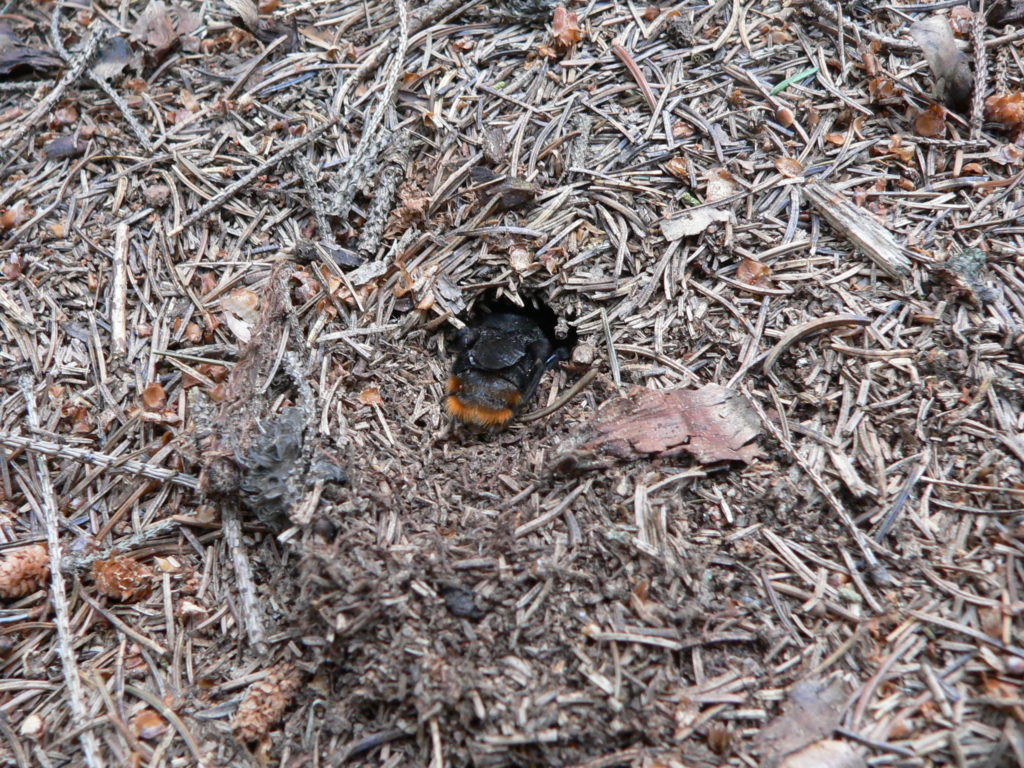
Hibernating female buff-tailed bumblebee (Bombus terrestris)
Photo: J. Čížek
.
The beginning and reasons for bumblebee hibernation.
Summer is a very active period for us, predominantly a time for recreation and sport. However, the fertilised queens of certain bumblebee species do not share our rhythm and have already hibernated or are in the process of preparing to hibernate.
But why in the summer?
Winter is still a long way off, and there are more than enough warm days. Although the meadows are still blooming, the food supply is now scarcer than in the spring months, and there are even more insect suitors. The lack of food is forcing wasps and bees, and even bumblebees, to raid other nests for supplies.
Pro The bumblebee lifecycle is decisive Food offering, optimal environmental properties are secondary.
The state of hibernation, in which bumblebee queens age more slowly, ensures their good condition for the following season.
But it's not just about food. The mother, hidden from the world, also protects herself and her future offspring. Her main task is to establish and raise new sexual individuals in the new season. Therefore, most mothers hide underground and wait there for spring.
So it's time to wait for the next feeding optimum next season, that is to hibernate.
With the exception of a few species, where some queens, under suitable conditions, do not hibernate and establish a new generation. This primarily concerns early species, for example, the garden bumblebee (Bombus hortorum). These queens take a risk and find a nesting site. Therefore, you might see such species searching for a nesting site and also encounter queens of their species at the end of the season. However, this requires a great deal of luck and patience in observation.
Let's now look at this an important part of life bumblebees.
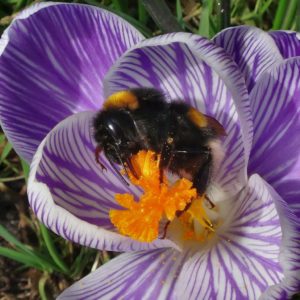
Bumblebee queen in spring – garden bumblebee (B. hortorum) – Photo Flićker
Hibernaculum – a place for overwintering
Bumblebees, but also bumblebees, actually their future queens, after leaving the hive, set off to look for a suitable place to overwintering, so to Hibernation. I need a place where they manage to bury themselves underground. It should likewise be a place that is dry and is their overwintering site in winter/spring. will not flood with watera.
That's why they very often prefer Dry forest edges. There is enough dry Needles as an insulating layer and below it clay, in which they can dig a tunnel underground.
If they find such a place, they will start digging underground corridor. They reach a maximum depth of around 10 cm. Each species prefers a different depth, as we will learn later in the text.
At the end of the corridor, he/she/it/they will create a small dutinu. It is just large enough to fit the queens. They then seal off the corridor and remain in the cavity. They slow down their life processes (circulation of fluids, breathing and heart rate) to an absolute minimum and hibernate. Hibernation It is long and takes several months, so it must strictly conserve energy.
Bumblebees, as well as bumblebeesThey have enough energy for repeated awakening. This is always energetically demanding, and especially upon waking at an inconvenient time, they won't find an energy source. That's why they need to find a suitable place and, with luck, survive there until spring of the following year. Therefore, they prefer spot in the shade, even on the north side of the forest/growth. On the sunny side, the spring sun would wake them prematurely. Such mothers are doomed – without a constant food source, they will exhaust themselves and won't have the energy for further safe sleep…
If they wake up at the right time, they have a chance to find abundant spring flowers and succeed in the competition. Therefore, they are early bumblebee species hidden just below the surface Later species, much like bumblebees, burrow deeper. Bumblebees also wait until their host mothers have built a sufficiently large nest before they proceed.
This strategy works in the long term, even if it sometimes means losses. But into this strategy global warming and large temperature fluctuations are adversely affecting. Just like a warm winter, when bumblebees hibernate „shallowly“ and their energy consumption is higher than it should be.
Interesting fact
- Bee breeders have noticed that young queens sometimes return to their natal colony before winter. We believe these are mothers going to sleep. If they need a significant energy source when preparing or looking for a hibernaculum, they seek it in their place of origin and utilise the local stores.
- Thanks to stable temperatures in the laboratory, bumblebee queens (certain species) can be kept in hibernation for much longer than winter lasts in the wild, and then most of them are woken up and stimulated to establish a nest.
- Bumblebee queens are accompanied into the nest by parasitic mites (Parasitus fucorum). However, these mites do not harm them, as they need to hitch a ride to the nest, which the queen will establish in spring. Even there, they will primarily be beneficial, feeding on debris and waste within the nest.
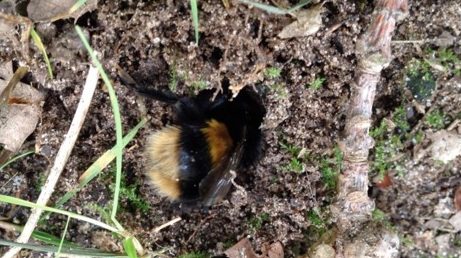
The bumblebee queen is looking for a place to hibernate
Photo: Internet
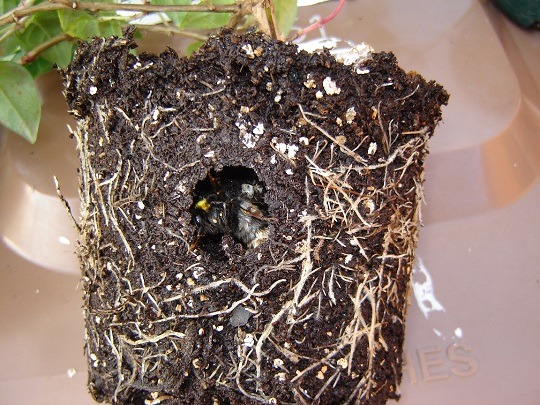
Hibernating queen bumblebee
Photo: Bumblebee Conservation Trust
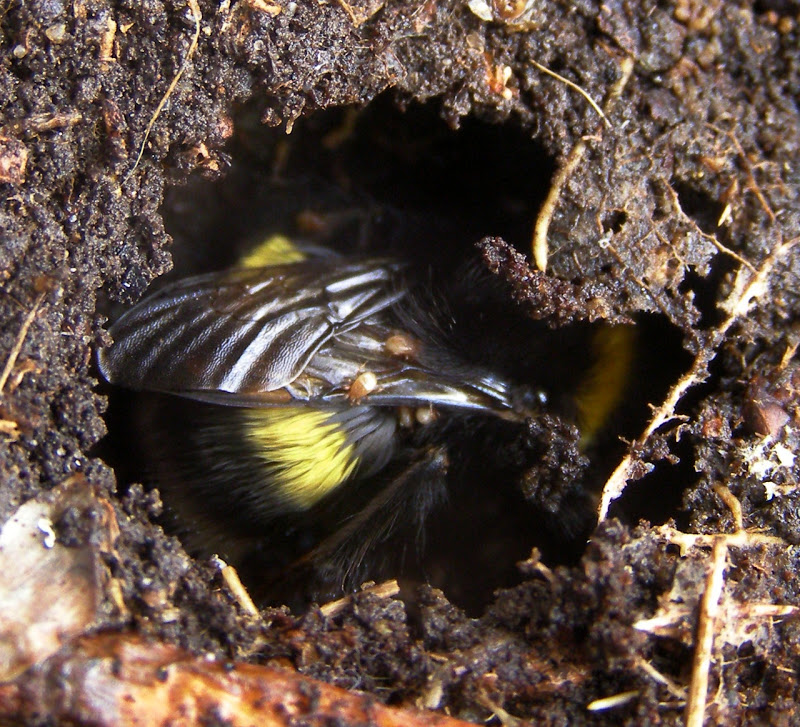
Bumblebee queen in hibernation
Photo: Jelly Fungus
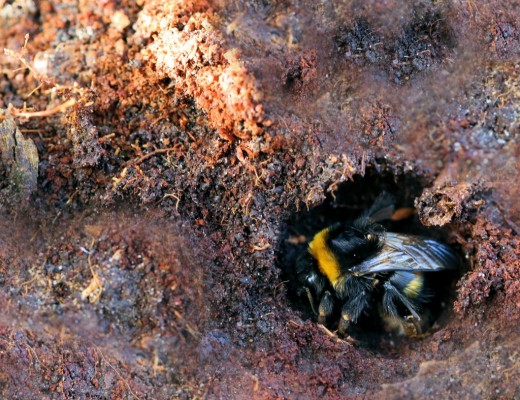
Bumblebee queen in hibernation
Photo: Internet
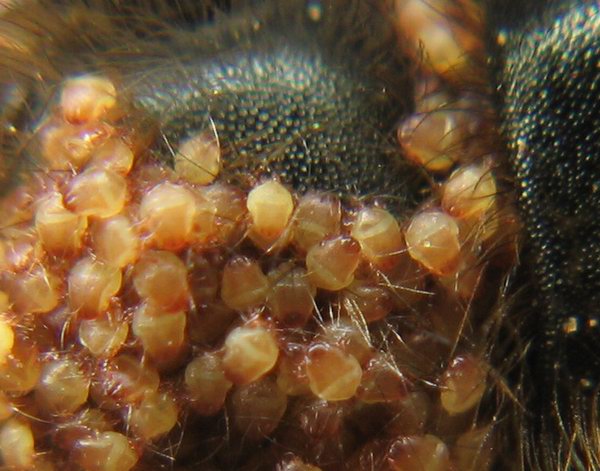
Chigger mite (Parasitus fucorum)
Photo: Biolib.cz
Why doesn't the queen bumblebee freeze to death in winter, or starve?
As we already know, queen bumblebees, and also cuckoo bees, bury themselves a mere few centimetres down. to the ground.
But at this depth, they are at risk of death, as the ground can easily freeze at such depths. So how is it possible for a small creature to survive there?
Mother Nature has equipped bumblebees with a special ability. Because during hibernation, their the haemolymph will gradually flush out the substances preventing it from freezing. Just as we humans have to add additives to our cars' cooling systems for the same purpose. So even though they are exposed to cold in the long term, they can cope with winter. They even manage the harsh one better than the warm one with temperature fluctuations.
During hibernation, queen bees do not consume food. They draw energy from the fatty tissue in their body. They created this in the nest when they were feeding here after birth. At that time, they gorged on honey and pollen stores. This is also why mothers are born when the nest has the largest number of workers, and they will ensure sufficient food. Young queens can literally „vacuum up“ supplies, often accelerating the demise of a weaker nest.
And in bumblebees, the motto „he who is thin will be cold“ applies. In practice, this means that bwithout a sufficiently large fat body, i.e. energy reserves, the young queen cannot hibernate and will perish during it. It's a few grams of matter that give it a chance of survival. Slightly less matter and it has no chance.
During hibernation, approximately 80% of energy stored in the fat body is consumed and above all some types of fabrics.
Weight is therefore essential. The robustness of the queen's body is necessary for all further stages of her life, including for the storage of the males' sperm after she has been fertilised - this will be utilised in the spring of the following year.
Another factor that is not fully described is Hormonal action and post-coital events. Young queens which do not mate do not follow the instinct for feeding and then hibernation. You will also find such individuals in the nest. They are „aunts,“ behaving like large workers. They carry pollen and nectar, but like old maids, they do not live to see spring.
Overall Health status and condition is therefore crucial. Damaged and otherwise disabled mothers are out of luck. Even so, without the benefit fortune It's not working.
From a human perspective, it might seem cruel, but Natural selection Something that gives the species a chance to survive – through healthy and strong individuals. Here, strong and healthy mother queens.
Look, What does it look like in the hibernation chamber. No, it's not an idyll, and warm socks won't solve it...
Interesting fact:
- The fat body of bumblebee queens and the processes that occur within it are key to their longevity. unlike males and workers, they live for practically one year. You can read more about this HERE
- The fat body of bumblebees is the subject of research. „A relatively large reserve is likely saved for active exit from the hibernaculum and finding the first food source after winter. Queens must account for variable spring weather and the possibility of having to fly far for food. After the nest is established, the fat reserve is already low, while glycogen is still being utilised for flight and queen locomotion during the rearing of the first workers.“ You can read more, for example, HERE
- Further interesting information, far beyond our scope, can also be found HERE
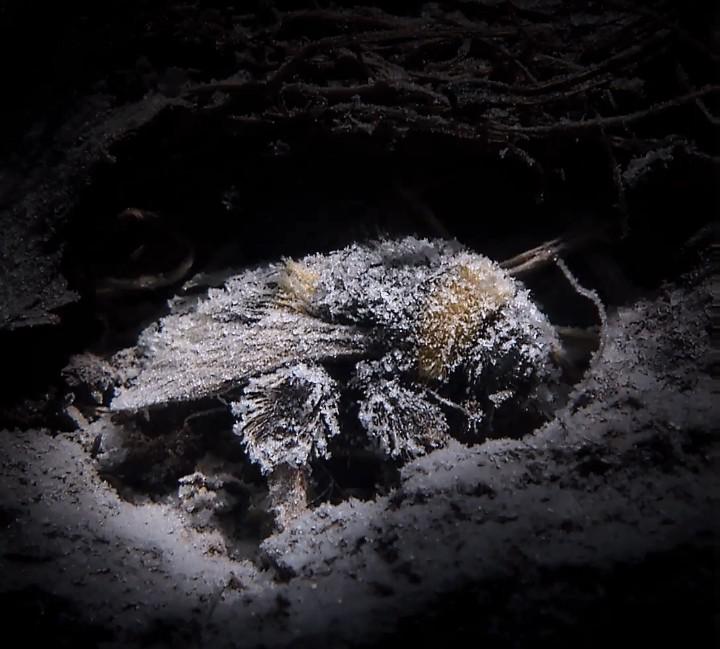
Bumblebee queen in hibernation
Photo: Reddit
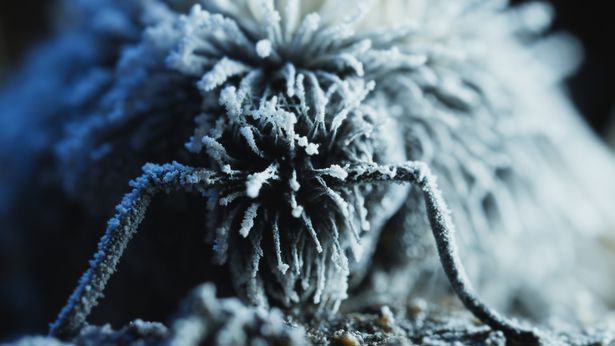
Bumblebee Hibernation
Photo: BBC
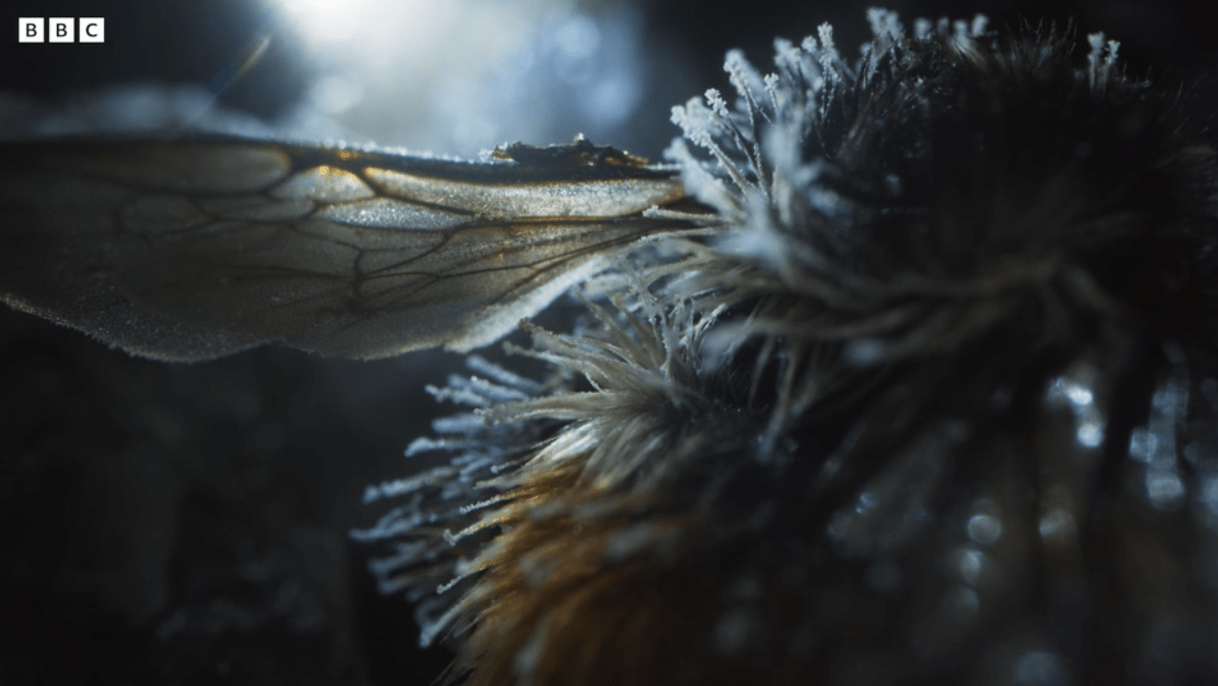
Bumblebee Hibernation
Photo: BBC
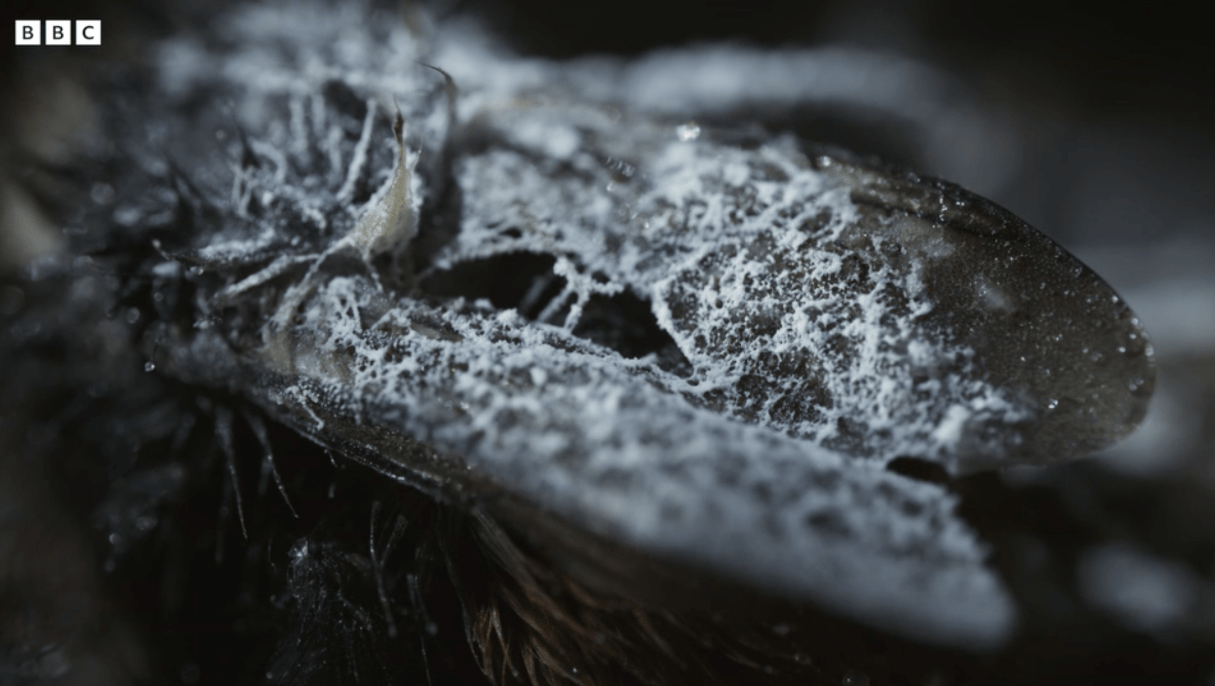
Bumblebee Hibernation
Photo: BBC
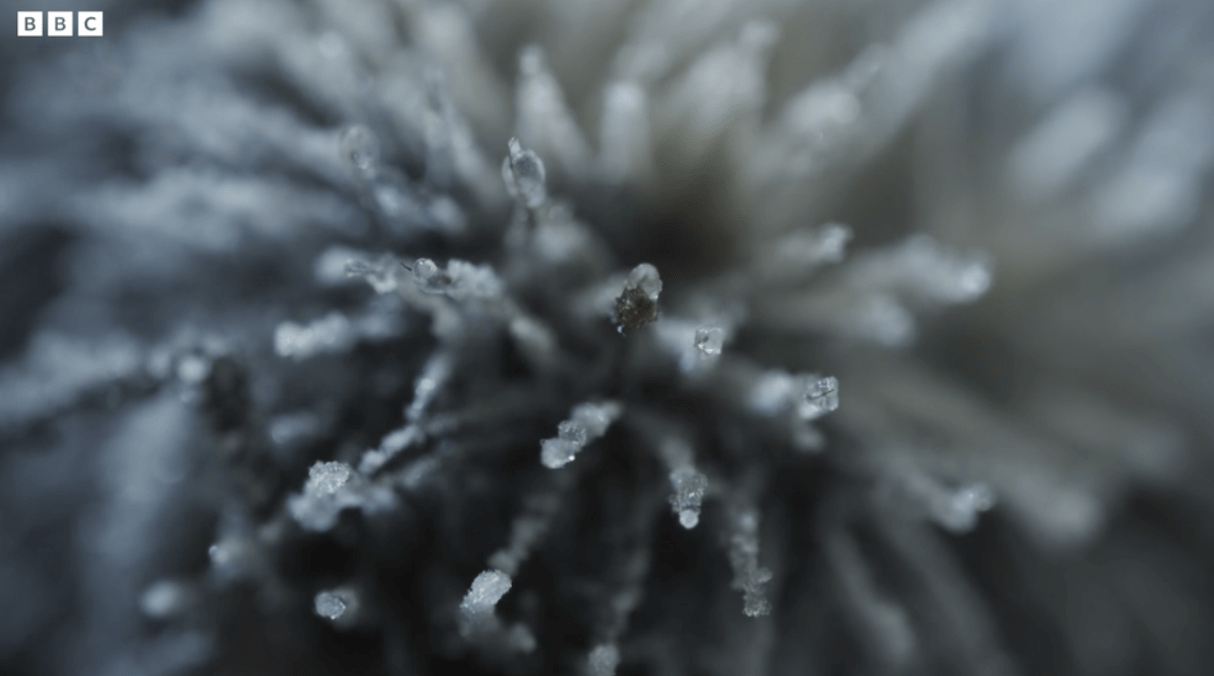
Bumblebee Hibernation
Photo: BBC
Certain species of bumblebees have to overcome much worse conditions than ours. Frosts here drop below -20°C, and winter lasts as long as 9 months.
Suitable conditions (we hesitate to call it summer) last for several weeks. An example of this is *Bombus lapponicus* (Lapland bumblebee) in northern Sweden.
This species of bumblebee has therefore chosen a strategy where it usually does not raise workers, but the queen herself takes care of the new sexual individuals – it simply won't manage any other way. This species of bumblebee is also now threatened by climate change and is fighting for survival.
Nature sometimes wakes hibernating bumblebee queens prematurely. This video was filmed in January and unfortunately, for this bumblebee queen, it meant her end…
The video was filmed by Jakub Černý and you can find it HERE
.
Species-specific differences in overwintering.
There is a relationship between the depth of buried females below the surface and the division of species into early and late.
We'll illustrate it with the following examples. A very early buff-tailed bumblebee Buff-tailed bumblebee is buried just below the surface (often only 10-20 mm). In contrast, Vestal cuckoo bumblebee (Bombus vestalis)Bombus vestalis, which has to wait until the earth bumblebee’s host nest has developed and it has taken it over, may be 40 mm or even deeper below the surface.
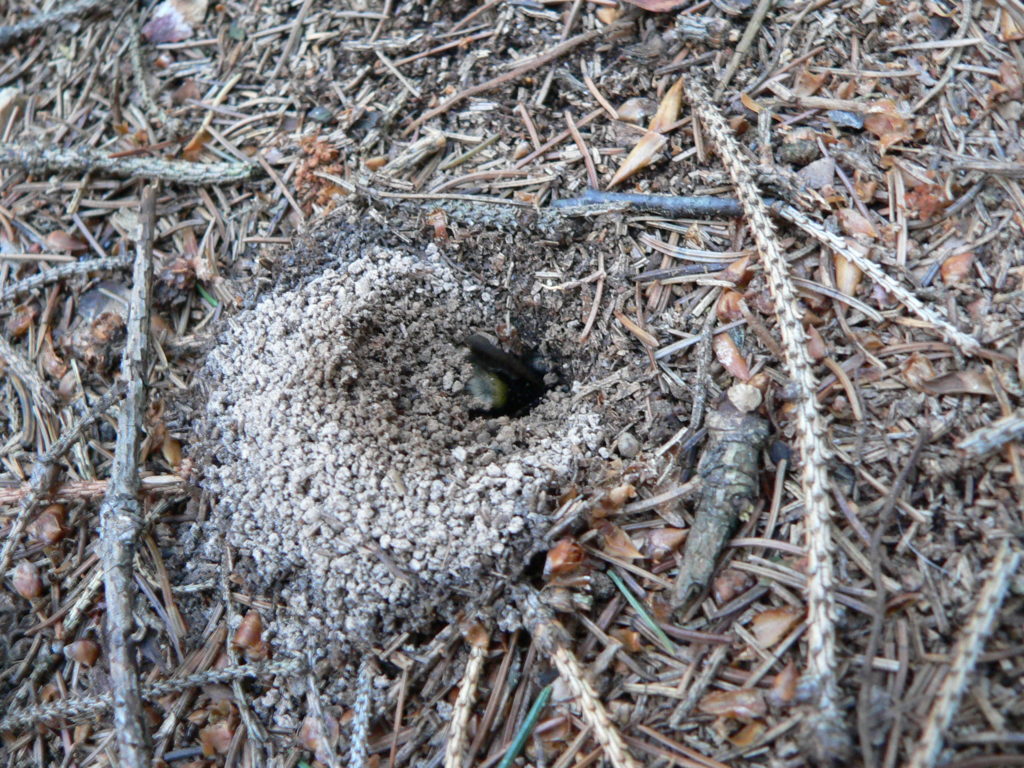
A queen buff-tailed bumblebee (Bombus lucorum) preparing her hibernation site.
Photo: J. Čížek
Options for determining the type of hibernating bumblebee based on the discovery of its overwintering site.
If we manage to find a hibernaculum in the forest, we can estimate which individual is overwintering here based on its appearance and the amount of excavated material. Bumblebee of the rock B. lapidarius is a typical feature of the inlet channel, which is usually not backfilled. For Buff-tailed bumblebee B. terrestris It is characteristic that the excavated material is only humus, with no soil content.
U bumblebees On the contrary, the excavated material consists mainly of clay, with no humus content. In the accompanying photographs, we will show you what such a hibernaculum looks like and what its inhabitants are made of.
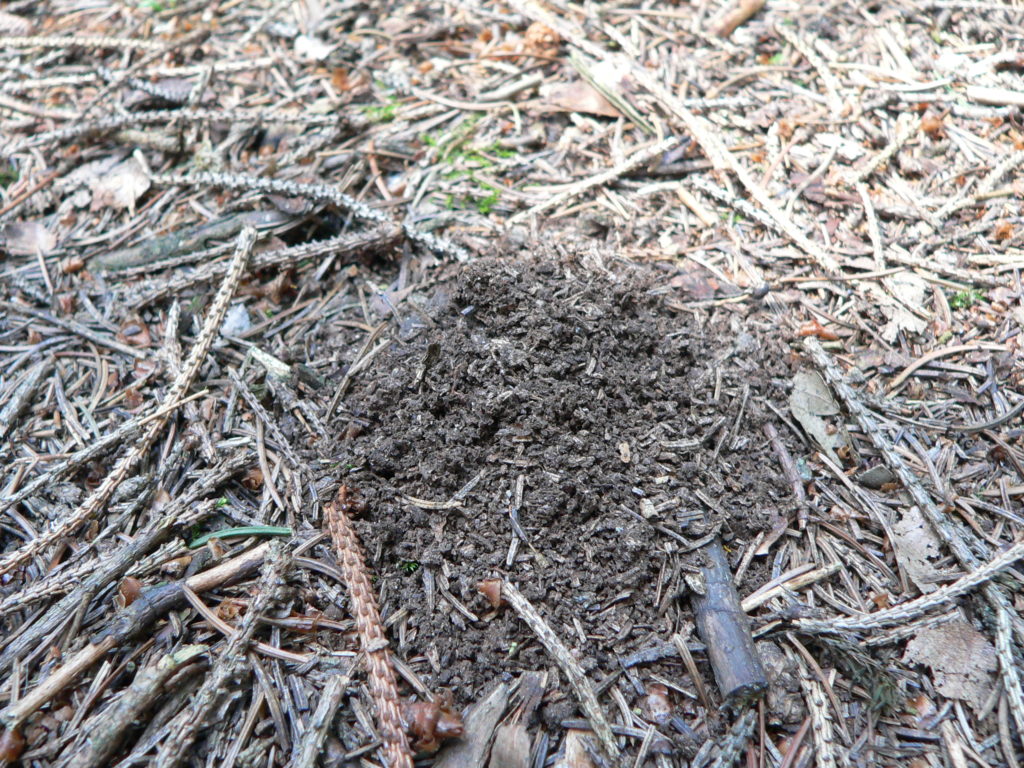
Wintering site of the buff-tailed bumblebee (Bombus terrestris)
Photo: J. Čížek
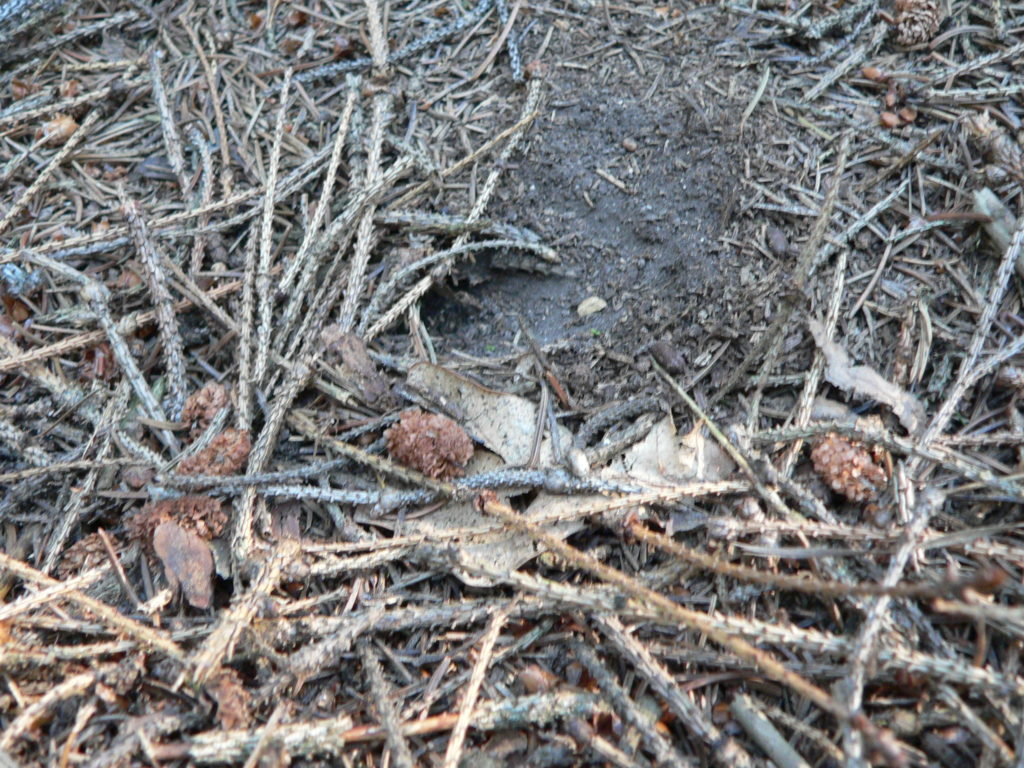
Rock bee (Bombus lapidarius) hibernaculum
Photo: J. Čížek
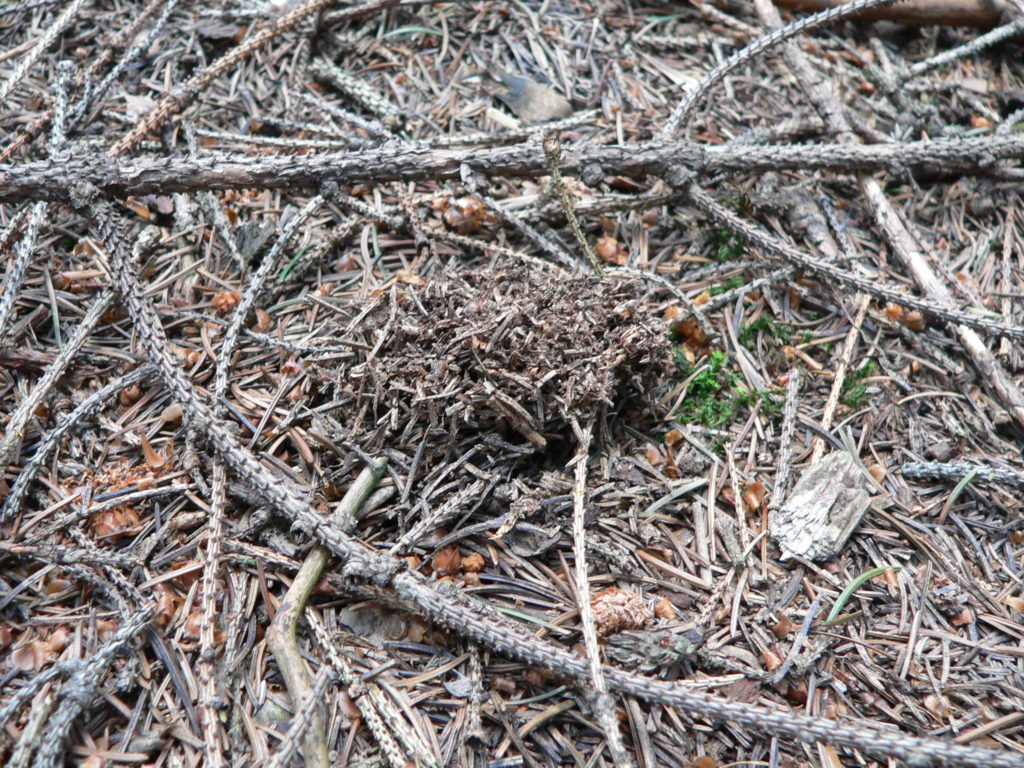
Typical example of a bumblebee (Bombus terrestris) hibernaculum
Photo: J. Čížek
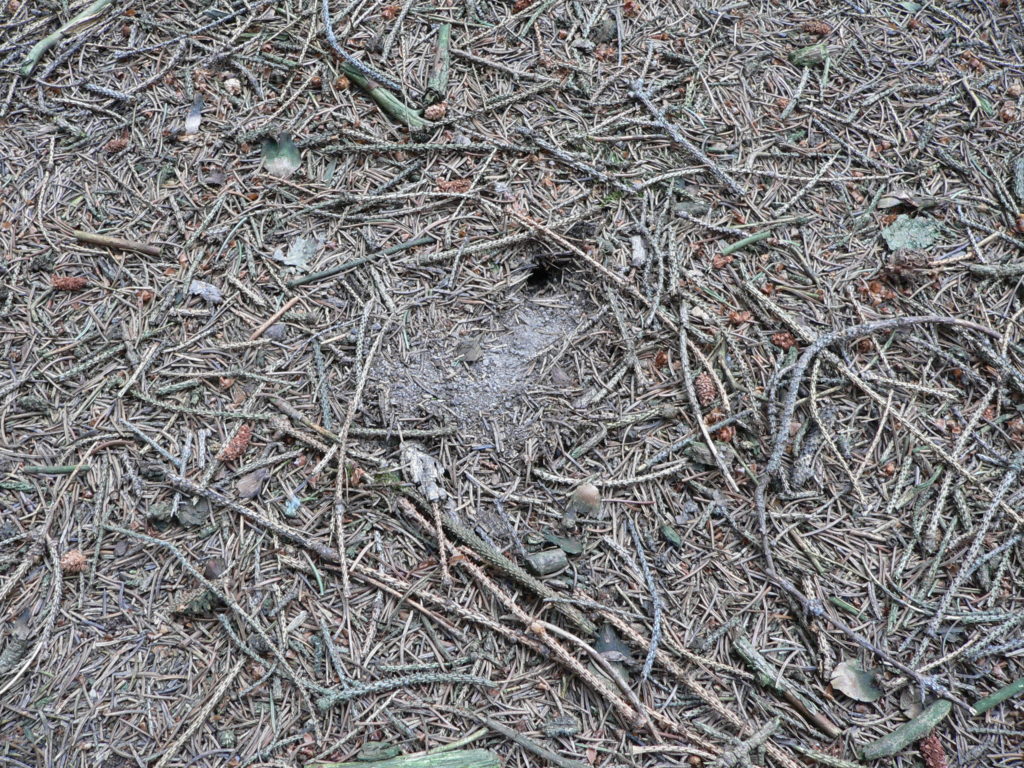
Wintering site of the large earth bumblebee (Bombus lapidarius)
Compare the differences between a bumblebee nest.
Photo: J. Čížek
Protection of wintering sites
Now you know what such places look like. You are also well aware that being woken up prematurely spells an untimely end for the sleeping queen. You also know what dangers await the sleeping queens.
If you happen to discover any bumblebee hibernation sites in the wild, please
Be considerate of them and protect them.
Could the surrounding area be marked with stakes and supplemented with a suitable information sign.
The bumblebees will then repay us with their presence in the following season. If you're lucky, you'll see them in the spring as they leave their hibernaculum and warm themselves in the spring sun's rays.
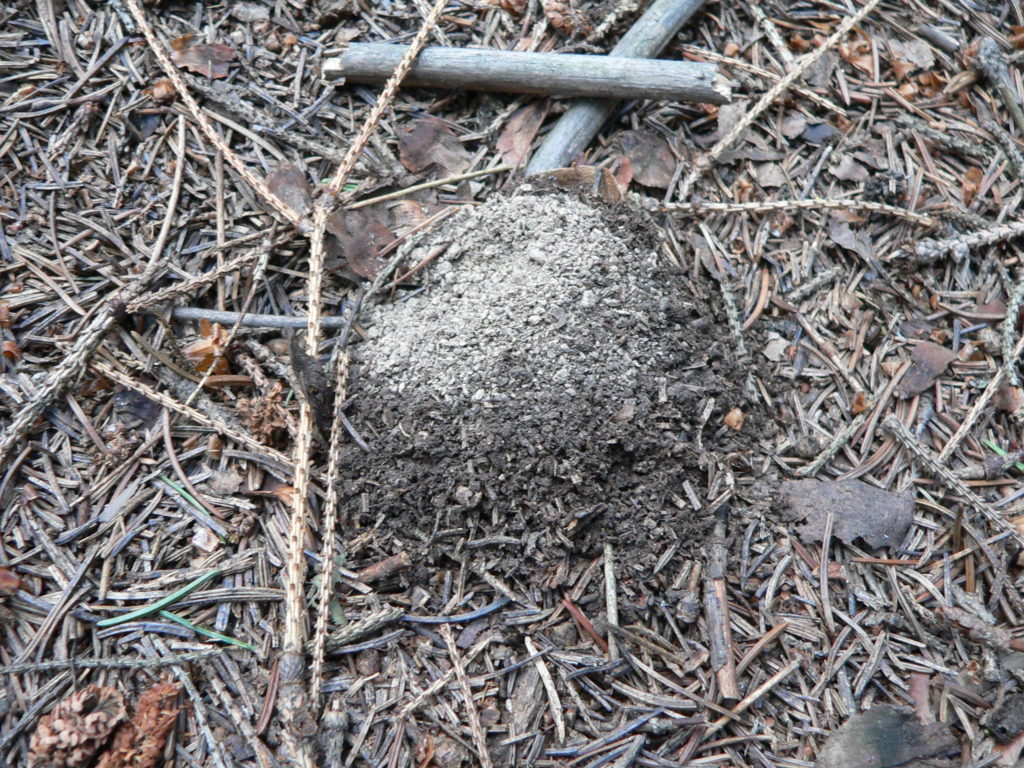
Overwintering site of the vestal cuckoo bumblebee (Bombus vestalis)
Photo: J. Čížek
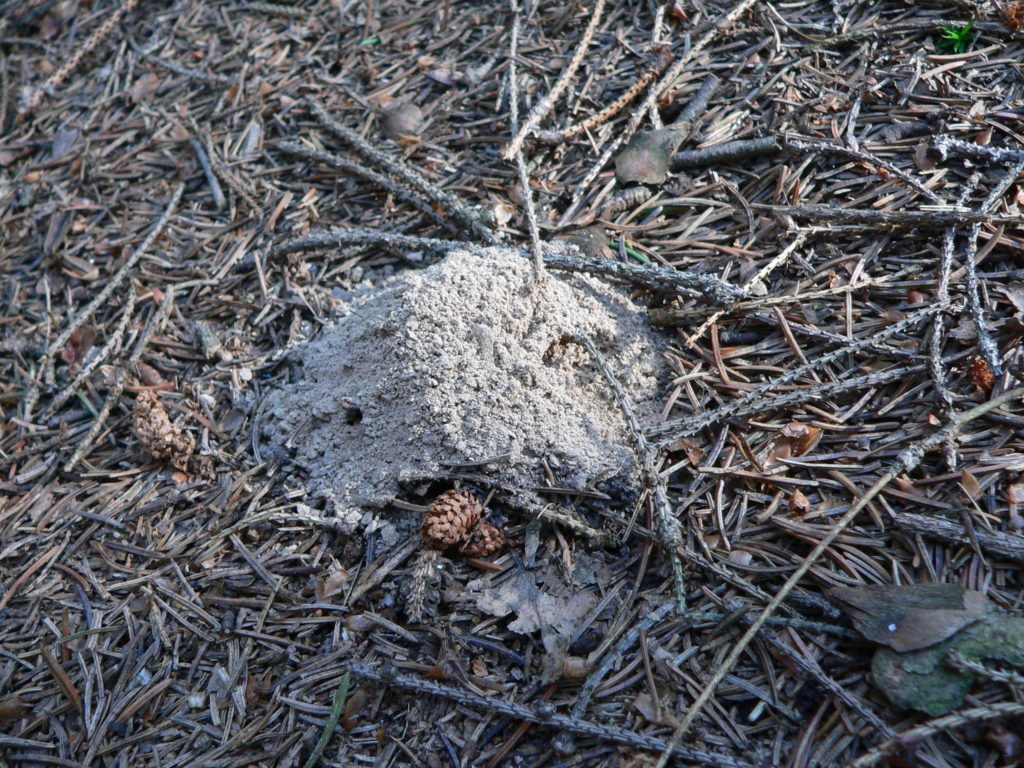
Overwintering site of the vestal cuckoo bumblebee (Bombus vestalis)
Photo: J. Čížek
Danger lurks in the land
Bumblebee queen hibernation is Always risk. It can flood water, attack Mould, find an insectivore or The badger is a different animal., which searches for food in those places. Similarly, it can dig them out of the ground dig up person, or, alternatively, the queens may not come out in spring, they may wake up prematurely etc.
In the country, a number of other enemies lie in wait for them – for example Parasitic nematodes Sphaerularia bombi.
The development of this nematode goes through several stagesi, primarily in the ground. As soon as the bumblebee is infected, the nematodes holds in its organs, later in the intestine. They go through several stages here.
In the final stages, the tapeworm's eggs emerge from the bumblebee's intestine, and eventually, so do their adult males and females. This final stage means death for the bumblebee.
These parasitic nematodes have also been shown to changes the behaviour of infected individuals, much like other parasites do. That's why infected queens repeatedly bury and at the same time spreads nematode eggs into the soil.
Likewise, attacked queen bumblebees, if they survive hibernation, They don't build nests, but only collect food. They can also be seen in places where bumblebee hibernation sites occur, where this parasite is found and helps with its reproduction in all ways.
Changes in the behaviour of a queen bumblebee je velmi často v přírodě symptoms of infection by this parasite. Perhaps, then, in the spring we might meet the mother who is attacked and will not found a nest.
More about the parasitic nematode Sphaerularia bombi finishes HERE but also HERE
What to do if you find a hibernating mother in the ground
If you find hibernating bumblebee queens during autumn/spring work, it's a problem, but give them a chance to survive!
We kindly ask you – please leave hibernating mothers in nature and never take them home to the warmth. Waking them prematurely from hibernation would mean a loss of energy and death from exhaustion.
So what should we do?
- Ideally Leave them where you found them. Cover carefully their hibernaculum with the same material, or alternatively, dry peat, or pine needles from the undergrowth on the edge of the forest.
- Alternatively, it is Hide I don't think such a place exists carefully cover with dry material, so they can dig themselves out in the spring.
- If you can't leave it in the same place, find a place in the immediate vicinity that we describe on our website and there carefully relocate. It should always be dry a place with material from which bumblebee queens Can dig up, I came It's not raining and where, if possible The sun isn't shining..
Depth i orientation It should be in the same cardinal direction as you found it. - If you are unsure, contact Čmeláky PLUS via Facebook, or write to email rychlarota@cmelaciplus.cz
Interesting videos
In the following video, you can see a mother bumblebee looking for a place to overwinter and hiding in its hibernaculum.
Source: George Pilkington www.nurturing-nature.co.uk and YouTube
Another video capturing a bumblebee queen hibernating, here a stone bumblebee (Bombus lapidarius)
Author Gordon White.
Filmed in July 2020 England – Buckfast, Devon England in Dartmoor National Park.
In the following video, you can see a clear demonstration of how a queen bumblebee can bury herself in the ground. The video shows their ability to hide in various materials.
On this video you can see a bumblebee queen behaving strangely. She has seemingly been attacked by the parasitic nematode *Sphaerularia bombi* and her fate is sealed.
This is suggested by the date they attempt to hibernate (May), repeated attempts to burrow, but also frequent defecation = spreading of roundworm eggs into the soil.
! WE KINDLY ASK YOU – DO NOT DISTURB THE BUMBLEBEE MOTHERS IN THEIR WINTER QUARTERS AND PROTECT THESE PLACES !