



Bumblebees are among the protected animals in the Czech Republic – all species of bumblebee (Bombus sp.) are classified as endangered animals by Decree No. 395/1992 Coll. (Annex III).
Why are bumblebees declining in our country?
The cause is not singular, but rather a whole series of them. They influence each other, and it's not uncommon for their effects to be potentiated.
Main factors behind the decline of bumblebees in the Czech Republic:
Intensive agriculture with a prevalence of monocultures over large areas
2) Inappropriate use of chemical agents in agriculture, but also in gardens
3) Excessive soil eutrophication
4) Overly intensive beekeeping disproportionately to the food supply
other discussed factors, not yet fully confirmed by studies and research
6) Insect traps – for example, poorly made bark beetle traps, the use of yellow sticky boards for non-selective insect capture
7) Road transport
9) Loss of host-parasite balance
10) Import of bumblebee subspecies for the pollination of agricultural production
The highlighted points are discussed in more detail below; clicking on a point will take you directly to the relevant topic.
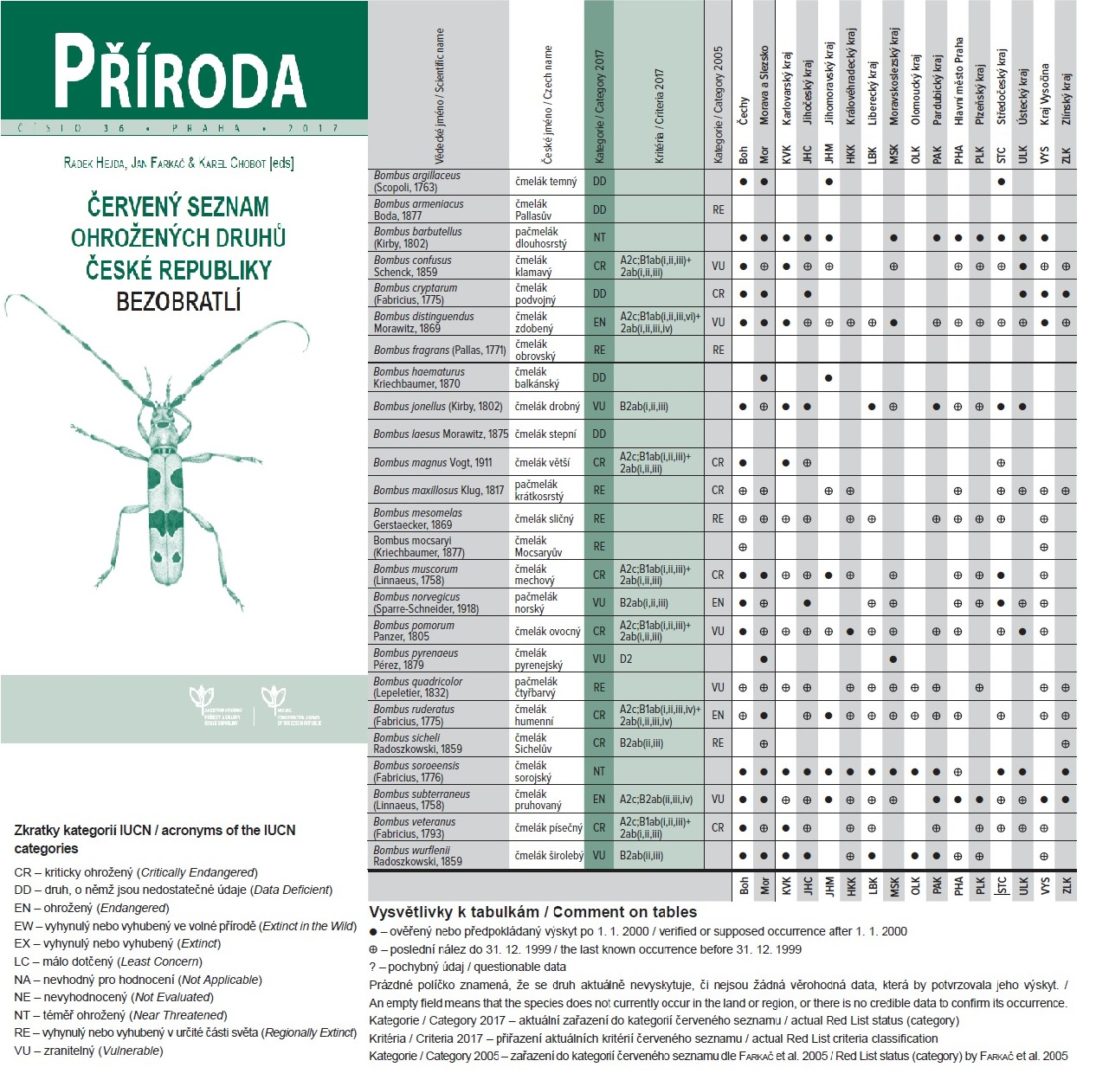
Extract from the Red List of Threatened Species of the Czech Republic, 2017
Intensive agriculture with a predominance of monocultures over large areas
First and foremost, it is the change in land management – the transition from a mosaic landscape to the management of large areas and monocultures is one of the main causes of bumblebee decline, described as far back as the 1950s. In the Czech Republic, almost nothing has changed for the better since then. Although the current Minister of Agriculture has announced an amendment to the subsidy policy for farmers farming large fields, see media message here. However, we will have to wait a little longer for the practical impacts. If long, open fields are disrupted by, for example, only a narrow 2-3m strip of temporary crop (e.g. honey clover), we probably cannot expect too much effect. Due to decades of agricultural intensification, bumblebees are losing both nesting opportunities and, above all, food sources, as monocultures provide a food source (if at all) for only a very limited time. The decline in food availability throughout their lives is considered the most significant factor in the decline of bumblebees in intensively farmed landscapes. That it can be done differently and just as effectively is shown by a comparison with our southern neighbour. We deliberately chose an area that has the same favourable growing conditions in both the Czech Republic and Austria. Both countries are EU member states with equal conditions regarding subsidy titles…
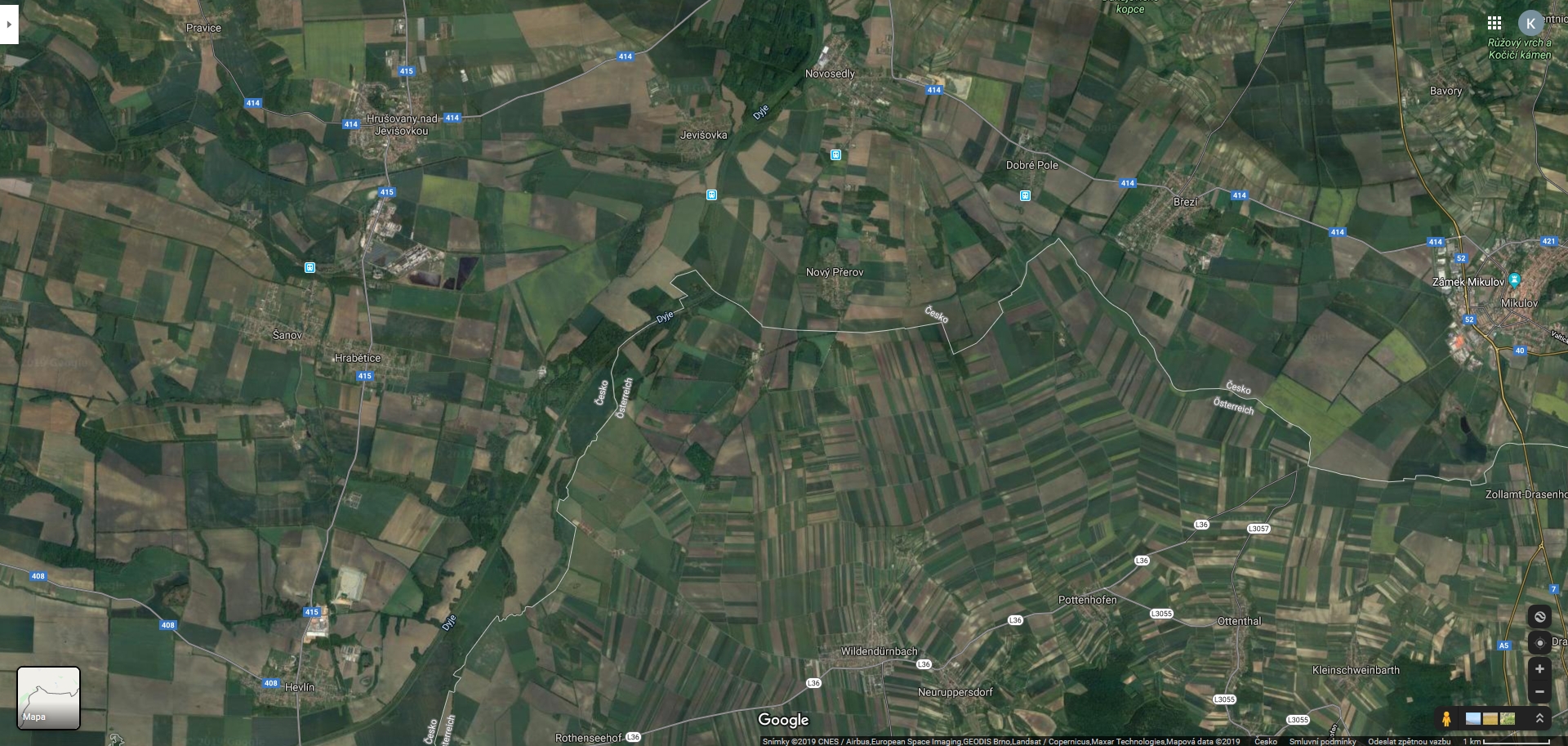
Example of different farming practices in the Czech Republic (monocultures) and Austria (smaller plots with species diversity). Selected area around Mikulov and Nový Přerov, where cultivation conditions are the same on both sides of the border.
Inappropriate use of chemicals in agriculture and gardening
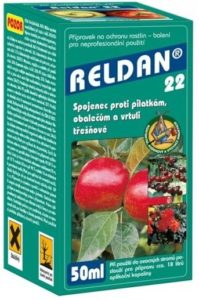
It appears that bumblebees are, after all, more resistant to a range of insecticides than honeybees. Bumblebees of the species Bombus terrestris exhibited high resistance to most products in a bottle test, with the exception of a substance based on chlorpyrifos-methyl, in whom it was recorded High toxicity with high mortality even in low doses. These are the commercial preparations Reldan 22, Daskor, Spring apple tree kit. The preparation Daskor is primarily intended in agricultural production for the treatment of potatoes, oilseed rape, mustard, poppies and cereals (wheat and rye). Reldan 22 is also used in fruit orchards and ornamental nurseries. It is a preparation also intended for gardeners for the treatment of brassica vegetables, cabbage, cauliflower, kohlrabi, apple trees, sour cherries, oilseed rape, chrysanthemums and strawberries. More for the bumblebee harmful insecticides were with an active ingredient spinosad (A broad-spectrum insecticide for treating the vast majority of ornamental and fruit trees, vegetables, strawberries, potatoes, and ornamental plants) a indoxacarb Avaunt 15EC (for oilseed rape treatment), Explicit plus (cucumbers, tomatoes, peppers and other vegetables, pome fruit, maize), Sindoxa (oilseed rape, vines), Steward (vegetables, maize, pome fruit, turf, fruit and ornamental nurseries, publicly accessible areas) Storage (vegetables, corn, pome fruit) In the case of mixtures, it was a combination of the substances thiram, difenoconazole, acetamiprid (tj Thiram Granuflo, Score 250 EC, Mospilan 20 SP).
Although a number of other preparations do not kill bumblebees directly, their negative impact on colony development, the number of reproductive individuals born, and their relative proportion in the nest cannot be ruled out. Research in this area is ongoing and is in the stage of partial studies.




Eutrophication of soils
Plants rely primarily on biological processes to obtain nutrients for healthy growth. As human activity has increased the nutrient content in precipitation, natural ecosystems are gradually becoming eutrophic – forests and meadows are becoming more fertile. This, among other things, leads to a reduction in their overall biodiversity. Agriculture has long since ceased to rely solely on organic fertilisers (manure, fallowing). The massive application of mineral fertilisers (nitrogen, phosphorus, potassium) increased agricultural yields during the 20th century. Unconsidered nutrient supply causes eutrophication and acidification of soils and surface waters, into which these fertilisers are washed away during rainfall.
The maps show the concentrations of major eutrophic parameters (nitrogen and phosphorus) in surface waters within our territory. It is evident that, especially in the agricultural areas of South Moravia and the Elbe Basin, the concentrations exceed both the legislative drinking water limits (50 mg NO3/l and 0.15 mg P/l) and the environmental quality limits (24 mg NO3/l and 0.05 mg P/l). (taken from Klimatickazmena.cz)
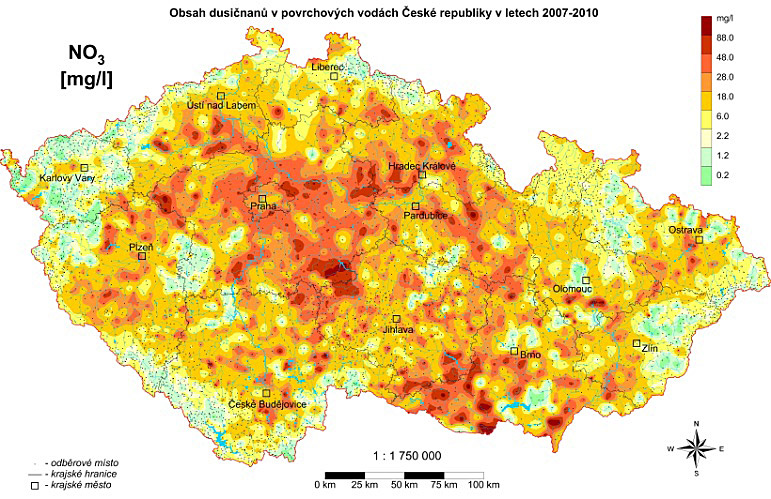
Concentration of nitrates in surface waters.
Source – Climate Change.cz
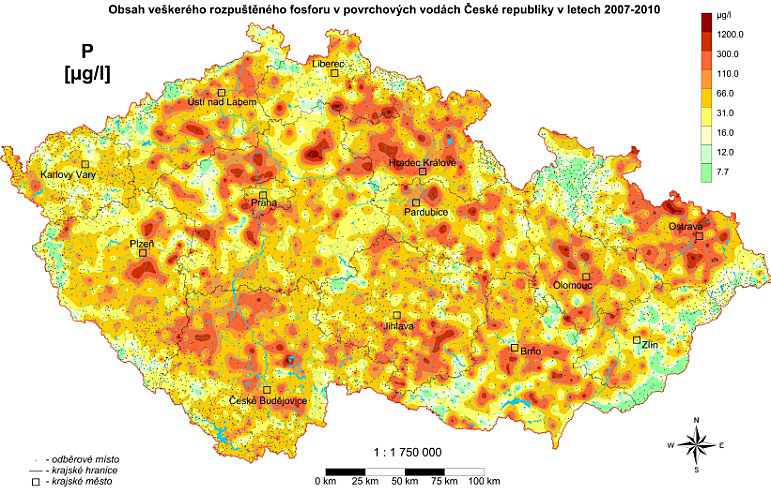
Concentration of total phosphorus in surface water
Source: Climate Change.cz
Import of bumblebee subspecies for the pollination of agricultural production
Invasion of non-native subspecies, particularly buff-tailed bumblebee (Bombus terrestris terrestris and Bombus terrestris dalmatinus), for the pollination of greenhouses and gardens.
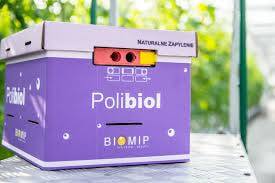
Example of importing bumblebees from commercial breeding facilities for greenhouse pollination
The nests of these bumblebees are usually very strong, capable of producing many queens that are larger and stronger than queens from our native nests, giving them a competitive advantage. The domestic population, otherwise best adapted to our conditions, can thus come under selective pressure and may ultimately be replaced by these non-native subspecies.
In connection with the import of these herds from abroad, the risk of introducing diseases or parasites cannot be entirely ruled out.
Bumblebee breeders
And bumblebee breeders can contribute rather negatively. Inexpert collection of searching queens from nature, escalating to hunting, can ultimately reduce the local population.
Likewise settling into structurally completely unsuitable ulcers, or leaving ulcers without further care results in the destruction of a bumblebee colony thus established before it can produce a sufficient number of new sexual individuals for the following year.
Such a breeder too often becomes more of a multiplier of bumblebee parasites, which also threaten natural nests in the vicinity.
And finally, there are breeders who simply They want to have bumblebees at all costs. The only way to acquire a bumblebee with demonstrably Czech origins is through the Czech Bumblebee facility at the Forage Crop Research Institute, s.r.o. Nests there are usually reserved within a few hours of the offer going live, and so some interested breeders prefer to order from vendors importing nests from abroad, thereby endangering biodiversity, as we have stated above. We strongly warn against such purchases, as vendors, seeing an opportunity for profit, calculatedly exploit people's ignorance and often present imports as “help“ for bumblebees. Until a final assessment is made by the Ministry of the Environment and the Ministry of Agriculture, the release or escape of these bumblebees into the wild must be considered a serious risk and a factor threatening native bumblebee species in our environment.
Why the Czech bumblebee, besides the factors we've listed, you can Read also here.
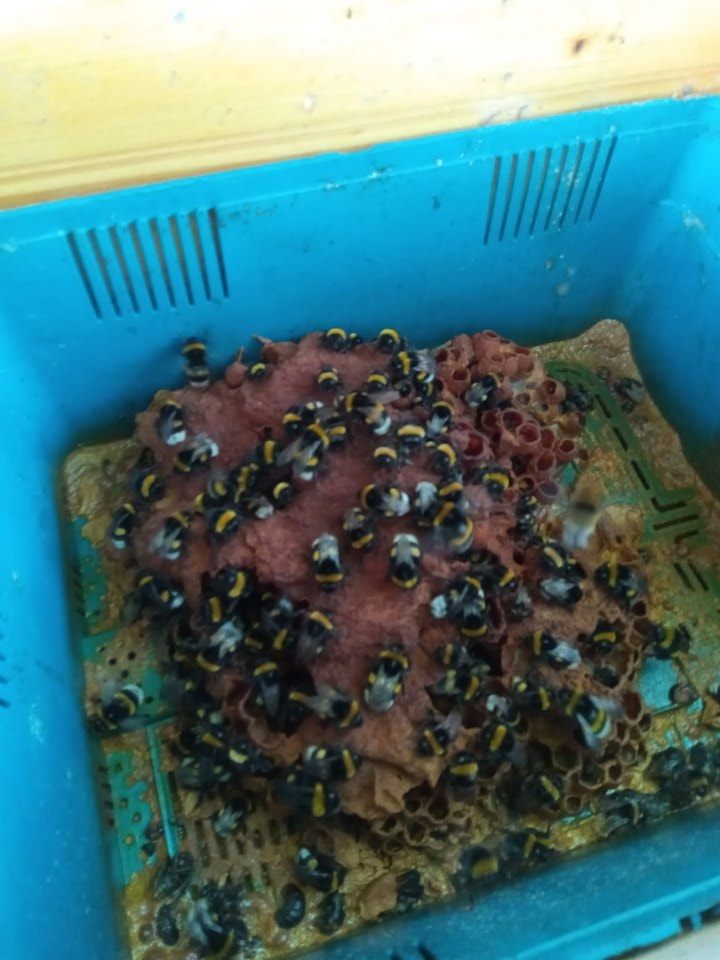
Example of a sold nest for bumblebee breeders. However, these bumblebees are intended for pollinating greenhouses.
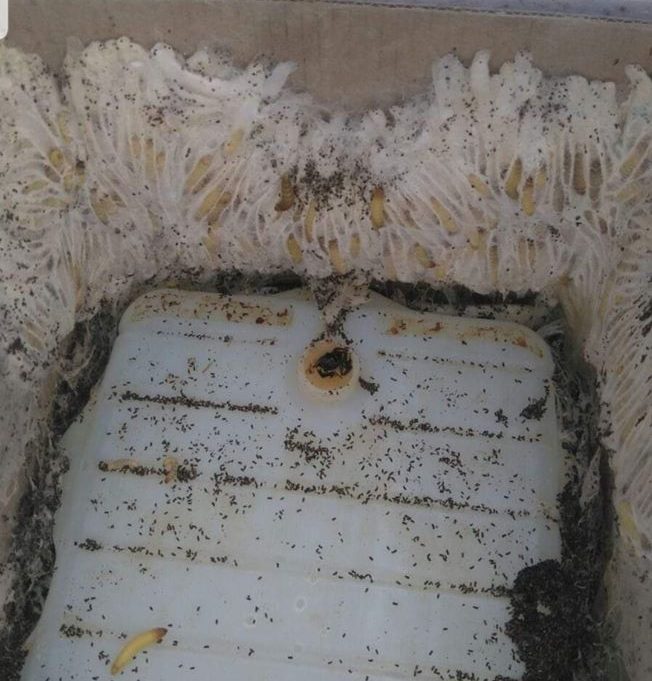
A breeder's nest completely devoured due to neglecting entrance protection.
The larvae of Aphomia sociella pupated behind a plastic insert within a wooden body.
Many people (like us 🙂) become captivated by bumblebees. Ondra has even developed a diagnosis for it (it's not yet internationally recognised in the ICD), and he has a number of hives in his garden, and depending on the tolerance of his immediate neighbours, even dozens of them. Here too, it is necessary to emphasize the potential negative risks of such beekeeping:
- the transmission of parasites or diseases from hive to hive due to the loss of distance barriers
- Perhaps competition for food resources if there are not enough of them
If a breeder of a larger number of bumblebees prefers or specialises in only one species, and furthermore, that species is stronger and more competitive than other species (e.g. Bombus terrestris and red-tailed bumblebee (Bombus lapidarius)), then their breeding can ultimately be rather harmful, as the following must be considered:
- risks of inbreeding and competition between mothers in spring for nesting space in the vicinity (a number of young mothers like to return to their original nesting sites in spring and look for suitable conditions for establishing a nest)
- possible selective pressure mentioned in the point above on other natural bumblebee populations in the vicinity
If you are interested in breeding and respect the principle of "first, do no harm", please Please read our paper here
How to choose the right beehive, We have stated here
Author of the text KK
You can see what it's like at the breeder's, to whom the bumblebee sisters return „home“ in the video below.