


Additional ventilation modification for commercially available hives

How to modify poorly designed ventilation in commercial beehives

Author of solution (idea):  Ondřej Hercog and Karel Kučera                      
Tested in practice:  AS of season 2020 on a total of 8 hives
Test resultssafe when following manufacturing recommendations and usage methodology
The group of breeders for whom the tool is suitable:  unrestricted
ReasonTranslate: Production is easy when following the procedure. Use on the hive temporarily / permanently. Element increasing the overall safety of the hive.

In the instructions for preparing bee hotels (insect hotels) before the season, we showed you simple ventilation modifications that also serve as a trap in case parasites penetrate through the ventilation, see HERE

If you haven't prepared the combs like this before the season, it's more complicated to make adjustments after the hive has been occupied.

That's why we've prepared for you a few tips on how to resolve such a modification retrospectively and commercially available hives. These modifications are non-invasive and can easily be added to established hives.

Practically the same solutions we use on their own ulcers – just built in as part of the pre-season preparation.

Edit will not take you long and will increase the safety of the inhabitants of your beehives:

  • The smell of the nest draws me further from the hive.
  • creates a sticky layer for trapping parasites, who may hopefully find such a place
  • creates a sticky layer for larvae from eggs that parasites sometimes lay in such a place

Most of the components you acquire for this modification can be used after the season for the final finishing of the hive.

We used plastic waste pipes from the HT system, which Karel Kučera discovered and has been successfully using in his ulcer treatments for years.


A commercially available ventilation cap (HT System), which we describe here in the 2020 season. It serves very well as a cap/lid, allowing small parasites into the trap, but won't let large hawk moths into the trap.
Therefore, we particularly recommend such a cover for the inner part of the hive together with a net made of UHELON 53S. For the outer part, it is better to use lid with a hole 2.5 – 3 mm high and 20-25 mm wide

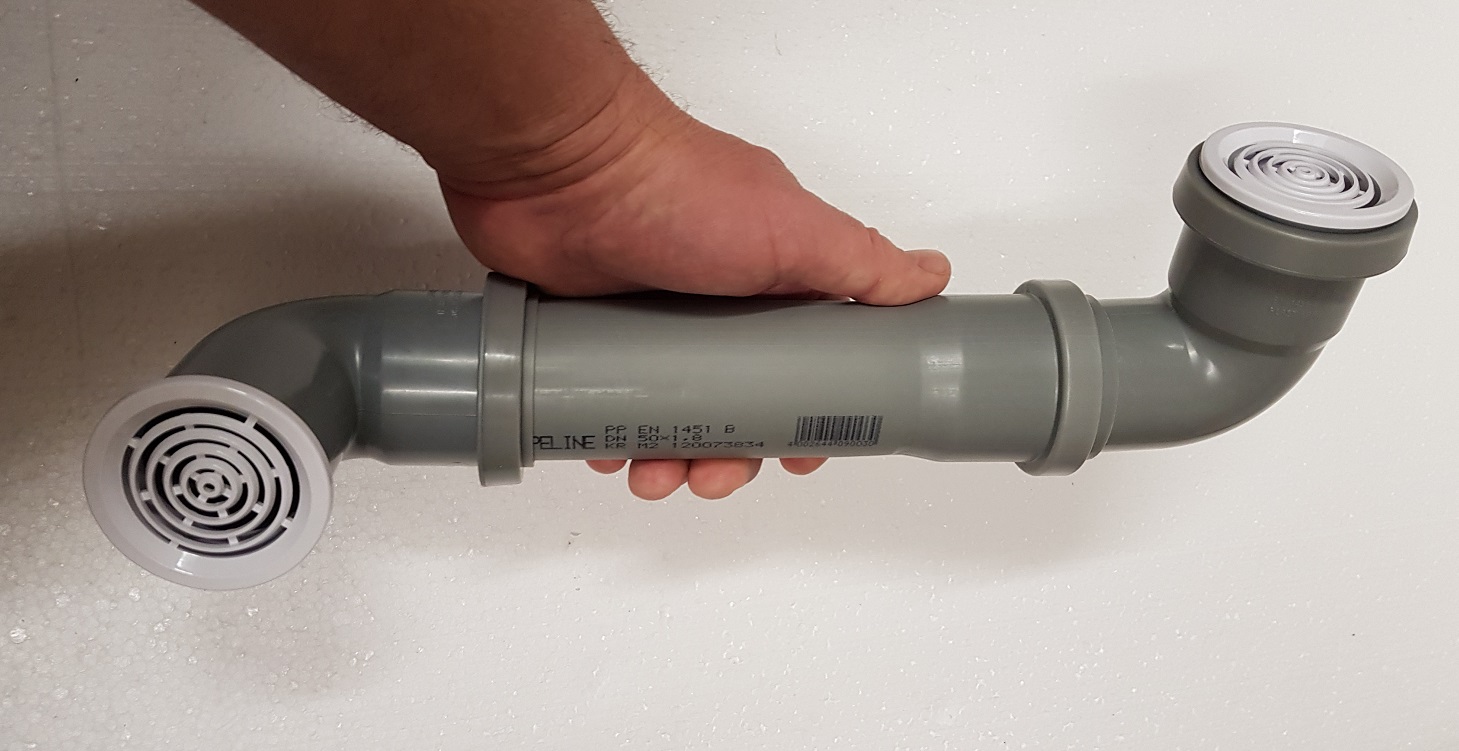
Bumblebees PLUS - Ventilation from HT waste pipes

Ventilation of HT waste pipes – construction kit
Photo O. Hercog (4/2020)
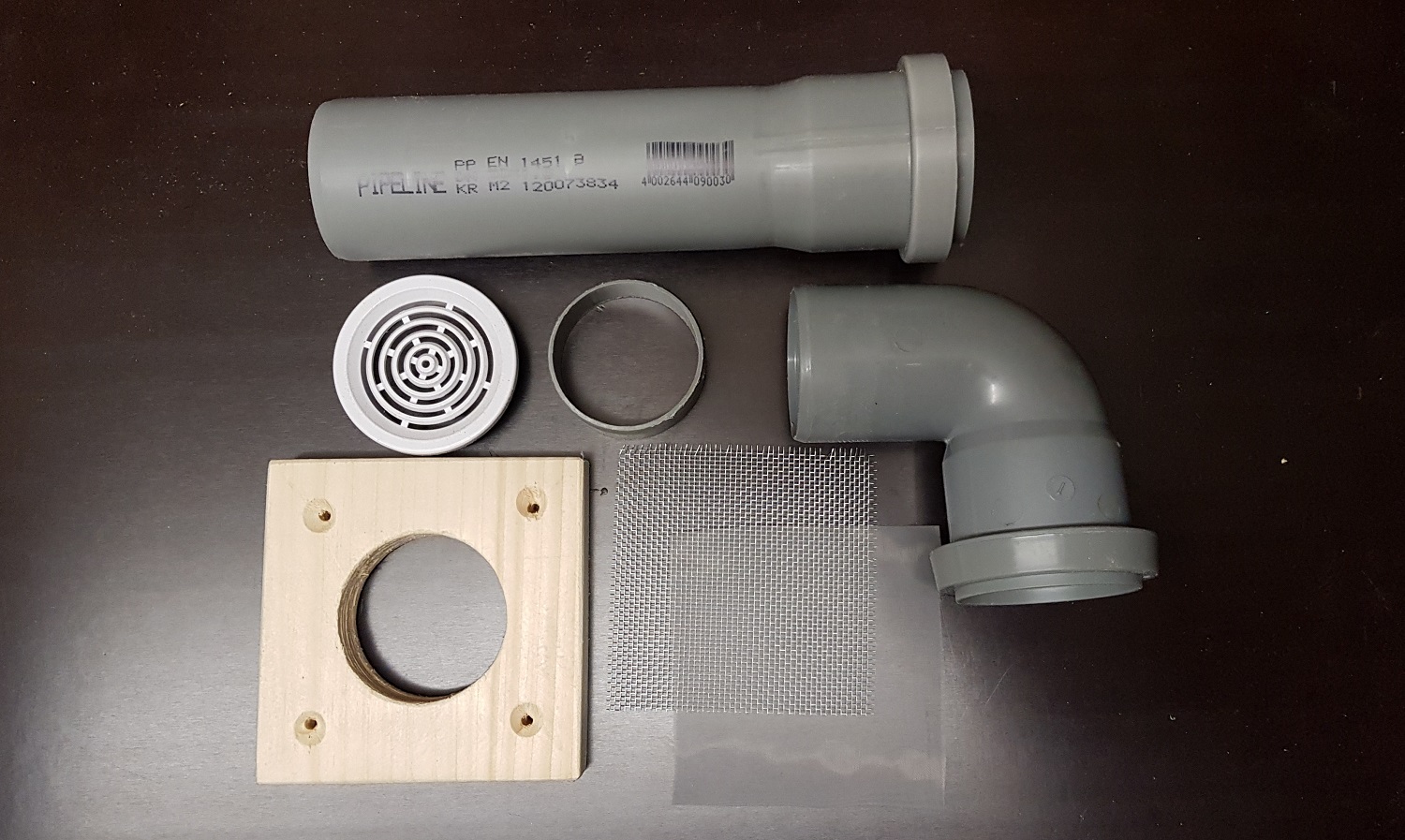
 

Components / Parts
  • HT pipes DN 50 (outer diameter 50mm)
    – Knee with HTB collar for waste pipes, DN 50
    – Plastic waste pipe HTEM DN 50
  • Ventilation HACO VM50B grille
  • Aluminium mesh insect screen 
  • Wooden board for the creation of a flange, a thickness of at least 15 mm
  • Sieve UHELON53S
    Note: this density is important. Uhelon from beekeeping is intended for filtering honey and is not dense enough.
  • Screws
  • Sealing tape
  • Silicone sealant
  • ChemstopFlypaper

    Note.

  • Most components can be found at a hardware store, plumbing supply shop, or a DIY superstore.
  • Uhelon53S, for example, here: https://www.silkandprogress.cz/cs/sita-technicka-data
Bumblebees PLUS - Ventilation modification of commercially available hives - components

Modification of ventilation for commercially available beehives – components
Photo O. Hercog (4/2020)
 

Manufacturing process
  1. Cut a square/rectangle from the wooden board that is large enough to create a 50 mm diameter hole in its centre.
  2. You will drill his hole in 50 mm diameter – a flange will be formed
  3. You will adjust the hole in the flange so that it can be inserted. HT pipe
  4. Remove the ventilation cap on the hive
  5. You will adjust the flange size so that it can be fitted in place of the original vent cap.
  6. The size and shape should not affect the closing of the roof (settling).
  7. Drill screw holes in the flange
  8. You place the flange symmetrically on the original ventilation opening, along the axis of the ventilation opening, and pre-drill holes for screws into the hive body.
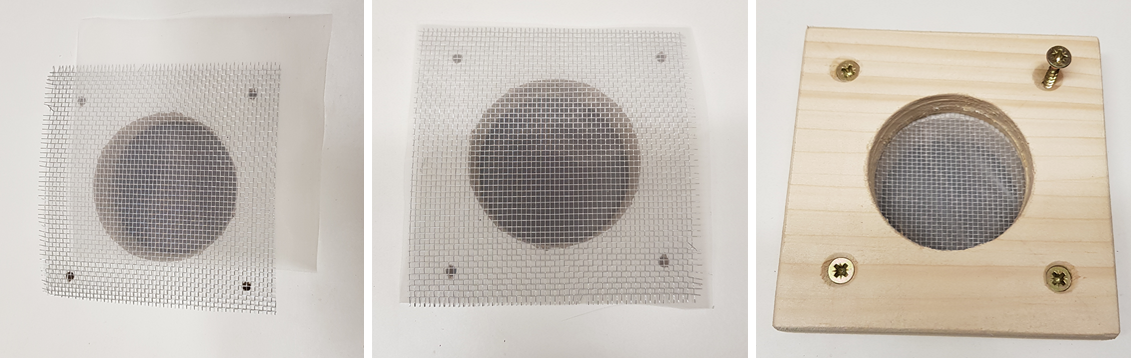
  9. You will cover the original ventilation opening on the hive aluminium mesh (The bumblebees won't sting her
    Note: not necessary if the ulcer already has aluminium mesh attached on the inside (only some commercially available ulcers do).
  10. You cover the aluminium mesh with a mesh of UHELONU53S
  11. Fix the netting to the hive body with a flange and screws
  12. Cut a ring approximately 20 mm high from the HT pipe
  13. Wrap the ventilation cap with a few turns of adhesive tape to seal it and insert it into the ring.
  14. Insert the ring into the socket of the HT pipe elbow
  15. Wipe the inside of the knee around the circumference Chemstopem, or line it with sticky tape/a fly trap
  16. If needed, cut a straight piece from the HT pipe to extend the ventilation – as required (do not unnecessarily increase the length of the pipe so that the wind blows).
  17.  On the extending pipe, create a sticky layer
  18. Assemble the HT pipe sections into the required shape
  19. Wrap the end of the pipe to be inserted into the flange with several layers of adhesive tape so that the pipe seals well and holds firmly. We recommend sealing perfectly with silicone or another flexible sealant.

Note: as an alternative to the adhesive layer from Chemstop, it is possible to use mucholapku, or a toilet paper roll coated on the inside with Chemstop.
Bumblebees PLUS - Ventilation modification of commercially available hives - protective mesh and flange

Modification of the ventilation system on commercially available beehives – protective mesh and flange
Photo O. Hercog (4/2020)
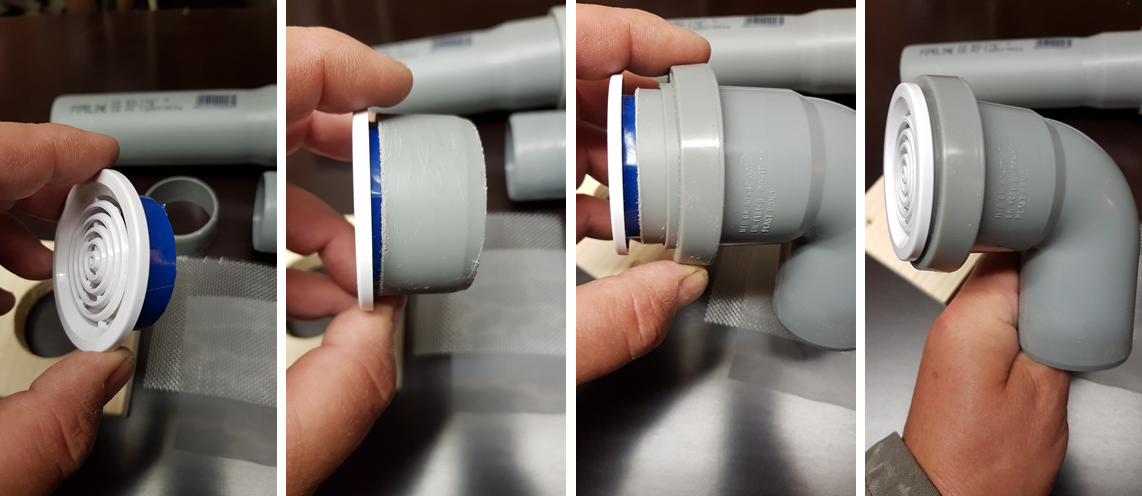
Bumblebees PLUS - Ventilation modification of commercially available hives - elbow and ventilation grille

Modification of ventilation for commercially available hives – elbow and ventilation grille
Photo O. Hercog (4/2020)
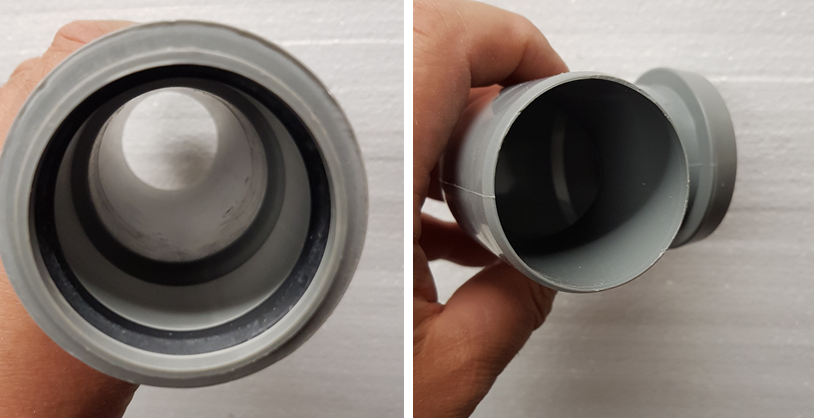
Bumblebees PLUS - Ventilation modification of commercially available hives - Space for the sticky layer

Modification of ventilation in commercially available hives – space for the sticky layer
Photo O. Hercog (4/2020)
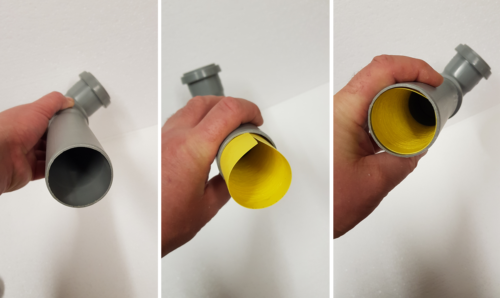
 

Bumblebees PLUS - Ventilation of the hive from PP pipes

Instead of clearing out the space in the hive, you can also use sticky insect traps 
Photo O. Hercog (1/2020)
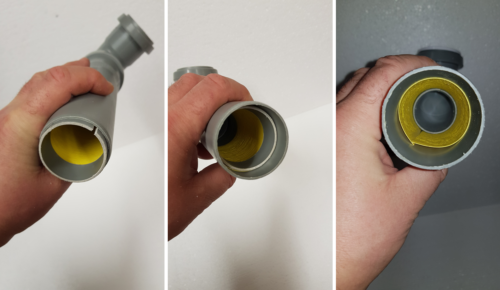
 

Bumblebees PLUS - Ventilation of the hive from PP pipes

Ventilating a pit with HT pipes – adhesive tape can be secured with a ring made of HT pipe
Photo O. Hercog
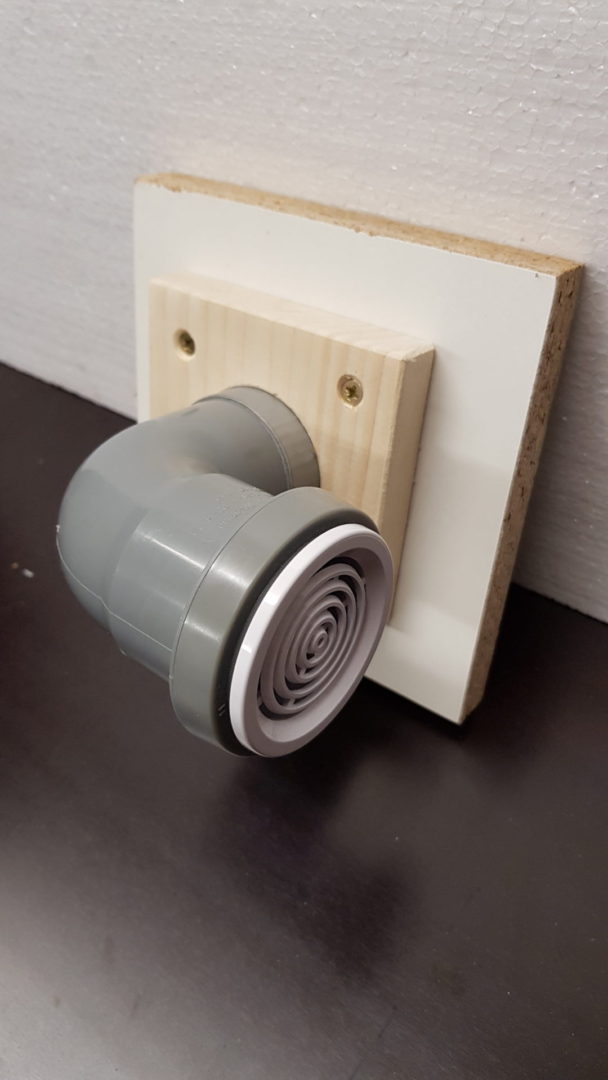
Bumblebees PLUS - Ventilation modification of commercially available hives - elbow fitted into the flange

Modification of ventilation for commercially available hives – elbow fitted into flange – model situation
Photo O. Hercog
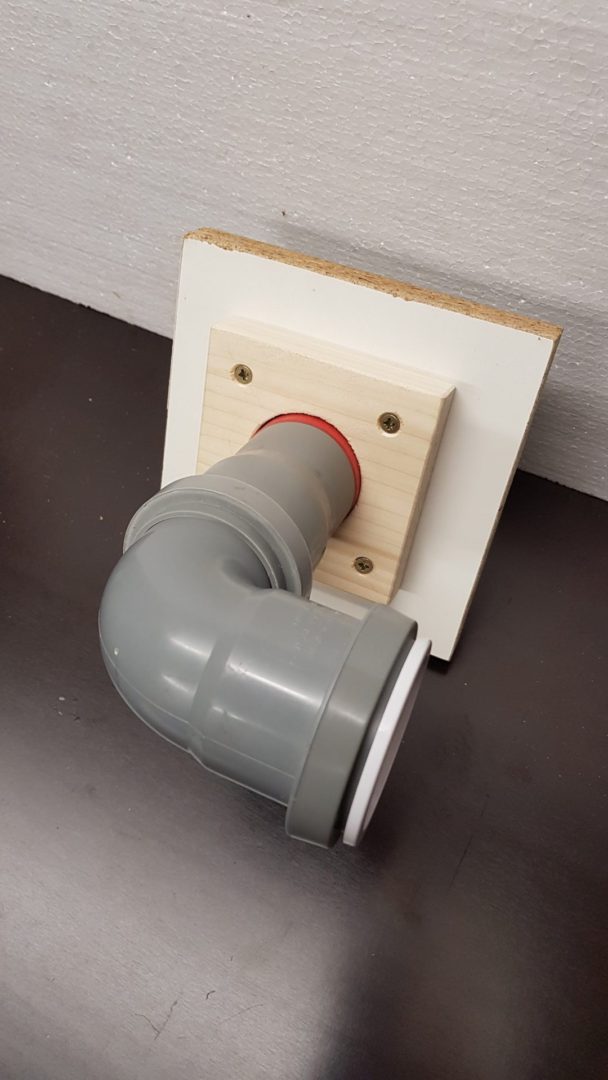
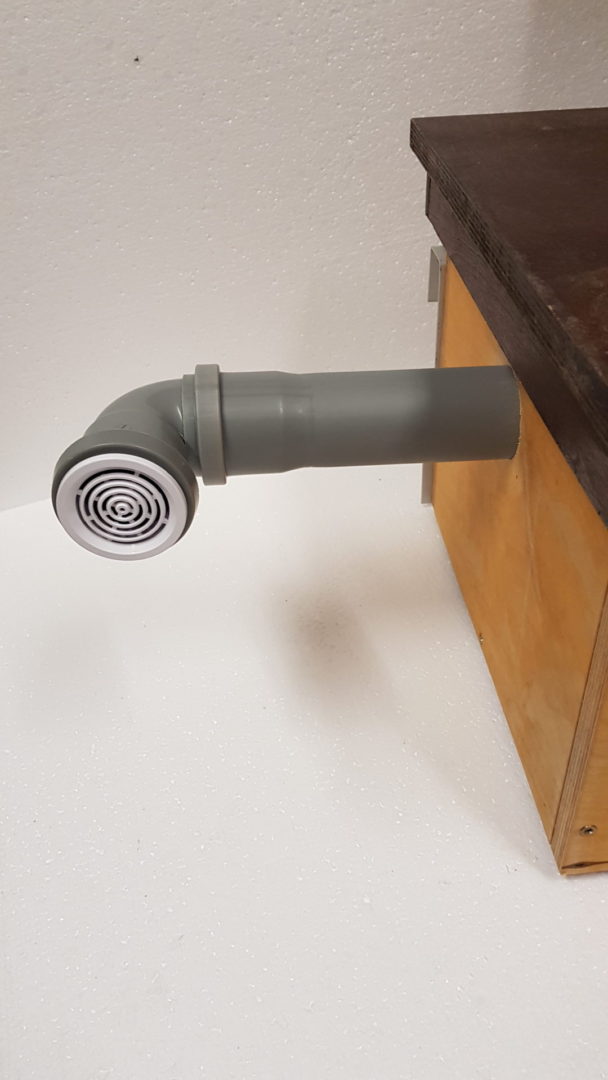
Bumblebees PLUS - Ventilation modification of commercially available hives - elbow + extension fitted in the flange

Modification of ventilation for commercially available hives – elbow + extension fitted into the flange (model situation)
Photo O. Hercog
If you don’t want to waste time making a wooden part, you can find a commercially available part online „vent cover„.
It has in it a 50 mm diameter hole and it’s easy to make use of for women mentioned in the description.


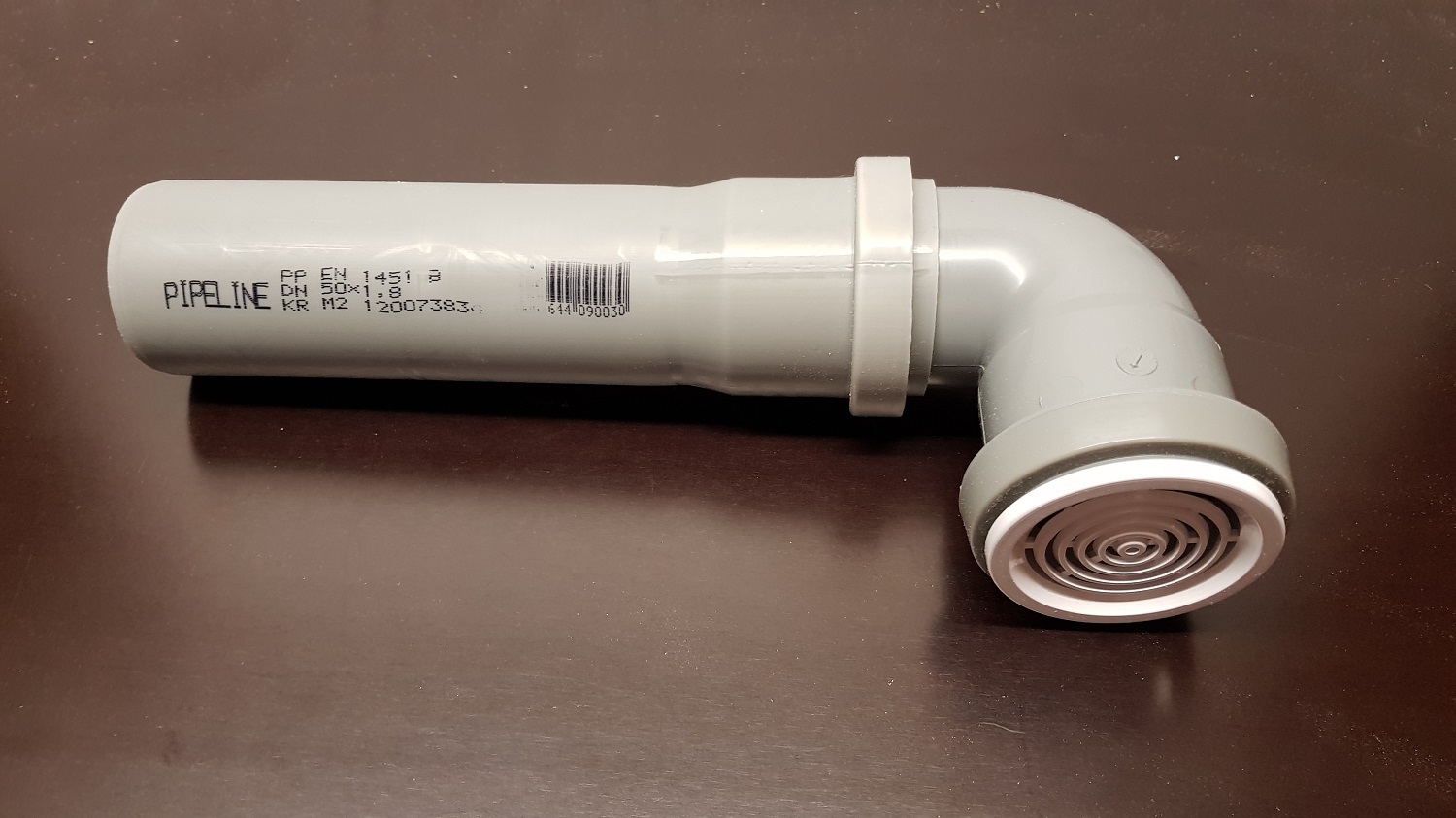
Bumblebees PLUS - Ventilation modification of commercially available hives - knee with extension

Modification of ventilation for commercially available hives – elbow with extension
Photo O. Hercog (4/2020)
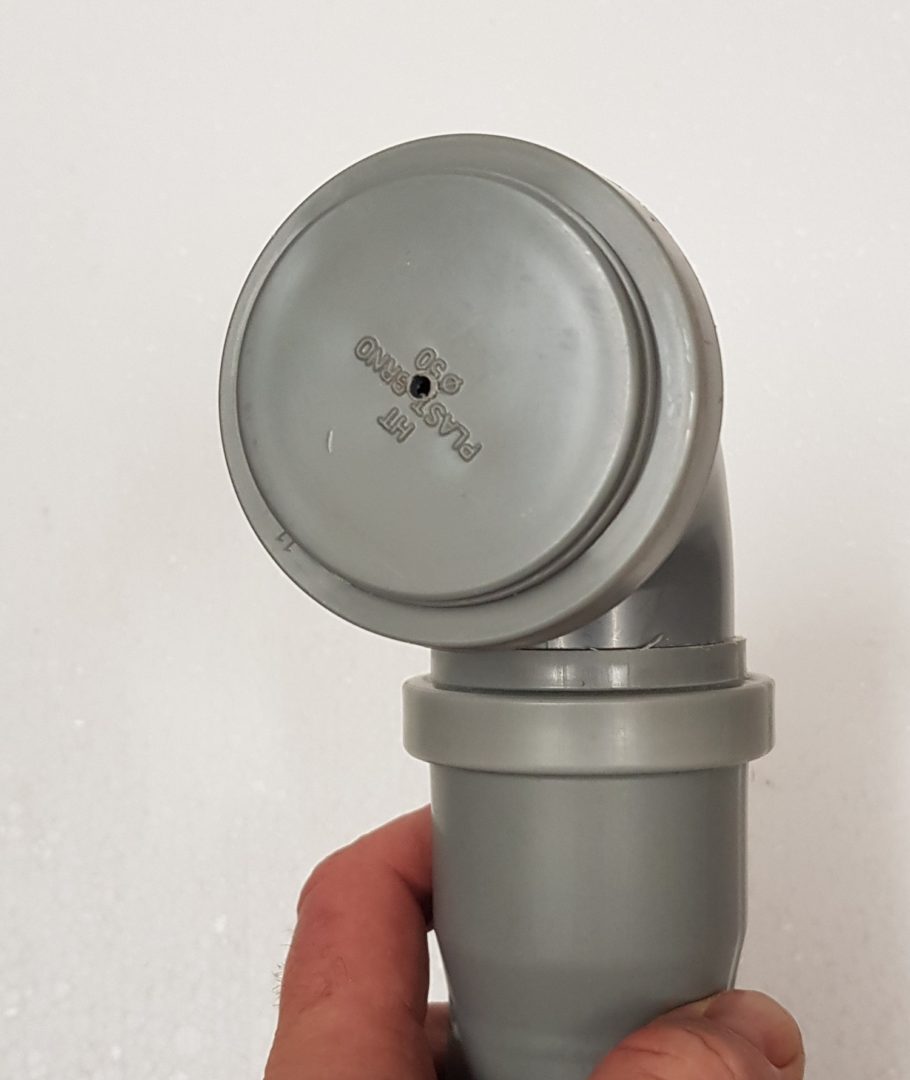
Bumblebees PLUS - Ventilation modification of commercially available hives - plug lid

Modifying the ventilation of commercially available beehives – using a plug cap
You just need to drill a hole to a diameter of 2 mm
Photo O. Hercog (5/2020)
How does it all work?
  • The nest emits an intense odour, which is sought out by bumblebee parasites – the smell draws them to the mouth of the ventilation duct
  • Grating Parasites will pass, but not bumblebees
  • Here the parasites will try to penetrate the ulcer and to get stuck caught on a sticky surface
  • If they should penetrate (they won't fly at the knee, but will crawl = stick), a mesh made of UHELON53S will stop them
  • If you extend the ventilation opening away from the hive with an attachment, you will lure a significant portion of the parasites away from the flap and you will increase the chance that parasites will not penetrate the ulcer, likewise parasites will not search so intensely for a leak in the ulcer 
 Another effect

Thanks to the ventilation being bent at a knee, Less light shines into the nook. New workers, mothers, and males will then no longer „hang around“ unnecessarily at the ventilation, and will more quickly find their way out of the hive.

This will also reduce the danger of incest (males strive to mate with mothers in the light regardless of kinship...)


Bumblebees PLUS - Ventilation modification of commercially available hives - example

Modification of ventilation in commercially available hives – an example
No additional netting or flange is required here.
Photo O. Hercog (2019)
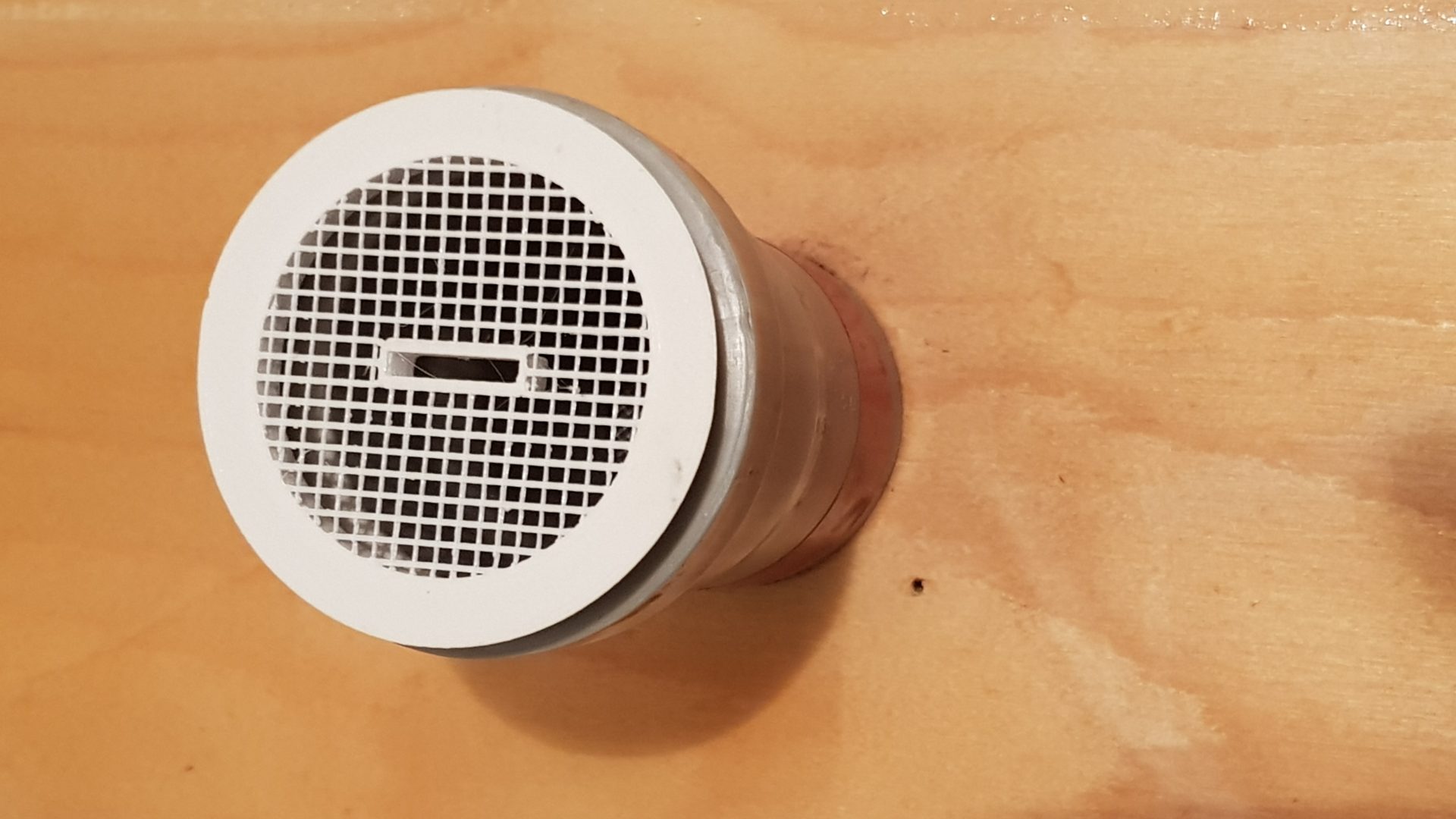
Bumblebees PLUS - Ventilation modification of commercially available hives - example

Modification of ventilation in commercially available hives – an example
Photo O. Hercog (2019)
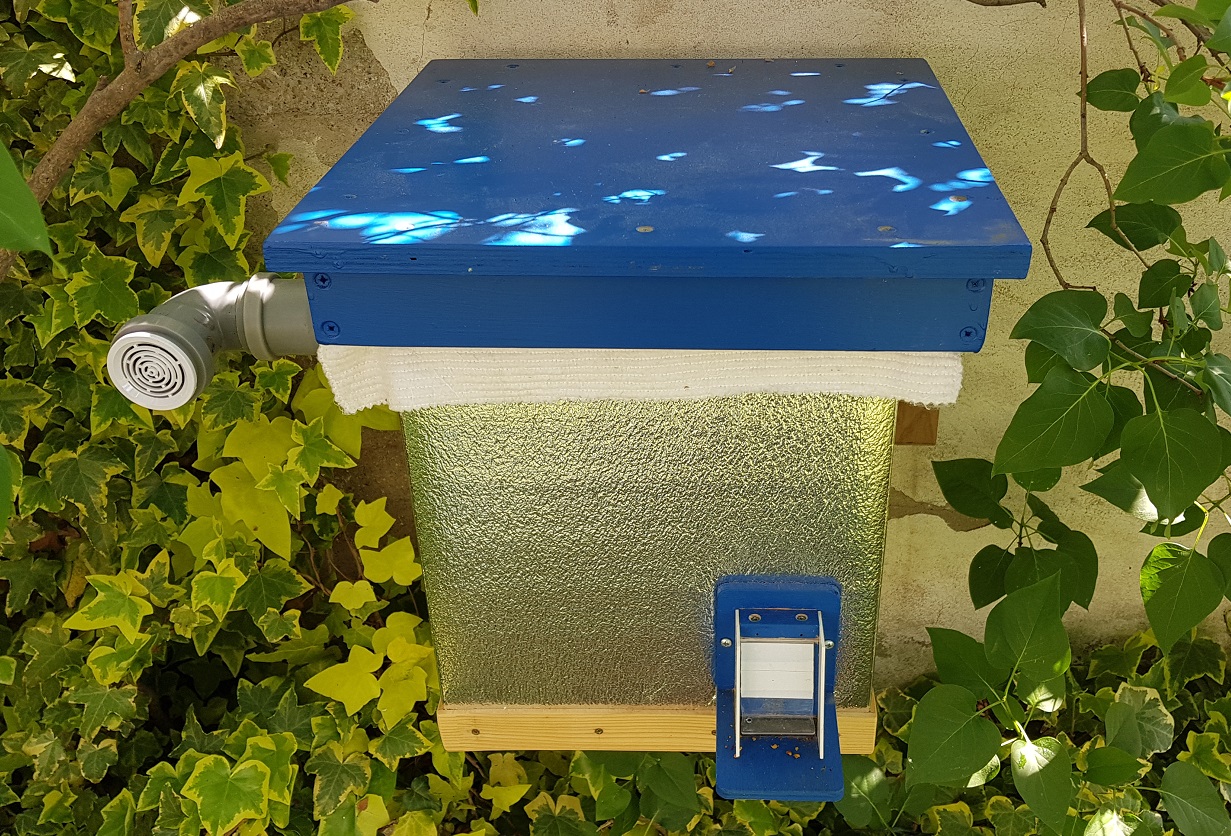
 

Bumblebees PLUS - Shock with ventilation from HT pipe

Ventilation socket from HT pipe
Photo O. Hercog (5/2020)
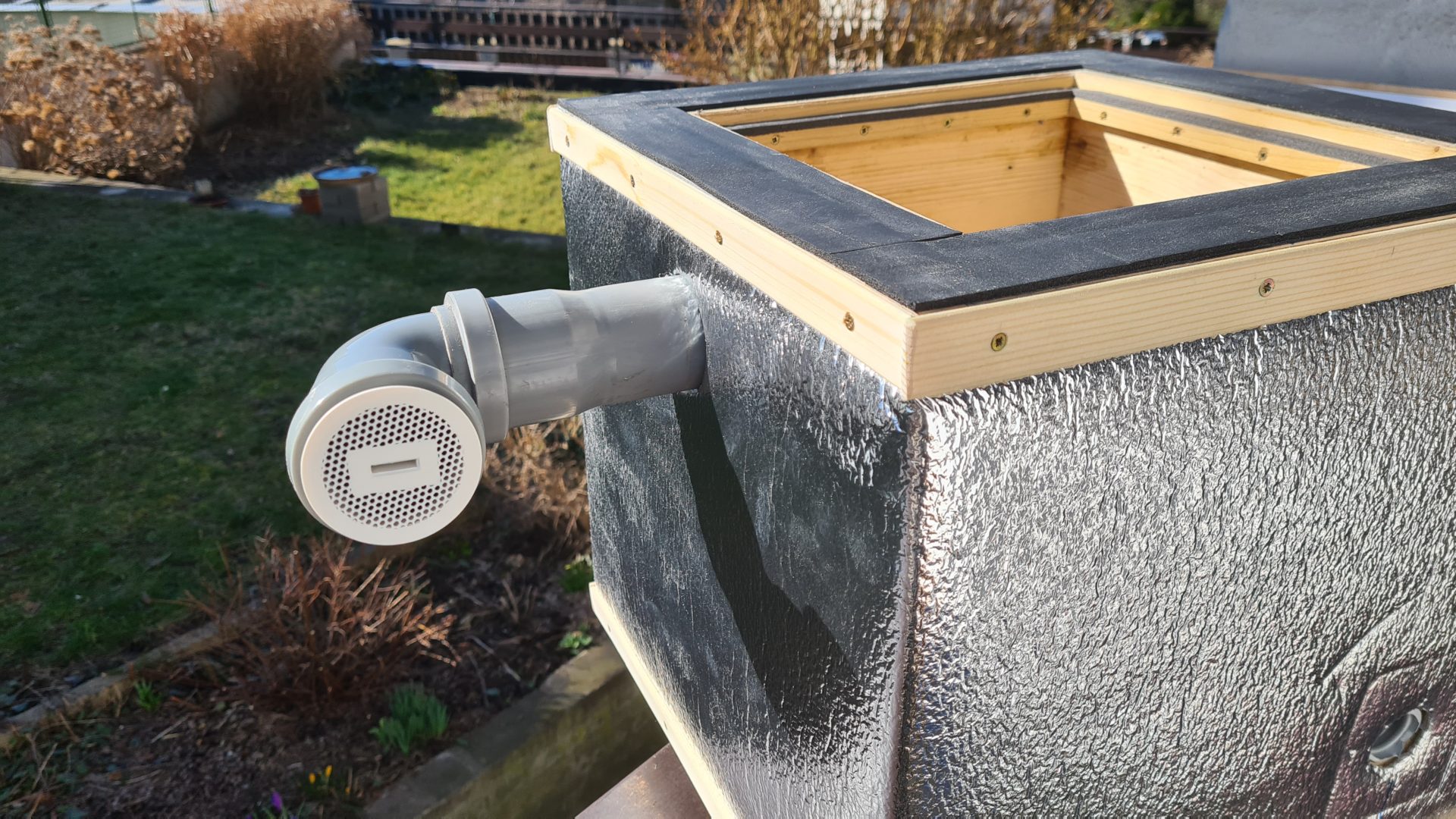
 

Bumblebees PLUS - Ventilation with cap - trapping paste - external cap from a 3D printer (behind it in the pipe, a sticky layer of Chemstop)

Ventilation with cap – trap – external cap from a 3D printer (with an adhesive layer of Chemstop behind it in the pipe)
Photo O. Hercog (3/2021)
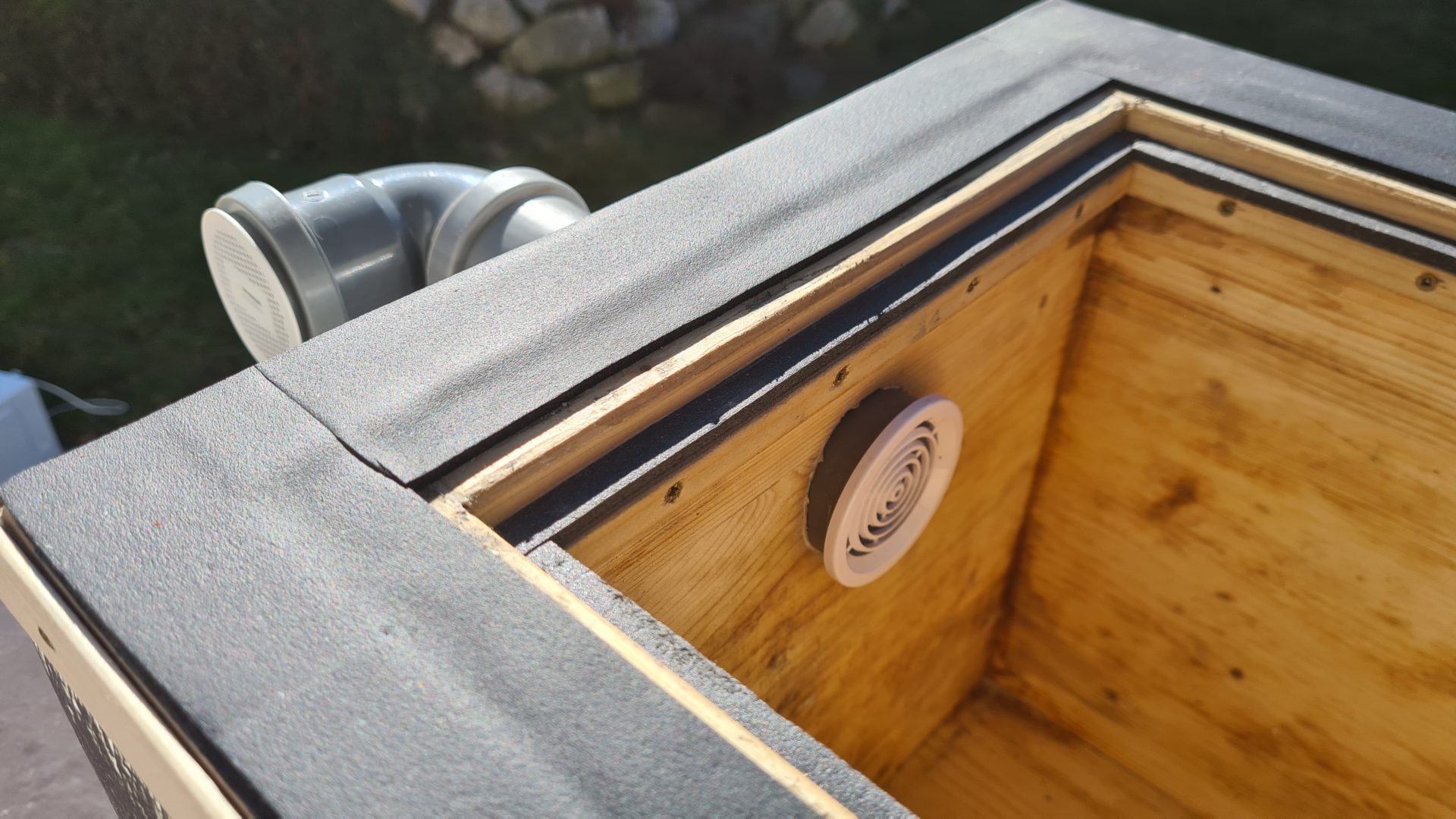
Bumblebees PLUS - Ventilation with cover - trapping trap - inner side with ventilation cover for HT System (mesh made of CARBON 53S is hidden under the cover)

Ventilation with cover – trap – inner side with ventilation cover for HT System (53S CARBON mesh is hidden under the cover)
Photo O. Hercog (3/2021)