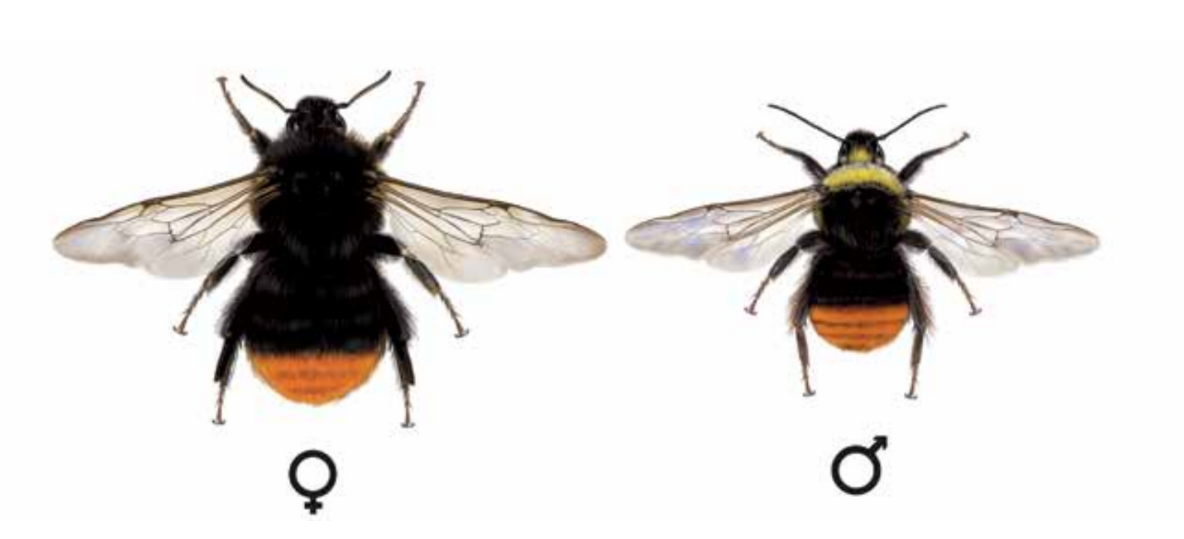
Rock bumblebee (Bombus lapidarius)
What you will learn here
- Information about individual bumblebee species
- You will receive a summary of information for the general public, schools and breeders
Last updated: 8/12/2021
Description
Czech: Rock bumblebee
Latin: Bombus lapidarius
English: Red-tailed bumblebee
German: Steinhummel
Polish: Trzmiel kamiennik
Image

Rock bumblebee (Bombus lapidarius)
Source: Sikora A., Michołap P., Kadej M., Sikora M. Tarnawski D. 2018 "Pszczoły w mięści: Trzmiele Wrocławia", Wyd. Stowarzyszenie Natura i Człowiek.
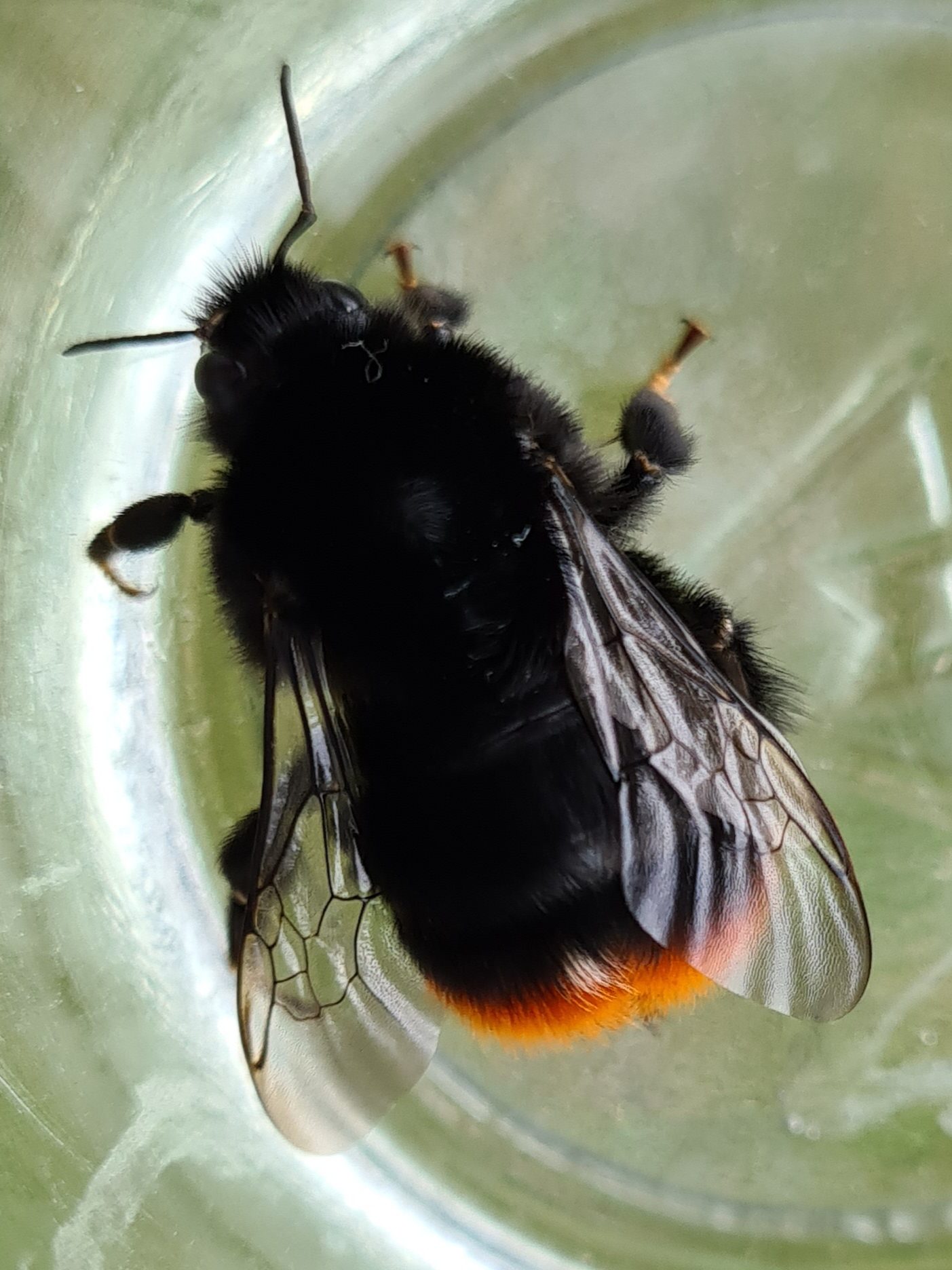
Color scheme
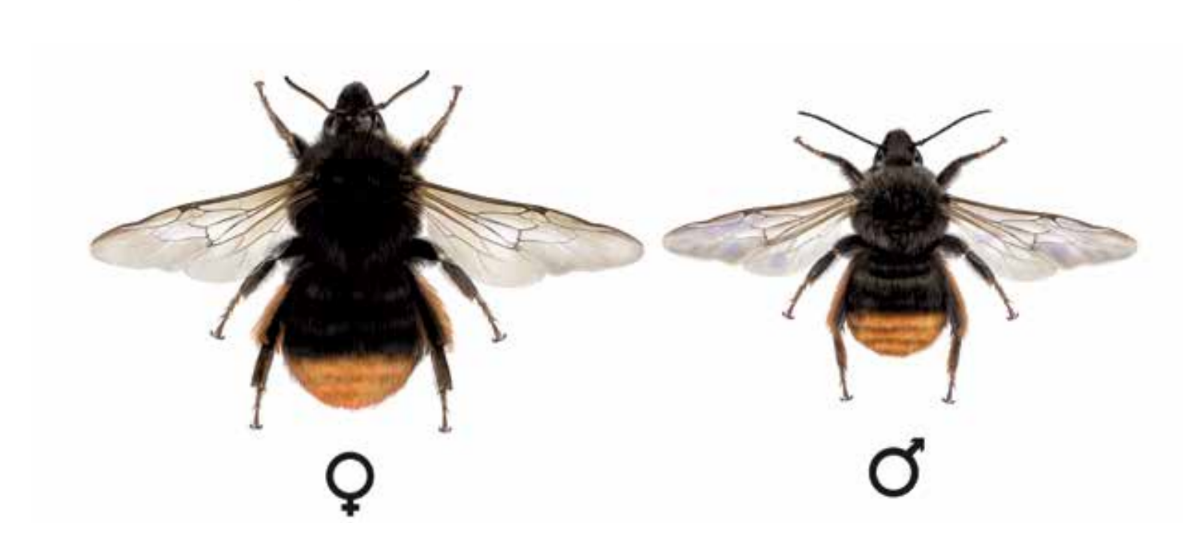
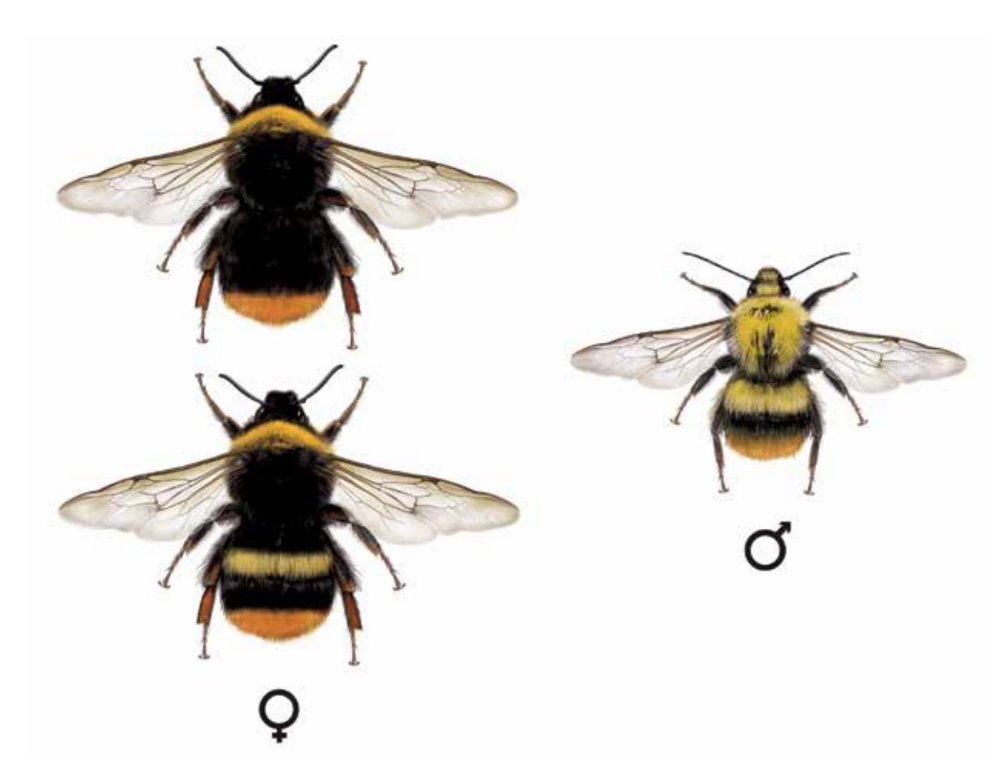
Basic scheme (queen and worker):
- The base color is black, a lighter shade compared to the black color of the ground bumblebee (B. terretris)
- Head: black
- Chest: black
- Bottom: black, end of bottom deep orange-red
Basic diagram (male):
- Head: black, with a brush of bright yellow hairs on the facial part
- Chest: black with one light yellow transverse stripe behind the head.
- Bottom: black with a deep orange-red tip
Addition:
- The coloration of the mother and workers is similar
- Workers sometimes do not have a deep red end to their abdomen, it may be closer to orange
- Workers sometimes gradually lose their colors – they fade (with age)
- Some forms have a fairly saturated black, sometimes with a hint of gray, difficult to distinguish rows of gray stripes
Size
Type: large
Mother: 20 – 24 mm
Worker: 12 – 16 mm
Male: 14 – 16 mm
Source Hymenoptera of the Czech Republic I., Academia 2017
Head
Size: short
Face:
- Mother and worker viewed from the front wedge shape
- Oval male
Language
- medium
- mother tongue 12 -14 mm
Photo
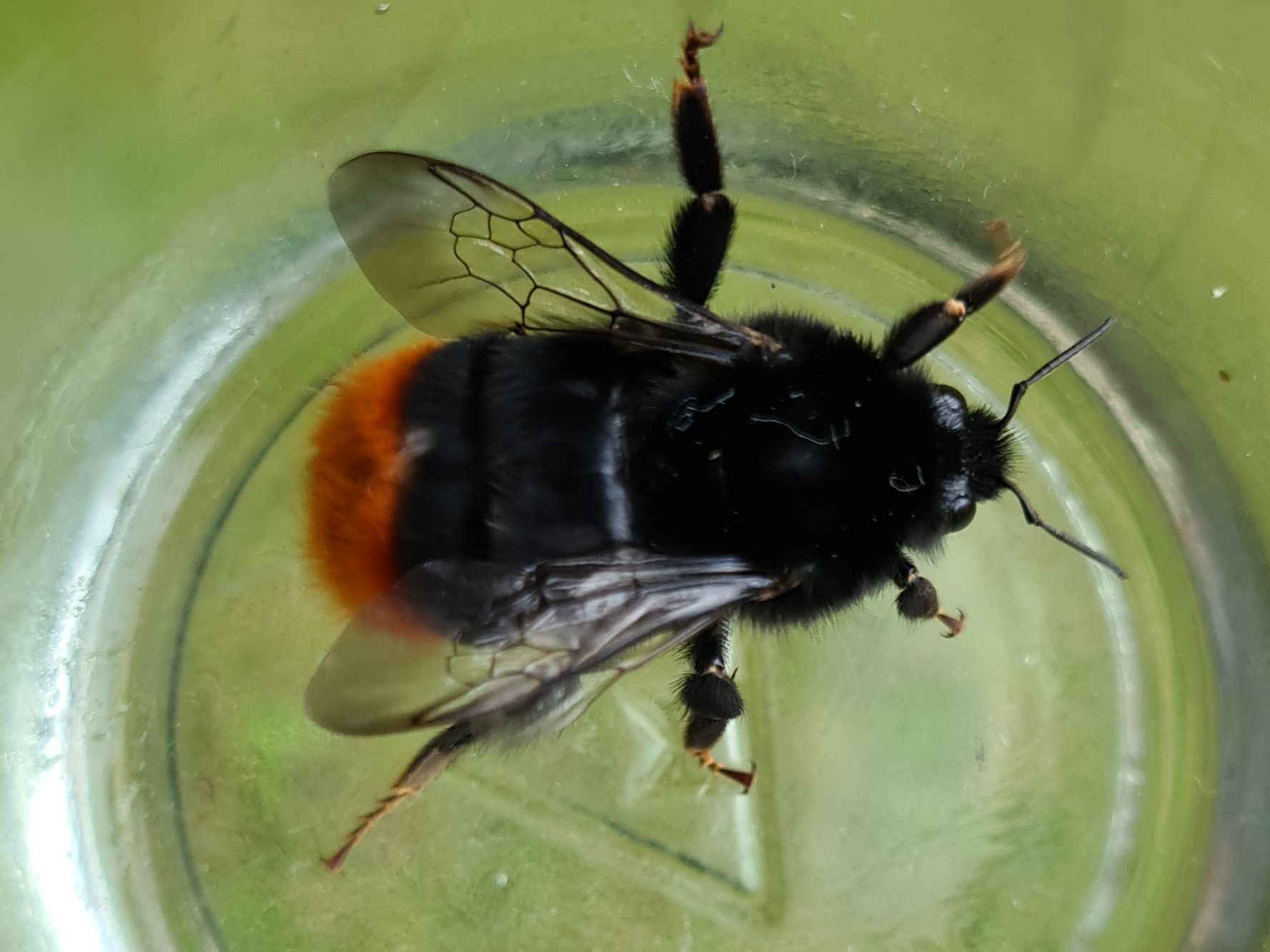
Mother
What's interesting about this mother is her birthmark on..

Rock bumblebee (Bombus lapidarius) mother (queen)
Photo: O. Hercog 11/7/2021
Rock bumblebee (Bombus lapidarius) mother (queen)
Photo: O. Hercog 11/7/2021
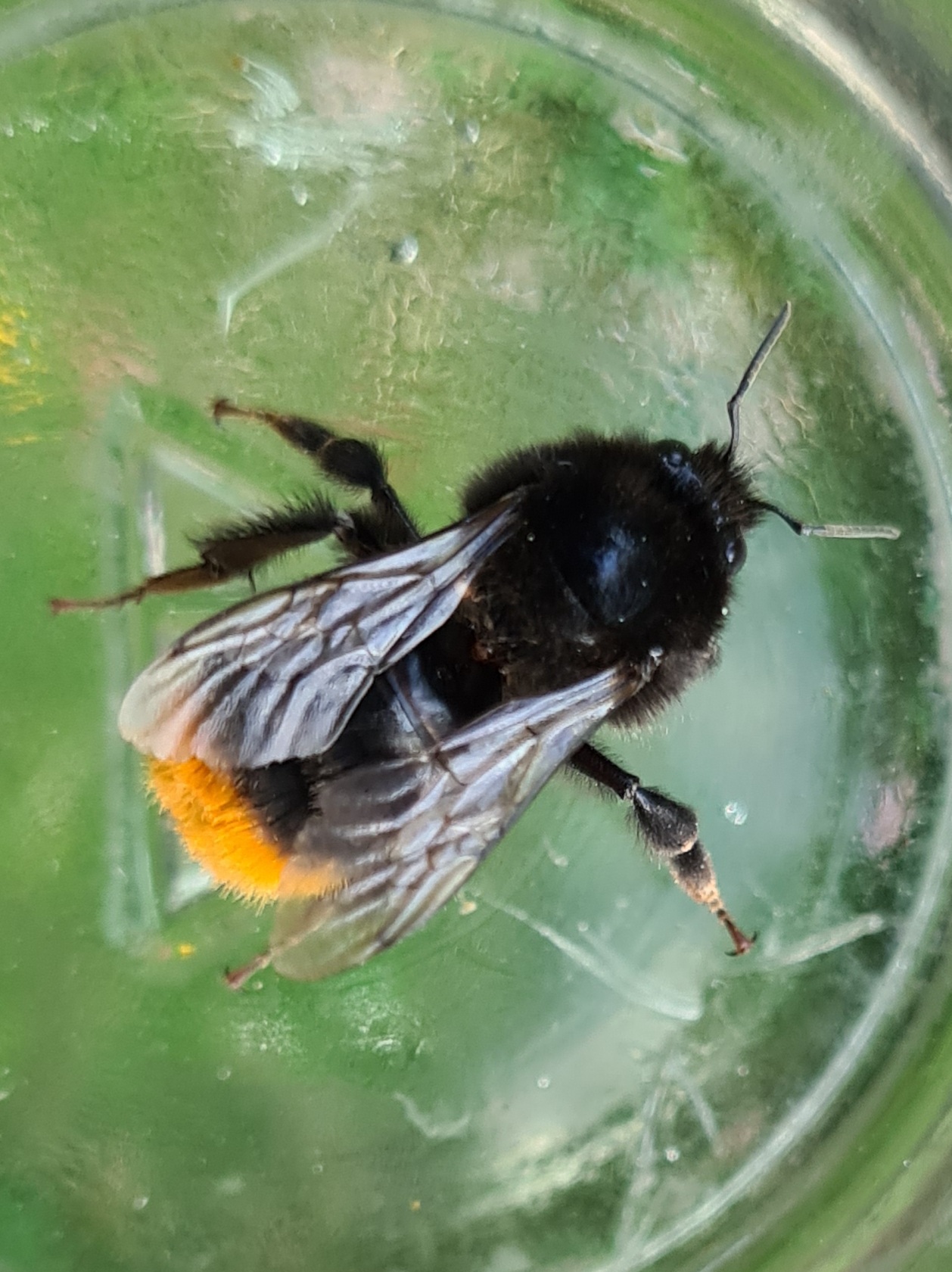
Worker
The following photos show typical forms of workers. The color of the end of the rump and the shades of black vary. They also differ in the degree of abrasion of the eyebrows, depending on age.

Rock bumblebee (Bombus lapidarius) – worker
Photo: O. Hercog 27/7/2021
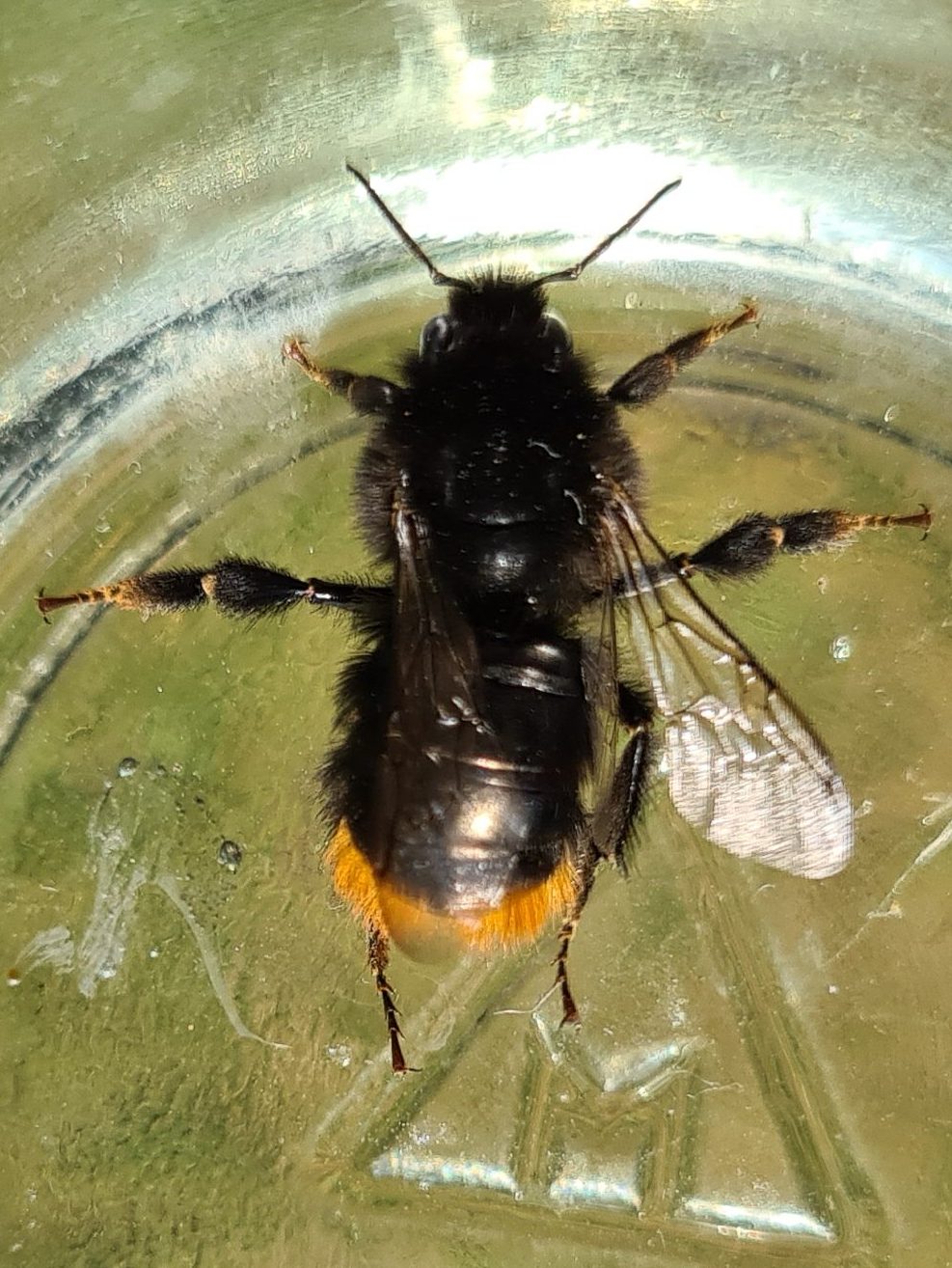
Rock bumblebee (Bombus lapidarius) – worker
Photo: O. Hercog 7/2021
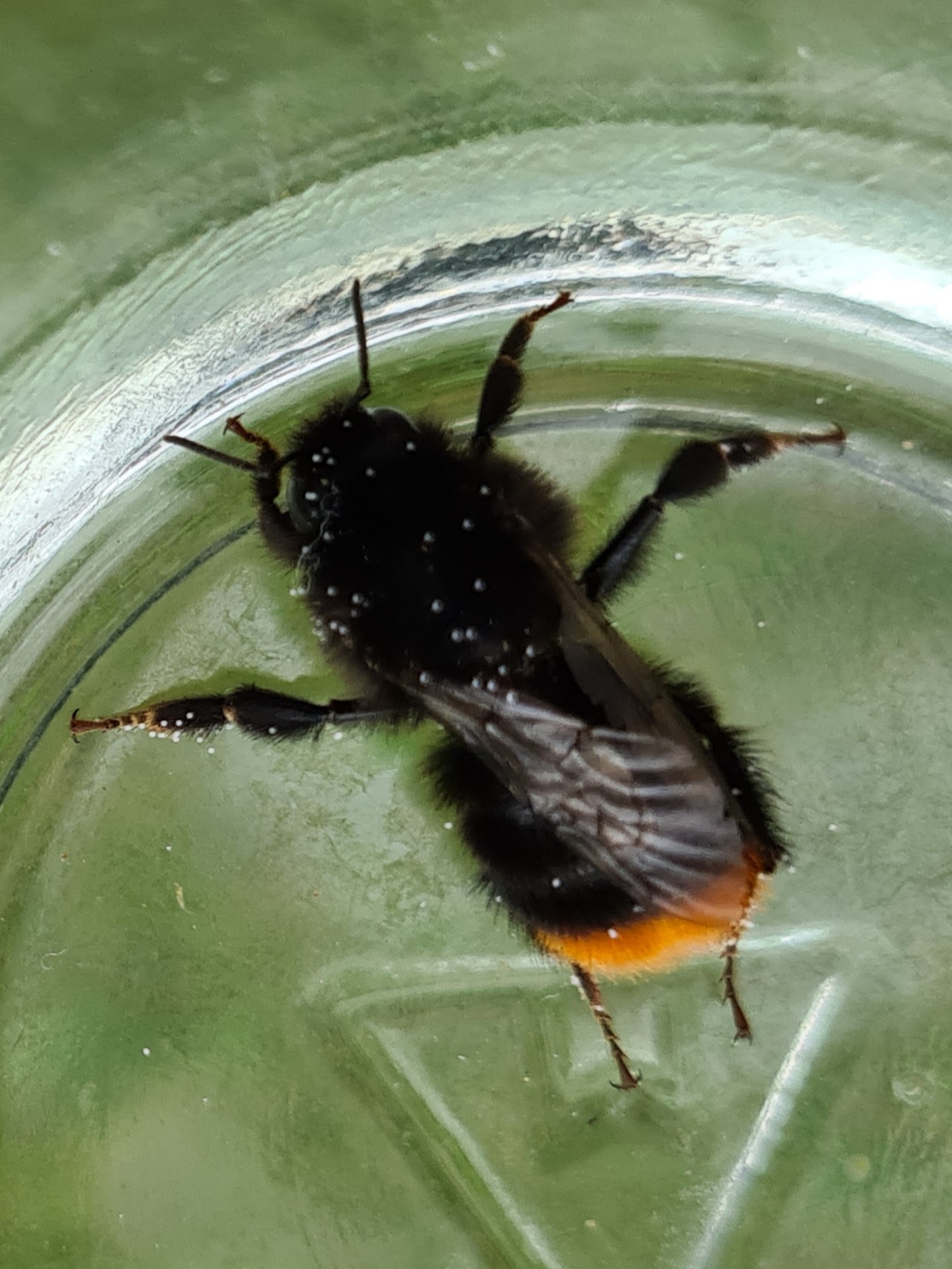
Rock bumblebee (Bombus lapidarius) worker
Photo: O. Hercog 21/7/2021
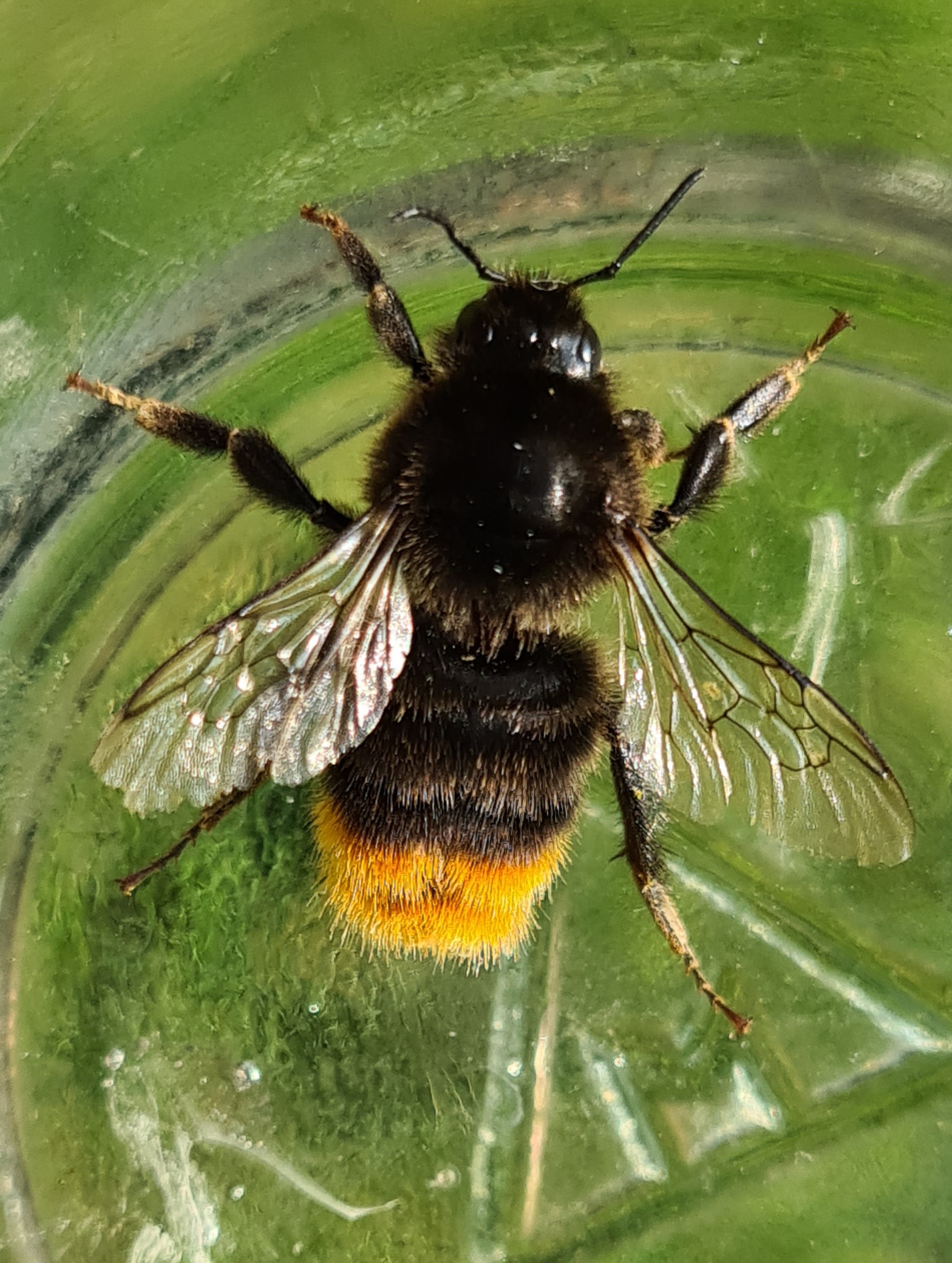
Rock bumblebee (Bombus lapidarius) worker
On this worker, rows of light eyebrows can be seen in the outlined stripes
Photo: O. Hercog 23/7/2021
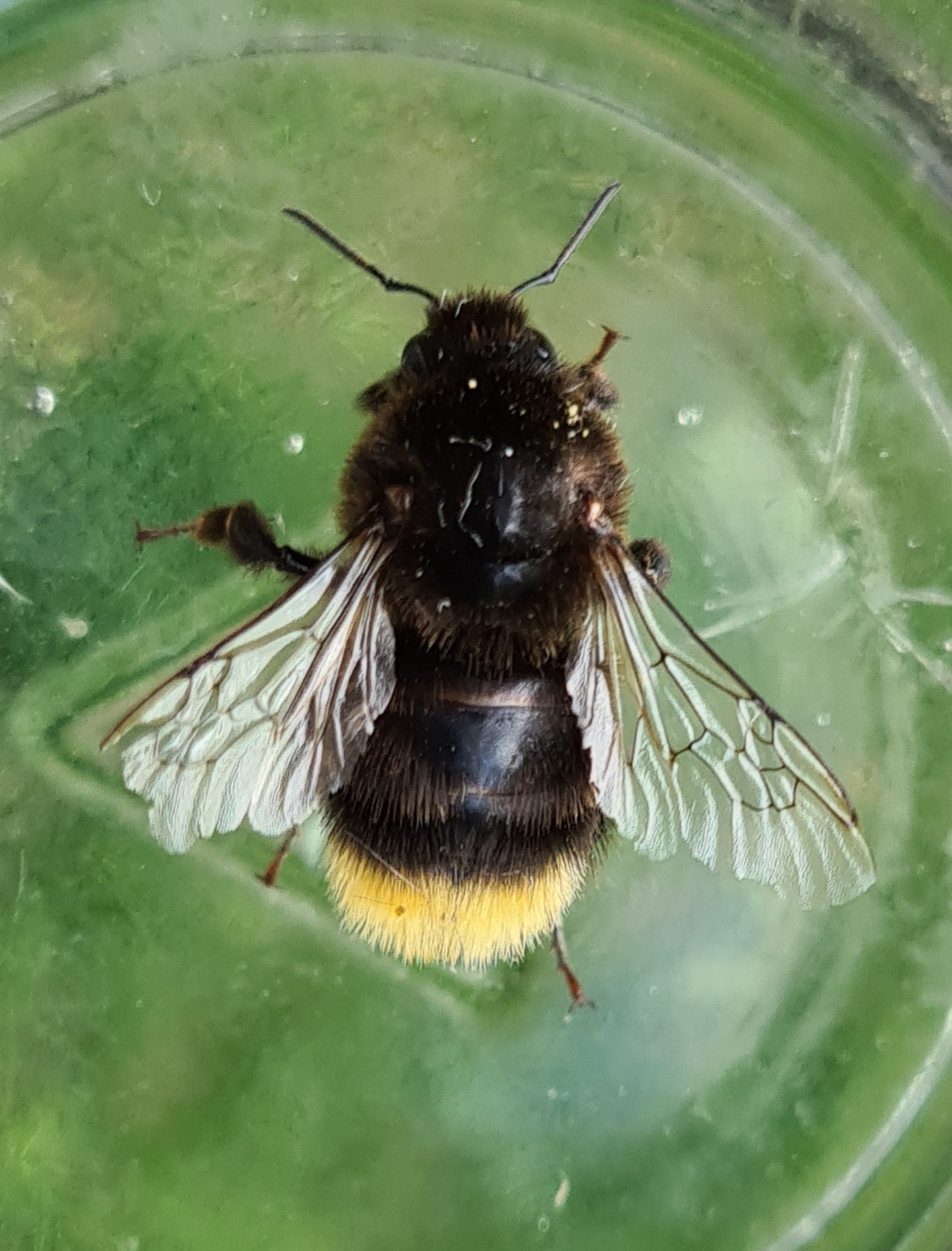
Rock bumblebee (Bombus lapidarius) worker
of lighter color – older worker
Photo: O. Hercog 23/7/2021
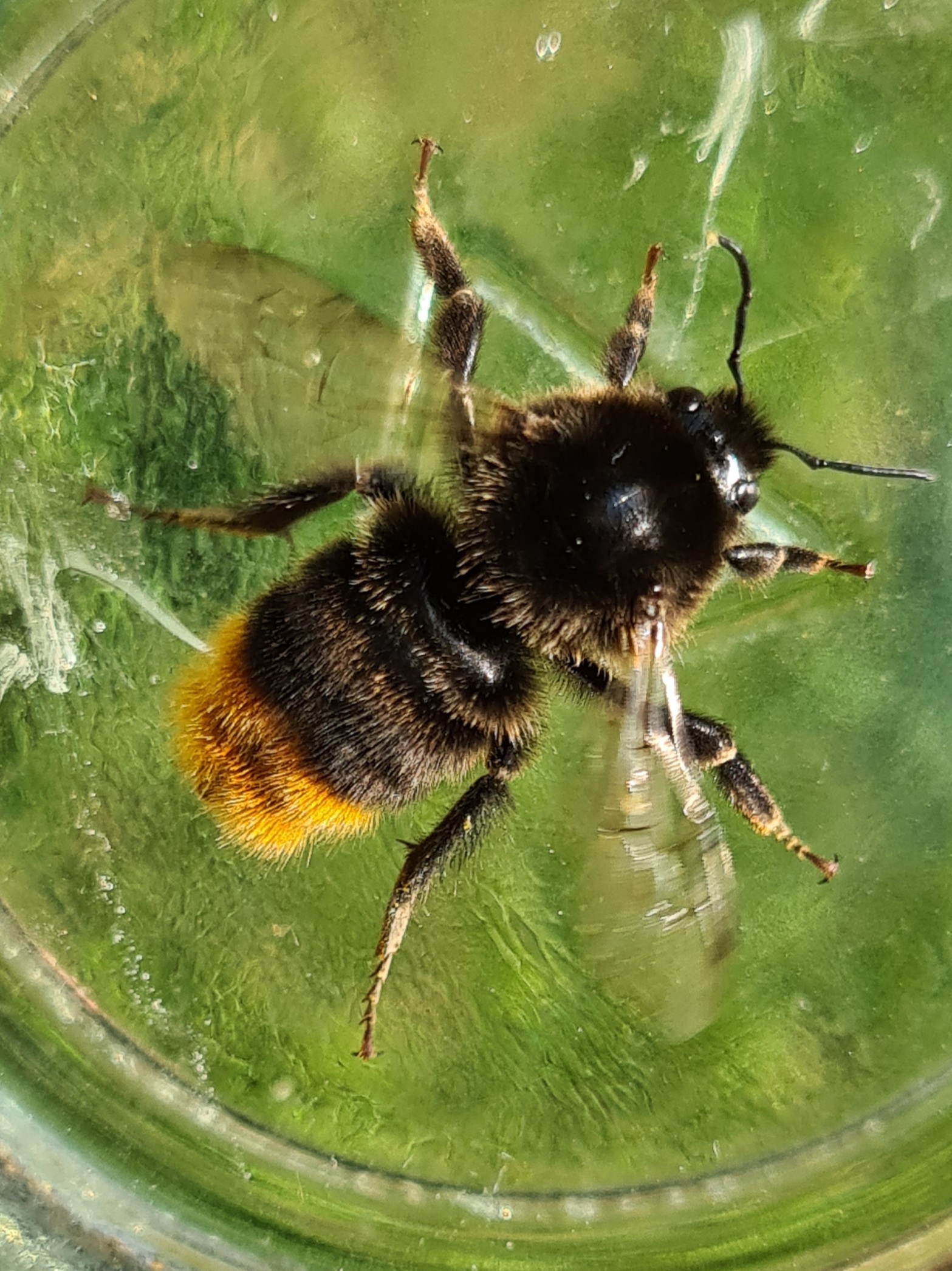
Rock bumblebee (Bombus lapidarius) worker
Photo: O. Hercog 23/7/2021
.
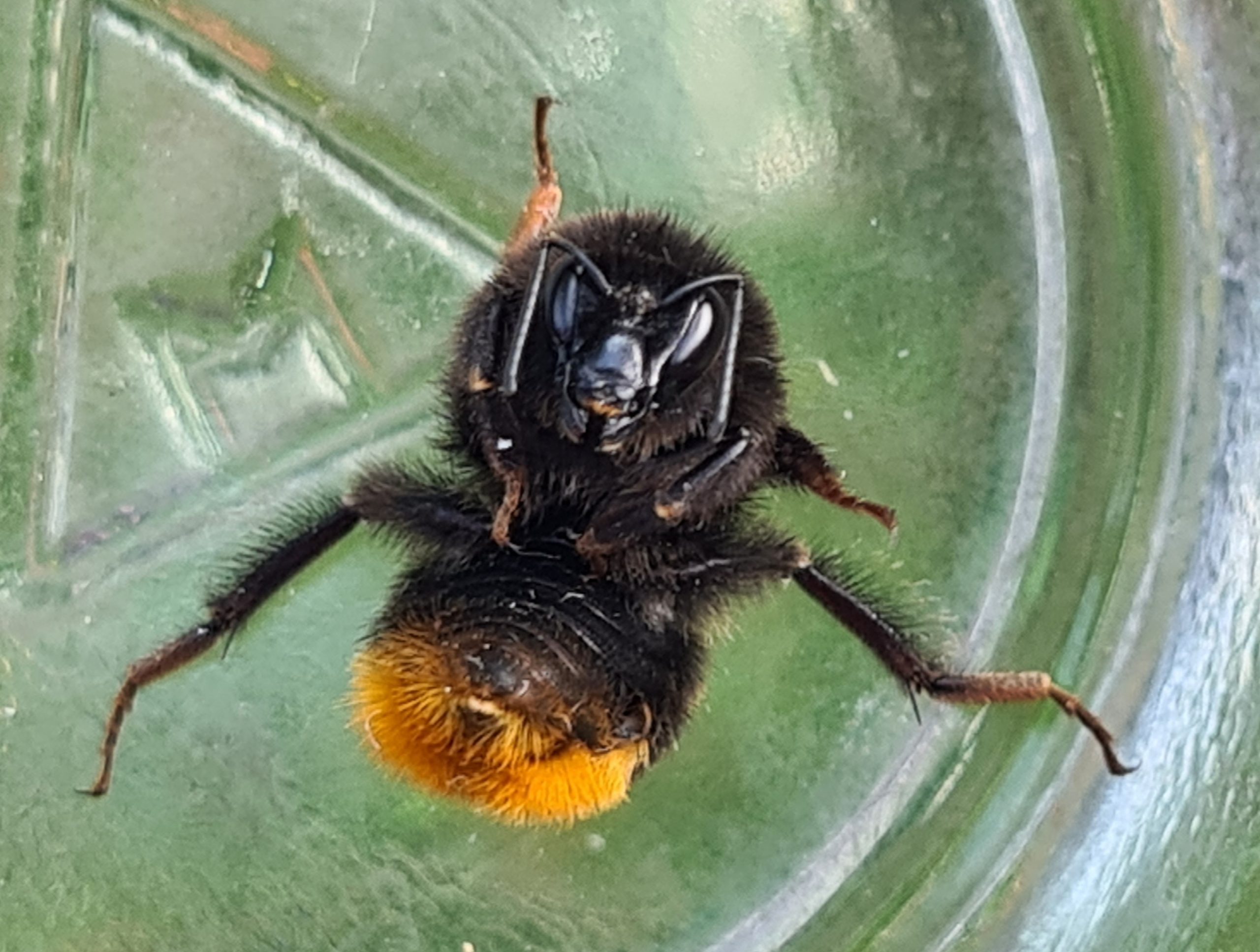
Rock bumblebee (Bombus lapidarius) – worker
Photo: O. Hercog 27/7/2021
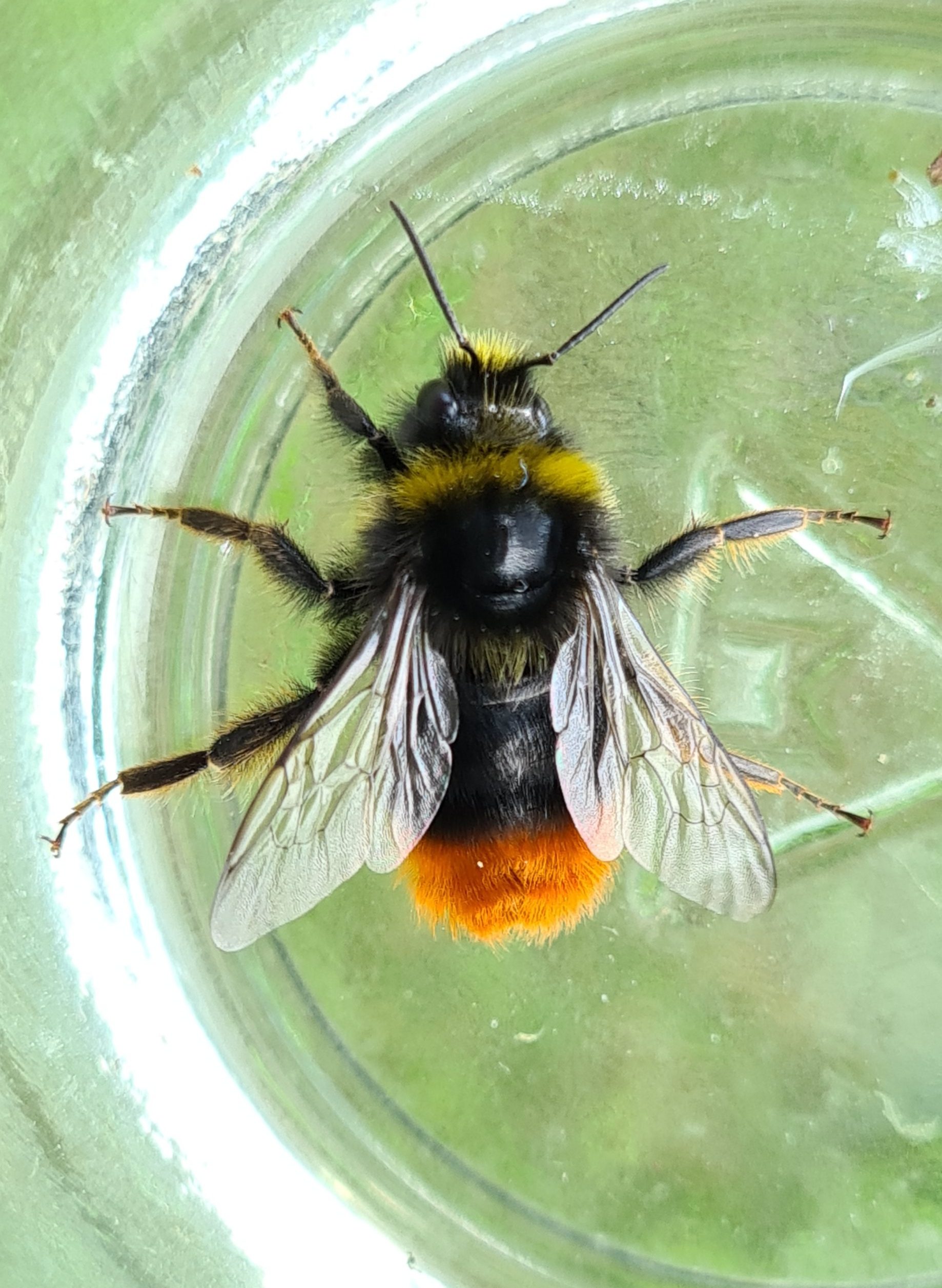
Male
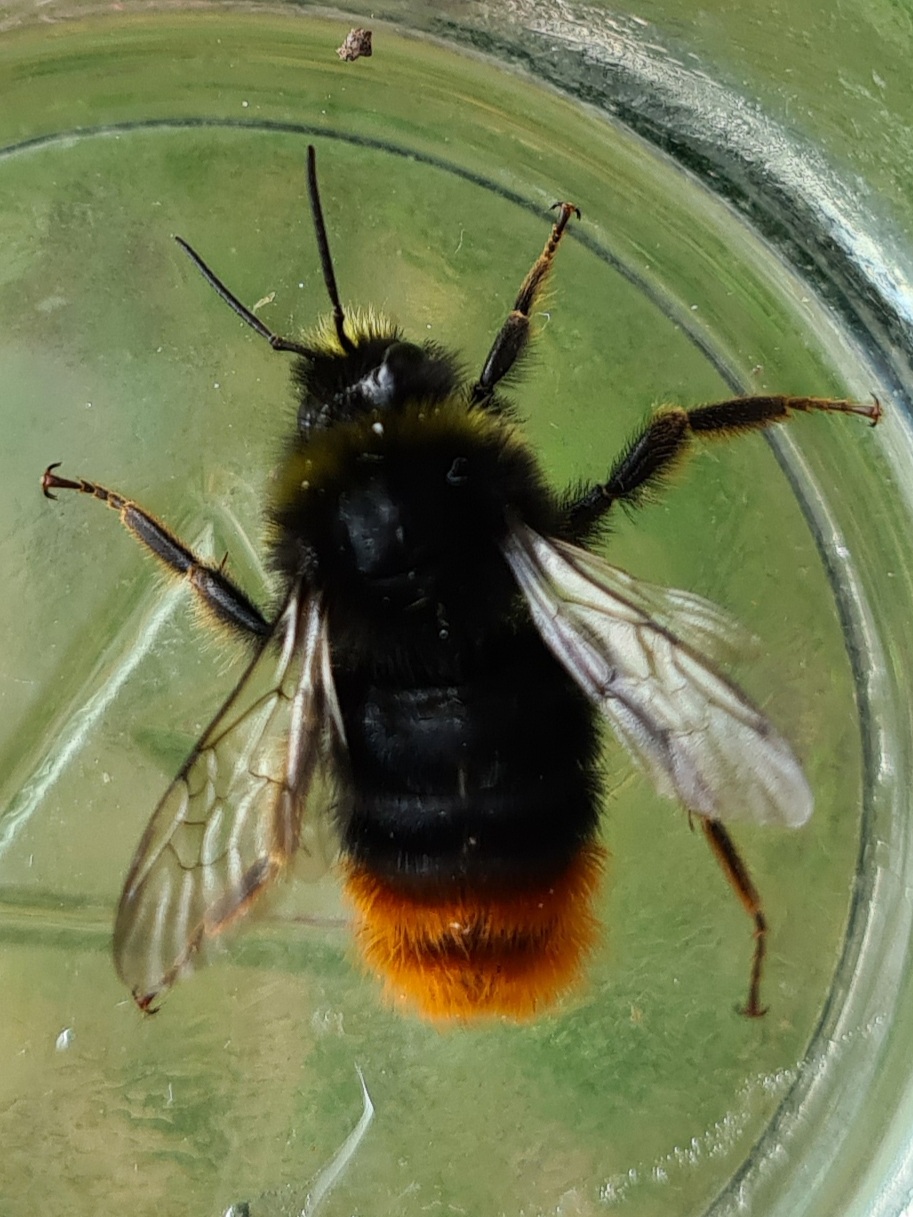
Note the male's long, curved antennae, as well as the yellow patch on his forehead.
As well as the thick, shaggy, brightly colored eyebrows.
Classic form with a bright yellow band on the forechest and a hint of a second band at the end of the chest.

Rock bumblebee (Bombus lapidarius) male
Photo: O. Hercog 21/7/2021
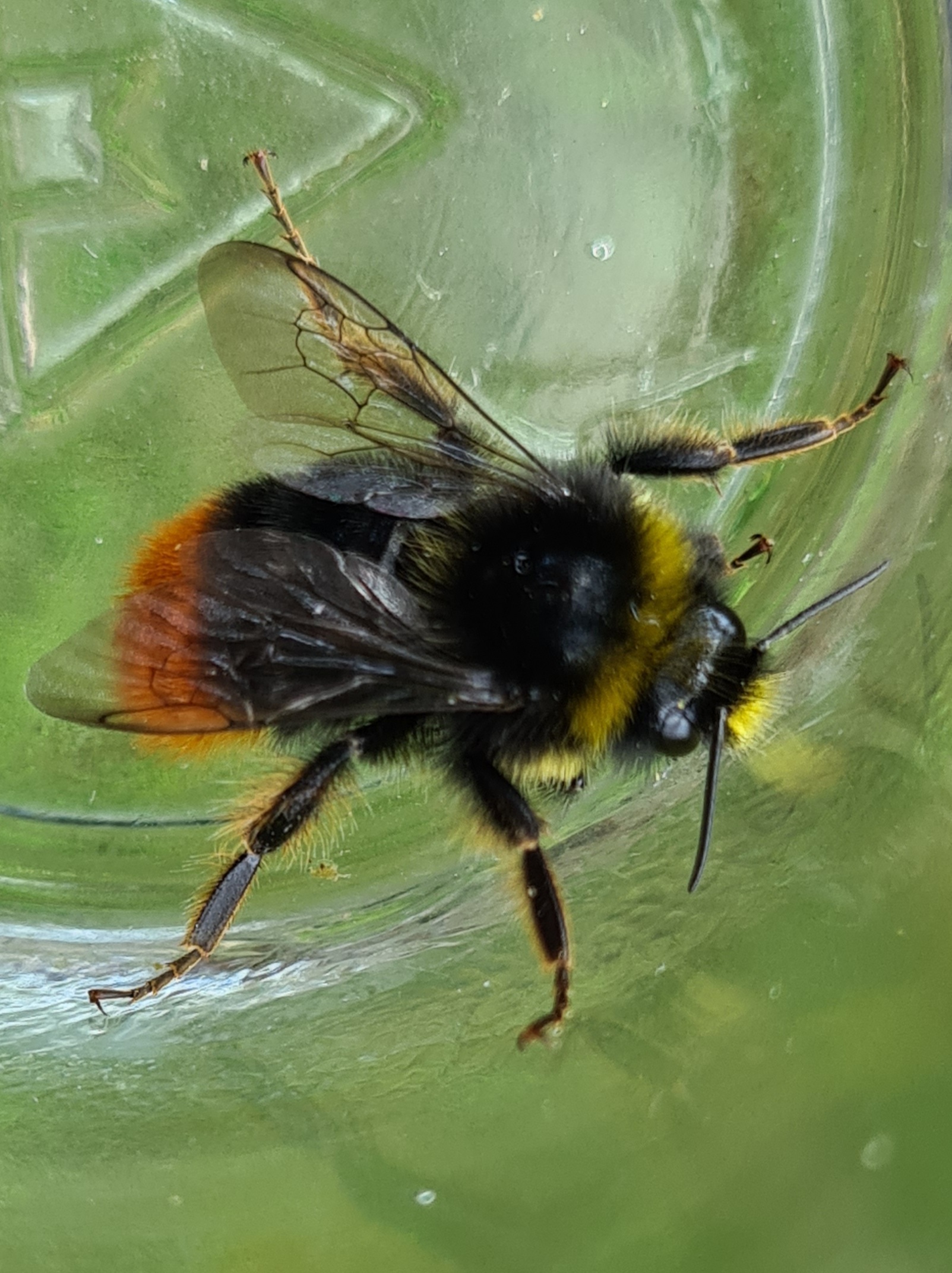
Rock bumblebee (Bombus lapidarius) male
Photo: O. Hercog 21/7/2021
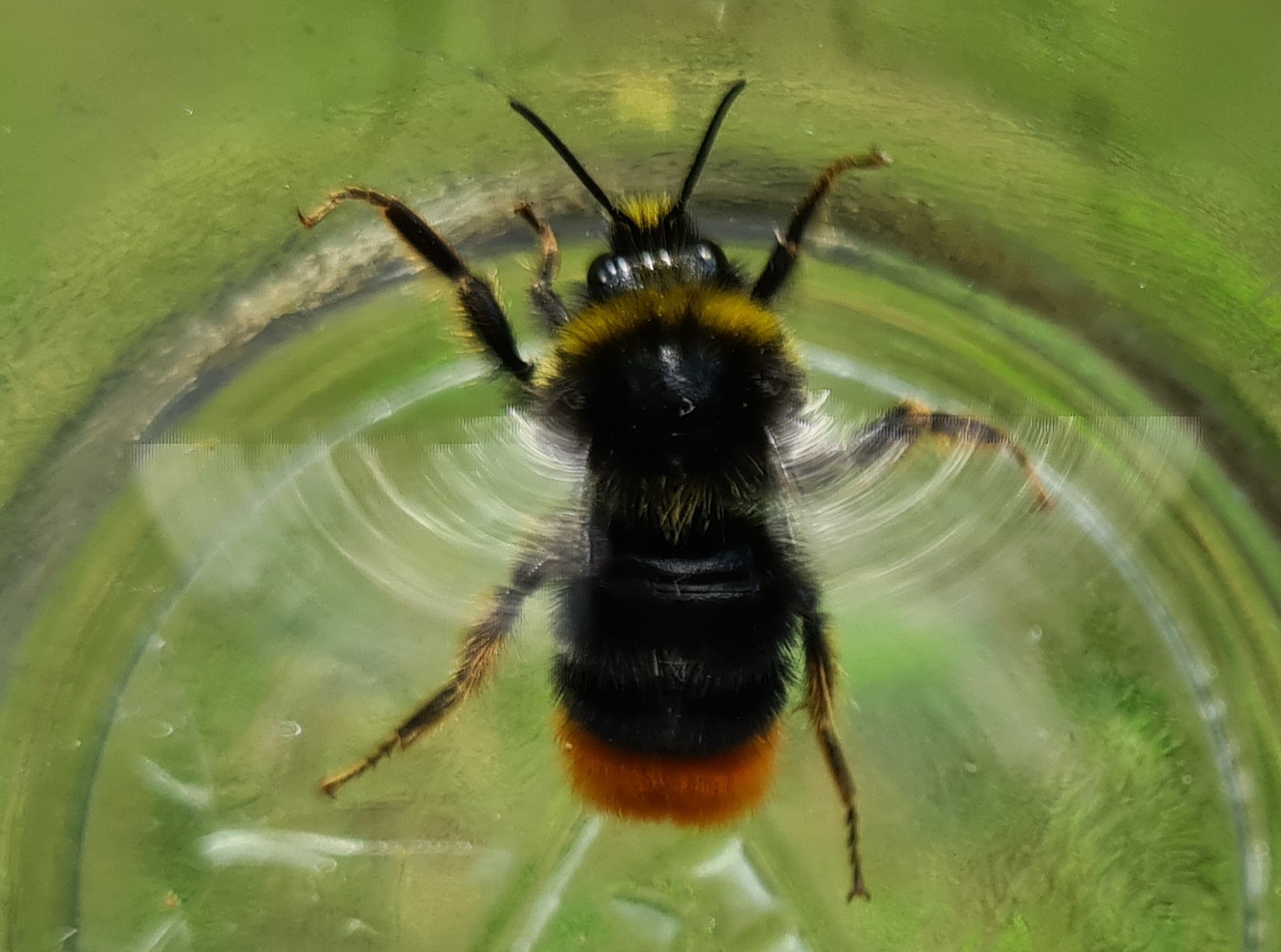
Darker form with a faint yellow band on the prothorax

Rock bumblebee (Bombus lapidarius) male
Photo: O. Hercog 21/7/2021
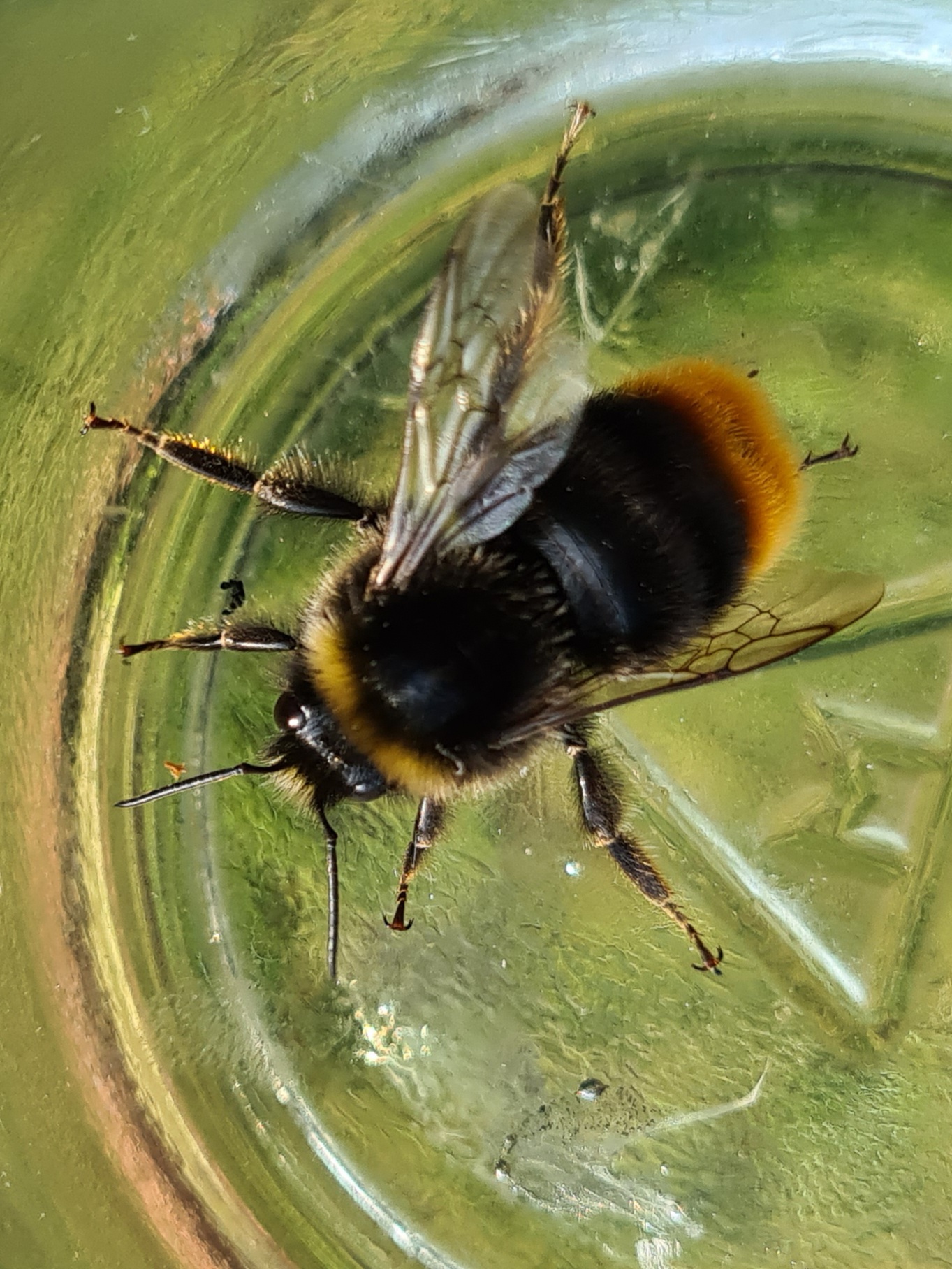
Rock bumblebee (Bombus lapidarius) male
Photo: O. Hercog 2021 21/7/2021
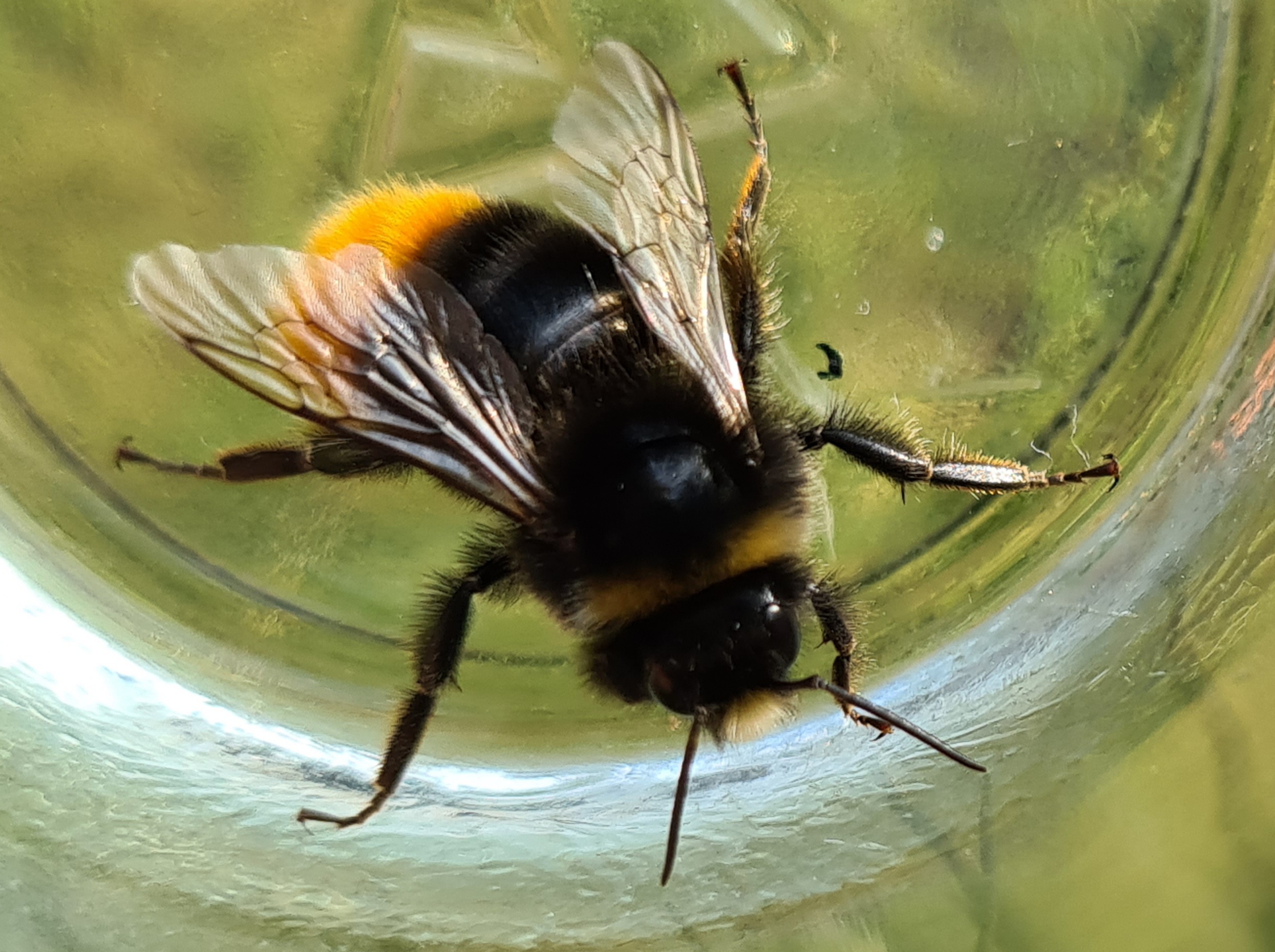
Another form of the male – the yellow color is replaced by a grayish-yellow tone.

Rock bumblebee (Bombus lapidarius) – male
Photo: O. Hercog 27/7/2021
Rock bumblebee (Bombus lapidarius) – male
Photo: O. Hercog 27/7/2021
dfdsf
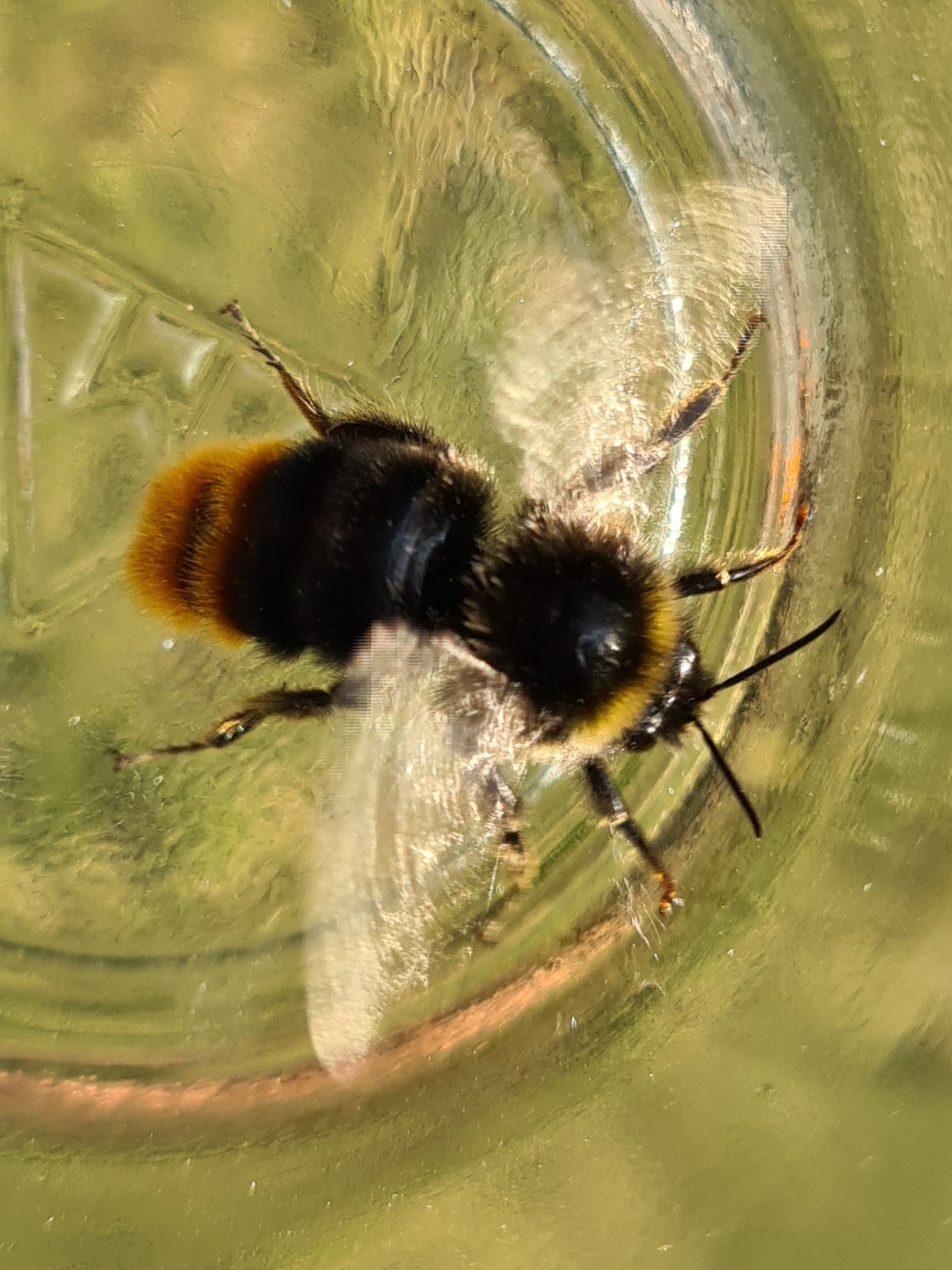
Rock bumblebee (Bombus lapidarius) – male
Photo: O. Hercog 27/7/2021
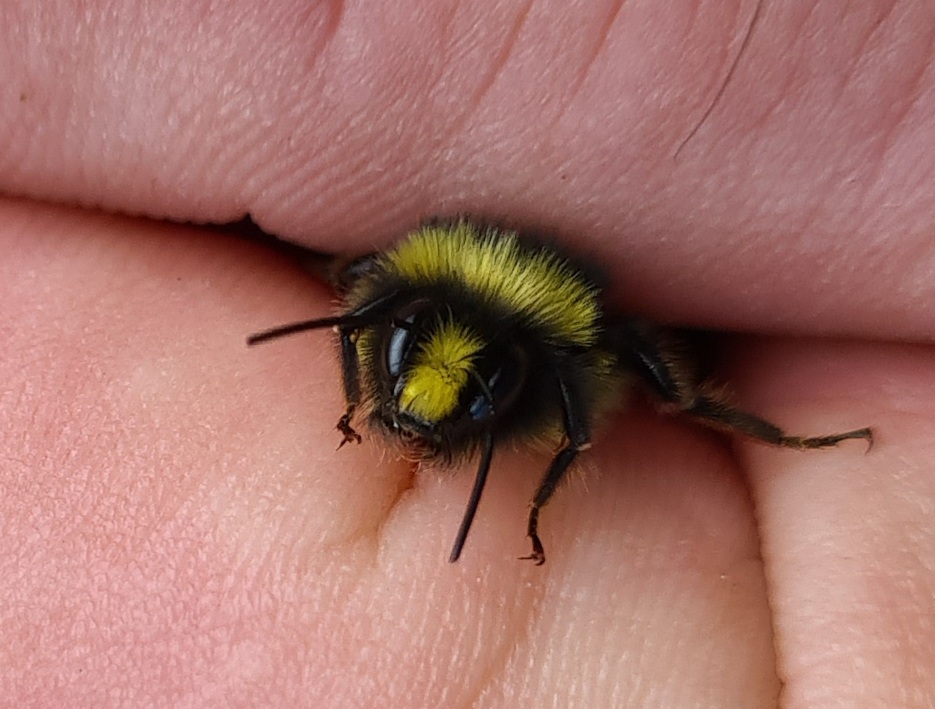
Lorem ipsum dolor sit amet, consectetur adipiscing elit. Ut elit tellus, luctus nec ullamcorper mattis, pulvinar dapibus leo.
Detail of the facial part of the head of a male rock bumblebee (Bombus lapidaris)

Rock bumblebee (Bombus lapidarius) male – head
Photo> O. Hercog 23/7/2021
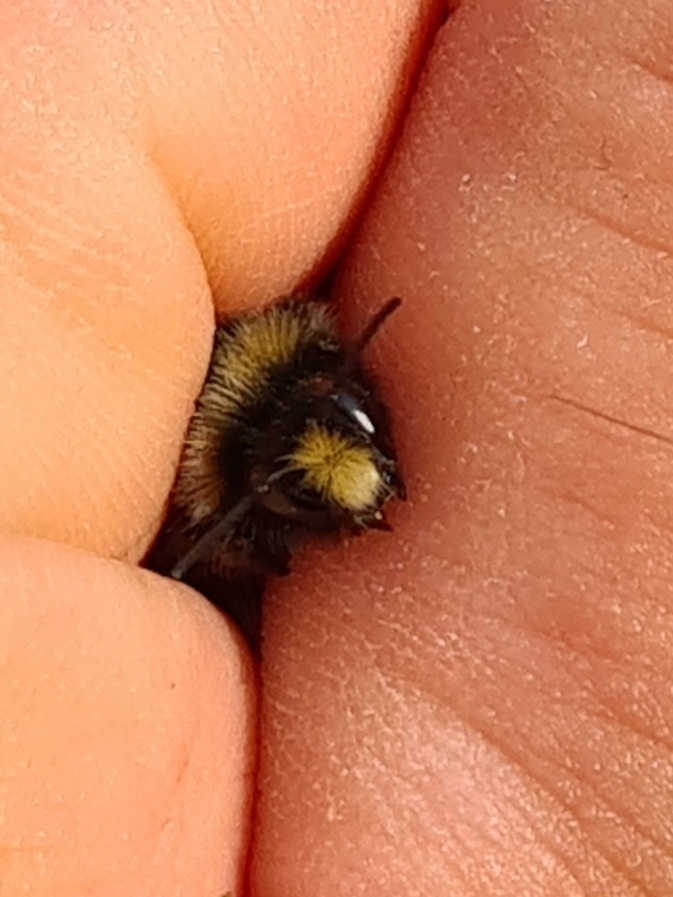
Rock bumblebee (Bombus lapidarius) – male (male)
yellow eyebrow color is replaced by gray-yellow
Photo: O. Hercog 27/7/2021
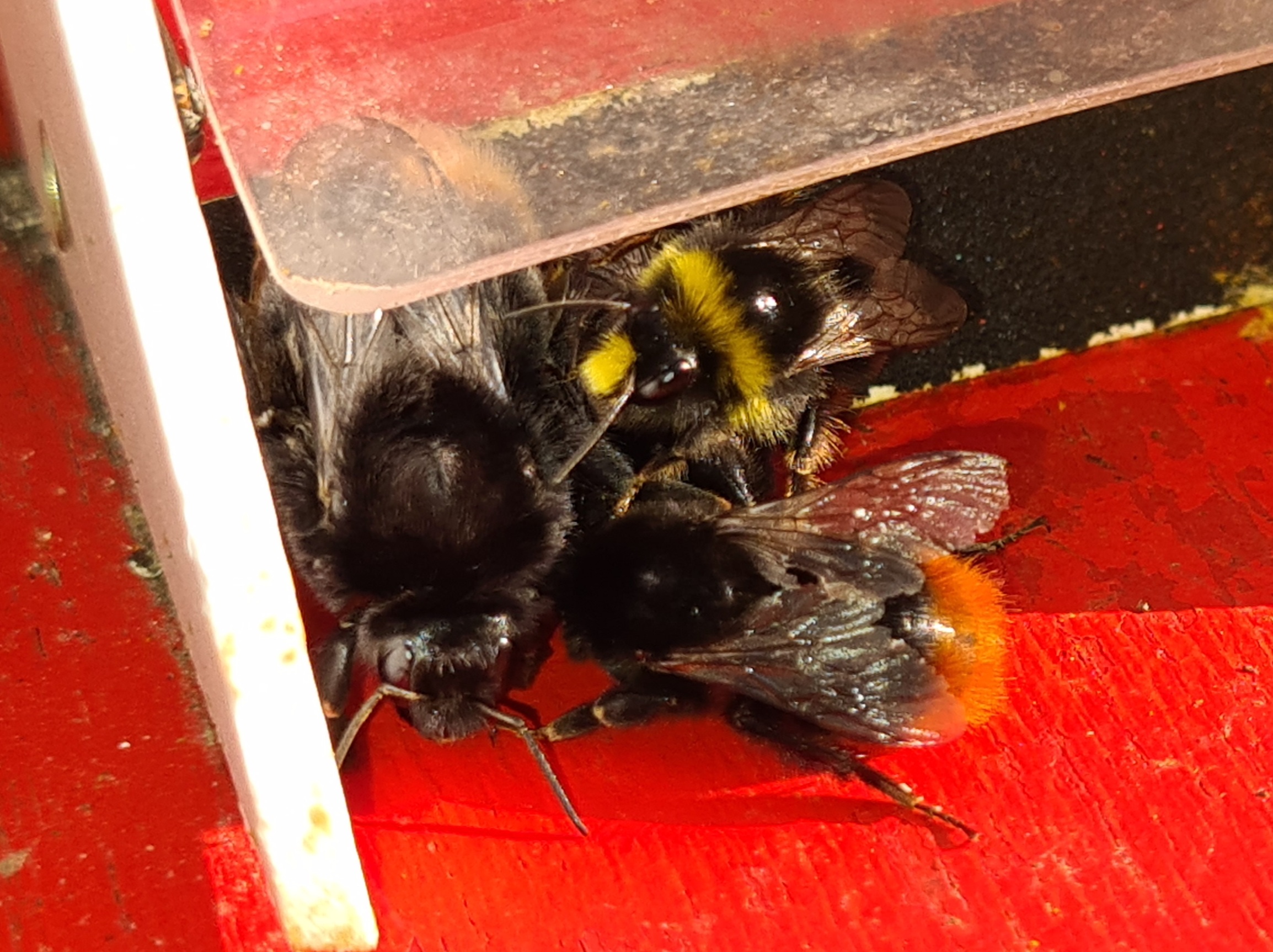
A male and a worker bee on a beehive. This male repeatedly entered the hive "to look for the chicks" and even flew between neighboring hives. So he did not do what other males do, which is to leave the nest and wait for his mother somewhere outside.

Rock bumblebee (Bombus lapidarius) male and workers Photo: O. Hercog 22/7/2021
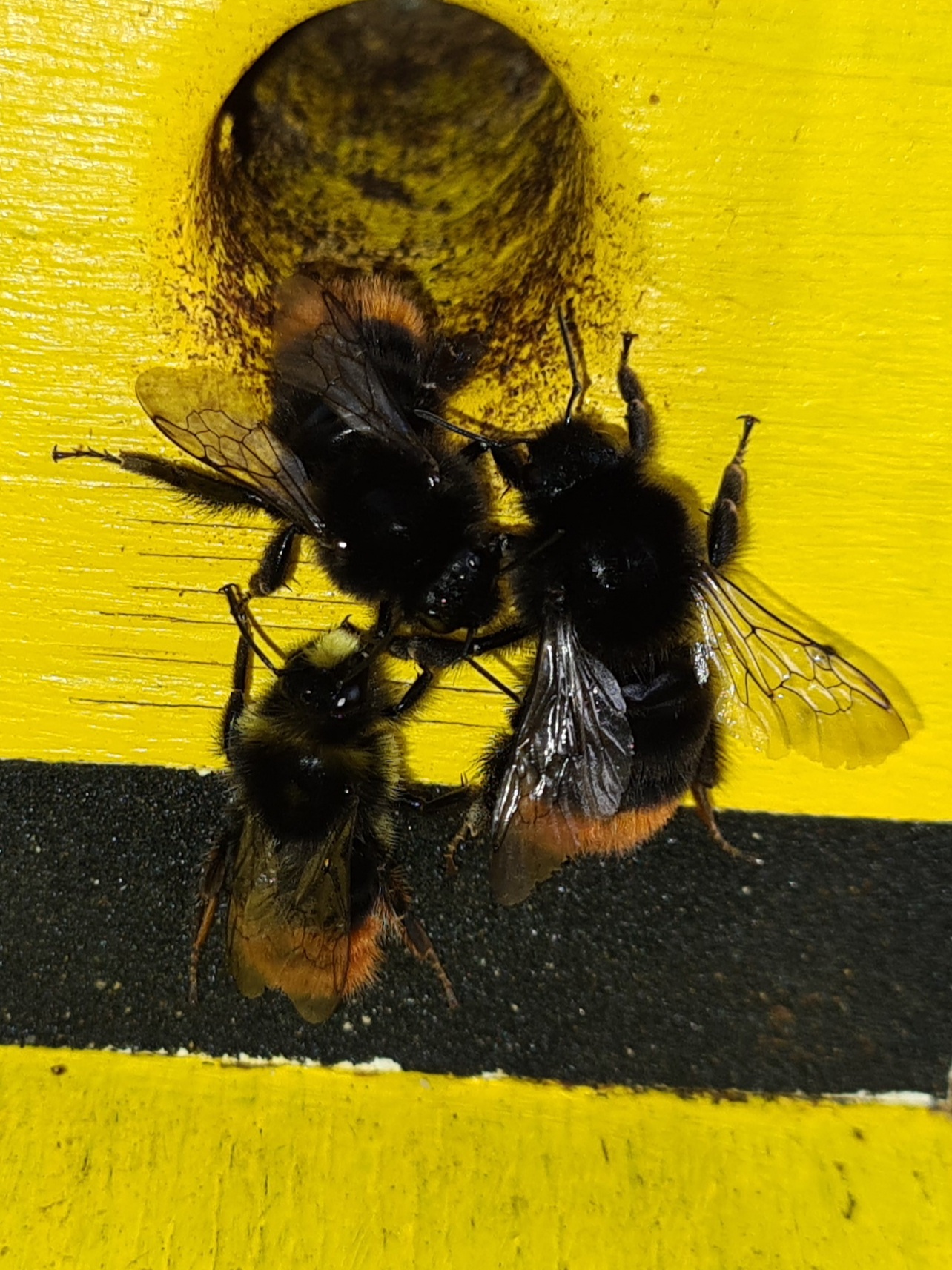
Rock bumblebee (Bombus lapidarius) male and workers Photo: O. Hercog 22/7/2021
Video catalog
Mother
The young mother has left the nest for the first time. Her colors are not yet final, so she is relatively light.
Worker
Worker bee sprinkled with pollen
This worker bumblebee is not quite typical.
Its colors are not so bright. But this may be due to its age.
It might seem that it is a bumblebee (Bombus ruderarius). However, it is smaller and more stocky. Its back is not bright red-orange, but rather has elements of yellow. At the same time, it has reddish eyebrows on its legs, thanks to which it is possible to distinguish it from the bumblebee, which lacks such accessories.
Male
Typically colored male
interesting form of the male – yellow elements are replaced by gray-yellow.
Bumblebees are born as grey and colourless individuals. However, their eyebrows quickly turn into their ancestral colours or their varieties when exposed to air. However, they lose their colour over time.
This is very striking in dark colors, for example in male rock bumblebees (Bombus lapidarius).
The result can be such a "variety". But it is only an aging individual, whose colored elements turn gray and then practically disappear (yellow elements on the head and forechest). This can surprise many people - they may think that they have found a new individual.
This male was filmed in Prague in early August, which confirms this characteristic of colors and their change.
Similar species
- Eel bumblebee (Bombus ruderarius)
- Meadow bumblebee (Bombus pratorum) – dark form
- Broad-billed bumblebee (Bombus wurflenii)
- Soroe bumblebee (Bombus soroeensis)
- Confused bumblebee (Bombus confusus)
- Bombus rupestris (Bombus rupestris)
How to distinguish it from similar species
Eel bumblebee (Bombus ruderarius)
- Much smaller
* mother 16 – 19 mm
* worker 9 – 18mm
* male 12 – 15 mm - Colors are not as bright and contrasting
- The hairs on the collecting cups are reddish to yellow, while the rock bumblebee has black hairs.

Eel bumblebee (Bombus ruderarius)
Source: Sikora A., Michołap P., Kadej M., Sikora M. Tarnawski D. 2018 "Pszczoły w mięści: Trzmiele Wrocławia", Wyd. Stowarzyszenie Natura i Człowiek.
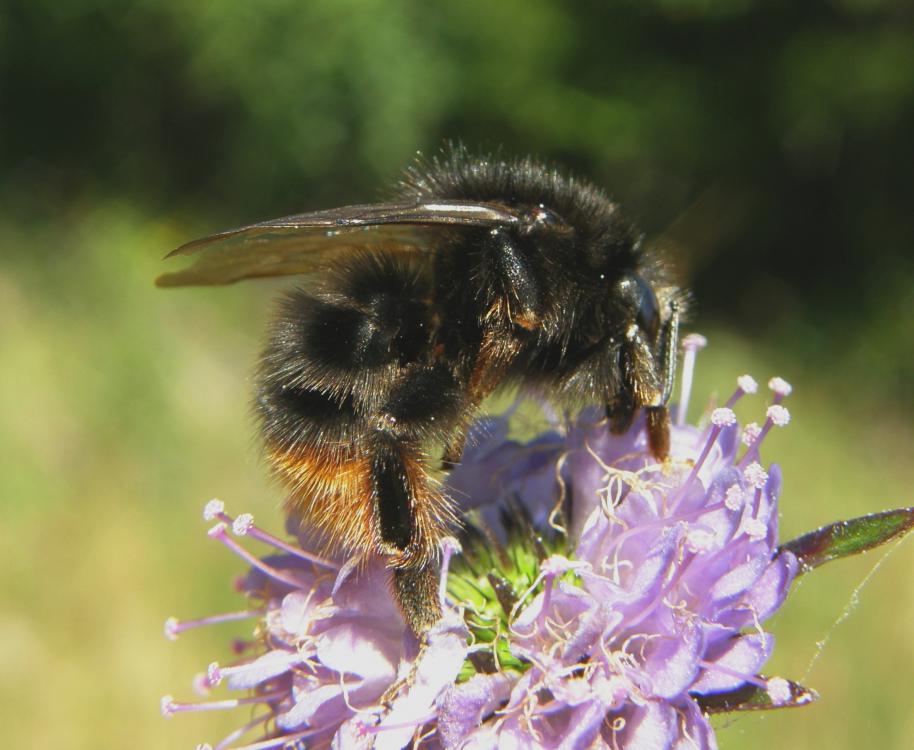
Rock bumblebee (Bombus lapidarius)
Source: Sikora A., Michołap P., Kadej M., Sikora M. Tarnawski D. 2018 "Pszczoły w mięści: Trzmiele Wrocławia", Wyd. Stowarzyszenie Natura i Człowiek.

Bumblebees PLUS – Eel bumblebee (Bombus ruderarius) mother (queen)
Photo: BWars
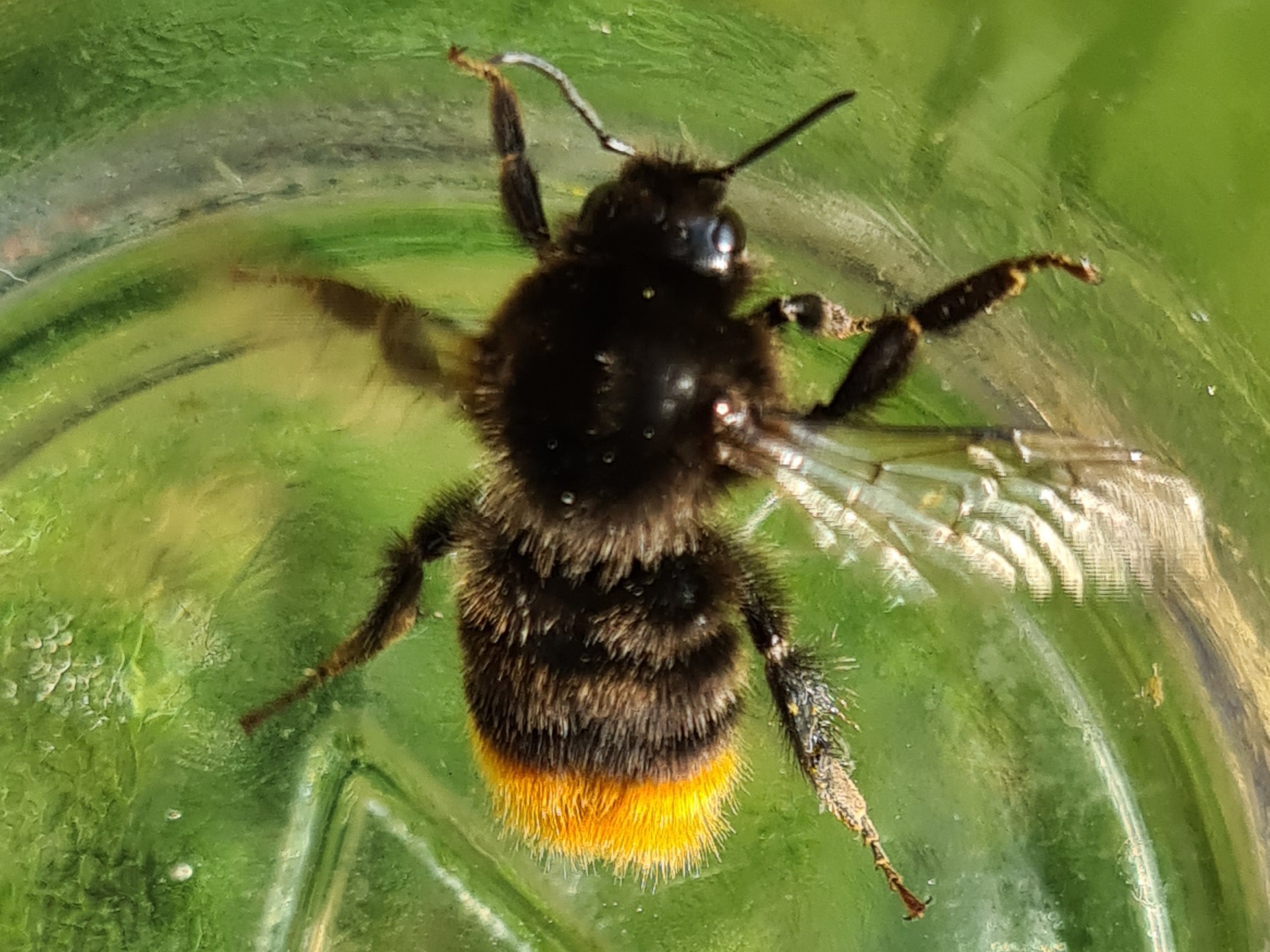
Rock bumblebee (Bombus lapidarius) worker
Photo: O. Hercog 23/7/2021
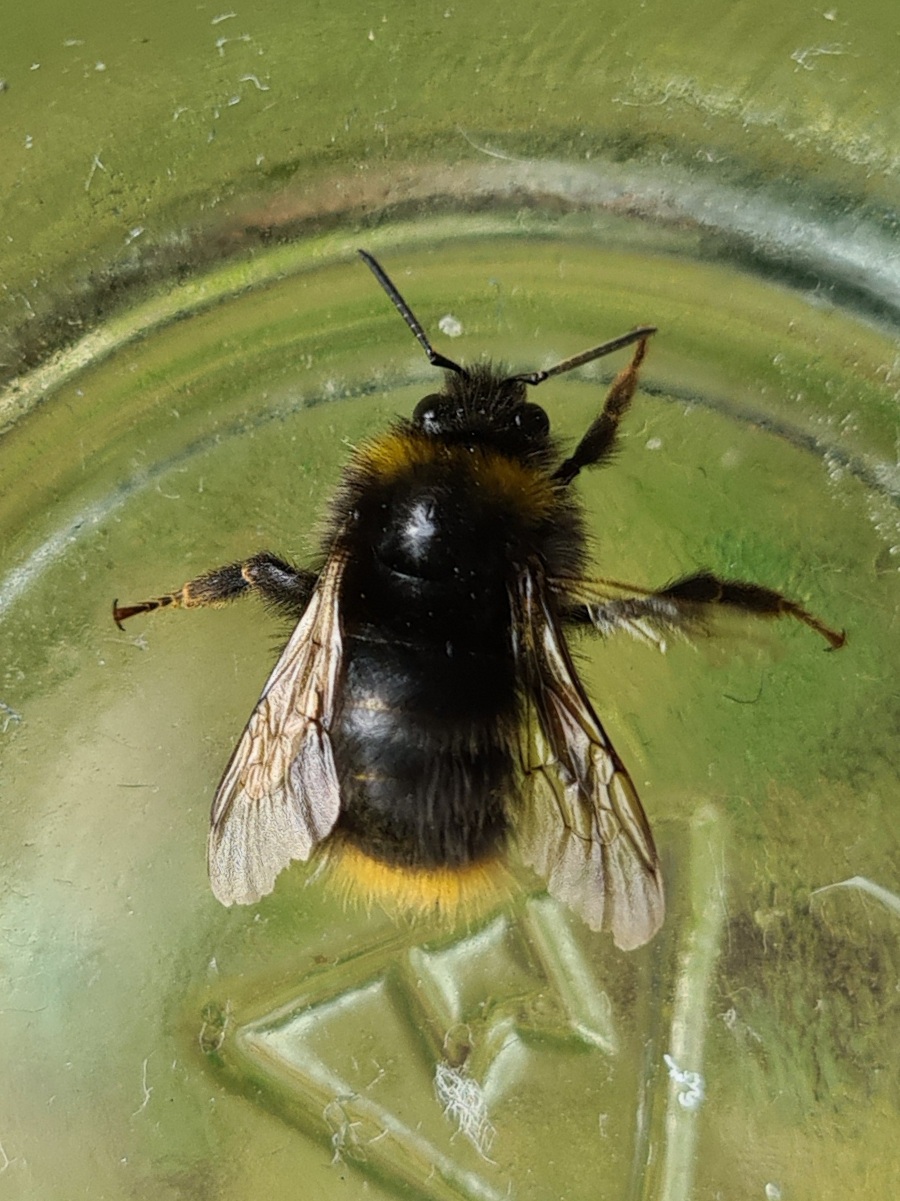
Meadow bumblebee (Bombus pratorum) – dark form (without yellow stripe on prothorax)
- much smaller, shorter body
* mother: 15 – 17 mm
* worker: 9 – 14 mm
* male: 11 – 13 mm - lighter, not so saturated black colors even on the rump (in the female rock bumblebee, they sometimes change and fade with age)
- optically narrower stripe on the back (given by size, otherwise color on the 4th – 6th tegrid)
- smaller head without a pronounced wedge
- males often very brightly colored in several forms, wider yellow stripes

Meadow bumblebee (Bombus pratorum)
Source: Sikora A., Michołap P., Kadej M., Sikora M. Tarnawski D. 2018 "Pszczoły w mięści: Trzmiele Wrocławia", Wyd. Stowarzyszenie Natura i Człowiek.
Rock bumblebee (Bombus lapidarius)
Source: Sikora A., Michołap P., Kadej M., Sikora M. Tarnawski D. 2018 "Pszczoły w mięści: Trzmiele Wrocławia", Wyd. Stowarzyszenie Natura i Człowiek.
Note:
– the different shape of the body, head and also
– the eyebrows of the facial part of the head

Meadow bumblebee (Bombus pratorum) worker
Photo O.Hercog 22/6/2021 Prague

Rock bumblebee (Bombus lapidarius) worker
Photo: O. Hercog 23/7/2021
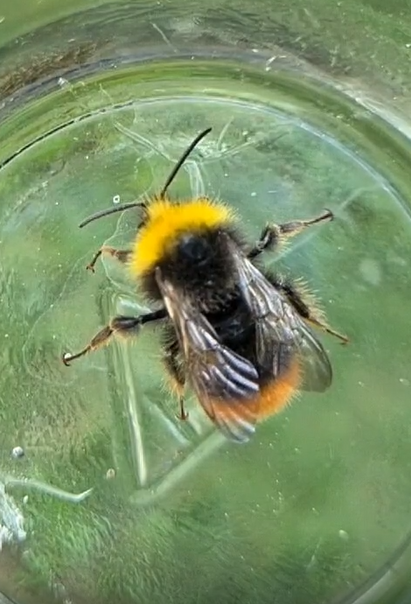
Note:
– the different shape of the body, head and also the eyebrows of the facial part of the head.
– the yellow stripes of male meadow bumblebees are striking

Meadow bumblebee (Bombus pratorum) male
Photo O.Hercog 11/6/2021 Prague
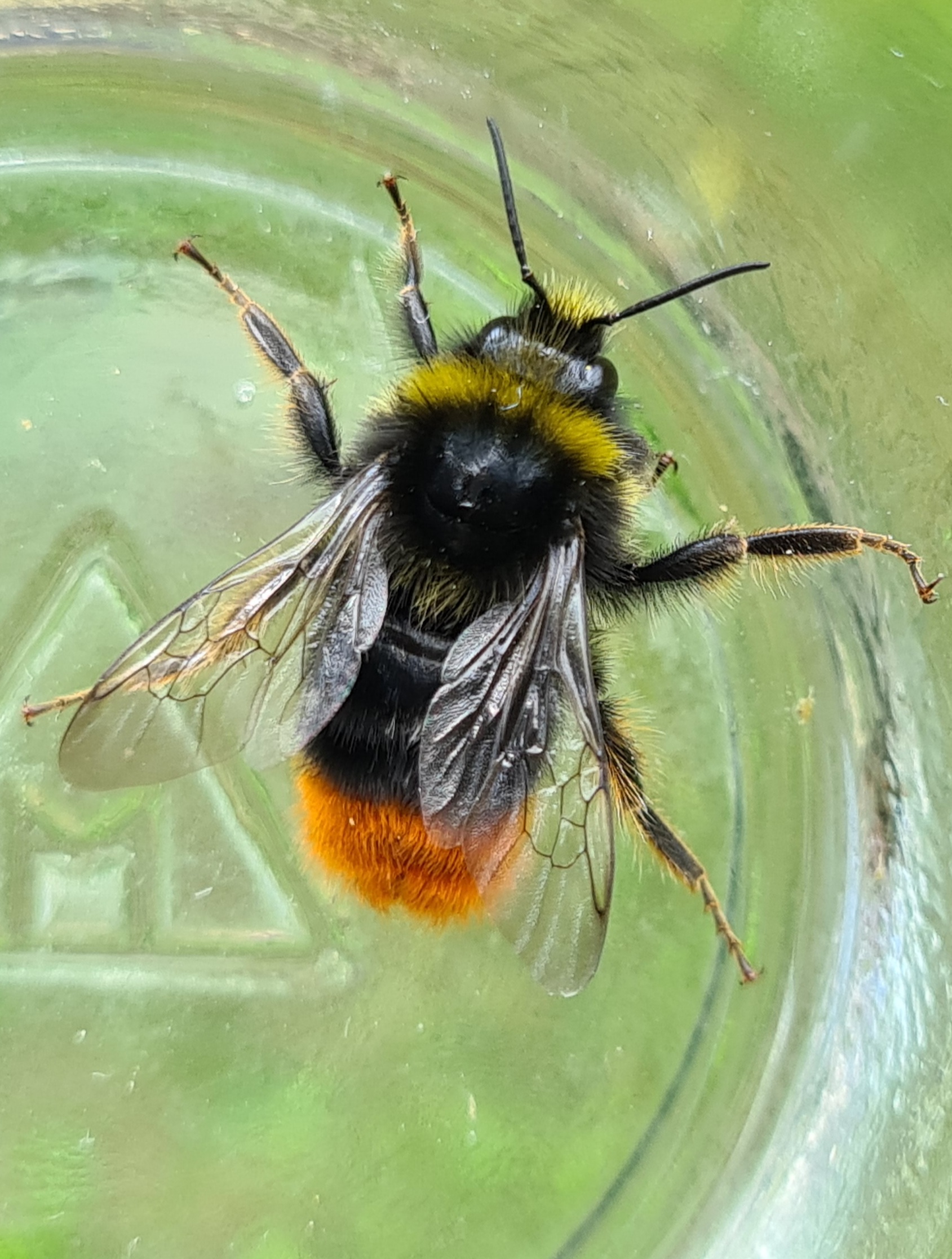
Rock bumblebee (Bombus lapidarius) male
Photo: O. Hercog 21/7/2021
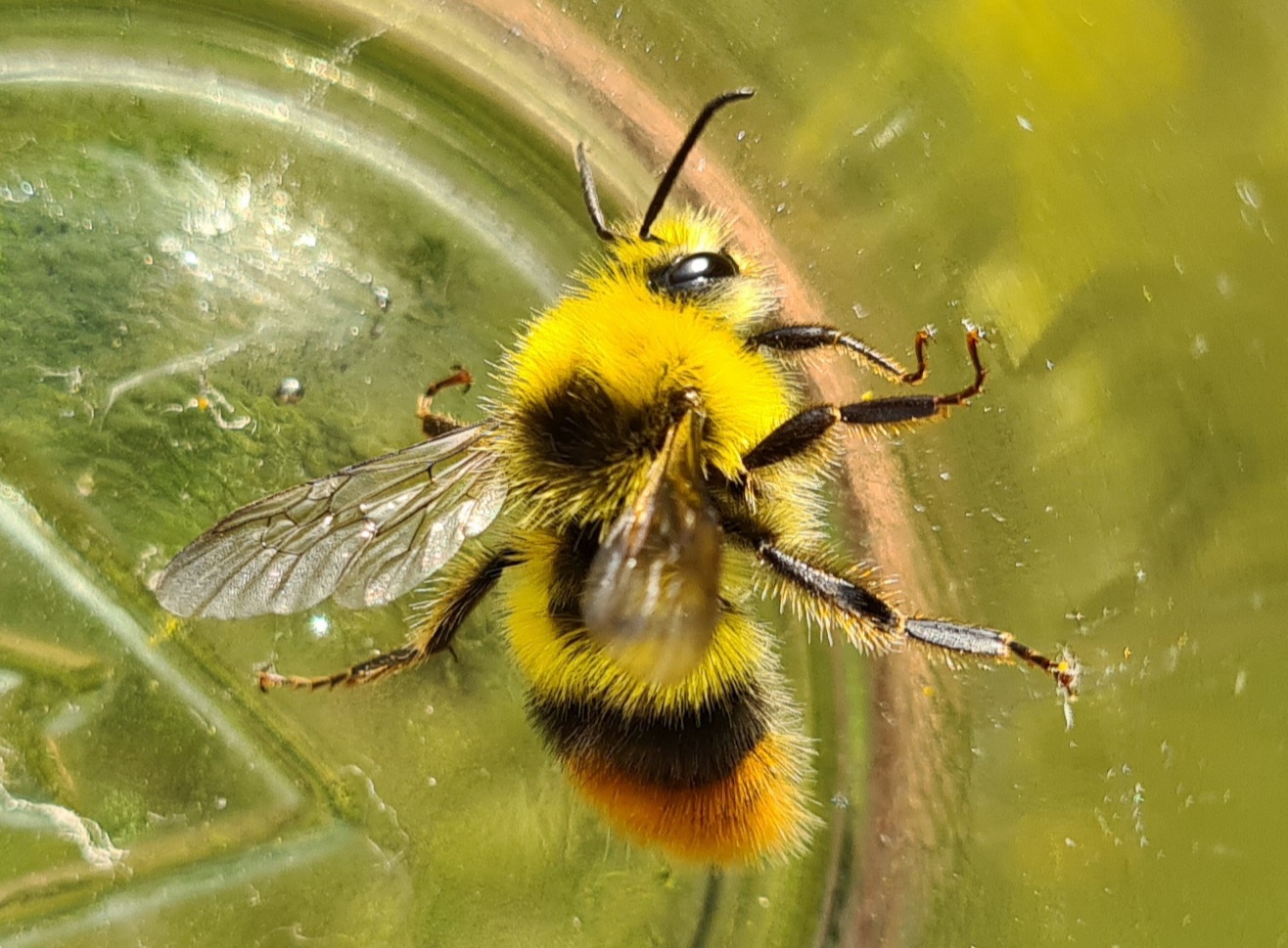
Meadow bumblebee (Bombus pratorum) male
Photo O.Hercog 25/6/2021 Prague
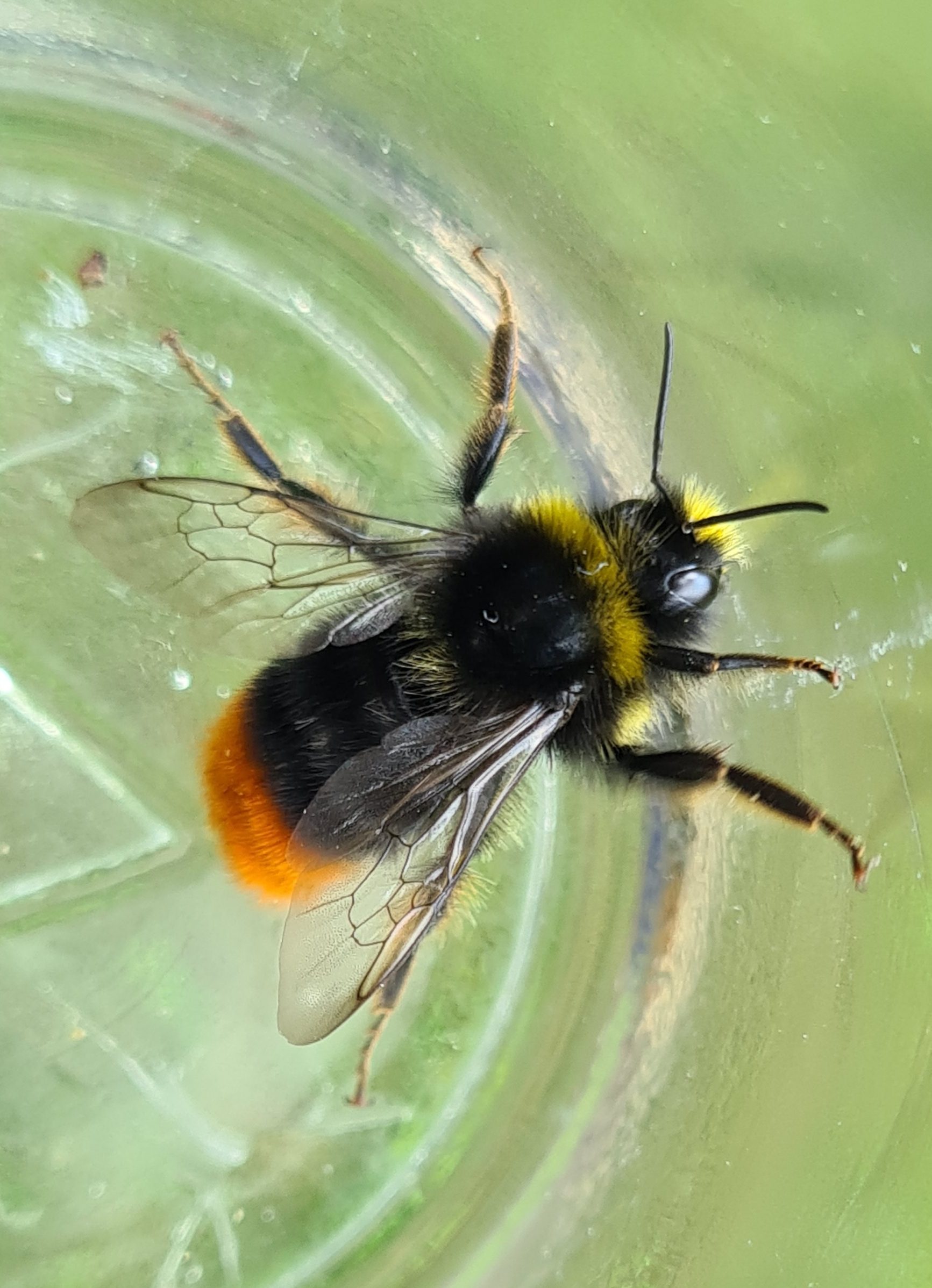
Rock bumblebee (Bombus lapidarius) male
Photo: O. Hercog 21/7/2021
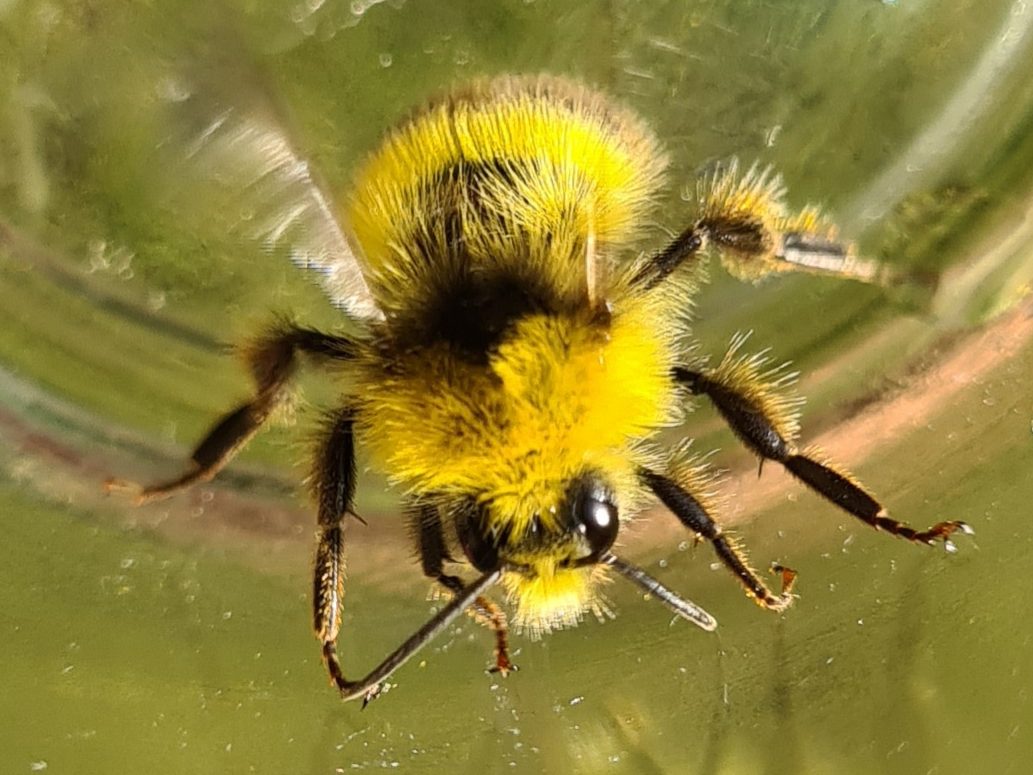
Note :
– different head shape
– the yellow eyebrow of the facial part of the head of the male meadow bumblebee has the form of a “brush” but in the male rock bumblebee it has the shape of a mask

Meadow bumblebee (Bombus pratorum) male – head
Photo: O. Hercog 22/6/2021

Rock bumblebee (Bombus lapidarius) male – head – facial part
– head shape and yellow eyebrows in the form of a mask
Photo; O. Hercog 23/7/2021
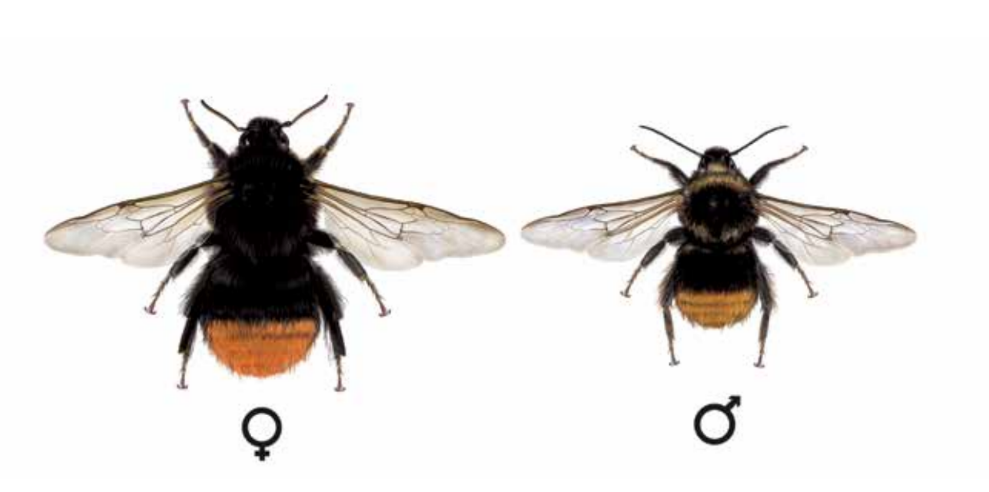
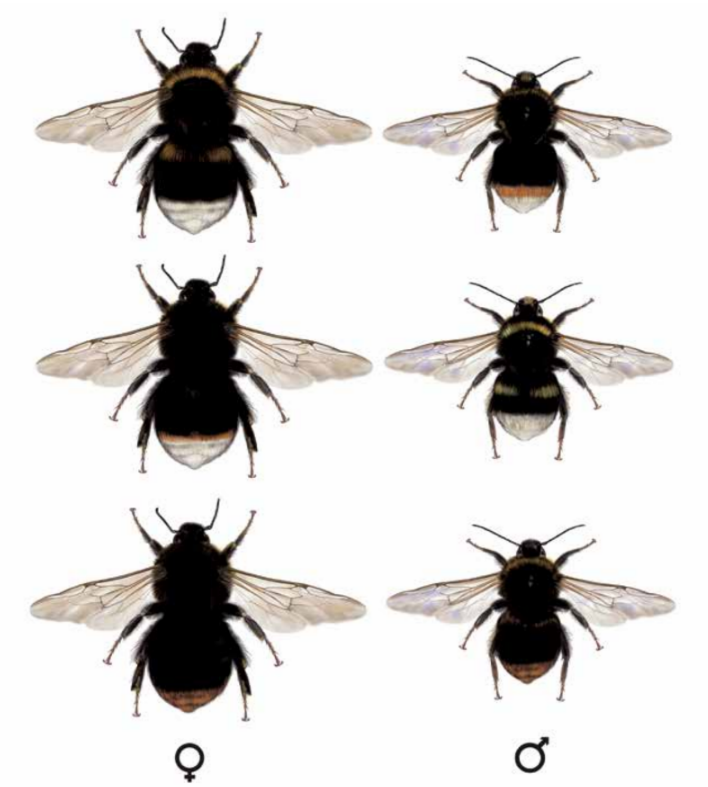
Broad-billed Bumblebee (Bombus wurflenii)
- quite similar to the rock bumblebee
- denser hair (bristly)
- multi-toothed mandibles
- there is a wider colored end on the back (3rd – 6th tegrid) – one tegrid more than the rock one
- some species have a marked yellow band on the prothorax (not only males)
- size smaller than the rock bumblebee
* mother 19 – 22 mm
* worker 13 – 16 mm
* male 14 – 16 mm

Broad-nosed bumblebee (Bombus wurflenii)
Source: Sikora A., Michołap P., Kadej M., Sikora M. Tarnawski D. 2018 "Pszczoły w mięści: Trzmiele Wrocławia", Wyd. Stowarzyszenie Natura i Człowiek.
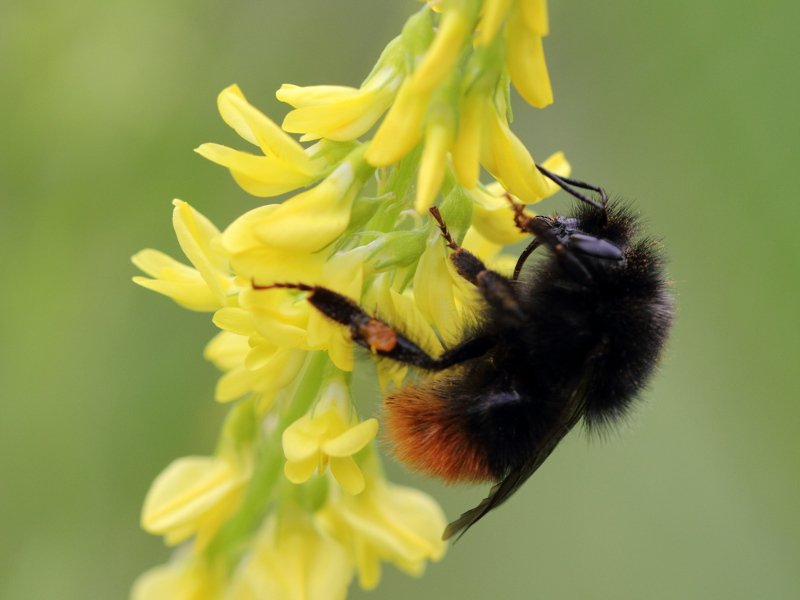
Rock bumblebee (Bombus lapidarius)
Source: Sikora A., Michołap P., Kadej M., Sikora M. Tarnawski D. 2018 "Pszczoły w mięści: Trzmiele Wrocławia", Wyd. Stowarzyszenie Natura i Człowiek.

Broad-billed bumblebee (Bombus wurflenii)
Photo: Bumblebees etc.
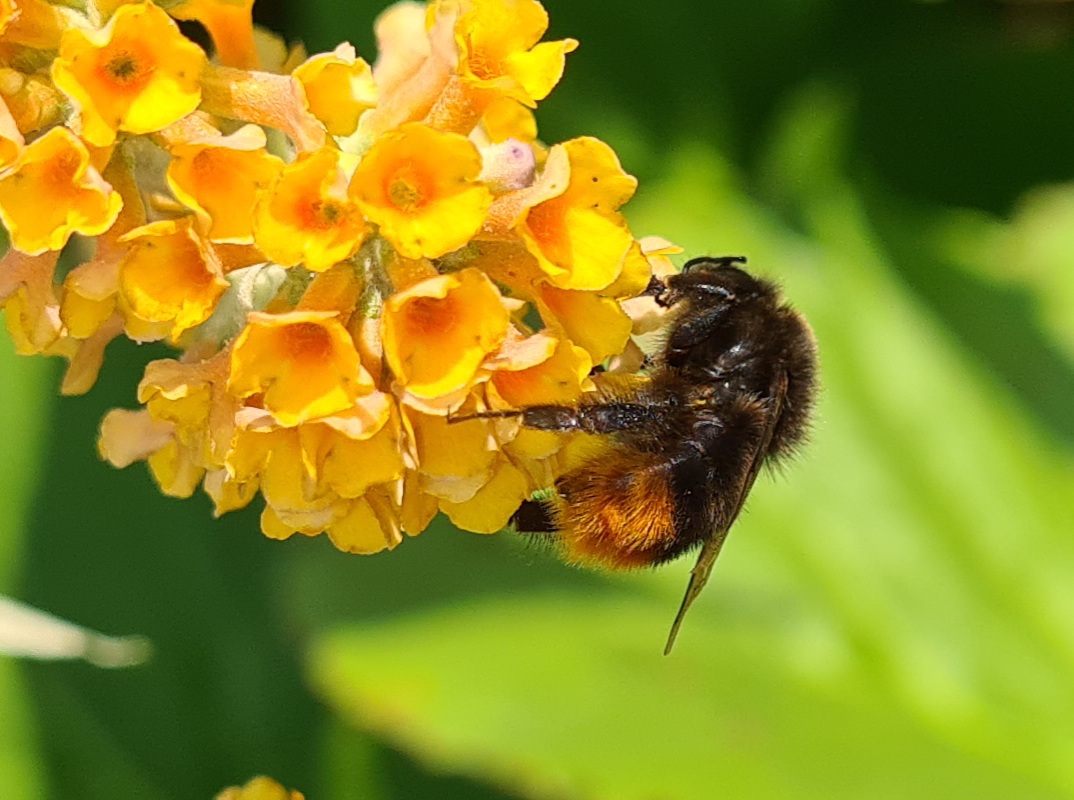
Rock bumblebee (Bombus lapidarius) worker on a cairn
Photo: O. Hercog 23/7/2021
Soroe bumblebee (Bombus soroeensis)
- very variable forms, some quite similar to the rock bumblebee (form with a red end of the rump)
- smaller size than the rock bumblebee
* mother 15 – 19 mm
* worker 10 – 14 mm
* male 12 – 15 mm

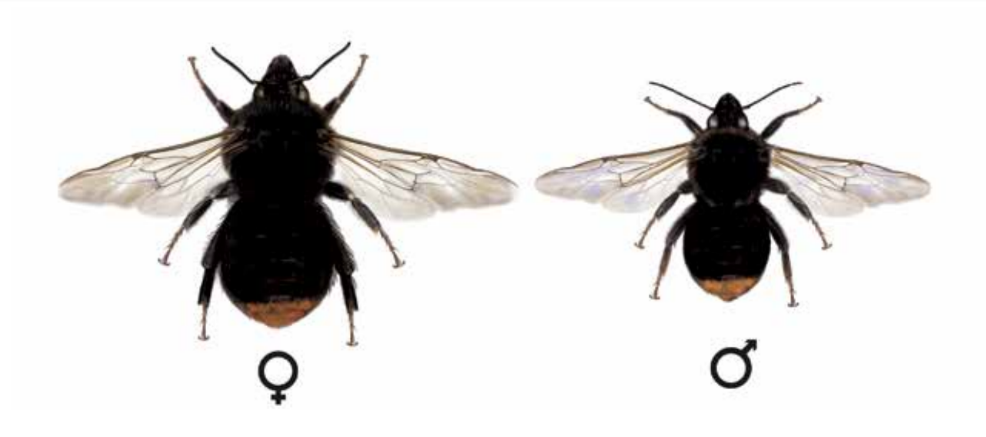
Soroi bumblebee (Bombus soroeensis)
Source: Sikora A., Michołap P., Kadej M., Sikora M. Tarnawski D. 2018 "Pszczoły w mięści: Trzmiele Wrocławia", Wyd. Stowarzyszenie Natura i Człowiek.
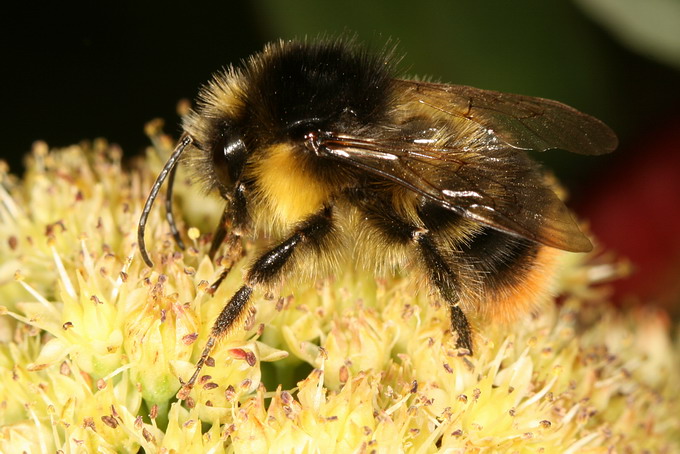
Rock bumblebee (Bombus lapidarius)
Source: Sikora A., Michołap P., Kadej M., Sikora M. Tarnawski D. 2018 "Pszczoły w mięści: Trzmiele Wrocławia", Wyd. Stowarzyszenie Natura i Człowiek.

Sorojan Bumblebee (Bombus soroensis) – male
Photo: S. Krejčík 2004
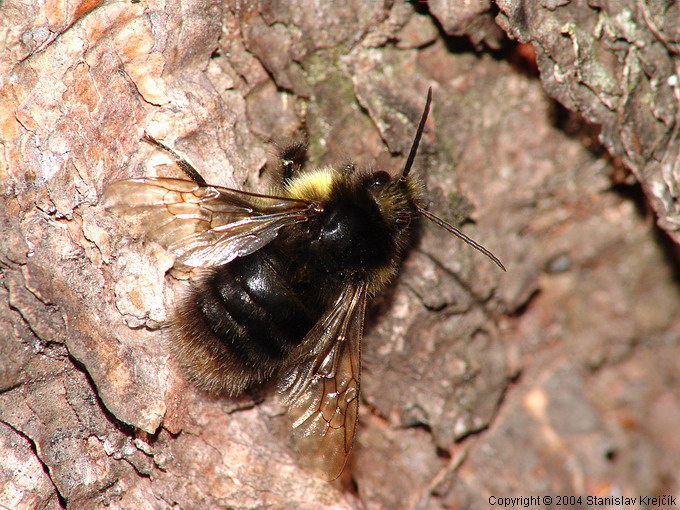
Sorojan Bumblebee (Bombus soroensis) – male
Photo: S. Krejčík 2004
Confused bumblebee (Bombus confusus)
- can be distinguished from the rock bumblebee by its "short-cropped" velvety hairs and short antennae
- males have significantly large and prominent eyes
- size similar to the rock bumblebee
* mother 18 – 24 mm
* worker 13 – 15 mm
* male 14 – 18 mm

Deceptive bumblebee (Bombus confusus)
Source: Sikora A., Michołap P., Kadej M., Sikora M. Tarnawski D. 2018 "Pszczoły w mięści: Trzmiele Wrocławia", Wyd. Stowarzyszenie Natura i Człowiek.
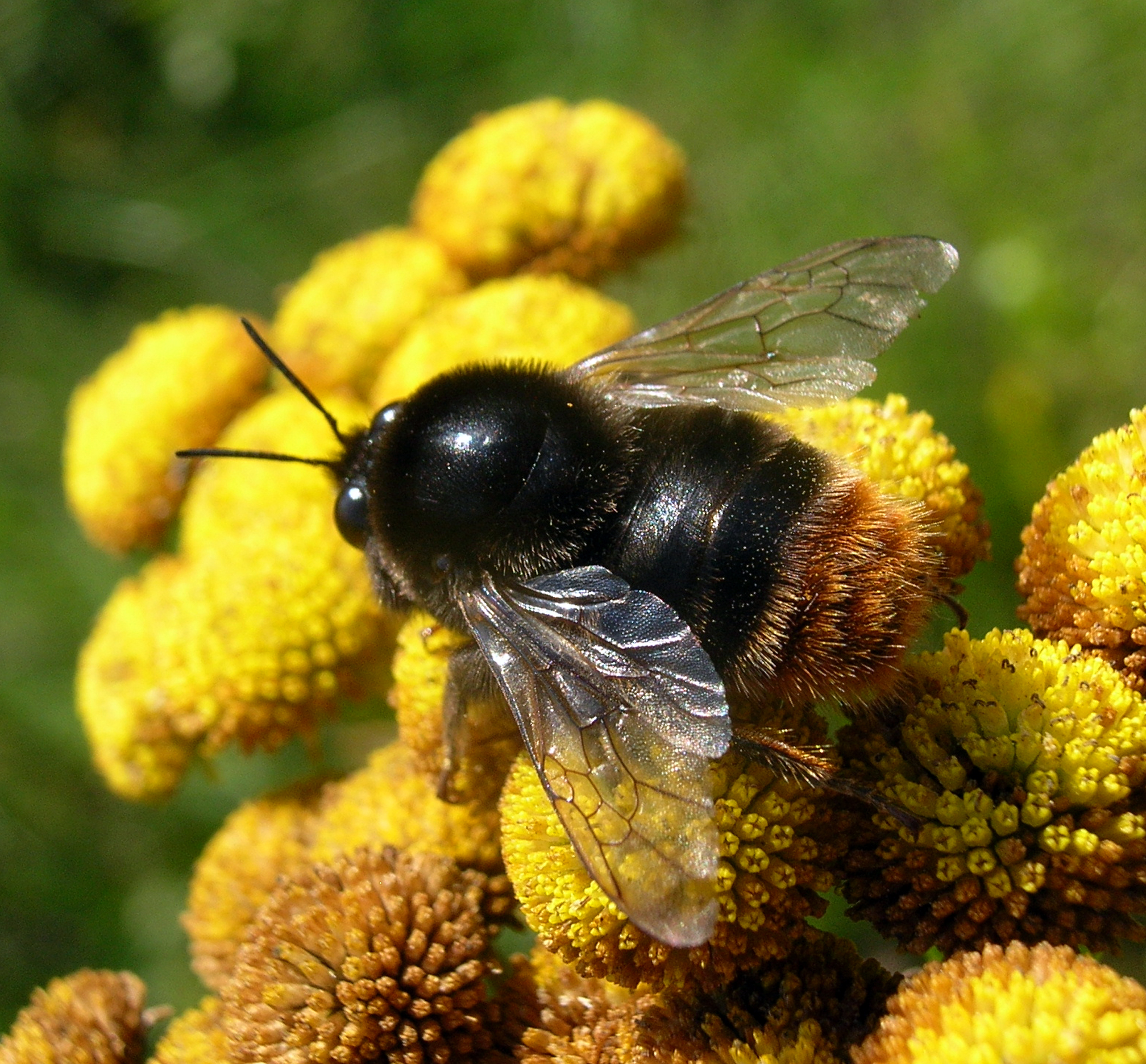
Rock bumblebee (Bombus lapidarius)
Source: Sikora A., Michołap P., Kadej M., Sikora M. Tarnawski D. 2018 "Pszczoły w mięści: Trzmiele Wrocławia", Wyd. Stowarzyszenie Natura i Człowiek.

Confused bumblebee (Bombus confusus) – male
Source: Wikipedia
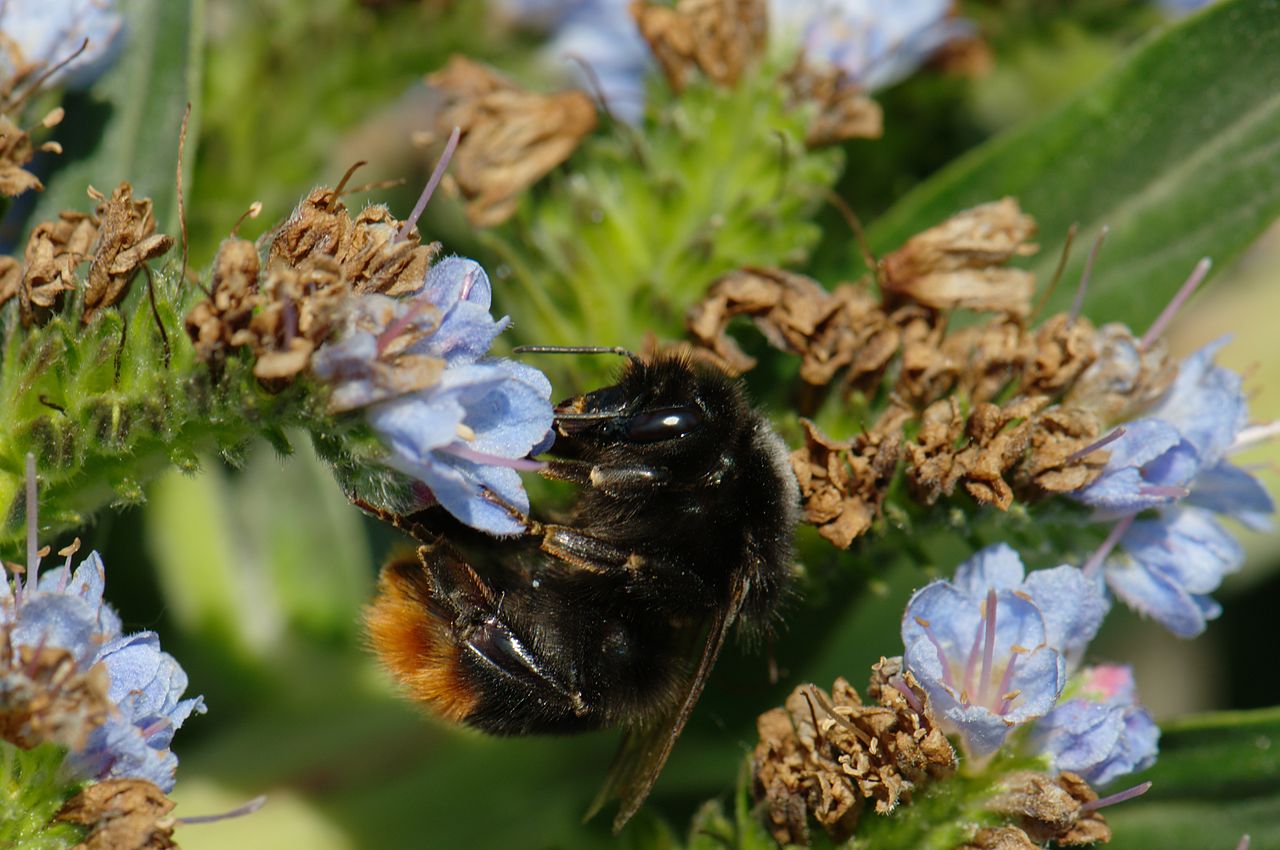
Confused bumblebee (Bombus confusus) – male
Source: Wikipedia
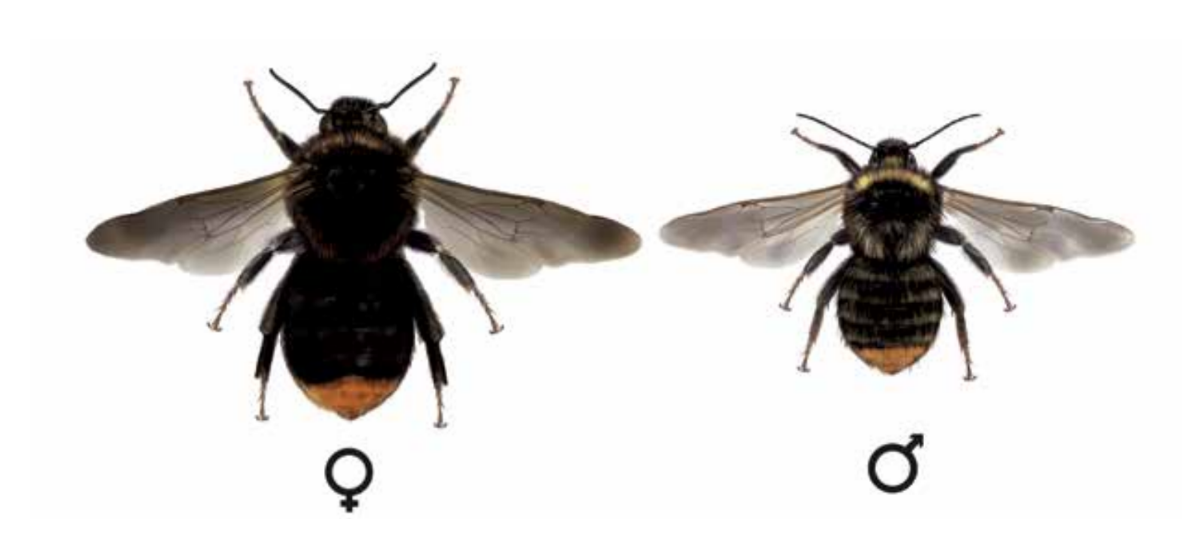
Bombus rupestris (Bombus rupestris)

Bumblebee (Bombus rupestris)
Source: Sikora A., Michołap P., Kadej M., Sikora M. Tarnawski D. 2018 "Pszczoły w mięści: Trzmiele Wrocławia", Wyd. Stowarzyszenie Natura i Człowiek.
Rock bumblebee (Bombus lapidarius)
Source: Sikora A., Michołap P., Kadej M., Sikora M. Tarnawski D. 2018 "Pszczoły w mięści: Trzmiele Wrocławia", Wyd. Stowarzyszenie Natura i Człowiek.
Occurrence
- omnipresent
- occurs throughout Europe
- in the Czech Republic, occurrence from lowlands to mountain locations of 1,300 m (sunlit slopes)
- often occurs near humans, or its occurrence is related to human activity (synatropic species)
Habitat
- inhabits open habitats of both forested and open landscapes, urban areas
Life cycle
- Later species
- Number of generations per season: one per season; mothers hibernate from August
- Queen mothers search for nesting sites: from April to the end of May
- Nesting of mothers: beginning of March – mid-May
- New queen mothers appear: from late June to August
- Males appear: immediately after the mothers, from July
- Nesting ends: August – September depending on the weather
Successful mating of a rock bumblebee. The mother extends her curved stinger. The male is turned backwards because he has to avoid the stinger. If the male sits on the walls of the mother, this is not mating, but an attempt.
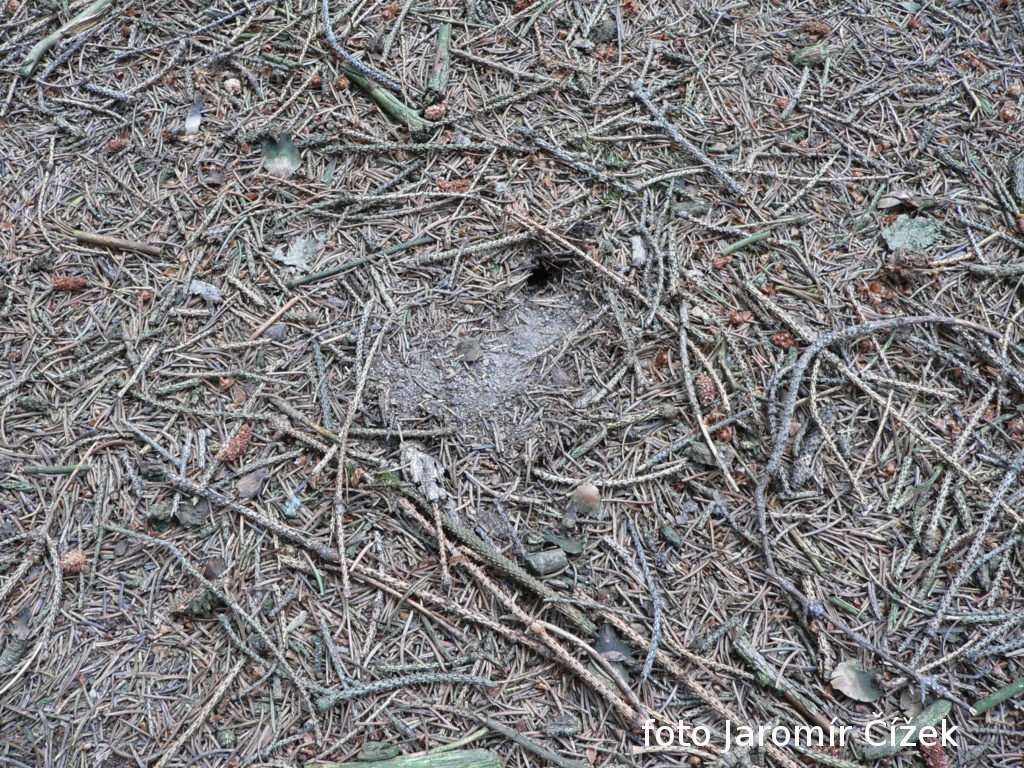
Young bumblebee mothers soon after mating find a suitable place for overwintering – hibernation. They very often choose a place on the edge of the forest. There they have a chance to hibernate in the dry. Here they dig a shallow chamber for overwintering (hibernaculum) in the forest floor.
It is characteristic of the rock bumblebee that there is a path = entrance groove before the entrance to the chamber, which is not covered up.
Please don't disturb the sleeping mother here - thank you.

Rock bumblebee (Bombus lapidarius) hibernaculum
Photo: J. Čížek
Feeding the larvae
- Pollen storers
- Polyectic ( does not prefer just one plant, but a wide range of different flowering plants) – it is reported to have been observed on about 250 species of plants where it collected food
Nest location
- It likes to build nests in rock crevices, but also in piles of stones or in buildings
- It also nests in the ground in abandoned rodent nests, sometimes with surprisingly long corridors
(nesting in a ground cavity with a corridor of 2 m was observed – O. Hercog 2020) - It does not disdain an above-ground nest abandoned by birds, in a tree hollow or in a birdhouse
- Often occupies nest sites occupied by another bumblebee mother
Nest size
- Mostly large and strong nests
- Number of individuals 100 – 300 individuals (in the wild), in breeding even more

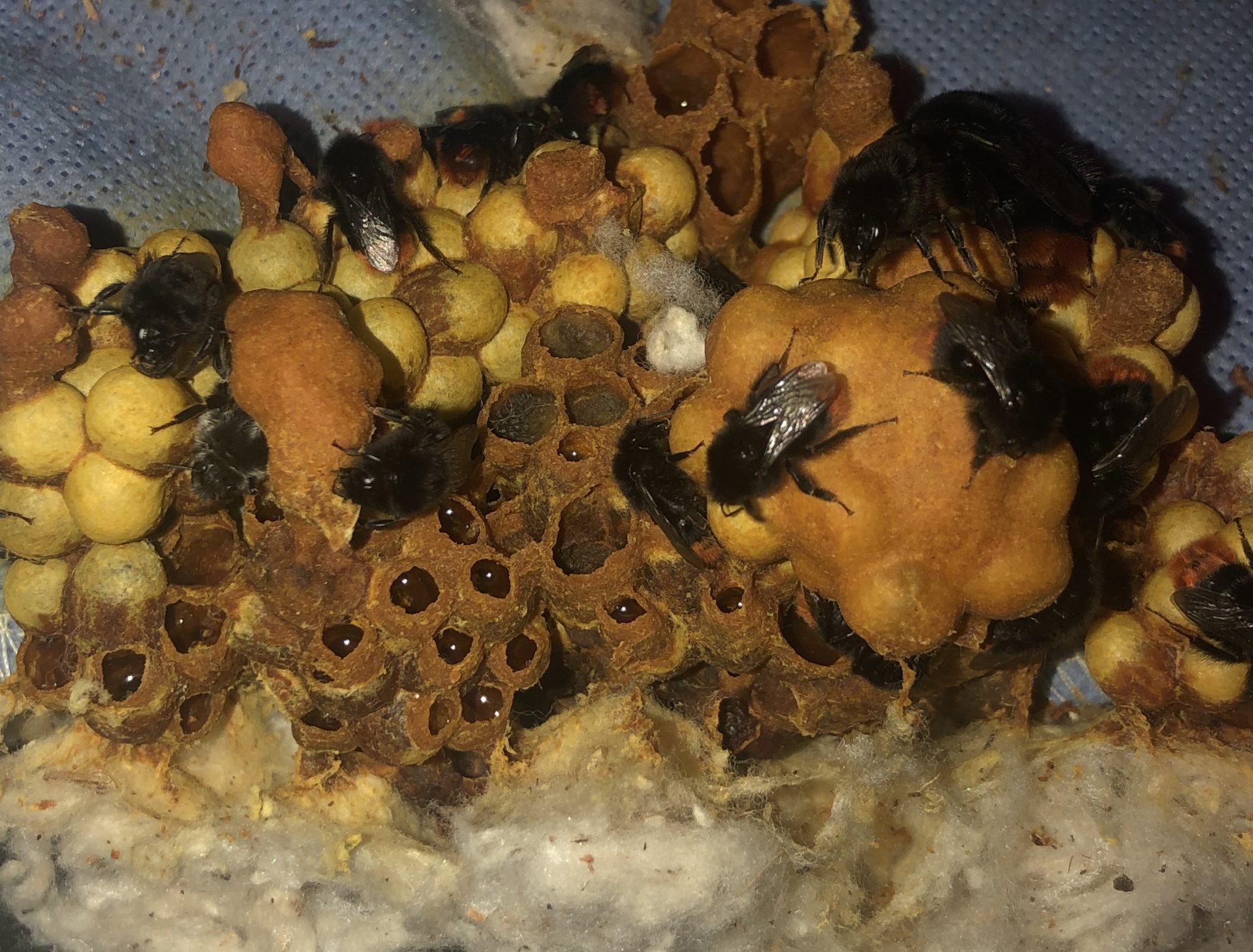
Rock bumblebee (Bombus lapidarius) nest
Photo: P. Krčová – 07/2021
A view into a rock bumblebee nest
Visiting Pac-Man
- Bombus rupestris (Bombus rupestris)
Pachmallow attack strategy:
- The mother patchouli is looking for a developed host nest, she needs a lot of workers.
- She kills the original mother, sprays pheromones on the strong workers, and they kill each other.
- If by chance some survive, they enslave the remaining workers.
- But it will rather wait and use the newly born workers.
- Meanwhile, she perfumes the entire nest with her scent, and the newly born workers accept the mother patchouli as their own and serve her.
How to distinguish a bumblebee from a wasp
Bombus rupestris (Bombus rupestris)
- The scaly-winged hawkmoth has darker wings and a shorter head with wide temples
- Size
* female 18 – 25 mm
* male 13 – 17 mm - It makes a distinctive gurgling sound in flight
- Dark tegridy spots are visible on his backside
- Dark Wings
- Males have a greyish (yellowish-grey) collar on their chest after birth, as well as shiny light stripes on their rump. However, within a few days these light hairs usually disappear, and they are then completely black, with a red end to their rump
- Young mothers take off from their hiding places mainly in warm weather, which is why mainly dark males are seen in nature

Bumblebee (Bombus rupestris)
Source: Sikora A., Michołap P., Kadej M., Sikora M. Tarnawski D. 2018 "Pszczoły w mięści: Trzmiele Wrocławia", Wyd. Stowarzyszenie Natura i Człowiek.
Rock bumblebee (Bombus lapidarius)
Source: Sikora A., Michołap P., Kadej M., Sikora M. Tarnawski D. 2018 "Pszczoły w mięści: Trzmiele Wrocławia", Wyd. Stowarzyszenie Natura i Człowiek.

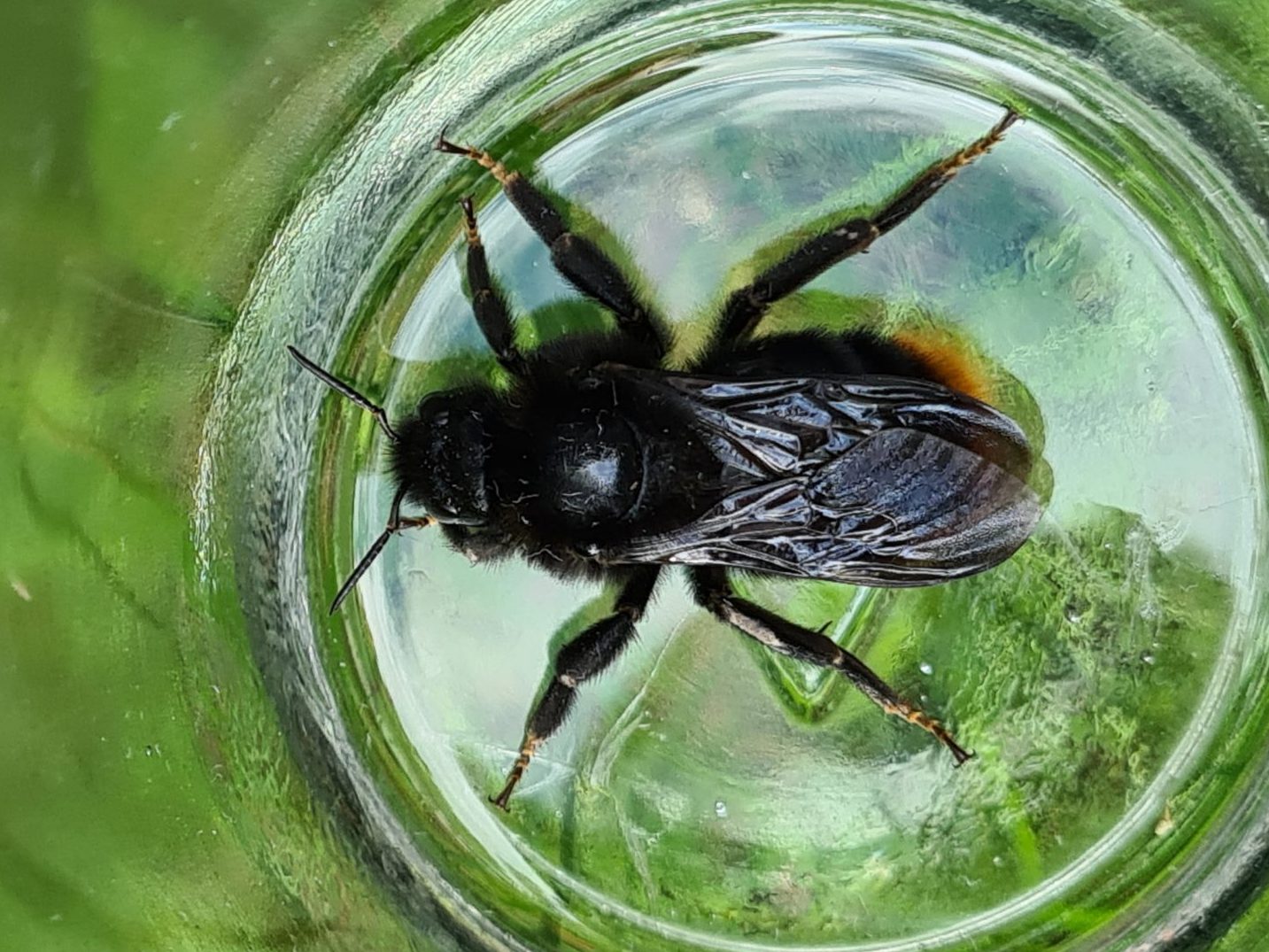
Bombus rupestris - mother (female)
Photo: O. Hercog 5/30/2021
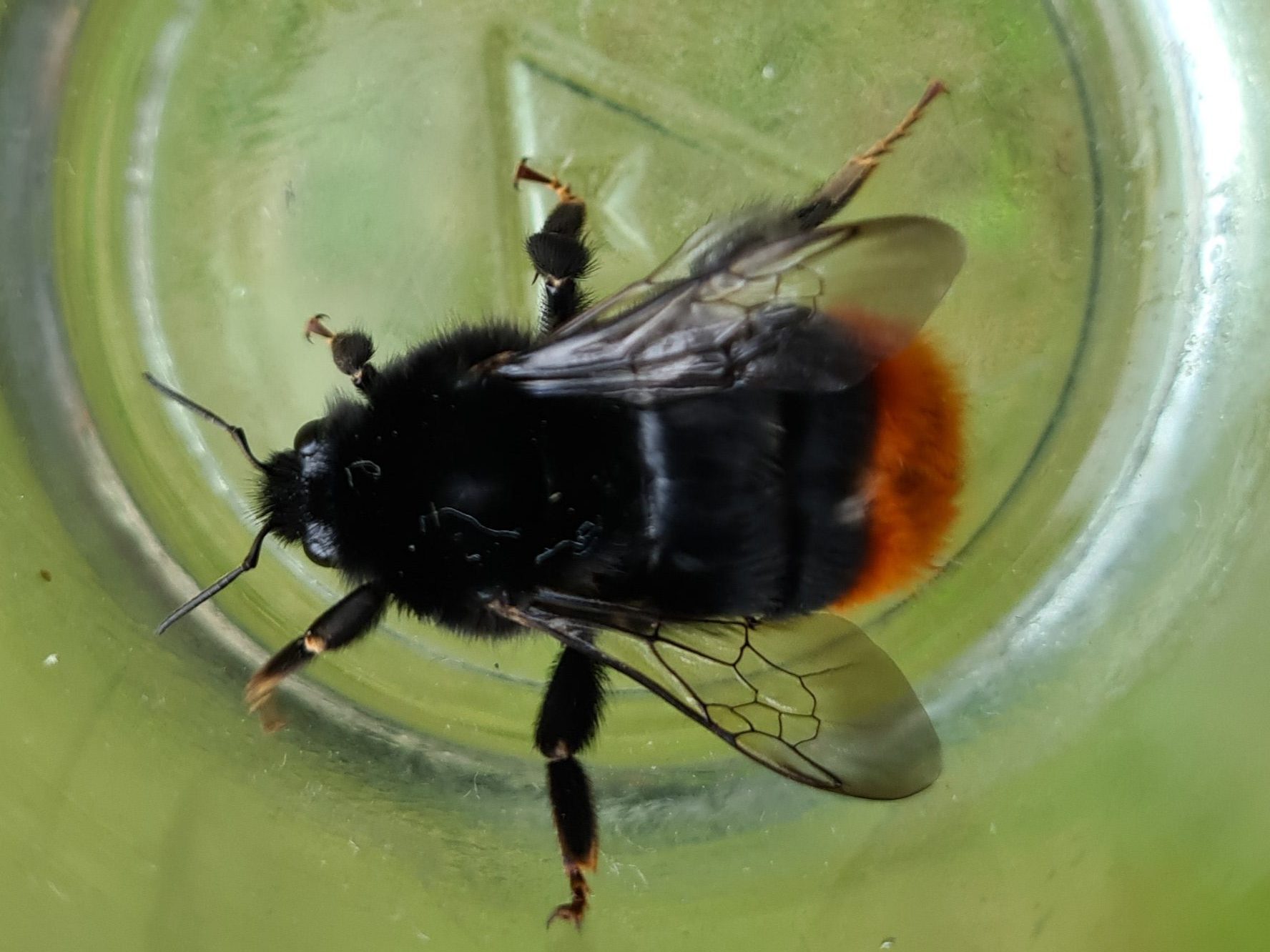
Rock bumblebee (Bombus lapidarius) mother (queen)
Photo: O. Hercog 11/7/2021
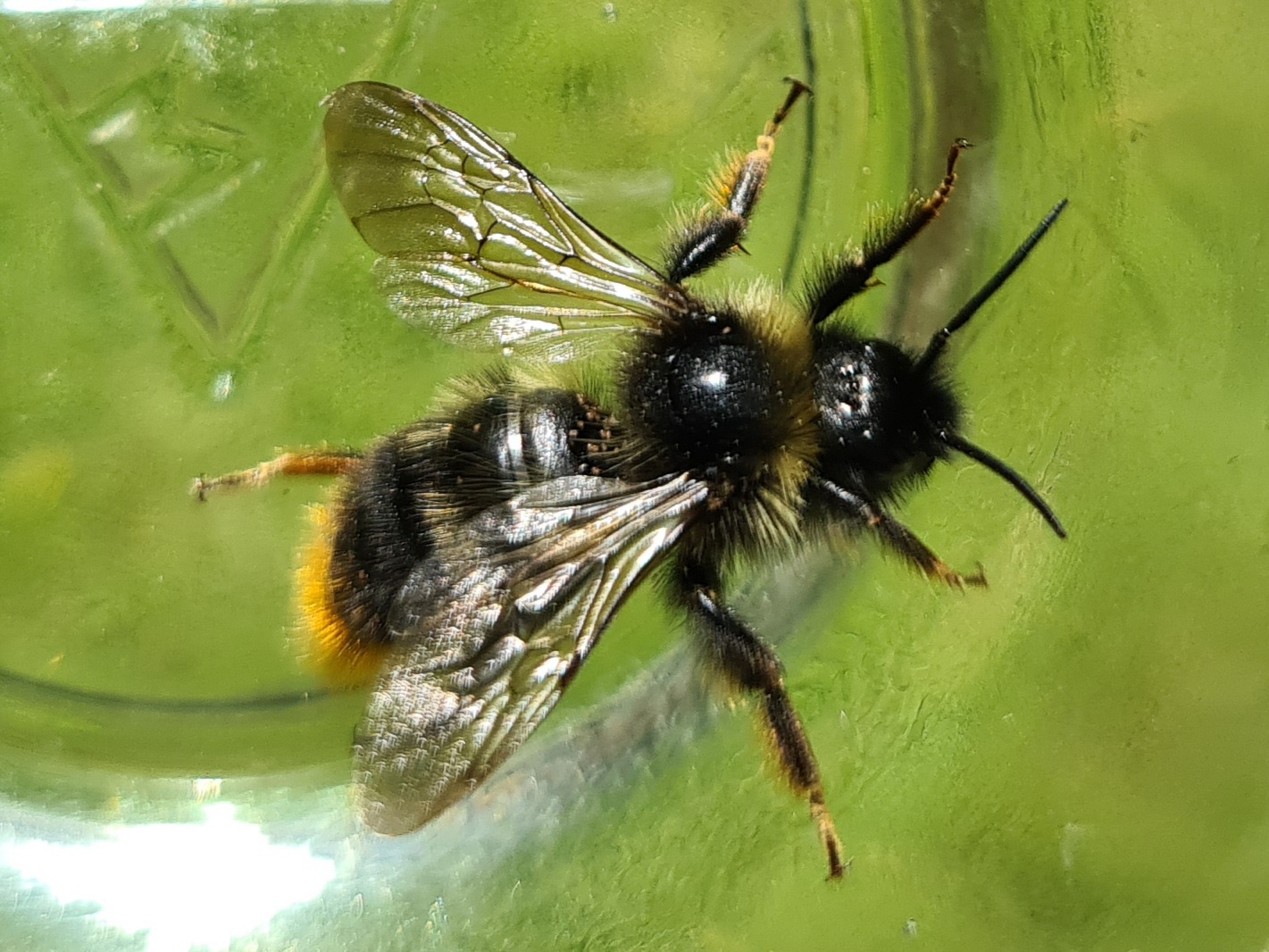
Bombus rupestris (Bombus rupestris) male
Photo: O. Hercog 7/17/2021
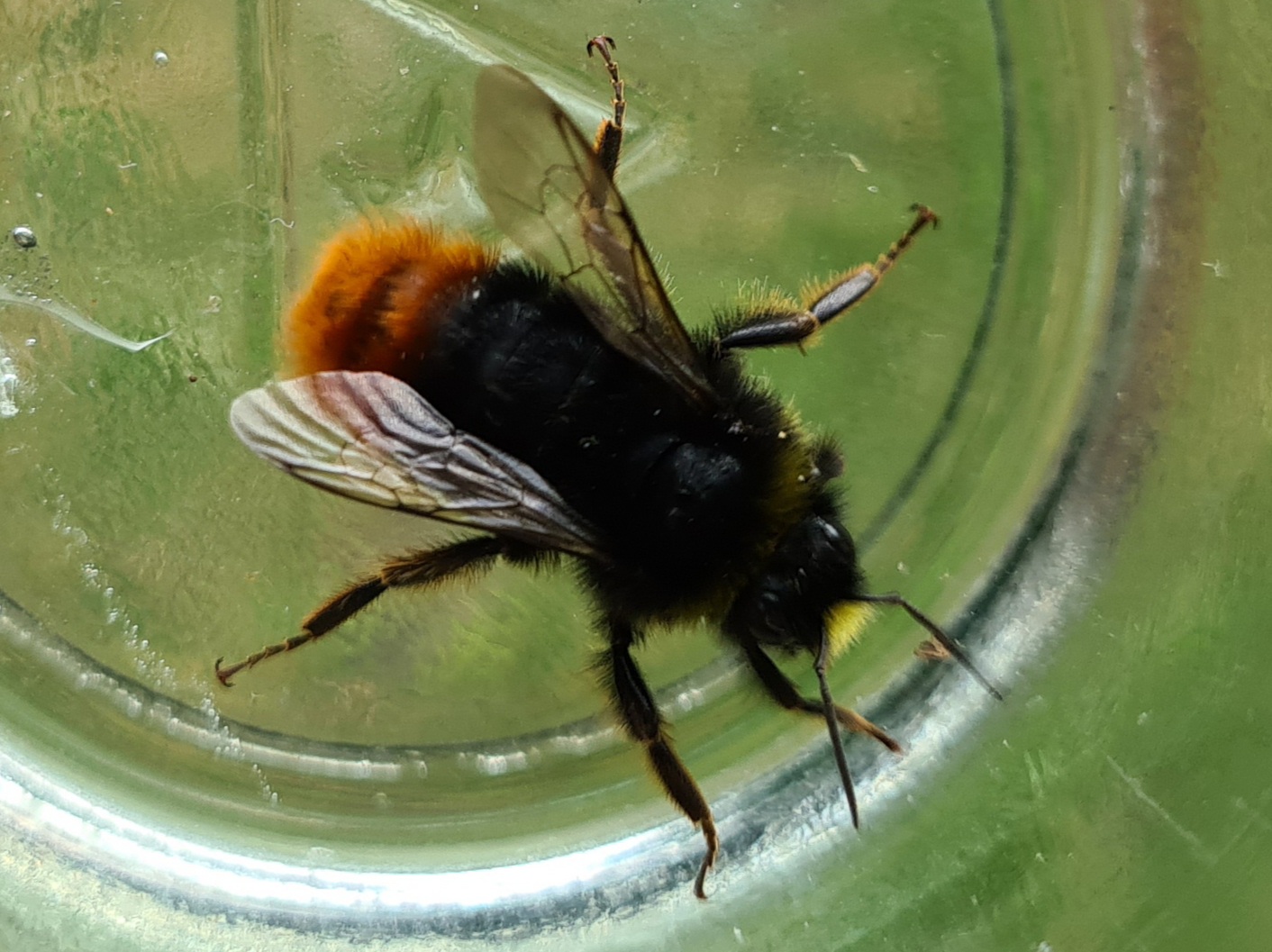
Rock bumblebee (Bombus lapidarius) male
Photo: O. Hercog 21/7/2021
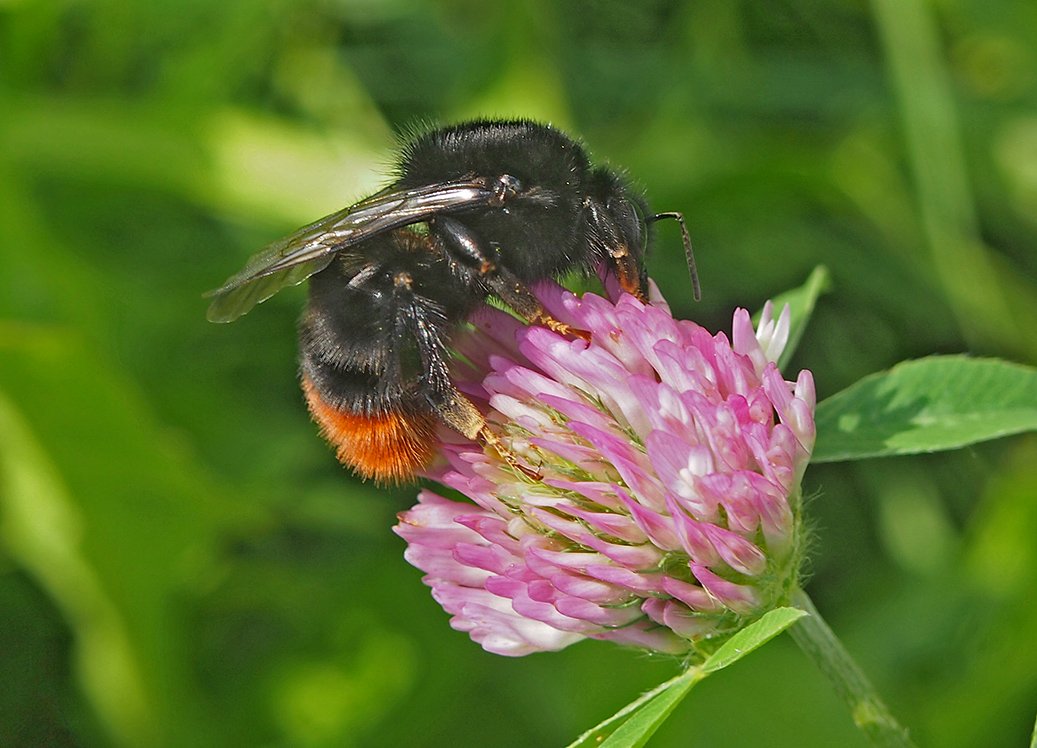
Breeding information
Hive: we recommend a large hive, it accepts hives willingly
Corridor : the corridor can be short or long, it is not critical
Settlement: after settling, the mother returns often and starts working immediately
Returns of mothers in the spring after hibernation: common
Self-settlement in the hive: relatively common, mothers often attack hives already occupied by other mothers and take their nesting sites
Interesting facts
- It is a species that does not disturb the urban environment too much. It inhabits city parks, etc.
- Young mothers reliably return to their nesting sites after hibernation, and fights often occur.
- During the settlement period, mothers are quite aggressive, often eliminating the original resident in a fight for a nesting site
- This species has very long legs
- In nature, it is most common during the flowering period of the sedges
- Worker bees very often carry large amounts of lining out of the hive
- After the death of the mother, some workers tend to establish their own groups, separate from the nest - they build their nest on the hive flap, or expand the waxwork to the sides in the nest
Photos and videos

Rock bumblebee (Bombus lapidarius) – queen on clover
Photo: H. Kříženecká
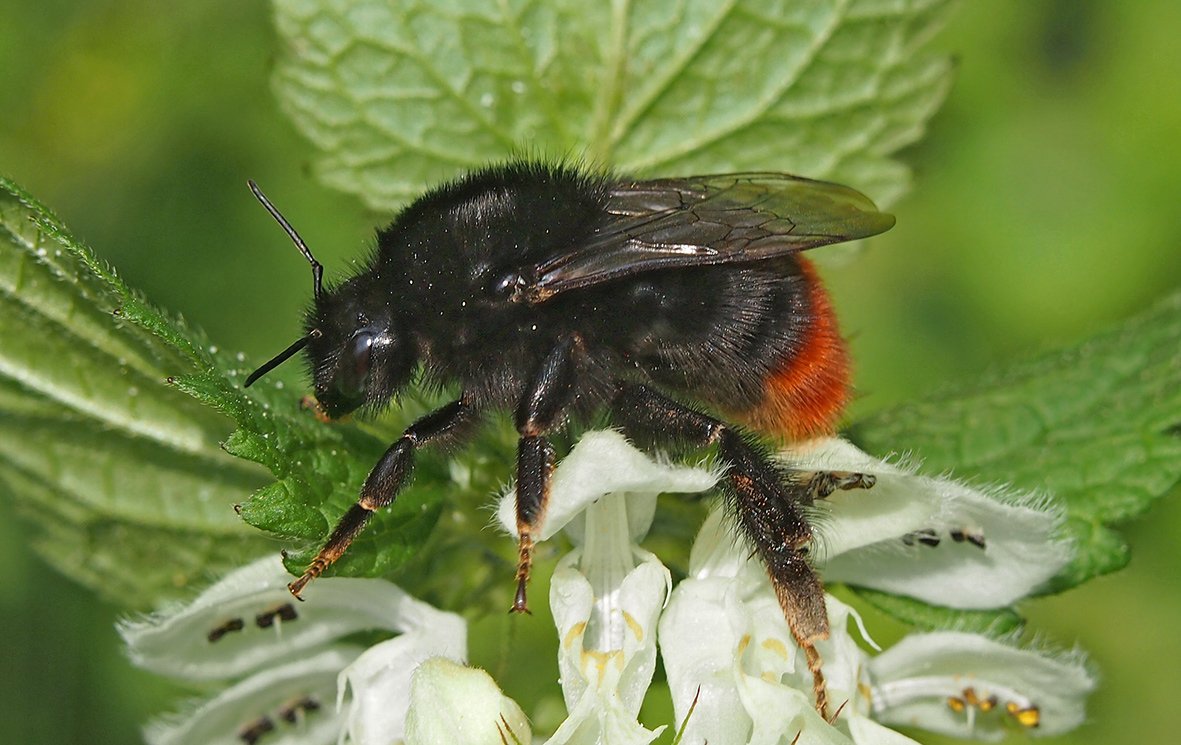
Rock bumblebee (Bombus lapidarius) – mother on a tree stump (queen)
Photo: H. Kříženecká
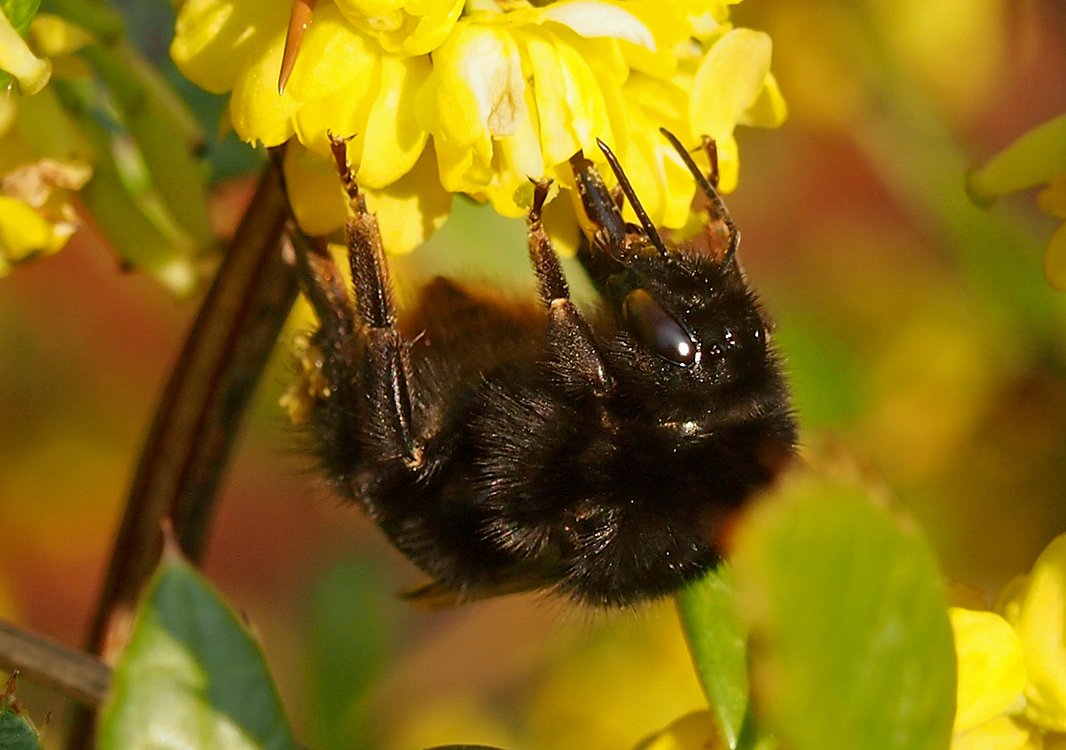
Rock bumblebee (Bombus lapidarius) – queen on barberry
Photo: H. Kříženecká
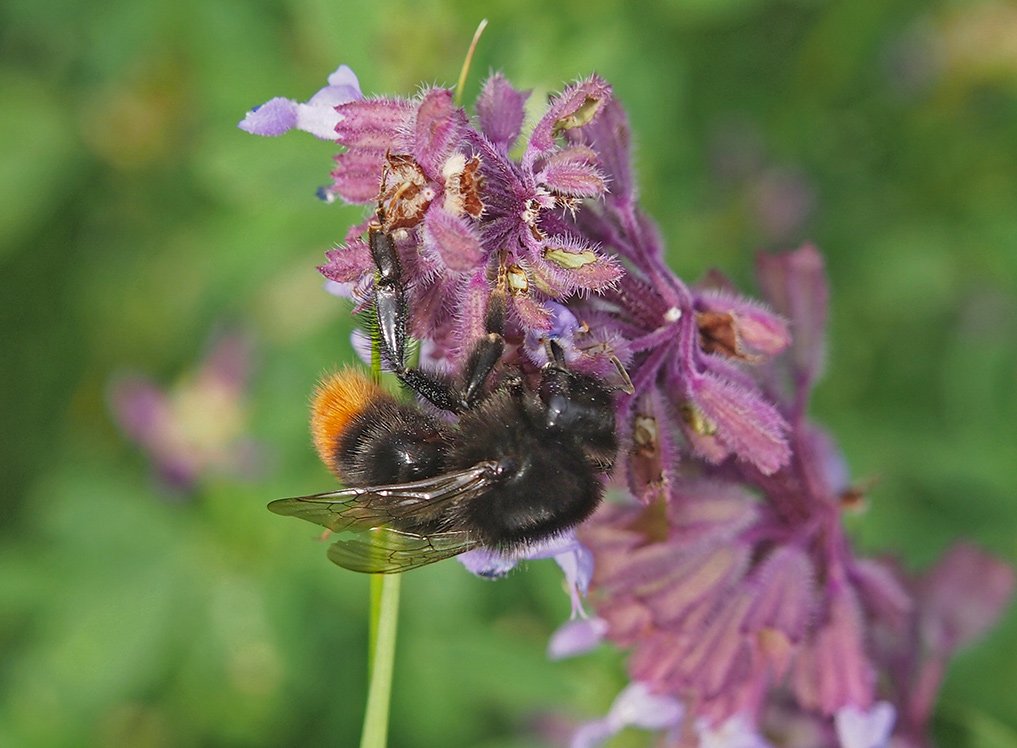
Rock bumblebee (Bombus lapidarius) – worker on sagebrush
Photo: H. Kříženecká
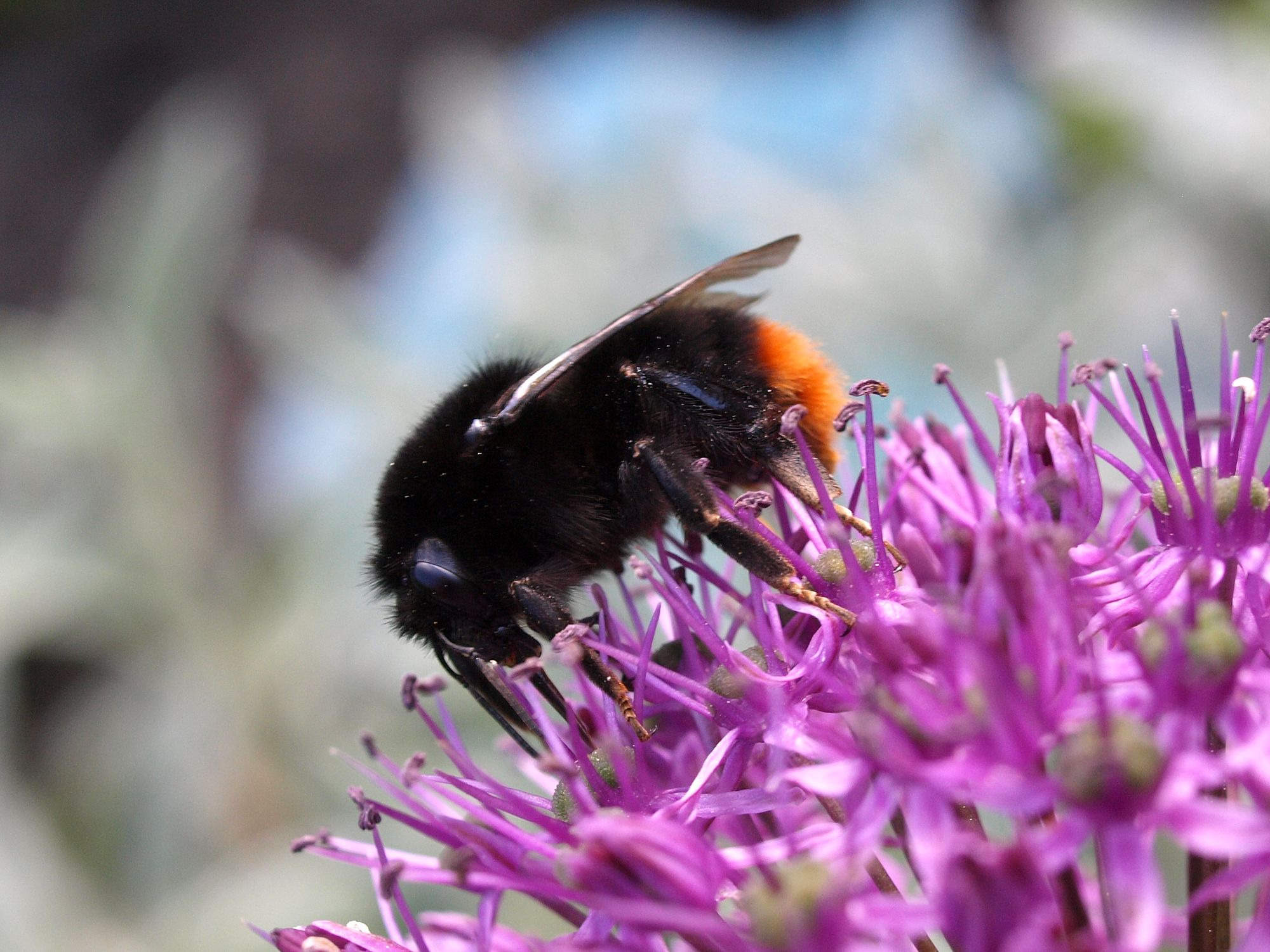
Rock bumblebee (Bombus lapidarius) – worker
Photo: A. Ungerová
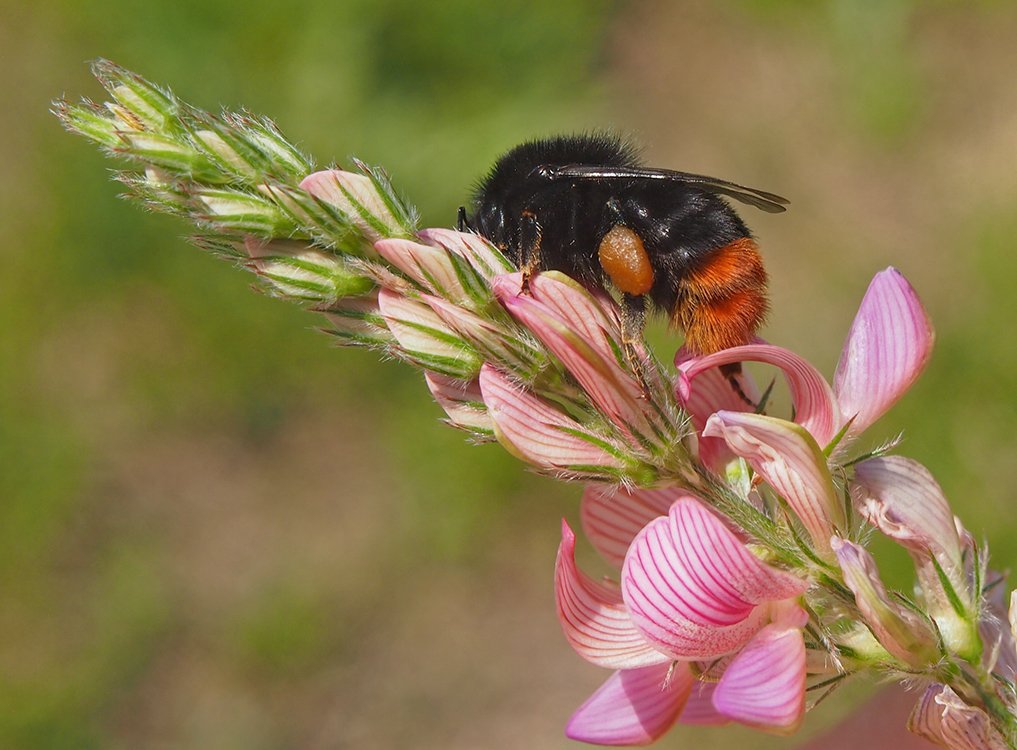
Rock bumblebee (Bombus lapidarius) worker on a vine
Photo: H. Kříženecká
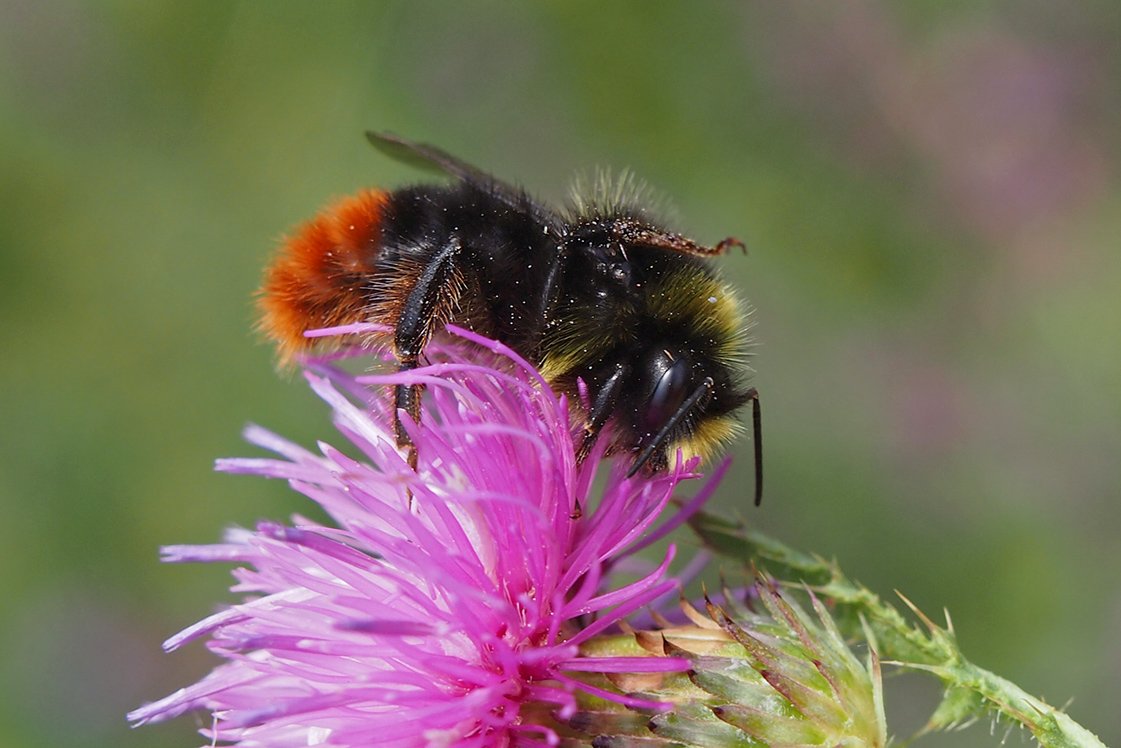
Rock bumblebee (Bombus lapidarius) – male on a thistle (male)
Photo: H. Kříženecká
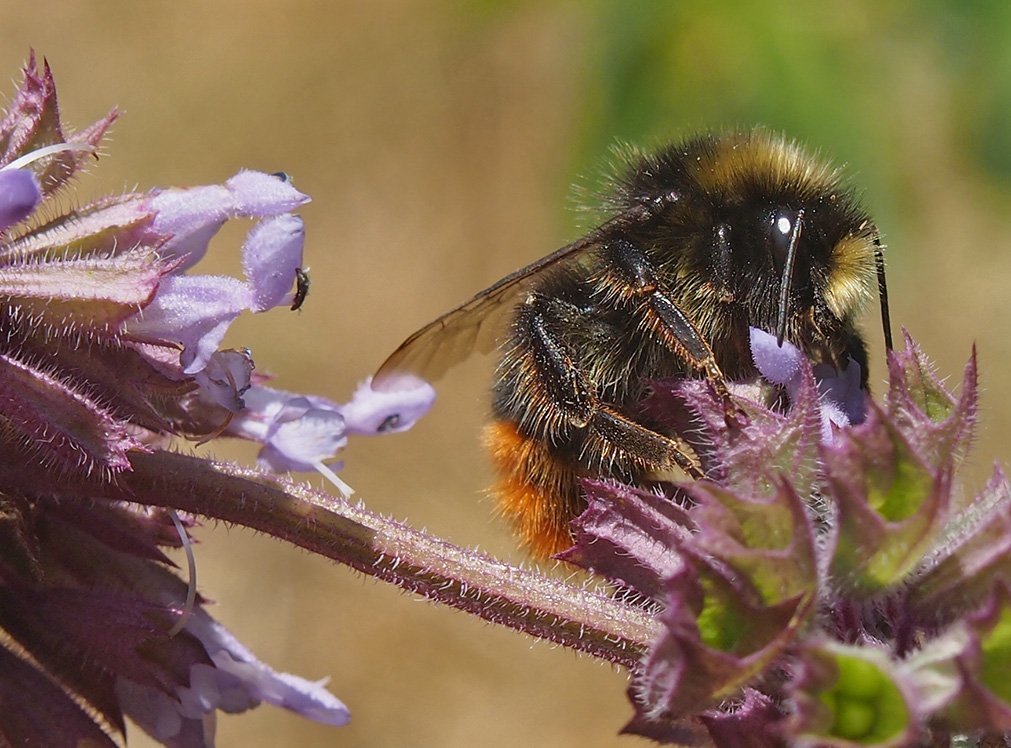
Rock bumblebee (Bombus lapidarius) – male on a thistle (male)
Photo: H. Kříženecká
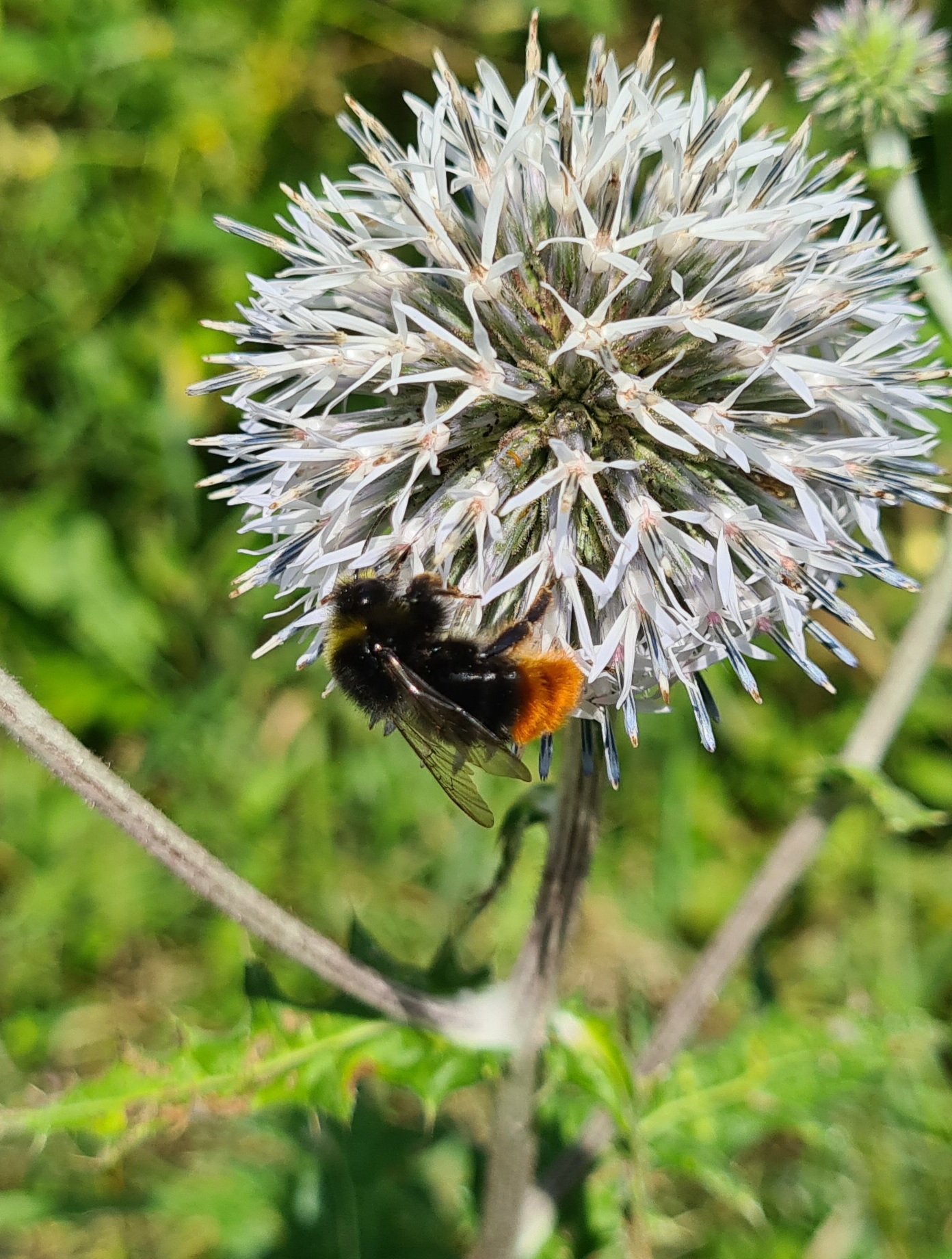
Rock bumblebee (Bombus lapidarius) – male on whitethorn (male)
Photo: O. Hercog 25/7/2021
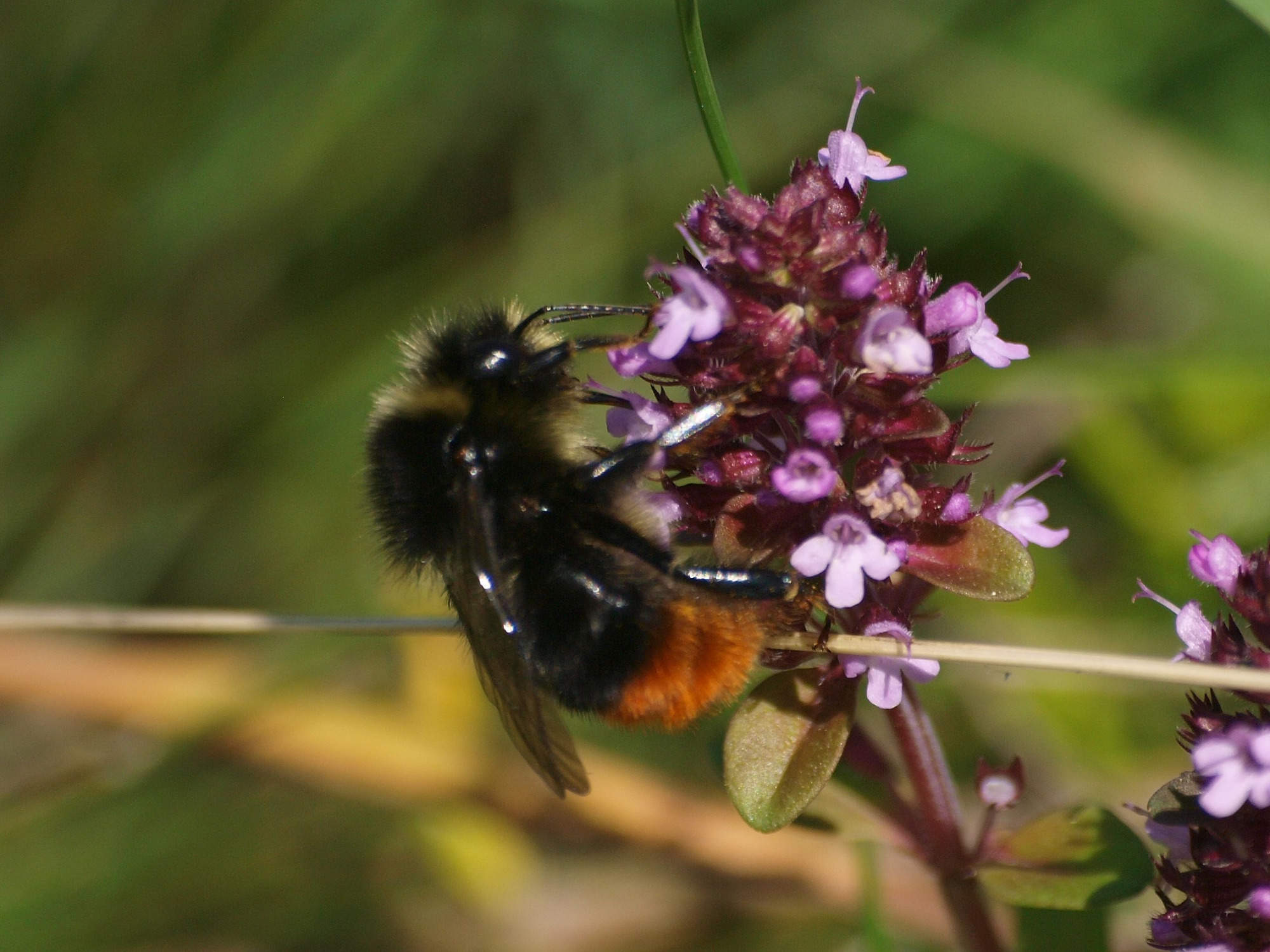
Rock bumblebee (Bombus lapidarius) – male
Photo: A. Ungerová 2020
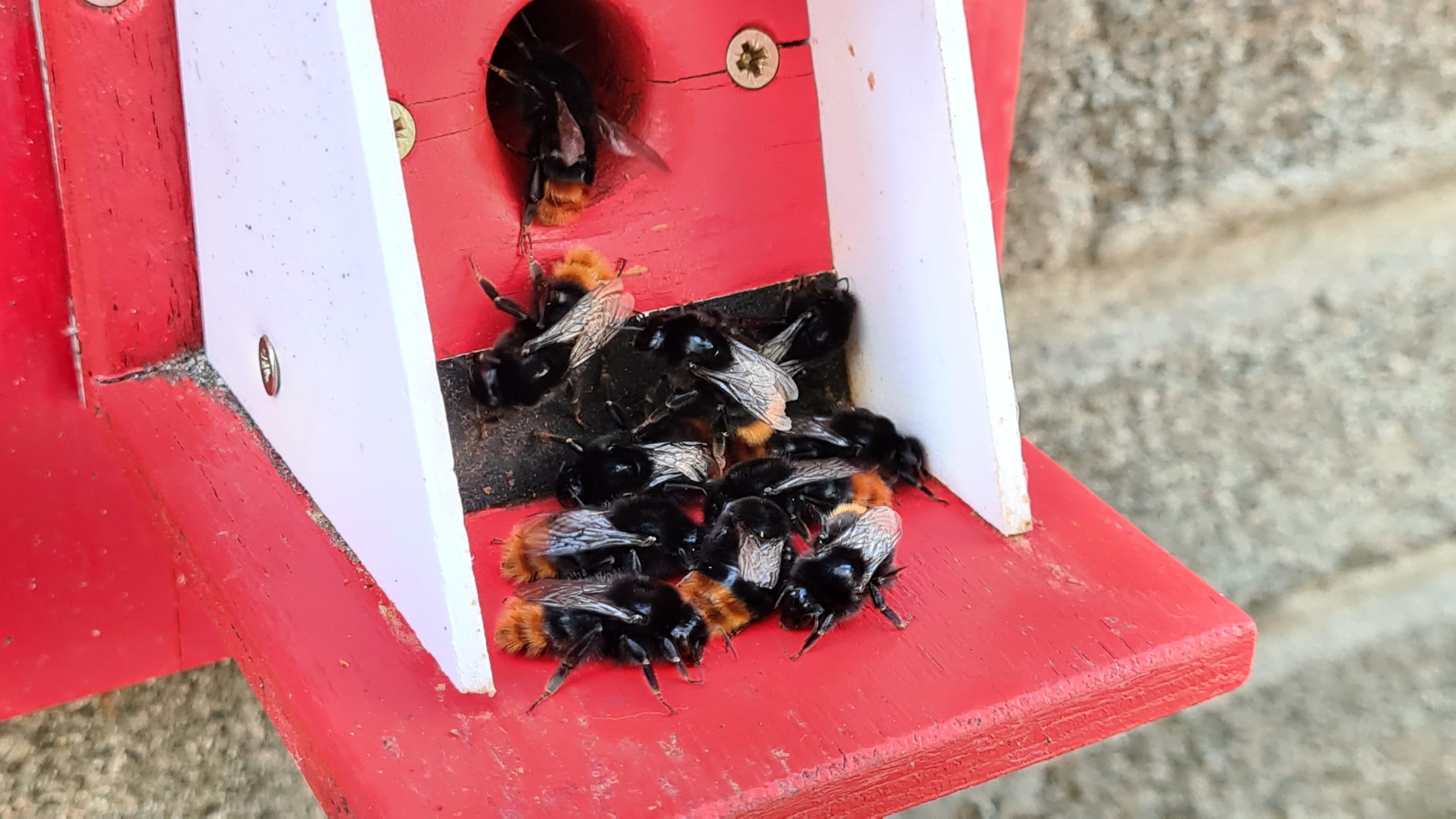
Rock bumblebee (Bombus lapidarius) – workers gather on a tree (workers)
Photo: O. Hercog 3/7/2021
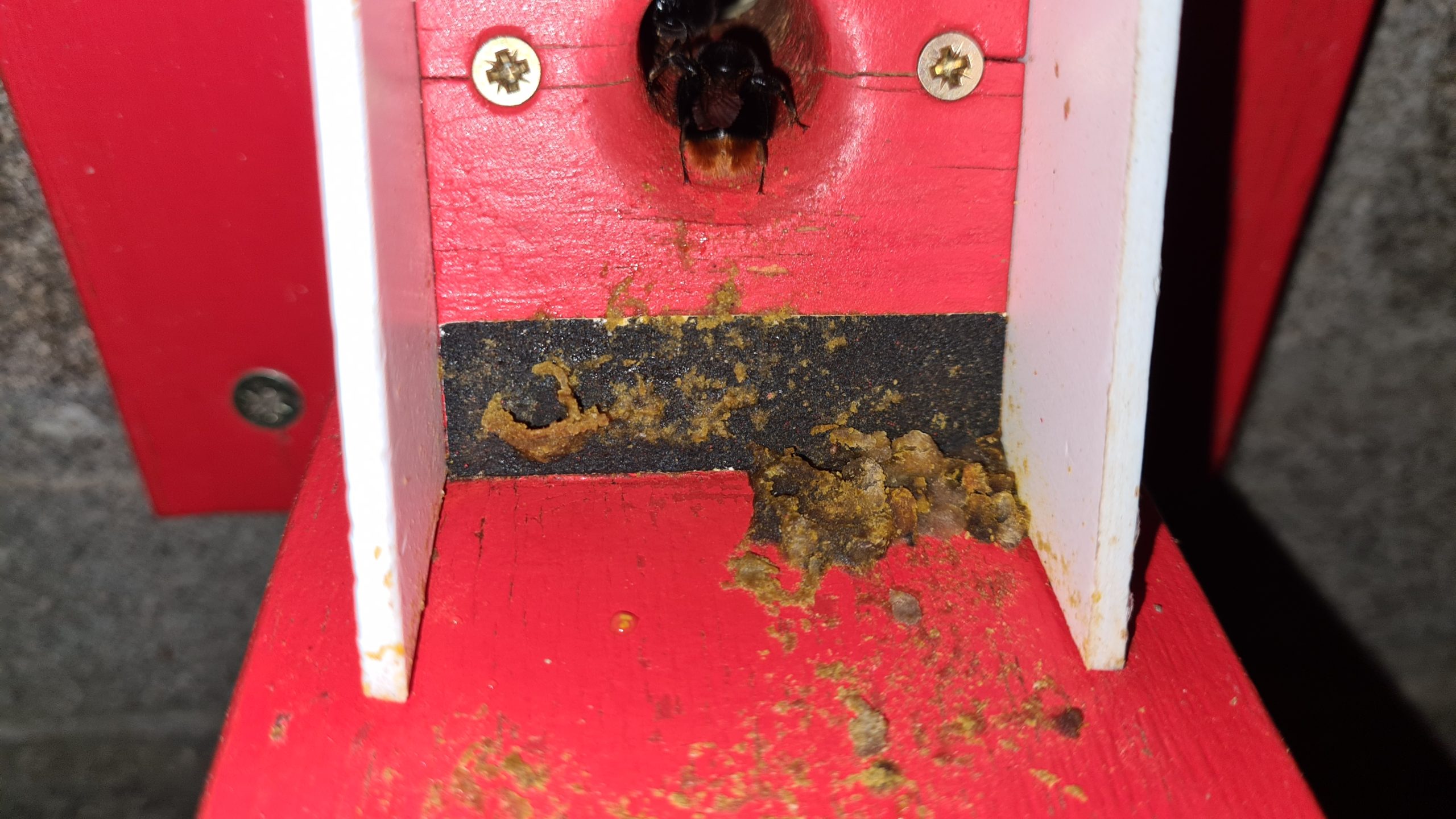
Bombus lapidarius (waxing of the flap
Photo: O. Hercog 5/7/2021
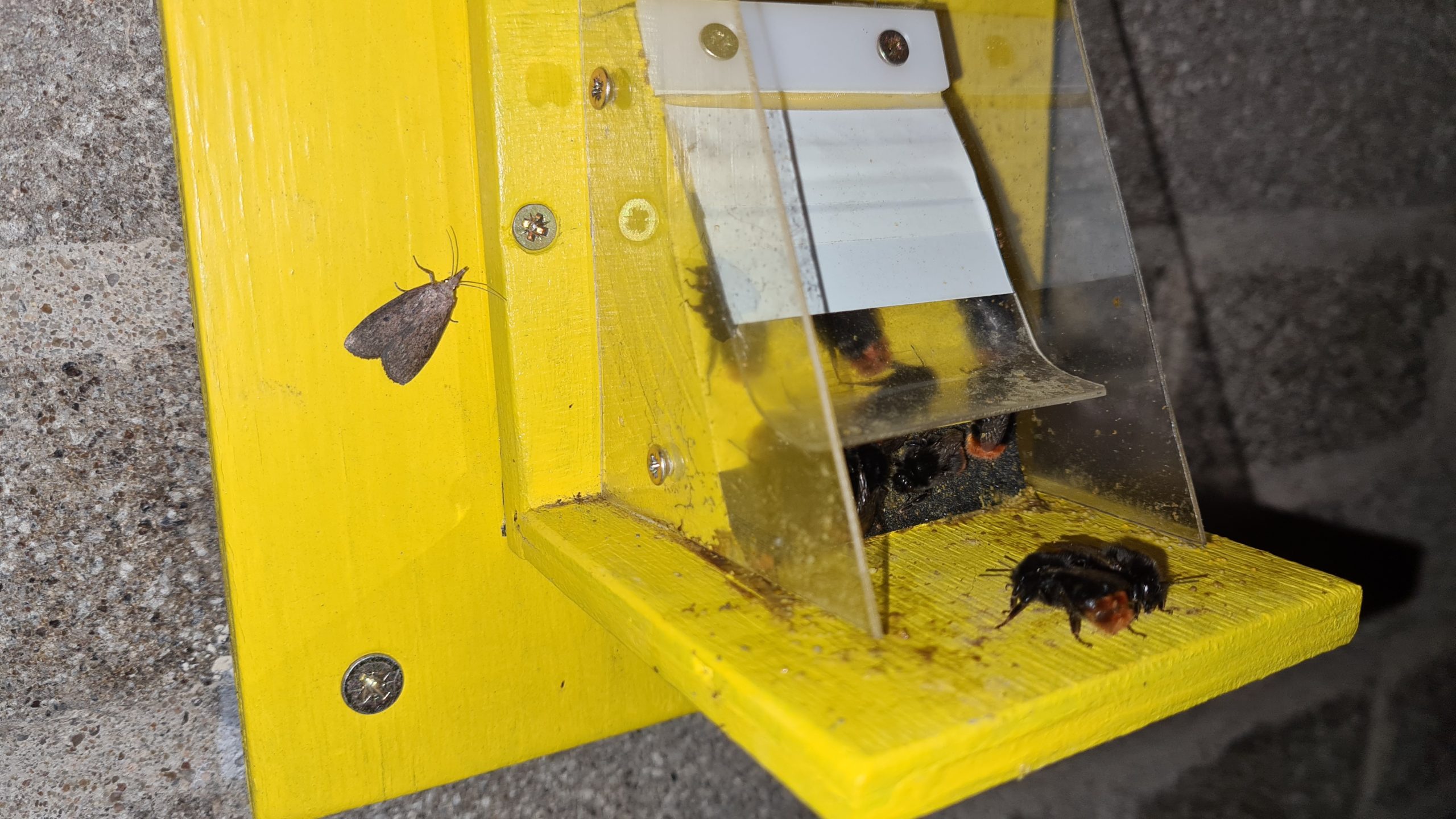
Rock bumblebee (Bombus lapidarius) – worker and parasitic wasp (Aphomila sociella) on the protective flap.
The nightly wandering of the workers on the protective flap gives the wasp a chance to penetrate the nest.
Photo: O. Hercog 26/6 2021
Interesting video from a rock bumblebee nest. The mother is fiercely defending her clutch from the worker.
It is difficult to say whether the worker really intends to eat the mother's eggs. Given the size of the clutch, we believe that there are already small larvae in the clutch that the worker wants to feed. However, the mother decided to defend the clutch as a precaution.
There may be several explanations for this behavior, but it is not likely that the nest is eating eggs in this state.
It was early June 2017…
It was terribly hot, so the workers of the rock bumblebees decided to transport the excess lining away from the nest – just like that. Like when wives decide to move furniture out of the blue.
Well, yes, but the workers moved this along an almost 50cm long corridor. And like with humans – as they said, so they did. And they kept doing it, even though I had taken most of the lining away. They just had it as an evening entertainment.
Once the mother bumblebees have mated, they will fatten up and then leave their nest. They will find a place to hibernate and burrow into the ground. In this video, a mother rock bumblebee (Bombus lapidarius) is preparing a hibernation site (hibernaculum) in a burrow.
Also visit YouTube Bumblebees PLUS, where you will find a number of interesting videos about bumblebees.
Each video is accompanied by a comment describing the video.
