Meadow bumblebee (Bombus pratorum)
What you will learn here
- Information about individual bumblebee species
- You will receive a summary of information for the general public, schools and breeders
Last updated: 8/12/2021
Description
Image

Meadow bumblebee (Bombus pratorum)
Sikora A., Michołap P., Kadej M., Sikora M. Tarnawski D. 2018 "Pszczoły w miście: Trzmiele Wrocławia", Wyd. Stowarzyszenie Natura i Człowiek.
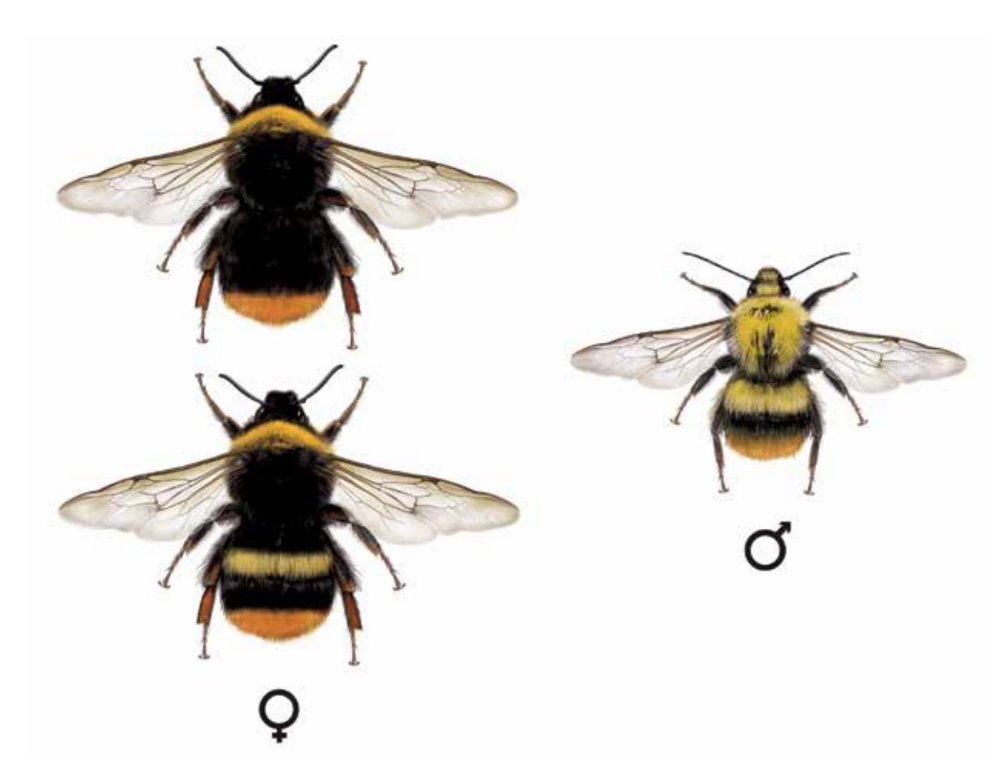
Color scheme
Basic scheme (queen and worker):
- The base color is black.
- Head: black
- Chest:
black
just behind the head (prothorax) transverse yellow stripe - Belly:
black
at the beginning of the rump (2nd tergite) yellow stripe,
the end of the rump (4th – 6th tergite) is orange-red
Basic diagram (male):
- Males have a rich, distinctive yellow eyebrow and prominent yellow eyebrows on the forehead (clear)
- The most striking colors are in males of the color variety with two yellow stripes.
Addition:
- The coloration of the mother and workers may differ (e.g. mother without yellow stripes and offspring with stripes from the father).
- Some color forms are almost black, they always have an orange-red back
- The yellow stripes are sometimes missing or only faintly indicated (as here on the rump).
Size
Mother: 15 – 17 mm
Worker: 9 – 14 mm
Male: 11 – 13 mm
The stocky shape of both mothers and workers is quite typical.
Source Blankorídlí Czech Republic I., Academia 2017
Head
Size: short
Face:
- Mother and worker viewed from the front wedge shape
- Oval male
Language
- medium
- nut 12 -14 mm
Photo
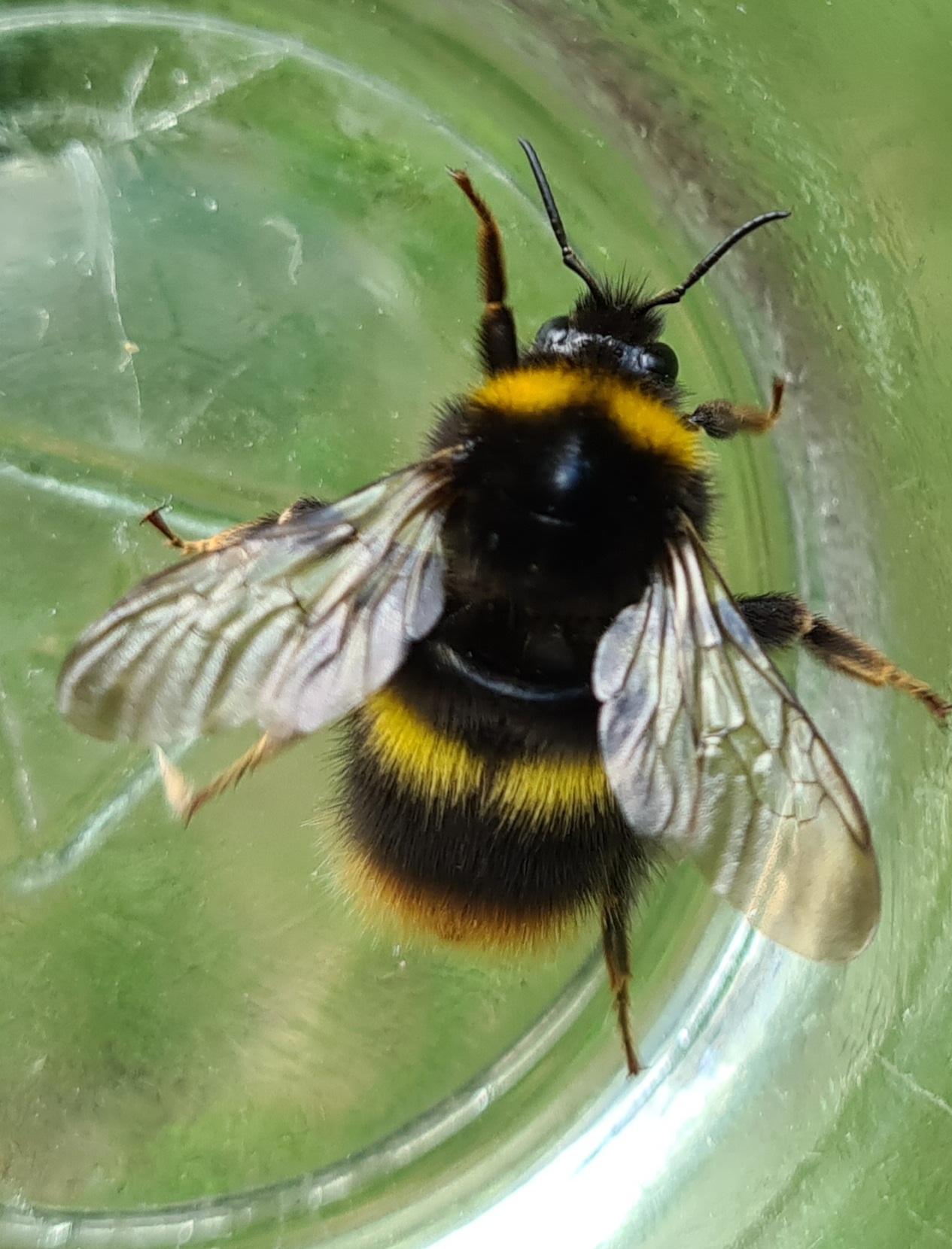
Mother
A form with two stripes. The most beautiful females can be born from such a mother.

Bumblebees PLUS – Meadow bumblebee (Bombus pratorum) – mother (queen)
Photo: O. Hercog 27/7/2021
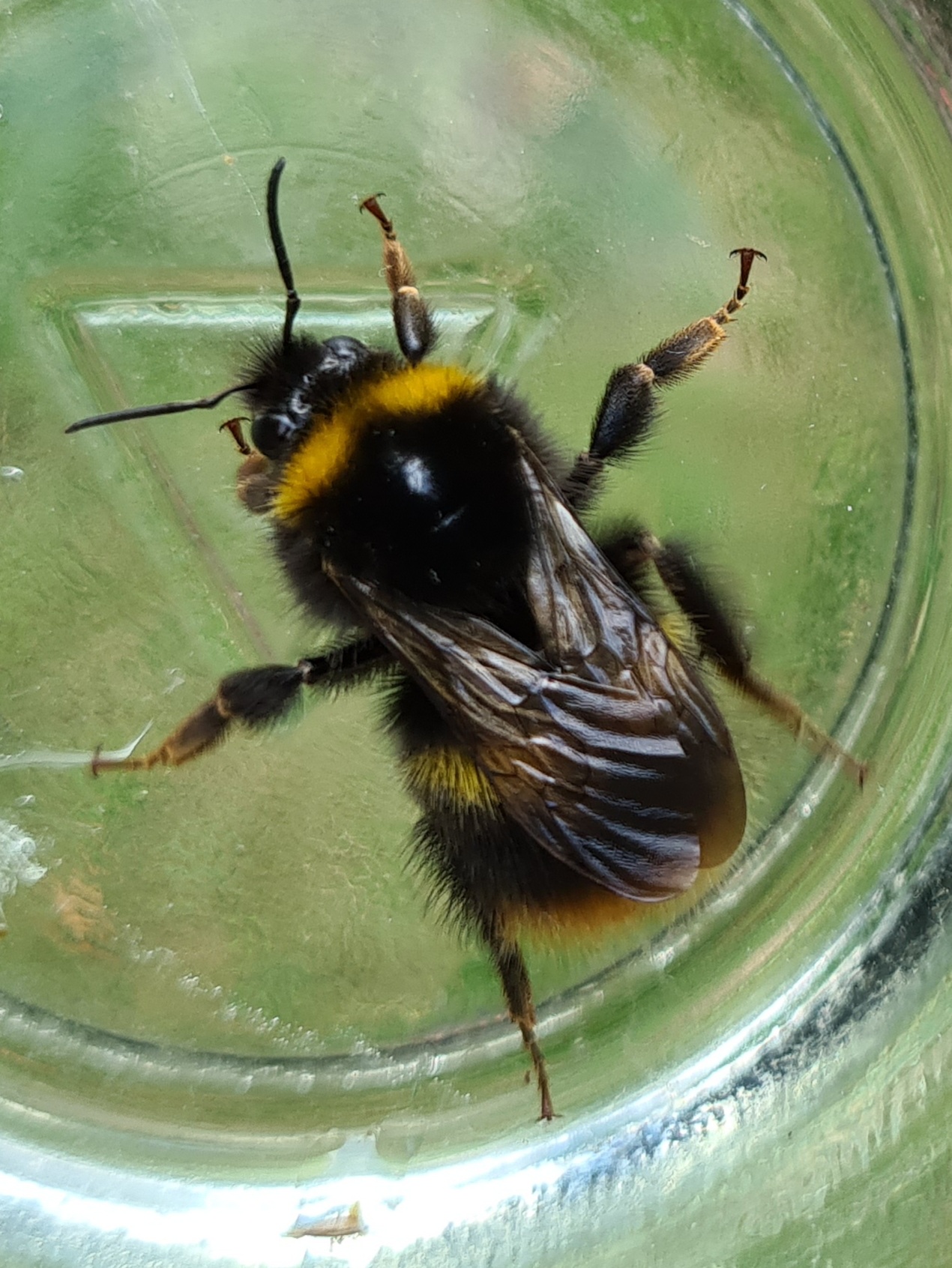
Bumblebees PLUS – Meadow bumblebee (Bombus pratorum) – mother (queen)
Photo: O. Hercog 27/7/2021
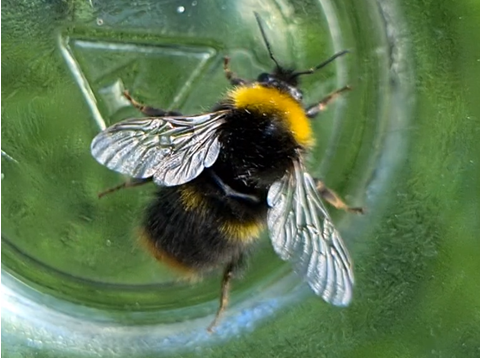
Meadow bumblebee (Bombus pratorum) mother (queen)
Form with two yellow stripes
Photo O.Hercog 6/2021 Prague
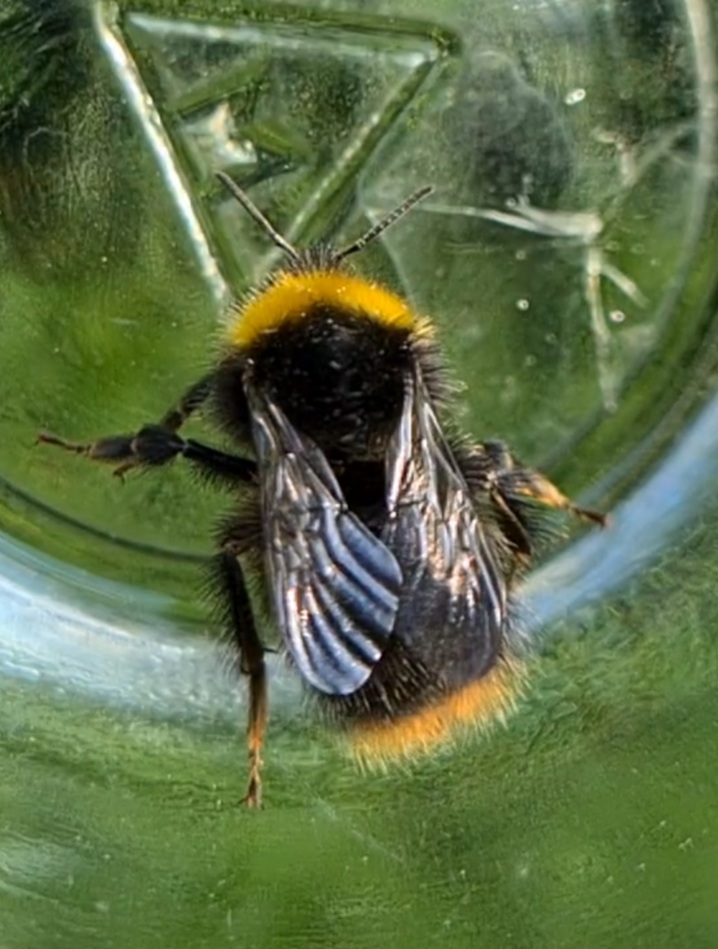
Meadow bumblebee (Bombus pratorum) mother (queen)
Photo O.Hercog 6/2021 Prague
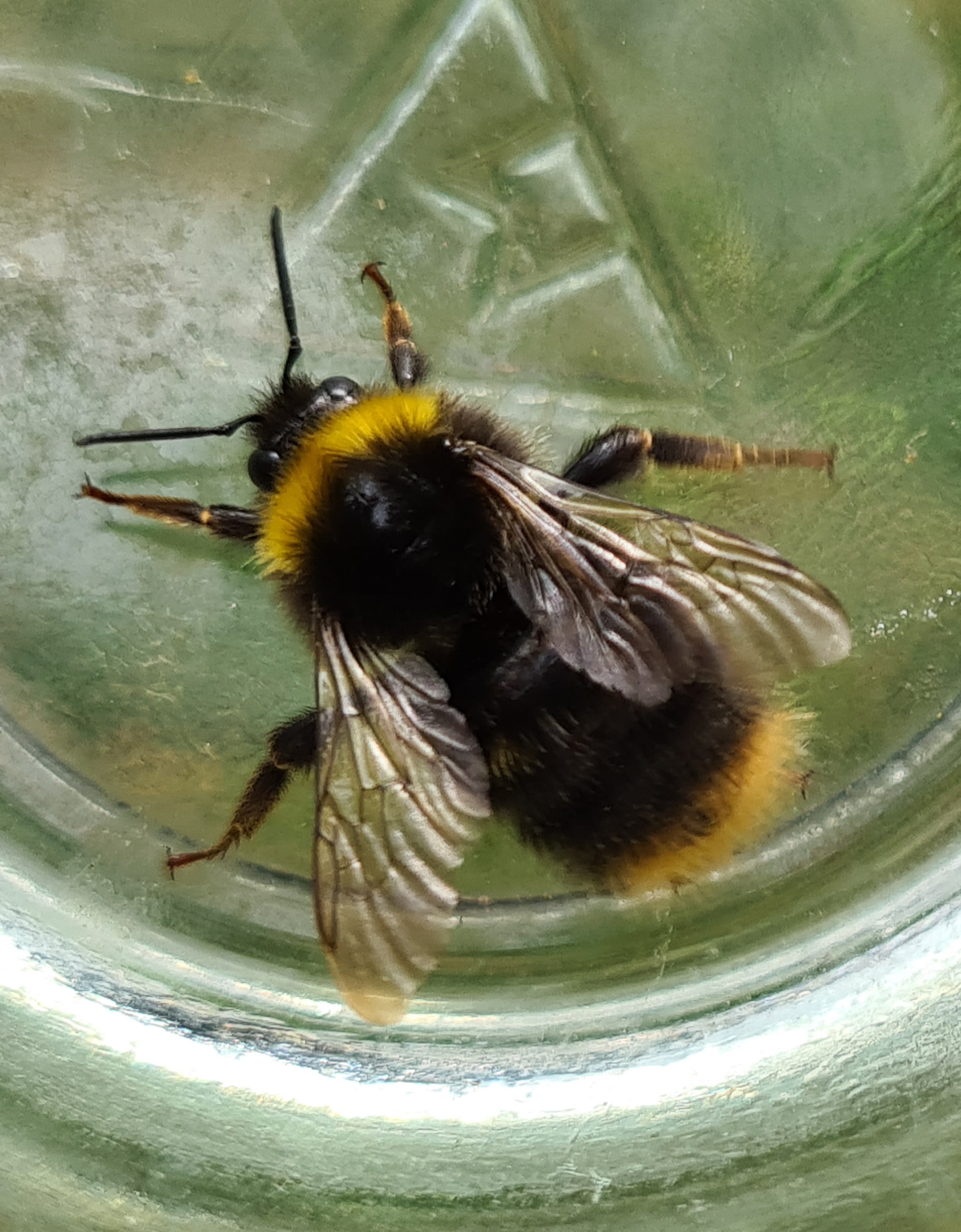
Meadow bumblebee (Bombus pratorum) mother (queen)
Form with one yellow stripe on the prothorax, the second is practically imperceptible
Photo O.Hercog 7/2021 Prague
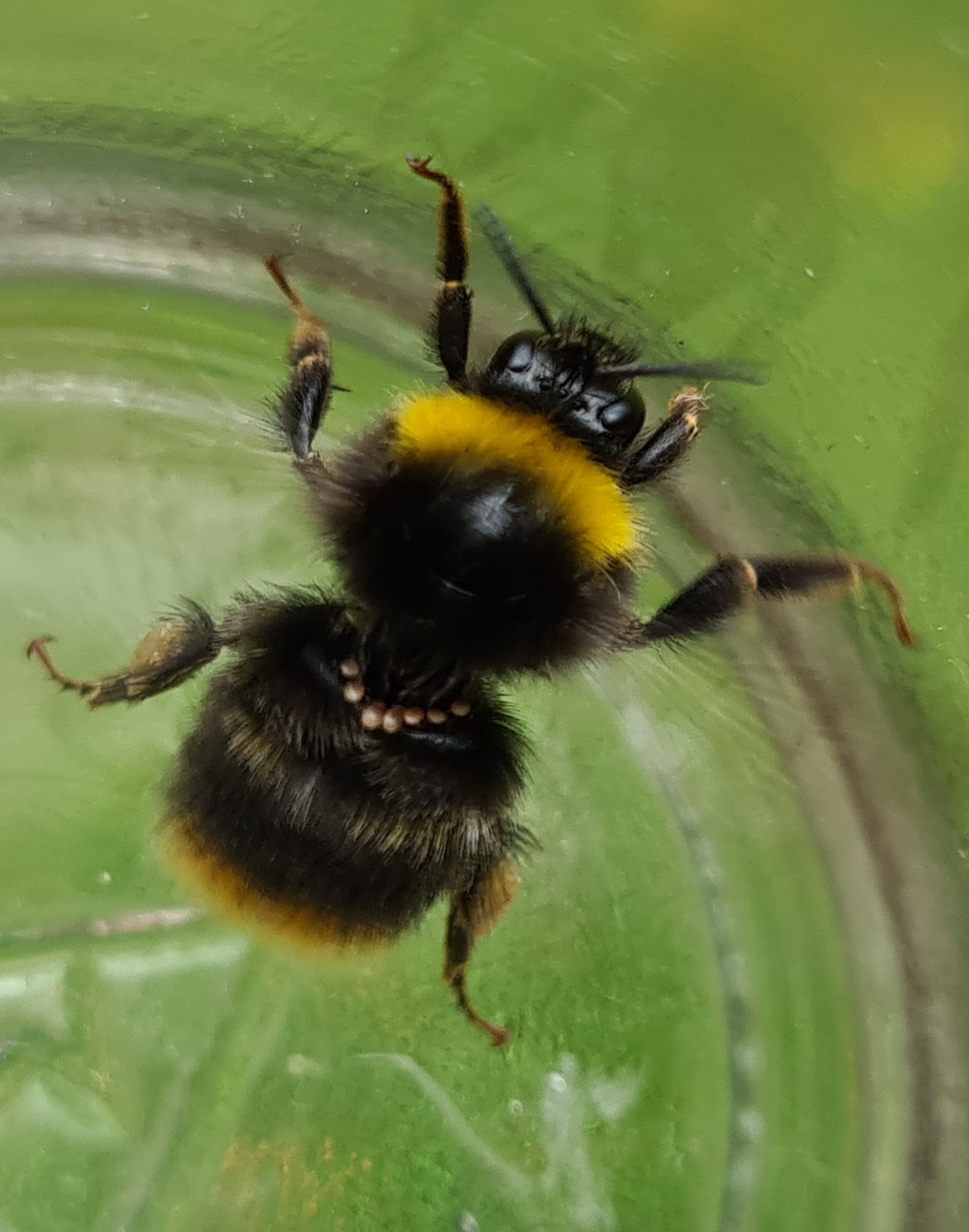
Meadow bumblebee (Bombus pratorum) mother (queen)
Beetle nits are attached to the mother
Photo O.Hercog 17/7/2021 Prague
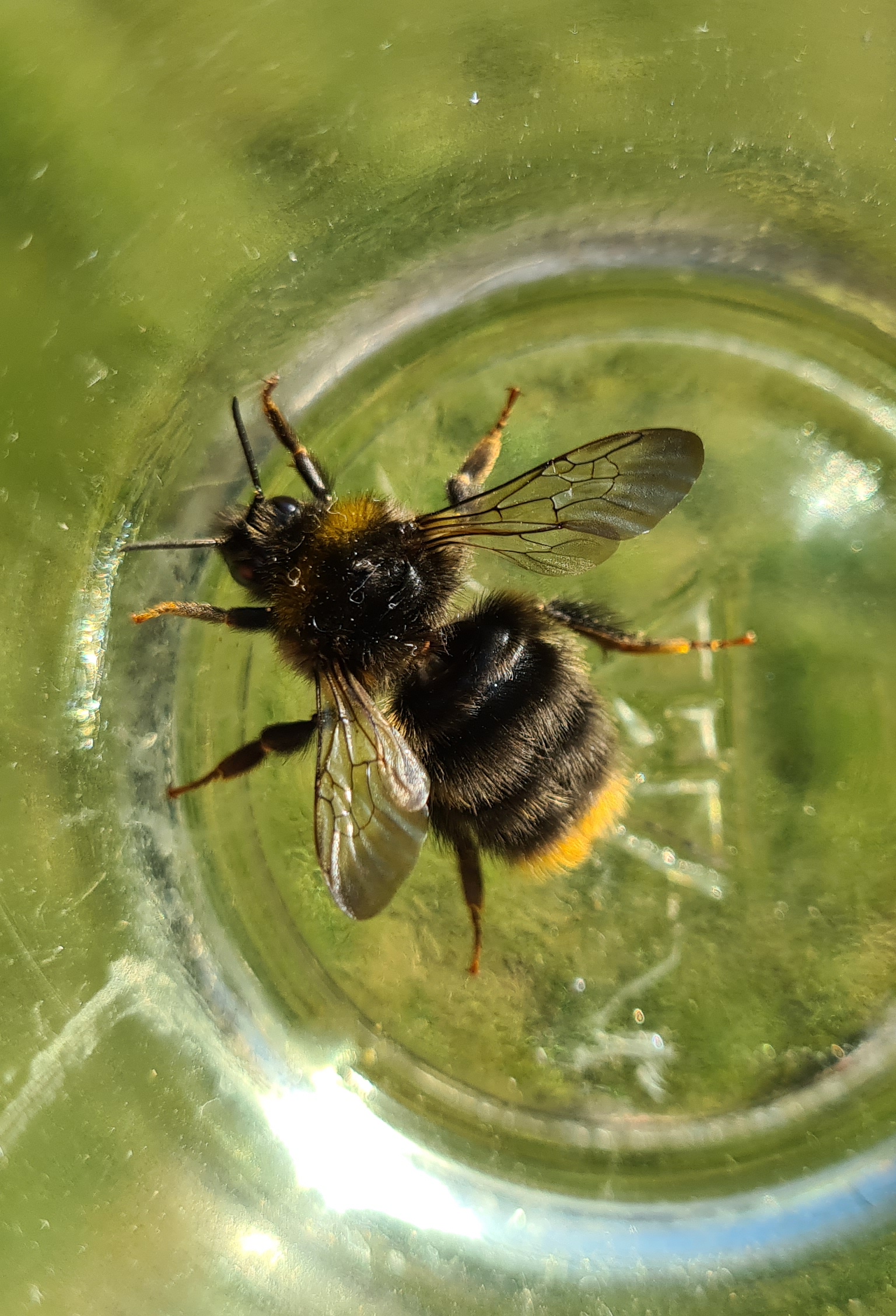
Meadow bumblebee (Bombus pratorum) mother (female)
Photo: O. Hercog 12/7/2021
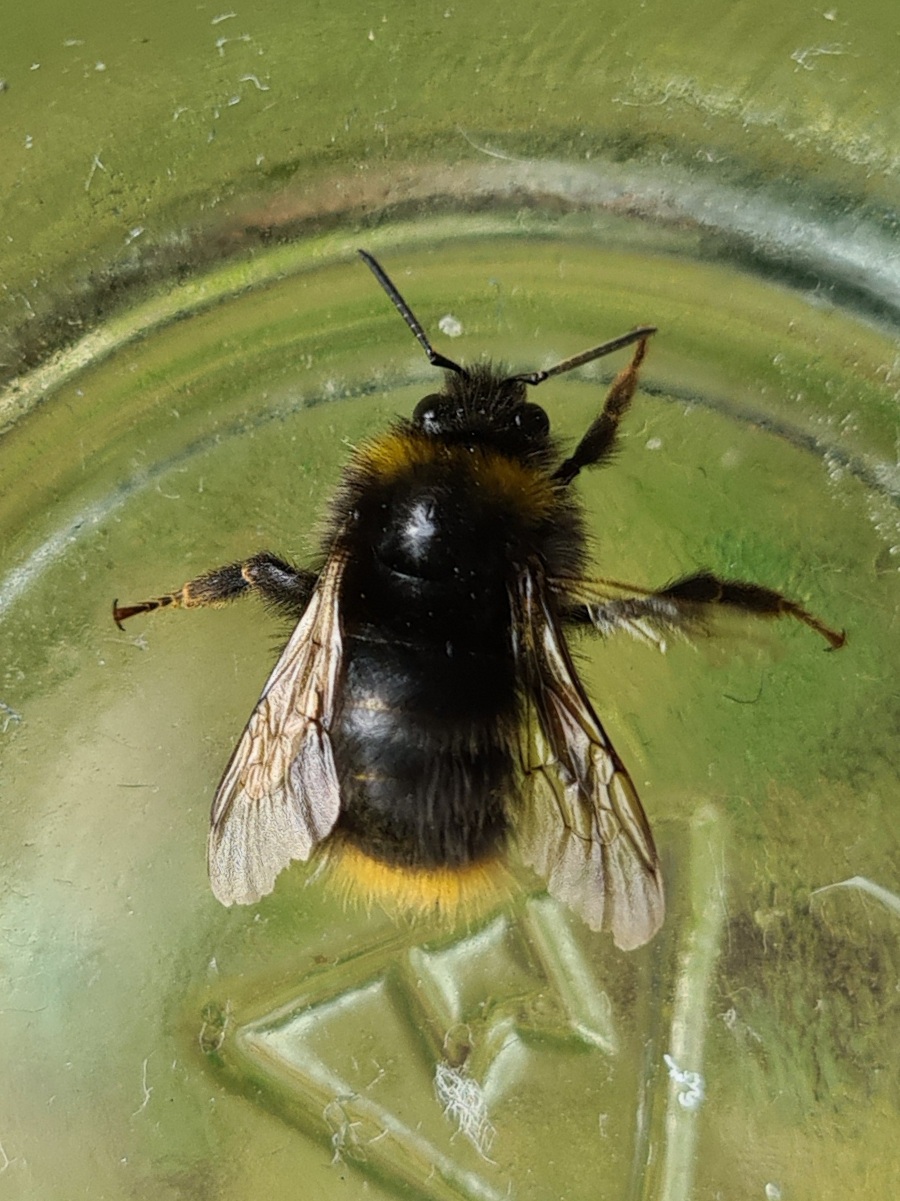
Dark form of the mother (the stripe on the prothorax is difficult to (discern) - we are preparing
Worker

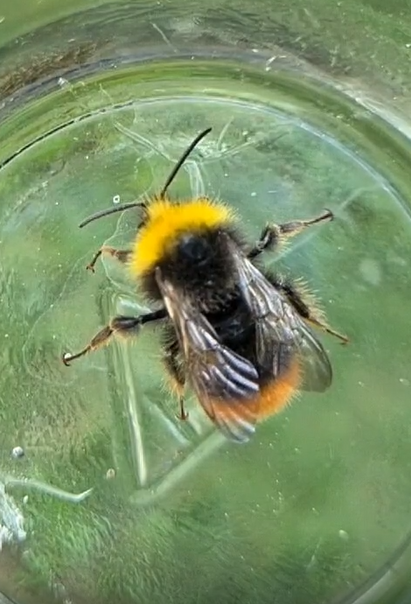
Meadow bumblebee (Bombus pratorum) worker
Form with one yellow stripe on the prothorax
Photo O.Hercog 22/6/2021 Prague
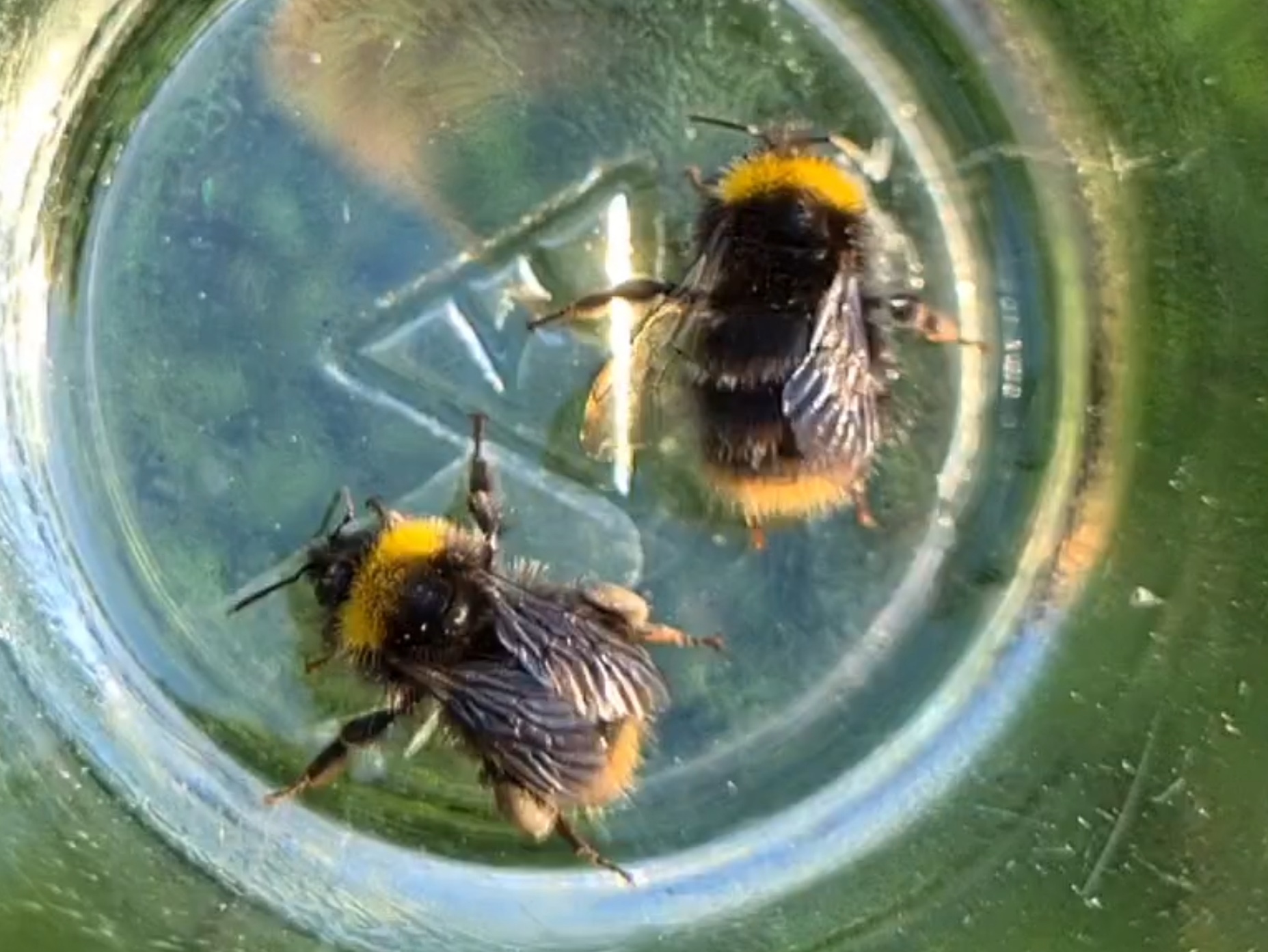
Meadow bumblebee (Bombus pratorum) worker
Photo O.Hercog
6/2021 Prague
Male
Note the male's long, curved antennae, as well as the yellow patch on his forehead.
As well as the thick, shaggy, brightly colored eyebrows.

Meadow bumblebee (Bombus pratorum) male
Form with one yellow stripe on the prothorax
Photo O.Hercog 11/6/2021 Prague
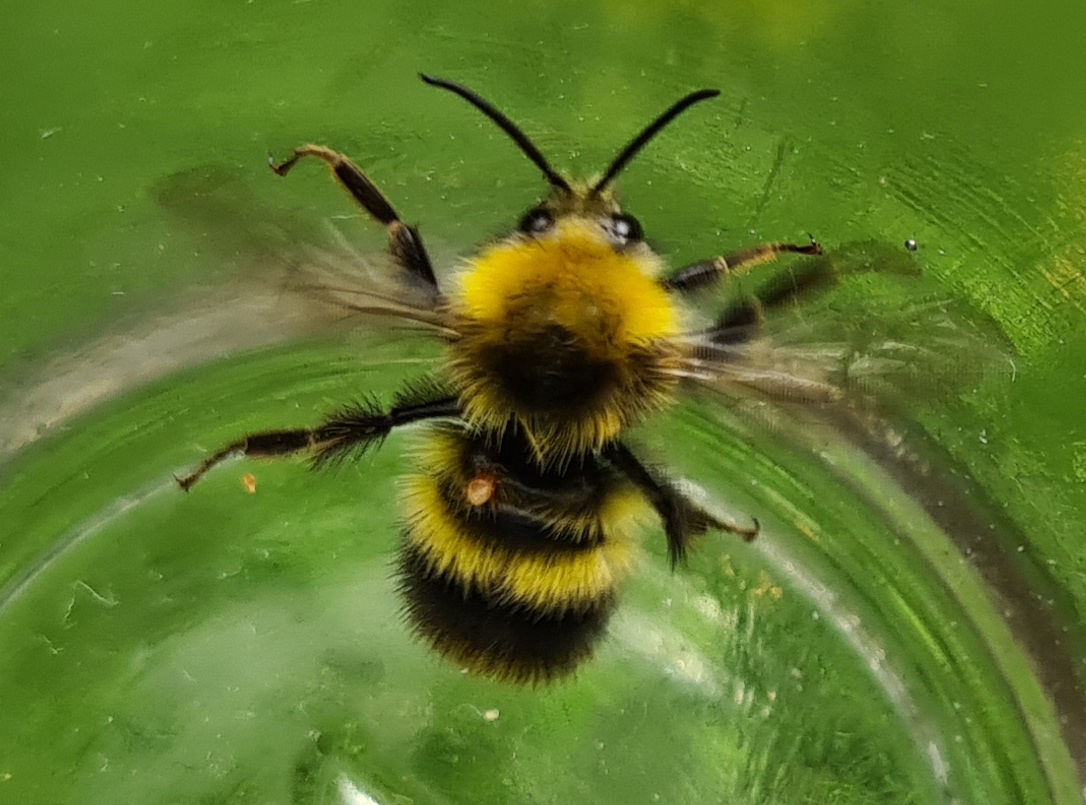
Meadow bumblebee (Bombus pratorum) male
Form with two yellow stripes
Interesting fact – a beetle wasp is attached to the male
Photo O.Hercog 17/7/2021 Prague
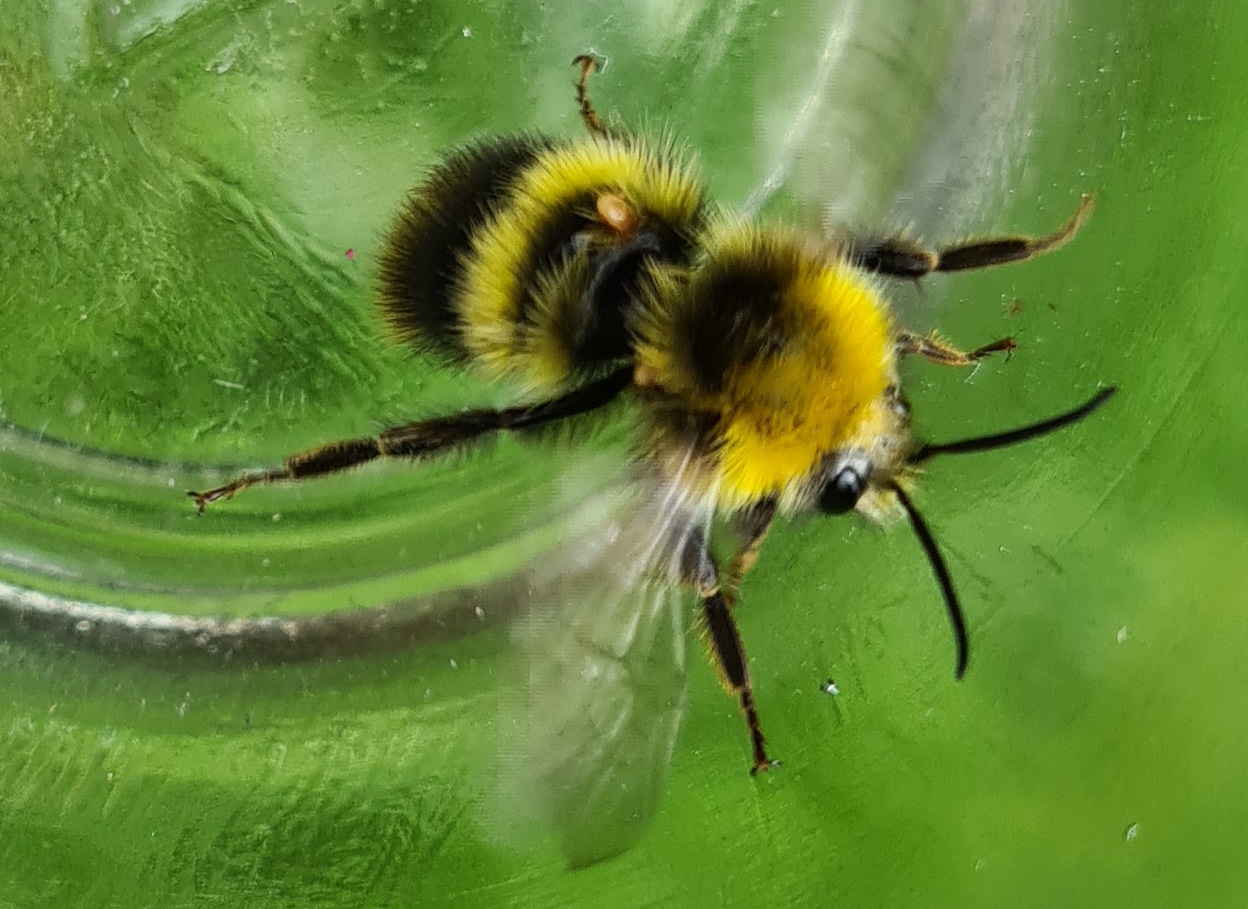
Meadow bumblebee (Bombus pratorum) male
Photo O.Hercog 17/7/2021 Prague
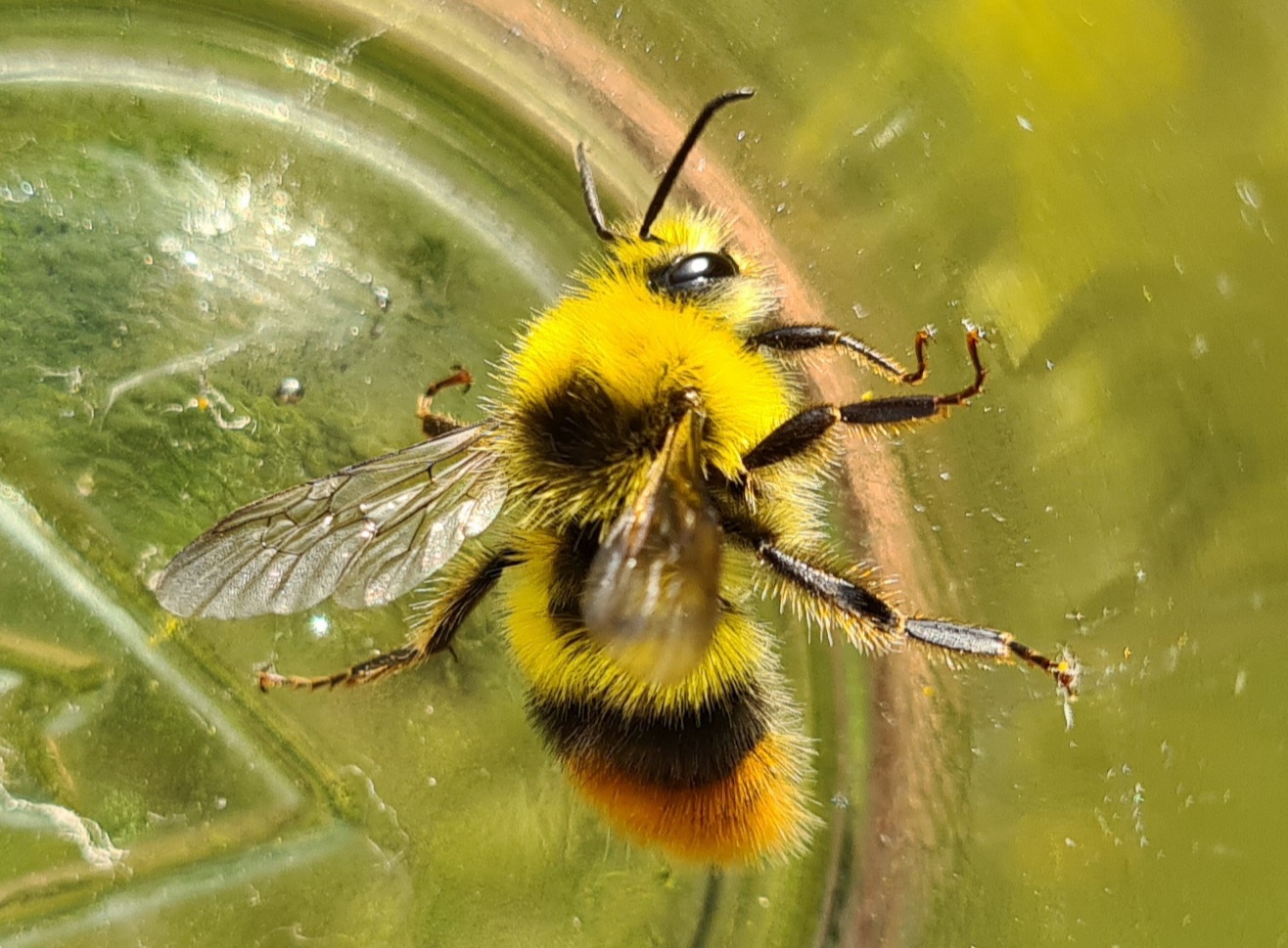
Meadow bumblebee (Bombus pratorum) male
Photo O.Hercog 25/6/2021 Prague
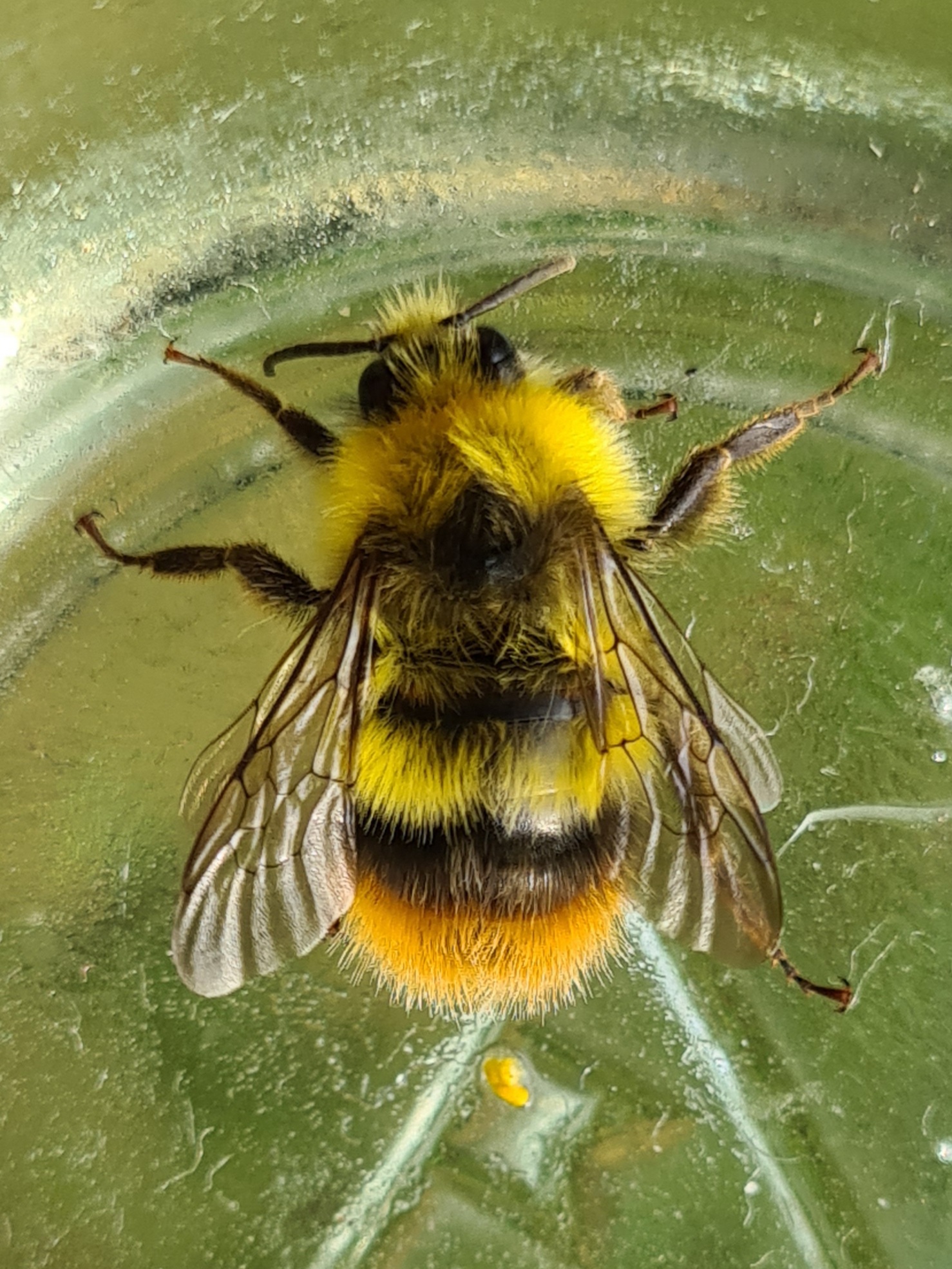
Meadow bumblebee (Bombus pratorum) male
Form with two yellow stripes
Photo O.Hercog 25/6/2021 Prague
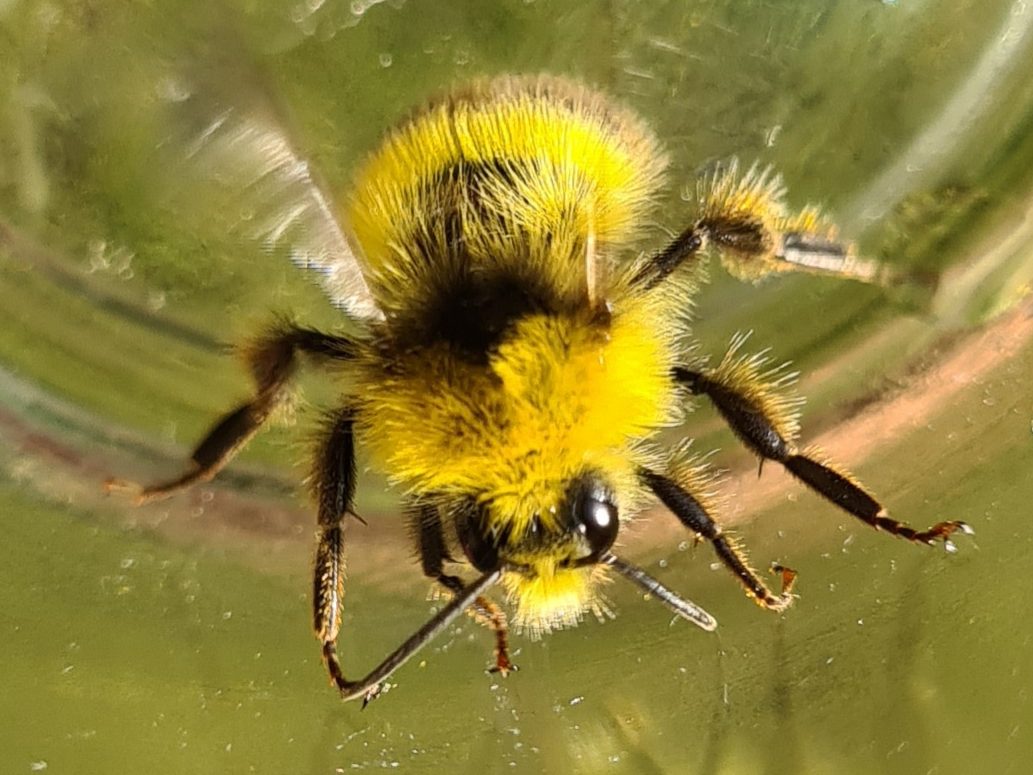
Meadow bumblebee (Bombus pratorum) male – head
Photo: O. Hercog 22/6/2021
.
.
Video catalog
Mother
Mother – light form with one light stripe on the prothorax and a faint yellow stripe on the rump
Worker
Worker – light form with one light stripe on the prothorax
Male
Male – light form with one light stripe on the prothorax
Male – light form with two yellow stripes
Similar species
The dark variant of this species is interchangeable
- Eel bumblebee (Bombus ruderarius)
- Rock bumblebee (Bombus lapidarius)
- Broad-billed bumblebee (Bombus wurflenii)
How to distinguish it from similar species
Eel bumblebee (Bombus ruderarius)
- the hairs on the collecting cups are reddish to yellow in color

Meadow bumblebee (Bombus pratorum)
Sikora A., Michołap P., Kadej M., Sikora M. Tarnawski D. 2018 "Pszczoły w miście: Trzmiele Wrocławia", Wyd. Stowarzyszenie Natura i Człowiek.
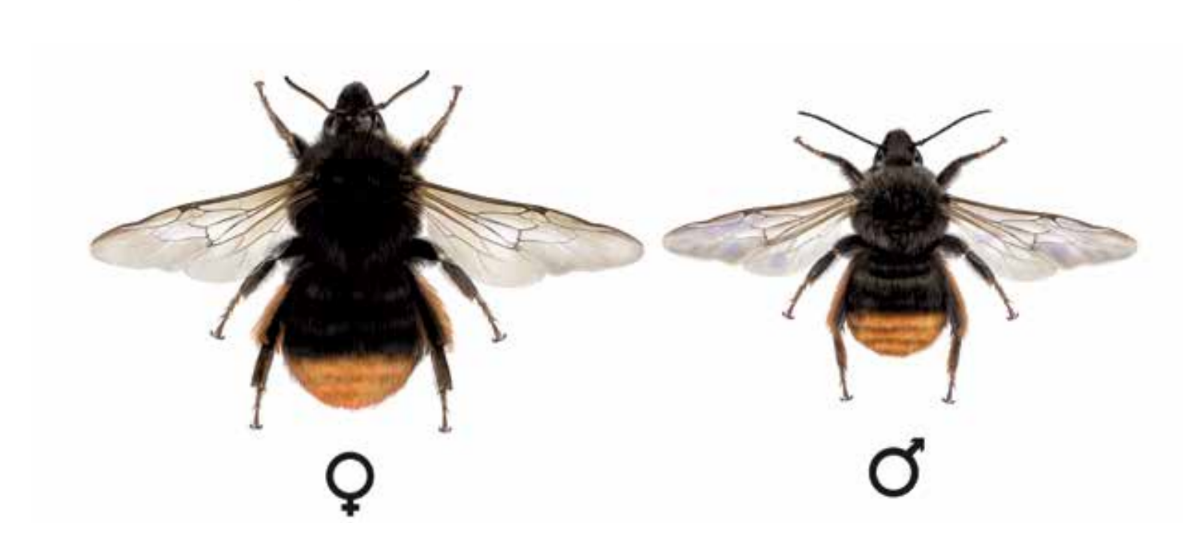
Eel bumblebee (Bombus ruderarius)
Sikora A., Michołap P., Kadej M., Sikora M. Tarnawski D. 2018 "Pszczoły w mięści: Trzmiele Wrocławia", Wyd. Stowarzyszenie Natura i Człowiek.
Rock bumblebee (Bombus lapidarius)
- much larger and longer body
- darker/more saturated colors
- males are not as brightly colored as some forms of male meadow bumblebees

Meadow bumblebee (Bombus pratorum)
Sikora A., Michołap P., Kadej M., Sikora M. Tarnawski D. 2018 "Pszczoły w miście: Trzmiele Wrocławia", Wyd. Stowarzyszenie Natura i Człowiek.
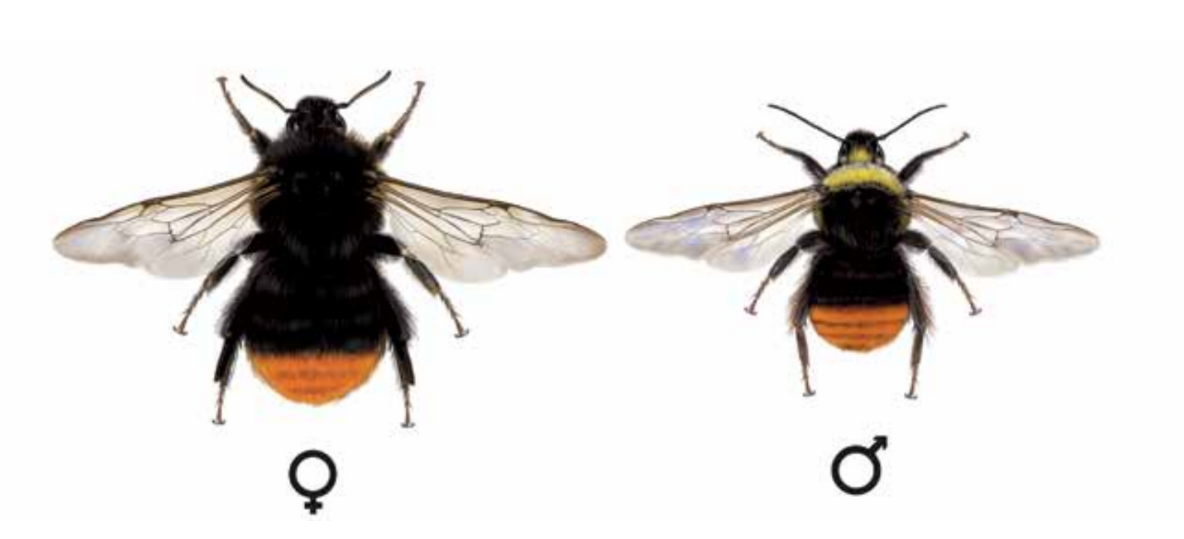
Rock bumblebee (Bombus lapidarius)
Sikora A., Michołap P., Kadej M., Sikora M. Tarnawski D. 2018 "Pszczoły w mięści: Trzmiele Wrocławia"
Broad-billed Bumblebee (Bombus wurflenii)
- It is more similar to a rock bumblebee
- there is a wider colored end on the back (3rd – 6th tegrid)
- larger in size than a meadow bumblebee

Meadow bumblebee (Bombus pratorum)
Sikora A., Michołap P., Kadej M., Sikora M. Tarnawski D. 2018 "Pszczoły w miście: Trzmiele Wrocławia", Wyd. Stowarzyszenie Natura i Człowiek.
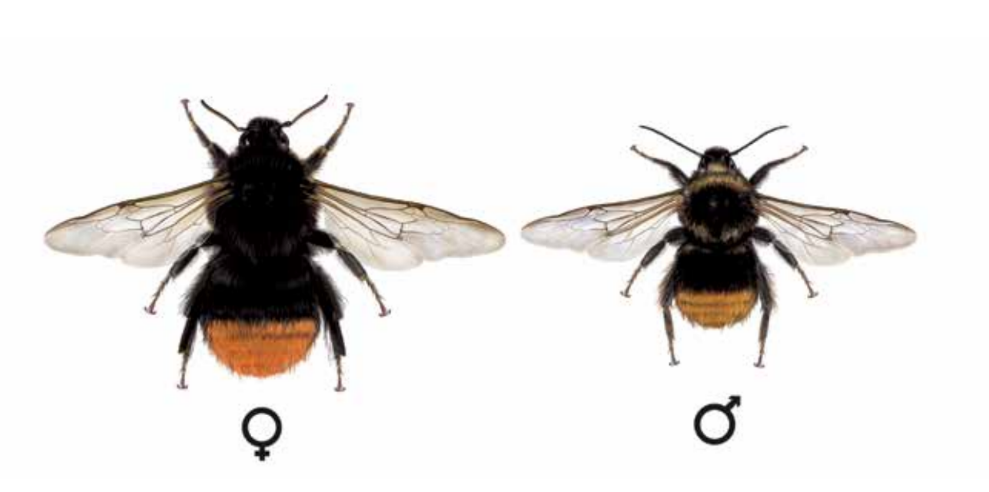
Broad-nosed bumblebee (Bombus wurflenii)
Sikora A., Michołap P., Kadej M., Sikora M. Tarnawski D. 2018 "Pszczoły w mięści: Trzmiele Wrocławia", Wyd. Stowarzyszenie Natura i Człowiek.
Occurrence
- It is a forest species/mountain and foothill species.
- The species is relatively abundant and widespread throughout Europe.
Habitat
- It usually inhabits wetter habitats, light meadows and pastures.
- It prefers moist, open habitats and is not found in very open and warm areas, but is gradually moving into urban gardens and parks.
Life cycle
- Early species
- Number of generations per season: one/two cycles per season; Mothers hibernate from August, but some of them establish their nests in the same year and attempt to raise a second generation in the same year.
- Queen mothers search for nesting sites: from early March (depending on the weather) and nest soon.
- Nesting of mothers: beginning of March – mid-May
- New queen mothers appear: from May, if it is cold then in early June
- Males appear: right after the mothers
- Nesting ends: June – July (first generation) depending on the weather
The following video shows an unsuccessful attempt at mating. The guy really can't do it in this position..
Feeding the larvae
Pollen storers
Nest location
- They nest in wall cavities, in grassy tufts, less often under the roofs of houses.
- They very often try to move into the nests and hives of other bumblebee species.
- less often you will find it underground in the burrows of small rodents.
Nest size
- Mostly smaller nests
- Number of individuals 80 – 150 (in the wild)
A look into a meadow bumblebee nest
Visiting Pac-Man
Parasitic in its nests
- Wood bumblebee (Bombus sylvestris)
- Common bumblebee (Bombus campestris)
A condition has been observed where the mother of a woodpecker does not kill the original mother, but coexists with her in the nest (example: the woodpecker).
How to distinguish a bumblebee from a wasp
Wood bumblebee (Bombus sylvestris)
- can be easily distinguished by color scheme and size

Meadow bumblebee (Bombus pratorum)
Sikora A., Michołap P., Kadej M., Sikora M. Tarnawski D. 2018 "Pszczoły w miście: Trzmiele Wrocławia", Wyd. Stowarzyszenie Natura i Człowiek.
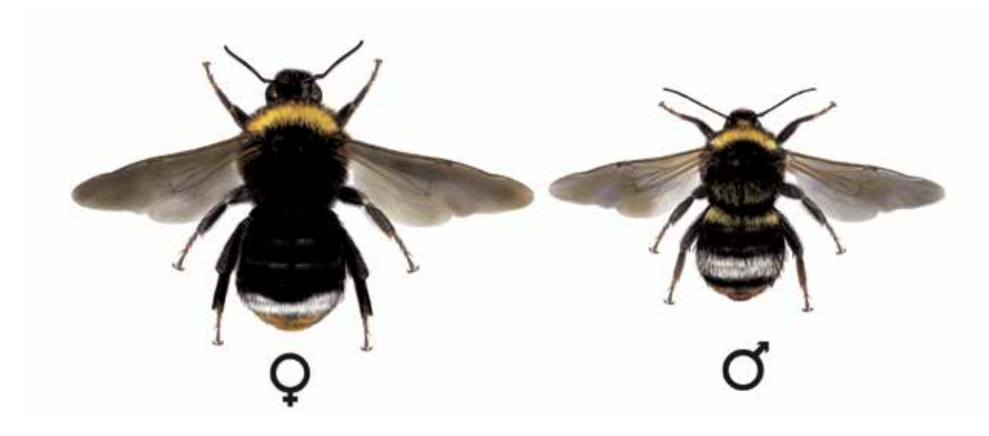
Bombus sylvestris
Sikora A., Michołap P., Kadej M., Sikora M. Tarnawski D. 2018 "Pszczoły w mięści: Trzmiele Wrocławia", Wyd. Stowarzyszenie Natura i Człowiek.
Common bumblebee (Bombus campestris)
- can be easily distinguished by color scheme and size

Meadow bumblebee (Bombus pratorum)
Sikora A., Michołap P., Kadej M., Sikora M. Tarnawski D. 2018 "Pszczoły w miście: Trzmiele Wrocławia", Wyd. Stowarzyszenie Natura i Człowiek.
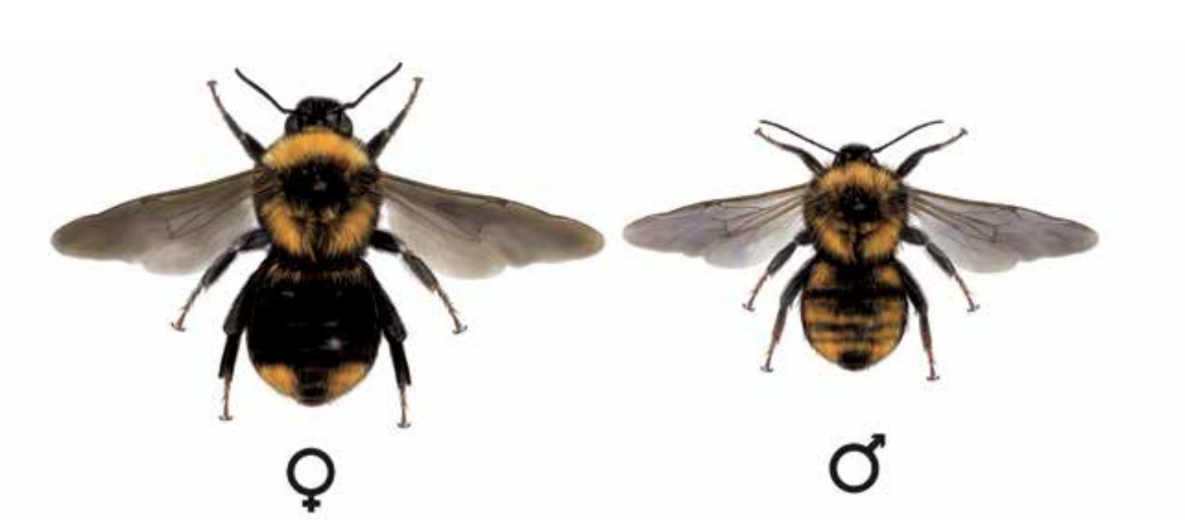
Bombus campestris
Sikora A., Michołap P., Kadej M., Sikora M. Tarnawski D. 2018 "Pszczoły w mięści: Trzmiele Wrocławia", Wyd. Stowarzyszenie Natura i Człowiek.
Breeding information
Hive: but willingly nests in a large hive (recommended due to spring cold and frost)
Corridor : does not require a long corridor, but settles well even in a standard hive with a corridor around 50 - 60 cm long.
Settlement: the mother often returns immediately after settling and builds a nest
Returns of mothers in spring after hibernation: common
Self-settlement in the hive: common
Interesting facts
- interesting is its small size and fast flight
- several color schemes
- distinctive coloration in males
- the most beautiful males coming from the color variety with two yellow stripes
Photos and videos

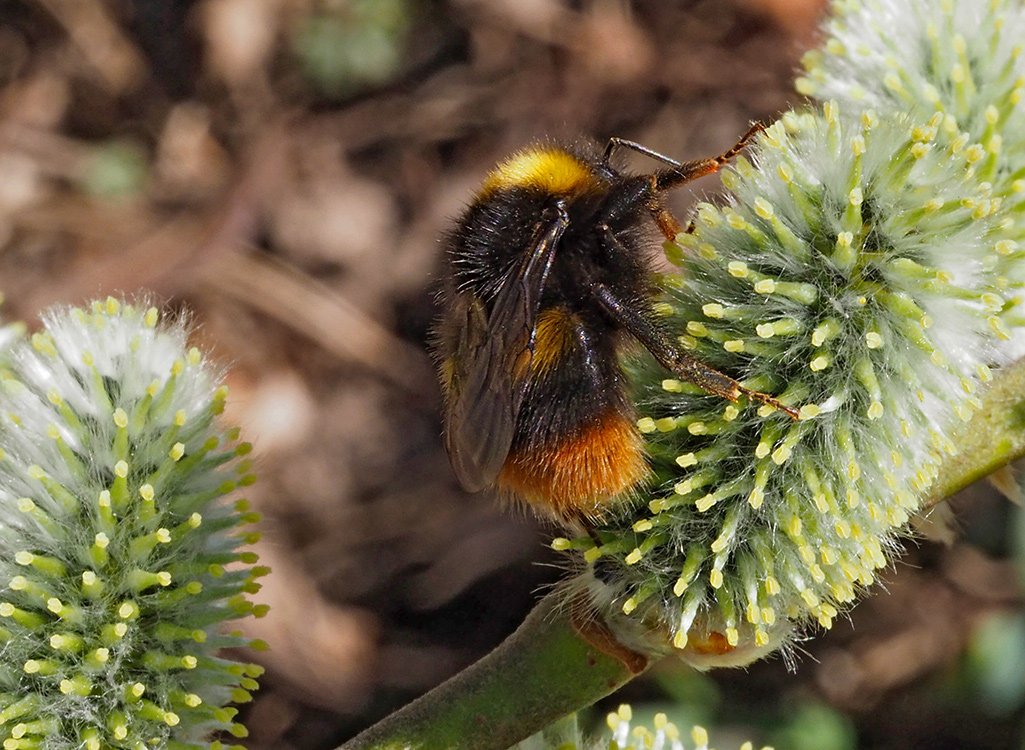
Meadow bumblebee (Bombus pratorum) – queen
Photo H.Kříženecká
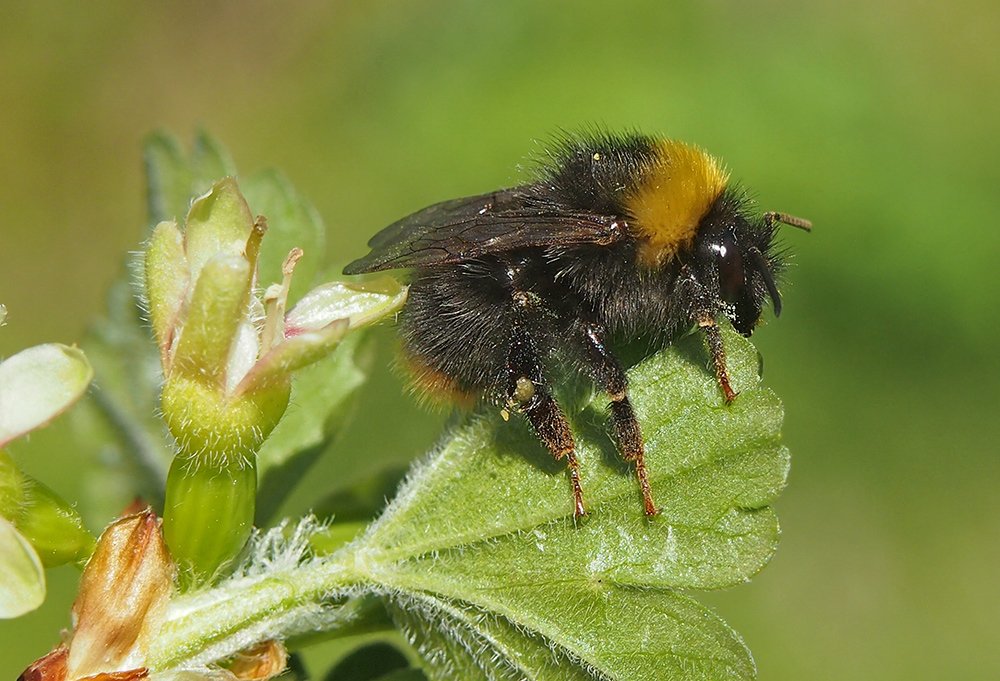
Meadow bumblebee (Bombus pratorum) worker
Photo H. Kříženecká
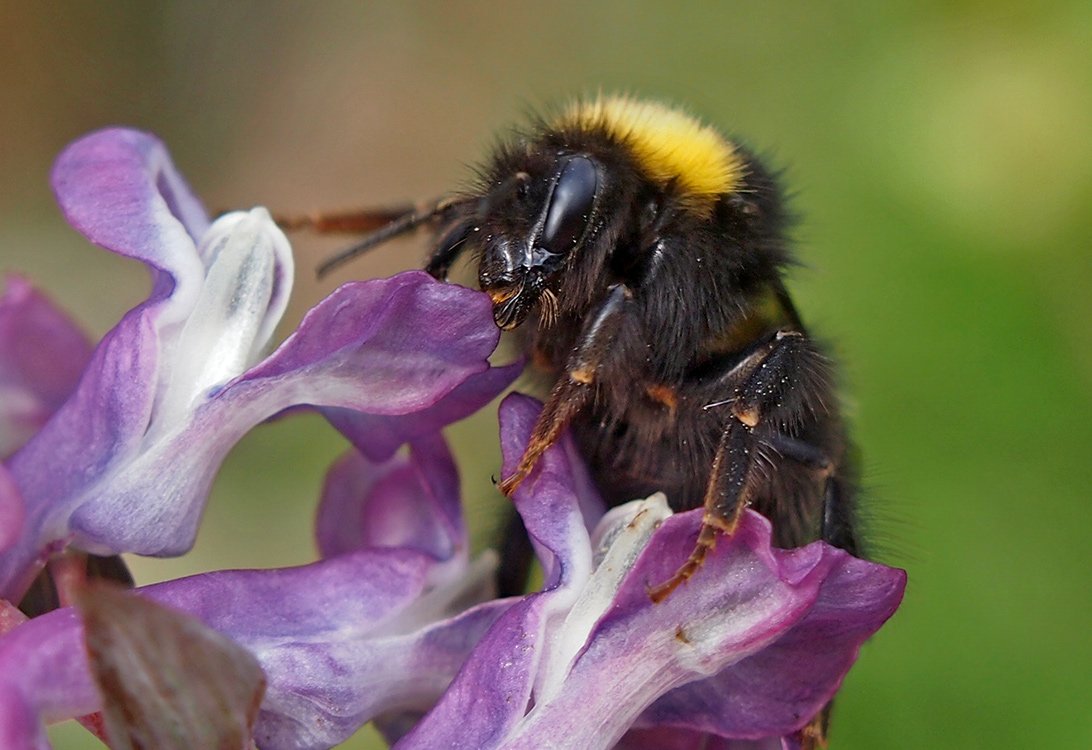
Meadow bumblebee (Bombus pratorum) – queen
Photo H.Kříženecká
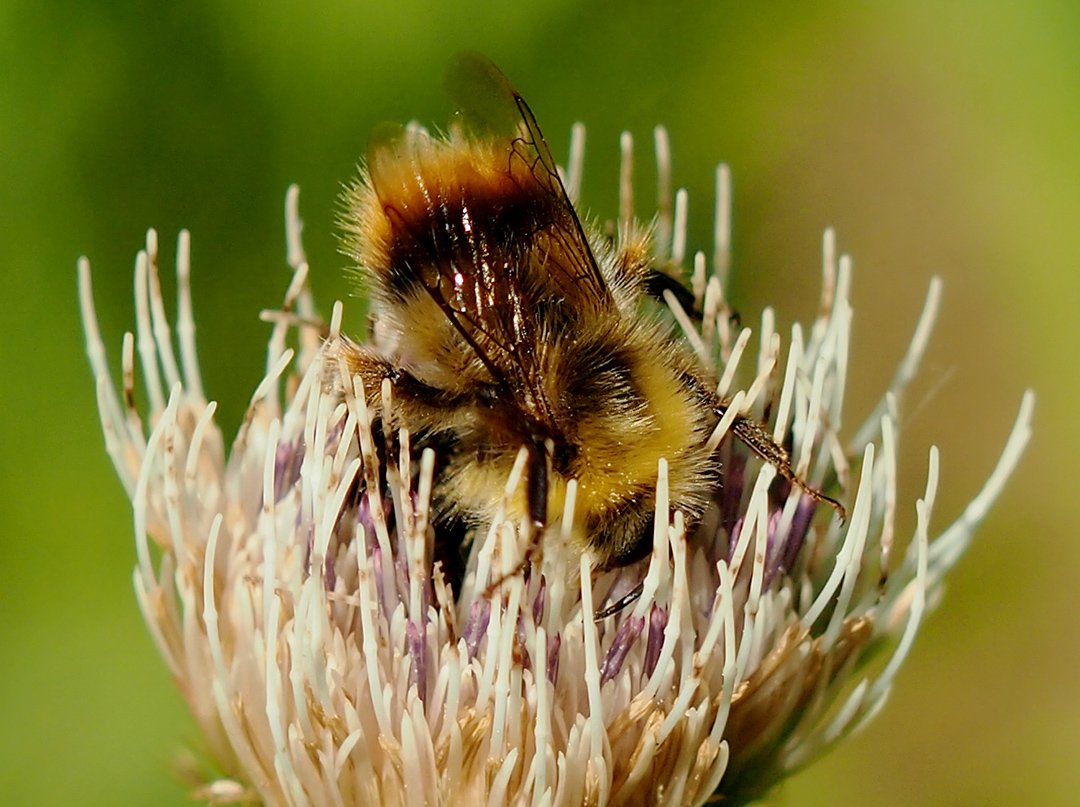
Meadow bumblebee (Bombus pratorum) – samed (male)
Photo H. Kříženecká
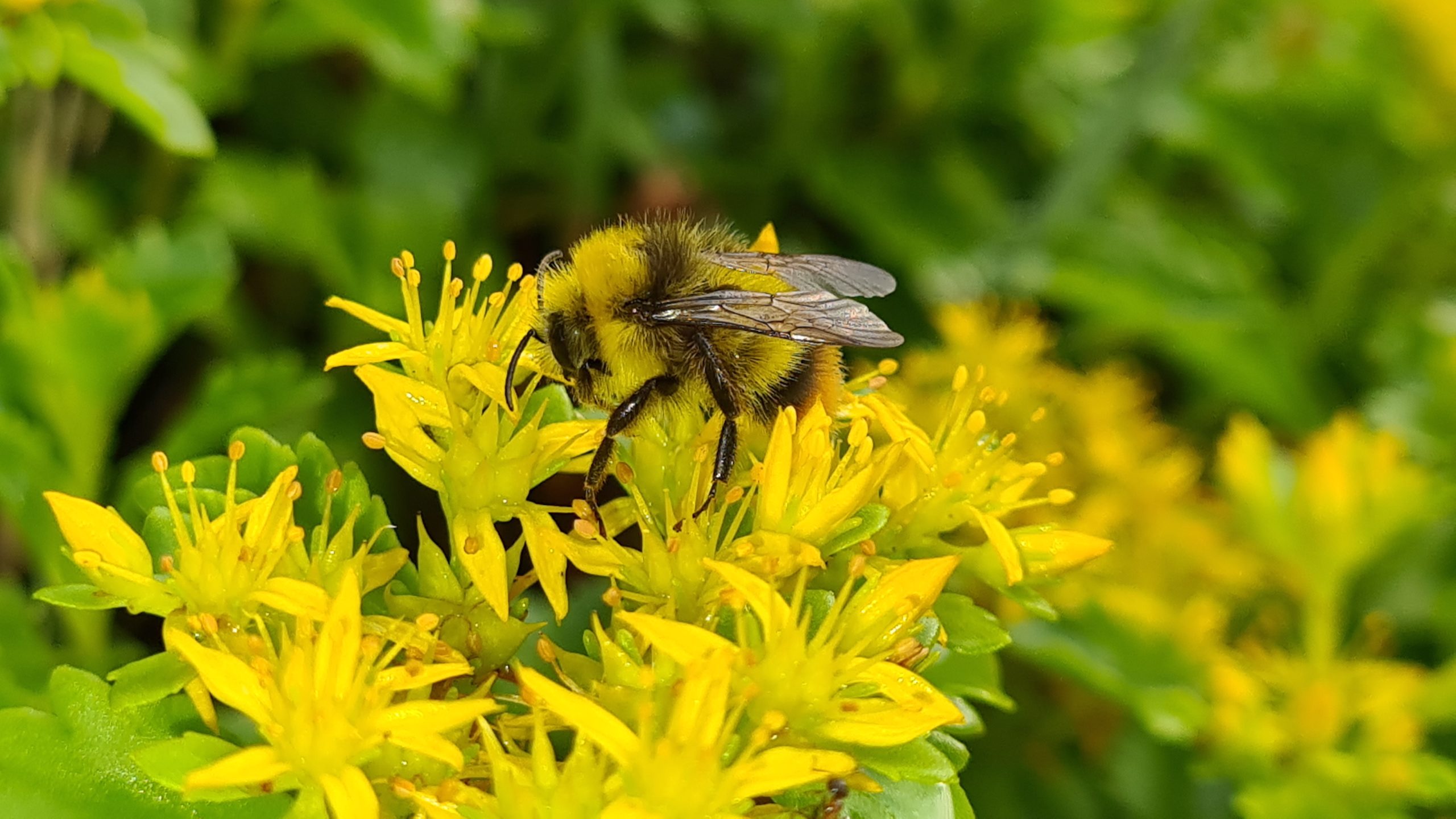
Meadow bumblebee (Bombus pratorum) male
Photo O.Hercog 25/6/2021 Prague
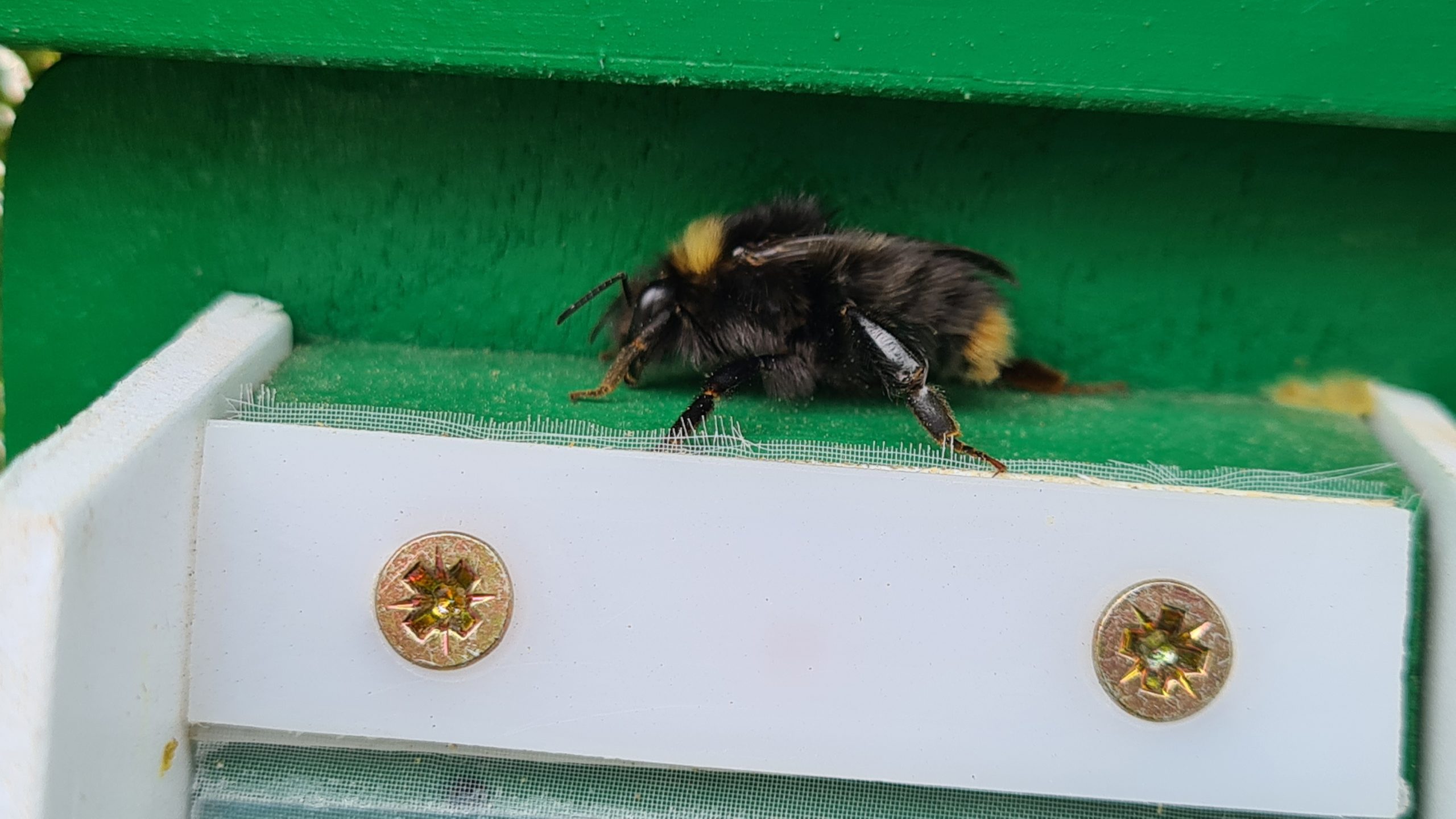
Meadow bumblebee (Bombus pratorum) mother (queen)
Photo O.Hercog 5/6/2021 Prague
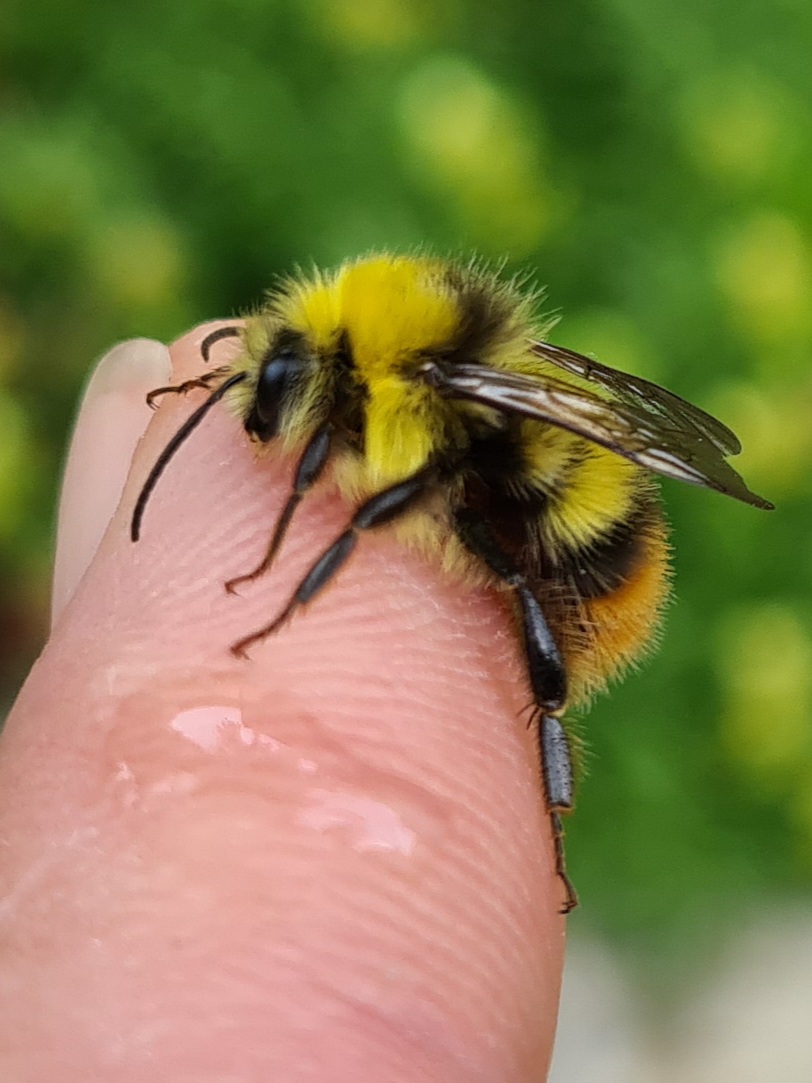
Meadow bumblebee (Bombus pratorum) male
Photo O.Hercog 25/6/2021 Prague
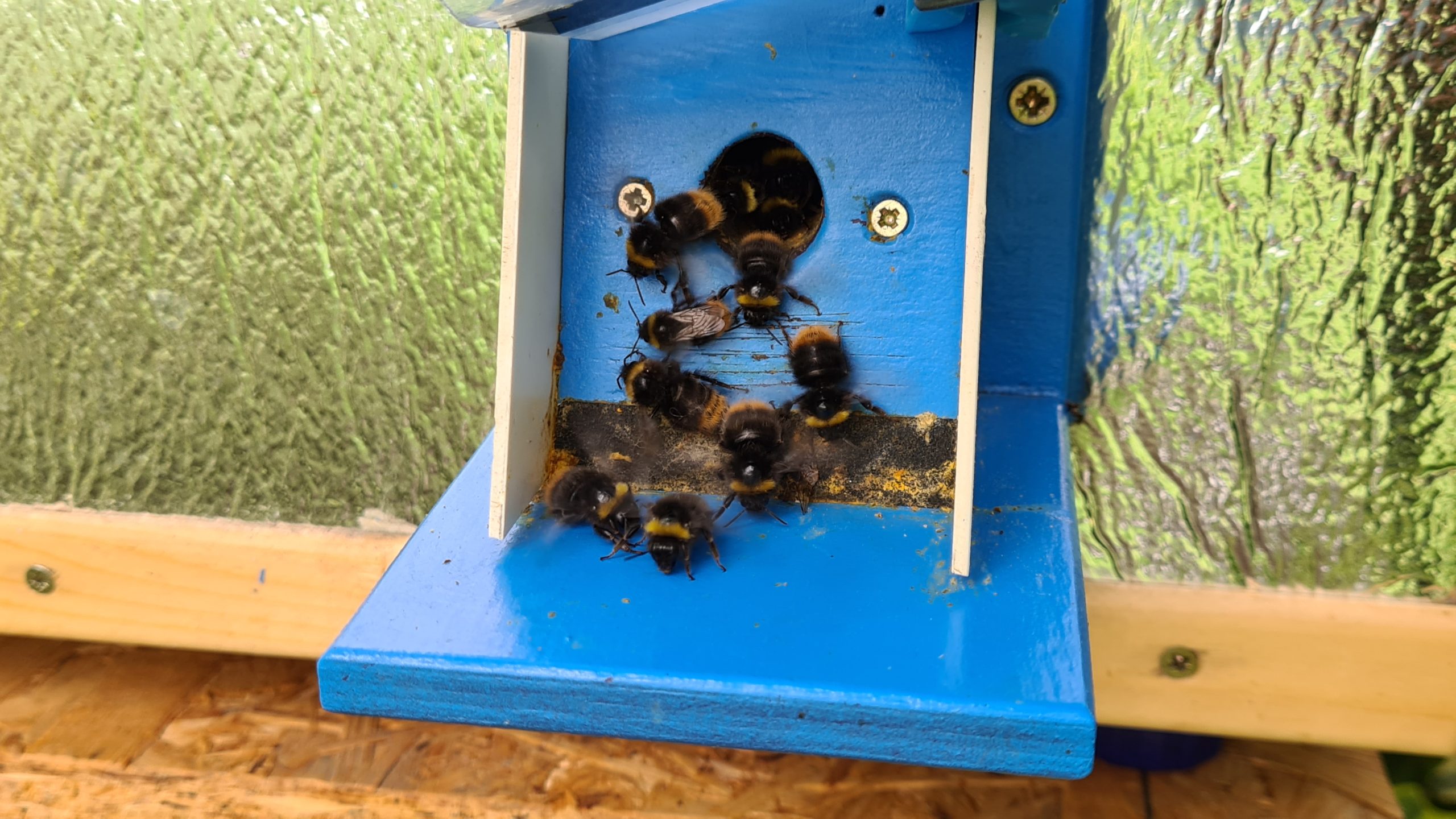
Meadow bumblebee (Bombus pratorum) worker cooling off
Photo O.Hercog 12/6/2021 Prague
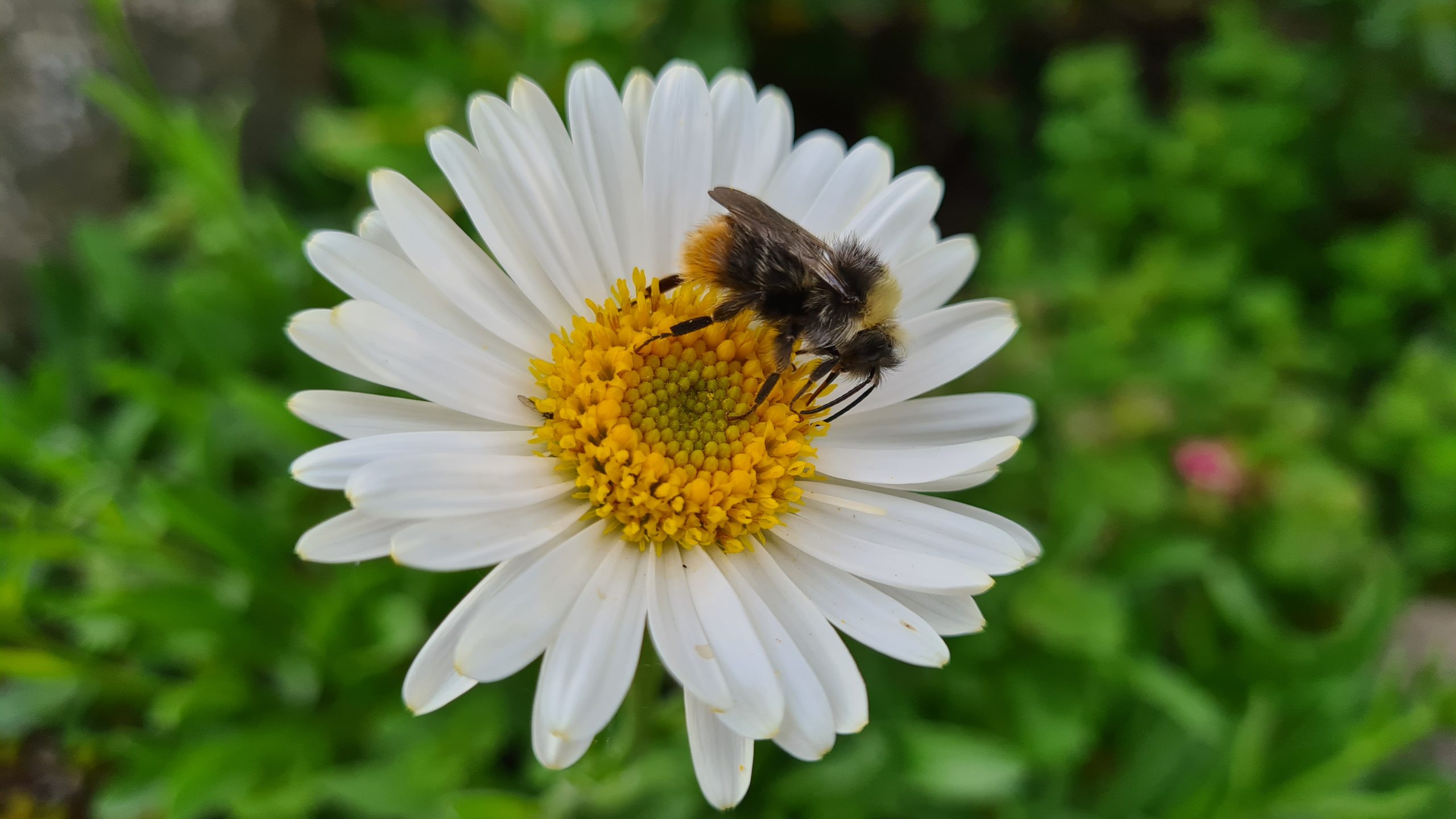
Meadow bumblebee (Bombus pratorum) first newly born male
Photo O.Hercog 5/6/2021 Prague
Also visit YouTube Bumblebees PLUS, where you will find a number of interesting videos about bumblebees.
Each video is accompanied by a comment describing the video.
