

Conservation
The protection of the natural environment is essential to protect meadows, borders, gardens, but also fields and other parts of nature . Here, bumblebees will find what they need – enough food to develop nests and establish a new generation. And they will also find places to build nests . These are abandoned rodent burrows, cavities in borders, trees or walls, abandoned birdhouses, piles of dry grass or moss, etc. In short, the places that individual species need.
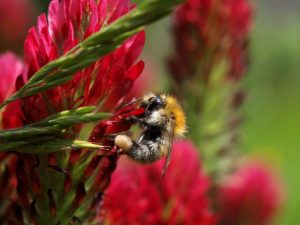
Photo by A.Ungerová
Protection of grasslands and bumblebee nesting sites
People have (mostly) stopped burning boundaries, but they still "take care" of grasslands by cutting them to a "hedgehog" and then the bumblebees do not have enough food. Or they turn their gardens into sterile green areas where there is really no room for any insects, including bumblebees, to live.
So please think about what your garden, meadow/lawn in your village looks like and try to change it. This is where you will help bumblebees and insects the most.
Don't let the municipality spend money on pointless lawn maintenance . When the grass is taller, it won't dry out, there will be life in it and in the end we will save money. The borders and ditches around the roads are also the space where bumblebees live. If we maintain them with chemicals, we will kill everything living there.
Try to take an interest in this in your community and push for change. It takes a lot of will, work, and courage - but the benefits are crucial.
You can find ideas and examples for establishing flower meadows at home and in your community HERE . There is also space for posting a good example in your community .
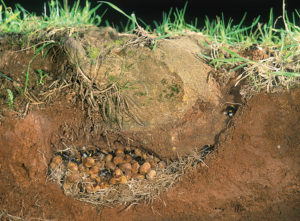
Photo Internet
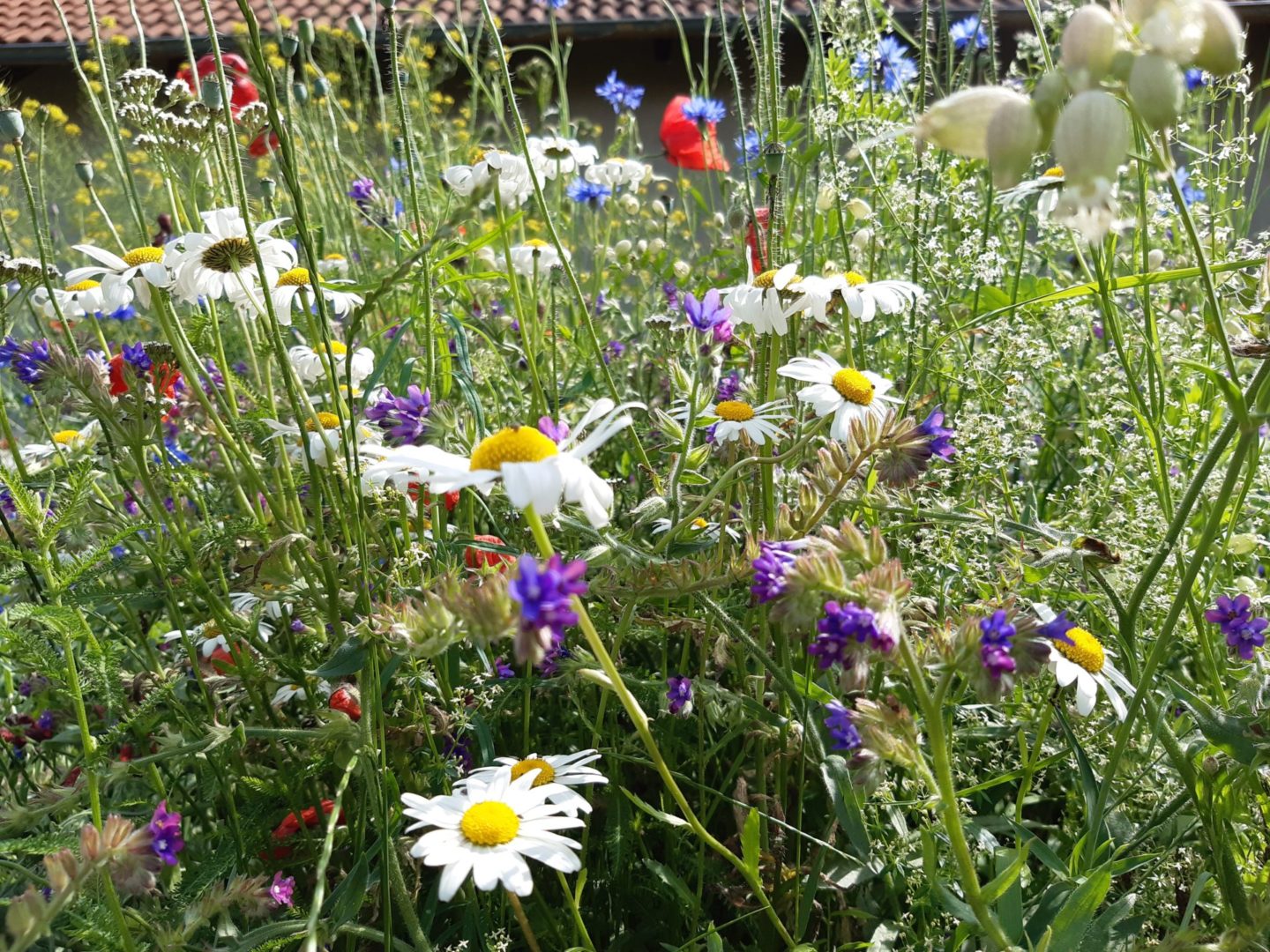
Bumblebees PLUS – Flowering meadow
Photo J, Ečerová
Neighbors , children, dogs and bumblebees
It is also helpful to explain to children and neighbors that they do not need to be afraid of bumblebees and that they will not attack them unless they feel threatened. There is no need to kill individuals and destroy their nests.
Often, small children step on bumblebees and their parents leave them alone. Or parents destroy the nest in the garden instead of showing children how beautiful, interesting and useful bumblebees are!
This also includes cases where you find a bumblebee nest in an inappropriate place – in compost, in old wood, under a terrace. What prevents you from waiting until the bumblebees leave the nest at the end of summer and simply leaving that small place for them for a while before they return it to you? Until then, you can observe and your reward will be joy and many interesting things you will learn about them.
You will often encounter cases where your free-roaming dog finds bumblebees in the ground and starts digging them up . Prevent him from doing this - the dog can certainly dig elsewhere and the bumblebees will have a chance to survive.
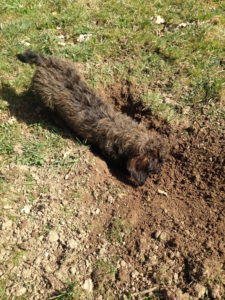
Photo J. Čížek
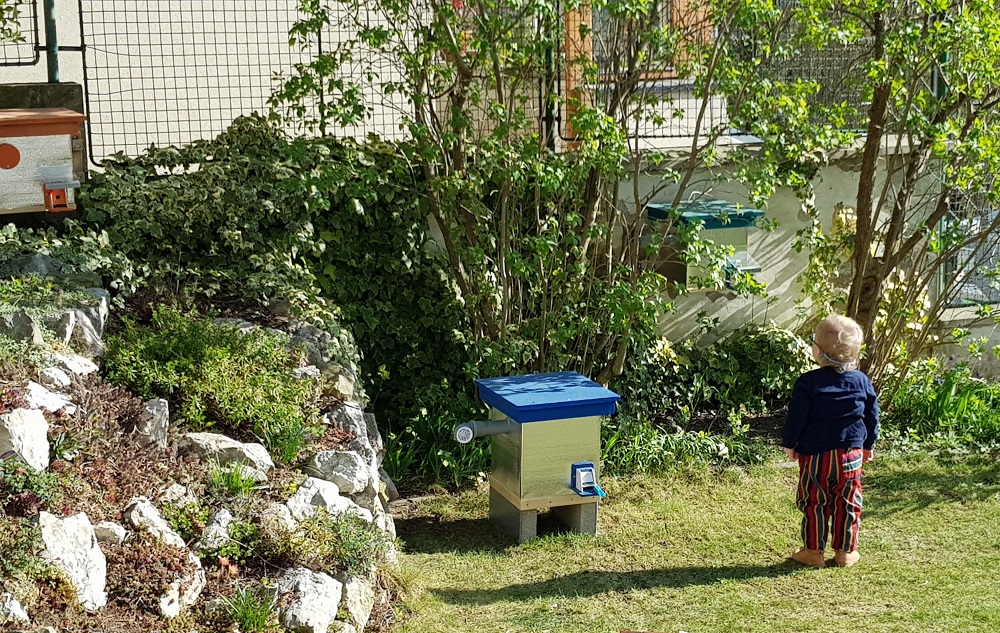
Bumblebees and our children
Photo O. Hercog (4/2020 Prague)
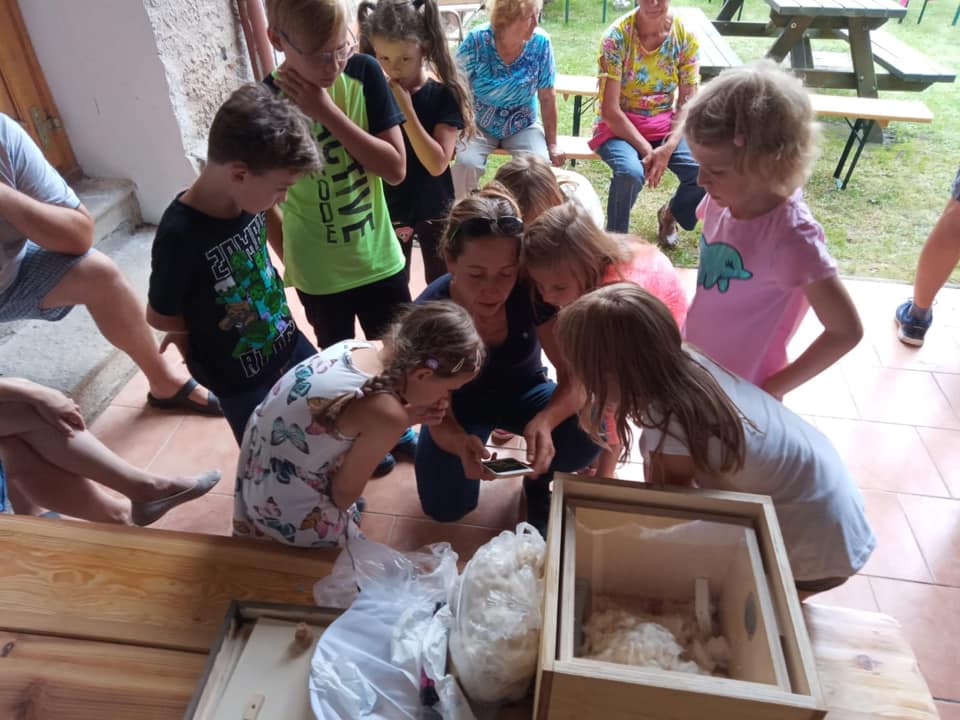
Bumblebees PLUS – Talk by Pavlína Krčová 08-2020
Your garden, your neighbor's garden and bumblebees
If you focus on your garden , you can create a paradise and an island where they will thrive. Provide them with enough food and a nesting environment , at least by replacing an English lawn with a piece of meadow with flowers.
such a meadow gradually and in parts so that something always blooms here and there is pasture for them. Leave space in the corners of the garden where bumblebees can move in - piles of old branches, leaves, old wood or at least dense brushwood - simply a piece of nature. Nature will gradually return to a piece of unkempt garden with weeds, and with it the life that people have driven out of the garden with their concentrated care. If there are rodents in the garden, bumblebees will gradually find their burrows. Give your garden space to bumblebee herbs, such as nightshade.
If you really must have your garden as it is, at least plant it with trees/shrubs and honey plants that will provide bumblebees with enough food from early spring to late summer. A monoculture that blooms for a week is not what bumblebees need . As their nest develops, they need more and more nectar and pollen – each type of flower at a different time. So the key to success here is a variety of flowers and their sufficient quantity throughout the season .
Instructions for a colorful garden can be found in the links. We describe how to help bumblebees in your garden HERE . We have special pages for municipalities HERE
Try to convince the green manager in your municipality to mow the grass in a way that respects nature . For example, if the grass is cut in a mosaic pattern and according to actual needs, the municipality will save costs and pollinators will thrive in the municipality.
Photo by A.Ungerová
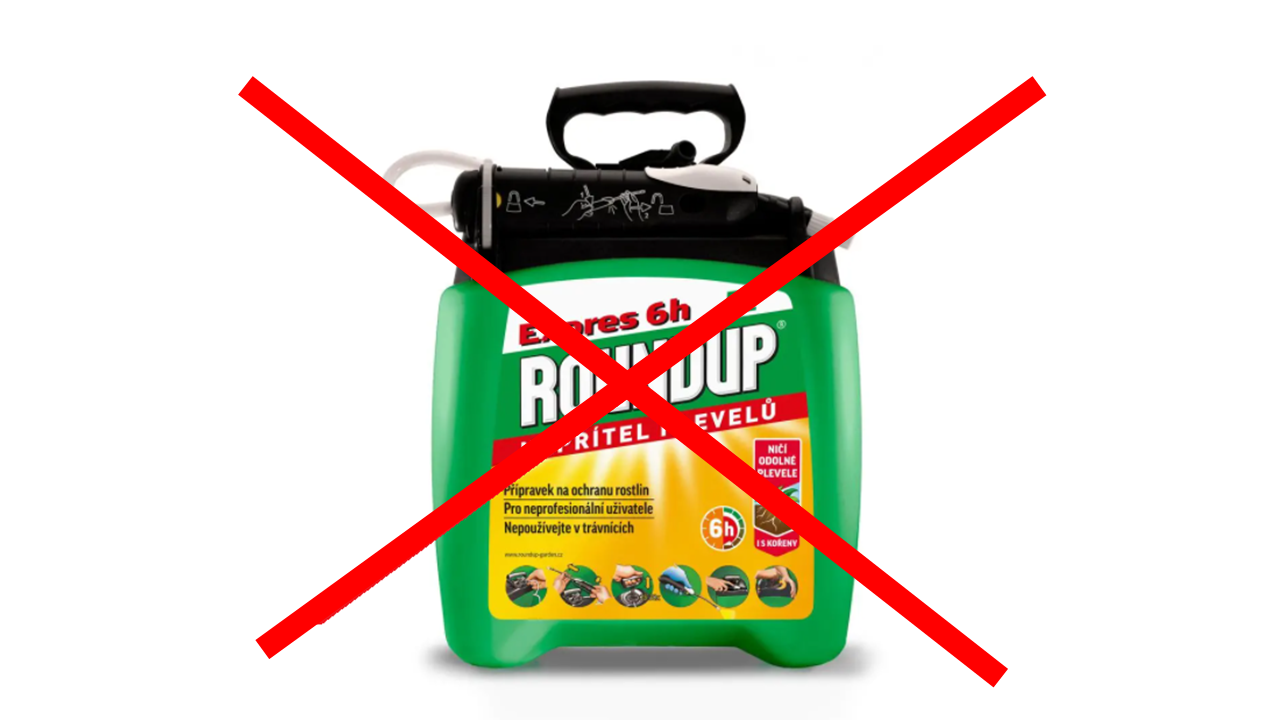
Chemistry in nature
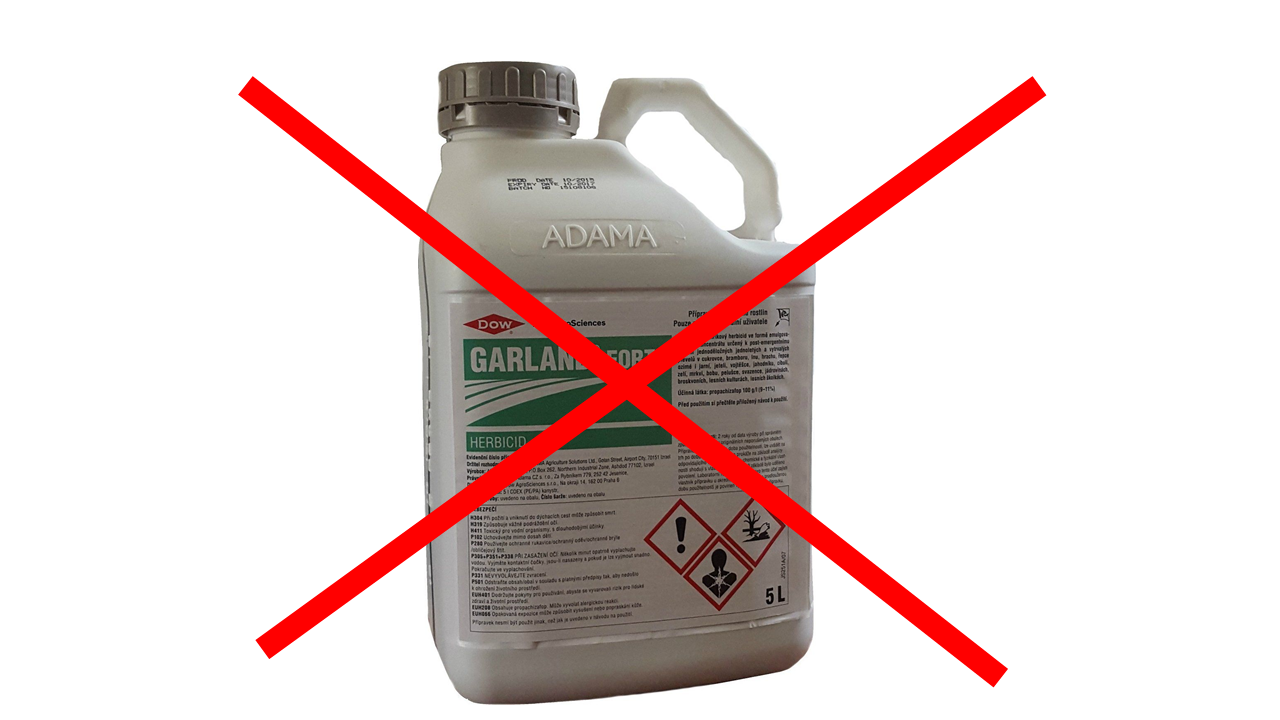
Chemistry in nature
Bumblebees in spring and autumn – stray and weakened queen mothers
Another important type of care is your interest and attention. It is enough if in the spring you save a mother bumblebee that flies outside your window and cannot get out. Or if in the spring you find a weakened mother on the ground, which has run out of energy for the next flight, needs to "refuel" and you carefully transfer it to a flower.
You might be able to save the mother this way and she will then start a nest - it's worth a try.
We describe the rescue of individual bumblebees HERE
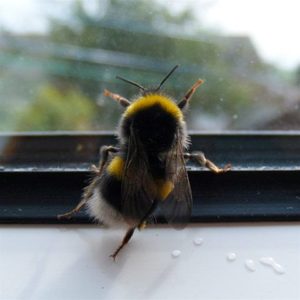
Photo Internet
Bumblebee breeders
Many enthusiasts decide that all of the above is not enough for them and “get bumblebees.” It must be said here that raising bumblebees in the garden is a wonderful thing, but it is important to consider it wisely .
Only start breeding bumblebees if you are willing to invest around 2,000 CZK in quality housing for the bumblebees and around 1,500 CZK for the purchase of the bumblebees (unless you want to try to populate the hive yourself with a queen bee from nature). You need to buy a really high-quality hive with protective features (protective flap, good ventilation, quality sealing, etc.), ideally with references from breeders that the bumblebees thrive in such a hive.
Please note that purchasing a bumblebee hive (bumblebee house) and purchasing/populating bumblebees is just the beginning.
It is also necessary to devote your time and care to them . We recommend checking their hive regularly and also being prepared for possible intervention and cleaning the nest from parasites, which very often attack the nest and can destroy it. Anyone who does not want to give such care to bumblebees will have an empty hive in their garden instead of joy or even a breeding ground for bumblebee parasites instead of bumblebees.
So the keeper should not be afraid to uncover the bumblebee nest, inspect it and possibly handle it gently (instructions are available here or in the recommended links). This means another approx. 2000,- for a protective hood, gloves and other equipment (yes, bumblebees have stingers too) and most importantly a bit of courage and acquired experience.
It is important to realize that even with the best care, a breeder may not be able to bring "their" bumblebee nest to a successful end , i.e. to the birth of a new generation of mothers and males. Many breeders fail in the first year and give up on bumblebee breeding. So, a breeder's equipment also includes a strong will and the will not to give up in the event of failure,
If you start breeding bumblebees, give preference to rarer species . Do not breed common species (ground bumblebees, rock bumblebees, ...), of which there are plenty, but help other, weaker species,
Breeders can also help in other ways, for example in the development and testing of hives for bumblebees. There is still room for improvement here, and the Čmeláci PLUS group devotes a lot of time to this. Changes and tricks from experienced breeders can be found HERE
Breeders can also help with finding unsuitable products and convincing manufacturers to make changes. Information about unsuitable hives for bumblebees can be found HERE
We describe bumblebee breeding on our website HERE
Our Facebook pages are also dedicated to breeding: Čmeláci PLUS and Čmeláci PLUS – Discussion Forum.
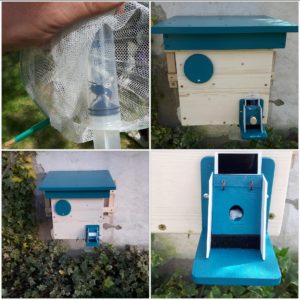
Photo O.Hercog
Rescue of unlucky bumblebees or damaged nests – Bumblebee Rapid Rota
During the year, it happens that it is necessary to move a nest that would otherwise be destroyed . This is a situation where you simply cannot wait for the bumblebees to abandon it on their own.
We recommend this event only to breeders or those who have enough courage to handle a bumblebee nest. They don't have to be experienced breeders, even beginners can do it with our help .
If you are interested, we can help find a new home for the unlucky bumblebees and transport them to it.
We describe nest rescue including evacuation HERE

Bumblebees PLUS – Bumblebee Rapid Rota

How to help bumblebees – leaflet