Aphomia sociella and bumblebees in nature
What you will learn here
- What is a parasitic wasp?
- How to recognize him
- What is its life cycle?
- How they damage a bumblebee nest
- Is the howler really just a bumblebee killer?
Last updated: 18/5/2022

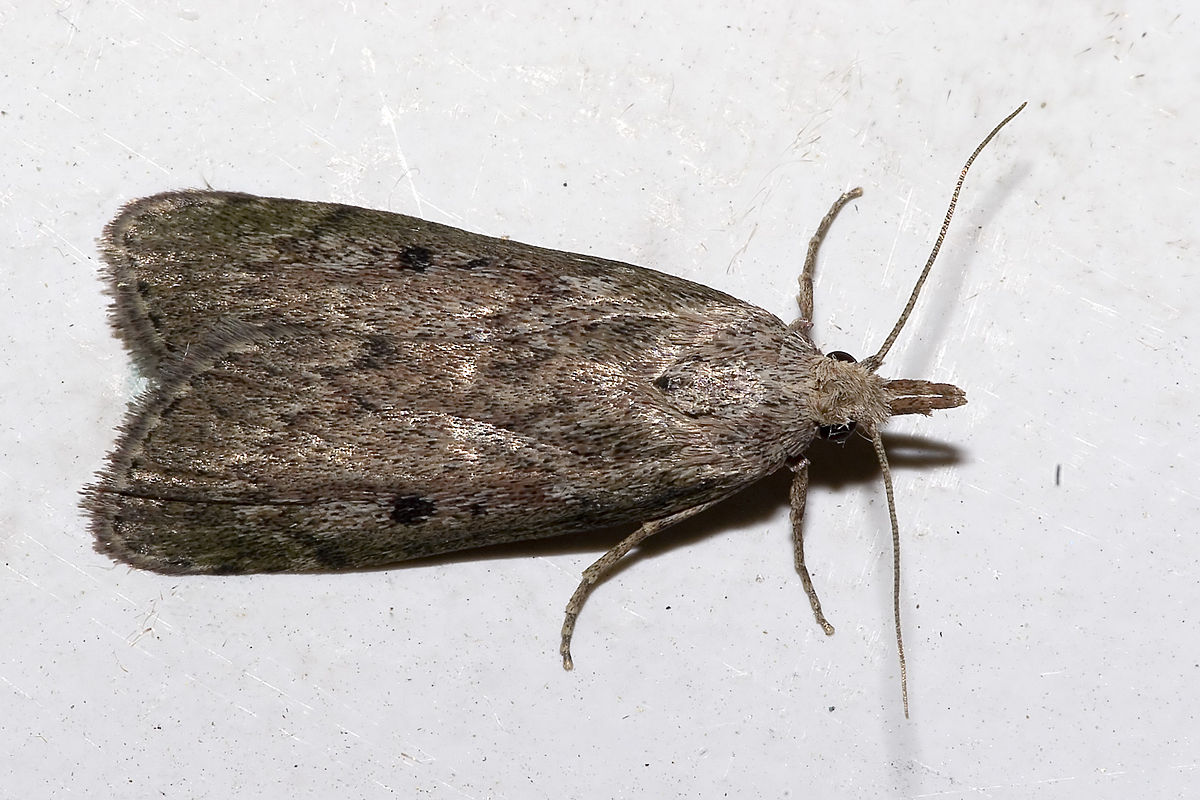
Aphomia sociella
Photo Wikipedia
Introduction
The wasp is one of the main enemies and destroyer of bumblebee nests in nature, but also in bumblebee breeding.
The parasitic wasp parasitizes the nests of bumblebees, wasps and hornets and acts in essentially the same way - its larvae feed on waste and nest construction until they grow strong and then consume the host larvae. They weaken the nest , but they often destroy it, including the adults .
Although the gnat is a parasite, its effects also have a positive meaning from the perspective of nature, as you will gradually learn here.
In this chapter we will describe the nest-breaker as such. In the section for beekeepers < HERE> we will describe in detail the techniques and options for protecting the nest against the nest-breaker and how to intervene when the nest in the hive is attacked.

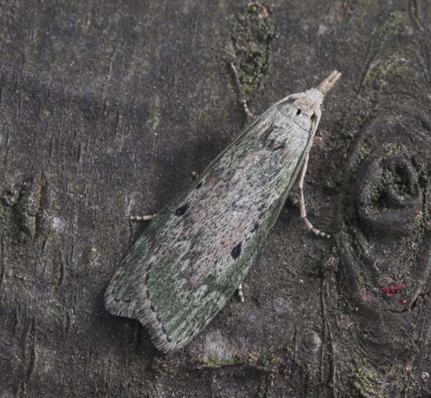
Aphomia sociella - female
Photo UK Moths
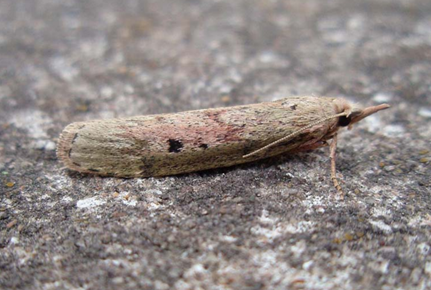
Aphomia sociella - female
Photo UK Moths
What does a parasitic wasp look like?
According to Biolib , its classification is as follows:
kingdom Animalia animals >> phylum Arthropoda – arthropods » class Insecta – insects » order Lepidoptera – butterflies » family Pyralidae – moths » genus Aphomia – moth » subgenus Aphomia
It will probably be more practical for us to describe it:
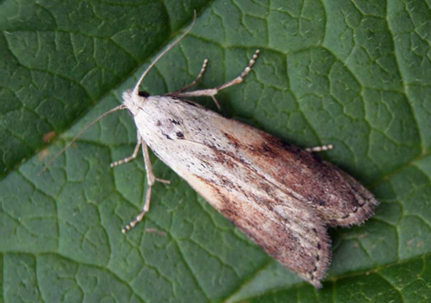
- It is a moth 20–30 mm long with a wingspan of 18–44 mm.
- Its wings are reddish-brown , gray-black , or dark green with a dark brown pattern .
- Males differ from females and are more distinctly colored than females (sexual dimofirmus).
- Males are distinguished by a light ashy color on the upper side of the front wings (first pair) and long antennae.
- Females have a dark spot in the center of their forewings and a typical head. The size of the female is sometimes such that she can squeeze through a very small gap.
- The caterpillars 20 to 30 mm long in their final stage , strong, yellow to greenish, with a distinctive dark head and strong mandibles .
Perhaps we should clarify the difference between a larva and a caterpillar – a larva is the immature stage of an animal. A caterpillar is the larval stage of butterflies.

Aphomia sociella - male
Photo UK Moths
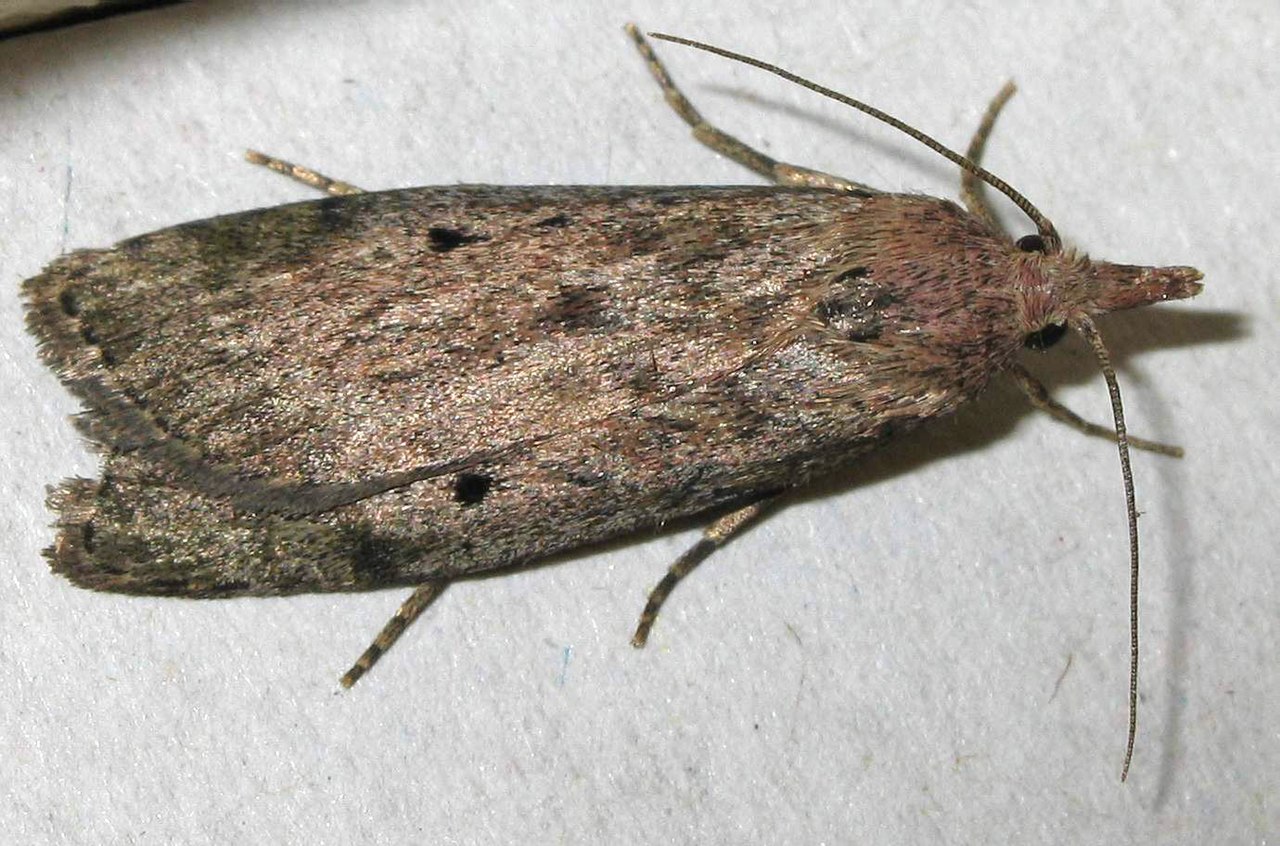
Aphomia sociella - female
Photo UK Moths
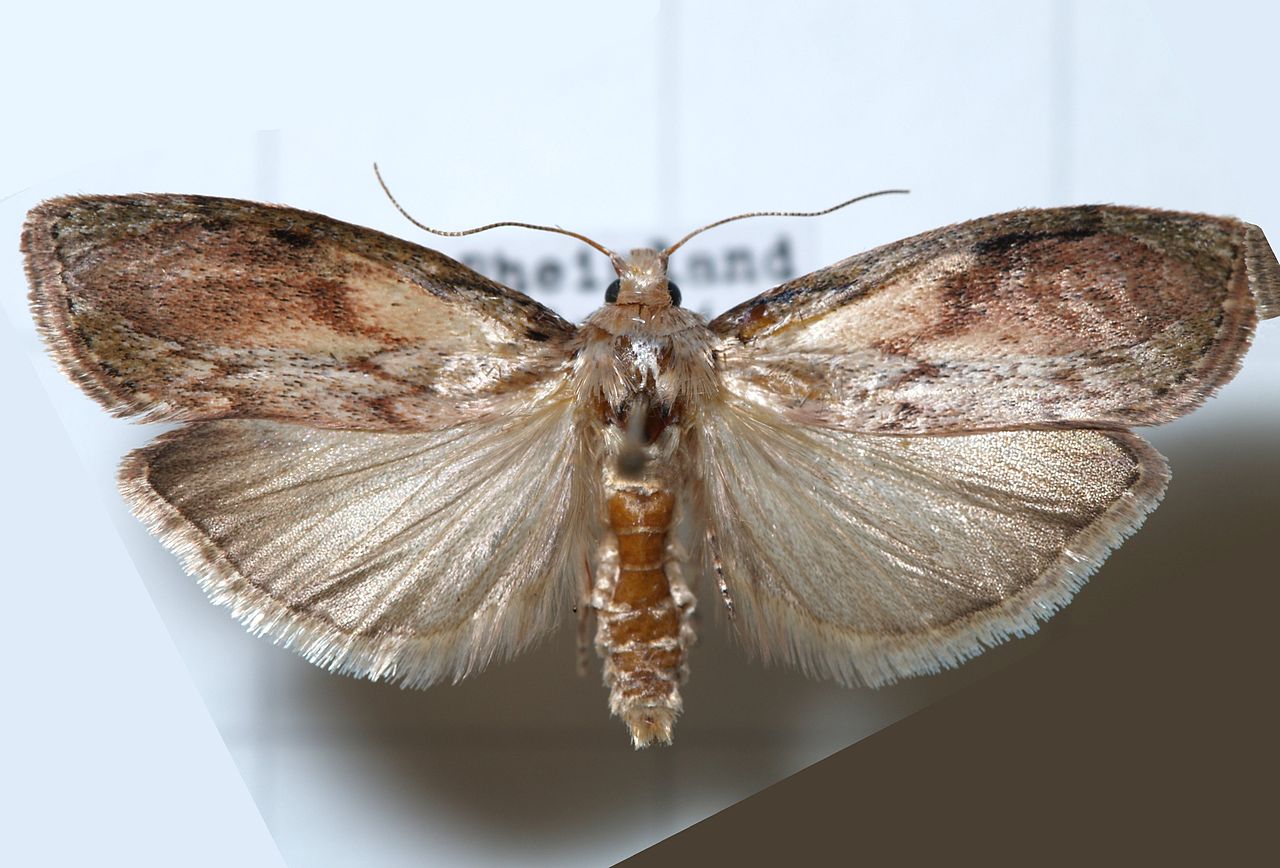
Aphomia sociella - male
Photo lepidoptera.butterflyhouse.com
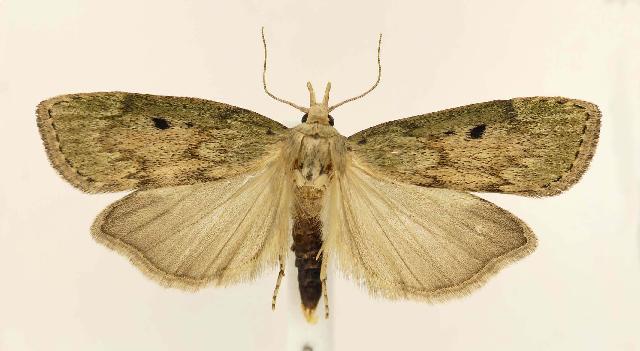
Aphomia sociella - female
Photo lepidoptera.butterflyhouse.com
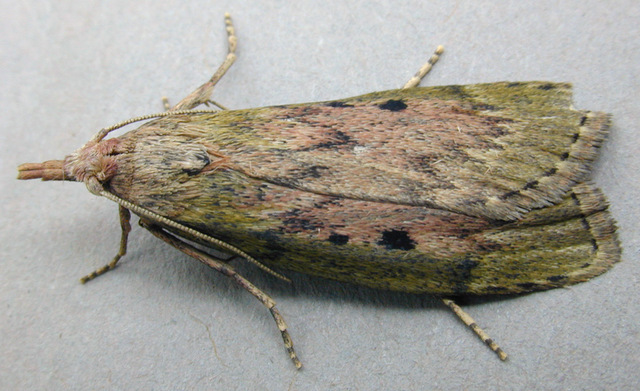
Aphomia sociella female
Photo by Malcolm Storey
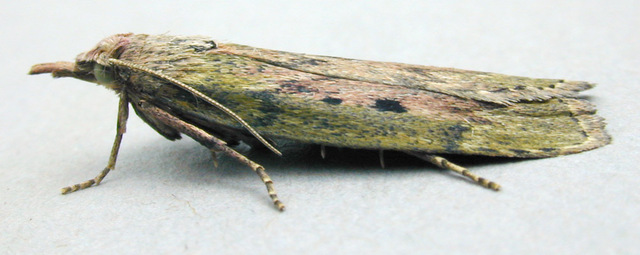
Aphomia sociella female
Photo by Malcolm Storey
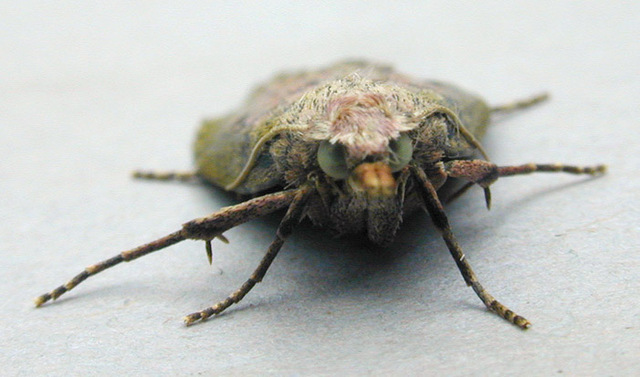
Aphomia sociella female
Photo by Malcolm Storey
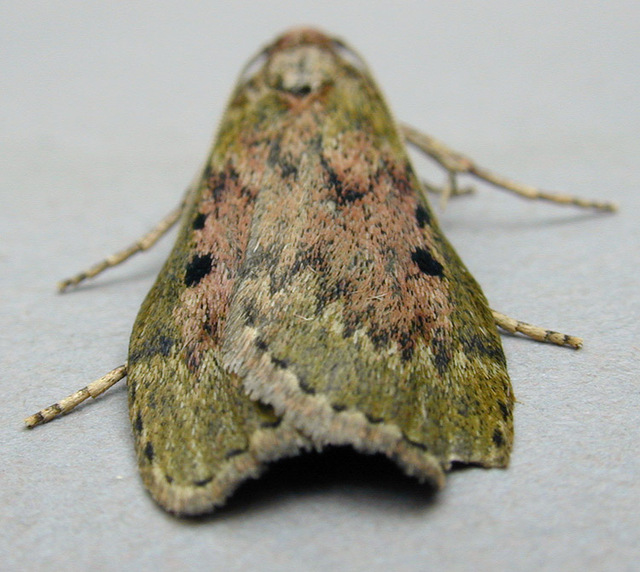
Aphomia sociella female
Photo by Malcolm Storey
What is the life cycle of a weevil?
The parasitic wasp parasitizes in the nests of bumblebees, wasps and hornets and acts in essentially the same way - its larvae (caterpillars) feed on waste and nest construction until they grow strong and then consume the host larvae. They weaken the nest , but they often destroy it, including the adults .
The female warbler searches for host nests at dusk and on warm nights April to August (but mainly from May to July )
It finds nests by scent . It mainly attacks bumblebee nests located on the surface, but it can also penetrate bumblebee nests hidden in the ground .
If a mother comes across a bumblebee nest, she looks for a place to enter it . When searching, she is primarily guided by the scent trail, which is why she is primarily interested in the entrance corridor to the nest.
Once the mother wasp penetrates the bumblebee nest, 60–230 miniature eggs there – directly on the wax structure, near it, or in the lining.
The laid eggs hatch into small, light-shy and very mobile caterpillars of light color . They remain in groups. The small caterpillars initially stay hidden under the nest and feed on waste there.
The caterpillars feed , grow and apparently can absorb the smell of the bumblebee nest . Thanks to this, they camouflage themselves and in the darkness of the nest they are invisible to the bumblebees . The bumblebees do not react to the larvae of the caterpillar in the nest and they feed peacefully there on the wax part, but mainly on the bumblebee fruit – their larvae.
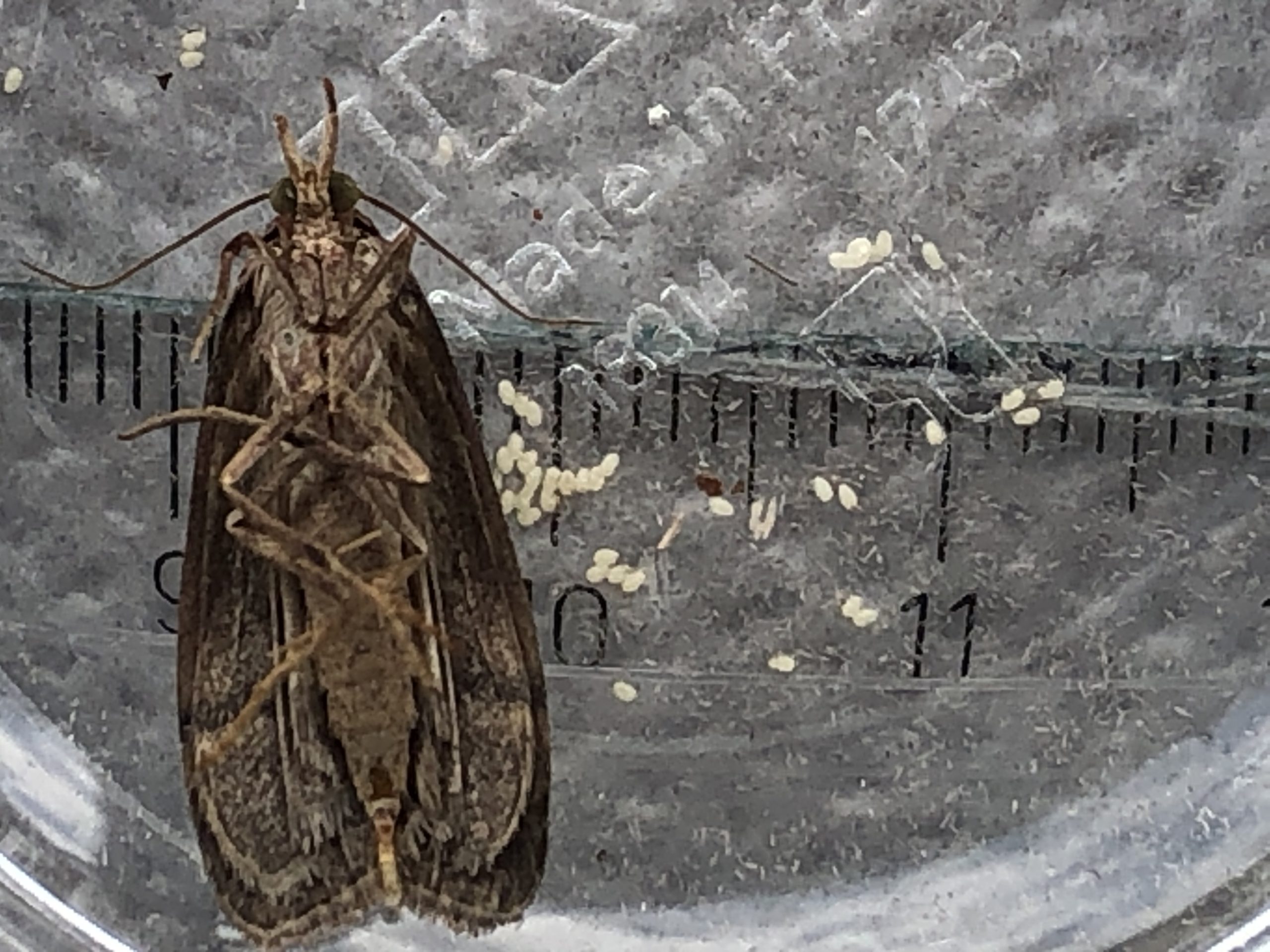
The following video and photos were taken by Pavlína Krčová

Common cicada – Aphomia sociella and its eggs
Photo Pavlína Krčová 2021
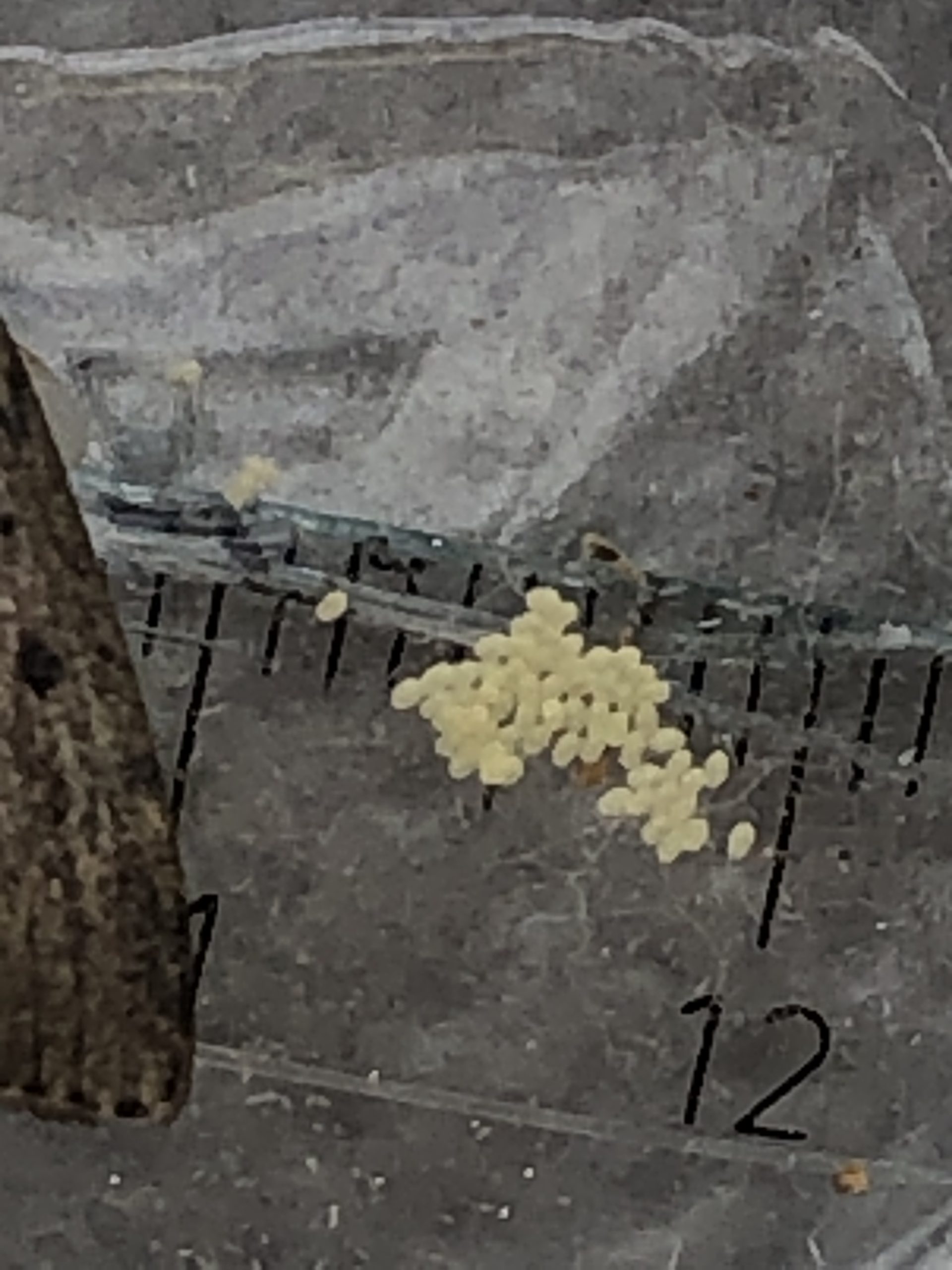
Common cicada – Aphomia sociella and its eggs
Photo Pavlína Krčová 2021
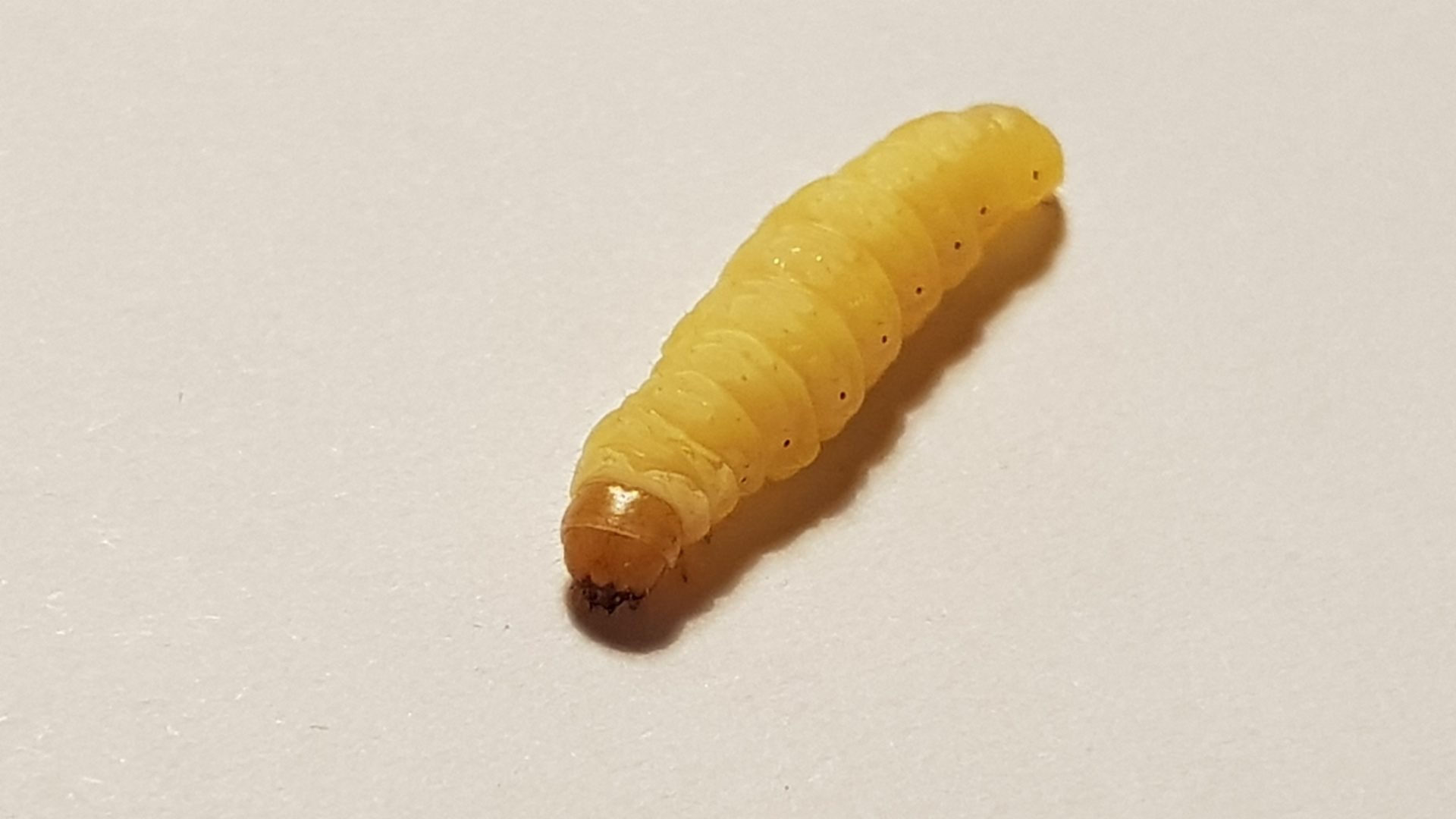
Other photos show already large, fully grown larvae (caterpillars)

Aphomia sociella caterpillar
Photo by O. Hercog (9/2020)
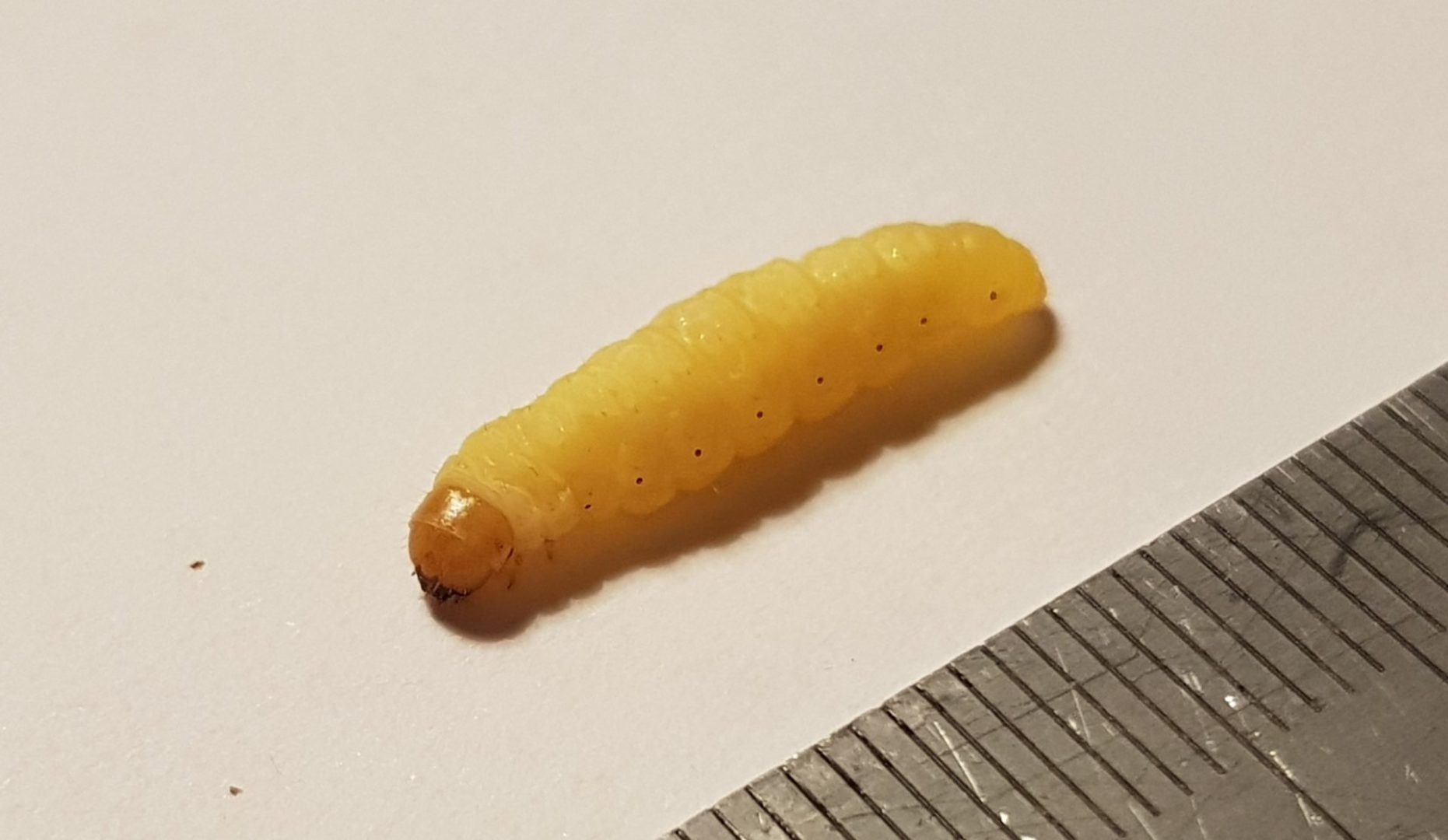
Aphomia sociella caterpillar
Photo by O. Hercog (9/2020)
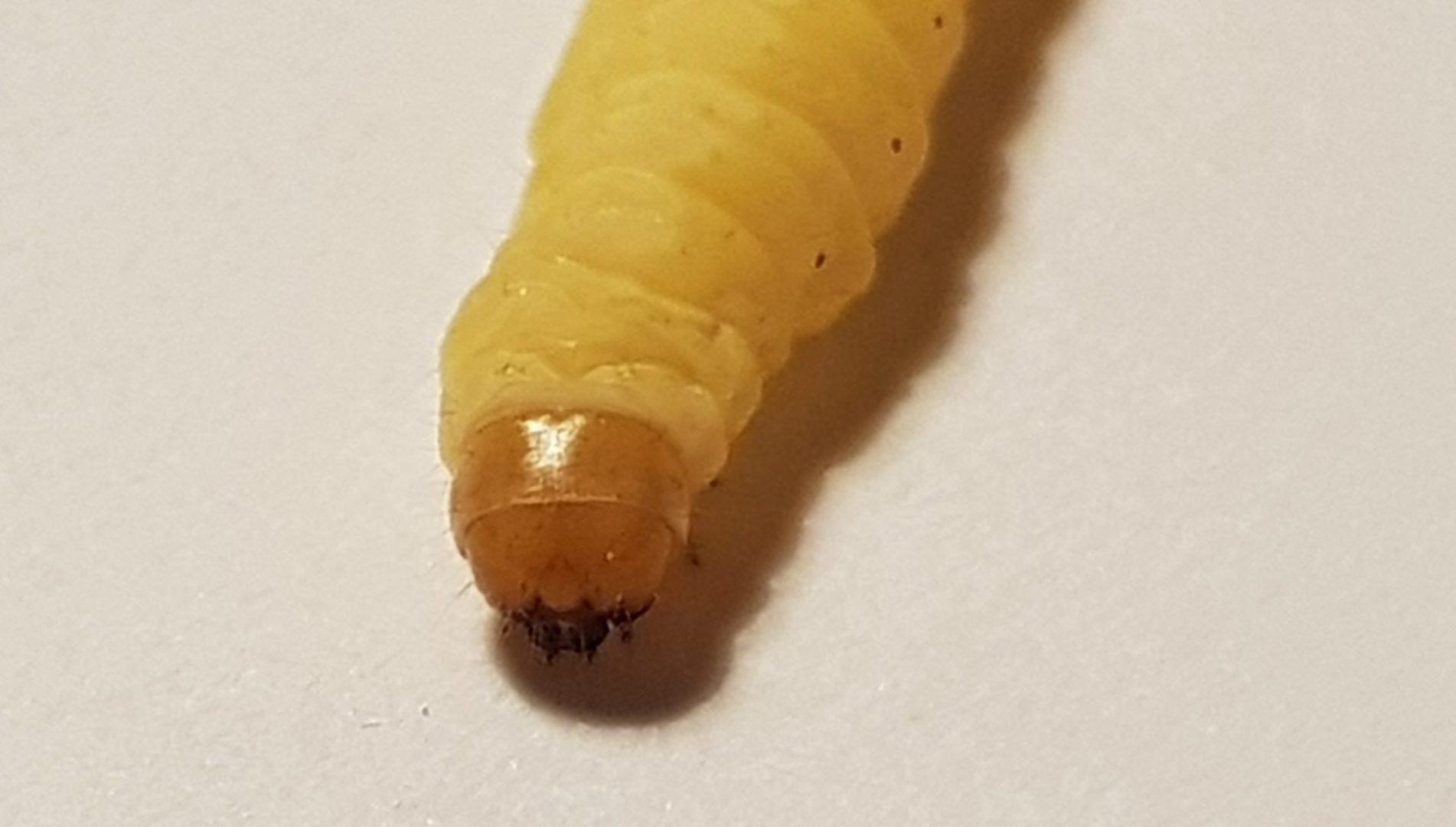
Aphomia sociella caterpillar
Photo by O. Hercog (9/2020)
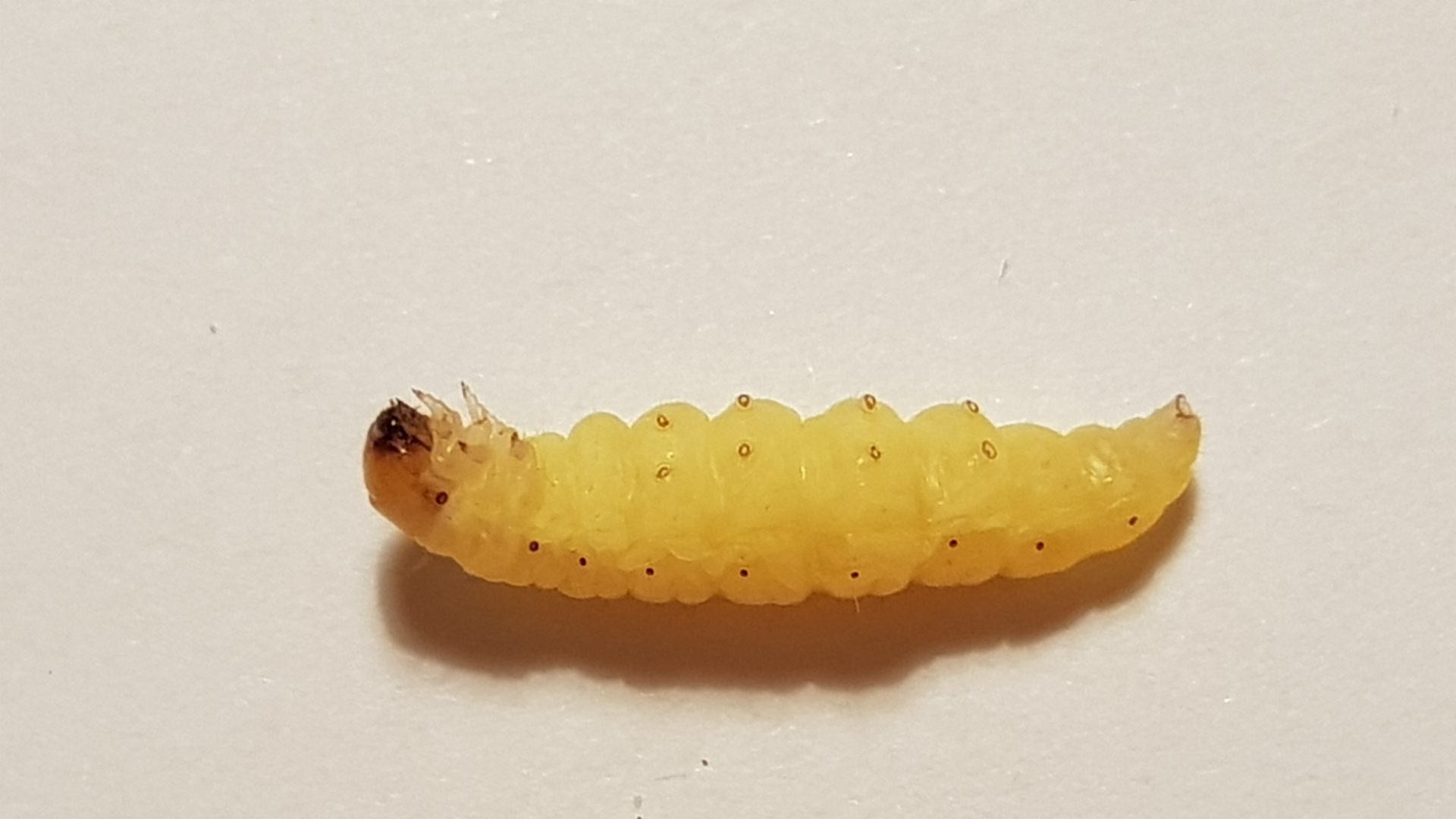
Aphomia sociella caterpillar
Photo by O. Hercog (9/2020)
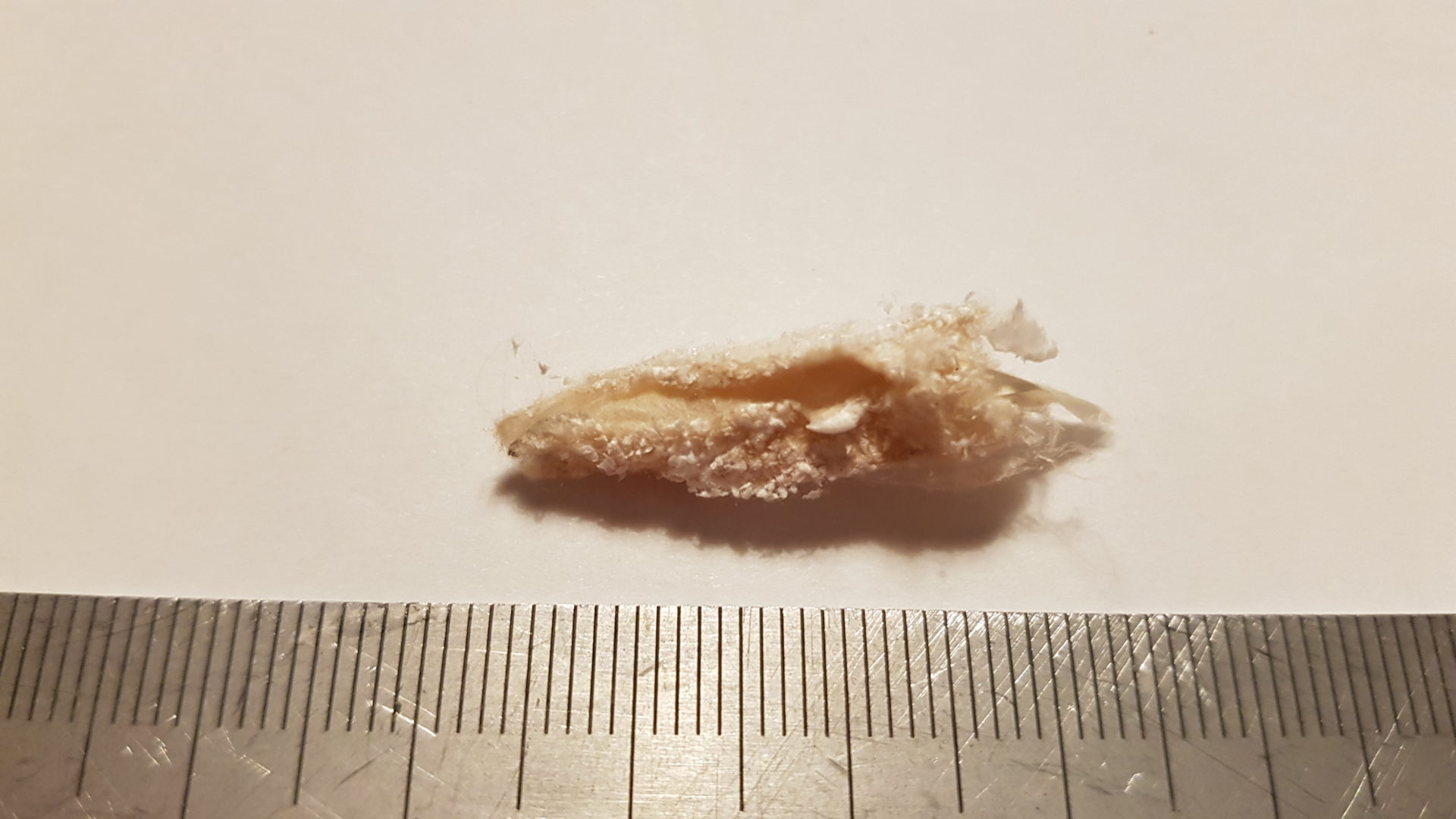
A caterpillar of a bee-eater removed from the fibrous casing in which it was preparing to overwinter. The caterpillars were found in the polystyrene insulation of the hive.

Aphomia sociella caterpillar in cocoon
Photo O. Hercog (9/2020)
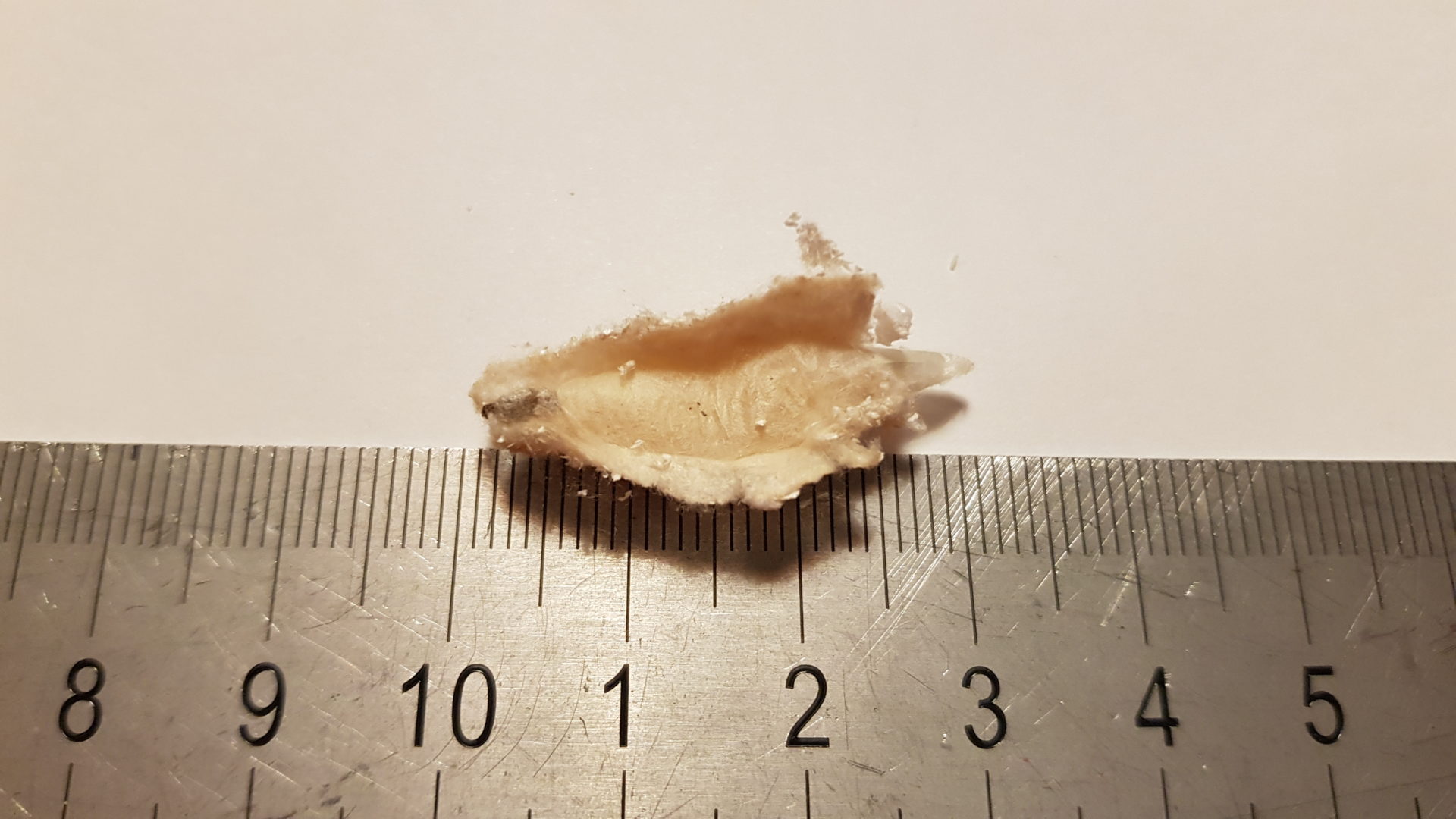
Aphomia sociella caterpillar in cocoon
Photo O. Hercog (9/2020)
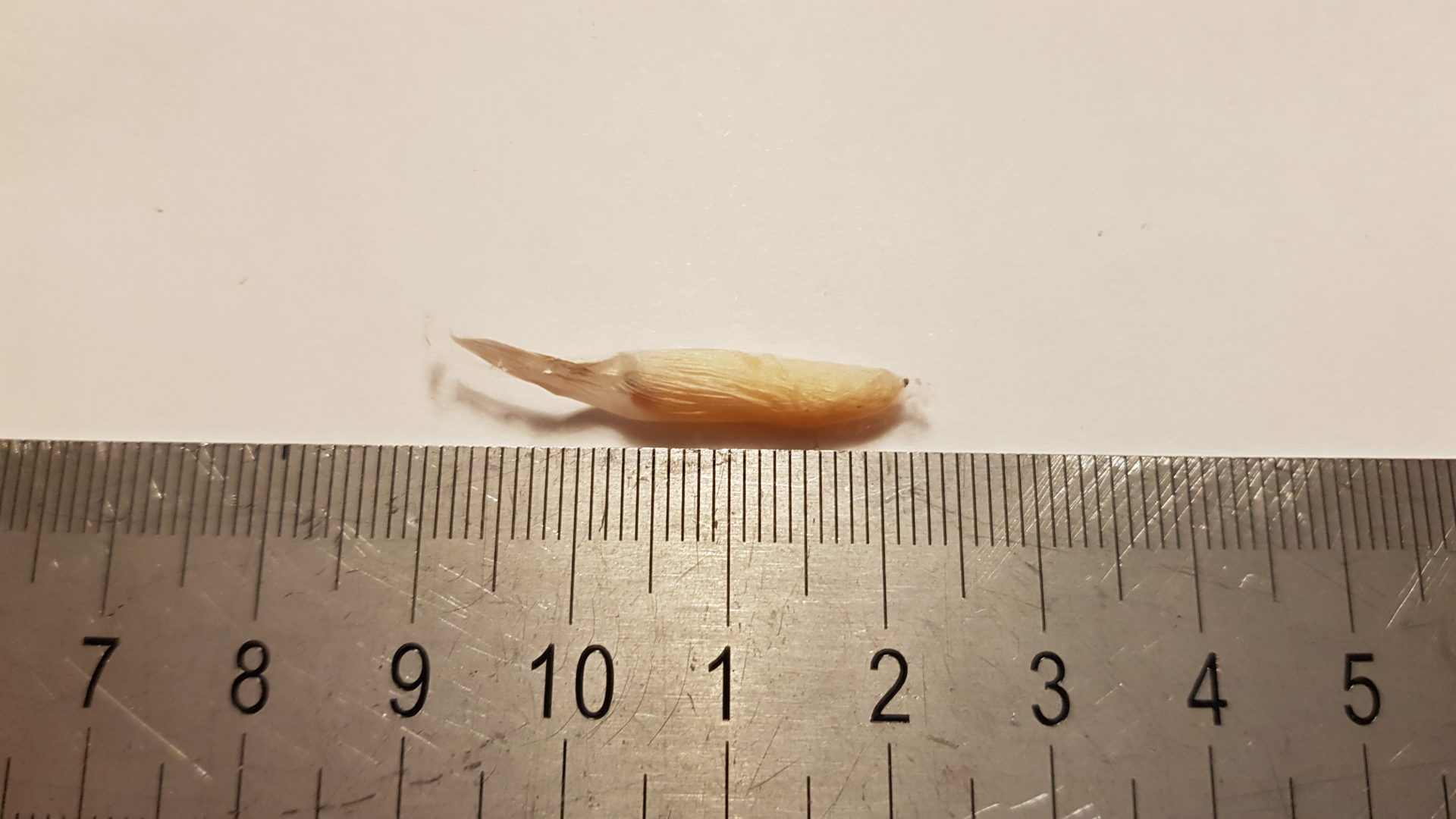
Aphomia sociella caterpillar in cocoon
Photo O. Hercog (9/2020)
Aphomia sociella caterpillar in cocoon
Photo O. Hercog (9/2020)
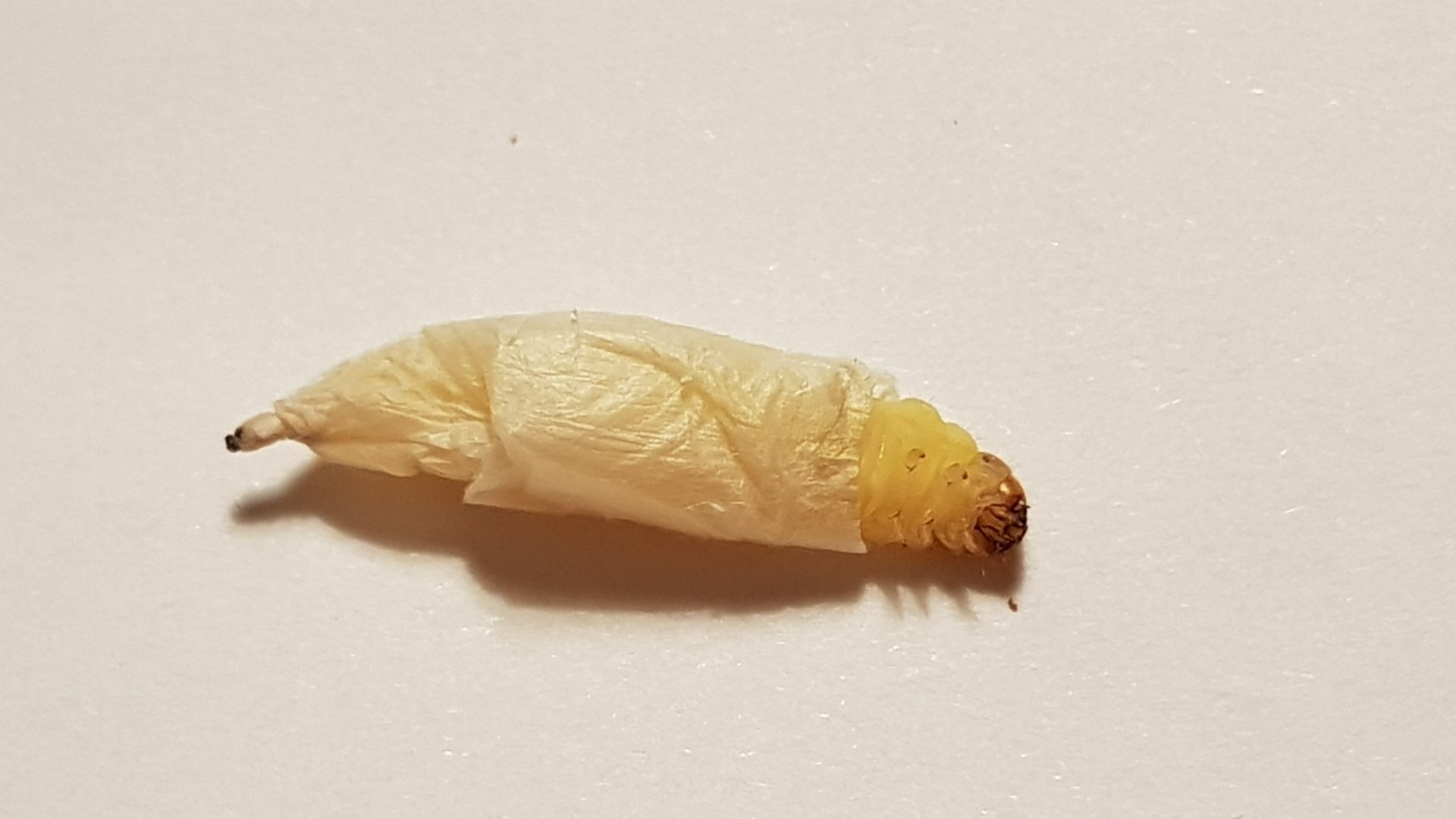
Caterpillar after being removed from its packaging.
As the caterpillars of the wax moth grow , they venture to higher levels and into the nest . Here they use a tunneling - they eat through the wax structure of the nest from the bottom and penetrate to the larvae. They can also walk horizontally between individual wax cells. often weave their corridors with silk thread , which protects them from the mandibles of hosts such as bumblebees, bees, or wasps.
Bumblebees are practically defenseless against them. The caterpillars of the bee-eater gradually enter the waxy structure of the nest (work), the pollen , bite through the waxy coverings from the side and eat the bumblebee larvae and eggs inside . They eat everything in the bumblebee hive except the heat-retaining material. They do not disdain even dead bumblebees .
The attack of the wasp larvae is initially unnoticeable - it takes place under the lining of the nest and the waxy part of the bumblebees. The small caterpillars are also very fast and difficult to see with the naked eye.
By attacking the larvae of the host from the underside/flanks, they can easily escape the observer's attention .
In the case of a severe infestation of the caterpillar, the bee can even line the nest with silk threads , making it impossible for the adult bumblebees to move. This is the final stage, during which the silk threads and the caterpillar's movement can be observed on the surface of the lining .
In the final stage, the caterpillars of the borer reach a length of 20-30 mm , are fat , light , sometimes greenish with a distinctive dark head and strong mandibles.

Aphomia sociella - nest infested with Aphomia sociella
Photo P. Menšík (2019)
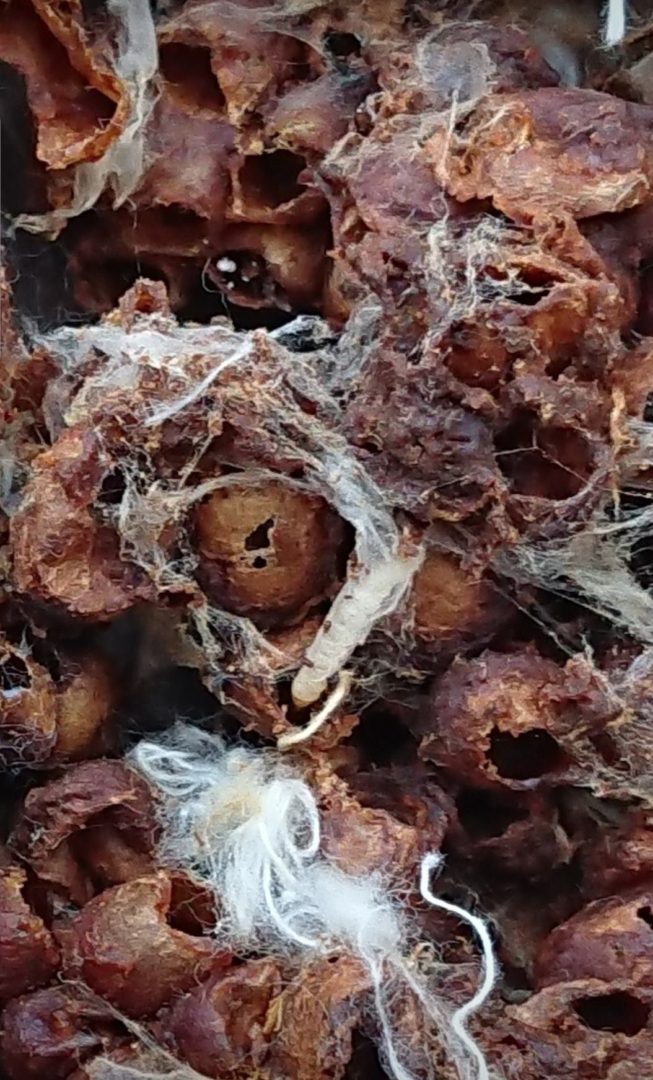
Aphomia sociella - nest infested with Aphomia sociella
Photo P. Menšík (2019)
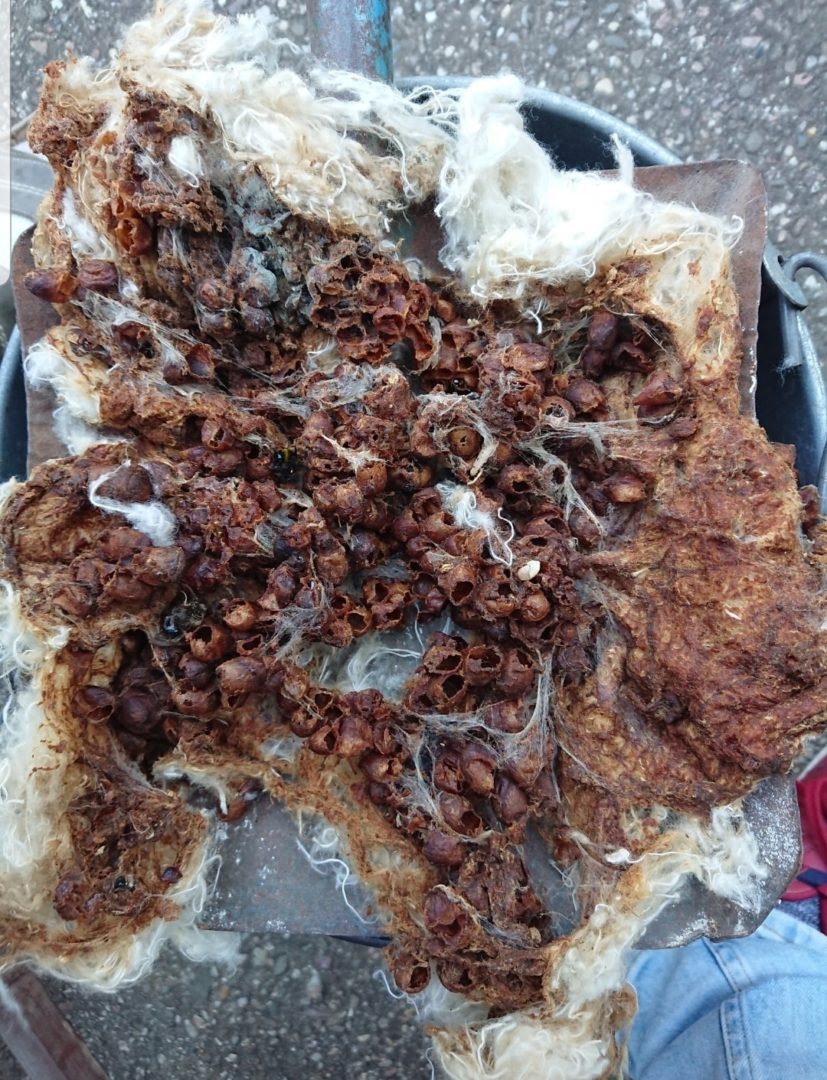
The photo shows holes chewed through the wax casings and cocoons. The cocoons also contain threads from the caterpillars of the borer.
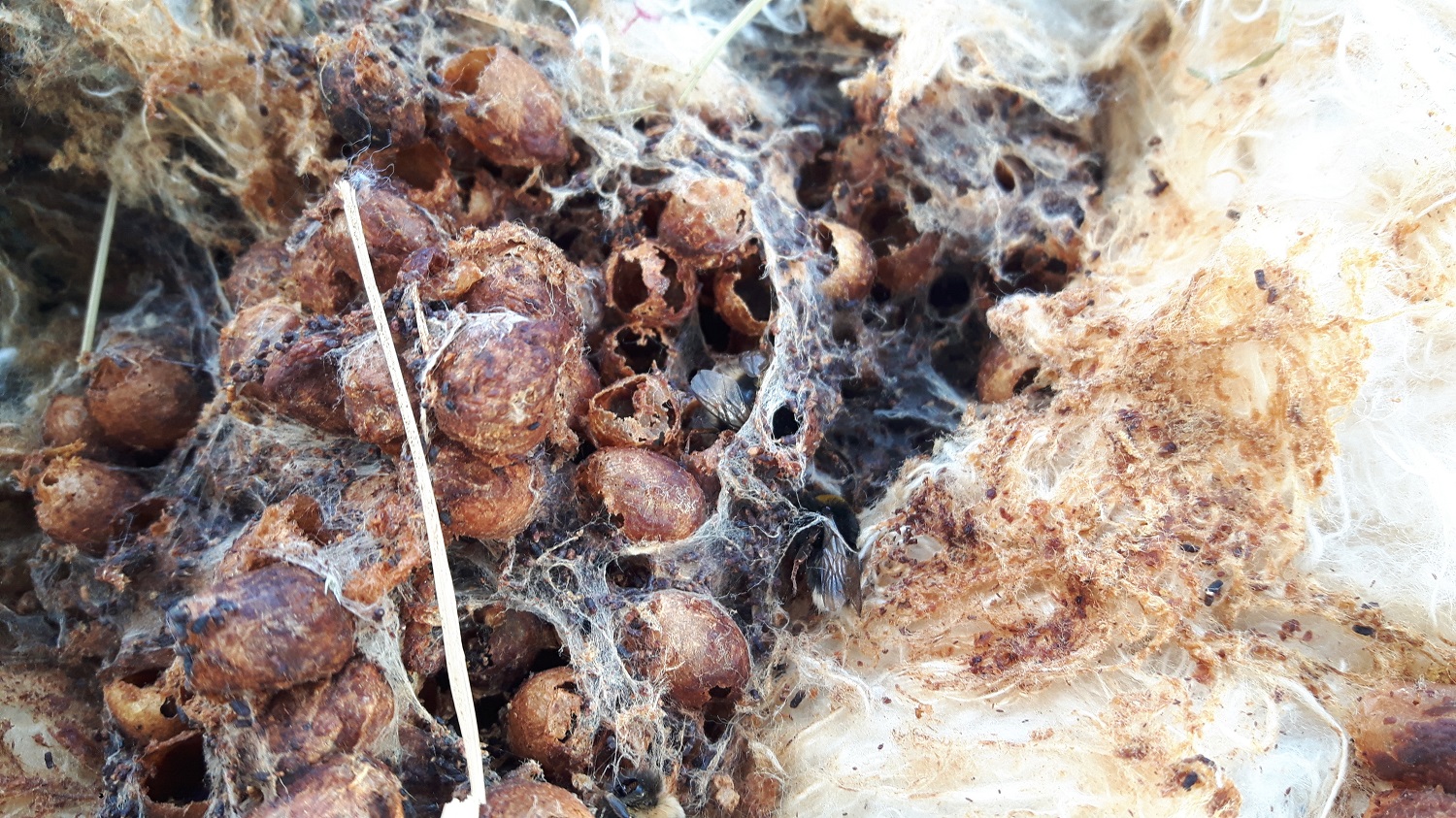
Aphomia sociella – nest infested with Aphomia sociella
Photo O. Hercog (2016)
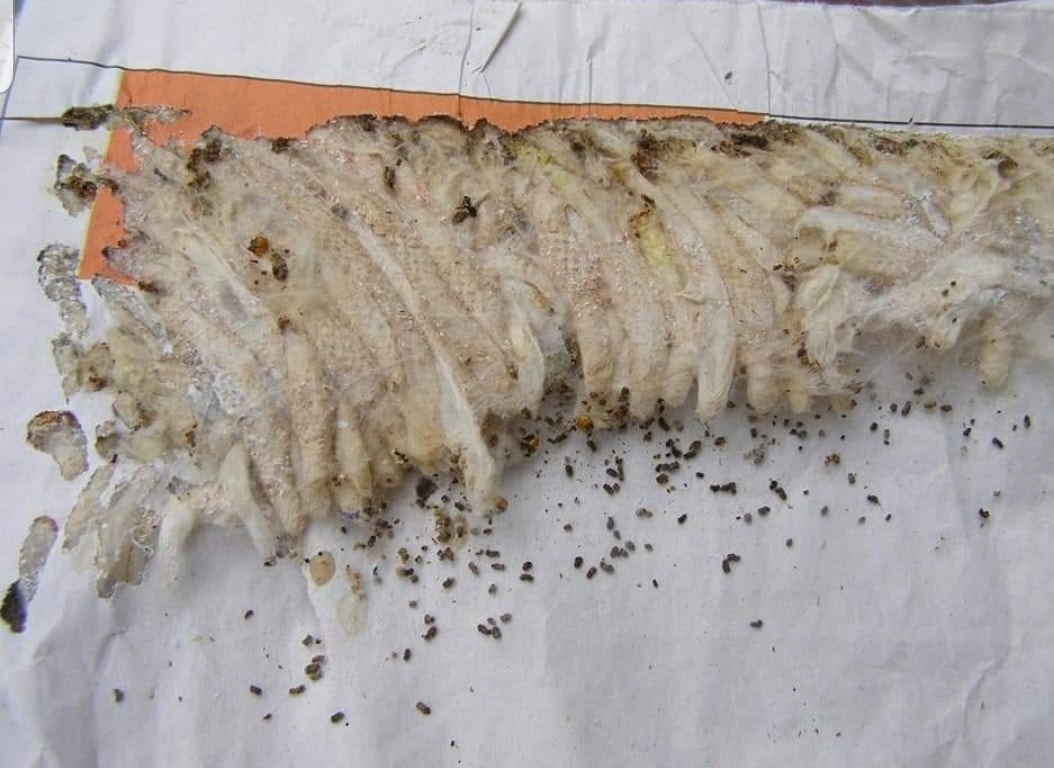
The fattened caterpillars move outside the bumblebee nest , where themselves into long white cocoons overwinter in their larval state .
Caterpillars most often pupate near the nest. If they attack a bumblebee hive, you will find them under the roof of the hive . They often enter a hidden place - a crack in the nest cavity , or the entrance corridor. Here they hide and spin into tight cocoons, often one next to the other. If the caterpillars find their way out of the nest, they can hibernate outside in a cool place under the nest. The caterpillars hide so that they do not wake up in the spring - they would not find enough food options for the new generation that will emerge from them.
They never nest far from the nest. The caterpillars probably instinctively expect that the bumblebees will nest in the same place next season. In addition, their sexual individuals, which do not eat food, also have a limited radius of action.
cocoons are made of a strong web . They are unexpectedly strong and layered , which you will discover when you try to open the cocoon.
Only in spring do the caterpillars pupate in cocoons and the adults hatch from them , and they mate immediately on the spot .

Aphomia sociella – caterpillars in cocoons
Photo Internet
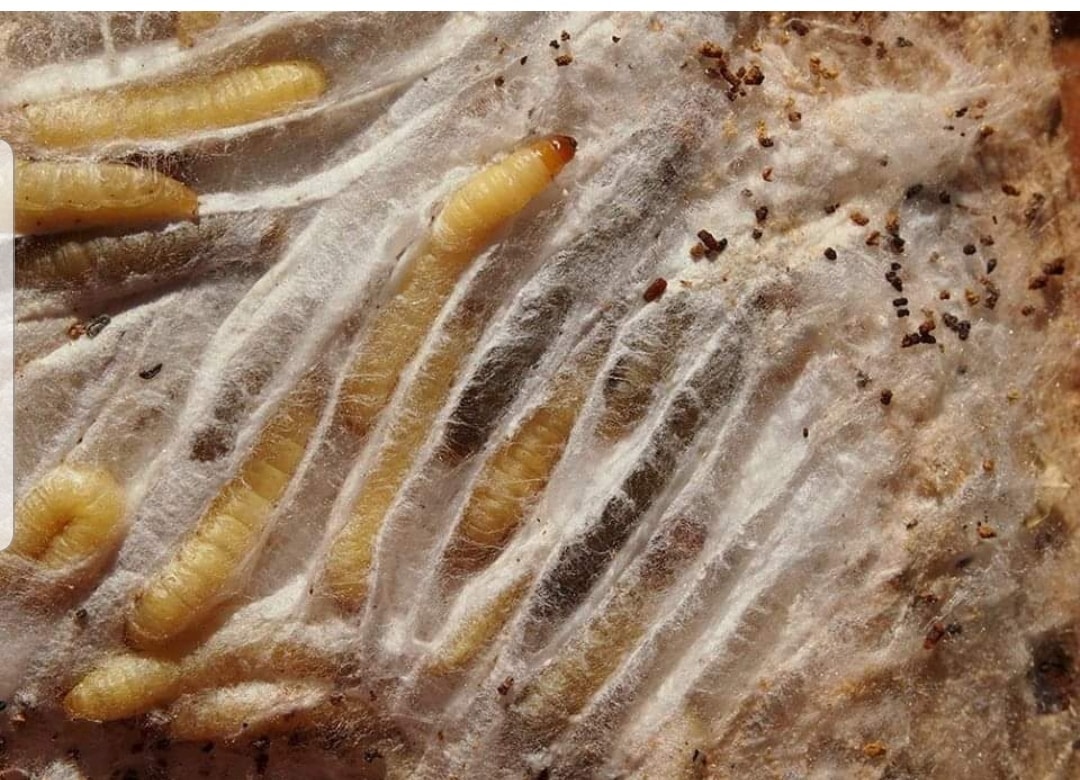
Aphomia sociella – caterpillars in cocoons
Photo Internet
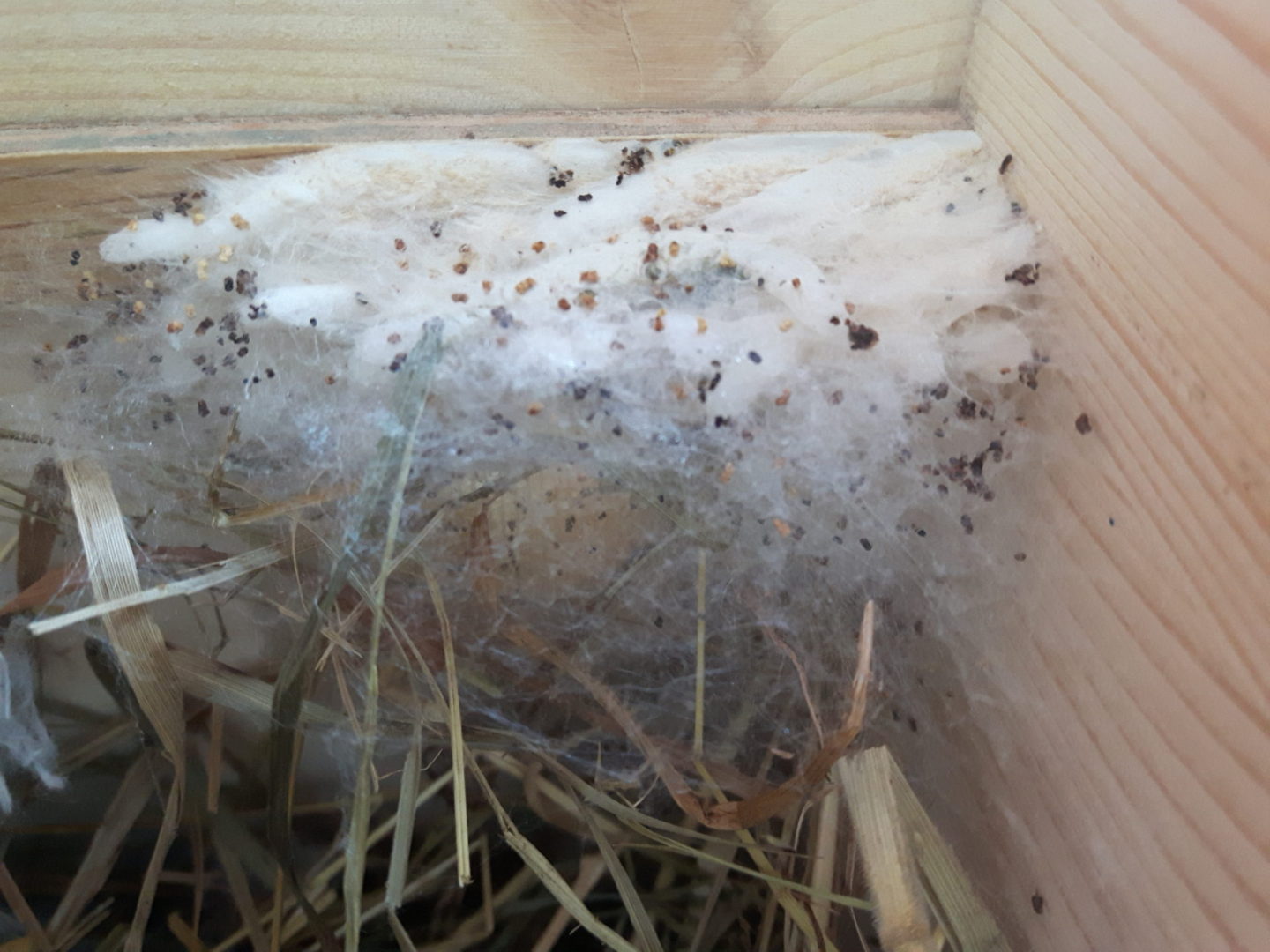
Adult borers do not feed and live for a short time – often only a week. During this time, they must mate, find a host nest, penetrate it and lay their eggs.
Beekeepers often mate with relatives or with individuals from different mothers (when the hive is repeatedly attacked).
Their mating begins by attracting males , who produce a sex pheromone in their wing glands. The male disperses the pheromone by flapping his wings vigorously, and is thus able to attract the female from a great distance.
As soon as the female approaches the male, he starts "singing" using ultrasound . This causes the female to also flutter her wings , which disperses her sex pheromone and indicates her willingness to mate. If the female is not ready, the male repeats the "persuasion" process until he succeeds.
Males emit ultrasonic signals with a special organ called the " tymbal ", which females lack. The song consists of short impulses (chirps) of about 1 second in length. The range of the song is estimated at 45 cm, so males only sing when they smell the pheromones of females nearby.
It is documented that males fight for females – attacking males that are already mating or who are nearby and "singing".
Fertilized females then set out to find host nests for their offspring, they only have a few days to do so….
The mother wasp will therefore do her best to penetrate the bumblebee nest - after laying eggs, her short life ends. As a result, you will often find her alive or dead on the surface of the lining in the nest or its surroundings. She no longer tries to escape.
The queens then die after laying their eggs . Only the laid eggs survive, which are the basis for the next generation of caterpillars, i.e. the caterpillars that hatch from them in a few days. The new generation of caterpillars does not appear until the following year.
The second generation does not occur in the same year , although you may read about it somewhere. This may seem to be due to the large temporal dispersion of the occurrence of the borer. However, this is due to the gradual hatching of adults from last year's caterpillars . They overwintered in different places (temperatures) and thanks to this, in the spring the caterpillars pupate and the adults hatch gradually - adults from one last year's generation of the borer.
Thanks to this, the borer also covers more host species and does not concentrate on just some of them. This also applies to different species of bumblebees - early and late species.

Bumblebees PLUS – Aphomia sociella – nest infested with Aphomia sociella Caterpillars
in cocoons in a hive under the roof
Photo O. Hercog (2016)
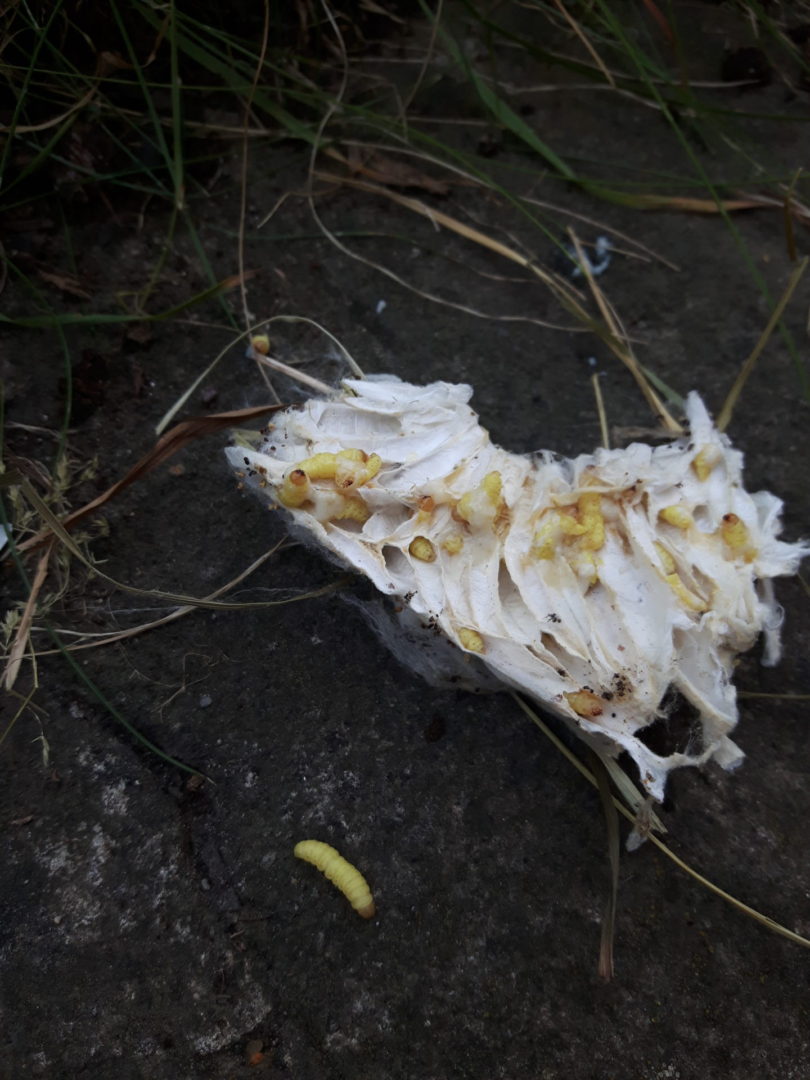
Aphomia sociella - nest infested with Aphomia sociella Caterpillars
in cocoons removed from the hive
Photo O. Hercog (2016)
How a beekeeper affects a bumblebee nest
Depending on the time at which the wasp attacks the bumblebee nest, the nest is weakened or dies prematurely (no sexual individuals are born in it). The size of the wasp mother and thus the number of eggs she is able to lay also greatly depends on it. The fate of the nest also depends on whether it is a single attack or an attack by multiple wasps . Very often in nature, nest attacks end fatally .
Nests of early bumblebee species , such as the meadow bumblebee (Bombus pratorum) or the garden bumblebee (Bombus hortorum),
have a better chance of survival. At this time, nests of early bumblebee species have mostly produced sexual individuals from the first generation and the wasp does not have time to destroy them. It mainly attacks nests in the final phase and does not fundamentally harm the new generation of these bumblebee species.
more damage to the nests of later species, such as ground bumblebees (Bombus terrestris), rock bumblebees (Bombus lapidarius) and field bumblebees (Bombus pascuorum). In these species, the bumblebee finds plenty of food in the form of bumblebee larvae and waxworks. Since the bumblebees cannot defend themselves against the bumblebee, it is up to the bumblebee to decide whether the nest is reduced or destroyed.
The wasp can destroy even a strong bumblebee nest . This happens especially when it is attacked repeatedly, or when attacked by a strong wasp mother. It is very interesting that the size of the wasp mother can vary greatly . This then corresponds to the number of eggs she lays in the nest.
Interesting facts:
- Sometimes the caterpillars of the bumblebee may have enough wax material available (in nests that have enough food, especially pollen, and are therefore large, with a large production of wax) and the bumblebee nest will only be weakened by the bumblebee.
- According to May, bumblebees are capable of attacking the moth in the nest. However, the moth can hide and then lay eggs after absorbing the smell of the nest. Although bumblebees are able to easily destroy even large moth caterpillars with their mandibles, for some reason they do not do this. The reason may be that they absorb the smell of the nest, which then provides the moth caterpillars with perfect camouflage.
However, we have never observed bumblebees attacking moths and larvae ourselves, so we mention it only as an interesting fact. - If an adult wasp is disturbed or threatened, it will drop to the ground and pretend to be dead. This is probably advantageous when infiltrating a host wasp or bee nest, as the host is unlikely to attack the wasp if it believes the wasp is dead.
- It seems that the number of attacks by parasitic wasps on bumblebee nests is on the rise. Bumblebee keepers are finding wasp larvae embedded in the thermal insulation (polystyrene) of hives. The larvae are able to chew through this material and apparently even eat it. Embedded larvae have also been found in the thermal insulation of houses, so it is possible that they are also able to live there. We do not want to believe that the larvae are able to feed on this material, but we will continue to monitor this.
Watch interesting footage of the life and work of the bumblebee wasp.
We used a video by George Pilkington from YouTube
Is the weevil just a pest?
Although we describe the ectoparasitic worm here as a parasite and pest, this is only a simplified human view .
The bumblebee has its place in nature . Under normal circumstances, when there are enough bumblebees, it is a natural reducing agent that prevents their overpopulation .
However, the keeper finds it difficult to accept such a role and therefore protects the hive and its inhabitants against the howler.
Every parasite has its place in nature . It acts as a reducing agent and prevents the overpopulation of its hosts. But nature has also equipped parasites with reducing agents. If nature is in balance, parasites do not multiply so as not to destroy their hosts - they depend on them. If they destroyed their hosts, they would die themselves. As you have read in the description of the life cycle of the tapeworm, its sexual individuals have a short life and may not find their hosts in time. There are more similar mechanisms in the tapeworm and not all of them are already known to us.
In addition to the role of a reducing agent, the wasp has a very important function, and that is the cleaning squad of the remains of the bumblebee nest . If the wasp caterpillars do not have their primary target (bumblebee larvae) available, they will be satisfied with the wax part.
In this way, the wasp accelerates the decomposition of the remains of the nest and the cleaning of the cavity in which it was built. The last remains of the nest succumb to mold. The cavity is then occupied by rodents or birds and they deposit nesting material there, and the cycle repeats. The wax wasp (Galleria mellonella) also plays a significant role in the liquidation of the remains of the nest. Beekeepers know this well, but you can sometimes find it in bumblebee nests.
Sources used
Parts of the publication "Breeding and support of bumblebees in gardens and in the city" by A. Votavová and J. Čížek were also used to prepare the text, and we, as Čmeláci PLUS, participated in its update.
We also used the publication "Insect Families and States" by J. Ždárek and the beautiful publication "Bumblebees" by M. Pavelka and V. Smetana.
https://en.wikipedia.org/wiki/Aphomia_sociella
"Male Moth Songs Tempt Females to Accept Mating: The Role of Acoustic and Pheromonal Communication in the Reproductive Behavior of Aphomia sociella!" Jiří Kindl, Blanka Kalinová, Milan Červenka , Milan Jílek, Irena Valterová, 5íujen 2011 – https://physac.fel.cvut.cz/misc/papers/male_plos_2011.pdf
