



Adjusting the ulcer - Example 1
What you will learn here
- If you buy a stun gun that doesn't meet all the requirements, what do you do with it?
- If you have decided not to return the fear to manufacturer (recommended solution) the fear can be adjusted
- In which aspects does the "ulek" [this word is unclear in context, likely a typo or colloquialism, assuming it means 'fear' or 'anxiety' for a general translation] not work and how can it be addressed with your own means?
Date of last update: 22/1/2021
Introduction
The shock is produced by a manufacturer called Large natural bumblebee house (PRICE 1165,-)
The manufacturer supplies shock absorbers to other retailers, where the price and name may differ
The fright is quite nicely crafted, but it shows a number of shortcomings, which is why it cannot be recommended for breeding.
But fear is, unlike many others unsuitable corners provided HERE identified as candidate for fine-tuning And that's why we contacted the manufacturer
Manufacturer of these ulcers was address 11/2020 and did not respond by 12/1/2021.
He subsequently expressed interest in providing feedback for improvement. This was provided to him on 14/1/2021. However, he has not responded to date.
Our recommendation is:
- You do not buy this device until the manufacturer removes the defects.
- if you already own this fright and cannot return it (it's used), perform the following edits on the ulcer
Photo documentation
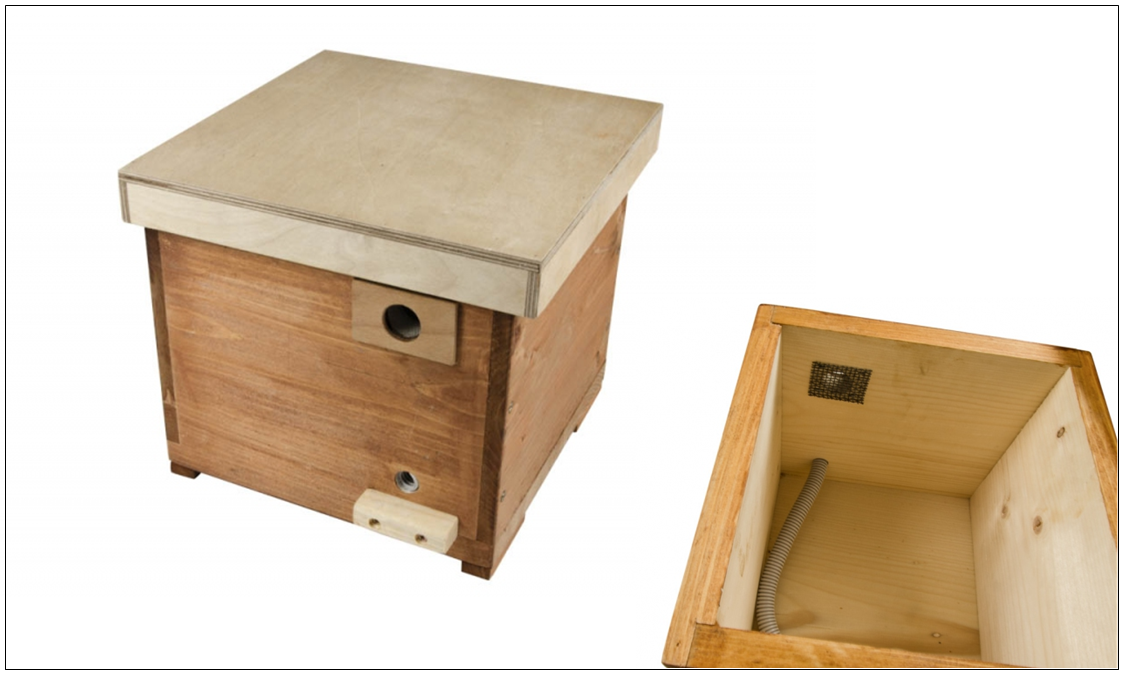
Large natural bumblebee nest (PRICE 1165 CZK)
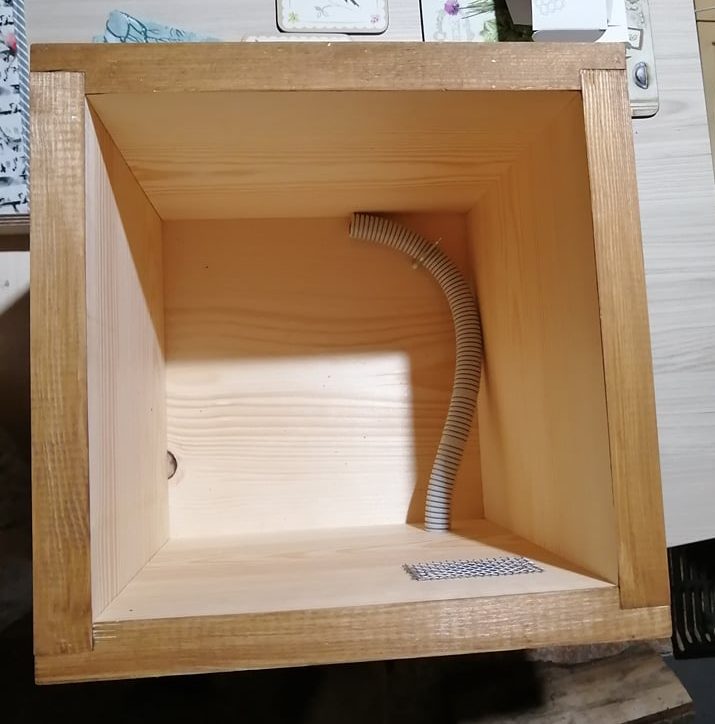
Unsuitable brood box – brood box without a frame rest and an entrance tunnel of small aperture
Bumblebees PLUS Photo
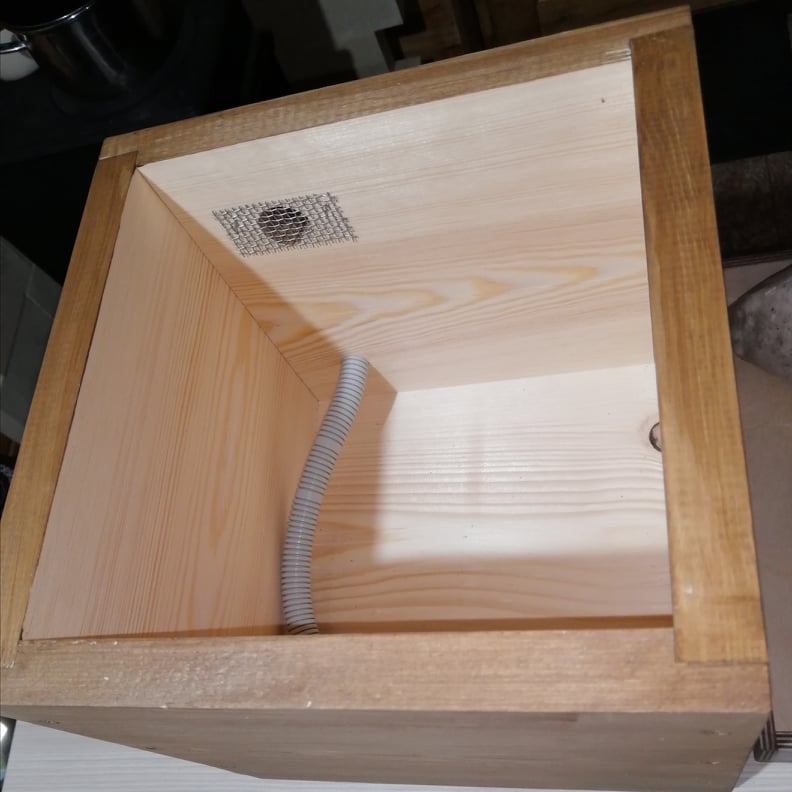
Unsuitable brood box – brood box without a frame rest and an entrance tunnel of small aperture
Bumblebees PLUS Photo
.
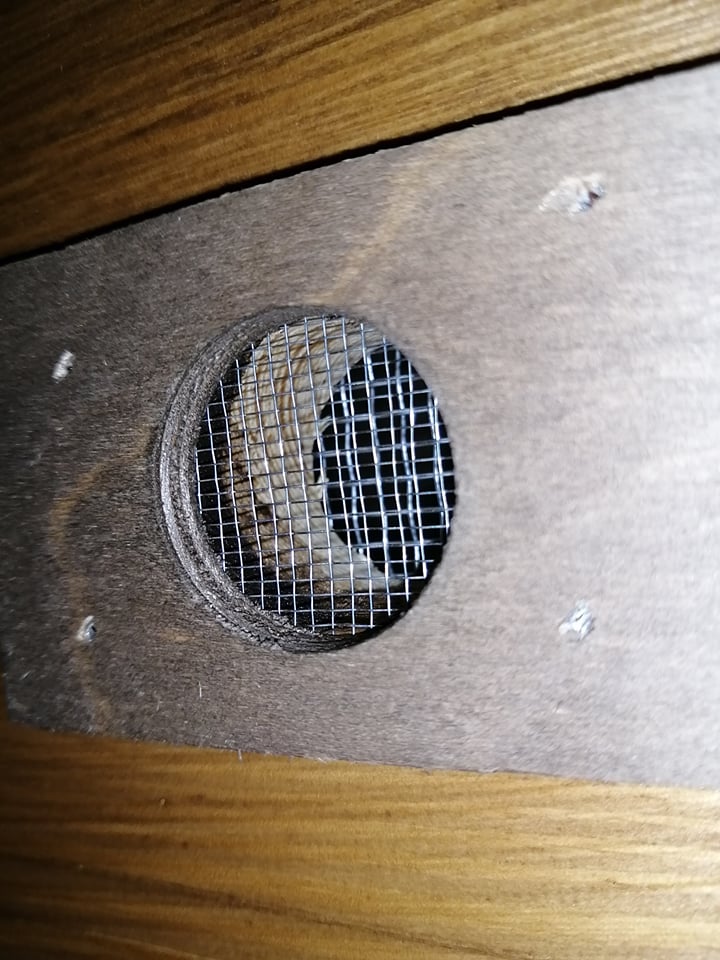
Unsuitable fright. Ventilation opening with a coarse mesh and no possibility of closing.
Bumblebees PLUS Photo
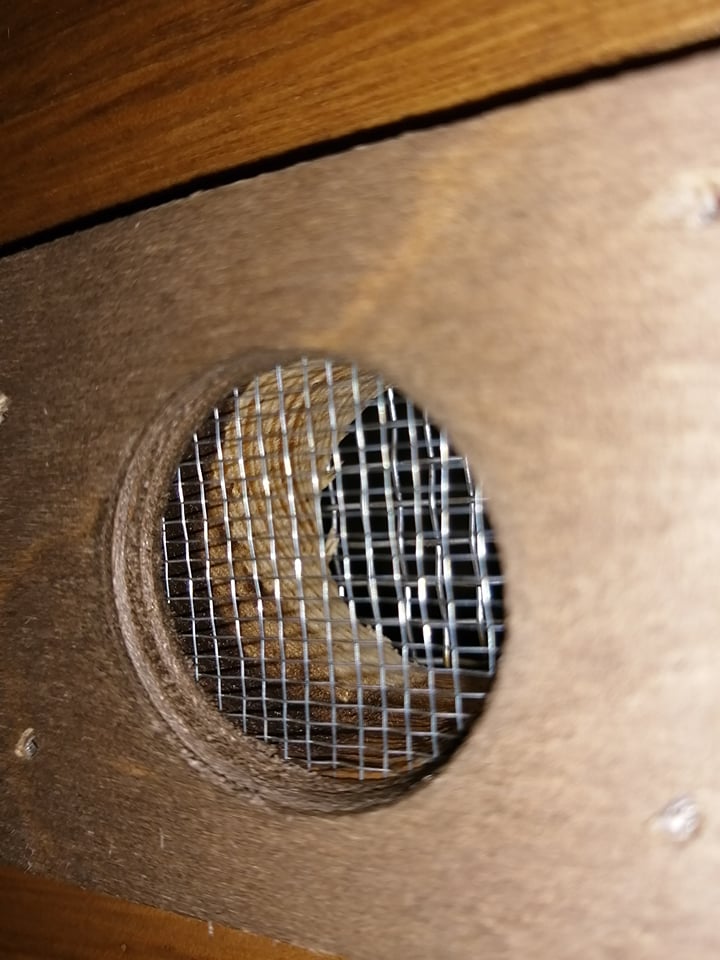
Unsuitable fright. Ventilation opening with a coarse mesh and no possibility of closing.
Bumblebees PLUS Photo
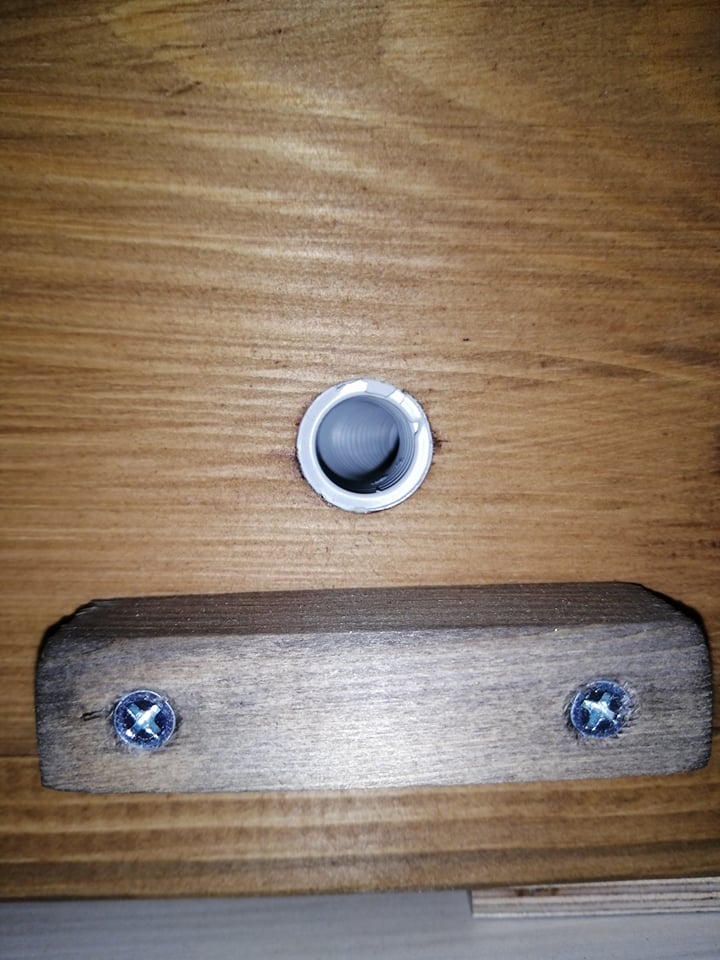
Inappropriate alarm – entrance hall with inadequate lighting and missing safety flap
Bumblebees PLUS Photo
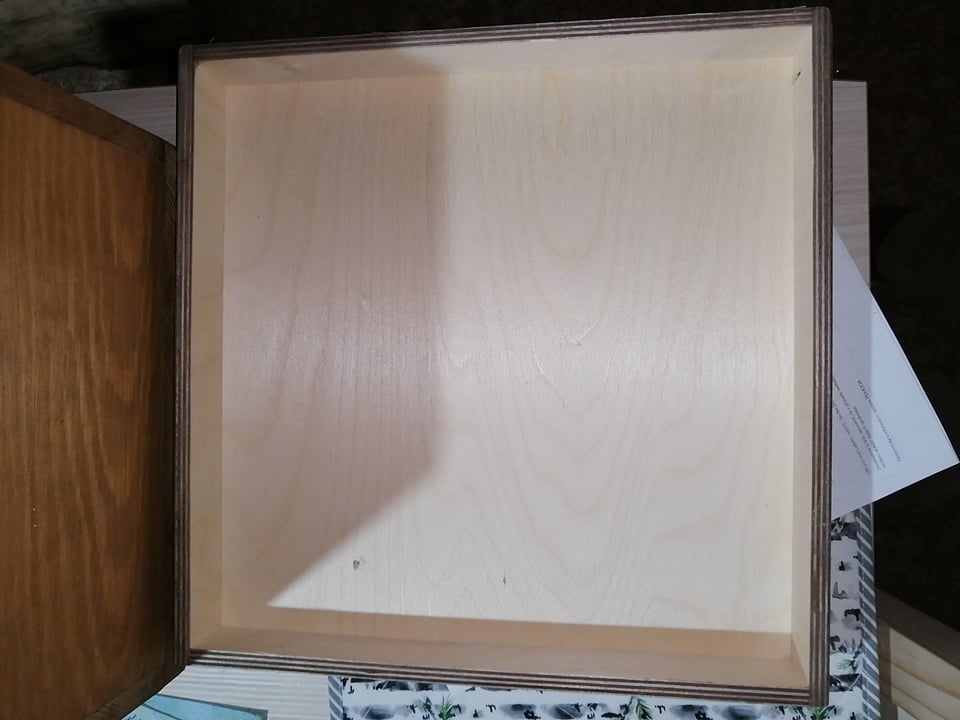
Inappropriate fright – thin material roof and seal
Bumblebees PLUS Photo
The Čmeláci PLUS group's recommendation for hive modification
Text from email to manufacturer (sent 14/1/2021)
Ulcer construction
- It looks robust, internal dimensions are fine.
- We strongly advise against using solid wood (it warps when exposed to moisture), but it seems the structure was designed to withstand this (humidity levels in the hive remain above 90% for several months)
- The wall thickness is good, for wood at least 25 mm.
- We didn't measure ourselves bottom thickness, is also important and should have been same as wall thickness
Recommendation
- What is the strength of the base? If it's like the walls, it's fine, otherwise, we recommend increasing, or
- The attic should be fitted with supplementary removable insulation, for example, polystyrene.
This, however, must be replaced after the season, parasites settle in it.
Roof
- We don't know the material's shelf life, but if it's made of waterproof plywood, with a good coating and maintained, it should be fine (maintenance is in the instructions).
- The problem is insufficient material thickness. 9 mm is very little for thermal insulation.
- Furthermore, it's dreadfully light and the wind can blow it away/knock it over.
- The verge is quite small, the roof looks good, but water will run down it and off onto the walls of the verge.
Recommendation
- A stronger waterproof plywood will be used for the roof (even 18mm formwork plywood will do), the roof will be durable, it will be heavy and press down on the seal, and the wind will not carry it away.
- Insert a removable thermal insulation insert into the roof.
- Removing insulation is important because in the summer the roof can be cooled (wet cloth/ice on the roof) and thermal insulation would reduce the cooling effect.
- It is also advisable to have a frame in the roof with an insulation insert. The roof will then sit at the same height even after removal and will not descend, for example, onto the ventilation opening. This allows the opening to be as high as possible (very important).
You can find out more about the roof. HERE
Ulcer corpus
- On the perimeter of the body, or on the roof mating surface, there should be seal.
- Leaks (deformations, construction, etc.) lead to the ingress of pests and the demise of the nest, even a 1 mm gap is a serious problem, 0.5 mm sometimes too
Recommendation
- Apply a soft, low gasket to the upper landing surface (perimeter) at the width of the hive wall.
- The seal should not be made of foam (foam degrades) and should not be unnecessarily high (otherwise the bumblebees will gnaw through it).
- Is Tessa self-adhesive sealing tape suitable, for example
You can find out more about the seal. HERE
Ventilation opening
- Used The netting prevents bumblebees from chewing through. = ok
- But is it made of aluminium/stainless steel so it doesn't corrode?
- Unnecessarily thin, parasites can easily enter the duct
- The ventilation lacks a closure. This is a big problem when settling an ulcer and also during cold spells etc.
- The opening is also relatively small
- The opening should be as high as possible (see roof)
- Ventilation opening It can't be cleaned
- The inner mesh is attached very lightly
Recommendation
- Enlarge the opening to 50mm (necessary for adequate ventilation when using Uhelon 53S).
- Replace the meshes with denser ones, an aluminium insect screen made of aluminium (available at DIY stores) would be suitable.
- Place a technical mesh screen inside the inner mesh, one that even the small parasitic wasp Melittobia acasta cannot penetrate – the required material is UHELON 53S (this density!).
- The construction must be such that the bumblebees' mandibles do not reach and damage the Uhelon.
- The opening needs to be fitted with a closure (lid/cap) allowing for gradual and complete sealing.
- At least one ventilation side should be removable so that the keeper has the chance to clean the opening of parasites, dirt, cobwebs, and wax build-up from bumblebees after the season.
You can find out more about the ventilation opening HERE
Entrance hall
- The material is okay
- It's used on the tip insufficient internal diameter (clearance) of 14 mm, at least 18 mm is required, preferably 25 mm
- The corridor is short and also inappropriately placed
Recommendation
- Replace the hallway with a larger light, minimum 18 mm+.
- The corridor was supposed to be easy to remove, meaning at least to pull out its connection to the wall.
- The passage should lead along the walls to the exit. If it leads along the bottom, the beekeeper will not be able to access it when the hive is occupied.
You will read more about the entrance hall HERE
Protective flap
- The bayonet fitting includes a protective cap, preferably shaped, Mandatory equipment
- If you offer a bumblebee house without a protective flap, many people will buy it „based on the picture“ and their bumblebee nests will be attacked by parasites and perish prematurely.
- Placing a flap on the brood box as you write in the instructions is not a solution. After settling, the queen can be attacked by another queen, who may kill her in a fight for the brood box. The flap should therefore be on the brood box immediately, and the queen must get used to the flap very quickly (introduction through a closed flap).
Recommendation
- Put a photograph of a beehive with a flap on your eShop
- Do it like other e-shops – where the recommended component (in this case, a flap) is automatically added during purchase, and if the customer wants to remove it and simultaneously accept the warning. Customers will buy more flaps.
- Please instruct customers that without a baffle, their enclosure will not be suitable and they should purchase a baffle from us/elsewhere.
You can read more about the protective flap. HERE
Solution for standing the ulcer, or for hanging it on the wall
- The breeder should have the option Startle to stand on the mat and so on (the ulka should have legs made of screws usable for ant protection) or
- Wall hangings (ditto)
Recommendation
- Fill in the scare with these parts or give users instructions
You will learn more about the ulcer's placement HERE
Manufacturer's instructions
- Instructions they are very brief, or is missing (see flap)
- Besides settling the mother, many more situations are needed and to look after the scare and the nest within it.
- Likewise, protection against parasites, such as ants, must also be addressed.
- The cotton lining needs to be adjusted. (prevent the presence of long threads) and also to place it in a certain way into the ulcer
- We know the book you're offering, and the author too. We agree with him on many things, but some techniques are unacceptable (e.g. bumblebee keeping without protective flaps...).
Recommendation
- Either complete the instructions for breeders, or refer them to a breeding website, for example www.cmelaciplus.cz.
You will find guides to bumblebee breeding HERE