



How things are in nature and in the hive between bumblebees and cuckoo bumblebees
What you will learn here
- What are bumblebees
- How to recognise them
- What is their life cycle like
- How bumblebee nests are harmed
- How to defend yourself against them
- Why bumblebees have their place in nature
Last updated: 9 May 2021
Contents
What are bumblebees
What bumblebees look like
Types of bumblebees and which types of bumblebees they most often parasitize
The life cycle of bumblebees
Jak pačmeláci působí na hnízdo čmeláků
How to recognise a bumblebee nest invasion
How to preventatively defend yourself
How to react when a nest is attacked
What happens if you don't intervene
Is a bumblebee a pest?
Conclusion
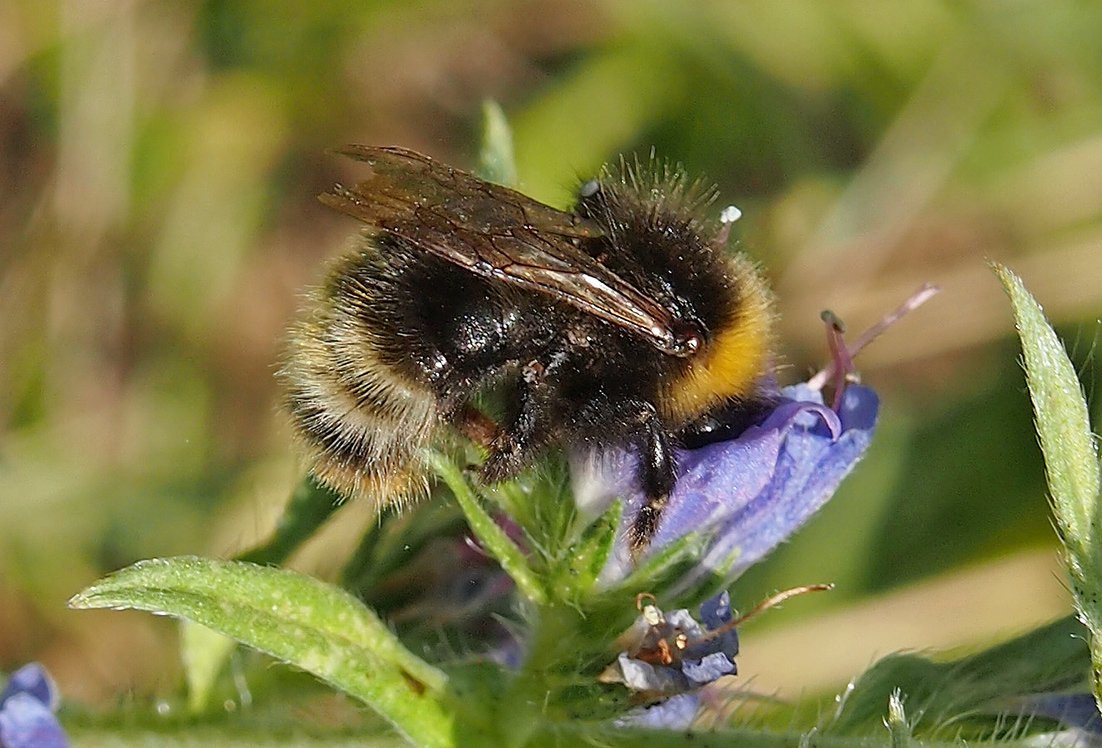
Forest cuckoo bumblebee (Bombus sylvestris)
Photo: H. Kříženecká
What are bumblebees
Parts of the publication by A. Votavová and J. Čížek, „Beekeeping and Support of Bumblebees in Gardens and in the City,“ which Čmeláci PLUS participated in updating, were also used in preparing this text.
Next, we used „Insect Families and States“ by J. Ždárek and the beautiful publication „Bumblebees“ by Pavelka and Smetana.
Bumblebees are closely related to bumblebees, which live parasitically They don't have a worker caste, just females and males. Are Critically dependent on bumblebees, which attack and feed on them.
Bumblebees (Bombus, formerly Psithyrus) are a genus of insects belonging to the family Apidae. The very close relationship with the genus *Bombus* has likely prompted a now-closed discussion within the scientific community as to whether to distinguish the two genera or unify them into a single genus named *Bombus*, and within this genus, distinguish the subgenus *Bombus* and the subgenus *Psithyrus*. Currently, bumblebees do not have their own genus and are therefore included in the genus *Bombus*. (Source: Wiki).
However, you will commonly encounter the use of the genus names Bombus and Psithyrus.
Cuckoo bumblebees occur only as sexual individuals. They parasitize bumblebee nests. The female lays her eggs in them. The original female will either kill it or subjugate it.. The host species' workers care for the larvae. until pupation. Sexually mature individuals – males and females – then hatch from the pupae. The worker caste does not occur in bumblebees..
With individual species of bumblebees, a narrow specialisation on parasitism usually occurs within individual bumblebee species. For example, for the cuckoo bumblebee *Bombus bohemicus*, the host is the White-tailed bumblebee (Bombus lucorum), and so on.
Female bumblebees do not collect pollen and therefore do not have pollen baskets on their legs. They can feed their larvae, but they prefer to leave the care of them to the workers of the host.. Therefore, their tactic is to find a bumblebee nest and enslave it so that it helps them secure food for their offspring. They cannot carry pollen or nectar to the nest, nor do they have glands for making wax and building cells.. How slave traders operate effectively.
Therefore, the worker bumblebees need to ensure all of this – without bumblebee nests, the bumblebees are unable to reproduce.
After the bee wolf, bumblebees (especially in some locations) the biggest (often hidden) problem with outdoor bumblebee keeping.
However, even bumblebees they have their place in nature. Among some common bumblebee species, it serves as their natural reducing agent. This is the case, for example, with the abundant buff-tailed bumblebee (Bombus terrestris) and the cuckoo bumblebee (Bombus vestalis) that parasitises it.
Bumblebees don't collect pollen and nectar, but when feeding, pollinate the plants. They are, therefore Collectors, like bumblebees, although they're probably not as efficient.
There are fewer bumblebees than **bumblebees**. This is precisely why it's necessary to protect and if you meet them, To respect their way of life.
What bumblebees look like
Bumblebees with their They resemble bumblebees in their colouring and body structure, often to those other bumblebees, which they are parasitised on.
Their colouring and body structure make them quite difficult for a layman to distinguish from bumblebees. Therefore, to identify a bumblebee, time and follow more characters carefully.
They differ from bumblebees darker shade of colouring.
In males, it can be recognised different morphology of copulatory organs – but put it into practice…
Queen mothers drones differ from bumblebee queens more robust body construction.
Female bumblebees do not collect pollen and therefore nThey have pollen baskets on their legs.
Robust females can be reliably identified by the different anatomy of their hind legs' tibiae. Unlike bumblebees, which have them bulging, smooth, shiny, and bordered by long stiff bristles on the sides, In water voles, they are convex and covered with hairs over their entire surface. (Screw waxing..)
They have darker wings compared to the transparent wings of bumblebees and on the upper side of the abdomen, possibly also on the chest often bare shiny black „armour“ patches“.
This The armour is also stronger. than a bull's armour and thus have a better chance of winning in a fight with it.
Chest hair with bumblebees it's never grey, brown or orange, but Always black, sometimes with transverse yellow stripes.
Overall, hairiness in bumblebees is sparser than in bees.
The head of bumblebee queens is never longer than it is wide.
Bumblebees have Strong, sickle-shaped stinger.
Complete The tip of the abdomen carrying the sting is often black and bare – The last article of the anus is almost hairless..
Another difference is that they have stronger mandibles than bumblebees.
Also them The wax glands are missing – the workers of the bumblebees take care of the waxy nest structures for them
Sometimes bumblebees can be distinguished in flight, when they emit distinctive rattling sound.
For breeders it might be interesting to know, for example, that if in the later stages of spring I cannot bring the big mother into the ulcer, it could be a bumblebee.. If they succeed, such a mother, after leaving the nest, will not perform an orientation flight and will fly away without interest. However, introducing a bumblebee mother means nothing and is not a fundamental mistake – see below.
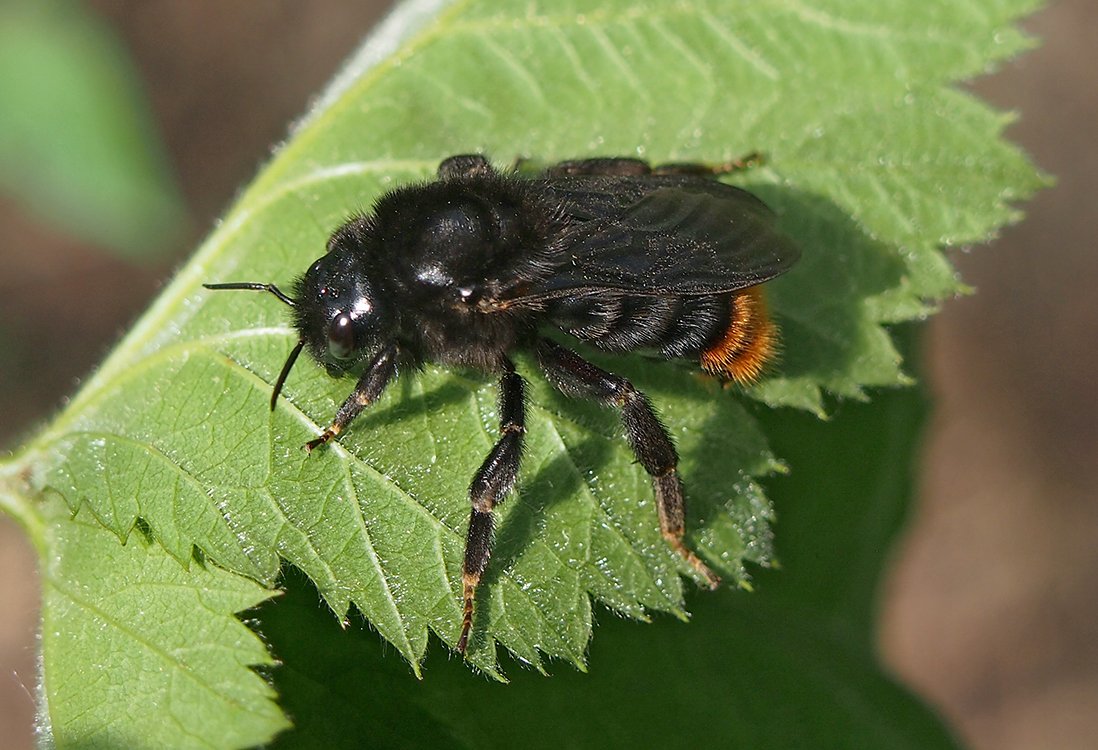
Cuckoo bumblebee, female (Psithyrus rupestris)
Photo H. Kříženecká
Types of bumblebees and which types of bumblebees they most often parasitize
- In our nature, you will find several species of bumblebees, often very endangered.
Here we provide The most common species of bumblebees and, at the same time, the species of cuckoo bumblebee that most frequently parasitises them:
- Buff-tailed bumblebee (Bombus terrestris) x Vestal cuckoo bumblebee (Bombus vestalis)
- Red-tailed bumblebee (Bombus Lapidarius) x Vestal cuckoo bumblebee (Psithyrus rupestris)
- White-tailed bumblebee (Bombus lucorum) x Buff-tailed cuckoo-bee (Psithyrus bohemicus)
- Common carder bee (Bombus pascuorum) x Field Cuckoo Bumblebee (Psithyrus campestris)
- Early bumblebee ( Bombus pratorum ) x Forest cuckoo bumblebee (Bombus sylvestris)
- Tree bumblebee (Bombus hypnorum) x Norwegian cuckoo bumblebee (Psithyrus norvegicus)
- Garden bumblebee (Bombus hortorum) x Buff-tailed bumblebee (Bombus lucorum)
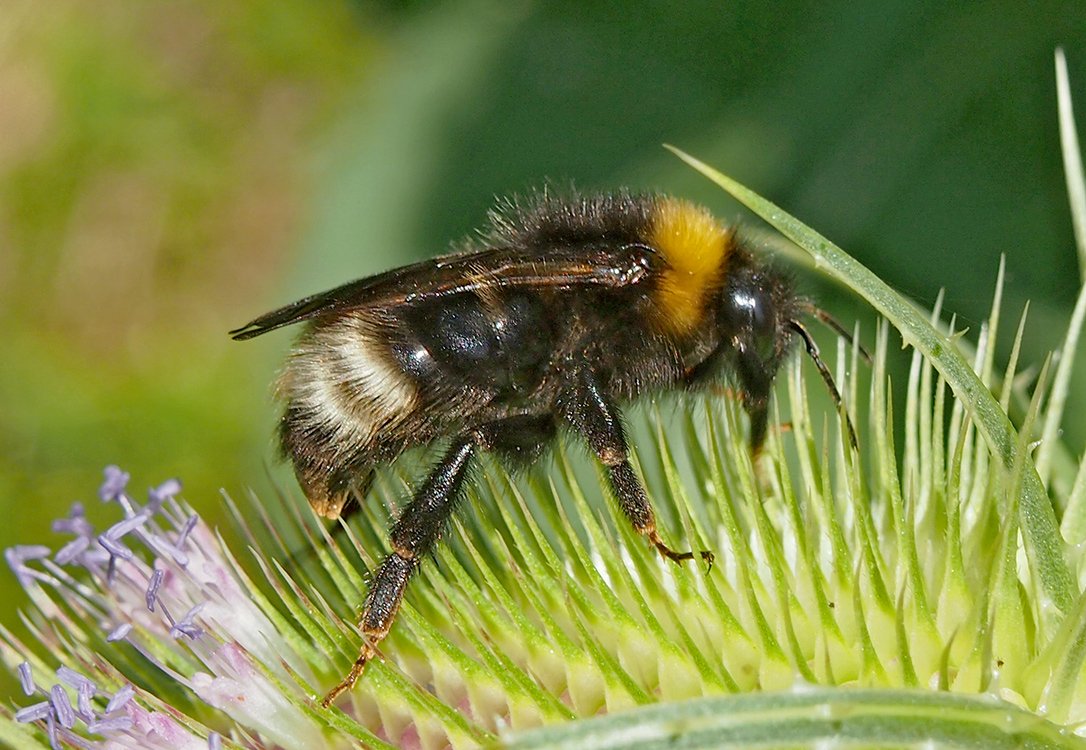
Bohemian bumblebee, female (Psithyrus bohemicus)
Photo: H. Kříženecká
For illustration, we have prepared an example for you Comparison of basic bumblebee species and cuckoo bumblebees parasitising them,
As you can see, identifying a bumblebee isn't entirely easy, and if you're unsure of distinguishing between different types of bumblebees, it can get confusing.
Source Blooms for Bees (UK)
Look at Basic species of bumblebees and cuckoo bumblebees in the Czech Republic , where you'll find Detailed comparison of bumblebee species and the cuckoo bumblebees that parasitize them (COMING SOON).
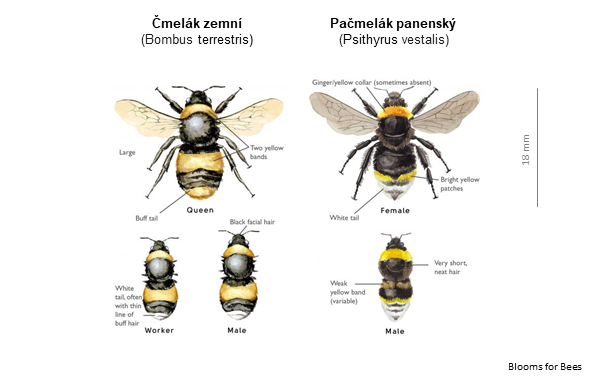
Bumblebees PLUS - Buff-tailed Bumblebee x Vestal cuckoo bumblebee (Bombus vestalis)
Source: Blooms for Bees
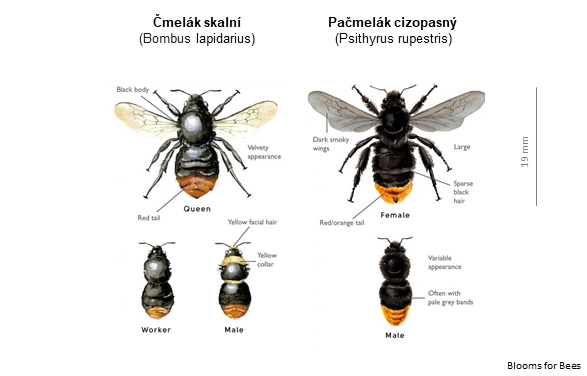
red-tailed bumblebee
(Bombus lapidarius) x Cuckoo bumblebee
Source: Blooms for Bees
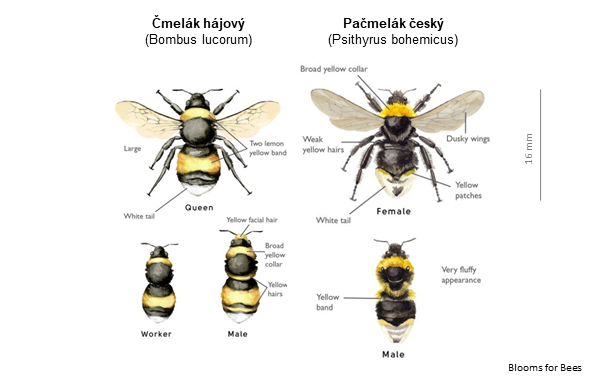
Forest bumblebee x Bohemian bumblebee
Source: Blooms for Bees
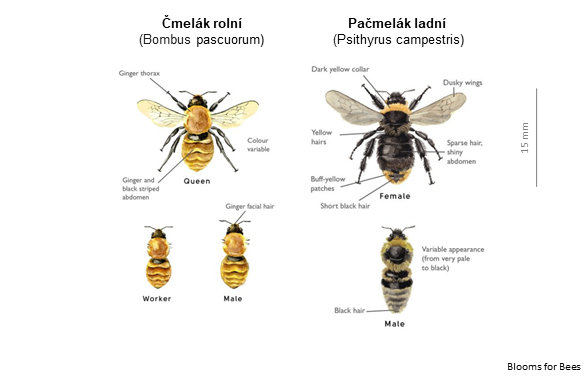
Common carder bee
(Bombus pascuorum) x Garden bumblebee
Source: Blooms for Bees
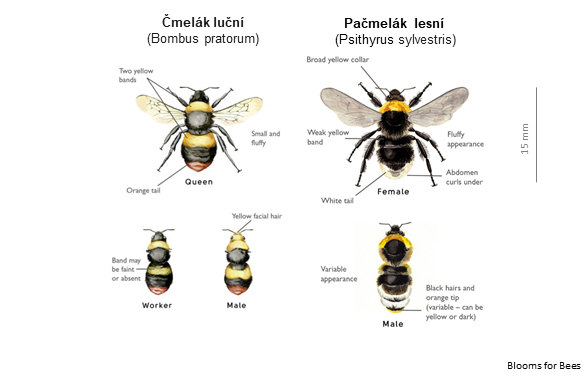
Early bumblebee ( Bombus pratorum ) x Forest cuckoo bumblebee (Bombus sylvestris)
Source: Blooms for Bees
The life cycle of bumblebees
Mother bumblebees are emerging from the ground later than queen bumblebees, often hibernating deeper as a result than the mothers of the target species of bumblebees, so that spring wakes them up later.
When bumblebee queens wake up, they leave their hibernacula, refuel with nectar and pollen, much like bumblebee queens. They then set off and tirelessly are searching for already functioning bumblebee nests with workers.
It has been proven that the scent of the nest and the tracks of workers in the vicinity serve as their guide. Malice is also a guide to finding species they are looking for (see the relationship between the bumblebee species and the bumblebee species).
However, they often don't find such a place immediately, only an established bumblebee mother in a solitary phase (without workers). They leave such a mother alone – they want a nest with workers, with one or two generations.
Interesting fact
- However, it seems that bumblebee queens are capable of remembering a location they have found and returning to it later – just as bumblebee queens choose between multiple nesting sites.
- Bumblebee queens therefore have to wait until they find a nest with workers that they need as their slaves. However, the bumblebee nest must not be too strong, so that it doesn't contain strong workers and a large number of workers that they could no longer overcome. Therefore, bumblebee queens constantly search for bumblebee nests by smell and wait for a suitable moment to attack.
If the bumblebee queen If it finds the nest in the correct condition, it will attack.. If the path is clear, it tries to penetrate the nest.
Female workers from multiple generations of bumblebees have a chance of victory. over the mother bumblebee in the corridor to the hive, where they can face a larger mother bumblebee in greater numbers.
If the passageway has a small internal diameter of under 18 mm, only one worker bee can resist the queen bumblebee. If the diameter is large, the queen bumblebee can bypass the workers. Among other reasons, this is why we recommend a passageway diameter of 18–25 mm.
In a developed nest, it sometimes happens that strong bumblebee workers kill or drive out a queen, with several of them often paying the price with their lives.
So mother The buff-tailed bumblebee primarily seeks out nests with a single generation of workers., so, around 10 workers. These nests are easy target even in bumblebee breeding in hives. Very often beginners pity the little female worker from the first generation and leave their flap open. This is opportunity for mothers of bumblebees.
If a bumblebee mother gets into the nest, it's usually all over.
The mother bumblebee there first liquidate the largest female workers, which she would not be able to control. These are combative and are the first to resist her. She also kills these workers because they would lay drone (male) eggs in the future.
The next target is the mother.. A fight will occur, and in it, the physically better-equipped mother bumblebee will usually win.
Bumblebee mama It spares only the weaker female workers, like slaves. They can control them with their pheromones and other chemical substances. They do this by roughly pressing them to the ground and rubbing themselves against their backs and sides (mauling).
Jaromír Čížek describes how the bumblebee mother uses chemical agents. After suppressing the resistance, she anoints the remaining workers with her pheromone, and they then treat her as their mother – the queen.
The nest is now controlled and The slave girls work for the queen bumblebee.
Subsequently, the bumblebee queen consumes the eggs of the host bumblebee queen, and potentially also worker eggs, and begins to lay her own eggs in the wax cells of the bumblebees.
Interesting fact
- Bumblebees eat only eggs and not bumblebee larvae and pupae.Rot sometimes develops in an infested nest (in the case of a late infestation); in addition to female and male bumblebees, it also affects, to a lesser extent, queen and male bumblebees
- The coexistence of a bumblebee mother and a bumblebee has been observed in some species – such as the early bumblebee (Bombus pratorum) and the Forest cuckoo bumblebee (Bombus sylvestris)
With the help of existing worker bumblebees, including food delivery, so The bumblebee queen is founding her brood on her own. – the mating of bumblebee females and males who leave the nest earlier than those in bumblebee colonies.
Newly born male and female bumblebees will then fly out of the nest, where they will find partners, mate and then hibernate – similar to other bumblebees.
In spring, everything begins anew, just like with bumblebees.
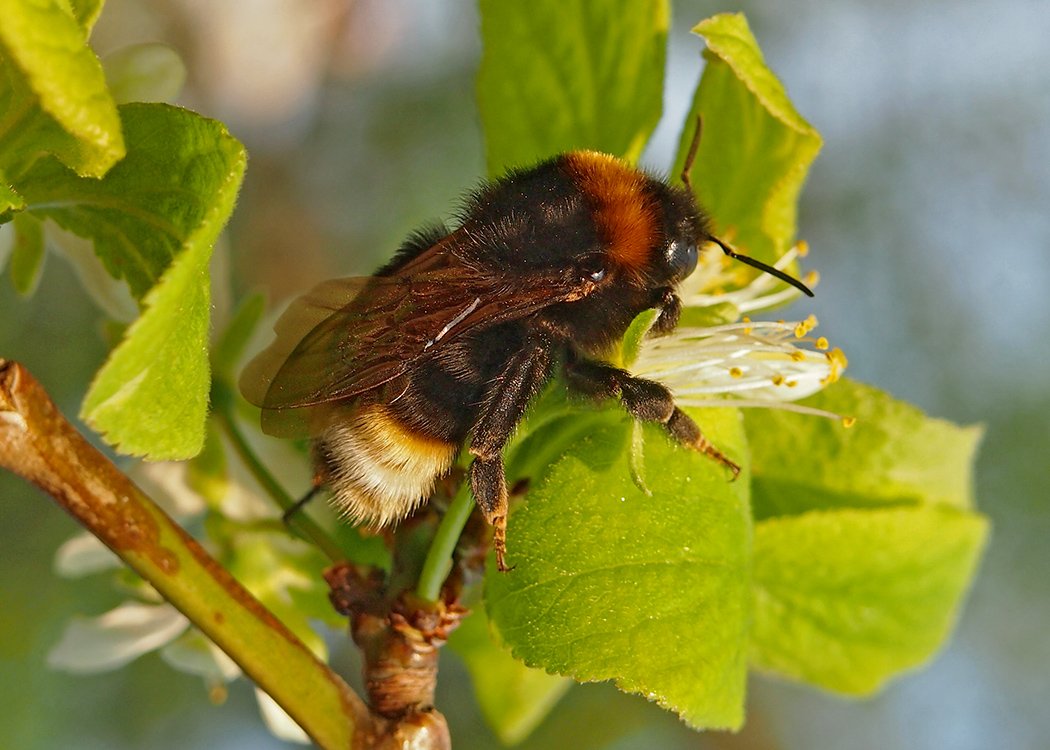
Vestal cuckoo bumblebee (Bombus vestalis) - Queen
Photo: Kříženecká
Jak pačmeláci působí na hnízdo čmeláků
As soon as it snows matka čmeláka hnízdo čmeláků, stará se jen jeden cíl – vlastní potomstvo.
The last bumblebees (workers, and occasionally queens and males) are born in the nest from the remaining larvae. However, the bumblebee queen is dead, so a further generation of workers and sexually reproductive individuals will not be born.
The nest therefore won't develop as it could and its energy and work is used for the benefit of the parasitic mother.
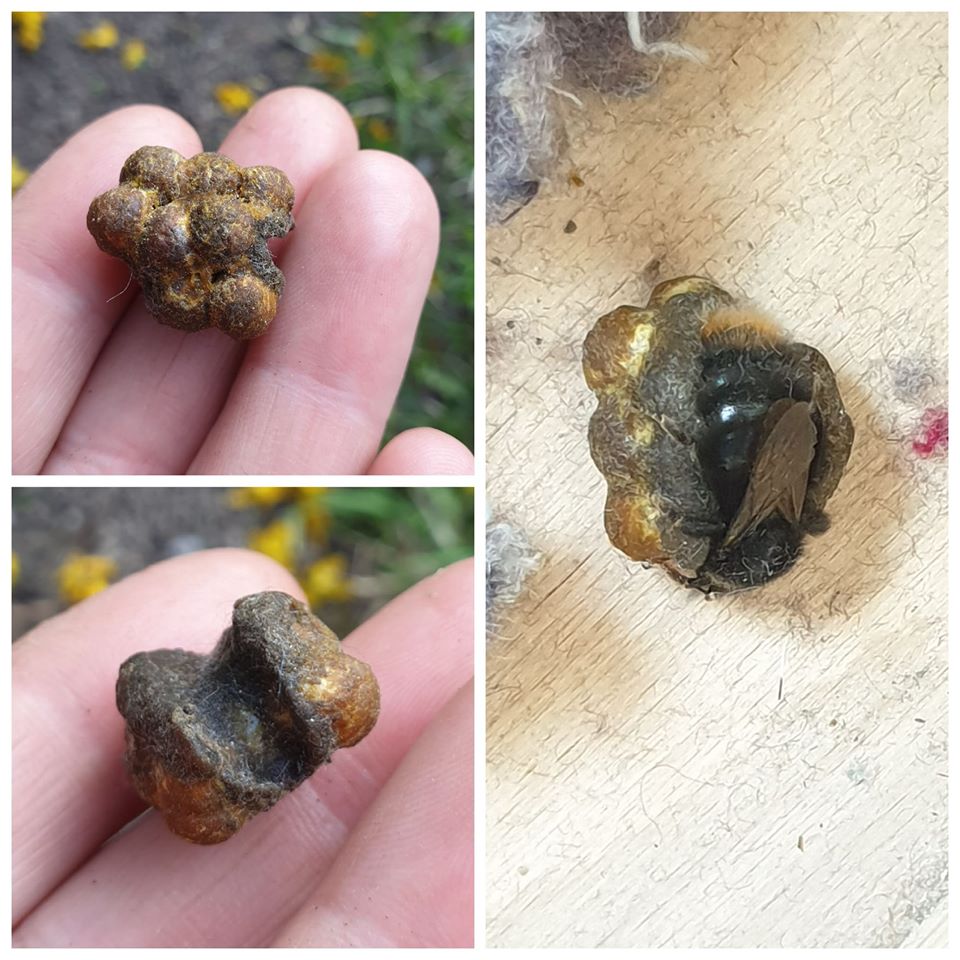
The cuckoo bumblebee on the buff-tailed bumblebee's cocoons.Psithyrus rupestris
Photo: Ála Ungerová
How to recognise a bumblebee nest invasion
Recognising a nest raid is Very difficult. If you don't observe the flying adults – the sexually mature individuals – and don't notice their differences, you might not realise it at all.
Sometimes the breeder themselves In the spring, the „mother of a slightly different bumblebee“ is introduced to the hive.“. The bumblebee is large and it defends itself. It could be a queen bumblebee. Even if it happens, nothing terrible occurs – The queen bumblebee will not stay in the hive (i.e. the bumblebee life cycle).
But if the bumblebee mother finds the nest and takes it over, The nest often ends up weakened by workers in the first, at most the second generation, and development stops.. No new workers are born, the nest perishes prematurely.
The number of workers is therefore a useful guide, as is the early observation of sexual individuals who differ in colour and appearance from what is typical for the species.
In the best-case scenario, after leaving the nest, bumblebee workers may lay individual male bumblebee eggs, but even this may not be a reliable indicator of an infestation.
Therefore, the everyday breeder often doesn't notice an attack on the hive by bumblebees at all and doesn't realise what has happened and that they might have contributed to it themselves by not protecting the nest in time. protective flap.
How to preventatively defend yourself
As a preventive measure, the following appear to be used ulcer protective dressings sight HERE.
Early and consistent use Protective flaps. This may (but may not) deter the queen bumblebee.
Early use of the flap is essential. Beginner breeders often leave the flap open for too long, thus providing a clear path for the bumblebee queen.
We have recorded a case where bumblebee's mother she was so audacious that together with the female workers klapák pronikla, but The flap flap repair reduces the risk of bumblebees entering the bumblebee nest..
Warning
- You do not resettle hives without a protective flap installed
(If a bumblebee queen discovered a scare, she might investigate it, potentially leaving the queen bumblebee alone for now but returning later. - Teach the mother to go through the flap as soon as it is stable and reliably returns to the hive. If the bumblebee mother discovers the flap, she may investigate it, leave the bumblebee queen alone for now, but return later.
- Once a worker is born, they'll manage with the flap.
- If you hesitate and leave the flap open „because the worker bees are struggling with the flap“, you risk a bumblebee visiting and invading such a nest.
For smaller species of bumblebees, it is possible to use inlet narrowing. However, we do not recommend this solution at all to beginner breeders, and therefore we do not describe it here.
Ventilation opening must be fitted with a bite-proof mesh.
Checks it is possible to detect the presence of a bumblebee, but not to intervene and remove it – It's too late, because the bumblebee queen is dead and cannot be replaced.
Further defensive barriers Gutters are good for sealing the roof and the entire body.. However, the bumblebee follows the scent of the nest and the trail left by the worker bees. It usually can’t fit through small openings, which is why it’s drawn to the entrance.
Bumblebees are hosted by certain types of bumblebees. If it encounters a species other than „its favourite“, it generally does not try to occupy it. The bumblebee mother flies away disappointed in such a case.
In 2019, Lenka Wettermanová recorded a case where a mother bumblebee of the species Psithyrus bohemicus lifted a protective flap and penetrated a nest.
This can happen because the mother of the wax moth is robust. A properly fitted protective flap and a well-sealed hive significantly reduce the risk, but may not prevent the wax moth from entering the 100% hive.
You can find out more about the protective flap HERE
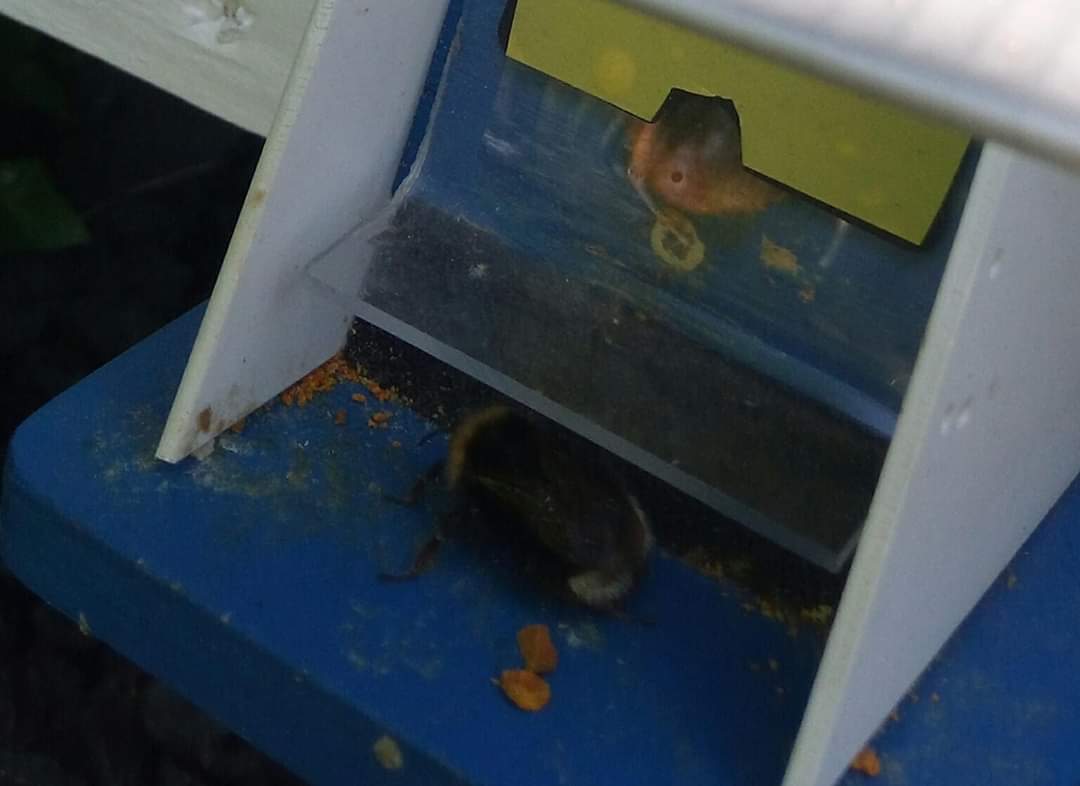
Bohemian cuckoo bumblebee
Photo L. Wettermannová (2019)
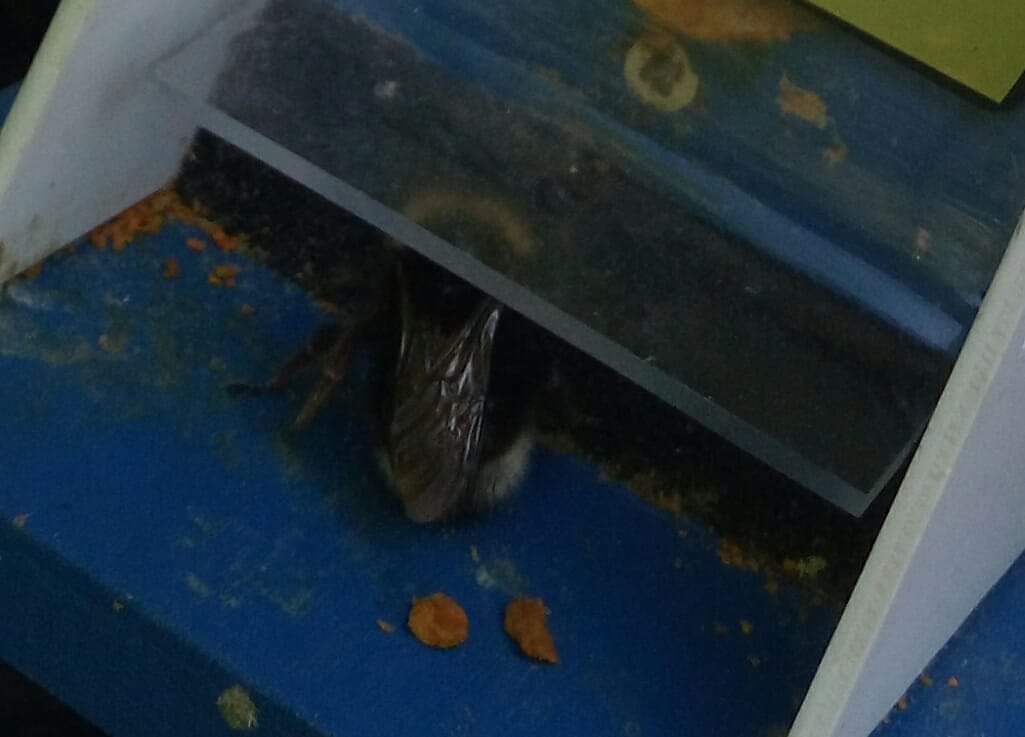
Bohemian cuckoo bumblebee
Photo L. Wettermannová (2019)
How to react when a nest is attacked
Intervention at the moment of attack is no longer possible – however, we do not recommend nest removal (we will explain why in the following text).
What happens if you don't intervene
As we wrote above, Once the nest has been attacked, intervention is no longer possible. It's late.
After an attack on a hive by a bumblebee mother, the bumblebee queen is killed. The generation of bumblebee reproductives, her offspring, is mostly completely lost, or at best, a partial loss.
It is not uncommon for beekeepers to fail to recognise an infestation of bumblebees in a hive. Even if this does happen, it is important to remember that bumblebees are a protected species; their numbers are smaller than those of honeybees, and we therefore recommend letting nature take its course
And the bumblebee is a beautiful relative of the bumblebee and pollinates them when visiting plant flowers. That's why it also deserves our attention – Let him live and accept the state of things. If you are lucky, the nest will already contain larvae and pupae of bumblebee adults, and sometimes even queens and males.
Is a bumblebee really a pest?
This is a very difficult question. From a human perspective, yes. But In reality, his life is more complicated than that of a bumblebee and is therefore more endangered.. Bumblebees in nature are meant to reduce the excessive number of bees, and if the number of bees decreases, there will be fewer bumblebees too.
I The scientists are not together. whether bumblebees always kill the mother of an attacked nest. Not all species of bumblebees restrict the development of their host species., sometimes with them coexist a dThey tolerate each other to a certain extent..
If you see a bumblebee feeding on flowers, you'll know that it too has its meaning in their pollination. And its mother also tenderly cares for her offspring, and if it weren't for the murder of the host mother, we probably couldn't be angry with her. After all, they are so similar to bumblebees. Sometime during their evolution millions of years ago, each line chose a different direction, and one can't be angry with them for it. In flight and in movement, however, you probably wouldn't notice that it's not a bumblebee...
And bumblebees they have their place in nature. Among some common bumblebee species, it serves as their natural reducing agent. This is the case, for example, with the abundant buff-tailed bumblebee (Bombus terrestris) and the cuckoo bumblebee (Bombus vestalis) that parasitises it.
Bumblebees are also a certain indicator of a healthy population of the relevant host species. If they appear somewhere, their host species flourishes there. Otherwise, even bumblebees wouldn't thrive in that particular spot.
Bumblebees don't collect pollen and nectar, but when feeding, pollinate the plants. They are, therefore Collectors, like bumblebees, although they're probably not as efficient.
There are fewer bumblebees than **bumblebees**. This is precisely why it's necessary to protect and if you meet them, To respect their way of life.
Let the bumblebee live, even if it attacks your patch of lettuce!
Conclusion
- Try prevent a badger attack by closing the safety flap promptly and thoroughly
- Do not leave the protective flap open even in the days when the little workers „struggle“ with her – at that time, bumblebees attack
- Don't kill bumblebees and let them live – they are close relatives of bumblebees and are an integral part of our nature
- If you are interested Types of bumblebees and bumblebees in the Czech Republic, look at the species catalogue HERE
Take a look at the beautiful photos of bumblebees by Hanka Kříženecká on the website www.blanokridlivpraze.cz
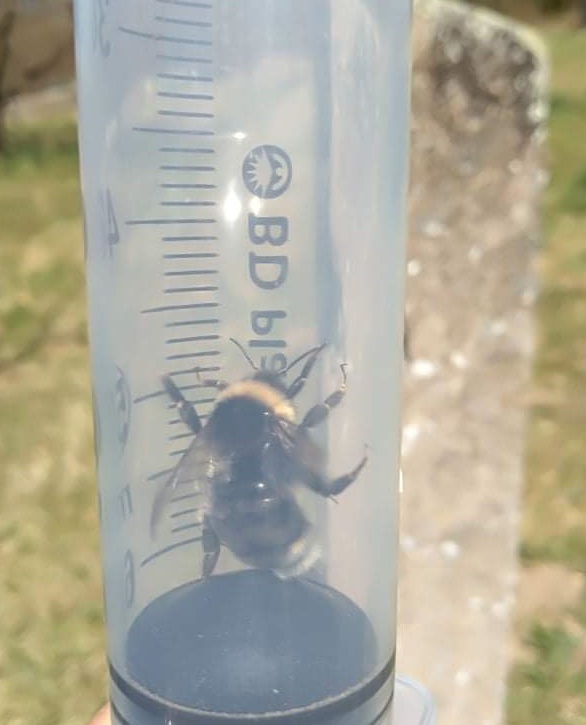
Bumblebee or bumblebee?
„The “blues" and Martina already know..
Photo: M. Bradová