



Bacillus thuringiensis: good servant or bad master
What you will learn here
- Is there a miracle cure to protect bumblebees from the greater wax moth?
- Bacillus thuringiensis, also known as Bt.
- How does Bt. affect insects
- Are products with Bt safe for nature
- Can preparations with Bt be used in nature?
- How to use them in case of a bumblebee nest attack
Last updated: 19/03/2022
Contents
Introduction
Bacillus thuringiensis, or Bt.
A bit of history
How does Bt affect insect larvae
Practical use of Bt.
Bt. lifespan.
Commercially available biopreparations based on Bt.
Are products with Bt. and its toxins really safe?
And bees, therefore also bumblebees
Bt and its strains present in commercially available products on the Czech market
Use of Bt. in combat with the Mediterranean flour moth (Aphomia sociella)
How do Čmeláci PLUS recommend applying the product with Bt against the greater wax moth?
Conclusion and summary
Introduction
Bumblebees in the wild, as well as bumblebee keepers, are troubled by an age-old enemy – Variegated cutworm (Aphomia sociella). The wax moth is a significant factor in the reduction of bumblebees.
This bumblebee parasite can wreak havoc in a nest. If it gets into a bumblebee nest, it can reduce it or even destroy it completely. It depends a lot on how many moth females get into the nest and also at what stage of development the nest is when it is attacked. You can read more about the screwworm fly HERE
How many bumblebee nests are there in nature will think of, we don't know exactly. But it is certainly Large number. For example, if we are setting out on a mission Bumblebee Rapid Squadrons , mostly they are nests infested by the moth. The reason for this is that they are very often uncovered and a screw is easily found.
Breeders are trying to defend themselves against the borer attacks and are looking various solutions. You can find most of the well-known ones on our website (clapper, Ventilation, good seal, inspections, etc.) All these solutions require basic care and maintenance.
However, if a hiding place located out of easy reach of the keeper (we do not recommend the indicated location...), or in a place where the beekeeper cannot perform regular hive maintenance (cabin, garden away from the house), is the breeder looking for a universal solution. But unfortunately, it is becoming apparent that there is no.
Yes, The sad news is that, as always, the universal „cure“ simply isn'tLike all medicines, they have their limitations and side effects.
Recently, there has appeared “miracle cure„which was intended to definitively solve the problem of bumblebee breeders. It is about the use of biological product and where the basis is Bacillus thuringiensis .
Here you are We are bringing a summary of information. In detail for curious readers, in summary for others, and crucially recommendations and conclusion for everyone. So choose for yourselves how much you want to get involved..
The chapter is crucial How do Čmeláci PLUS recommend applying the product with Bt against the greater wax moth?
Bacillus thuringiensis, or Bt.
We won't forgive ourselves A little theory, well, it is for understanding the matter necessary. In the following text, we will mostly shorten Bacillus thuringiensis to just Bt.
Bacillus thuringiensiss is a Gram-positive soil bacterium from the genus *Bacillus* and phylum *Firmicutes*. It is aerobic and produces spores. These contain toxins (δ-endotoxins, also known as Cry) which have insecticidal effects on certain groups of insects, and therefore it is used in the production of pesticides and also genetically modified (transgenic) plants.
Bt. is related to B. cereus, a soil bacterium, and B. anthracis, the cause of anthrax. Like other members of the genus, all three are aerobic bacteria capable of producing endospores.
BT is ubiquitous in nature, albeit usually in low concentrations.
A brief explanation:
- Gram-positive bacteria are denoted as such if, at the end of diagnostic staining using Gram's method, they appear blue-violet under a microscope. This is due to the high content of peptidoglycan in their cell wall and the absence of an outer membrane and lipopolysaccharide layer.
- An aerobic process or environment is one in which there is a sufficient quantity of molecular oxygen (O₂). Optimal aerobic conditions are achieved when the oxygen concentration in the free atmosphere of the environment under observation (e.g. compost) exceeds 14% by volume. Sufficient aerobic conditions for most microorganisms are still present at concentrations of up to 3% O2; a further decrease results in a transition to an anaerobic environment.
- A spore in bacteria is a cell that serves for long-term survival under adverse conditions.
- An insecticide is a preparation intended for the control of insects in their various developmental stages. Insecticides are used in agriculture, for the protection of stored goods, and also in the fields of hygiene and medicine. Depending on which developmental stage of the insect they act upon, they are divided into ovicides (destroy eggs), larvicides (destroy larvae), ovilarvicides (destroy eggs and larvae), and imagoicides (destroy adult insects).
- An endospore is a biological term denoting a quiescent stage formed asexually with the function of a propagule. The precise meaning of this term is not entirely uniform across different branches of biology concerned with the life cycles of organisms. The term endospore appears in specialised terminology in fields such as bacteriology, protozoology, or mycology. Each of the named disciplines naturally refers to a different specific object by the term endospore.
- The common characteristics of all endospores are: their formation through vegetative reproduction, their ability to survive in adverse environments, and, if necessary, their capacity to give rise to a new individual capable of reproduction.
We will also provide an explanation of what it is Larva
- Larva is underage (juvenile) animal stadium with indirect development. At butterflies se called the larva caterpillar.
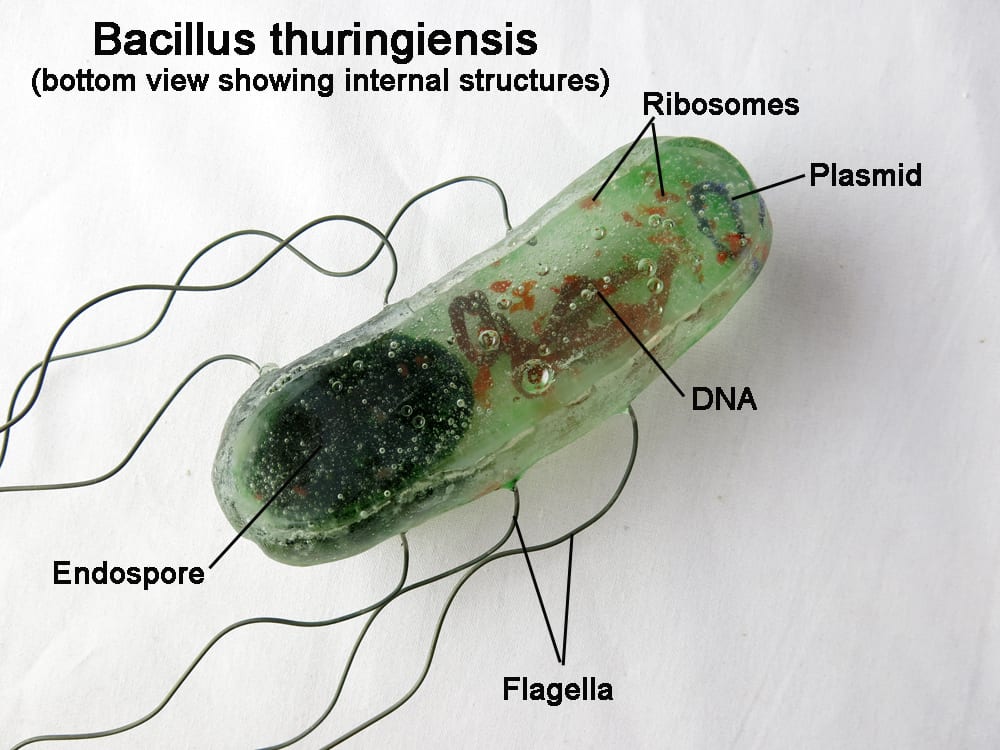
Bacillus thuringiensis
Source: Jardineria On
A bit of history
Bacillus thuringiensis was object in 1901 In Japan Ishiwatou. It was first isolated from an insect host (the silkworm caterpillar).
In 1911, direct insecticidal activity was confirmed in Germany by Ernst Berliner, who discovered a disease in mealworm caterpillars called Schlaffsucht (lethargy).
Since then Isolated thousands of strains Bt., of which however only some show toxicity to the larvae of certain insect species.
The first Bt-based biopreparations, designed to combat the larvae of certain butterfly species, appeared on the market in the 1950s. In 1976, a product based on a Bt strain that causes a lethal disease in certain groups of dipteran insects (e.g., black flies and mosquitoes) was introduced, and in 1984, a strain was isolated that also proved effective against the larvae of certain beetle species (e.g., Colorado potato beetle larvae – Leptinotarsa decemlineata). Currently, strains exhibiting virulence against non-insect hosts (e.g., mites and nematodes) have even been isolated.
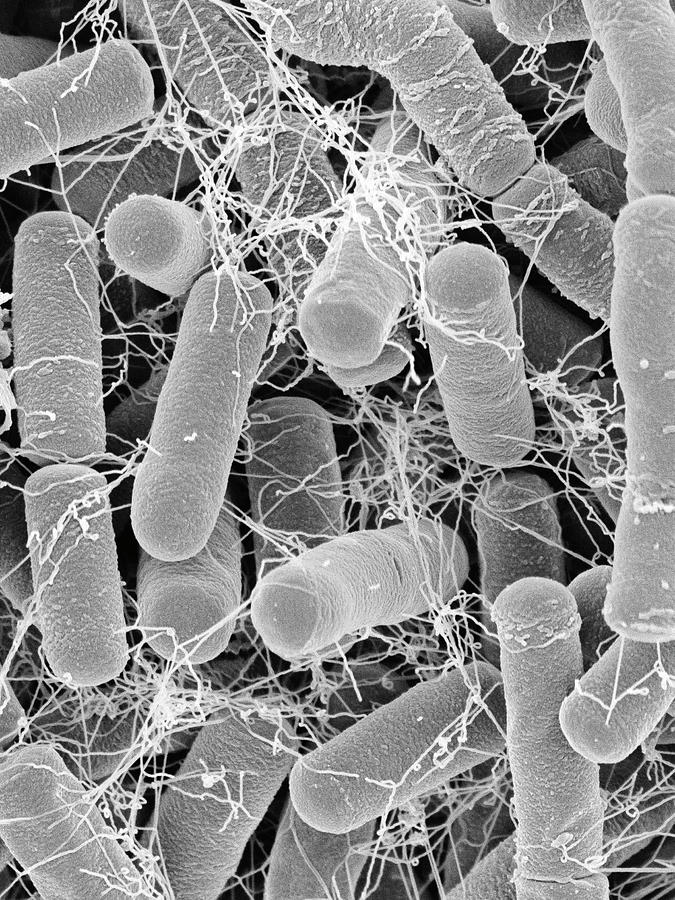
Bacillus thuringiensis
Photo: Denis Kunkel
How does Bt affect insect larvae
Right. acts on insects after ingestion. It must get into the intestine, where it activates, in short, up to there produces toxins. This is why in practice it is bound to protein crystals.
toxins then the host quickly paralyse – within hours his vitality will cease, it will stop taking food and then die quickly. In his body After a while, new disputes will arise. which are awaiting ingestion by another host.
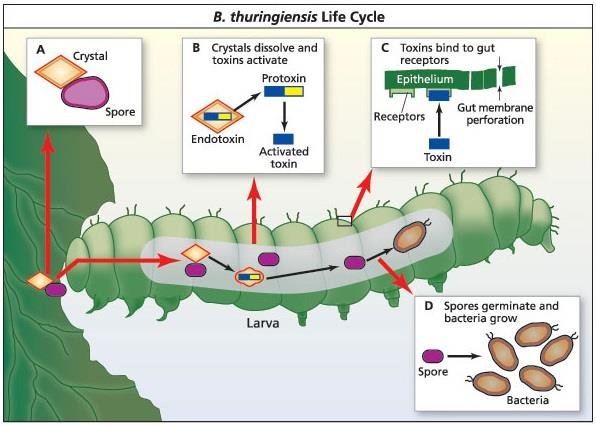
How Bacillus thuringiensis, also known as Bt, works.
Source: Histopathology of the midgut in larvae of Diatraea saccharalis Fabricius, 1794 (Lepidoptera: Crambidae) treated with Bacillus thuringiensis (Bacillales: Bacillaceae)
The next image shows the diagram in a bit more detail, but it's the same mechanism that kills insect larvae.
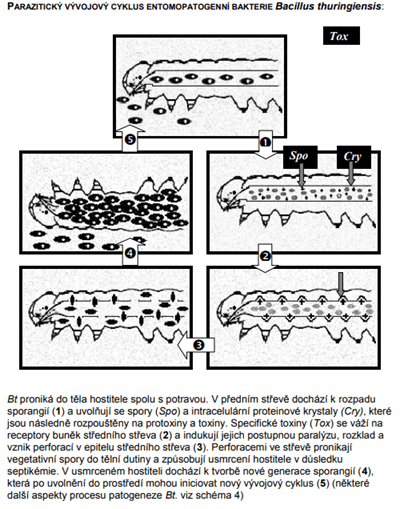
Jak funguje Bacillus thuringiensis, známá jako Bt. – Podrobně
Source: Biological preparations based on entomopathogenic bacteria
Practical use of Bt.
spore and crystalline insecticidal proteins produced by Bt are used as specific „eco“ insecticides.
Given their specificity, these pesticides are considered environmentally friendly, with little or no effect on humans, wildlife, pollinators and most other beneficial insects. Belgian company Plant Genetic Systems was then the first company (in 1985) to develop genetically modified transgenic crops, here tobacco plants, with insect resistance by expressing cry genes from Bt.
The toxins, or rather Bt genes, are therefore used for genetically modified agricultural crops, modified with the aim of increasing their resistance to „harmful insects“.
Bt-based insecticides are often applied as Liquid sprays for cultivated plants, where the insecticide must be ingested to be effective. Solubilised toxins are presumed to form pores in the midgut epithelium of susceptible larvae (they perforate the gut). The Bt. spores, therefore, need to be ingested to be activated. Recent research has suggested that gut bacteria of insect larvae are also necessary for the insecticidal activity of Bt. Ingestion alone may not, therefore, be sufficient for activation.
Exists row of stemsů Bt. which were selected for specific use. For example, Bt. serovar israelensis is widely used as a larvicide against mosquito larvae.
Other strains are used as effective insecticides in the production of maize and cotton. Genetic manipulation has managed to introduce the relevant Bt strain into the plants. This has replaced other insecticides that are not environmentally friendly.
The basis of the final effect of the Company is always toxin. He is very strong and acts on insects, which crops it will consume. Bt. and its toxin can be and is modified – modulated by humans and adapted for a specific one to two insect orders. It is about the order and all its members. It cannot be limited to just one type..
We already know that the toxin itself only acts after ingestion in the insect's gut. Until recently, it seemed that it did not affect other organisms, so it did not pose a threat to vertebrates, for example. However, there is now suspicion that it may affect rat livers. For now, however, it seems that no one is dealing with this problem, and Bt. is considered non-toxic to humans by the European Food Safety Authority.
As an interesting point, we also mention another application of Bt. It is being tested as one of the bacterial composites for accelerating the degradation of polyethylene-based plastics. However, there can be many more examples.
Farmers are rejoicing, but environmentalists and entomologists are raising a cautionary finger.
Take a look at an interesting video that describes some of the uses.,
Bt. lifespan.
Up to this point, it seems quite fine, but...
For the practical application of a Bt-based preparation, a very important parameter is and use of preparations is limited.
Yes, it can under ideal conditions to survive in the soil Up to 5 months, however, in a pH <5 (weakly acidic) environment, rapid degradation occurs.
On the surface soils and plants show Bt. little to very low life expectancyThe key abiotic factor influencing the survival of Bt. on plant surfaces is the UV component of solar radiation. During full sunshine, Bt survives on the surface of treated plants for only a few hours.. Specifically, half of the Bt spores are inactivated after just 4 hours of exposure to direct sunlight.
In the humid and warm environment of a bumblebee nest, durability is expected to be significantly less than 3 months.
Commercially available biopreparations based on Bt.
Spectrum use is wide
- Biopreparations based on strains effective against butterfly larvae – protection of field vegetables, cotton, fruit plantations and grapevines, protection of forest stands;
- Biopreparations based on strains effective against dipteran larvae – effective against larvae of some species of black flies and mosquitoes
- Biopreparations based on strains effective against the larvae of certain beetles – the Colorado potato beetle, some species of ground beetles and weevils, ...
- Biopreparations based on strains effective against the larvae of certain butterflies and beetles
Is highly valued among some tribes manufacturer's stated „selective efficacy“, in some broad-spectrum (butterflies and beetles).
Newly constructed strains exhibit some properties that cannot even be found when monitoring thousands of natural strains. Commercial biopreparations are now often conceived based on genetically modified Bt strains.
Perhaps let's settle for the following table, which describes different BT strains and their use. But note that it always concerns action on an order, not on a species of insect.
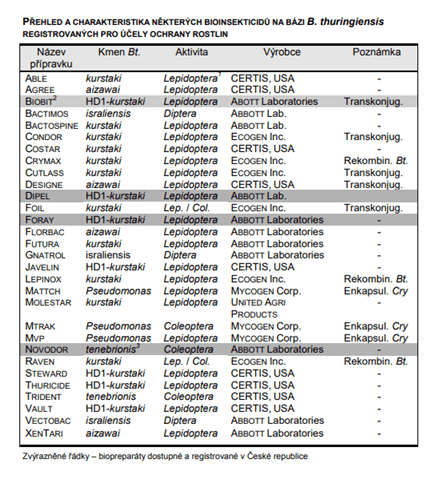
- Use of Bt strains.
- Source: Biological preparations based on entomopathogenic bacteria
- Lepidoptera – butterflies
- Diptera – Two-winged insects
- Coleoptera – beetles
These are products registered in the Czech Republic.
Very important note.
Easily find information on what Order is the medicine effective for them, sometimes when type. But Nothing states how it affects other orders and it is also no guarantee that other insect orders are resistant to it..
In principle, it is clear that the preparation works as Insecticide at least within the order of insects, but it cannot be targeted at the species..
The manufacturers„ interest, after all, is in eliminating “harmful insects,„ and the “other" ones are not the focus of their interest.
In the video, you can see examples of Bt's commercial use. Unfortunately, there He's not talking about the negative effects. Everything is optimistic because it's being fixed It works, but not completely selectively., then to specific „harmful insects“.
Are products with Bt. and its toxins really safe?
So once again, it shows that nothing is black and white.
Bt-based biopreparations exhibit very low acute or chronic toxicity towards warm-blooded animals. Skin irritation is entirely negligible, and when inhaled, they are only mildly irritating. The effect on the eyes is significantly irritating. No negative effects on mammalian digestion were observed (doses not specified). Bt. was tested on 74 species of birds and 11 species of fish, and in no case was a direct toxic effect found.
In some cases, a negative effect of Bt. (ssp. israelensis) has been demonstrated on some species of aquatic molluscs and crustaceans.
For example, the diamondback moth (Plutella xylostella) – an interesting moth (order Lepidoptera) and a significant pest of brassica vegetables and oilseed rape, has in some populations resistance to toxins This significantly threatens ecological production, where conventional insecticides must not be present. A similar phenomenon has also appeared in insects attacking cotton plants.
In some countries, there’s a rather complex strategy for resolving this issue and not restricting the use of Bt. An explanation of this strategy is beyond the scope of our text.
A well-documented issue was the claim that modified maize had leached into the surrounding spreads Bt-containing pollen and then there's the well-known monarch butterflyMonarch butterflyA study was carried out here, but it ended in a „draw“. Butterflies react to Bt. (their caterpillars do), but apparently, it wasn't transmitted via pollen from genetically modified maize.
There is also a risk that The pollen transfers to other related plants (grasses) and thus non-agricultural plants are also modified. However, this has not been proven (perhaps not even sufficiently investigated).
Bt. is not only used in transgenic (genetically modified) plants, but also in the form of sprays and powders. Bt. is currently widely used in many different strains. These, as we have discussed previously, affect one to two orders of insects. Thus, quite broadly. Order means, for example, Hymenoptera, or Lepidoptera.
From what we know and in principle, it is not possible to create a strain that would only affect a specific type of insect. Therefore, there is a risk of negative effects. Nature doesn't distinguish between harmful and beneficial insects; that's purely a human perspective.
As an example of negative impact, we can recall the widespread application of Bt on agricultural crops in Switzerland. By chance, the wind carried the cloud of preparation to a location of rare butterfly species, which it completely decimated…
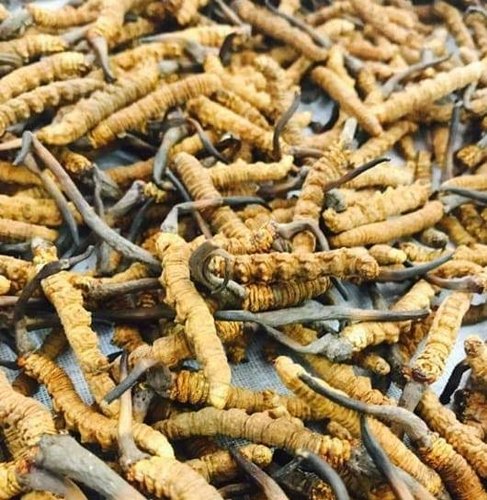
Dead butterfly caterpillars – illustrative photo
Photo: Internet
And bees, therefore also bumblebees
Bees, so Bumblebees, as well as Honey bees i solitary bees, are intensively used in modern agriculture for pollination and serve aa fundamental role in the natural ecosystem. Both belong to the order wingless (Hymenoptera) from the genus bees (Apidae). This is why risks associated with the use of Bt are monitored for these important pollinators.
Since 2007, a phenomenon known as Colony Collapse Disorder (CCD) has been recognised – sudden collapse of a bee colony. Initial speculation about possible causes ranged from the use of mobile phones and pesticides, to the use of Bt-resistant transgenic crops. A research group called the Mid-Atlantic Apiculture Research and Extension Consortium published a report on 27 March 2007 that found no evidence that pollen from Bt crops adversely affected bees. CCD has since attributed to the new virus, which has nothing to do with Bt. crops.
In a further study, it was carried out Assessment of potential risks Bt. for the reproduction of colonies and foraging behaviour in Workers of the buff-tailed bumblebee Bombus terrestris. This involved the use of laboratory microcolonies – incomplete nests. Two commercial Bt. strains were used: kurstaki and aizawai. The study and its conditions are interesting.
But let's look at results:
- When Bt was applied to pollen at a concentration of 0.1–1 TP3T, no effect on individual bumblebees was observed.
- However, when applied in nectar (a sugar solution), aizawai killed all the worker bees at a concentration of 0.1 %. It was only harmless at a concentration of 0.01 %.
- When reproductive effects (larvae) were monitored, no adverse effects were observed in the kurstaki strain. The aizawai strain reduced reproduction by 100–31% in nectar and pollen at a concentration of 0.1%.
From this, it can be concluded that the Bt. strain kurstaki is harmless to bumblebees at the stated concentrations. However, the authors of the study state that it would be necessary to conduct a study and monitor the Bt. strains present and their concentrations. In other words, the study should continue.
Please note, however, that the Bt. aizawai strain should only act on the order Lepidoptera.. However, the here provedNegative effects on representatives of another order of Hymenoptera.
Bt. as such can kill adult bumblebees, as well as its larvae, if applied incorrectly.
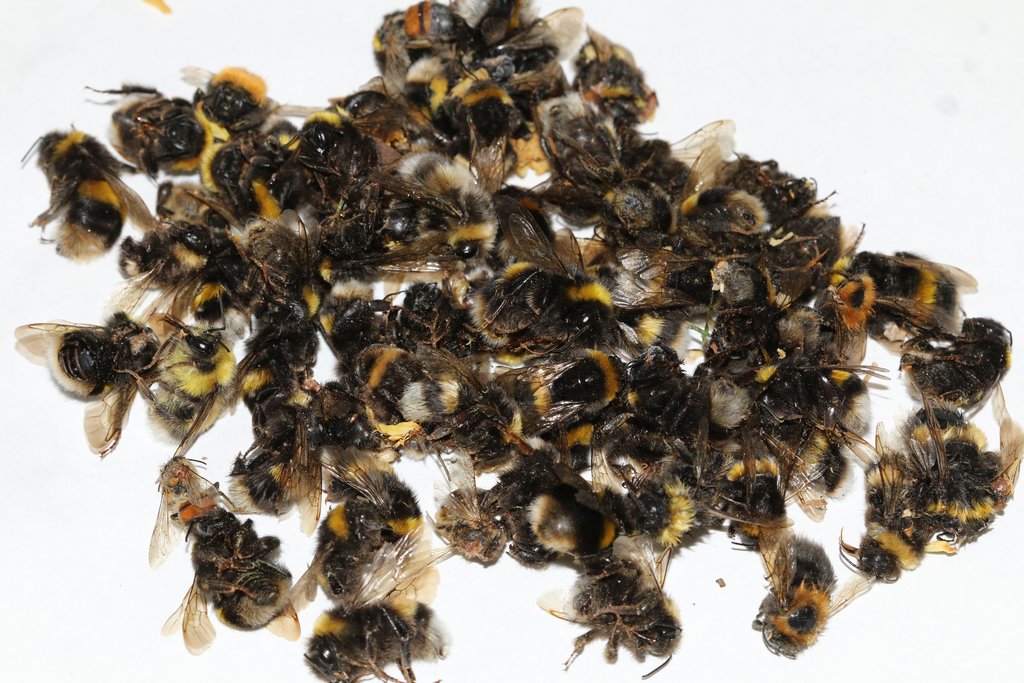
Dead bumblebees
Photo: The New York Times
BT and its strains present in commercially available preparations on the Czech market
In the Czech Republic market, there are a number of preparations that use Bt. Let's look at some of them that we have monitored.
B401 – „Wax Moth Larvae Control Agent“
Strain used: Bt. aizawai
Description:
- This preparation is used by beekeepers after honey harvesting, on stored combs, as a defence against the greater wax moth (Galleria mellonella). This is a small moth of the family Pyralidae. It is a common pest in apiaries. Its hungry larvae attack combs (wax), unfilled by bees, but also other parts of the hive, including the surface of the wood. It can even digest polyethylene, one of the most common plastics.
- It attacks larvae but does not endanger adults (butterflies). The protection of the dry material (honeycomb without honey and brood) is then effective until the frames are put to use during the next season. Suitable for swarm traps or empty hives. This ensures that the wax moth larvae do not destroy the stored hive parts.
- The preparation is supplied as a solution, it needs to be diluted and used quickly.
- The instructions state that the product is „harmless to humans and bees“.
Our commentary:
- Bt. kmen aizawai by měl být zaměřen na řád Motýli (Lepidoptera). Ze studie ale víme, že oba kmeny kurstaki a aizawai acts and into the order of Hymenoptera, i.e. for bees and bumblebees
Lepinox Plus – a selective biological insecticide against caterpillars of harmful butterflies„
Strain used: English course EG 2348
Description:
- An insecticidal product containing the bacterium Bt. This bacterium produces a protein that acts specifically against moth caterpillars (box tree moth, tortrix moths, loopers, tomato leafminer, cotton bollworm, cabbage white butterfly, and others).
- A prerequisite for good efficacy is intensive caterpillar feeding and high coverage of leaf surfaces with the spray liquid, including the undersides of the leaves. The larvae must ingest the product with their food in order to become infected.
- The bacteria will disrupt the caterpillar's digestive system, causing paralysis. After ingesting the preparation, the caterpillar will stop feeding within a few tens of minutes and will die within two days. This preparation does not affect adult butterflies or other pests.
- According to the manufacturer, it is „relatively harmless to bees“.
- The product is widely used in gardens to eliminate the larvae (caterpillars) of the box tree moth (Cydalima perspectalis), which destroys ornamental boxwood (buxus) bushes.
- The preparation is supplied in the form of a wettable powder intended to be mixed at the required concentration according to the instructions.
Our commentary:
- The course should focus on the order Butterflies (Lepidoptera). However, from the study, we know that both strains, kurstaki and aizawai acts and within the order Hymenoptera, which includes for bees and bumblebees , even if the concentrations are above 0.1%
- To our enquiry as to whether this product is effective against the greater wax moth, the manufacturer replied that it is not. However, our experiences show that yes. This strengthens our belief that The manufacturer tests the effect on only some types of insects and does not perform tests on other types.
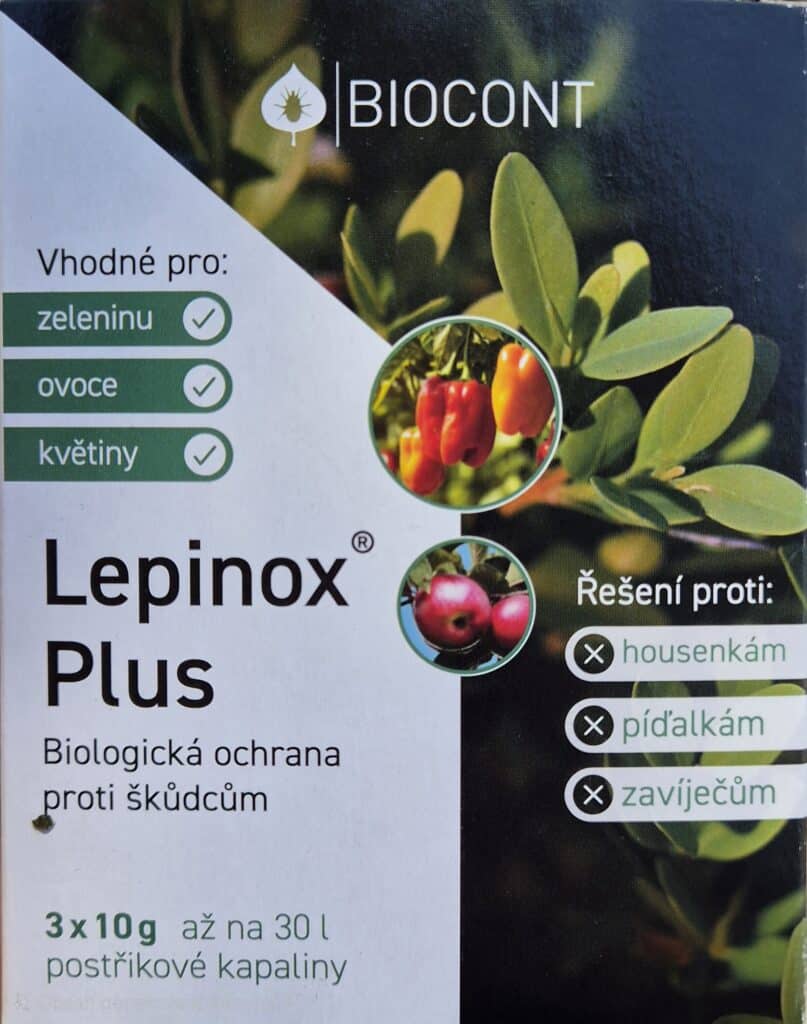
Lepinox
Zdroj: výrobce
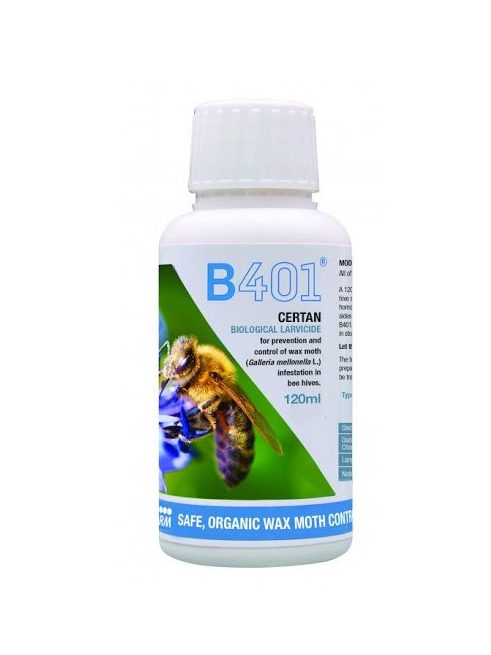
B401 preparation
Source: Manufacturer
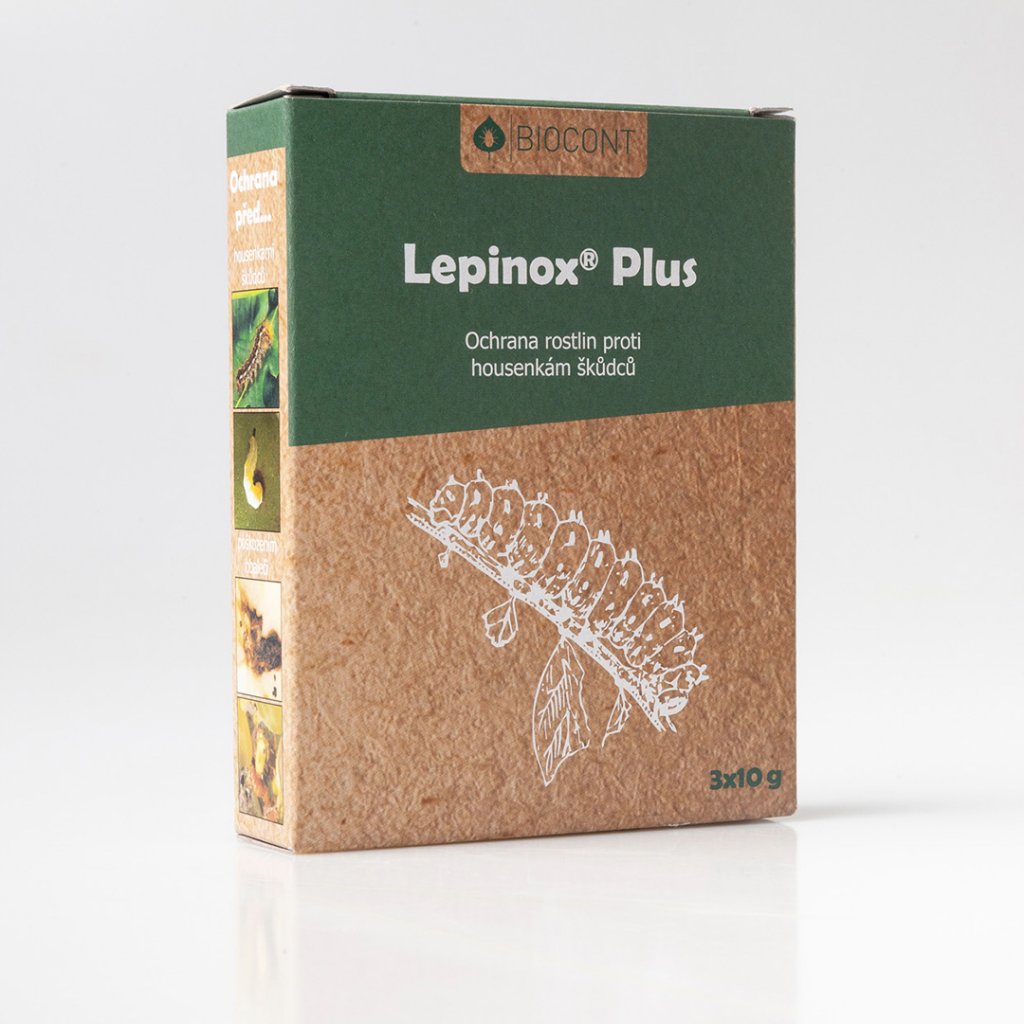
Lepinox Plus
Source: Manufacturer
Use of Bt. in combat with the Mediterranean flour moth (Aphomia sociella)
This should finally be interesting for everyone. …
We now know that For Bt. to kill the codling moth caterpillars, it must get into the gut of its larvae, must therefore be consumed Disputes. Contact with the caterpillar's body does not activate spores.
Furthermore, we know that preparations with Bt. They have a limited lifespan and further, that they can at a certain concentration, harm individual bumblebees and their larvae.
1. B401 application in ulcers for bumblebees
Some breeders first turned to product B401. Most of them applied it how they thought best – they sprayed the lining and then dried it, for them to use it in the hive. This most likely the efficacy of the product has deteriorated, especially when sun-drying. The results of the use are inconclusive.
The preparation itself should be effective against leaf rollers, then the order Butterflies (Lepidoptera), family Pyralidae, and their genera, including greater wax moth (Galleria mellonella) and therefore Parasitic moth (Aphmoia sociella). However, the Bt. aizawai strain used is not suitable for bumblebees – even at low concentrations, it has a negative effect on both adults and larvae.
We were looking for a study that would demonstrate the safe use of preparation B401 in practical bumblebee farming. However, we can only use personal experience, where the B401 application on the moth-infested nest did indeed eliminate the moths, but workers and brood also died.
Some breeders use this preparation. But we know that These are experienced breeders who have quality hives. The fact that they are We attribute their nests without the borer more to the fact that the borer cannot get there.. No negative effects on bumblebees were observed.
However, the application of the product by spraying the lining does not make sense in principle.– spores must be ingested, and spraying the lining cannot ensure this. Spraying the wax comb is not possible, see the effect of the preparation on bumblebees.
2. Mr Fischer's preparation„
This preparation, based on the Bt. kurstaki strain, was supplied directly by the author. The preparation is even registered as Utility model. Then I a well-known commercial supplier was supplying. He's got it He applied the lining and sold it.
The preparation also contained other ingredients, such as lavender extract (Lavandula angustifolia) and anise extract (Pimpinella anisum).
We verified the results with breeders who either bought and applied the product, or bought bedding treated with the product. The results were inconclusive, as nest raids by the greater wax moth continued.
The product's success was undermined by commercial application by the retailer. This was carried out in advance, and either resulted in poor application, or degradation of the product over time, or during drying. Here, degradation appears to have occurred.
However, the application of the product by spraying the lining does not make sense in principle.– the spores must be ingested, and this cannot be ensured by spraying the lining. We also have confirmation that the product did not produce good results even when applied directly to the wax comb.
3. Lepinox Plus
Simple breeding tests with Lepinox PLUS were carried out relatively recently. The manufacturer confirmed to us upon direct request that this preparation cannot be used for the wax moth.
However, our tests show that the correct application of this preparation has positive resultsy.
We tested nests infested with moths. In these cases, there was always at least a reduction/elimination of moth larvae, and the nests survived the Lepinox application. This use seemed appropriate to us, although perhaps labour-intensive for beginners.
We have not tested preventative use. Such tests are inconclusive – Bt. spores must be ingested.
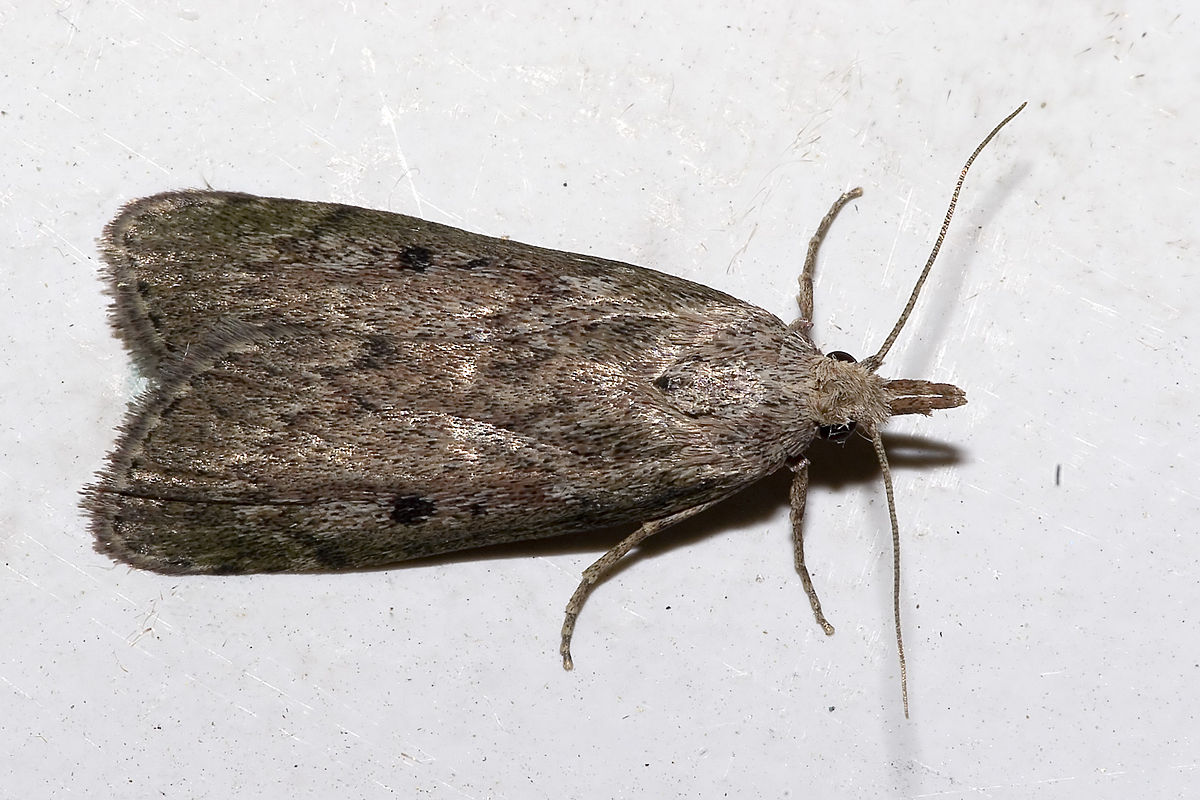
Aphomia sociella
Wikipedia photo
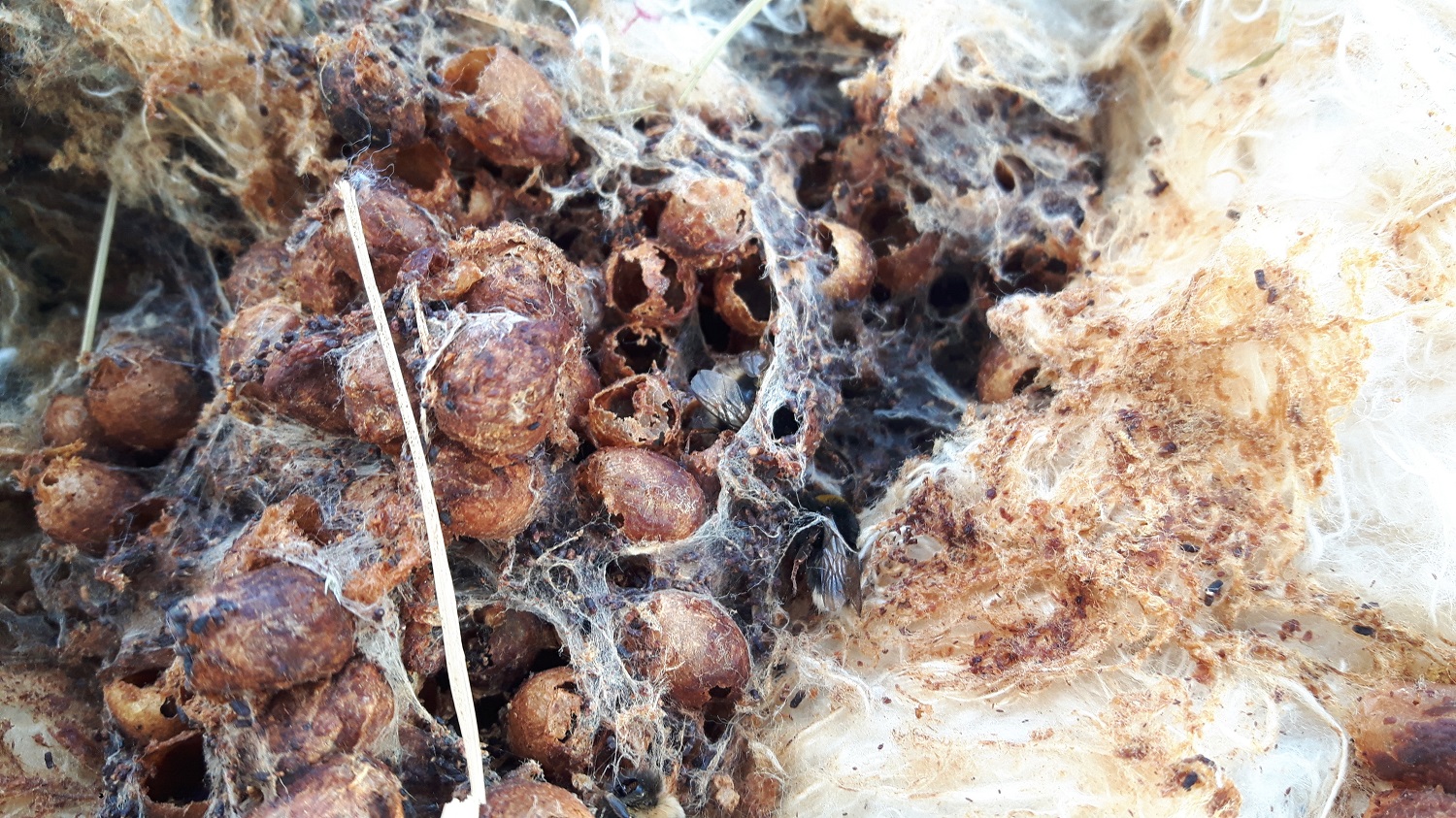
Lesser wax moth (Aphomia sociella) – nest infested by moth
Photo O. Hercog (2017)
How do Čmeláci PLUS recommend applying the product with Bt against the greater wax moth?
Taking into account the above-described mode of action of this agent, its properties and our tests, we propose the following principles for the application of the preparation against the Mediterranean flour moth (Aphomia sociella).
Material
- Of the products available on the Czech market, Lepinox PLUS is suitable for practical application.
Recommendation
- Apply the preparation jwhen the nest is attacked – not preventatively
- Attack understood
a) the tortrix moth's mother was found in the hive
b) upon inspection, you found the presence of wax moth larvae in the nest, or traces of them (holes in cocoons, tortrix fibres, pupal casings, …)
Control list will find HERE - Apply the product when you are rescuing. open or scraped nest , for example as part of an event Bumblebee Rapid Squadrons
- Clean the attacked nest with the procedure HERE
- Then sprinkle (sugar) put the preparation around the site where the wax comb will be placedand likewise his The immediate vicinity
- Treat the underside of the wax work – can advantageously be used soft brush a wax sculpture from underneath„powder“
- Do not apply the product to other areas.
- Apply only the necessary amount of product
- Do not apply the product to bait stations
- Do not apply the preparation to beeswax or bumblebee larvae avoid sprinkling the work with the preparation!
- Check the nest after application, the application of the product, you can after 10-14 days repeat
Perhaps it's a surprise for breeders, but that's why we wrote an extensive post and they explained the risks. Here they are. v Summary as an explanation.
It doesn’t make sense to apply the preparation preventatively – scattering on the bedding, mixing with the bedding, etc.
Explanation:
- The product's lifespan is limited by time, estimated at 2-3 months in the ulcer environment.
- The moth appears only on warm nights from May onwards.
- If the breeder applies the preparation preventatively at the start of the season, its effectiveness is significantly reduced at the time the wax moth becomes active.
It makes no sense to apply the preparation to the entire lining.
Explanation:
- The coneworm moth tries to lay its eggs on the wax comb, in the lining, or on its surface.
- The tortoise beetle's larva does not accept food and is not bothered by contact with Bt. Furthermore, it dies soon after laying eggs.
- The maize borer larvae must ingest the product. Because the larvae do not feed on the lining, they do not ingest Bt. from it.
- In the initial phase, the moth larvae feed on nest debris and waste – they hide beneath the nest.
- The larvae of the wax moth attack the honeycomb from the underside and then move across it, rarely from the top.
The presence of a larger amount of Bt. in the nest poses a risk to bumblebees.
Explanation:
- When bumblebees move around the nest, they come into contact with Bt. and can carry it into the nest and to the food.
- the safe concentration of Bt. strain kurstaki seems difficult to achieve, but possible
- Bumblebees can carry Bt spores on their bodies to their stores, or ingest them when cleaning their bodies.
Incorrect application of the product can directly endanger the bumblebee nest
Explanation
- although it seems that critical concentration cannot be reached and the Bt. can enter the ulcer naturally, the presence of an increased concentration endangers the nest
- This state is achieved by the breeder primarily during preventive application of the preparation, or through inappropriate application (spreading of the work).
The application of the product can also endanger other insects around the nest.
Explanation
- Bumblebees can carry Bt spores on their bodies to flowers, where they can endanger butterfly caterpillars (again, ingestion is necessary, but this cannot be prevented).
- Preparations containing Bt are not selective enough to prevent adverse effects on other insects.
Conclusion and summary
The problem of Bt is indeed broad, and we've only touched on it superficially. Bt is quite widely used by humans in an attempt to utilise its seemingly ecological insecticidal effects. Compared to classical chemistry, it's better, but perhaps even the unjustified feeling of thrift is wrong.
- Although Bt. is presented as selective, It doesn't just affect the target insects, Can other insects also kill?
- Lifespan disputes Bt. in preparations is time-limited. If there is anpre-emptive spraying at the start of the season, when the ear moth occurs, its efficiency significantly reduced.
- To activate the preparation (spore...but only through ingestion, not by contact with the surface of the insect larva/adult's body.
- Do not apply the product preventatively – it doesn't make sense and you can endanger bumblebees and nature. Even then, it is necessary to minimise the amount of product used.
- If you want to use Bt, use against the Bee Moth (Aphomia sociella), apply the product jen tehdy, pokud je hnízdo napadeno.
- Application of the product containing Bt. should not replace regular hive maintenance.
If a breeder relies on their product to protect the nest, the nest may be attacked by a moth, as the product does not reliably work as a preventative measure. At the same time Could other problems escape the breeder?, which can be fatal to the nest. - Take all measures to protect the nest before the shutter (ventilation, sealing, flap) and at the same time also regular checks.
We have verified from our own experience that In the vast majority of cases, this is sufficient protection against the leaf roller, and you don’t need to use any miracle cure, which isn’t 100% reliable anyway but also poses a threat to the environment. - Limit the use of products with Bt. in general. Even the „organic“ ones aren't entirely ecological..
For example, by treating box hedging in your garden, you could endanger a range of other insects in your garden and its surroundings – not least your bumblebees and bees.