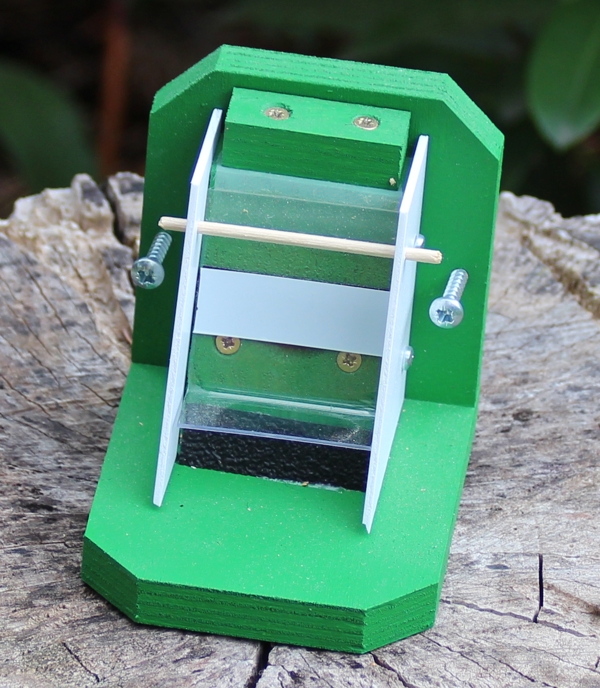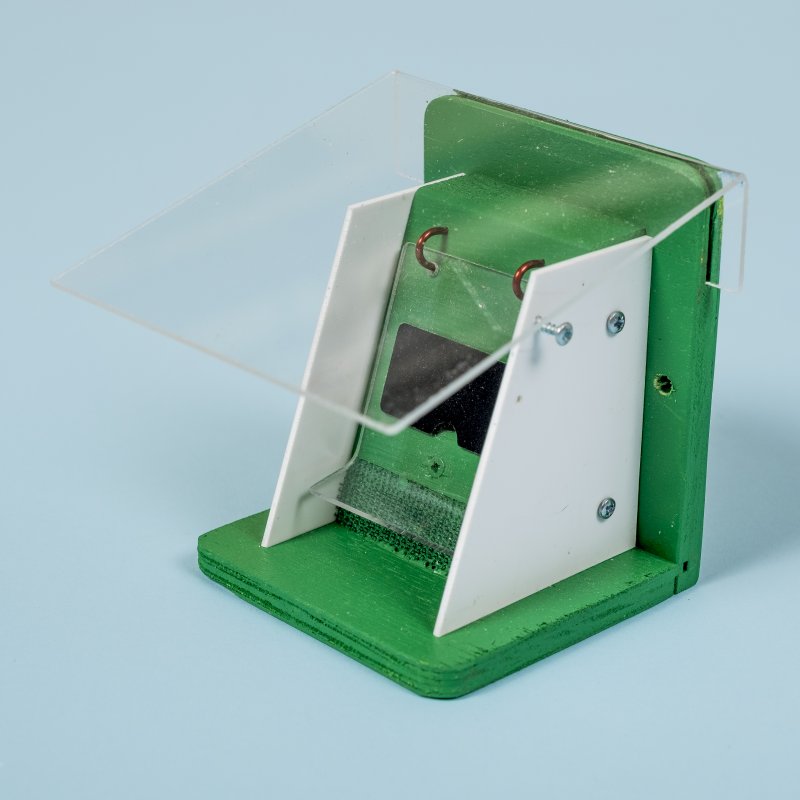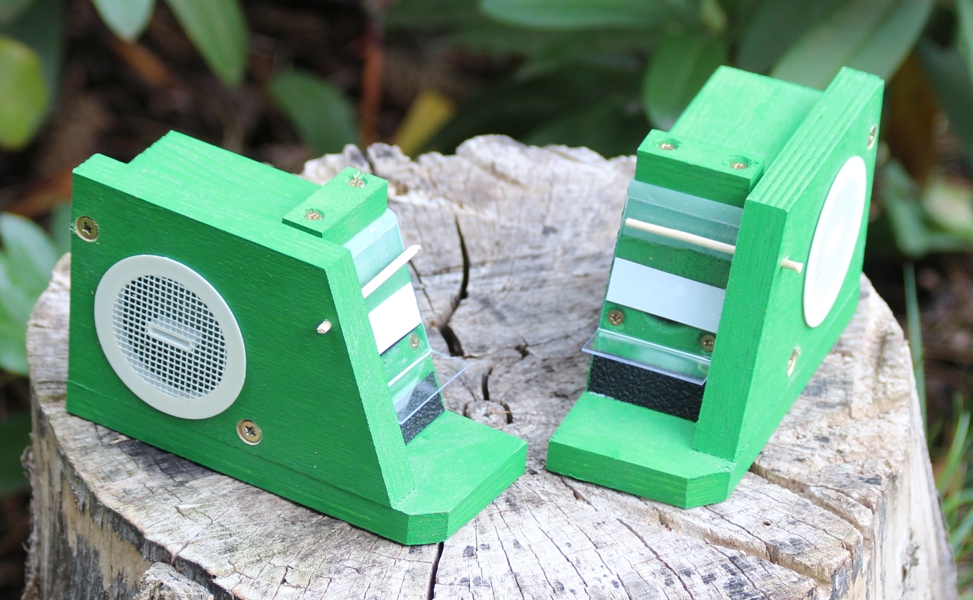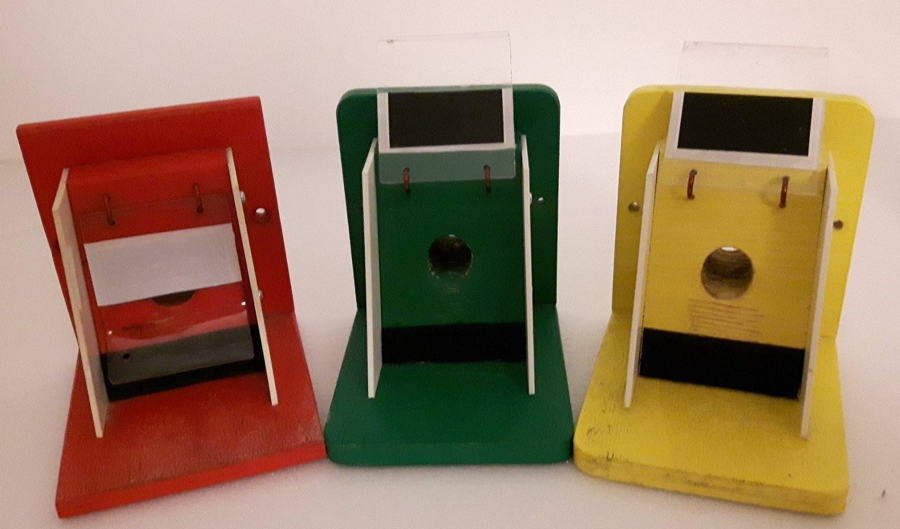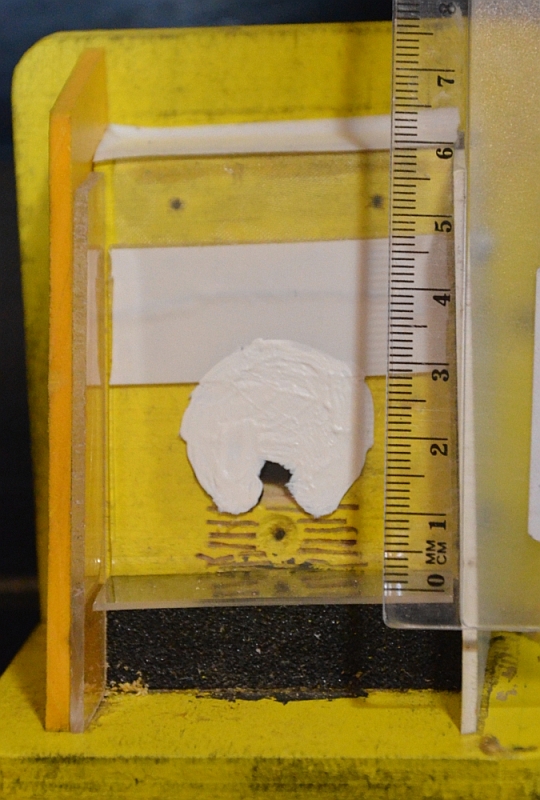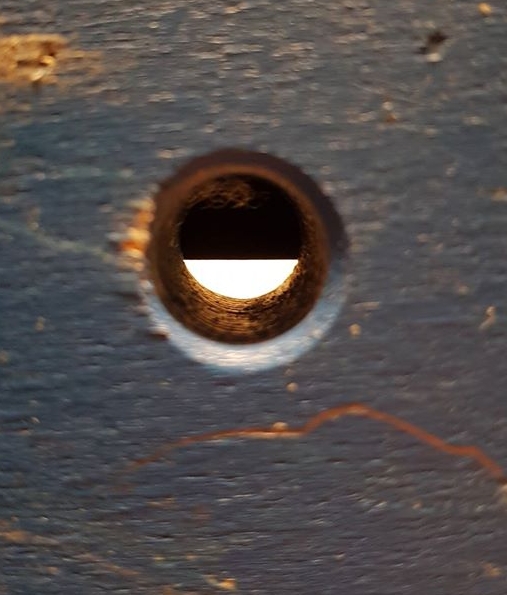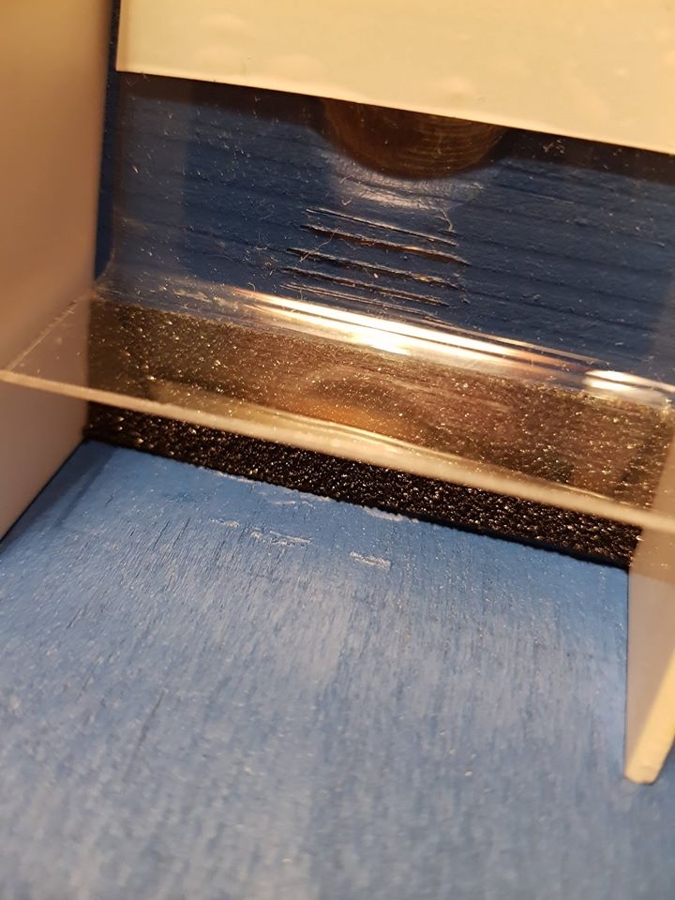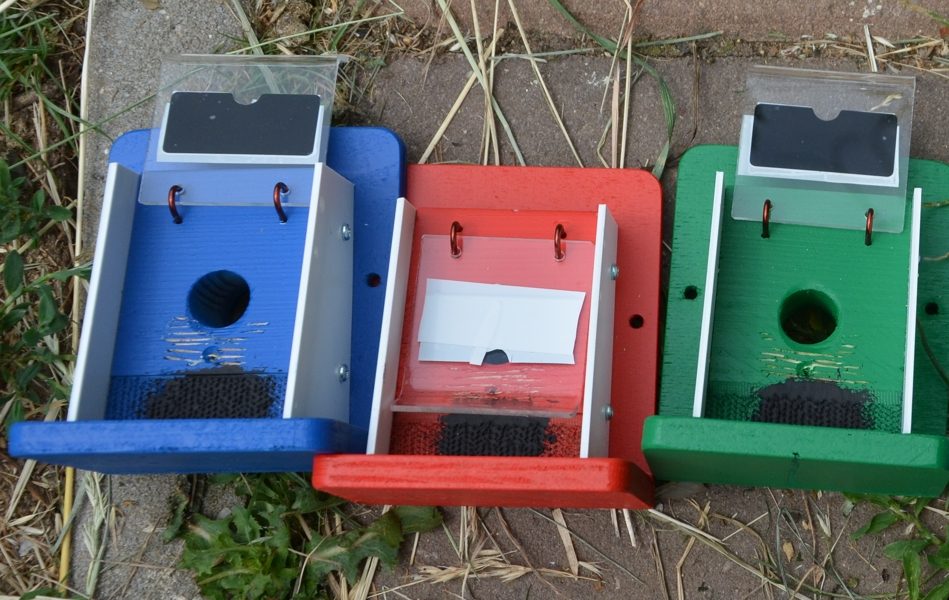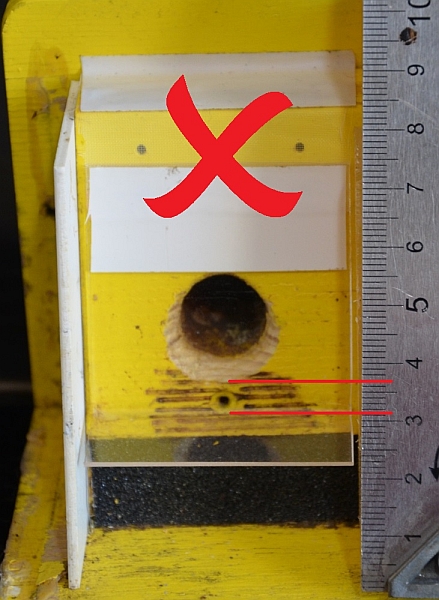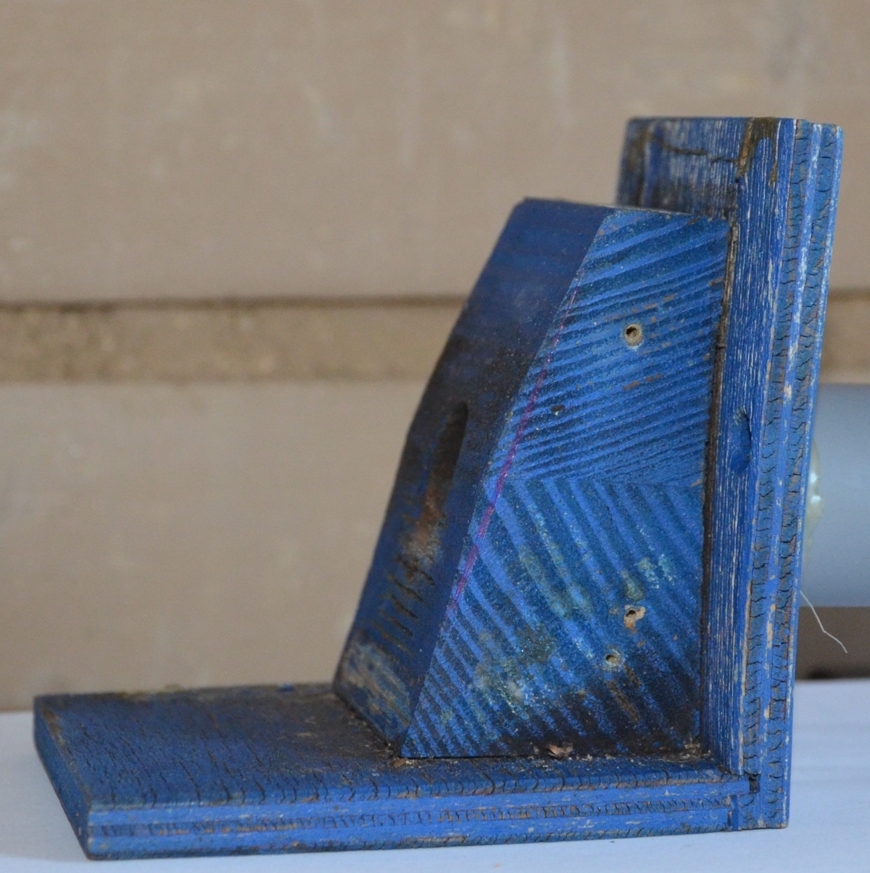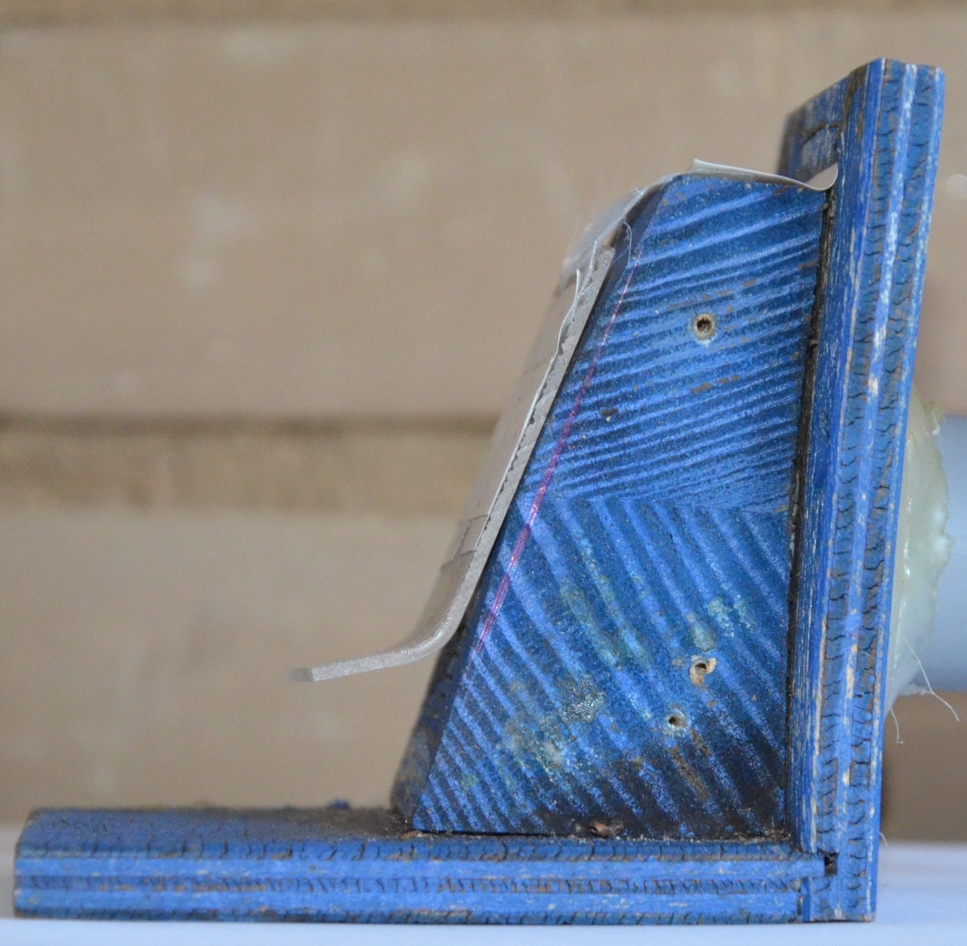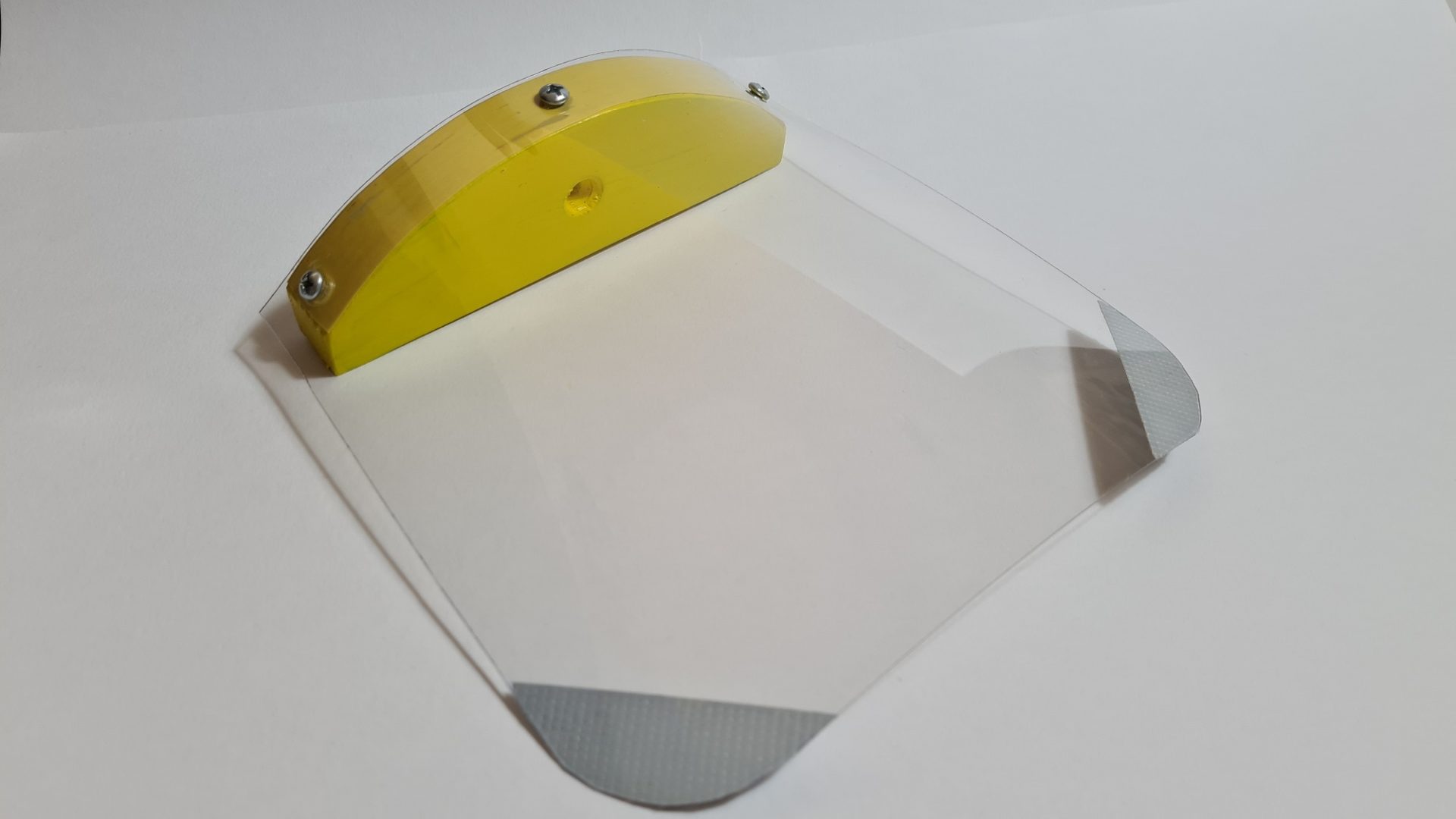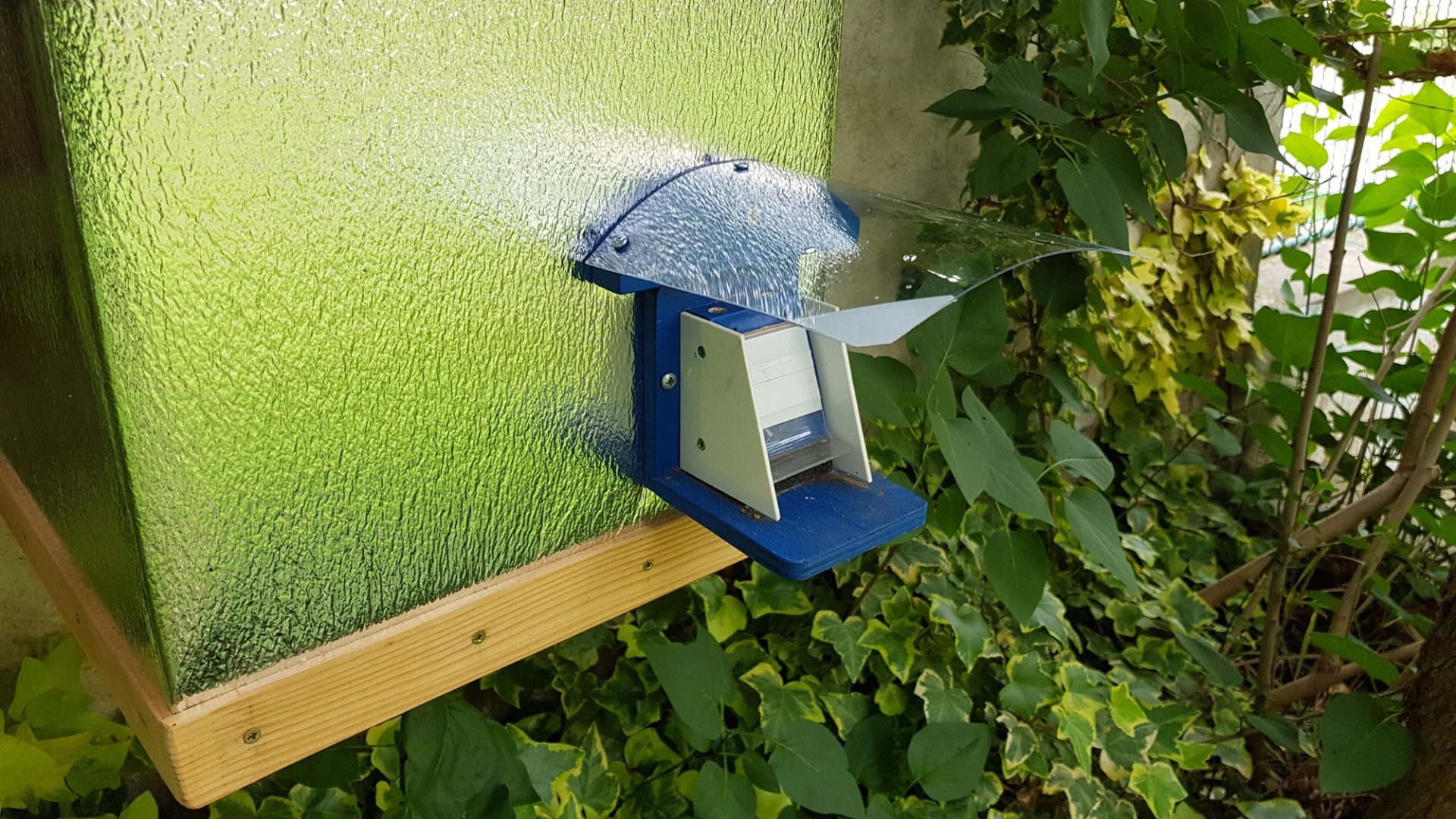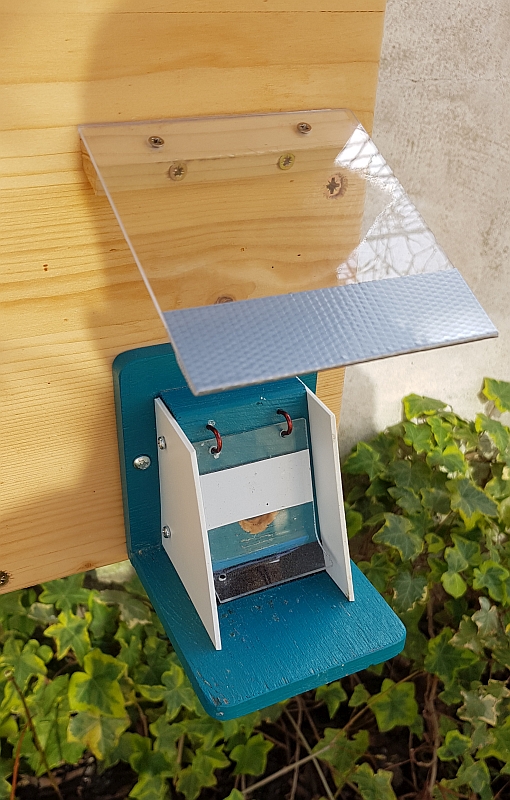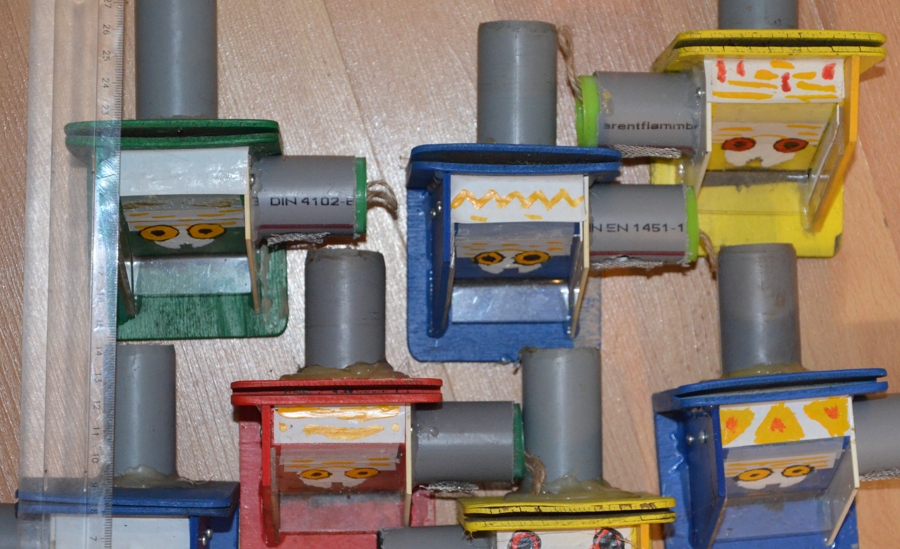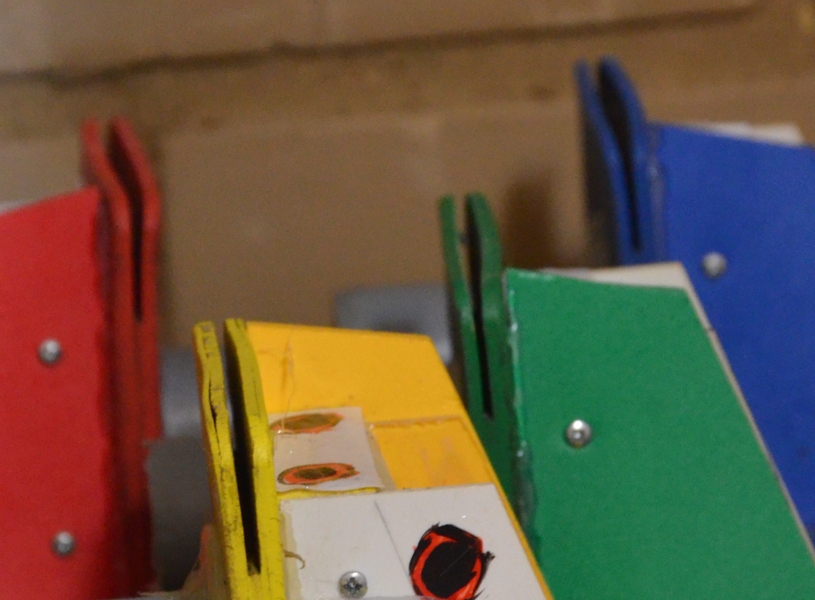


- Parasite protection: A protective flap shields the bumblebee nest from its parasites and enemies.
- Install the flap in timeFor the flap to perform its function, it must be installed and lowered in a timely manner.
- You'd better buy a protective flap: Manufacturing a protective flap is not easy. We recommend that you buy a functional flap from an established manufacturer instead – you will save time, hassle, and money.
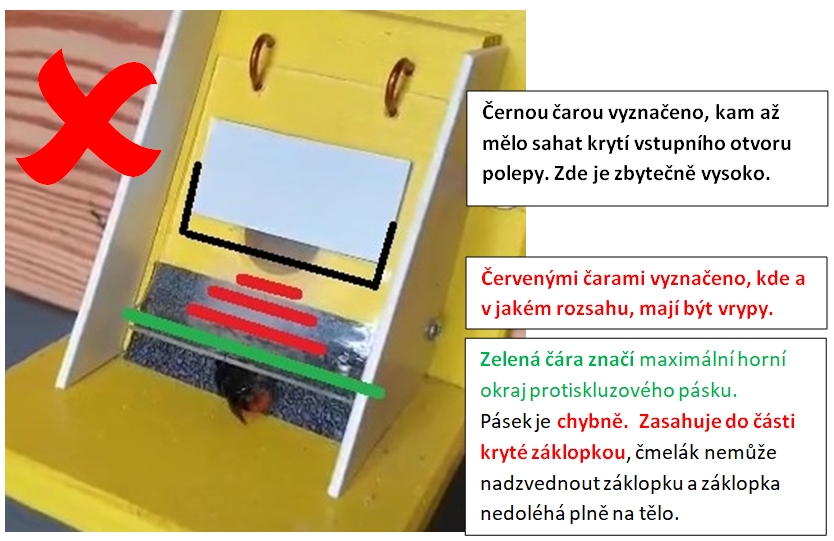
- Stickers on protective flaps have their meaninghelp bumblebees push on the flap in the right place and lift the flap
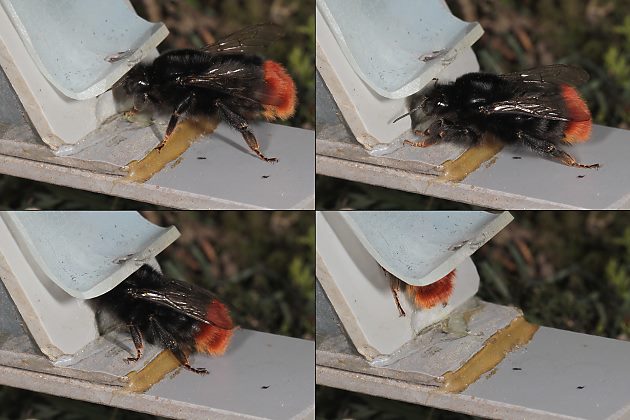
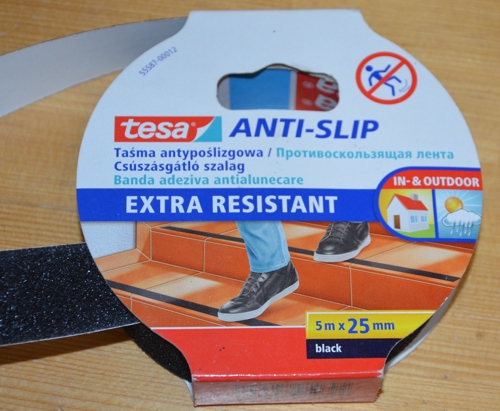
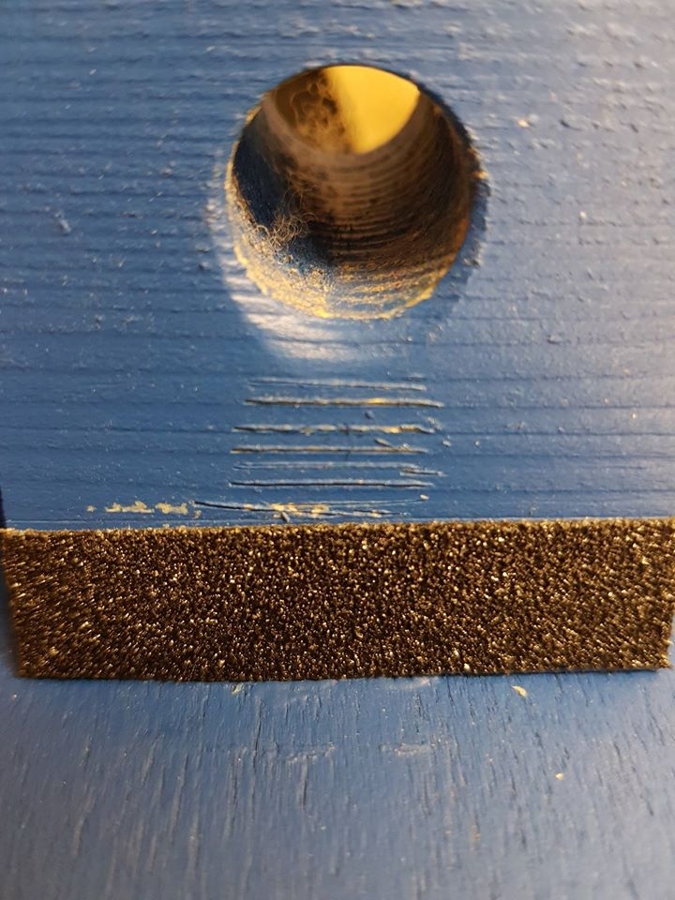
- Climbing lane A roughened strip on the flap helps bumblebees lift it.
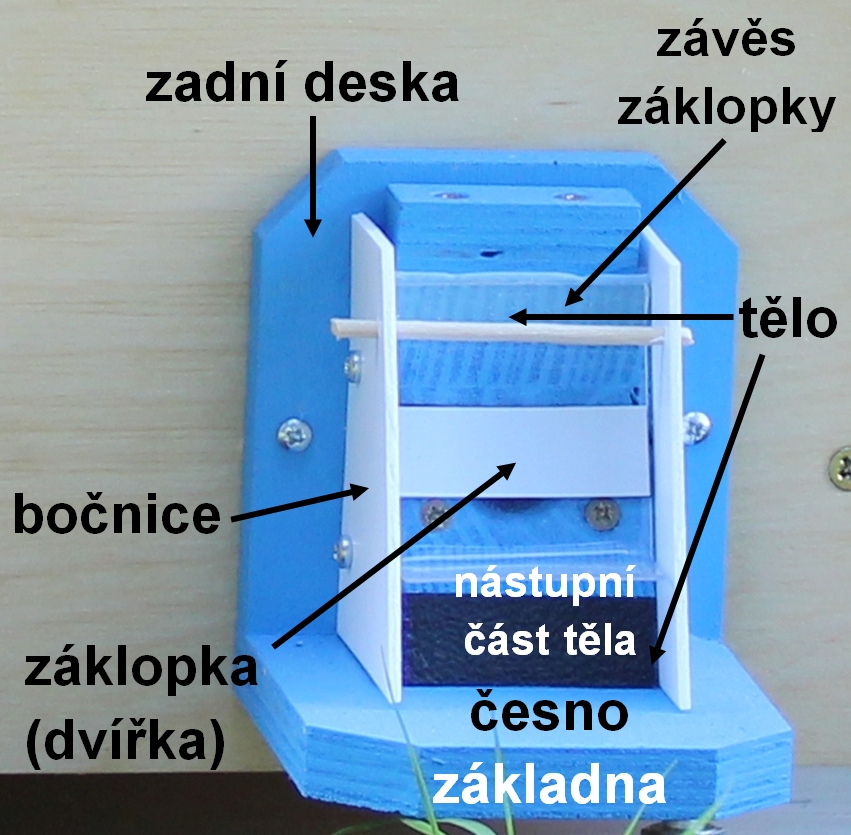
- The flap's latch must move freely: If the flap catches when moving, the valve is not functional
- Bumblebees can manage applause: Mostly, it's the breeder who finds the flap bothersome to the bumblebees
- Trap is not a problem for bumblebees The cap protects the bumblebees, parasites are the real problem and can destroy the nest
- Only a closed damper protects the nest: If the flap is not closed, it does not protect the nest
- Set the trap horizontally: For the flap to function correctly, the base of the hive must be in a horizontal plane
- Check the clasp regularly: if The flap is contaminated with wax and pollen, it is not functional
- The tray can be adjusted: If bumblebees lose pollen on the landing board, carefully smooth the edge of the entrance hole with fine sandpaper.
- After the season, treat the clapboard: The flap is exposed to the weather, so look after it at the end of the season. Maintenance and a protective cover will extend the flap's lifespan.
Introduction
A protective flap is an absolutely essential part of every beehive. Just as a joist must have a roof, it must also have a protective flap.
From our experience, we know how its importance is often underestimated And so, we described it in detail in the section for beginner breeders, so that we could convince them and help them towards a successful first season.
Although we describe the protective flap and a range of its details on our website, you are very For beginner breeders, we recommend buying a flap.. Making your own filter isn't as easy as it might seem and ultimately You won't save money, rather hers You'll spend a lot of time on production and debugging.. Furthermore every mistake in the production of the flap leads to problems that will threaten your bumblebee colony and can lead to an early end to the season.
Not even the creators of this website make their own beehives by hand, and we ourselves make all sorts of things for bees.
That Some manufacturers ignore the significance of the protective flap., proving the low quality of their products and their general attitude towards the interest in breeding outcome, or breeding as such. If the manufacturer sells stoats without a flap, it is The first sign that something isn't right (see How to choose the right shock absorber).
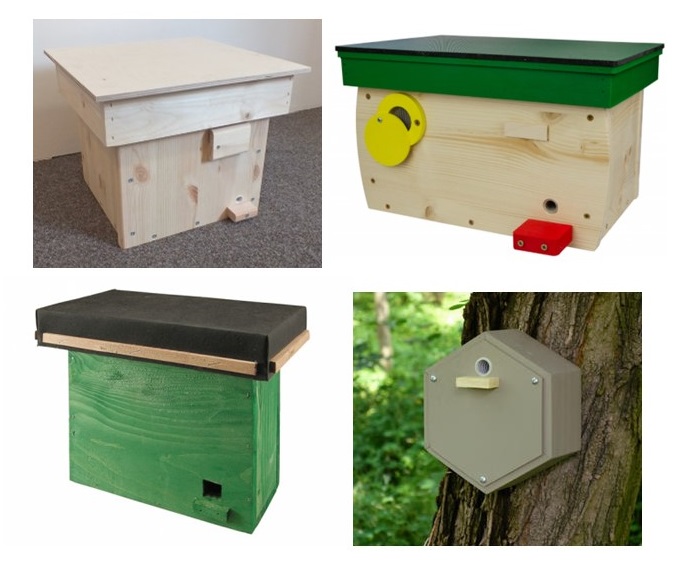
Examples of inappropriate wells without protective covers
eShop Sellers Source
PBeekeepers very often sell hives without protective flaps..
While it's true that some recommend a baffle at least somewhere in a long text to describe the hive. However, if the purchase is made online from an e-shop, such a recommendation is very easily overlooked and a novice beekeeper rushes into trouble. Yet, it would be enough to take a photo of the hive with a baffle, put it in the e-shop, and supply the hive as standard with the baffle.
Generally, however, if a seller offers you a bumblebee nest without a protective flap, they know nothing about bumblebee keeping.
If someone already has a flap, they can remove it from their order at their express request (i.e. with one „click“ on the eShop). Or instead of the text „Free filling“It could also be written„Protective flap required„.
We've been telling pest control manufacturers about this small thing for several years, which would help a great deal; some have understood, others haven't. We then deal with bumblebee nests that have been affected with their clients, and they cry down the phone to us that no one warned them.
Perhaps even this manufacturer will understand one day, it would be a small thing and real help for bumblebees.
Any reasonably skilled carpenter can make and sell a nice box with a hole and a gooseneck hinge at minimal cost. The protective damper is, on the other hand, the most technically and financially demanding part of the unit. – requires precise and high-quality material processing. This is why we pay considerable attention to its correct execution.
It very often happens that a breeder buys a protective flap, but For some reason, she doesn't use it, or it takes fright too late. Beginners often feel sorry for their bumblebees, that they are „struggling“ with the colony and They will leave it open for them. Sometimes, new breeders decide to save a few hundred crowns and They won't get a laptop at all. We have encountered a number of cases where Seller the customer of its necessity overlooked and he could have easily sold him the fright without it (see above).
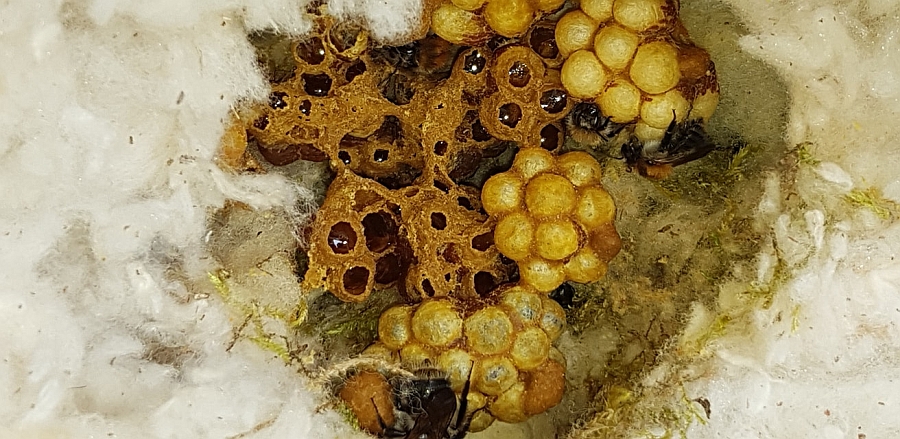
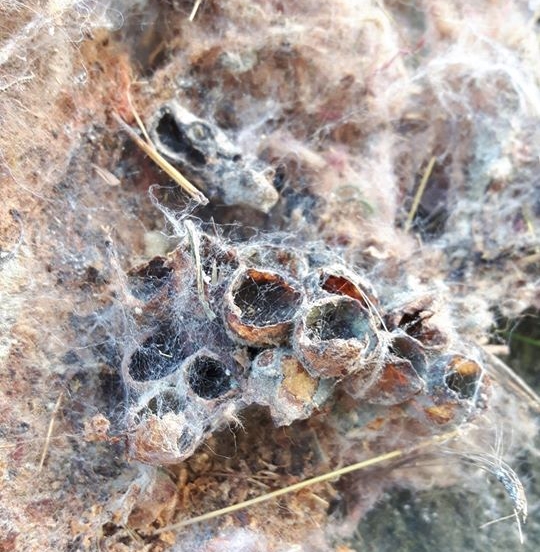
All these breeders/sellers expose bumblebee nests to a risk equivalent to certainty. A hive without a protective cover will sooner or later be attacked by parasites, the nest will be weakened and mostly cease to exist prematurely – no further generations of sexually reproducing individuals (queens and drones) will be born in it.
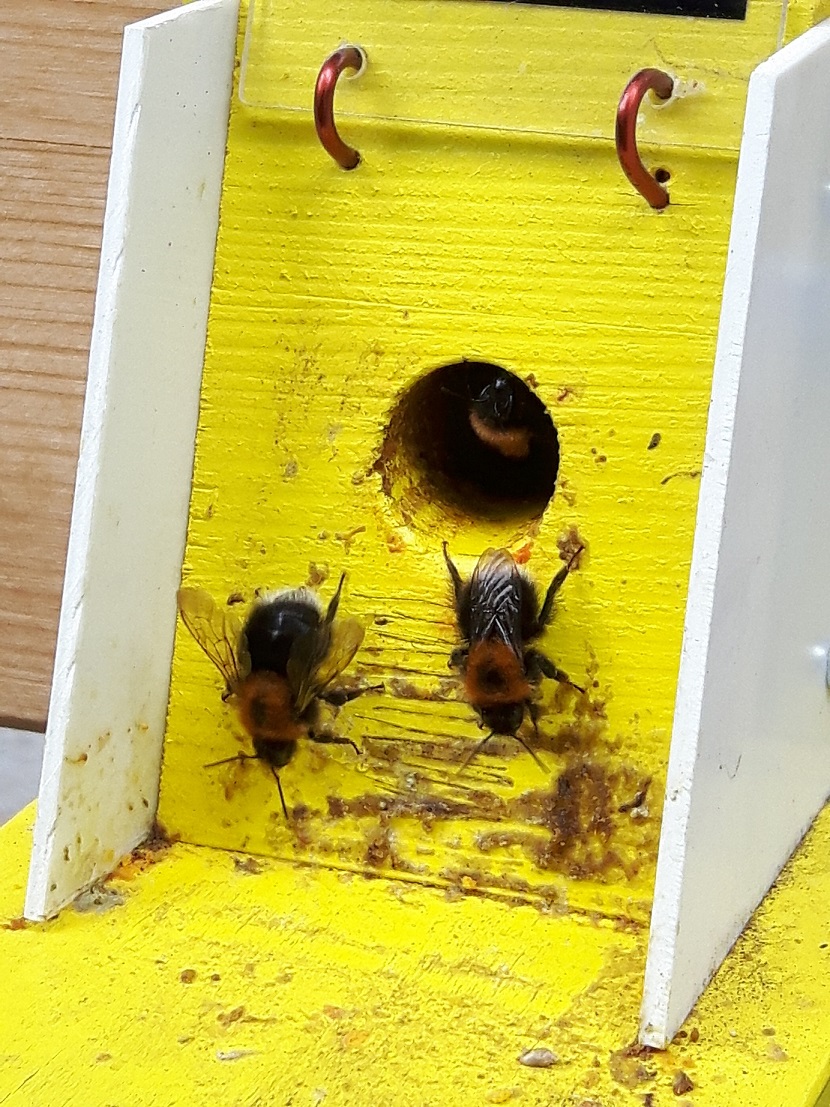
An open cover flap as an open path for parasites.
Photo O.Hercog
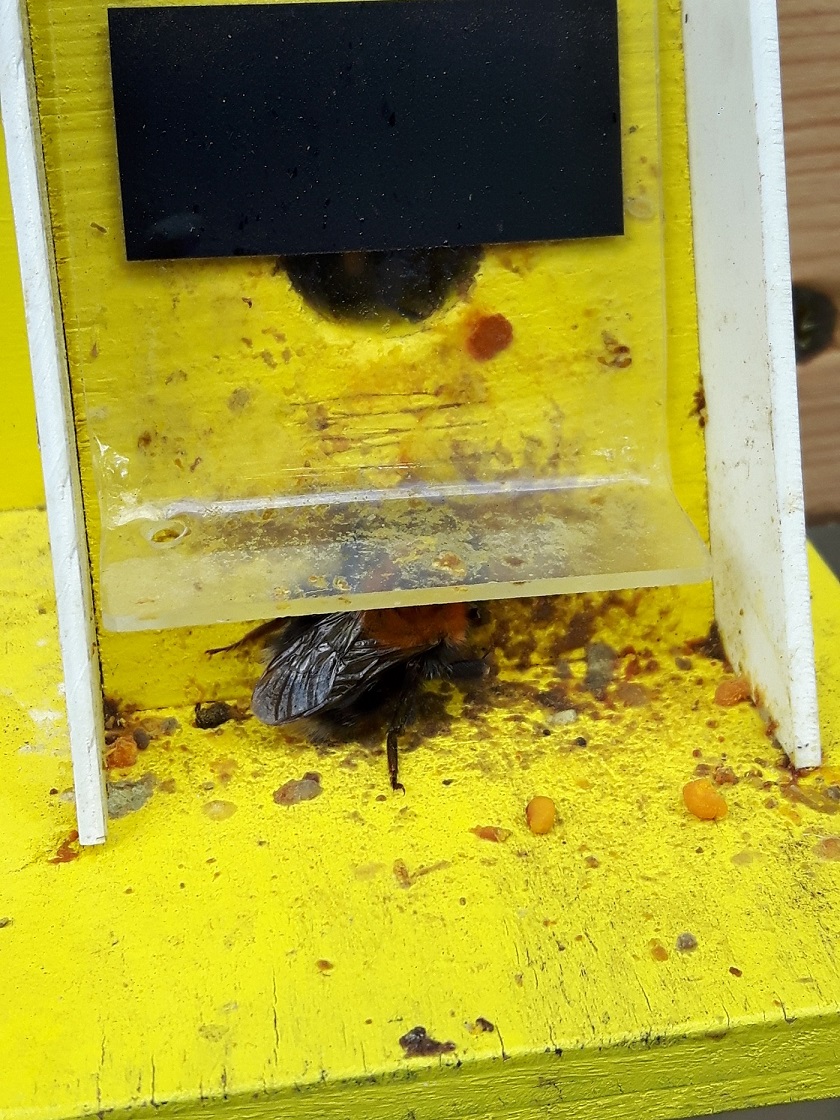
Protective flap blocked with pollen clumps and wax
Photo O.Hercog
Also, keep in mind that The protective flap must be fitted immediately as soon as you install it and you have to to enjoy right from the start. Lap