


Corridor in the hive

Entrance hall to the burrow

What you will learn here

  • Beehives for bumblebees (bumblebee houses) have an entrance hole
  • What should such a corridor look like
  • What should I be careful about

Last updated: 01/03/2026

page abstract

  • The corridor in the hive/bee house has its significance: for most bumblebee species, simulating the entrance to a burrow/cavity
  • Experience however shows that Bumblebees can nest in nature and in hives where there is no passage., it's short or, conversely, extremely long – this can also be adapted to in bumblebee farming
  • From breeding experience, it is confirmed that There is no fixed dependence on length, shape, the presence of a corridor, and the success of bumblebee settlement in the hive.
  • Better darkness than light in the hallway: Bumblebees expect it to be dark in the passage. Therefore, it is good to profile the passage/lining in the hive appropriately.
  • The corridor at the developed nest can be removed: If the nest in the hive is strong and the passage is blocked, it can be removed.
  • Corridor accessibility is essential: In a corridor with an internal diameter of less than 18 mm, the corridor can become blocked.
  • Water condensation in the hallway is a nuisance. If water accumulates in the corridor, the scent trail can be interrupted, and bumblebees will not pass through the corridor – holes at the bottom of the entrance corridor or its slope will help
  • Don't forget the checks: Monitor the bumblebee traffic. If the entrance becomes blocked during the season, deal with it promptly.

Hallway meaning

Most bumblebee species require an entrance tube because they Simulates a passage into a rodent burrow., where they typically nest in nature. A typical example of such species is the buff-tailed bumblebee (Bombus terrestris).

Some species but nests perhaps in a pile of grass, for example Bumblebee (Bombus pascuorum). Such species chudým lidem není nic potřeba, but on the other hand they The corridor is fine.

It's the same, for example, with willow bee-flies (Bombus hypnorum). It often nests in a bird box or a tree cavity – without a tunnel. However, the same species also nests in roof insulation, accessing it via a tunnel several metres long.

From observation and experience, it is clear that a corridor is suitable where matka – královna druhu hnízdícího v zemi takovou chodbu vyžaduje and feel content and safe there. Alcoves without a corridor therefore have a lower settlement success rate for these species.

A corridor serves the bumblebees as a a place to resist invadersi. Such can be bumblebee's mother, which attempts to get into the nest. It is large and once it is in the nesting cavity, the bumblebees stand no chance. However, if a worker bee stands up to it at the entrance hole or in the tunnel, they can drive it away. You can read more about cuckoo bumblebees Bumblebees and bumblebee keeping

Sometimes it can happen that Hallway blocked And then there's trouble brewing. This is happening in the corridor with unsuitable internal diameter (less than 18mm) a strong nest. This also happens in a long corridor where there is a lot of moisture (condensation) and dead bumblebees. This can lead to the scent trail being broken and bumblebees ceasing to pass through the corridor. Such a long corridor is described in further text, but also, for example,  Startled by the interior – protective flap on the wall.

Once the nest strengthens or when strong nest we move (not a small nest with the first generation of workers), then the corridor is no longer so significant.

Whether it will The corridor, whether located inside or outside the hive, is not so essential.. Both solutions have their advantages and disadvantages, which we describe further.

The entrance hall is therefore important at the beginning of nest development, then it can be removed if necessary.

In any case, it should beekeeper to pay attention to the entrance to the hive – at the beginning of the season and during it.

meláci PLUS – Corridor in an accessibly priced corner – Photo Jakub Černý

Interior corridor solutions

It's a basic solution that most beginners use, and it's also used in commercial products due to its simplicity of implementation.
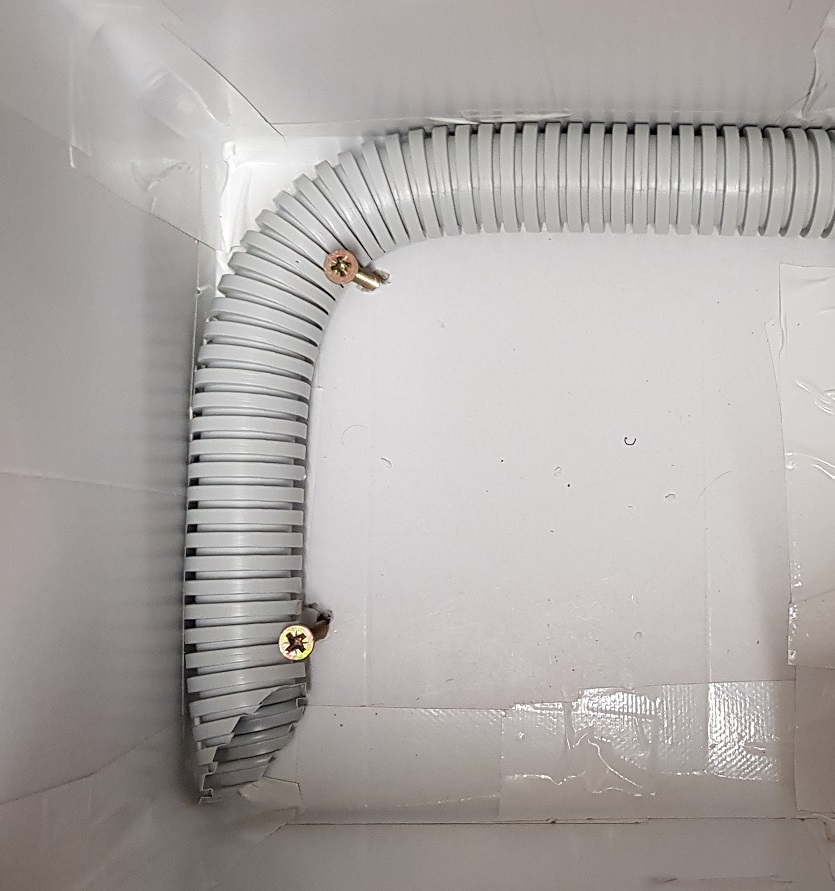
Internal corridor from a tube (gooseneck) – photo O. Hercog

Some newly commercially available jigs use a short, slightly angled walkway. This solution appears to be a suitable compromise between the needs of different species – see further commentary.
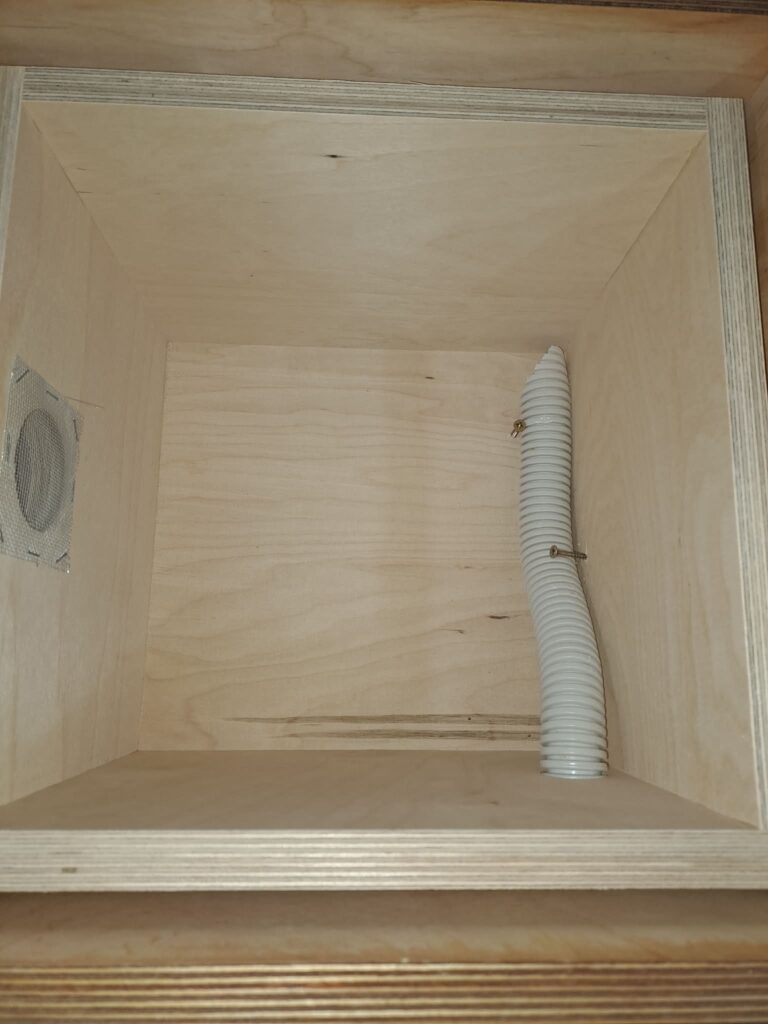
 

meláci PLUS - Corridor in a commercially accessible nook - Photo Jakub Černý


Clearance (internal diameter) in the internal corridor/pipe We recommend 25 mm.

We do not recommend a small clearance. When the clearance of the runs is small, it easily becomes clogged – with debris, a dead individual, an XXL new mother etc.
It is important to realise that bumblebees pass through the tube in both directions. When they meet and cannot fit past each other, they must turn back. This costs them a lot of energy and leads to unnatural delays in traffic (traffic jams). They also lose their pollen baskets here, which they can no longer use.

However, here too, some beekeepers use a flight tunnel with a width of 18 mm. But this is a short flight tunnel and intended for beekeepers who dedicate practically daily care to the hive.

For internal solutions We do not recommend a corridor with a larger span either. The hallway has, you see protective factor – can be a place where bumblebees defend themselves against intruders. (see the Your Questions and Answers chapter in this section)

Some commercial products have an inadequate corridor brightness, and sometimes even 14mm. 

This dimension is unsuitable for most species. hrozí.
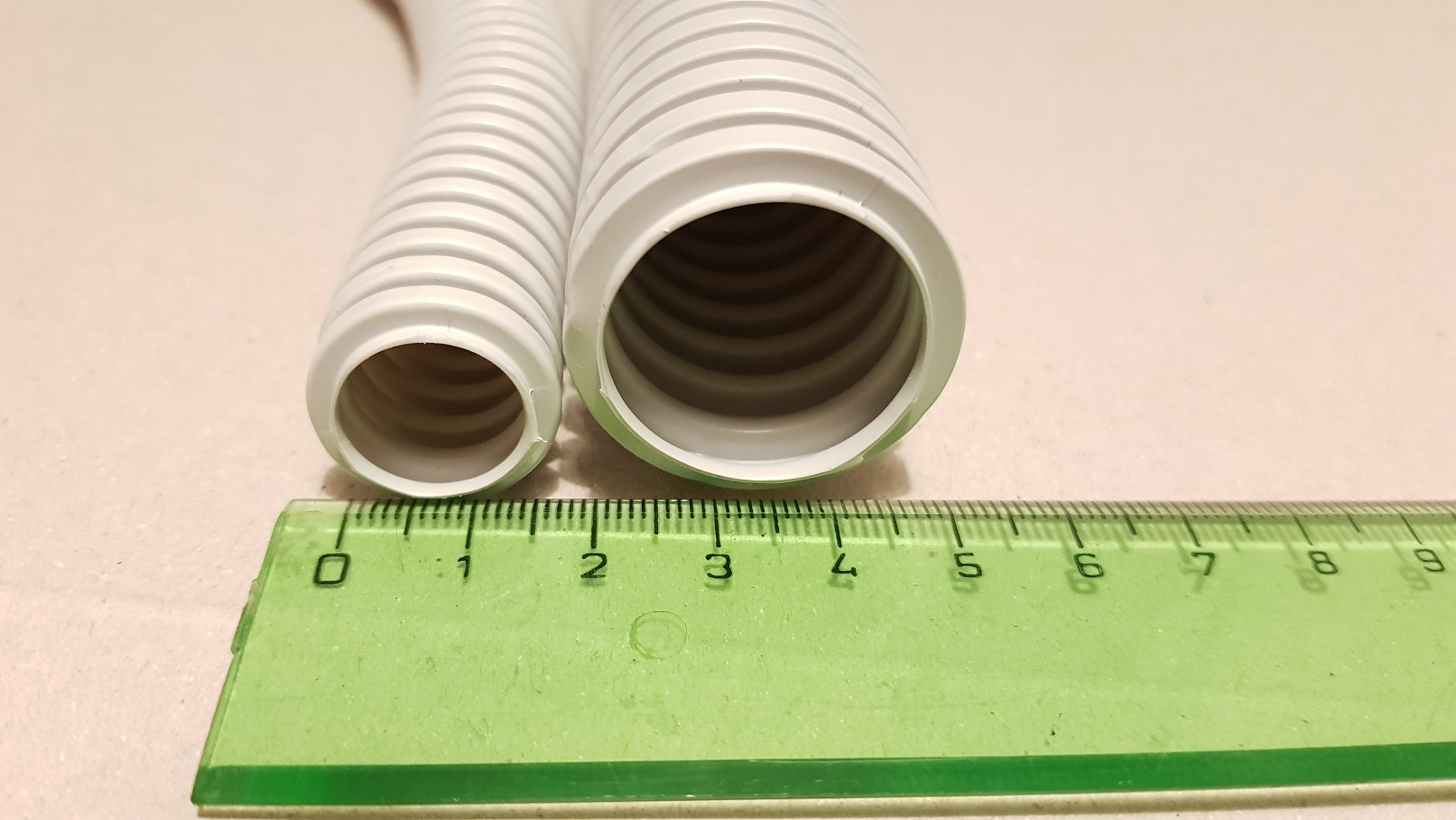
Bumblebees PLUS - Comparison of commercial product corridor width (14mm) with recommended width (25mm)

Comparison of the lighting conduit of a commercial product (14 mm) with a pipe of the recommended lighting conduit (25 mm) – photo O. Hercog

In that case, it is advisable to this pipe exchange for another with greater clearance. If you cannot create a larger opening in the hive body, you can use a temporary solution and attach a shortened original new pipe – see the photographic guide.
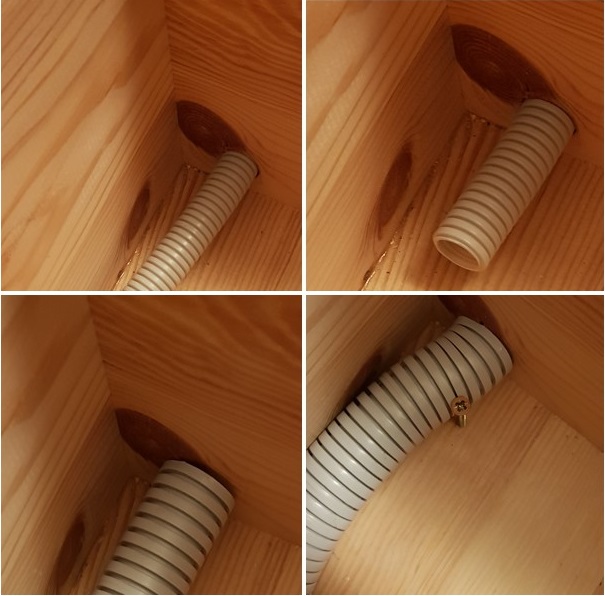
Bumblebees PLUS - Method of repairing an unsuitable passage in a bumblebee nest (bumblebee box) replacing a narrow passage with a wider one

Method of repairing an unsuitable passage in a bumblebee nest (bumblebee house) – replacement of a passage with a small clearance with a larger one – photo O. Hercog

If you are going to adjust the brightness of the corridor, Do not adjust the aperture opening., leave them at their original size.

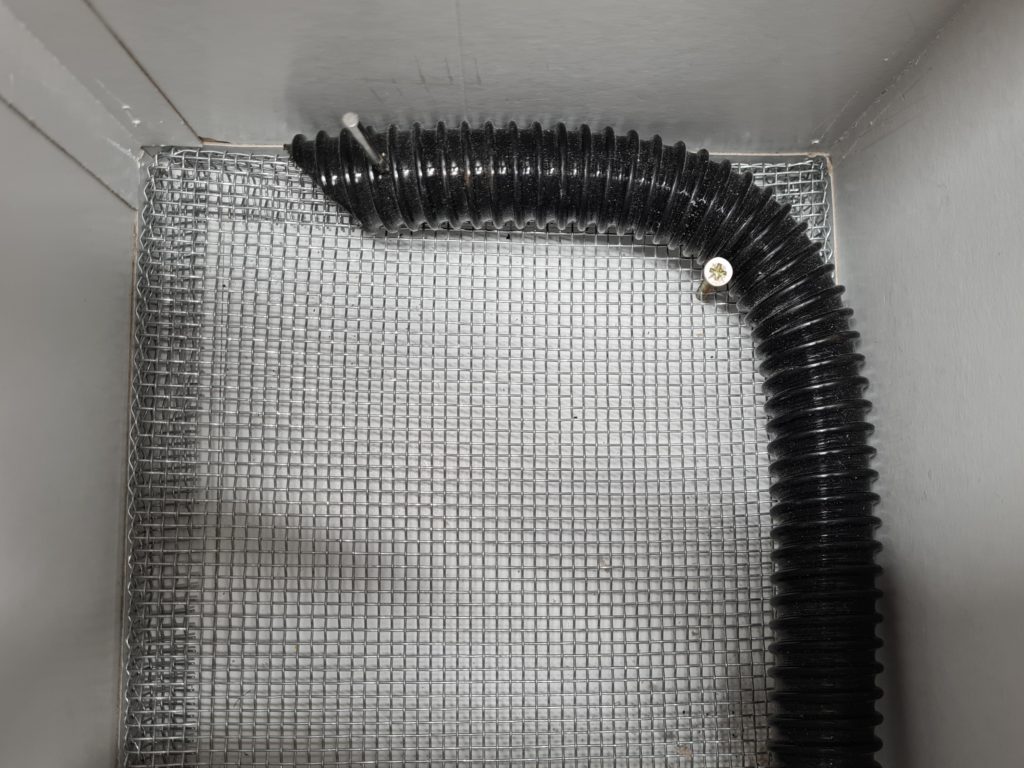
Recommendation for hallway length - It is advisable for the corridor to begin in the front wall of the hive, run along the inner perimeter of the side wall, along the opposite wall, and end in a corner (see photograph).
This will result in a length of approximately 60 cm for a hive of 30x30x30 cm.

It is recommended to create a slight one in the hallway Break – it can be Viperidae, or by the corner.

Interpretations and reasons for such a solution are not unified. According to some breeders, the bend simulates the shape of a mouse hole, according to others, the main reason is the fact that the nest is not visible and there are no drafts when it is bent. 

We previously recommended a right angle, but it has been shown that this is not a condition.. If the corridor runs along the bottom of the ulcer, it is quite a logical solution. However, some manufacturers have shortened the corridor and run it from top to bottom – in such cases shrews a curvature that serves the same purpose.

An important aspect is also internal layout of the corridor in the hive. As stated above, the tube should be routed along the sides of the hive, not through the centre. The central space of the hive should be used for the nest, and the bumblebees will generally start building it there. A tunnel routed through the centre then practically prevents any possible service intervention during the colony's life. See the careful inspection of the nest with its removal via the bumblebee lift, or the removal of the tube in case of blockage, etc.

End of the pipe in the hive One of the greatest current bumblebee breeders, Jaromír Čížek (the bumblebee guru), recommends finishing the pipe in the corner of the hive. Mr. Čížek discovered through his observations that the queen in a newly settled hive walks along the wall and stops in the corner. Therefore, she will find the pipe outlet there more quickly. This reduces the risk of the queen “freezing” in the hive (See queen bee settlement in a hive). .

However, here too some breeders use a different solution – they let the corridor lead out next to the wall and that also works.

We also recommend Cut the end of the tube at an angle. The entrance then takes the form of an ellipse, and the entrance area is larger, making it easier for bumblebees to find the entrance to the corridor.
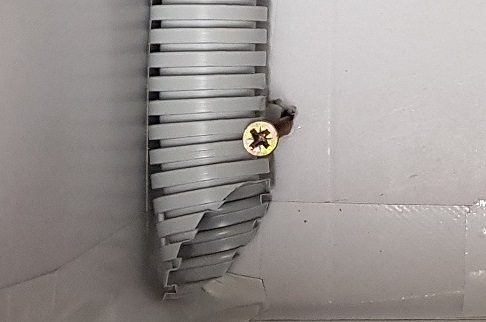
Bumblebees PLUS entrance tunnel - detail of the correct termination of the tunnel tube in the bumblebee nest

Recommended tube end detail – corridor
Trimming and leading to the corner of the hive – photo O. Hercog

Corridor production material: It's not that crucial what materials you use. A duct can be made from a hose, an electrical conduit, or PVC or HT pipes. Opinions vary, but most solutions work.

The inner surface of the corridor should not be slippery, which the goose neck seems to meet well, and that's why the bumblebee guru Mr Miroslav Stuchl recommended it.

The description of the corridor installation is provided in the chapter Ulcer preparation before the season.

Examples of errors and unsuitable solutions:
  • Hallway as a cavity (atrium) in a beehive (a partition between the nesting area and the hive entrance) – you may come across this in some commercial products and older recommendations. However, we consider this solution to be flawed, as bumblebees perceive this space as „a place outside“ and happily defecate there, or bring dead bodies or poorly developing larvae to this area. The entire space thus attracts parasites. Due to its great height, it allows parasites to hide easily. For the keeper, this narrow yet tall space is very difficult to access. Cleaning, inspection and repairs are complicated and often cannot even be carried out on the 100%. Furthermore, due to the high ceiling, the settled queen loses the sense of security provided by the passageway.
    Solution Don't use such a sudden fright, or remove the vestibule.
    Bumblebees PLUS - Unsuitable solution - hive with an antechamber. A lot of waste is visible, which is a source of disease and a hiding place for parasites - Photo O.Hercog

    Inappropriate solution – hive with an antechamber. A large amount of waste is visible, which is a source of disease and a hiding place for parasites – photo O.Hercog
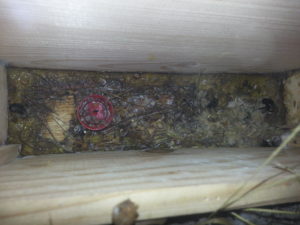
  • The corridor is L-shaped, but made similarly to a partition – with a height reaching the top of the hive. You can encounter it again in some commercial products. This is a faulty design, where such a corridor has no ceiling for the bumblebee, and thus the protective factor of the corridor is lost. The parasite and the worker will miss each other in such a corridor. On the contrary, such a corridor is an ideal hiding place for parasites. The narrow and high space also does not allow the breeder to thoroughly inspect and clean the lower parts of the corridor.
    Solution Don't use such a fright, or remove the partition.
    Bumblebees PLUS - Sample hive without ventilation with an internal partition replacing the corridor - the bottom of the corridor will be very difficult to clean. Furthermore, a very small internal space for the nest. (source internet)

    Example of a poorly ventilated nesting box with an internal partition replacing a corridor – the bottom of the corridor will be very difficult to clean. Furthermore, the internal space for the nest is very small.
    (internet source)
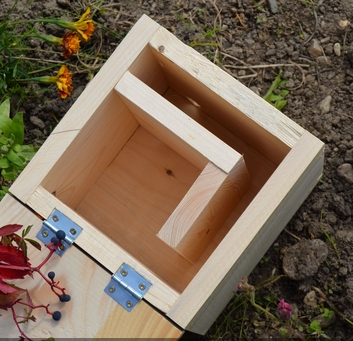
 
  • Corridors with smaller clearances than we recommend. The reason you might encounter them is due to manufacturers' lower production costs. Why this solution is unsuitable – see above.

    Solution Replace the unsuitable entrance tunnel (light/inner diameter below 18 mm) with a tube with a light of 25 mm. Adjust the opening in the hive body to the new diameter. However, do not adjust the diameter of the entrance hole in the flap.
    If this is not possible, use a new 25 mm bore tube fitted onto the shortened old tube as a temporary solution (only about 5 cm of the old tube needs to be left in the hive).).

Outdoor hallway solutions

This solution can help the breeder resolve the ulcer's dispositional placement and excursions (e.g. hives located inside buildings, where they are not exposed to temperature fluctuations and extremes).

A sufficiently long external corridor is a significant protective factor, because the garlic and the entrance hole are far from the hive, which makes it difficult for parasites to enter the hive.
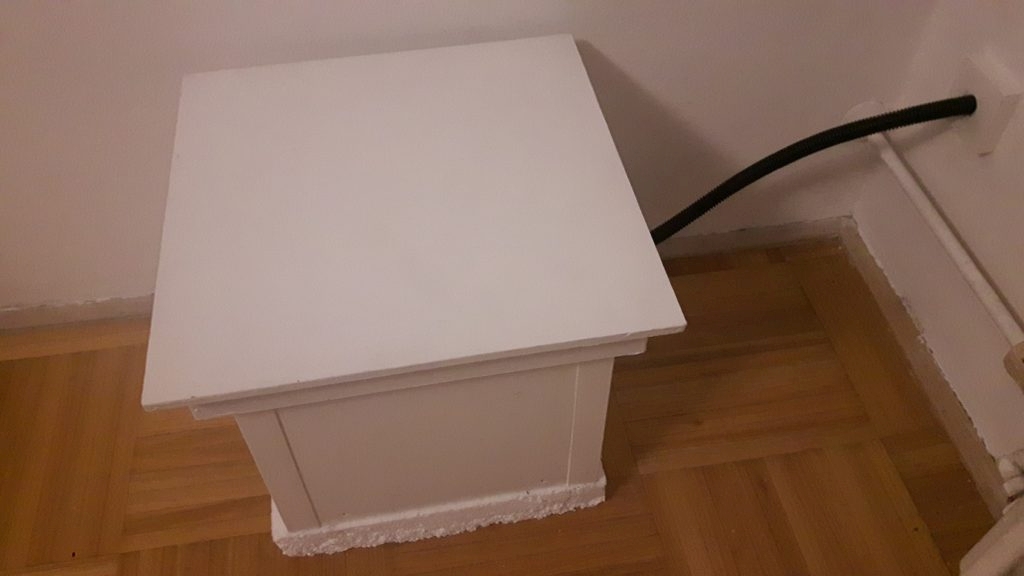
Bumblebees PLUS bumblebee nest bumblebee house in a room with an external corridor

Use of an external corridor for placing a hive indoors – photo J. Čížek
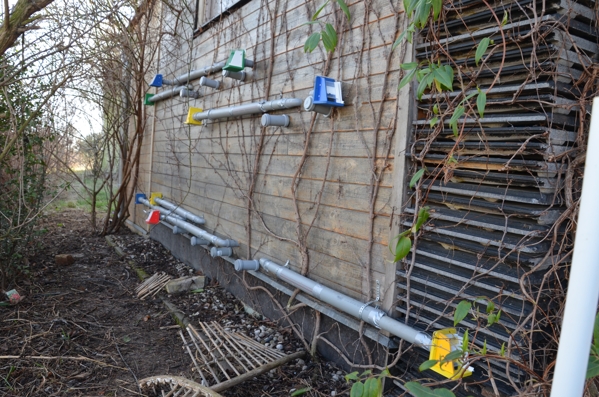
Bumblebees PLUS a demonstration of outdoor hive passages located inside a warehouse

An example of outdoor owl corridors located inside a warehouse – photo by K. Kučera
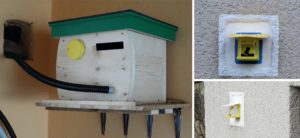
Bumblebees PLUS - Locating the nest in a garage or cellar with a flap led out by a long tube

Placement of the ulcer in the garage or cellar with a flap led out by a long pipe
Photo E. Kalčíková

On the other hand, such a solution using long external corridors requires a different way of queen bee settlement.

The topic of outdoor solutions will therefore be described in detail in the chapter for experienced breeders. Corridor for experienced breeders in the apiary
Possible problems with the entrance hall and their solutions

Condensation in the entrance hall

If the nest is strong, it produces a lot of moisture. Even if the decoy is well insulated, in the event of large temperature changes, it will develop in the corridor. Water condensate.

If condensation builds up in the intake duct, Can there ever be a disruption to „operations“ and a scent trail. The bumblebees will then stop going through the tunnel out/in and the tunnel will appears blocked.

Even if the bumblebees get diarrhoea, they walk through the corridor in… and drag faeces and wet debris into the nest.

A fairly simple hallway modification will help:

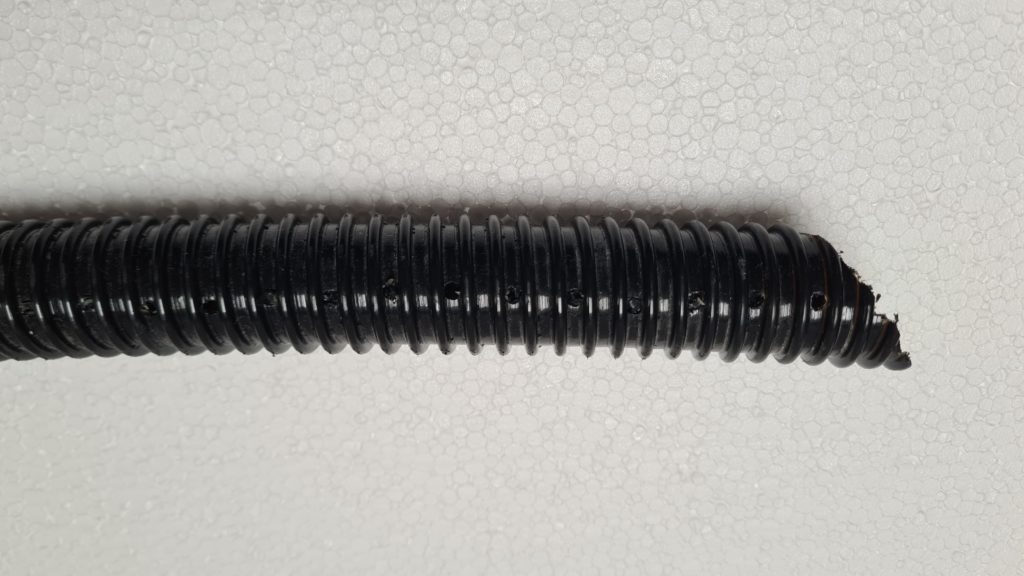
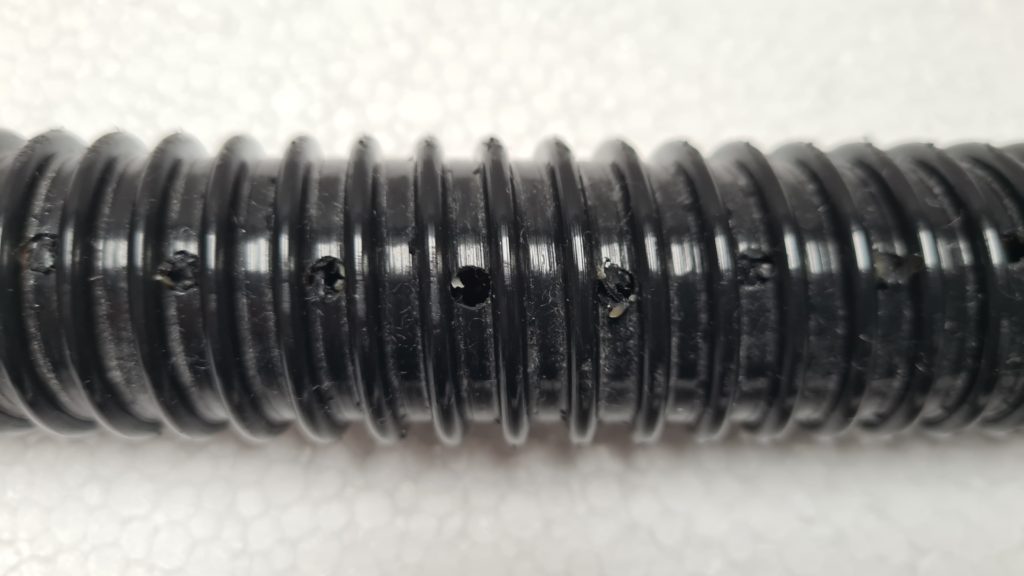
  • Create hallways during the day row of holes on average 3-4 mm, which the condensate will drain into the hive space
  • Open je dobré vytvořit v angličtině v the entire length of the corridor which is in the nook area
  • The advantage is smooth inner pipe wall – we recommend the wall a little Descent, so that the bumblebees can move around in it well

Fits well readily available   Flexible cable conduit S-130-32. Number 32 is the internal diameter in mm, which corresponds to a bore of 25 mm internal diameter. S-130-25 can also be used with a hallway bore of 22 mm.

This conduit is essentially  heavy-duty goose neck, but but smooth internal profile a Condensate will not accumulate in it if you drain it away through the holes in the bottom., as in the classic profiled gooseneck.

Installation Notes:

  • The drains for condensate must be at the bottom of the corridor.
  • So, at the end and beginning, drill a passage and insert a wire/drill bit – when installing the passage into the hive, you will then be sure that the passage is correctly installed.
  • Naturally, pull the drill bit out of the pipe after installation. 

We also recommend this solution for Shock in the interior with a flap on the wall. We recommend it therehoard with a smooth inner wall. Open just drill at the bottom in the lowest part of the corridorsy.

If such a place is outside the hive, it is it needs to be protected. That's enough wrap with Uhelon 53S and aluminium netting around it. A few turns of the net are enough Secure the frames with insulating tape. The condensate will drain out; at the end of the season, you'll discard the nets and replace them for the next one.

It can also be edited. hallway incliney – the opening in the flap should be higher. Condensate will drain into the hive. But then it will accumulate at the entrance, That is why it is better to drain it through holes from the bottom of the entrance tunnel.

Bumblebees PLUS - Entrance hall with smooth wall and condensate drainage holes in the base - Photo Ondřej Hercog 2023 (3)

Entrance hallway with a smooth wall and drainage holes at the bottom for condensate
Photo: O. Hercog (2023)
 

Bumblebees PLUS - Entrance hall with smooth wall and condensate drainage holes at the bottom - Photo Ondřej Hercog 2023 (2)

Entrance hallway with a smooth wall and drainage holes at the bottom for condensate
Photo: O. Hercog (2023)
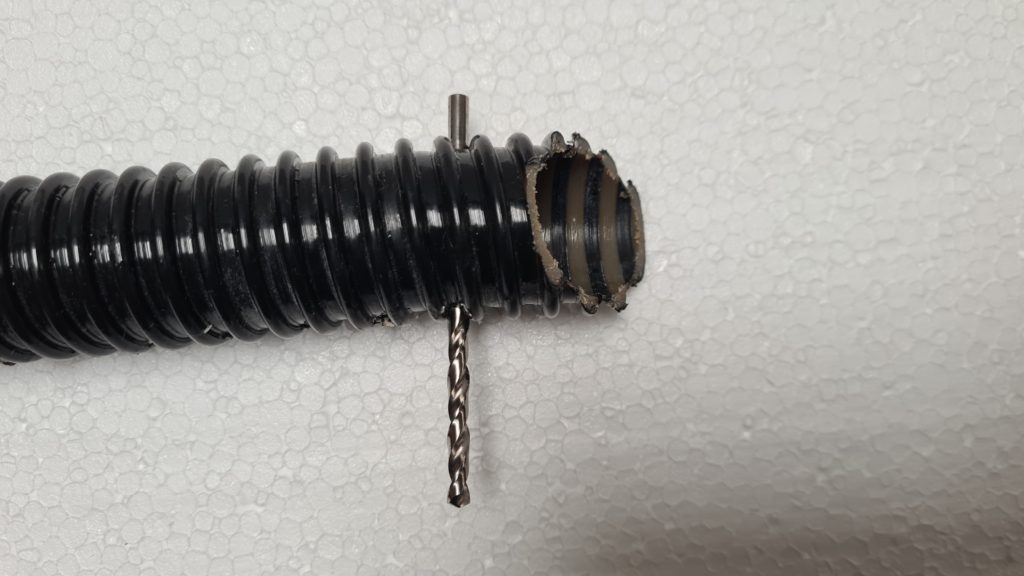
Bumblebees PLUS - Entrance tunnel with smooth wall and condensate drainage holes at the bottom - Assembly aid - Photo Ondřej Hercog 2023

Entrance hall with smooth wall and condensate drain holes at the bottom – Mounting aid
Photo: O. Hercog (2023)
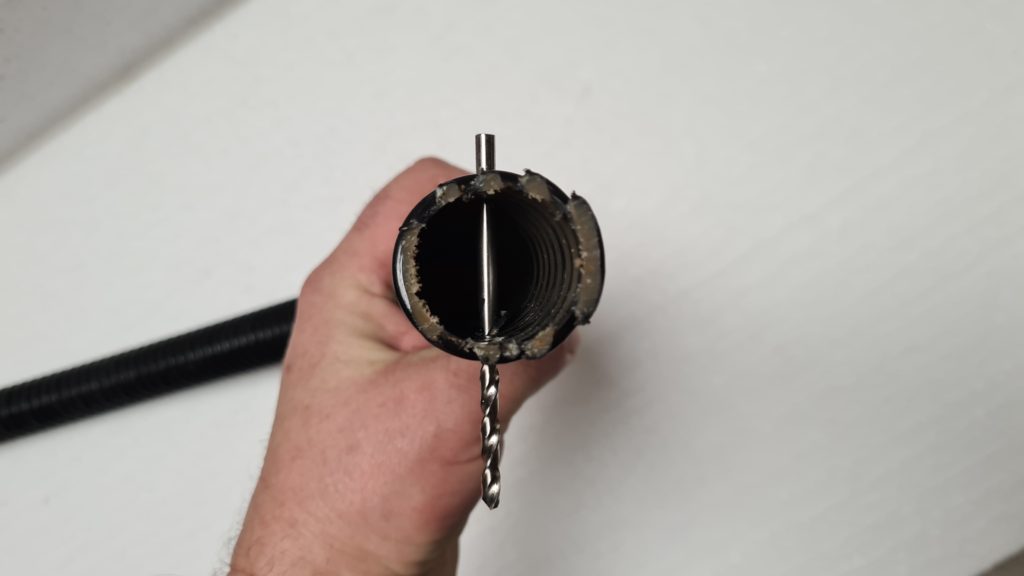
Bumblebees PLUS - Entrance tunnel with smooth wall and condensate drainage holes at the bottom - Assembly aid - Photo Ondřej Hercog 2023

Entrance hall with smooth wall and condensate drain holes at the bottom – Mounting aid
Photo: O. Hercog (2023)
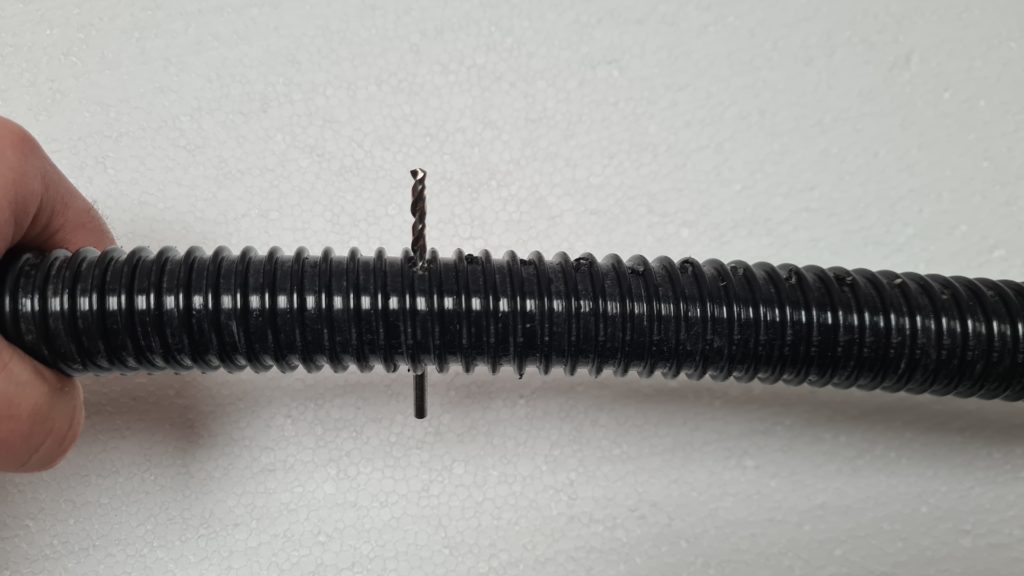
Bumblebees PLUS - Entrance hall with a smooth wall and drainage holes for condensate in the base - Photo Ondřej Hercog 2023 (1)

Entrance hall with smooth wall and condensate drain holes at the bottom – Mounting aid
Photo: O. Hercog (2023)
Bumblebees PLUS - Entrance tunnel with smooth wall and condensate drainage holes at the bottom - Assembly aid - Photo Ondřej Hercog 2023

Entrance hall with smooth wall and condensate drain holes at the bottom – Mounting aid
Photo: O. Hercog (2023)

Observations from keepers: What is the length, diameter and shape of a bumblebee nest tunnel?

For many years, long-angled corridors were considered the foundation of proper bumblebee husbandry. Many of us started that way – a shelter for bumblebees (bumblebee house) with a metre-long pipe, two bends, and the feeling that no queen would settle without it. However, with the passage of time, it became apparent that reality is much more varied, and that the behaviour of individual species differs significantly, with the dependence on the length of the corridor, or its presence, not being so strong.

Species that do not require a hallway

Hobbyist breeders agree that many bumblebee species do not require a long tunnel at all:

  • The tree bumblebee commonly nests in bird boxes without an entrance tunnel. And not only that – although it prefers nesting in a bird box, it can also nest without problems behind a tunnel longer than 3 metres.
  • The meadow bumblebee regularly nests in burrows without passageways, but it doesn't mind a passageway.
  • The field bumblebee often nests in shallow nests in moss and can be hindered by long, broken tunnels – in some burrows, it literally „freezes“ when settling and cannot get out. Nevertheless, it can manage a tunnel if it wants to nest.
  • The rock bumblebee can easily manage even a short, straight, and unbroken passage, but a long passage is not a problem either. However, with this species, a long passage can sometimes facilitate the creation of unwanted swarms outside the hive (this species is quite known for this – it also creates swarms within the hive).

Species for which a long corridor was previously assumed
It has long been believed that a long, winding corridor is mainly necessary for:

  • The Buff-tailed bumblebee – traditionally considered a species that needs a deep underground nest. However, practice has shown that it settles without problems even in shorter, unbroken tunnels. This abundant species makes a „Zagorka“ when settling. This young lady surprisingly doesn't settle, and only 1 queen out of 6-10 settles easily on average, and the tunnel length doesn't change that.
  • The Heath Bumblebee – some collectors even once claimed that it needed a metre or two metre long tube. In the end, it turned out that the length or orientation of the tunnel doesn't play a role. The key is definitely the animal scent in the lining. Once suitable animal hairs are used, the success rate of settlement is suddenly high – and queens settle even in hives, quite happily even without a tunnel.

It is therefore gradually becoming apparent that Most bumblebee species do not need a long entrance tunnel; absence of a tunnel does not bother some, and for others, a tunnel can even be a hindrance.. Experienced breeders aiming for a specific breed can adapt the corridor strategy according to their intentions. 

The corridor can serve as a defensive area for the nest against parasite intrusion, for example, bumblebees. However, it is also gradually becoming apparent that bumblebees primarily guard the entrance opening and do not post sentries in the corridor. For instance, if a bumblebee penetrates the entrance opening into the hive, the chances of workers stopping it are small, albeit supported by observation.  

Some breeders place bumblebees in hives without a tunnel, or remove the tunnel over time – if it becomes clogged.

However, manufacturers cannot afford to produce a mould for each individual type. Therefore, they opt for short, simple, and slightly unbent corridors that:

  • enable the successful settlement of all common species,
  • it harms no one,
  • they simplify construction and maintenance.

What is still important to us, however, is the brightness of the corridor.

  • Manufacturers often use tubes with an outer diameter of 20–25 mm. With such narrow tubes, it has already happened several times that the passage became blocked – for example, when a young, sick mother died in it, or the bumblebees blocked it with bedding and debris. The bedding is often transported out of the passage as the nest grows.

When a long corridor can help, or is necessary

  • The corridor therefore primarily serves as a structural element today – a passage through the hive wall (essential in a double-walled hive), secure fastening of the flap, and routing of the flight hole to a suitable location.
  • If a hive has an entrance reducer, a longer corridor can partially prevent the larvae of *Aphomia sociella* (greater wax moth) from entering the nest. This does not offer 100% protection, but it can help in some cases.

Summary

  • The corridor in a bumblebee nest is a good example of how bumblebee husbandry in nests is constantly moving forward. More breeders are sharing their experiences and observations, and this leads to changes. You can offer improvements through us.
  • There are various approaches, and over time, a breeder will find their proven method, which they will swear by. However, this does not mean that other paths and possibilities do not exist. 
  • On our pages, we share solutions that have been tested and proven in practice. Therefore, we wait for such solutions to be confirmed. That's why you'll find more options, and you can choose from them.
  • Likewise, you can offer your proven solutions to others through us and thereby advance bumblebee husbandry.

Supplement

Also look at possible solutions for ulcer placement. You can read about this on the page  Placing a beehive in the garden and elsewhere.

You might also be interested in placing the ulcer indoors, which offers a number of benefits. You can read about this on the page Internal ulcer placement - Protective flap on the wall