


Cleaning the ulcer and winterisation
This page is still under construction – we are adding photographs
What you will learn here
- When to clear out the leeks after the season
- How to verify that a bolt is empty
- How to read in a bumblebee nest
- How to clean a fright
- How and where to clean the stun gun
Contents
Introduction
When to clean and clear the bee house/bumblebee nest
Before we get started
External inspection/check of the ulcer
Ulcer location
Hive attachment
The roof of the ulcer
Ventilation opening and protective grille
Protective flap and entrance
Entrance hall
Hive walls/body
Internal inspection
Removal of nest lining
Using the liner next season
Nest removal from the hive
Nest parasites
What happened in the nest during the season
Ulcer cleaning
Door and entrance
Entrance hall (pipe)
Inner surfaces of the ulcer
Seal
Ventilation / cover grille
Nest removal
Repairs and modifications to the roof
Storing Ulmus/Bumblebee for winter
What about natural bumblebee nests
Conclusion
Introduction
At the start of autumn for most bumblebee keepers The season has ended. Some species of bumblebees are still surviving in the nests, but the end of SeptemberIt's time to inspect the hive, clean it, and prepare it for winter..
Besides cleaning the ulcer, it is time to reflect on what went well, what to do differently for better performance and also for repairs after the season has ended.
When all these tasks are listed like this, it's a lot. But don't be alarmed, these are tasks that are worth doing and will actually bring you Cleaning the alcove and tidying up won't take even an hour..
Enjoy this work and Don't forget to read in the nest. You will learn a lot and perhaps find answers to questions about what happened in the nest and how it turned out. This nest inspection/check is very likely to answer your questions. „What happened in the nest“ and might help you understand why the nest turned out as it did. The description of the final check partially overlaps with and supplements this chapter. You will find the description HERE
Although this text is intended for experienced breeders, we strongly recommend reading it.
Don't forget to taste the remains of bumblebee honey and have a little bumblebee honey harvest
.
.So these are like small Honey harvest festival/dočesná. Or even „Dobzučná“.
Delivery
If you purchased a fright, we recommend looking at the guide and respect possible specific manufacturer instructions. For example, this could include modern double-walled walls, where the manufacturer has specific recommendations for the disassembly and maintenance of certain parts that you won't find in our general manual.

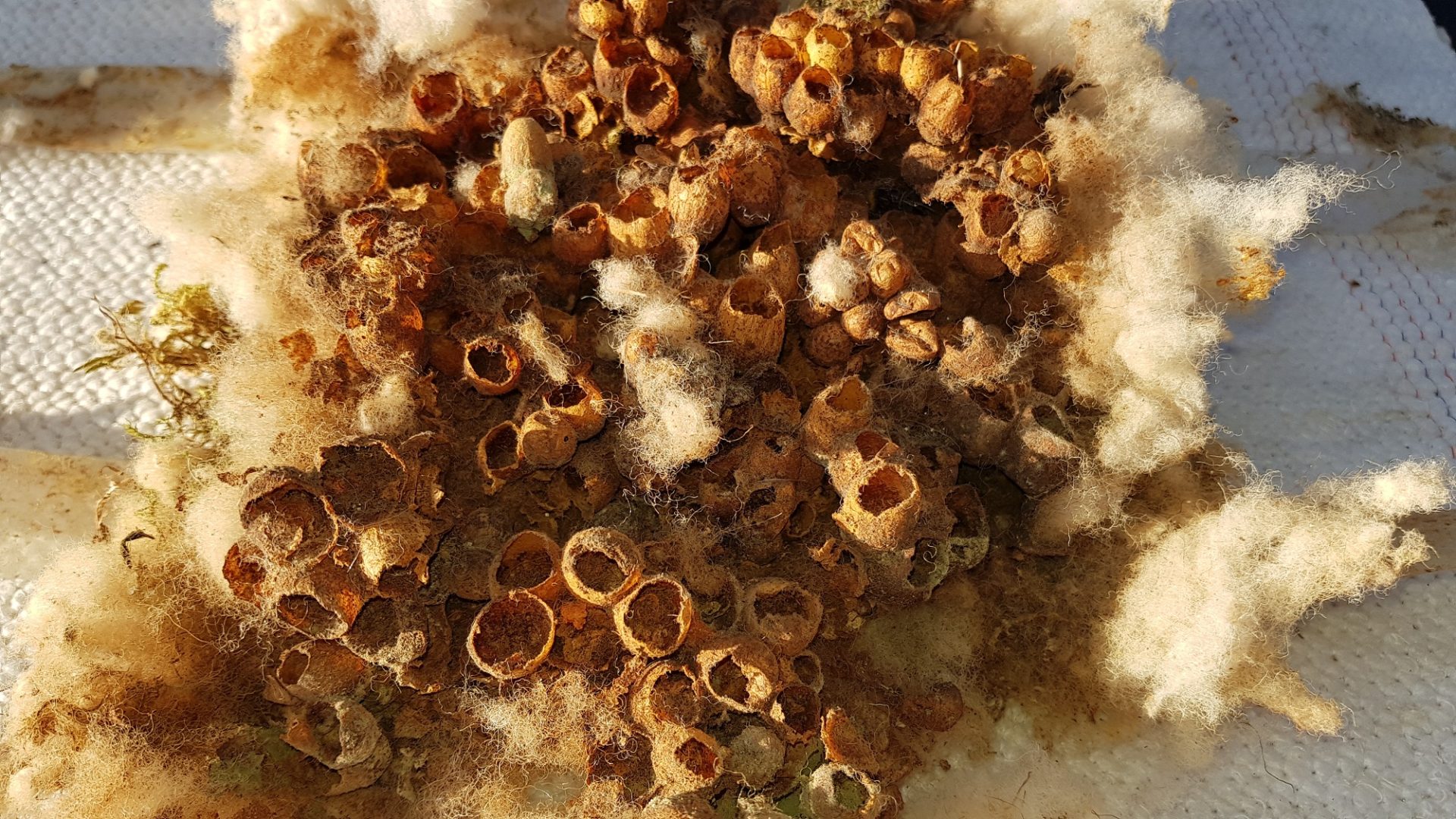
Bumblebee nest of *Bombus pascuorum* after the season
Photo O., Hercog 20/9/2020
When to clean and clear the bee house/bumblebee nest
About the house cleaning There's no need to rush.. If it has not been attacked by parasites and the nest has raised new queens within it, it will gradually die off. Worker ants can raise a few males from their own eggs. However, the nest will gradually fall silent, see How things work in a bumblebee nest.
Males will fly out and never return. But they remain in the nest and live out their last Female worker, which often only consume food scraps.
Young mothers after mating they go to find their hibernation spot. Before they mate, they return to the nest between flights to feed, rather than flying away. However, it sometimes happens that they still wakes before winter back to the nest/lair return to be clogged with food scraps of honey and pollen.
There is no need to rush, therefore, and be frightened to tidy up prematurely.
But if the nest in the hive The parasites have been eliminated, it is good to clean the hive and not let them multiply in the infested hive.
Could you clean the rifle and prepare it for second-generation mother's nesting, or you can use it to save endangered bumblebee nests see Bumblebee Rapid Response Unit.
Before we get started, please ensure the fright has well and truly passed.
The first step is to to convince that there are no more bumblebees left in the nest and it is abandoned. Otherwise, the whole action needs to be postponed and the nest left to live out its life.
As we wrote above, into the nest still They can offer jobs back to female workers, or young mothers..The nest may contain the last workers, who are living out their days there. Often Young mothers hasten the demise of the nest by depriving it of its remaining supplies. And the last foraging workers will no longer be able to carry food for the remaining workers in the nest. The nest will therefore calmly perish within 2-3 weeks after the queens have flown away.
You can find all of that out observation, glimpse into the nest, or (as in spring) inserting a tag to the inlet opening. Learn more about the brands HERE
If sign thrown out this morning (try for more days), the nest is still occupied uses. If the brand stays in place, in the evening after darkness has fallen, open it and carefully peer into the nest, by parting the lining.
If there are in the hive mothers/Female worker, It sounds like buzzing, often weakly. In such a case, postpone cleaning the hive and instead provide the bumblebees with a dose of syrup in a feeder. O bird feeder and about the preparation sweets if you read HERE.
If the nest is indeed The autumn is here and it's empty, nothing is stopping us and we can start tidying up!

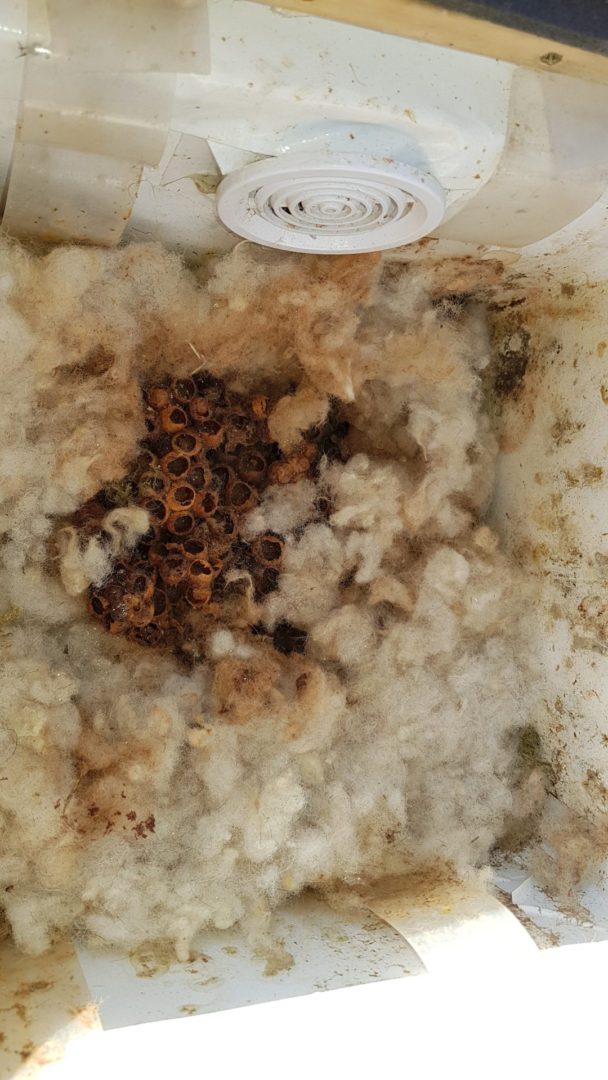
Bumblebee nest of *Bombus pascuorum* after the season
The nest has indeed been abandoned – there has been no movement in the nest for several days
Photo O., Hercog 20/9/2020
External inspection/checking of the ulcer
First, we recommend conducting an external inspection of the hive while simultaneouslyremember, what are we with competed in the season And what would be good to sort out before the next season begins.
All Experiences are valuable and they will be useful to you next season.
It's good to do it now, because in the spring you'll have a lot of other work, and the experience and minor issues can be forgotten. We'll try to [help you] in the next text. with guiding questions.
If anything troubled you during the season, or if anything was missing, Go through the instructions for preparing the hive a Gismos, you'll find everything on our website.
Thanks to good preparation, your next season will be more successful. Don't forget that next season begins with the cleaning of the hive.
Ulcer location
- Was it placed correctly?
- it was not unnecessarily exposed to the sun, wind, or other weather conditions?
- Did the scare overheat?
- Weren't the brood boxes too close together?
- Did you have the chance to do hive inspections – was it positioned correctly and not too high to be able to look into it?
- Wouldn't it be suitable for the next season to find a better placement for your scarecrow?
You can read more about the ulcer's location HERE
Hive attachment
- Would the mounting method be suitable (feet, wall mount, stand, etc.)?
- Did the ladybird resist the attacks of ants or earwigs?
- Was the fastening secure and robust enough in the wind so it wouldn't move on its own?
About the hives' mounting you will read more HERE
About ant protection you will read more HERE
The roof of the ulcer
- Did the nest leak?
- Did the roof seal on the hive body?
- Were there no distortions or damage to the roof covering during the season?
- Have you colour-coded the ulcer roofs?
About the roof of the hive you will read more HERE

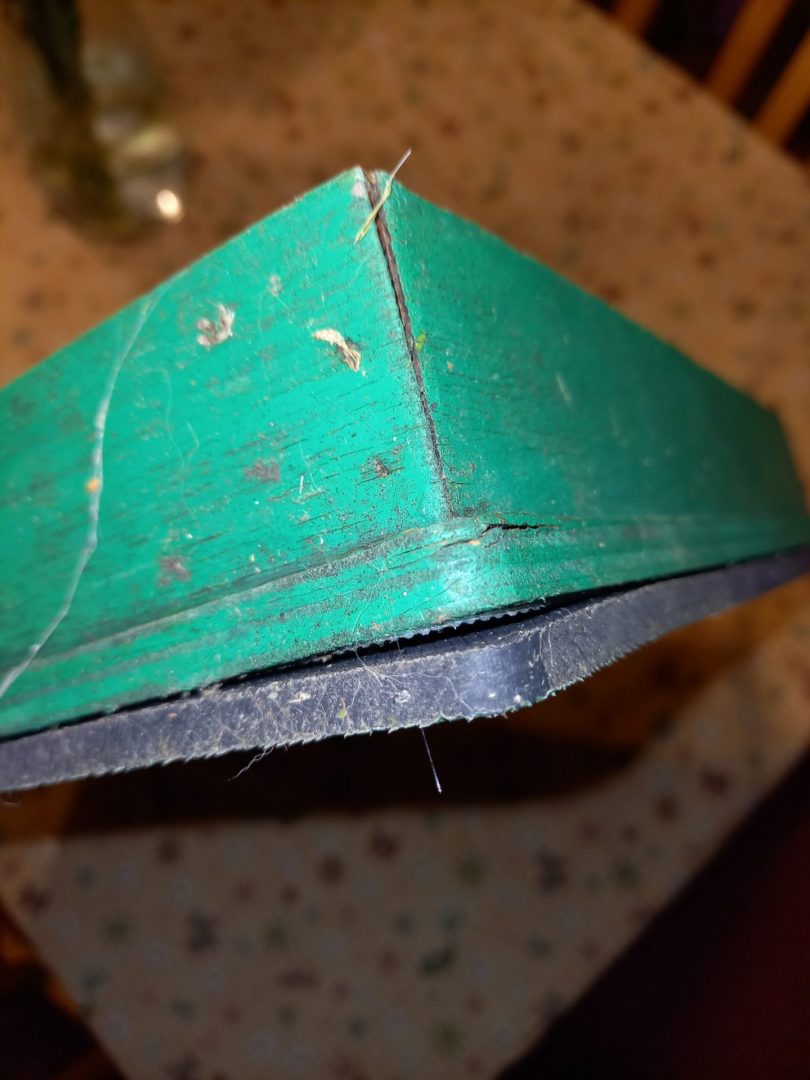
Poor quality roof on a commercially available beehive after one season
Internet source
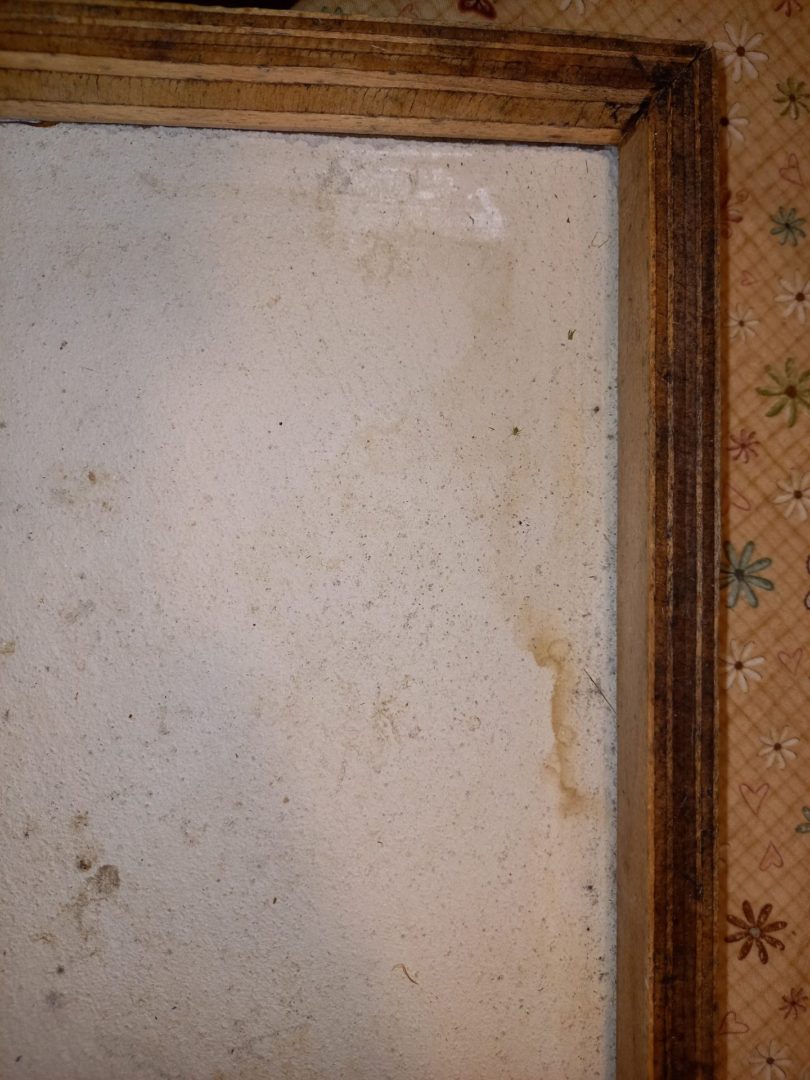
Poor quality roof of a commercially available beehive after one season – the hive is leaking and is not watertight
Internet source
Ventilation opening and protective grille
- Did the ventilation opening close and open correctly?
- Could the ventilation be regulated – controlled by the size of the ventilation opening and could the ventilation be closed?
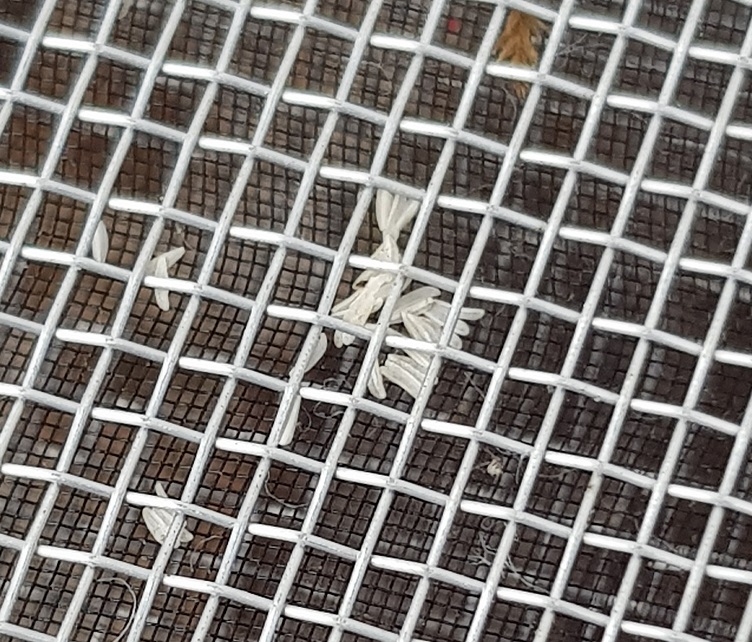
- How did the ventilation grille and protective net against the bee moth fare – did the bumblebees chew through them, and did they prevent the bee moth from entering?
- Has a predator got into the space between the grates, or are their larvae/pupae hidden here, which could overwinter?
On ventilation you will read more HERE

Hive ventilation – parasite eggs (here, flies) laid on the mesh
An air vent
Photo O.Hercog 2018
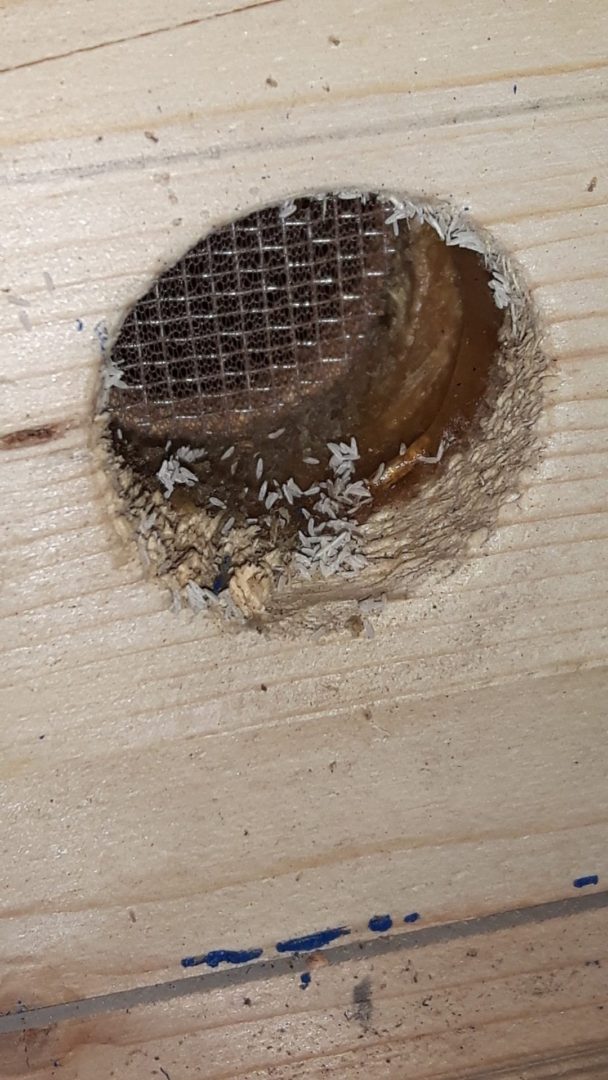
Fly eggs laid in a sticky trap in a ventilation
Opening
Photo O. Hercog
Protective flap and entrance
- If you have more than one beehive in your garden, have you distinguished the beehives by colour (the bodies and roofs)?
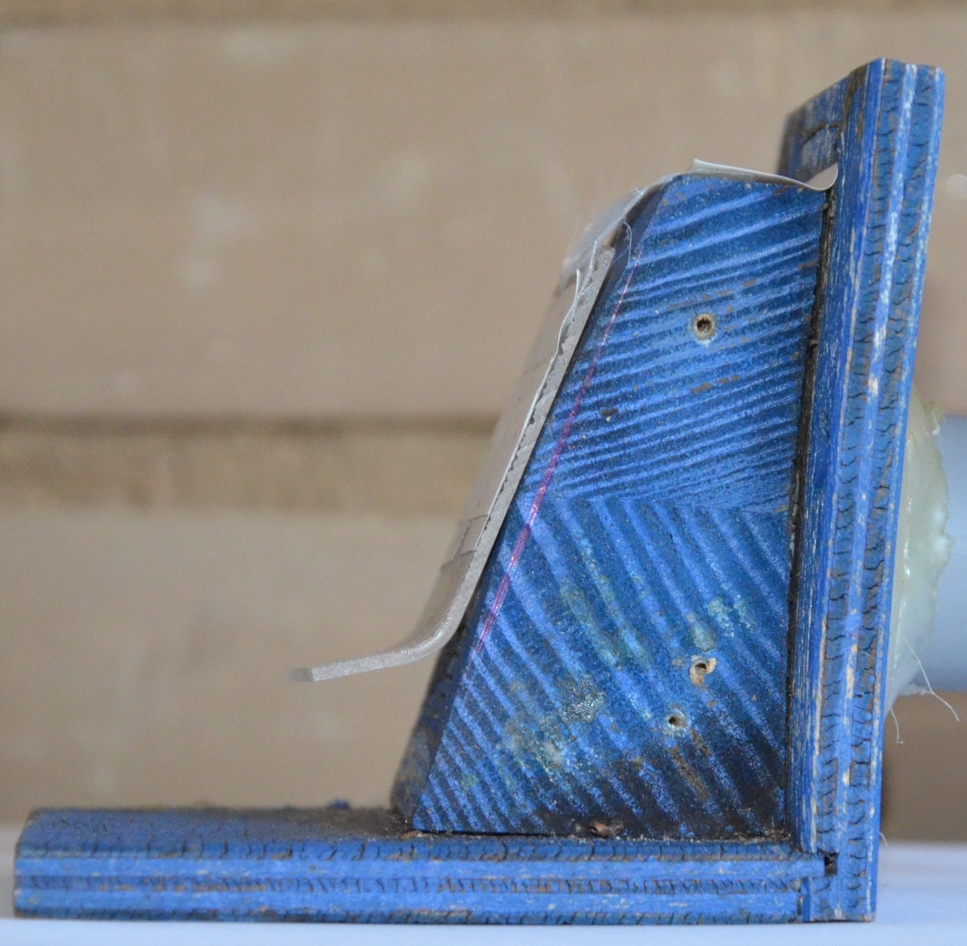
- Was the protective flap functional and did it close and seal well when closed?
- Could the flap be gradually closed and the mother/workers become accustomed to it?
- Does the flap show signs of wear?
- Has the wooden part deformed?
- Did the flap stick when opening/closing?
- Was there excessive pollen loss at the flap?
About the protective flap you will read more HERE

After removing the side panel, it is evident that the flap barely seals against the side panel. This flap is non-functional. Damage caused by moisture after one season.
Photo: K. Kučera
Entrance hall
- Was the corridor not choked with people?
- Was an internal diameter of at least 18mm used for the duct?
In the entrance hall you will read more HERE
Hive walls/body
- Are the walls damaged or cracked (e.g. due to wood drying out)?
- Weren't there any leaks during the season that need repairing (e.g., a fallen seal, a loose screw, wood rot)?
Internal inspection
Now it's time for an internal inspection and cleaning of the beehive!
So let's take off its roof and have a look inside. You must have done that even when the scare was occupying it, now it's without worry, so enjoy it like little adventure.
But now we can do it thoroughly, look into the homes of our pets and see what's left of them.
Removal of nest lining
- Remove carefully all of the lining, until you discover work – wax nest construction.
- Proceed in layers, You will see how the bumblebees have modified the lining, how they have layered it.
- You will gradually get to wax comb ceiling, or straight to the nest.
- You can now see the nest and observe and document it – to get a photo of it.
The nest appears empty – no bumblebees are present, and the nest has been empty for several weeks.
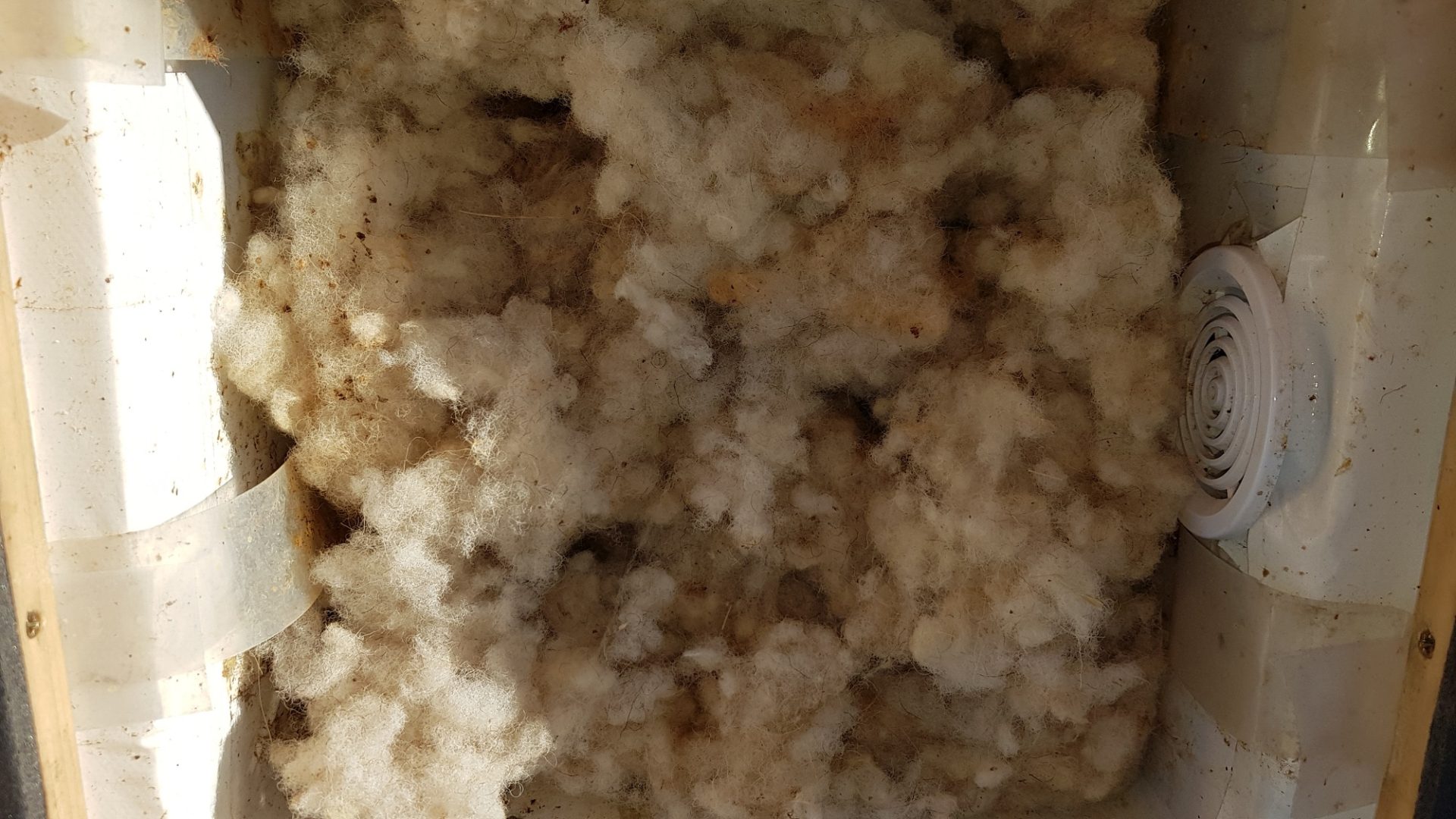
Discovering the nest – step by step
Photo O. Hercog 20/09/2020
After gradually uncovering the lining, the comb appears. The nest is empty and devoid of honey and pollen stores. The queens fattened themselves on it before hibernation and hastened the demise of the rest of the nest.
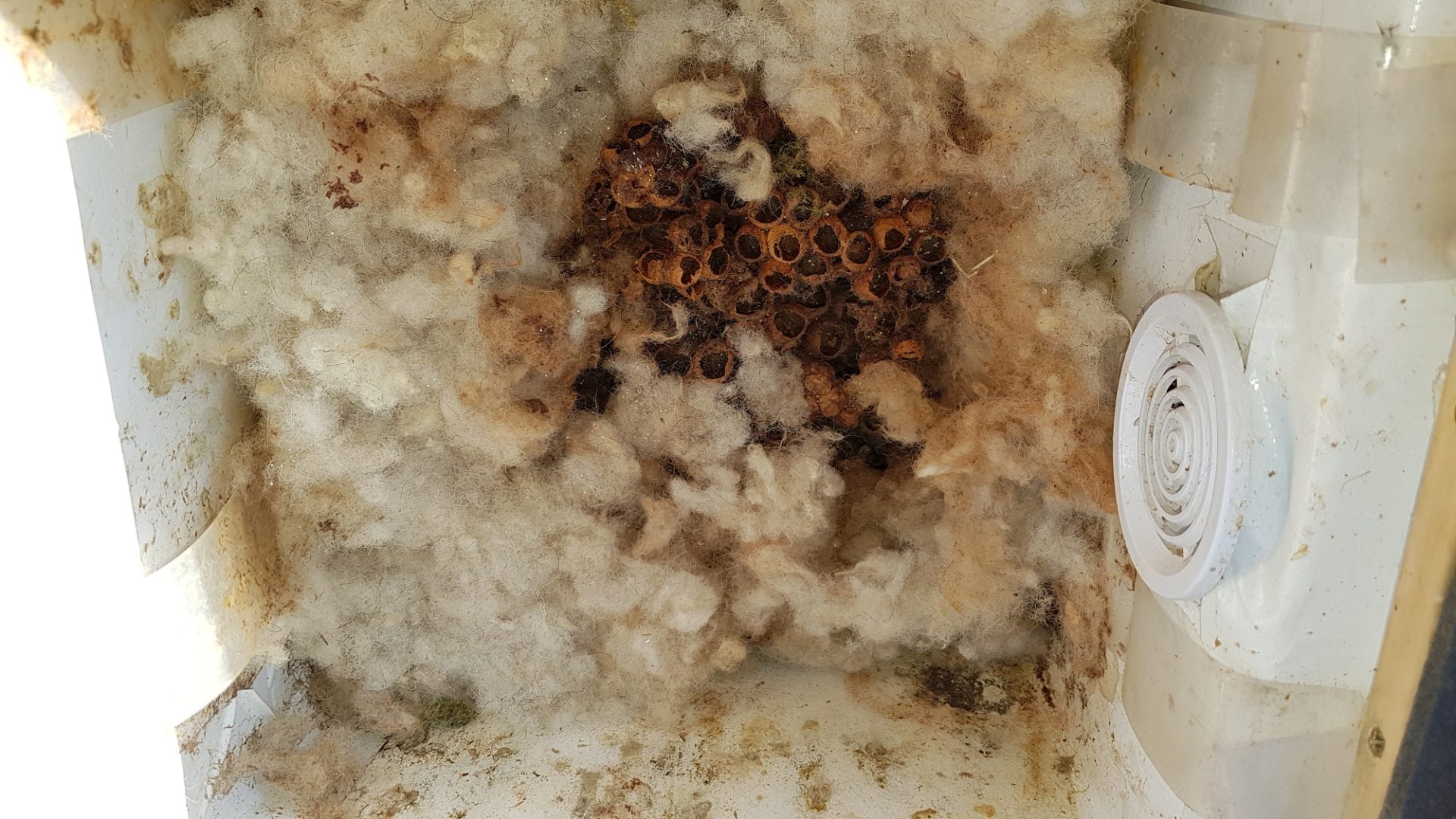
Discovering the nest – step by step
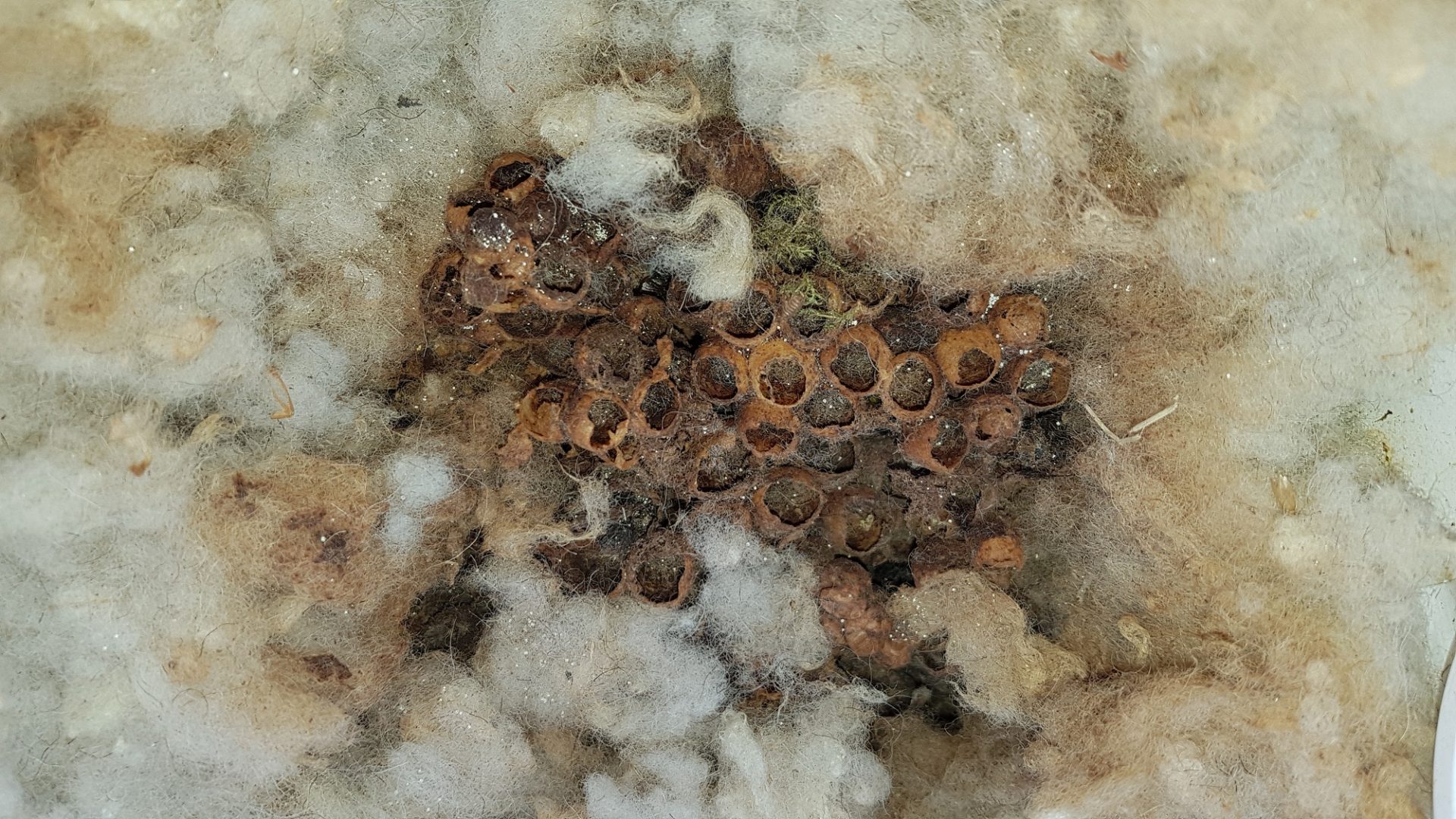
Photo O. Hercog 20/09/2020
Empty nest and lifeless, but it was strong and gave enough mothers.
Discovering the nest – step by step
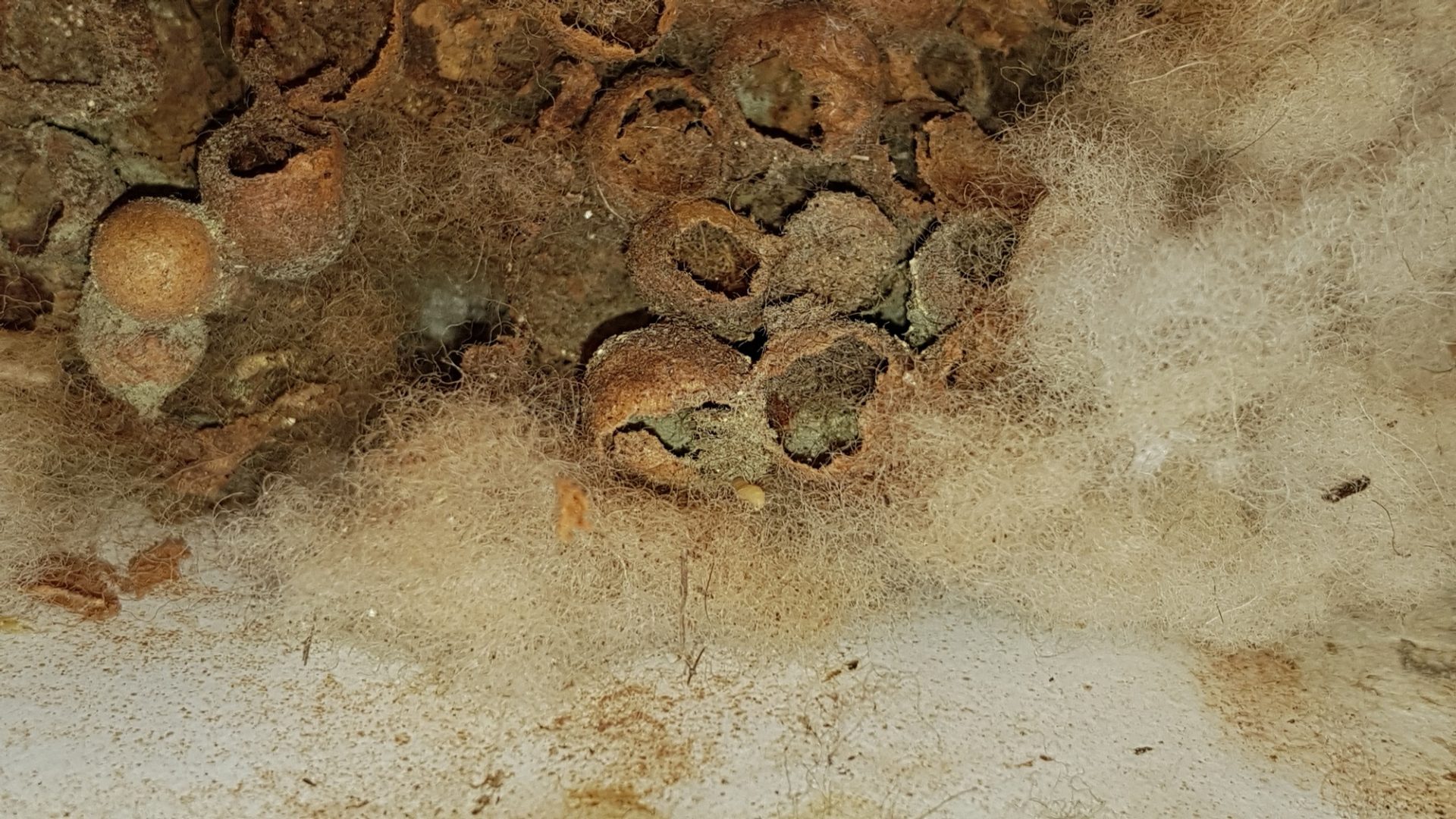
Photo O. Hercog 20/09/2020
The empty cocoons are showing mould. In the centre of the photograph, a parasite larva can be seen.
Discovering the nest – step by step
Photo O. Hercog 20/09/2020
.
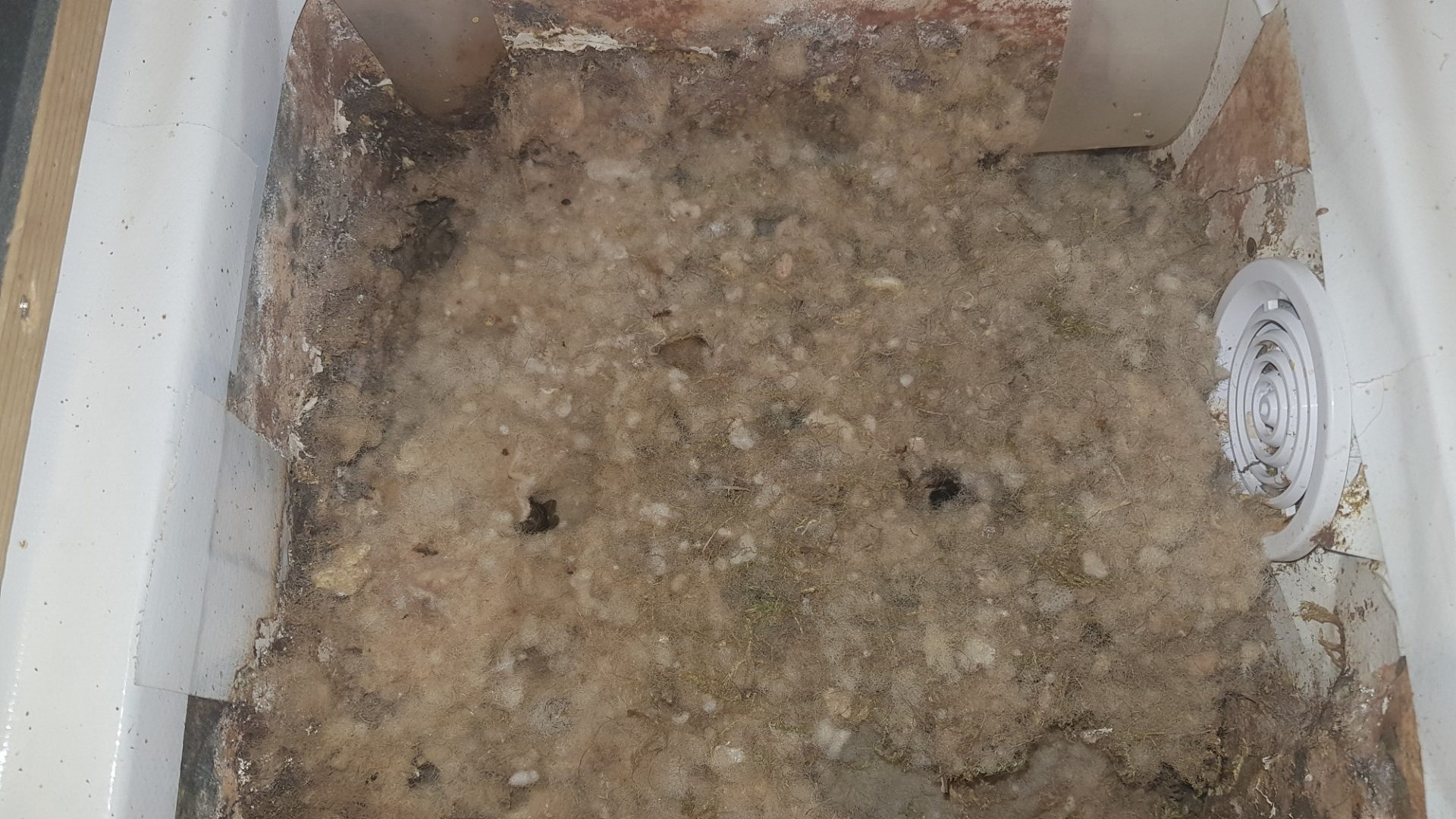
A bumblebee nest after the season.
Although there was mould on the surface of the nest, the nest thrived and successfully raised the mothers.
Female workers in a strong hive can clean waxen combs and strengthen/build them.
The nest is thriving.
Photo O. Hercog 20/09/2020
Using the liner next season
If you wish to make it easier for the hive to establish itself next season, use a part of the clean lining from this season's crop. It's a bit laborious because you have to sanitise the lining = rid it of parasites and potentially germinal microbes.
Using old lining on one side increases the chances of the mother settling in the next season, but at the same time means the risk of transmitting diseases, parasites, and mould. If you therefore have your startle already scented bumblebees, and you don't want to risk anything, don't use the old lining and use only new.
Procedure
- Remove Carefully the hive lining.
- Please put it away book pure - free from nest remnants and bee droppings/other dirt.
- The lining may already be starting To go mouldy or is it smelling of mould. In this case, it is good to inspect the nest carefully and Destroy the lining.
- However, if there are parts of the lining in the nest which are clean and smell of bumblebees, they can be used.
- It is best to preserve pure immaculate„curls“which the worker ants bring to the surface of the nest. These are good to use because they will smell new to the queen when establishing a new nest, thus making it easier to establish a new nest.
- In the lining, I can hide Chrysalis maggots, moths, moths. They can also be multiplied there mites. Therefore, it needs to be thoroughly inspected, dried, and sanitised before use.
On the sanitisation of the lining you will read more HERE
When you prepare the scarecrow for the next season, just put a bit of fragrant sanitised bedding in the centre of the future nest. It's a much more reliable method, than to „scent“ the bedding with the smell of mice, as you sometimes read.
Warning:
- If you want to keep part of the lining for next season, sanitise it straight away. during cleaning and then again before preparing the room.
- The lining can be left Freeze, but here You are not sure, that no parasites remain in it and do not attack the nest the following year, heating above +60°C is safer than a frost of -20°C. Frost does not destroy microbes, and a temperature of 100°C also doesn't.
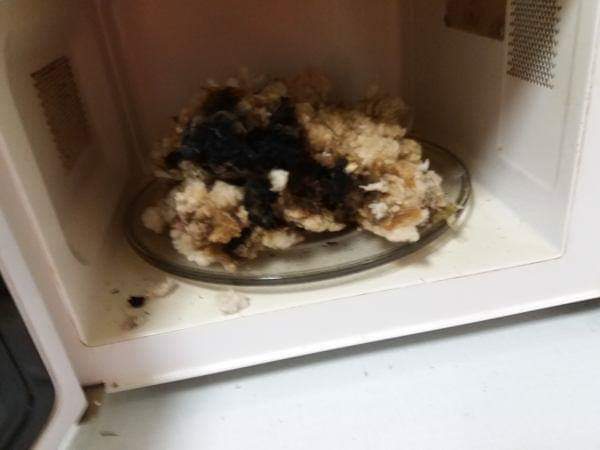
- Heating the lining in a microwave oven for a few minutes it effectively destroys parasite larvae (they contain water), does not destroy, but reliably eliminates microbes – if you have observed a large incidence of deformed wing virus (DWV) in the nest, microwaving the bedding is not sufficient; instead, use new bedding or sanitise it in a hot air oven
- VLining is a waste of time., which will spoil the lining and remove what is interesting from it – the smell of a bumblebee nest

Last year's liner - sanitisation in the microwave oven, too intense heating
We are not including a photograph of the author at his wife's request...
Nest removal from the hive
Carefully remove the nest from the hive. Try not to break it so it can be examined.
If you have purchased a bumblebee lift, you will remove the nest very easily and with practically no damage.
About the bumblebee lift if you read HERE
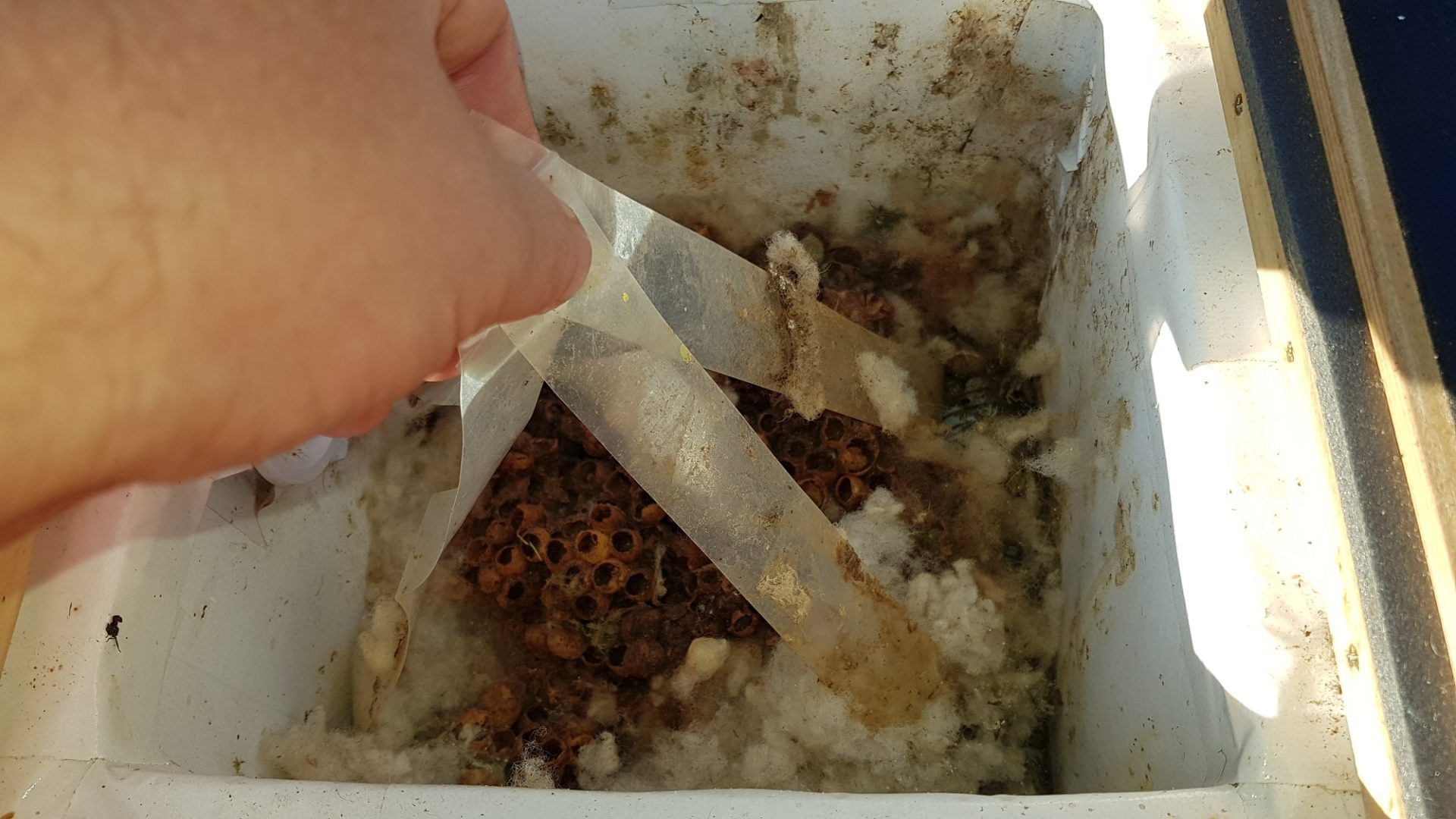
Place nest on pad, to prevent it from falling apart and carefully clean it with tweezers of any lining residue. Here you can to browse.

Bumblebees PLUS – Bumblebee Extract – Nest Cleaning After the Season
Photo: O. Hercog 9/2020
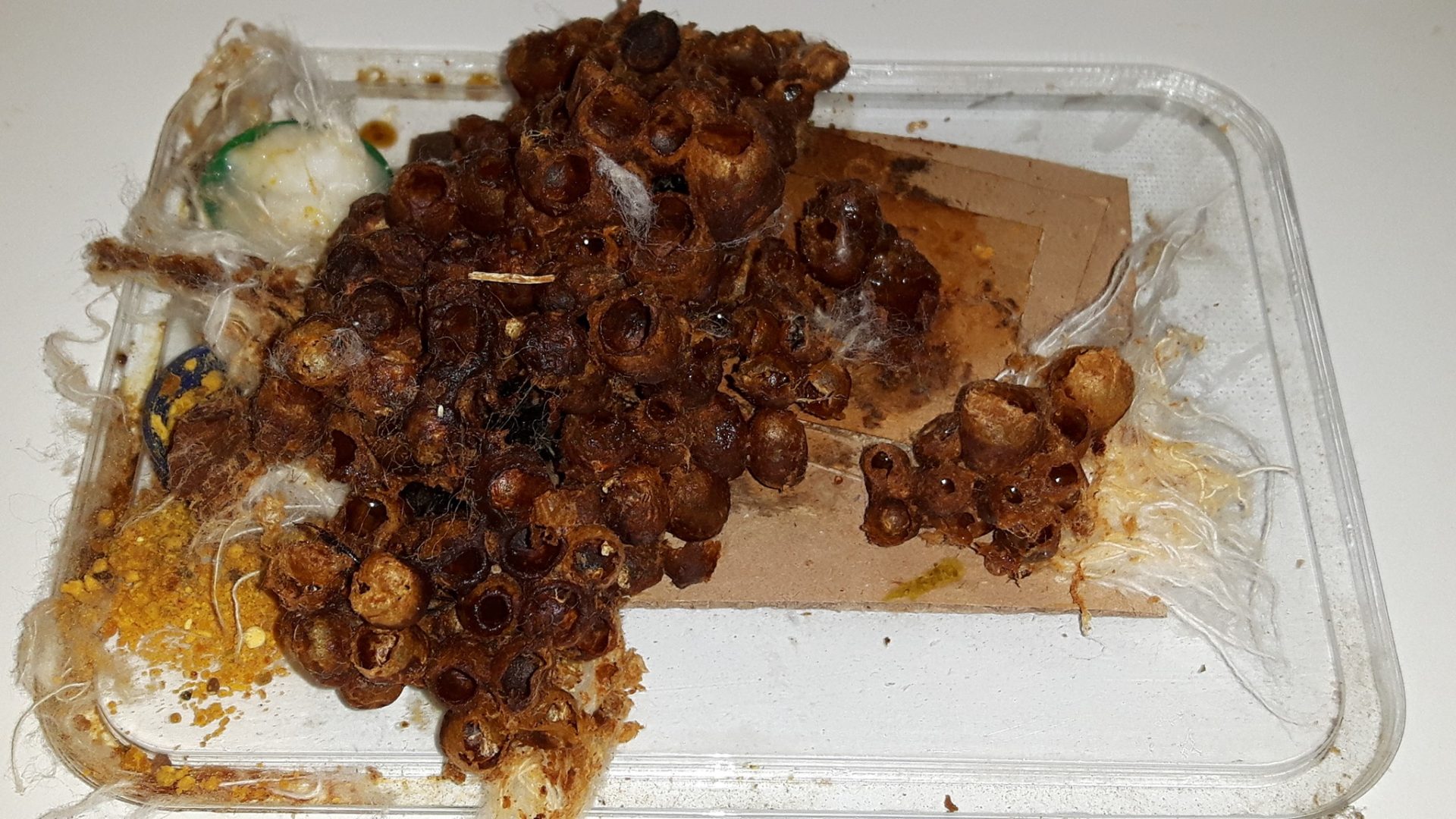
The base of the nest and the first waxen cells and cocoons
Photo O. Hercog 8/2017
Nest parasites
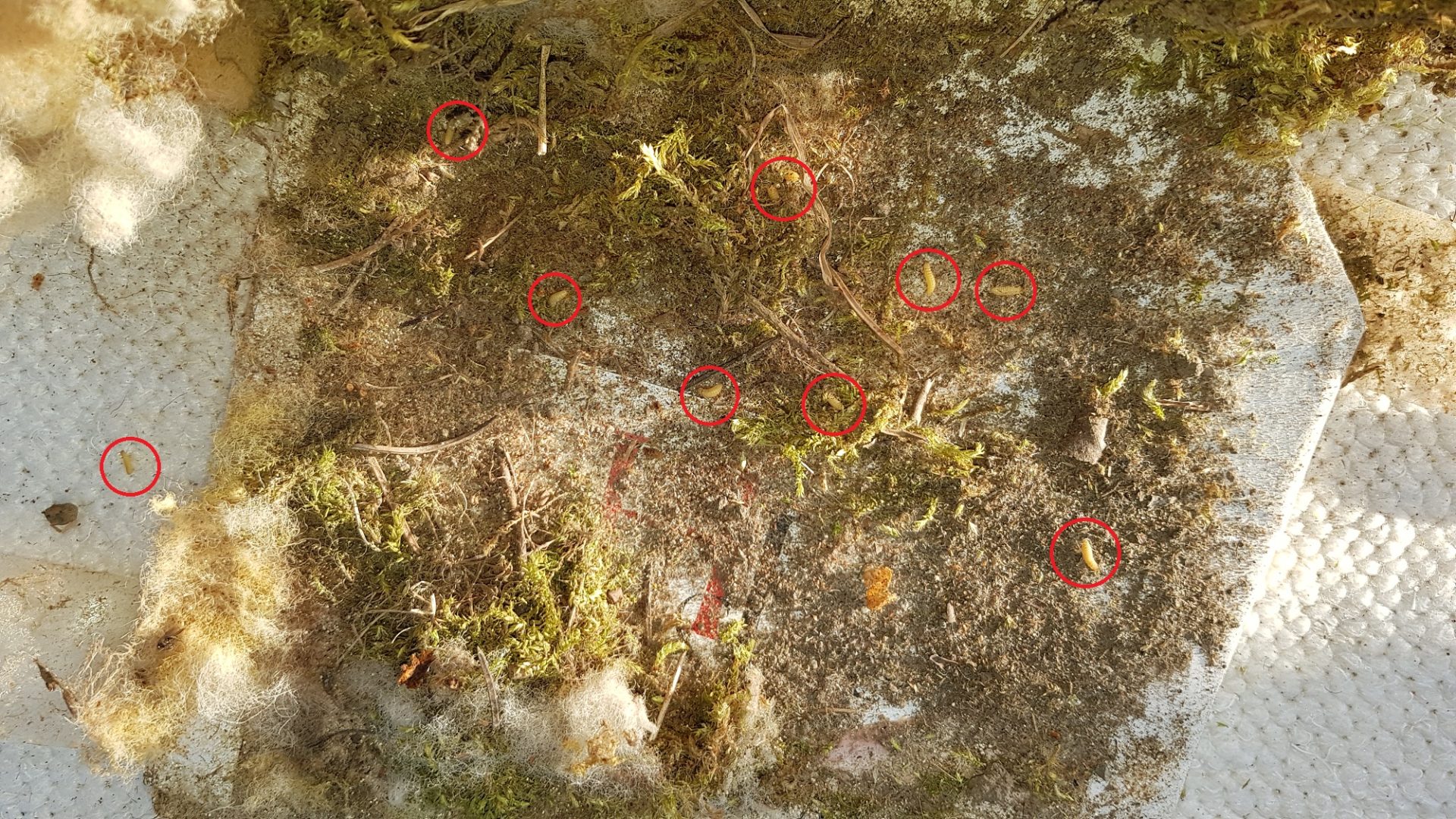
Take a good look the lining and then the hiveIt is necessary to remove all Parasites and theirs larvae/puppets. If you leave overwinter parasites in the hive, k, there may be a risk in the spring breeding within the hive.
If the nest was attacked Spindle moth (Aphomia sociella), you will find his spun larvae. However, you might not notice the infestation until you're actively looking for the moth's cocoons – cleverly hiding.
Most of the time they are in the ceiling nest (under the roof, under ventilation) – stuck next to each other in a fibrous casing. But they can also hide elsewhere, for example hidden at the bottom, in waves fleas (hence we do not recommend using it), or between layers of paper with which you lined the nest in the spring. If you have in the nest polystyrene insulation, and they can gnaw at it hide behind her, or in it. Likewise, the larvae of the moth may be hidden in the entrance hall and other parts of the ulcer, mainly in the corners, behind the ventilation pipe.
Similarly, the larvae of the parasitic Brouka nigricornis, or chucks/A bit pulpy will hide in nesting material, or in the entrance tube, as other parasites do.
Warning:
We encountered a case where large numbers of Antherophagus nigricornis larvae had hidden in a polystyrene board / the bottom of a hive. Therefore, we recommend discarding the additional hive insulation after the season, or treating it thoroughly by heating it in a microwave oven.
In the nest there will surely be little ones mites, who dispose of food remnants and nests, or moth larvae/cocoons.
Is it necessary all Remove and destroy parasites. Therefore, examine the shock carefully and Don't give the parasites a chance to overwinter in it!
On parasites and enemies of bumblebees you will read more HERE

Larvae of the parasite hidden under the nest – Antherophagus nigricornis
Photo O. Hercog 20/09/2020
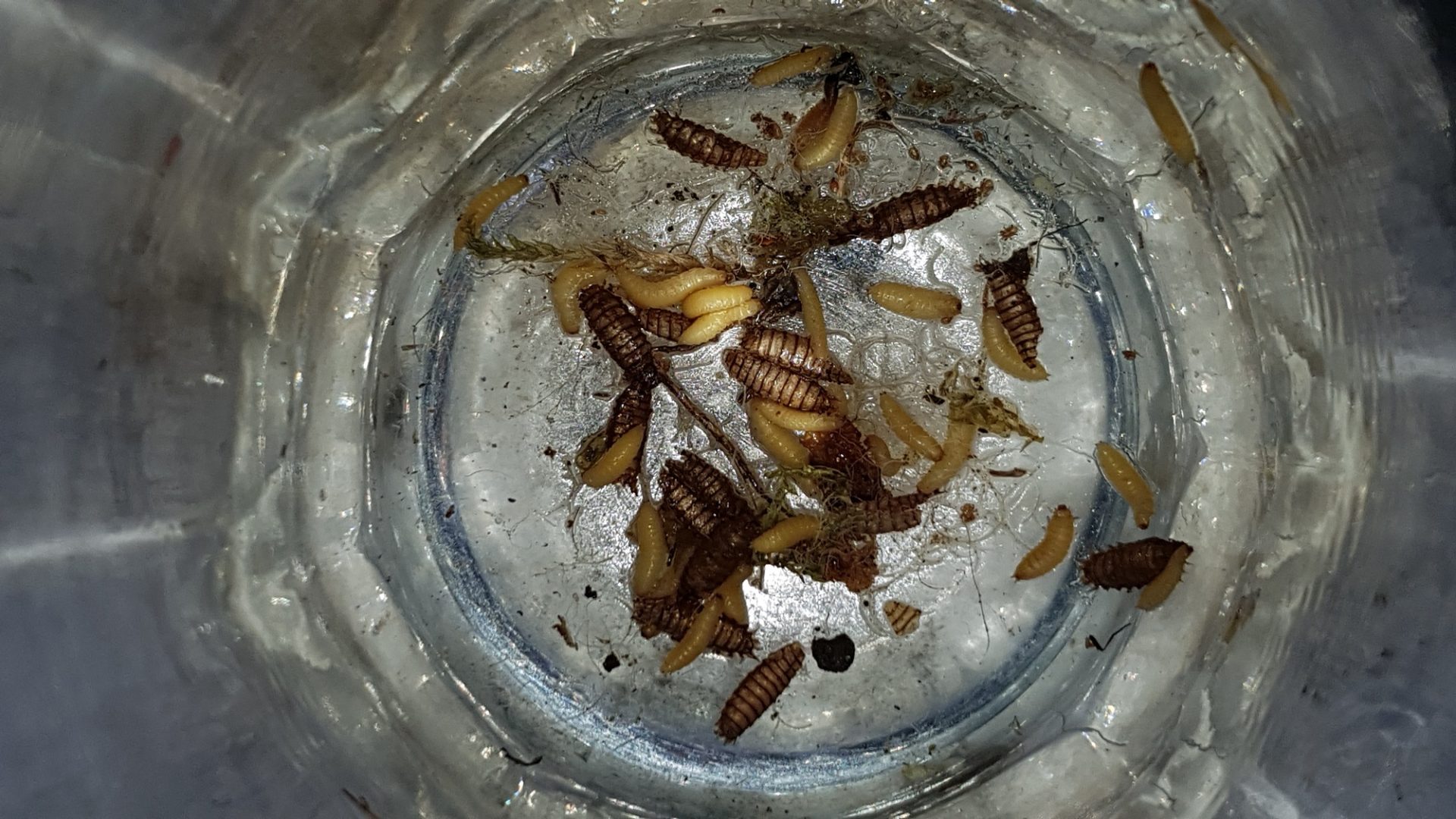
Larvae and pupae of the parasitic beetle Antherophagus nigricornis
Photo O. Hercog 20/09/2020
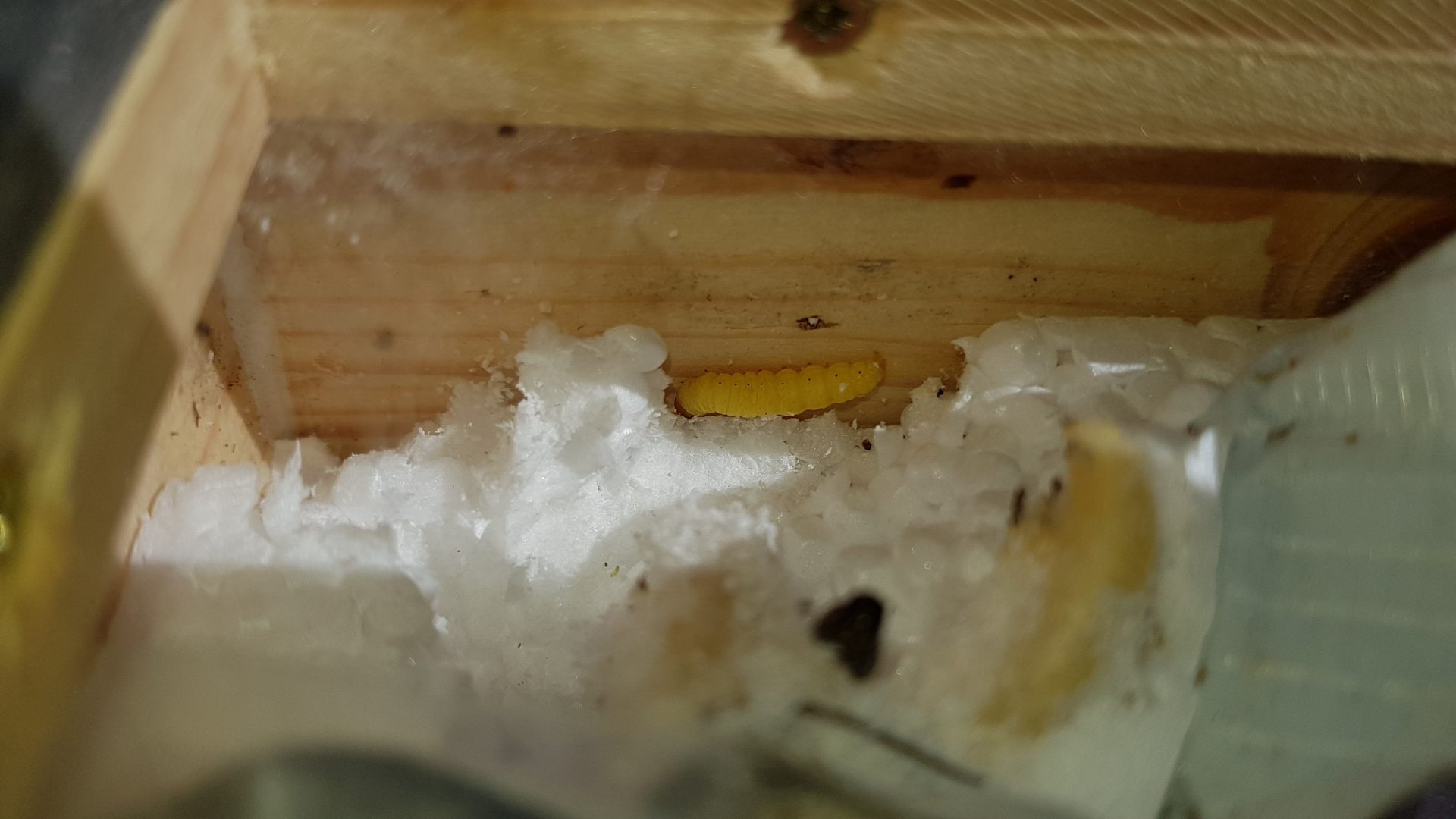
The caterpillars of the parasitic moth are preparing to overwinter in fibrous cocoons behind gnawed polystyrene boards.
Photo O Hecog 20/9/2020
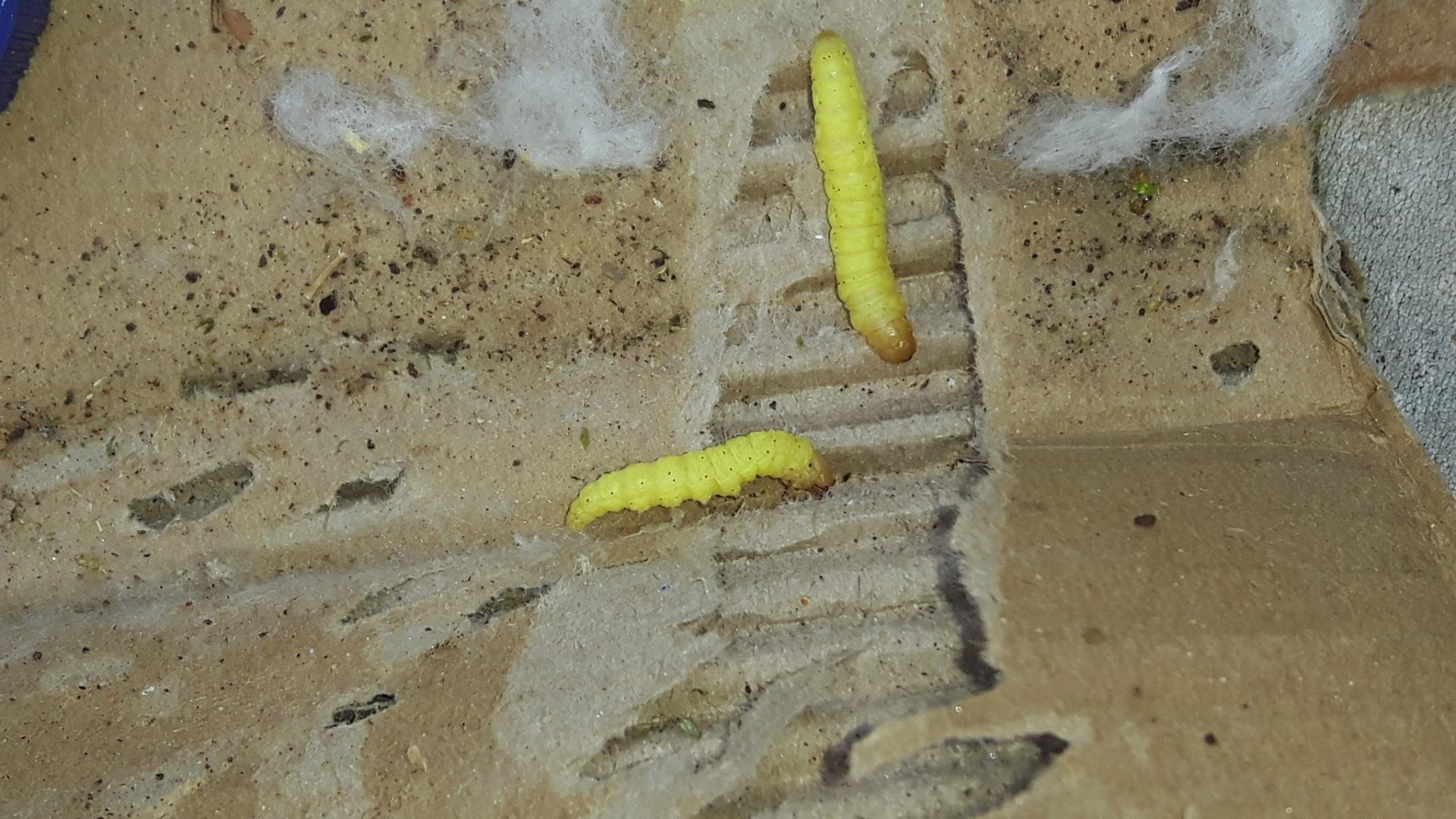
Greater wax moth caterpillars in corrugated cardboard cells
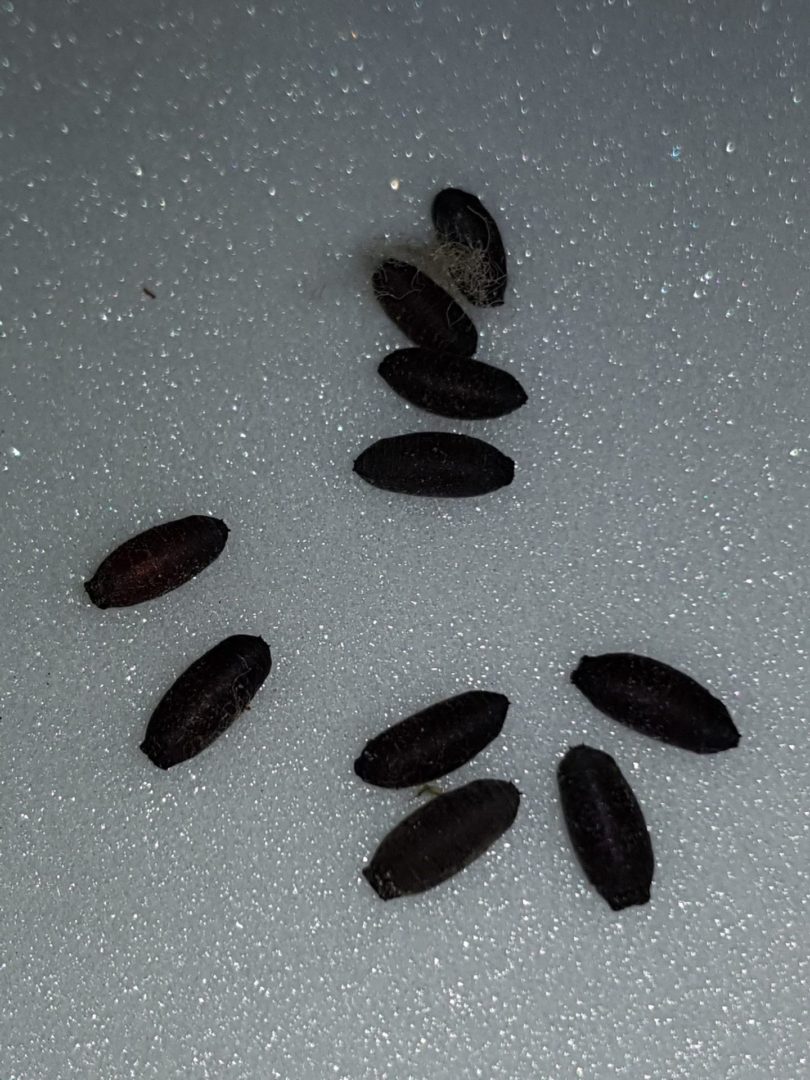
Dolls are great
Photo O. Hercog
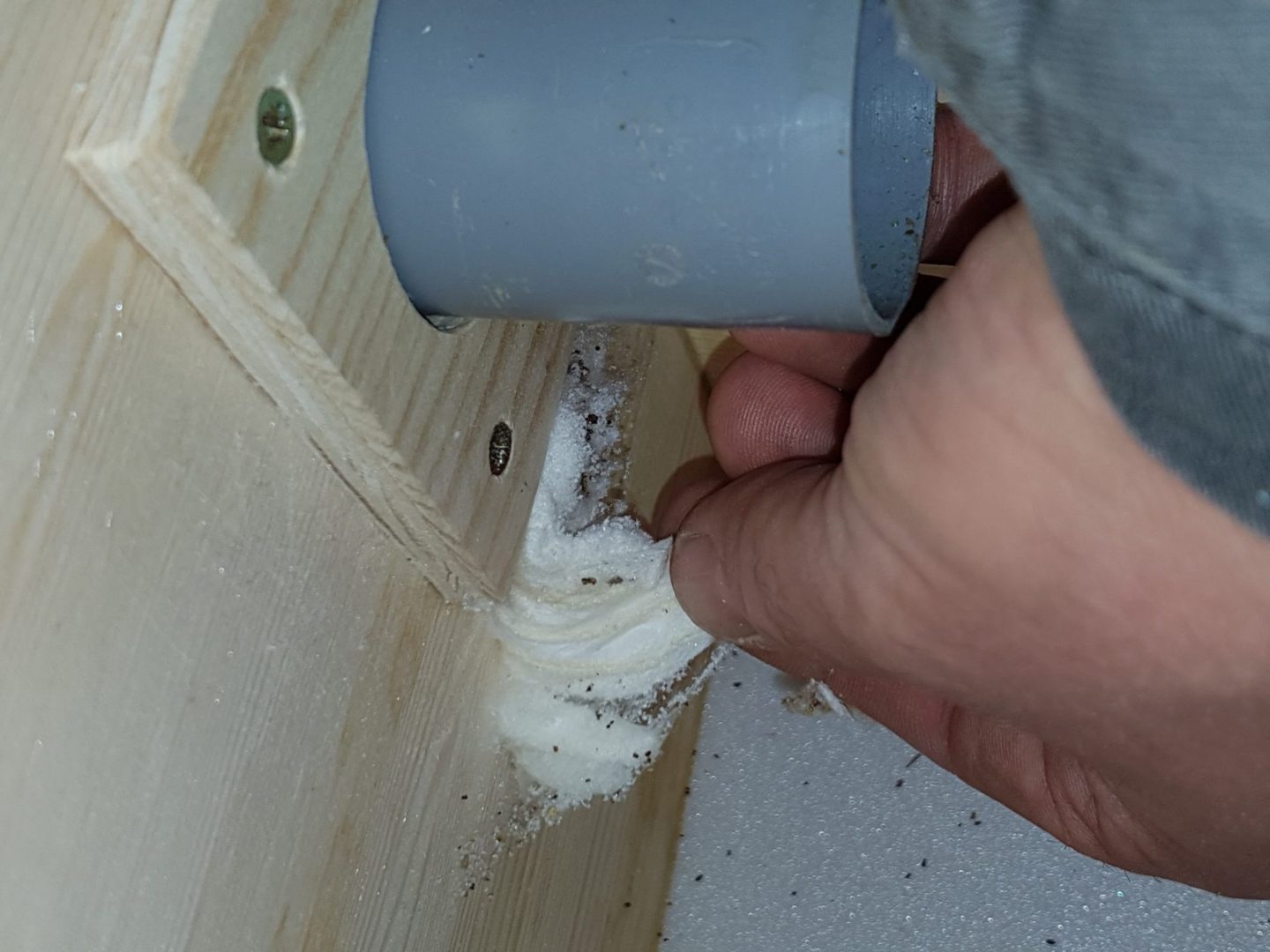
Greater wax moth caterpillars hidden behind the ventilation in a beehive
Photo O Hercog 9/2018
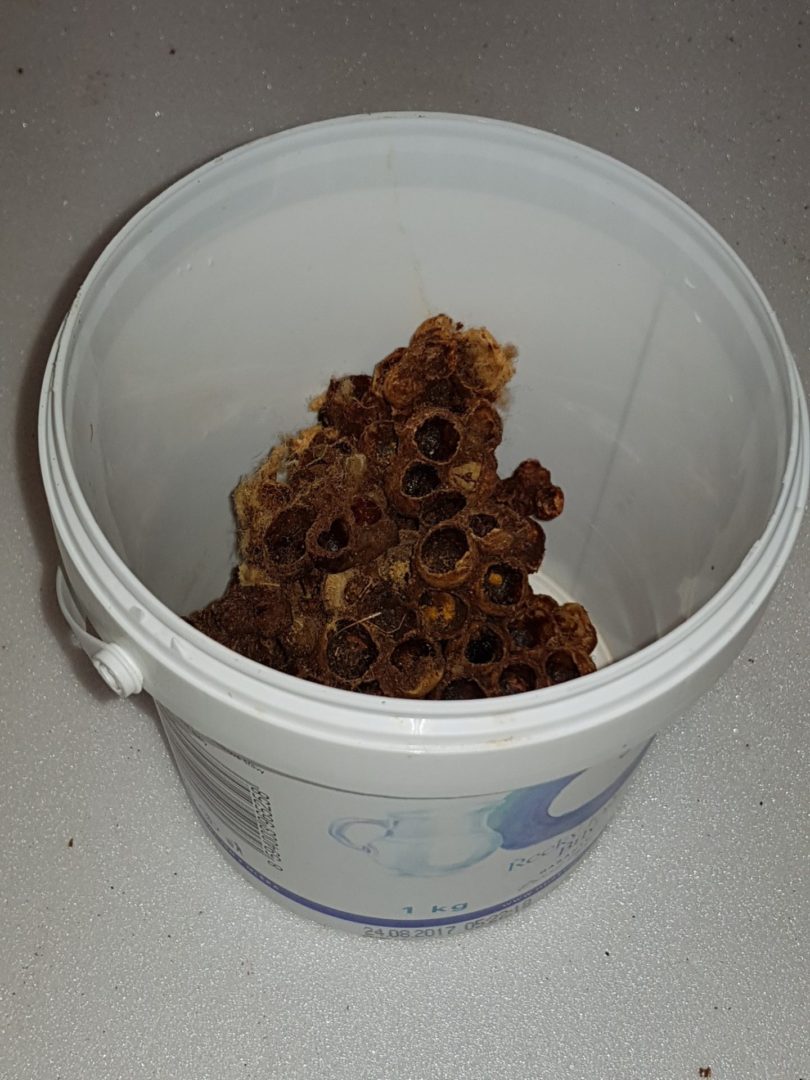
What happened in the nest during the season
Take a look the construction of a nest and its remains. Admire too what the bumblebees have built. In some cells you will find honey residue. Don't be afraid to try it – you'll be surprised how good it is. You can also make your own bumblebee honey, which we've written about here on FB before.
Look at the nest and count large cocoons estimate how many were born in it new mothers. You may find a large nest without large cocoons; then the mother most likely produced only males, and the workers continued with it.
Keep part of the nest To sample – preferably in a jam jar and keep in the fridge.
Look at the other parts of the nest too. You might even find worker bodies, which remained in the nest, or Have a nice trip., who founded the nest and then ended her life in it.
A nest infested with wax moths will be covered in webbing, with which the wax moth has prevented the workers from moving. You will also find the unfortunate work of the wax moth in the form of gnawed-out cells. You will also understand why it is practically impossible to remove wax moths from a nest once they have entered.
You may also find the pupae of parasitic flies, or perhaps small mites…. You might also see other insects that have entered the nest – in late summer, for example, this could include wasps.
„Reading from the nest“ is interesting, you can learn more about its life, but also about its end...
A detailed procedure for checking and reading from the nest can be found HERE – We highly recommend reading it.

Part of the nest stored for display
My father performed on Good Morning 2020.
Photo O. Hercog 8/2019
Ulcer cleaning and repairs
Dismantle all parts of the hive, which need to be cleaned, or would prevent cleaning – the protective flap, ventilation, the entrance corridor etc. and get on with the cleaning.
Warning:
- Remember that cleaning can be done mechanically, thermally, or with water – but always without chemical agents!
Door and entrance
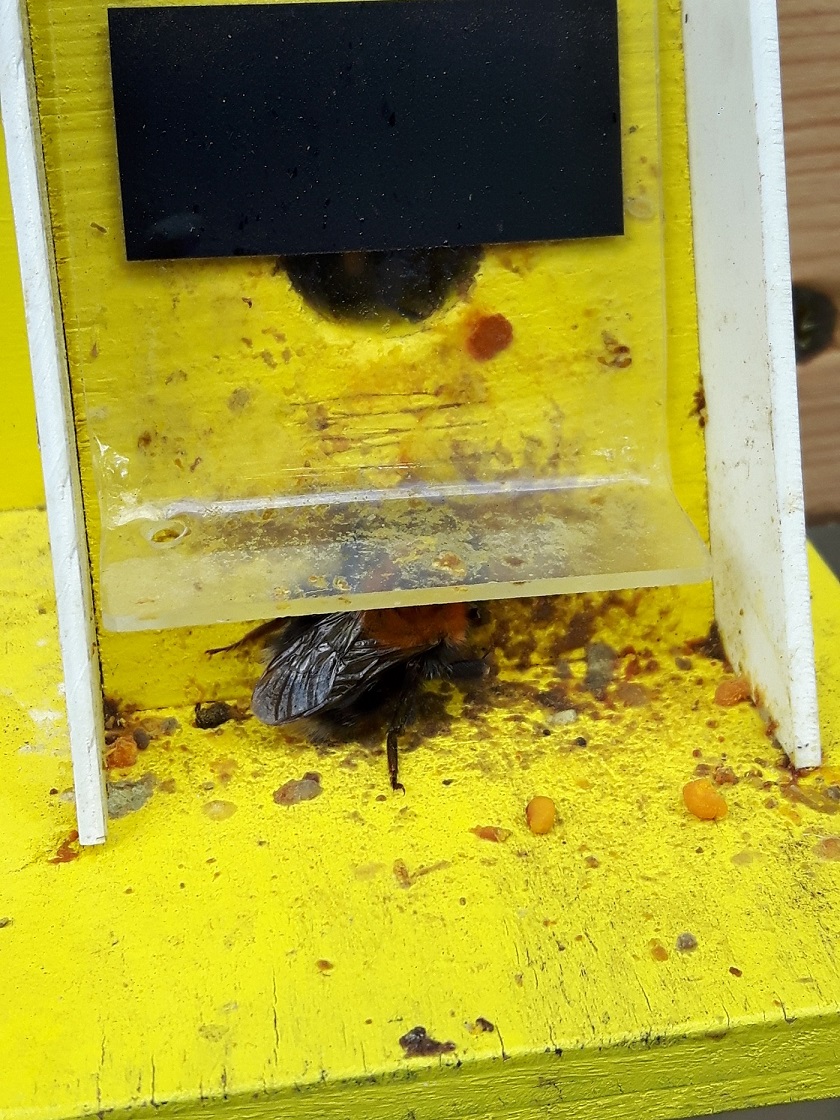
Bumblebees entering the hive during the season they are carried by impurities and pollen clumps. All these impurities need to be mechanically cleaned (e.g. with a brush, knife blade). Impurities can also be found between the flap and the body of the ulcer.
Procedure
- Remove the anti-slip tape/Velcro on the garlic and in spring replace it with a new clean piece
- Clean the clasp mechanically, but Carefully mainly on the moving part (shutter)
- Rinse the valve with water, or limo, to dissolve VOSK
- Warm water can also be used for cleaning, but the valve then needs to be Dry well and leave to dry so that it doesn't deform
Repairs:
- If the flap deformed, consider its repair, or complaint from the manufacturer
- If the bumblebees on the flap significantly lost pollen, consider damper adjustments
- If the movable part of the flap It wasn't smooth, consider modifications Hinge for the flap from the UHELON
- If Paintwork on flap damaged by weathering, recommends its renewal coating – use suitable exterior acrylic paints; this will significantly extend the lifespan of the shutters; avoid synthetic/nitro dyes, mainly when repairing in spring

Protective flap blocked with pollen clumps and wax
Photo O.Hercog
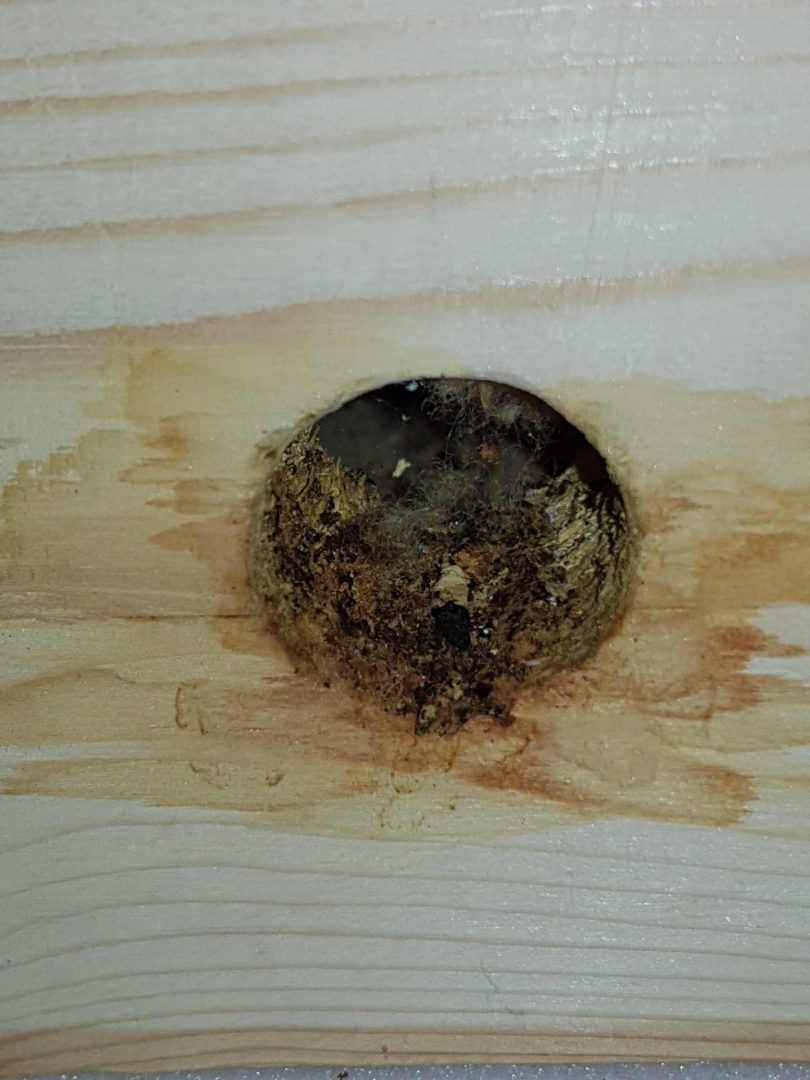
Air intake opening to the corridor behind the flap
Photo O. Hercog 8/2019
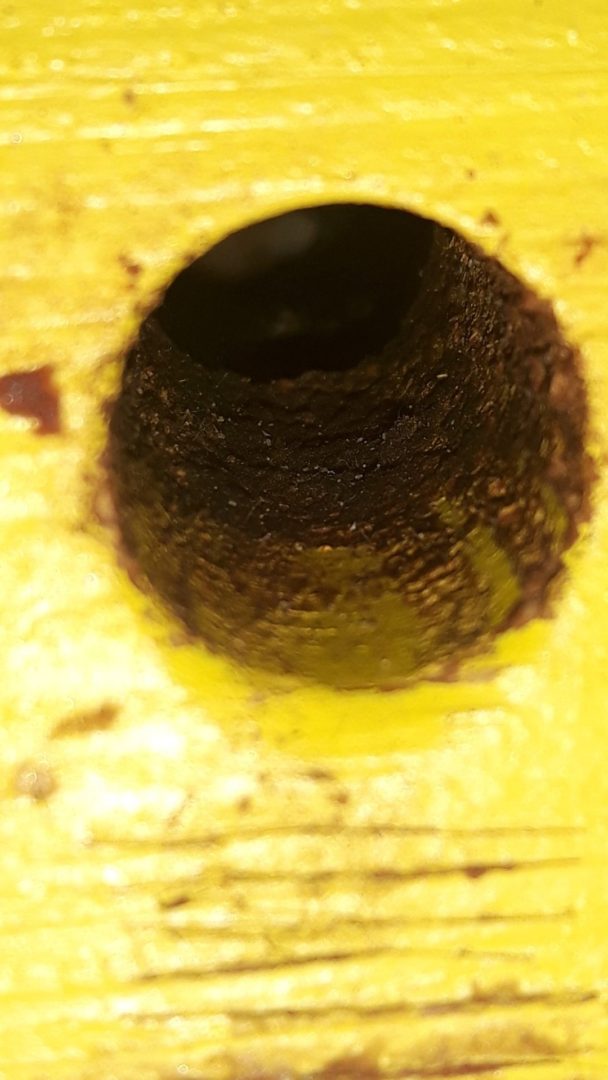
Contaminated inlet in the flap
Photo O. Hercog 2018
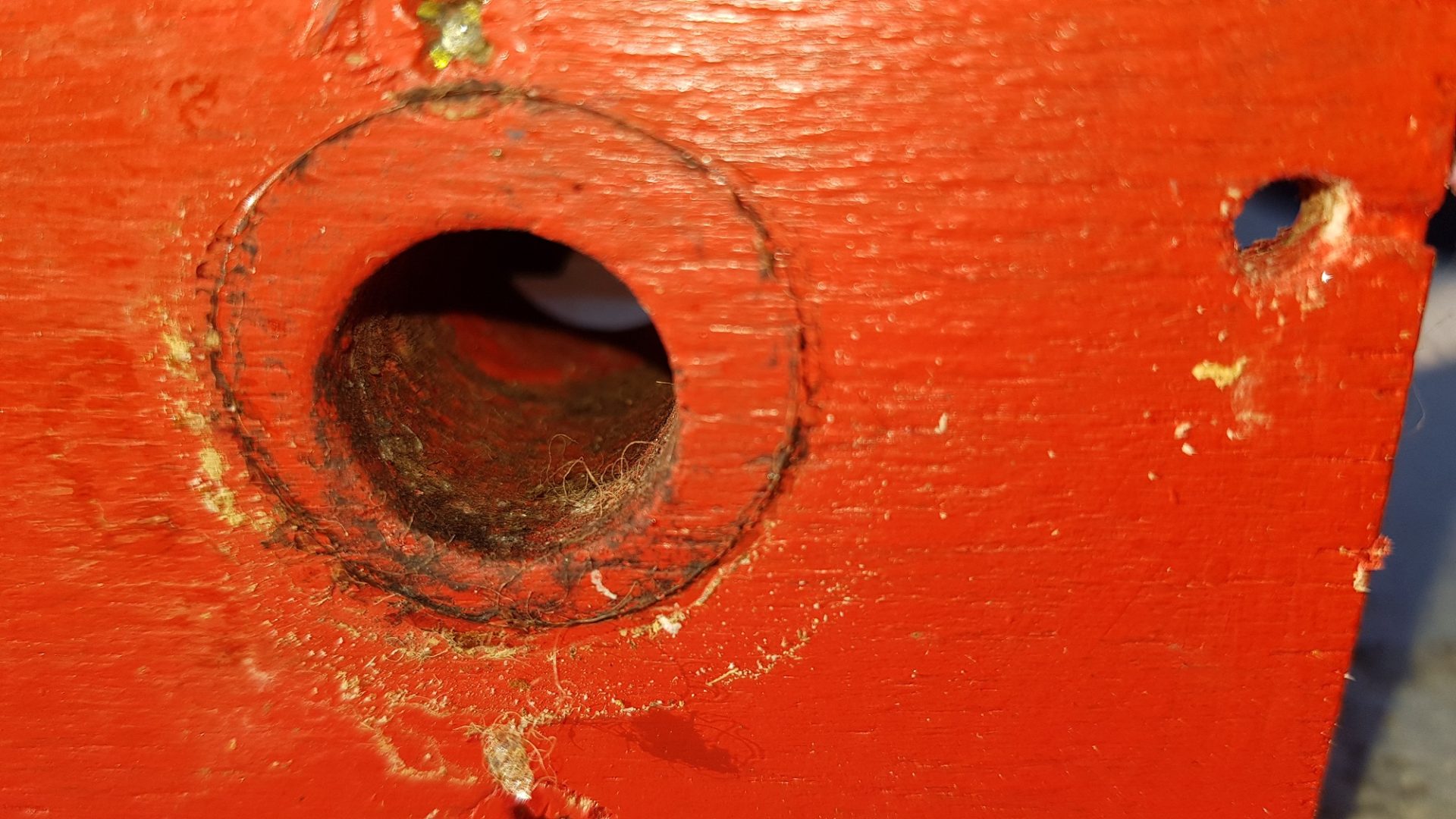
Back of the flap
Photo O. Hercog 20/09/2020
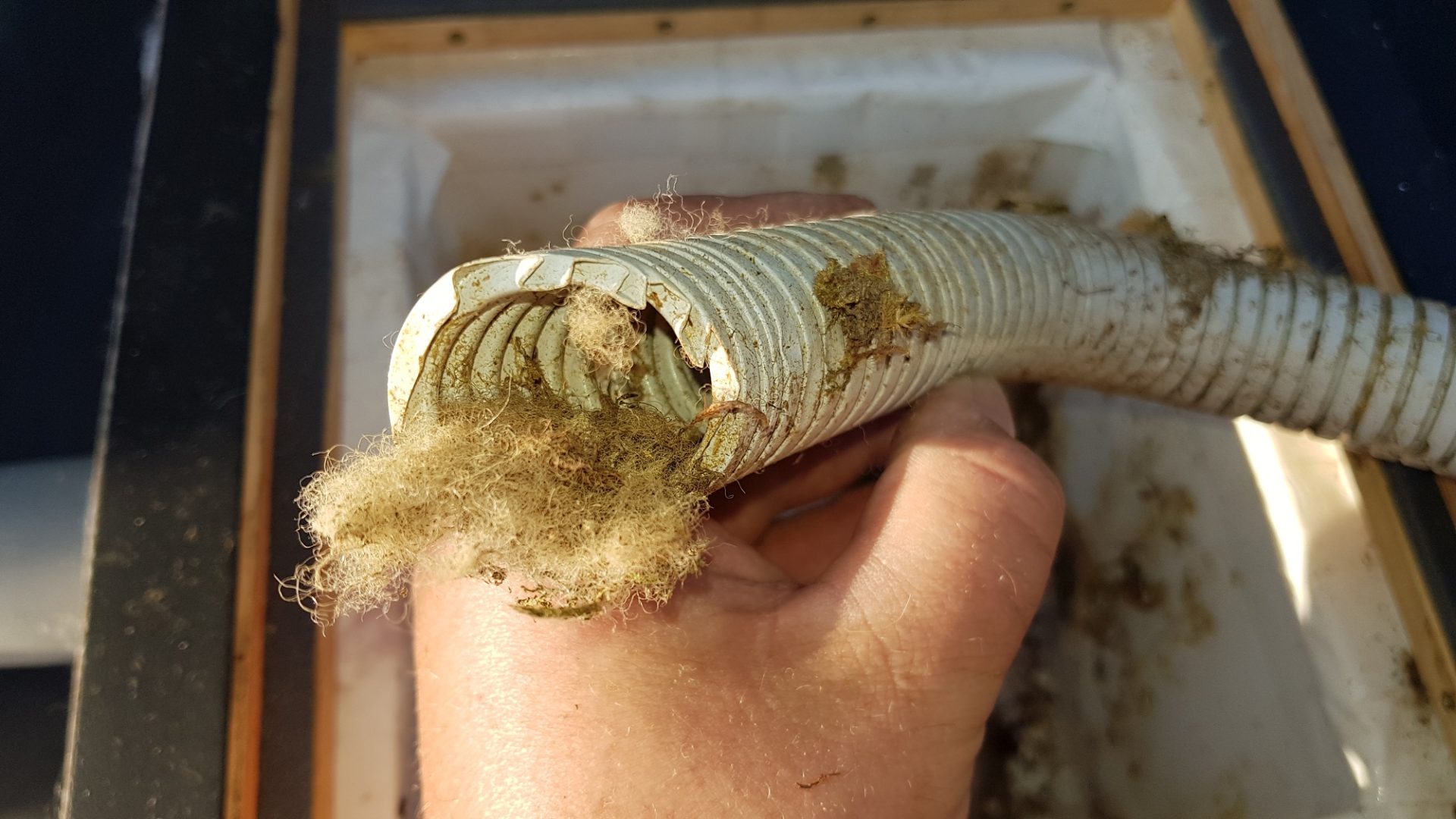
Entrance hall (pipe)
Bumblebees inThe approach corridor will get dirty during the season., with pollen baskets, part of the lining. It will also contain deceased individuals, but parasites can also hide here. Therefore, the pipe needs to be thoroughly cleaned or replaced with a new one.
Used pipes, Although the pheromone trail has partly evaporated from it, it supports nesting for young queens in spring. It can therefore be used in the next season. However, for a nest where bumblebees nested and scented it during the season, it is better to replace it with a new one and not bother with cleaning.
Likewise, if you have Replace the pipe with an internal diameter of less than 18mm.. Get a new one for the new season with an inner diameter of at least 25mm.
If you have decided to keep the tube (e.g. you can put it in a new hive in the spring), you will need to thoroughly clean.
Cleaning procedure:
- Mechanically remove all dirt from the pipe and knock all deposits out of it
- Rinse the pipe with clean hot water without detergents.
- The rinse water should have around 60°C, to kill any parasites settled in it
- A rinse is needed Repeat, until the pipe is clean
- It is recommended to leave the pipe Soak, to bend to release impurities and rinse again
- a thoroughly dried pipe can be sanitise in the microwave, or possibly in hot water in a pot (depending on the durability of the material used). This will destroy the remaining parasites, who might be hiding here.

Entrance hall after the season
Photo: O. Hercog 9/2020
Entrance hall after the season
Photo: O. Hercog 9/2020
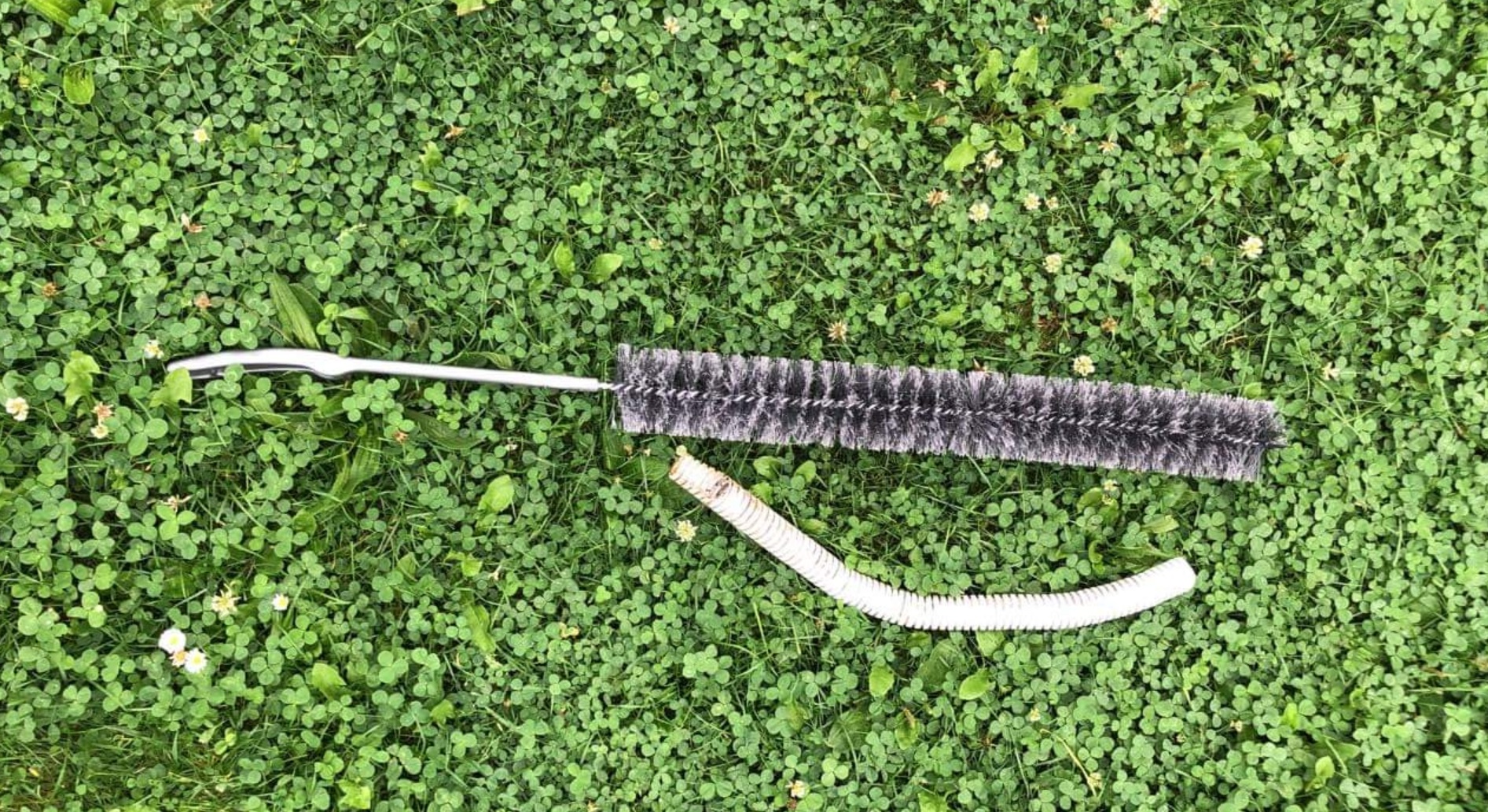
A woman and her head are priceless – cleaning
Photo: P. Krčová 8/2019
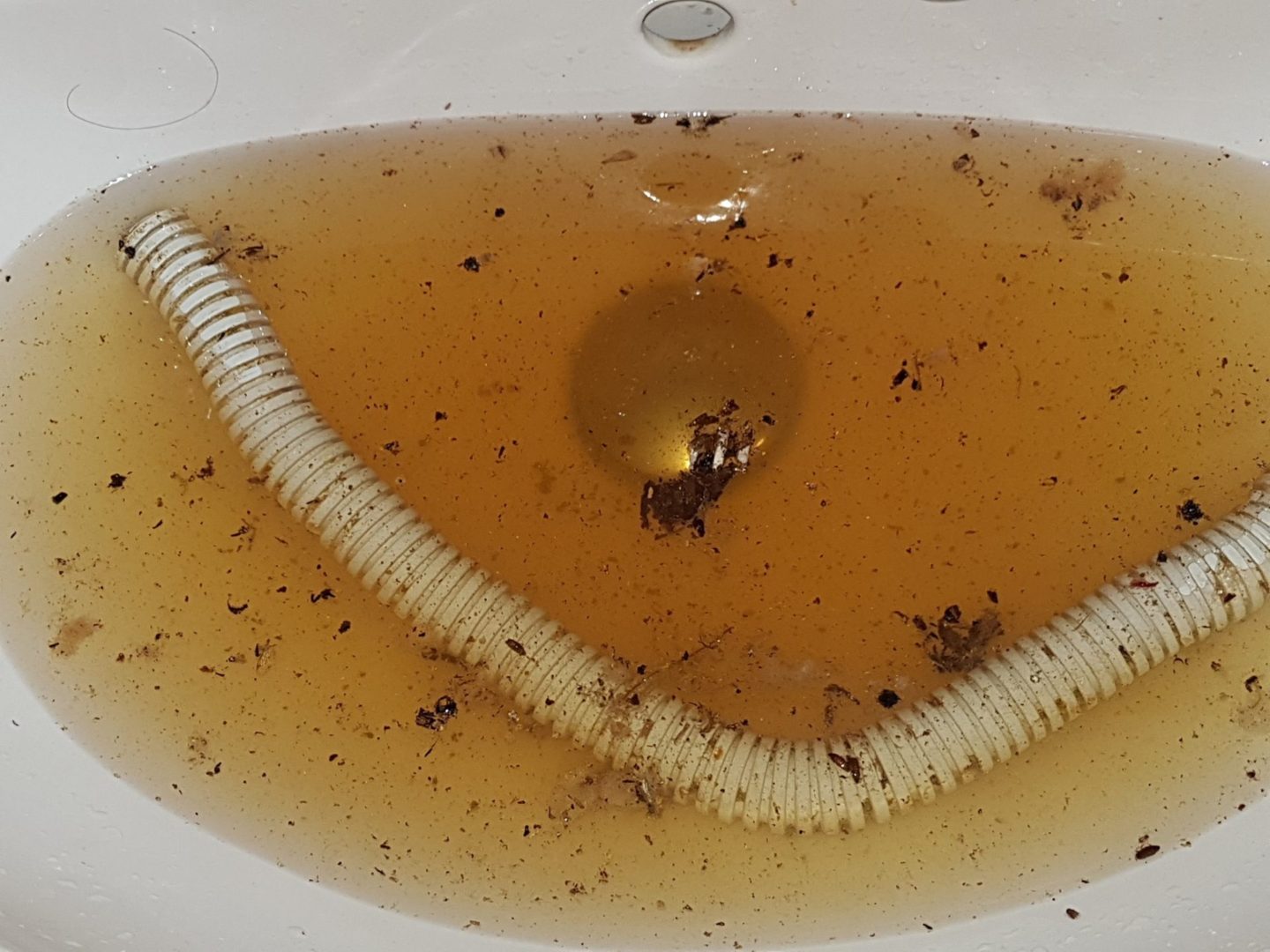
Entrance hall post-season – cleaning
Photo: O. Hercog 8/2019
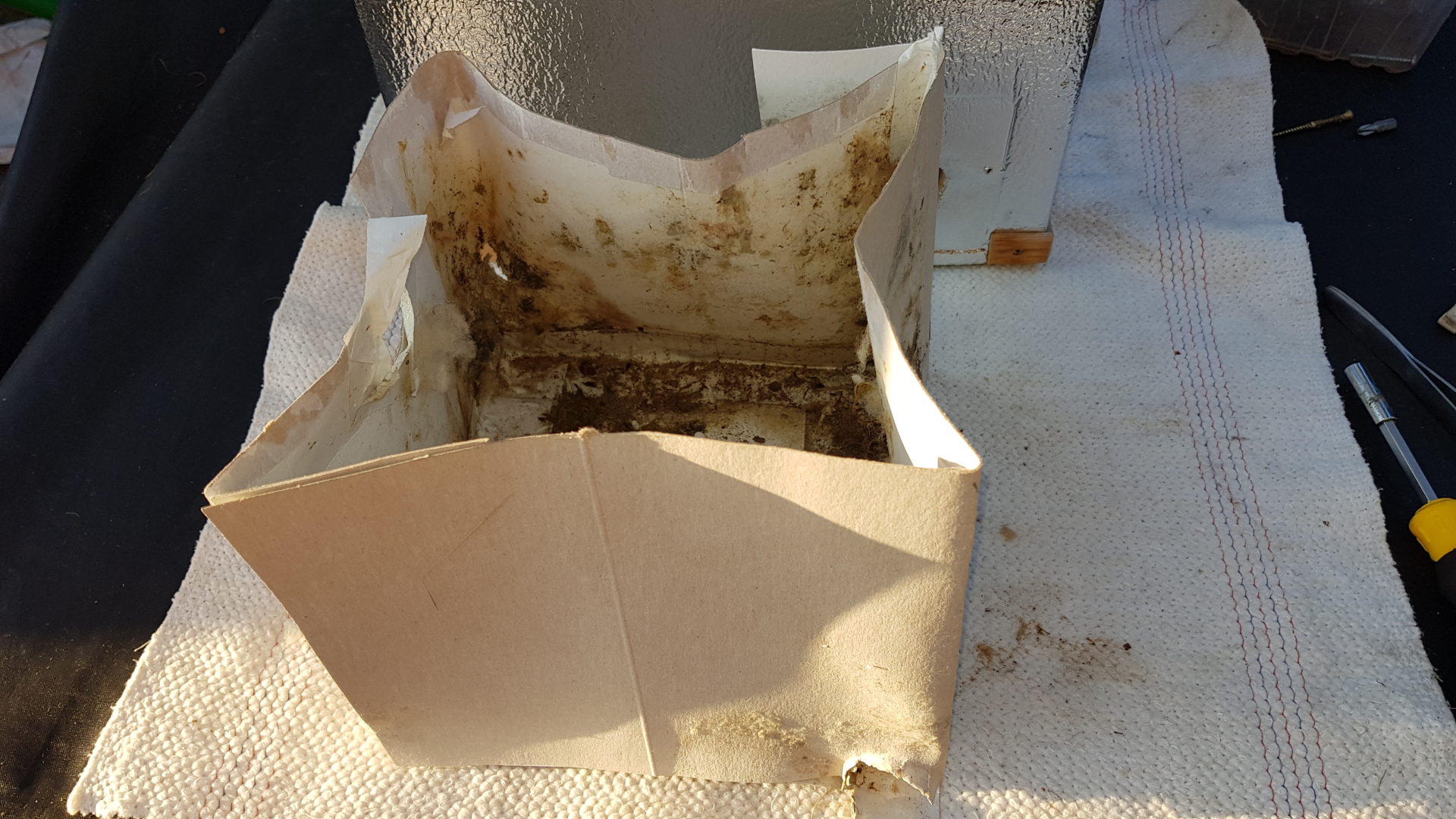
Inner surfaces of the ulcer
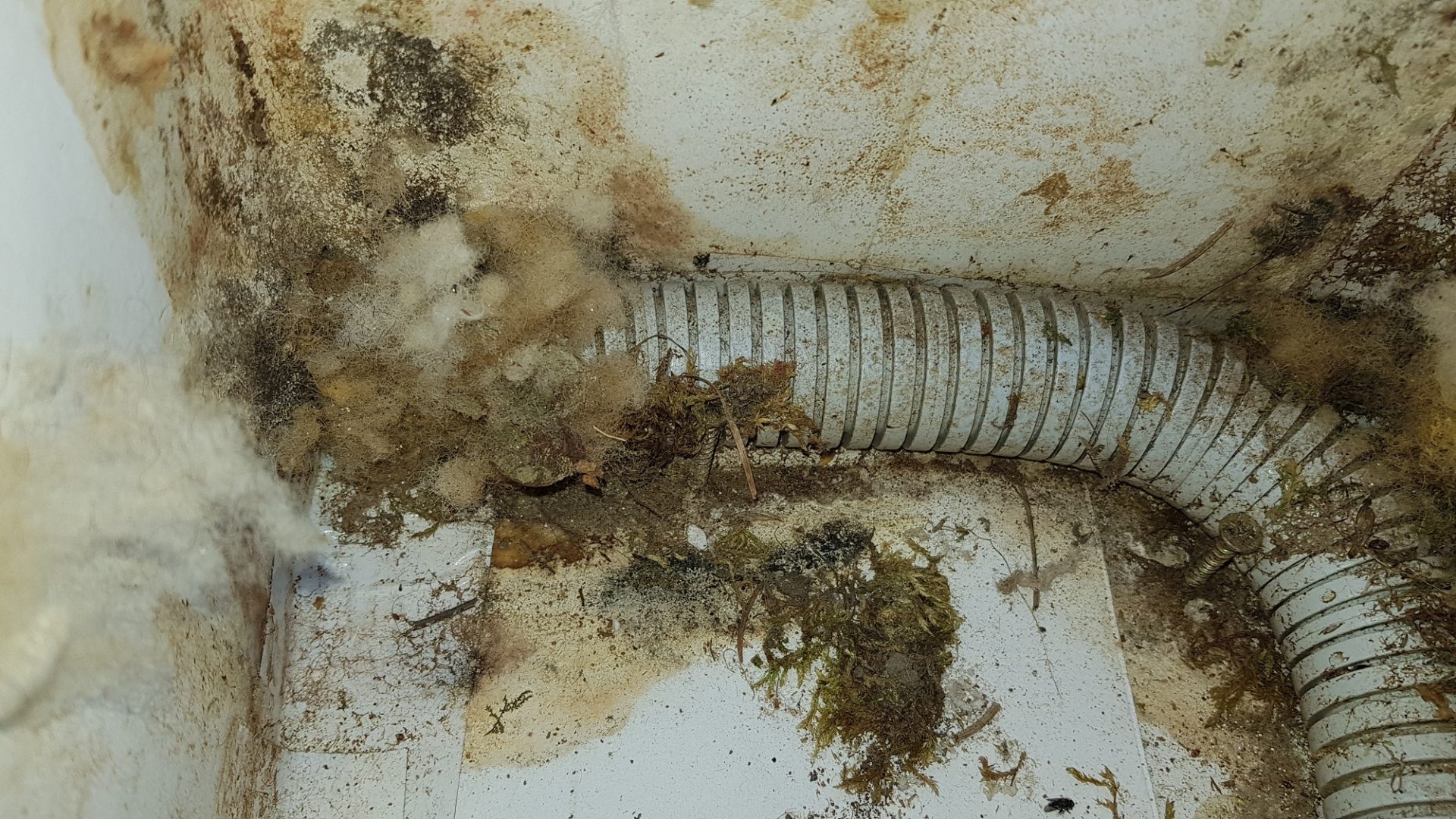
A fright will be strong polluted, mainly walls and corners. Bumblebees come here to defecate. They will also be here stains from moisture and mould. In extreme cases, there will be fungi etc. Nevertheless, a hive in the hollow can thrive.
Everything is needed to clean, but at the same time Get rid of the bumblebee smell.
You don't really remove the smell of bumblebees, just the dirt, because that will make it easier for the hive to settle in next season!
Warning:
We encountered a case where large numbers of Antherophagus nigricornis larvae were found hidden in a polystyrene board / bottom of the hive. Therefore, we recommend discarding the additional hive insulation after the season or treating it thoroughly with microwave heating.
Cleaning procedure:
- In the event that you have used hive insert, you have less work – simply take it out and kick out You
- If you have used additional insulation made of polystyrene and is dirty, kick out Go
If you want her re-use, inspect it, wash it, and after drying it Sanitize in the microwave - The bottom and walls of the ulcer need to be Thoroughly clean mechanically and remove all nest debris, other deposits, or any signs of mould – use a scraper, a fine steel brush, the rough side of a washing-up sponge, sandpaper, etc.
- Dirt Hoover or sweep.
- Is it worth it Heat the walls with a hot air gun – but just like that, so that the wood doesn't burn and if possible, the scent of the nest remained for the next season.
- When cleaning, also focus on corners and folds, where parasites may be hiding
- Was the fright during production good? treated with a waterproof varnish, Can all openings be sealed in it, filled hot water and leave the longer water to work for a while. The fright then needs to be thoroughly dried and left to dry.
- Fright without wood protection Hot water damages and shortens its lifespan
Repairs:
- When dry Repair cracks and leaks.
- Can be used Flexible silicone sealants, Don't use bread dough as you might read somewhere else 🙂
- Nests which are drying out, are not suitable
Warning:
- Hot water ale Does not destroy all germs and moulds, nor parasites
- If you let fright Freeze, You don't destroy all the parasites. disease-causing embryos and mould.
Heating above +60°C is safer than frost at -20°C. Frost does not destroy microbes, and temperatures above 100°C do not either. - Frost and moisture can damage the hive's structure.
- Use heat gun so that you don't damage the soft parts of the hive (polystyrene base, sealant, etc.) , wood Jen Warm through, but do not burn!

Cardboard insert removed during cleaning
Photo O. Hercog 20/09/2020
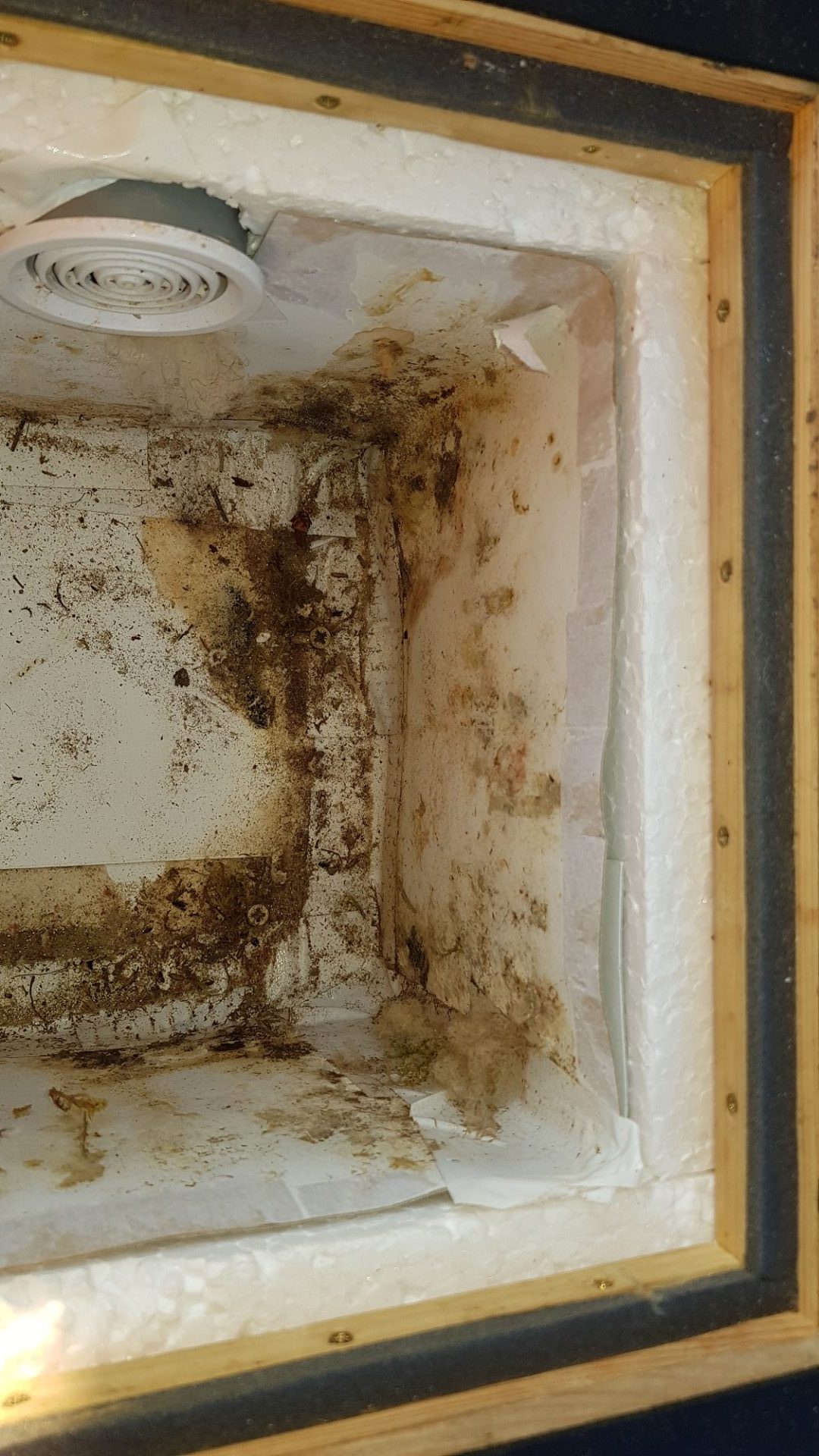
Ulcer walls after the season
The moat was cleaned during the season
Photo O. Hercog 9/2020
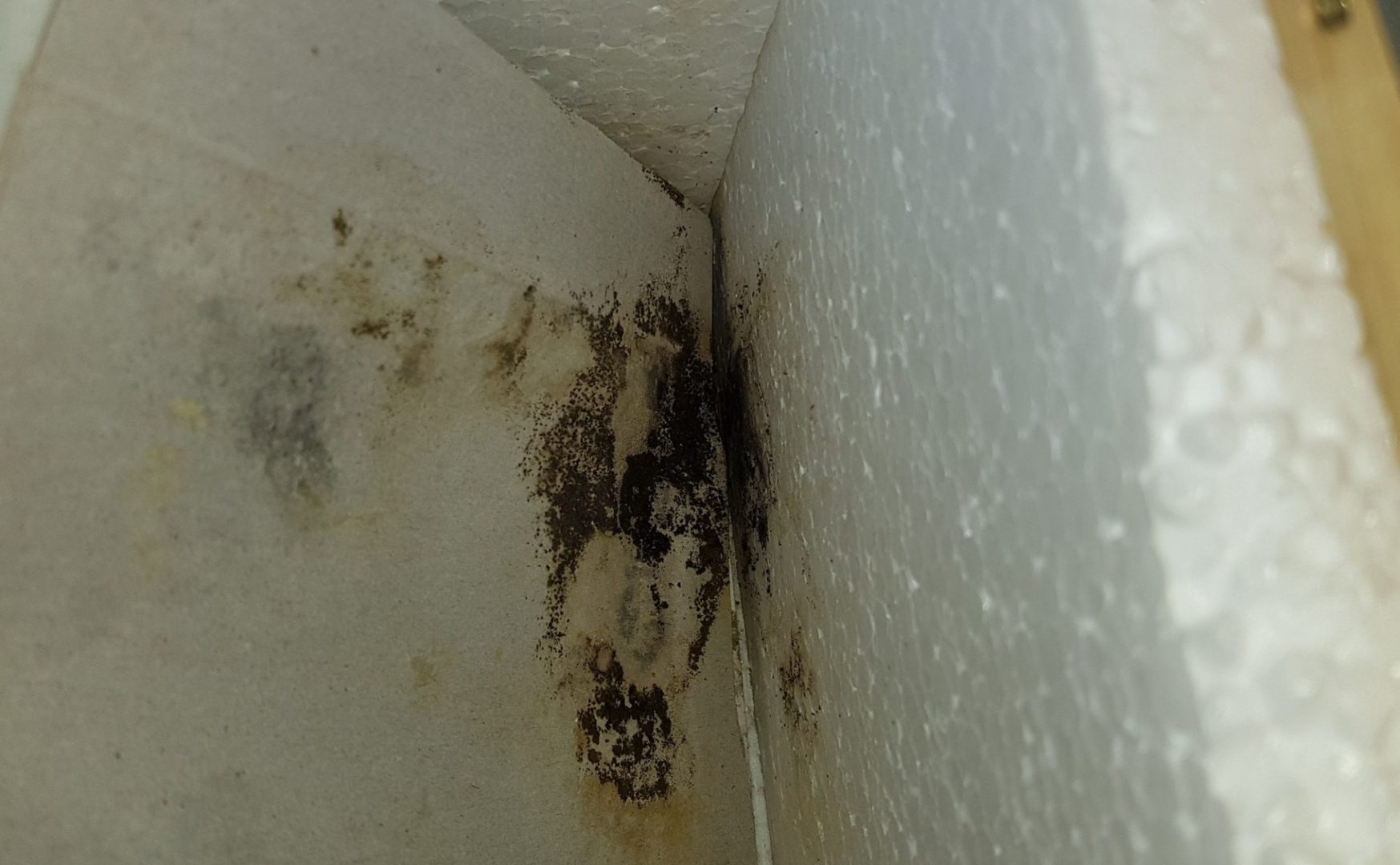
Mould can form behind the cardboard, even with large nests.
Photo O. Hercog 20/09/2020
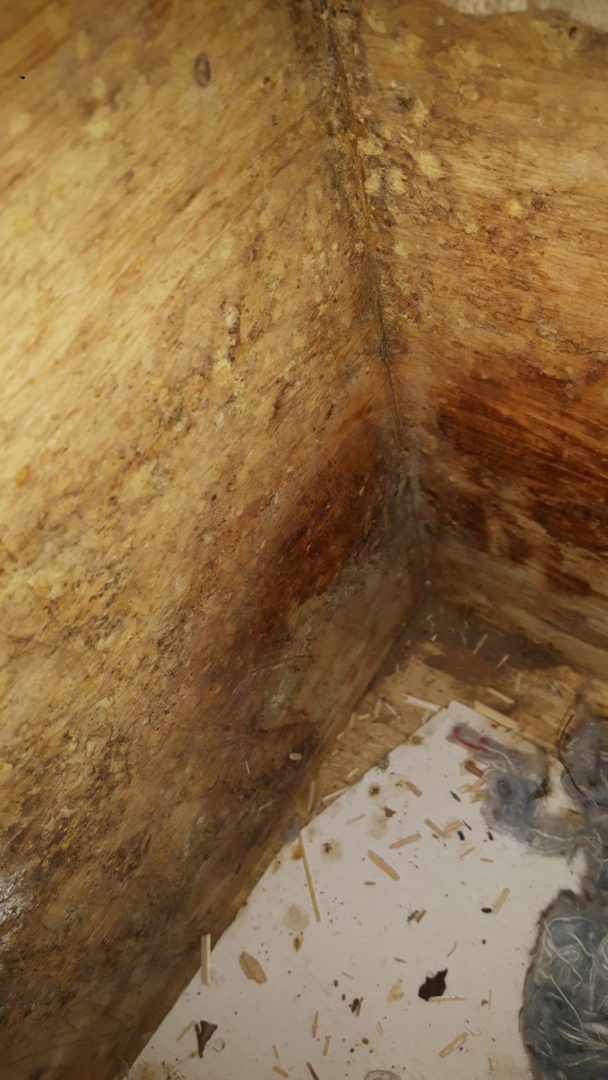
Dampness damages the wooden parts of the hive
The walls need to be dried and cleaned
Photo O. Hercog
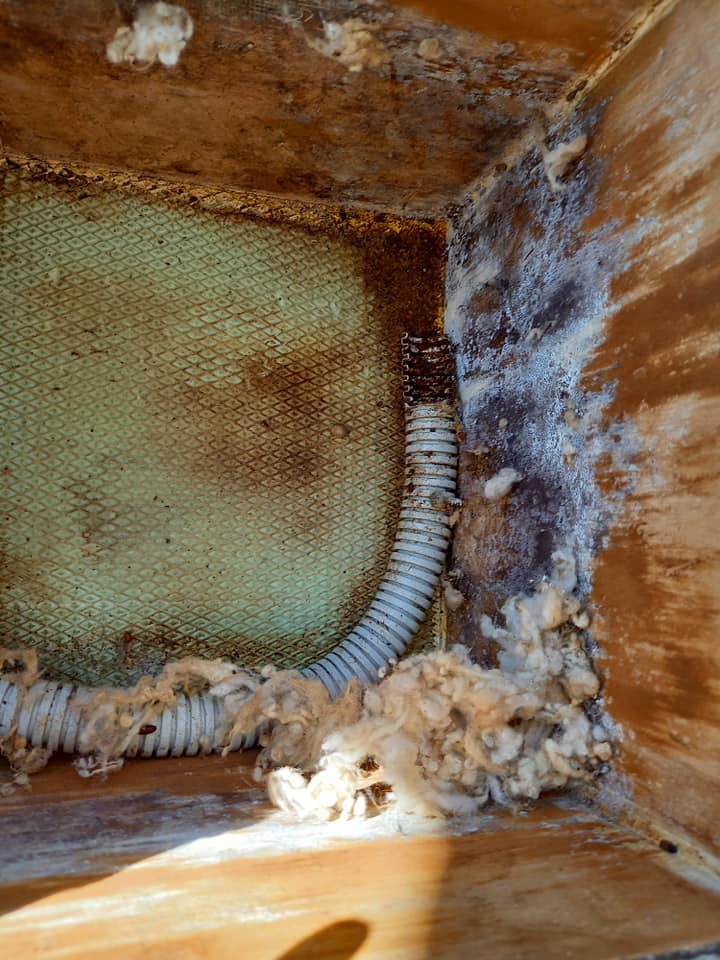
Walls of an ulcer with a thick bed after the season
Photo M. Bradová 8/2020
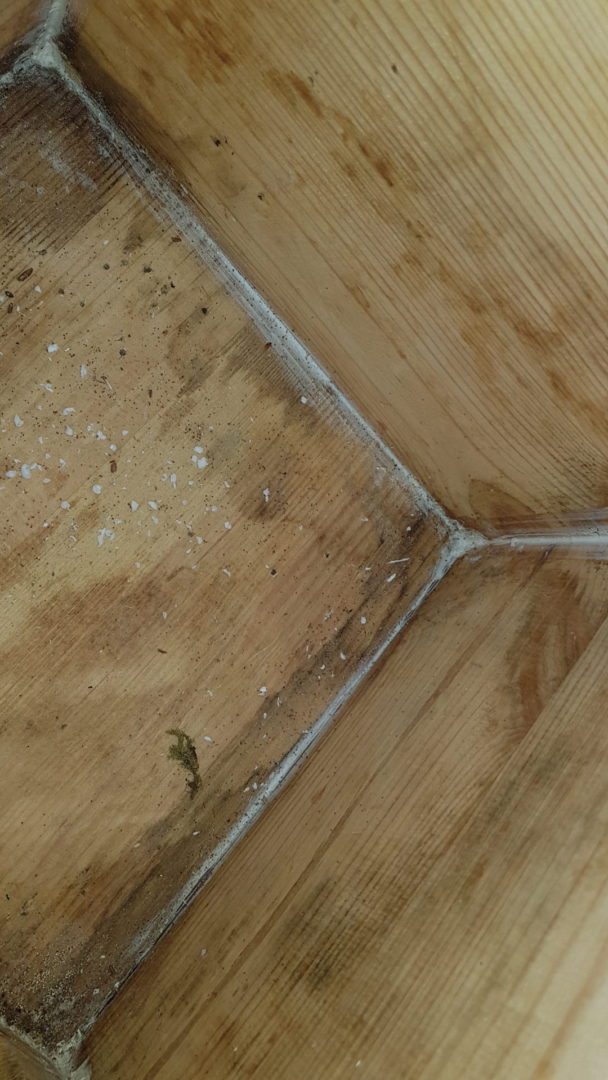
The walls of the hive after the season (were covered with cardboard)
Photo O. Hercog 8/2019
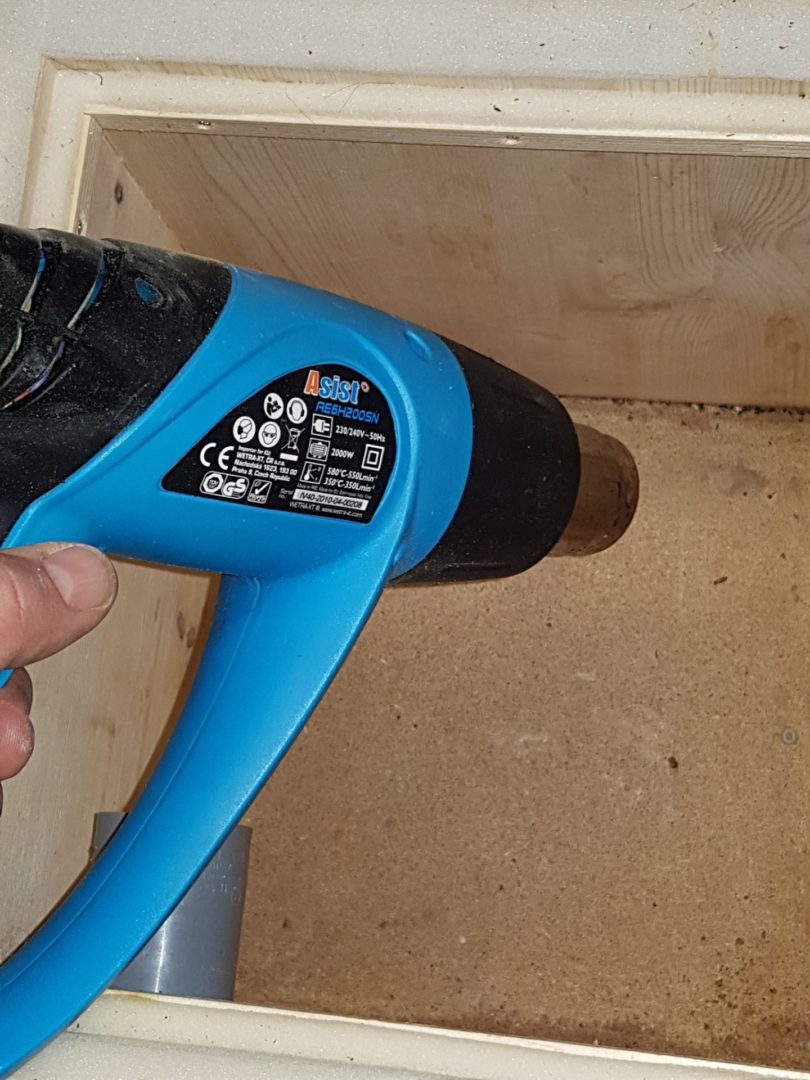
Using a hot air gun on hive walls for disinfection
Use the hot air gun in such a way that you do not damage the soft parts of the hive (polystyrene base, seals, etc.).
Just warm the wood, don't burn it!
Photo O. Hercog 8/2019
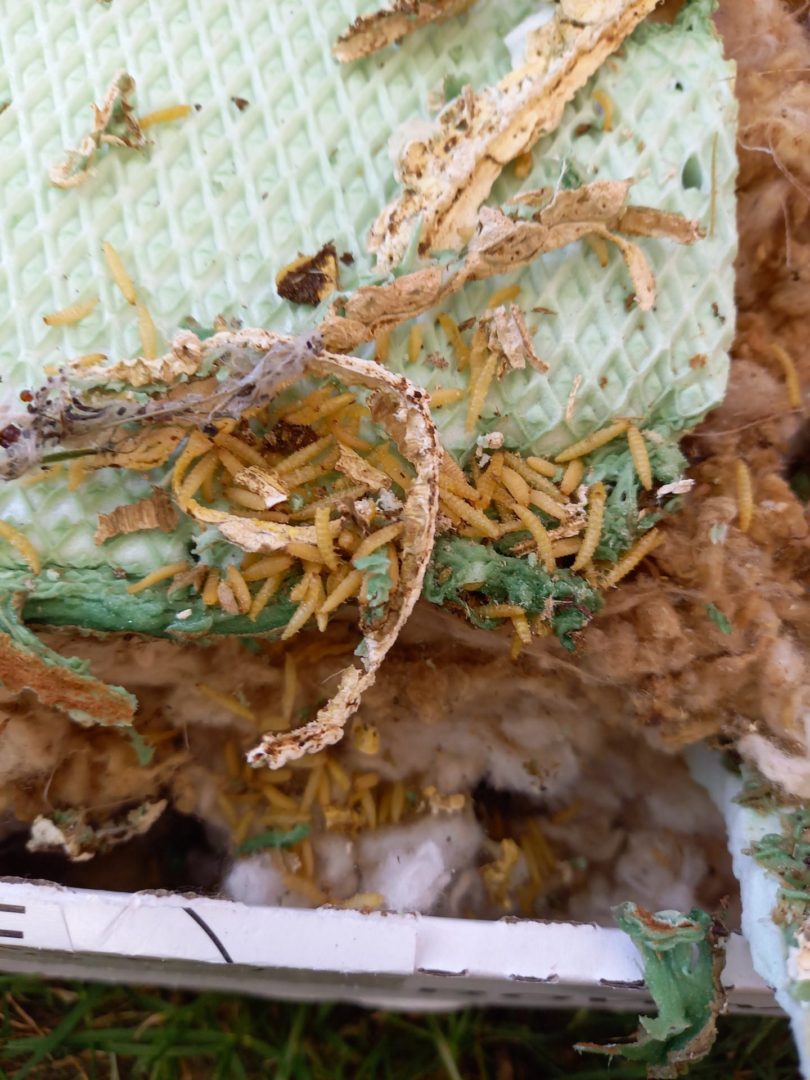
Larvae of *Antherophagus nigricornis* hidden in the polystyrene base of a nest
Photo M. Bradová 9/2020
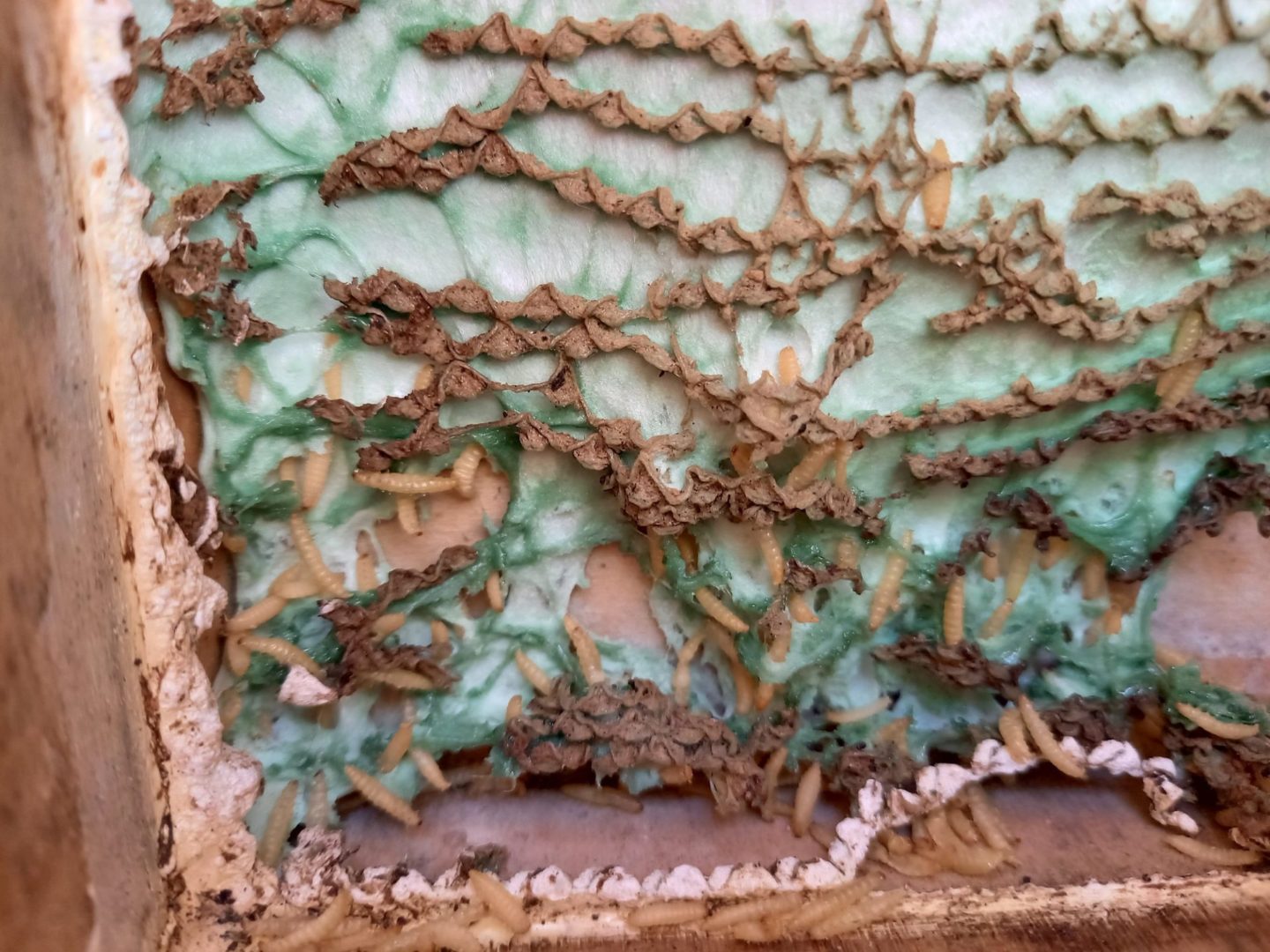
Larvae of Antherophagus nigricornis hidden in the polystyrene bottom of a hive (the polystyrene melted due to heat)
Photo M. Bradová 9/2020
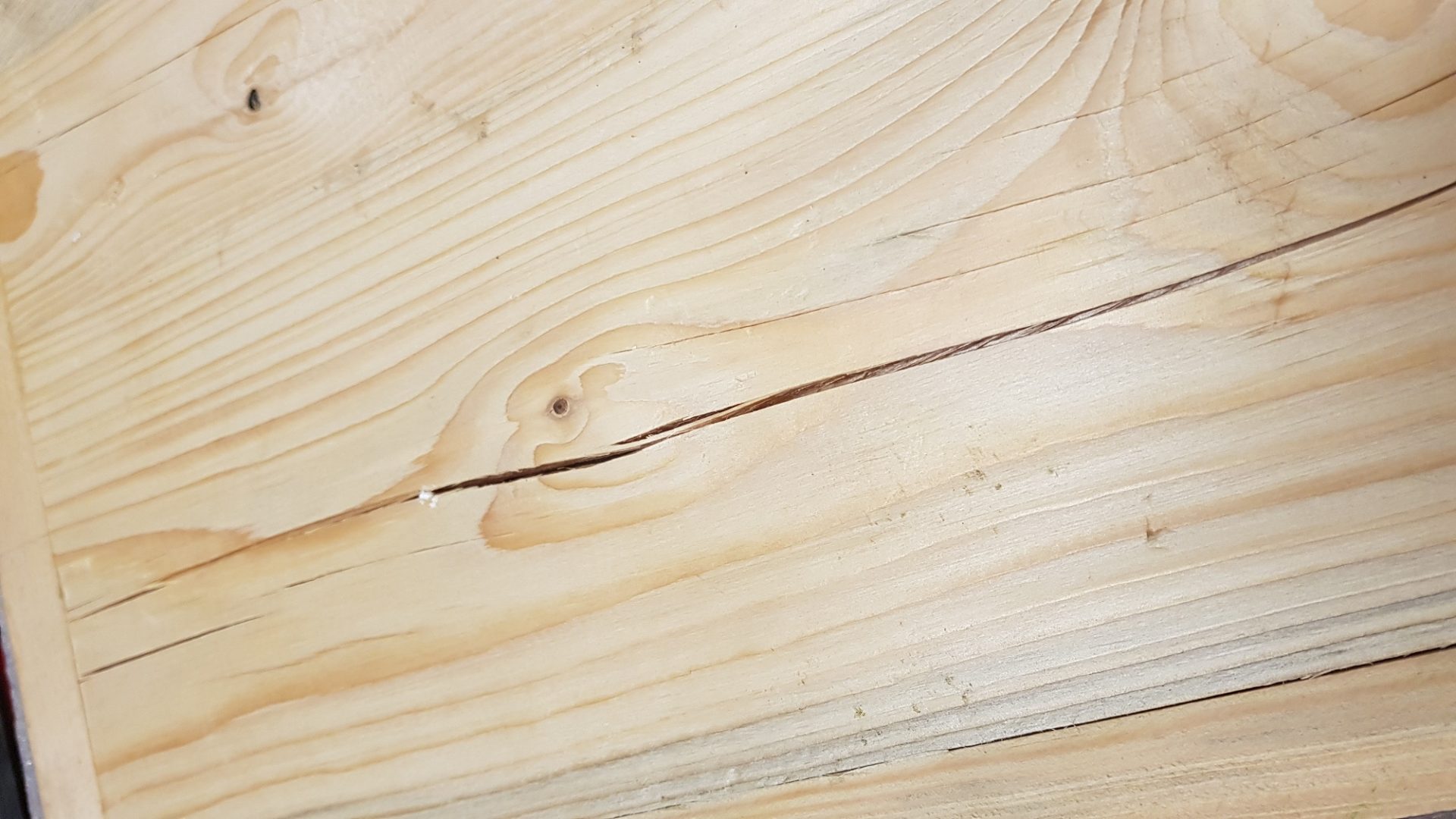
Pay attention to the walls of the hive. Even small cracks in the walls need to be treated with a flexible sealant (e.g. silicone) so that parasites cannot penetrate the hive through them.
Here, hives made from waterproof laminated plywood have a clear advantage, and conversely, this is proof of the disadvantages of solid wood hives – they crack.

Bumblebees PLUS – Cracks in the hive body
Photo O. Hercog 2020
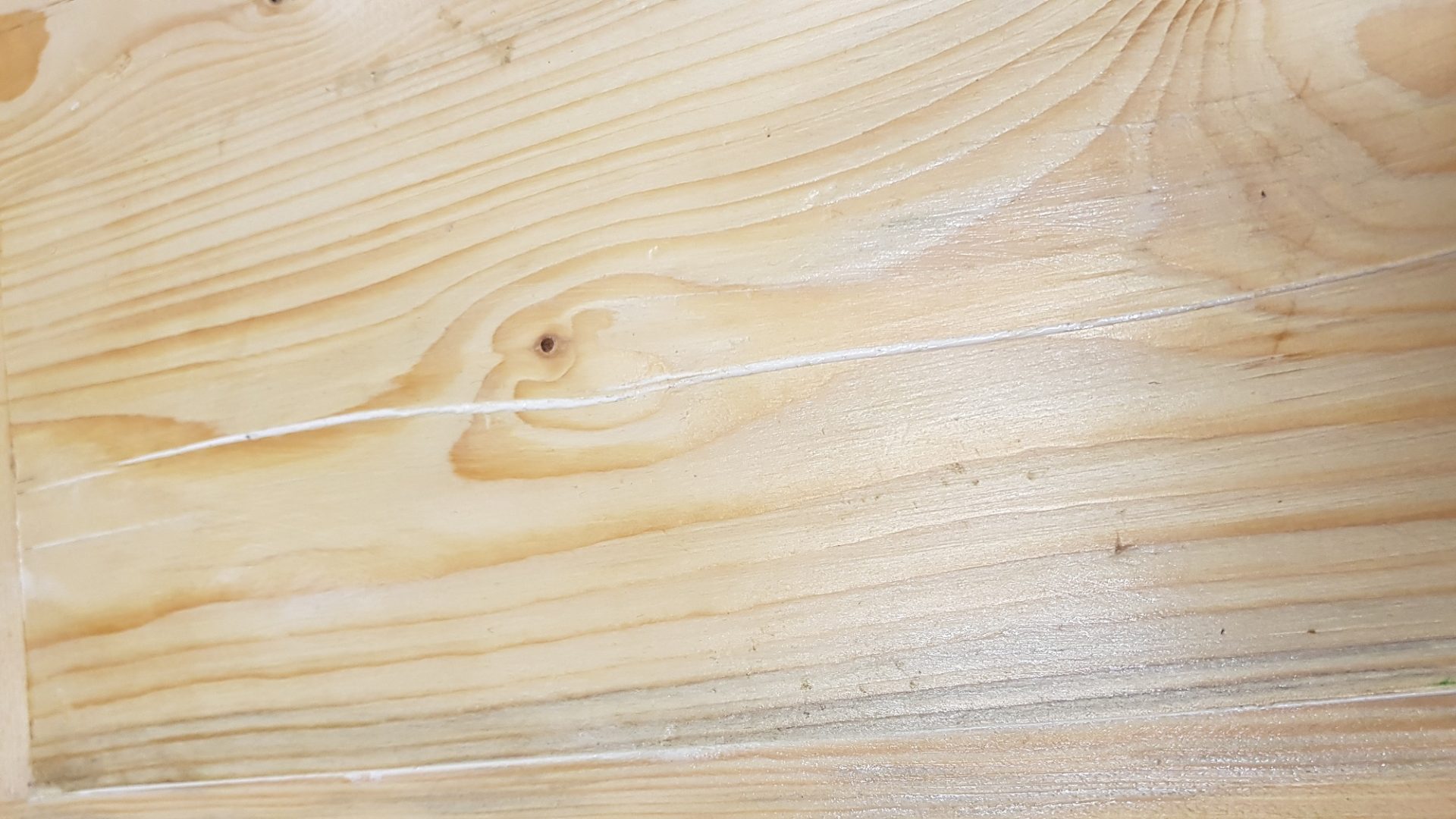
Bumblebees PLUS – Cracks in the hive body – sealing with flexible sealant
Photo O. Hercog 2020
Seal
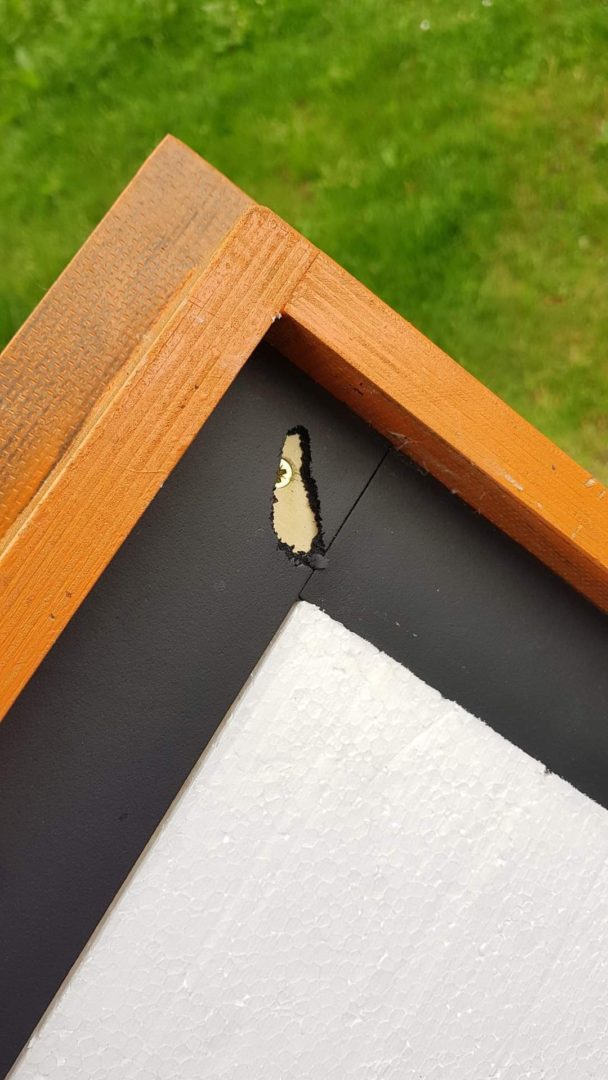
If the oven has a seal, it's good to check its condition and replace it if necessary.
Especially The foam seal is subject to degradation and after the season it needs to be replaced.
If you apply to the fright seal, this is how it should be soft, so that it compresses under load and the bumblebees cannot get to it.
Some modern houses no longer use seals; the construction is designed to be secure – the parts fit precisely, the construction is rigid and does not twist.
Examples of good sealing materials will find HERE

Gnawed seal under the roof
Photo O. Hercog 8/2020
Ventilation and cover net
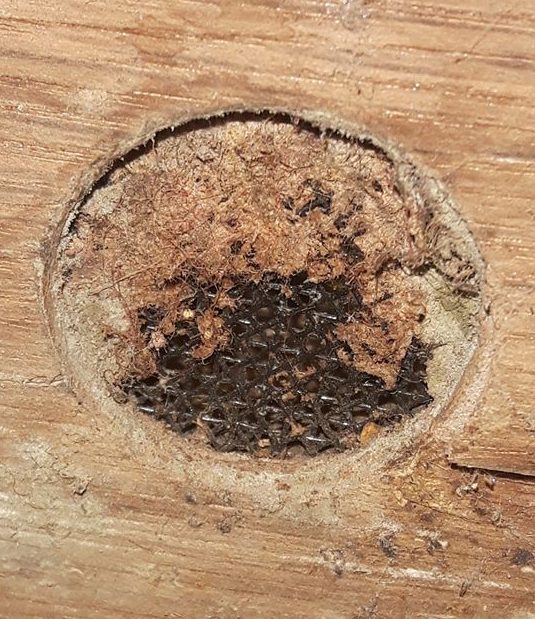
Bumblebees sometimes wax over the gratings, or the grating may be otherwise blocked.
Parasites sometimes lay their eggs on the vent grille. Parasites and larvae can be caught behind the grille on an adhesive layer, or on a fine Uhelonou 53S mesh.
The ventilation grille should not be damaged.
Cleaning procedure:
- Ventilation is necessary dismantle
- Please look carefully its parts
- Deformed turbine vane won't seal and will cause you problems in the spring Problems with nut seating
- Mechanically clean the ventilation parts from impurities and trapped parasites
- If the grid and UHELON 53S netting Chewed through, will need to be replaced and repaired.
- If you are using the ventilation attachment, remove it, clean it and store it separately to prevent its seal from being crushed, re-installing it in the spring.
Repairs:
- If it leaks, repair the lid of a commercially available hive, or complain about it – the lid is made of thin plywood and sometimes deforms due to moisture.
On ventilation if you read HERE

Ventilation of a hive sealed with wax
Photo O. Hercog 2017

Hive ventilation – parasite eggs (here, flies) laid on the mesh
An air vent
Photo O.Hercog 2018
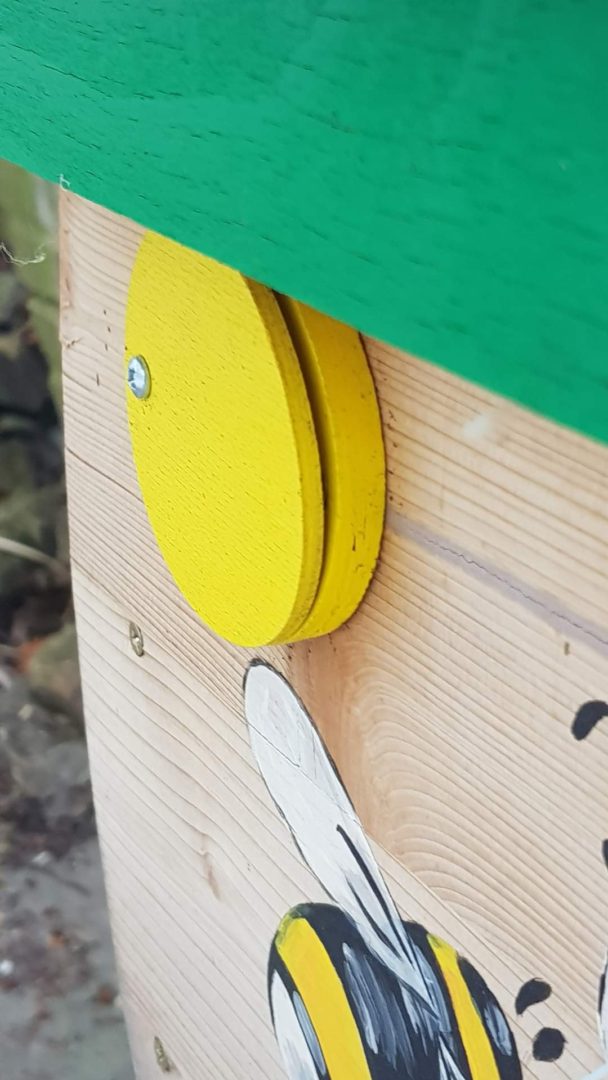
Deformed ventilation flap
Photo by O. Hercog 5/4/2020
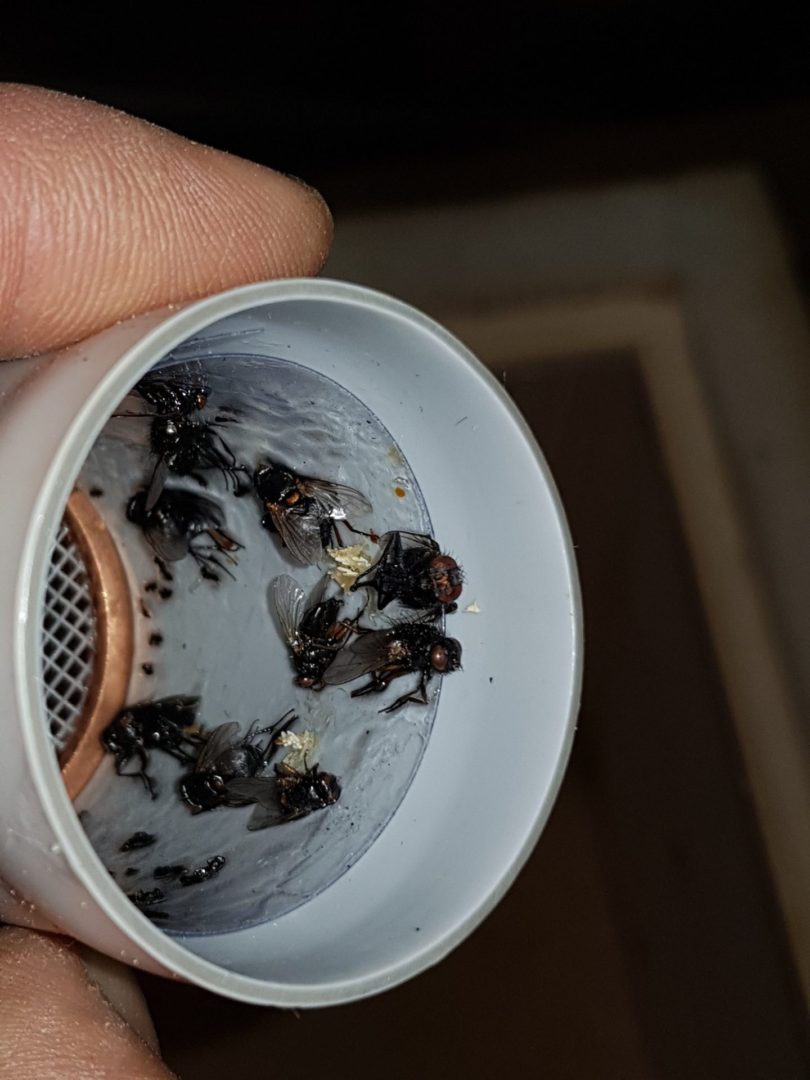
Sticky trap in ventilation after the season
Photo O. Hercog 2018
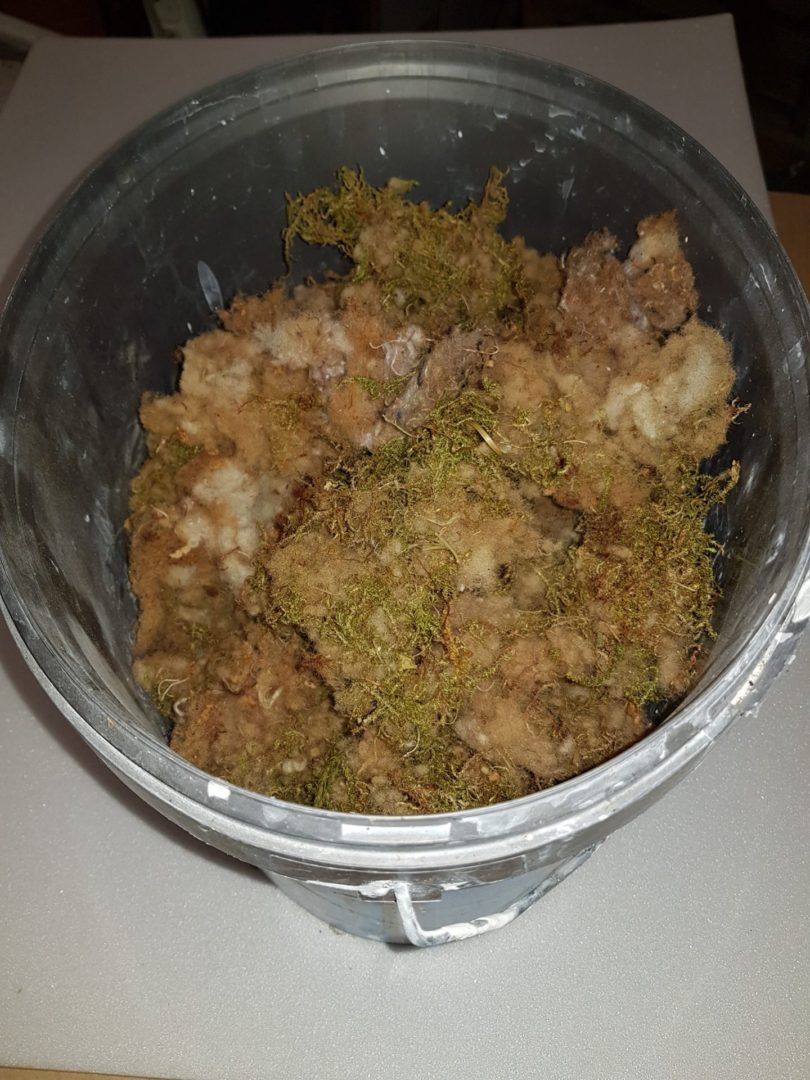
Nest removal
The removal of nest remnants is necessary, as this prevents the overwintering of parasites/predators of bumblebees.
If you keep only A clean section of wax work on display.
Leftovers are the best burn, or put them in a plastic bag and Rinse with boiling water/alcohol. And only then throw the closed items in the bin.
The leftovers you don't get rid of, can serve as a overwintering site for parasites. Therefore, do not underestimate this operation.

Dispose of the nest remnants
Photo O. Hercog 8/2019
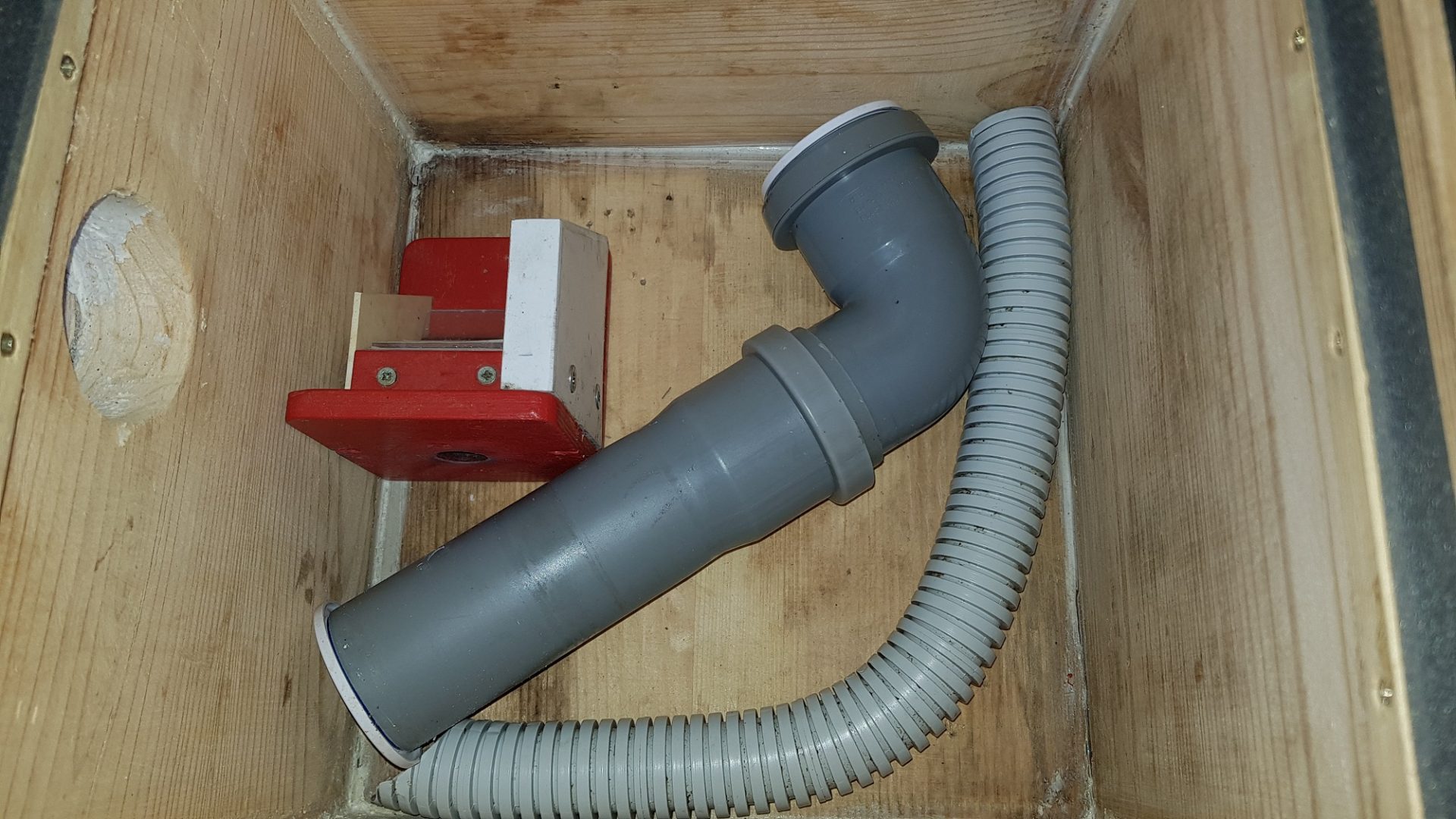
Repairs and modifications to the roof
All the knowledge gained from inspecting and cleaning the hive should be well utilised. It's up to you when you undertake repairs to the hive, in preparation for spring. If prepare everything in advance, do not place bedding in the hive, It would get wet unnecessarily.
In any caseforget your plans and findings to solve.
Throughout autumn and winter, we will offer you ideas and tips that you can use. This year, we have gathered plenty that could be useful to you. You surely already have your tried-and-tested ideas with which you will enrich us all.
If you've bought a shock absorber and it has become loose, broken apart, or deformed, We recommend contacting the manufacturer and report any defects that arise. Only then will The manufacturer will become aware of the poor quality and can address and, most importantly, rectify it..
Storing Ulmus/Bumblebee for winter
If you are they cleaned and dried the alarm, can it save to a place protected from rodents.
Store the goose in a dry place, protected from rain and moisture. Don't leave him outside, that would be a shame – you're shortening its lifespan.
Close the hive entrances, perhaps with Sellotape, or at least a paper napkin, so that it can air a little and doesn't go mouldy. Sealing is advisable so that uninvited visitors, such as mice. You would contaminate it and, moreover, damage it.

Bumblebees PLUS – Storing the hive after the season
Photo O. Hercog 20/09/2020
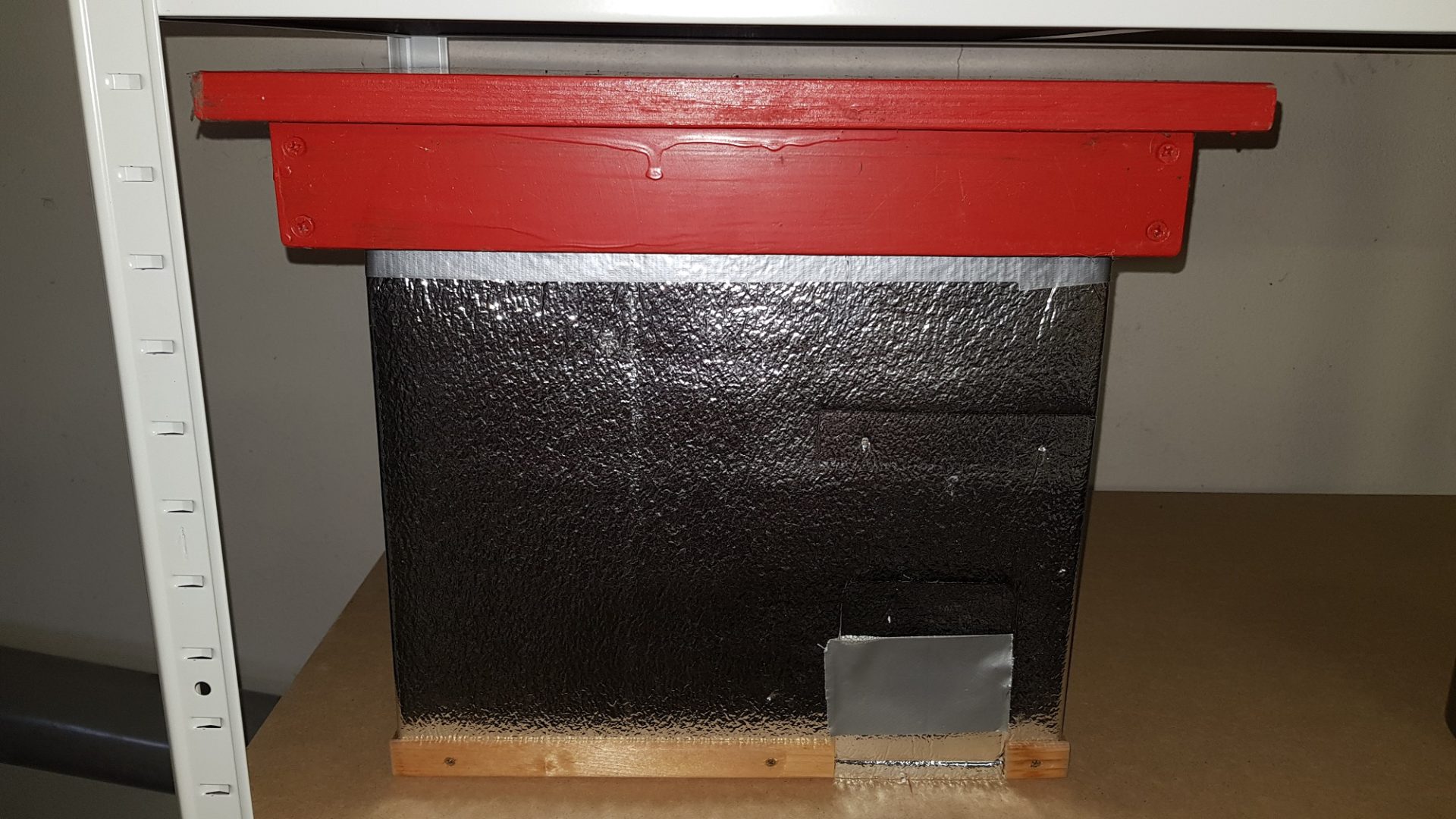
Bumblebees PLUS – Storing the hive after the season
Photo O. Hercog 20/09/2020
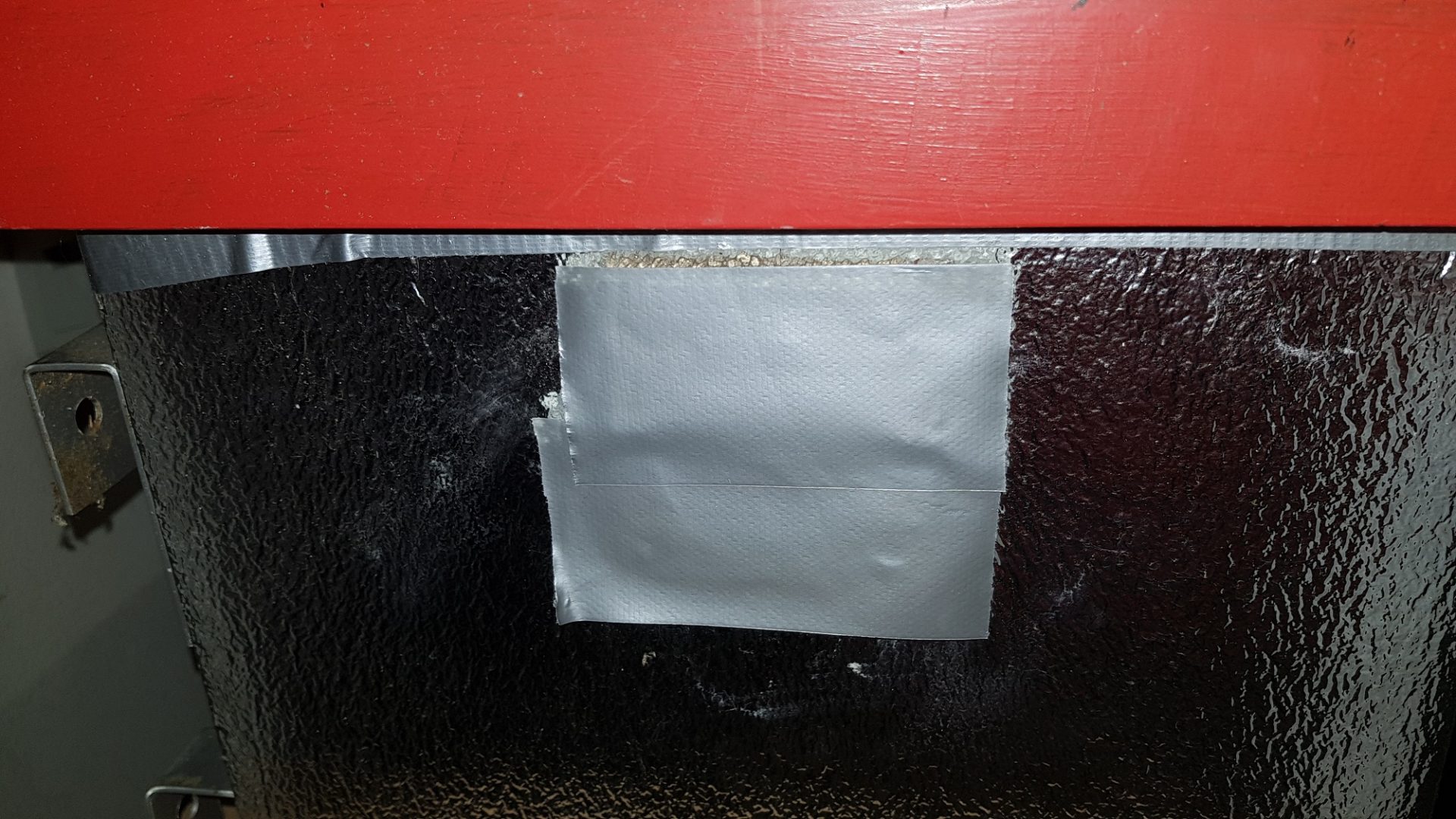
Taped-up ventilation opening
Photo O. Hercog 20/09/2020
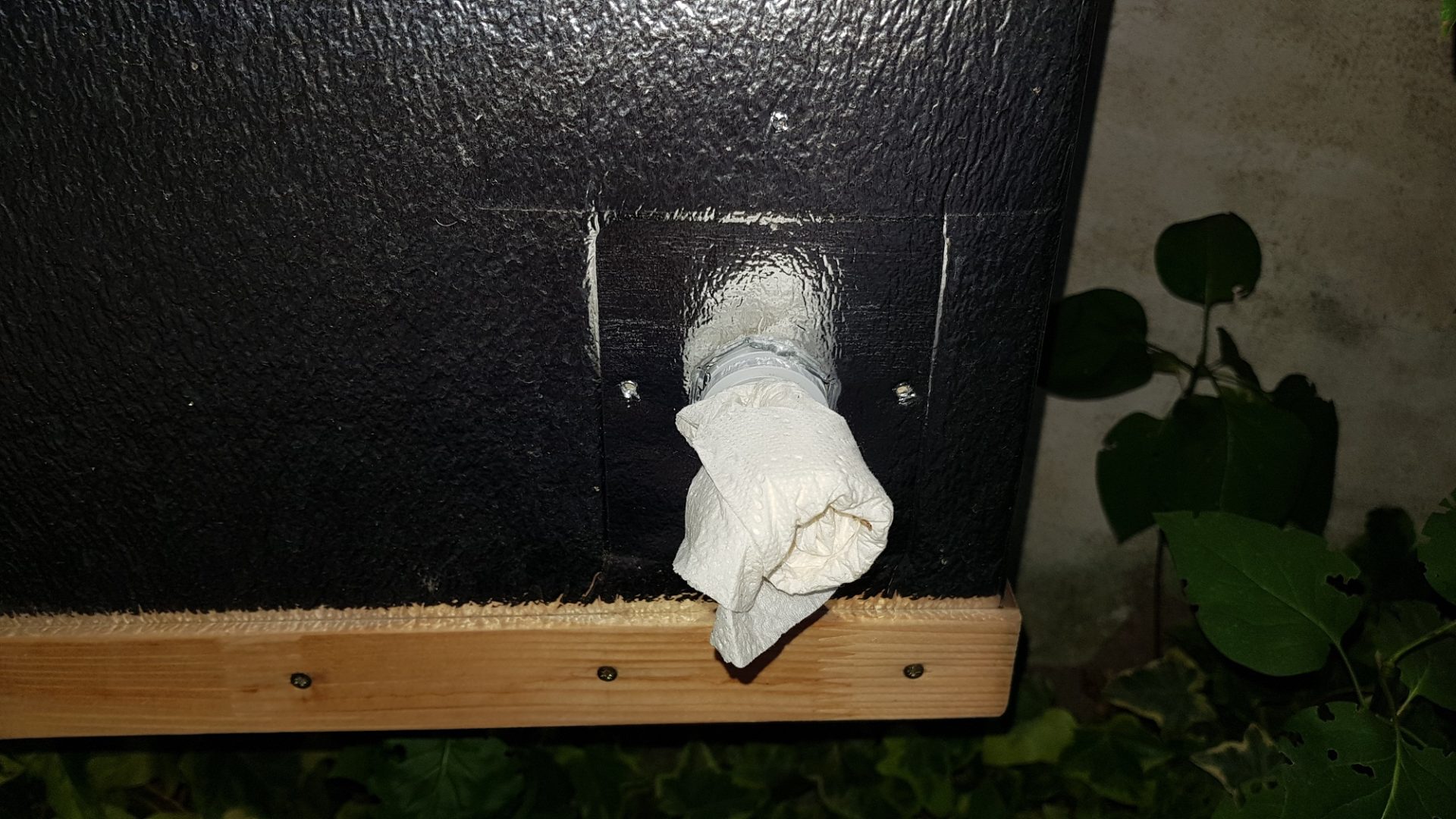
A tuft-bound input beast hole
Photo O. Hercog 20/09/2020
What about natural bumblebee nests
Natural bumblebee nests will decay and decompose on their own, or you can remove them to speed up the cleaning of the site for further nesting. It's better to leave it to nature, though.
Now that we've cleared up the fright - what to look at around the garden and plan cleaning empty bird boxesThe birds will surely repay you in the spring, and at the same time, you will remove potential sources of parasites that also attack bumblebees.
This can include, for example, bumblebee nests, which have taken over empty bird boxes and are now there overwinters the codling moth.
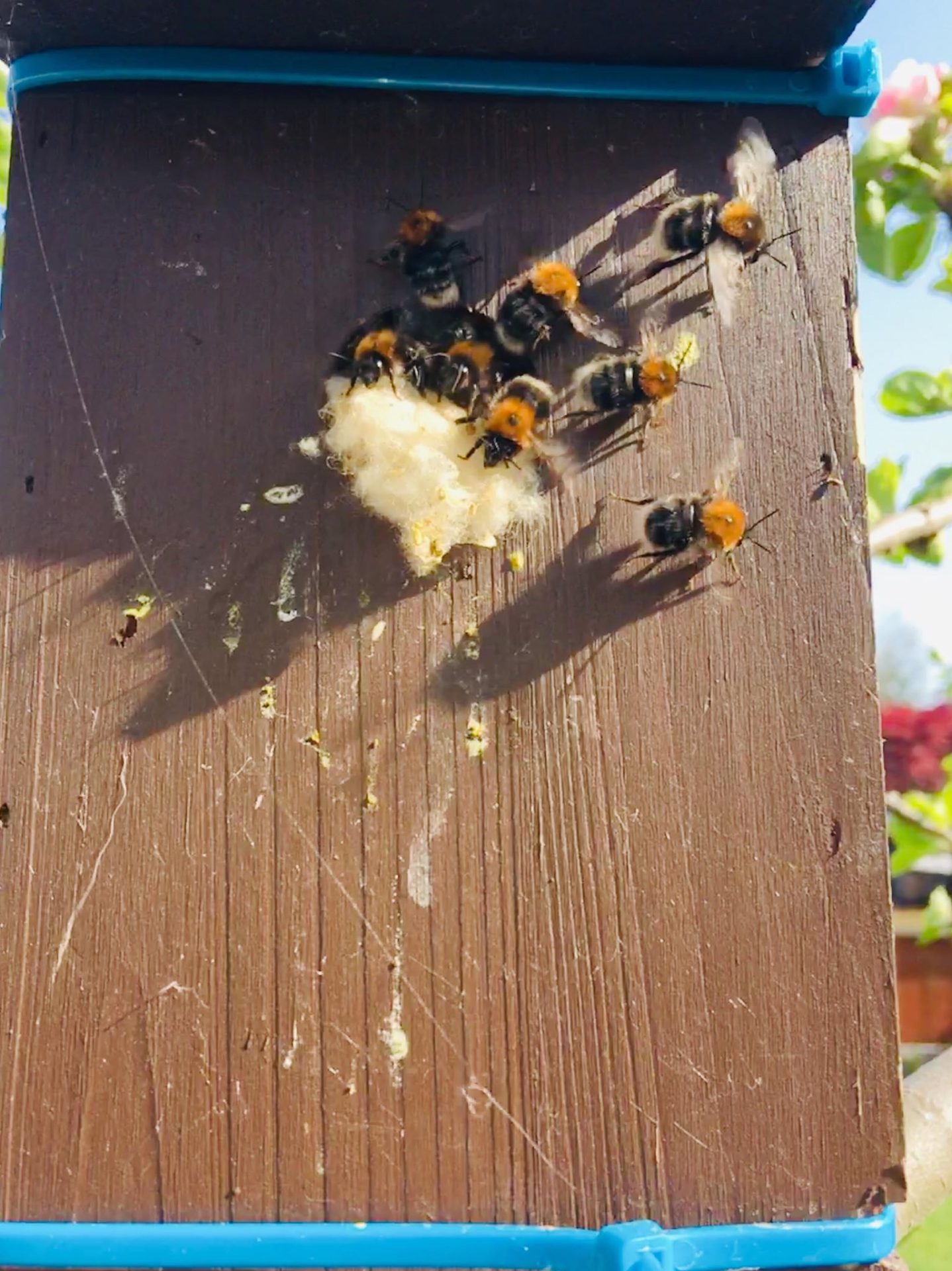
If buff-tailed bumblebees (Bombus terrestris) appear in your garden, a cleaned bird box can be filled with nesting material in early spring, which can be used by birds, or specifically this species of bumblebee, which builds its nests in tree cavities and bird boxes.

Bumblebee nest (Bombus hypnorum) in a birdhouse
Photo: Dave Jones
Conclusion
As you can see, it's quite a lot of work. But beekeepers have it even tougher. But you have to admit yourself – isn't the work worth it?
Let's sum it all up:
- Work and time with a hive inspection after the season It pays off
- Spend your time reading the nest after the season, you will get lots of interesting details about the lives of bumblebees
- The work and time with cleaning the hive after the season It pays off
- Mechanical You can make changes at any time before the season., but provide the ferret with bedding before placing it outside in spring
- Do not save for winter fright uncleaned, will overwinter in it Parasites Bumblebees!
- Save eels for winter dry place, you will extend it lifespan

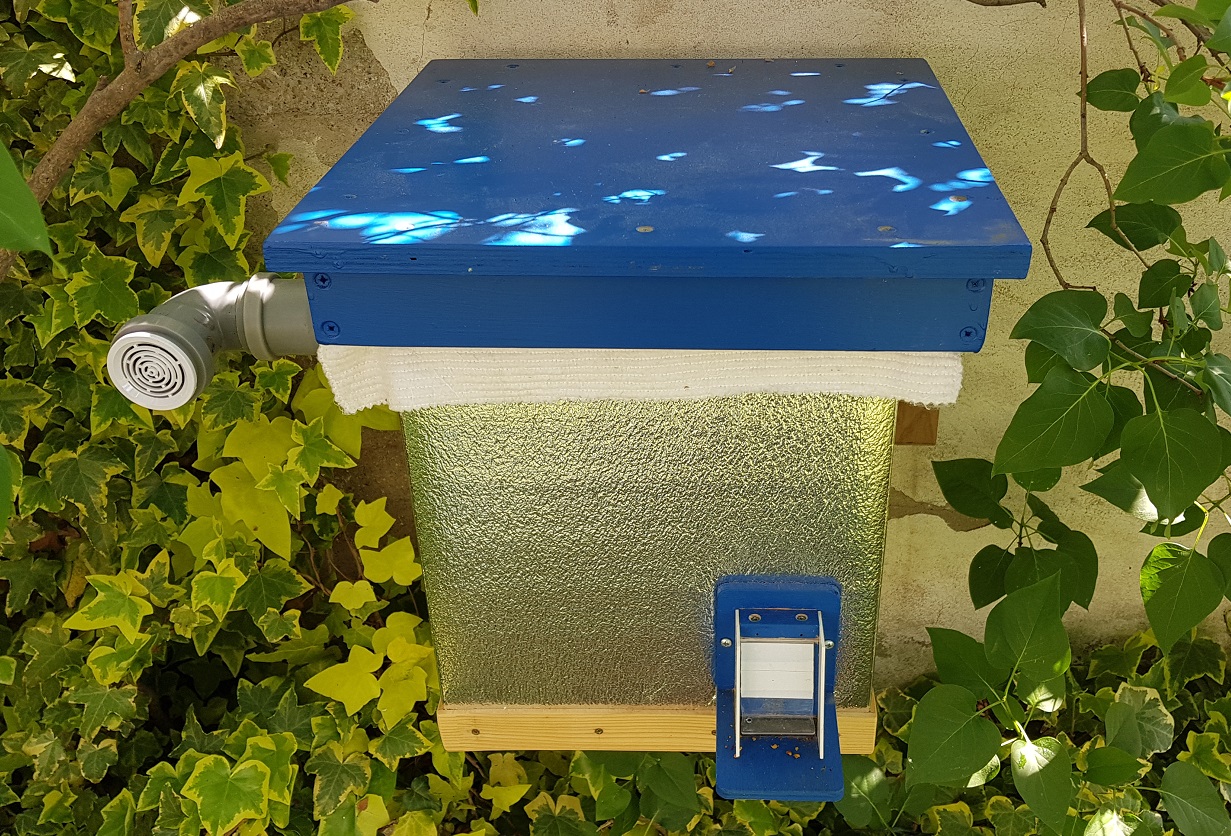
A scare in action – we'll get our fill again
Photo O. Hercog (5/2020)
