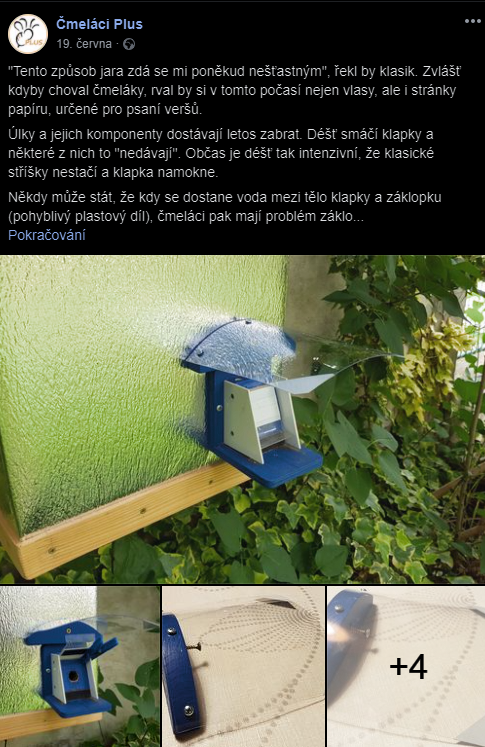
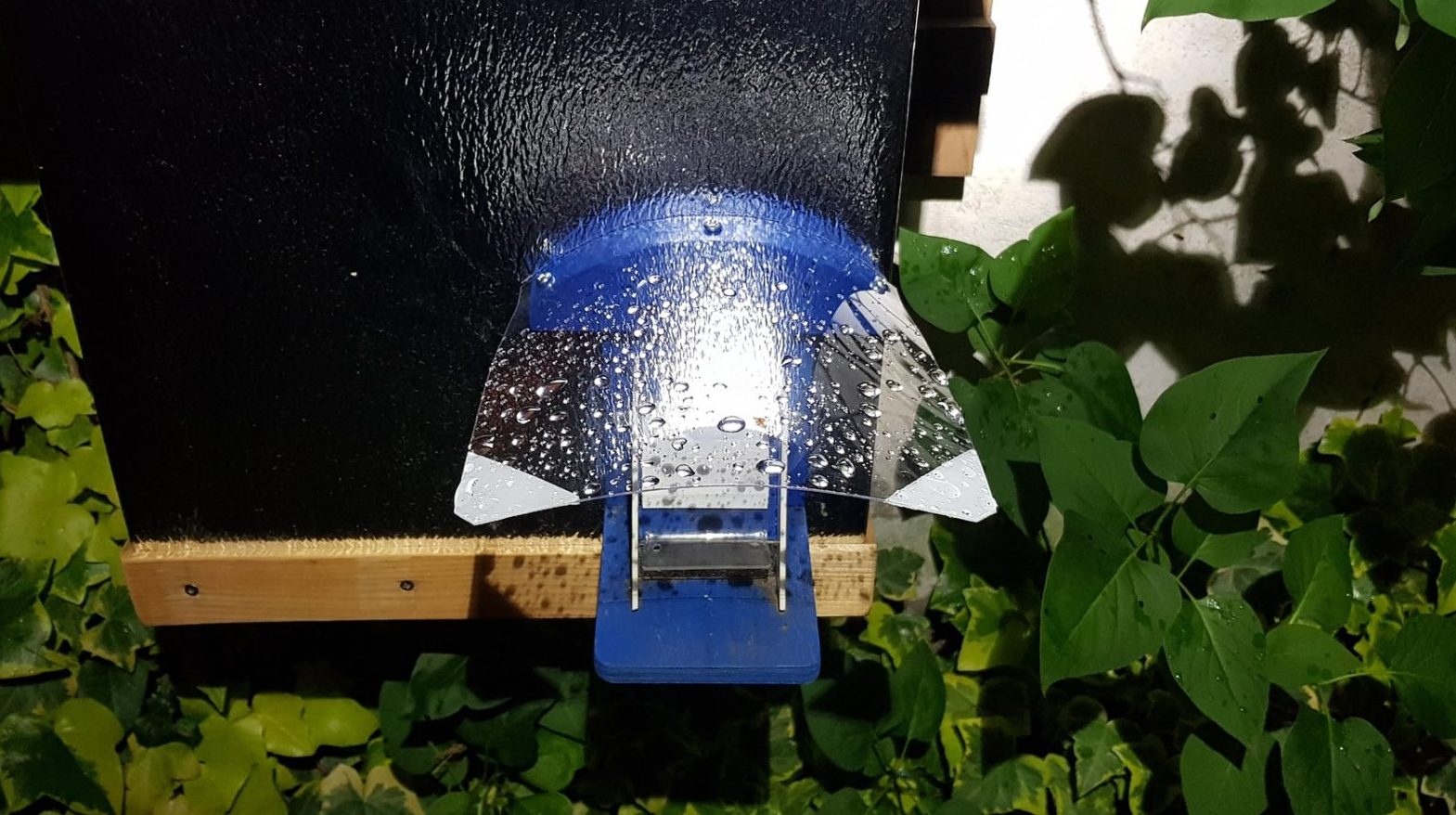
Simple rain flap canopy

Effective yet simple rain flap canopy

Author of the solution (idea): Ondřej Hercog (with inspiration from Eva Kalčíková)
Tested in practice: YES since the 2020 season
Testing results: verified, safe when following the production recommendations and usage methodology
Group of breeders for whom the tool is suitable: without restrictions
Justification: Solving occasional problems with classic protective flaps caused by rainfall, frequent breakage of the plexiglass protective canopy
Note: the solution was taken over by one of the manufacturers of protective flaps with the consent of the author and Čmeláci PLUS and will apparently be commercially available soon (info 11/2020)

Simple rain cover protecting the flap and the hive base

If you purchase a commercially produced hive, it will include a flap cover and a wick.
 
The purpose of the canopy is to protect the flap and the chute from rainfall. This will extend its lifespan. Who hasn't encountered a situation where water flows between the flap (the moving part of the flap) and the flap body and the resulting capillary forces make it impossible for the bumblebees to open the flap.

commercially produced canopies sometimes have the following disadvantages :

  • they are small and won't cover what they have, even a light rain will wet the flap
  • easily damaged and cracked
  • When they are set into the groove in the flap, they can be easily removed, but they also sometimes do not hold well in the groove and the wind blows them away
  • when they are inserted into the groove in the flap, water flows into the groove and the flap body then deforms
  • The price of a new canopy ranges from 40 CZK and up (+ shipping)

That's why we designed a canopy that has the following advantages:

  • you can easily make it yourself
  • it's bigger and better, it covers the flap and the chin
  • Water runs off easily
  • It is firmly attached to the hive, but you can easily separate it from the hive by loosening one screw
  • It is made of flexible material that does not break easily when handled or accidentally touched, yet it holds its shape well 
  • It is transparent and does not obstruct the view or photography of the inlet opening
 
We were inspired by Eva Kalčíková . She has hives placed indoors (in the garage) and flaps on the wall outside the garage. There, she protects them by making a roof for them from half a smaller bucket.
 
It is a very effective solution, but we have adapted it for canopies mounted on hives. However, the same principle can be used for wall-mounted flaps. You can learn more about this solution HERE < UNDER CONSTRUCTION>
 

We wrote about the solution on FB Čmeláci PLUS 19/6/2020

Bumblebees PLUS - Shelter

Shelter
Source FB Bumblebees PLUS


Bumblebees PLUS - Rain canopy

Bumblebees PLUS – Rain shelter
Photo O. Hercog


Try it yourself and see – it's dry 🙂
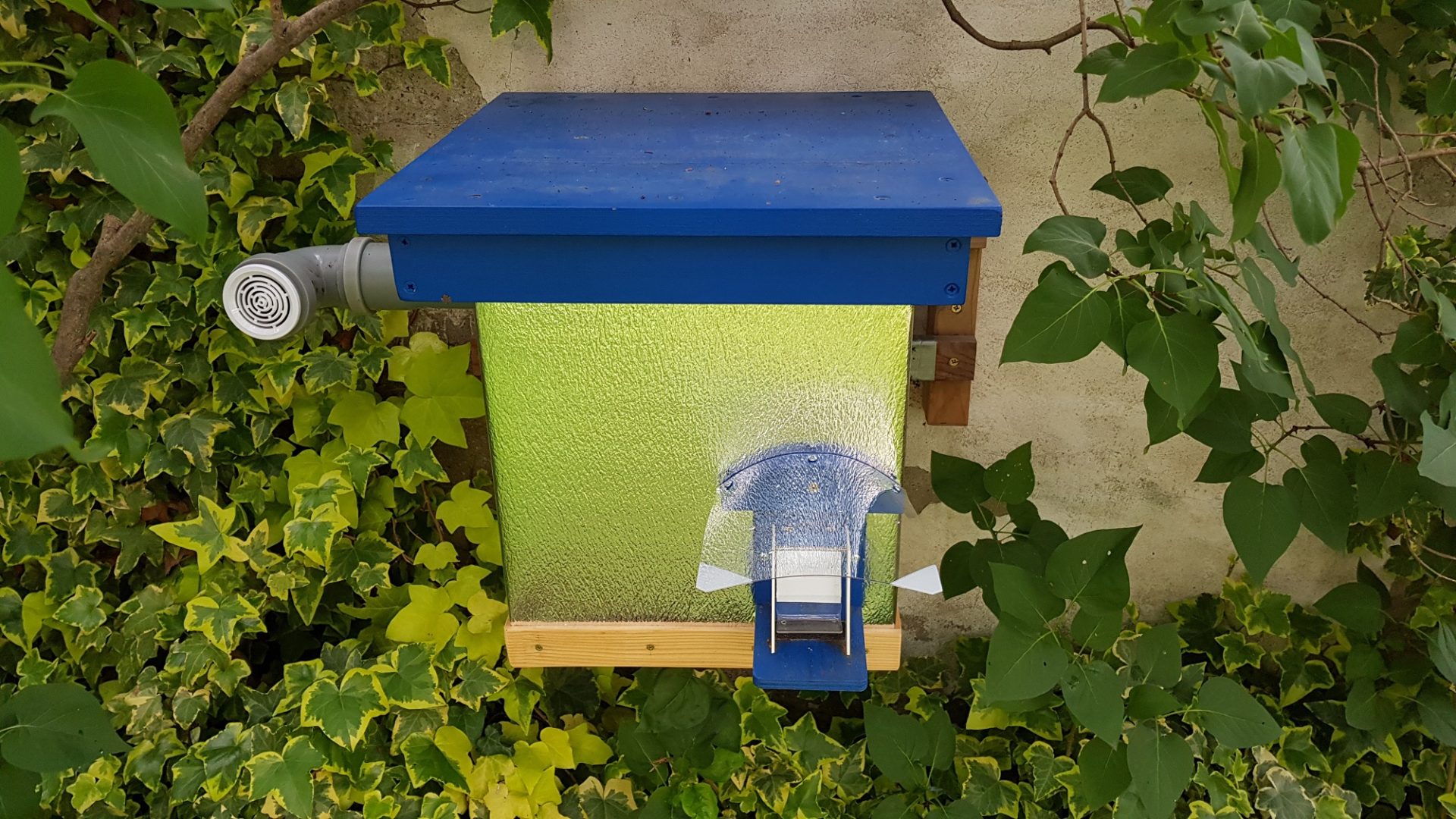
Bumblebees PLUS - Shelter over the drop

Bumblebees PLUS – Roof over the flap
Photo O. Hercog 6/2020

Canopy made according to the instructions Bumblebees PLUS
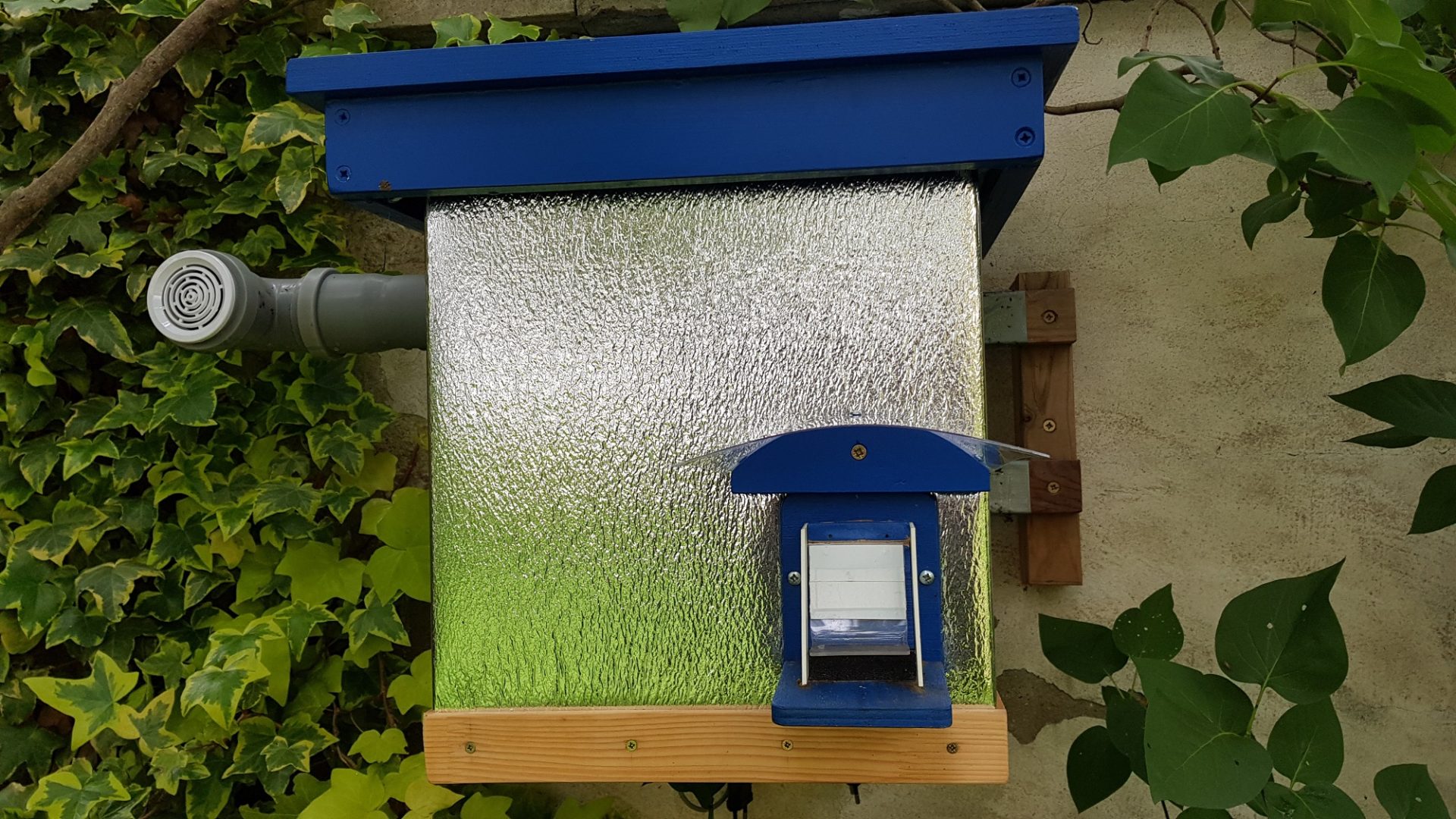
Bumblebees PLUS - Shelter over the drop

Bumblebees PLUS – Roof over the flap
Photo O. Hercog 6/2020

Placing the canopy over a commercially produced flap with canopy dimensions according to our instructions.
Adjust the dimensions according to the installation of the flap on your hive!
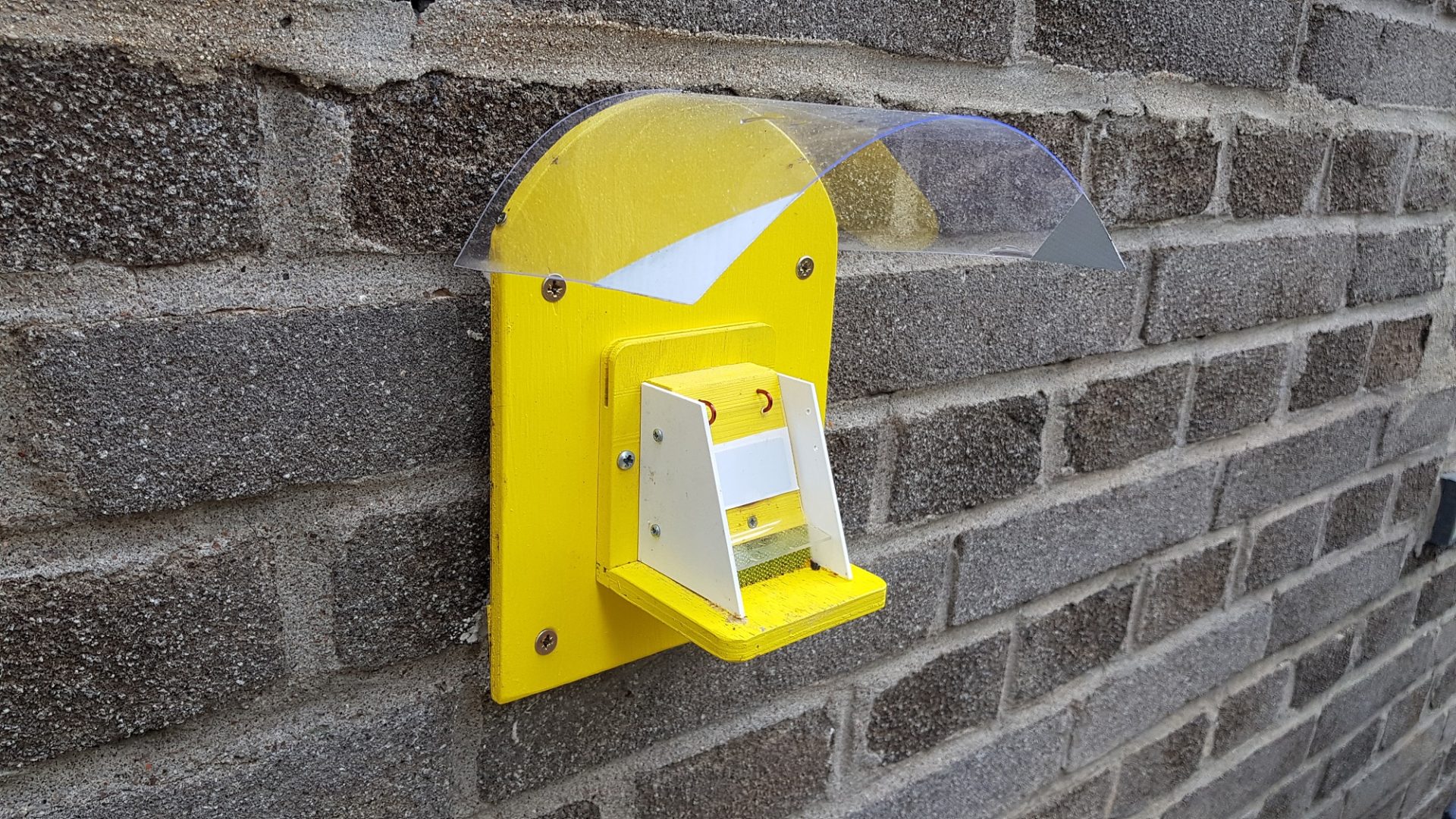
Bumblebees PLUS - Canopies for wall-mounted flaps

Bumblebees PLUS – Canopies for flaps placed on the wall
Photo O, Hercog 6/2020
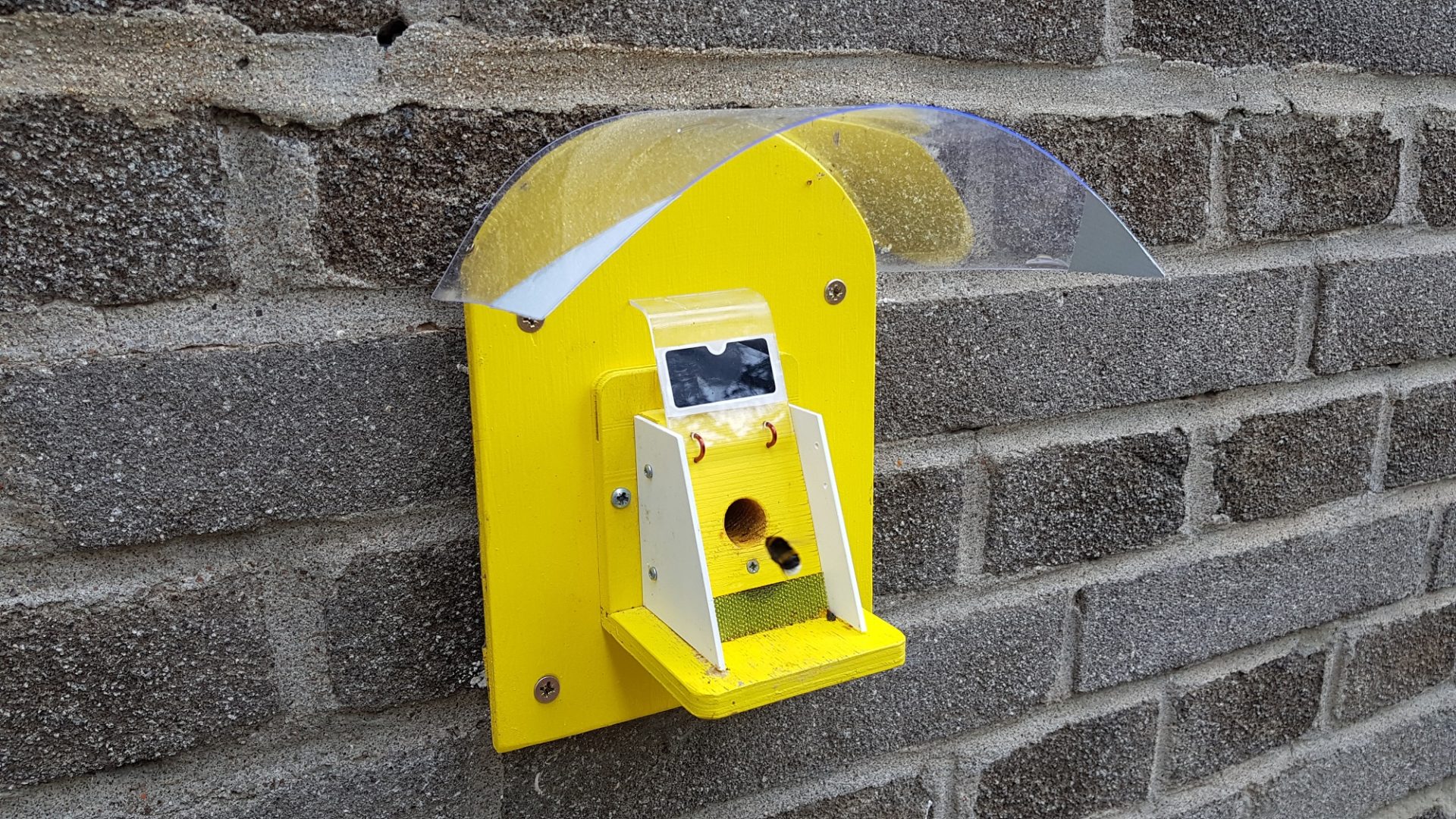
 

Bumblebees PLUS - Canopies for wall-mounted flaps

Bumblebees PLUS – Canopies for flaps placed on the wall
Photo O, Hercog 6/2020
How to make a canopy at home

Consider the following procedure as a proven solution. Feel free to adjust it to your needs and production capabilities.

Material

  1. a sheet of clear polycarbonate up to 1mm thick so that the material can be bent cold
    (0.75mm thickness was used here)
  2. a cutting board made of quality wood, or sheets of quality plywood up to a thickness of around 20mm (do not use plywood, OSB board or other material that is not weatherproof)
  3. at least 3 small wood screws around 10mm long
  4. 1 countersunk head screw 30-40mm long
  5. acrylic paint for exterior
  6. high-quality adhesive tape

Procedure

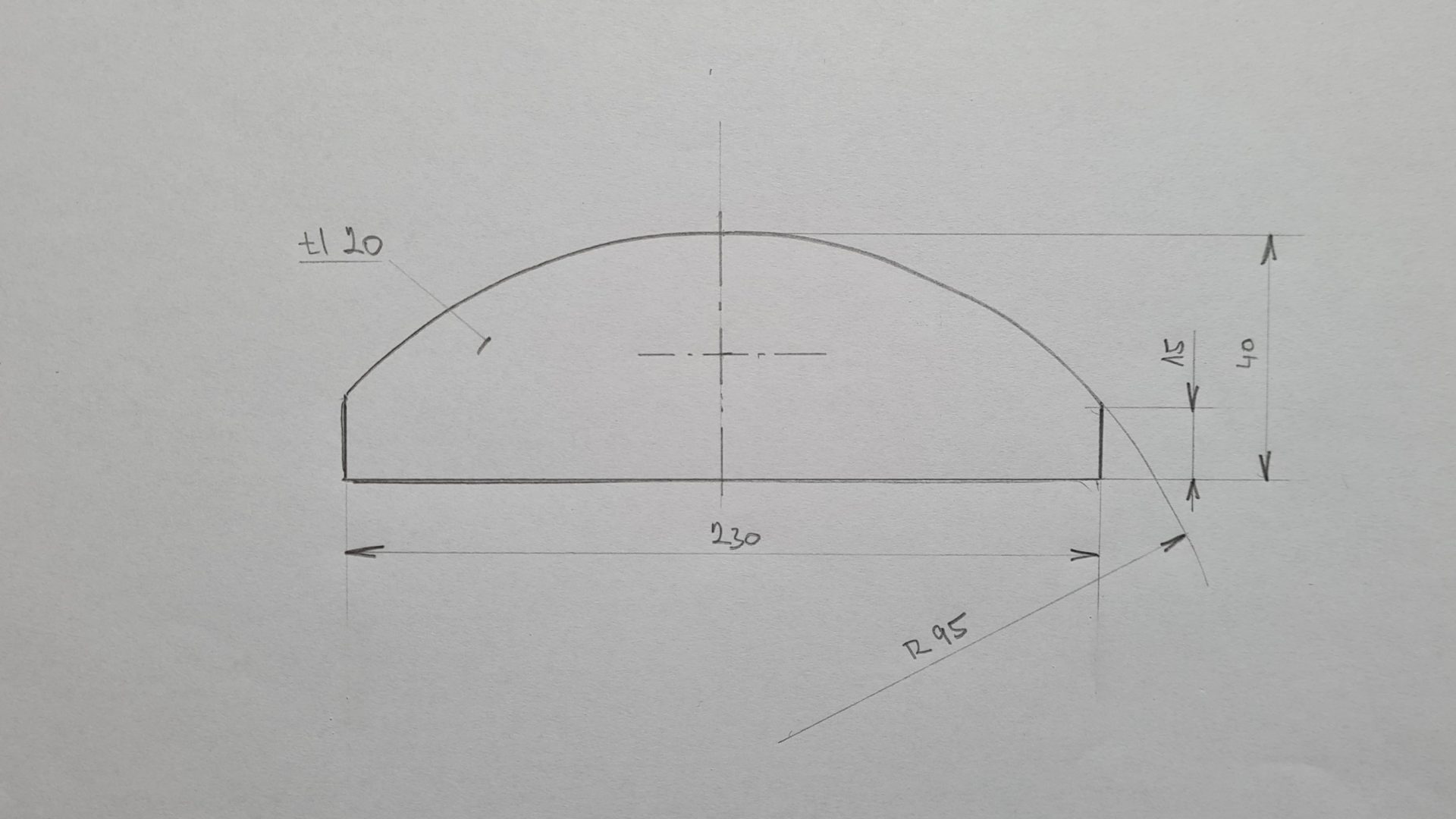
  • Make a canopy holder – shape the board according to the attached sketch – adjust the dimensions according to your alley so that it does not exceed its outline
  • Choose the radius of the top side according to your own discretion and taste. A large radius will mean a practically flat roof that will not hold its shape; a small radius may hinder the movement of bumblebees
  • Our model uses a 95mm radius, which has proven itself in practice.
    Make sure the edges are straight, as the polycarbonate canopy will rest on them.
  • We deliver to test the cut shape on the hive and adjust
  • Drill a hole (or two holes) in the center to attach the canopy to the hive body
  • If you use a screw with a countersunk head (recommended), use a larger drill bit to adjust the hole so that the head fits into it
  • adjust the surface with fine sandpaper (do not round the edges)
  • paint with 2 layers of acrylic paint
  • cut out a canopy from polycarbonate
  • The depth of the roof for a common model of a commercially available flap should be at least 150mm+
  • Choose the width of the board so that it covers the entire radius of the canopy holder and at the same time creates an overlap of at least 5mm
  • If you use a sheet of paper and place it on the canopy holder, you can quickly and easily get this size
  • Tape the outer corners of the cut-out canopy / trim – this will prevent injuries when moving around the hive; the adhesive tape will also mark the edge of the canopy and neither you nor the bumblebees will miss it
  • Stick the tape only on the underside of the canopy – it will not come off in the rain and will last the whole season
  • Mark the center of the canopy as it will be attached to the bracket, place the canopy on it and drill a hole
  • Place the first small screw in this hole and screw the canopy onto the bracket 
  • Press the canopy with your fingers so that it follows the radius on the canopy holder, drill another hole and attach the canopy on one side and then on the other side 
  • check that
    – the canopy has an overlap and covers the canopy holder against running water
    – that the canopy will be in a horizontal position after being mounted on the eaves and that water will not run down onto the eaves (the radius of the canopy will generally prevent this)
Bumblebees PLUS - Canopy holder - drawing

Bumblebees PLUS – Canopy holder – drawing by
O. Hercog 6/2020

Adjust the dimensions to suit your hive, test on the hive before final surface measurement
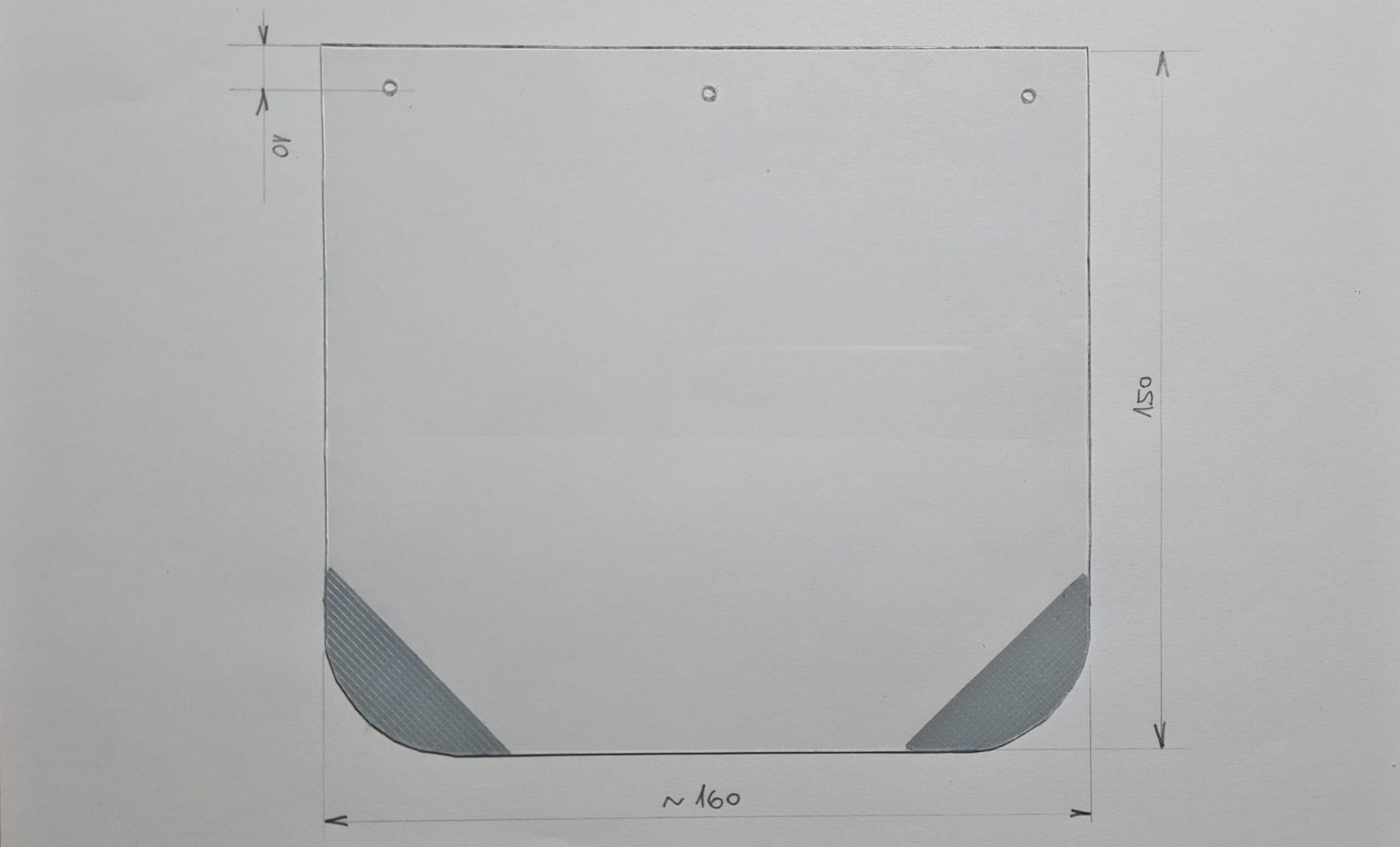
Bumblebees PLUS - Polycarbonate canopy - dimensions

Polycarbonate canopy - dimensions
Photo O. Hercog 6/2020

Adjust the dimensions according to your hive and the holder you made
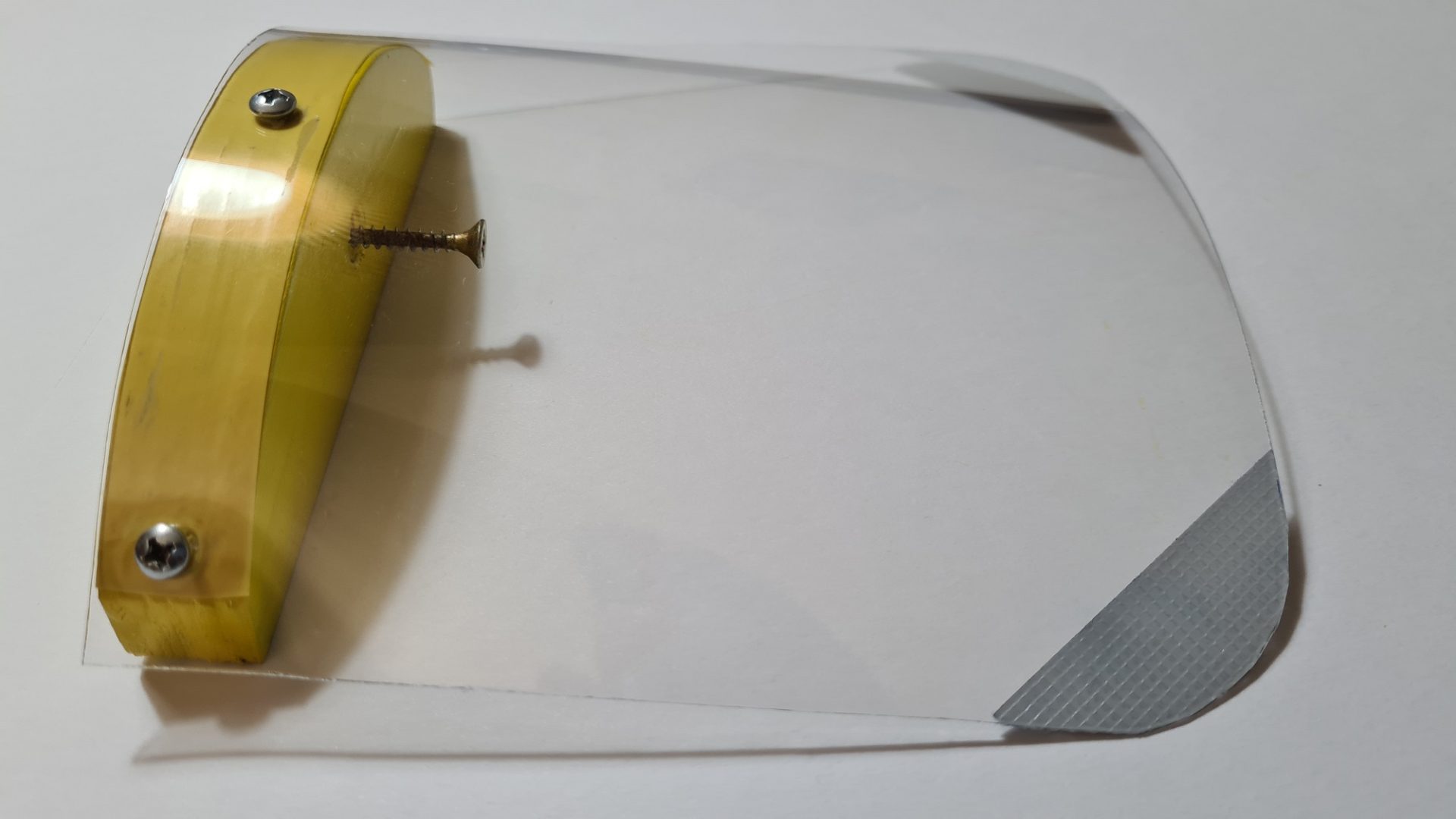
Bumblebees PLUS - Canopy mounted on a bracket

Bumblebees PLUS - Canopy mounted on a holder
Photo O. Hercog 6/2020

Don't forget the overlap that covers the canopy bracket
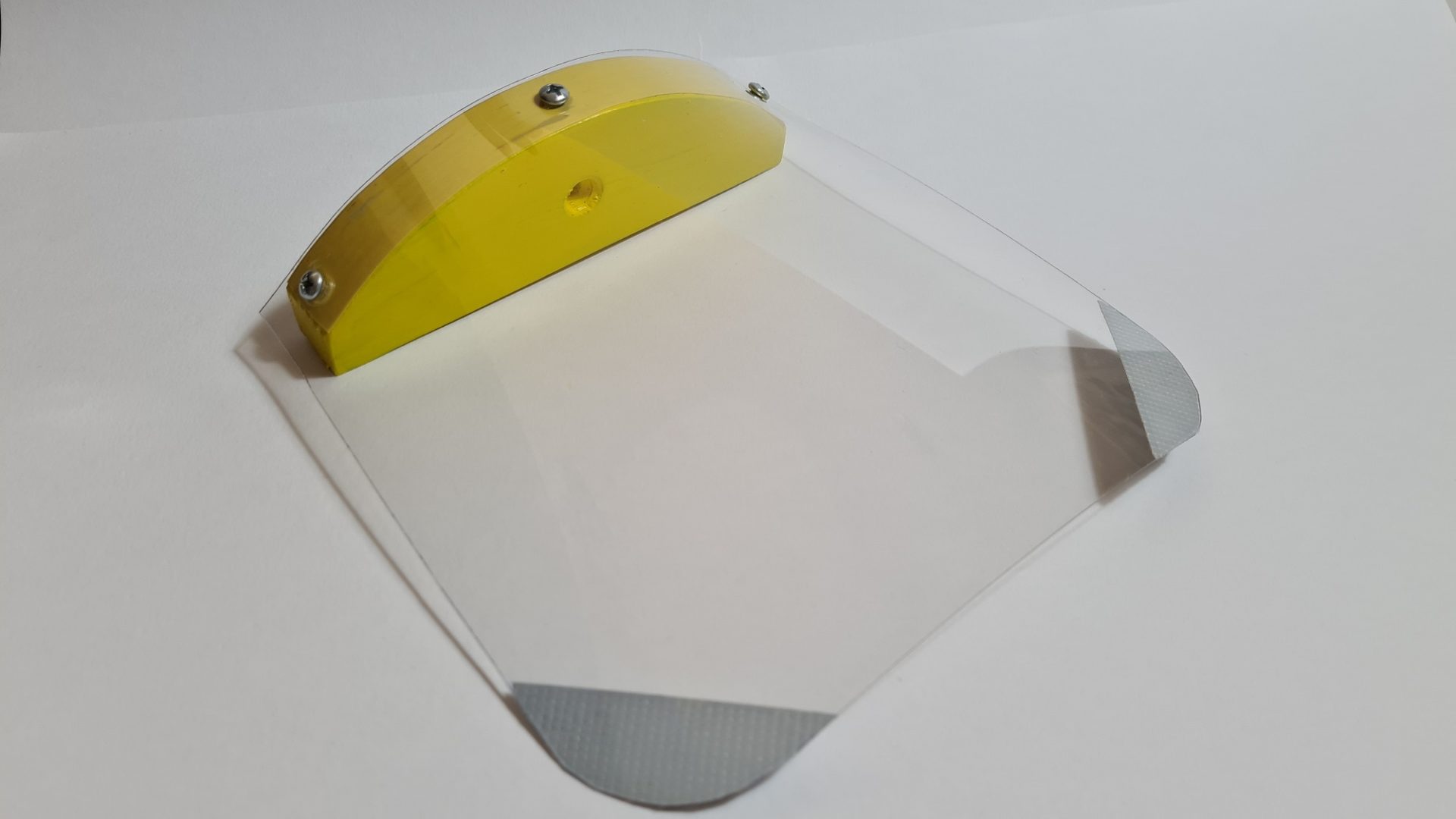
Bumblebees PLUS - Canopy mounted on a bracket

Bumblebees PLUS - Canopy mounted on a holder
Photo O. Hercog 6/2020
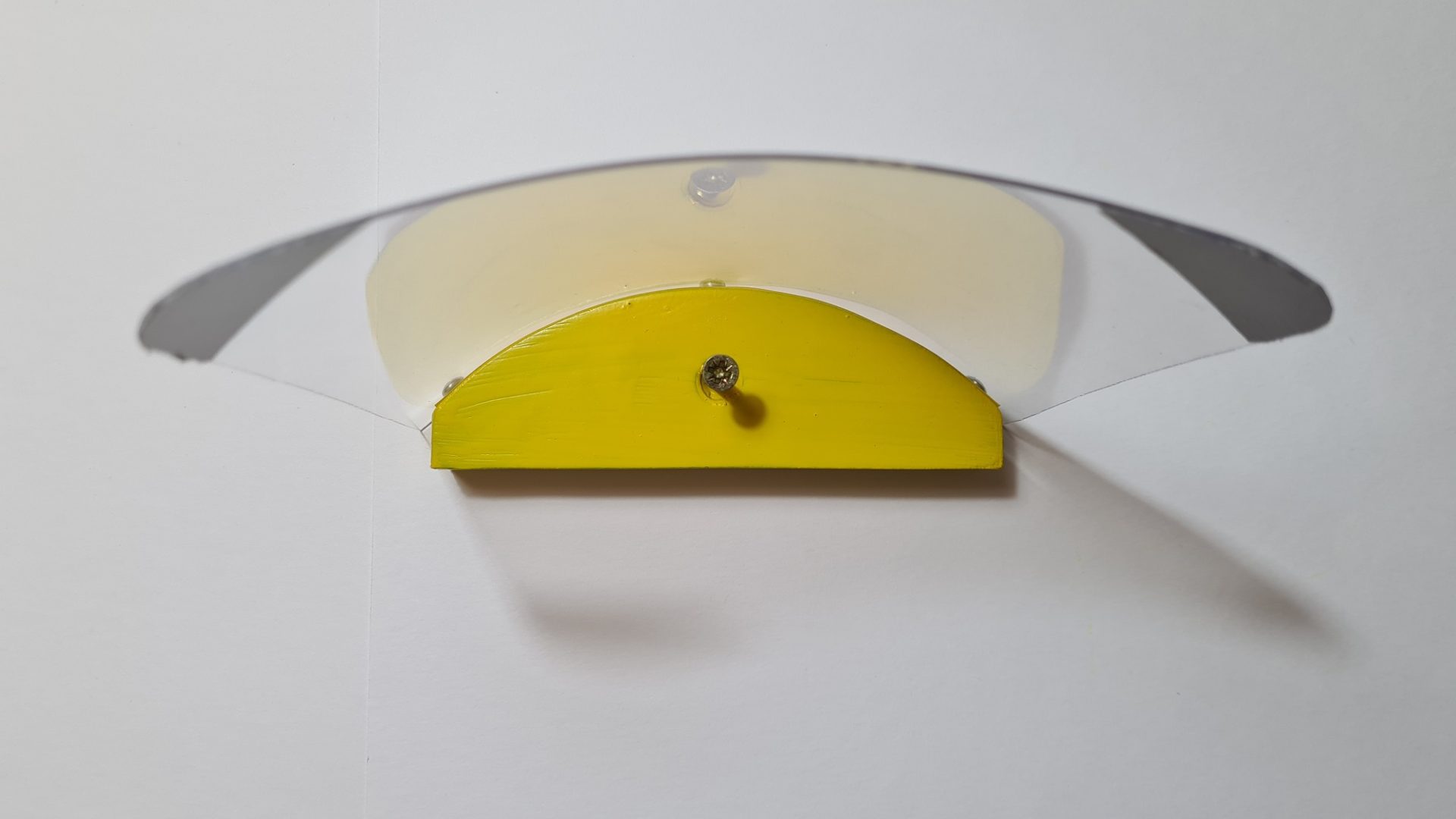
 

Bumblebees PLUS - Canopy mounted on a bracket

Bumblebees PLUS - Canopy mounted on a holder
Photo O. Hercog 6/2020
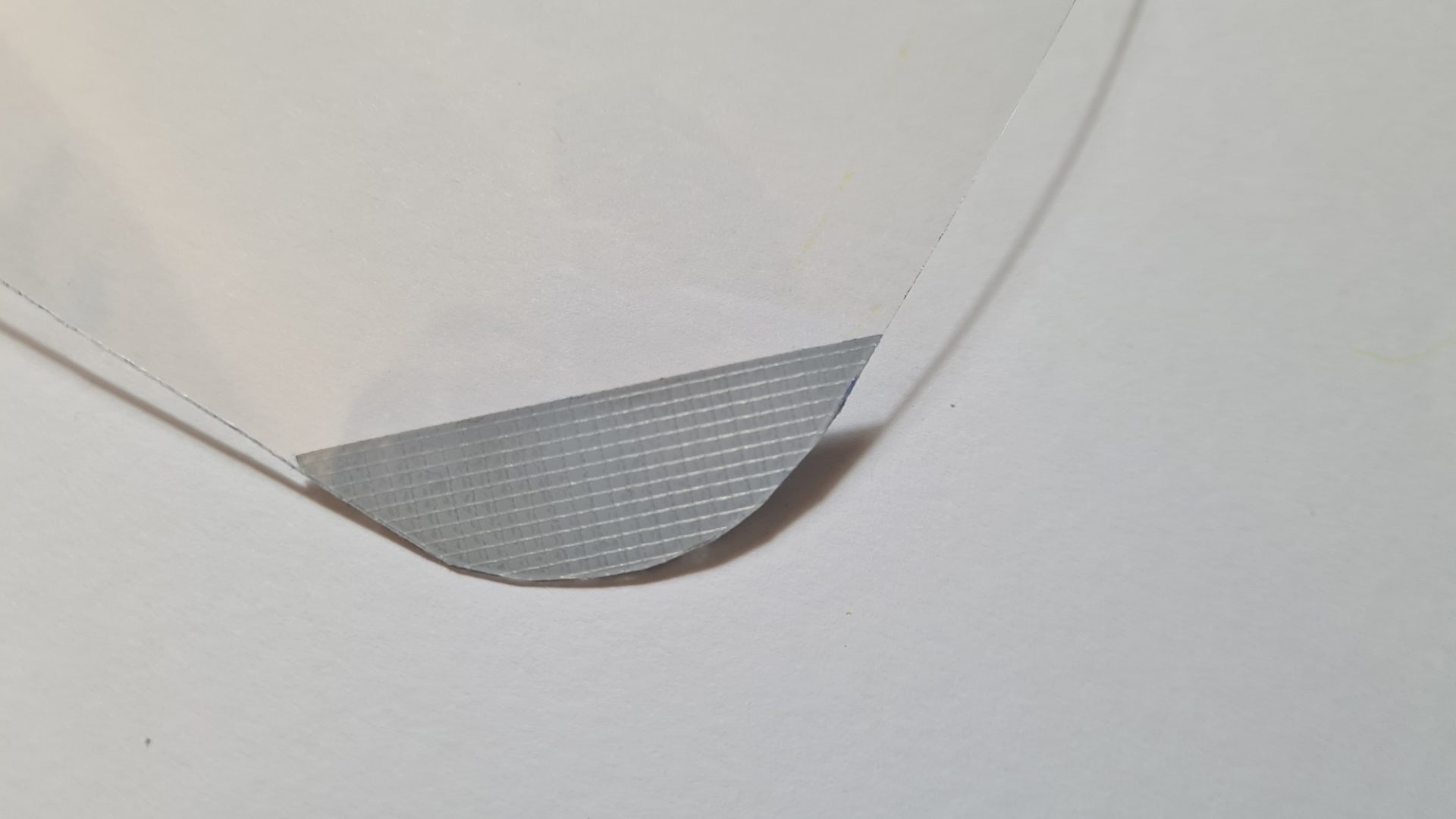
 

Bumblebees PLUS - Polycarbonate canopy - rounded or beveled corner

Bumblebees PLUS – Polycarbonate canopy – rounded or beveled corner
Photo O. Hercog 6/2020

Don't forget to round or chamfer the corner of the canopy so you don't get hurt by the canopy when moving around the hive!
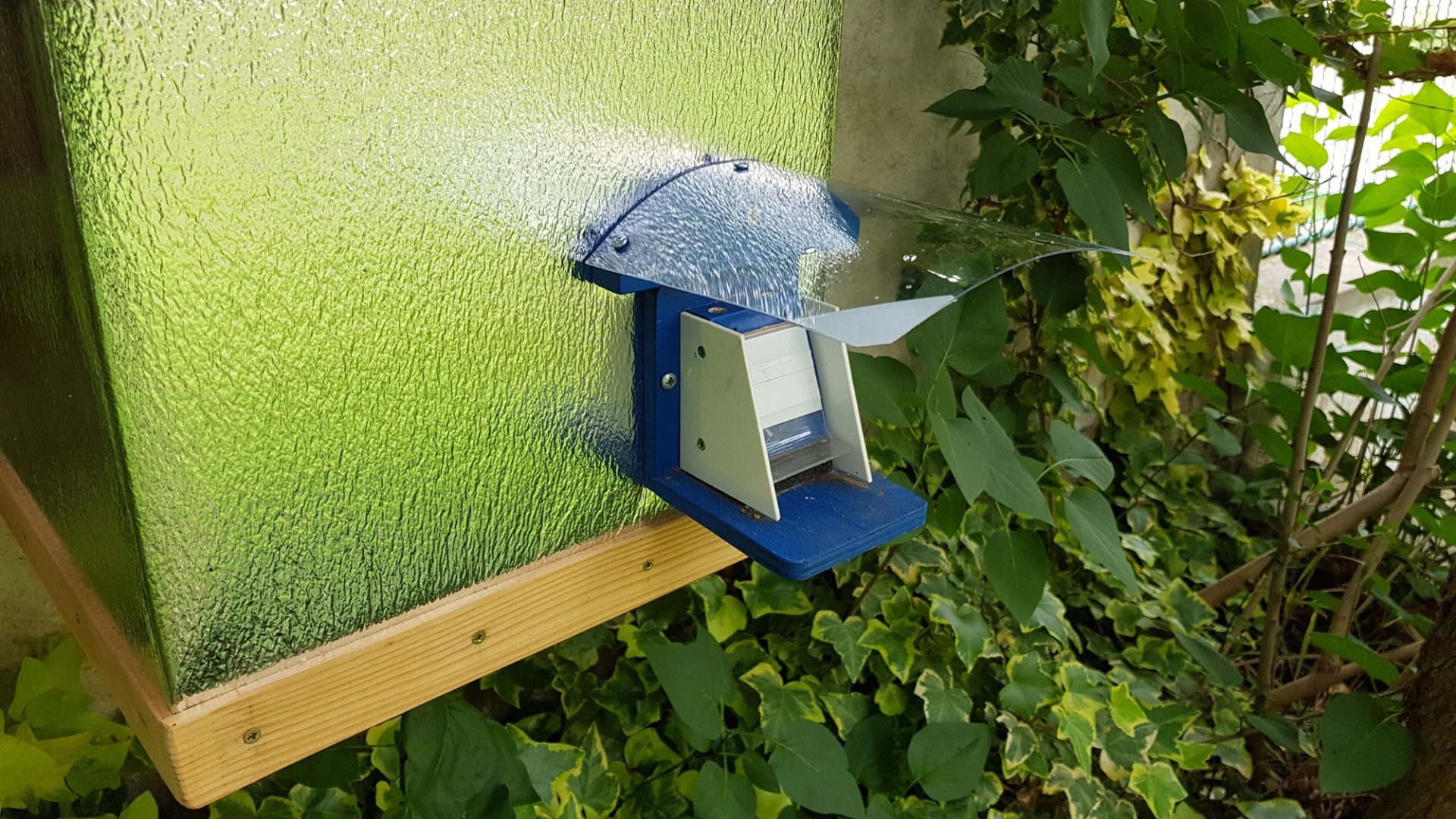
Canopy installation

The well-known saying " measure twice, install once" . So take your time and try out the correct position of the canopy!


Procedure

  • Find a suitable height for installing the canopy:
    – if you have a commercially available flap and use the dimensions recommended by us, place the canopy right above the flap
    – if you place it higher, you will have a better view of the flap, but it will then be less protected from the weather
    – if you place it lower, the flap will be better protected, but do not open it more than to a horizontal position and it will be harder to manipulate, but the flap will still be better protected
  • Mark the hole in the cabinet with a drill bit and drill it (choose a suitable drill bit, preferably 0.8x the screw diameter)
  • attach the canopy

And that's it!  🙂


Bumblebees PLUS - Shelter over the drop

Bumblebees PLUS – Roof over the flap
Photo O Hercog 6/2020

Canopy made according to the instructions Bumblebees PLUS – side view
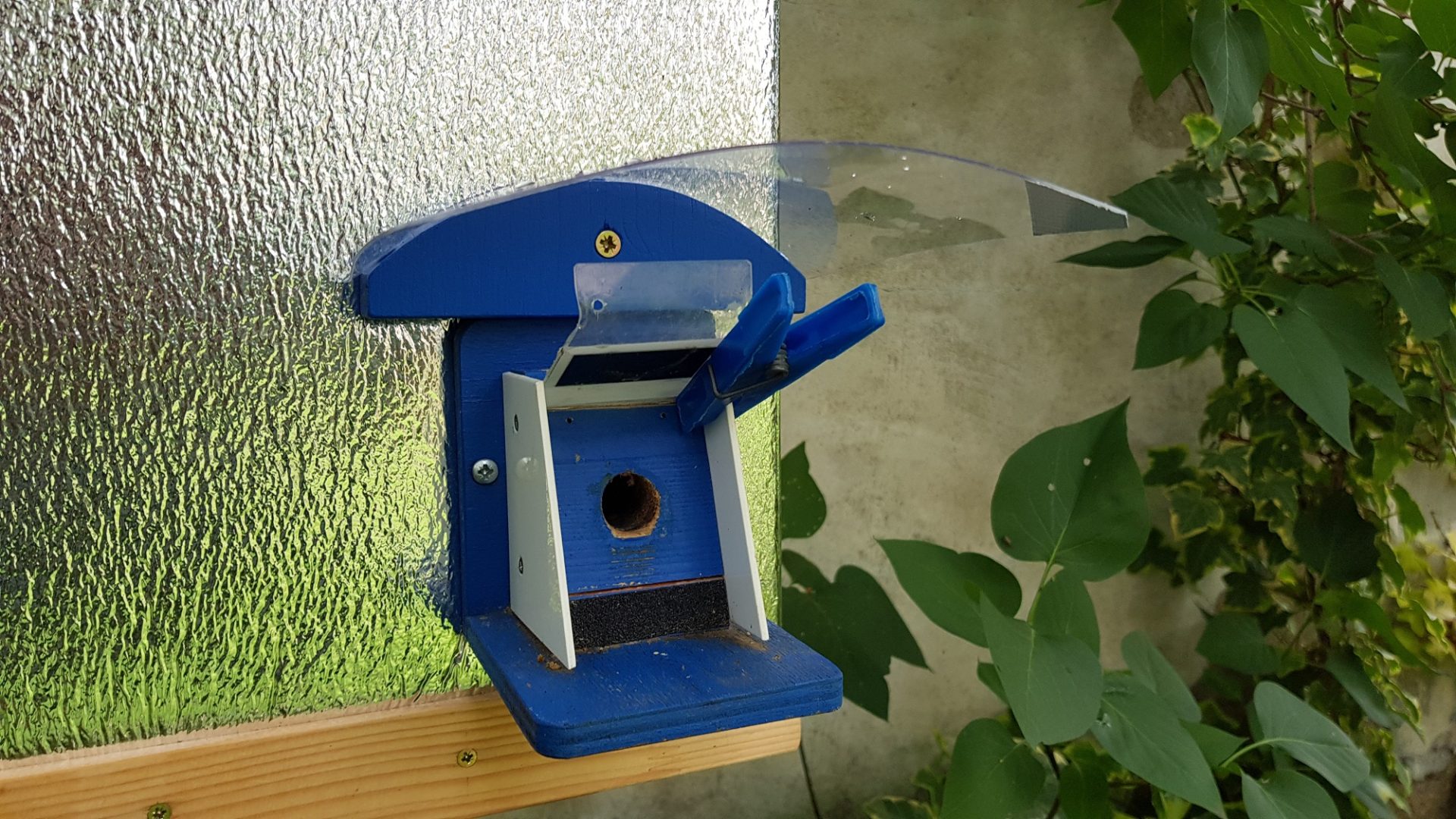
Bumblebees PLUS - Shelter over the drop

Bumblebees PLUS – Roof over the flap
Photo O, Hercog 6/2020

Canopy made according to the Čmeláci PLUS instructions - flap in the open position,
Choose the height of the canopy so that the flap can be lifted comfortably and reaches the flap - for example for cleaning

If the flap (the moving part of the flap) is protected from tampering, it will serve you better and you will extend its lifespan.