Increasing the heat resistance of the hive with simple modifications
What you will learn here
We will describe possible solutions for improving the thermal insulation of a beehive (bumblebee hive).
We will explain why thermal insulation is important and how it helps.
We will show you some specific solutions from our workshop and the workshop of our readers).
Introduction
On our website you can find recommendations on what a quality hive for bumblebees should look like HERE
One of its important properties is good thermal insulation. Therefore, in our instructions you will find a procedure for creating additional thermal insulation when preparing your hive for the season HERE
Briefly about thermal insulation
Even if you provide the hive with thermal insulation, it is important that the hive is not exposed to the sun. No amount of insulation will help it there, and even just part of the day when it is exposed to the sun will cause the temperature inside it to rise.
Keep in mind that insulation does not cool/heat itself, it only slows down the temperature equalization between the internal and external environments. In the case of a hive, it is the equalization of the internal temperature with the surroundings. This is critical in the spring months, when the nest is in the solithermal phase, i.e. the mother is alone. If the nest gets cold, the brood may die and the mother may abandon the nest without attempting to establish another nest.
It is important to have a sufficient volume of lining in the hive. Thanks to its natural moisture and the possibility of evaporation, this will allow the hive to cool down or, in cold temperatures, maintain the temperature of the nest within the required range.
If the shelter does not have active temperature regulation, the temperatures will always equalize. Thermal insulation will only slow this process down – more or less.
A low-power heating cable heating solution has now appeared on the market. We will wait for the results and write about it after the season.
I apologize to physicists and thermodynamicists for the many simplifications we made to simplify the description.
How to improve thermal insulation
How to improve the thermal insulation of a small hive
If you have purchased small hives, insulate them from the outside. We generally do not recommend using these small hives because their internal volume is not suitable for most nests. A strong nest simply cannot fit in there.
Their manufacturer has already heard our call and stopped production – thank you!
A small shed can be polystyrene boards from the outside , and the flap and ventilation can be extended beyond this insulation. However, polystyrene itself is not a good material and so the shed will look unsightly after the season. It would therefore be necessary to address the surface protection of the insulation.
However, all this is laborious and the effect is not adequate, so we do not recommend wasting time. Invest the work/money in a large, high-quality hive.
How to improve the thermal insulation of a large hive
If you have a large hive, you can line it with 20-30 mm thick polystyrene boards. This will still give you the space you need for the lining and a large nest.
We have described the entire process HERE
Additional insulation made of reflective foil
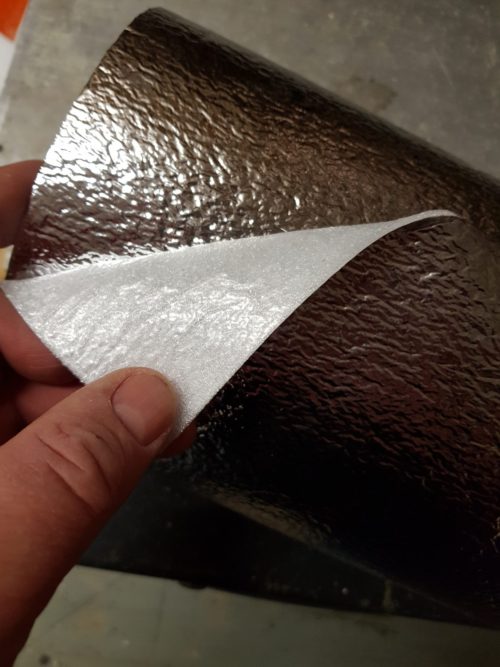
You can, for example, use reflective foil behind radiators . It has a thin thermal insulation layer and mainly aluminum foil. It therefore reflects light and radiated thermal energy = sun rays. This can be used, for example, where the sun shines on the shelter for a short time, for example when passing through tree branches . However, this foil is not a full-fledged thermal insulation . It is therefore not a solution if you want to place the shelter in a sunny place (see above).
If you use a material with reflective foil, you get an interesting design and surface finish. We tested how bumblebees react to the reflective layer and it was completely OK. We did not notice any problems such as bumped heads and antennae, or bad orientation of the bumblebees.
Please remember that a bumblebee belongs in the shade and not in the Sun!
Application of additional thermal insulation
Get:
a) insulating foil – reflective foil behind radiators, reflective foil for cars, etc. (hobby market in rolls, etc.). MIRELON material is suitable, which combines approximately 5 mm of thermal insulation material with aluminum foil.
b) thin slats
c) small wood screws
d) staple gun/good stapler – alternatively double-sided adhesive tape

Additional insulation of the hive, reflective foil behind radiators – MIRELON
Procedure:
- Remove the ventilation, protective flap, wall hanging system, etc. from the hive.
- Cover the hive with insulating foil and secure it in the desired position with nail clips/double-sided adhesive tape
- Adjust the size of the foil so that it does not interfere with the installation of the roof, etc.
- Secure the foil at the edges and corners with thin strips and small screws
- Cut off the rest of the foil
- Create ventilation holes in the foil
- Reinstall ventilation, damper, etc
Adjust the procedure according to your capabilities
Notice
- Reflective foil does not replace placing the hive in the shade - it is additional insulation
- To ensure the effect, do not forget to place the insulation foil sheet on the roof and secure/load it
- Be careful when handling a hive with reflective insulation - the foil is prone to tearing (repairs can be made with transparent adhesive tape)
- Don't stick the foil on the hive , accept that you will replace it with a new one after 1-2 seasons and that gluing it would be complicated - that's why double-sided adhesive tape is very useful (see P. Krčová's tip)

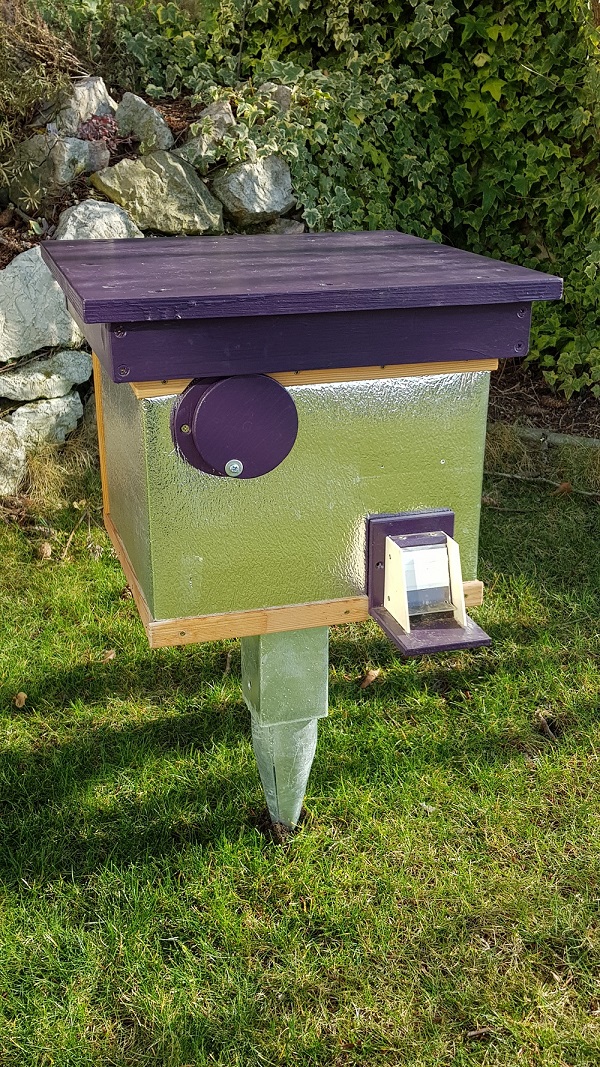
A space equipped with additional insulation
from reflective foil behind radiators
Illustrative photo
Photo O. Hercog
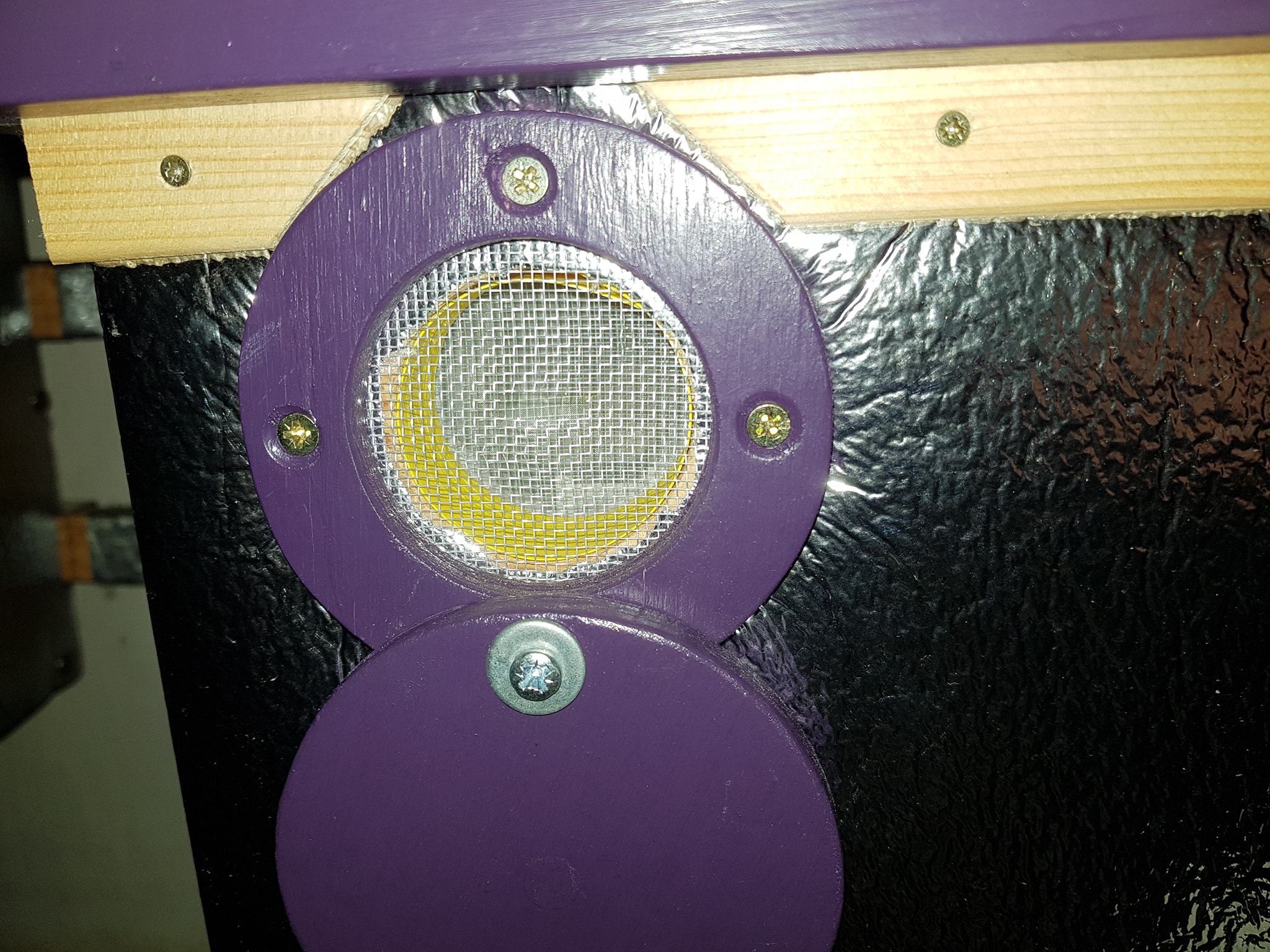
A niche provided with additional insulation
from reflective foil behind the radiators,
ventilation detail
Photo O. Hercog
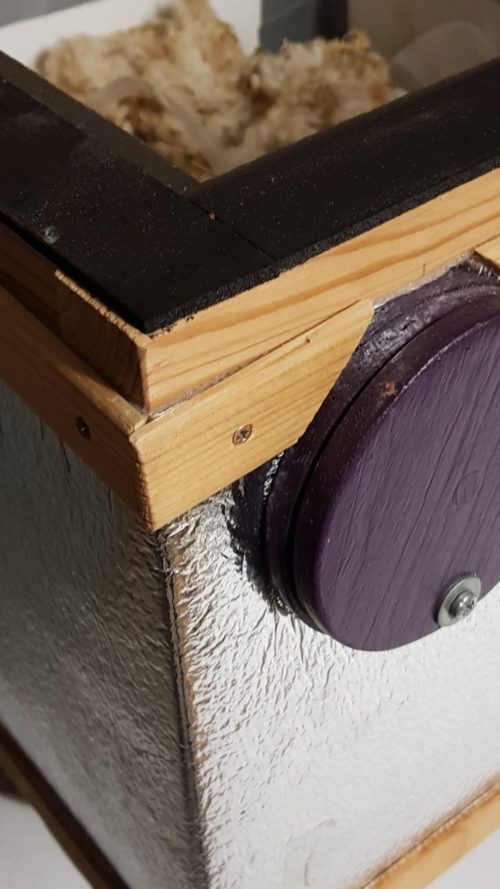
Additional insulation of the hive from reflective foil for radiators
Detail of the molding
Photo O. Hercog
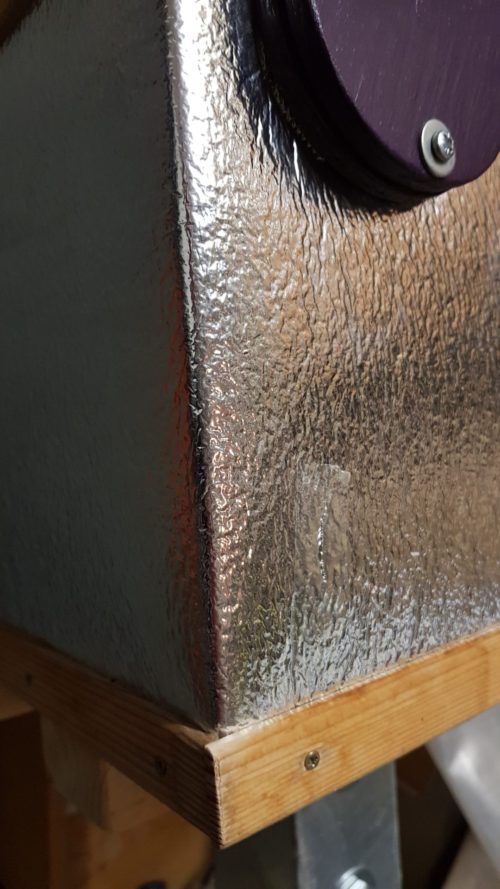
Additional insulation of the hive, reflective foil.
Detail of the edging.
Photo O. Hercog
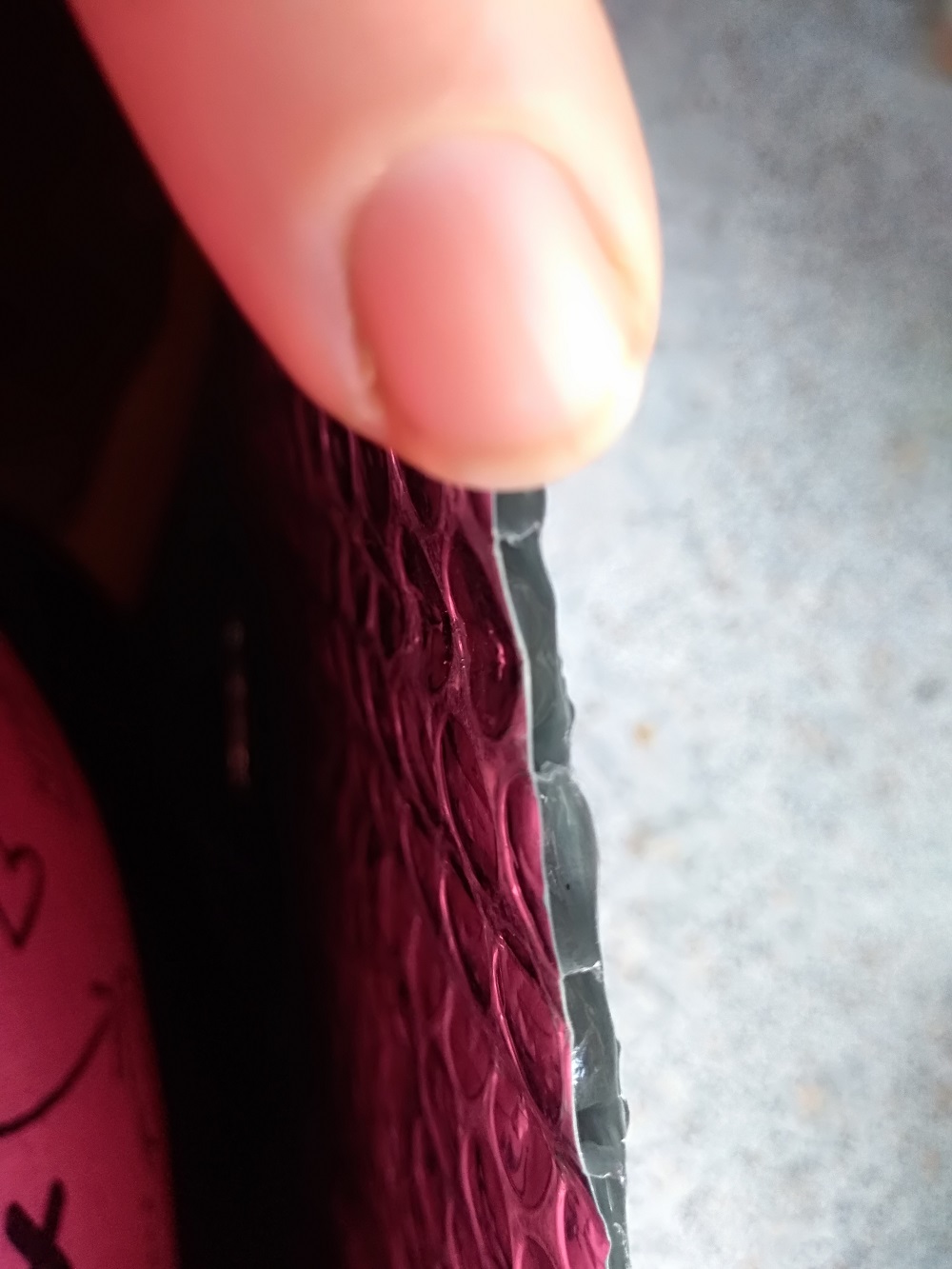
Martina Bradová took our inspiration. She used double-sided hollow foil (for car windows) , which also seems to be suitable thanks to the chambers creating good thermal insulation.
She and her husband played around at home and equipped her hive with suitable insulation. Martina also beautifully decorated her hives with drawings of bumblebees.
Martina used double-sided foil to reduce heat loss from the hive in cold weather. She has a heating cable in the partition.

Additional thermal insulation, hollow foil
Photo M. Bradová
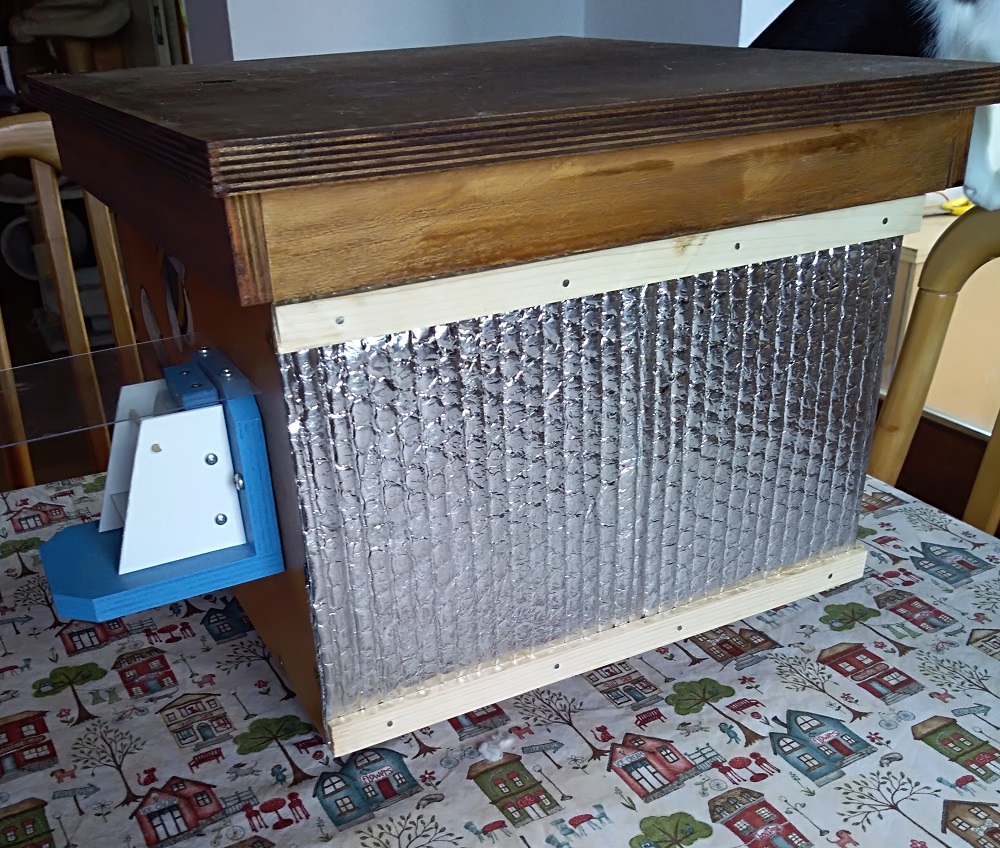
Additional thermal insulation, hollow foil
Photo M. Bradová
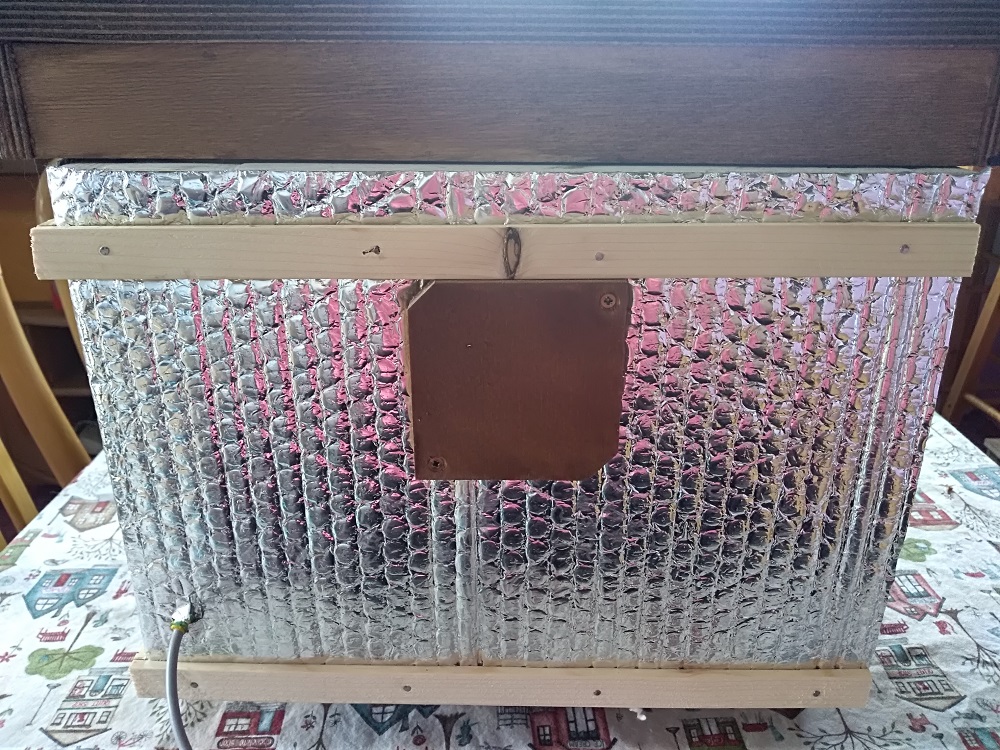
Additional thermal insulation, hollow foil
Photo M. Bradová