Bumblebee hive stand

Bumblebee hive stand made from a ground screw

The idea was provided to us by: Mr. Lukáš Budiš
Manufactured and described by: O. Hercog
Tested in practice: Yes - similar solution in 2019
Testing results: verified, safe when following the production recommendations and usage methodology
Group of breeders for whom the tool is suitable: without restrictions
Justification: Easy to manufacture if the procedure is followed.

Last updated: 13/3/2022

Introduction

Lukáš gave us a very interesting tip on using a ground screw as a stand for a beehive. We described low stands in the chapter Placing a beehive in the garden .

At Čmeláků Plus we try to recommend only what we have tested, so I went out to buy this thing and try it out for myself. We also made a little guide for those of you who are better than the description

Parts for the stand can be found on the Internet, such as a ground screw . If you go to a hobby store, you can also get one there and you can touch it. They sell them in the garden parts section, where they have various fence fittings.
I found a ground screw in a large hobby store and a matching beam anchoring . I made a sturdy stand for a scarecrow from these parts.

It doesn't matter that the stand is sturdy - the hive is quite heavy, it shouldn't sway or shake . The stand must withstand handling and maintenance of the hive , and it should also be possible to protect it against ants .

In our photo tutorial, we share several solutions for attaching a hive to a stand and protecting it against ants:

  1. The nest is firmly attached using screws and nuts - the protection against ants (adhesive layer) is then on the ground screw.
  2. The hive is built on a board that is attached to a ground screw - protection against ants (sticky layer) solutions such as bowls with sticky material into which the hive is built

There are more options, these have proven to be effective in practice. The second option is suitable for heavy bees – they will not fall off the base. Thanks to this solution, you can position the bees horizontally or tilt them forward when the small workers cannot handle the flap procession.

If you use this solution, your hive will be ants, small rodents and pets a safe height of about 30-40 cm above the ground (depending on how deep you dig it). It will also be less exposed to spring ground frosts .

This solution is well suited for self-settlement of the queen . You can the hive on the ground at first. Once the queen settles in the hive and starts returning reliably, you can move the hive to a stand made of ground screws .

This is best done in the dark – close the entrance hole. Then move the hive and open the entrance hole in the morning. The mother then climbs out and makes an orientation flight . At that moment, she must not be disturbed . The mother then begins to return and continue building the work.

A nest on a ground screw then has a better chance of not being found by other mothers looking for a nesting site on the ground.

You can find the procedure for setting up a mate HERE .

If a hurricane like Sabine hits your yard in February 2020 , a beehive mounted on a stand will withstand the wind well . You just need to weigh down the roof with a brick/stone, or secure the roof well. A beehive on a screw base can easily tip over and break the nest inside if you don't weigh down the beehive well. This is especially true for small and lightweight beehives.


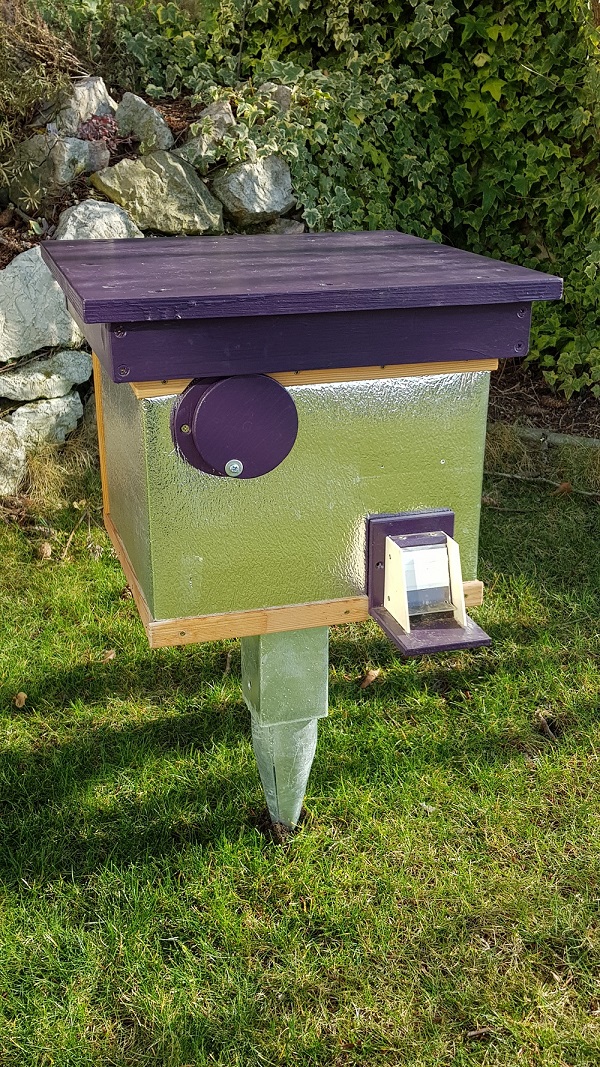
Bumblebees PLUS - Hive on a stand made of a ground foot and a beam holder

A nest on a stand made of a ground foot and a beam holder
Photo O. Hercog (2020)
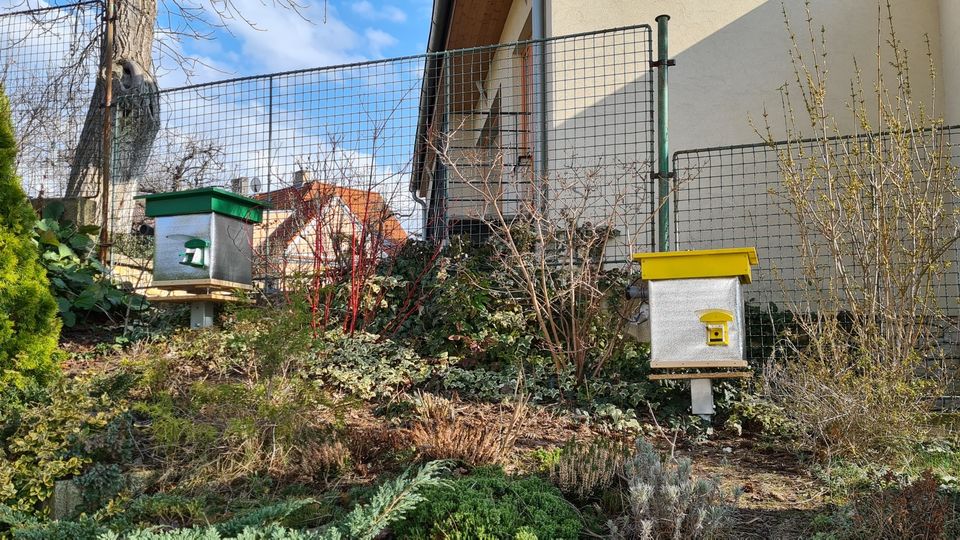
Bumblebees PLUS - Ground Screw - Photo Ondřej Hercog 2021 (6)

A hole on a ground screw
Photo: O. Hercog 2021
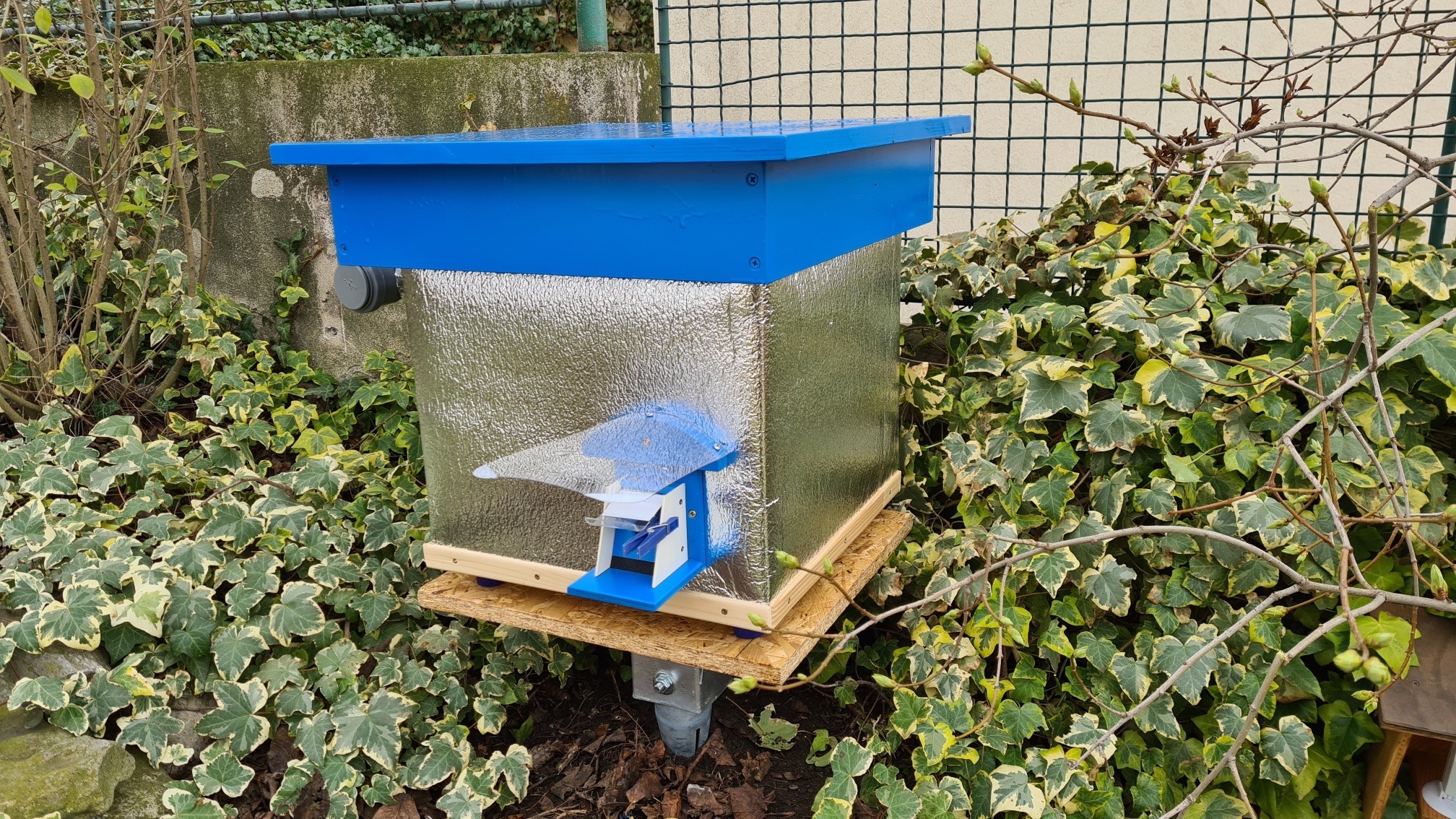
Bumblebees PLUS - Ground Screw - Photo Ondřej Hercog 2021 (4)

A hole on a ground screw
Photo: O. Hercog 2021
How to make a stand from a ground screw?

Everything can be assembled from parts purchased at a hobby store, we will describe how using an example in the instructions. The advantage is good protection by zinc plating, so you don't have to worry about any paint, etc.

There are of course more solutions and the solutions can be adapted to your DIY capabilities . So take this example as a proven solution but also as inspiration.

Procedure

  • Buy a ground foot and the corresponding part for anchoring the beam ,
  • Choose pieces that fit and you won't have to adjust them much = you can try them on the spot,
  • The specific foot from our instructions can also be used as a parasol holder - that's why it has a welded-on nut. However, if you choose the appropriate position, the nut will not get in the way,
  • Connect both parts with bolts and nuts so that they are firmly connected and the shock is stable .
  • Make a stand for the hive. It should be sturdy but easy to disassemble. You will appreciate this if you need to take the hive indoors.
  • In the example above, I attached beams made of thick battens . We used long screws into the walls (they might not be enough for the bottom).
  • I epoxy-glued tall nuts (M6 extension nuts) into them, so the shock is attached to the stand with screws = an easily removable connection. You could use appropriately sized countersunk nuts with an internal hexagon, but safety is safety..
  • You can also use
    larger wood stud nuts , they hold very well (tested M8x13)
    strong screws (with a 6-pointed head). However, their strength will decrease over time, as their thread in the wood wears out.
  • You can also attach a board to the stand and place the hive on it. This is suitable for heavier hives that will not be knocked over by the wind.
  • The photos also show a possible solution for protection against ants. It is made of adhesive tape from Chemstop (directly on the ground screw) and protected by a cone made of a PET bottle. Thanks to the small space between the cone and the stand, the bumblebee will not get stuck here.
    You can of course choose another solution, for example, instead of a cone, use a cup, seal it at the bottom and fill it with non-edible oil.
  • If your hive is built on a countertop , use bowls with sticky material.

Installation

  • Choose a place for a scare ,
  • Use the lever to screw in the ground screw . If necessary, look for a place where the drill can be used (large stones and thick roots are a problem)
  • Level the stand (use a spirit level)
  • Screw the entire screw in up to the conical part,
  • Attention – the foot must be held firmly and must not wobble and must be positioned horizontally !
  • Place the foot on the presser foot and attach it,
  • Place the foot on the ground screw and secure it with screws
  • If you have a board attached to the screw, you can use it to drive the screw in
  • Rotate the screen to the desired orientation
  • Make sure the fence is not wobbling and is really stable
  • Add protection against ants .
  • AND IT IS!
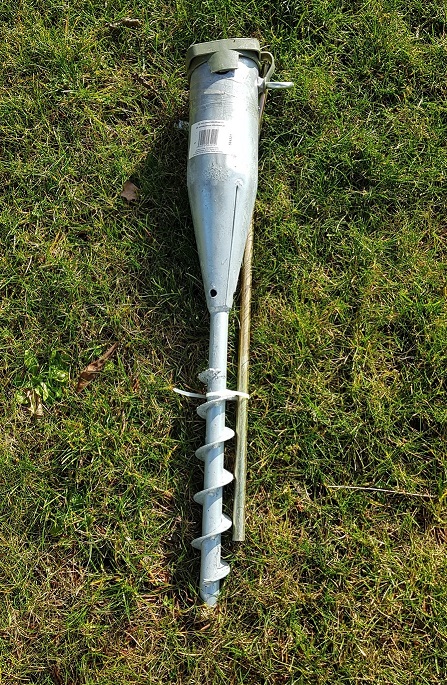
Bumblebees PLUS - Ground screw 520 x 68 mm

Bumblebees PLUS – Ground screw 520 x 68 mm
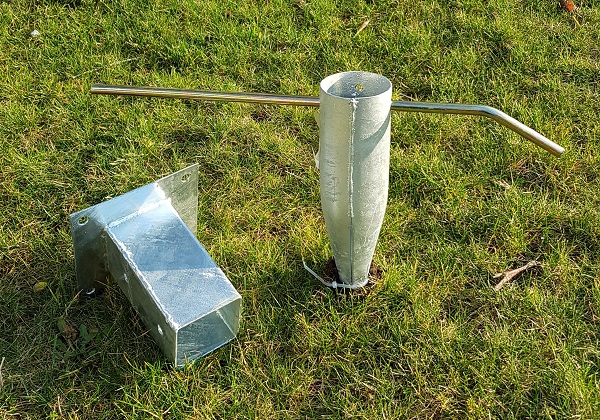
Bumblebees PLUS - Ground screw and foot for anchoring a beam

Bumblebees PLUS – Ground screw and foot for anchoring a beam
Photo O. Hercog

L
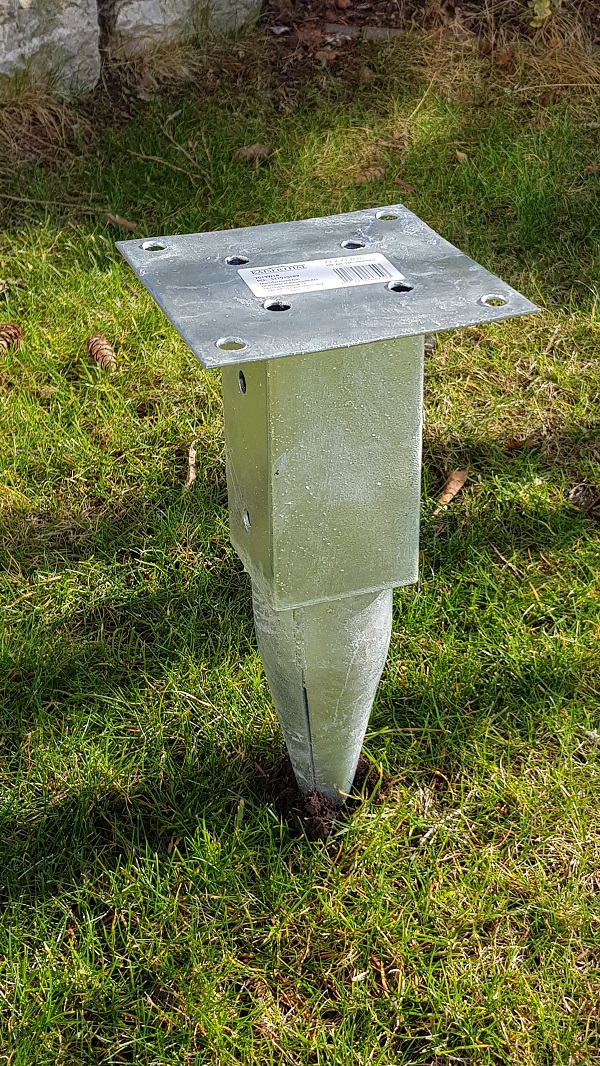
Bumblebees PLUS - Ground screw and foot for anchoring a beam

Bumblebees PLUS – Ground screw and foot for anchoring a beam
Photo O. Hercog
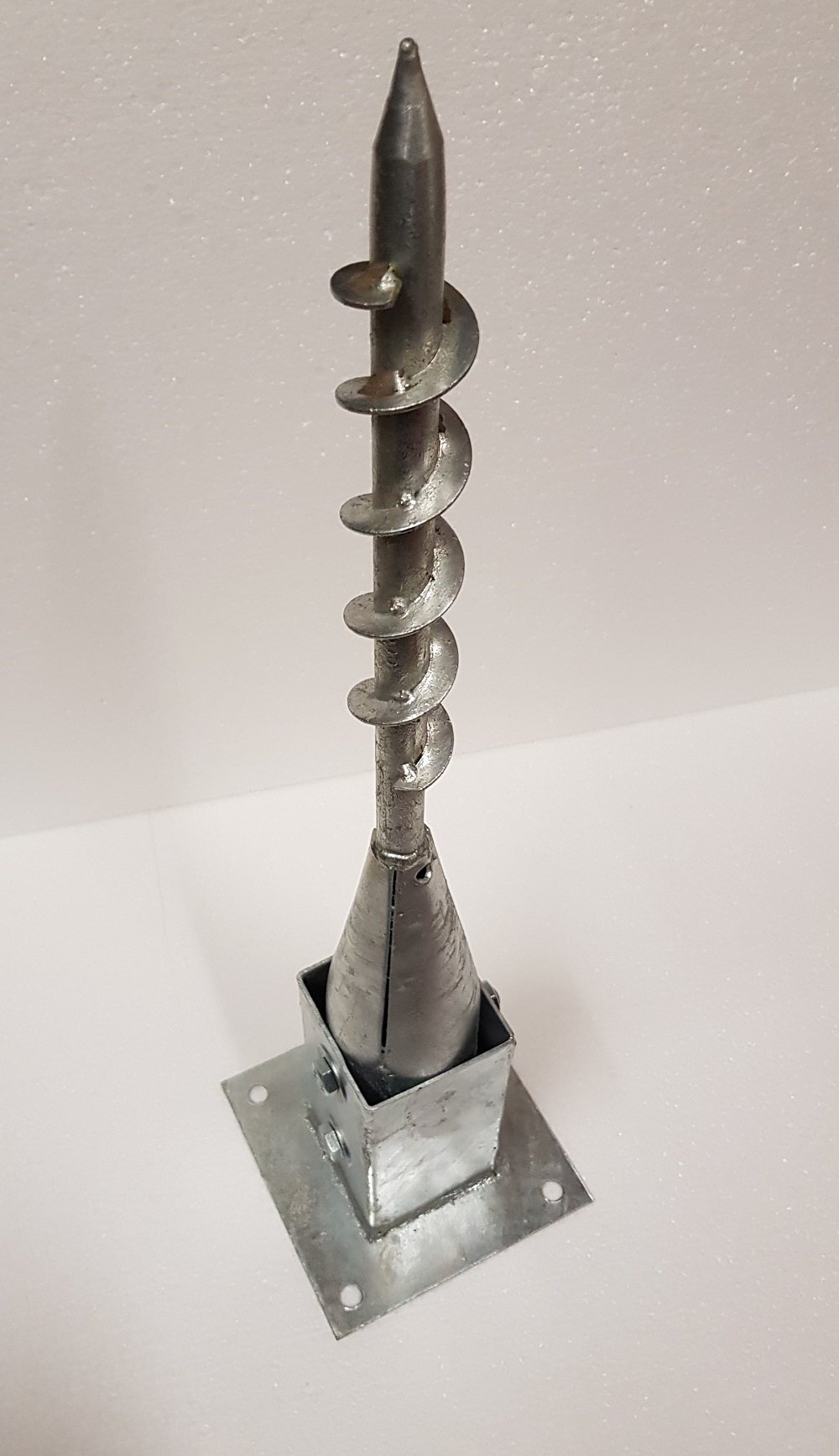
Bumblebees PLUS - Ground screw and foot for anchoring a beam

Bumblebees PLUS – Ground screw and foot for anchoring a beam
Photo O. Hercog
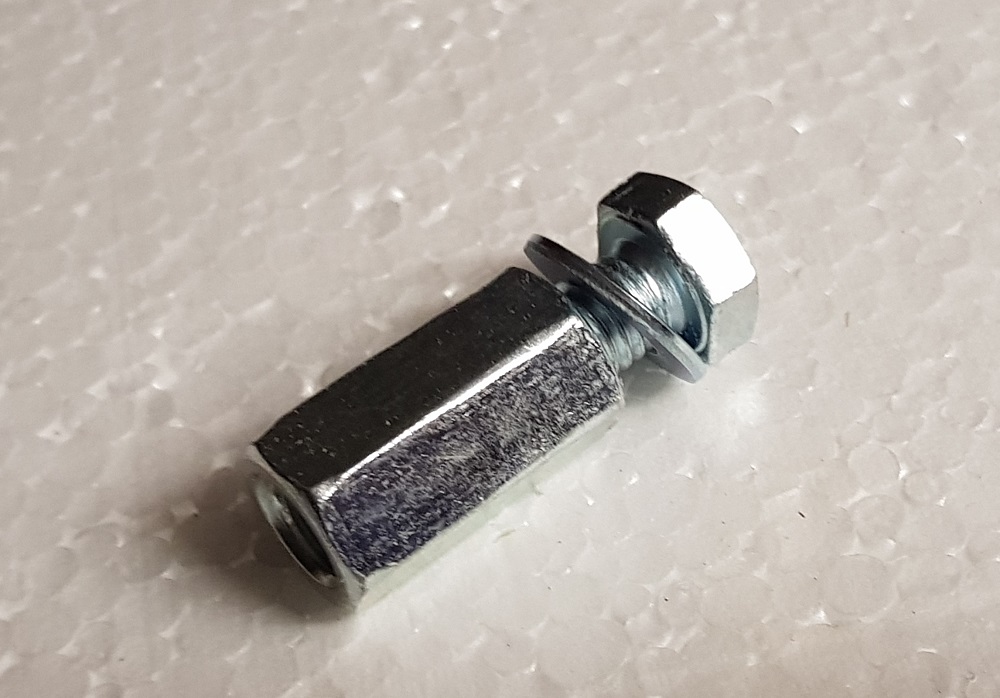
Bumblebees PLUS - Extension nut M6

Bumblebees PLUS – M6 extension nut with screw and washer
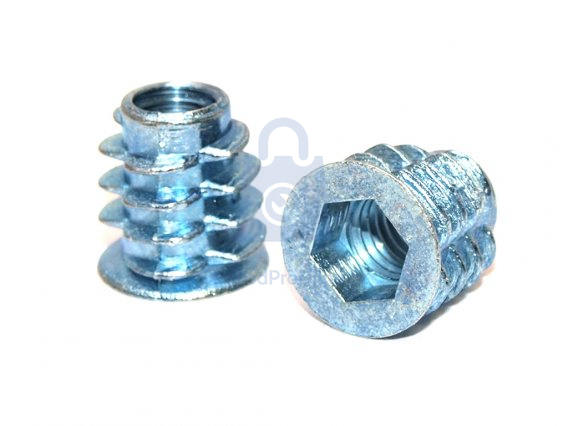
Bumblebees PLUS Conical stud nut with collar and internal hexagon

Bumblebees PLUS Conical stud nut with collar and internal hexagon
Source Internet
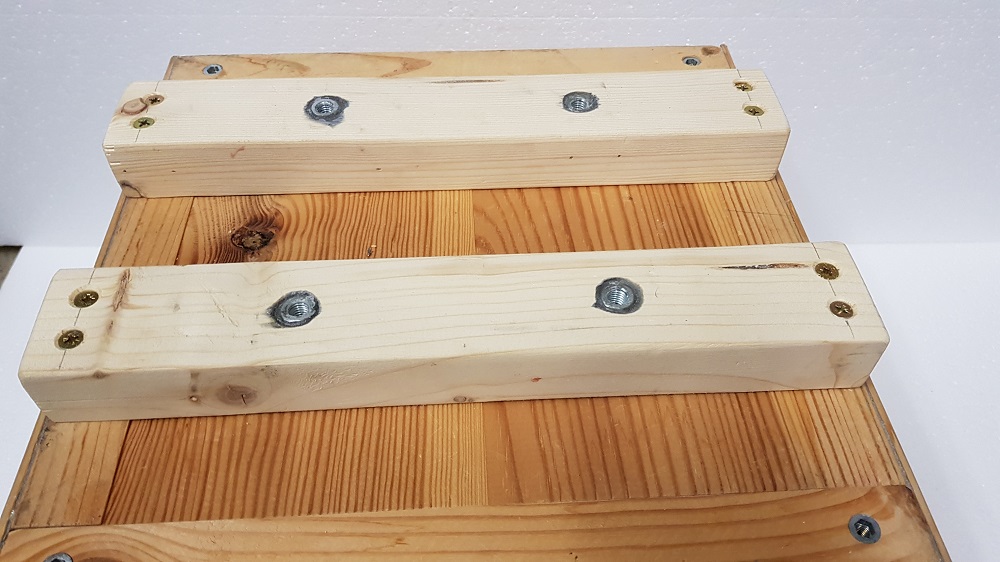
Bumblebees PLUS - Laths with glued nuts on the underside of the hive

Bumblebees PLUS – Laths with glued nuts on the underside of the hive
Photo O. Hercog
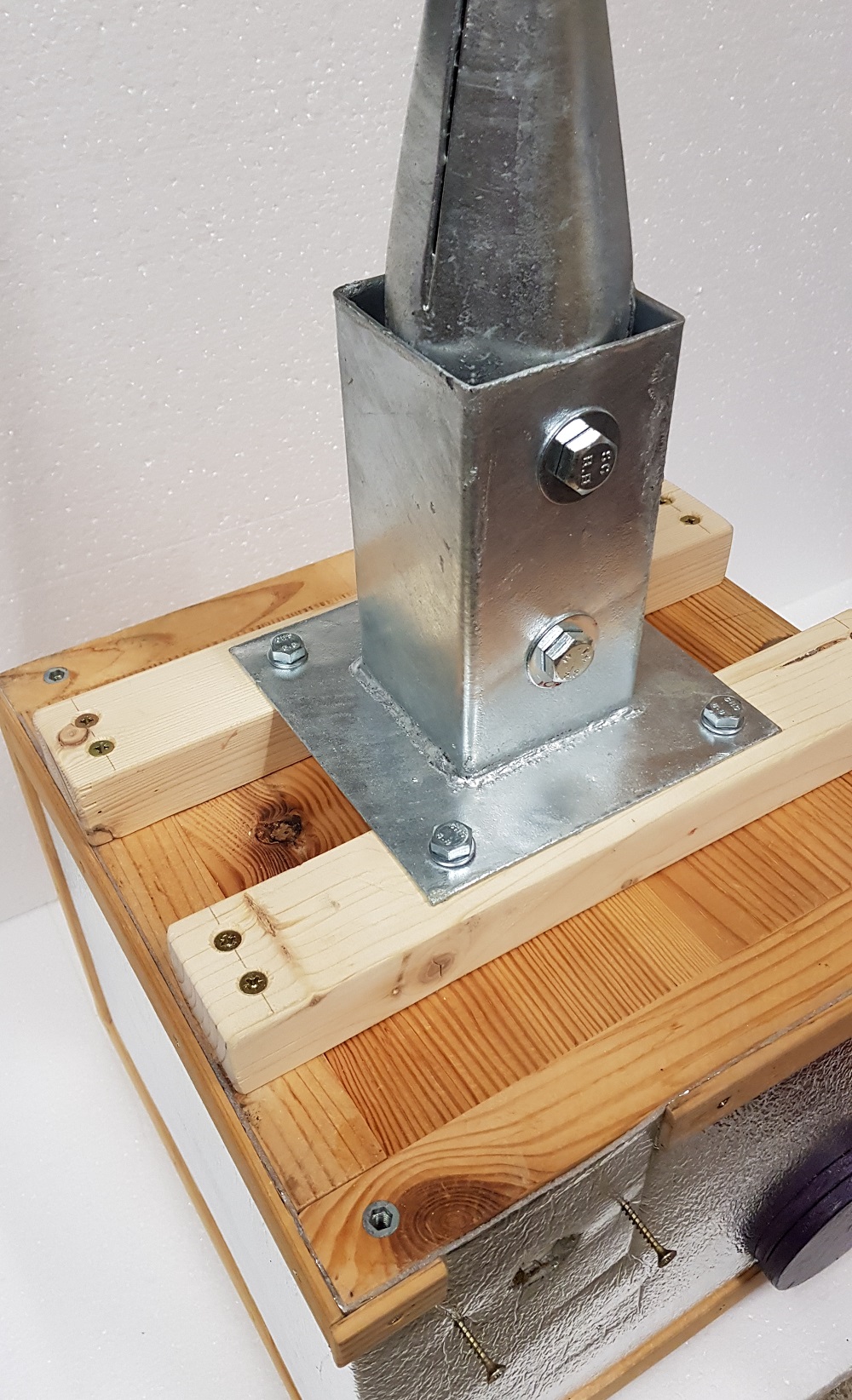
Bumblebees PLUS - Ground screw attached to the underside of the hive

Bumblebees PLUS – Ground screw attached to the underside of the hive
Photo O. Hercog
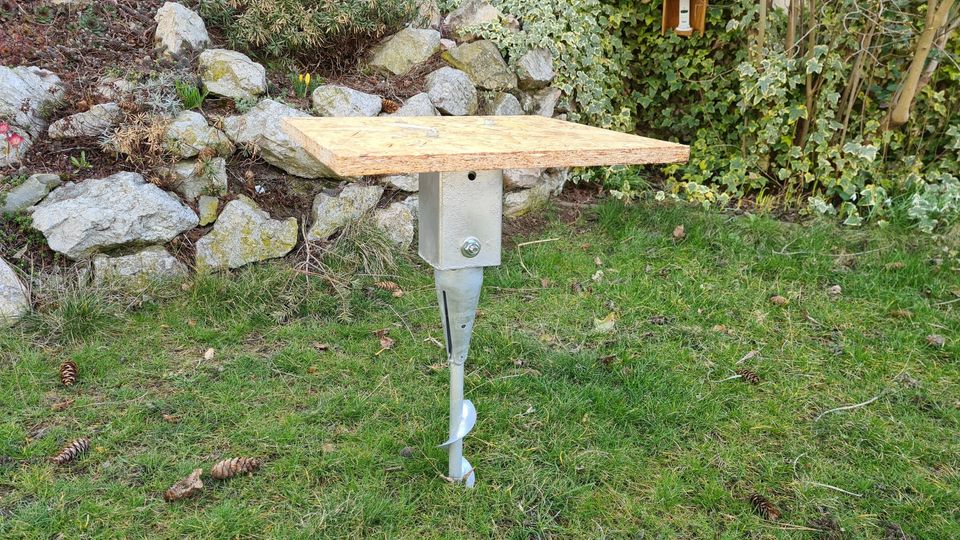
If your hive is heavy enough and you are not afraid that it will fall , do not mount it on a stand, but place it on a board . This must be strong enough and well attached to the base. Then place the hive on the board - in a bowl with sticky material.

If you attach the bowls to the board with screws, the bowl will stand well and will not move.

Ground screw with a plate for erecting a hive Photo: Ondřej Hercog 2021 (3)

Ground screw with a plate for erecting a hive
Photo: O. Hercog 2021
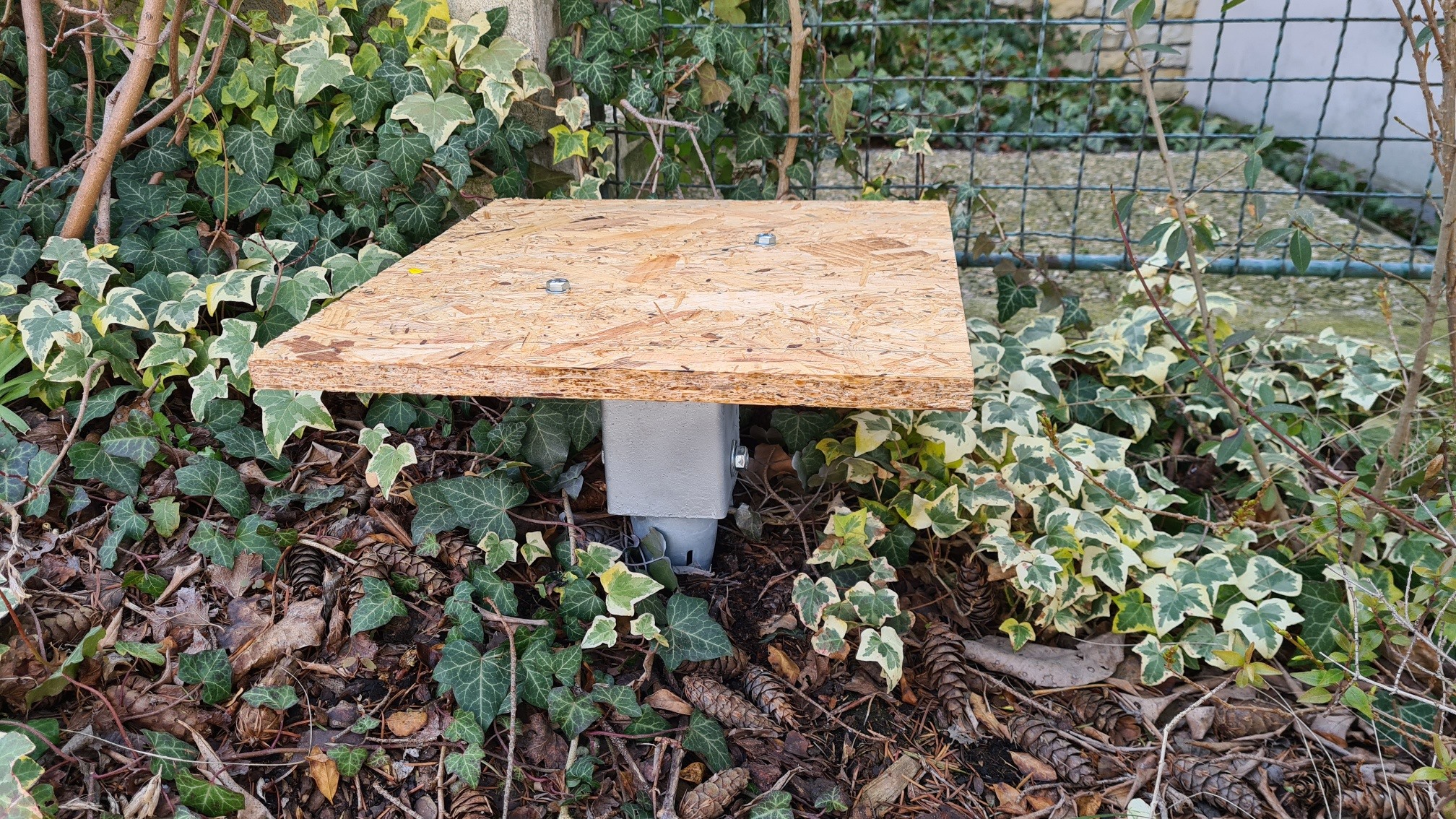
Ground screw with a plate for erecting a hive
Photo: O. Hercog 2021
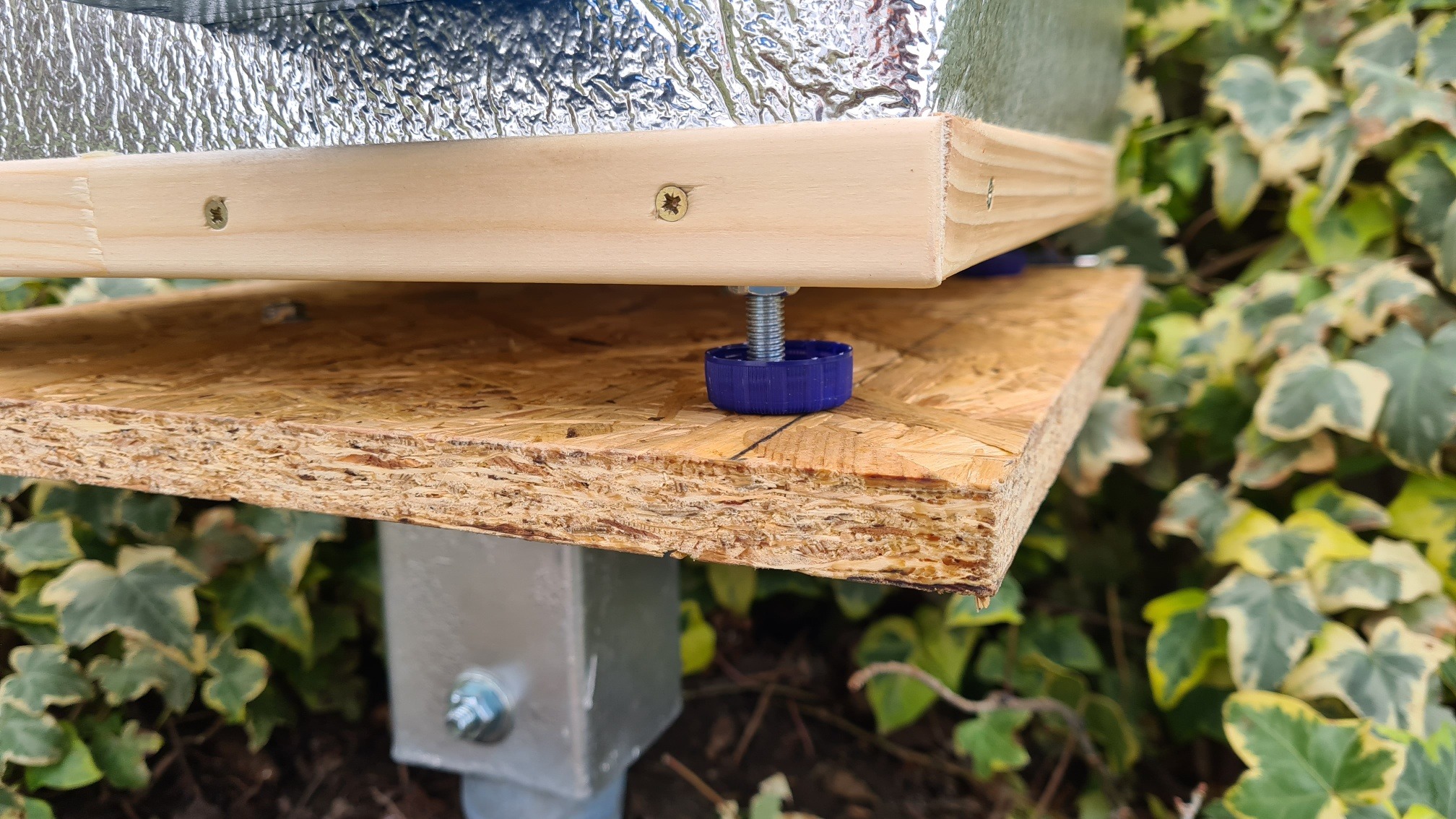
If you place the hive on screw legs, you can easily level . You can also support the rear legs of the hive when the little workers are having trouble opening the flap . Tilting the hive will make the flap open more easily. However, this should not be a permanent solution.

Don't forget to consider ant protection and check . This solution is safe, bumblebees won't stick to it. You can also just apply a strip of glue around the perimeter of the heel. However, there is a risk that a bumblebee will get tangled up...

Bumblebees PLUS - Ground screw with a plate for erecting a hive - Photo: Ondřej Hercog 2021 (2)

Ground screw with a plate for erecting a hive
Photo: O. Hercog 2021
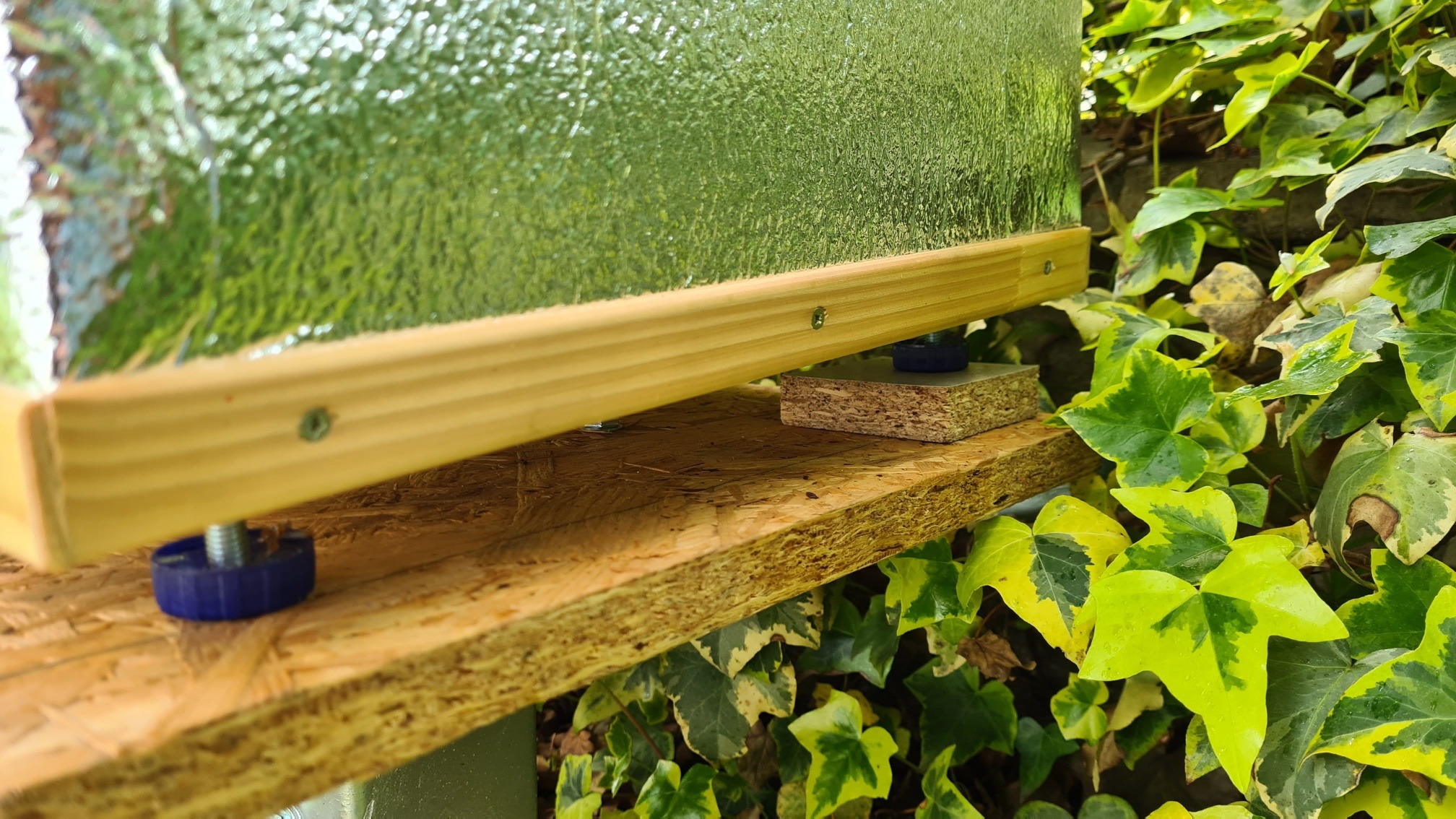
 

Bumblebees PLUS - Ground screw with a plate for erecting a hive - washer - Photo: Ondřej Hercog 2021 (8)

Ground screw with a plate for erecting a hive - washer
Photo: O. Hercog 2021
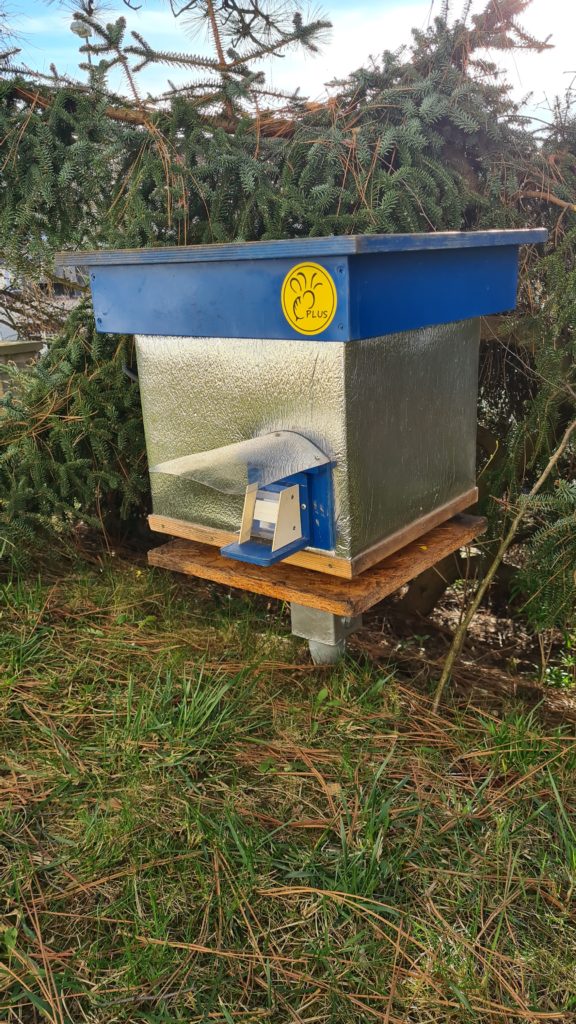
Bumblebees PLUS - Stand under fear - Photo Ondřej Hercog 2023 03 17 (4)

Shock stand
Photo: O. Hercog (17/3/2023)
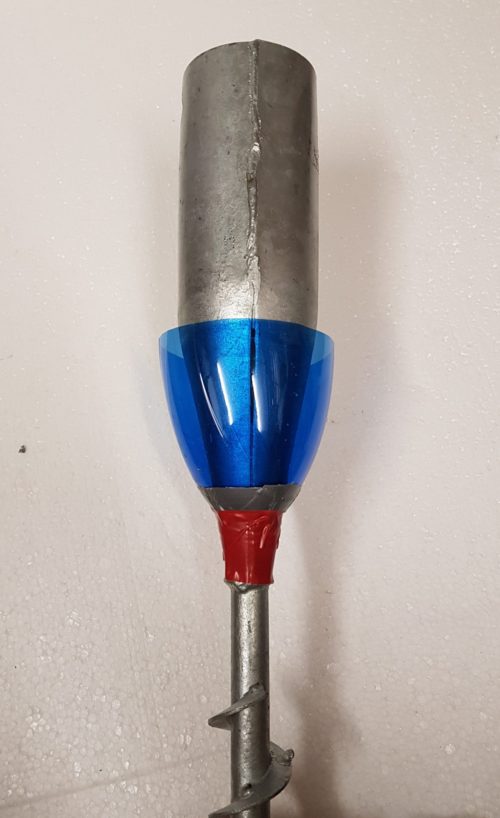
Protection against ants can be solved, for example, like this, but it is a significantly more complicated solution

Bumblebees PLUS - Hive on a stand made of ground screw protection against ants

A nest on a stand made of a ground screw,
protection against ants made of the neck of a PET bottle
Photo O. Hercog
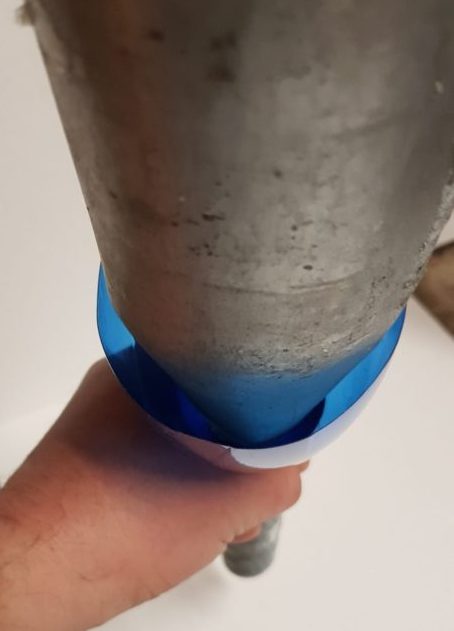
 

Bumblebees PLUS - Hive on a stand made of ground screw protection against ants

A nest on a stand made of a ground screw,
protection against ants made of the neck of a PET bottle
Photo O. Hercog
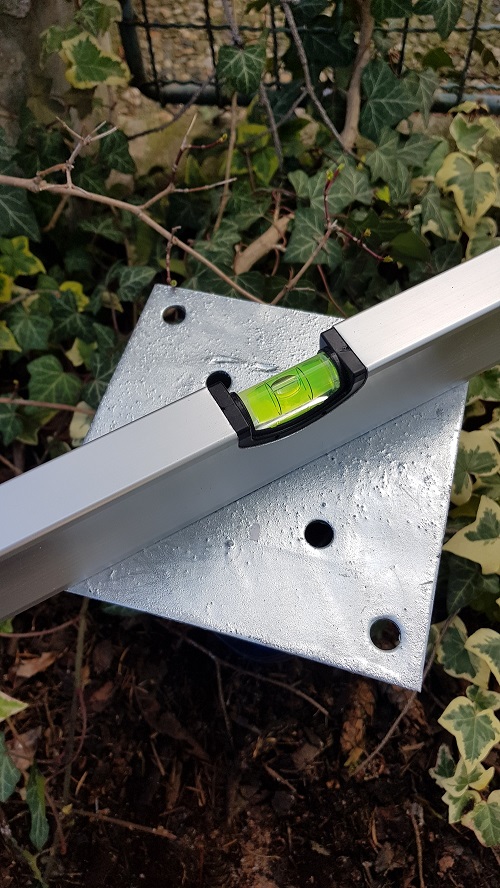
 

To make the whole solution work, level the frame – in both directions . A spirit level or a plate of water is useful for this.

Bumblebees PLUS - Hive on a stand made of a ground screw

A gap on the stand from the ground screw
, leveling to the plane
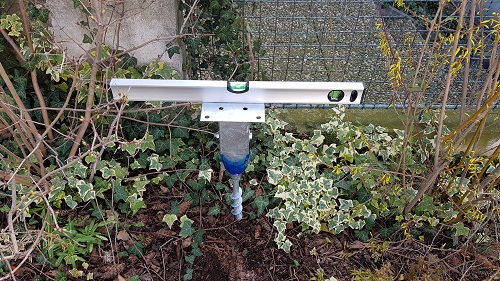
A gap on the stand from the ground screw
, leveling to the plane
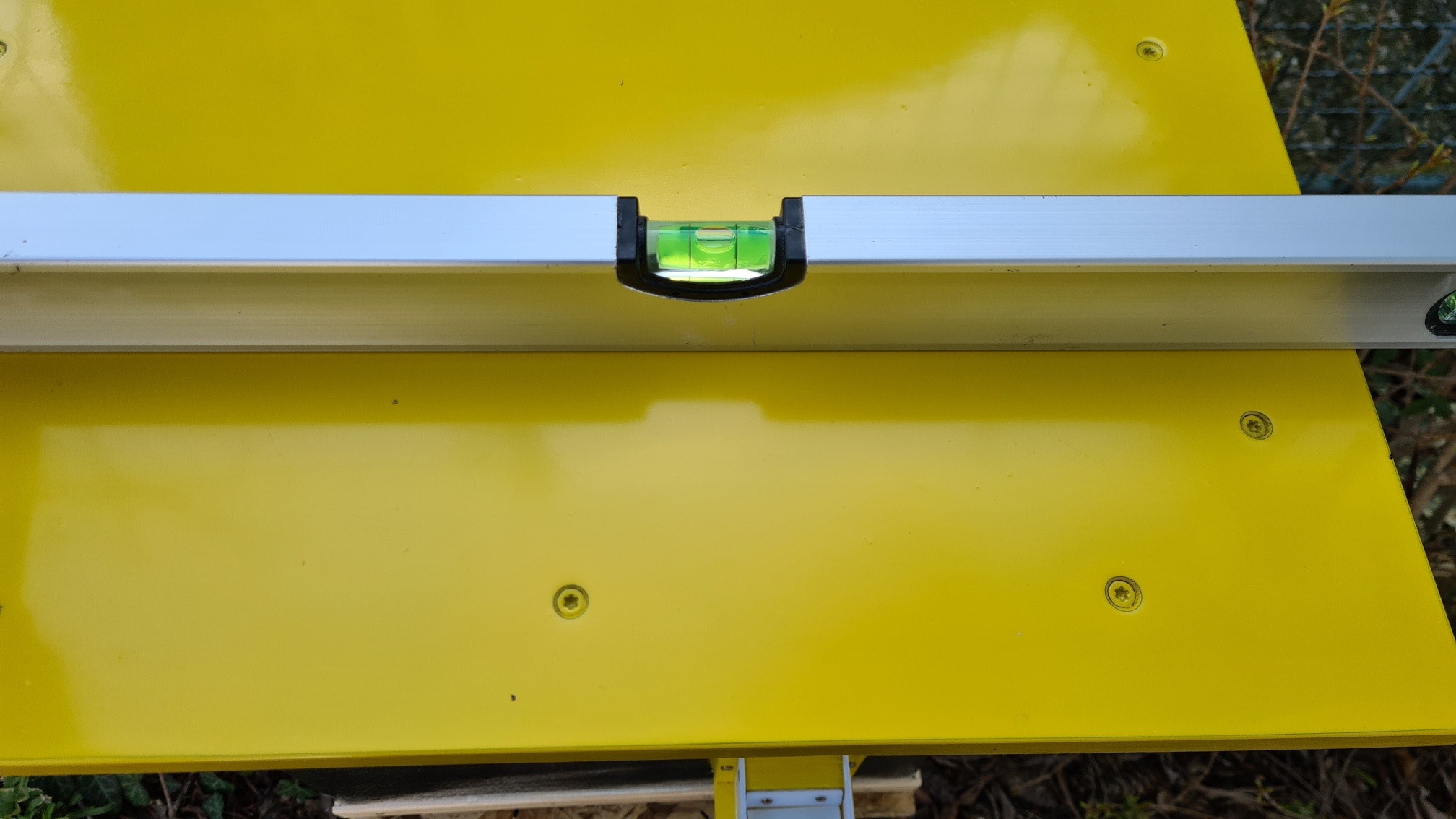
 

Bumblebees PLUS - Ground screw - leveling - Photo Ondřej Hercog 2021 (7)

Ground screw - leveling
Photo: O. Hercog 2021
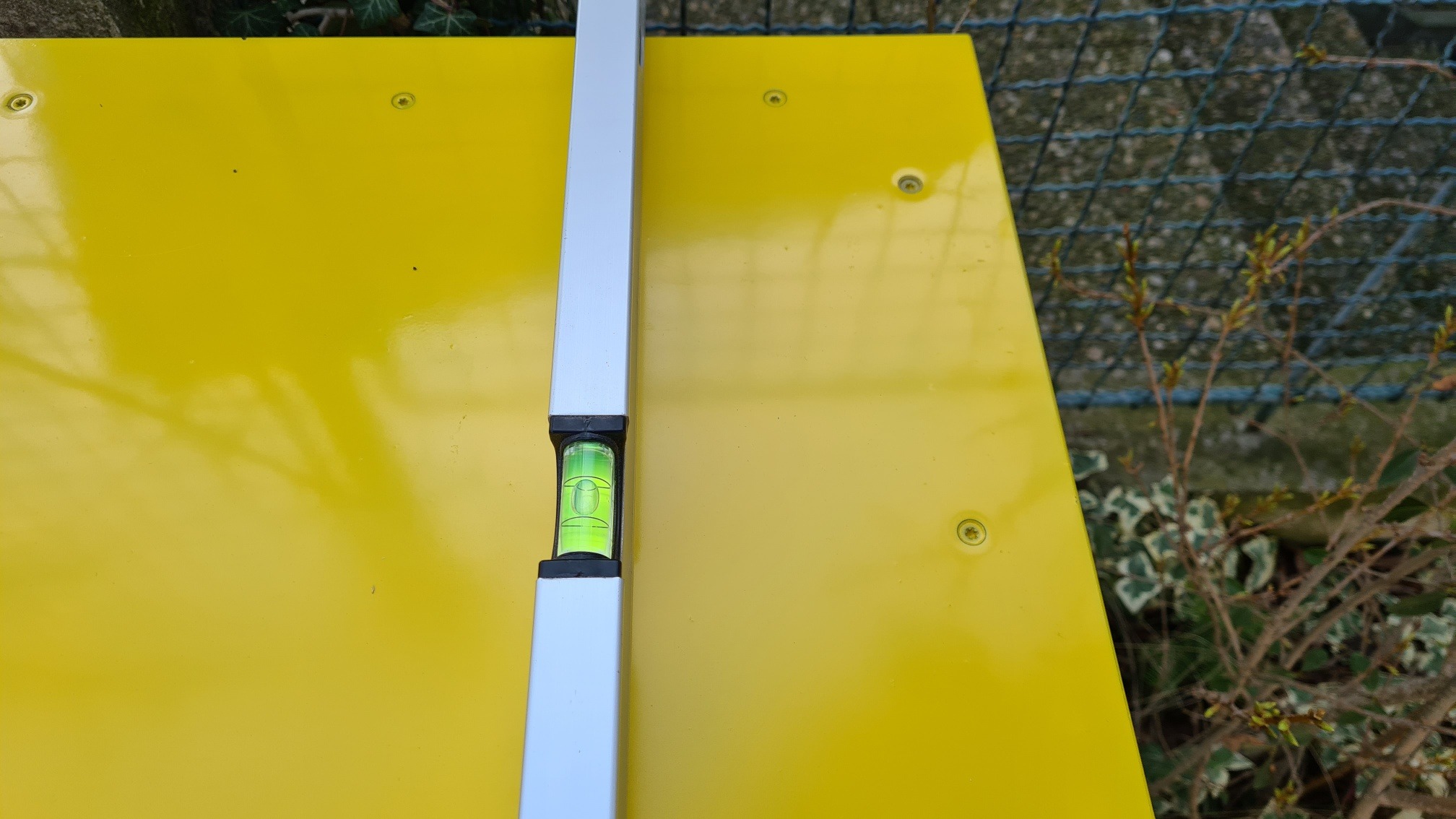
Ground screw - leveling
Photo: O. Hercog 2021