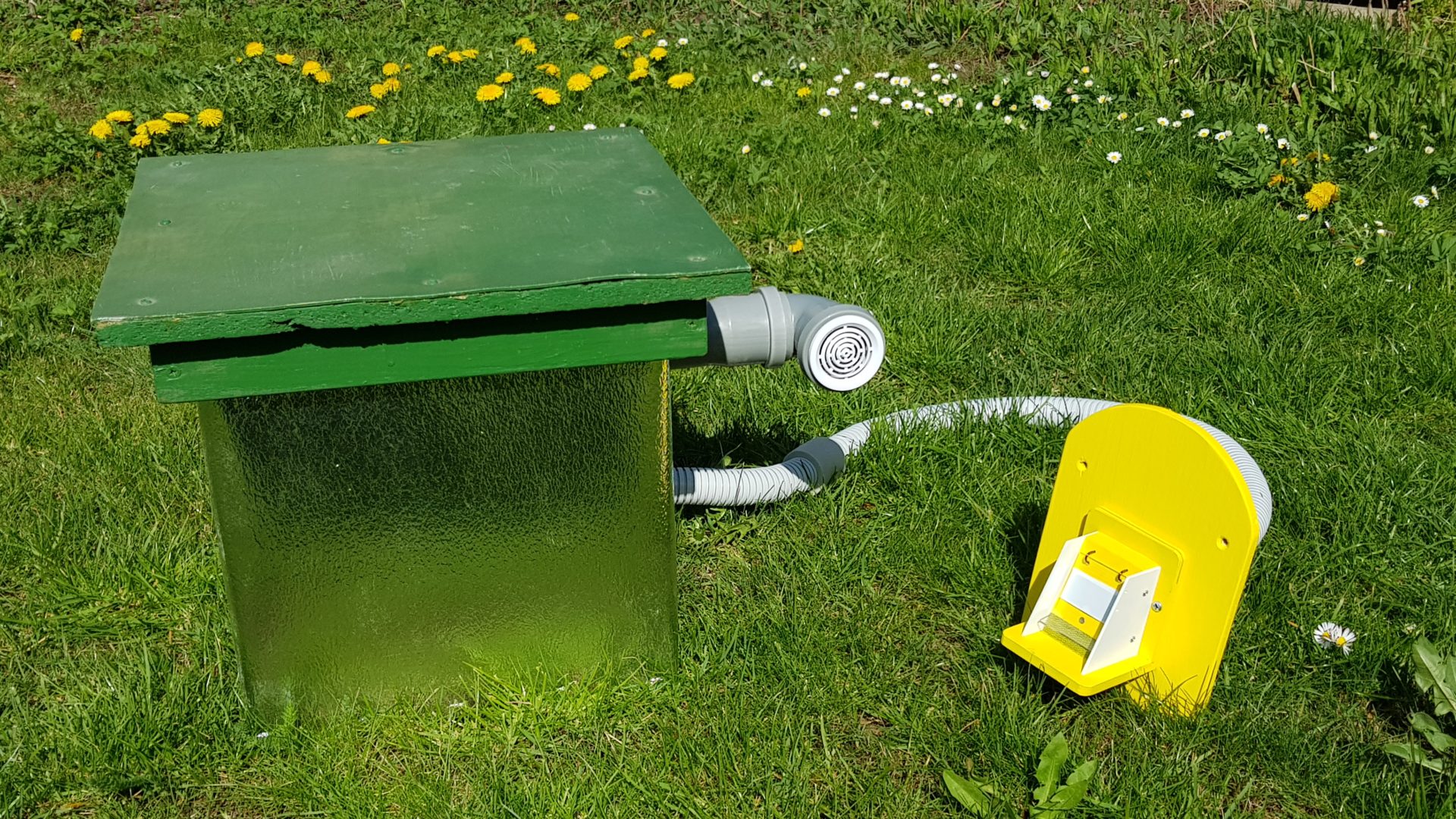
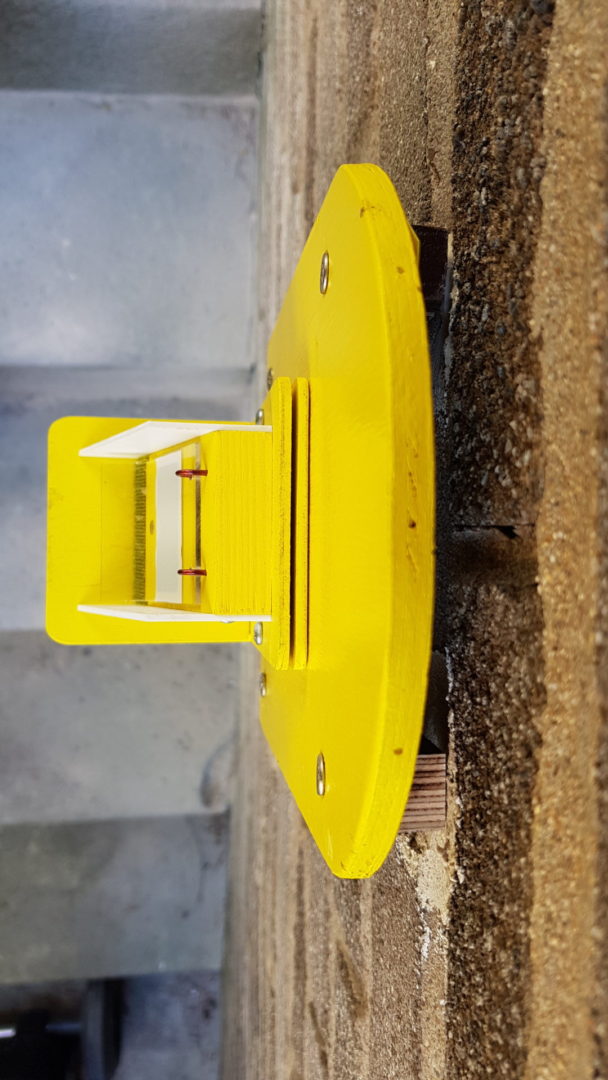
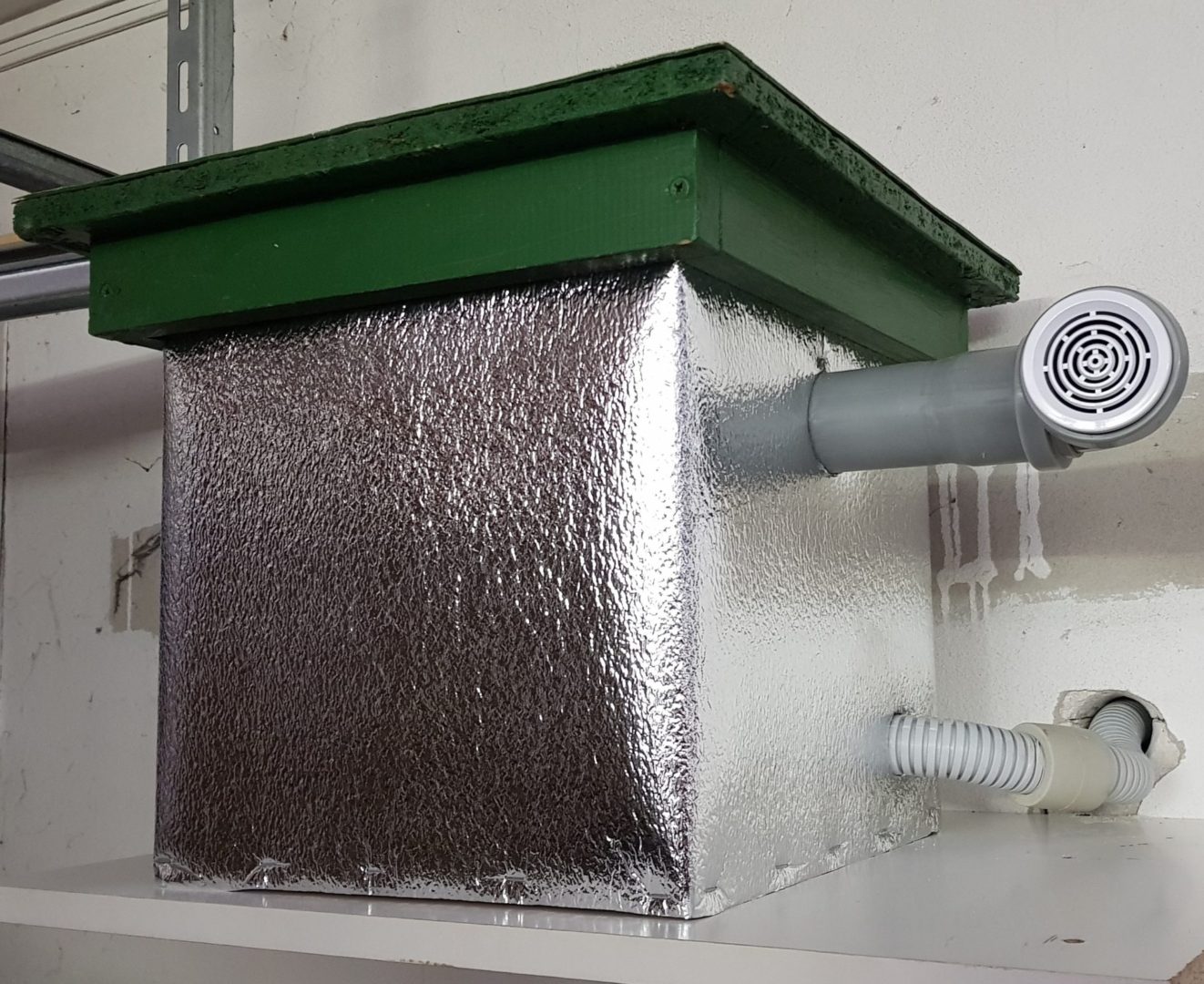
Interior recess - protective flap on the wall
Author of the solution: Ondřej Hercog (Čmeláci PLUS) using the idea of Eva Kalčíková
Tested in practice: YES since the 2019 season
Test results : verified, safe when following the production recommendations and usage methodology
Group of keepers for whom the tool is suitable: without restrictions
Justification : a protective flap, placed on the wall, will allow you to use a safe and thermally stable interior environment for placing a hive (bumblebee). When placing the flap on the wall, it is necessary to specifically address some details, such as protection against ants.
Last updated: 22/1/2021
Introduction
If you have the opportunity to place the hive indoors, don't hesitate .
A brick garage or the basement of a house seem to be very suitable places.
Such an environment provides the hive with a number of advantages. The main one seems to be a stable temperature , but also a relatively safe place where the hive itself is difficult for parasites rodents can find it there if it is lying on the ground or on a shelf where rodents could get to it.
The hive is connected to the exterior by a corridor and ventilates the interior regular cleaning of the protective flap all the more important .
Read more about hive placement HERE
Our solution is based on a design by Eva Kalčíková. She placed a bumblebee hive in the garage and placed the flap on the outside of the wall. To protect it from the rain, she used half of a plastic bucket. This created an elegant, rounded canopy .
We liked this solution and therefore we adapted it to this form.
Components

Wall flap - basic components
Photo O. Hercog (4/2020)
Solution description
Our description is brief and rather inspirational, the photos will tell you more.
Description
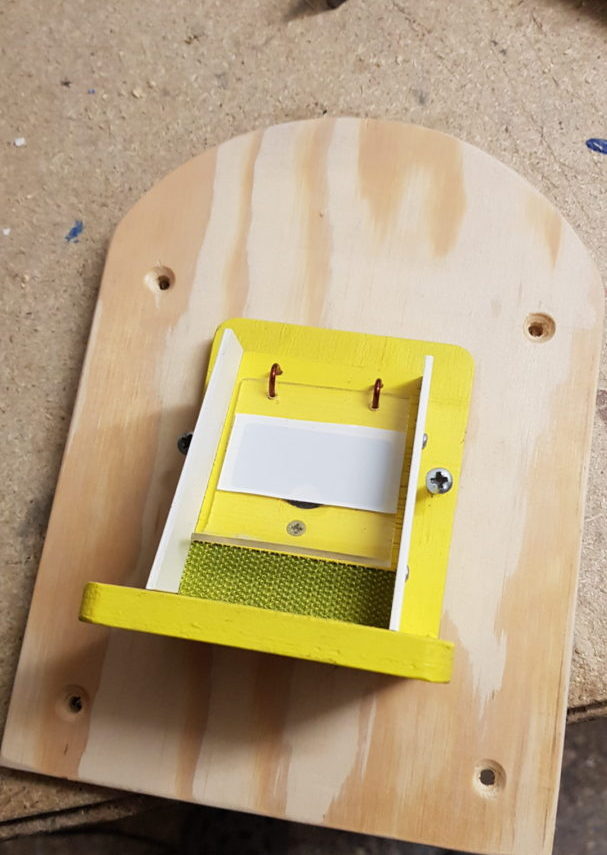
- The classic protective drop is placed on a base made of high-quality plywood. The thickness of the board should not be less than 10 mm.
- Material that is subject to temperature influences and deforms (chipboard, OSB board, etc.) is not suitable for the underlay
- The pad, like the protective flap, is painted with acrylic paint .
- The upper side of the pad is radiused .
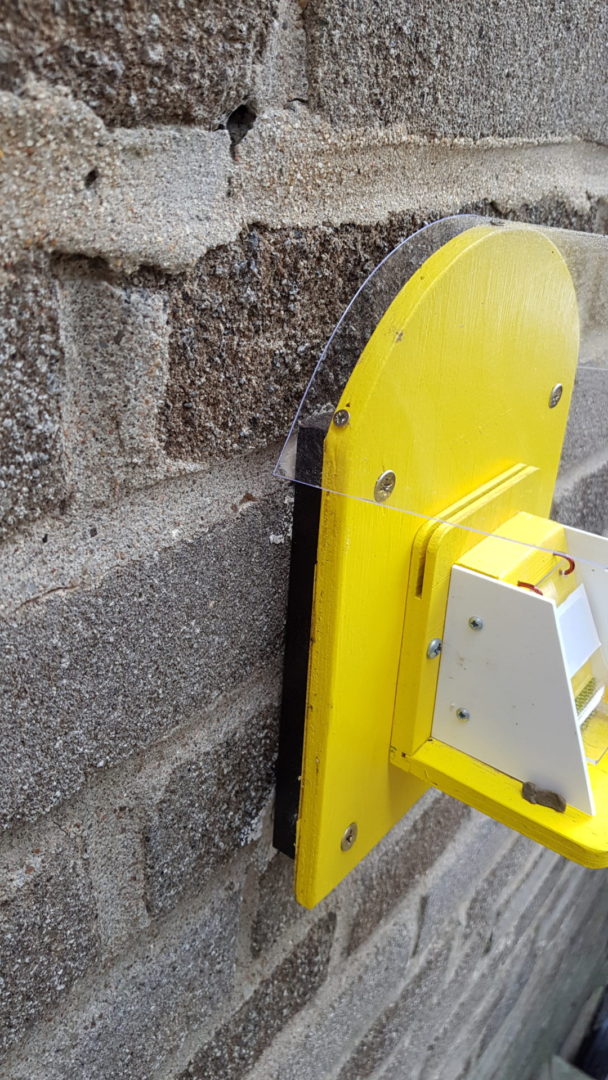
- canopy of 0.75 mm thick polycarbonate is attached to the radius with screws solution for a simple canopy.
Note: the canopy solution can also be used in this case. - The base is firmly attached with screws , there are dowels .
- To prevent ants from penetrating the flap or the hive, the pad only touches the wall in a few places and possible transitions are treated with insect glue (Chemstop).
- An alternative to Chemstop are adhesive strips , which are placed on the underside of the pad (facing the wall),
- The nest is placed indoors according to the same recommendations to ensure its accessibility .
- Even an indoor hive should have protection against parasites and ants (at least legs/base).
- The nest should be placed so that rodents cannot reach it – for example, on a separate shelf on the wall
- The flap is connected to the entrance corridor to the hive at the back.
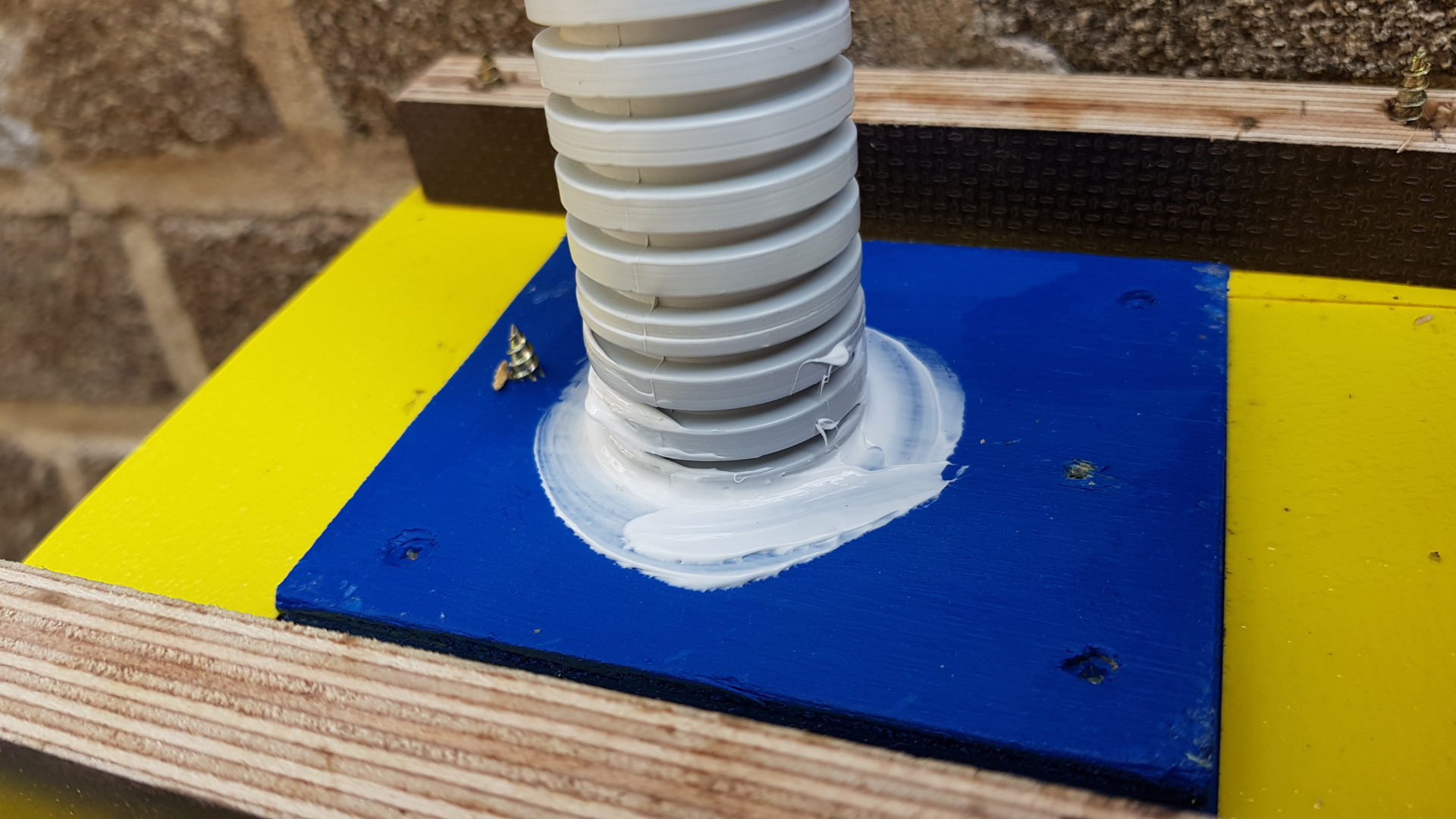
- The flap-to-floor connection is sealed with silicone.
- It is advisable to put a thin gasket under the flap , for example from the rest of Mirelon.
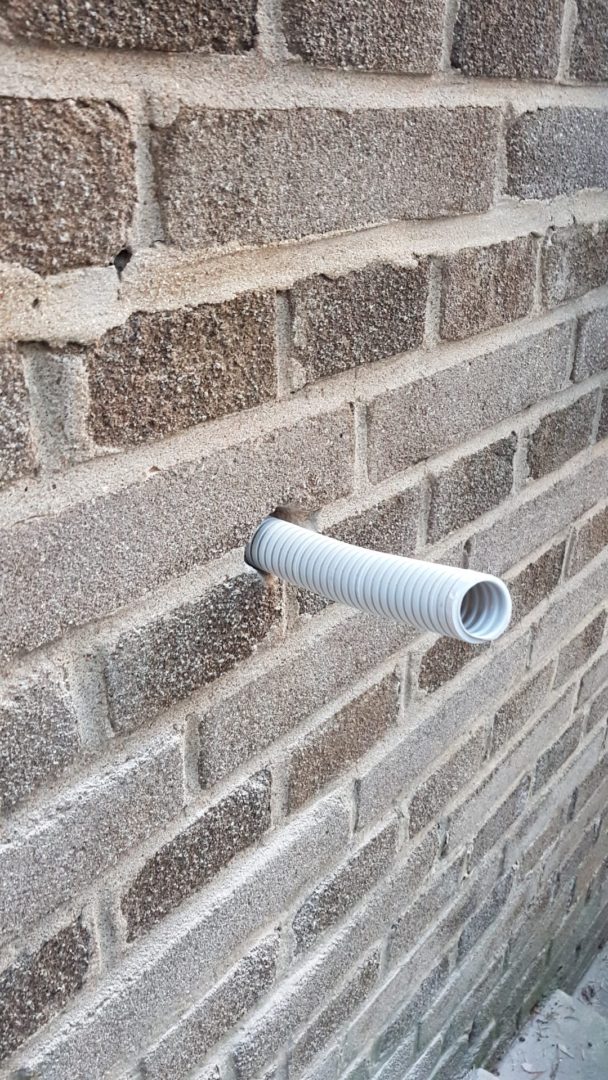
- The passage in the wall is sealed, for example, with mounting foam or plaster.
- It is not recommended to wall the pipe, due to possible later replacement or cleaning.
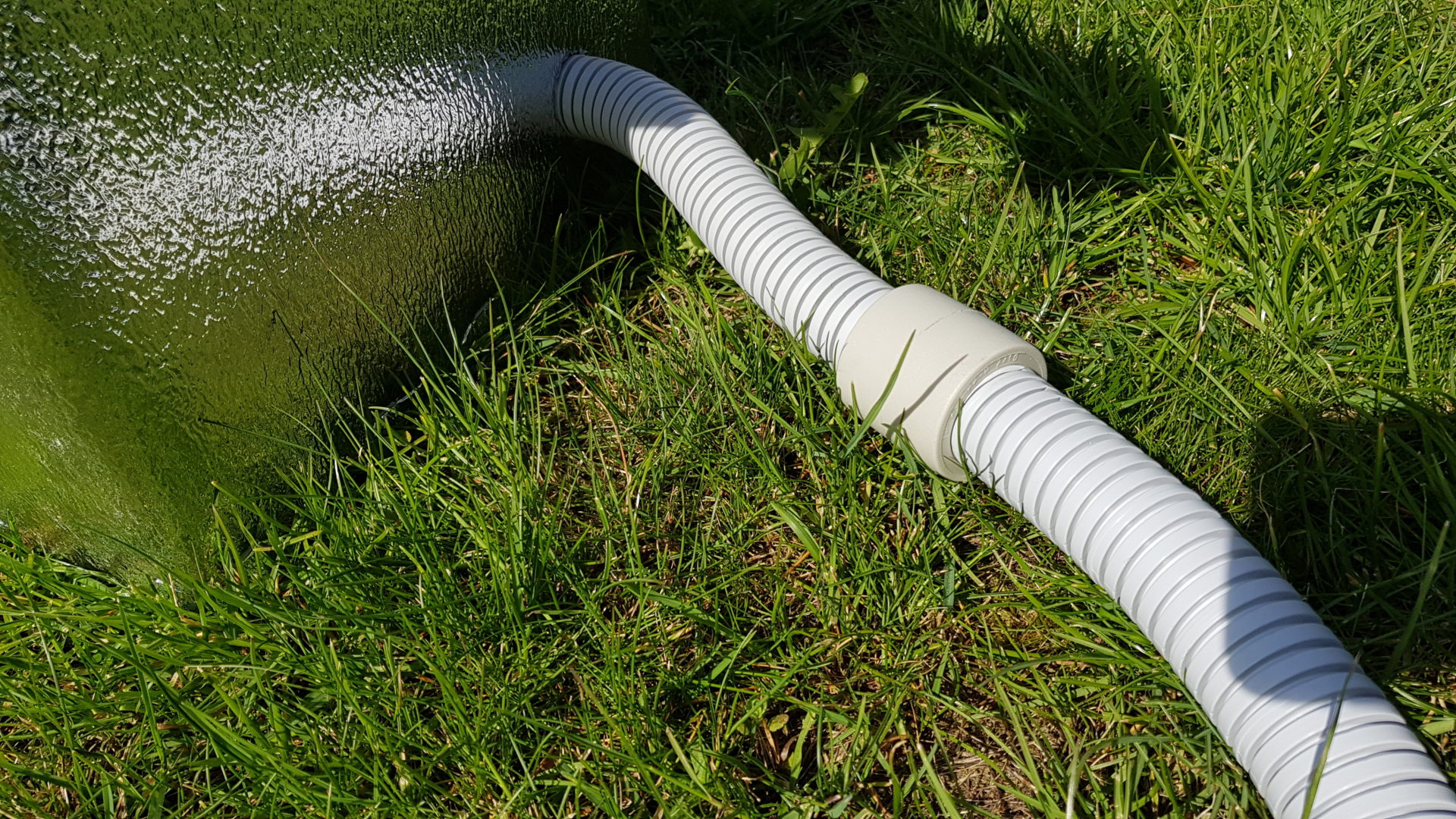
- The inner diameter of the corridor is 25 mm, if it does not exceed 80-100 cm. For longer lengths, it is advisable to increase it proportionally.
- Keep in mind that condensation and therefore it should not be curved , otherwise the bumblebees would not be able to get out.
- The corridor should be thoroughly cleaned , or replaced with a clean one .
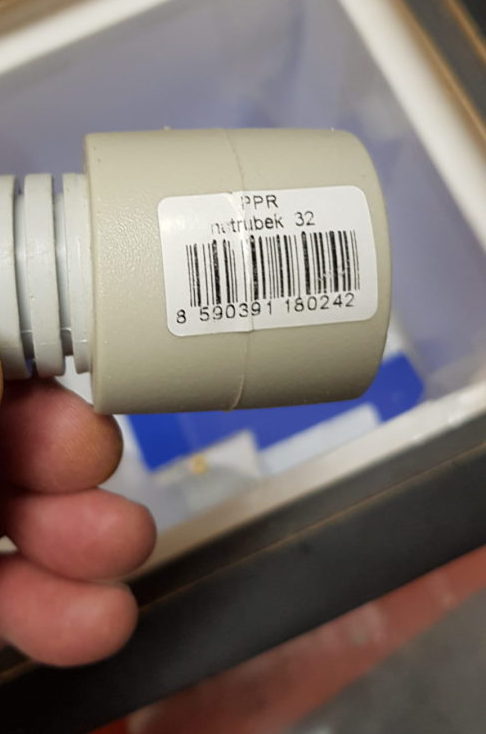
- The entrance corridor is interrupted in front of the hive and equipped with a suitable connector . The queen bumblebee is introduced through this.
- Ant protection should be checked and before the start of the next season .
- If you use a long outer corridor, you no longer need to have any in the hive . There is no point in making the bumblebees find their way to the nest.

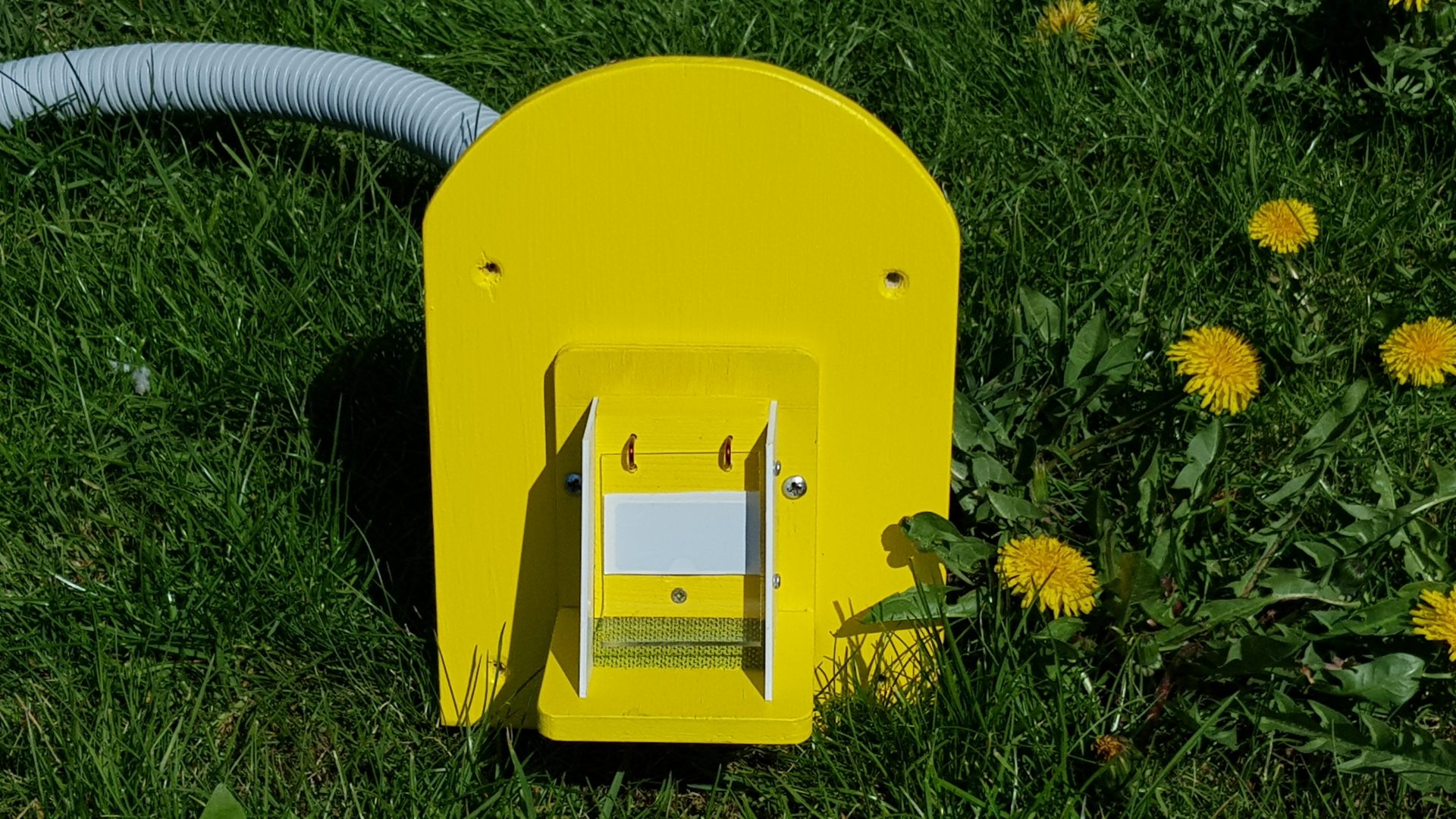
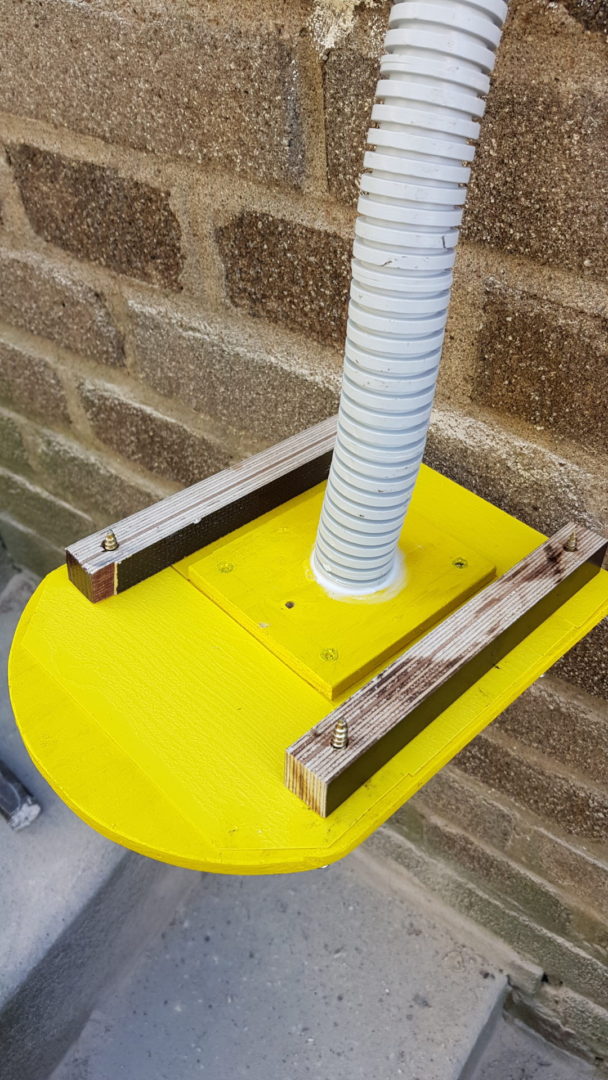
Flap on the wall - flap on the pad
Photo O. Hercog (4/2020)

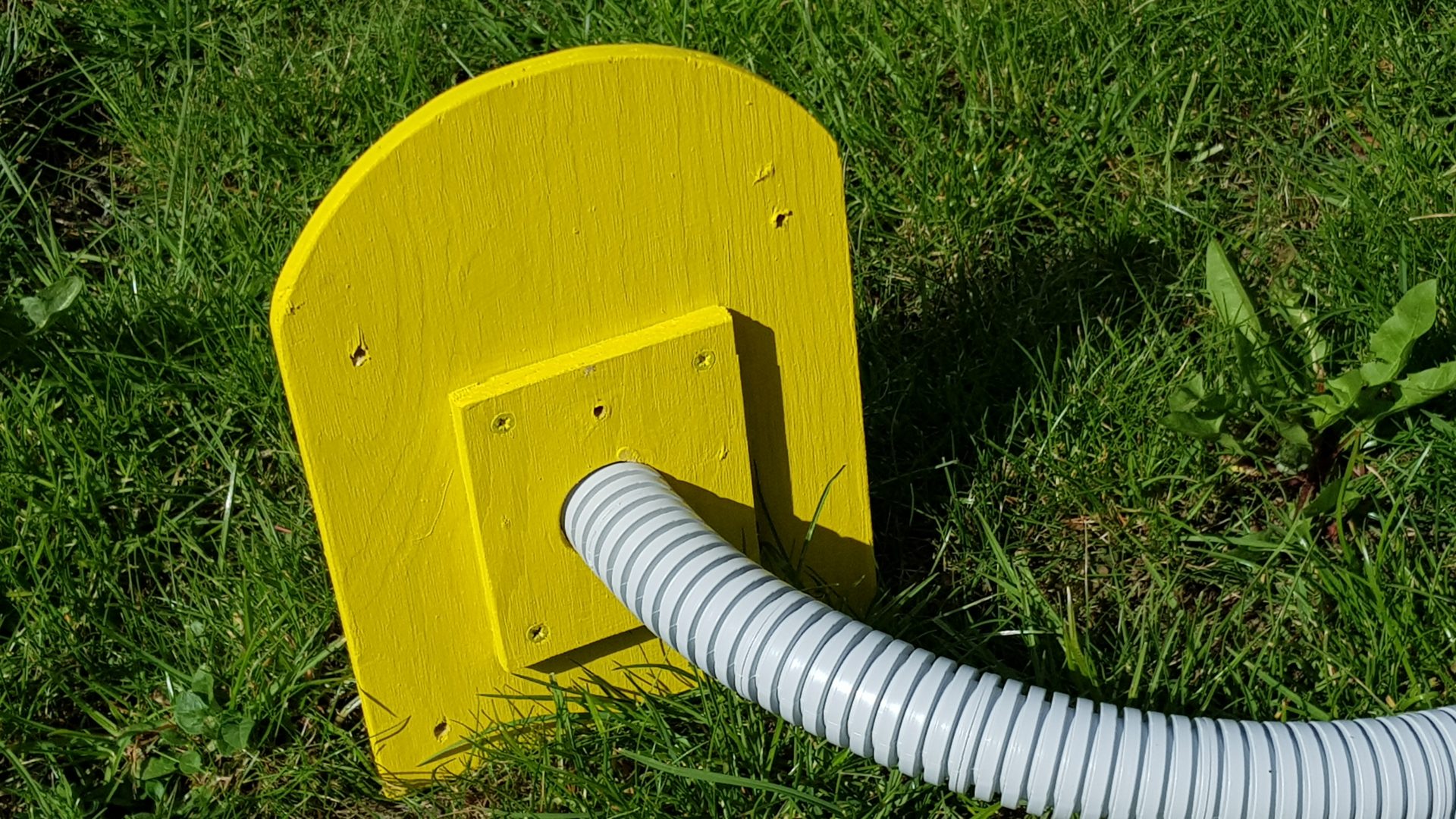
Flap on the wall - flap on the pad - back side
Photo O. Hercog (4/2020)

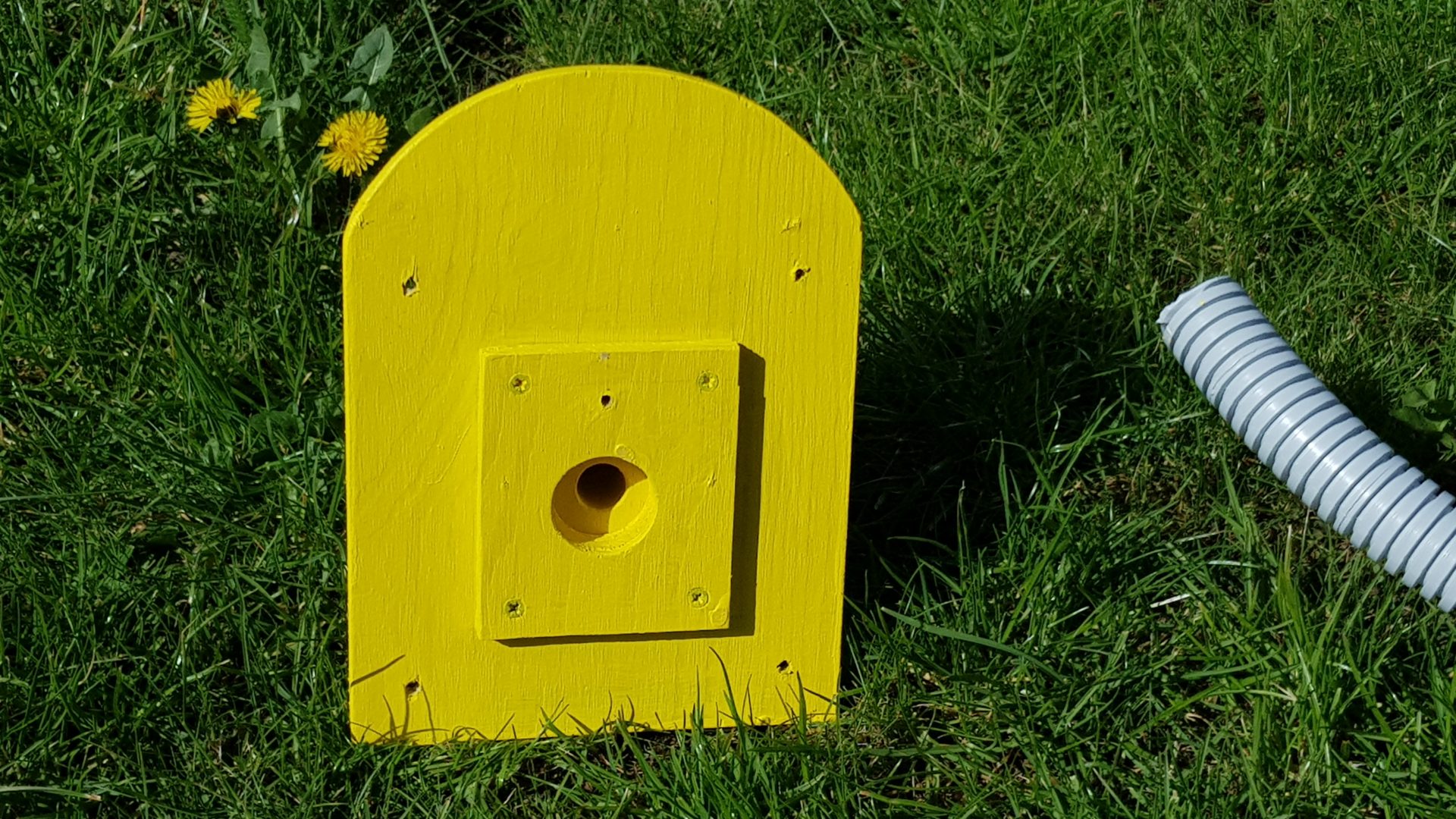
Flap on the wall - flap on the pad - back side
Photo O. Hercog (4/2020)

Flap on the wall - corridor connector
Photo by O. Hercog (4/2020)
Construction
The photos are indicative, so perhaps just a few notes
- Make sure the damper is positioned correctly so that it is easily accessible for routine maintenance, see damper description
- Remember that the flap works properly when it is well aligned (horizontally facing and the back side vertically)
- Ensure good sealing of the passage on the rear wall of the damper pad
- Be careful when dealing with ant protection
- Don't forget the entrance hall coupler . It should be secure, but easy to connect once you let the mother in.
- You can buy a coupler or make one from PVC pipe; no light should shine through the coupler!

Flap on the wall - Production of a mat for the flap
Photo O. Hercog (4/2020)

Flap on the wall - corridor connector
Photo by O. Hercog (4/2020)

Flap on the wall - preparation
Photo O. Hercog (14/2020)

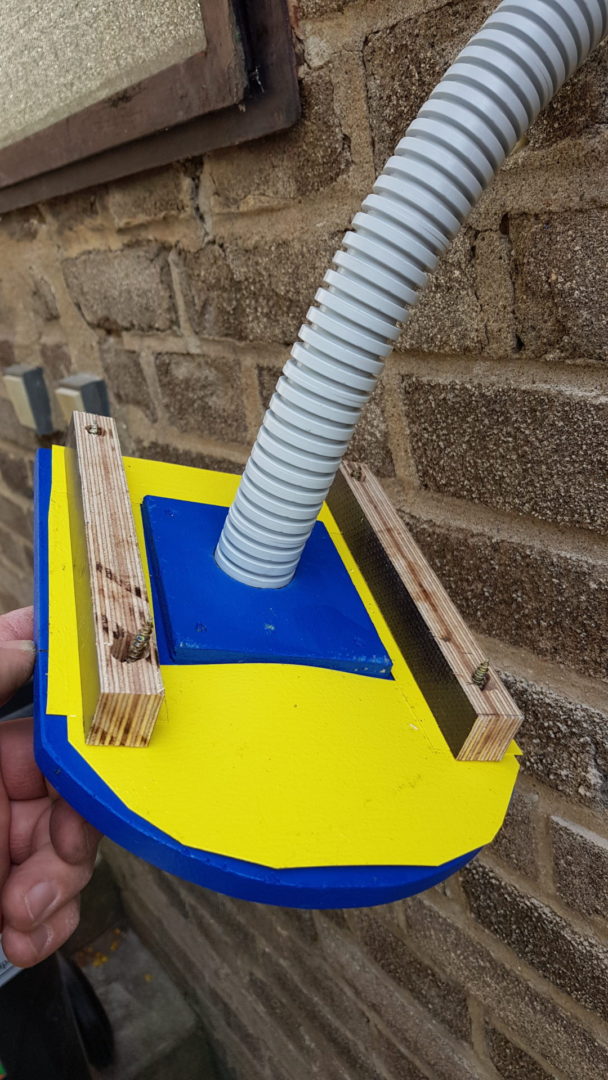
Flap on the wall - back of the pad and adhesive strips on it
Photo O. Hercog (4/2020)

Wall flap – back of the pad and adhesive strips on it (the pad is blue this time, the adhesive strips are yellow)
Photo O. Hercog (4/2020

Flap on the wall - sealing the corridor with silicone
Photo O. Hercog (4/2020)

Flap on the wall – side view
Photo O. Hercog

Flap on the wall - top view
Photo O. Hercog (4/2020)

Shock in the interior
Photo by O. Hercog (4/2020)
Flap location
One of the advantages of placing the damper on the wall is that you don't have to worry about sunlight as much. However, we recommend using a shady spot .
However, do not forget that you cannot move the hive . It is therefore necessary to choose a place where you will not normally encounter bumblebees. For example, a place at the entrance is not suitable . It is possible and you will get used to it. The question is, what will your neighbors and visitors …
Mother's settlement
Prepare the hive in the same way as other hives . Thermal insulation is also beneficial here. If the space is not very cold and the temperature does not fluctuate significantly, thermal insulation is not necessary.
The procedure for setting up the mother is described HERE .
When placing the queen in a hive with a long corridor, in this case as well, the procedure is similar .
The difference is that the queen with the inserter into the inlet opening of the flap, but into the open passage towards the hive .
Just wait until the queen enters the hive. Then connect the entrance passage (tube) with a connector . Do this carefully so as not to hurt the queen. So you have to be sure that she has really entered the hive. If you listen, you will hear it . The queen makes buzzing sounds as she passes through.
You leave the protective flap on the wall open and then use it the same way as with other hives.
Do not forget that when the queen settles, the ventilation hole must be closed , as well as the nest box must be well sealed. So leave it closed until the queen settles reliably and the temperature in the interior rises above 15C.
An alternative method is to introduce the queen through the flap . But then you need to close the entrance hole for 5 minutes and hope that the queen will walk through the corridor to the hive. Consider this method as an alternative, it is not very reliable.
If the mother does not leave the hive within an hour (i.e. does not fly out of the hatch), it is necessary to check that she is not "frozen" in it. The procedure is described in the description of the mother's placement.
All types of bumblebees can be housed in an indoor hive. However, some species do not like long corridors, such as the field bumblebee (Bombus pascuorum) and the fallow bumblebee (Bombus ruderarius). These species often live on the surface and do not use cavities, so they do not expect corridors, especially not long corridors. Nevertheless, even these types of bumblebees are successfully bred in indoor hives.
Placing the queen bee in an indoor hive is a little more complicated, but the extra work will be worth it.
Mothers' returns
Probably the only disadvantage of indoor hives is their static location . You cannot move the hive and that is a bit of a problem when the queens who have been born here return to it in the spring .
This problem can also be solved, and with a little patience and timely opening of the protective flap, conflicts when the mothers return can be prevented or minimized.