Sealing the hive for bumblebees

Improving hive sealing

The idea was given to us by: Mrs. Praxe.
Made and described by: O. Hercog.
Tested in practice: Yes - for many years.
Test results: verified, safe when following the production recommendations and usage methodology.
Group of breeders for whom the tool is suitable: without restrictions.
Justification: Easy to manufacture if the procedure is followed.

Published:  2/2022


Introduction

A critical , but often underestimated, place in a bumblebee hive is the contact surface between the hive body and the roof .

This location is really critical because if there is a leak, this is where parasites often enter the hive . They are attracted by the smell of the nest and it acts as a beacon.

A typical parasite that often enters through this is the Aphomia sociella or the parasitic wasp Melittobia acasta . For the Aphomia sociella, a few millimeters is enough, and for Melittobia, even a gap of less than a millimeter. The Melittobia wasp can even bite through the seal if it is not well-sealed and it can smell the nest. It can even bite through the clay lid to reach the larva of a solitary bee.

We wrote about the roof solution HERE

If you make a hive yourself at home , you often cannot do without sealing the contact area between the body. Some manufacturers of beehives (bumblebee hives) do not have any solutions. If the roof deforms, there is a problem right away.

Only one commercial manufacturer has a solution without a classic seal. The seal is there and consists of a smooth contact surface and a polyacrylate plate . In addition, its cavity is double-walled, which significantly reduces the risk of parasites penetrating.

In this section, we will look at sealing in more detail . We will describe how to easily make a solution that will significantly improve .

Seals and bumblebees

Bumblebees, if they are locked in a hive (at night, in bad weather, or because you close it), tend to look for and create another way out of the hive . They are probably just not educated enough and have no idea that parasites are looking forward to them...

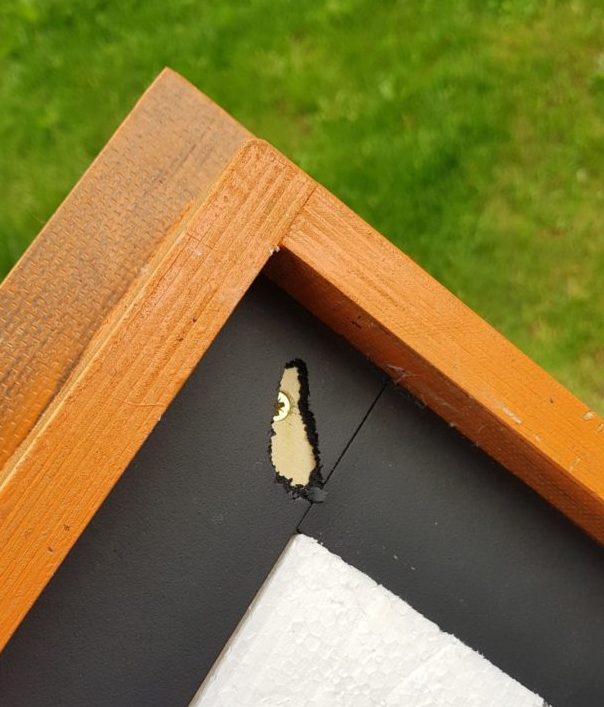
Quite simply - if they find a place with soft material , they try to bite their way out. Usually, they get into an unprotected polystyrene board or an unprotected gasket .

There are several types of commercially produced hives that have a polystyrene roof , and this is where the bumblebees get out and the parasites get in. I advised the manufacturer that this solution was not suitable, but he did not take any advice 🙁

You may find the simple solution described below .


Bumblebees PLUS - Seal under the roof bitten by bumblebees

Seal under the roof bitten by bumblebees
Photo: O. Hercog 2020

.
How to make a gasket?

If you have purchased a good shock absorber and you are convinced that everything is in order, you do not need to do anything. This also applies to the warranty if the shock absorber was purchased.

However, if you are making or have had a problem, we recommend taking the time to seal it.


Main principles

  • If the seal is tight , the smell of the nest will not escape and the parasites will not be interested in this place (unless it is contaminated by contact with the nest/bumblebees) - they will be more attracted by the ventilation.
  • A soft seal that can be pressed and that bumblebees cannot reach is suitable.
  • The seal should also not be high. A good height is up to 5 mm , which will be pressed in.
  • If there is a seal, it should be wider to reduce the risk of being bitten by the wasp Melittobia acasta, but also by bumblebees
  • It is better to make a double seal than a single seal.
  • The seal must be checked to ensure it is functional throughout the season.

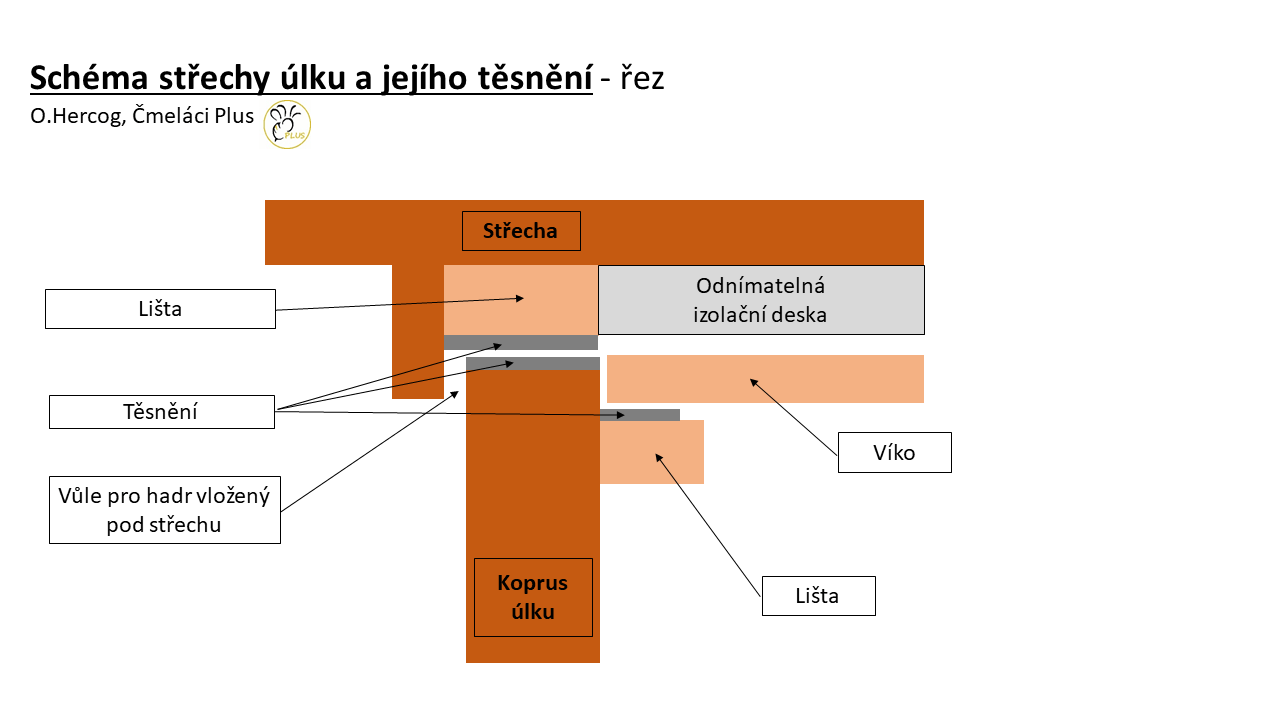
Solution diagram

Bumblebees PLUS - Hive roof seal and cover lid - Fig. Ondřej Hercog 2022 02 23

Hive roof seal and cover
Fig. O. Hercog 23/2/2022
Procedure

The following instructions are general, without dimensions - adjust them according to the material you will use.

We attach illustrative photos


We recommend combining the solution with a protective net = a cover for seating (spring) and a protective net for the rest of the season

Production and assembly
  • Insert an inner frame made of wooden slats
    – in our case we used spruce slats 25 x 18 mm
  • Make a lid for the hive
    – use high-quality plywood that is resistant to moisture, or paint the plywood with a non-toxic, paintless varnish intended for outdoor use.
  • Provide the lid with a simple handle
    , you can use fabric tape for example
  • Position the battens so that you can stick the seal on them and then place the hive lid so that the roof can be properly seated
    – adjust the dimensions according to the materials you have available
  • Attach the slats with screws to the walls of the hive so that they hold firmly
  • Seal any leaks , preferably with construction silicone sealant.
  • the surface of the slats with sandpaper, as well as the edges that point into the hive.
    You will appreciate this when maintaining the hive.
  • Smooth the upper edge of the hive body with sandpaper and seal any cracks with silicone.
  • Let the silicone dry according to the instructions.
  • Clean the surfaces where you will stick the seal
  • Glue the seal onto the strip insert – be careful not to glue the seal all the way to the edge where bumblebees will be present!
  • stick the seal on the top side of the body
  • Make sure there are no gaps in the gasket joints – the best way to achieve this is to make the gasket a few mm longer than the length where you will stick it – test it 
  • insert the cover
Test the solution and address deficiencies
  • Test the fit of the cover plate to see if it is tight. If it is not tight or the fit of the roof is not good, repair is needed
  • tests the roofs that have settled
  • AND IT IS!

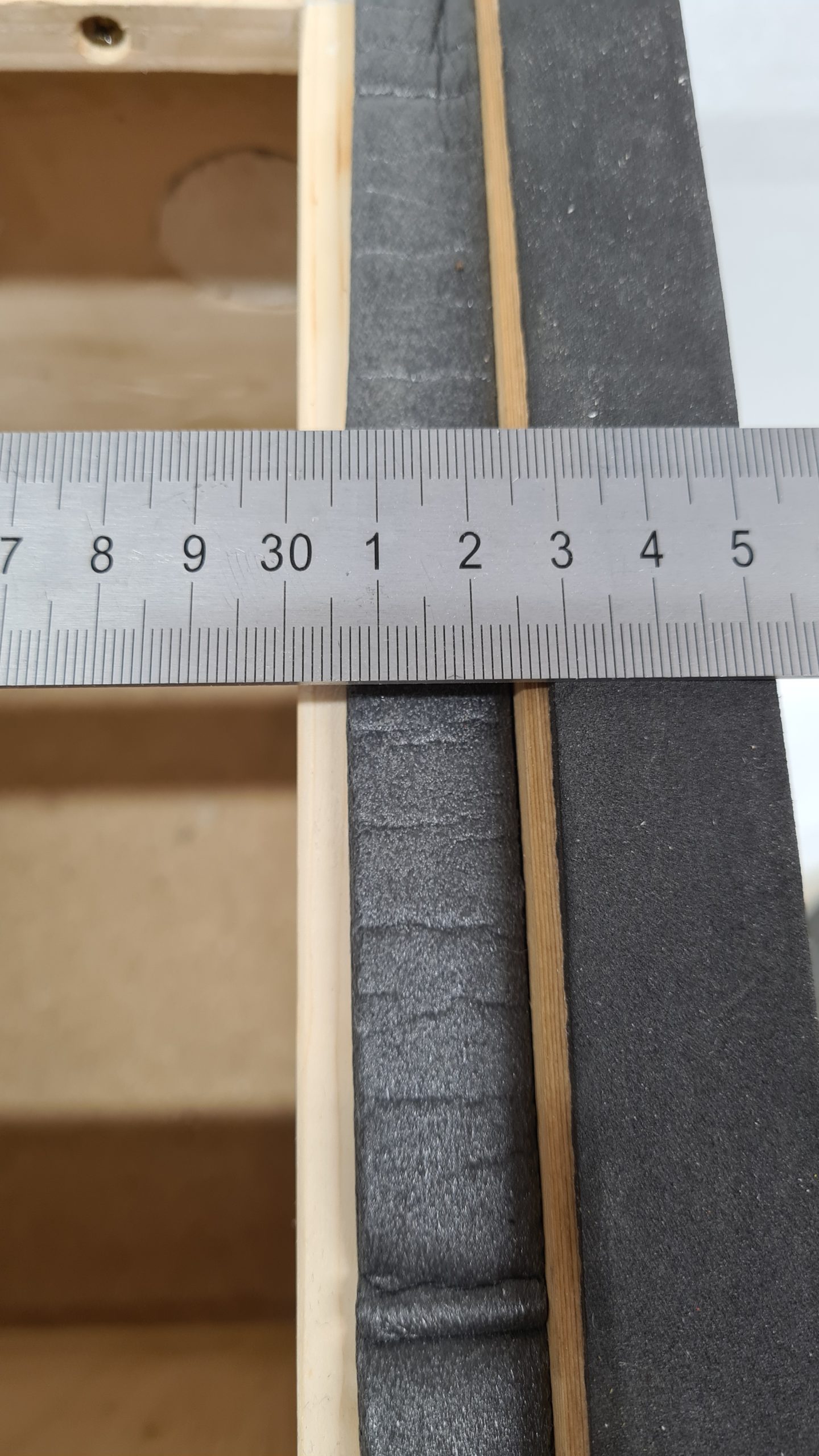
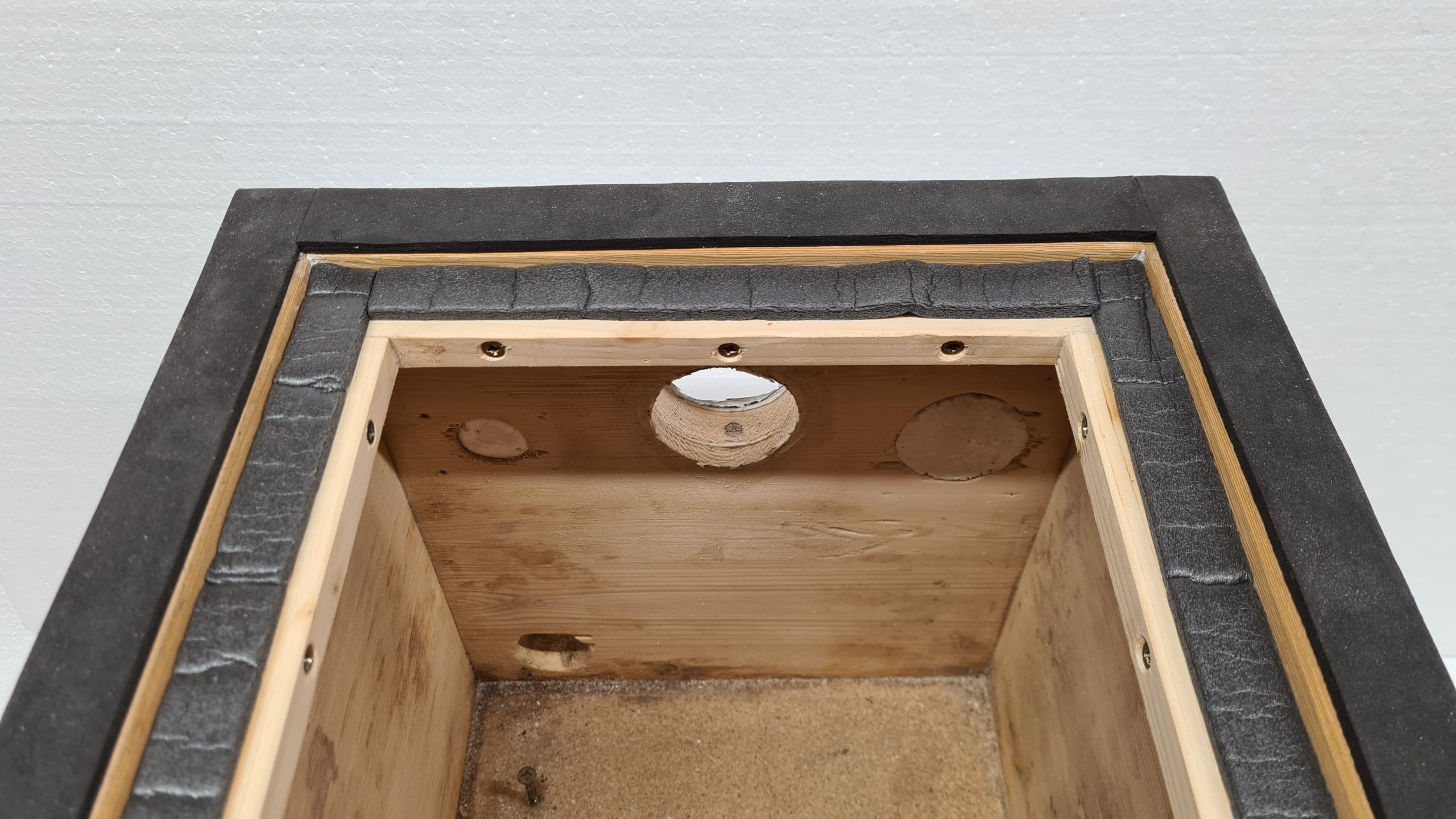
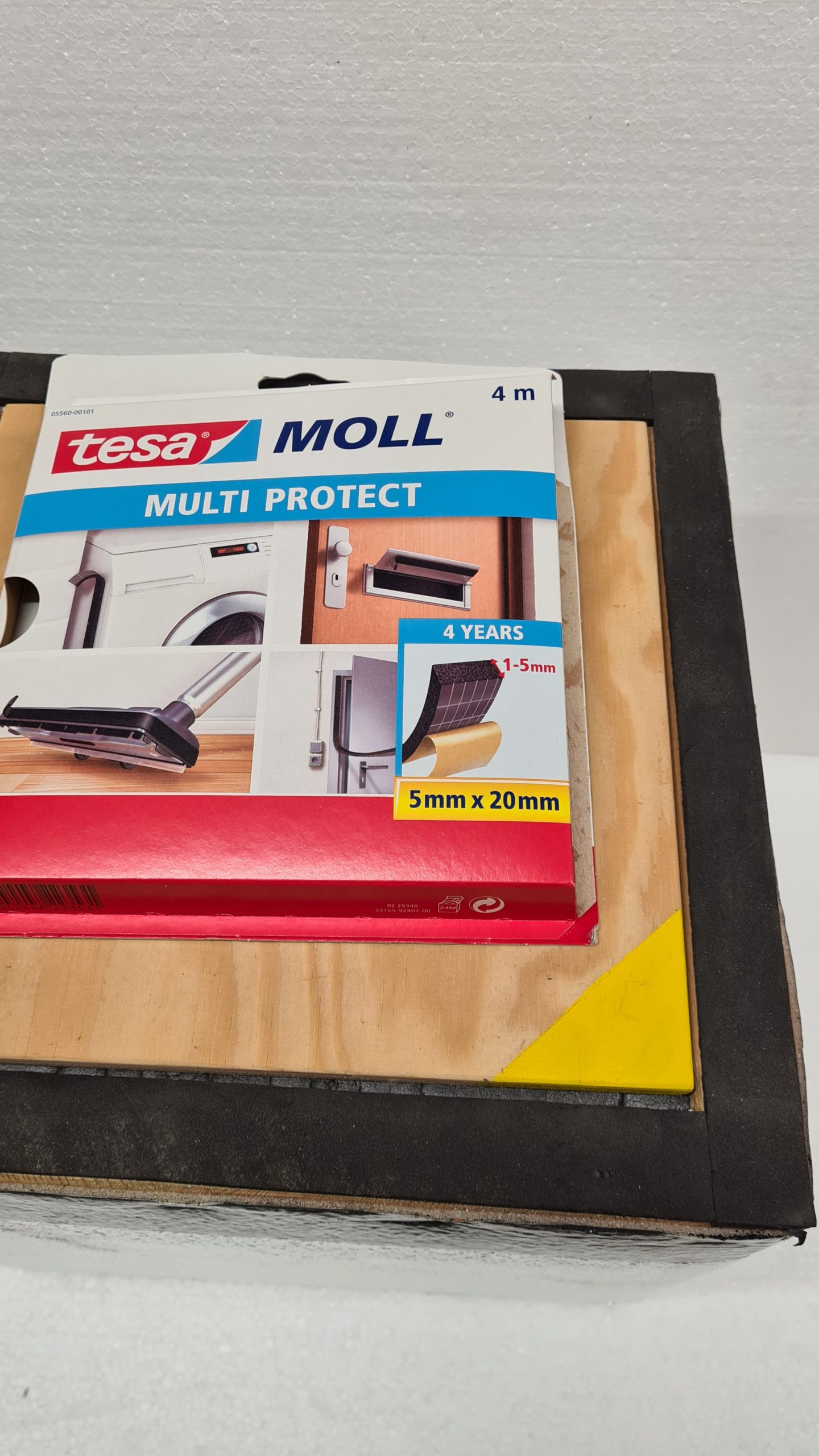
The photos show the Tessa gasket. It looks wrinkled, but works great once it's put under load. 

Gaskets and other recommended materials can be found HERE
 

The photos show the inserted strips and glued seals.

Where there is a risk that bumblebees will get to the seal, we recommend not sticking the seal all the way to the edge !

Seal
Photo: O. Hercog 23/2/2022

Seal - detail
Photo: O. Hercog 23/2/2022
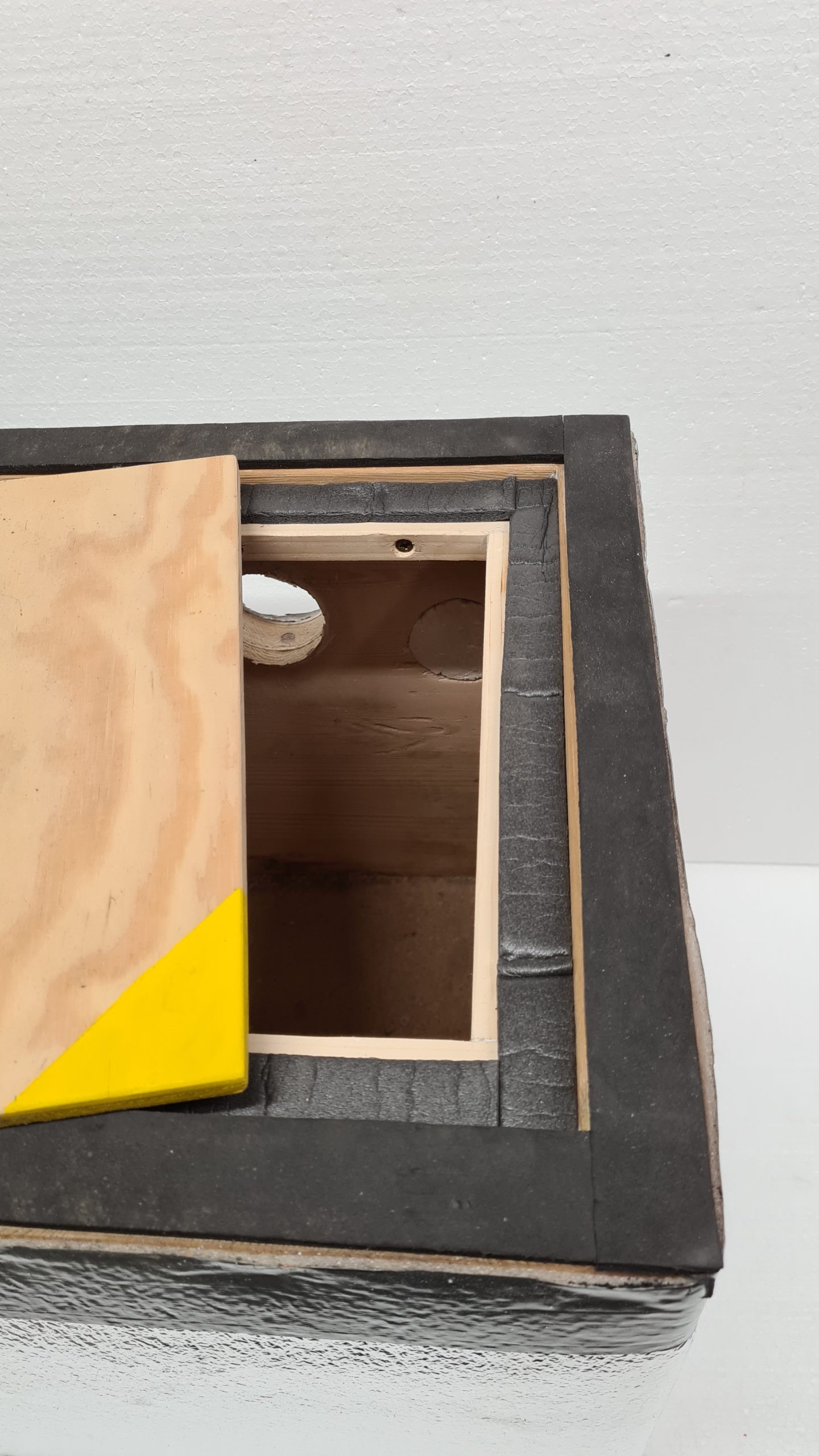
Gasket and cover lid
Photo: Photo: O. Hercog 23/2/2022
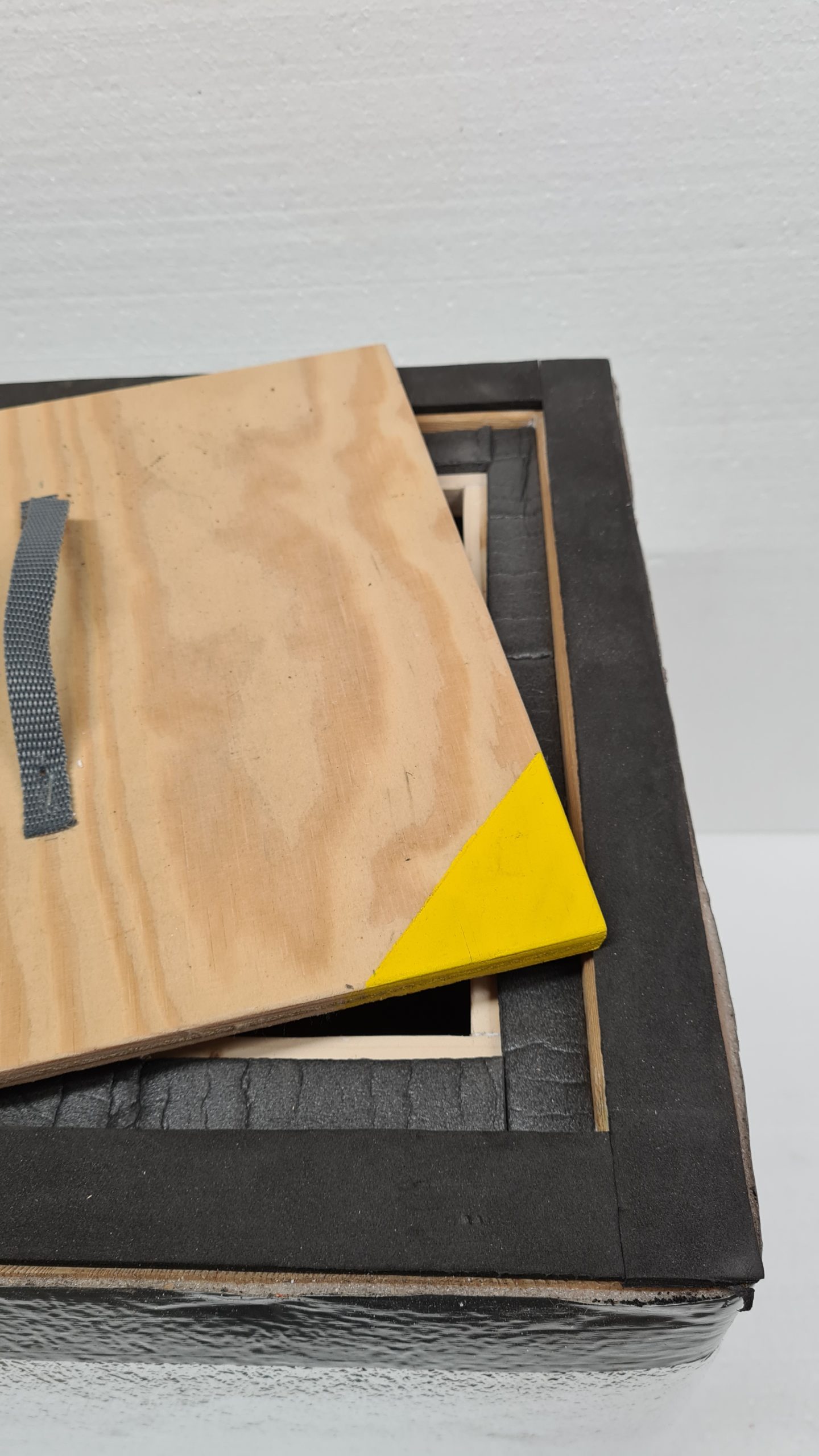
Bumblebees PLUS - Seals - Photo Ondřej Hercog 2022 02 23

Gasket and cover lid
Photo: O. Hercog 23/2/2022
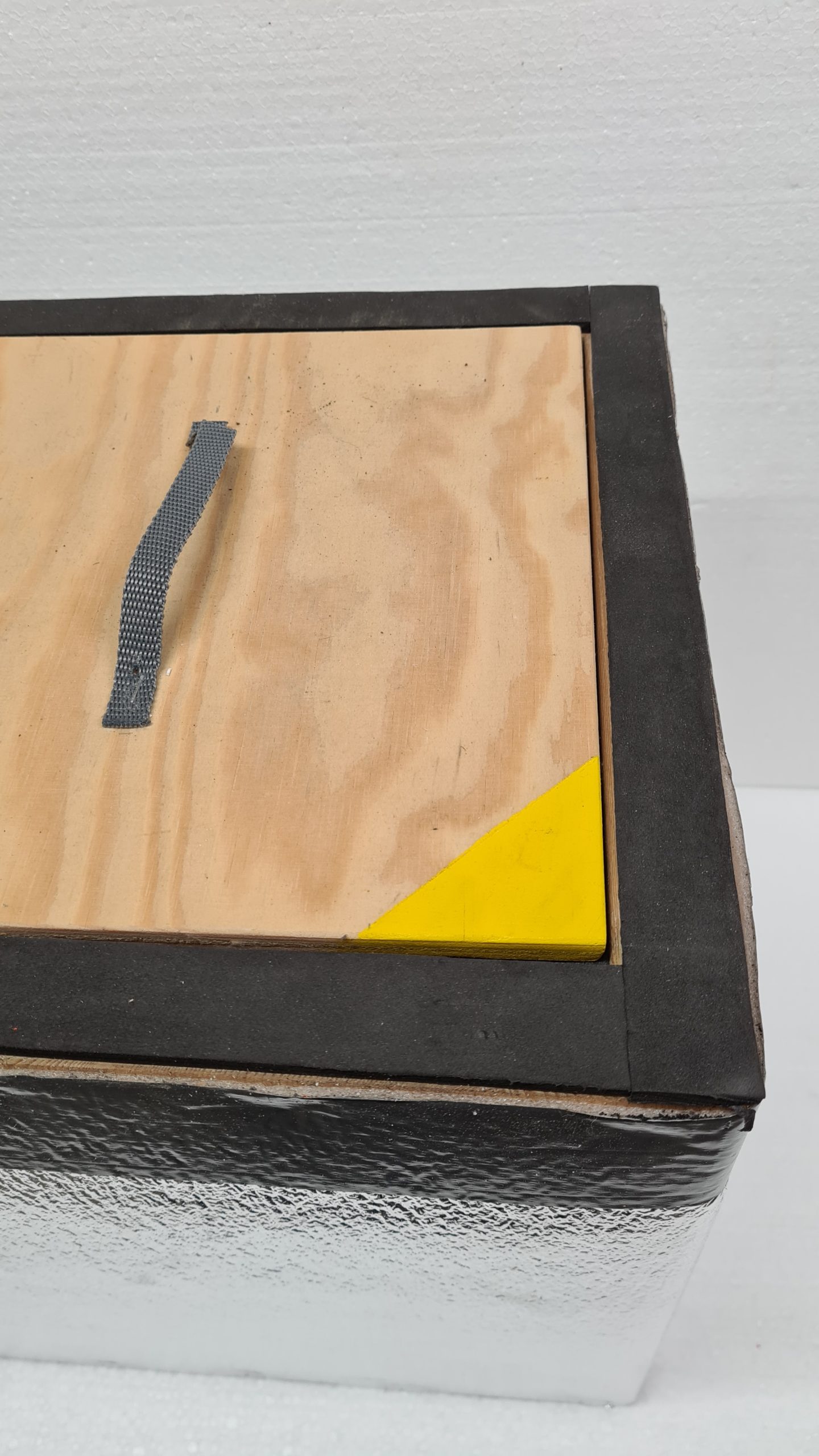
Gasket and cover lid
Photo: O. Hercog 23/2/2022
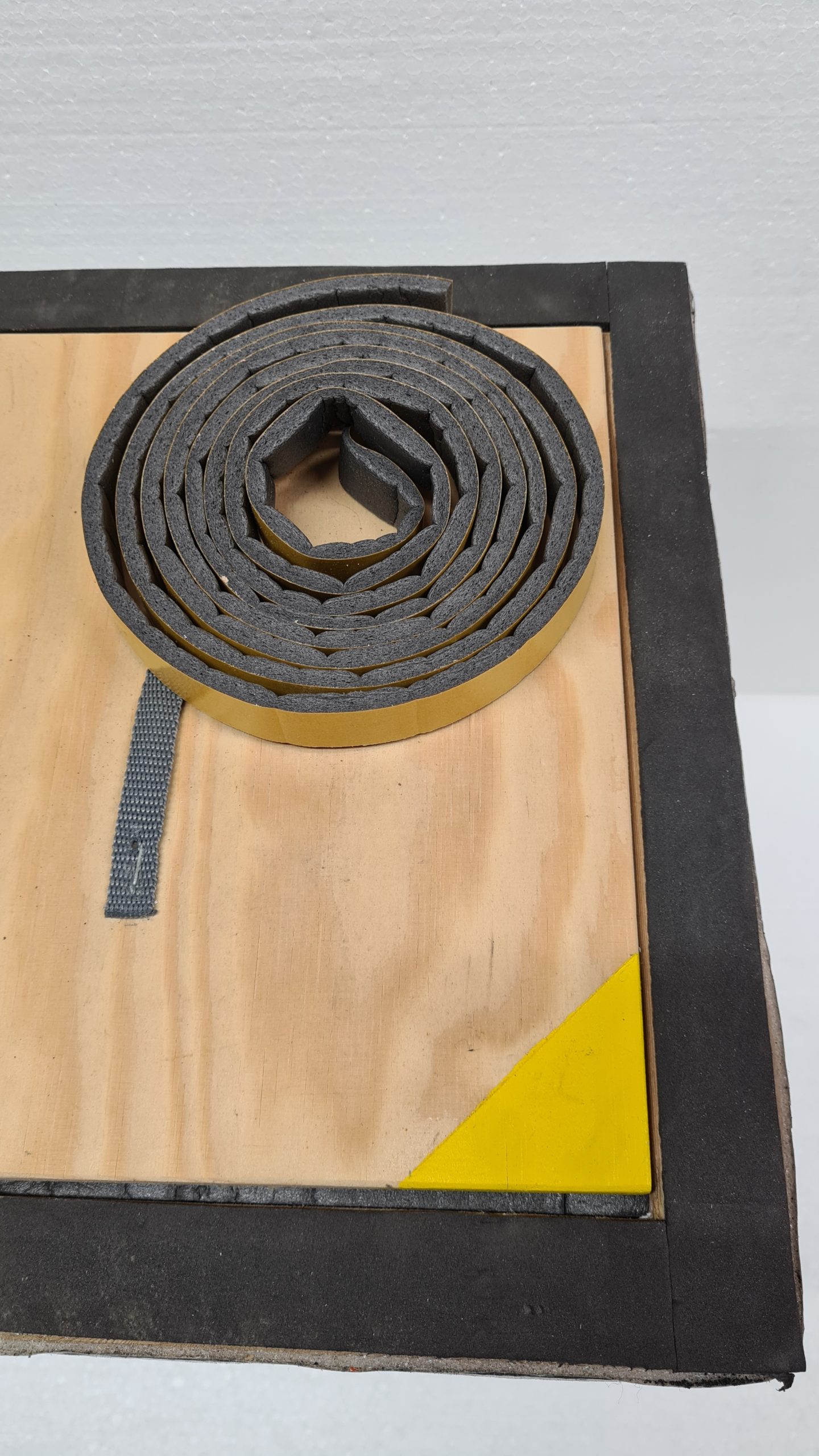
Seal
Photo: Photo: O. Hercog 23/2/2022
Seal
Photo: Photo: O. Hercog 23/2/2022
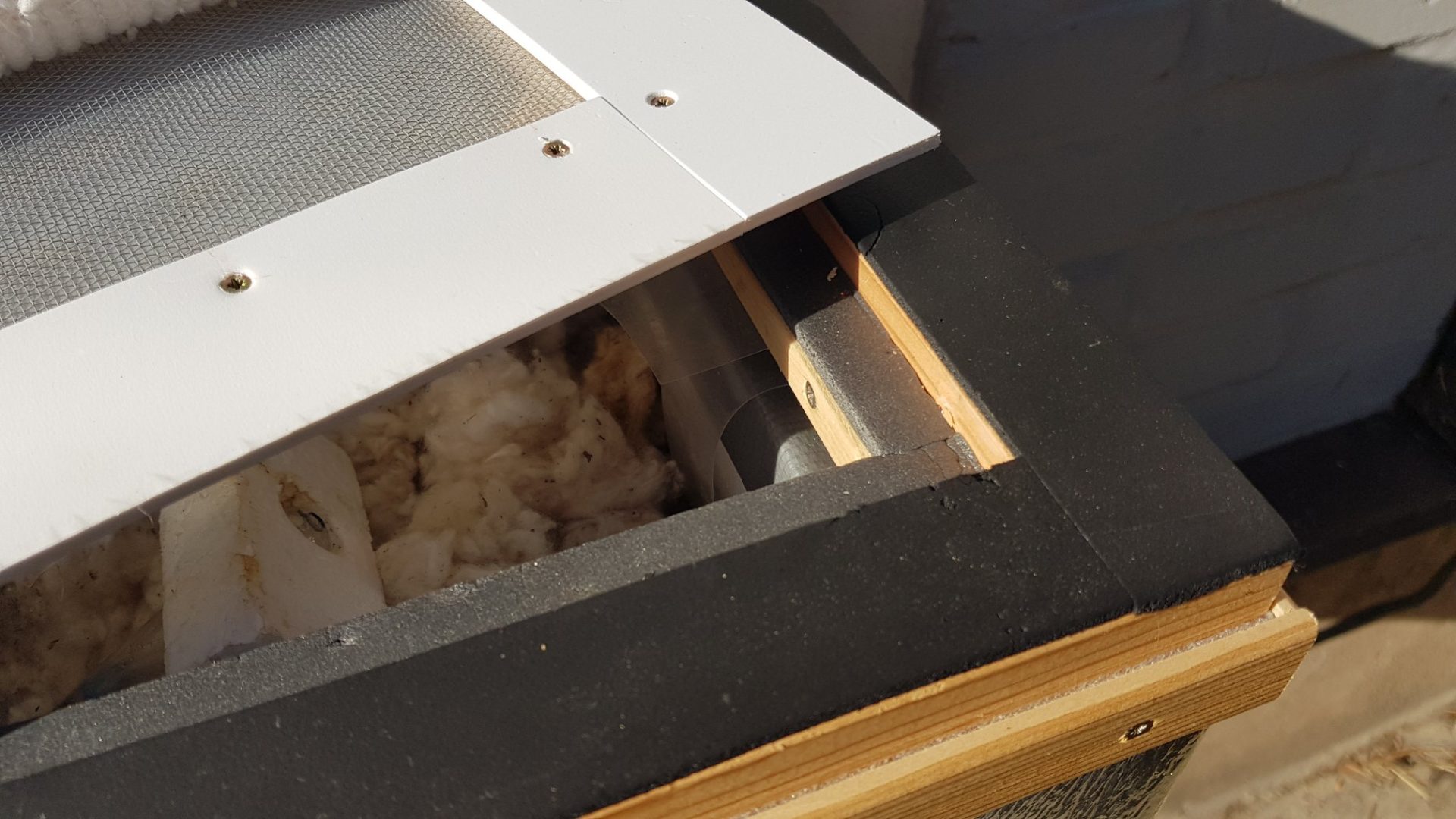
You can find more photos of this solution in the description of the hive roof.

Bumblebees plus gadget for bumblebee breeders for bumblebee hive bumblebee protective grid construction

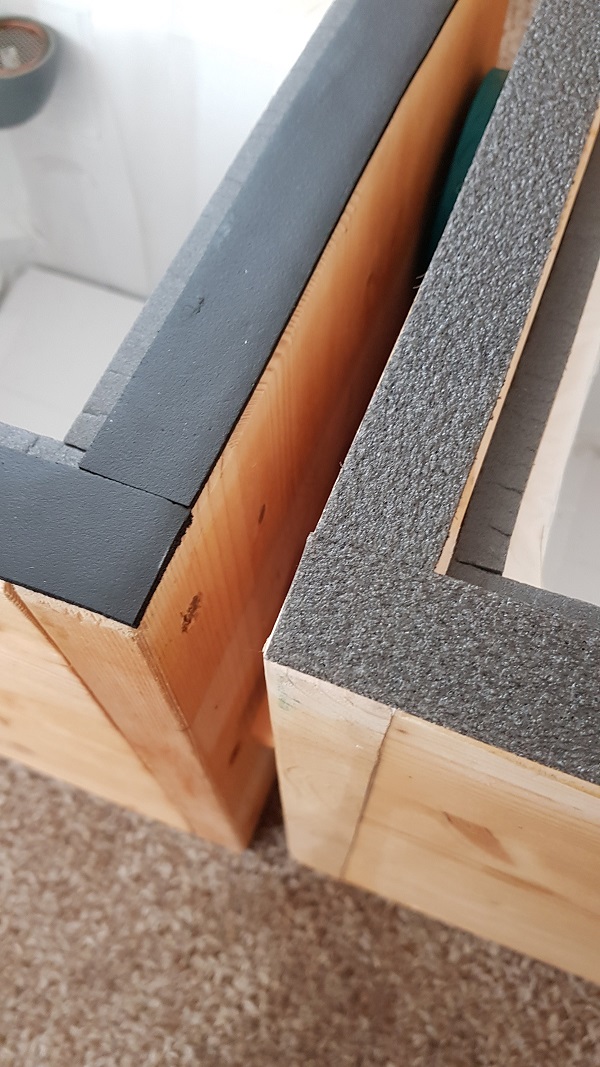
Detail of the protective net seal
1. contact surface on the hive body and 2. on the strips in the hive
Photo O. Hercog 4/2019
Bumblebees PLUS - seal on the hive body

Seal on the hive body
Photo O. Hercog 4/2019