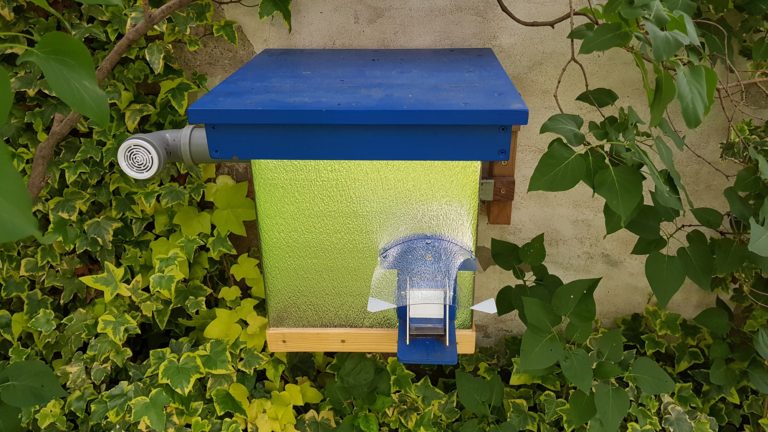
Ventilation is an essential part of a bumblebee hive
What you will learn here
- Why should a beehive (bumblebee hive) be equipped with ventilation?
- What should such ventilation look like?
- How to use windbreaks to protect a hive from bumblebee parasites
- How to modify your own windbreak to suit all your needs
- Other tips and tricks related to hive ventilation
Last updated: 21/2/2024
In a nutshell
- The ventilation hole of the hive (bumblebee) is important: it brings in air, removes some of the heat and CO2, and reduces the humidity in the hive.
- The ventilation hole must protect the hive: it is a path for parasites and enemies of bumblebees, so it must be properly designed and used.
- No light or drafts: if the ventilation opening to the hive is equipped with an elbow extension, less light enters the hive and there is no risk of drafts in it
- It is not possible without a protective net and Uhelon 53S: the ventilation into the hive must be equipped with a net that bumblebees cannot penetrate and also with a fine Uhelon net with a density of 53S - such a solution protects the ventilation opening into the hive against parasites.
- Ventilation attracts and can trap parasites: if necessary, properly designed ventilation can also serve as a trap to reduce the risk of a hive being attacked by parasites
- Closed / open: the ventilation hole must be able to be closed well when you are placing the queen and when the surrounding temperature is low - after closing, no light must shine into the hive
- You can tell the quality: good hives have proper ventilation, but you can also adjust the ventilation yourself.
- Ventilation like a jigsaw puzzle made of PVC pipes: you can assemble/add good ventilation to the hive yourself from commonly available PVC pipes from the hobby market
- You can't do without checking during the season: to keep the wind turbine functional, it is necessary to check it during the season
English Abstract
- The ventilation hole of the beehive (bumblebee house) is important : it brings in air, removes some of the heat and CO2 and reduces humidity in the hive
- The ventilation hole must protect the beehive : it is a pathway for parasites and enemies of bumblebees, so it must be used properly
- No light and no drafts: if the ventilation hole to the hive is equipped with a knee attachment, less light shines into the hive and there is no risk of drafts
- Protection – netting and Uhelon 53S : the hive vent must be fitted with a net that is not biting by bumblebees and also with a fine Uhelon 53S net – this solution protects the hive vent against parasites
- Ventilation attracts and can trap parasites: if necessary, properly designed ventilation can also serve as a trap to reduce the risk of hive parasite infestation
- Closed/open mode: the ventilation hole must be able to be closed tightly when you are settling the queen and when the temperature is low – no light should be allowed to shine into the hive when closed
- You can tell the quality: good hives have the ventilation properly designed, but you can also adjust the ventilation yourself
- Ventilation as a jigsaw from PVC pipes: you can build/complete a good hive ventilation yourself from commercially available PVC pipes from the hobby market
- You can't do without a check during the season: to keep the wind turbine functional, it must be checked during the season
Contents
Introduction - the importance of ventilation
What should a ventilation hole look like and why?
Ideal design of a ventilation hole. Is it right to trap bumblebee parasites in a hive?
How to adjust ventilation (simple but functional solutions)
Fine mesh - how and where
Durable ventilation grille made of aluminum mesh
Adhesive layer in ventilation
Closing the ventilation hole
Other adjustments - the outer part of the ventilation
Checks
Other recommended chapters on ventilation

Hive ventilation
Photo: O. Hercog (2021)
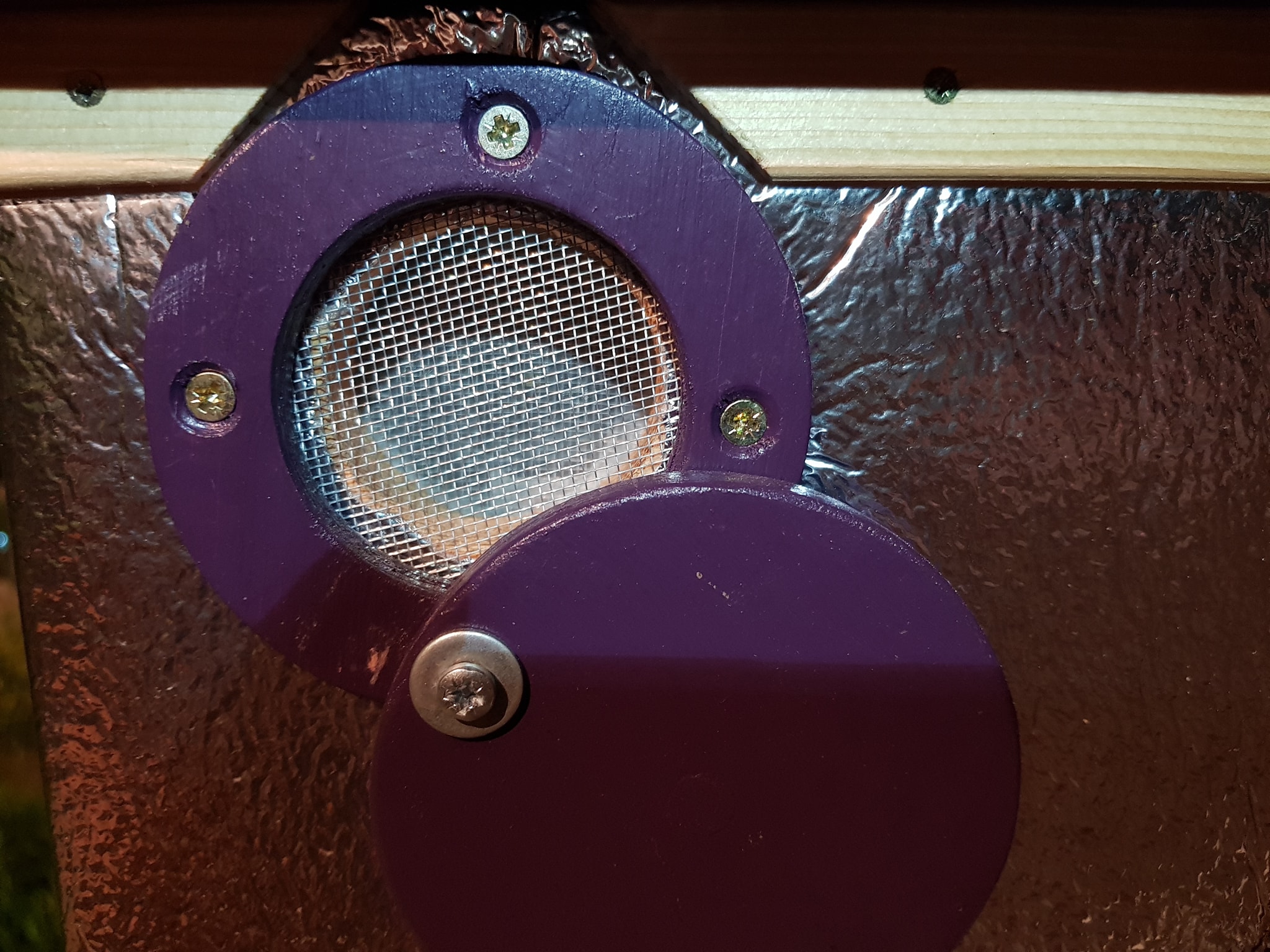
Introduction – The importance of ventilation
Ventilation and air supply are an integral and very important part of a bumblebee hive. However, this part is often forgotten and overlooked by producers who do not keep bumblebees themselves.
Ventilation is a very important component of the hive, which serves several functions:
- fresh air into the hive .
- excess heat from the hive .
- It eliminates the amount of CO2 that accumulates in the hive.
- excess moisture from the hive , thus reducing condensation of water vapor and the subsequent formation of mold.
Poor ventilation can cause a number of problems, the main one being the risk of parasites entering the hive.
Check out the following text, which describes a bit of development as a way to provide good ventilation for the hive for bumblebees.
- Hive ventilation – external mesh and closing of ventilation.
Photo O. Hercog
What should a ventilation hole look like and why?
At the same time, it is necessary to ensure that ventilation is designed so that parasites and enemies of bumblebees . They are driven by a strong urge to reproduce in the bumblebee nest. They are very patient and look for any way to get into the nest. It is their mission to reproduce in the bumblebee nest.
Parasites and enemies of bumblebees are attracted primarily by the smell of the nest , which is very intense, especially in the late stages of nest development. Therefore, the hive must be protected with a fine mesh that parasites cannot pass through.
The ventilation hole (the smell of the nest in the hive) also attracts bumblebees . Workers returning from their first flights are sometimes confused by the smell of the nest coming from the ventilation hole and try to enter the nest through it .
It also sometimes happens that young workers climb onto the surface of the lining in the hive, see the light coming through the ventilation hole and try to fly out of the hive through it. The same can happen with drones , who are looking for a way out of the hive and sit (sit) by the ventilation hole until they think of leaving the hive through the corridor.
Workers, drones and even the queen sometimes try to chew their way out. If the design of the vent allows it, they will start flying out through it. However, this creates a path for parasites and the nest is sooner or later attacked, weakened or destroyed. Therefore, the vent must be made of mesh that the bumblebees cannot chew through .
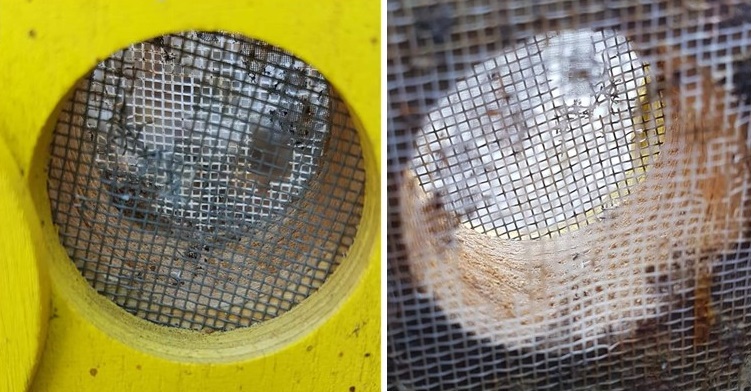
Ventilation of the hive – bumblebees have bitten through the mesh of a commercially available hive.
Photo by Vladimír Jindra.
Even if the ventilation hole is impassable for parasites, you are not out of luck. Some parasites are so small that they can pass through a mesh with a mesh size of about 1 mm (see the parasitic wasp Melittobia acasta).
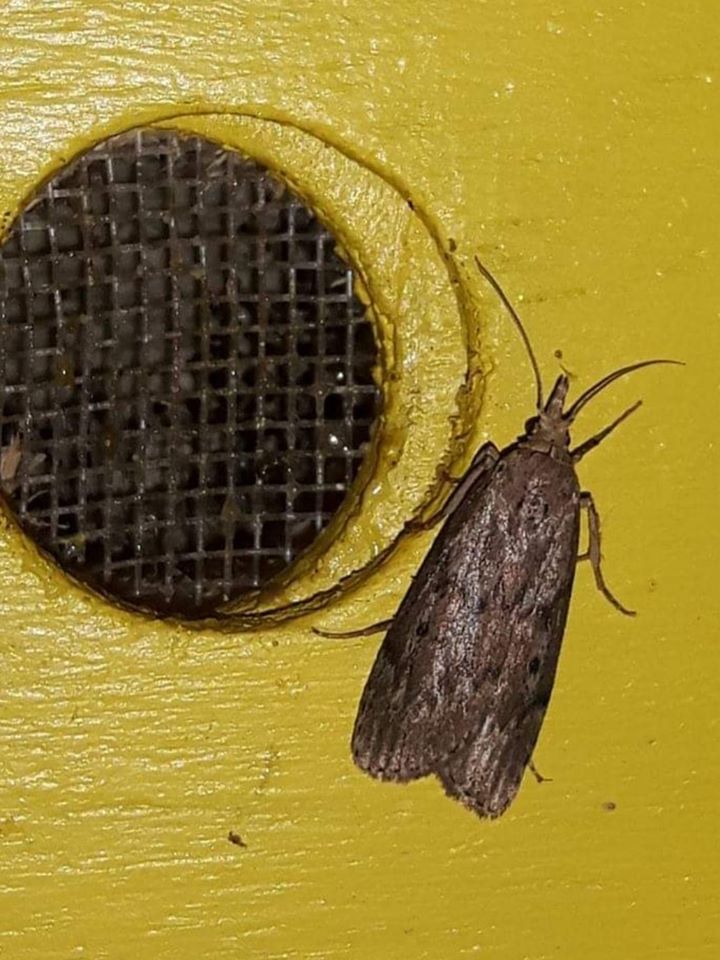
Aphomia sociella on the ventilation hole of the hive.
Photo O.Hercog
Sometimes parasites solve the problem by laying their eggs on the grid of the ventilation hole small larvae hatch from the eggs , which pass through the mesh and penetrate the nest. Therefore, it is necessary to protect the ventilation hole with another mesh with a mesh size that small parasites or small larvae cannot pass through . Such parasites are, for example, flies or the ectoparasitic fly (Aphomia sociella).
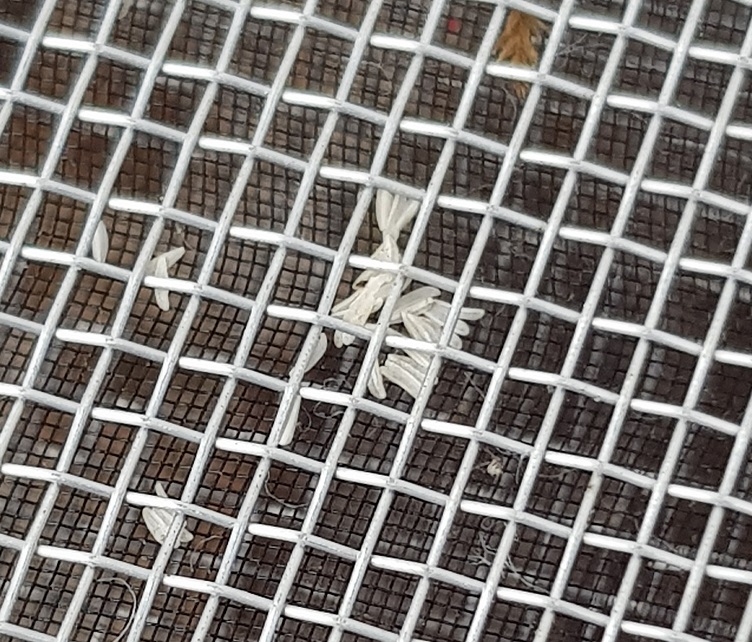
Hive ventilation - parasite eggs laid on the ventilation mesh
Photo O.Hercog
To make matters worse, it is necessary to be able to close the ventilation hole . This is necessary when the queen bee settles in the hive and should not see the light in the hive , or when it gets cold and the nest could get cold. It is also necessary to solve the ventilation so that there are no drafts in the hive . The queen bee is very sensitive to this in her solitary phase. She is afraid that her brood will catch a cold and die.
Therefore, the ventilation hole must be designed to ventilate, be closable, and at the same time protect the hive's inhabitants .
Please note that the ventilation hole must be checked regularly . It can be damaged, or bumblebees can clog it with wax or lining. We have recorded many cases where parasites entered the hive through a damaged ventilation hole, and bumblebees got stuck in the space between them and died there.
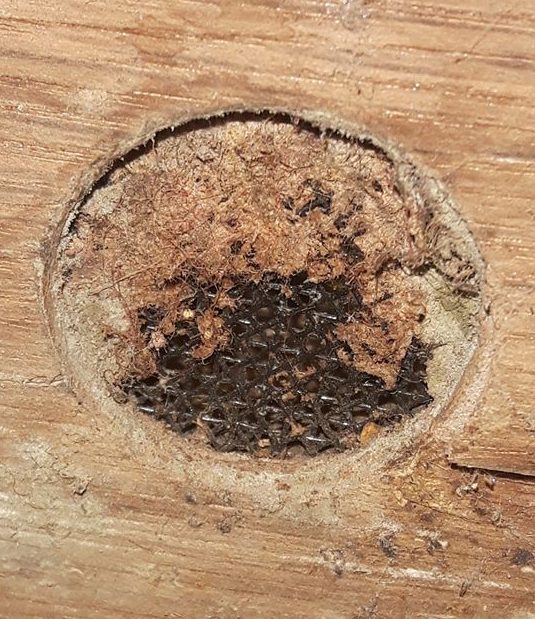
Bee hive ventilation sealed with wax. Photo O.Hercog
I have already managed to convince the largest beehive manufacturer in the Czech Republic to replace the mesh used with aluminum mesh (see further text). However, it took several years for him to accept it - thank you. Other products with unsuitable mesh are still appearing on the market, which is why we are drawing your attention to them .
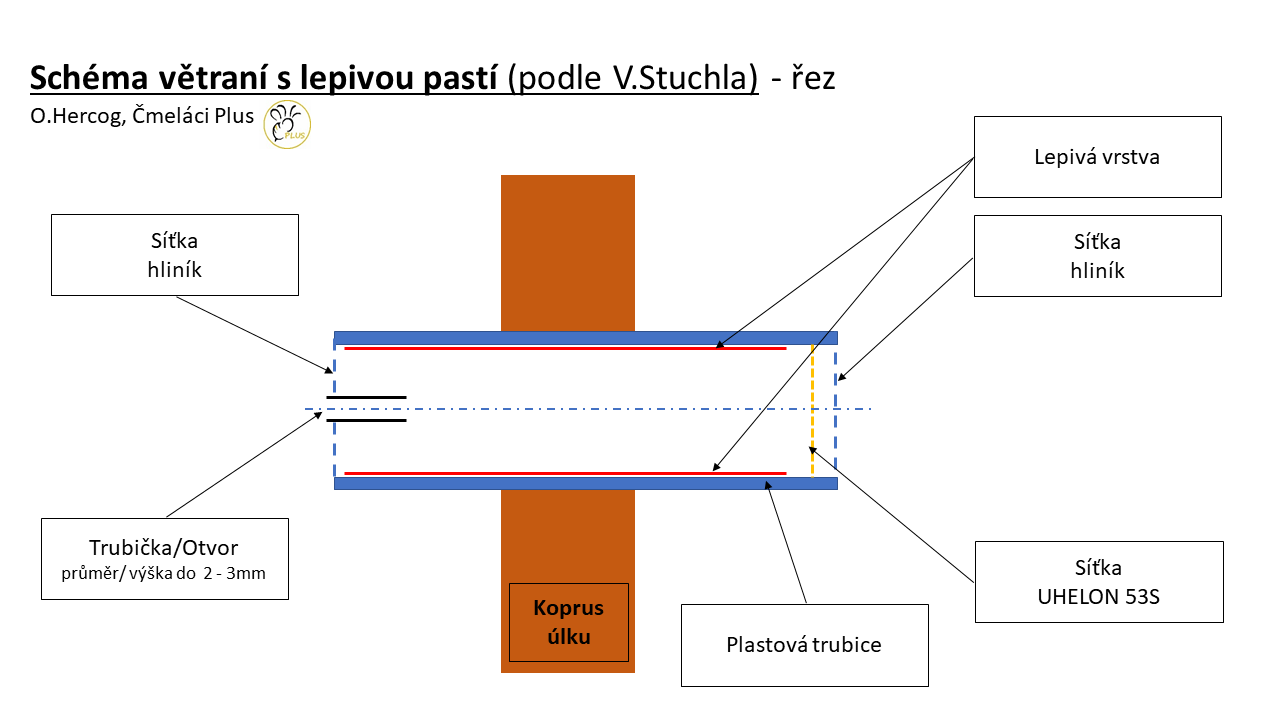
Ideal hive ventilation hole
- The ventilation opening should be fitted with bite-resistant mesh .
- The ventilation is supplemented with a fine mesh that prevents small parasites and their larvae from passing through .
- If you want to increase the safety of the hive's inhabitants, it is a good idea to provide the interior of the ventilation hole with a sticky layer on which small parasites or penetrating larvae will be trapped and die there.
- Closing the ventilation hole is best done by positioning it – it can be opened and its size regulated as needed. It must seal well so that light does not shine through into the hive (important, for example, when settling the queen).
- If you make ventilation from PVC pipe and use an elbow , you will limit the light penetration into the hive.
If you buy a shed that doesn't have such ventilation, it's quite easy to modify the ventilation hole at home.
Some breeders use ventilation with a trap according to Mr. V. Stuchl , which they have supplemented with a sticky layer . There are different designs, in this section we will describe the basic principle. This is important for understanding how the trap works.
The parasite is attracted by the smell of the nest, enters the trap through the opening and gets stuck on the sticky layer. The Uhelon53S mesh is there as a safety net in case the parasite flies through the trap and does not land on the sticky layer.
Thanks to this solution, it is possible to reduce the infestation of the nest by parasites with high efficiency.
If you are interested in how and why the UHELON material was chosen, see the chapter describing beehive nets for bumblebees.

Bumblebees PLUS – Ventilation with sticky trap
Is it right to trap bumblebee parasites in a hive?
Some bumblebee keepers are against such protection of the hive ( trap in the ventilation ). We will write about parasites and predators or competitors later. Here we will only mention the essential ones.
Some parasites will be deterred by the mesh in the ventilation. They are more interested in the cavity itself, but do not (worms, spiders, etc.).
the parasite , for whom the bumblebee nest is essential for the survival of its own population , will not be deterred. Once it finds such a nest (its scent trail ), it will not leave . It will remain at the hive or in its close vicinity until it penetrates inside or dies . Such a parasite will therefore pass through even the narrowest crack to do its work inside the nest . If it decides to do so, it is better to capture it so that it does not damage the nest .
Note: The fact that most such parasites die along the way is not surprising even in nature, and parasites are adapted to high mortality by the fact that those that are successful do not subsequently reproduce in the order of a few new individuals, but tens or, in the case of Melittobia acasta, thousands of individuals.
Our goal is to raise the largest possible number of bumblebees capable of reproducing and establishing natural nests the following year. That is why we try to protect bumblebees in hives .
But sometimes we are criticized for this activity, so we react :
- Our activities against hive parasites do not protect or affect natural nests. They could be harmed by local expansion of the parasite from an unprotected and unmaintained hive.
- The capture of parasites in our traps does not affect the level of infestation of natural nests, as we do not implement any elements of protection against parasites moving outside the hive itself - such as freely hanging sticky traps, pheromone traps and chemical sprays.
- As long as the parasite does not overcome the mechanical barrier on the trap, it is not affected by us. However, after overcoming the mechanical barrier, it reaches the internal components of the hive and there is no other way than to eliminate it.
In nature, whether it's just your garden, there's an eternal battle going on between bumblebees and their predators. But that battle takes place according to the rules of nature. But if we offer bumblebees a shelter , it should give them a chance to survive in it and not expose them to unnecessary risk.
Is it possible to protect a bumblebee hive in other ways?
On the internet you can find a number of "guaranteed instructions" on how to mask the fear and cover up its smell with the smell of aromatic plants or repellents .
Many people have tried this, as well as toothpaste on the protective flap.
We have no evidence that this method has not worked. If someone has used it, the results are not conclusive .
It is impossible to protect bumblebees against parasites 100% . A theoretical option would be to lock them in a laboratory, but even here they are vulnerable – large-scale producers of bumblebees for pollination services know this…
Therefore, we have proposed a solution and a set of controls, which we describe and develop further – see the following text. With these measures, you can significantly reduce the risk of a successful bumblebee attack on your hive .
How to adjust ventilation (simple but functional solutions)
Fine mesh
Supplement the hive ventilation with fine mesh.
Solution:
- UHELON 53S (density designation) , which was found and determined by measurement by my colleague Karel Kučera proved to be a fine mesh .
- Note:
is suitable , as it has the appropriate density.
A lower density (sold in beekeeping supplies for filtering honey) or a higher density (no longer ventilates) is not suitable . - Warning – the fine mesh made of UHELON 53S must be covered on both sides with aluminum mesh so that mandibles (the meshes should not touch each other if possible).
- The fine mesh of UHELON 53S reduces the ventilation area to about 50% . If you can, increase the diameter of the ventilation hole accordingly. Practice shows that a ventilation hole with a mesh of UHELON 53S with a hole diameter of about 50 mm is sufficient.
- Don't apply more than one , but do it properly.
- You can buy UHELON 53S by the meter online, or some sellers will sell it to you as an accessory for modifying the hive (see photo next text), including a pad that you can attach to the hive (you can find it on the internet as a ventilation hole extension).
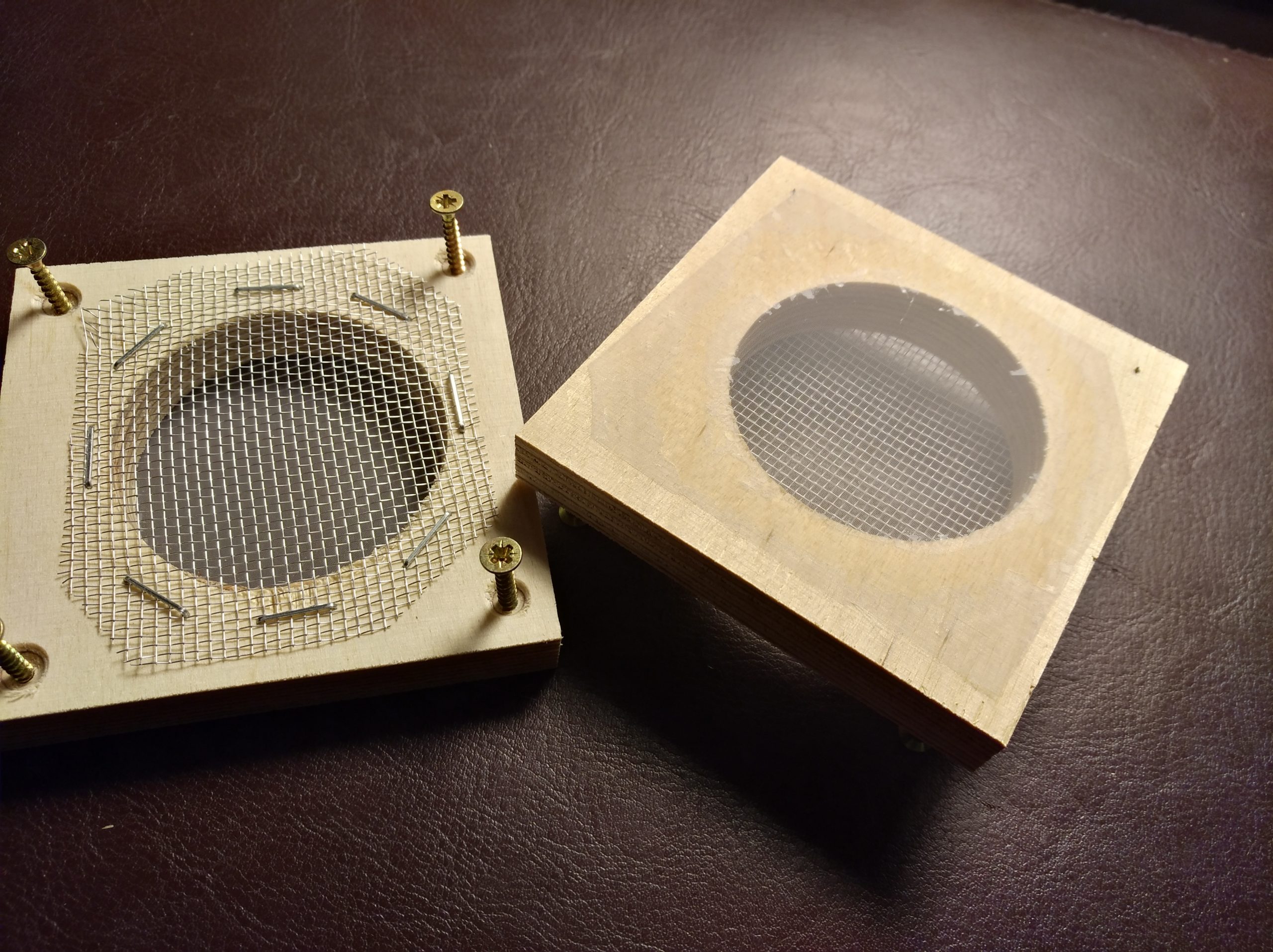
Hive ventilation – extension to the ventilation hole.
Photo J. Černý
Application is easy with the vent extension
- attach a fine UHELON 53S net to the inside of the hive.
- continue working according to the instructions and then proceed to applying resistant nets
Note: this attachment, or another with a 50mm diameter hole, is suitable for adjusting the wind using HT pipes.
Durable aluminum mesh ventilation grille
Replace the original grids/nets with new ones, it is an easy operation and it pays off.
Solution:
- is suitable , mesh size around 1mm (sold by the meter).
- are not suitable , as they cannot withstand bumblebee mandibles. Neither is unprotected UHELON mesh itself, as bumblebees can easily bite through it.
- The ventilation opening must be fitted with new, durable mesh on both sides.
- The net can be attached from the inside with a staple gun and then covered with high-quality adhesive tape to prevent parasites from getting around the net and bumblebees from crawling under it.
- If you make a frame, the mesh will hold better and it will be replaceable.
The frame can also be purchased online, together with a piece of UHELON 53S, see above. - Place the screen from the inside under the original or new frame with the hive closure and attach with screws.
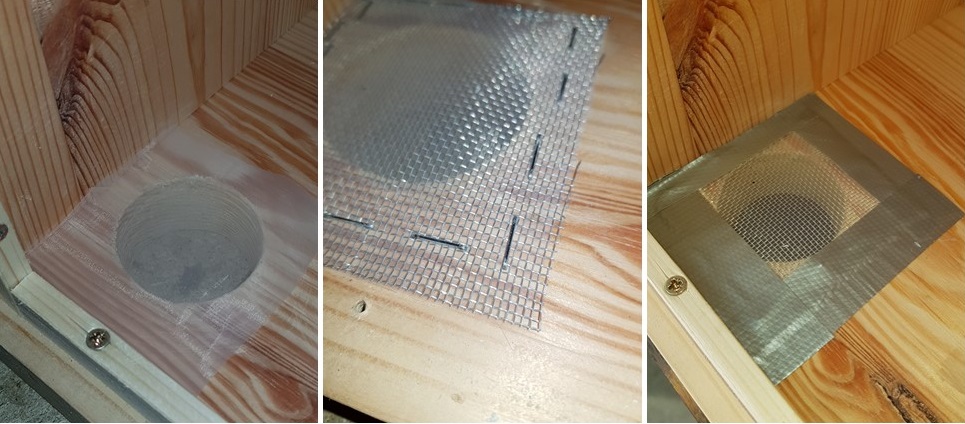
Bumblebees PLUS – Hive ventilation – addition of a Uhelon 53S mesh and an aluminum mesh screen.
Photo O.Hercog
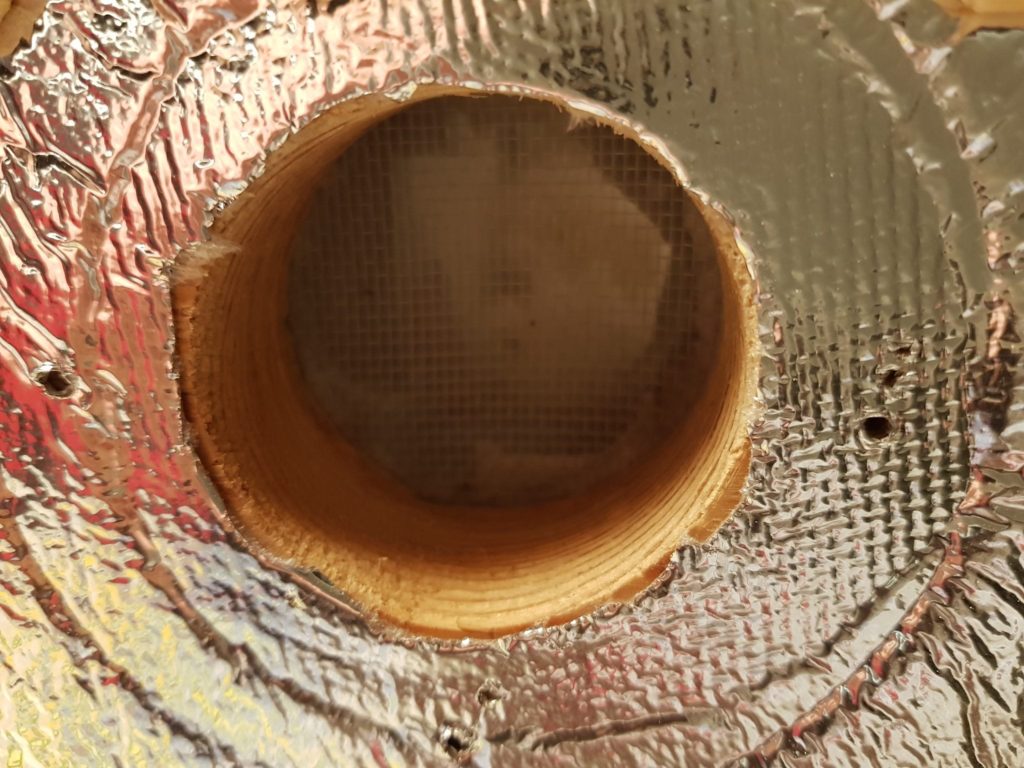
Sticky layer in the ventilation hole
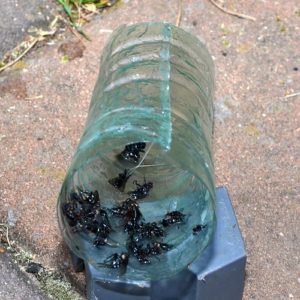
If you cover the inside of the ventilation with an adhesive layer, you will also catch small parasites and larvae that penetrate the ventilation from the outside (here there is a coarser mesh).
In the photo you can see an example of how much the sticky layer traps unwelcome visitors to the hive.
Solution:
- Line the inside of the hive with UHELON 53S mesh and then with a durable aluminum mesh.
- Now the adhesive layer on the carrier from the outside to the ventilation hole .
As a simple carrier, it is best to use rolls cut from the strap of a PET bottle . DUROFOL foil is also suitable. - Some keepers use fly swatter . It is softer and holds its shape better than sticky insect tape, which can also be used.
- It is best to use a layer of Chemstop/Apilanol - apply it according to the instructions to the inner surface of the carrier.
Be careful of the edges so you don't get glue on the fine mesh of UHELON 53S.

Example of a used sticky trap from ventilation.
Chemstop on a PET carrier.
Photo by K. Kučer
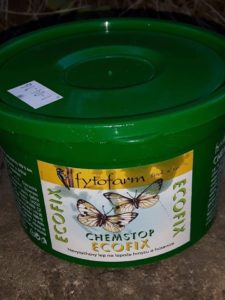
Material for creating an adhesive layer – Chemstop
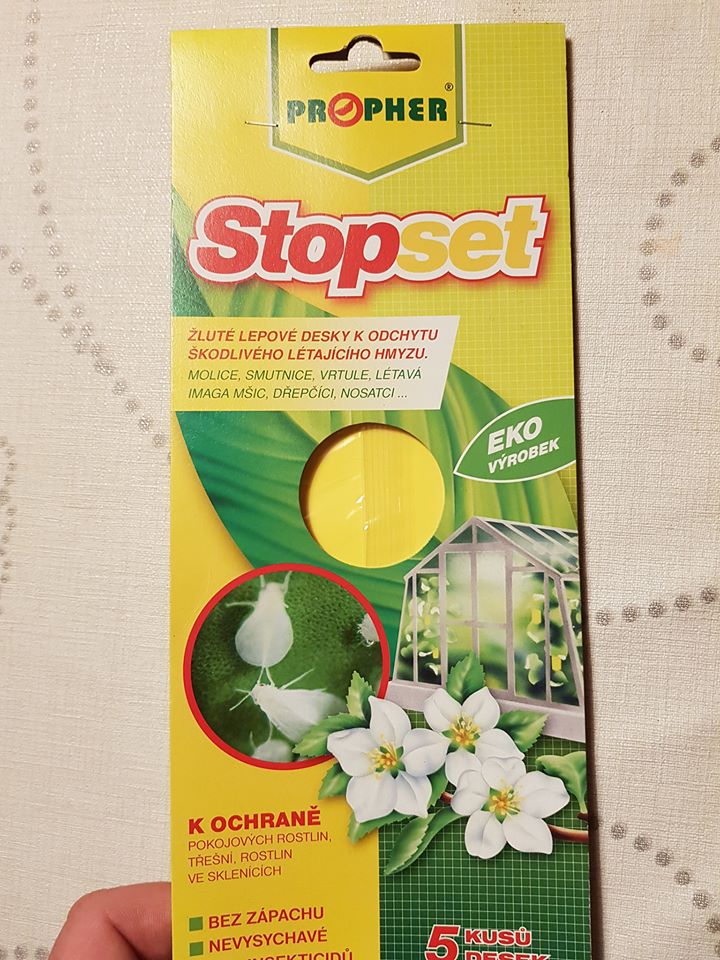
Material for creating an adhesive layer – adhesive strips
- As an alternative, you can use sticky insect tape (but it is more difficult to apply).
- Chemstop can also be applied directly to the wall of the hole. However, please note that the adhesive is difficult to remove and there is a risk of damaging the Uhelon mesh during cleaning.
- net from the outside .

Hive ventilation – interior space only wiped with Chemstop
Photo O.Hercog
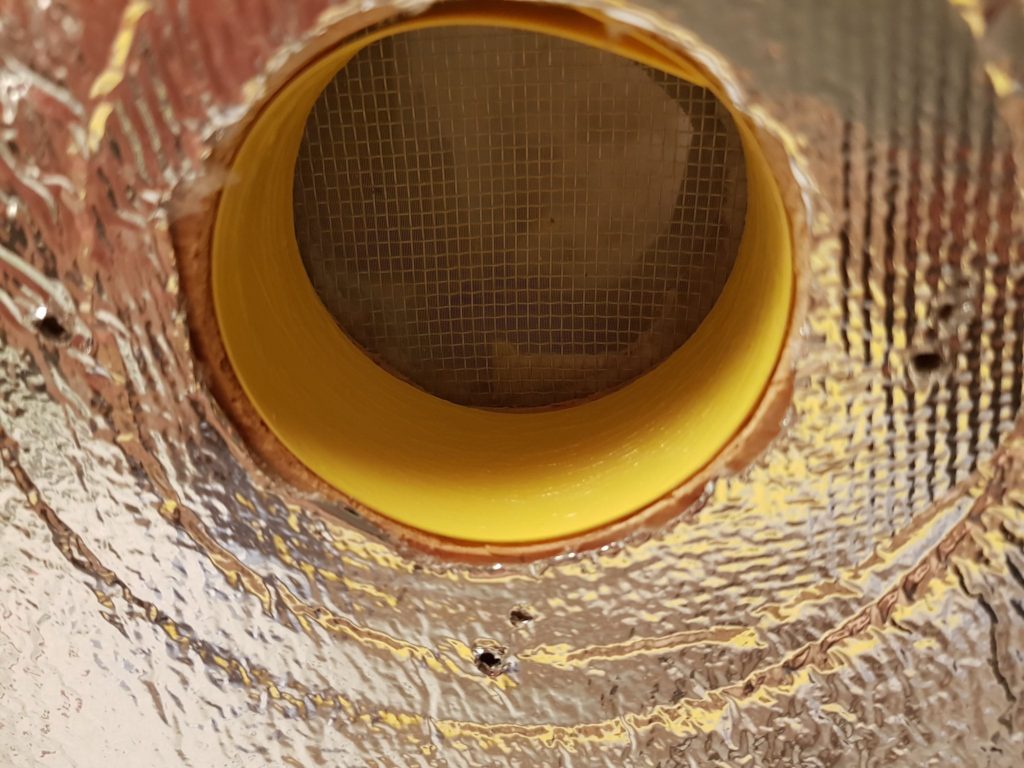
Hive protection – internal ventilation area with adhesive insect tape.
Photo O.Hercog
Closing the ventilation hole
There are hives on the market with elegant circular vent covers; the covers can be purchased separately, but you can also make such a lid yourself.
The vent cap must be tight so that no light can shine through into the hive . This is important, for example, when you are introducing a queen into the hive or when you have placed a purchased nest in it. Light shining through would confuse the bumblebees and they would not seek an exit through the entrance passage .
Please note that some caps of this type deform due to humidity.
Solution:
- If you want to make your own cover, use thin, high-quality plywood , plastic sheeting , etc.
- The shape can be a circle, a square or another shape that you use to cover the ventilation hole and which can be moved to the open and closed positions.
- the shape and size, as well as the location of the pin, on a hive with the roof in place.
- under the head is suitable as a pivot
Note: Closing the ventilation opening must not damage the protective nets or push them inward.
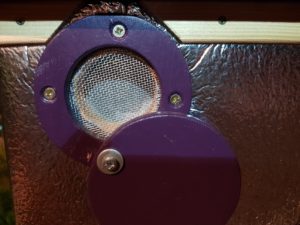
Hive ventilation – external mesh and closing of ventilation. Photo O.Hercog
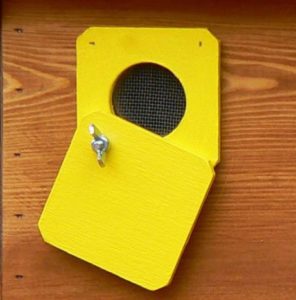
Closing the ventilation hole in a different way.
Further modifications to the ventilation hole and hive protection – modification of the outer side of the ventilation
Parasites are persistent in finding a way to enter the hive. They often search until they find it. So it is best to lure such a parasite into a trap and capture it there .
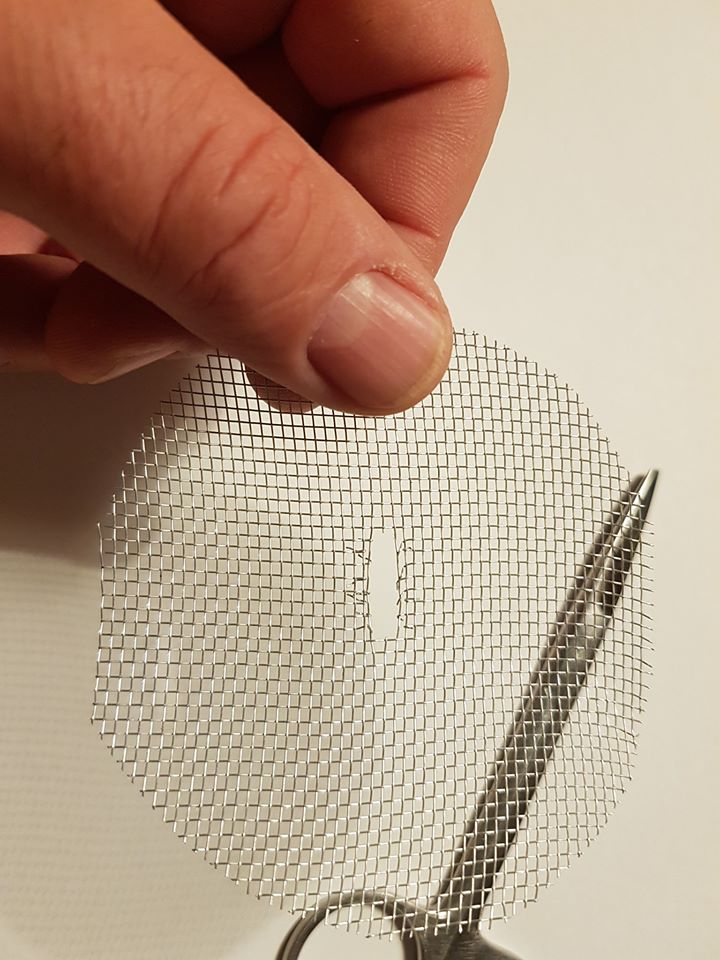
The aluminum mesh netting is easily penetrated by the parasitic wasp Melittobia acasta. However, in order for the butterfly Aphomia sociella (the parasitic leafhopper) or parasitic flies (e.g. Brachycoma devia) to penetrate, it is necessary to create a larger opening . This is especially important so that larger leafhoppers can get into the trap and do not look for another way out (e.g. under the protective flap).
There are a number of modifications to improve the ventilation hole and protection against parasites and enemies of bumblebees. You can find them HERE .
But let's take a look at the modification that will bring you closer to these solutions.
Solution:
- a sticky layer inside the ventilation space (see above).
- Create a hole for the parasites to penetrate and get caught on the sticky layer.
- The hole should be no more than about 3mm high (so that a small worker bee cannot pass through it), and it can be 20-25mm wide .
Warning - do not make a larger opening, small workers from the first generation could pass through and die in the trap, or insects that are just exploring the surroundings could die.
- You can create
an opening – with small scissors in the aluminum mesh.
– by creating a lid on a 3D printer - The lid we designed from the 3D printer was adopted by manufacturers - you can buy ready-made ventilation lids with the appropriate hole, or you can print such a lid on a 3D printer.
Note:
We tried a commercially available ventilation cap (HT System) described
HERE . It serves well as a cap, it allows small parasites to enter the trap, but does not allow large individuals of the beekeeper to enter the trap. Therefore, we recommend such a cap primarily for the inner part of the hive together with a UHELON 53S net.

Hive ventilation – modification of the ventilation mesh by creating a hole for the trap.
Photo O.Hercog
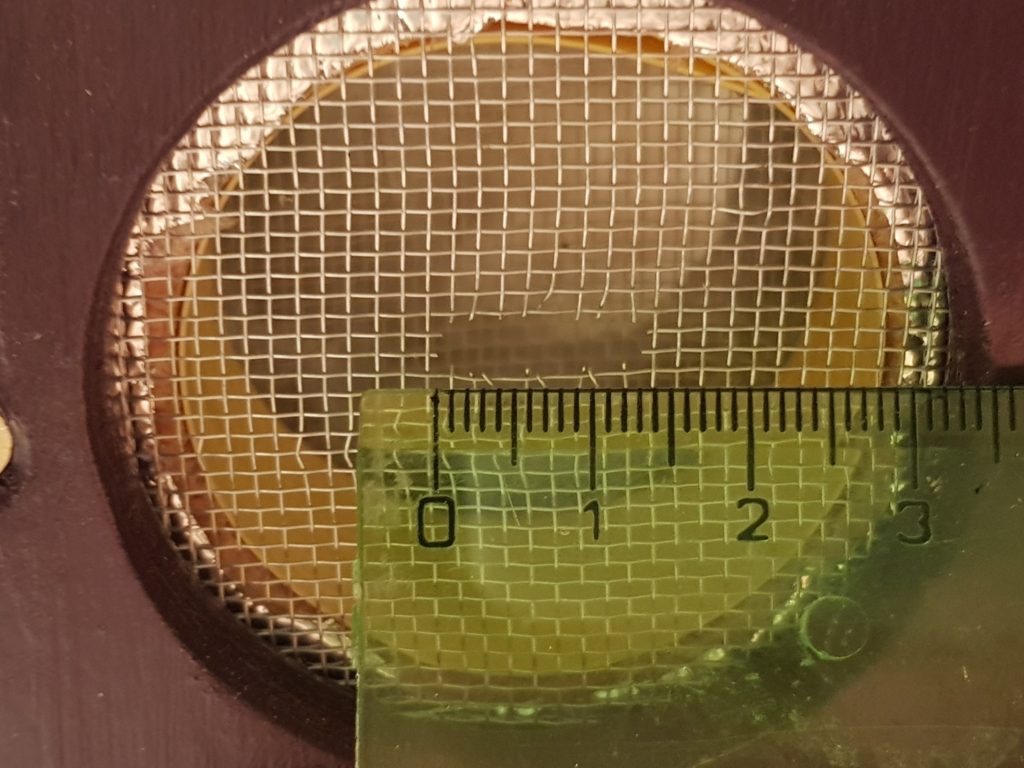
Creating a drain for Aphomia sociella into a trap in the ventilation.
Photo O.Hercog
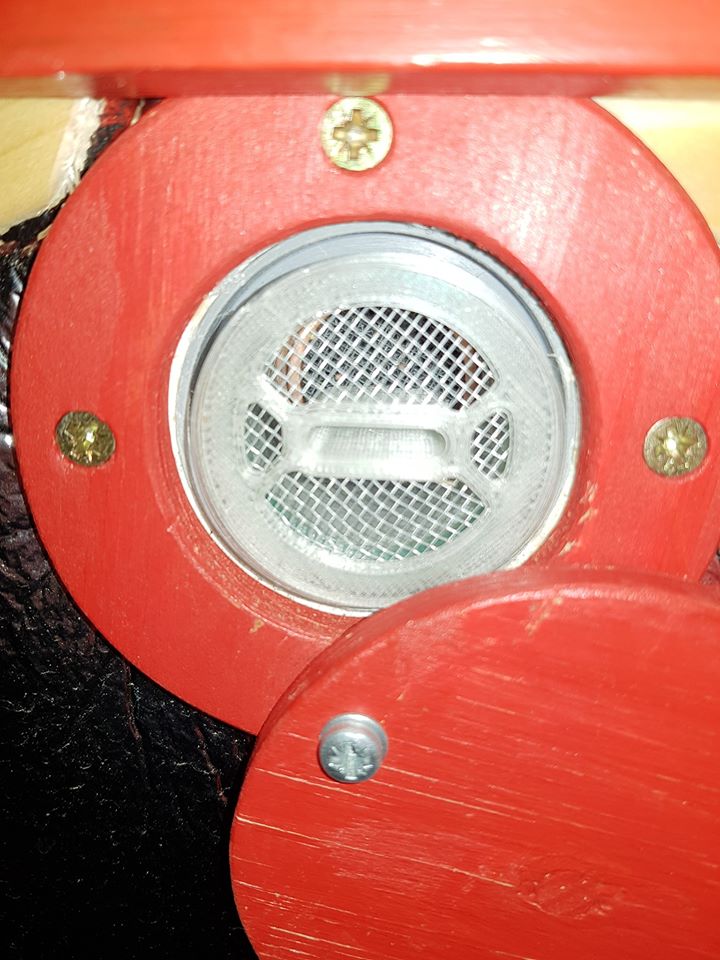
Hive ventilation – external protection with a penetration trap. Cover created on a 3D printer
Photo O.Hercog
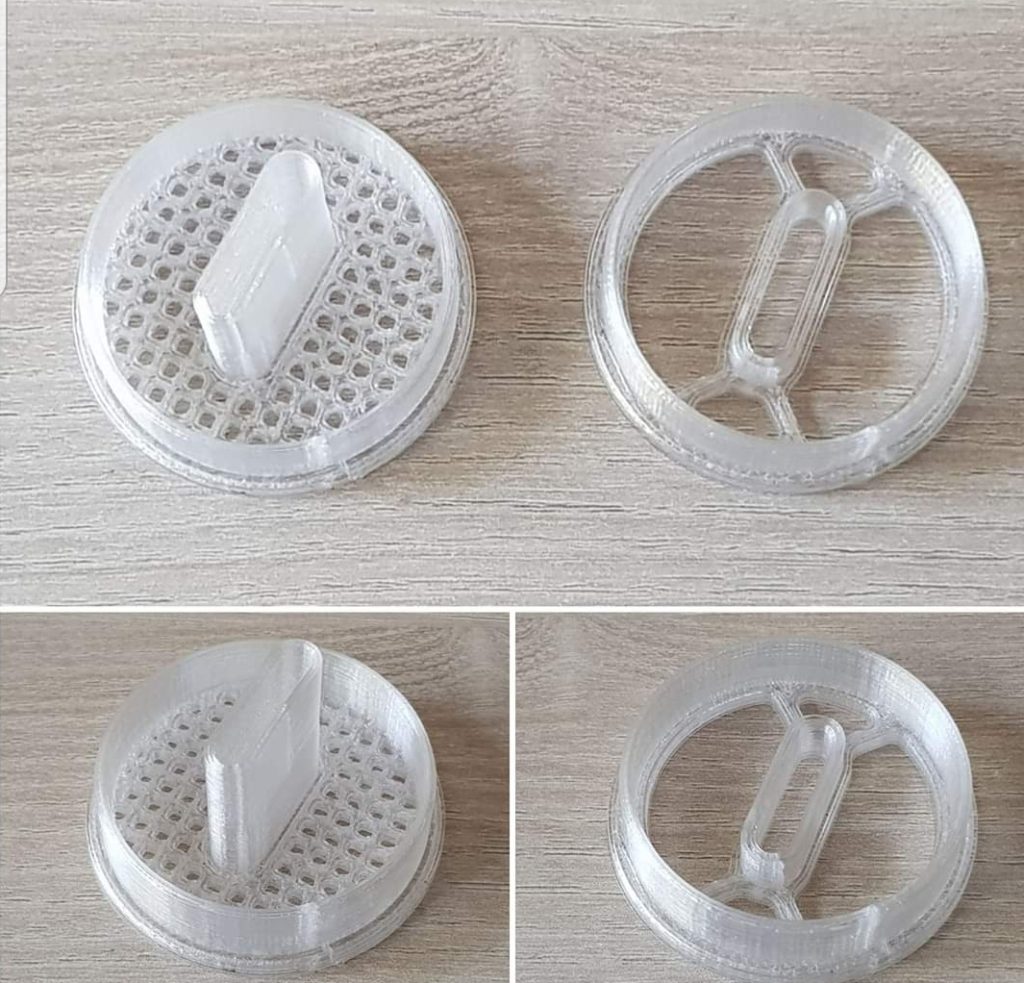
Hive ventilation – examples of ventilation lids with a trap created using a 3D printer
Photo O. Hercog (2018)
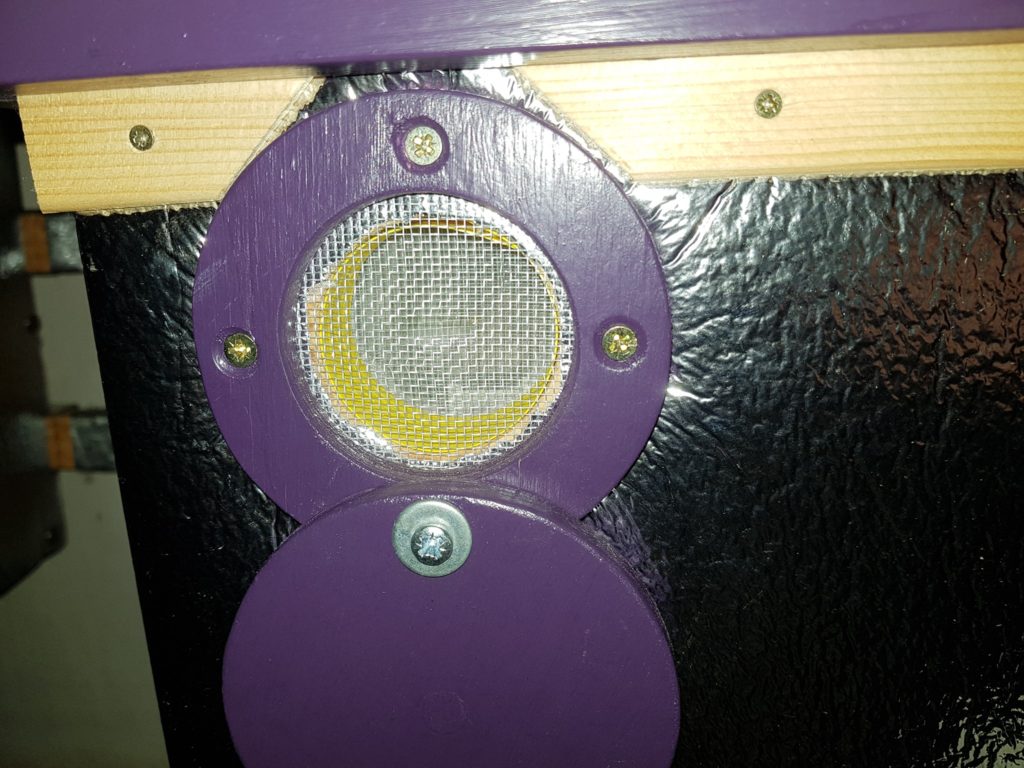
Hive ventilation – final design: Outer net with a hole for trapping parasites and closing the ventilation. Visible also the inner yellow adhesive strip placed in front of the uhelon net.
Photo O.Hercog
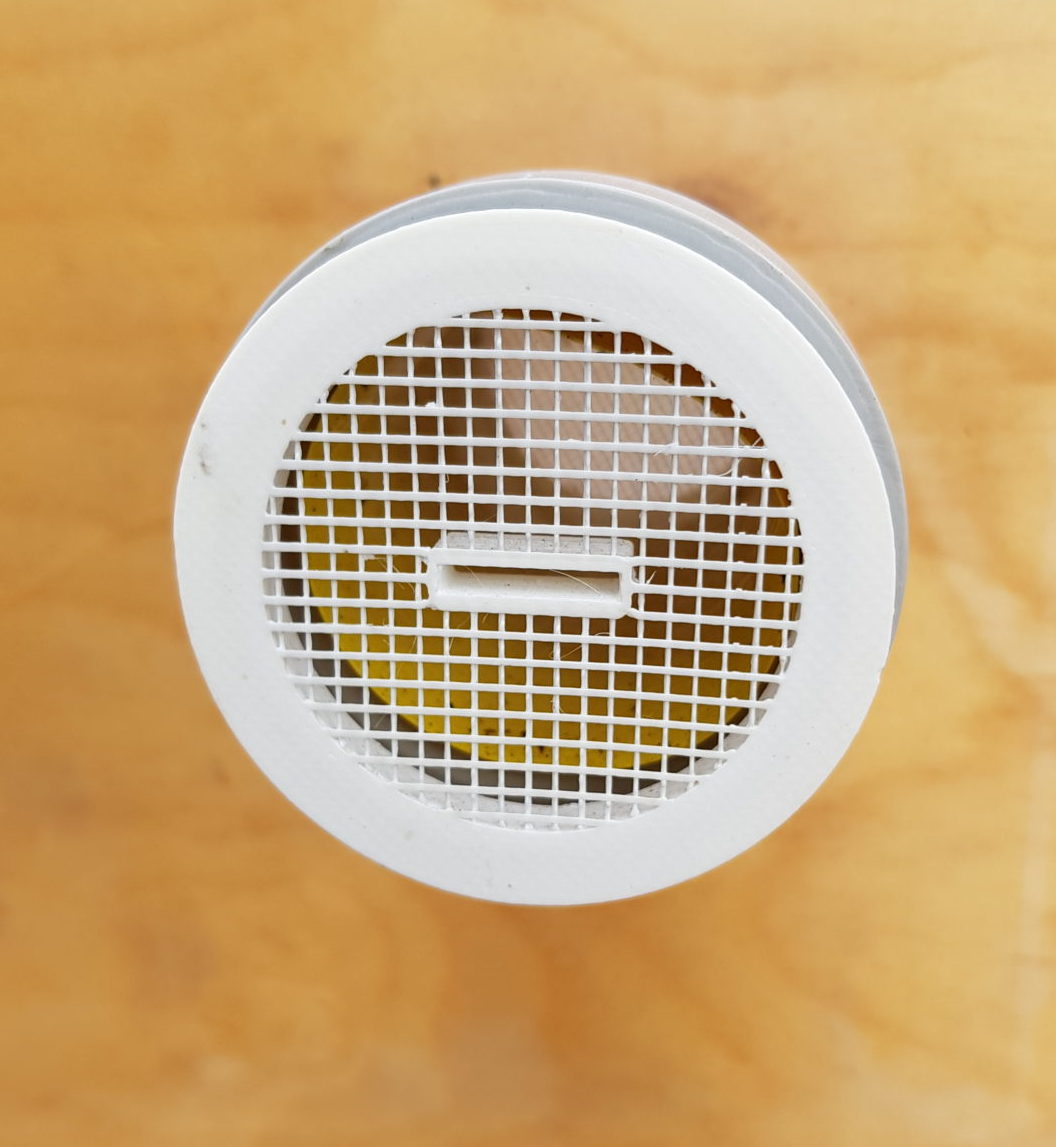
Ventilation with a commercially available lid from a 3D printer
Photo O. Hercog
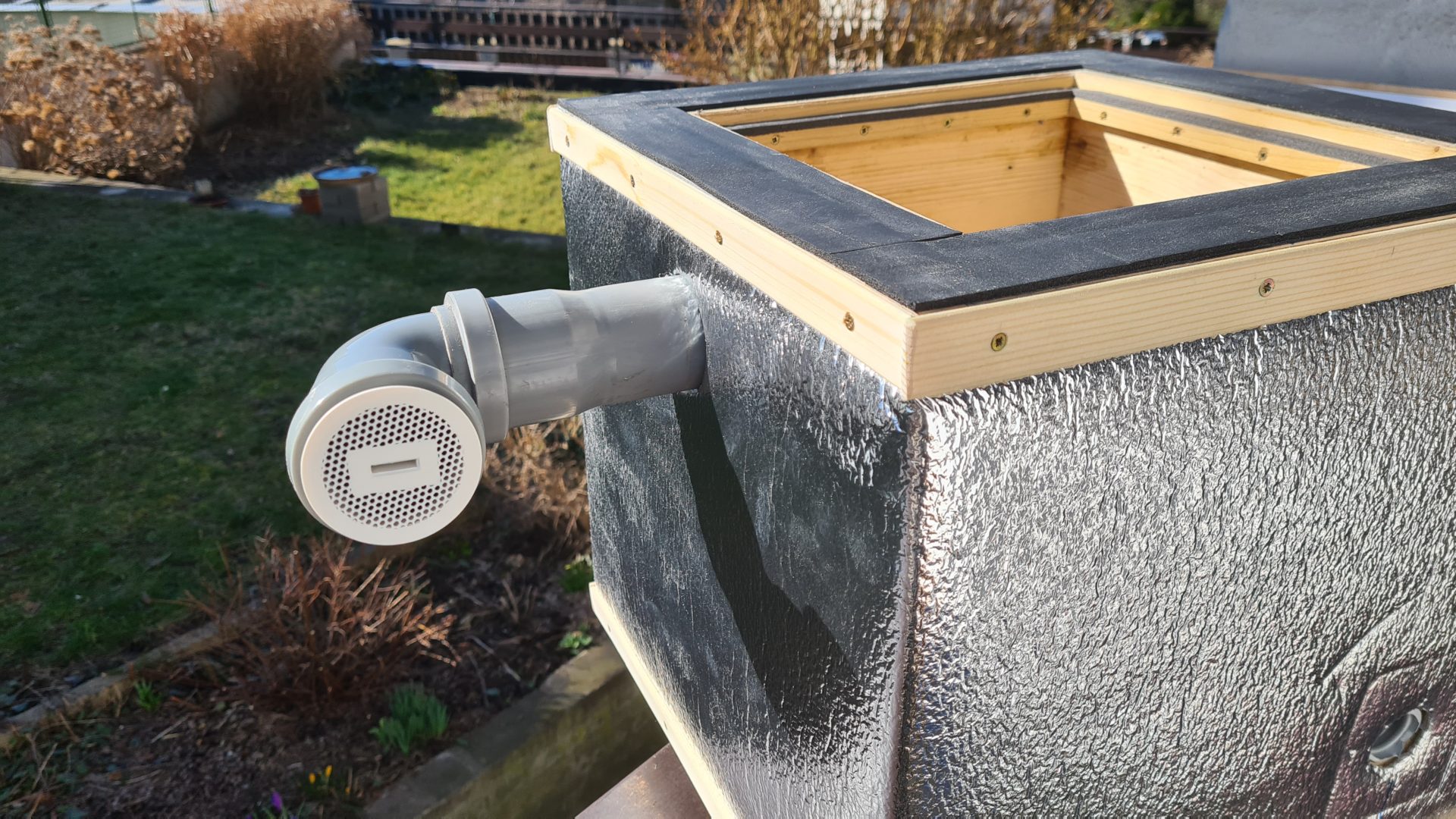
Ventilation with a cap - trap - outer cap from a 3D printer (behind it in the pipe is a bonding layer from Chemstop)
Photo O. Hercog (3/2021)
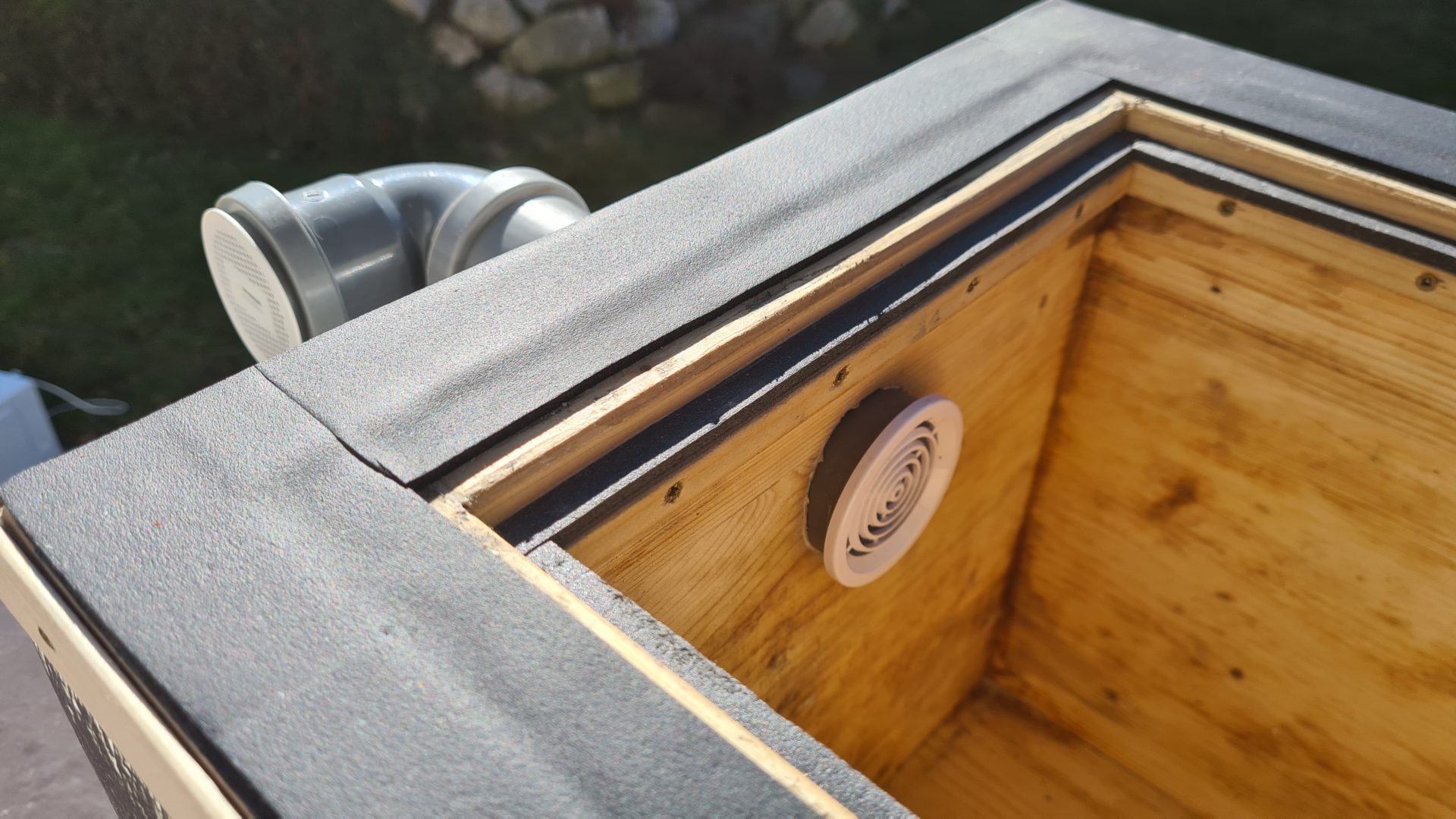
Ventilation with cover - trap - inner side with ventilation cover for HT System (UHELON 53S mesh is hidden under the cover)
Photo O. Hercog (3/2021)
Checks
Check if:
- Is the ventilation hole on your hive large enough ( approx. 50 mm in diameter ).
- The ventilation hole has a designed protection against parasites, namely:
an inner aluminum mesh and
a mesh made of Uhelon53S located in the middle, and
this mesh is not in contact with the aluminum mesh (outer and inner).
outer aluminum mesh. - The Uhelon 53S net is not damaged and fits perfectly – there is no gap (passage) in the net anchorage.
- The aluminum mesh is anchored so that bumblebees or parasites cannot get under it.
- The outer and inner aluminum mesh has no meshes larger than 3mm , and for grids, one side is no larger than 3mm.
- Closing the vent does not damage the mesh or push it inward.
Other recommended chapters on ventilation
- More about protecting ventilation against parasites:
- Gadgets – Retrofitting the ventilation of commercially available hives
- Gadgets – Protective net
- Recommended materials – Bumblebee hive nets

