
About the observation window in a bumblebee hive (bumblebee hive)
Everyone is interested in how bumblebees live in the hive and wants to take a look and observe how things really go on in the nest.
If you open the hive, the bumblebees consider the light in the nest as damage to the nest cavity or an attack on the nest = it will appear on the surface of the lining. The workers will start to adjust the lining and instinctively try to cover the nest. More aggressive workers will fly out of the hive this way and defend it.
Therefore, it is a good idea to observe life in the hive using glass/plexiglass, which you cover over the open hive. The bumblebees will not fly out and you can observe them in peace.
Such observation is mentioned in the literature on bumblebees. Some manufacturers will sell you a Plexiglas observation window with their hives.
You may read somewhere that if the hive is covered with such an observation window for a long time, moisture from the nest can condense on it and mold can form there. This can happen with a strong, large nest.
But you won't find anywhere how to put on and take off such a viewing glass, and also that it's not a science.
Many novice beekeepers are afraid of handling bumblebees, so they leave the viewing glass in the hive. They often wonder why the hive is so damp...
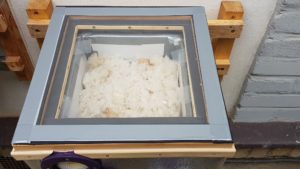
Observation window – placed on the hive
Photo O. Hercog
Manufacturers recommend that you place the cover glass on the rails, which you attach to the hive with small screws/nails when preparing for the season. You place the observation glass on the rails. However, it cannot be removed unless you make an eyelet/hook/hole on it.
This solution looks nice, but unless you are able to put the viewing window on the bumblebee hive and then remove it, we do not recommend using it .
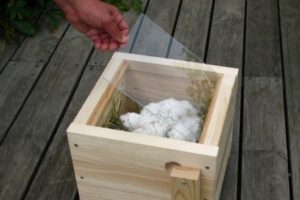
Insertable additional window for a bumblebee hive - inserted into the hive
Photo of the seller's website
Solution:
- Prepare an observation window from a sheet of glass, or better yet, a piece of plexiglass/polycarbonate, which you can use to cover the entire surface of the hive, preferably with some overlap.
- Glass is nice and better for photography, but it's heavy and you can break it or get hurt when handling it.
- Cover the edges of this window with tape to avoid injury.
- You do not need to install any battens in the hive.
How to use the viewing window
- Carefully remove the roof – the tremors disturb the residents and they will go see what is happening 🙂
- Remove the cover cloth, then carefully and slowly slide the viewing window under it. Be careful not to crush any bumblebees.
- Now you can observe what is happening in the nest.
- Once you have finished observing, cover the viewing window with a cloth and let the nest settle down.
- Then carefully pull out the viewing window, adjust the moisture-wicking cloth so that there are no folds on it, and cover the hive with the roof.
- If you work quickly, vigorously and calmly, the bumblebees will not have time to react to this method of installing the observation window
- If you are allergic to bee/bumblebee stings, use protective equipment (balaclava, gloves, thicker shirt)
Recommendation:
- Test the entire procedure on an empty hive before the start of the season.
- You will see for yourself how easy it is and the skill will come in handy = Those who are prepared are not surprised 🙂
Rules for observing bumblebees in a hive
- Do not disturb the queen mother with observations, certainly not after she has settled in.
- You won't see the mother on the lining, so observing her is of no practical importance.
- Depending on the stage the nest is in, you will see workers, young queens, and possibly also males (drones).
- Please do not prolong your observation unnecessarily, as this is not natural for bumblebees.
Bumblebees consider light in the nest as damage to the nest cavity or an attack on the nest. - If there are males (drones) in the nest, the light will activate them and they will harass their sisters.
- Do not observe frequently, as this will disturb the bumblebee colony.
- Keep in mind that the parasitic wasp Melittobia acasta can fly into an open hive unnoticed = the hive should therefore only be open for as long as absolutely necessary.
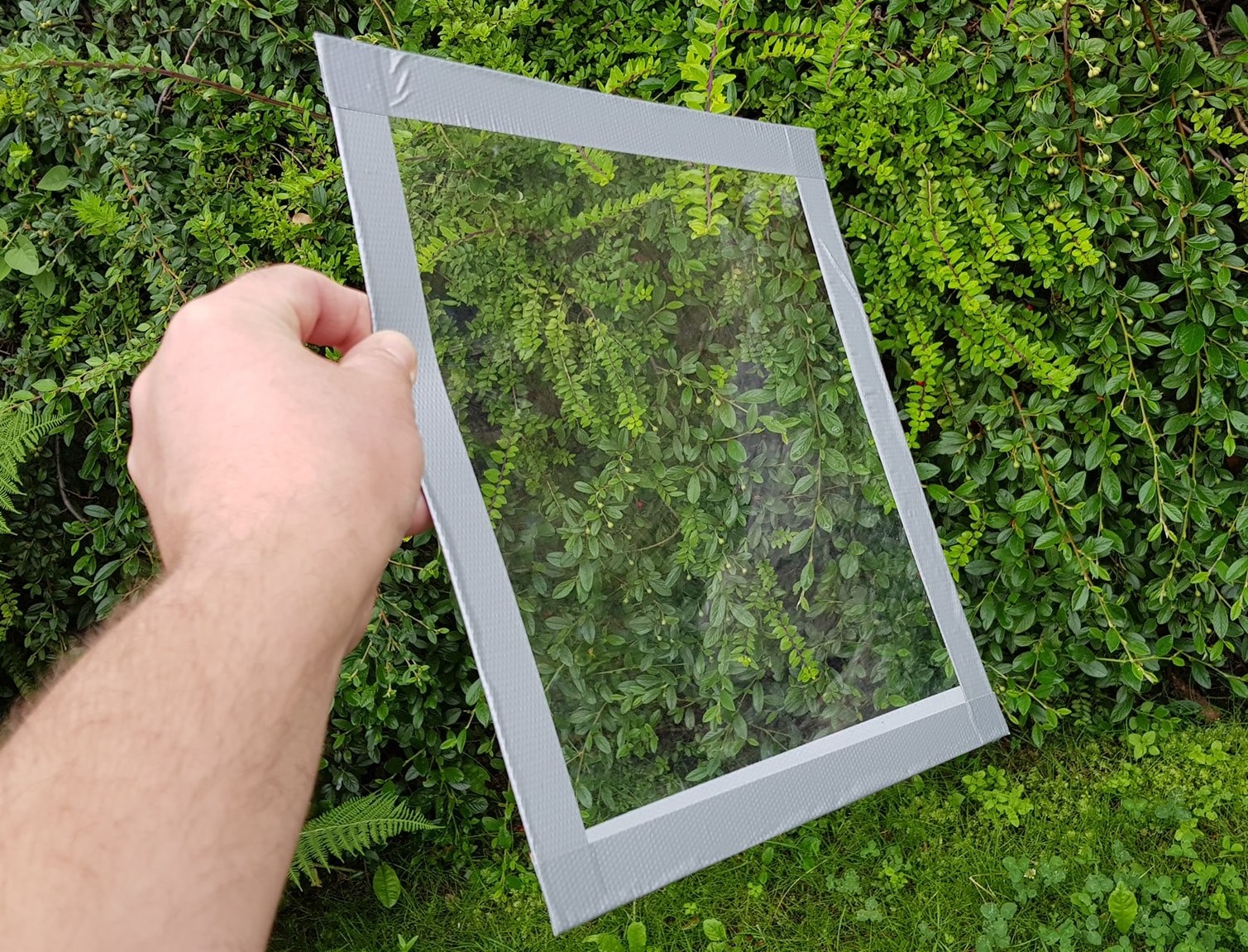
1. Polycarbonate viewing window
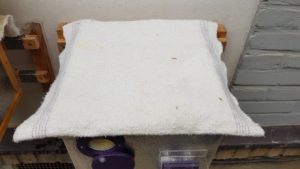
2. Carefully remove the hive roof
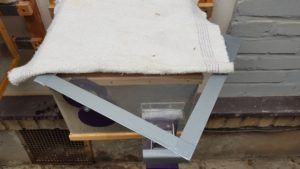
3. Slide the window under the cover cloth
4. Remove the cloth from the viewing window
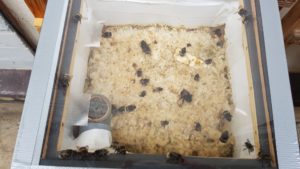
5. Observing bumblebees through the observation window
Photo O. Hercog
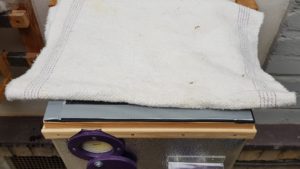
6. After observation, cover the observation window with a cloth and slowly pull out the window
7. Adjust the cover cloth well
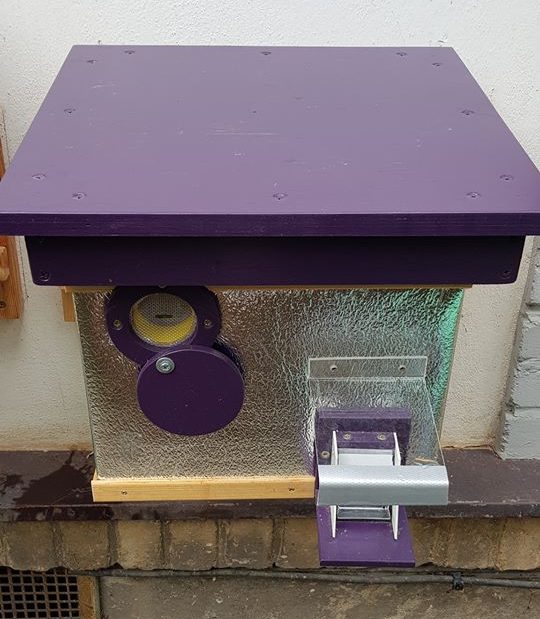
8. Put the hive roof back on
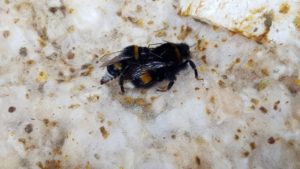
Sibling mating attempt in the nest in the light.
Photo O. Hercog