
Entrance hall to the hive
What you will learn here
- Why do hives have entrance passages for bumblebees?
- What should such a hallway look like?
- What to watch out for
Last updated: 1/3/2026

In a nutshell
- The corridor in the hive/bumblebee has its own meaning: for most bumblebee species, it simulates the entrance to a burrow/cavity
- However, experience shows that bumblebees can nest in nature and in hives where there is no corridor , it is short or, conversely, it is extremely long - this can also be adapted to in bumblebee breeding.
- Experience from breeding confirms that there is no fixed dependence on the length, shape, presence of the corridor and the success of bumblebee settlement in the hive.
- Prefer darkness to light in the corridor: bumblebees expect the corridor to be dark. Therefore, it is a good idea to profile the corridor/lining in the hive appropriately.
- The corridor of a developed nest can be removed: if the nest in the hive is strong and the corridor is getting clogged, it can be removed
- The permeability of the corridor is essential: in a corridor with an internal diameter of less than 18 mm, the corridor may become clogged
- Water condensation in the hallway is a problem: if water accumulates in the hallway, the scent trail may be interrupted, and bumblebees will not pass through the hallway - holes in the bottom of the entrance hallway or its slope will help
- Don't forget to check: monitor the bumblebee traffic. If the corridor becomes clogged during the season, deal with it in time
English abstract
- The entry corridor (tube) in the beehive/nest has its significance: for most species of bumblebees, it simulates the entrance to a burrow/cavity
- Experience shows that bumblebees in nature and in nests can nest in places where no tunnel exists , where it is very short, or where it is, on the contrary, extremely long. This flexibility can be reflected in managed bumblebee housing as well.
- Experience from practical bumblebee keeping confirms that there is no fixed dependence between the length, shape, or even the presence of a tunnel and the success of colony establishment in a nest box.
- Prefer darkness over light in the corridor: bumblebees expect darkness in the entry corridor. Therefore, it is good to design the corridor in such a way
- The entry corridor can be removed from a developed nest: if the nest in the hive is strong and the corridor is getting blocked, it can be removed.
- The permeability of the entry corridor is crucial: in a corridor with an inner diameter smaller than 18 mm, it can lead to blockage
- Condensation of water in the entry corridor is undesirable: if water accumulates in the corridor, it can lead to the interruption of the scent trail, and the bumblebees will not pass through the corridor – holes at the bottom of the entrance corridor or its slope can help.
- Don't forget about inspections: monitor the activity of bumblebees. If the corridor gets blocked during the season, address it promptly.
The importance of the entrance hall
Most bumblebee species need an entrance tube because it simulates a passageway into a rodent burrow , where they usually nest in nature. A typical example of such a species is the ground bumblebee (Bombus terrestris).
However, some species nest in grass piles , such as the field bumblebee (Bombus pascuorum). These species do not need to walk , but on the other hand, they do not mind a corridor .
The same is true for the hypnotic bumblebee (Bombus hypnorum). They often nest in birdhouses or tree hollows – without a passage. However, the same species also nests in roof insulation, travelling there via a passage that can be several metres long.
Observation and experience show that a corridor is appropriate where the queen mother of a ground-nesting species requires such a corridor and feels content and safe there. Hives without a corridor therefore have a lower establishment success rate in these species.
The corridor serves as a place for bumblebees to resist intruders . One example is a mother bumblebee trying to get into the nest. She is large and once she is in the nest cavity, the bumblebees have no chance. However, if the worker bee resists her in the entrance hole or in the corridor, they can chase her away. Read more about bumblebees Bumblebees and Bumblebee Breeding
Sometimes it can happen that the corridor gets clogged and then a problem is created. This happens with a corridor with an unsuitable inner diameter (less than 18mm) and a strong nest. It also happens with a long corridor where there is a lot of moisture (condensation) and dead bumblebees. This can lead to the fact that the scent trail is interrupted and the bumblebees stop walking through the corridor. Such a long corridor is described in the following text, but also, for example, A hive in the interior - a protective flap on the wall .
Once the nest becomes stronger or when a strong nest is moved (not a small nest with the first generation of workers), the corridor is no longer so essential .
Whether the corridor is located inside or outside the hive is not so crucial . Both solutions have their advantages and disadvantages, which we will describe below.
The entrance corridor is therefore important at the beginning of nest development , then it can be removed if necessary.
In any case, the keeper should pay attention to the corridor in the hive - at the beginning of the season and throughout it .
Interior design of the hallway
It is a basic solution used by most beginners and is also used in commercial products due to its simplicity of implementation
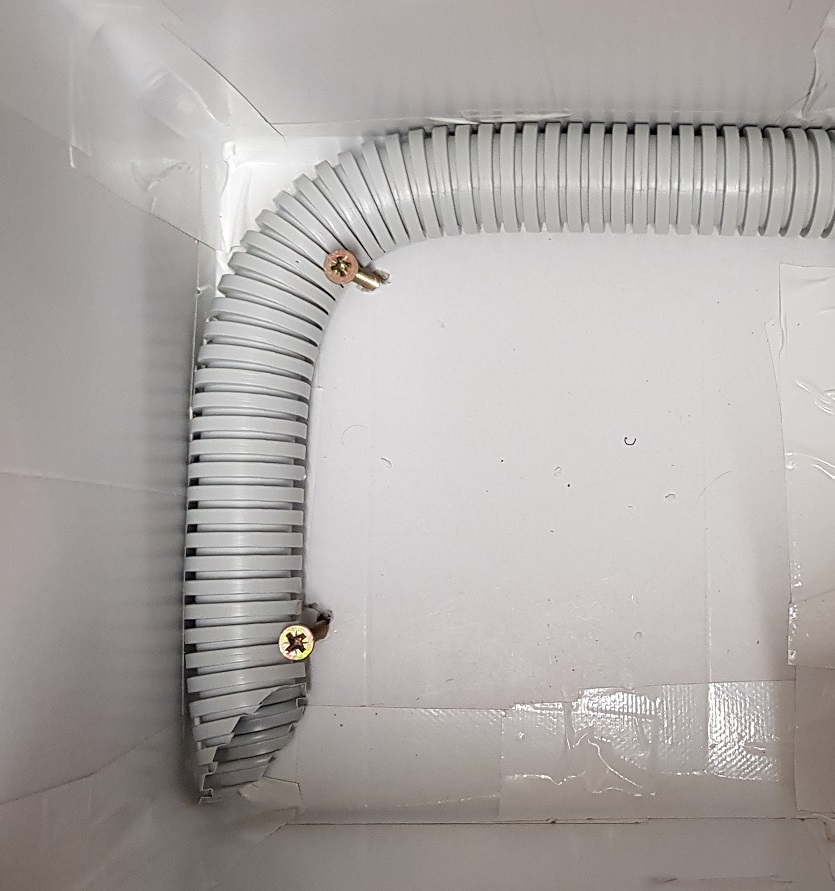
Inner corridor made of a tube (gooseneck) – photo O. Hercog
Some newly commercially available ucz use a short, slightly curved corridor. Such a solution seems to be a good compromise between the needs of different species - see next comment.
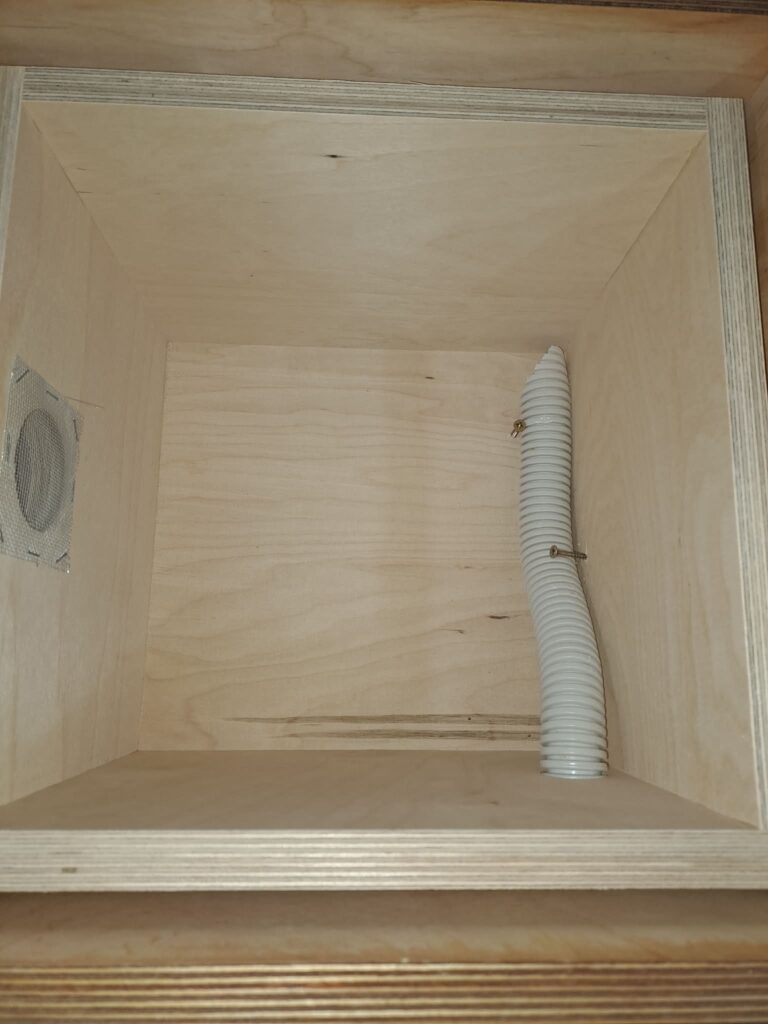
a clearance (inner diameter) of 25 mm for the inner corridor/pipe .
We do not recommend a smaller opening. If the opening is too small, it can easily become clogged – with clutter, dead individuals, XXL new queens, etc.
It is important to remember that bumblebees pass through the tube here and there. If they meet and cannot fit in, they have to return. This costs them a lot of energy and leads to unnatural delays in traffic (traffic jams). They also lose pollen grains here, which they can no longer use.
Here too, some keepers use a corridor with a width of 18 mm. However, this is a short corridor and keepers who care for the hive practically every day.
For indoor solutions , we do not recommend a corridor with a larger width. The corridor has a protective factor - it can be a place where bumblebees defend themselves against intruders. (see the chapter Your questions and answers in this section)
Some commercial products have an inappropriate corridor width , sometimes as low as 14 mm.
This size is unsuitable for most species – there is a risk of clogging the passage.
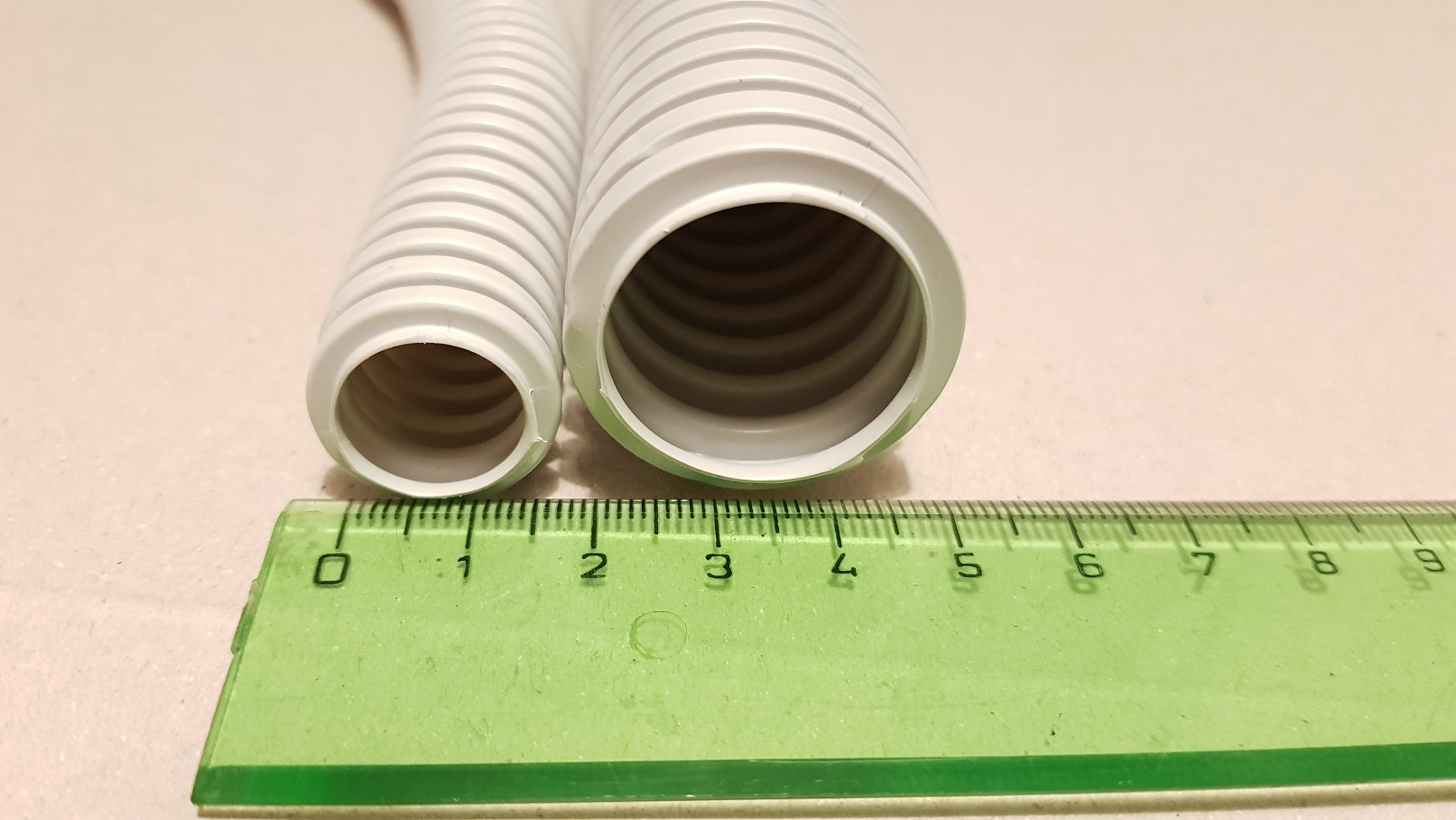
Comparison of the corridor width of a commercial product (14 mm) with a pipe with the recommended width (25 mm) – photo by O. Hercog
In that case, it is advisable to replace this tube with another one with a larger diameter . If you cannot create a larger hole in the hive body, you can use an emergency solution and adjust the shortened original tube with a new one - see the photo instructions.
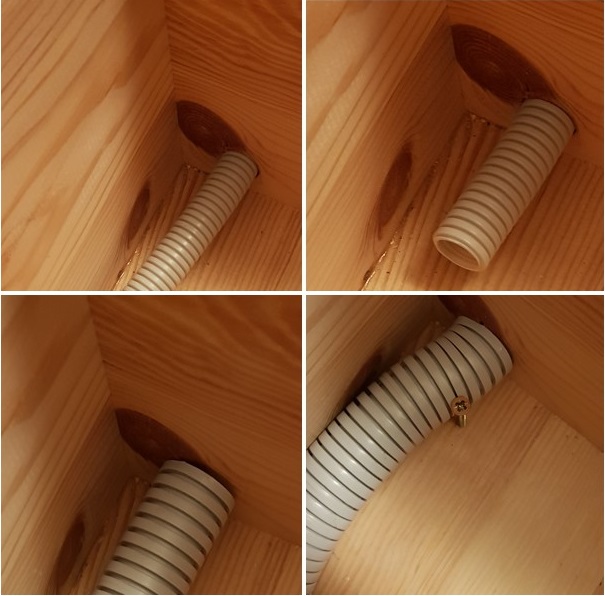
Method of repairing an unsuitable corridor in a bumblebee hive (bumblebee hive) replacing a corridor with a small clearance with a larger one – photo O.Hercog
If you are going to adjust the width of the corridor, do not adjust the width of the opening in the flap , leave it at its original size.
Recommended length of the internal corridor – it is advisable for the corridor to start at the front wall of the hive, run along the inner perimeter of the side wall, along the opposite wall and end in the corner (see photos).
This results in a length of approximately 60 cm for a hive measuring 30x30x30 cm.
It is recommended to create a slight bend - it can be an S-shaped or a corner.
The explanation and reasons for such a solution are not unified. According to some breeders, the bend simulates the shape of a mouse hole, according to others, the main reason is the fact that when it is bent, the nest cannot be seen and no wind blows there.
We used to recommend a right angle, but it turned out that this is not a requirement . If the corridor is led along the bottom of the hive, it is a quite logical solution. However, some manufacturers have shortened the corridor and lead it from top to bottom - this is an S-shaped curvature, which serves the same purpose.
An important aspect is also the internal layout of the corridor in the hive. As we mentioned above, the tube should be led along the sides of the hive, not through the middle. The central space of the hive should be used for the nest and bumblebees usually start building it there. A corridor through the middle then practically makes any possible service intervention during the life of the colony impossible. See careful inspection of the nest with its removal using a bumblebee lift, or removal of the tube in case of its blockage, etc.
Ending the tube in the hive: One of the greatest contemporary bumblebee breeders, Jaromír Čížek (bumblebee guru), recommends ending the tube in the corner of the hive. Mr. Čížek has found through his observations that the queen in a newly settled hive walks along the wall and stops in the corner. So she finds the tube that opens there faster. This reduces the risk of the queen “freezing” in the hive (See settling the mother-queen in the hive.
But here too, some breeders use a different solution - they let the corridor end not next to the wall, and it also works.
We also recommend cutting the end of the tube diagonally . The entrance will then be elliptical in shape and the entrance area will be larger, making it easier for bumblebees to find the entrance to the corridor.
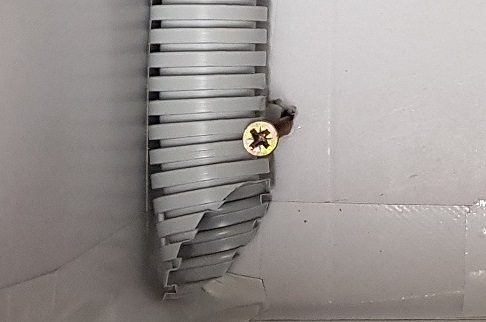
Detail of the recommended tube end – corridor
Cutting and leading into the corner of the hive – photo O.Hercog
Material for making the corridor: It is not so critical what material you use. The corridor can be made from hose, an electrician's gooseneck, but also PVC or HT pipes. Opinions vary, but most solutions work.
The inner surface of the corridor should not be slippery, which seems to be a good fit for the gooseneck, which is why bumblebee guru Mr. Miroslav Stuchl recommended it.
A description of the installation of the corridor is given in the chapter Preparing the hive before the season .
Examples of errors and inappropriate solutions:
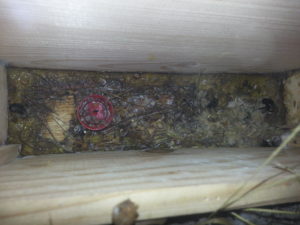
- A corridor like a cavity (antuary) in a hive (a partition between the nesting space and the exit from the hive) – you can find it in some commercial products and old recommendations. However, we classify such a solution as incorrect because bumblebees perceive such a space as a “place outside” and happily defecate there, bringing corpses or poorly developing larvae here. The entire space thus attracts parasites. Thanks to its high height, it allows parasites to easily hide. This narrow yet high space is very difficult for the beekeeper to access. Cleaning, inspection, and repairs are complicated and often cannot be carried out 100%. In addition, the settled queen loses the sense of security of the corridor due to the high ceiling.
Solution: don't use such a scarecrow, or remove the vestibuleInappropriate solution – a hive with an antechamber. You can see the amount of waste, which is a source of disease and a hiding place for parasites – photo O.Hercog
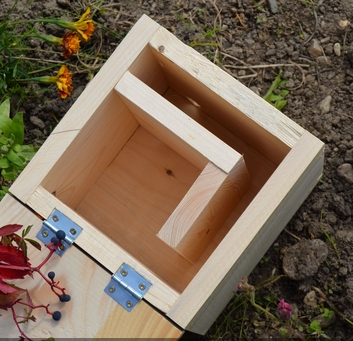
- The corridor is L-shaped, but made similarly to a partition - with a height up to the top of the hive. You can again find it in some commercial products. It is a faulty design, when for the bumblebee such a corridor does not have a ceiling and thus the protective factor of the corridor is lost. The parasite and the workers miss out in such a corridor. On the contrary, such a corridor is an ideal hiding place for parasites. The narrow and high space does not allow the breeder to thoroughly inspect and clean the lower parts of the corridor.
Solution: do not use such a trap or remove the partitionExample of a hive without ventilation with an internal partition replacing the corridor – the bottom of the corridor will be very difficult to clean. In addition, there is very little internal space for the nest.
(source internet)
Corridors with smaller clearances than those recommended by us. The reason why you may encounter them is the manufacturers' lower production costs. Why this solution is unsuitable – see above.
Solution:
Inappropriate entrance corridor (clearance/inner diameter below 18 mm), replace the corridor with a tube with a clearance of 25 mm. Adjust the opening in the hive body to the new diameter. However, do not adjust the diameter of the inlet opening in the flap. If this is not possible, use as an emergency solution a new tube with a clearance of 25 mm fitted to a shortened old tube (it is enough to leave only about 5 cm of it in the hive ).
Outdoor corridor solution
This solution can help the beekeeper to resolve the layout of the hive and trips (e.g. hives placed inside buildings where they are not exposed to temperature fluctuations and extremes).
A sufficiently long outer corridor is a significant protective factor , because the comb and the entrance hole are far from the hive, making it difficult for parasites to enter the hive.
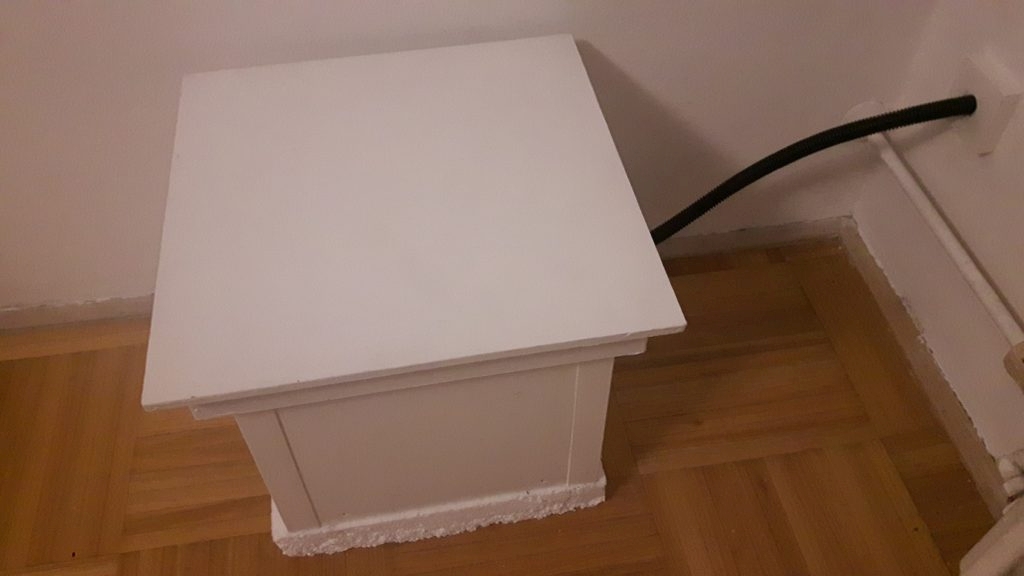
Using the external corridor to place a hive indoors – photo J. Čížek
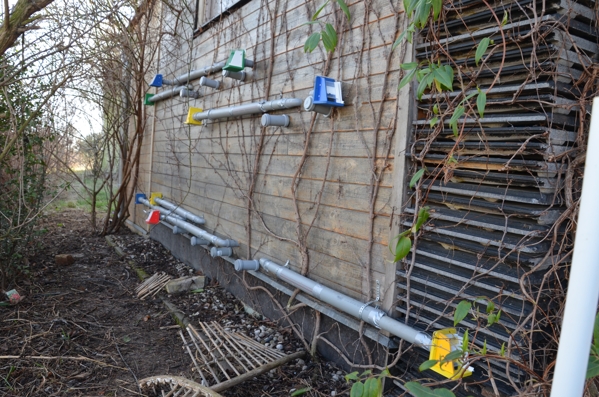
Example of the external corridors of the hives, which are located inside the warehouse – photo by K. Kučer
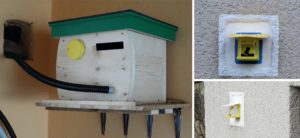
Placing the hive in a garage or basement with a flap led out through a long pipe
Photo E. Kalčíková
On the other hand, such a solution using long external corridors requires a different way of settling the queen mother .
The topic of outdoor solutions will therefore be described in detail in the chapter for experienced beekeepers. The corridor in the hive for experienced beekeepers
Possible problems with the entrance hall and their solutions
Condensation in the entrance hall
If the nest is thick, it produces a lot of moisture. Even if the hive is well insulated, water condensation .
If condensation builds up in the entrance hallway, it can sometimes disrupt “traffic” and create a scent trail . Bumblebees will then stop going in/out of the hallway and the hallway will appear clogged .
Likewise, if bumblebees get diarrhea, they walk through the corridor in ... and drag feces and wet dirt into the nest.
A fairly simple hallway renovation will help:
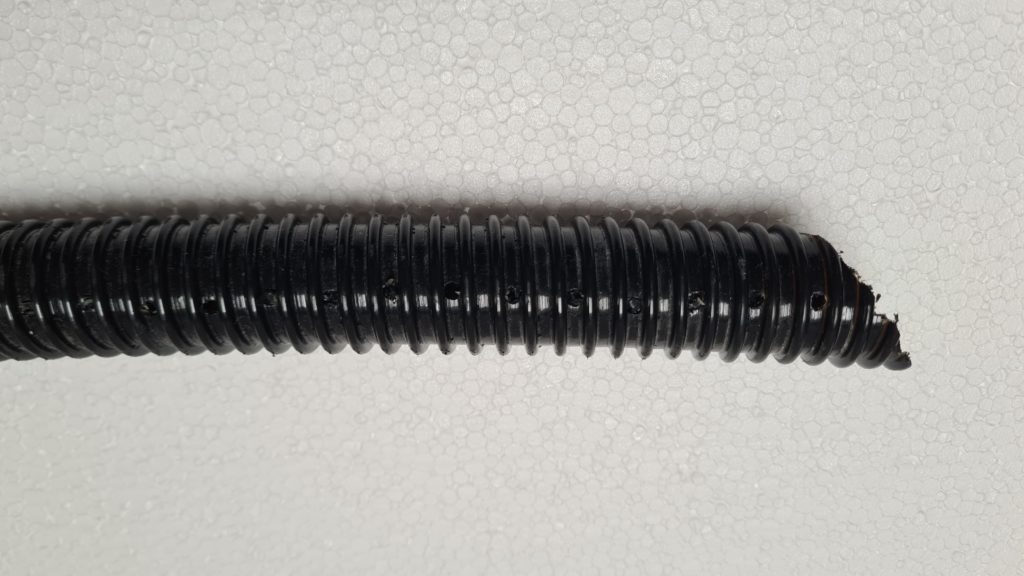
- Create a series of holes with a diameter of 3-4 mm in the bottom of the corridor, through which the condensate will drain into the hive spaces.
- openings along the entire length of the corridor that is in the hive area.
- The advantage is the smooth inner wall of the tube - we recommend roughening so that the bumblebees can move easily inside it.
flexible cable protection is a good fit . The number 32 is the inner diameter in mm, which corresponds to a clearance of 25 mm. The S-130-25 with a passage clearance of 22 mm can also be used.
This protector is essentially a gooseneck with a thick wall , but it has a smooth inner profile and condensate will not stick to it if you drain it away through the holes in the bottom , just like in a classic profiled gooseneck.
Installation notes:
- To allow the condensate to drain, the holes must be in the bottom of the corridor
- Therefore, drill a hole at the end and beginning of the corridor, insert a wire/drill into it - this way you will be sure that the corridor is installed correctly when installing it in the hive
- Of course, pull the drill wire out of the pipe after installation
We also recommend this solution for an interior escape with a flap on the wall . There we recommend a passage with a smooth inner wall . The holes just need to be drilled at the bottom at the lowest point of the corridor .
If such a place is outside the hive, it is necessary to protect it . Just wrap it with Uhelon 53S and around it with aluminum mesh . A few turns of the mesh are enough - fix the edges with insulating tape . The condensate will drain out, at the end of the season you throw away the mesh, you can renew it for the next one.
You can also adjust the slope of the corridor – the opening in the flap should be higher. The condensate will drain into the hive. But then it will accumulate at the entrance, so it is better to drain it through the holes at the bottom of the entrance corridor .

Entrance hall with smooth walls and holes for condensate drainage in the bottom
Photo: O. Hercog (2023)
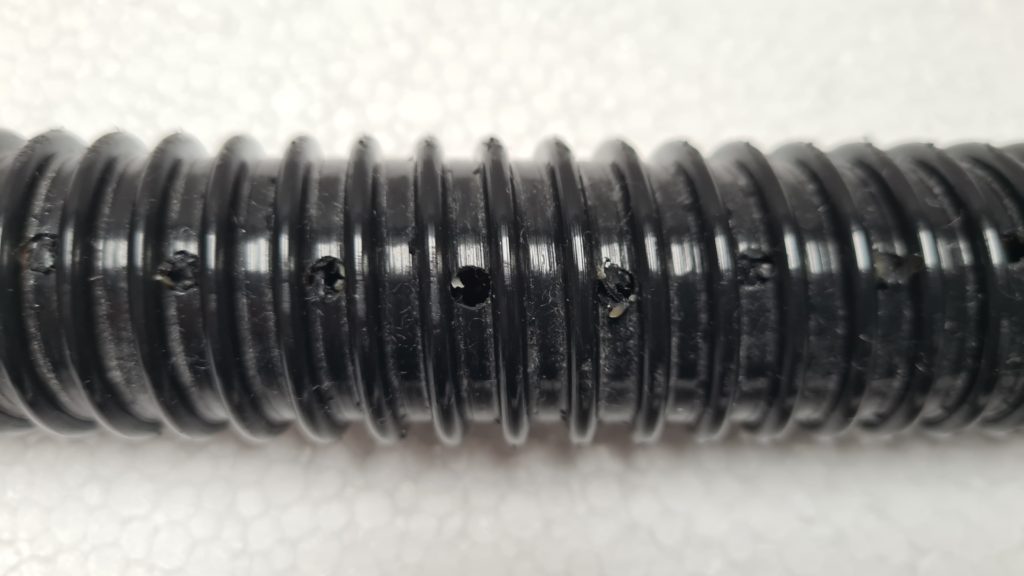
Entrance hall with smooth walls and holes for condensate drainage in the bottom
Photo: O. Hercog (2023)
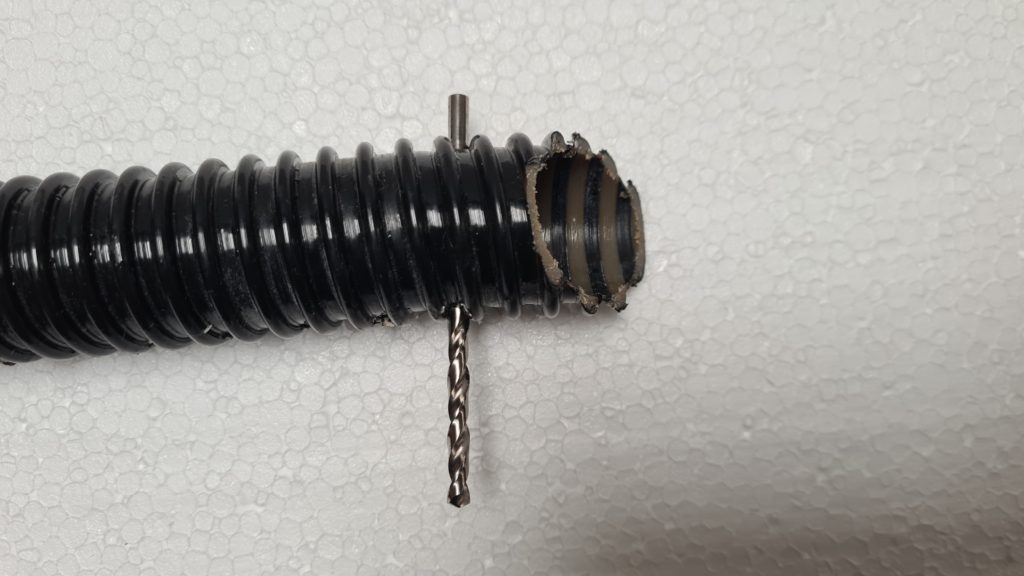
Entrance hall with smooth wall and holes for condensate drainage in the bottom – Assembly aid
Photo: O. Hercog (2023)
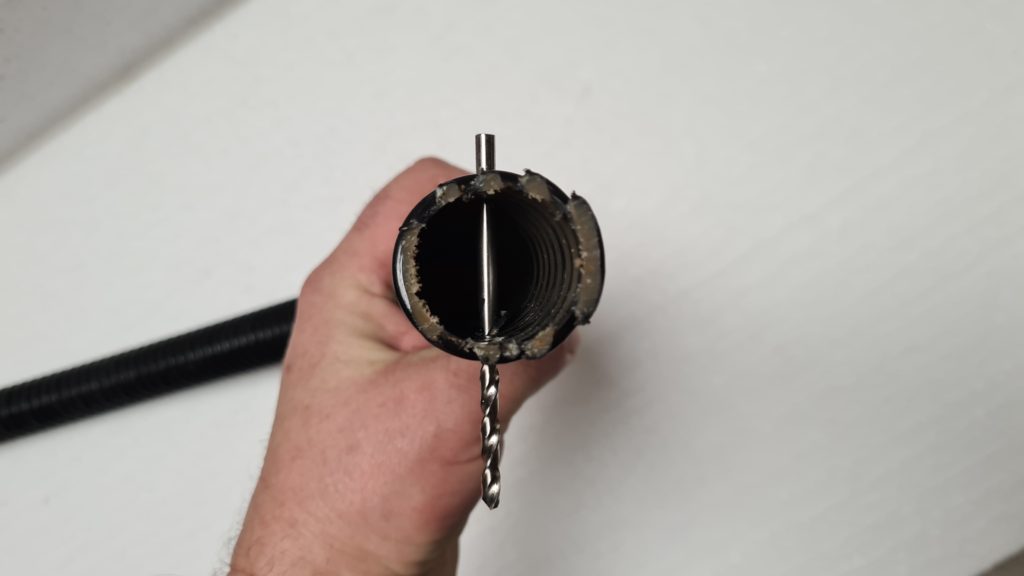
Entrance hall with smooth wall and holes for condensate drainage in the bottom – Assembly aid
Photo: O. Hercog (2023)
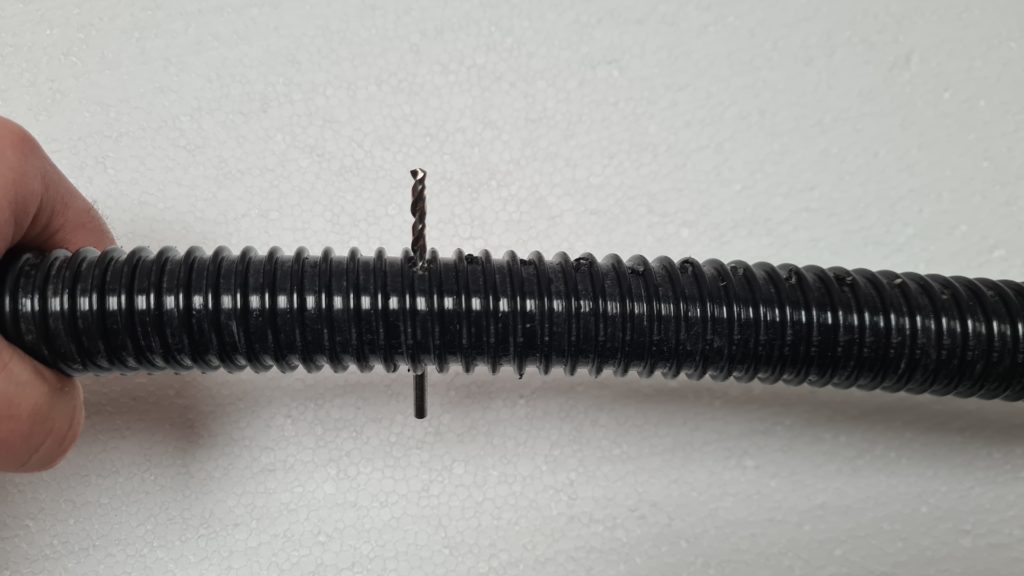
Entrance hall with smooth wall and holes for condensate drainage in the bottom – Assembly aid
Photo: O. Hercog (2023)
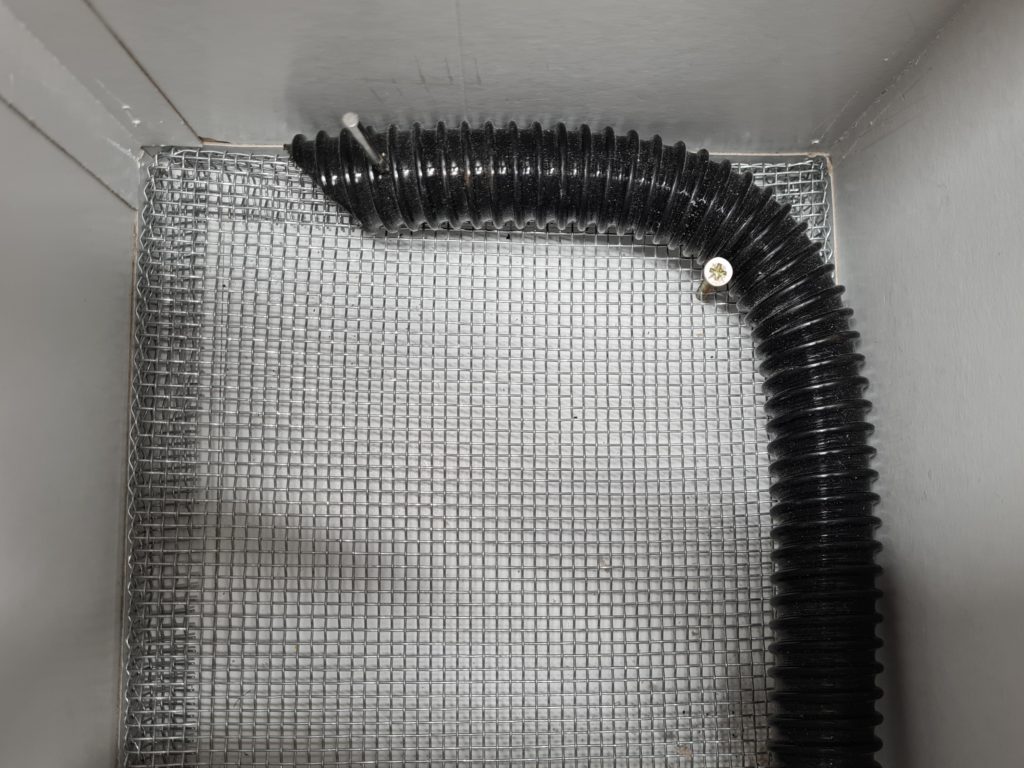
Entrance hall with smooth wall and holes for condensate drainage in the bottom – Assembly aid
Photo: O. Hercog (2023)
Breeders' observations: What about the length, diameter and shape of the bumblebee corridor?
Long, broken corridors have been considered the basis of proper bumblebee breeding for many years. Many of us started out that way – a bumblebee hive with a meter-long tube, two cracks and the feeling that no queen would settle down without it. But over time, it has become clear that the reality is much more varied and that the behavior of individual species differs significantly and the dependence on the length of the corridor, or its presence, is not so strong.
Species that do not need a corridor
The experience of breeders agrees that many bumblebee species do not require a long corridor at all:
- The Bumblebee commonly nests in birdhouses without a corridor. And not only that – although it prefers to nest in a birdhouse, it can easily nest behind a corridor more than 3 meters long.
- The meadow bumblebee regularly settles in hives without a corridor, but it does not mind the corridor.
- The bumblebee often builds surface nests in moss and long, curved corridors can be a problem for it – in some hives it literally "freezes" when settling and cannot get out. However, it can also manage a corridor if it wants to nest.
- The rock bumblebee can easily cope with a short, straight and unbroken corridor, but a long corridor is not an obstacle either. However, in this species, a long corridor sometimes makes it easier to create unwelcome compartments outside the hive (this species is quite famous for this - it creates compartments even in the hive.
Species for which a long corridor was previously assumed
It was long believed that a long, curved corridor was necessary mainly for:
- The ground bumblebee – traditionally considered a species that needs a deep underground nest. However, practice has shown that it settles without any problems even in shorter, unbroken corridors. This abundant species makes a "Zagorka" when settling. This "lady" surprisingly does not settle and on average only 1 queen out of 6-10 settles easily, and the length of the corridor does not change this.
- The wood bumblebee – some keepers even once claimed that it needed a one or two meter long tube. In the end, it turned out that the length or orientation of the corridor does not matter. The key is definitely the animal smell in the lining. Once suitable animal hairs are used, the success rate of settlement is suddenly high – and queens settle in hives, even without a corridor at all.
It is gradually becoming clear that most bumblebee species do not need a long corridor, some do not mind the absence of a corridor, and some may even find it a hindrance . Experienced breeders who are targeting a specific species can adjust their corridor strategy according to their intention.
The corridor can serve as a place of defense of the nest against the penetration of parasites, for example, bumblebees. However, here too it is gradually becoming clear that bumblebees primarily guard the entrance hole and that they do not set up patrols in the corridor. For example, if a bumblebee enters the hive through the entrance hole, the chance that a worker will stop it is small, although it is supported by observations.
Some beekeepers place bumblebees in hives without a corridor, or over time they remove the corridor if it becomes clogged.
However, manufacturers cannot afford to produce a hive for individual species. Therefore, they choose short, simple and slightly unbroken corridors that:
- allow the successful establishment of all common species,
- it doesn't harm anyone,
- they simplify construction and maintenance.
But what we still think is important is the brightness of the hallway
- Manufacturers often use tubes with an outer diameter of 20–25 mm. With such narrow tubes, the passage has been blocked several times – for example, when a young sick queen dies in it, or when bumblebees clog it with lining and dirt. The lining is often transported out through the passage as the nest grows.
When can a long hallway help or is it necessary?
- Today, the corridor serves primarily as a structural element - a passage through the hive wall (essential for a hive with a double wall), a secure attachment of the flap, and a way for the exit hole to be brought to a suitable location.
- If the hive has a flap, a longer corridor can partially prevent Aphomia sociella larvae (the bumblebee moth) from entering the nest. This is not 100% protection, but it can help in some cases.
Summary
- The corridor in the bumblebee hive is a good example of how bumblebee breeding in the hive is constantly moving forward. More breeders are sharing their experiences and observations, and this is leading to changes. You can offer us your knowledge through us.
- There are different approaches and over time the breeder will find their proven path that they will not allow to be followed. However, this does not mean that there are no other paths and possibilities.
- On our website we share solutions that have proven themselves and proven themselves in practice. That is why we are waiting for such solutions to be confirmed. That is why you will find more options and you can choose from them.
- Likewise, you can offer your proven solutions to others through us and thus advance bumblebee breeding.
Addition
Also take a look at possible solutions for placing the hive. You can read about this on the page Placing a hive in the garden and elsewhere.
You might also be interested in placing the hive indoors, which offers a number of advantages. You can read about this on the page Placing the hive indoors – Protective flap on the wall


