Lining

How to properly prepare the hive filler for bumblebees

What you will learn here
  • In this chapter, we will provide you with basic information about thermal insulation, its properties and preparation.
  • We explain why quality padding is important
  • We will also explain why it must not contain long fibers
  • We will also explain why there must be a sufficient amount of lining in the hive (bumblebee hive)

In this chapter we will provide you with basic information about heat-retaining lining, its properties and preparation. We recommend that you first familiarize yourself with the basics, which are listed here. For advanced users, we have more detailed information available, which is listed in the chapter for advanced breeders .

Last updated: 13/02/2024

Bumblebees PLUS - In a Nutshell - Foto Internet

In a nutshell

  • Thermal insulation: the lining in the hive serves as thermal insulation, bumblebees will not build a nest in an empty/semi-empty cavity.
  • Building material: bumblebees create a cavity in the lining, build a waxwork in it, also build corridors and carry away excess material
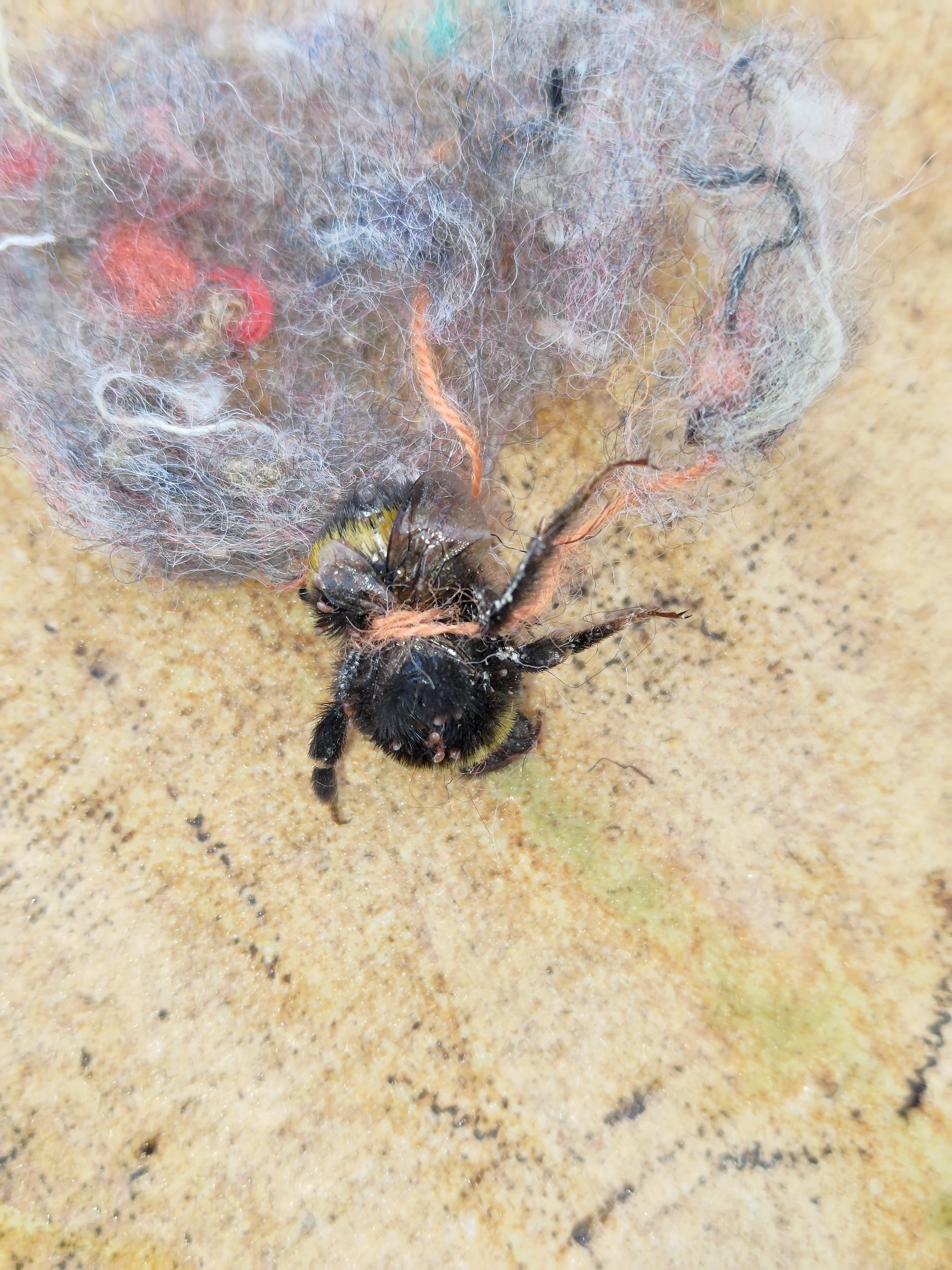
  • The danger lies in the long fibers: bumblebees can get tangled in the long fibers and die
  • Pay attention to the cleanliness of the lining used: The lining must be clean, not sag when wet and must not fall into the bumblebees' work.
  • There is a lot of humidity in the nest and mold will form there: the lining should not contain mold spores, so grass leaves are not suitable
  • Lining in motion: bumblebees with lining constantly working must be made of a material that allows for the formation of tufts/balls and their transport
  • The amount of lining is important: there should be enough lining in the hive to protect the nest from temperature changes and from moisture and mold penetrating the waxwork.
  • The lining can be removed and partially replaced: the lining can be removed during the season, or dirty parts can be replaced
  • Suitable materials: raw cotton, pure sheep's fleece or jute felt are suitable materials - always without long fibers
  • Lining color: the advantage is a light color of the lining, in which the nest is clearly visible, as well as dirt and parasites
  • Used lining as an attractant: part of last year's lining can be treated and used in the hive as an attractant for the queen

English Abstract

  • Thermal insulation: the lining in the beehive serves as thermal insulation, bumblebees will not build a nest in an empty/semi-empty cavity.
  • Building material: bumblebees create a cavity in the lining, wax work in the lining, also build tunnels and carry away excess material
  • The danger lies in the long threads: bumblebees can become entangled in the long threads and die
  • Make sure the lining used is clean: the lining must be clean, must not come off when it gets wet and must not spill into the work
  • There is a lot of moisture in the nest and mold will form: the lining should not contain mold spores, so grass leaves are not suitable
  • Lining on the move: the bumblebees are constantly working with the lining, it must be made of a material that will allow the formation of tufts/balls and their transport
  • The amount of lining is important: there should be enough lining in the hive to protect the nest from temperature changes and from moisture and mold entering the waxwork.
  • The lining can be removed and partially replaced: the lining can be removed during the season or the soiled parts can be replaced
  • Suitable materials: raw cotton, pure sheep's fleece or jute felt – always without long fibers – are suitable
  • Lining colour: a light colored lining is preferable, in which the nest is easily visible, as are dirt and parasites
  • Lining used as attractant: part of the last year's lining can be treated and used in the hive as an attractant for the queen


Introduction

Why do bumblebees actually need a warm lining? Bumblebees need a lining to keep their brood (offspring) at the right temperature , which is an absolute necessity for their development.

Bumblebees with lining are constantly working .

corridors in it so that they can move around . These corridors probably also serve as ventilation channels . They can use them to regulate the temperature and humidity in the nest.

The lining also helps to hold the shape and nests . His waxwork is irregular and the lining keeps him in a pile for a while.

Bumblebees can also cover the ventilation hole with a lining if they deem it necessary. This solves the temperature and possibly drafts that bother them.

The nest gradually enlarges, and as it grows, the bumblebees carry excess lining out of the nest, creating space for the waxwork to grow.

To make this possible, the lining must be of high quality , well prepared a sufficient amount of it in the hive (bumblebee hive) (up to the ventilation hole).

See the chapter Life cycle of bumblebees


What material to use as a heat-retaining lining in a bumblebee hive:

For the lining to be suitable for bumblebees, it must have the right properties and be properly prepared. The lining, its properties, quality and preparation is one of the fundamental pillars of success for a bumblebee breeder = it cannot be underestimated.

The right material must always meet the following parameters:
  • The basis is the airiness and fluffiness of the material, where the air acts as insulation, like in a sleeping bag.
  • It must be dry,
  • It must not be greasy or moldy,
  • It must not contain chemicals , nor be treated/washed with chemicals. It must not be synthetic fabrics,
  • The material must not smell (rotting, mold, chemicals, etc.),
  • It must not contain long fibers or threads that bumblebees could get entangled in,
  • Material must not be poured into cells in the nest where it would interfere with the development of the fetus (moss and sawdust),
  • Bumblebees need to bite through the material, so natural materials are suitable
  • Bumblebees must be able to process and transport .

Recommended materials

Natural cotton

100% natural cotton is very suitable. It should be thoroughly torn (or even cut) into small pieces.
An example of a product that we use in hives is Lintran/Čmeltran etc.

It is an ecological filling material made of 100% natural cotton . The product is intended as a filling for soft toys, dolls, pillows, bean bags, etc. or natural litter for small pets. It is harmless, safe and environmentally friendly and, moreover, it is a Czech product.

This material tends to shrink, so it's a good idea not to leave it too fluffy . But definitely don't smother it.


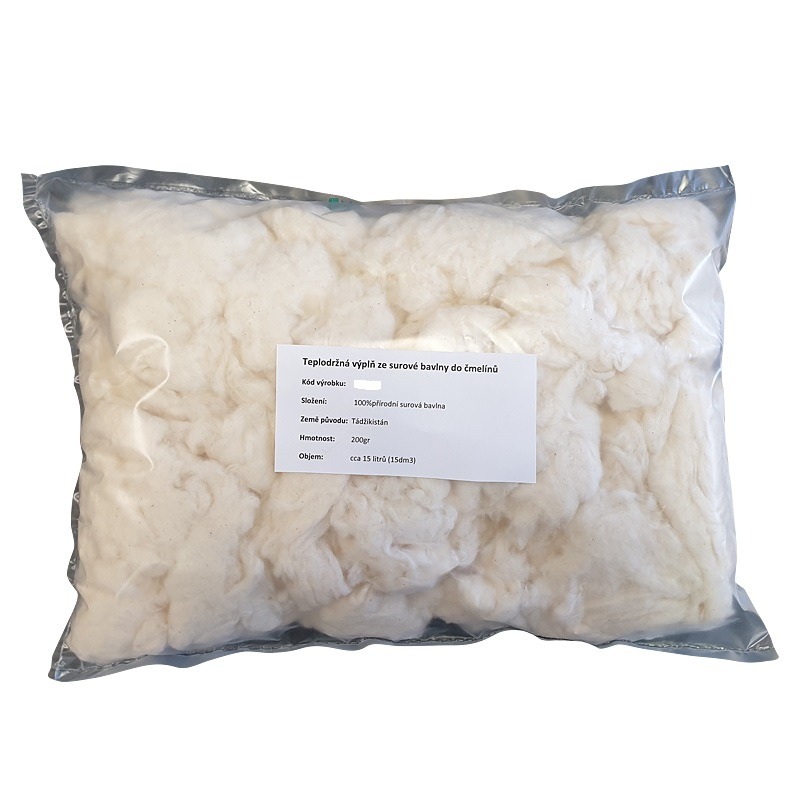
Bumblebees PLUS - Raw cotton - Photo Internet

Raw cotton
Photo: Internet
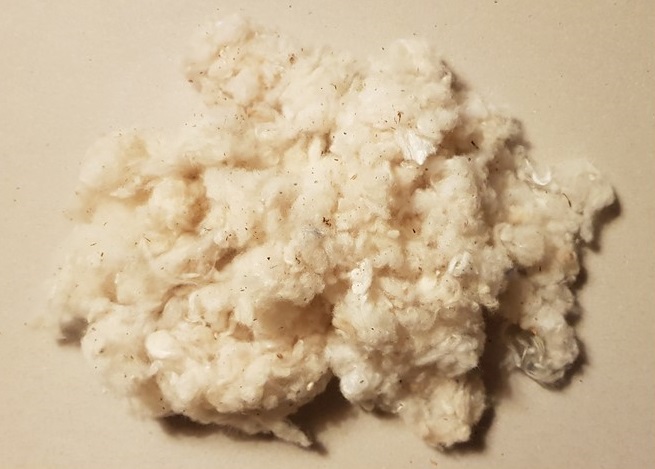
Bumblebees PLUS - Lining made of raw cotton

Raw cotton lining
Photo: O. Hercog

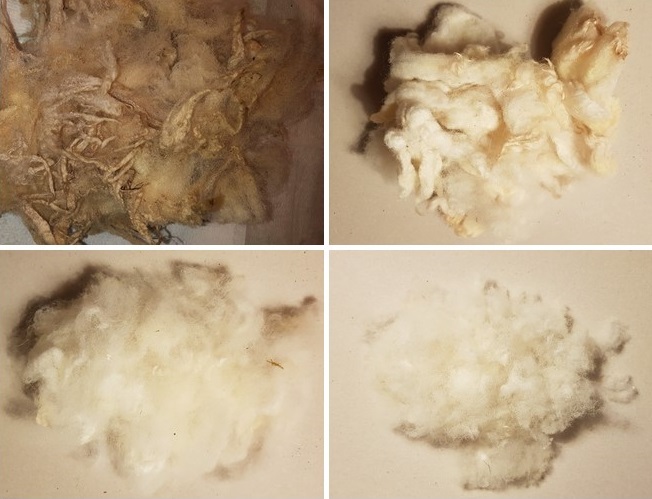
Modified sheepskin

This material is used with great success. It is the best material available. However, its preparation is quite time-consuming, which is why we include it in the advanced section.
However, if you use this lining, you will be very satisfied. Ondra Hercog does not allow fleece lining 😀

Bumblebees PLUS - Raw sheepskin lining - the process of processing from raw fleece, after washing, tufting and cutting

Lining made from raw sheep fleece – the process of processing from raw fleece, after washing, tufting and cutting – photo O. Hercog
 
Fine rabbit hair

Fine hairs from rabbit nests a very good attractant for some species . Just a few scented hairs in the middle of the lining, or even another material, are enough. However, the condition is to use fine hair, preferably from the belly of a mother rabbit .

Some species are very fond of such lining, for example the wood bumblebee (Bombus sylvarum) and the grove bumblebee (Bombus lucorum).

Rabbit hair is also close to a vole's nest, but it's not as easy to obtain.

Note: 

You read somewhere that material from a mouse nest – urine and feces – helps to populate the hive. That's a bumblebee HOAX and a translation error .

It is proven that vole nests work this way because they actually smell. Mouse nests stink. We have verified that if the mother wants to, she will nest in a new hive and lining . If she doesn't want to, no attractant will help her.


Jute felt

This material was successfully tested by Vítek Cach. A strip of non-woven jute fabric can be used as a source.

Made from purely natural, ecological material, which decomposes completely over time and improves soil quality after decomposition.
Thanks to its properties, it is used primarily in agriculture, forestry, horticulture and various craft industries:

  • Soil protection against erosion.
    Protection of plants and tree trunks against pests.
    Protection of root balls in transplanted or transported plants.
    In winter, it protects against drying out, frost and wind.
    Covering mulch layer when growing plants (temporary prevention of weed growth).

It is essential that the strip of cloth is thoroughly shredded into fibers the bumblebees can work well with us .

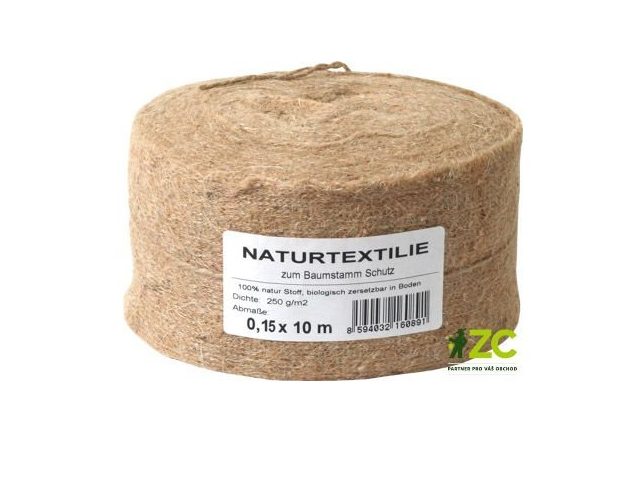
The price is reasonable, one strip will last you for many hive fillings. For one hive filling you need about 1 standard meter of the roll in the picture.

Felt is available in several online stores or garden centers.


How to prepare jute felt lining?

Jute felt must be thoroughly ruffled .
This can be done by hand or with a brush. You can also use a comb for combing sheep's wool.
to remove long fibers here as well , which could endanger bumblebees.
They can be removed by tufting or with scissors .

The photo shows a roll of jute felt and the material after being torn apart, before being cut.


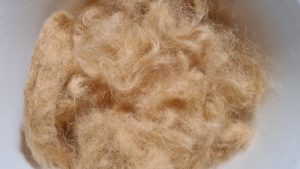
Bumblebees PLUS - Jute felt - Foto Internet

Jute felt
Photo: Internet


Bumblebees PLUS - Lining made of jute felt - Photo Ondřej Hercog 2023 02 16 (1)

Lining made of jute felt
Photo: O. Hercog 916/2/2023)
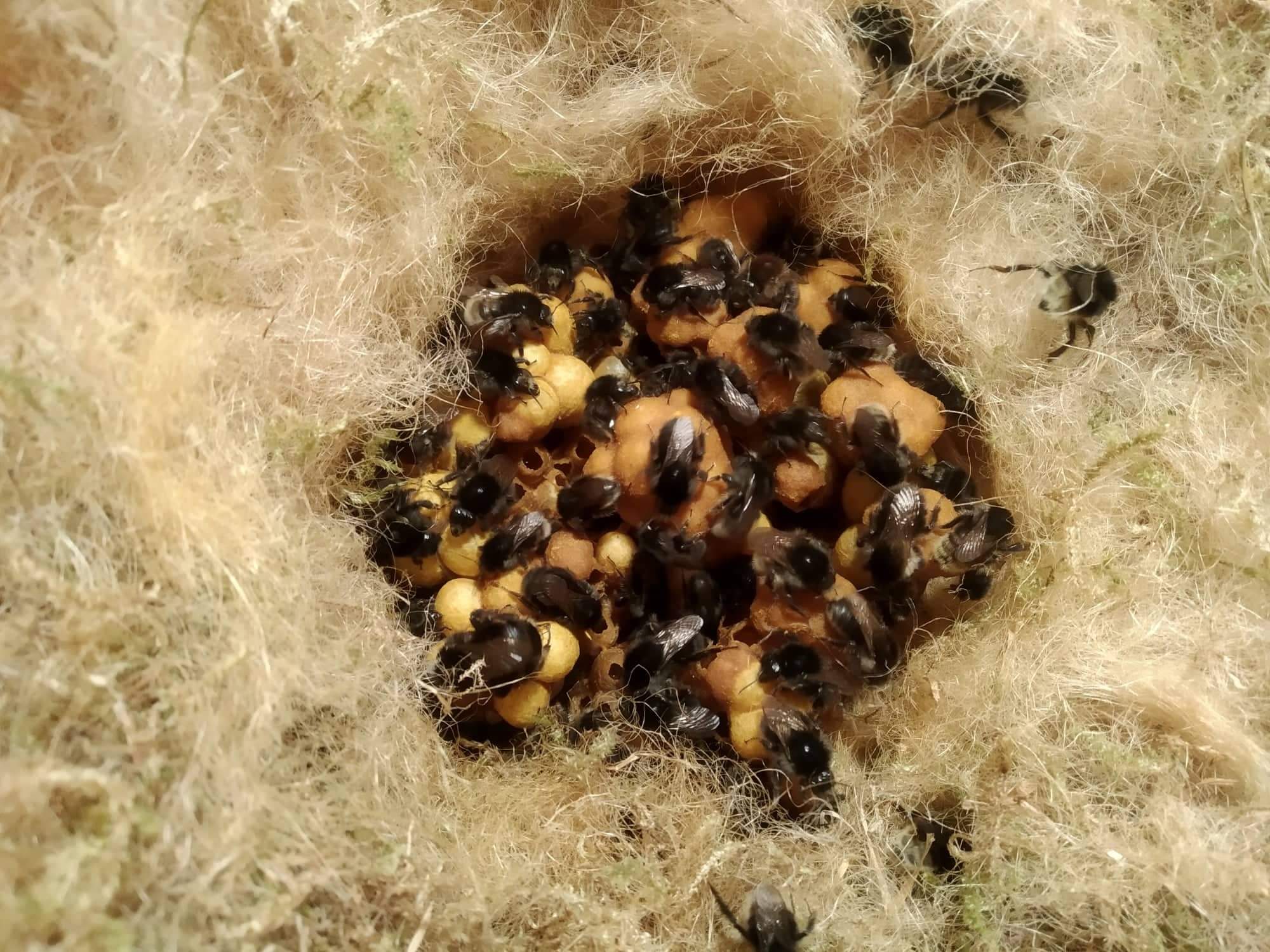
In this photo you can see that bumblebees really like well-woven jute. Jute can be used for the entire filling.

Bumblebees PLUS - Nest of variable bumblebees - Bombus humilis - Photo Vít Cach 2021

Nest of variable bumblebees (Bombus humilis)
Photo: V. Cach 2021

Examples of less suitable materials

Recycled fabric

You can use recycled fabric , tailor's wadding (e.g. previously commonly used lining or shoulder padding of coats - but beware of naphthalene and nylon substitutes in linings and padding), cut tow, torn cotton insulation strips for water pipes, cut rag pieces.

However, with these materials, it is necessary to ensure that the material does not contain chemicals, long fibers or threads, and synthetics .

Tailor's batting has one rather unpleasant feature – its color makes it difficult to see some details in the nest and you can easily miss a parasite or other problem. Therefore, a light-colored lining is better .

However, obtaining these materials in pure form and quality is much more difficult today than it might seem at first glance. Some vendors will offer you such material for purchase, or as part of the hive delivery. However, the quality of this material is variable and it cannot be used without modification .
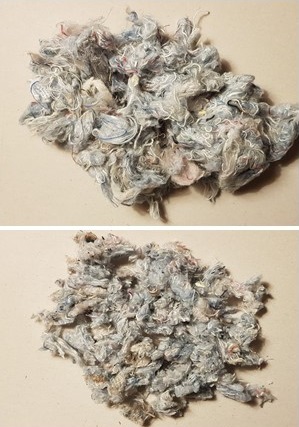
Bumblebees PLUS - Lining made of tailor's cotton - torn and then cut - photo O.Hercog

Tailor's wadding lining
torn and then cut
photo O.Hercog

 
Moss – only as an additional material

Moss acts as an antiseptic and prevents the development of mold. However, we would like to point out that forest moss is protected by law. You can therefore use dry moss from your garden, dug up during autumn maintenance, for example. The moss should be free of clay, dust and grass residues.

Also, keep in mind that moss is home to many invertebrates. Some beekeepers use moss by placing it in the corners of the hive . This is where bumblebees sometimes defecate, and the moss dries out these areas.

Moss is suitable for hives with small nests . However, we have experienced that in some cases the moss rotted and therefore we generally do not recommend it .

Notice:

  • If you decide to use moss, please only put it on the bottom of the lining, but do not use it in the whole nest. Just put moss generously in the corner. Use raw cotton / sheep fleece as the filler. Otherwise, the moss will fall into the cells and the brood in the nest, and that is not good.
  • In some cases, the moss rotted due to high water condensation.
  • Moss from chemically treated lawns cannot be used.

Examples of unsuitable materials

  • We do not recommend adding clay, sand, shavings and sawdust . Such material would be poured into the work (into the open wax cells). Sometimes we can read about this in various advice centers, but it is outdated.
  • Likewise , horse/sheep hair, dog and similar hair . Such material turns into stiff spikes after cutting and is harmful to bumblebees - we tested it. Bumblebees cannot process such material into curls and work with it (see previous text),
  • Do not use mouse nests, droppings and sawdust. You will bring dirt and disease germs into the bumblebee nest,
  • The unsuitable sheep fleece sold to you by the manufacturer of a hexagonal hive is also not suitable. These are long, stiff fibers that bumblebees cannot process and in which they can get tangled.
    Another disadvantage of these materials is the fact that along with the fur, you often bring moths and insects that feed on the remains of skin and fur into the hive. These animals do not pose any threat to bumblebees, but the nerves of the keeper are at risk - you are then faced with the question of determining the type of parasite or its larva and whether it is a bumblebee parasite or just a hive roommate... You will read about roommates in bumblebee nests in the chapter All about bumblebees later.
  • Pure cotton wool is also not suitable – these are just dangerous fibers. Cotton wool would have to be very carefully cut and prepared like Lintran if no other material was available.
  • Paper, grass or hay are also not suitable We have found that this leads to the development of mold, which the grass carries with it. Paper is also not suitable, especially printed paper - it contains printer's ink and is also easily susceptible to mold.
  • We should also not use any synthetic materials . Bumblebees work hard to process, tear and chew the lining when building their nest, which does not work well with artificial materials.
  • Definitely don't use glass wool , even though bumblebees sometimes nest in it.
  • Wood wool, blankets, or furry leather are not suitable. Such materials would make it impossible for you to perform the inspection,
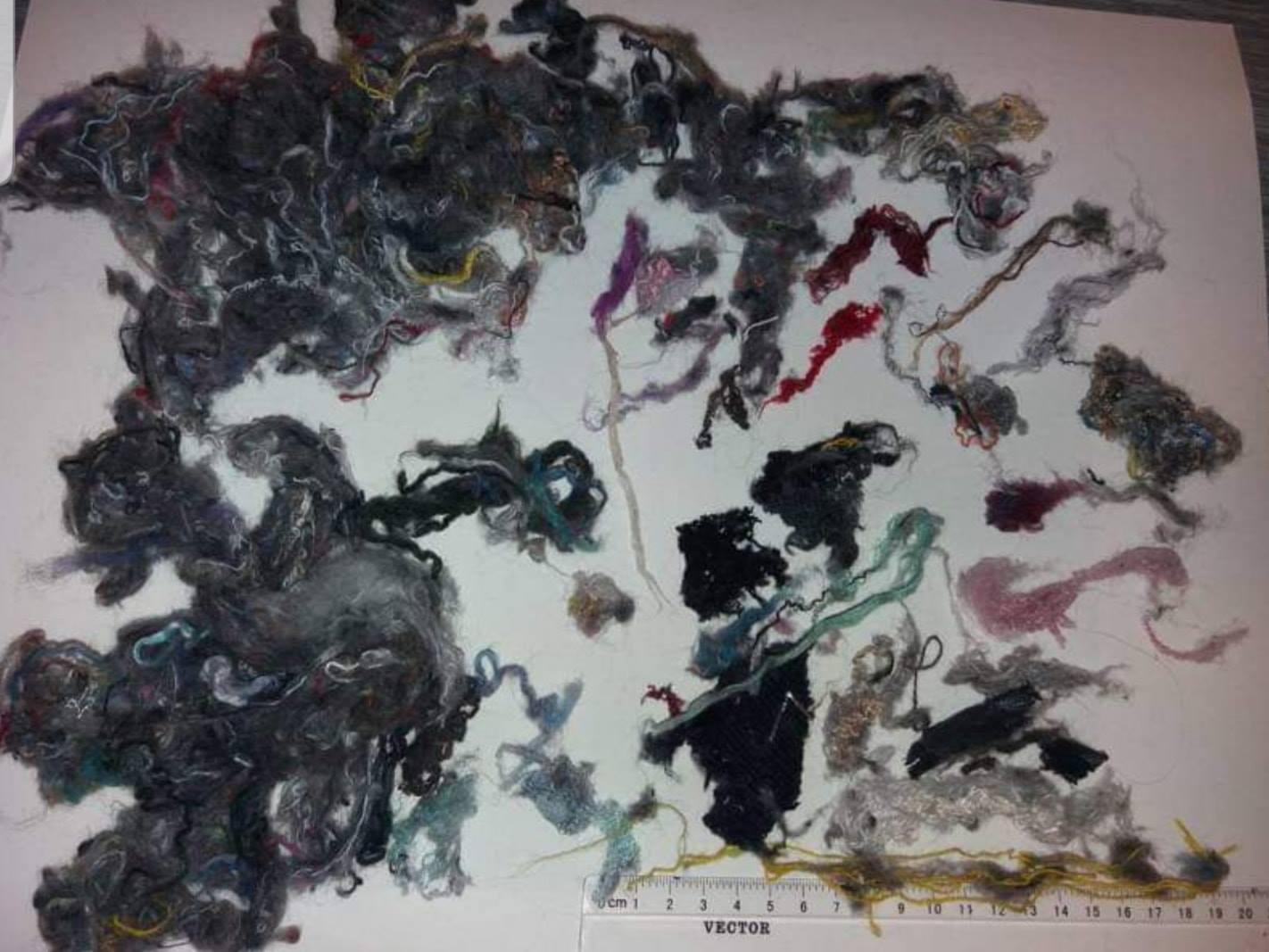
  • Recycled fabric with synthetic fibers, in which bumblebees can get tangled and die, is also not suitable.
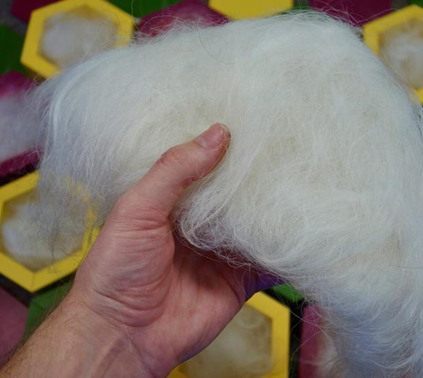
 
Bumblebees PLUS Unsuitable lining made of long stiff wool

Unsuitable lining made of long stiff sheepskin fibers (horsehair) Source Internet
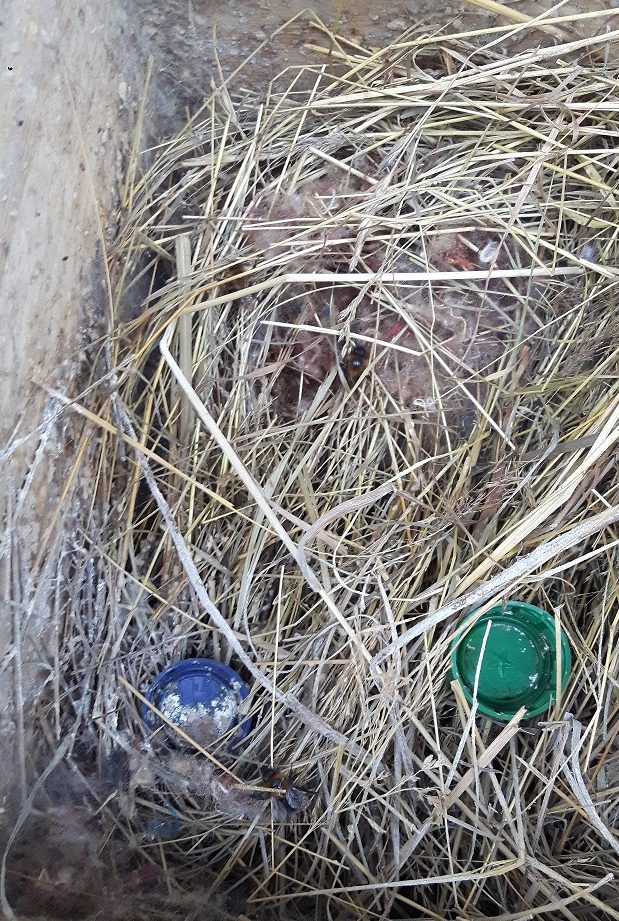
 
Bumblebees PLUS - Unsuitable grass lining is easily susceptible to mold
Unsuitable grass lining is easily susceptible to mold

Bumblebees PLUS - Unsuitable lining made of tailor's wadding containing synthetic fibers

Unsuitable lining made of recycled fabric containing synthetic fibers - photo. K. Kučera
 

Adjusting the lining before use

Before use, the material needs to be thoroughly torn into small pieces. Tear the material into tufts to make it fluffy and homogeneous. Remove clumps and hard pieces from it. Remove hard pieces and dirt from the material.
It is very good to first tear the material, then cut it into approx. 1 cm pieces and fluff it again to make it homogeneous. Do not squeeze the lining, leave it airy and fluffy.

Warning – under no circumstances should long fibers remain .

Are you using an old liner ? (We write about this in more detail in the advanced chapter, see link). If you are not going to use the liner right away, store it in a dry place so that it does not get wet and moldy. A paper box or bag is best for storage.

options for increasing the attractiveness of the lining , either by using last year's lining or by using perfume, in the advanced chapter.

For instructions on how to fill the hive with lining, see the chapter Preparing the hive before the season.

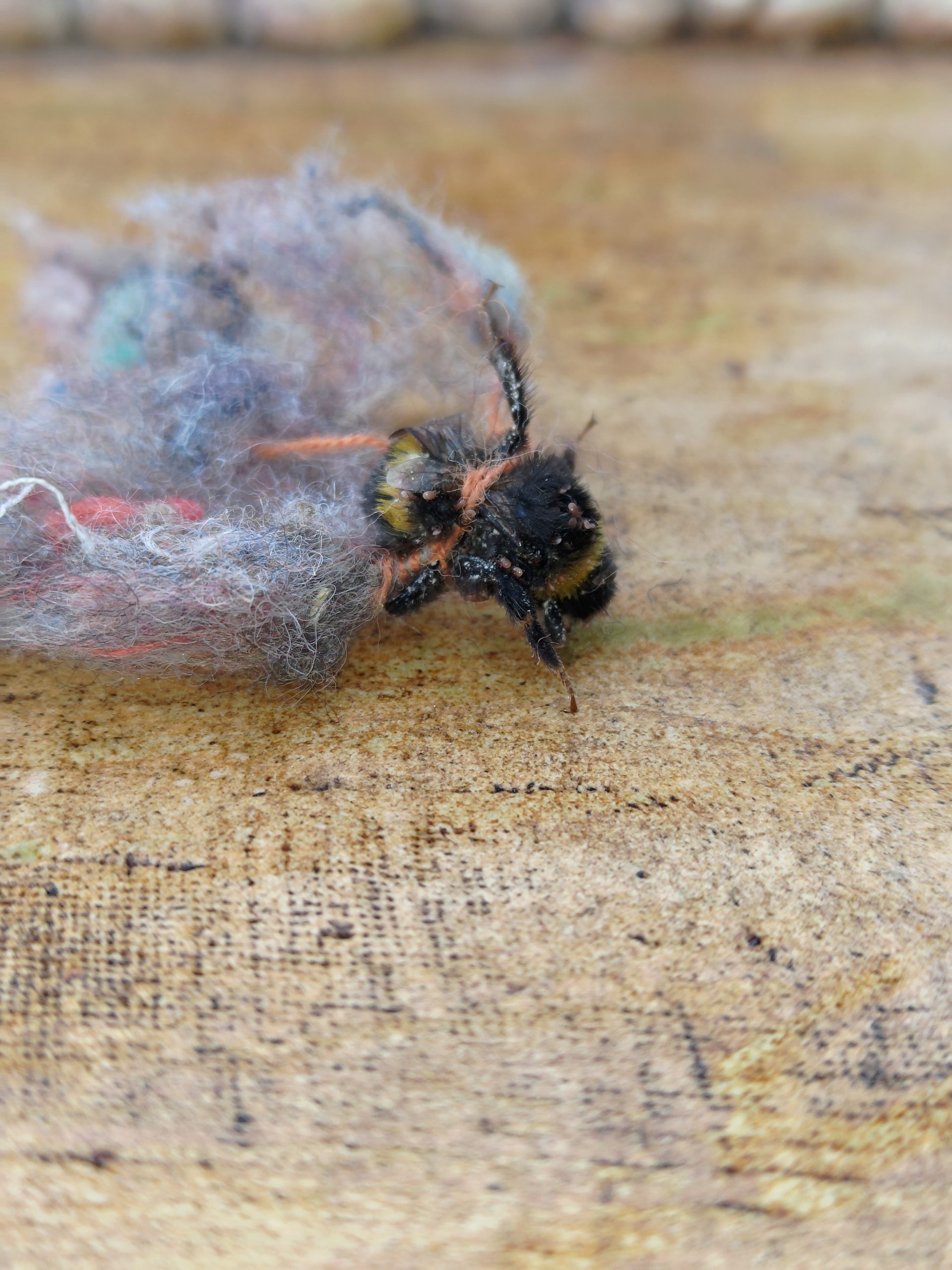
If the lining contains long fibers, there is a risk of tangling .

Some manufacturers sell lining with threads and do not warn users of this danger. The result can be the situation you see in the video.

The mother got her head tangled in the threads and couldn't free herself. But the breeder was quick to rescue the mother with tweezers and scissors , preventing a certain disaster.

We do not recommend using the lining captured in the video . It is extremely soft and even bumblebees fall into it. It also falls off . In addition, it contains long threads , which you can see for yourself are dangerous.

Bumblebees PLUS - Bumblebee tangled in unsuitable lining 2 - Photo M. Andrlík

Bumblebee tangled in unsuitable lining
Photo M. Andrlík (9/2021)
 

Bumblebees PLUS - Bumblebee tangled in unsuitable lining 2 - Photo M. Andrlík

Bumblebee tangled in unsuitable lining
Photo M. Andrlík (9/2021)
Bumblebees PLUS - Lining bb nest cotton Photo Internet

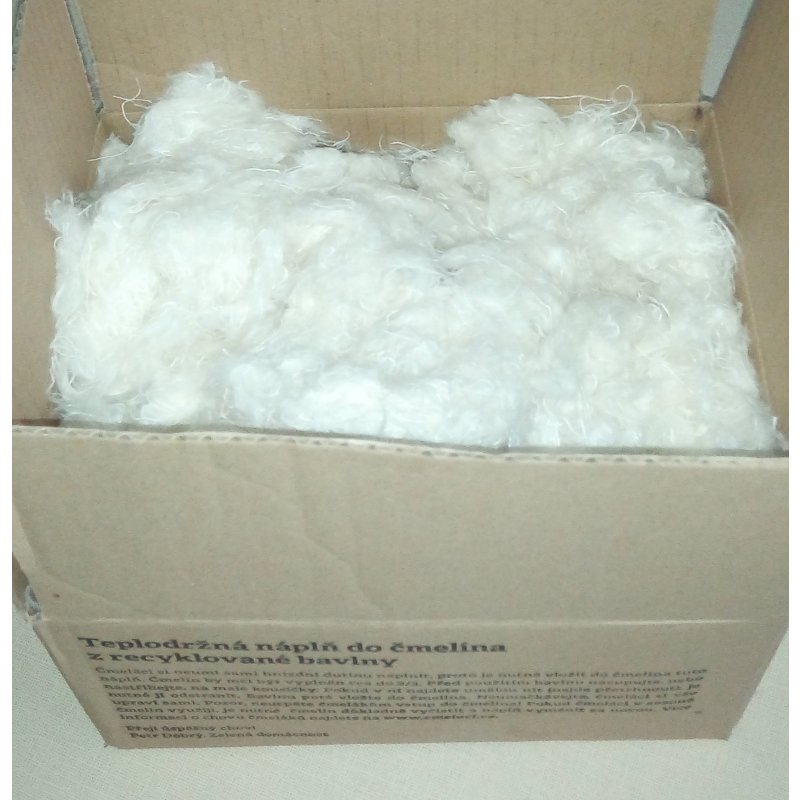
Unsuitable lining made of recycled cotton full of threads
Photo: Internet

How bumblebees work with the lining and why it is important for them that the lining is of good quality

A video from a field bumblebee (Bombus pascuorm) nest shows workers working with the lining – creating tufts/curls . They can then move to the necessary location and cover the nest.

Similarly, bumblebees can transport the lining out of the nest. This happens when the nest is growing and there is little space in the hive/nest. In such a case, bumblebees transport the excess lining away . They often carry it away and drop it in flight.

Bumblebees do not do well with poorly prepared lining , and the long fibers in the lining can endanger them - they can get tangled in them.

In the video you can see all the stages of nest development – ​​dark wax mounds with new laying and small larvae, clusters of wax capsules that are already separating, individual capsules with larvae and then yellow cocoons stripped of wax. In the nest (wax part) you can also see empty cocoons that serve as a nectar reservoir.