Bumblebee movement monitoring tag
What you will learn here
- We will explain how to safely monitor the movement of bumblebees, especially the queen bee in the solitary phase. This will help you know if your hive is occupied.
- Why does a bumblebee breeder need a bumblebee "brand" and what is it?
- We will show you how to place a marker in the entry hole = safely monitor movement through the entry hole.
Last updated: 30/3/2021
Introduction
Why does a bumblebee breeder need a bumblebee "brand" and what is it?
Once you have placed the queen mother in the hive (see HERE ), you need to monitor her movements .
First, you are interested in whether she has accepted the scare and will return to it , then whether she has settled in and returns to it regularly , and then whether the mother is active , i.e. whether she is making flights = building a nest and caring for the first generation of offspring.
It is not possible to sit by the hive all the time and watch the mother's movements. During the first returns and settling phase, you may disturb her with your presence.
That's why bumblebee keepers place a marker in the entrance hole of the hive (bumblebee) .
When is it necessary to monitor the movement of bumblebees in the hive?
After the queen has settled, you need to find out if the queen has left the hive (bumblebee). Here we recommend staying and watching the hive, because it will tell you a lot about what will happen next and whether the queen has accepted the hive.
Even so, it is a good idea to place a marker in the entrance hole . It may happen that you are not looking and the queen flies out. Then you need to find out if the queen has returned to the hive. This can happen in a few minutes, an hour or 3 days. The marker will help you here too.
Once the mother returns and receives the shock, she will start flying out of the hive and back in. However, the mother flies out very irregularly and you can only meet her by chance. The mother has her wings full of work – she creates a cavity for the nest chamber, waxes the lining in it, creates a cup for nectar, etc. see HERE
In some places, the interval between the mother's flights can be as long as an hour , and the time she is out of fear is 15-60 minutes .
This period is a period of nerves, especially for novice breeders . Very often they can't stand , they open the hive and look for the mother in it. This leads either to scaring the mother or to breaking the foundation of the nest with the same effect.
The mother then usually leaves the hive and never returns. What is worst of all, the mother becomes a so-called wanderer and is no longer able to establish another nest. In the end, she dies outside.

Mark in the entrance hole of the hive
A rock bumblebee (Bombus lapidarius) flies away
Photo O. Hercog
What is a brand?
A marker is an object that the beekeeper places in the entrance hole . A bumblebee that passes through the entrance hole, either in or out, will throw the object out onto the grass . This is how you can tell if there has been movement .
What to make a brand from
Every breeder has their own method, but the basic rules are:
- The sign in the entrance hole must not obstruct the passage of bumblebees.
- The sign must not cover the entire entrance opening – max 1/3 – 1/2 half of its area.
- The sign must be stable so that it does not fall out on its own or be blown away by the wind.
Open flap tracking markers
We have selected methods for you that work and compared them in the order in which we recommend them.
These methods are suitable for an open flap = raised flap flap.
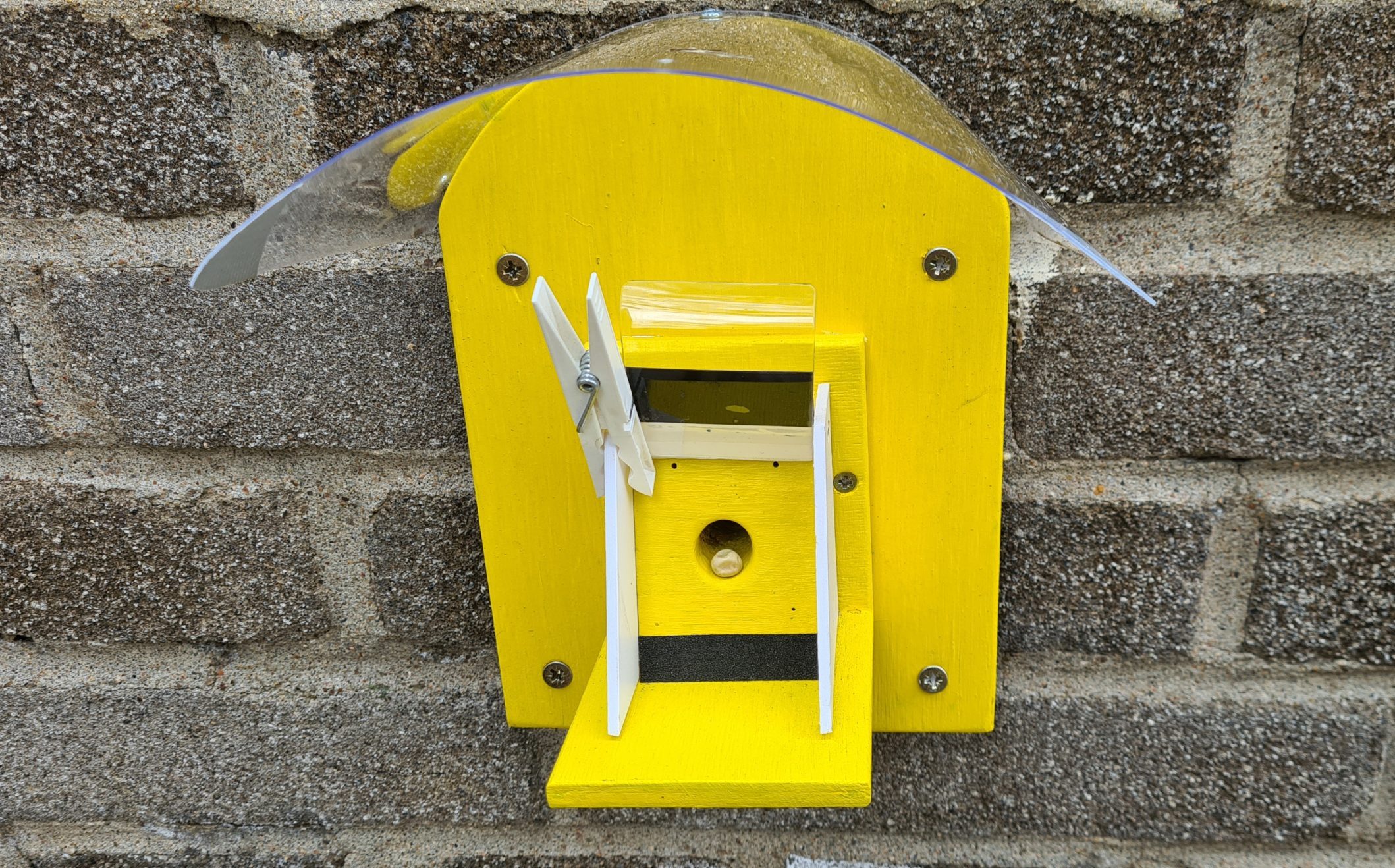
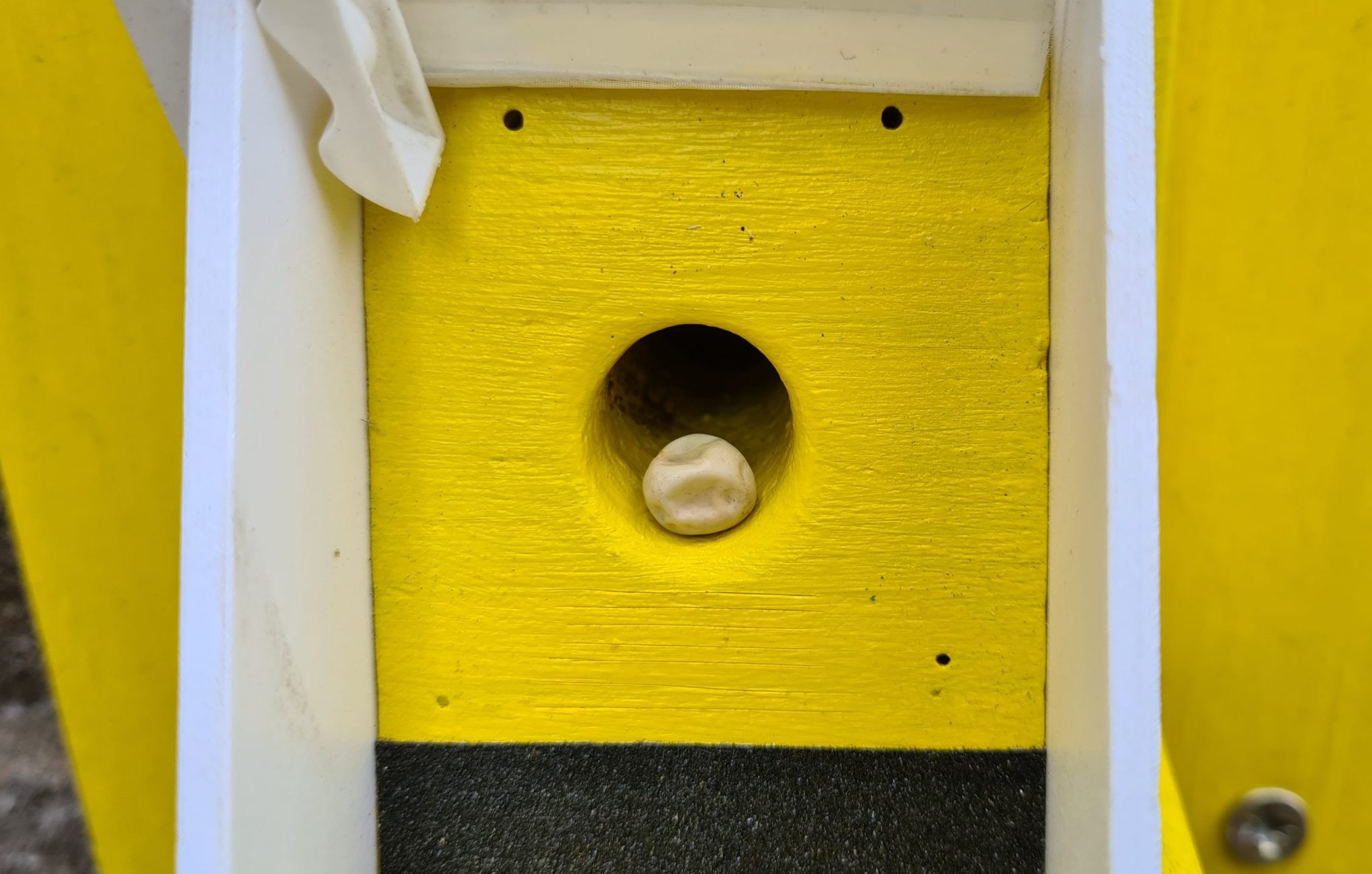
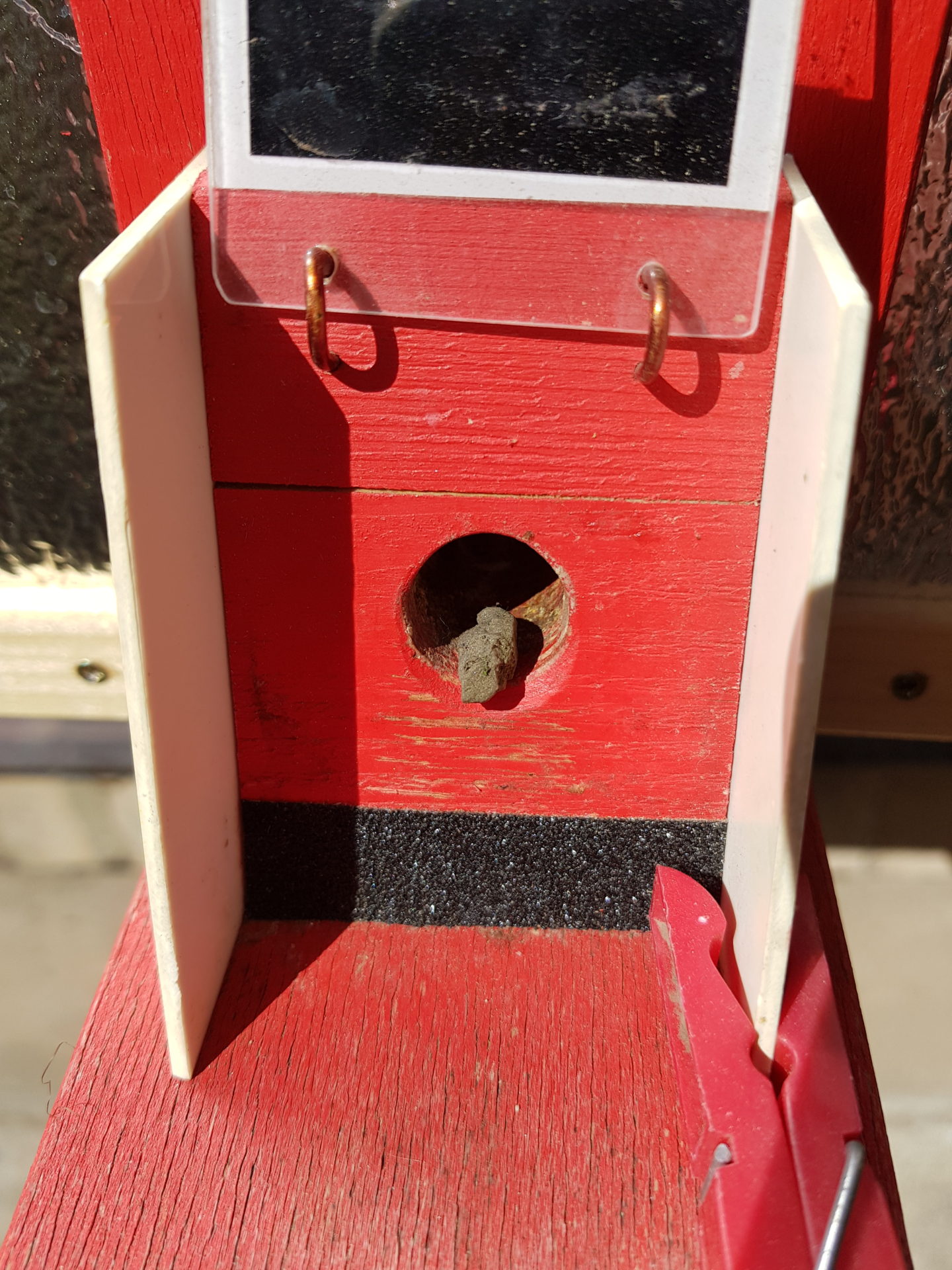
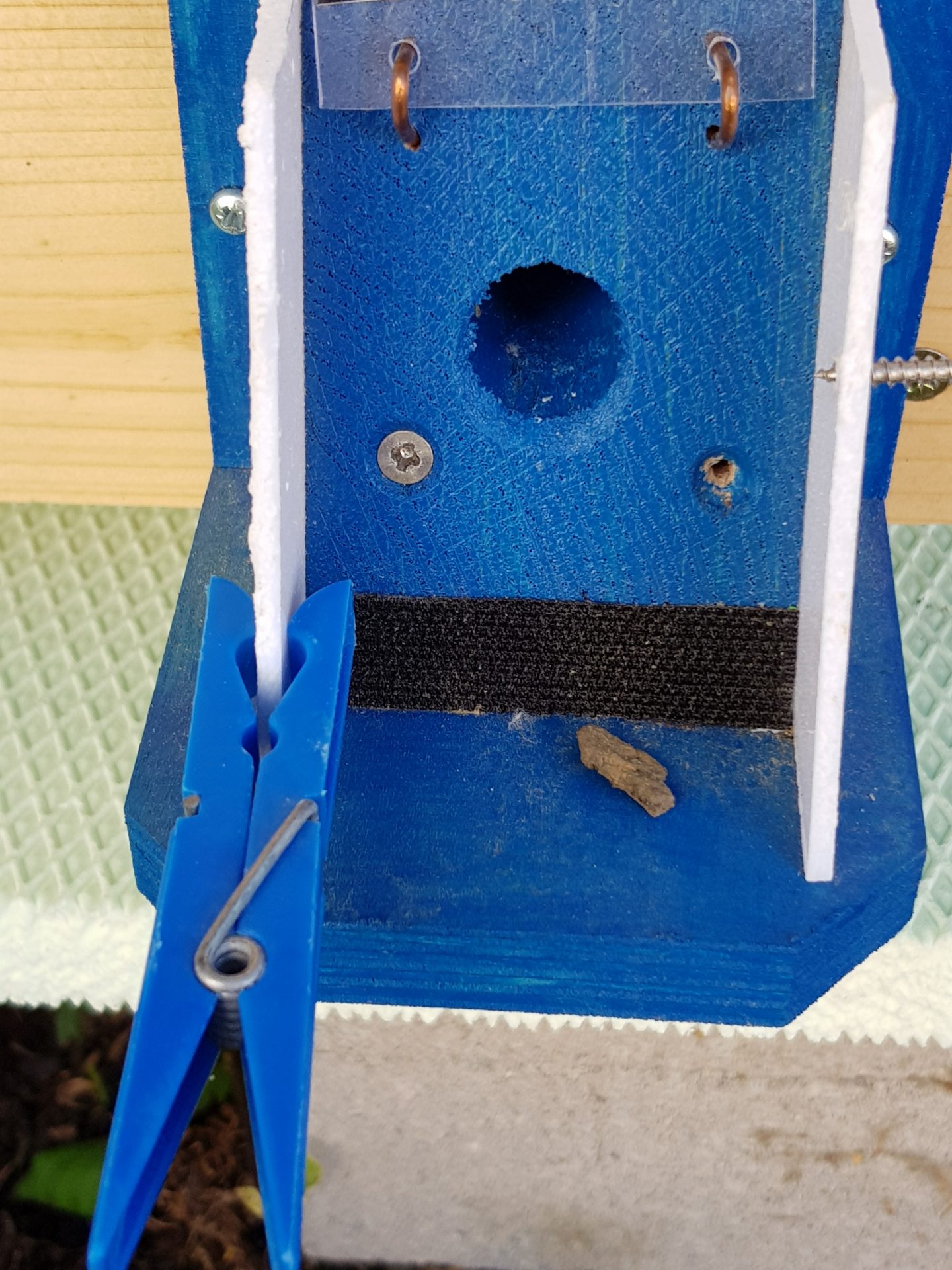
1. A small square stone or a lump of dried clay Hardened earthworm droppings can be used successfully . There are plenty of them in the garden, they are basically clay and they stick together 😀
A small pea is very good. You can also use a piece of bark , a light piece of wood, a piece of twig.
We consider these methods to be the best .
Use:
- A pea, pebble/lump should be placed on the edge of the entrance hole
- The sign should be stable, but partially protrude outwards so that it falls out of sight when passing through
- The bumblebee crushes the mark, or kicks it and it falls out
Advantages of the method:
Relatively high reliability. Disadvantages of the method: Finding a suitable stone and placing it on the edge requires a bit of practice and patience.
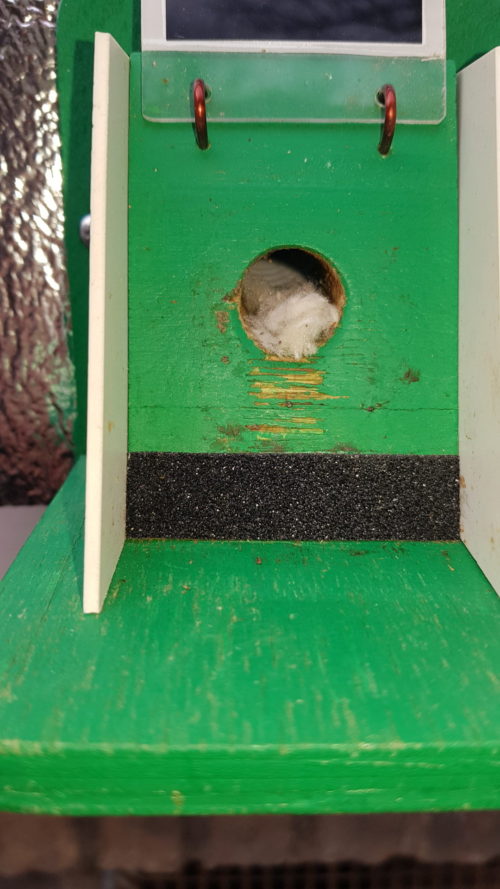
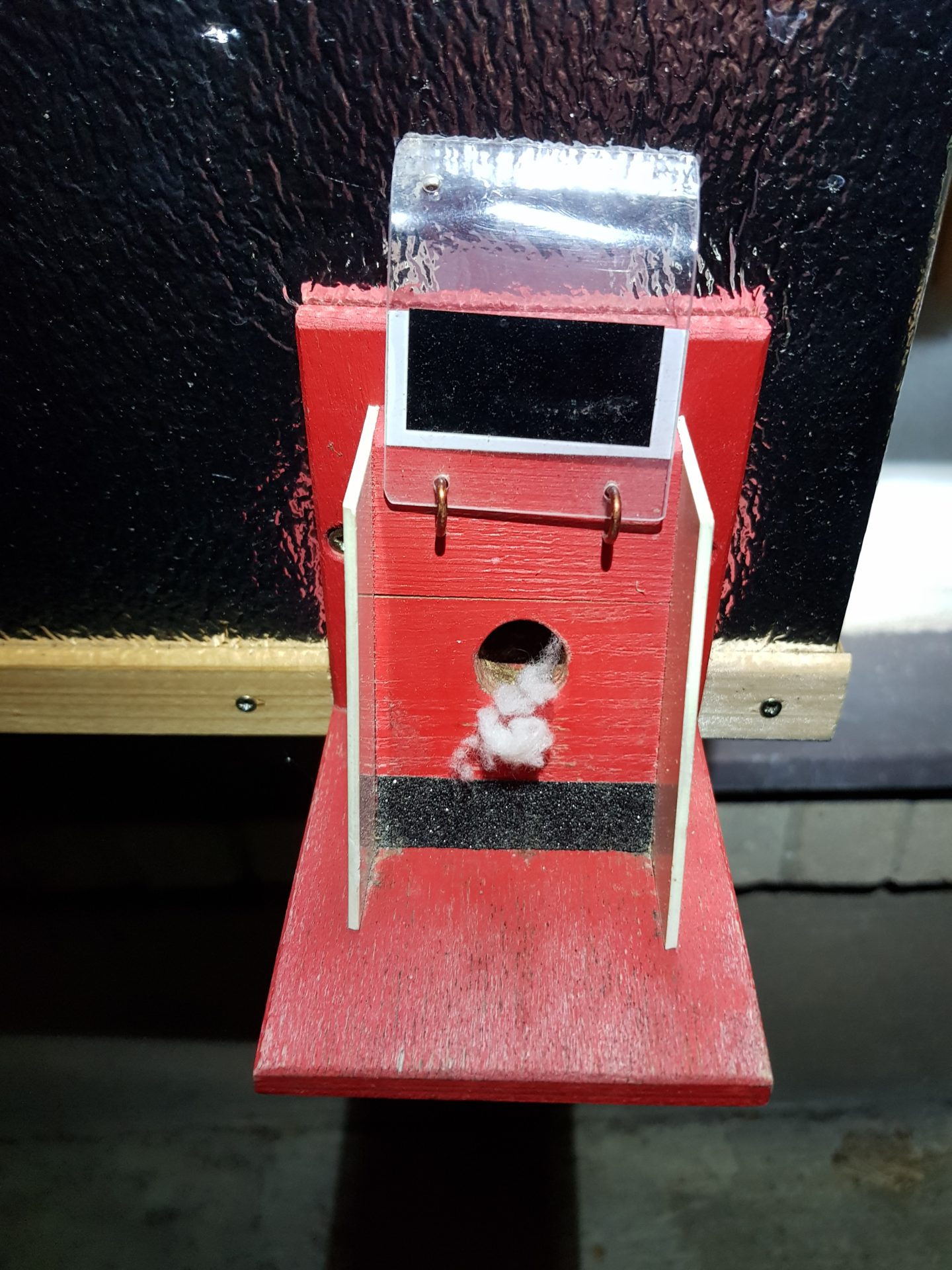
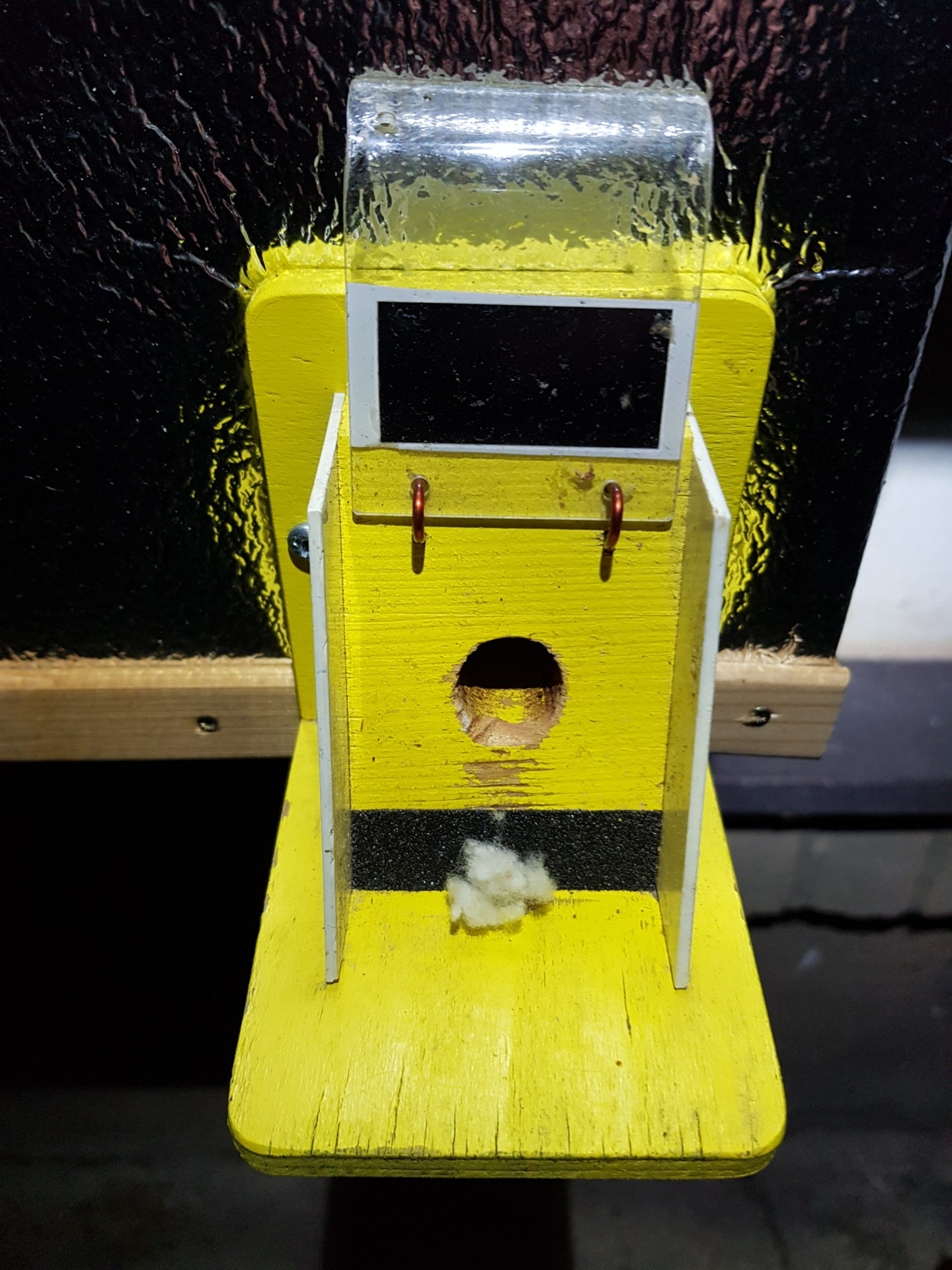
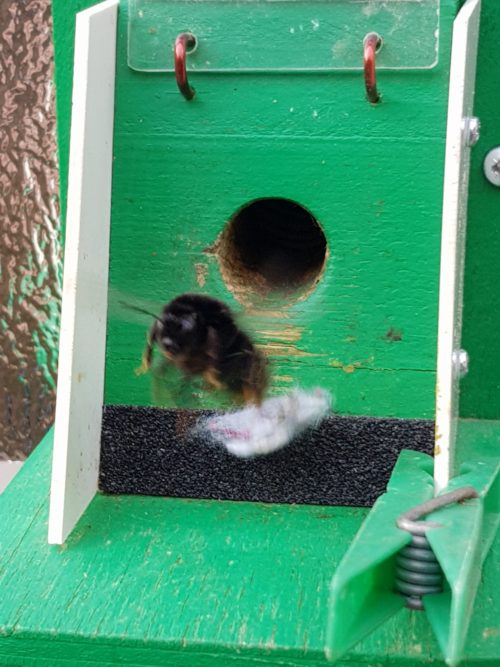
2. A piece of padding/cotton wool – preferably in the shape of a small ball .
The method can be recommended
Use:
- You insert the ball into the entry hole.
- You squeeze it with your finger so that it sticks to the bottom
- Bumblebee crushes/kicks the tag and the tag falls out
Advantages of the method:
Fairly high reliability. The bumblebee throws the lining with its feet, which catches the lining.
Disadvantages of the method: You need to learn how to make a proper nest out of the lining. Stronger winds will blow the tag away.
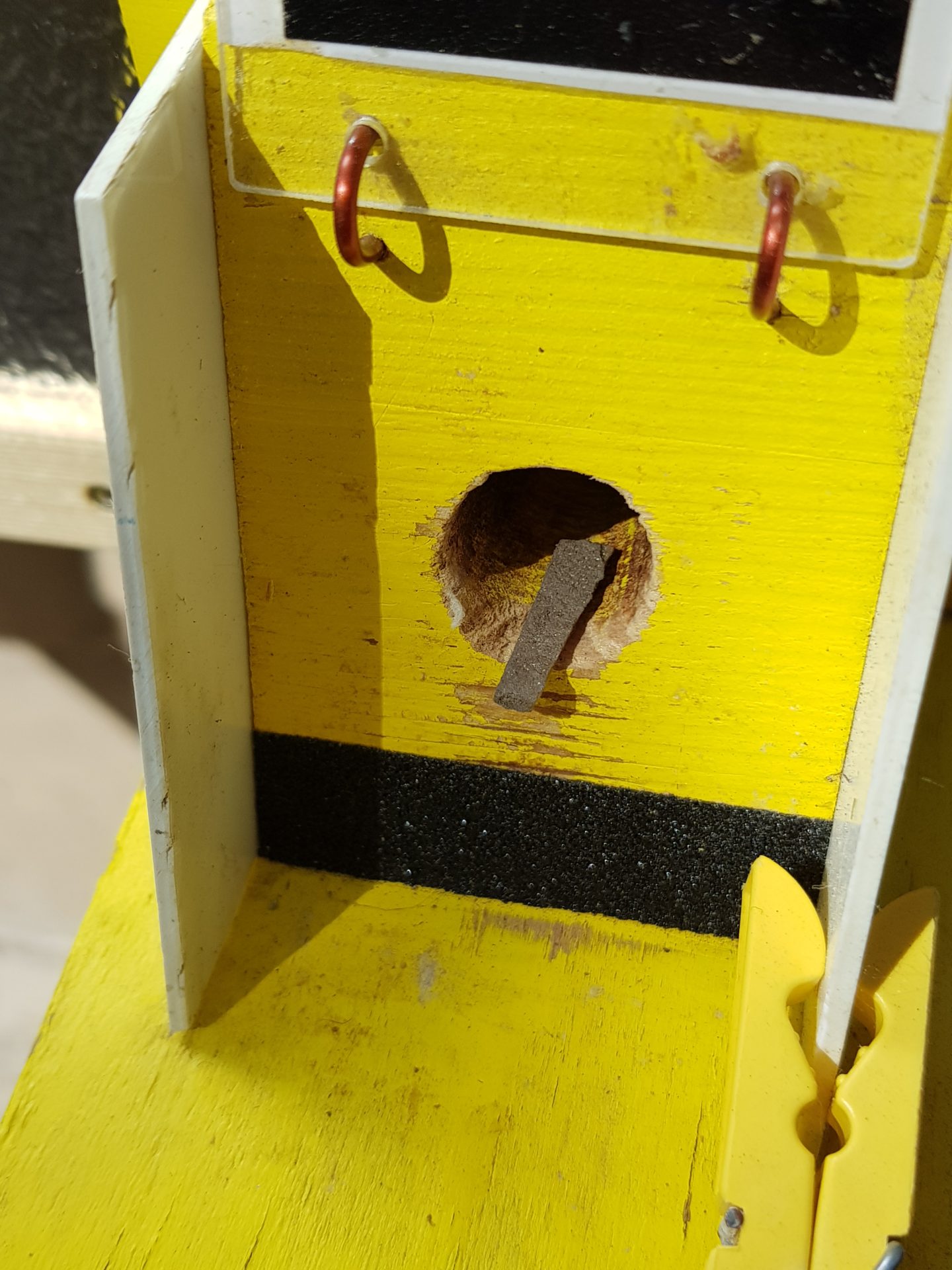
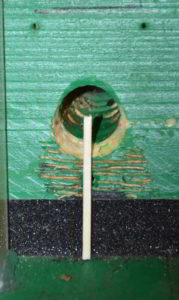
3. Blade of grass, match or thin twig
this method highly.
Use:
- Shorten the stem in height so that it reaches approximately 1/3 to 1/2 of the inlet hole from the base
- Place the stem exactly in the center of the entry hole; the mother will drop it or push it to the side when entering or exiting.
Advantages of the method
: Quick and easy to do. Disadvantages of the method: The stem (twig) is easily moved even by a slight wind.
4. A blade of dry grass or a strip of paper in the entrance hole. This method is not very reliable, bumblebees often bypass such a mark. However, some bumblebee websites/forums still spread it,..
this method highly.
Use:
- Bend the blade of grass/strip into an arc and insert the top of the arc into the inlet hole first
- The bumblebee crushes/kicks the tag and the tag falls out
Advantages of the method:
Quick and easy to implement. Disadvantages of the method: The tag moves easily even in light winds and bumblebees can avoid it.
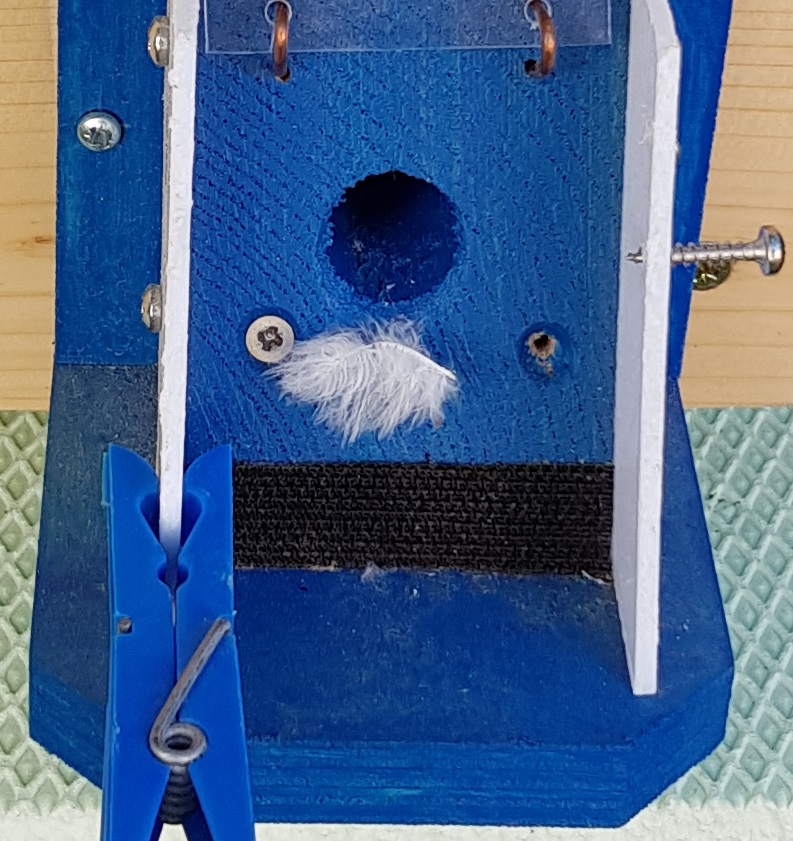
5. Fine dust feather . A feather is a beautiful sign, but the wind often blows it away.
We do not recommend this method due to its low reliability .
Advantages of the method:
Quick and easy to implement. Disadvantages of the method: The sign can easily move even with a slight wind and fly away.

Pea sign in the entrance hole of the hive
Photo O. Hercog

Pea sign in the entrance hole of the hive
Photo O. Hercog
.

Mark in the entrance hole of the hive
Oblong stone = ideal mark
Photo O. Hercog

Mark in the entrance hole of the hive "
Clump of clay/earthworm poop" 🙂
Photo O. Hercog

Mark in the entrance hole of the
hive Thrown stone
Photo O. Hercog

Mark in the entrance hole of the hive
Mark from the lining

Mark in the entrance hole of the hive
Mark from the lining partially blown away

Mark in the hive entrance
Mark thrown out of the lining

Mark in a flying creature
Mark using a match
The method is not very reliable
Photo by K. Kučera

Mark in the entrance hole of the hive
Mark made of a feather or "Did it happen or not?"
We do not recommend this method
Photo O. Hercog
Tracking markers with the flap closed
This is the period when the queen has already learned to open the flap and the current methods cannot be used, as it would be unnecessary to expose the nest to the risk of predators. The slightly open flap could also allow a foreign queen bumblebee to enter the hive.
We will describe these methods later, but first we will teach you how to teach your mother to latch on.
Notice:
With all the described marking methods, during the period of the mother's settling in, when the mother is not yet able to lift the valve herself, it is necessary to have the valve fixed so that it does not close completely.
There are several options depending on the type of flap and the breeder's preference (e.g. on a clothespin, skewer or with screws).
Brand usage
Choosing the right brand and placing it in the entry hole is not easy and, especially for beginners, it sometimes causes problems.
Remember that bumblebees can sometimes bypass (a blade of grass) or it can be blown away by the wind (lining, feather, straw, etc.).
Therefore, it is a good idea to re-place the markers and get more evidence of movement in the entrance hole. Even if you are not sure, do not inspect the nest!
Try a different brand . It may happen that the queen bee spends the whole day outside the hive at first. So please be patient.
Recommendation:
- Try out branding before you actually need it
- Learn how to place a sign quickly and safely
- Create a supply of markers in advance in a small plastic box so that you don't have to look for them when placing them
- If it seems like the marker hasn't moved and there is no movement in the hive, place the marker again or use a different one
- Once you have the hive filled and workers are passing through the entrance hole, try the right type of tag and how to place it on them – the practice will come in handy in future seasons
Other monitoring methods
There are other methods of monitoring movement in the hive. For example, you can use video cameras, sensors, some camera traps, etc.
Continuous camera recording of the flap can be used simultaneously with one of the described marks. Changing the position of the mark helps to find the desired approximately 15-second sequence in the accelerated recording. The breeder can thus see exactly what led to the mark falling out.
You will read more about other more complex methods later.
Do you have your own movement methods? Write to us - we will be happy to publish them and make them available to others.