
Roof of a bumblebee hive

Beehive roof

The page is under construction

What you will learn here

  • Why is there a roof on a beehive (bumblebee hive)?
  • What is it for?
  • What characteristics should a good roof have?
  • Examples of some problems around hive roofs


Last updated: 26/02/2024

Bumblebees PLUS - In a Nutshell - Foto Internet

In a nutshell

  • The roof is the foundation of life: you can't do without a quality roof that protects your home - neither you nor the bumblebees
  • Durability: the roof is subjected to weather conditions that it must withstand for several seasons
  • Thermal insulation: the advantage is a roof with a removable insert - such a roof works as thermal insulation, but such a solution allows the shelter to be cool on hot days
  • The roof must be leak-proof: if the roof deforms and leaks, parasites can easily enter the hive
  • Sealing: a good roof is leak-proof, if you use sealing, it should be double (in two zones), bumblebees should also not be able to reach the sealing - they can easily bite through it
  • Check the roof : no solution protects against shock

English Abstract

  • Roof, the foundation of life: You can't do without a quality roof that protects your home – neither you nor the bumble bees
  • Durability: The roof is exposed to weather conditions that it must withstand for several seasons
  • Thermal insulation: A roof with a removable insert is advantageous – such a roof acts as thermal insulation, but this solution allows cooling on hot days.
  • The roof must seal: If the roof deforms and doesn't seal, parasites can easily enter the hive
  • Sealing: A good roof seals; if you use sealing, it should be double (in two zones), and bees should not come into contact with the sealing – they can easily pierce it
  • Inspect the roof: No solution protects the hive without checking


Introduction

The roof is an important part of the hive . It protects it from the weather and closes the hive body from above. It creates a cavity in which the bumblebees create a wax structure - a work of art - in a heat-retaining lining.

The roof of the hive must withstand weather conditions , must not warp , must seal , must insulate the hive thermally and must be heavy to by the wind .

Hive manufacturers address these requirements with varying degrees of success. So if you are going to buy a commercially manufactured hive, take a look at the design of the hive roof. It will pay off, see How to Choose the Right Hive .

If you are building/modifying your own hive, check out the tips. You will find inspiration there and maybe make  a roof with a removable insulation insert   according to our instructions.

You can also make  a protective net according to the instructions in our workshop, which increases the safety of the nest in the hive. You can easily make the net yourself, it's not that complicated.

A similar roof to the one we will describe here is currently only produced by one manufacturer in the Czech Republic. The roof is designed in such a way that the thermal insulation board can be removed, which we consider a good solution. Perhaps other manufacturers will join in over time…

Don't forget that even a good hive roof needs to be checked . If it is not laid correctly, sealed well, or if it leaks, the tenants in your hive will soon have a problem, and you will too. ;-)
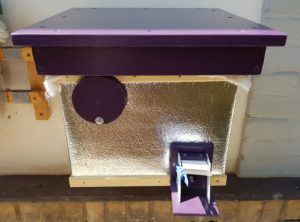
Bumblebees PLUS - The hive roof is installed and there is an absorbent cloth underneath to drain moisture

The roof of the hive is in place, with an absorbent cloth underneath to remove moisture – Photo O.Hercog
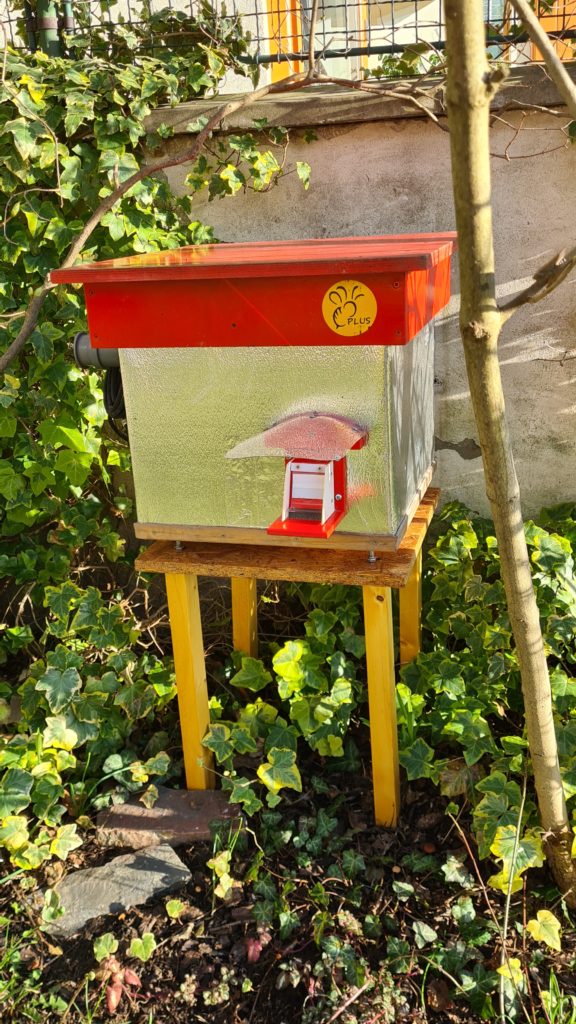
Bumblebees PLUS - Tables in shock - Photo Ondřej Hercog 2023 03 17 (1)

Table under the scare
Photo: O. Hercog (17/03/2023)
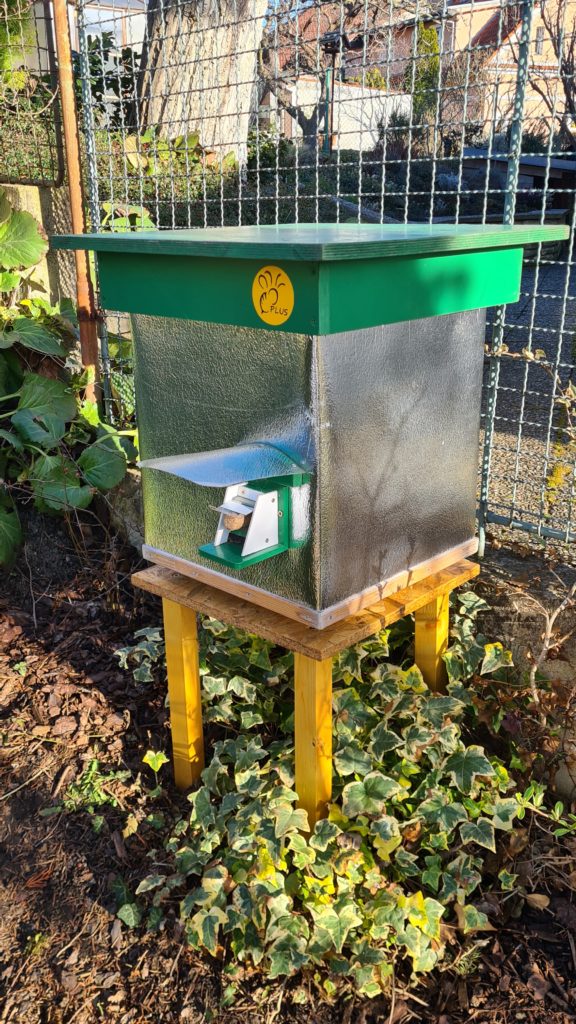
Bumblebees PLUS - Roof of a beehive for bumblebees with a removable insulation insert and double sealing - Photo Ondřej Hercog 2022 07 28 (7)

Roof of a bumblebee hive with a removable insulation insert and double sealing
Photo: Ondřej Hercog (28/7/28)

L
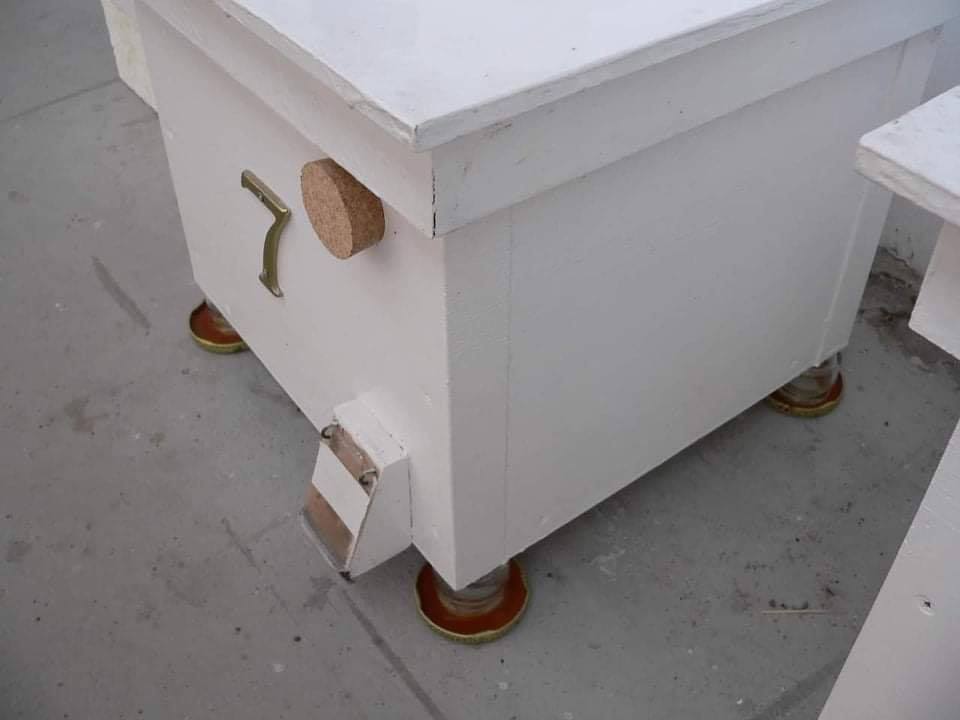
Roofing material

has proven itself very well for making a roof . Concrete plywood is very good, it is homogeneous and has a surface treatment that makes it practically indestructible. This material can be purchased at a hobby market.

On the other hand, are not suitable , as they change shape and properties when wet.


Roof shape

The roof covers the entire shed. It must have sufficient overlap to prevent water from running down onto the shed .

Some manufacturers equip their hives with a gable roof . It may be aesthetic, but it is more of a disadvantage. It has no practical benefit , rather it just creates complications .

The frame that holds the roof onto the hive body has an overlap to prevent the roof from falling off and also a gap around the perimeter an absorbent cloth to be inserted underneath to drain moisture. This removes some of the moisture from the hive.

If the roof fits snugly on the hive, the cloth will not fit under it. Furthermore, once the roof gets wet due to humidity, it will change size and will not be easy to put on or take off.

Solution:

  • The roof overhang should be at least 5-10 cm from the ground plan of the hive so that rainwater flows outside the hive and does not flow into its structure or into the structure of its roof.
  • The frame that holds the roof to the hive body should have of at least 5-10mm to the sides
  • The frame that holds the roof onto the hive body should at least 10-20 mm in height

Roof construction

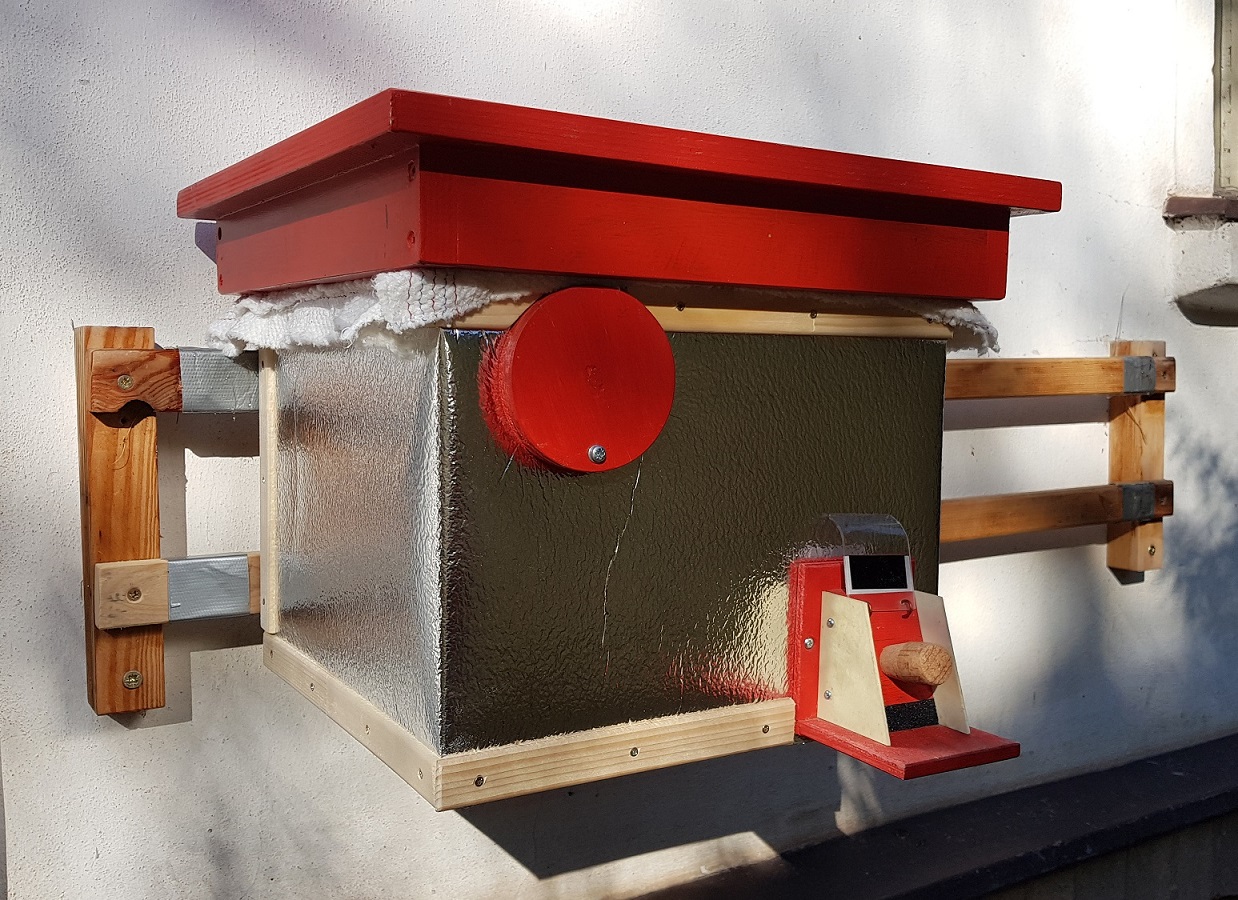
It is best to use a flat roof shape .

The roof must 

  • to be robust
  • to be stiff
  • to seal well
  • heavy enough that the wind won't blow
  • to insulate well
  • be able to remove the thermal insulation so that the roof can be cooled on hot days and thus the nest placed in it
Bumblebees PLUS - Protection against ground ants

Construction of the hive roof
Photo J. Čížek 2020
Bumblebees PLUS - Úlek so

Construction of the hive roof
Photo O. Hercog 2019


Roof thermal insulation

The roof, like the hive body, must form the thermal insulation of the hive.

a polystyrene thermal insulation board to the inside of the roof as thermal insulation. This is especially important on cold spring and autumn days. A board at least 20-30mm thick is sufficient, more is of course better.

But be careful about sealing . Polystyrene board itself does not create a good roof seal, it is quite porous or rough. Facade colored polystyrene is suitable, or classic white, but it is easily damaged during handling.

Moreover, if the roof is sealed only with polystyrene, the parasite can easily bite through to the nest .

At the same time, it is worth having the option of removing the thermal insulation from the roof . You can use this on hot summer days, when after removing the insulation, cooling blocks/wet cloth are placed on the roof. In this way, the temperature can be reduced by several (often critically important) degrees. An example of cooling can be found on the page cooling frame on the roof of the hive .

However, sometimes it is annoying that after removing the roof insulation, the roof sits lower , preventing, for example, the opening of the ventilation window.

All of this can be solved, see the above-mentioned roof with a removable insulation insert according to the design from the Čmeláci PLUS workshop.

Notice:

  • If the polystyrene board is not protected against bumblebees, it is better to throw it away after the season and replace it with a new clean one
  • In the 2020 season, we recorded a number of cases where the larvae of the parasitic beetle Antherophagus nigricornis were hiding directly in the board 
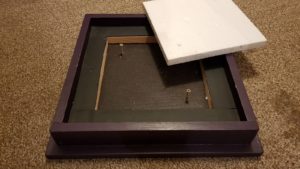
 
Bumblebees PLUS - Beehive roof with thermal insulation removed

The roof of the hive with the thermal insulation removed – Photo O. Hercog (6/2019)
Roof sealing

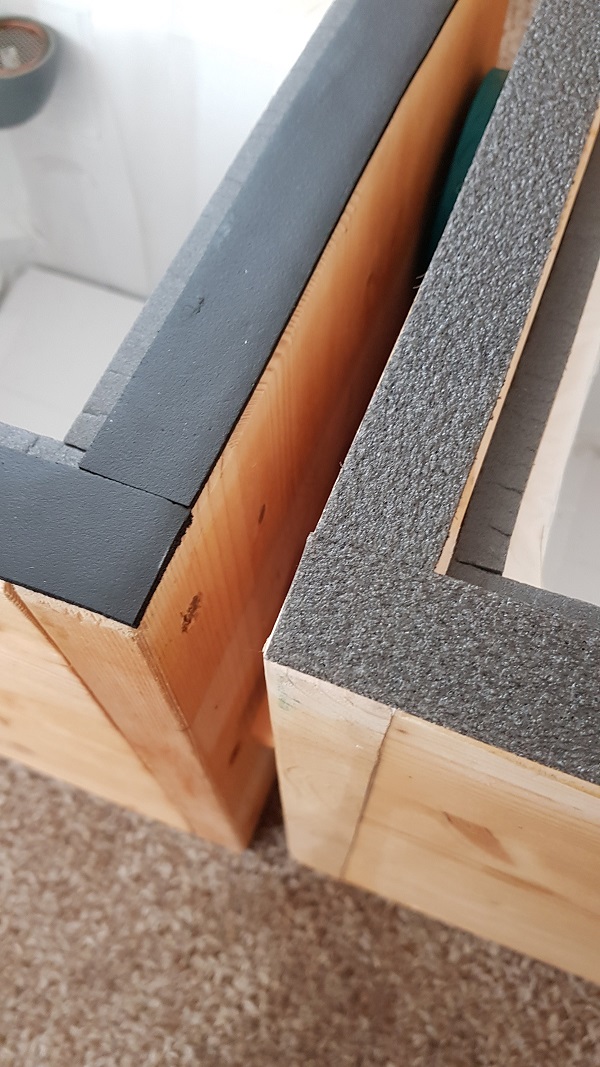
The roof must fit well and seal well to prevent parasites and enemies of bumblebees from entering the hive.
Because the hive is exposed to weather conditions and increased humidity, its structure, including the roof, will always undergo some deformation over time. This problem should be solved by sealing, especially under the roof.

Solution:
  • The seal should be part of the roof structure , where it is relatively well protected. However, you can also have it on the hive body.
  • If you use a protective net , it is a good idea to seal it with a gasket on the body and under the hive roof.
  • It is best to use a seal up to a maximum height of 5 mm.
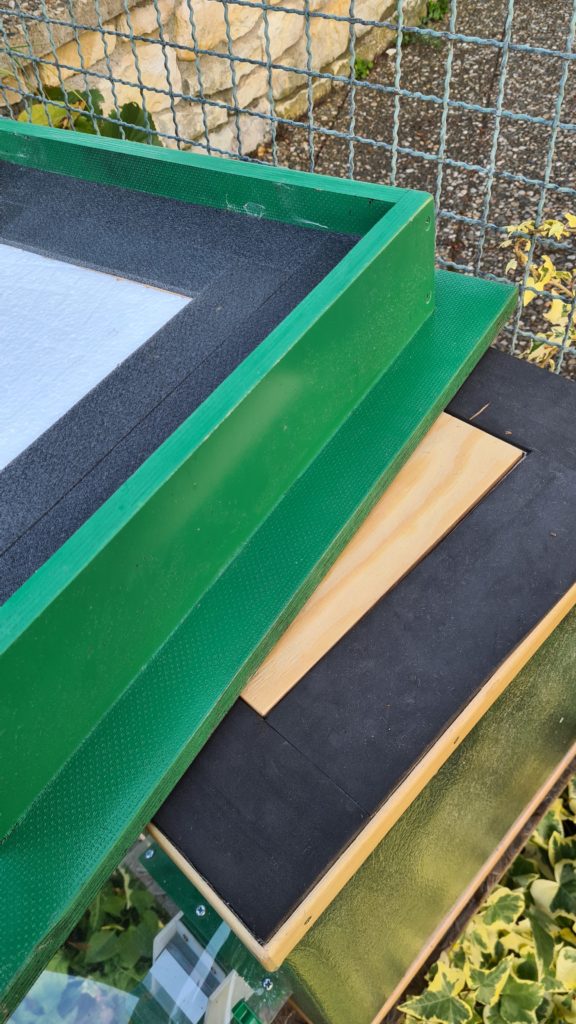
  • It is advisable to solve the seal as a double one = as two separate barriers behind each other . This will prevent the penetration of the smell that attracts bumblebee parasites.
  • The entire contact surface should – a 5 mm wide seal alone may not be sufficient
  • The seal must be wide enough to seal the roof in every position (see lateral clearance).
  • However, the seal should not be accessible to bumblebees , who tend to chew through it sometimes.
  • See the page that describes a possible solution for the construction of the hive roof with a double seal and an inner lid 
  • Suitable seals for home-made hive modifications can be found on our website on the seals page - recommended materials.

Notice:

  • essential
    to use a seal under the roof/on the hive body Note: some manufacturers do not solve it differently, double-walled hives and other types of protection
  • The seal is not intended to solve structural defects in the hive , but only deformations caused by material expansion.
  • If you apply a gasket, its parts must fit perfectly .
  • Be careful with some seals, they tend to shrink and you have to take this into account when you apply it.
  • Do not rely on the recommendation to "seal with an absorbent cloth" as you may read on some websites.
  • If you have the opportunity, supplement your scare with a protective net.

Checks:

  • Even if the roof is sealed, it is necessary to check the fit and correct installation of the roof.
  • It often happens that the breeder puts an unsuitable sealing cloth , or lays it in such a way that the cloth has folds and does not seal. 
Also take a look at other improvements to the hive seal, which will easily increase safety, but also the thermal insulation properties of the hive in the spring. 
 
Bumblebees PLUS - seal on the hive body

Seal on the hive body
Photo O. Hercog (4/2019)
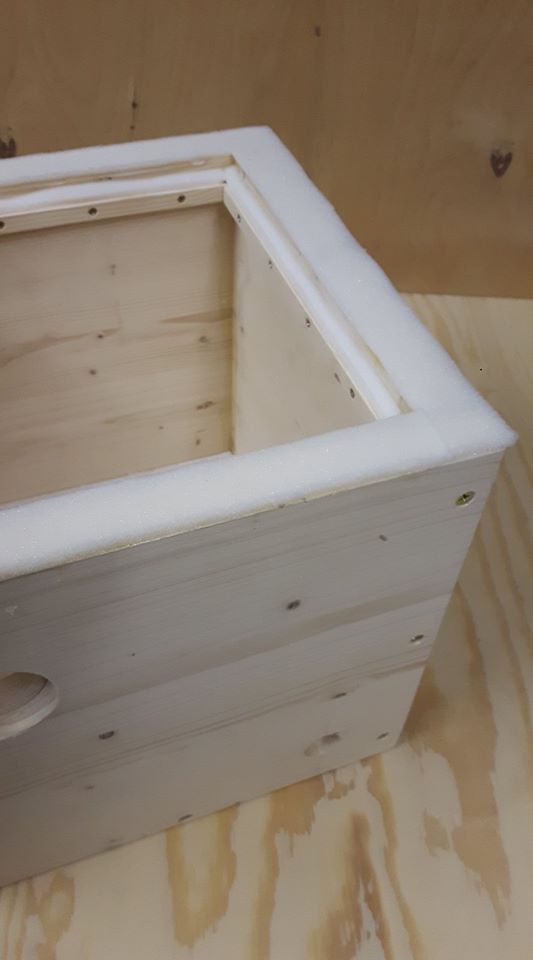
Bumblebees PLUS - Hive seal - foam

Hive seal - made of foam
The seal is susceptible to damage and only lasts one year
Photo O. Hercog (1/2018)
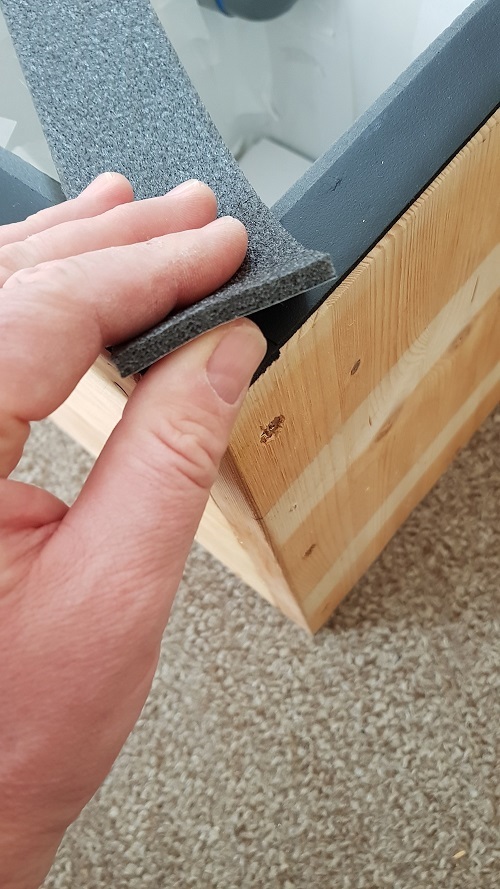
Bumblebees PLUS - foam gaskets - ŘEMPO store

Foam gaskets - ŘEMPO store
Photo O. Hercog (4/2020)
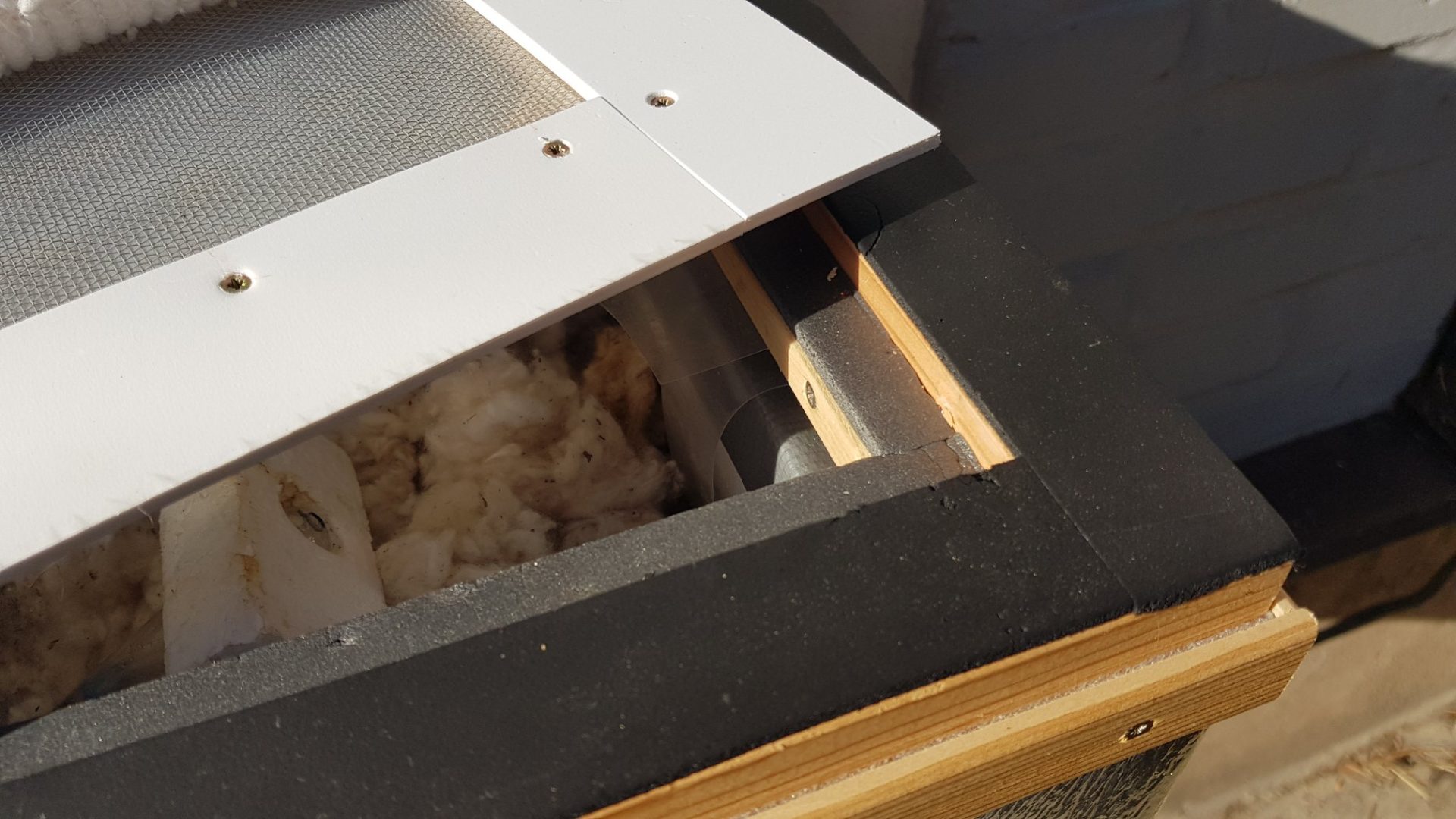
Bumblebees plus gadget for bumblebee breeders for bumblebee hive bumblebee protective grid construction

Detail of the protective net seal
1. contact surface on the hive body and 2. on the strips in the hive
Photo O. Hercog 4/2019
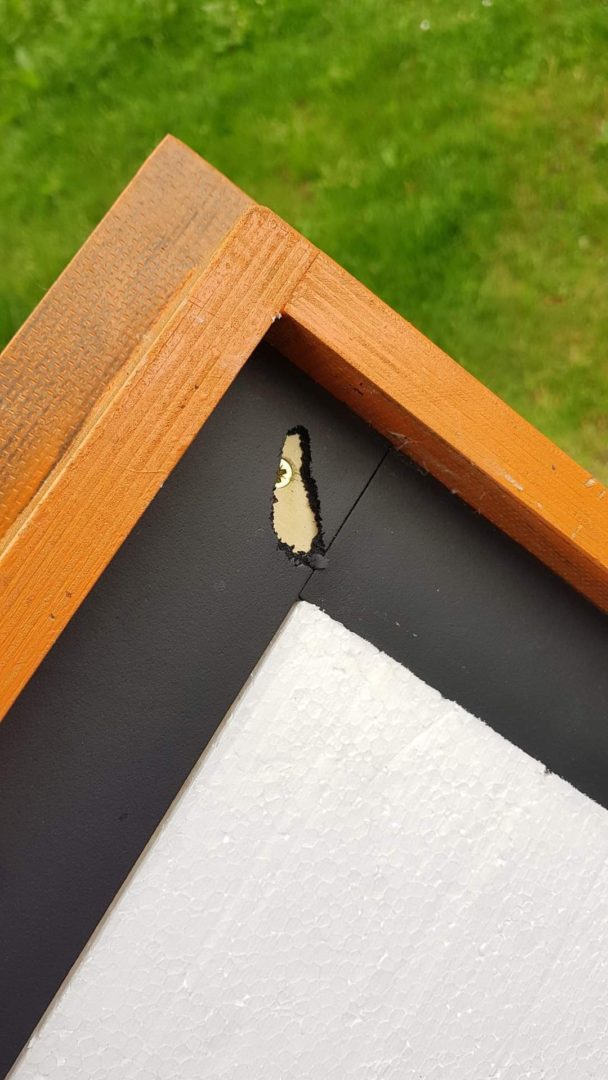
 

Bumblebees PLUS - Bitten through seal under roof

Bitten seal under a poorly installed roof
Photo O. Hercog (8/2020)
The solution to this problem is easy and can be found HERE

Additional roof insulation against rainwater

The roof should always be made of high-quality, weather-resistant material . The life of the roof can be extended by attaching an additional waterproof layer and providing the whole with a high-quality coating .

Solution:
  • A plastic sheet is sometimes used as an additional layer on the roof , or old linoleum can be used.
  • A substantial, sufficient overlap so that water does not unnecessarily flow onto the hive structure (it could get wet and deform) – the overlap should be at least 20 mm on each side
  • Don't use asphalt strips - they would stink.
  • It is not recommended to use sheet metal, as it will heat up in the heat and the hive will overheat. Raindrops falling on the sheet metal would also disturb the hive inhabitants
  • If you are going to add additional insulation to the roof, make it overlap by about 10 mm on each side - water will drip off better and will not flow into the roof structure.  
  • We do not recommend using sheet metal , as it will heat up in the heat and the hive would overheat. Raindrops falling on the sheet metal would also disturb the hive inhabitants. Often there is a small overhang of such a roof .
    Note: some manufacturers use it, we will wait for the experience of a larger number of keepers

Roof coating

The paint should be done with waterproof paints . Color separation of the hives is recommended, but bumblebees are more likely to orient themselves according to the color of the hive.

Solution:
  • Acrylic paints are suitable for painting . Acrylic paints today are of high quality, durable and cover well.
  • colors used by beekeepers are also good .
  • Some manufacturers use high-quality teak oils .

Notice:

  • Even the best paint needs to be renewed to time .
  • The coating of the roofs (and the hive) should be done in advance so that the hive is not smelly at the beginning of the season, which could repel bumblebees.

Roof load

If the roof is not heavy enough and has no solution for fixing it , we recommend weighting , for example with bricks or stones. Most beekeepers use a similar solution on their hives.

In addition, the roof will fit better and the seal will be well compressed . This way, the hive roof will not fall off even in windy weather.

Roof inspections

Every time you visit the hive, make sure that:

  • The roof is installed correctly.
  • The seal fits snugly and there are no gaps.
  • The seal is not damaged.
  • Water does not flow into the hive
  • Mold does not form under the roof .

Practical examples

In the following section, we will show you a possible roof design from the Čmeláci PLUS workshop that meets the required characteristics. The photo documentation also includes details of the double seal and the inner lid of the hive, which makes the hive very well sealed and prevents the penetration of parasites.

Material used:

  • concrete plywood 18 mm
  • polystyrene board 50 mm
  • fan seals and Tesa see bumblebee hive seals
  • screws, acrylic spray paint
Bumblebees PLUS - Roof of a beehive for bumblebees with a removable insulation insert and double sealing - Photo Ondřej Hercog 2022 07 28 (2)

Roof of a bumblebee hive with a removable insulation insert and double seal
Photo: O. Hercog (28/7/2022)
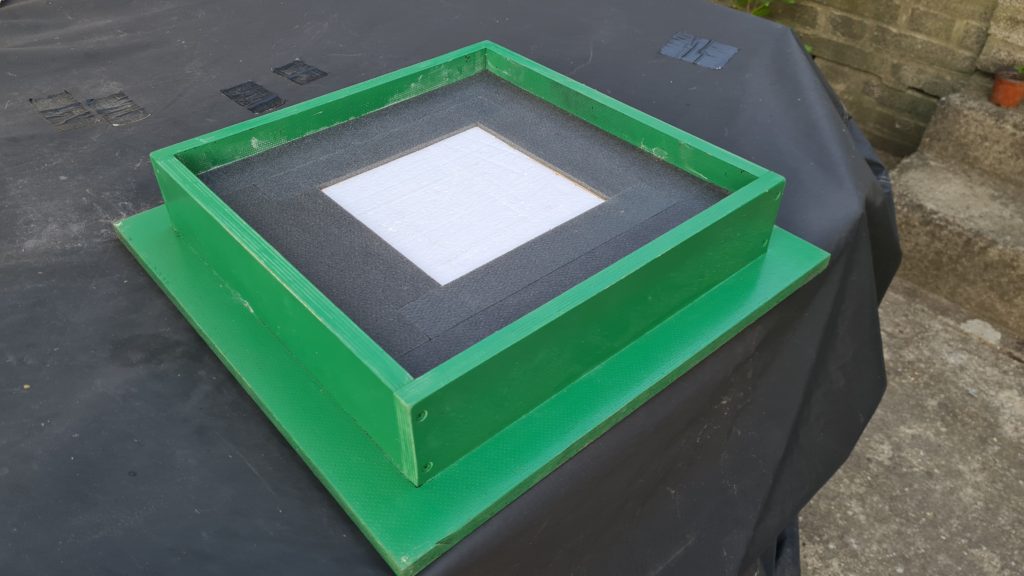
Bumblebees PLUS - Roof of a beehive for bumblebees with a removable insulation insert and double sealing - Photo Ondřej Hercog 2022 07 28 (5)

Roof of a bumblebee hive with a removable insulation insert and double seal
Photo: O. Hercog (28/7/2022)
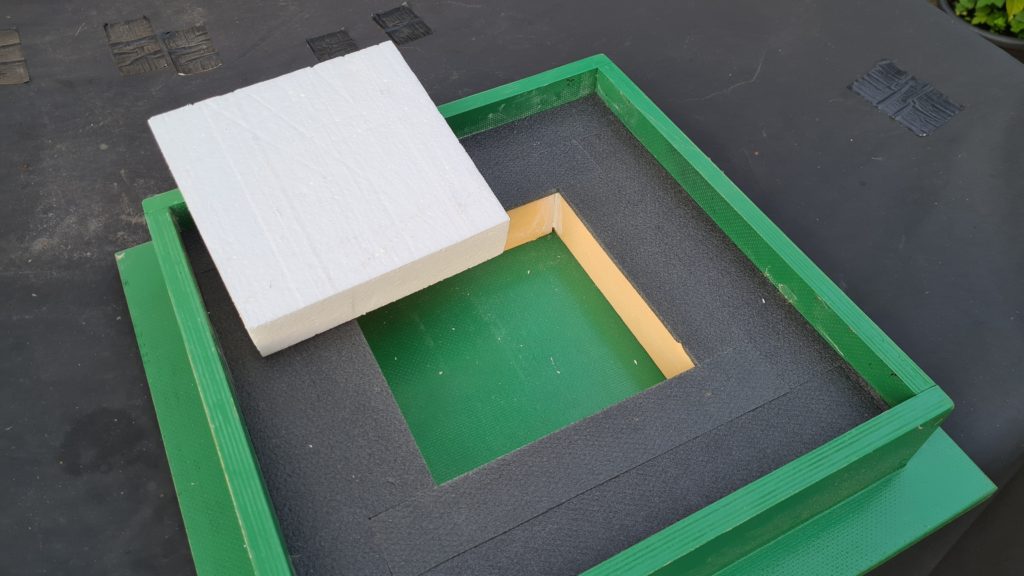
Bumblebees PLUS - Roof of a beehive for bumblebees with a removable insulation insert and double sealing - Photo Ondřej Hercog 2022 07 28 (6)

Roof of a bumblebee hive with a removable insulation insert and double seal
Photo: O. Hercog (28/7/2022)
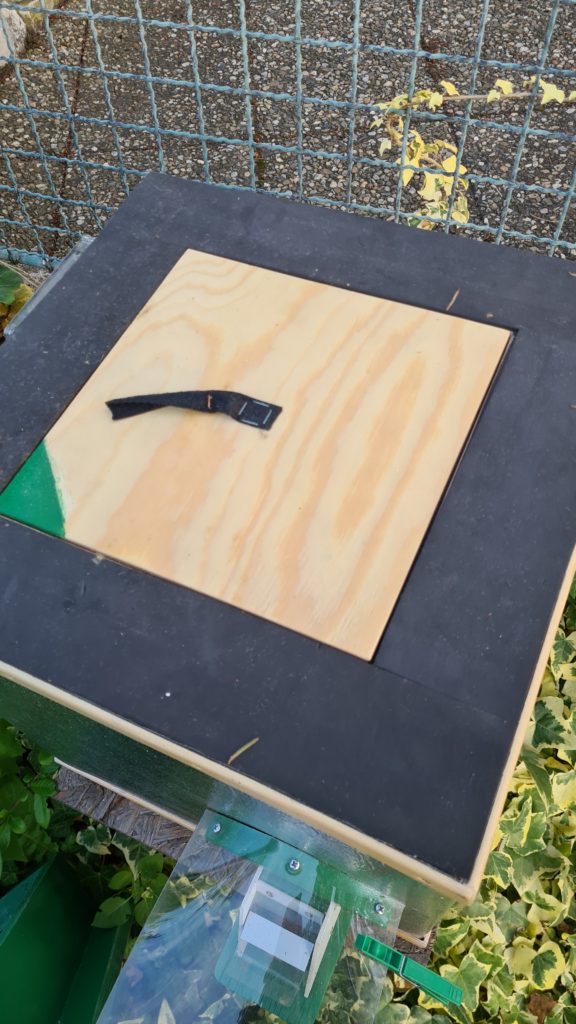
Bumblebees PLUS - Roof of a beehive for bumblebees with a removable insulation insert and double sealing - Photo Ondřej Hercog 2022 07 28 (3)

Roof of a beehive for bumblebees with a removable insulation insert and double seal - inner lid of the hive
Photo: O. Hercog (28/7/2022)

L
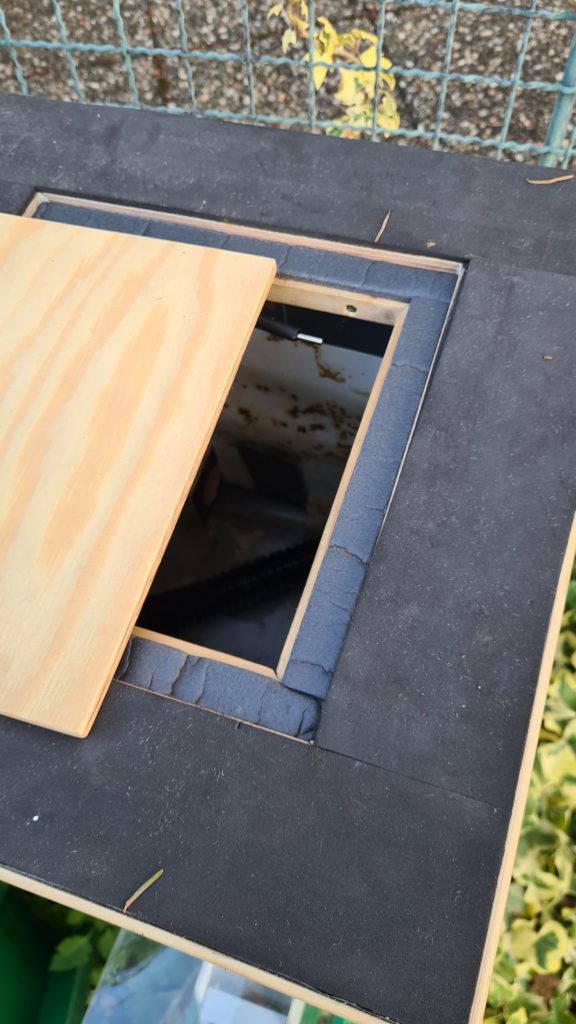
Bumblebees PLUS - Roof of a beehive for bumblebees with a removable insulation insert and double sealing - Photo Ondřej Hercog 2022 07 28 (4)

Roof of a bumblebee hive with a removable insulation insert and double seal
Photo: O. Hercog (28/7/2022)
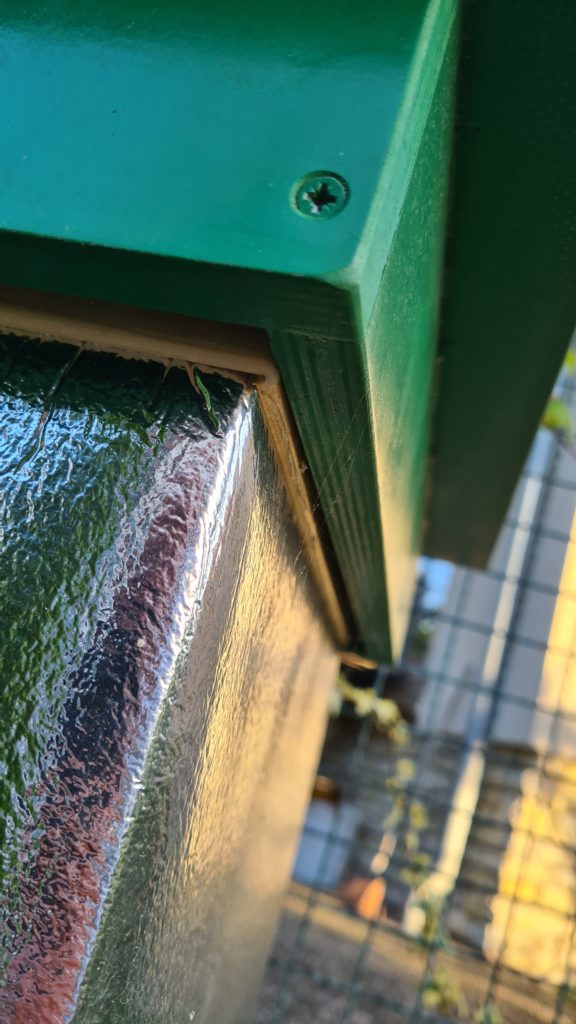
Bumblebees PLUS - Roof of a beehive for bumblebees with a removable insulation insert and double sealing - Photo Ondřej Hercog 2022 07 28 (1)

Roof of a bumblebee hive with a removable insulation insert and double seal
Photo: O. Hercog (28/7/2022)
Poor quality roof design

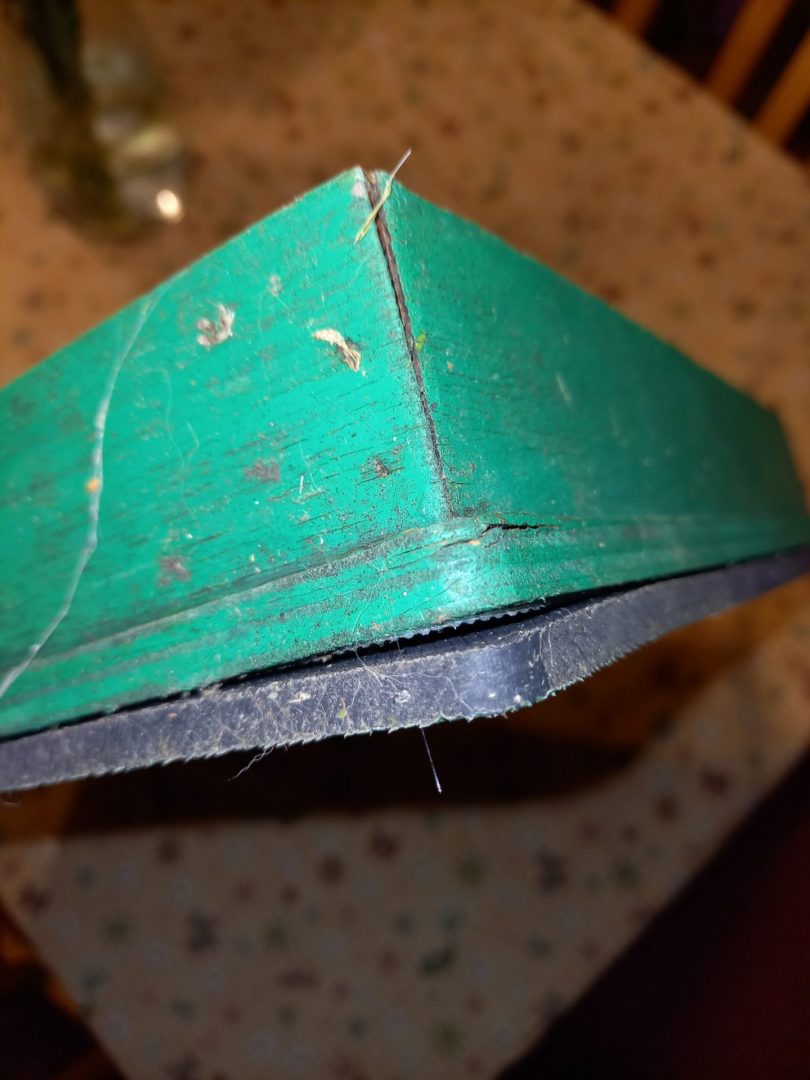
We have noticed that some commercially available hives have leaked into the hive and the roof structure has become loose.
This is dangerous because it creates a path for parasites . Thanks to inspections, such a situation can be detected and the defect can be eliminated.

If you use additional rainwater insulation with an overlap and if the roof construction is of high quality (glued and screwed), this situation should not arise for you.

Don't be afraid to complain about poor quality commercial products.
 
The manufacturer was notified of this situation and promised to rectify it.
 
Bumblebees PLUS - Poor quality roof of a commercially available hive after one season

Poor quality roof of a commercially available hive after one season
Source Internet
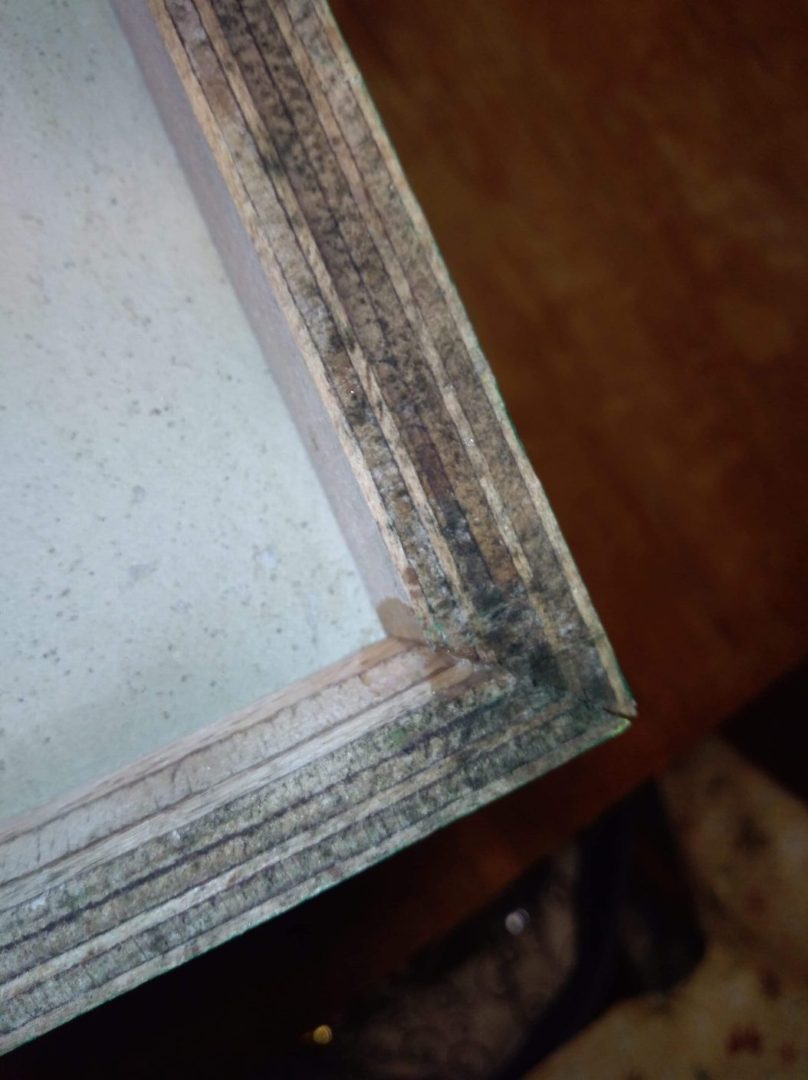
 

Bumblebees PLUS - Poor quality roof of a commercially available hive

Poor quality roof of a commercially available
hive Roof has been used for less than one season
Source Internet


Conclusion

Summary:

  • extremely important for bumblebees , just like the roof of a house is for people.
  • Look for hives with a quality roof , this is a guide for you to find a good manufacturer.
  • Even good quality hives need regular inspection and maintenance .
  • Even the best roof that is installed incorrectly will not function properly.