
Are there attractants that will help with hive occupancy?
We are continuing to update the page
What you will learn here
- Is an attractant necessary for bumblebees to settle?
- What has worked well for breeders in the Czech Republic?
- What do available sources and studies say about this?
- What do Bumblebees PLUS and other breeders recommend?
Last updated: 21/3/2026
In a nutshell
- You can settle bumblebees in the hive even without attractants - if you follow our instructions.
Natural attractants work best: bumblebee queens are most attracted to the smell and microclimate of abandoned vole nests and natural cavities.
Fine rabbit fur and clean vole nests are excellent attractants for the wood bumblebee (Bombus lucorum) and related species.
Dog hair can work too: but only the fine fraction and only from a dog without antiparasitics and perfumed shampoos.
Part of the old lining is suitable – the attractants from last year's nest must be free of parasite residues.
A scented scent after one season helps.
- Scientific studies confirm the importance of smell: mothers search for places for small mammals.
The natural attractant is not only the smell, but also the microclimate: stable temperature, dryness, shade and protection from the wind.
The surrounding environment plays a big role: bumblebee queens prefer hives located in mosaic landscapes, on forest edges and close to spring food.
There is no “miracle scent”: no simple synthetic chemical attractant works reliably.
The best attractant = a combination of organic odors, a good hive location, but also the correct procedures for preparing the hive and settling the queen.
Don't look for one magic trick, but address all the necessary details.
English Abstract
You can settle bumblebees into a nest box even without attractants – as long as you follow our instructions.
Natural attractants work best: bumblebee queens are most strongly attracted to the scent and microclimate of abandoned vole nests and natural cavities.
Fine rabbit fur and a clean vole nest are excellent attractants for Bombus lucorum and related species.
Dog hair can also work, but only the fine fraction and only from a dog not treated with antiparasitics or perfumed shampoos.
A small amount of last year's nest lining can help – but attractants from an old nest must be completely free of parasites.
A nest box scented from a previous season works well too.
Scientific studies confirm the importance of scent: queens actively seek places formerly used by small mammals.
A natural attractant is not only scent, but also microclimate: stable temperature, dryness, darkness, and shelter from the wind.
The surrounding landscape plays a major role: bumblebee queens prefer nest boxes placed in a mosaic landscape, at woodland edges, and near early spring forage.
There is no “magic scent”: no simple synthetic chemical attractant works reliably.
The best attractant = a mix of natural organic scents, a well-chosen nest-box location, and correct nest-box preparation and queen-settling techniques.
- Don't look for one magic trick — focus on getting all the necessary details right.
But please go through this page to learn more
What is the basis for success in establishing bumblebees?
Beginning beekeepers often ask us how to increase the success rate of bumblebees settling in the hive.
If you read our guides, you will learn that success is not determined by one spell/factor, but that it is a set of details that work as a whole, but do not work separately:
- The breeder must have a good sense of humor
- The trap must be placed in the right place and at the right time
- The nest must be properly prepared and must contain good lining in sufficient quantity
- The breeder can leave it to nature to see if the mother bumblebee finds it on her own
- If the breeder actively settles the mother, it must be a mother who is looking for a place to nest on her own, is ready for it and is not already nesting somewhere
- The breeder can actively offer the mother a fright, but then it must be done very gently, quickly without stress, transport - see our recommended procedures
- The mother may not settle down right away because she is not ready for it, the surrounding conditions or the weather are not suitable for her, etc., so it takes time and patience
- In the end, it is the mother who makes her own decision, according to coded patterns of behavior and, above all, that mysterious female instinct that tells her YES/NO
Is there any universal magic that will help?
Many novice breeders are looking for some other “magic” to help themselves. They don’t really believe that the above steps are enough in most cases. That’s why they don’t look for some seemingly “detail” that they don’t do well, and that’s why they are unsuccessful. They are looking for that “something” that could help them in the first season.
Our experience confirms that if a beginner breeder follows our basic procedures, with a little luck they will succeed.
Attractants that suit some bumblebee species may not suit others.
For example:
- The ground bumblebee (Bombus terrestris) likes to search for burrows for small rodents.
- The hortorum bumblebee (Bombus hortorum) likes to nest in abandoned bird nests.
- The field bumblebee (Bombus pascuorum) can make do with a mound of old grass (last year's grass), moss, etc.
That's why we don't believe in any universal magic and don't promote them because we don't use them ourselves. If we do, it's minimal, for example for settling the bumblebee (Bombus lucorum), or for rare species that require increased care.
So let's look at what is often addressed, which is the odor attractant .
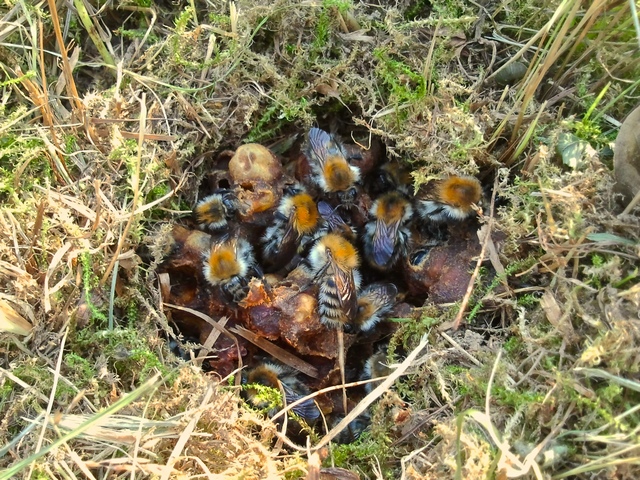
Nest of field bumblebees (Bombus pascuorum) in a pile of grass
Photo Internet
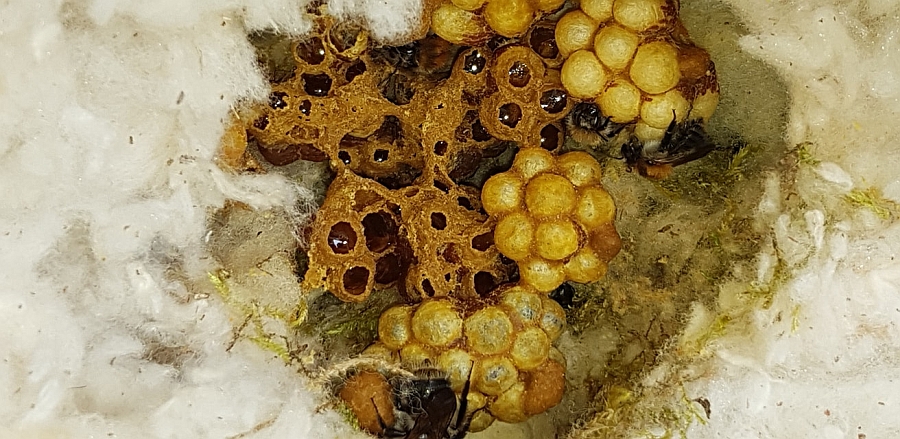
A view into the nest, where the flap is consistently used.
photo O. Hercog
What is an odor attractant?
An odor attractant is a chemical substance or mixture of substances that attracts a particular type of organism – usually an insect – by mimicking the odor that the species naturally seeks out.
It is essentially a “smell that says: come here ”.
On this page we will focus on the influence of odorous attractants on the establishment of bumblebees. We will omit the issue of bumblebees.
Why don't we believe in a guaranteed attractant? Because it is a complex of necessary conditions for successful establishment.
The odor attractant works, but certainly not on its own. From our experience, we know that bumblebees will settle in places where they do not necessarily encounter the smell of rodents, etc.
Examples of where we found bumblebee nests:
- Furniture upholstery
- Old plush toys
- Glass and mineral wool high in the roof
- Old mattress
- Pieces of plastic wrap
- Old paper napkins
- Rolled carpet
- Old fur
- Grave
- Smokehouse
- "The Caddy Booth"
- Clutter in the apartment under the closet
- etc.
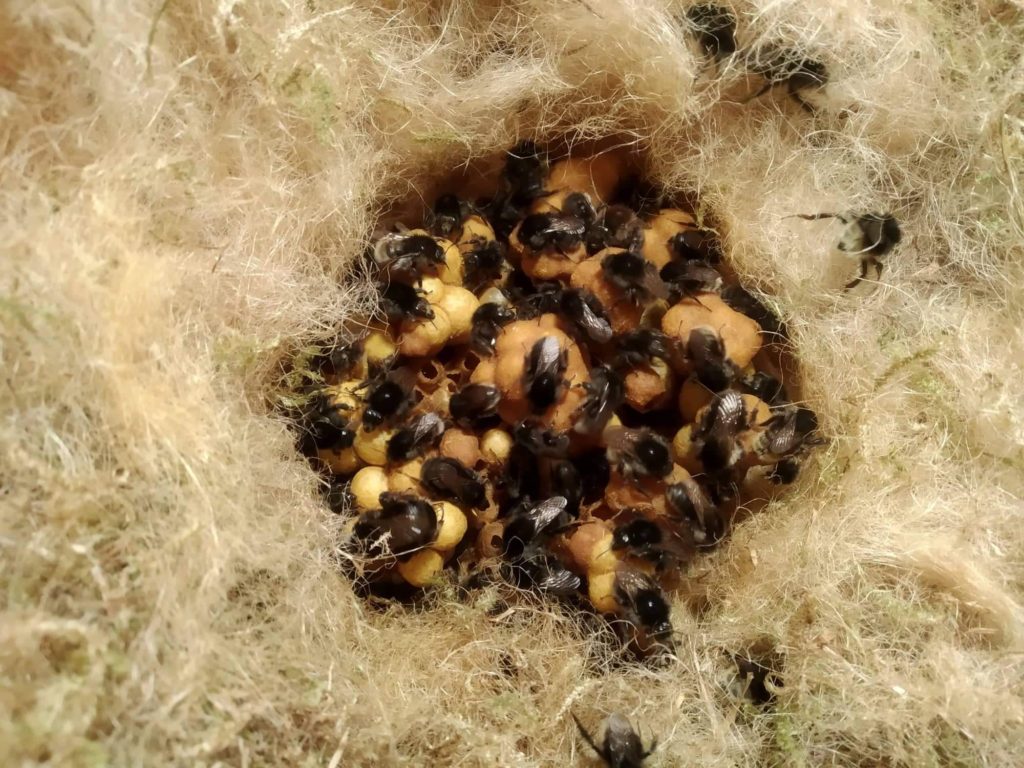
Nest of variable bumblebees (Bombus humilis)
Photo: V. Cach 2021
Proven solutions and experiences of Čmeláci PLUS and experienced breeders
Our tips below work, you just need to use them in small amounts – into the core of the new lining.
Consider for yourself which path you will take.
If you use any attractant, just a little is enough and put it in the center of the nest.
Try it and share your experience with us.
A clean and "fragrant" vole nest
- The field vole (Microtus arvalis) is a gift for bumblebees
- A dry, clean, slightly "mousy" smelling nest is a natural signal for bumblebees of a suitable location.
- Great for the bumblebee (Bombus lucorum)
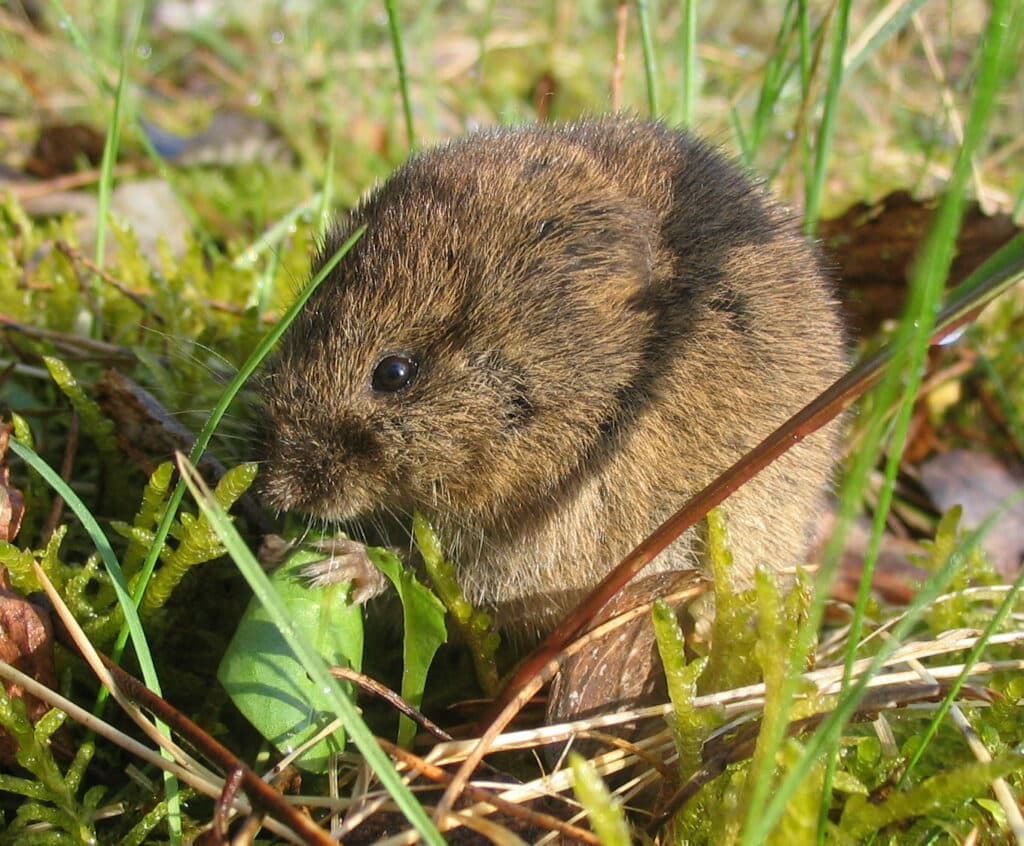
Field vole (Microtus arvalis)
Photo: Dieter DT WIKi
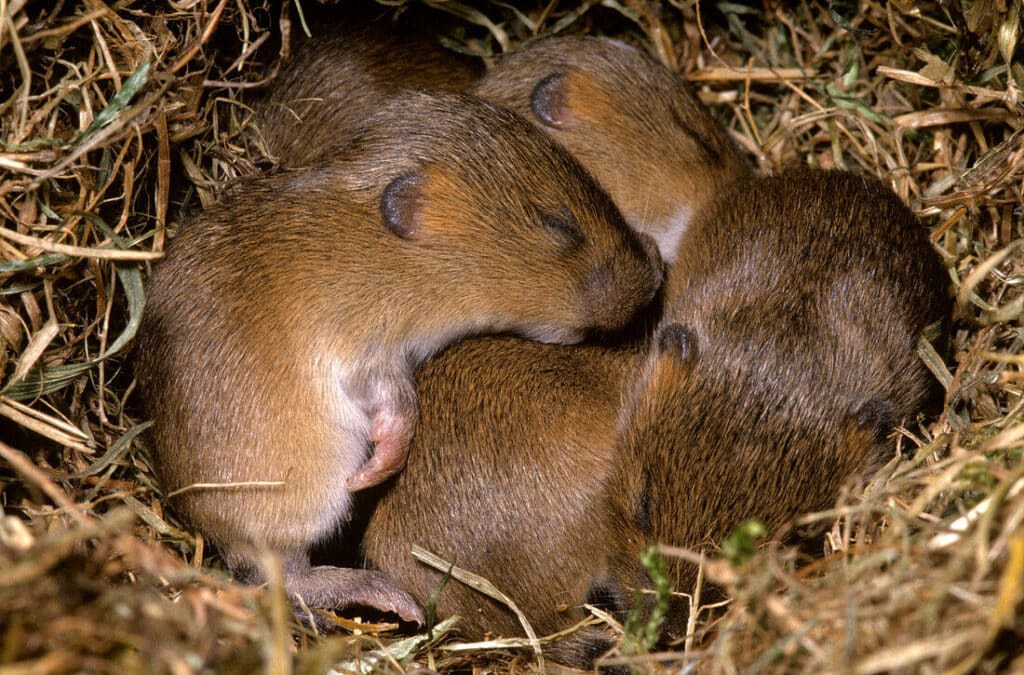
Field vole (Microtus arvalis) nest
Photo: Internet
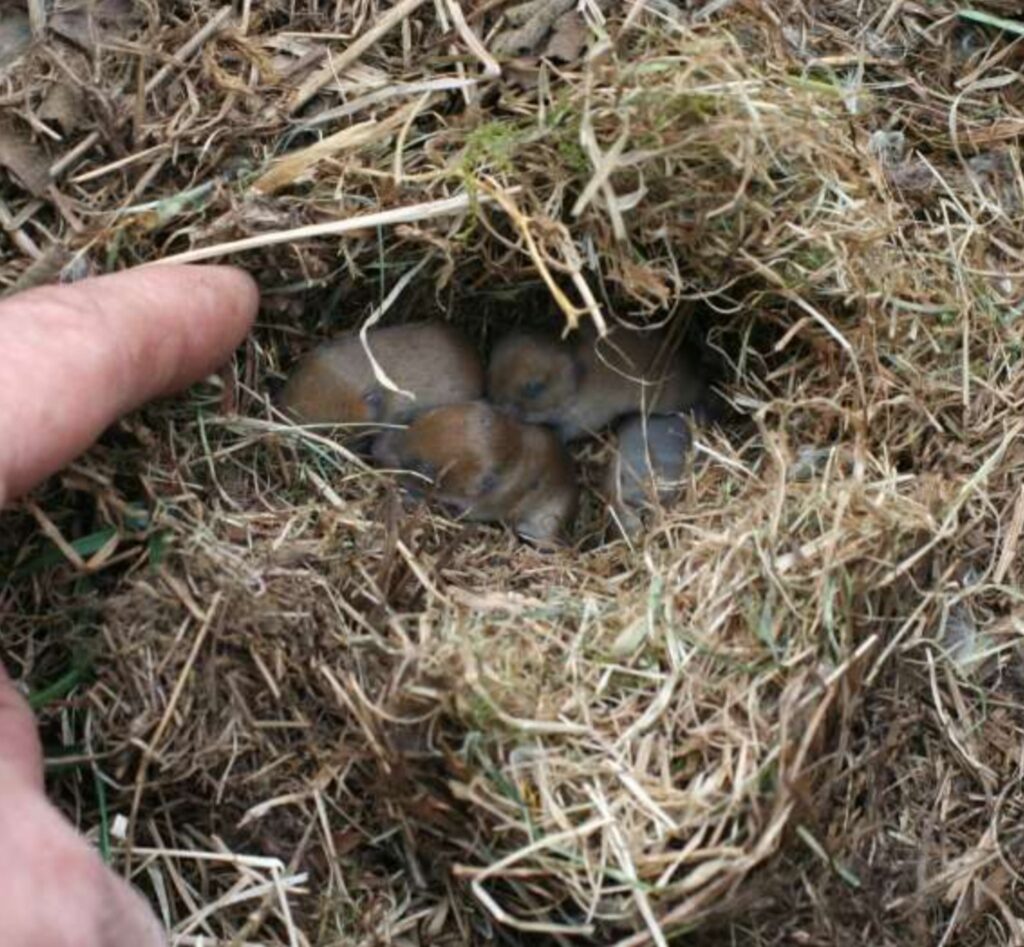
Barn Owl (Microtus arvalis) nest
Photo: Barn Owl Trust
Vole vs. mouse – what's the difference?
The field vole is called "Europäische Feldmaus" in German (maus = mouse). In English it is called "Common vole".
This is why voles and mice are sometimes confused, and some documents about bumblebees write about how bumblebees react to mouse droppings and urine as an attractant. But it's more complicated than that.
Although people often confuse them, voles and mice are not the same. They belong to different groups of rodents and have different appearances, behaviors, and lifestyles.
The vole is a specialist in underground life, building extensive corridors and spherical nests of grass (usually 10–14 cm) in its burrows.
Mice do not usually build spherical nests like voles - they rather use shelters, cracks, cavities and line them with fine material, but not as carefully as voles.
Vole's nest
- spherical, made of fine grass
- stable microclimate
- protected in underground burrows
- distinct specific odor
- perfect place for a bumblebee mother
Mouse nest
- less stable
- simpler
- often diverse material
- less isolated
Bumblebees prefer vole nests because they have better insulation, material and humidity. If such a nest is not available in nature, they will also use the nests of other small rodents from the mouse genus (Mus sp.)
Note
- Dave Goulson does not explicitly mention the smell and odor profile of the vole as a significant attractant in his works, but our experience and later studies describe the smell as one of the attractants.
Source: O'Connor, Park & Goulson (2017) “Location of bumblebee nests is predicted by counts of nest‑searching queen” - The founder of bumblebee breeding in the Czech Republic, Mr. Miroslav Stuchl, used some of the mouse nests from Zverimex, a store for breeders, if he did not have a nest of voles/mice from nature.
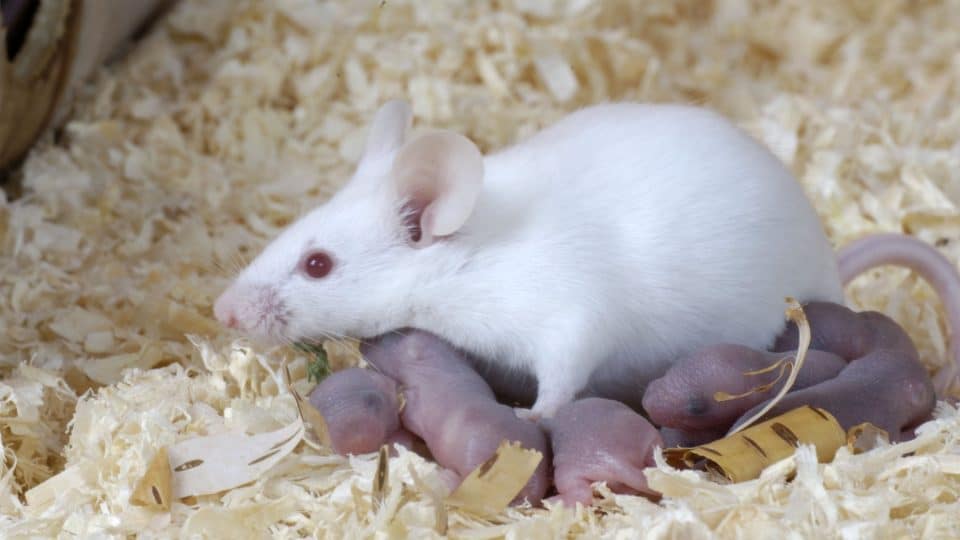
Laboratory mouse – nest
Photo: Profimedia Photobank
Soft rabbit fur
- Rabbits are rodents, their burrows in nature are used by bumblebees for nesting.
- The fine fur from the nest that the female rabbit plucks for her young works well.
- Very attractive to B. lucorum, but also suitable for other bumblebee species in general.
Why do bumblebees use rabbit holes?
- stable microclimate (heat, humidity)
- space suitable for larger species (e.g. Bombus terrestris)
- insulating material (hay, hair, dry litter)
- easy accessibility in the cultural landscape (in some countries)
Source:
- Goulson – Bumblebees: Their Behavior and Ecology (2003)
- Svensson & Lundberg (1977)
- Fussell & Corbet (1992)
- Coll et al. (2014) - Bumble Bees of North America
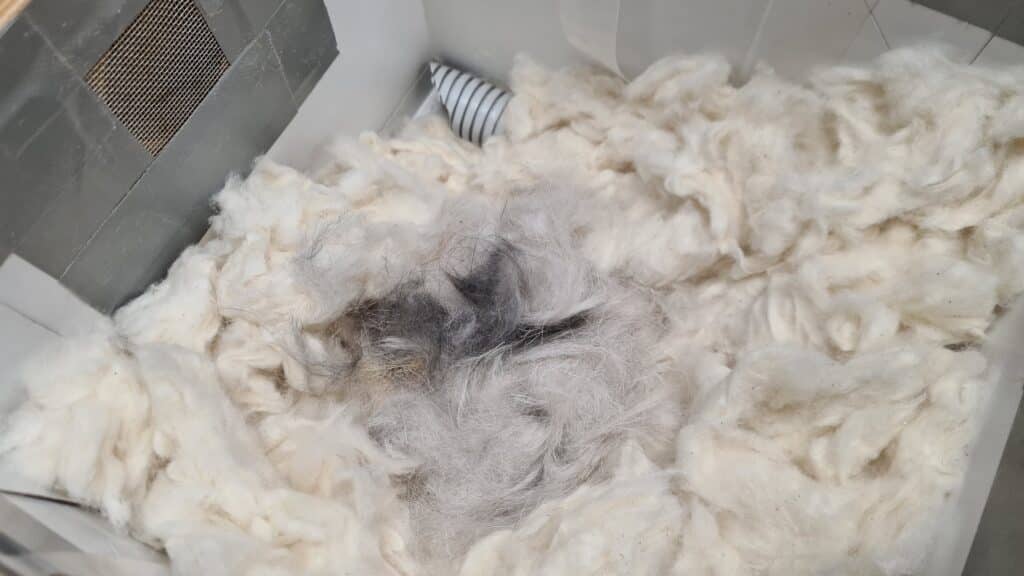
Lining – Raw cotton – Rabbit fur core before being covered with another layer of lining
Photo: O. Hercog (25/02/2024)
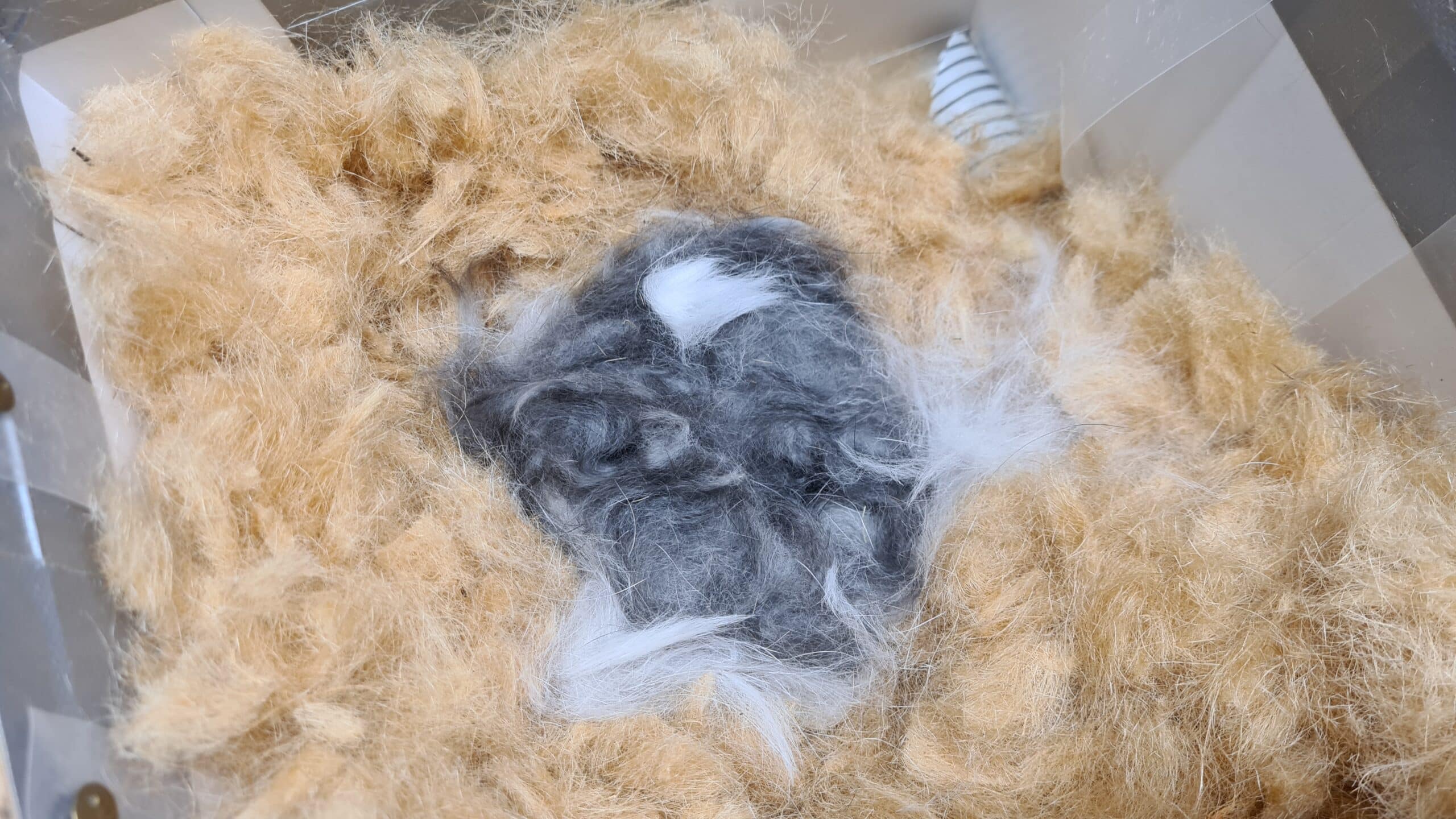
Bumblebees PLUS – Lining – Jute felt – Rabbit fur core before being covered with another layer of lining
Photo: O. Hercog (25/02/2024)
Combed soft dog fur
- The fine fraction of fur from a domestic dog also works
- Attention – the dog must not be treated with antiparasitics (ticks, etc.) or scented shampoo
Note
- This material was successfully tested by Luděk Šulda. No scientific work confirms it, but it works.
- Bumblebees don't find such material in nature, but they are happy with it. Apparently, they prefer the texture over the smell, which they can't be "trained" to in nature.
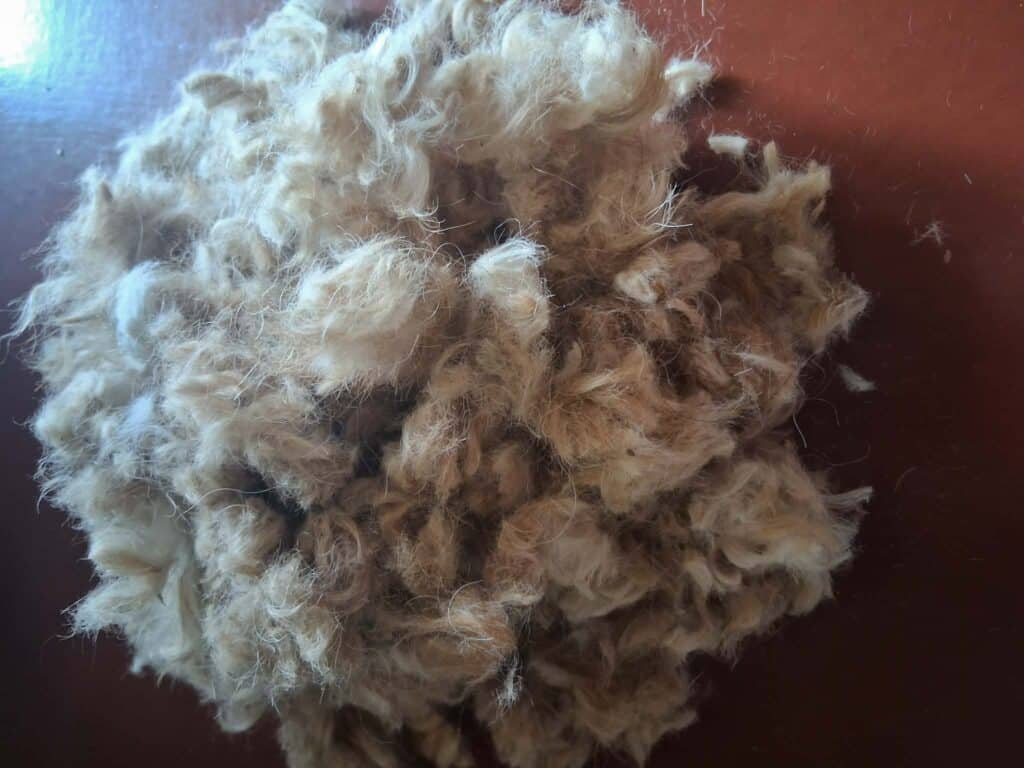
Combed fine dog fur
Photo: L. Šulda (5/03/2026)
Lining from last year's nest
- A clean part of last year's lining free of parasites.
- See lining treatment .
- The old lining can be used to scent the new lining .
Note
- If you heat treat the lining, it will be a worse attractant, but it will mean a lower risk of parasite/disease transmission.
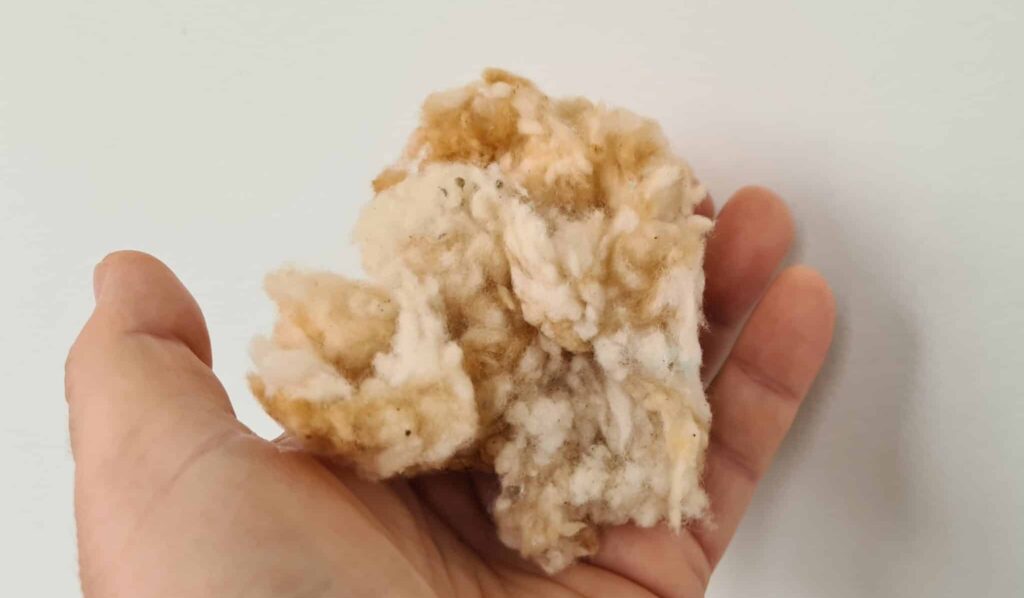
Last year's lining
Photo: O. Hercog (20/03/2026)
Part of last year's bumblebee nest - we don't use it
- It may work well for smelling
- It doesn't stimulate the mother to lay eggs as much as live cocoons, but the scent transfer could help, like last year's lining
- It is safer to use this material to scent the lining
Note
- The risk of parasite transmission is highest here - therefore we do not recommend and we do not use it ourselves.
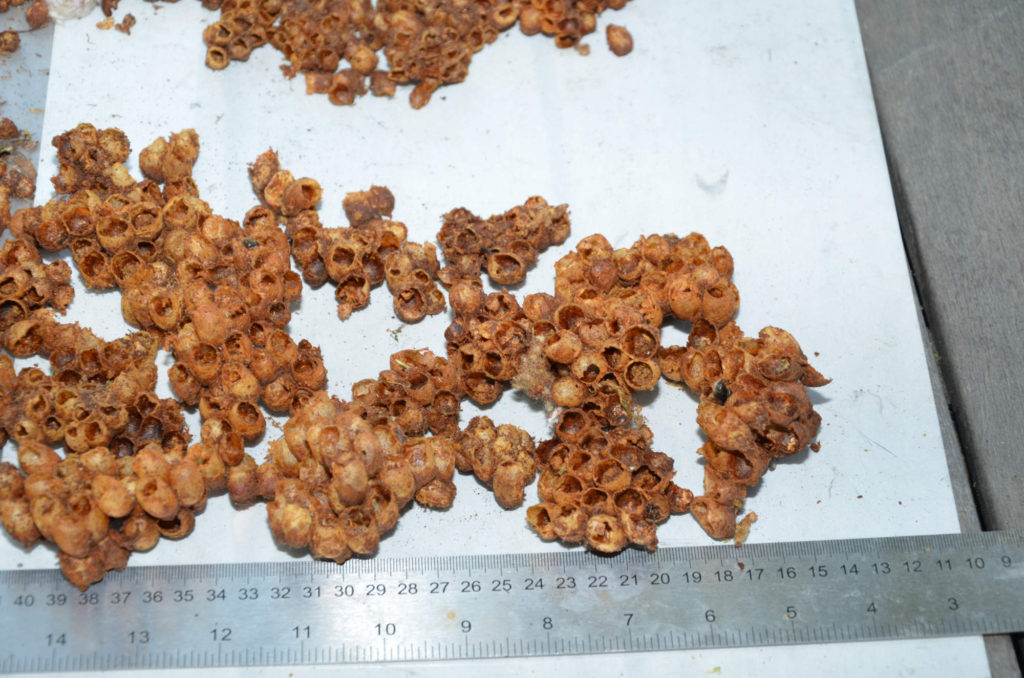
Bumblebee nest dismantled after the season
Photo: O. Hercog
A scented scent from last season
- A bumblebee nest once used is full of their smell, even if you clean it after the season – a bumblebee nest smells beautiful
- A used cardboard-lined trap is also an attractant
- An old hallway will work similarly, but you clean it and rinse it thoroughly with hot water
Note:
- the hive after the season – remove any dirt
- You can safely place bumblebees in a new hive, as long as you don't paint it just before the season
- Many breeders don't bother cleaning the corridor and settle in without any problems
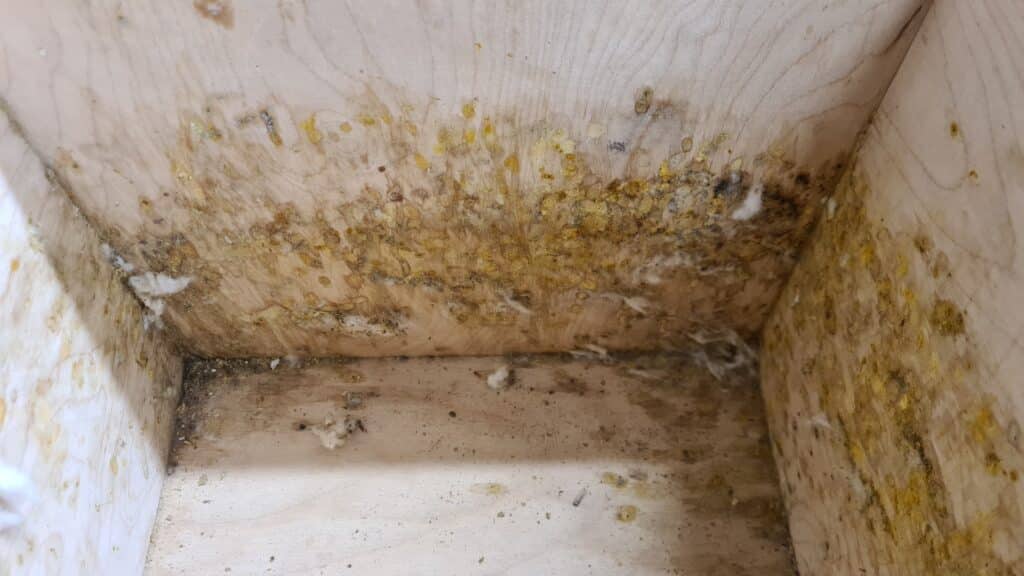
Hive walls at the end of the season – before removing dirt
Photo: O. Hercog (1/03/2026)
Old bird's nest as an attractant for bumblebees - we do not use it
- Part of last year's bird nest can be a good attractant for bumblebees (Bombus hypnorum).
- Bumblebees will easily settle in glass/mineral wool, and if they have already lived there, they will prefer it.
Note
- We have not tested this material. If we do, we will let you know.
- But we will definitely treat the bird's nest material so that it does not contain dangerous long fibers.
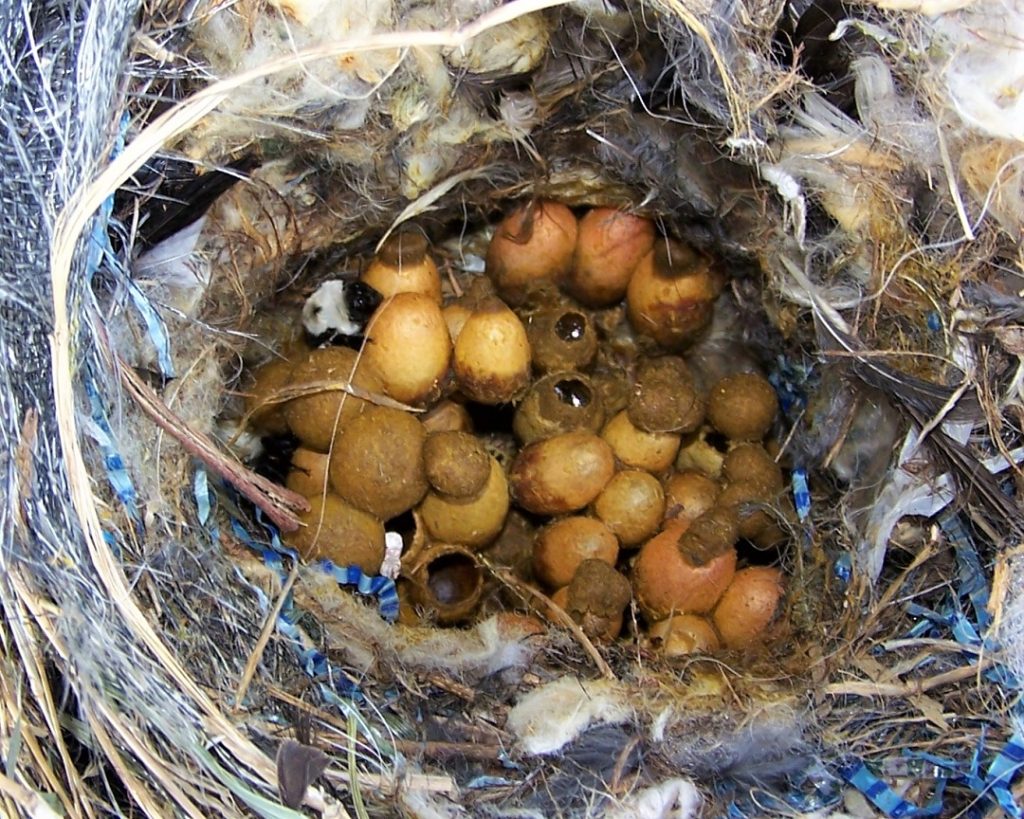
A nest of hypnotic bumblebees (Bombus hypnorum) in a birdhouse
Photo The Peace Bee Farmer
Other materials
- We are often asked about other materials, such as horse hair, cat hair, etc.
- These materials, if the animal has not been treated for parasites, could work if they are sufficiently fine
- In principle, bumblebees do not seek them out because they do not commonly encounter such material in nature and are therefore not prepared for it
Note
- We want to test these materials, you can join us in this
Pheromone traces of a related species
- This is definitely "taller girl" and it's complemented by the use of material from last season
- The breeder will use material and traces from the nest of a specific species to establish/reproduce a bumblebee of the same or related species
Note
- The technique is mainly suitable for specialized breeders and rare bumblebee species
- It is effective — but in practice quite difficult and not widely available
What does science confirm and how does it match our observations?
Odors from small mammal nests — the No. 1 natural attractant for ground-nesting species
Mice and vole nests in nature contain:
- Microbial odors
- Hair remnants
- Generally old organic material from a small rodent nest
All together, it creates a unique odor cocktail that tells the mother: "Here is a stable microclimate, suitable for a rodent nest, which also suits bumblebees."
Source O'Connor, Park & Goulson (2017) "Location of bumblebee nests is predicted by counts of nest‑searching queens"
Mice or vole nests in the laboratory also contain urine and droppings. Both act as attractants. However, it is necessary to remember their unpleasant smell and for hygienic reasons, we do not recommend such a solution.
Source Varner et al. 2023 – Rodent odor bait: A new bumble bee conservation tool to enhance nest box occupancy.
Smells of an old bumblebee nest
Mothers respond to:
- wax
- old waxwork and its remains
- bumblebee tracks
- odors on the surface of the nest (cuticular hydrocarbons)
These chemical traces are very strong attractants
Source: Orlova & Amsalem (2021) ""Bumble bee queen pheromones are context‑dependent"
Therefore, we recommend letting bumblebees “smell” the new hive
“Indirect type” attractants – environment and landscape
Queens prefer nesting sites:
- near spring flowers
- in a mosaic landscape (forest edge + open meadow) or in a colorful garden
- with enough food to feed the offspring
Source:
- Lanterman et al. 2019 "Habitat Preference and Phenology of Nest‑Seeking and Foraging Spring Bumble Bee Queens in Northeastern North America"
- Lanterman et al. 2023 "Habitat Preference and Phenology of Nest‑Seeking and Foraging Spring Bumble Bee Queens in Northeastern North America
Microclimate – an underestimated but key component
Bumblebee queens look for cavities that are:
- slightly humid
- protected from the wind
- dark
- steadily warm
- with a narrow entrance hole (tunnel, corridor)
- anything that imitates a rodent's natural burrow
Rodent odor as a clue for founding bumblebee queens?
It wasn't until 2023 that the first real study, conducted in America on bumblebees, was published. It tested the synthetic odor of mouse excrement as an attractant for bumblebees. The study shows that bumblebees can detect the odor of a mouse nest and that hive occupancy can increase. But this is new research, not something D. Goulson would write (see above).
Study abstract
- Bumblebee conservation focuses primarily on replenishing floral resources. However, the availability of nesting sites is also closely linked to bumblebee abundance. To supplement natural nesting sites, beehives can be placed and equipped with synthetic baits.
- Because bumblebee queens are reported to establish colonies in abandoned rodent burrows, we hypothesized that bumblebee queens can perceive and behaviorally respond to rodent odor, and that baits with synthetic rodent odor may guide spring queens to nest boxes.
- We collected volatiles from litter contaminated with urine and feces of laboratory mice (Mus musculus) and identified 10 odorants that elicited responses on queen antennae.
- To test the attractiveness of mouse odor to queens in the field, we placed pairs of nest boxes on trees in flowery locations and placed clean litter in one box in each pair and mouse-contaminated litter in the other.
- Queens established colonies in 17 boxes with mouse odor and six boxes without odor. This 43% occupancy of the boxes with mouse odor represents a significant improvement over the approximately 10% occupancy common in unscented boxes. In another field experiment, we filled one box in each pair with synthetic mouse bait and found that queens established colonies in 13 baited boxes and in six unbaited control boxes. In particular, Bombus mixtus established seven colonies in the baited boxes and only one in the unbaited box.
Main findings
- Bumblebee queens (Bombus spp.) can detect odors from mouse urine, feces, and fur and respond to them behaviorally.
“In GC-EAD analyses, 10 headspace odorants of soiled mouse bedding elicited antennal responses from queen…” - Mouse odor significantly increases hive occupancy – roughly three times that of controls.
“Eighteen (43%) of the mouse-scented nest boxes were occupied, whereas only seven (17%) of the unscented boxes…” - Synthetic bait that mimics the smell of mice also increases occupancy, although less than natural material.
"Queens established colonies in 13 baited boxes and in six unbaited control boxes."
What the study doesn't say
- It does not address whether bumblebees prefer the smell of a specific rodent species (Mus musculus only).
- It does not investigate whether the smell also works in underground booths (the experiments were in trees).
- It does not address the long-term impact on colony success (all were destroyed by the wax moth).
Note Bumblebees PLUS
- The study focused on the odor attractant, not on the influence of other parameters and conditions, such as startle, etc.
- In our opinion, the result would be different if the hives were prepared correctly – but we do not underestimate the influence of the attractant
- Our recommendation is still the same – the smell of urine and feces of small rodents alone is not enough to successfully occupy a hive with bumblebees
Source
- Rodent odor bait: A new bumble bee conservation tool to enhance nest box occupancy (2023).
The attached image illustrates the procedure used in the project.
If you want your nest to smell and not stink, we definitely do not recommend this solution!
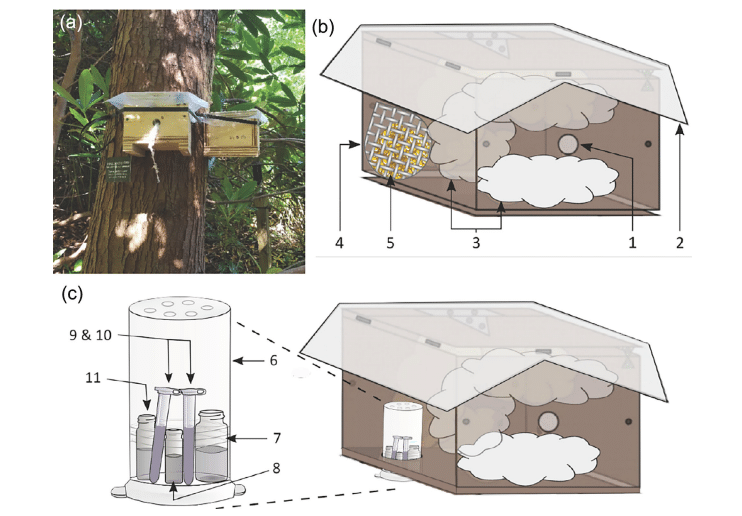
Illustrative image from the study
Source: Rodent odour bait – A new bumble bee conservation tool
What really doesn't exist and what not to look for
❌ no known universal chemical that would reliably "attract" the mother from a distance
❌ no proven synthetic pheromone
❌ no simple commercial scent that works universally
Source:
- Orlova & Amsalem (2021) ""Bumble bee queen pheromones are context‑dependent""
Summary for breeders – practical and clear
Don't look for one magic, like an "odor attractant", but address all the necessary details.
✔ What most attracts a mother to settle down is a set of several conditions:
- smells of rodent nests
- smells of bumblebee nests
- dry, insulated cavities
- suitable material that bumblebees can process
- stable microclimate
- the presence of nectar-producing plants in the vicinity
✔ The best and guaranteed "attractant":
- complex of natural organic odors and instructions on our website
A bumblebee is not a simple creature – it responds to a combination of signals and conditions, not to a single substance!
Other sources of information
- Bumblebees: Their Behavior and Ecology (Oxford University Press
- Bumblebees: Behaviour, Ecology, and Conservation (Oxford Academic)