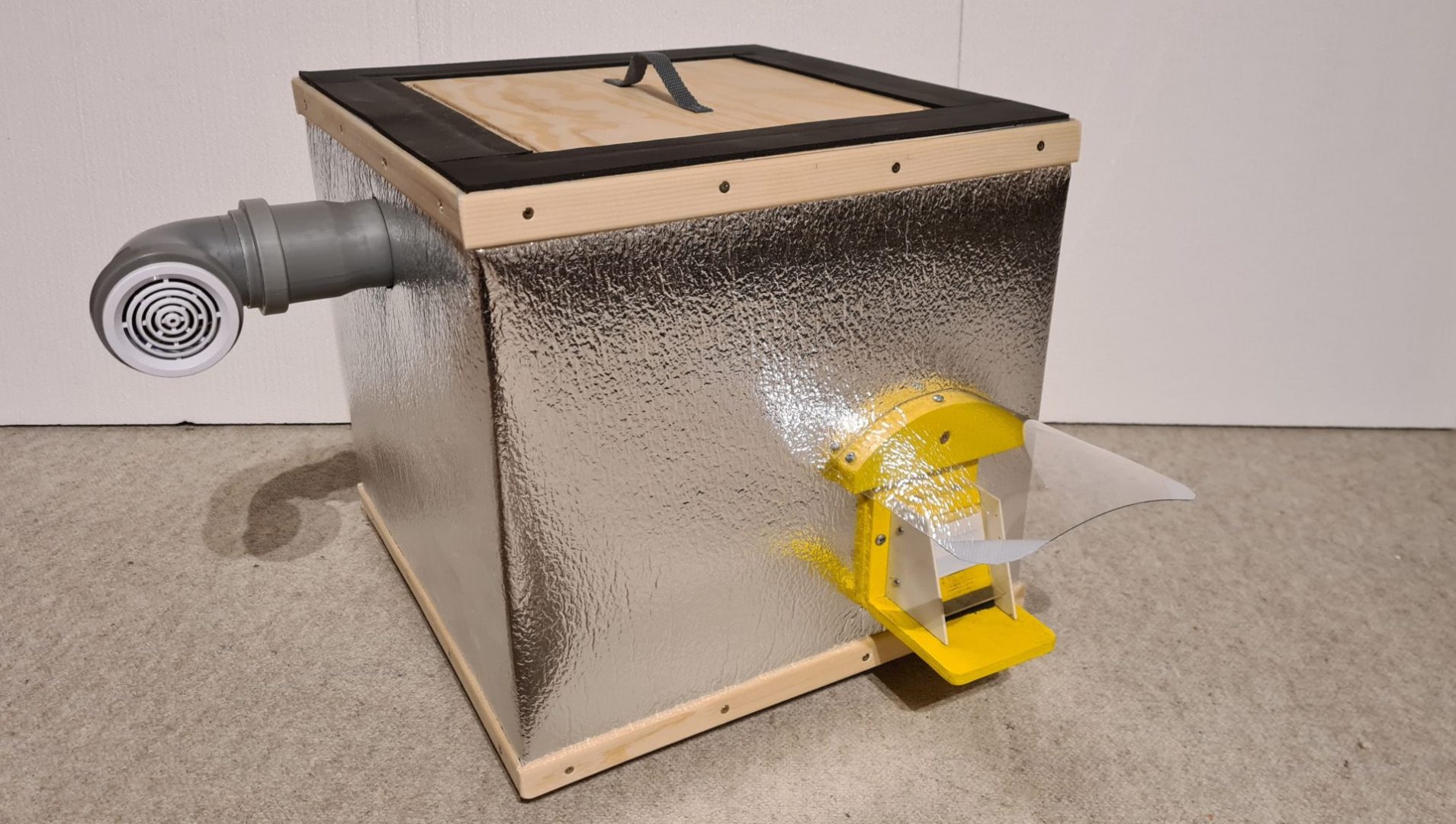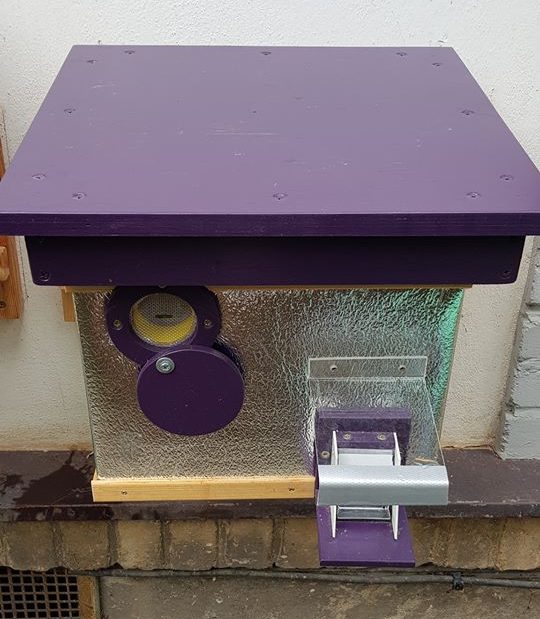
A comprehensive step-by-step guide to preparing the hive for successful breeding
What you will find here
- Instructions for preparing a hive
- Preparation procedure – step by step
- Tips and tricks
Last updated: 15/3/2023
Contents
Preparing the hive before the season
What needs to be resolved before you start preparing the hive for occupancy
Preparing a new
hive Preparing a used hive after storage
Placing and attaching the hive
Additional elements such as a protective net, ventilation attachment
Observation window
Ventilation
Sealing the roof and body of the hive
Preparing the hive step by step
Additional thermal insulation
Lining the inner walls with stiffer paper
Entrance corridor/tube
Bumblebee elevator – the second bottom of the hive
Protective flap
bottom with moss
Filling the hive with heat-retaining lining
Protective net Absorbent
blanket / rag under the roof
Roof
Canopy above the flap
Before placing the hive in place
Place the hive outside
Preparing the hive before the season
What you will learn here
In this section, we will describe the preparation of a classic wooden hive for the season, as a typical example of what needs to be addressed in the spring.
Some other types of hives, such as commercial or ground hives, are prepared similarly, but with differences that we will describe in the section for advanced beekeepers. It is better to follow the manufacturer's instructions . Of course, we mean a manufacturer who has documented beekeeping experience .
If you are doing all this for the first time and are also adjusting the scar, it will take you a few days.
If it becomes a routine for you, everything can be done in 1-2 hours .
The text may seem long to you, but it contains experiences that we want to pass on to you. This is so that your first bumblebee season goes as smoothly as possible without any unnecessary surprises .
You will learn what to prepare, how to proceed, and how to prepare the entire hive. Don't forget that seemingly insignificant details often determine the success of bumblebee breeding.
a checklist for you so you don't forget any of the steps before the "sharp start"
😀
Recommendation:
- Read the entire procedure first and only then get to work, it will save you a lot of time and worry.
- If you have purchased a new nest, open it - let it air out in a dry and cool place and get rid of all odors.
- However, we do not recommend filling the shelter with lining too early, for example in the fall. This could cause the lining to become damp and mold to form. The lining could also collapse and the entrance pocket could disappear.
- We also do not recommend putting the plant outdoors before the season starts
- If you want to be prepared in time, prepare everything up to the step of filling the hive with the lining. However, leave the hive prepared in this way dry and warm and insert the lining into it only before placing the hive in the chosen location.
What needs to be resolved before you start preparing the house for occupancy
After preparing the hive, you will find it difficult to carry out any work or interventions, so take the time to do the following preparatory steps.
It will save you a lot of time, work and worry .
Preparing a new hive
The new shock should meet the requirements we described in the chapter How to choose the right shock
If you have purchased a hive that does not meet these characteristics, it needs to be modified . Most commercially available hives require adjusting the ventilation, adding thermal insulation, modifying the unsuitable inlet tube , and fitting the hive with a protective flap .
Solutions and modifications can be found in separate chapters, which we point out in the following text, but for clarity, we present them here once again with links:
- Corridor in the hive
- Ventilation in a bumblebee hive
- Protective flap
- Beehive roof
- You can learn more about thermal insulation HERE.
Our description in this chapter applies to a large hive, where additional insulation can easily be inserted directly into the hive, which is not possible with small hives. - Read about hive sealing HERE
Preparation of the used hive after storage
The hive should be cleaned, repaired and stored after the season.
The procedure for cleaning the hive after the season is described in the chapter How to clean and winterize a hive
Even if you have already done this, it is necessary to inspect the hive after the winter , clean it of any dust and remove any defects before you prepare it and fill it with lining.
Procedure:
- rodents move into the hive after winter and pollute it. In this case, the hive needs to be cleaned again,
- treating the wood again = heat it with a stream of hot air to more than 60°C, but do not burn the wood,
- It is also a good idea to rinse the “last year’s” inlet tube with hot water if you are going to use it again.
You can read more about using the old tube in the advanced breeder section Old or new tube…
Control:
- Before you start filling the bed with the lining, make sure that the bed is clean, dry and

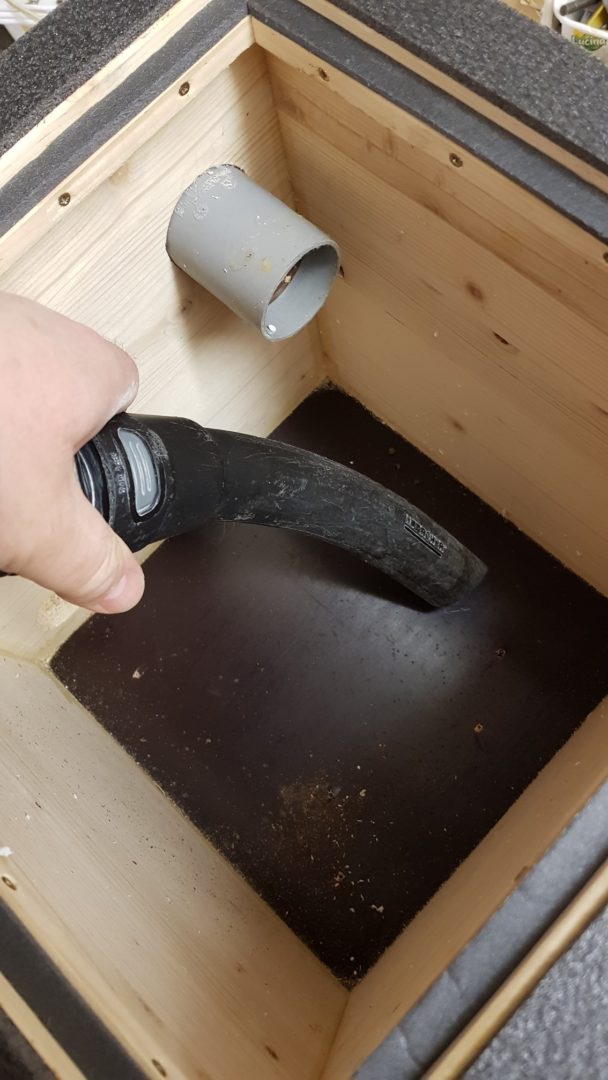
Thoroughly clean the hive from dirt after winter storage
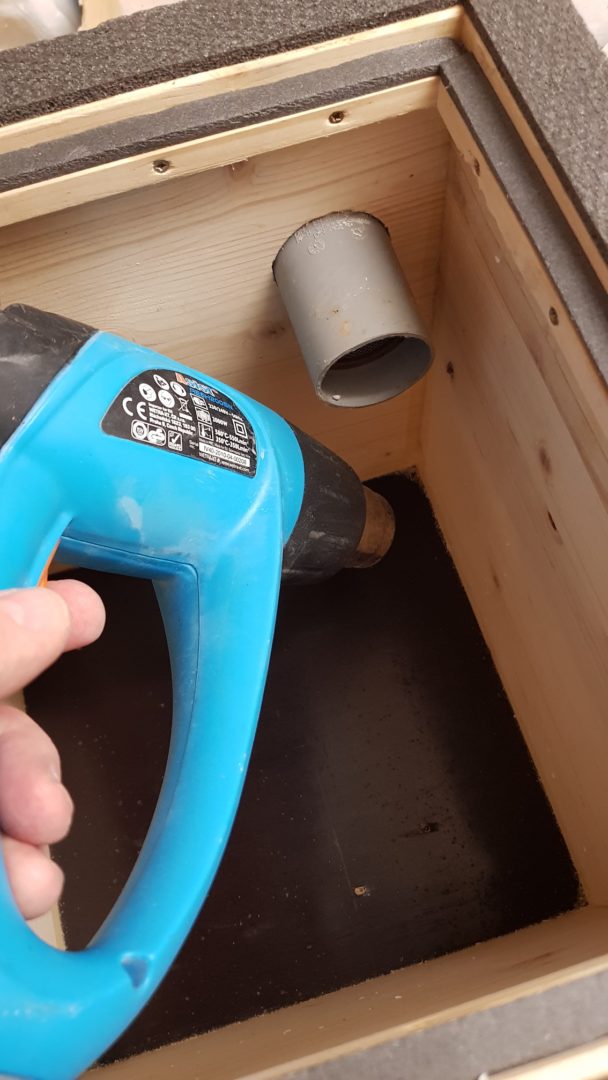
Treat all corners with a heat gun (overwintering parasites may be hiding there)
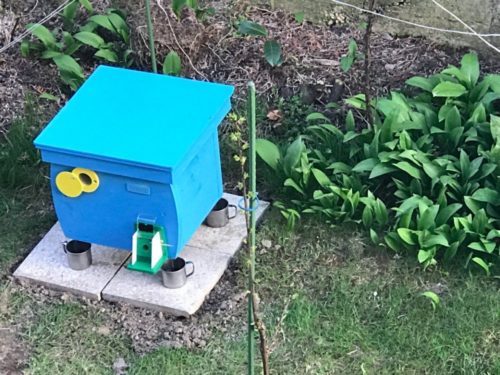
Placing and attaching the hive
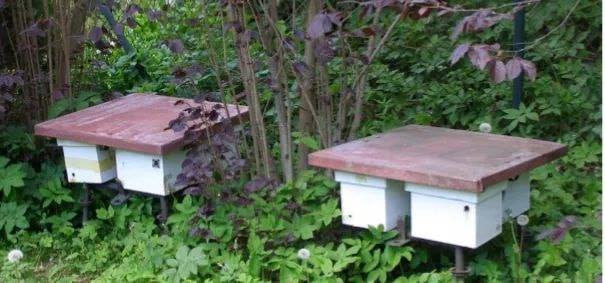
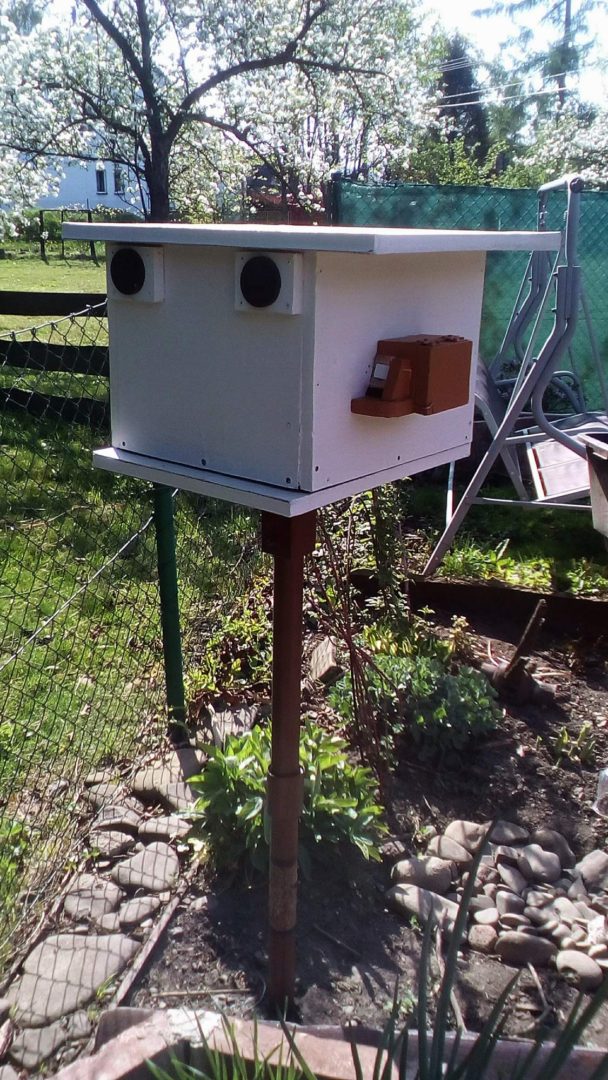
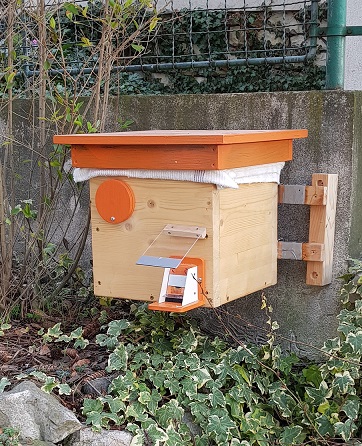
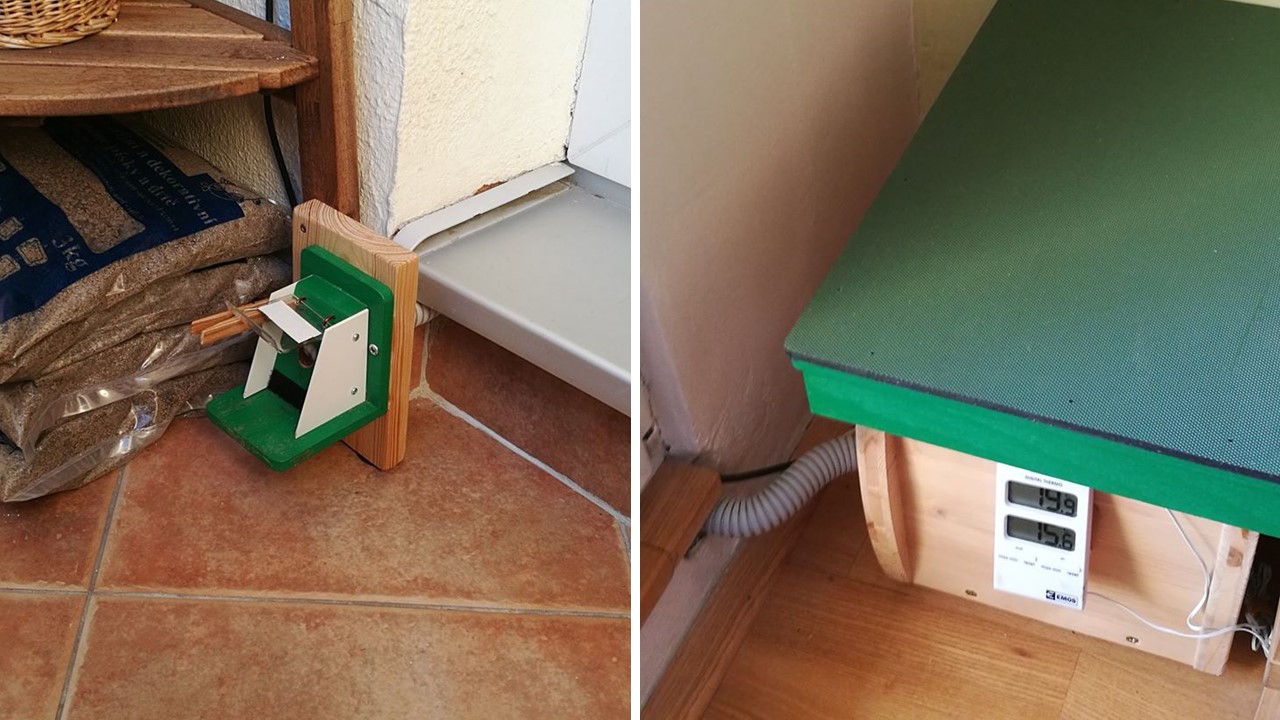
If you haven't yet decided where and how the hive will be placed , you need to decide this before you start preparing the hive for the season. It's about how the hive will be built/attached and this needs to be decided at the moment when the hive has no lining,
You can find all the necessary information and instructions in the chapter Placing a beehive in the garden and elsewhere...
If you already know, prepare and assemble the parts for your chosen solution for the shelter before you start filling the shelter with lining.
Additional elements such as protective net, ventilation attachment, etc.
If you have decided to use them and have them ready, you need to practice in advance how to put them on and how you will use them:
Observation window
- You can read about the observation window HERE .
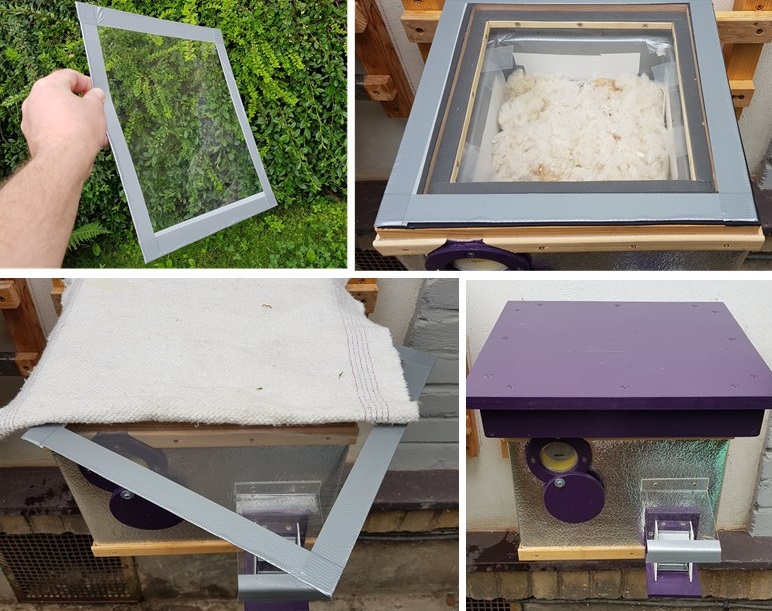
- If you will be using a window placed on the hive , prepare a glass/plexiglass observation window according to our instructions .
- If you want to use an observation window recessed into the slats in the hive , follow the manufacturer's instructions, but read our instructions on how to use the window.
Our recommendation:
- The window should only be on the hive for the duration of the observation, otherwise moisture will condense on it and mold will easily form in the hive.
If you are afraid of bumblebees and will not open your hive, do not install a window in the hive. - Use the window only for as long as necessary and do not leave it in the hive.
- If you decide to use a protective net, keep it in place in the hive at all times
- One manufacturer uses a viewing window as a standard part of the design , in which case follow their instructions.
Procedure for a window placed on a ledge:
- You can find instructions on how to make and use such a window HERE .
Procedure for a window recessed into the hive
- Fasten the slats to the hive
- Make a simple eyelet to lift the window
Control:
- Make sure it fits well and can be removed
- Test the use of the window (how to put it on and take it off again)
Ventilation
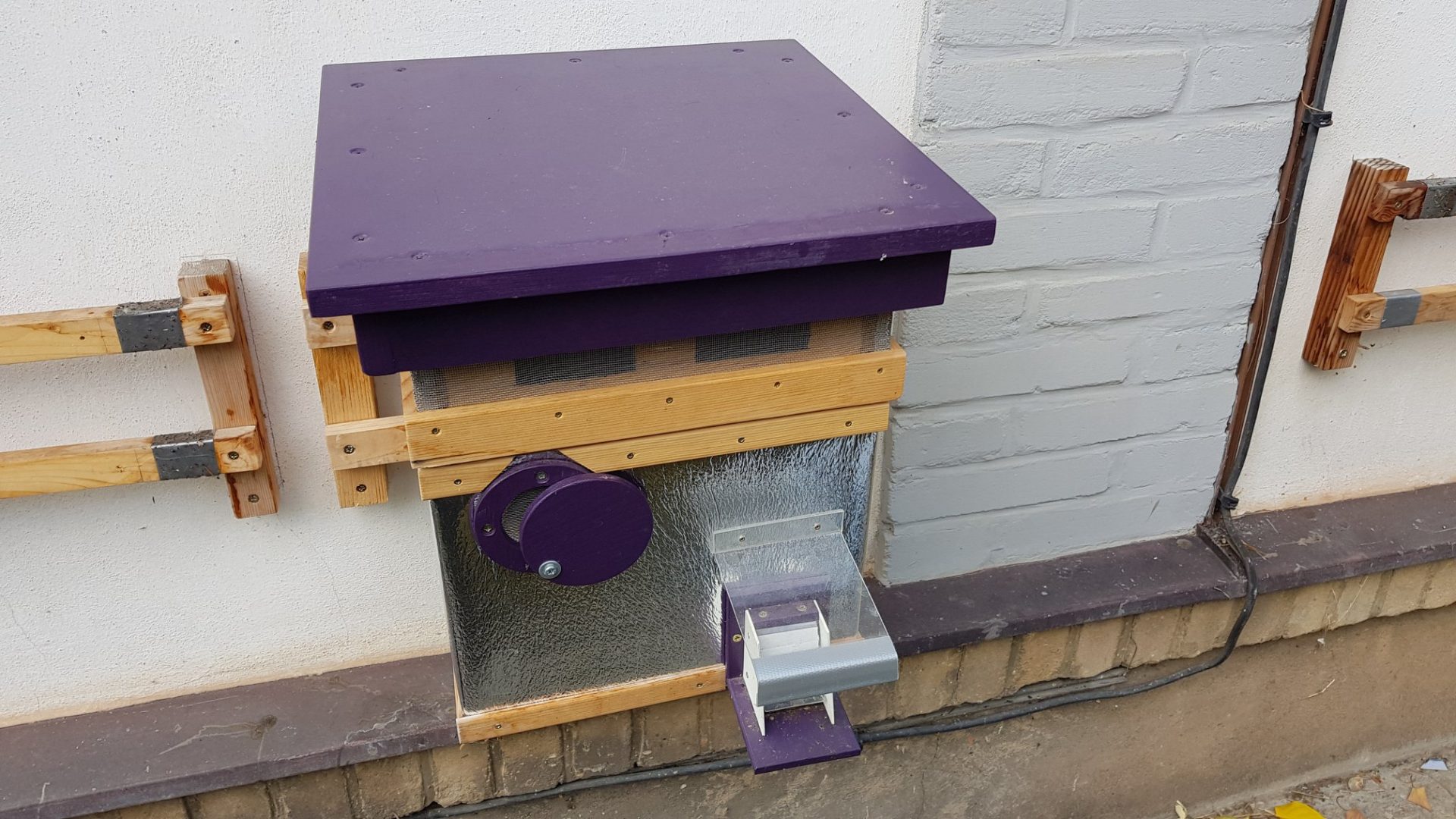
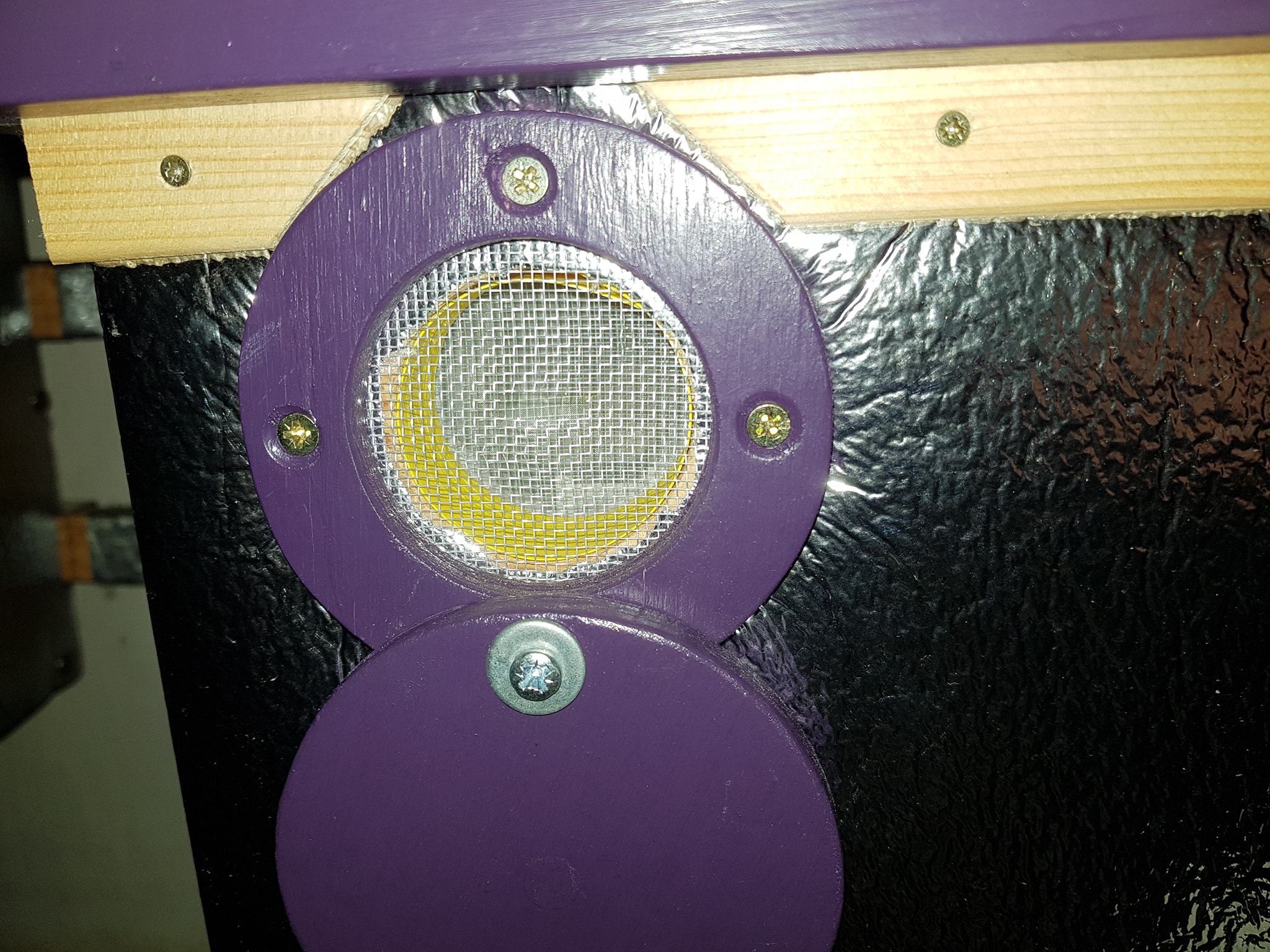
- Install ventilation/closable ventilation window in the hive,
- If you are using a ventilation system with a sticky layer , prepare the ventilation in the hive before installing it,
- Read about ventilation HERE
- You can learn more about the use of ventilation in the chapter we are preparing
Procedure:
- Install ventilation in the hive,
- If it is a removable system, seal it, for example with a flexible acrylic/silicone sealant,
- Close the ventilation.
Control:
- Make sure the ventilation is tight
- Test the tightness of the ventilation closure (there should be no wind blowing into the hive in the spring months, the queen bee is sensitive to microdrafts)
Sealing the roof and hive body
- Test how the roof fits – there should be no leaks , minor leaks should be resolved by the gasket used (the roof may twist slightly),
- If necessary, adjust/replace the gasket ,
- You can learn more about the hive roof and its sealing HERE
- Read about hive sealing (to be added)
Preparing the hive step by step
Here is the step-by-step process for “setting up the hive”. But don’t worry, the journey isn’t long and you won’t have to worry about your shoes getting scuffed up 🙂
Additional thermal insulation
- In this guide, we will describe how to thermally insulate a large shed by adding internal insulation.
- If your hive is not sufficiently thermally insulated, we recommend lining the inside of the hive with a polystyrene board (10 - 20 mm) or other thermal insulation material.
- If you have a large enough hive, it is possible to place the insulation inside, as the thermal insulation will not be damaged by handling the hive.
- Small hives do not require additional insulation. They can be insulated from the outside .
- Insulation from the outside generally seems like a more cost-effective solution
- Insulation material can be purchased, for example, at a hobby market (polystyrene boards, Mirelon)
For attention:
- We do not recommend purchasing and using small hives . In addition to unsuitable thermal properties, their small volume does not allow the development of nests of common species (ground bumblebee, rock bumblebee, hornet bumblebee, etc.).
- Parasites often hide in the interior polystyrene insulation, so it is necessary to use new, clean material
Is it necessary to supplement the attic with additional thermal insulation?
Most manufacturers will supply you with a hive without thermal insulation. As far as we know, only one manufacturer supplies you with a double-walled hive, where the thermal insulation is air. Other manufacturers rely on wooden hive walls, which do not insulate the hive by themselves.
Due to weather fluctuations and the rapid temperature changes that accompany them, we recommend thermally insulating the hives .
We will return to the issue of thermal insulation in a separate chapter that we are preparing.
However, you can find basic information HERE.
We also recommend using additional thermal insulation made of Mirelon .
Procedure:
- Suck out the dirt,
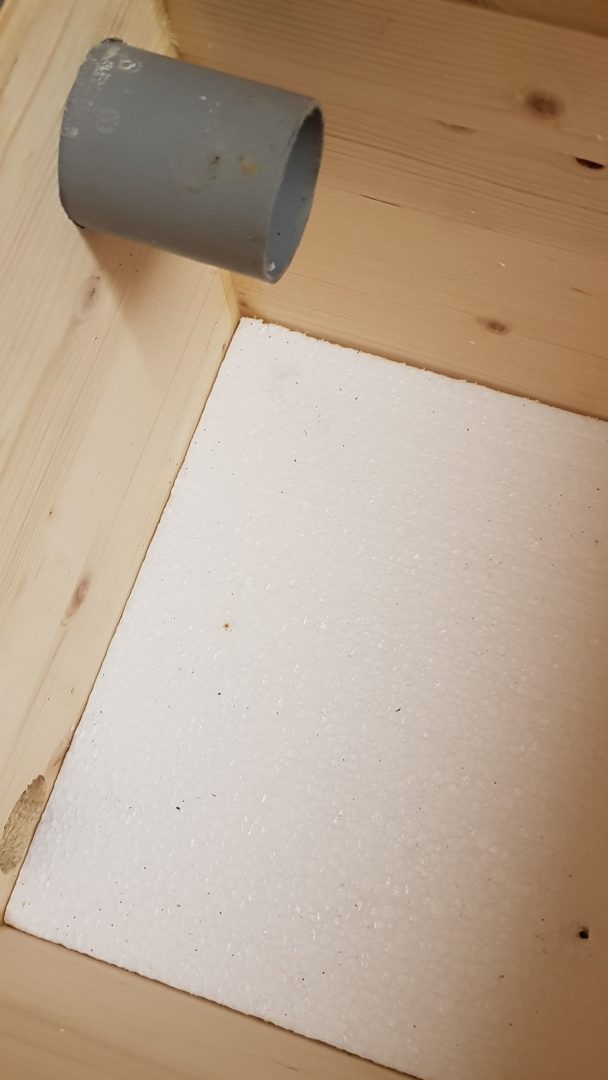
- Line the bottom of the hive with a polystyrene board 10 – 20 mm thick,
- Line the walls of the hive with polystyrene boards 10 – 20 mm thick,
- Work precisely so that there are no unnecessary gaps between the boards. The boards are easily divided with a cutter or a sharp knife,
- Create a passage in the insulation for the inlet pipe,
- On the top of the hive (side walls), leave 10-20 mm of free space (the insulation and cardboard will be lower than the wall) for attaching with adhesive tape - but lay out the walls so that they are covered as much as possible and so that the insulation makes sense,
- If you work accurately, there is no need to secure the polystyrene boards in any way,
- Create a hole in the last board for ventilation and an inlet tube.

1. Line the bottom of the hive with a polystyrene board 10 – 20 mm thick
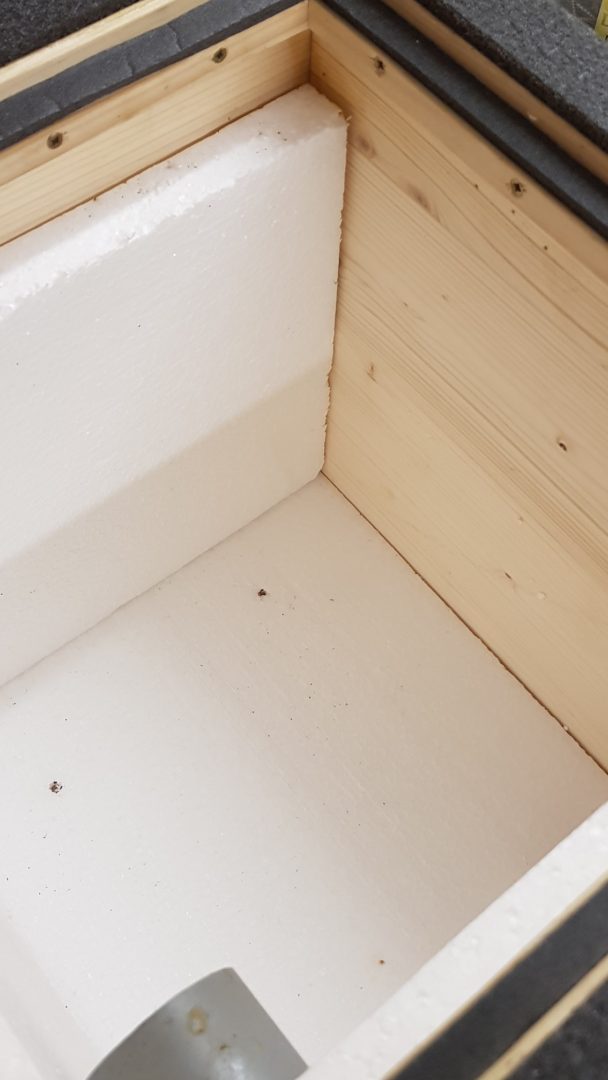
2. Line the hive walls with polystyrene boards 10 – 20 mm thick,
.
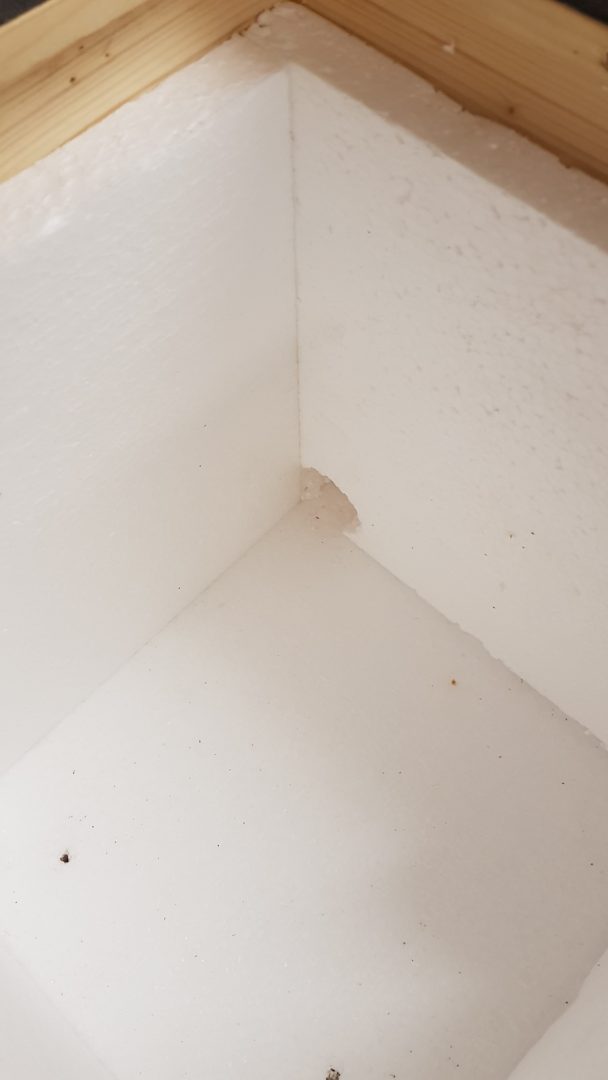
3. Additional thermal insulation – polystyrene on the bottom and sides of the hive. Create a passage for the inlet pipe in the insulation
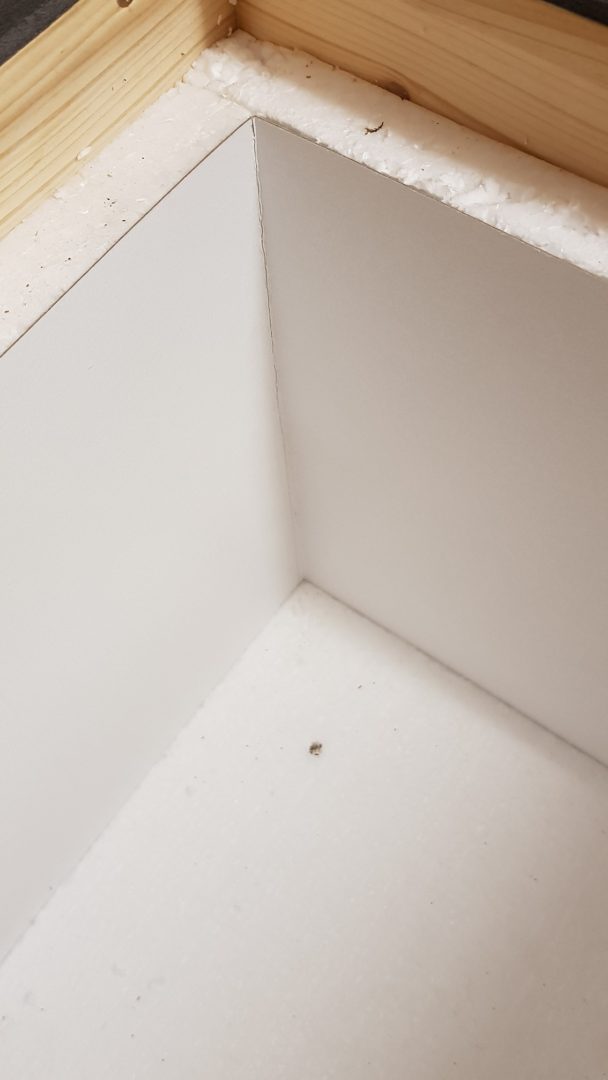
Covering the interior walls with stiffer paper
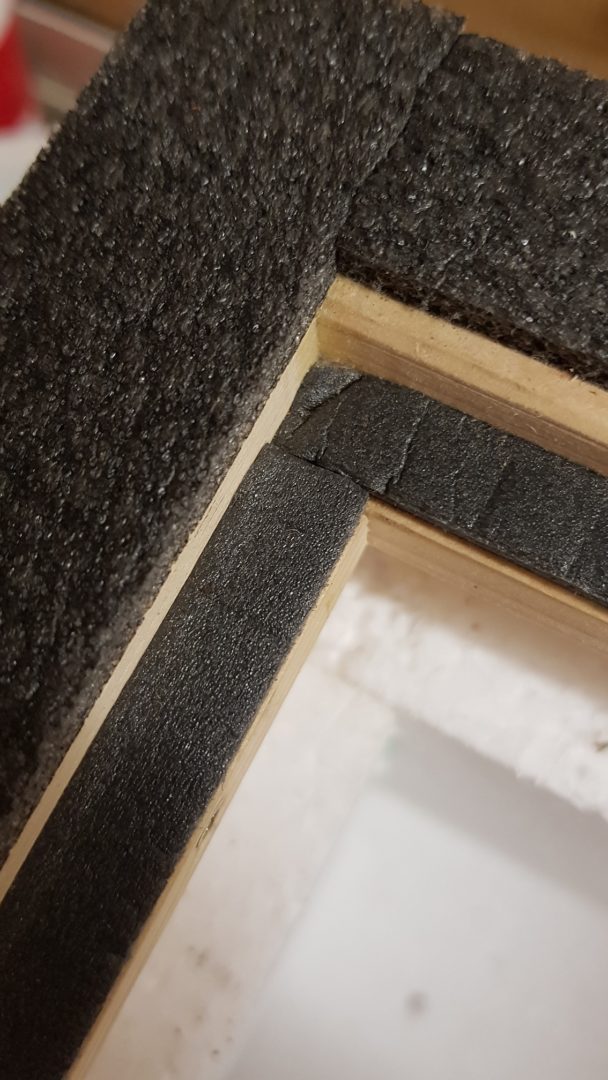
- Line the inside walls of the hive with hard paper (cardboard). This will save you the trouble of cleaning the hive after the season .
- the following are suitable :
– paper for confectionery boxes,
– A3 quarter-sized (drawing) cardboard,
– paper from old larger wall calendars can also be used. - The following are not suitable and therefore we do not recommend:
– corrugated cardboard (cell board), see further text and picture,
– which smell of printing ink and which get wet very quickly.
Notice:
- If you used additional polystyrene thermal insulation, lining the walls and bottom with paper is necessary - bumblebees would chew through the polystyrene, get behind it and get stuck there.
Is it necessary to cover it with paper and a new fence?
In some instructions you will read that it is better to let the new hive smell like a bumblebee nest and therefore it is not necessary to line it.
Of course it is possible, but you will see how the bumblebees can mess up the hive in one season. The smell of a bumblebee nest is so intense that the walls of the hive will smell even if you have lined them with polystyrene and cardboard.
That's why we recommend covering the walls with cardboard .
Procedure:
- Line the walls of the hive with cardboard. Leave 10-20 mm of free space on the top of the hive (the insulation and cardboard will be lower than the wall) for attaching with adhesive tape - but line the walls so that they are covered as much as possible and the insulation makes sense,
- Try to arrange the lining so that there are no unnecessary gaps between the cardboard pieces, as workers could get stuck behind them
- If you want to play around with it, cut out the cardboard pieces so that there is an overlap on them to cover the gaps between the pieces,
- But do not cover the ventilation opening and the entrance hall = cut out the necessary holes in the cardboard insulation,
- Line the bottom of the hive with cardboard, it is also a good idea to create an overlap of parts in the corners. You can also use cut-out paper cones,
- Tape the cardboard sheets together in the hive so that the bumblebees cannot get behind them (they could get stuck there).
- Recommendation:
It has proven effective to cover the joints (corners) of the individual parts of the lining with a strip of paper (bent at a right angle); a water-resistant dispersion adhesive is suitable as an adhesive - it is a more labor-intensive but much higher-quality solution. A
faster but lower-quality solution is to use high-quality adhesive tape that can withstand the humidity and temperature of the nest.
"Silver tape" from a hobby store is good, but paper and fabric tape for carpets is not suitable.
- Tape the cardboard to the top of the hive wall (that's why you leave the gap there). This is where bumblebees tend to often crawl behind the lining, so it needs to be lined carefully
- Tape all corners of the hive, including the bottom,
- Carefully tape the area around the ventilation hole so that bumblebees cannot get into the space between the cardboard and the hive body
- Make sure to carefully tape the corners, especially where bumblebees can crawl behind the insulation.
Tip: If you are not very good at gluing in a corner, you can use a corner glue stick. Fold an 8-10 cm wide strip of paper in half along the longer side, insert it into the corner and glue the sides to the paper wall paneling.
Control
- There should be no gaps between the lining of the hive walls and its body - bumblebees can get stuck there or their parasites can hide there,
- The lining of the inner walls of the hive should not obstruct the placement of the corridor, ventilation, etc.,
- The adhesive tape should be applied everywhere - loose tape could pose a danger to bumblebees - they could get caught on it.

1. Line the walls of the hive with cardboard. Leave 10 – 20 mm of free space on the top of the hive
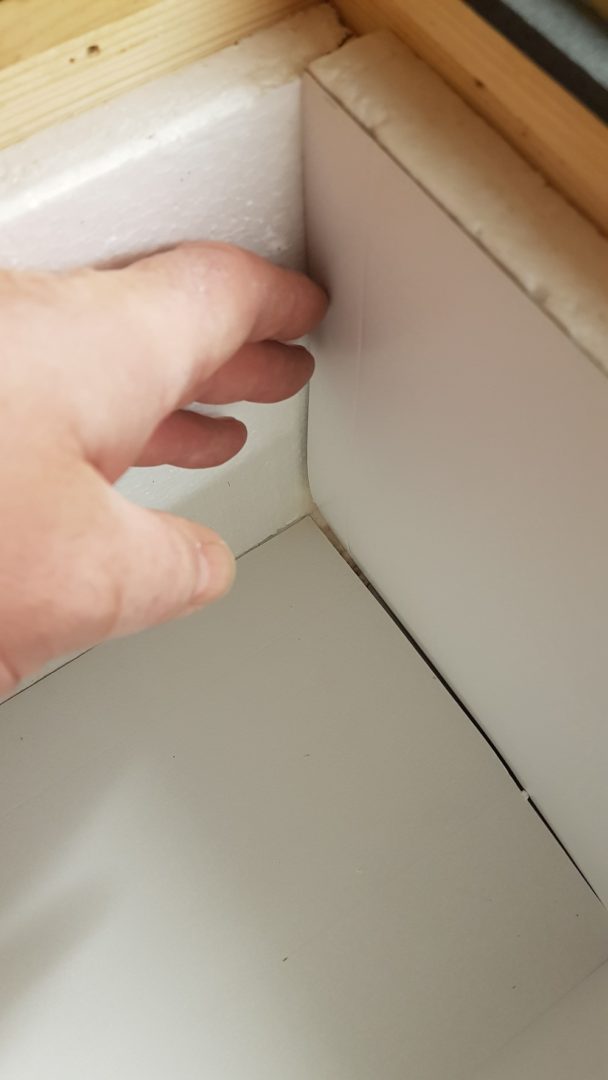
2. Try to arrange the lining so that there are no unnecessary gaps between the cardboard pieces. Workers could get stuck behind these
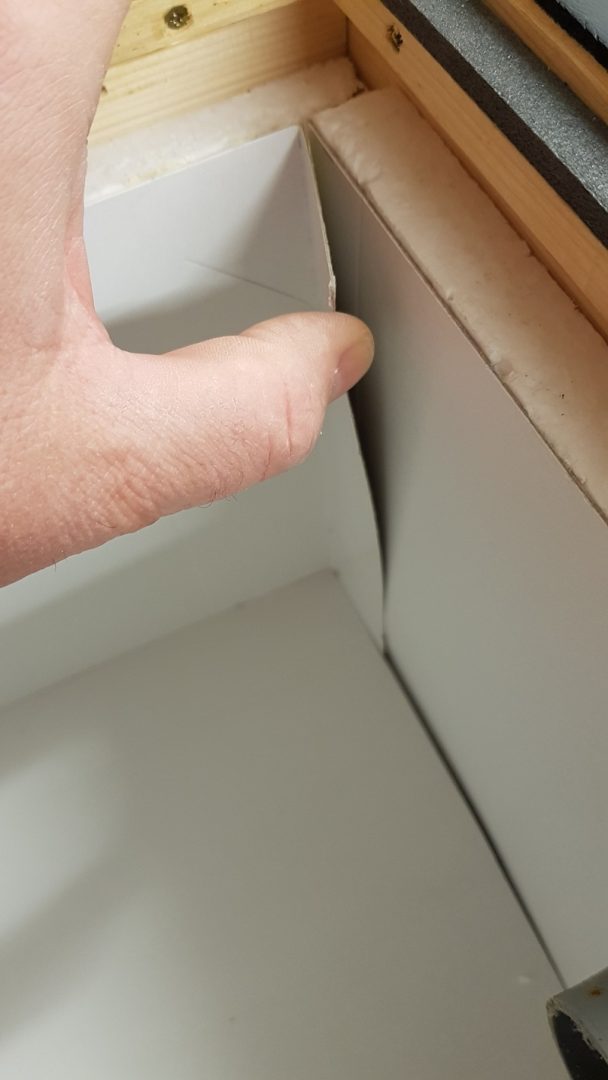
3. If you want to play around with it, cut out the cardboard pieces so that there is an overlap on them to cover the gaps between the pieces,
L
4. Line the bottom of the hive with cardboard, it is also a good idea to create an overlap in the corners. You can use cut-out paper deers to help you.
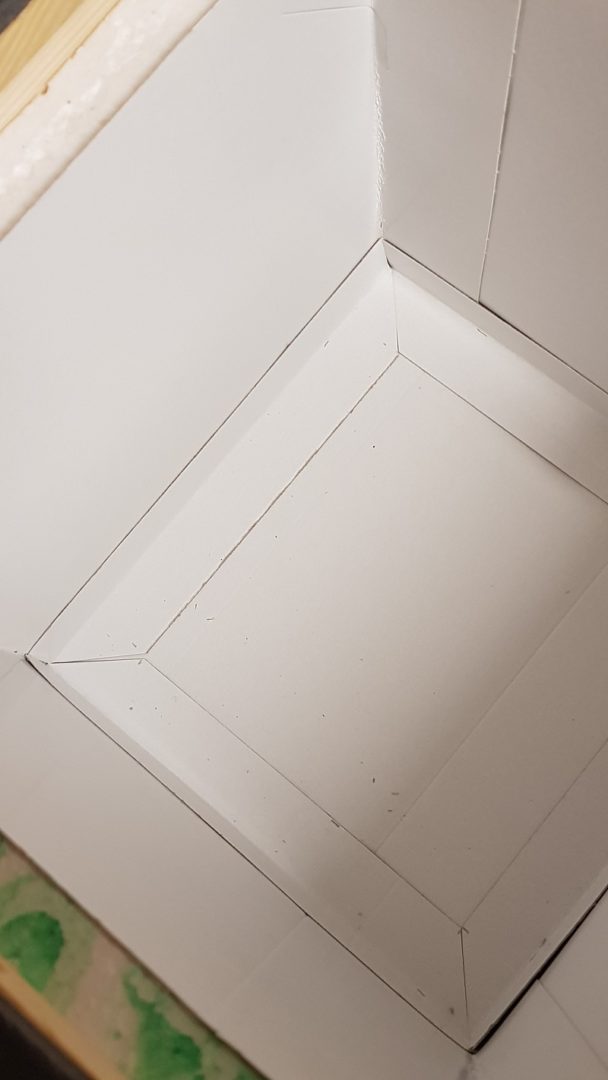
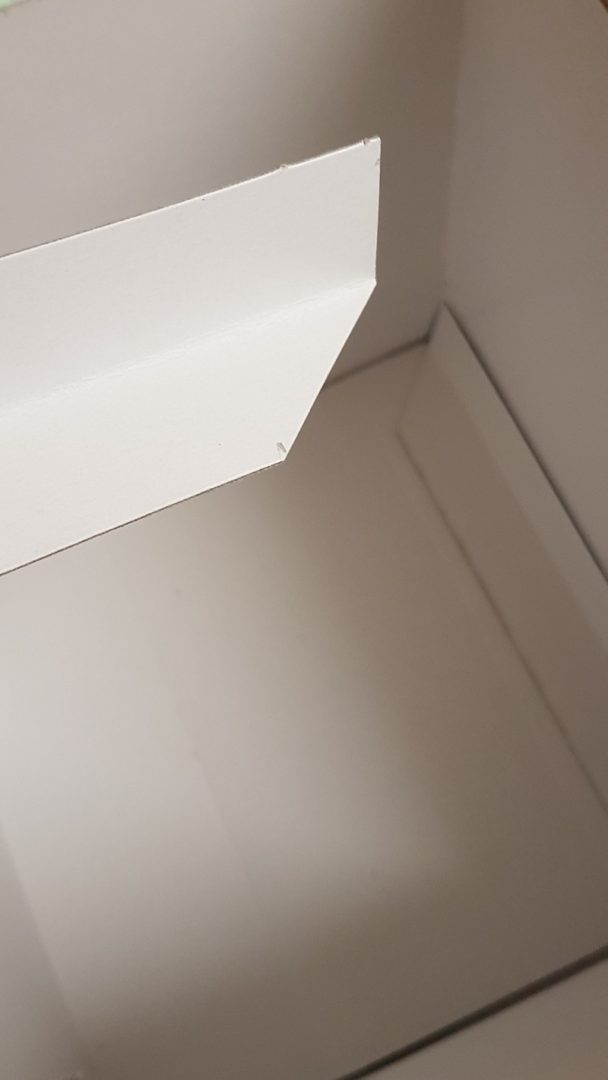
5. Cardboard lining of the hive – cardboard hornet
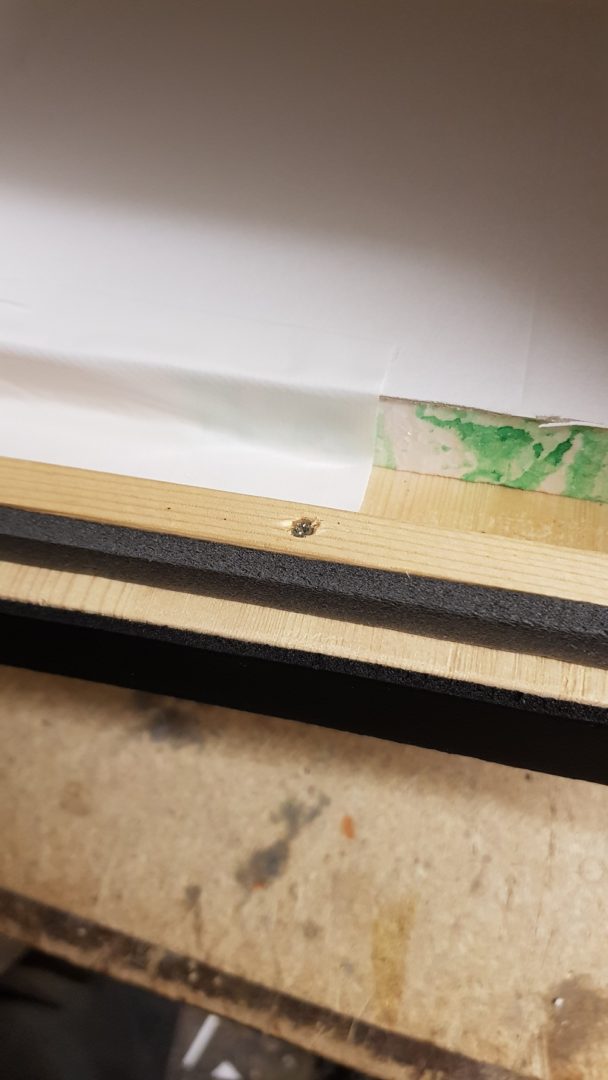
6. Line the hive with cardboard – adhesive tape on top of the insulation. Here, bumblebees tend to often crawl behind the lining and therefore it is necessary to line it carefully
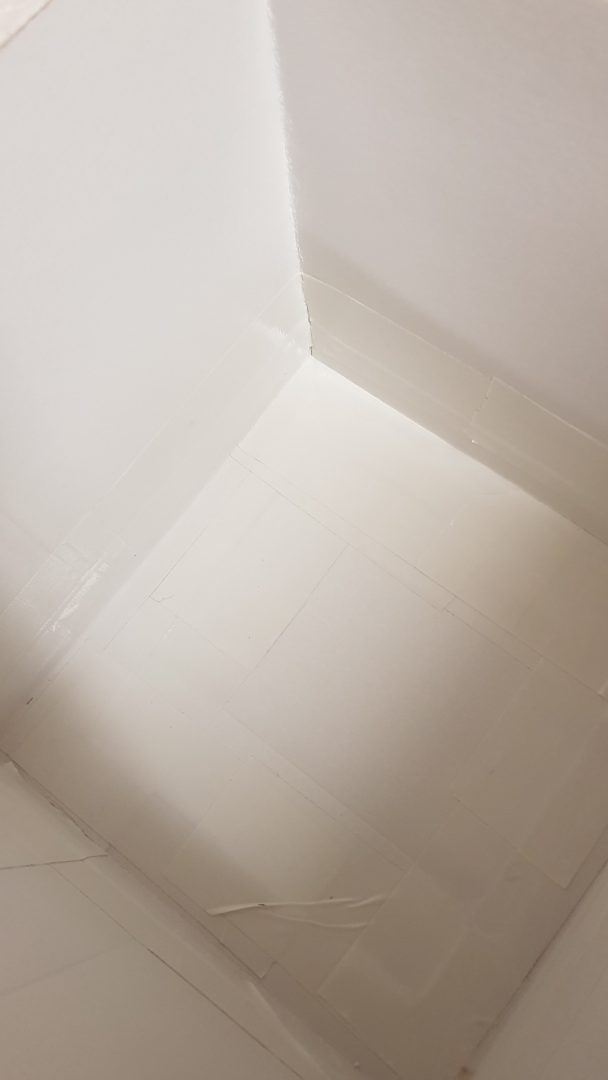
7. Tape all corners of the hive, including the bottom,
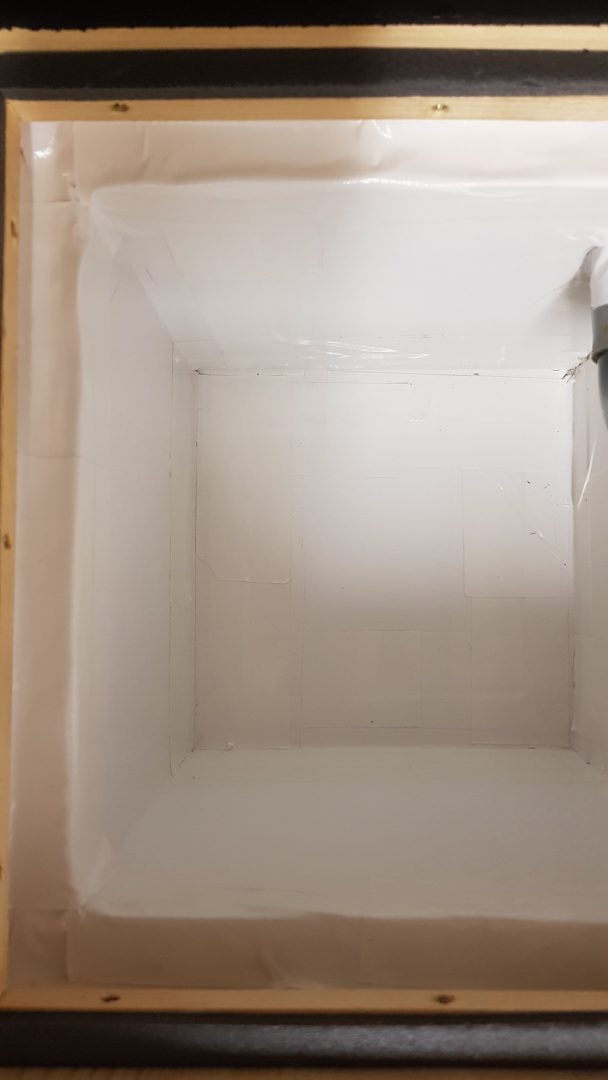
8. Carefully tape all parts and the ventilation hole area so that bumblebees cannot get into the space between the cardboard and the hive body
If you decide not to line the hive walls with cardboard, that is of course also possible . However, be prepared that cleaning the hive after the season will be more difficult. If you have used cardboard in preparation for the season, just throw it away after the season and you are basically done.
It is recommended not to cover the walls of a new hive, as its walls will smell of bumblebees.
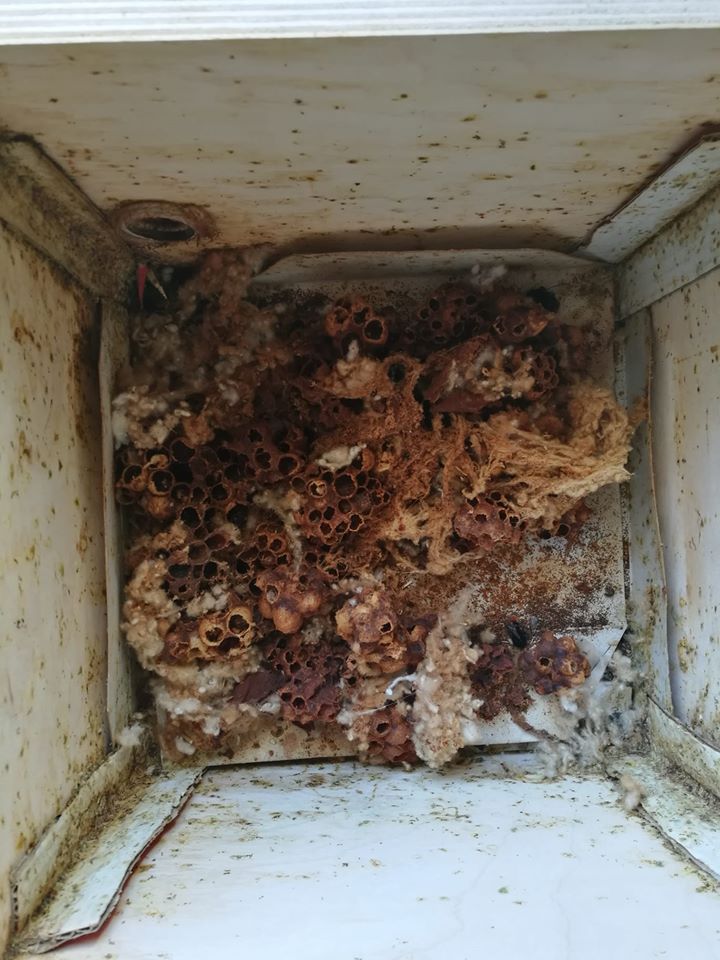
In this guide, we will describe how to thermally insulate a large shed by adding internal insulation.
Photo Internet
lining the hive walls with corrugated cardboard .
It is recycled paper, which gets soggy in the humidity of the hive and is easily chewed by bumblebees. It is also susceptible to mold.
Parasites – their larvae and pupae – can easily hide in the cardboard chambers.
Therefore, it is better to use stiff, high-quality paper that will last and you will not have any problems with it.
Covering the hive with cellular cardboard
Photo M. Bradová
You can read more about parasites and their effects in the hive in the chapter we are preparing for you.
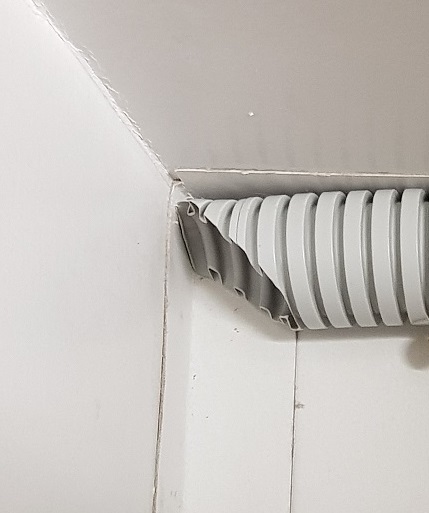
Entrance hall/pipe
- Insert an entrance hall into the hive,
- You can read about the entrance hall, its function and the suitable material for its production
Procedure:
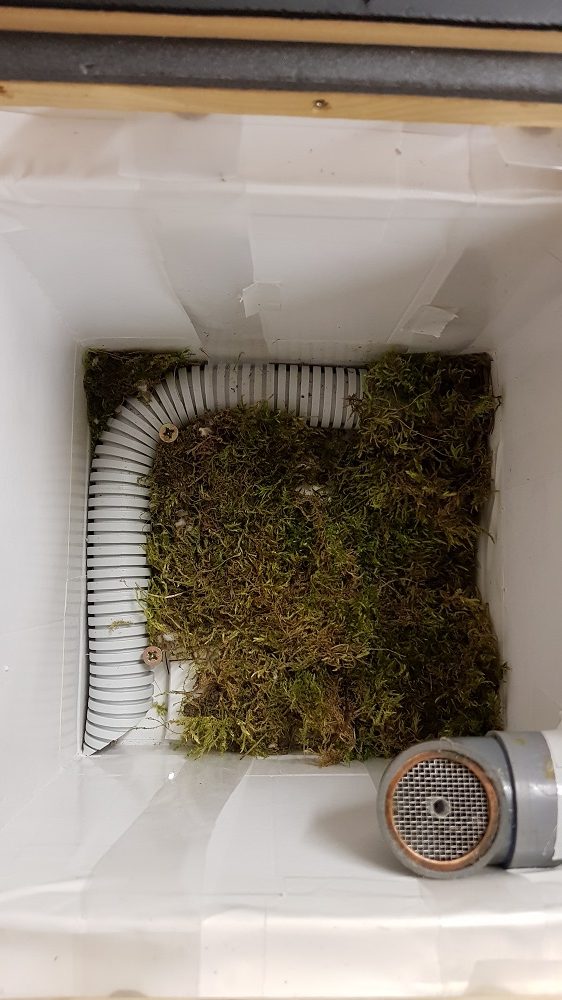
- Cut the end of the tube used for the entrance corridor diagonally (this will increase the area of the entrance to the corridor),
- Insert the inlet tube into the hive - the diagonally cut end will be in the corner of the hive, guide the tube at the bottom along the walls to the hole in the hive body,
- The other end of the tube will protrude from the hole in the hive body,
- Fix the pipe with screws so that they hold it to the bottom and wall, but do not go through it - be careful not to cut the pipe,
- The screws should be 2-3 so that they hold the mouth of the tube in the corner, the radius of the tube in the next corner,
- However, attach the tube so that it can be easily removed (in case it gets clogged during operation),
- It is enough if the corridor can be disconnected from the flap from the inside of the hive (pulled out of the hive body) and thus solve its possible blockage,
- Cut the protruding inlet tube so that it rests on the back of the damper after it is installed,
- Practice how you will pull out the tube in case of an emergency (blockage),
- Cover the mouth of the tube with adhesive tape so that bumblebees cannot crawl behind the wall paneling.
Control:
- Verify that the pipe will fit snugly against the damper body and there will be no leaks anywhere,
- Verify that it is possible to disconnect the flap from the inside of the hive (pull it out of the hive body) and thus resolve any blockage.

1. Cut the end of the tube used for the entrance hall at an angle (this will increase the entrance area)
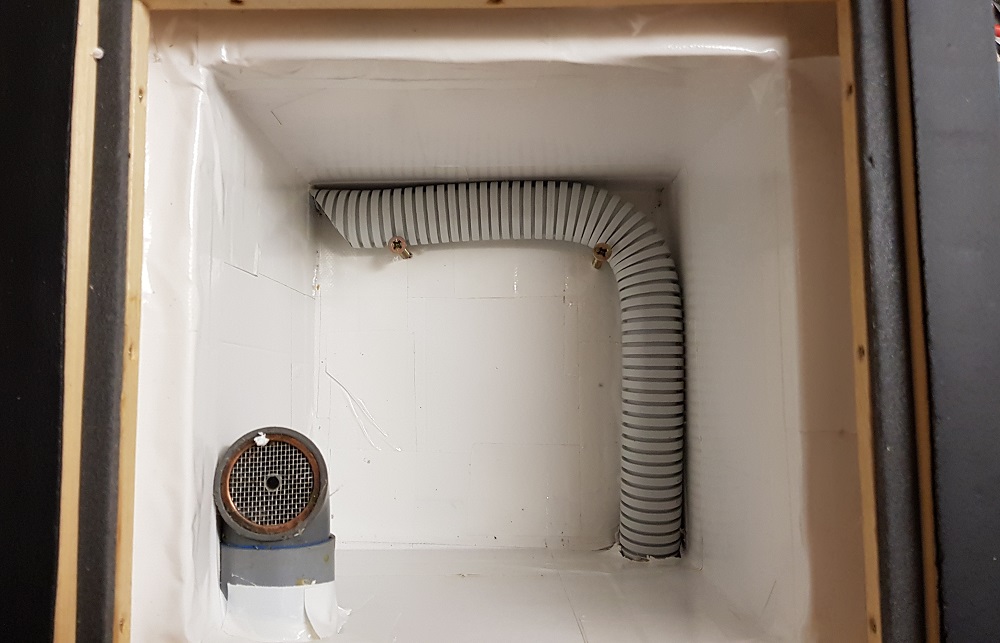
2. Insert the inlet tube into the hive. The diagonally cut end will be in the corner of the hive. Guide the tube along the bottom along the walls to the hole in the hive body. Fix the tube with screws,
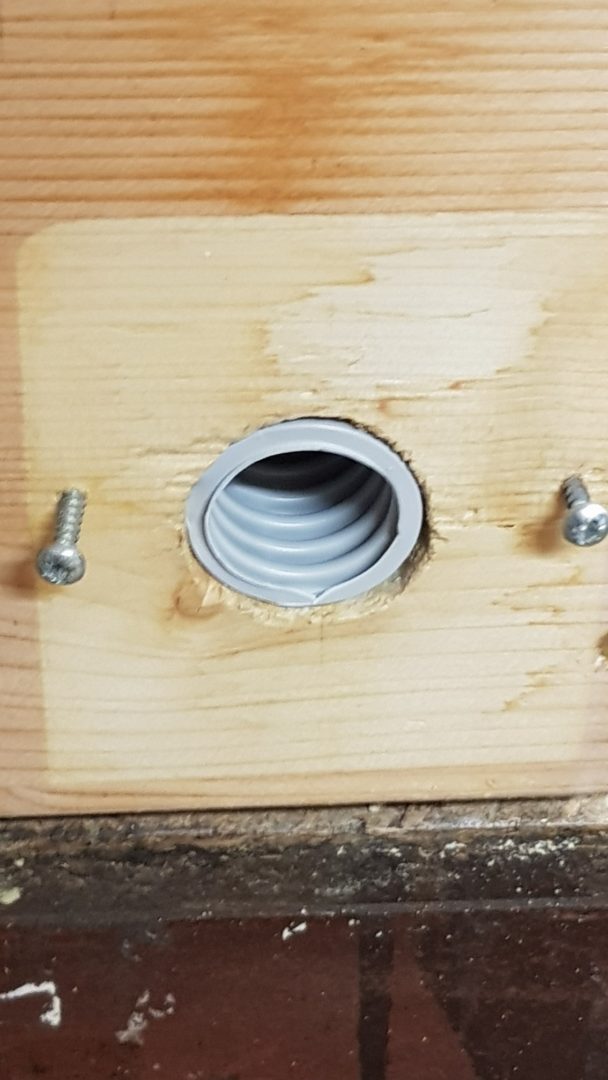
3. Cut the protruding inlet tube so that it rests against the back of the damper after it is installed
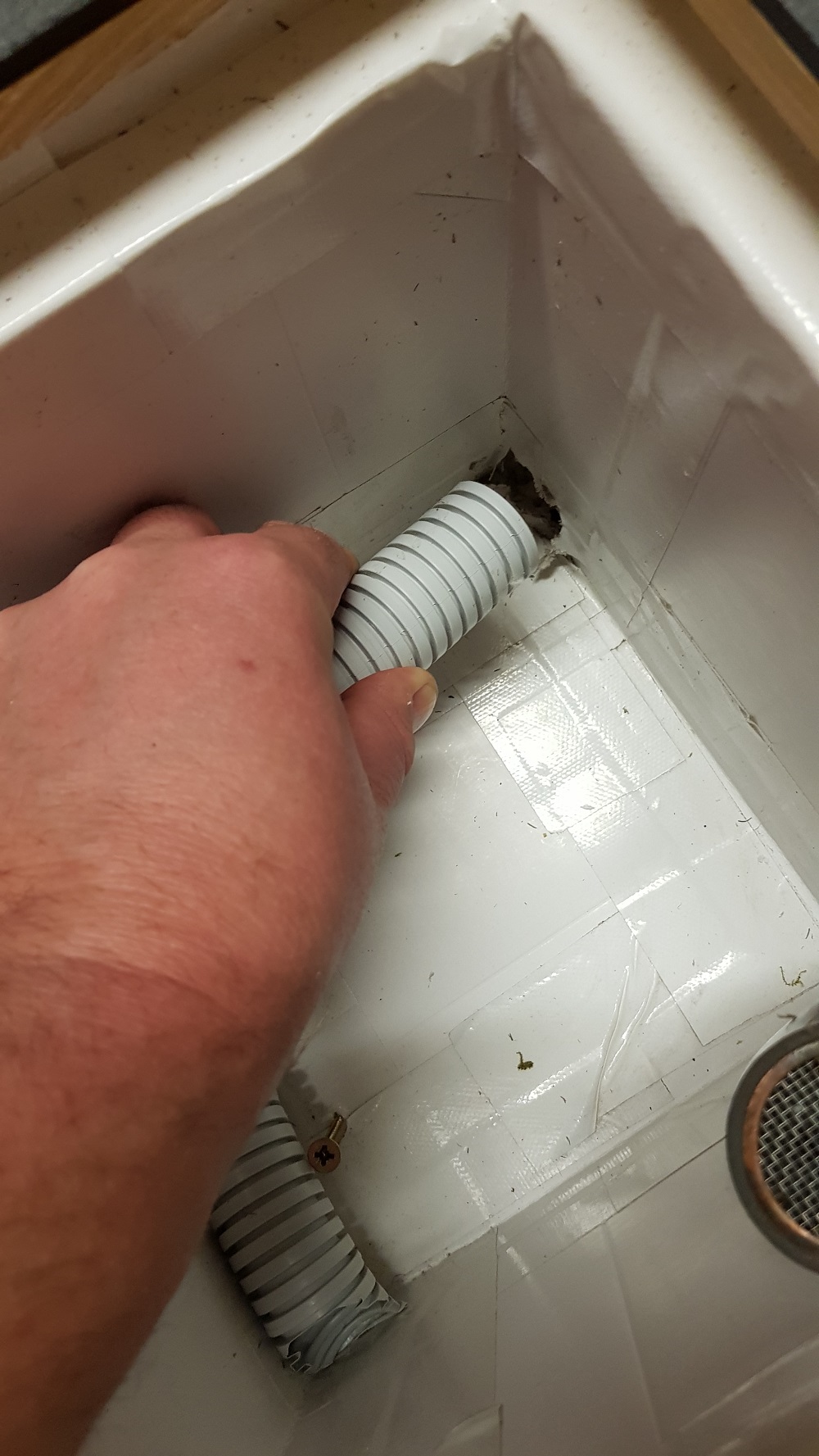
4. Practice how you will pull out the tube in case of an emergency (blockage),
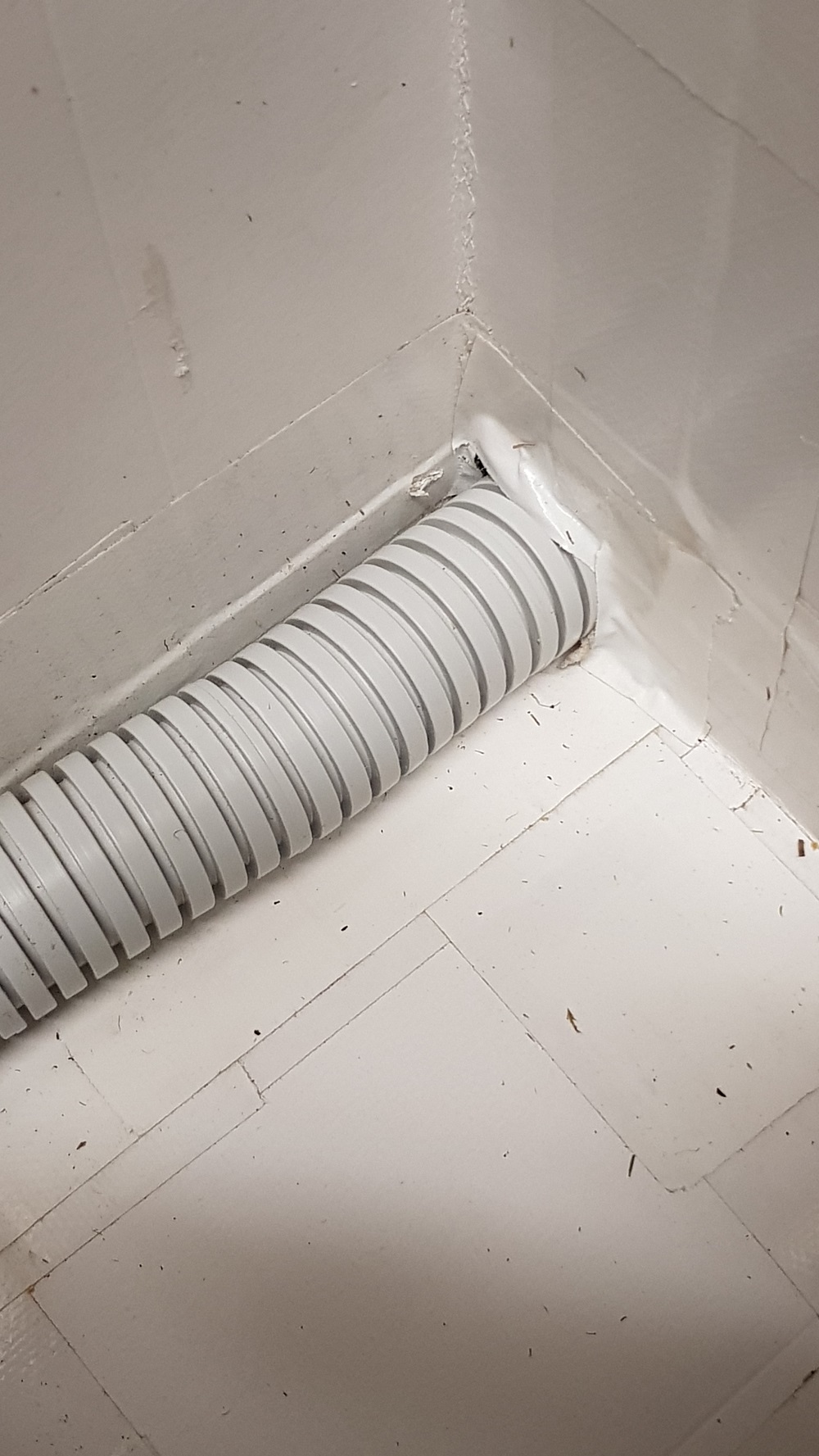
5. Cover the mouth of the tube (entrance hall) with adhesive tape so that bumblebees cannot crawl behind the wall paneling.
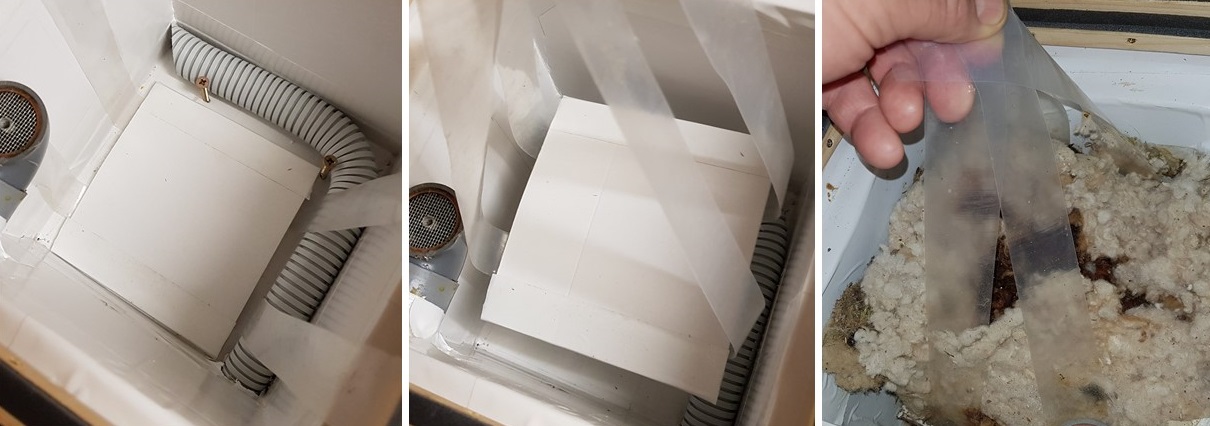
Bumblebee elevator – second bottom of the hive
- The Bumblebee Elevator is described HERE
- Place the bumblebee elevator in the hive and test its functionality,
- We highly recommend using this detail, it will make it easier for you to maintain and inspect the nest clean it later.
Procedure:
- Put the bumblebee elevator in the hive,
- Adjust its shape (plan) so that it rests on the bottom and does not lie on the entrance corridor.
Adjust the elevator hinges so that they are pressed against the hive wall and do not hinder the bumblebees in their movement (they will be pressed there with the lining after the hive is filled). - Adjust the curtains to the required length and attach them to the hive wall (a thumbtack is enough).
Control:
- Make sure the bumblebee elevator does not get caught in the entrance hallway so that the nest can be removed from the hive.
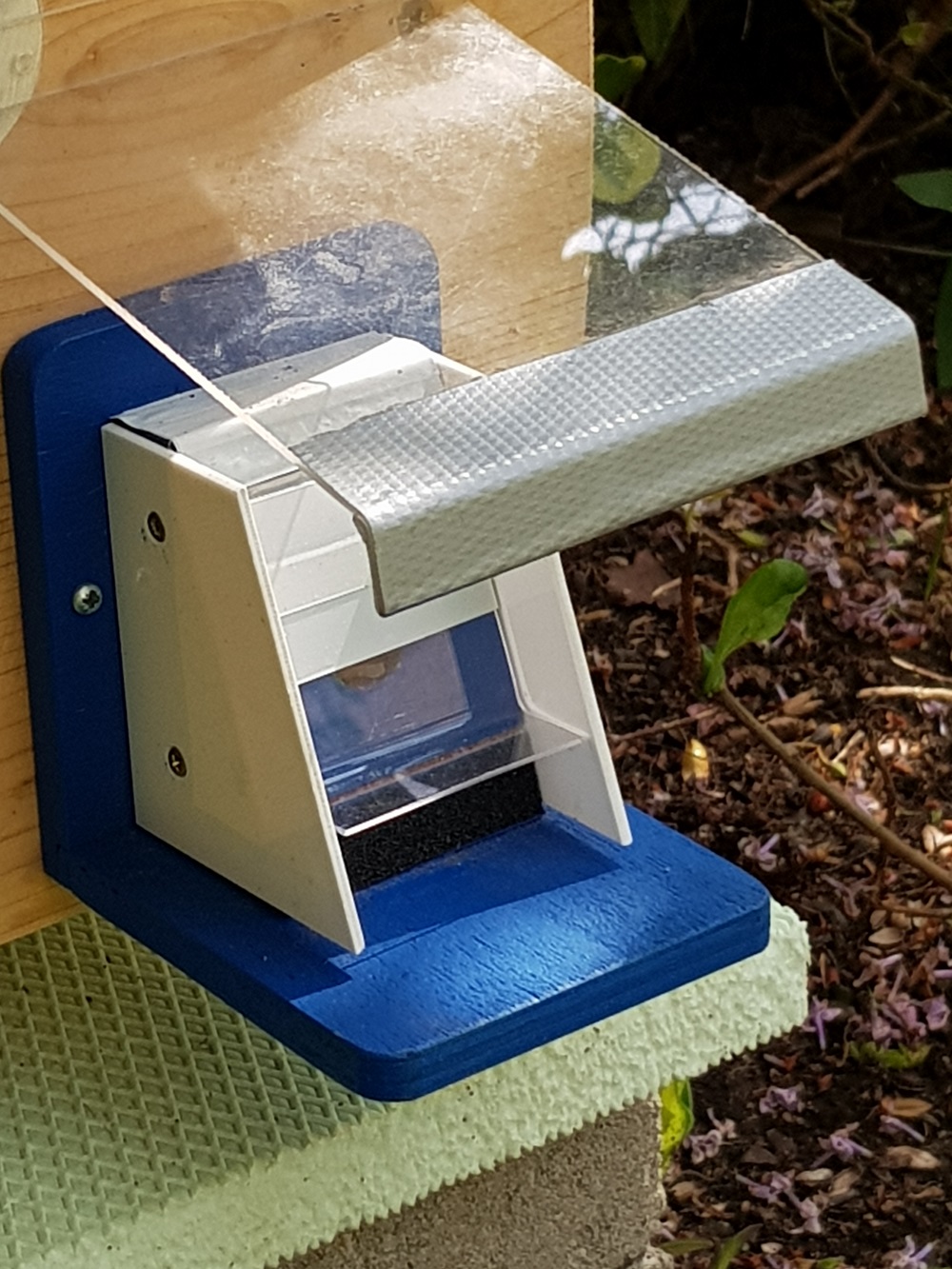
Protective flap
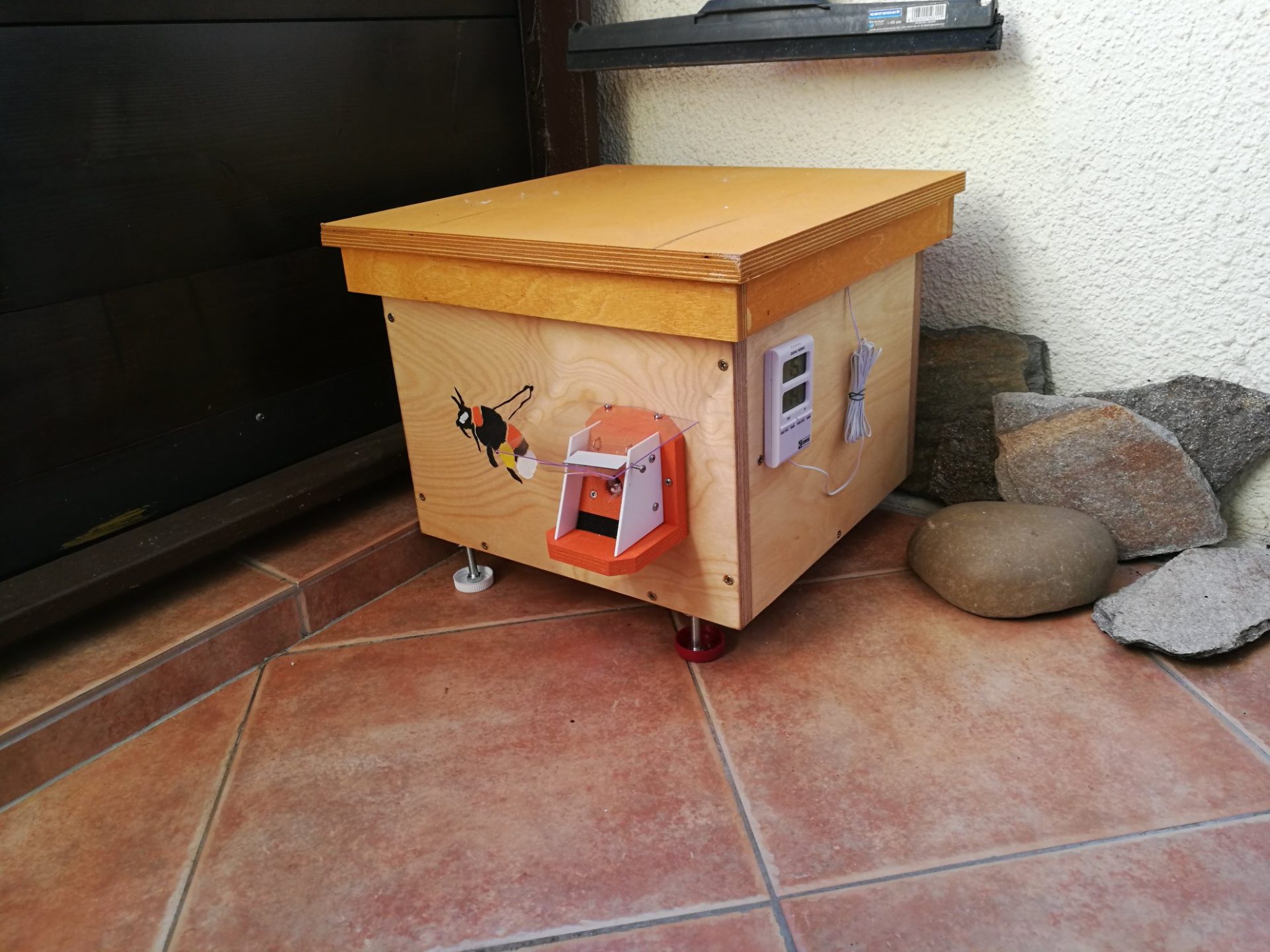
- Attach a protective flap to the hive.
- Read more about the protective flap HERE
Procedure:
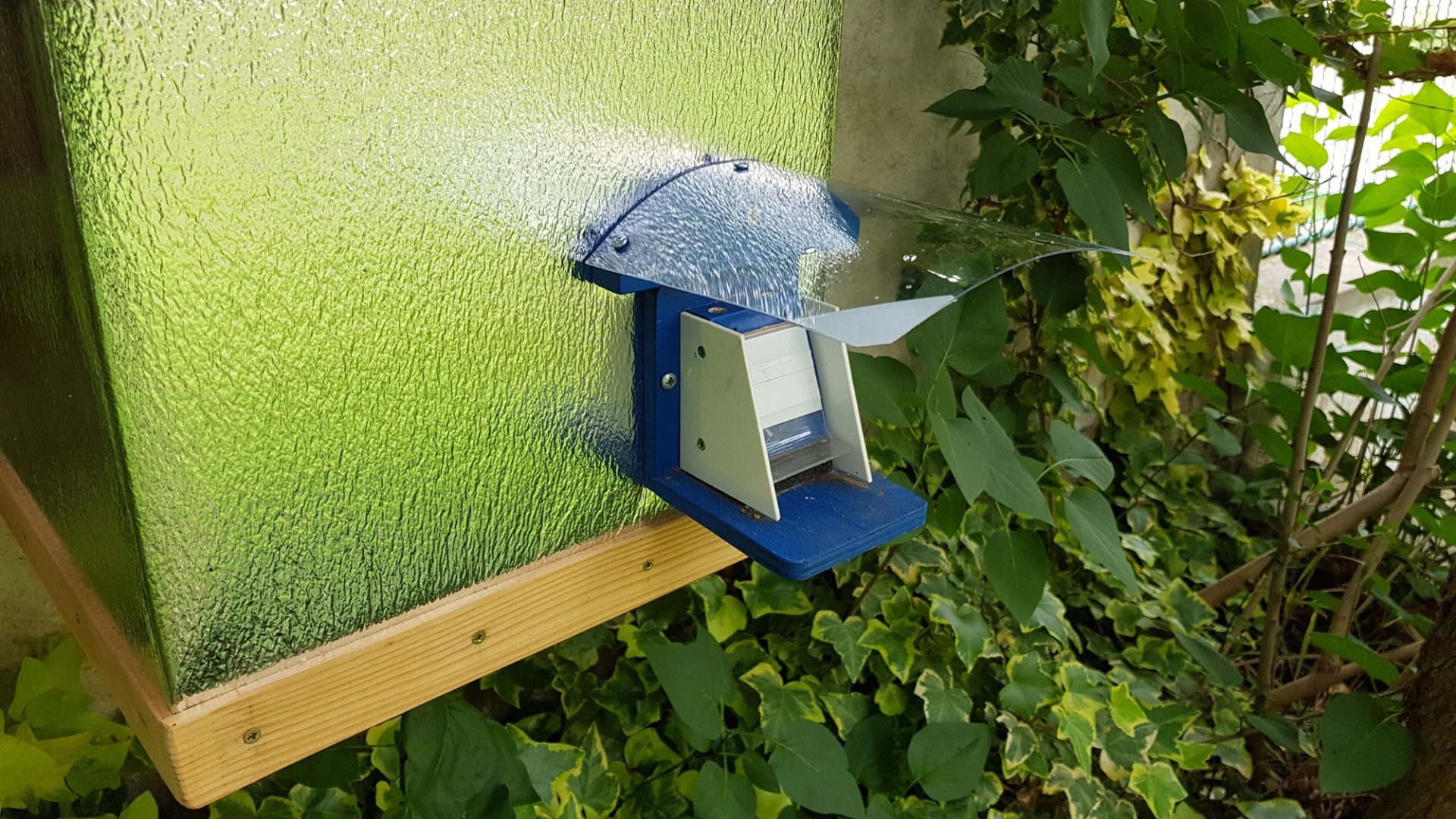
- Test the position of the protective flap on the hive wall (body). The flap should be positioned so that the bottom of the inlet opening is at the same level as the bottom of the inlet tube, or slightly above its bottom. This will allow the bumblebees to pass through comfortably,
- Before attaching the damper, cut the protruding inlet tube so that it rests on the back of the damper after it is installed,
- It doesn't hurt to put a soft, thin gasket between the flap and the hive body to prevent parasites from entering the hive
- Attach the flap with screws.
Control:
- Verify that the flap moves smoothly and does not jam.
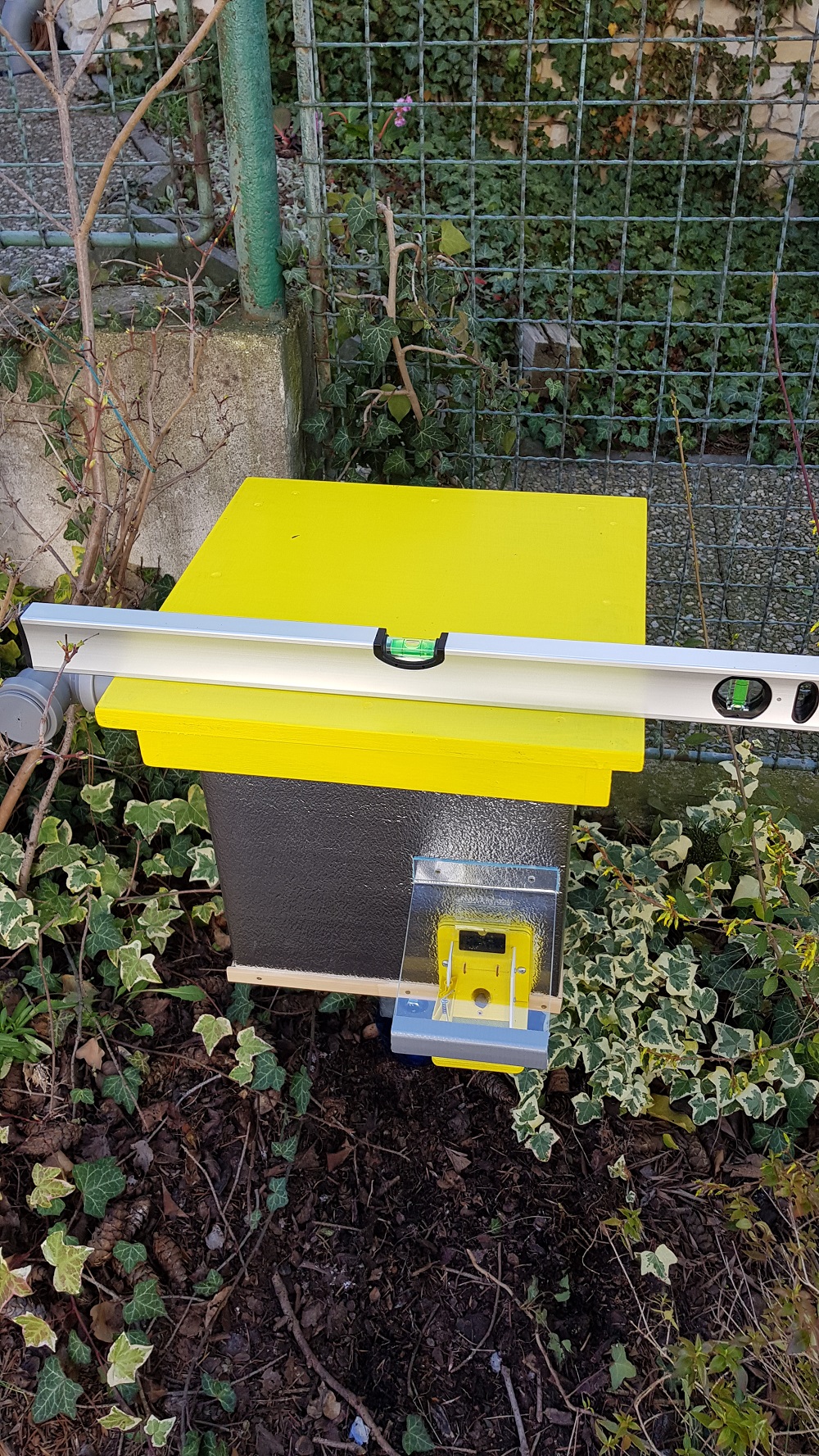
- Make sure that the flap is attached parallel to the edges of the hive and then place it in a horizontal position.

Leveling the hive

Bumblebees PLUS – A shelter over a drop
Photo O, Hercog 6/2020
.
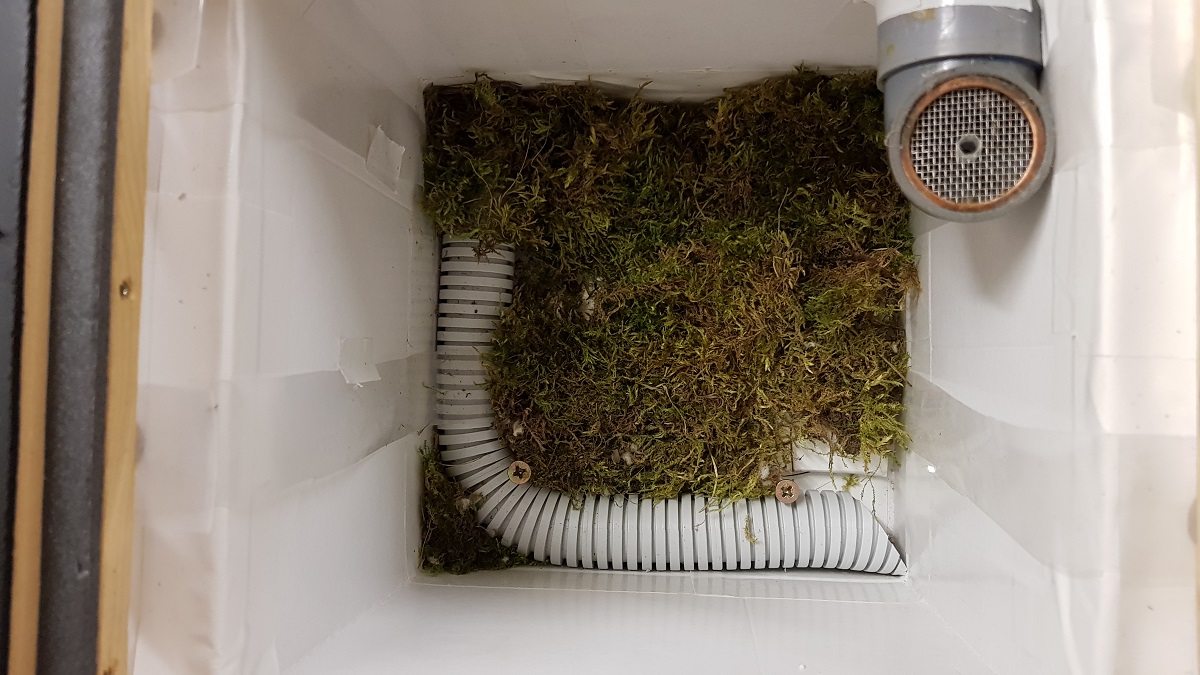
Bottom lining with moss
- Do not put the lining, including moss, into the hive until the beginning of the season!
- Remember that it should be clean, dry moss without grass or clay,
- Moss preparation is described in the chapter on thermal lining HERE
- Do not use moss that is damp, moldy, or has clay in it
- Did you know that moss is protected? That's why you can only use grass moss from your garden.
- Some breeders put moss on the entire bottom, some in the corners
- In the 2020 season, we have seen several cases where the moss at the bottom of the hive rotted and smelled. This was in hives with a strong nest.
Therefore, we do not recommend moss much anymore , perhaps if it is placed in the corners and is on a mesh that will keep it dry. Jute felt can also be used instead of moss
Procedure:
- Put some dry moss on the bottom of the hive, just place it in the corners,
- But you can cover the entire bottom with moss,
- Do not mix moss with padding.
Control:
- Check that moss is not covering the entrance to the hive
Filling the hive with heat-retaining lining
- Do not put the lining, including moss, into the hive until the beginning of the season!
- The material for filling the hive should be prepared in sufficient quantity to fill the entire hive.
- However, we recommend having a spare for replacement during the season. It doesn't hurt to have a spare liner to fill the hive. This allows you to replace it in the event of an inspection/intervention.
- You can read about the lining and its importance in the nest/hive in this chapter,
- If you decided to use moss, place it on the bottom, or at least in the corners
- Don't forget that you need to put a bumblebee elevator in the hive before inserting the liner!
Procedure:
- Fluff the thoroughly torn and possibly cut lining, but especially free of long threads/fibers, in your hand
- Then, loosely layer the lining inside the hive. Never pack it down – it should be as airy as possible
- Leave a small free space (entrance pocket) at the entrance of the corridor so that the lining does not close the corridor. This is best achieved by layering the lining (see the following procedure),
- The first layer of lining covers the bottom of the hive (or the moss ). The layer is high enough so that its upper side is at the same height as the upper side of the entrance corridor.
AFTER LAST SEASON'S EXPERIENCE, WE DO NOT HIGHLY RECOMMEND MOSS - Now in this layer at the mouth of the entrance corridor in the hive, use your fingers to create a small free space, max. 5×5 cm for the future pocket,
- Lay another layer of lining, about 3-5 cm high. First cover the space near the entrance hall with it - this will create that pocket. Then add the lining layer evenly over the entire area at the same height,
- Then we evenly fill the entire space of the hive, preferably in multiple layers,
- Recommendation: Try several times to create an entrance pocket and make sure that it is stable and will not collapse until the hive is populated. After the hive is populated, the bumblebees will adjust this space themselves and maintain it
- We recommend filling the hive at least 3/4 of the space, but so that the ventilation hole is not covered.
Queen mothers of some species and their first workers will stick this material to about 1/2 of the volume. It is therefore better to fill the inner space of the hive with more lining.
. Yes, that is also possible. But then there is a risk that there is a lack of lining in the hive . This needs to be added after settlement so that the entrance is covered and the bumblebees do not scurry there.
The volume of lining in the hive is important . Lining is an important part of the thermal insulation of the nest and its lack can have an adverse effect on the development of the nest.
Control:
- The entrance hole to the nest (typically the end of the entrance tube) should be covered with a lining. If this is not done, bumblebees will tend to defecate there,
- If the entrance tube is covered, the queen bee will have difficulty entering the nest space when settling in or will not be able to find the entrance when leaving the nest
- Do not leave uncovered parts of the bottom of the hive, as bumblebees will defecate there and carry away any dead larvae and pupae,
- The lining should never cover the ventilation hole – this needs to be checked throughout the season,
- In general, it is always better to put more material than less. This way the bumblebees are better protected from extreme weather conditions. They will remove the excess material themselves and if they pile it up near the vent, the keeper will remove it for them.

1. The first layer of lining covers the bottom of the hive (or the moss placed there). The layer is high enough so that its upper side is at the same height as the upper side of the entrance corridor. WE DO NOT HIGHLY RECOMMEND MOSS AFTER LAST SEASON EXPERIENCE
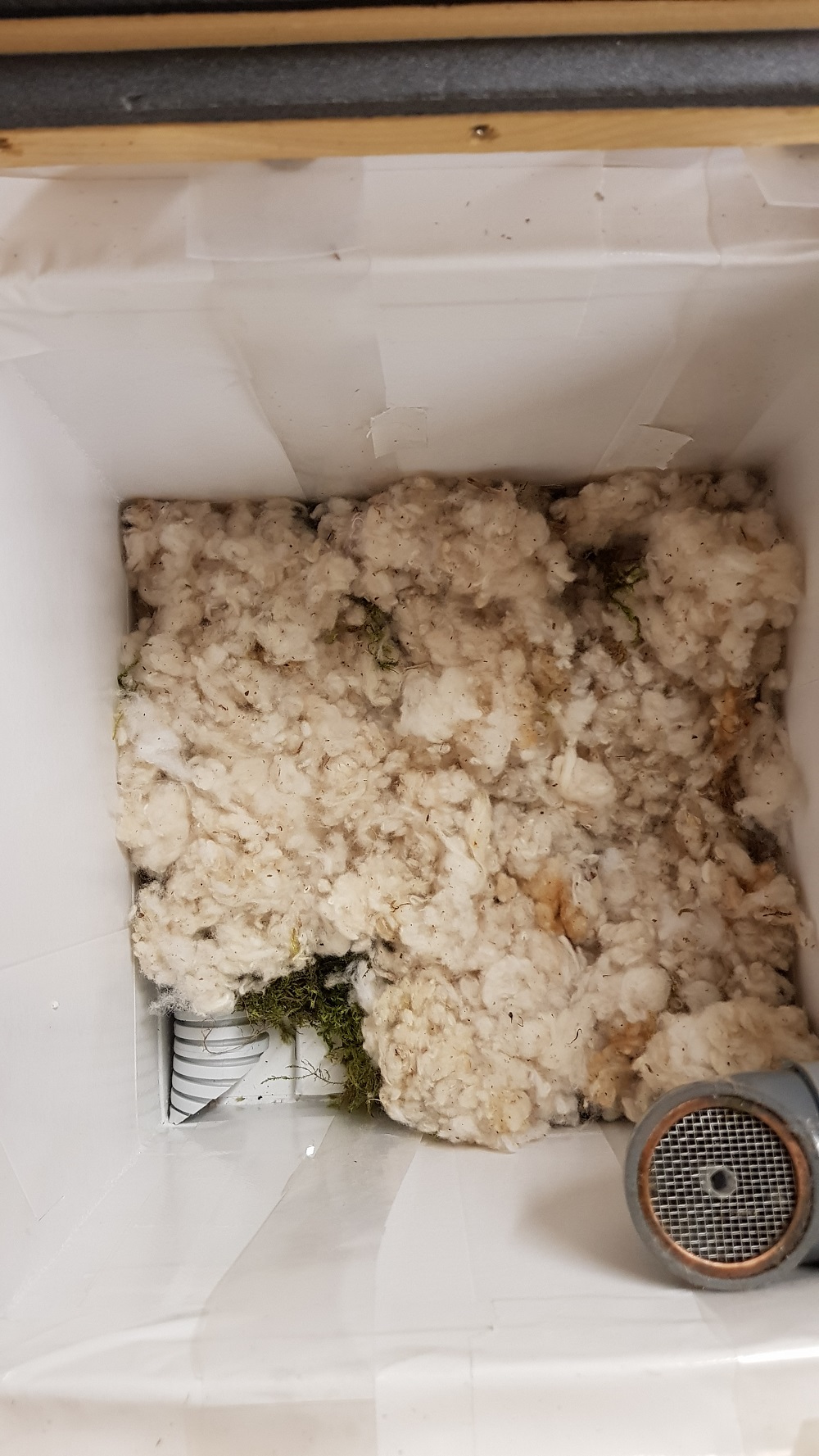
2. Beehive lining – the first layer of lining
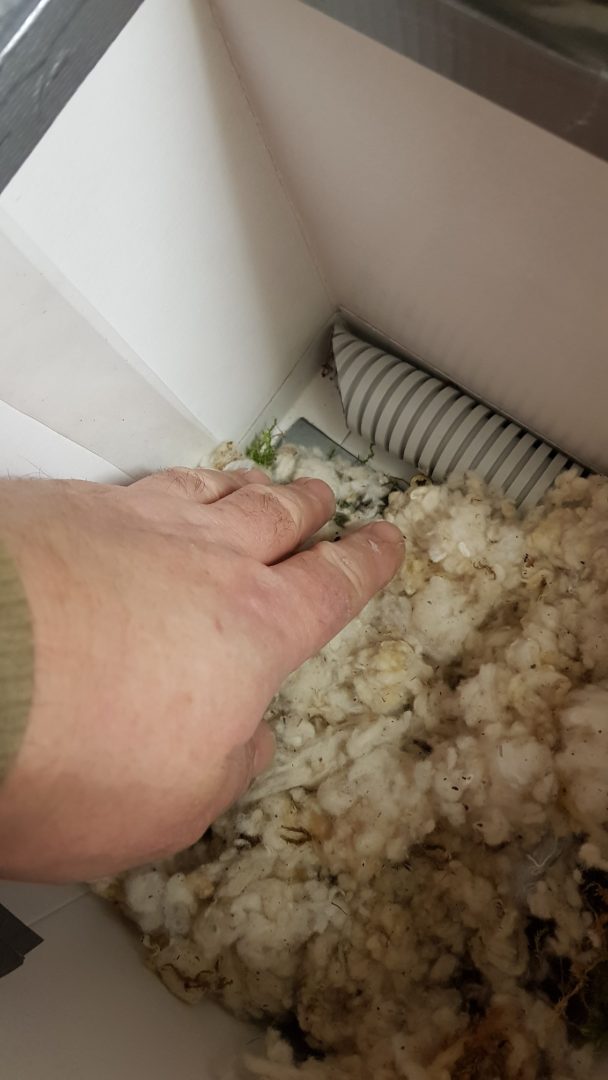
3. Now in this layer at the mouth of the entrance corridor in the hive, we use our fingers to create a small free space, max. 5×5 cm for the future entrance pocket
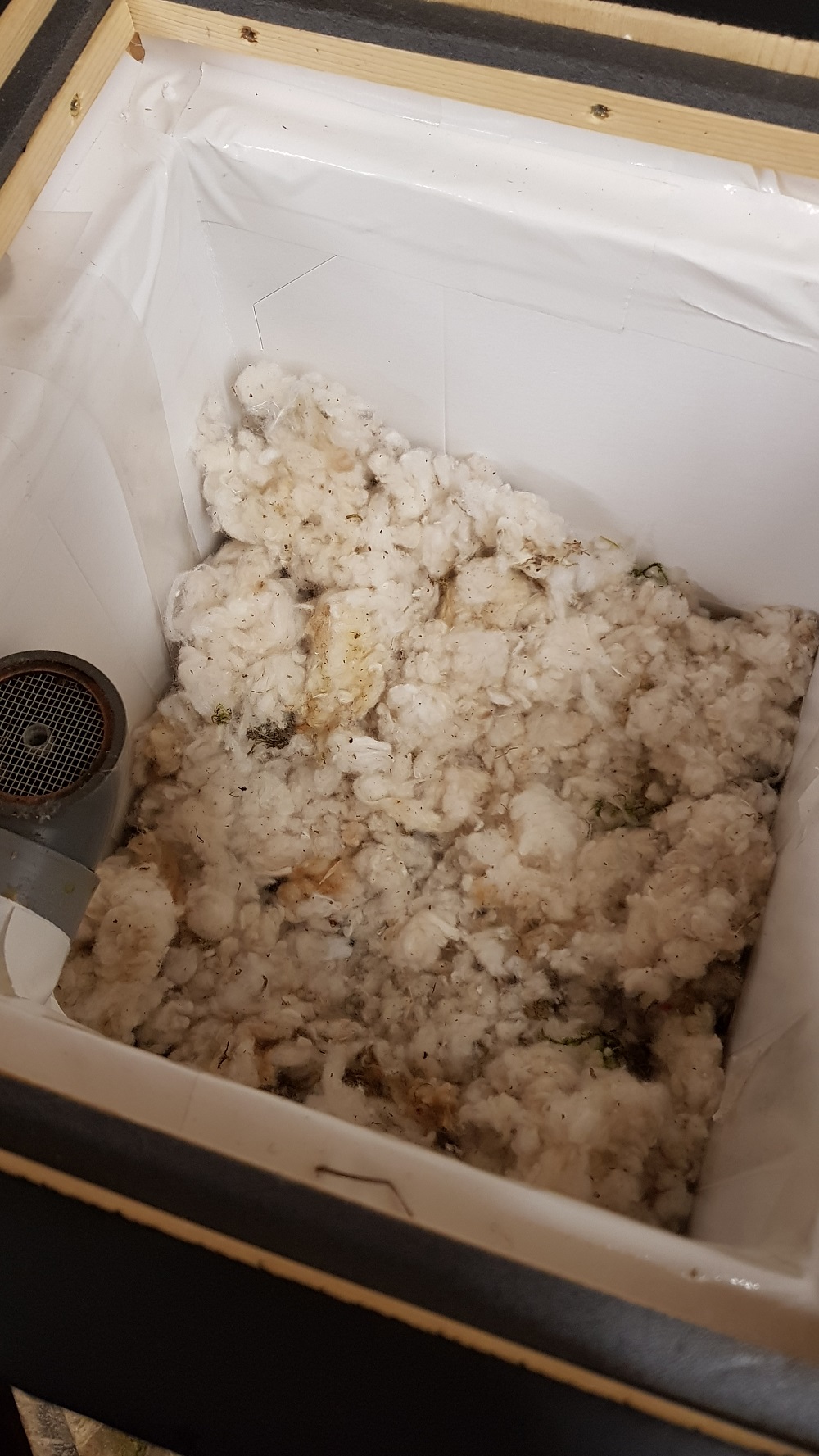
4. Lay another layer of lining, about 3-5cm high. First, cover the space near the entrance hall with it - this will create the pocket. Then, fill the entire area with the same layer of lining at the same height
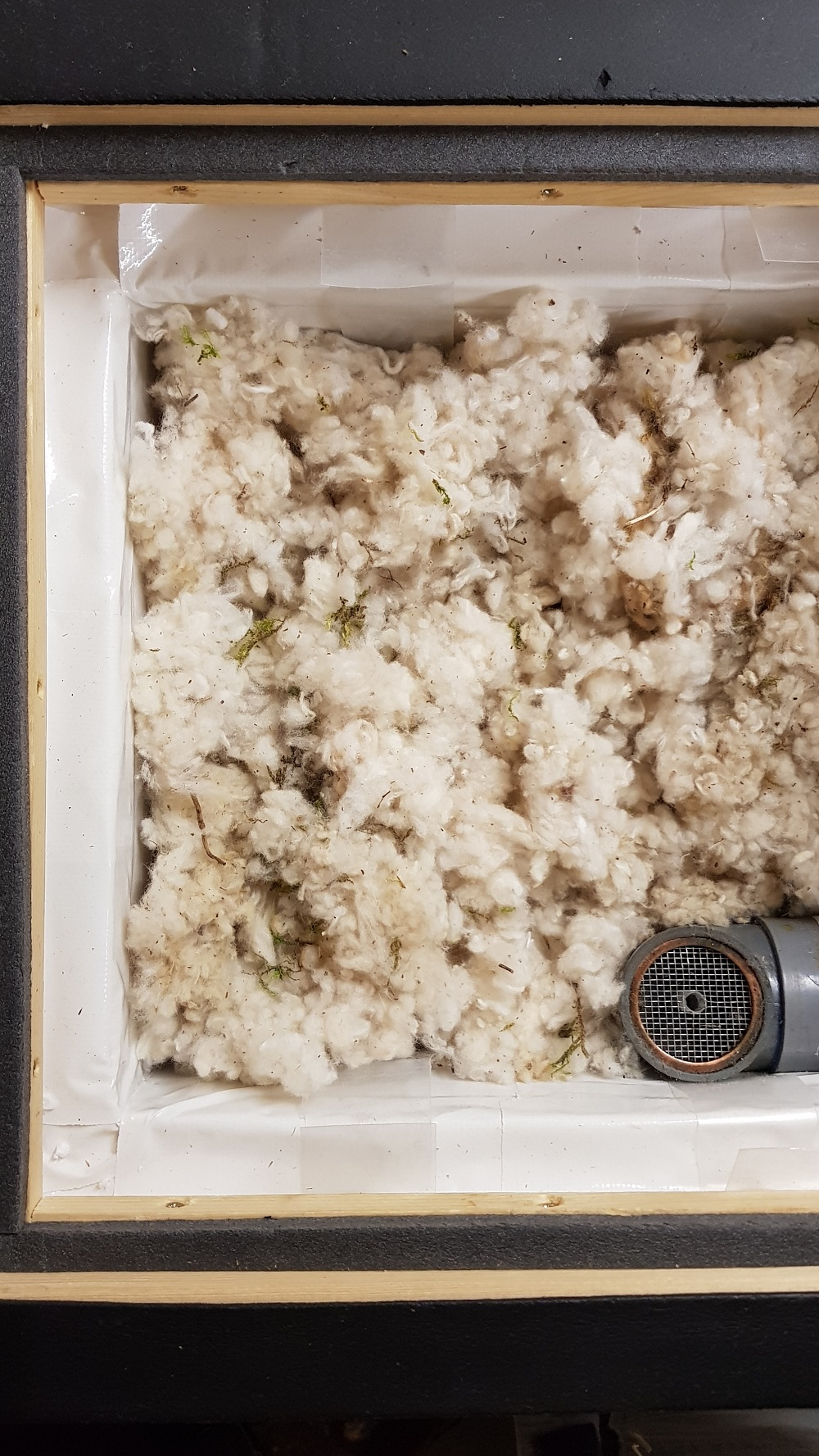
We recommend filling the shelter at least 3/4 of the space, but in such a way that the ventilation hole is not covered.
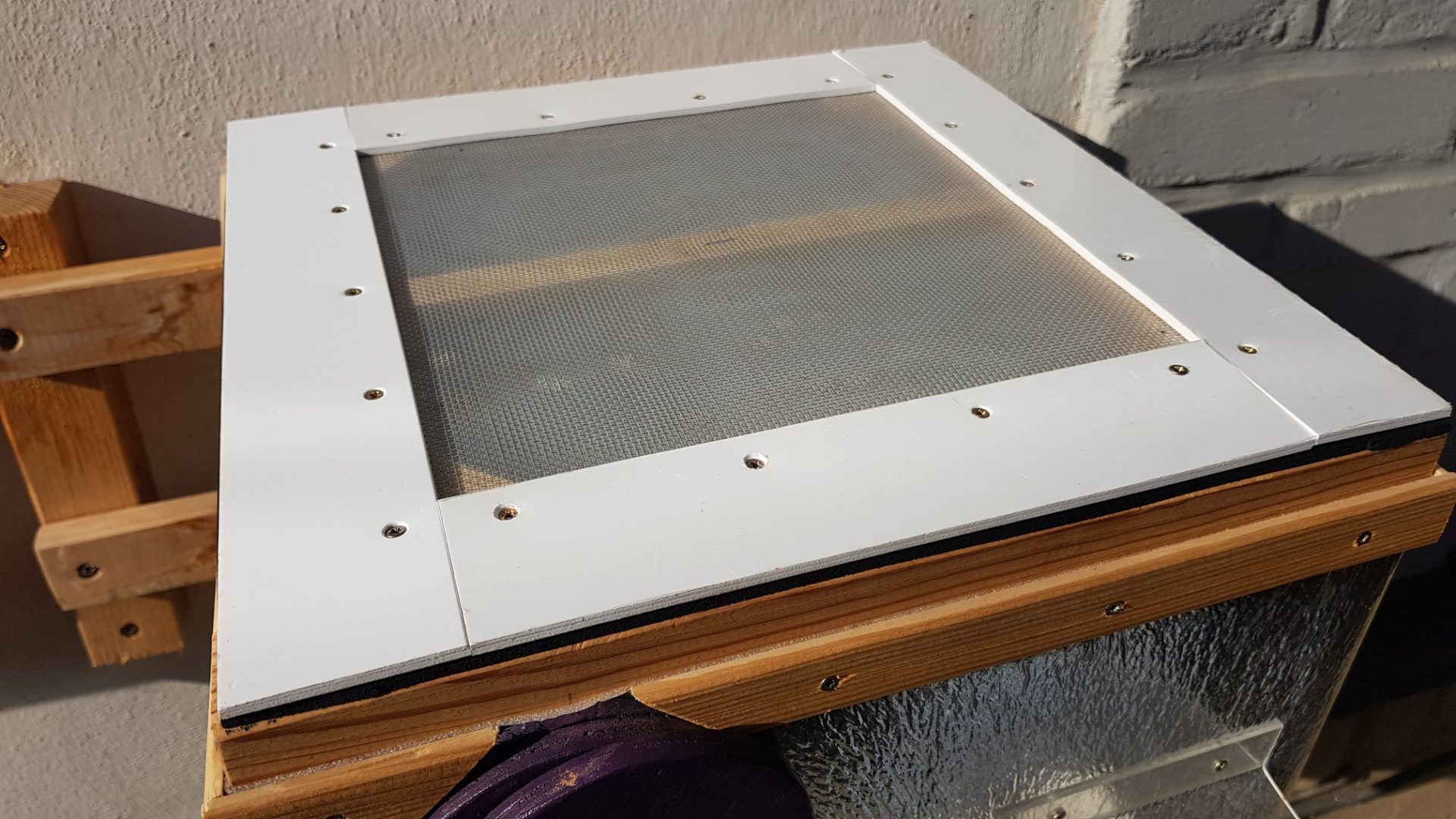
Protective net
- If we use a protective net, we put it on the hive,
- Read more about the safety net HERE
Note:
It is a good idea to use the net all year round, even though parasites are usually not present in the spring months. This will make it easier for you to handle the hive and the bumblebees will get used to the net.
In the spring you don't need the protective net , put a plywood board in its place . This will improve the thermal insulation of the hive.

Panic after editing
Photo by O. Hercog (2/2021)
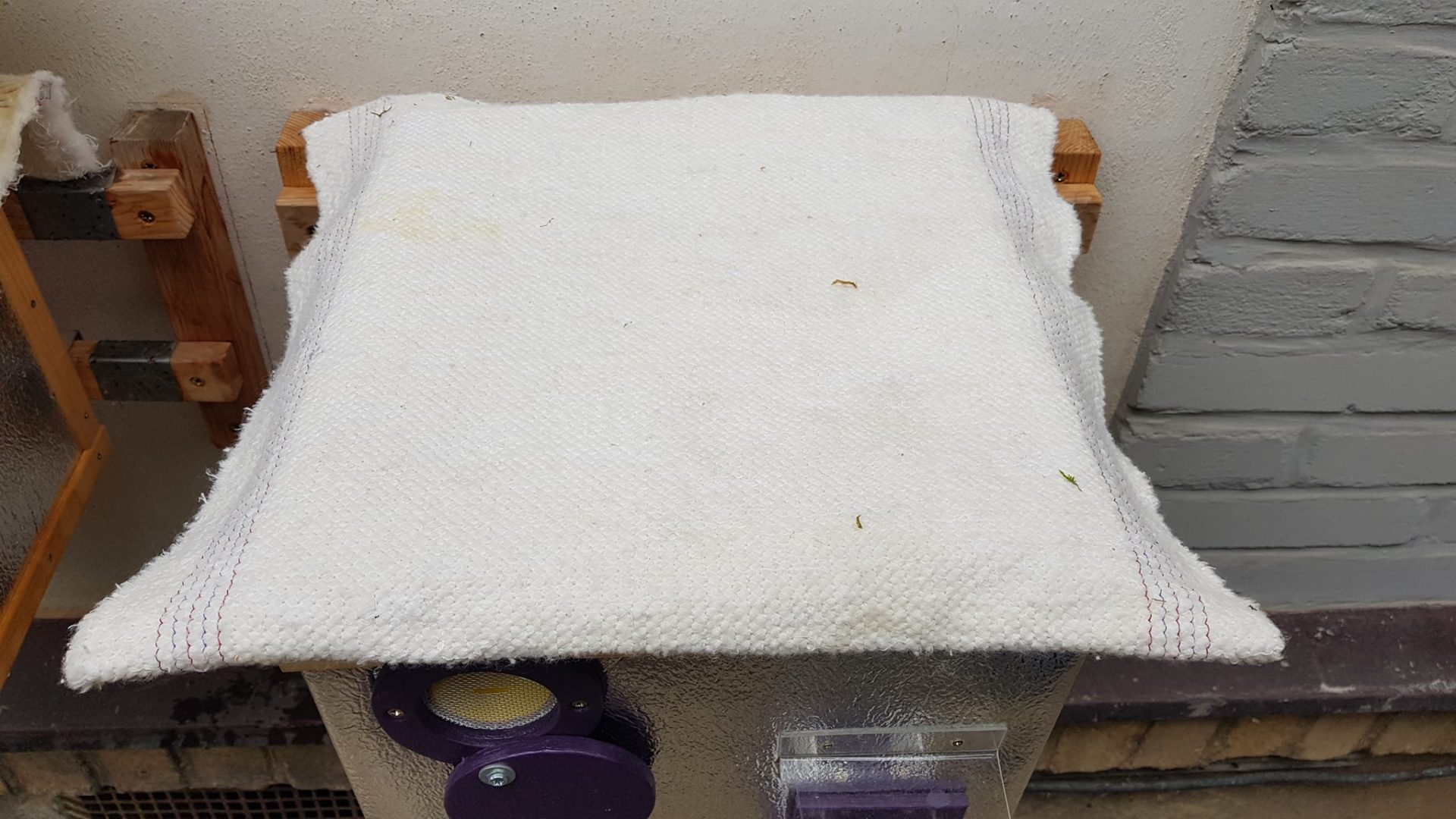
Absorbent blanket / absorbent cloth under the roof to remove moisture
- Cover the wound with a suitable blanket/absorbent cloth.
- You can find out what materials are good for moisture removal HERE (coming soon)
- In principle, however, you can use any thick, absorbent, washed cloth. We found the cloth sold by the metre from the ŘEMPO store (pictured) to be very effective
Procedure:
- Place the cloth/blanket on the hive so that it fits snugly, extends outwards, but does not leak onto it,
- If necessary, adjust the size and overlap of the blanket/rag.
Control:
- Be careful, the cloth must seal and not create “folds” = places for parasites to pass through.
If you use a protective net , the risk of parasites penetrating is reduced - we recommend it
(the cloth is above the correctly placed protective net)

Prepare a well-absorbent cloth
Roof
- Place the roof on the hive,
- You can read more about the beehive roof HERE
Procedure:
- It is a good idea to weight the roof – this will ensure that it seals well and the wind does not move it during the season,
- In the spring, when the hive is being settled, leave a removable thermal insulation board under the roof to ensure suitable thermal conditions for the establishment and development of the nest.
Control:
- The roof should have a slight overlap so that it can be installed without shaking the hive,
- Check that the roof is properly sealed.
Roof over the flap
- The canopy covers the protective flap and the hive's roof,
- It can be attached "hardly" or just put on
Procedure:
- Make sure that the canopy is in a position where it sufficiently covers the flap against rain , but at the same time does not prevent it from fully opening,
- Attach the canopy above the flap with screws,
- Then remove/remove the roof again – it is fragile and could be damaged when moving/assembling the hive – only assemble/replace it finally after placing it in place,
- the edge of the canopy with opaque tape - you won't get hurt on it and at the same time you won't miss it = you won't hit it with your hand/head.
- If you have a canopy with a snap-on canopy, tape it to prevent water from leaking into the groove. This will help your canopy last longer and prevent the canopy from blowing away in the wind.
- You can also use a simple canopy from the Čmeláci PLUS workshop , which you can grow at home.
Control:
- Check that the canopy covers the protective flap and its handle well and that it does not prevent the flap from fully opening.

Protective flap canopy
Photo O. Hercog
Before you put the scare in place
the checklist again so that nothing surprises you during the season.
Follow the motto: “He who is prepared is not surprised.”
You can find the checklist HERE .
Place the hive outside at the selected location
We recommend placing the hive outside in nature only when there is a chance of its settlement = bumblebee mothers - queens - have appeared and are carrying out their search flight.
If the hive is placed in nature too soon, it may become cold and damp .
When to put the scarecrow outside, you can read HERE
You can find a procedure for dealing with cold spring days here (will be added soon).
You can find the procedure for populating the hive HERE