Solution for lifting - lowering the flap valve
What you will learn here
- Why does the protective flap have a solution for lowering the flap (the plastic part of the flap)?
- Why is this important?
- What are the possible solutions?
- Who are the peg-makers and who are the pick-pockets?
The original post was published on FB Čmeláci PLUS 12/3/2019
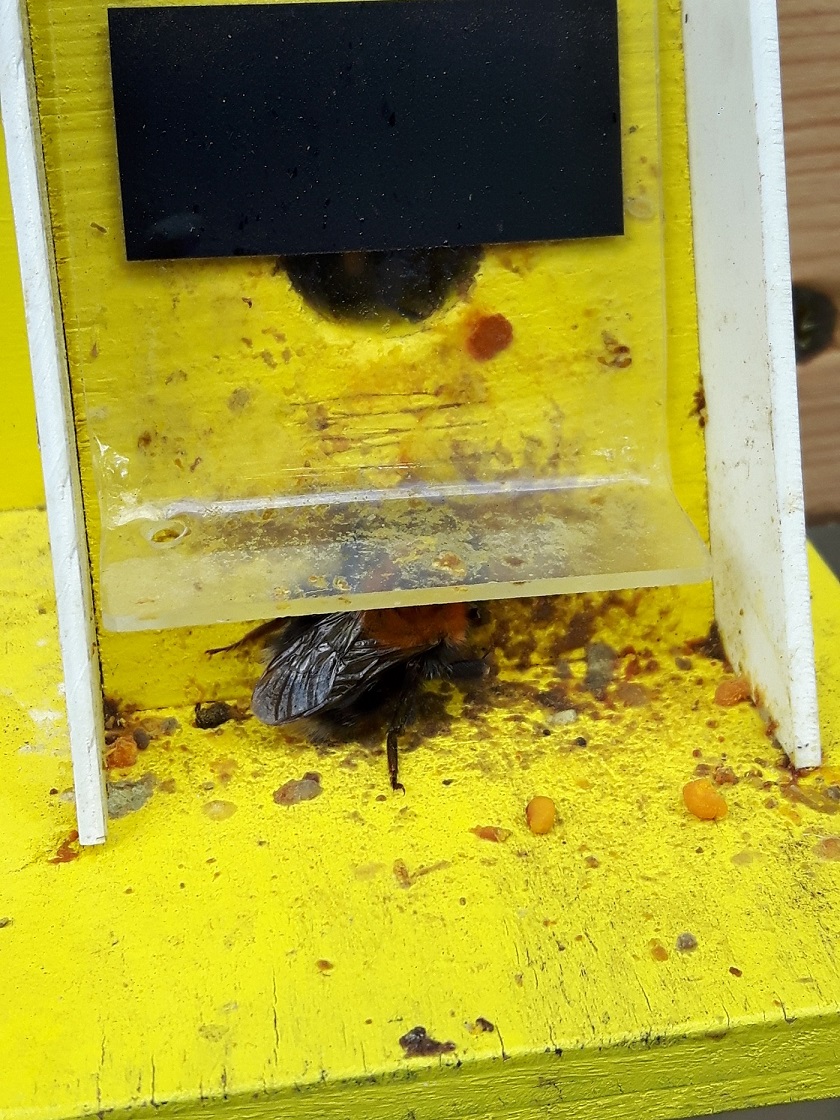
Protective flap clogged with pollen threads and wax
Photo O.Hercog
Why does the safety valve have a flap?
The protective flap is based on the principle designed by A. Krenz, improved by M. Stuchl.
Bumblebees PLUS have been working on the protective flap, as an important element of hive protection, for a long time and are continuously testing further improvements. We are pleased that manufacturers are gradually adopting them into production and they are available to you.
You can read about the flap, its improvements and other modifications HERE ( under construction )
The basic part of the flap is the flap . It closes the inlet opening .
Once the hive inhabitants get used to the flap, they will lift it and slip under it. The flap will then close behind them.
random visitors want to get into the hive , they lack experience and the flap will discourage them in most cases - they cannot lift it .
The trapdoor usually deters queens who are looking for a nesting site and accidentally find the hive. It also usually deters bumblebees, although we have recorded a case where a bumblebee passed through the trapdoor together with the workers. The trap is good at deterring the female bumblebee fly (Aphomia sociella), parasitic flies (e.g. Brachycoma devia), etc.
In order for the flap to protect the hive, it must be folded down soon after the queen bee has settled the hive .
When the mother queen is at the beginning of the solitary phase (until the birth of the first generation of workers), she is quite sensitive to disturbance. Therefore, the flap cannot be opened all at once , but must be lowered and closed gradually . Thanks to this, the bumblebee gets used to the flap within 2-3 days and passes through the flap smoothly.
Keep in mind that if you want the hive to protect against bumblebee parasites, or when the queen mothers of later species are looking for a nesting site, the flap must be closed.
Here you can see how the bumblebee lifts the valve - it inserts its head under it, then its body, lifts the valve and slips under it,
But he has to get used to it. You have to slowly close/open , he will get used to the touch of the flap and learn to walk through it .
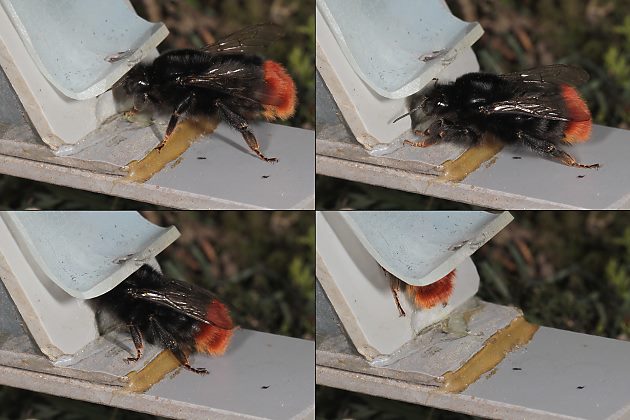
Protective flap – entering rock bumblebee (Bombus lapidarius) Photo http://www.wildbienen.de
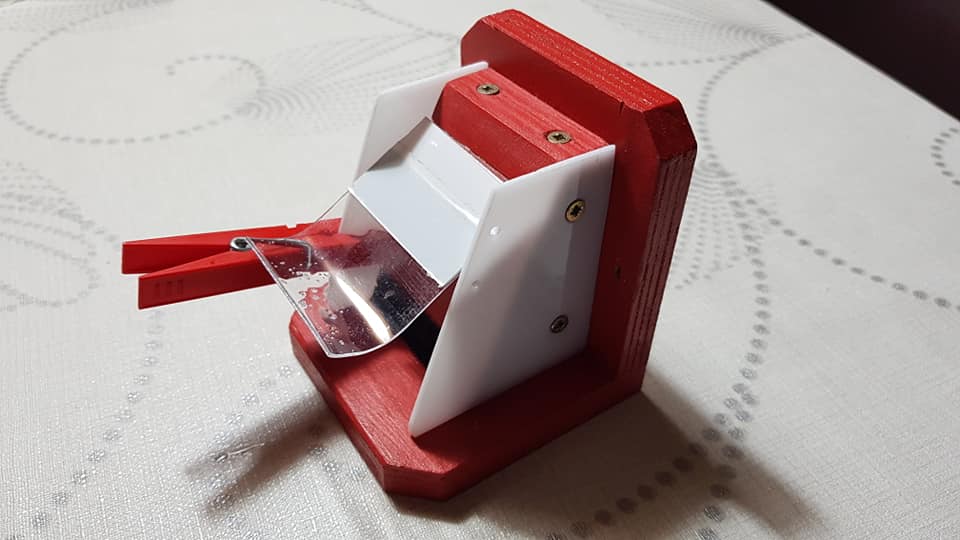
How to lower the valve – solution
You can find the procedure for starting the valve HERE ( we are preparing it ).
The act of opening the flap is so crucial for bumblebee keepers (bumblebee keepers) that it divides them into 4 basic and irreconcilable camps, depending on the solution they use. 😊
You can read about the modification of the older flap HERE ( under preparation ).
Pegs
They lower and adjust the flap using a clothespin.
It is not as precise, but it is very fast and very operative.
For example, the flap can be quickly closed using a clothespin if you want to temporarily close the hive inhabitants inside and clean the hive.
Description:
- Attach a pin of the appropriate size to the side panel (the side plastic part of the flap), where it is always ready.
- When the flap is raised (inlet opening open), the pin secures it in the upper position.
- If you lower the flap gradually, you can hold the pin by the sidewalls and raise the flap as needed.
- If you want to close the flap, lower the flap and snap the pin onto the side part so that the flap is pressed against the body of the flap with the pin and the bumblebees cannot lift it.
Advantages:
- You don't have to make anything, just choose a pin of the appropriate size
- You will not come into contact with bumblebees when adjusting the height of the flap
- Very operational solution for closing/opening the flap
Disadvantages:
- It takes a little practice to learn how to set the flap to the desired position

Solution for closing the flap -
pin flap lifted
Photo O. Hercog (2019)
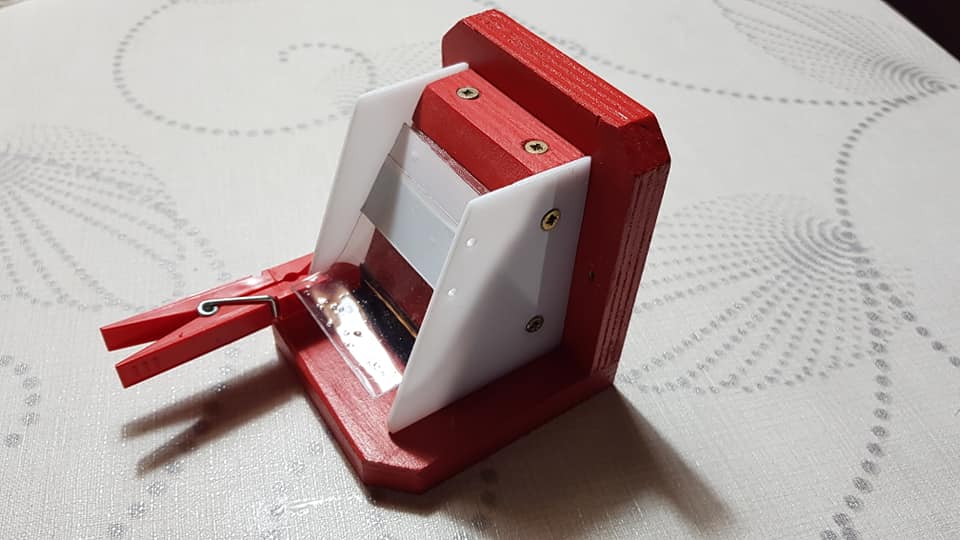
Solution for closing the flap -
flap pin lifted
Photo O. Hercog (2019)
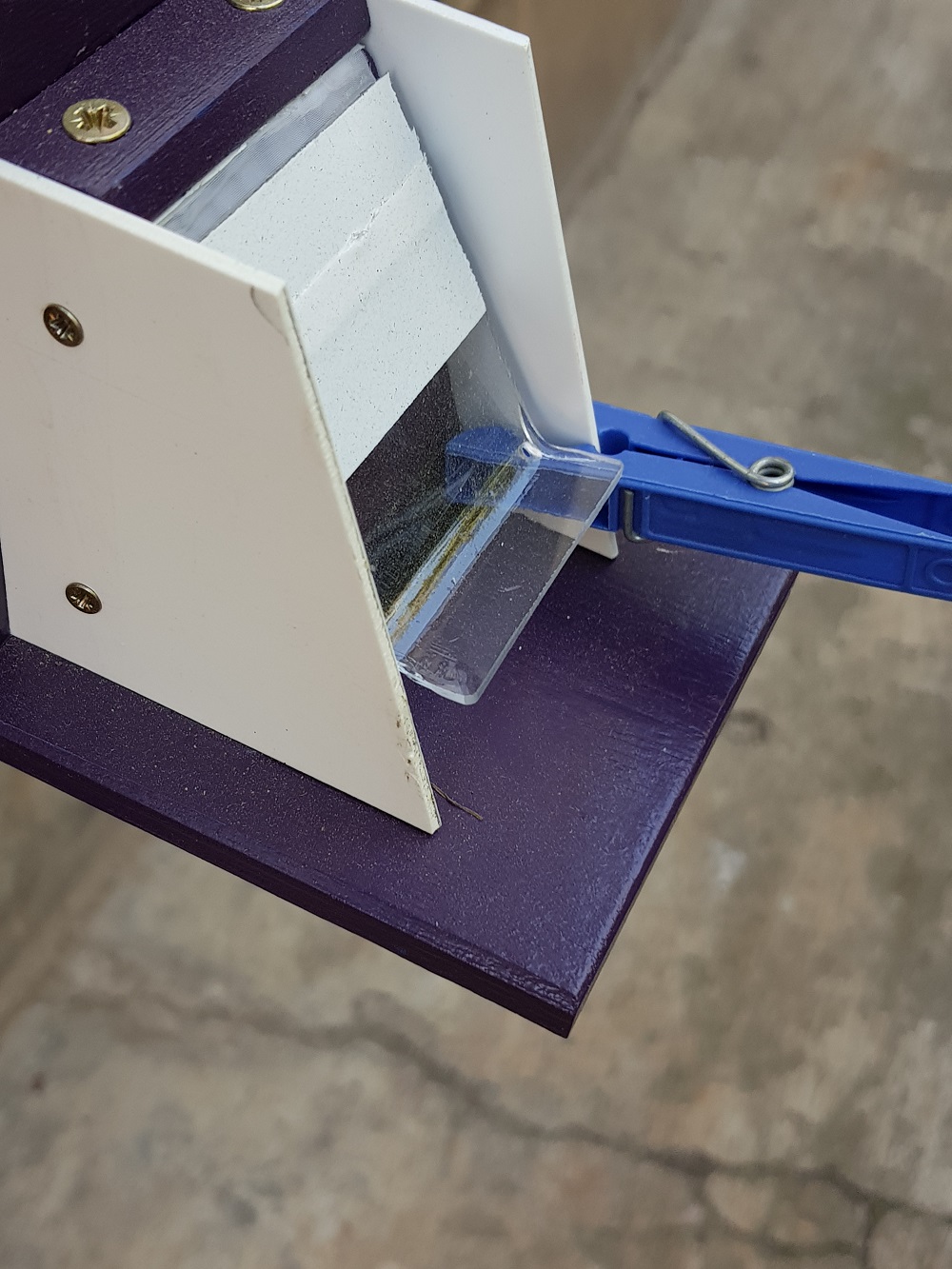
Solution for closing the flap – pin
Photo O. Hercog (2019)
Spies
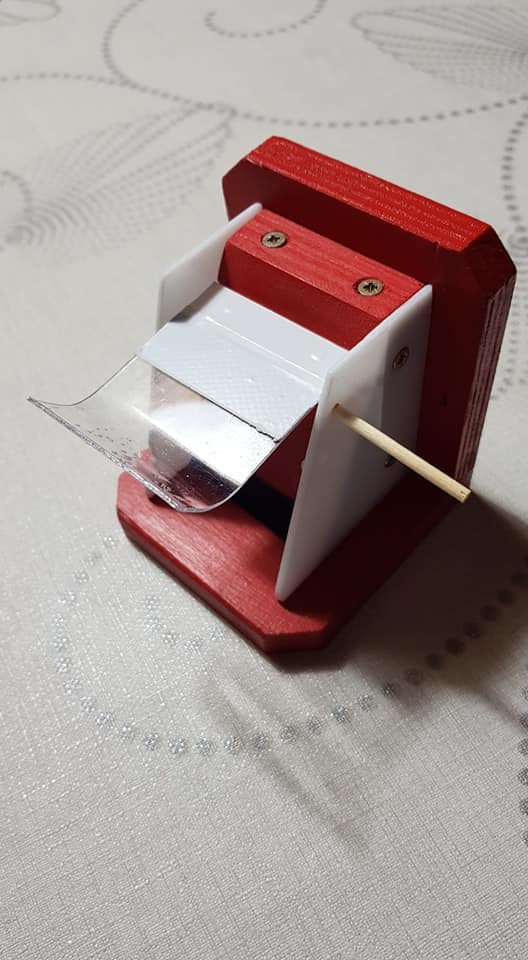
They make holes in the side of the flap where they insert a skewer/wooden stick/screw.
It's simple, operational, not very accurate, but effective
Description:
- If your flap is not prepared for this solution by the manufacturer, drill holes in the sidewall so that you can insert skewers into them, screw in a small screw
- Make the holes so that the flap can be lowered gradually. It is important to have the holes spaced so that the flap can be lowered in small sections from a height of 10mm (the gap between the flap and the flap body) until it is completely closed.
Advantages:
- Easy valve adjustment
- Symmetrical valve adjustment
Disadvantages:
- It is necessary to drill more holes in the sidewall to allow for reasonable adjustment of the valve, especially in the final and most sensitive phase

Solution for closing the flap – skewers,
flap up
Photo O. Hercog (2019)
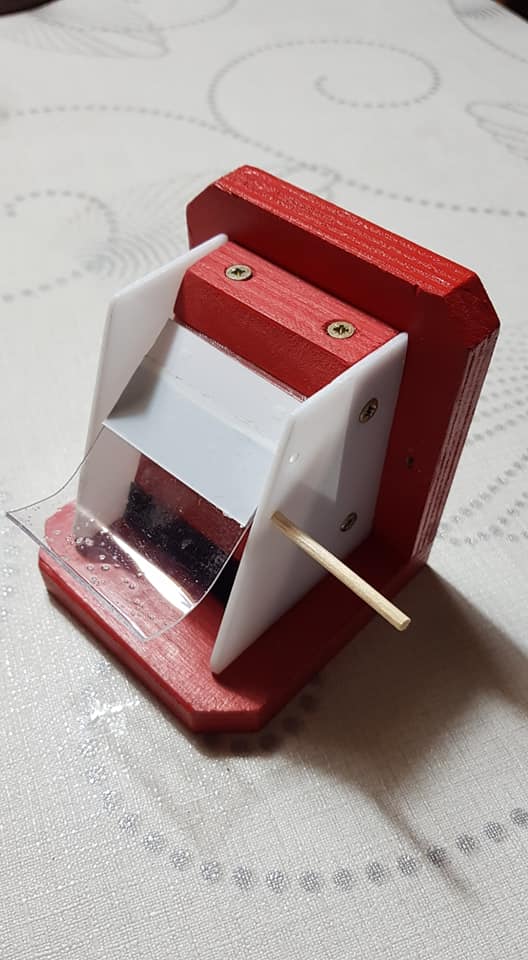
Solution for closing the flap – skewers,
flap closed
Photo O. Hercog (2019)
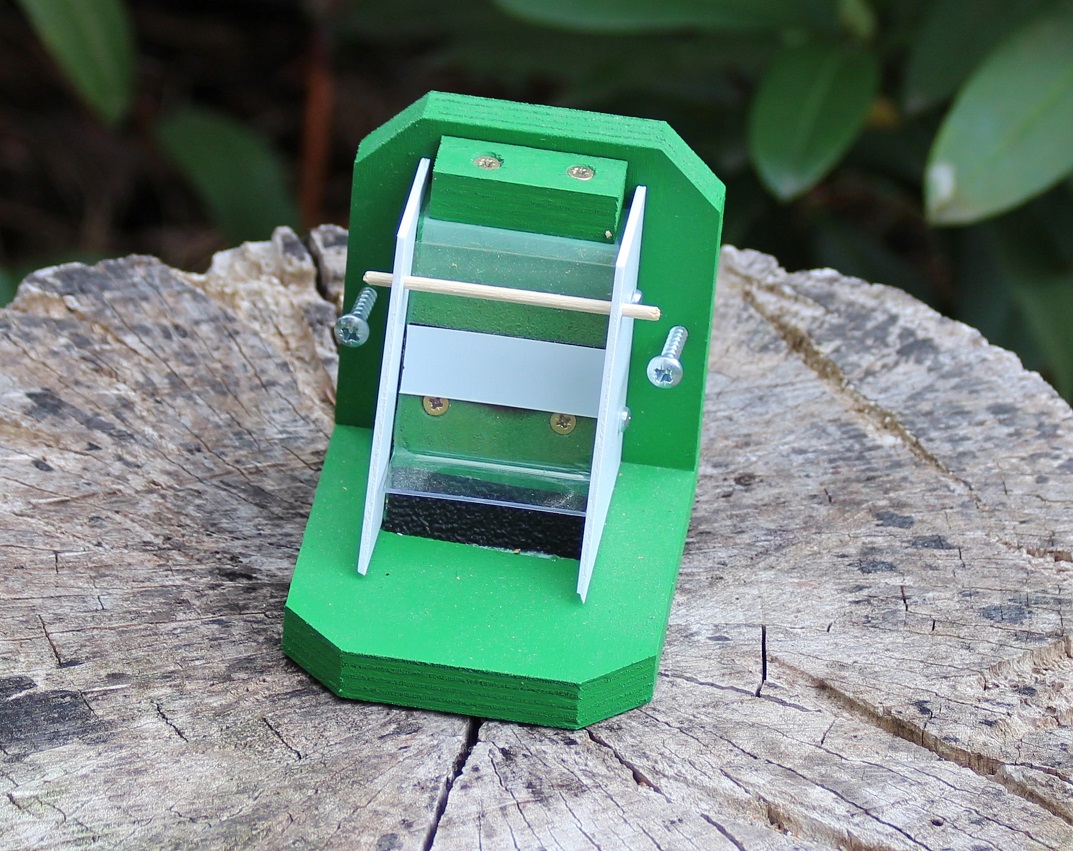
Solution for closing the flap – skewers
Photo J. Černý (2019)
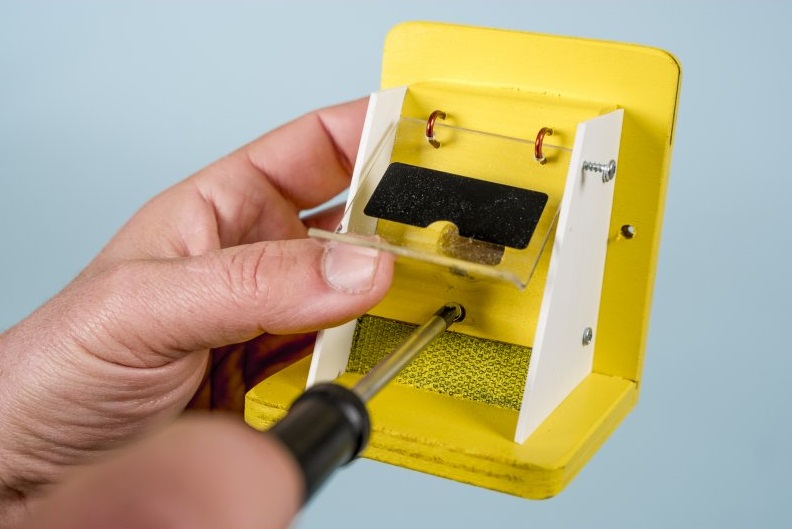
Screwdrivers
These are typical technicians. They have equipped their damper with screws and are adjusting it in tenths of a millimeter.
A beehive manufacturer in the Czech Republic came up with this interesting solution. He placed a screw under the inlet opening, which allows the flap to be adjusted very precisely. (see photo).
We have been trying to convince him since 2018 that this screw bothers bumblebees at the entrance and that it is necessary to use two screws and place them as high as possible , preferably at the level of the axis of the inlet hole, where the bumblebees do not mind.
Hopefully he will accept this change and modify his otherwise quite good flaps so that they serve better (as of 2/2020).
Another major manufacturer of protective flaps has adopted this solution and has been selling it since 2019.
However, you can easily modify older flaps yourself - see our instructions.

Solution for closing the flap with a screw below the inlet opening
We recommend replacing it with two screws at the level of the inlet opening/its axis
Photo manufacturer's website
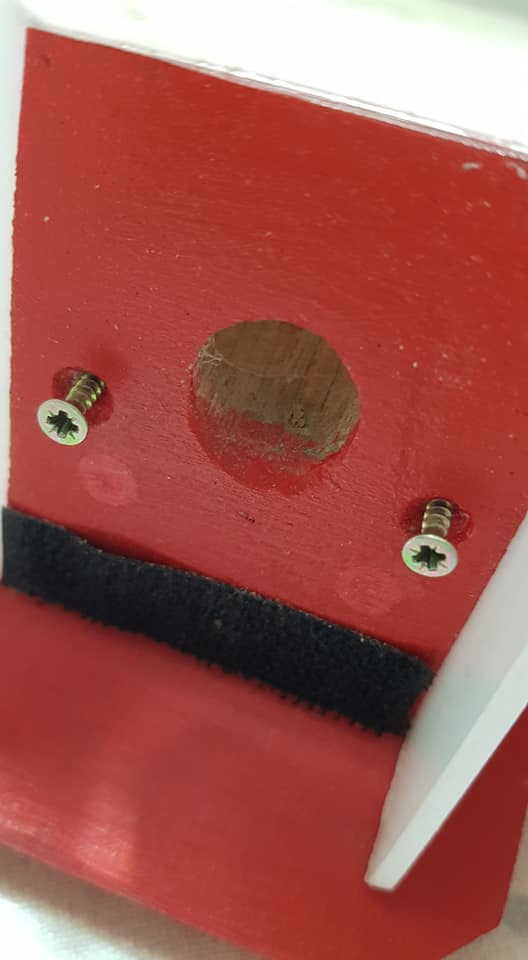
Modification of a commercially available flap – we recommend
- Remove the side panels from the flap
- Lift the flap
- Mark a horizontal line with a pencil on the lower edge of the inlet opening / on the axis of the inlet opening
- Drill holes for a small screw on the sides of the inlet opening – drill perpendicular to the plane of the damper body
- Use a wood screw with a diameter of approximately 2.5 - 3 mm and a length of approximately 15 mm with a countersunk head
- Use a larger drill bit to create a recess for the screw head so that the screw head is flush with the damper body after screwing it in.
- Unscrew and tighten the screws several times to make it run smoothly
- Reinstall the side panels
- Test the flap functionality
Description:
- To secure the flap in the open position, use a pin or screw/rod in the sidewall
- For gentle lowering (tightening), first unscrew the screws to a height of approx. 10 mm - symmetrically, i.e. equally on both sides
- Lower the flap, it will rest on the screw heads
- Then, gradually screw the screws into the valve body, thereby reducing the valve stroke.
Notice
- We recommend that you always screw the screws to the same height so that the flap does not wobble and the bumblebee can reliably lift it and then close it by itself
Advantages:
- Very fine valve adjustment
Disadvantages:
- A novice beekeeper may initially be concerned about contact with bumblebees
- If you use a flap with one screw under the inlet hole, the screw will interfere with the movement of the bumblebees and they may get injured by the sharp head of the screw - adapt such a solution

Solution for closing the flap: screws,
set screws in the flap body
Photo O. Hercog (2019)
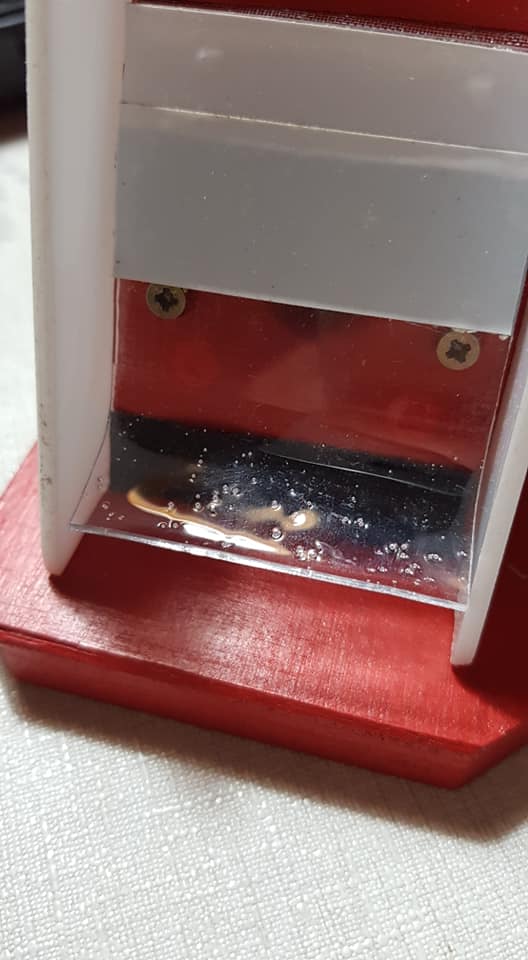
Solution for closing the flap with screws,
flap closed
Photo O. Hercog (2019)
Lorem ipsum dolor sit amet, consectetur adipiscing elit. Ut elit tellus, luctus nec ullamcorper mattis, pulvinar dapibus leo.
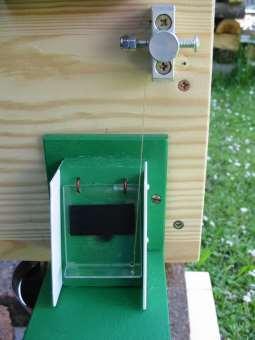
Thread makers
These are conservatives. They have a thread on the flap and they gradually lower the flap lower and lower, something like the Titanic 🙂
It was invented by an amazing person, Mr. Stuchl. Although this model is a bit retro, it is functional.
Description
- In the flap (the plastic part of the flap), there is a small hole
- Tie a thread/thin string into the hole
- Lead the other end of the thread above the flap, for example to the roof of the hive
Advantages:
- Easy solution
- A novice beekeeper need not be afraid of contact with bumblebees
Disadvantages:
- If the wind blows, the thread will lift the flap
- The solution is a bit inoperative, for example if you want to remove the hive roof, the flap setting will be canceled

Solution for closing the flap – thread
Photo P Fereš
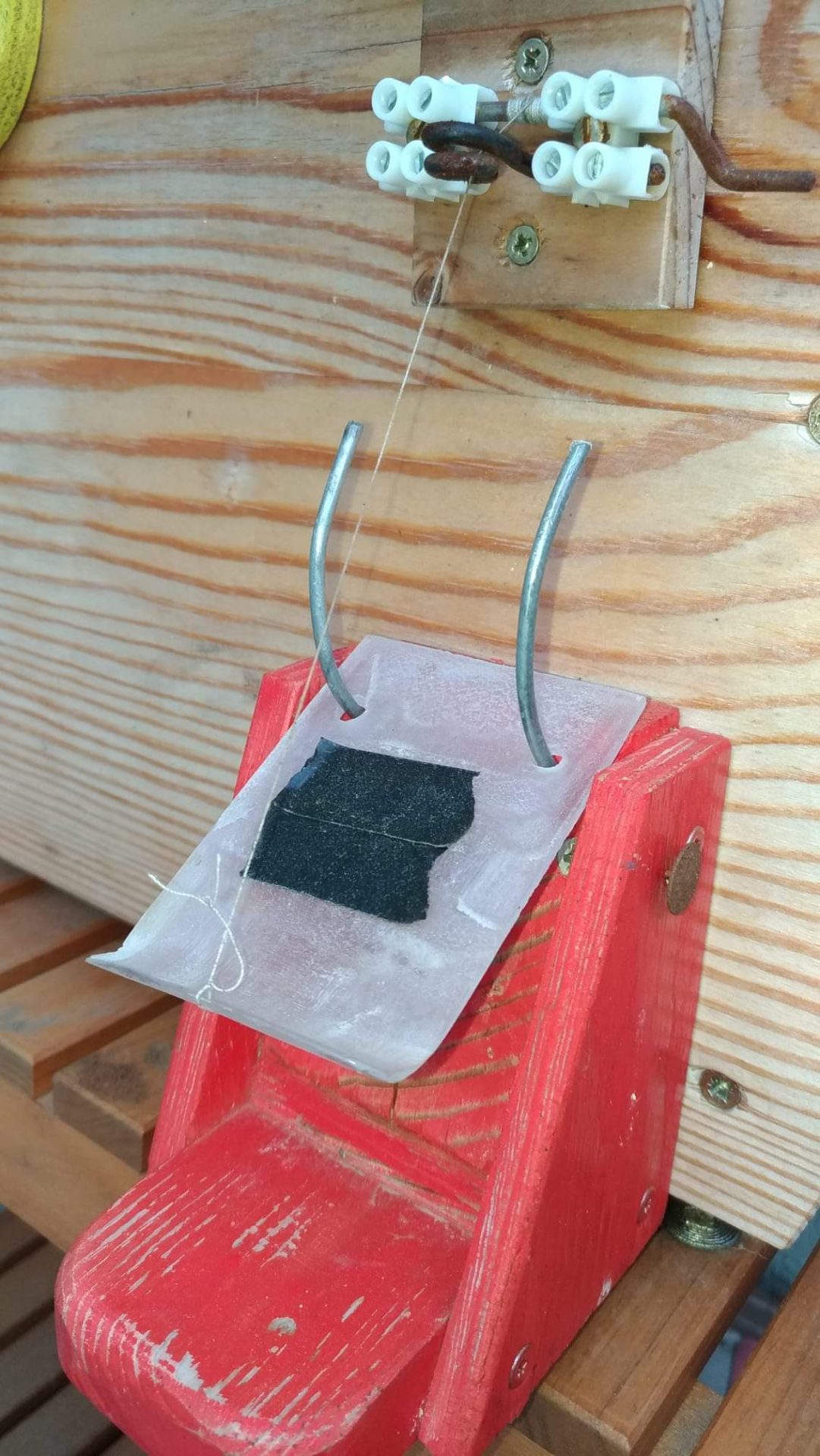
Bumblebees PLUS – Solution for closing the flap – thread
Photo M. Andrlík
Other solutions
An interesting solution was proposed by Roman Ševčík. He used two strong magnets at the beginning of the flap.
strong magnets (so that the flap does not close by itself) and at the same time small ones (so that they do not interfere with the operation of the valve and the flap can be lowered gradually).
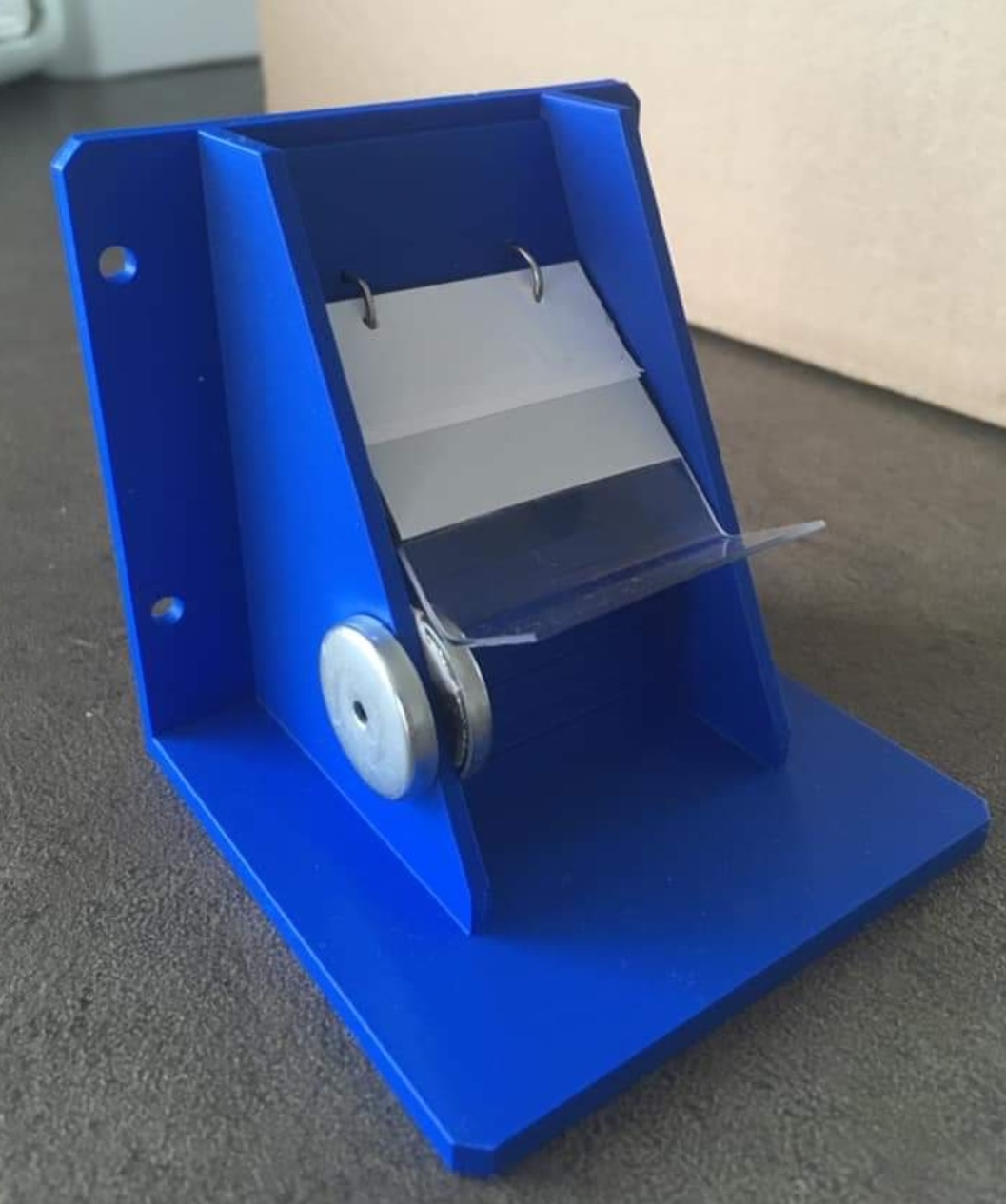
Solution for closing the flap using magnets
Photo R. Ševčík (2020)
There are many other solutions, including connecting electronics to sense the position of the flap, electronic control (we don't know how electronics can distinguish between a bumblebee and a wasp), etc.
If you have your own solution that has worked for you, we would be happy to add it here.
PHOTO
Don't forget to adjust the flaps with tape according to J. Čížek's recommendations, see HERE
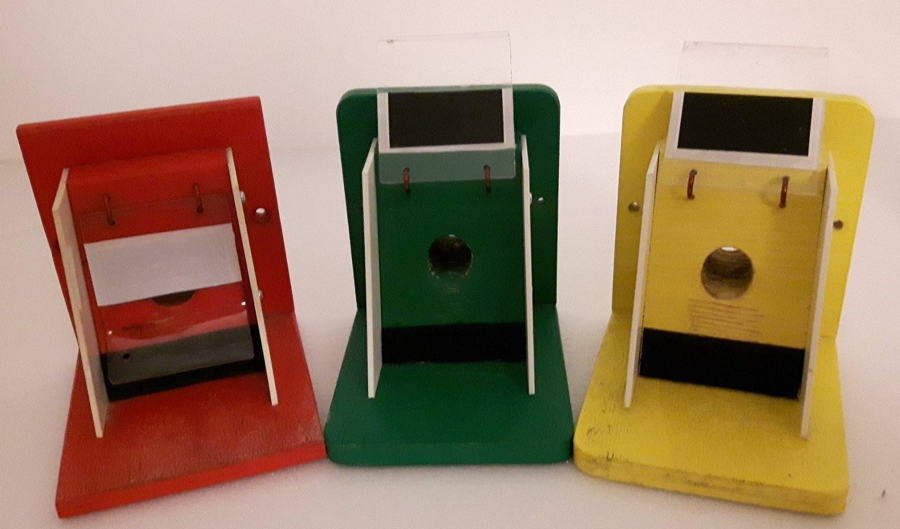
Modification of the flap. Covering the black tape with white tape. Leaving only the lower window.
Photo O. Hercog (2018)
Summary
- Gradual closing of the flap , i.e. lowering the flap , is important and it is necessary to prepare for it.
- The bumblebee gets used to lowering the flap relatively quickly
- You only need to teach the queen mother how to work with the flap, see the procedure HERE ( we are preparing )
- Choose a valve triggering solution that suits you and use it.
- Learn in advance how you will use the chosen solution in advance
